How Sleep Apnea Affects Overall Driving Safety
Sleep apnea is a chronic disorder that repeatedly interrupts breathing, fragments sleep, and reduces oxygen levels, creating a measurable risk for drivers. The article explains how sleep deprivation affects brain function, including attention, judgment, and motor coordination, and why excessive daytime sleepiness and microsleeps can occur behind the wheel. It links higher Apnea-Hypopnea Index (AHI) and excessive daytime sleepiness (EDS) to greater crash risk and slower reaction times. It outlines warning signs, the role of sleep studies and at-home sleep testing, and how medical evaluations assess driving fitness. Evidence-based treatments such as CPAP, oral appliances, and lifestyle changes are reviewed, with emphasis on adherence and ongoing monitoring. It also summarizes key rules for commercial drivers under FMCSA guidance and highlights practical driving precautions and sleep hygiene steps to reduce risk.
Struggling with sleep?
Find out if sleep apnea is the reason.
FDA-cleared. $149 flat. Physician-reviewed results in 48 hours.

How Sleep Apnea Affects Overall Driving Safety
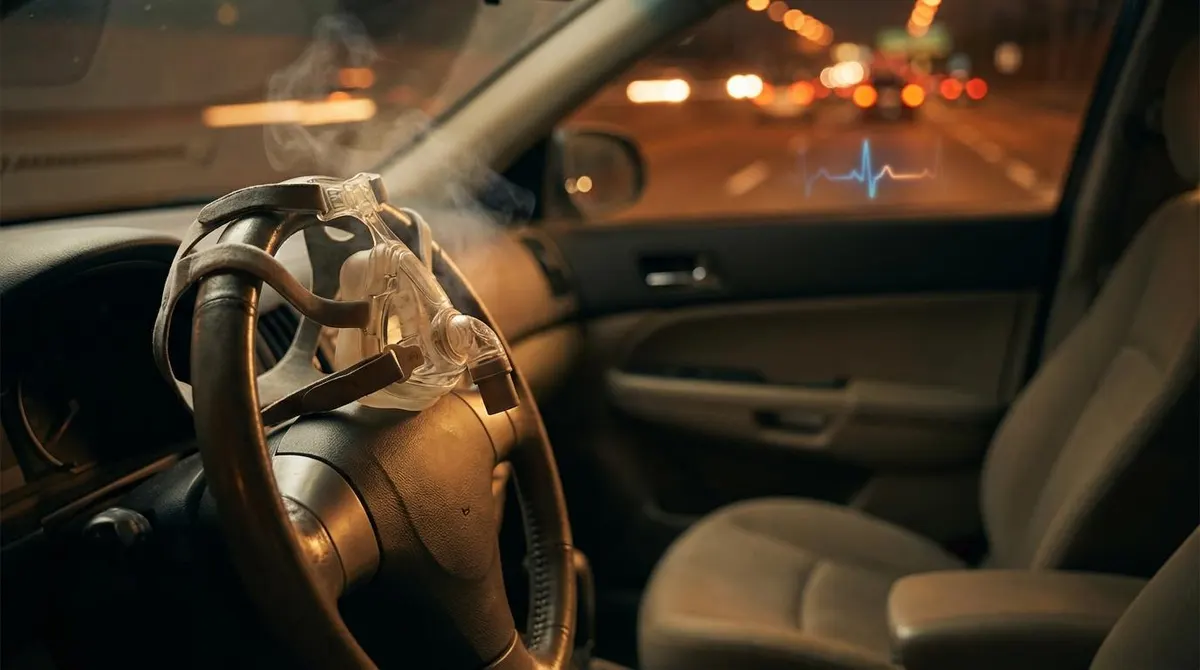
sleep apnea is a chronic sleep disorder that causes recurring breathing interruptions and significant driving risk for millions of individuals worldwide. According to the National Highway Traffic Safety Administration, driver fatigue is a factor in approximately 100,000 police-reported motor vehicle crashes every year. This pillar page examines the physiological impact of sleep deprivation on brain function and physical reaction times. We cover diagnostic steps, regulatory requirements for commercial drivers, and evidence-based treatment options like continuous positive airway pressure. Understanding these risks is essential for maintaining road safety and protecting your health while behind the wheel. Read on to discover how managing your sleep health can prevent dangerous incidents on the road.
The Silent Hazard: Understanding sleep apnea's Core Impact on Driving
Untreated sleep apnea creates a significant driving risk because it causes frequent breathing interruptions that prevent the brain from reaching restorative sleep stages. This condition leads to impaired cognitive function and a higher likelihood of falling asleep at the wheel.
sleep apnea is a medical condition characterized by repeated pauses in breathing during sleep. This sleeping disorder matters because it causes systemic inflammation and severe sleep fragmentation, which directly degrades a person's ability to operate a motor vehicle safely.
Obstructive sleep apnea is the most common form of this condition, occurring when the muscles in the back of your throat fail to keep the airway open. The American Academy of Sleep Medicine notes that this can lead to hundreds of micro-arousals per night, even if the sleeper does not realize they are waking up. Chronic obstructive sleep apnoea syndrome is particularly dangerous because the cumulative sleep debt erodes driving performance over time.
Not sure if sleep apnea applies to you?
Take our 2-minute sleep risk quiz to see whether sleep apnea could affect your DOT physical. No account required.
DID YOU KNOW: According to the AAA Foundation for Traffic Safety, drivers who sleep only five to six hours in a 24-hour period have twice the crash risk compared to those who sleep seven hours or more.
KEY TAKEAWAY: sleep apnea creates a persistent state of exhaustion that compromises a driver's mental and physical readiness for the road.
This cognitive decline begins with the physiological changes that occur within the brain during periods of disrupted sleep.
What is sleep apnea? A Brief Overview
Sleep apnea is a respiratory disorder where breathing stops and starts repeatedly during sleep, often leading to lower oxygen levels and disrupted sleep. This condition affects millions of people and is a primary driver of chronic sleep-related fatigue.
Airway obstructions are physical blockages in the throat that prevent normal breathing during sleep. These blockages matter because they force the body to wake up briefly to resume breathing, preventing the completion of vital sleep cycles.
According to the NIH, obstructive sleep apnea occurs when the upper airway becomes blocked repeatedly during sleep, which reduces or completely stops airflow. When this happens, the brain triggers a brief awakening so that the individual can reopen the airway. This cycle can repeat 30 times or more an hour, resulting in a severe sleeping disorder that leaves the patient exhausted.
TIP: If you or a partner notice frequent gasping or choking sounds during sleep, it is a clear indicator of airway obstructions that require clinical evaluation.
KEY TAKEAWAY: sleep apnea is a physical obstruction that causes the brain to wake up hundreds of times a night, destroying sleep quality.
The resulting damage to sleep architecture has a cascading effect on how the brain functions during the day.
The Physiological Cascade: How Fragmented Sleep Harms the Brain
Fragmented sleep harms the brain by disrupting the neurobiological processes required for memory consolidation and emotional regulation, which are critical for driving performance. These interruptions prevent the brain from clearing metabolic waste, leading to slower mental processing.
Already diagnosed and need CPAP support?
Dumbo Health helps patients start CPAP without the usual confusion, paperwork, or upfront cost. Equipment, setup, supplies, and ongoing support are all handled in one place.
Sleep fragmentation is the repeated interruption of sleep architecture by brief arousals or awakenings. It matters because it destroys the quality of sleep, leaving the individual with high levels of sleep-related fatigue despite spending a full night in bed.
Research published by the NIH indicates that disrupted sleep patterns impair the prefrontal cortex, the area of the brain responsible for executive functions. Drivers with untreated obstructive sleep apnoea syndrome often experience a decline in attention and concentration, making it difficult to monitor multiple road hazards simultaneously. This physiological cascade is why driving performance drops so sharply in affected individuals.
DID YOU KNOW: The brain uses deep sleep to clear out toxins; without it, cognitive functions like decision-making and spatial awareness are significantly compromised.
KEY TAKEAWAY: Brain function is directly tied to sleep quality, meaning that any disruption in breathing patterns will eventually lead to decreased mental acuity while driving.
Beyond these neurological shifts, the most visible danger for many drivers is the onset of intense daytime sleepiness.
Beyond Sleepiness: The Neurological Toll on Driving Performance
The neurological toll of sleep apnea goes beyond simple tiredness to include impaired judgment, reduced vigilance, and a breakdown in complex motor coordination. These deficits make it nearly impossible for an untreated patient to maintain consistent driving performance during long trips.
Driving performance is the measure of how safely and effectively a person operates a vehicle. It matters because any decline in this performance increases the likelihood of errors, such as lane drifting or delayed braking.
Mayo Clinic explains that obstructive sleep apnea can lead to significant cognitive deficits, including problems with memory and mood. In a driving simulator, individuals with obstructive sleep apnoea syndrome show much higher rates of lane deviations and speed variability. This neurological burden explains why sleep medicine specialists prioritize testing for anyone in high-risk occupations.
TIP: Pay attention to your mood; irritability and a lack of focus are often the first neurological signs of sleep deprivation.
KEY TAKEAWAY: Sleep apnea imposes a heavy neurological burden that directly undermines the skills required for safe driving.
This neurological decline often manifests as an overwhelming urge to sleep throughout the day.
The Pervasive Threat of Daytime Sleepiness and Fatigue
Excessive daytime sleepiness significantly reduces a driver's alertness and ability to react to sudden changes in traffic conditions. This fatigue acts similarly to alcohol impairment, slowing down every physical and mental response required for safe navigation.
Daytime sleepiness is a state of strong desire to sleep or falling asleep during daylight hours. It matters for drivers because it can lead to involuntary microsleeps, which are brief moments of sleep lasting only a few seconds that occur while a person is seemingly awake.
The Mayo Clinic explains that daytime sleepiness is one of the most common symptoms of sleep disorders and is a leading contributor to traffic accidents. People who experience this may not realize their level of impairment until they are involved in a near-miss or a collision. For many, this fatigue is the most persistent symptom of obstructive sleep apnoea syndrome.
IMPORTANT: Chronic daytime sleepiness is a major red flag for sleep apnea and should never be ignored by anyone who operates a motor vehicle.
KEY TAKEAWAY: Fatigue caused by sleep apnea is not just feeling tired; it is a measurable impairment that puts every road user at risk.
This exhaustion leads directly to measurable delays in how quickly a person can respond to hazards.
Impaired Cognitive Functions and Reaction Times
Sleep apnea causes delayed reaction times by interfering with the transmission of signals between neurons, making it harder to brake or steer in an emergency. Studies show that people with untreated sleep apnea perform as poorly as individuals with a blood alcohol concentration of 0.05 percent on coordination tests.
Reaction time is the amount of time it takes to respond to a stimulus. It matters in driving because a delay of even half a second at highway speeds can mean the difference between a safe stop and a fatal motor vehicle accident.
According to the Sleep Foundation, reaction times are significantly slower in those suffering from obstructive sleep apnoea syndrome compared to healthy sleepers. This impairment is often accompanied by a loss of peripheral vision and a reduced ability to judge distances accurately. When tested in a driving simulator, these individuals consistently fail to react to sudden obstacles.
DID YOU KNOW: Research indicates that individuals with an Apnea-Hypopnea Index greater than 15 are significantly more likely to have slow reaction times during driving simulator tests.
KEY TAKEAWAY: The cognitive impairment from sleep apnea is equivalent to legal intoxication, drastically reducing the safety margin for any driver.
The severity of these impairments often correlates with specific clinical measurements of the disorder.
The Severity Spectrum: How AHI and EDS Correlate with Risk
The driving risk associated with sleep apnea increases as the Apnea-Hypopnea Index rises and excessive daytime sleepiness becomes more frequent. Patients with moderate to severe obstructive sleep apnea face the highest probability of being involved in motor vehicle accidents.
Apnea-Hypopnea Index is a scale used to measure the severity of sleep apnea by counting the number of pauses in breathing per hour of sleep. It matters because it helps clinicians categorize the driving risk and determine the urgency of treatment plans.
The American Academy of Sleep Medicine classifies sleep apnea as mild, moderate, or severe based on the index. As the index score increases, the level of sleep fragmentation typically worsens, leading to higher levels of daytime sleepiness. Clinicians use these scores to identify which patients need immediate intervention to maintain their driving safety.
TIP: If your test results show you are in the moderate to severe range, you should limit your driving until you have stabilized your treatment.
KEY TAKEAWAY: Clinical measurements like the AHI provide a clear map of your driving risk, with higher scores indicating a much greater danger on the road.
When these clinical risks are left unmanaged, they frequently lead to the dangerous reality of drowsy driving.
Drowsy Driving: A Direct Consequence and Amplified Danger
Drowsy driving occurs when a person is too tired to remain fully alert, leading to a high probability of falling asleep behind the wheel. For those with sleep apnea, the urge to sleep can become uncontrollable during monotonous driving tasks.
Drowsy driving is the act of operating a motor vehicle while being physically or mentally impaired by a lack of sleep. It matters because it is a primary cause of motor vehicle crashes that involve high-speed impacts and a lack of braking before the collision.
The CDC reports that sleep deprivation makes you less able to pay attention to the road and slows your ability to make fast decisions. In many cases, drivers with sleep apnea may experience microsleeps where they lose consciousness for several seconds without even knowing it happened. This makes drowsy driving a hidden but lethal threat in your area.
DID YOU KNOW: Drowsy driving causes more than 1,500 deaths and 71,000 injuries annually in the United States, according to the National Highway Traffic Safety Administration.
KEY TAKEAWAY: Drowsy driving is a direct and preventable consequence of untreated sleep apnea that leads to the most severe types of road accidents.
The link between these sleep issues and real-world incidents is well documented in safety research.
Sleep Apnea as a Leading Cause of Drowsy Driving Incidents
Sleep apnea is a leading cause of drowsy driving because it prevents the body from obtaining the restorative sleep needed to stay awake during the day. This lack of restorative sleep creates a biological drive to fall asleep that can override the driver's willpower.
Sleep-related fatigue is the exhaustion that stems specifically from a lack of quality sleep or a sleep disorder. It matters because this type of fatigue is persistent and cannot be cured by short naps or caffeine alone.
According to the Sleep Foundation, people with obstructive sleep apnoea syndrome are at a much higher risk for fatigue-related crashes. The constant cycle of stopping and starting breathing means the brain never gets the rest it needs, leading to a state of chronic sleep deprivation. This makes sleep apnea one of the most significant medical contributors to dangerous road behavior.
IMPORTANT: If you find yourself nodding off at stoplights, this is a severe sign of sleep-related fatigue that requires an immediate sleep study.
KEY TAKEAWAY: Untreated sleep apnea is a primary engine for drowsy driving incidents, creating a level of exhaustion that caffeine cannot fix.
The statistical reality of these risks is clear when looking at global accident data.
The Alarming Statistics: Sleep Apnea and Motor Vehicle Accidents
Statistics reveal that drivers with untreated sleep apnea are up to five times more likely to be involved in motor vehicle accidents compared to those without the condition. These accidents are often more severe because they involve a total lack of driver intervention before impact.
Motor vehicle accidents are collisions involving one or more vehicles that result in property damage, injury, or death. They matter because they are a leading cause of accidental death, and many are caused by preventable factors like sleep-related fatigue.
The Swedish Traffic Accident Registry found that patients with obstructive sleep apnea syndrome were overrepresented in serious traffic accidents. Furthermore, data from the National Safety Council suggests that fatigue-related crashes are most likely to occur between midnight and 6 am or in the mid-afternoon. These statistics highlight the urgent need for better sleep apnea testing among the driving population.
DID YOU KNOW: The FMCSA estimates that about 28 percent of commercial truck drivers have some degree of sleep apnea, which significantly impacts overall highway safety.
KEY TAKEAWAY: The data consistently proves that sleep apnea is a major risk factor for high-impact motor vehicle crashes.
While all driving is risky with sleep apnea, certain scenarios present an even higher level of danger.
Specific Driving Scenarios at Higher Risk for sleep apnea Drivers Drivers
High-risk driving scenarios for those with sleep apnea include long-distance highway travel, nighttime driving, and navigating through heavy traffic. These situations require sustained attention that an exhausted brain simply cannot provide for extended periods.
A driving scenario is a specific set of environmental and traffic conditions a driver must navigate. It matters because understanding high-risk environments helps drivers with sleep disorders recognize when they are most vulnerable to accidents.
Long, straight roads often trigger microsleeps because they lack the visual stimulation needed to keep a tired driver engaged. Additionally, driving home after a long shift can be particularly dangerous for individuals already dealing with disrupted sleep patterns. In a driving simulator, these monotonous conditions quickly reveal the extent of a driver's impairment.
IMPORTANT: Drivers with sleep apnea should avoid driving during their natural circadian lows, typically between 2 am and 5 am, when the body's urge to sleep is strongest.
KEY TAKEAWAY: Monotony and extended durations on the road amplify the existing dangers of sleep apnea, making highway travel especially hazardous.
To mitigate these risks, the first step is always the diagnostic journey to confirm the presence of a disorder.
The Diagnostic Journey: Identifying and Addressing the Driving Risk
Identifying sleep apnea involves recognizing symptoms like chronic snoring and gasping for air, followed by a formal medical evaluation. Addressing this risk early can prevent a potential motor vehicle accident and improve overall health.
Sleep apnea testing is the process of monitoring a patient's breathing and oxygen levels during sleep to diagnose a disorder. It matters because an accurate diagnosis is the only way to access effective treatments that restore driving safety.
Many people start their journey by noticing 9 most common sleep apnea symptoms to look out for, such as waking up with a headache or feeling unrefreshed. A primary care physician or a sleep specialist near you will typically recommend a sleep study to measure the Apnea-Hypopnea Index. You can also explore obstructive sleep apnea in adults to understand the symptoms better.
DID YOU KNOW: Home sleep testing is now a highly accurate and convenient way to diagnose obstructive sleep apnea without spending a night in a hospital lab.
KEY TAKEAWAY: Diagnosis is the essential bridge between being an at-risk driver and becoming a safe, treated driver.
Recognizing the warning signs in yourself or others is the first clinical step in this journey.
Recognizing the Warning Signs and Symptoms in Oneself and Others
Warning signs of sleep apnea include loud snoring, observed pauses in breathing, and falling asleep during quiet activities like watching television. Recognizing these signs allows for early intervention before a motor vehicle accident occurs.
Symptom recognition is the process of identifying physical or behavioral changes that indicate a medical condition. It matters because most people with sleep apnea are undiagnosed and unaware of the danger they pose while driving.
According to the NHS, common symptoms include making gasping, snorting, or choking noises while you sleep and feeling very tired during the day. If family and friends notice you are frequently nodding off or having trouble concentrating, these are clinical signals of disrupted sleep. Early detection often involves finding a provider close to you for a preliminary screening.
TIP: Ask your partner if you stop breathing at night; they are often the first to notice the physical signs of obstructive sleep apnea.
KEY TAKEAWAY: Awareness of symptoms like loud snoring and daytime fatigue is the most effective way to identify the need for medical help.
Once symptoms are recognized, the importance of professional testing cannot be overstated.
The Importance of Accurate Sleep Apnea Testing
Accurate testing is vital to determine the severity of sleep apnea and to create an effective treatment plan that ensures driving safety. Without a professional sleep study, it is impossible to know the true extent of the airway obstructions occurring during the night.
A sleep study is a diagnostic test that records various body functions during sleep, such as heart rate and breathing patterns. It matters because it provides the data needed to justify treatment and can be used to meet regulatory requirements for driving.
Medical evaluations for driving often rely on the results of a sleep study to prove that a driver is fit for the road. For many, at-home sleep testing provides a comfortable way to get these results without the stress of a lab environment. This data is essential for sleep medicine specialists to recommend the correct intervention.
DID YOU KNOW: Modern at-home tests can track blood oxygen levels, heart rate, and airflow with clinical precision, helping to diagnose obstructive sleep apnoea syndrome quickly.
KEY TAKEAWAY: Accurate data from a sleep study is the foundation of any plan to restore your cognitive function and driving safety.
For professional drivers, these evaluations are often part of a mandatory safety framework.
Medical Evaluations for Driving Fitness and Safety
Medical evaluations for driving fitness assess whether a person's sleep apnea is controlled well enough to allow them to drive safely. These assessments often include a review of treatment adherence and a physical exam.
Medical evaluations are clinical assessments performed by healthcare providers to determine a person's health status. They matter because they provide an objective measure of whether a driver's condition poses a threat to public safety.
The Federal Motor Carrier Safety Administration requires commercial drivers to undergo regular medical evaluations to ensure their sleep apnea does not impair their ability to operate heavy machinery. If a driver is found to have a high driving risk, they must demonstrate they are following their treatment plans. Clinicians frequently observe that treated drivers have significantly fewer traffic accidents.
TIP: When looking for providers in your area, ensure they have experience with occupational health and sleep medicine to get the most accurate fitness assessment.
KEY TAKEAWAY: Clinical oversight ensures that drivers with sleep apnea meet the necessary health standards to stay on the road.
The goal of these evaluations is to move the driver toward a stable treatment and management plan.
Treatment and Management: Paving the Way for Safer Driving
Effective treatment for sleep apnea, such as using a CPAP machine, can restore normal breathing patterns and eliminate daytime sleepiness. Managing the condition properly allows individuals to drive with the same level of safety as those without the disorder.
CPAP therapy is a treatment that uses mild air pressure to keep the breathing airways open during sleep. It matters because it is the most effective way to eliminate sleep fragmentation and restore the cognitive functions needed for driving.
According to the Mayo Clinic, consistent use of a CPAP machine can significantly improve reaction times and reduce the risk of motor vehicle accidents. Other treatments may include oral appliance for sleep apnea, which can be a good alternative for those who cannot tolerate air pressure masks. You can also read about how can sleep apnea be treated without cpap for mild cases.
| Treatment Option | Who It Is Best For | Convenience | Accuracy of Results |
|---|---|---|---|
| CPAP Therapy | Moderate to severe apnea | Moderate | High |
| Oral Appliances | Mild to moderate apnea | High | Moderate |
| Lifestyle Changes | Mild apnea or support | High | Variable |
Treatment options vary based on the severity of the condition and the patient's lifestyle needs. Most experts consider continuous positive airway pressure the gold standard for drivers who need to ensure they are fully alert.
KEY TAKEAWAY: Treating sleep apnea is the most effective way to lower your driving risk and return to normal levels of alertness.
Among all treatments, one remains the most recommended for high-risk drivers.
Continuous Positive Airway Pressure (CPAP) Therapy: The Gold Standard
CPAP therapy is the gold standard because it provides a physical splint for the airway, ensuring that breathing remains constant throughout the night. This immediate correction of airway obstructions leads to a rapid improvement in driving performance.
A CPAP machine is a medical device that delivers a steady stream of air through a mask to keep the throat open. It matters because it is the primary tool used by sleep medicine specialists to treat obstructive sleep apnoea syndrome and restore daytime alertness.
The American Academy of Sleep Medicine recommends CPAP as the first-line treatment for moderate to severe cases. When used correctly, it eliminates the snoring and gasping that lead to sleep fragmentation. For many drivers, using a CPAP machine means the difference between maintaining their career and losing their license due to safety concerns.
DID YOU KNOW: Many modern CPAP machines are small enough for travel and can be powered by a battery, making them ideal for long-haul truck drivers.
KEY TAKEAWAY: CPAP therapy is the most reliable way to guarantee that a driver remains alert and safe behind the wheel.
While CPAP is effective, there are other paths for those who need alternatives.
Alternative Treatment Options and Their Role in Driving Safety
Alternative treatments like oral appliances or surgery can be effective for patients who find CPAP therapy difficult to tolerate. These options play a vital role in ensuring that every driver has a viable path toward resolving their sleep-related fatigue.
Oral appliances are custom-fitted dental devices that hold the jaw forward to keep the airway open. They matter for driving safety because they provide a portable and comfortable alternative for those with mild to moderate obstructive sleep apnea.
According to the Mayo Clinic, these devices are often preferred by patients who travel frequently or find masks uncomfortable. Other options include positional therapy or lifestyle changes like weight loss, which can reduce the severity of airway obstructions. For some, oral appliance for sleep apnea is the key to maintaining their driving privileges.
IMPORTANT: Alternative treatments should always be validated with a follow-up sleep study to ensure they are effectively managing your driving risk.
KEY TAKEAWAY: Multiple treatment paths exist, ensuring that every driver can find a way to manage their sleep apnea safely.
Regardless of the treatment chosen, the results depend entirely on how well the patient follows the plan.
Adherence and Ongoing Monitoring for Sustained Outcomes
Adherence to treatment means using the prescribed device every night for the required number of hours to ensure maximum benefit. Ongoing monitoring helps track whether the therapy is effectively reducing the number of apneas and hypopneas.
Treatment adherence is the degree to which a patient follows medical advice or uses a medical device as directed. It matters because inconsistent use of sleep apnea equipment can lead to a return of daytime sleepiness and driving impairment.
The American Academy of Sleep Medicine suggests that using a CPAP machine for at least four hours per night is necessary to see clinical improvements in daytime function. Many modern machines provide data that can be shared with a sleep medicine specialist to verify that the treatment is working. If you are on the road, having a cpap battery backup ensures you never skip a night.
DID YOU KNOW: Commercial drivers often must provide data logs proving they use their CPAP machine at least 70 percent of the time to maintain their medical certification.
KEY TAKEAWAY: Consistent treatment is the only way to maintain the cognitive benefits and safety improvements gained from sleep apnea therapy.
Beyond medical devices, drivers should adopt personal habits to stay safe.
Proactive Strategies for Drivers with Sleep Apnea
Proactive strategies include self-assessment of tiredness before driving and making lifestyle adjustments to improve sleep quality. These habits serve as a secondary layer of protection against the risks of sleep apnea.
Driving precautions are specific actions taken to reduce the likelihood of a motor vehicle accident. They matter because they empower the driver to make safe decisions even if they are in the early stages of treatment.
Implementing good sleep hygiene, such as maintaining a consistent sleep schedule and avoiding alcohol before bed, can help improve the effectiveness of medical treatments. Drivers should also learn to recognize the early signs of fatigue and be willing to pull over and rest if they feel impaired. Finding a provider in your area can help you tailor these strategies to your specific needs.
TIP: Never rely on the radio or an open window to keep you awake; if you feel tired, the only safe strategy is to stop and rest.
KEY TAKEAWAY: Personal accountability and lifestyle adjustments are vital components of a comprehensive safety plan for any driver with a sleep disorder.
Each driver should also develop a set of personalized precautions based on their lifestyle.
Personalized Driving Precautions and Self-Assessment
Personalized driving precautions involve setting limits on driving duration and avoiding travel during times when you naturally feel most tired. Self-assessment tools like the Epworth Sleepiness Scale can help you objectively measure your level of daytime sleepiness.
Self-assessment is the process of evaluating your own physical and mental state. It matters because it allows you to identify when your sleep apnea is poorly controlled before it leads to a dangerous situation on the road.
Clinicians frequently observe that drivers who are honest about their fatigue are much less likely to be involved in traffic accidents. You should regularly ask yourself if you have difficulty staying in your lane or if you are missing traffic signs. If the answer is yes, you must prioritize your treatment plans and avoid the wheel until you are stabilized.
IMPORTANT: Self-assessment is a tool for safety, not a replacement for a professional medical evaluation.
KEY TAKEAWAY: Being honest about your fatigue level is a critical skill for any driver living with obstructive sleep apnea syndrome.
These precautions work best when combined with daily habits that support healthy sleep.
Implementing Safe Driving Habits and Sleep Hygiene
Safe driving habits include taking regular breaks every two hours and ensuring you are well-rested before starting any long trip. Sleep hygiene habits, like keeping your bedroom dark and cool, support the effectiveness of your sleep apnea treatment.
Sleep hygiene is a set of practices and habits that are necessary to have good nighttime sleep quality and full daytime alertness. It matters because even with a CPAP machine, poor sleep habits can still lead to driver fatigue.
According to the Sleep Foundation, avoiding large meals and caffeine close to bedtime can help you fall asleep faster and stay asleep longer. For drivers, this means your brain will be better rested and more capable of handling the demands of the road. Implementing these habits consistently will improve your driving performance over time.
TIP: Use a sleep journal to track how your daily habits affect your alertness during your commute.
KEY TAKEAWAY: Good sleep hygiene and safe driving habits are the foundation of a healthy, alert lifestyle for any driver.
Managing other health conditions is also part of a successful safety strategy.
Lifestyle Adjustments and Co-morbidity Management
Lifestyle adjustments like weight loss and managing heart disease can reduce the severity of sleep apnea and improve overall driving safety. Many health conditions are linked to sleep disorders and can worsen the level of impairment you feel.
Weight loss is the process of reducing body mass through diet and exercise. It matters because excess weight around the neck is a leading cause of airway obstructions, and losing even a small amount can significantly improve breathing patterns.
The Mayo Clinic notes that sleep apnea is often associated with high blood pressure and heart disease. By managing these co-morbidities through lifestyle changes and medical care, you can reduce the overall strain on your body. This holistic approach ensures that your driving risk is managed from every angle.
DID YOU KNOW: Studies show that a 10 percent reduction in body weight can lead to a 26 percent improvement in the Apnea-Hypopnea Index for some patients.
KEY TAKEAWAY: Managing your overall health is a powerful way to reduce the impact of sleep apnea on your life and your driving.
For many, these health requirements are reinforced by legal and professional regulations.
Regulatory Frameworks and Professional Drivers
Regulatory frameworks establish the rules for how drivers with sleep apnea must be managed to maintain their license and public safety. These rules are especially strict for those who operate commercial motor vehicles.
Regulatory frameworks are systems of rules and regulations designed to govern conduct within a specific industry. They matter because they ensure that drivers with medical conditions are properly treated and monitored before they are allowed to operate heavy equipment.
The Federal Motor Carrier Safety Administration and other international bodies have clear guidelines for medical fitness. These frameworks require drivers to prove they are managing their condition effectively to avoid disqualification. By following these rules, professional drivers help lower the overall rate of motor vehicle crashes.
IMPORTANT: Staying informed about the regulations in your area is essential for maintaining your career as a professional driver.
KEY TAKEAWAY: Legal and professional regulations provide a necessary safety net that ensures high-risk drivers are receiving the care they need.
In the United States, the primary authority for these rules is the FMCSA.
Federal Motor Carrier Safety Administration (FMCSA) Guidelines for Commercial Drivers
FMCSA guidelines require commercial drivers to undergo medical evaluations to screen for conditions like obstructive sleep apnea that could cause sudden impairment. Drivers with a confirmed diagnosis must demonstrate successful treatment to keep their Commercial Driver's License.
The Federal Motor Carrier Safety Administration is a division of the Department of Transportation that regulates the trucking industry in the United States. It matters because its safety standards are designed to reduce traffic accidents and fatalities involving large trucks and buses.
According to the FMCSA, a driver must not have a clinical diagnosis of sleep apnea that is likely to interfere with their ability to operate a vehicle safely. If a driver is diagnosed, they must work with a sleep medicine specialist to establish a treatment plan. Regular monitoring of CPAP machine data is often a requirement for ongoing certification.
DID YOU KNOW: The FMCSA does not currently have a single "pass/fail" AHI score, but instead relies on medical examiners to determine if a driver's condition is well-controlled.
KEY TAKEAWAY: FMCSA guidelines prioritize treatment and monitoring, ensuring that commercial drivers can continue to work safely.
Other regions have developed their own specific approaches to this issue.
International Perspectives: The European Union Example
In the European Union, the EU Driving Licence Directive requires drivers with moderate to severe obstructive sleep apnea to undergo a medical review before their license is issued or renewed. These rules are designed to harmonize safety standards across all member states.
The European Union is a political and economic union of 27 member states located primarily in Europe. It matters because it sets international benchmarks for road safety and medical standards for drivers.
The directive states that applicants with obstructive sleep apnoea syndrome must show they have adequate control of their condition and are following medical advice. This includes regular check-ups to ensure that daytime sleepiness is no longer a driving risk. These international perspectives show that sleep apnea is recognized as a global threat to road safety.
TIP: If you plan to drive internationally, be aware that medical requirements for sleep disorders can vary significantly between countries.
KEY TAKEAWAY: International regulations confirm that sleep apnea is a globally recognized risk factor for driving that requires medical oversight.
The responsibility for safety also extends to the companies that employ these drivers.
Employer Responsibility Beyond CDL Holders
Employers have a responsibility to support their drivers by providing access to screening and allowing for the time needed to seek treatment. This responsibility applies to any company that operates a fleet, regardless of whether the drivers hold a commercial license.
Employer responsibility is the legal and ethical obligation of a company to ensure the safety and well-being of its employees. It matters because proactive employer programs can catch sleep disorders early, preventing costly motor vehicle accidents and protecting lives.
The Occupational Safety and Health Administration notes that fatigue is a major workplace hazard. Companies can implement fatigue management programs that include education on sleep hygiene and obstructive sleep apnea. By fostering a culture where drivers feel safe reporting their fatigue, employers can significantly reduce the risk of on-the-job traffic accidents.
DID YOU KNOW: Companies that implement sleep health programs often see a reduction in healthcare costs and an increase in overall employee productivity.
KEY TAKEAWAY: Workplace safety depends on employers taking an active role in managing the sleep health of their driving workforce.
Common Myths About Sleep Apnea Debunked
MYTH: Only people who are significantly overweight can have sleep apnea and driving risks.
FACT: While a high body mass index is a risk factor, the NIH notes that individuals of any weight can have the condition due to their airway anatomy or genetics.
MYTH: Loud snoring is just a nuisance and does not mean you are a dangerous driver.
FACT: Chronic snoring is a primary indicator of airway obstructions that lead to sleep fragmentation and measurable cognitive impairment, according to the Mayo Clinic.
MYTH: Drinking coffee is enough to overcome the daytime sleepiness caused by sleep apnea.
FACT: Caffeine only masks the symptoms of fatigue and does not restore the cognitive functions or reaction times lost to sleep deprivation, as stated by the Sleep Foundation.
MYTH: You will always know if you have fallen asleep at the wheel for a few seconds.
FACT: Many drivers experience microsleeps where the brain shuts down while the eyes remain open, often leaving the driver unaware that an incident occurred.
MYTH: I have to stay in a hospital overnight to get a sleep study done.
FACT: According to the American Academy of Sleep Medicine, home sleep testing is a valid and accurate way to diagnose obstructive sleep apnea for many patients.
KEY TAKEAWAY: Understanding the clinical facts about sleep apnea is the first step toward accurately assessing your own driving safety.
Clear information helps answer the most common questions people have about these risks.
Frequently Asked Questions
How does sleep apnea affect my reaction time during an emergency?
Sleep apnea significantly slows your reaction times because it causes chronic inflammation and sleep fragmentation that disrupts brain signaling. When you have untreated obstructive sleep apnea, your brain takes longer to process visual information and send the signal to your foot to hit the brake. Studies have shown that this delay can be equivalent to being legally intoxicated at a 0.05 percent level. This means that in a split-second emergency, a driver with sleep apnea may not be able to react fast enough to avoid a motor vehicle accident. Finding a sleep specialist near you to begin treatment can help restore these vital cognitive functions and improve your safety.
Can I lose my driver's license if I am diagnosed with sleep apnea?
In most cases, you will not lose your driver's license simply for being diagnosed with sleep apnea, provided you are seeking treatment. Regulatory bodies like the FMCSA or local licensing authorities are primarily concerned with untreated or unmanaged symptoms that cause a driving risk. If you are diagnosed with moderate to severe sleep apnea, you may be required to show proof that you are using a CPAP machine effectively. Following your treatment plan and attending regular medical evaluations will usually allow you to keep your driving privileges while ensuring you are safe on the road for everyone.
What are the warning signs that my sleep apnea is making me an unsafe driver?
The most common warning signs include frequent yawning, difficulty focusing on the road, and drifting out of your lane. You might also find yourself unable to remember the last few miles you drove or missing your exit entirely. These are signs of extreme daytime sleepiness and potential microsleeps caused by a lack of restorative sleep. If you experience these symptoms regularly, it is a clear indication that your sleep apnea is poorly controlled. Seeking a professional evaluation through at-home sleep testing is a critical next step to evaluate your current risk level and find a provider near you.
Is a CPAP machine the only way to make my driving safer?
While CPAP therapy is considered the gold standard for treatment, there are other options depending on the severity of your condition. For some, oral appliances for sleep apnea can effectively keep the airway open and reduce daytime fatigue. In cases where obesity is a contributing factor, significant weight loss can also help reduce the number of apneas. However, any alternative treatment must be monitored by a medical professional to ensure it is actually reducing your sleep-related fatigue enough to make driving safe. You can check how do at-home sleep studies work to see how progress is tracked.
Do commercial drivers have different rules for sleep apnea?
Yes, commercial drivers are subject to stricter regulations from organizations like the Federal Motor Carrier Safety Administration. Because they operate large vehicles for long hours, the risk of a motor vehicle accident is much higher. Commercial drivers must undergo regular medical evaluations and may need to provide data from their CPAP machines to prove they are adhering to their treatment. Failure to manage the condition can lead to being disqualified from driving until the sleep apnea is under control. These rules exist to protect both the professional driver and the general public close to you on the highway.
How soon after starting treatment will my driving safety improve?
Many patients report a significant improvement in their alertness and reaction times within just a few days of starting CPAP therapy. However, the American Academy of Sleep Medicine suggests that it may take several weeks of consistent use to fully reverse the cognitive deficits caused by long-term sleep deprivation. It is important to continue monitoring your symptoms and avoid long-distance driving until you feel consistently alert throughout the day. Your sleep specialist will likely want to perform a follow-up assessment to confirm that the treatment has successfully reduced your driving risk and restored your performance.
Conclusion
Sleep apnea is a serious medical condition that directly impacts road safety by impairing the cognitive and physical abilities of drivers. Through daytime sleepiness and delayed reaction times, untreated sleep apnea increases the likelihood of severe motor vehicle accidents. However, with an accurate diagnosis and consistent treatment through methods like CPAP therapy, drivers can significantly reduce their risk and return to safe driving performance. Taking a proactive approach to your sleep health is the best way to protect yourself and others on the road. If you are concerned about your sleep quality, you can take an at-home sleep test to begin your journey toward safer driving today.
Related DOT Physical Topics
- Best Treatments for Sleep Apnea to Improve Driving Safety
- How Does Sleep Apnea Affect Driving Ability
- How can drivers with sleep apnea qualify again after a failed DOT physical
- Are There New DOT Rules or Laws on Sleep Apnea Testing
- Home Sleep Apnea Test for Commercial Drivers The CDL Holder's Complete Guide
- Sleep Apnea Test for CDL Drivers
- What Precautions Should Drivers With Sleep Apnea Take
- Are there legal requirements for drivers with sleep apnea
- What Are the DOT Requirements for Drivers With Sleep Apnea
- Can you fail a DOT physical because of sleep apnea
- When Can Sleep Apnea Affect a DOT Physical
- The Comprehensive Guide to Suboxone, Sleep Apnea, and FMCSA Compliance for Commercial Motor Vehicle Operators
- Can you pass a DOT physical with sleep apnea
- What happens if you fail a DOT physical due to sleep apnea
- Sleep Apnea Tests for DOT Compliance What tests are accepted
- What are the current FMCSA guidelines on sleep apnea for commercial drivers
- What are the current DOT requirements for sleep apnea testing for commercial drivers
- DOT sleep apnea test at home
- How Do You Submit Your DOT Physical to the DMV
- Why DOT Sleep Tests at Home Matter for Your Career and Health
- DOT Physical Insurance or Self Pay How to Choose the Right Payment Option for Your Exam
- How to Pass a DOT Physical The Complete Commercial Driver's Guide
- At Home Sleep Test for Truck Drivers
- DOT Physical Duration and Validity How Long Your Medical Card Lasts
- Non-DOT Physical A Comprehensive Guide to Workforce Health and Safety
- Is a Sleep Study Required for a DOT Physical
- Can You Get a DOT Physical in Any State The Complete Guide for Commercial Drivers
- Can You Get a DOT Physical Online The Complete Guide for Commercial Drivers
- What drugs do they test for in a DOT drug test
- Does a DOT Physical Test for Weed or THC The Complete Guide for Commercial Drivers
- What Can Disqualify You From a DOT Physical
- Does a DOT physical include a drug test
- Can You Pass a DOT Physical with Epilepsy
- DOT Physical Self Pay Cost
- Remote DOT Physical The Complete Guide for Commercial Drivers
- Essential 171 DOT Definitions for Commercial Drivers
- DOT Physical Exam Basics
- 2026 DOT Inspection Dates
- Can You Pass a DOT Physical With a Hernia
- Is a drug test required for a DOT physical
- DOT Physical Cost Breakdown What Drivers Pay & Why
- DOT Physical ICD-10 & Billing Codes The Complete Guide for Accurate Compliance and Reimbursement
- Can You Pass a DOT Physical With a Pacemaker
- Can You Pass a DOT Physical With One Eye
- Telehealth Dot Physical
- DOT Physical Forms & Paperwork The Complete Guide for Commercial Drivers
- Who needs a DOT physical
- What Forms Do You Need for a DOT Physical
- DOT Physical & Alcohol Requirements
- Navigating DOT Stroke Guidelines for CMV Drivers What You Need To Know
- Medical Examiner's Certificate (Form MCSA-5876) The Complete Guide for Commercial Drivers
- Navigating Your DOT Physical with Common Medical Conditions
- Online DOT Physical Without Insurance A Complete Guide for Commercial Drivers
- DOT Physical Out of Pocket What Commercial Drivers Actually Pay
- Why do they measure your neck during a DOT physical
- Navigating the Florida DOT Physical Your Essential Guide for CDL Drivers
- What Is the Urine Test for in a DOT Physical
- DOT Physical Online Cost
- Walk In DOT Physical Self Pay
- Online DOT Physical Self-Pay The Complete Guide for CDL Drivers and Owner-Operators
- What Should You Bring to a DOT Physical
- DOT physical self pay guide for commercial drivers paying out of pocket
- Can You Get a DOT Physical Online
- Can You Fail a DOT Physical for Being Overweight
- CDL PHYSICAL SELF PAY
- DOT Hypertension Guidelines The Complete Blood Pressure Guide for Commercial Drivers
- Your Complete Guide What's Included in a DOT Physical Exam
- New DOT Physical Requirements What Drivers MUST Know About New Updates
- The Ultimate DOT Preparation Checklist for Motor Carriers and Commercial Drivers
- DOT Physical Insurance & Recertification The Complete Driver's Guide
- DOT Physical Cash Pay
- Same Day DOT Physical
- Virtual DOT Physical
- DOT Physical Vision & Eye Requirements
- What blood pressure do you need to pass a DOT physical
- DOT Medical Exam Self-Pay A Complete Guide for Commercial Drivers
- Online DOT Exam What Drivers and Medical Examiners Need to Know
- Do They Check Your Private Parts During a DOT Physical
- DOT Physical Blood Pressure Requirements What Drivers Need to Know
- DOT Physical Chiropractor Your Complete Guide to CDL Exams
- Is a DOT physical the same as a regular physical
- Can You Fail a DOT Physical for High Blood Pressure
- What should I expect at a DOT physical
- What Does a DOT Physical Consist Of
- DOT Physical at Urgent Care What Commercial Drivers Need to Know
- Can You Pass a DOT Physical with Diabetes
- Can You Pass a DOT Physical with High Blood Pressure
- BMI for DOT Physical What Commercial Drivers Need to Know
- What Happens During the DOT Physical Exam The Complete Guide for Drivers
- Navigating Your CDL Health Requirements
- What Happens If Your DOT Physical Expires Compliance Guide for Commercial Drivers
- Does insurance cover a DOT physical
- Online CDL Physical
- DOT Physical & Drug Test What Drivers Need to Know
- Medical Examination Report (MER) – Form MCSA-5875 The Complete Guide for Commercial Drivers
- The Ultimate DOT Physical Guide for Commercial Drivers (2025–2026)
- DOT Physical Texas The Essential Guide to Your Exam, Medical Card, and CDL Compliance
- DOT Physical Requirements A Complete Guide for CDL Drivers
- What Does DOT Stand for in a DOT Physical
- What Happens If You Fail a DOT Physical Twice The Complete Guide for Commercial Drivers
Take the next step before your DOT physical
Start with the free quiz if you are unsure about your risk, or order an at-home sleep test if you have already been flagged for possible sleep apnea.
AI summary
Sleep apnea is a sleep-related breathing disorder marked by repeated pauses in breathing that disrupt sleep and can lower blood oxygen levels. Untreated obstructive sleep apnea causes sleep fragmentation, systemic inflammation, and chronic fatigue that reduces driving safety. Key effects on driving include impaired prefrontal cortex function, reduced attention and vigilance, mood and memory issues, lane drifting, and delayed braking. Excessive daytime sleepiness can lead to microsleeps, increasing the chance of high-impact motor vehicle accidents. Risk rises with higher Apnea-Hypopnea Index (AHI) and more frequent excessive daytime sleepiness (EDS); an AHI greater than 15 is associated with slower reaction times in simulator testing. Diagnosis relies on a sleep study, including at-home sleep testing, which helps quantify severity and guide treatment. Treatment options include CPAP therapy (first-line for moderate to severe cases), oral appliances (often for mild to moderate cases), and lifestyle changes such as weight loss. Outcomes depend on adherence and ongoing monitoring; commercial drivers may need documentation of CPAP use as part of FMCSA medical evaluation and certification requirements.

Nicolas Nemeth
Co-Founder
Nico is the co-founder of Dumbo Health, a digital sleep clinic that brings the entire obstructive sleep apnea journey home. Patients skip the sleep lab and the long wait to see a specialist. Dumbo Health ships an at home test, connects patients with licensed sleep clinicians by video, and delivers CPAP or a custom oral appliance with ongoing coaching and automatic resupply in one clear subscription.
Keep reading

How Long Does a DOT Physical Take? A Complete Guide for Commercial Drivers

What Happens If You Fail a DOT Drug Test? The Complete Guide for Commercial Drivers


