Navigating Your CDL Health Requirements
This guide explains the DOT physical required to keep a Commercial Driver’s License active and legally operate a commercial motor vehicle. It outlines why the FMCSA mandates the exam and how it supports road safety and driver health. You’ll learn what happens during the appointment, including medical history review, vision and hearing standards, blood pressure checks, urinalysis, and a full physical assessment. It covers common conditions that can affect certification, such as hypertension, diabetes, sleep apnea, cardiovascular disease, and seizure disorders. It also clarifies pass, fail, and conditional certification outcomes, plus how exemptions may apply. Practical preparation, cost expectations, and renewal timelines are included.
Struggling with sleep?
Find out if sleep apnea is the reason.
FDA-cleared. $149 flat. Physician-reviewed results in 48 hours.

Navigating Your CDL Health Requirements
For millions of individuals who hold a Commercial Driver's License (CDL), maintaining their ability to operate a commercial motor vehicle (CMV) hinges on a critical health evaluation: the Department of Transportation (DOT) physical examination. This comprehensive assessment, mandated by the Federal Motor Carrier Safety Administration (FMCSA), is not merely a routine check-up; it is a cornerstone of road safety, ensuring that commercial drivers possess the physical and mental capabilities necessary to operate large vehicles safely. Navigating the requirements of the DOT physical can sometimes feel complex, but understanding its purpose, components, and preparation protocols is essential for every commercial driver. This ultimate guide aims to demystify the DOT physical, providing commercial drivers with clear, actionable information to help them successfully meet their health requirements and maintain their career. We will delve into why this examination is indispensable, what to expect during the physical exam, how to prepare effectively, and what the outcomes signify. Furthermore, we will explore common disqualifying conditions, the process for exemptions, and the ongoing requirements for compliance. By the end of this guide, commercial drivers will have a thorough understanding of the DOT physical and be empowered to approach it with confidence, ensuring their continued safe operation on America's roadways.
Why the DOT Physical is Non-Negotiable for Commercial Drivers
The role of a commercial driver is one of immense responsibility. Operating large, heavy vehicles across vast distances demands peak physical and mental performance. The DOT physical serves as a vital safeguard, both for the driver and for the public. It is the primary mechanism through which the Federal Motor Carrier Safety Administration (FMCSA) ensures that individuals entrusted with the operation of commercial motor vehicles meet the stringent health and safety standards required for interstate and intrastate commerce. As of 2024, there are an estimated3.58 million truck drivers employed in the United States, a substantial workforce whose ability to perform their duties safely is directly linked to their health. Without a valid DOT medical card, a commercial driver cannot legally operate a CMV, making this examination a non-negotiable requirement for their livelihood. The implications of impaired driving, whether due to a medical condition, fatigue, or other health-related issues, are severe. Ensuring drivers are medically fit is a proactive measure to prevent accidents, protect lives, and maintain the integrity of the transportation industry.
What This Guide Will Cover
This comprehensive guide is designed to be your definitive resource for understanding and navigating the DOT physical. We will meticulously break down every aspect of this essential examination. You will learn precisely what constitutes a DOT physical, moving beyond the basic understanding of a medical check-up to grasp its regulatory significance. We will provide an in-depth look at what to expect during the physical exam, detailing each component and the standards that must be met. Crucially, we will offer practical, actionable advice on how to prepare for your DOT physical, ensuring a smoother, more successful experience. The guide will also illuminate the different possible outcomes of the examination – passing, failing, or receiving conditional certification – and what each means for your CDL. For those facing potential challenges, we will discuss common medical conditions that might affect eligibility and explore the processes for exemptions and waivers. Finally, we will cover practical considerations such as finding a certified medical examiner, understanding costs, and the crucial steps for renewing your DOT physical to maintain continuous compliance.
Medical History Review: The medical examiner will ask about your past and present medical conditions, surgeries, medications, allergies, and any previous medical certifications. Be prepared to provide a comprehensive and honest account, as this information guides the examiner's assessment. This includes detailing any existing medical conditions that could potentially impact your driving ability.
vision Examination: This assesses your ability to see clearly. Drivers must meet specific visual acuity standards, typically requiring 20/40 vision in at least one eye and a field of vision of at least 70 degrees. If you wear corrective lenses, you must bring them to the exam. The examiner will check your ability to distinguish colors, as well.
Not sure if sleep apnea applies to you?
Take our 2-minute sleep risk quiz to see whether sleep apnea could affect your DOT physical. No account required.
Hearing Examination: You must be able to hear a whispered voice at a minimum of 5 feet. Some examiners may use an audiometer to test your hearing thresholds at specific frequencies. Difficulty hearing can impair a driver's ability to detect emergency sirens or other critical auditory cues.
Blood Pressure Measurement: Hypertension is a significant concern for commercial drivers. Your blood pressure will be taken to ensure it falls within acceptable limits. Generally, a reading of 140/90 mmHg or below is considered favorable. Higher readings may result in conditional certification or require further medical evaluation and management. Readings above180/110 mmHg are an automatic disqualifier for a DOT physical.
Urinalysis: A urine sample will be collected and tested for various health indicators. This test checks for the presence of sugar, protein, and blood, which can be indicators of underlying conditions such as diabetes, kidney disease, or urinary tract infections. It also screens for illegal drug use.
General Physical Assessment: The examiner will conduct a thorough physical examination, checking your:
Cardiovascular System: Listening to your heart, checking for murmurs, and assessing overall heart health. Commercial drivers have an increased cardiovascular disease incidence rate of50 percent compared to 30 percent for the general population.
Respiratory System: Listening to your lungs to detect any abnormalities.
Neurological System: Assessing balance, coordination, reflexes, and any signs of neurological disorders.
Extremities and Spine: Checking for any functional limitations, pain, or deformities in your limbs and back that could affect your ability to perform driving tasks, such as operating controls or exiting the vehicle.
General Appearance and Mental State: Assessing alertness, coherence, and overall demeanor.
Review of Medications: You must disclose all medications you are currently taking. The examiner will evaluate whether any of these medications could impair your driving ability or interact negatively with your health conditions.
Preparing for Your DOT Physical: Tips for a Smooth Process
Thorough preparation is key to successfully passing your DOT physical. Being organized and informed can significantly reduce stress and improve your chances of a favorable outcome.
Essential Documents and Information to Bring
Before you even arrive for your appointment, gather all necessary documents and information. This will streamline the process and ensure the medical examiner has everything they need to conduct a thorough assessment:
Already diagnosed and need CPAP support?
Dumbo Health helps patients start CPAP without the usual confusion, paperwork, or upfront cost. Equipment, setup, supplies, and ongoing support are all handled in one place.
Driver's License: Your valid commercial driver's license.
Medical History Records: If you have significant medical conditions, bring relevant records from your primary care physician or specialists. This might include records of surgeries, recent test results, or specialist evaluations.
List of Current Medications: Bring a complete list of all prescription and over-the-counter medications you are currently taking, including dosages. This is critical for the examiner's review.
Eyeglasses or Contact Lenses: If you require corrective lenses for vision, bring them with you. The vision test will be performed with and without your corrective lenses.
Hearing Aids: If you use hearing aids, bring them to the examination. The hearing test will be conducted with your aids in place.
Information on Medical Conditions: If you have specific medical conditions, have any documentation or management plans readily available. For example, if you have diabetes, bring records of your blood sugar control and any relevant doctor's notes.
Completed Health Questionnaire: Many clinics provide a health history questionnaire to fill out in advance or upon arrival. Completing this accurately and thoroughly will expedite the process.
Practical Advice for the Day Before and Day Of
Making smart choices in the days leading up to and on the day of your DOT physical can positively impact your results, particularly for tests like blood pressure and urinalysis.
Hydration: Drink plenty of water in the days leading up to your exam. This helps ensure you can provide a urine sample and can also positively influence blood pressure readings. However, avoid excessive fluid intake immediately before the exam to prevent diluting your urine sample.
Diet: Eat a healthy, balanced meal. Avoid high-sodium foods, caffeine, and excessive sugar the day before and on the day of your exam, as these can temporarily elevate blood pressure. If you have diabetes, follow your prescribed diet and medication schedule diligently.
Rest: Get a good night's sleep. Being well-rested is crucial for accurate readings of vital signs like blood pressure and for assessing your overall alertness. Fatigue can sometimes lead to elevated blood pressure.
Avoid Smoking and Alcohol: Refrain from smoking and consuming alcohol for at least 24 hours prior to your examination, as both can affect your blood pressure and other physiological markers.
Be Honest and Thorough: When answering the medical examiner's questions, be completely honest about your medical history and current health status. Withholding information can lead to disqualification or, worse, compromise your safety on the road.
Ask Questions: Don't hesitate to ask the medical examiner questions if you are unsure about any part of the examination process or their findings.
Understanding the Outcomes: Pass, Fail, or Conditional Certification
The result of your DOT physical examination will determine your eligibility to continue operating a commercial motor vehicle. The outcomes are typically categorized as a pass, a fail, or conditional certification.
What Constitutes a "Pass" and Obtaining Your Med Card
A "pass" means you have met all the FMCSA's medical standards required for commercial driving. Upon passing, the medical examiner will issue you a Medical Examiner's Certificate (Med Card). This is a crucial document that you must carry with you at all times while operating a commercial vehicle. The Med Card serves as proof that you have successfully completed the DOT physical and are deemed medically fit to drive. You will need to submit a copy of this certificate to your state's Department of Motor Vehicles (DMV) to have the medical certification noted on your CDL. The validity period for most DOT medical certificates is 24 months, though it may be shorter for drivers with specific medical conditions that require more frequent monitoring.
Common Medical Conditions That May Lead to Disqualification or Conditional Certification
Certain medical conditions can pose a significant risk to road safety and may lead to disqualification or require conditional certification with specific restrictions. The examiner will assess these conditions based on FMCSA guidelines:
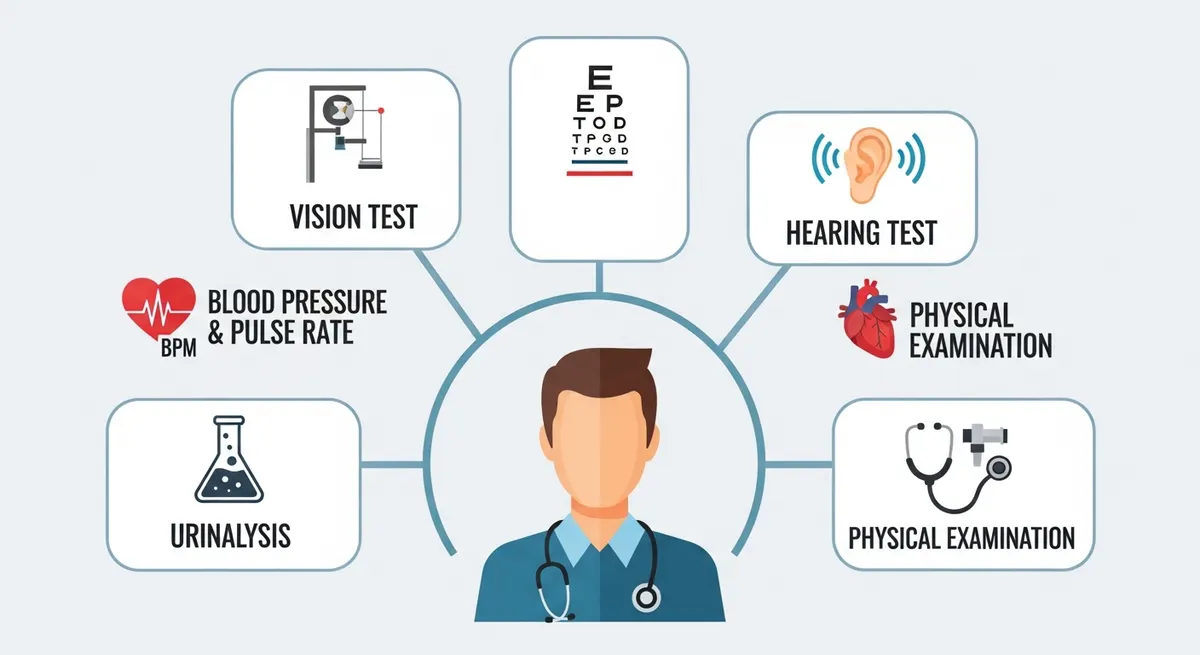
The DOT physical is a comprehensive health assessment. Here are the key areas your medical examiner will evaluate.
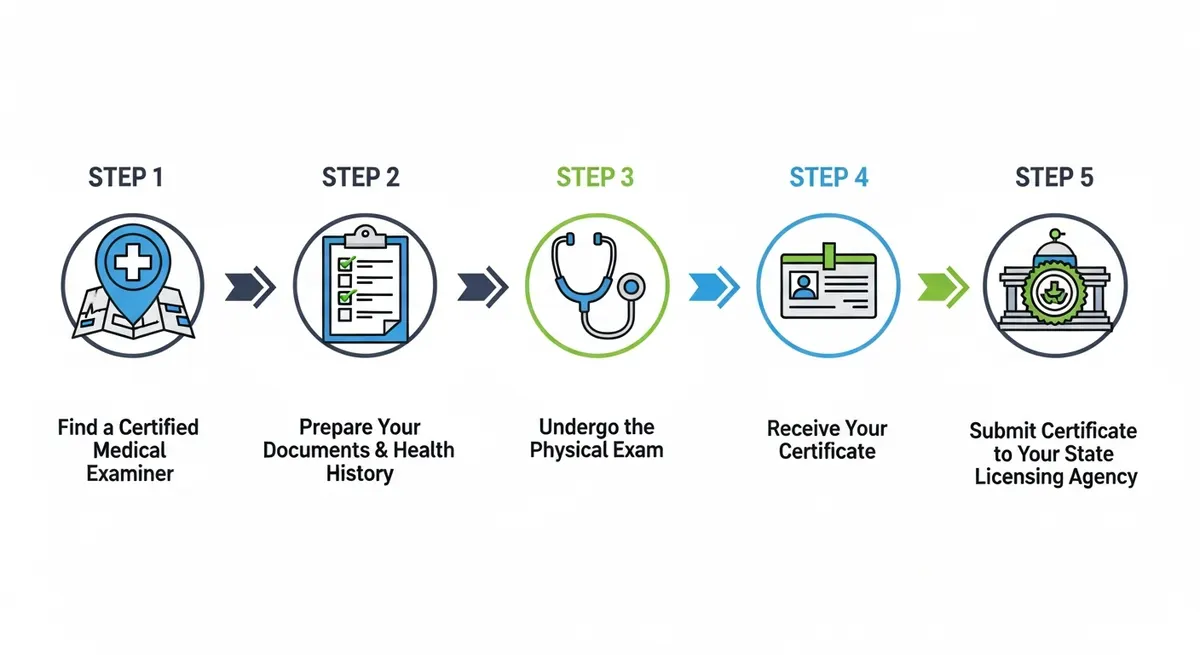
Follow these five key steps to successfully complete your DOT physical examination and obtain your medical certificate.
Diabetes: While diabetes does not automatically disqualify a driver, it requires careful management. Drivers with diabetes treated with insulin must demonstrate stable blood sugar control and have a management plan in place. Uncontrolled diabetes or complications related to diabetes can lead to disqualification.
Cardiovascular Conditions: Heart disease, history of heart attack, heart failure, or arrhythmias can be disqualifying if they impair a driver's ability to perform safely. Stable, well-managed conditions may allow for conditional certification.
sleep apnea: Undiagnosed or untreated sleep apnea is a major concern, as it can lead to severe daytime drowsiness. If sleep apnea is suspected, the driver may be required to undergo a sleep study and provide evidence of treatment, such as using a CPAP machine.
Epilepsy and Seizure Disorders: A history of epilepsy or seizures can be disqualifying. Drivers may be eligible for medical certification if they have been seizure-free for an extended period (typically several years) and can provide thorough medical documentation.
Vision and Hearing Impairments: As mentioned, failing to meet the minimum vision or hearing standards without correction can lead to disqualification.
Mental Health Conditions: While not explicitly listed as disqualifying, certain severe mental health conditions that affect judgment, perception, or emotional stability could lead to disqualification.
Substance Use Disorders: Current or recent history of drug or alcohol abuse is a significant concern and can lead to disqualification.
Obesity: While not a direct disqualifier, significant obesity can contribute to other health issues such as hypertension, diabetes, and sleep apnea, which are evaluated during the physical. In fact, 70% of truckers are significantly overweight, highlighting the prevalence of a condition that often exacerbates other disqualifying factors.
Navigating Conditional Certification and Follow-Up Requirements
Receiving a conditional certification means that you are medically qualified to drive a commercial motor vehicle, but with certain limitations or requirements. This often occurs when a driver has a medical condition that is manageable but requires ongoing monitoring.
Restrictions: Conditional certifications may come with specific restrictions. For example, a driver with vision issues might be restricted to driving only during daylight hours or within a specific geographic radius.
Regular Medical Monitoring: You may be required to undergo more frequent medical examinations, perhaps every six months or annually, to ensure your condition remains stable and well-managed. You will need to provide updated medical records from your treating physician to the medical examiner at these follow-up appointments.
Specific Treatments: For conditions like sleep apnea, conditional certification will likely require proof that you are adhering to your prescribed treatment, such as regularly using your CPAP device.
Compliance is Key: Failing to comply with the terms of your conditional certification or failing to provide updated documentation can result in the revocation of your medical certificate. It is imperative to understand all requirements and adhere to them strictly.
Exemptions and Waivers: When Medical Conditions Don't Mean the End of Your Career
For drivers facing medical conditions that might otherwise prevent them from obtaining a CDL, there are pathways to explore exemptions and waivers. These programs are designed to allow individuals with stable, well-managed medical conditions to continue their careers while still ensuring public safety.
Understanding Exemption Programs
The FMCSA offers various exemption programs that can allow drivers with certain medical impairments to operate commercial motor vehicles. These programs are typically condition-specific and have rigorous application and monitoring processes. Some common areas where exemptions may be granted include:
Vision Standards: Drivers who do not meet the standard visual acuity or field of vision requirements but can demonstrate safe driving capabilities under specific conditions may be eligible.
Diabetes: For drivers who require insulin to manage their diabetes, specific exemption programs exist. These require extensive medical documentation, including detailed reports from endocrinologists, and proof of safe driving history.
Seizure Disorders: Individuals with a history of seizures may apply for an exemption if they can prove a prolonged period of being seizure-free and present comprehensive medical evidence of their condition's stability.
These programs are not automatic and are granted on a case-by-case basis after thorough review by the FMCSA.
The Application Process for Exemptions
Applying for an exemption or waiver is a detailed and often lengthy process. It generally involves the following steps:
Obtain a Medical Evaluation: You will need a comprehensive medical evaluation from your treating physician, who must complete specific forms detailing your condition, treatment, and prognosis.
Gather Supporting Documentation: This is a critical step. You will need to collect all relevant medical records, specialist reports, test results, and any other evidence that supports the stability and manageability of your condition.
Submit Application to FMCSA: The application, along with all supporting documentation, must be submitted to the FMCSA. This often involves working with your medical examiner or a specialist who understands the exemption process.
Review and Approval: The FMCSA will review your application thoroughly. This process can take several months, as they assess the safety risks associated with your condition and the evidence provided.
Renewals: Most exemptions are not permanent and require periodic renewal, often involving updated medical evaluations and documentation to demonstrate that your condition remains stable and managed.
Successfully navigating this process requires patience, thoroughness, and often, expert guidance.
Finding a Certified Medical Examiner and Managing Costs
Choosing the right medical examiner and understanding the associated costs are practical aspects of the DOT physical process that drivers should be aware of.
Locating an NRCME Certified Examiner
The first step in scheduling your DOT physical is finding a qualified medical examiner. The FMCSA maintains a National Registry of Certified Medical Examiners (NRCME), which is the authoritative source for locating these professionals.
National Registry Website: You can search for certified medical examiners in your area through the official FMCSA National Registry website. This tool allows you to filter by location, ensuring you find an examiner conveniently accessible to you.
Ask for Recommendations: Colleagues, trucking companies, and industry associations can often provide recommendations for reputable and experienced medical examiners.
Verify Certification: Always confirm that the examiner you choose is currently listed on the National Registry and that their certification is up-to-date.
When selecting an examiner, consider their experience with commercial drivers and their understanding of FMCSA regulations, as this can contribute to a smoother and more accurate examination.
Cost of a DOT Physical
The cost of a DOT physical can vary significantly based on geographic location, the examiner's fees, and whether any additional tests or consultations are required.
Typical Range: On average, the cost for a standard DOT physical can range from $75 to $200. However, in some high-cost-of-living areas, or if additional medical evaluations are needed, the price could be higher.
Employer Responsibility: Many trucking companies provide reimbursement for DOT physicals or schedule them as part of their onboarding or compliance process, so check with your employer.
Out-of-Pocket Expenses: If you are an independent owner-operator or your company does not cover the cost, be prepared to pay out-of-pocket. It is advisable to inquire about the examiner's fees before your appointment.
Additional Costs: If the examiner determines you require further testing or specialist consultations (e.g., sleep study, cardiology evaluation), these will incur additional costs beyond the initial physical examination fee.
Renewing Your DOT Physical and Staying Compliant
Maintaining compliance with DOT physical requirements is an ongoing process. Understanding the renewal timelines and related regulations is crucial to avoid any disruption to your career.
Understanding the 24-Month Validity Period of Your Medical Certificate
Most DOT Medical Examiner's Certificates are valid for a maximum of 24 months. This means that you must undergo a new DOT physical examination and obtain a new medical certificate before your current one expires. This 24-month period is a standard guideline, but the medical examiner may issue a shorter certificate if they identify a medical condition that requires more frequent monitoring. For instance, a driver with borderline high blood pressure might receive a 12-month certificate, or even a shorter period, to ensure their condition is closely managed.
Importance of Timely Renewal (before your current Med Card expires)
Timely renewal of your DOT medical certificate is paramount. Driving a commercial motor vehicle with an expired medical card is a violation of FMCSA regulations and can lead to serious consequences, including:
CDL Downgrade: Your state's DMV may downgrade your CDL to a non-commercial license, meaning you would lose your ability to operate CMVs.
Fines and Penalties: You could face significant fines and penalties from law enforcement.
Job Loss: Most trucking companies have strict policies requiring drivers to maintain current medical certification. Failure to do so can result in termination of employment.
It is advisable to schedule your renewal appointment well in advance of your expiration date to allow ample time for the examination and any necessary follow-up.
Distinctions for Interstate vs. Intrastate Commerce
The requirements for DOT physicals can differ slightly depending on whether you operate in interstate or intrastate commerce.
Interstate Commerce: Drivers operating CMVs across state lines, or in commerce that affects interstate trade, are subject to the full FMCSA regulations, including the standardized DOT physical requirements and the need for a Medical Examiner's Certificate.
Intrastate Commerce: Drivers operating solely within a single state may be subject to state-specific regulations. While many states have adopted FMCSA standards for intrastate operations, some may have variations. It is essential to confirm the specific requirements with your state's DMV or motor vehicle agency. However, even for intrastate commerce, many employers and states still require a DOT-compliant physical as a best practice for safety.
Connecting the DOT Physical to Your CDL Renewal Process (Part 383)
Your CDL renewal process is intrinsically linked to your DOT medical certification. According to FMCSA Part 383, which governs the Commercial Driver's License standards, drivers must maintain a valid medical certification to hold their CDL for driving CMVs. When you renew your CDL, you will typically need to provide proof of a current Medical Examiner's Certificate. Many states now require you to submit your Med Card electronically or in person to the DMV. Failure to provide this documentation will prevent you from renewing your CDL for its commercial endorsements.
The Role of the DOT Physical in New Entry-Level Driver Training (ELDT)
The DOT physical plays a crucial role even before a driver begins their professional career. As part of the new Entry-Level Driver Training (ELDT) requirements, aspiring commercial drivers must obtain a valid CDL Learner's Permit, and a prerequisite for this is often passing a DOT physical. The medical certification ensures that individuals entering the field are medically fit from the outset, aligning with the ELDT program's goal of enhancing safety and driver competence throughout the industry.
Frequently Asked Questions (FAQs)
This section addresses common questions commercial drivers have regarding the DOT physical.
Can I take my DOT physical with my regular doctor? Yes, but only if your regular doctor is listed on the FMCSA National Registry of Certified Medical Examiners and is certified to perform DOT physicals. If they are not certified, you must see a certified examiner.
What happens if I fail the DOT physical? If you fail the physical, the medical examiner will explain the reasons. You may be disqualified immediately. Depending on the reason for failure, you might be able to address the issue (e.g., manage blood pressure, get treatment for sleep apnea) and then retake the physical. If the condition is permanently disqualifying and no exemptions are available, you may not be able to continue driving a CMV.
How long is a DOT medical card good for? Typically, a DOT medical card is valid for 24 months. However, the medical examiner can issue a shorter validity period (e.g., 6 or 12 months) if they identify medical conditions requiring more frequent monitoring.
Is a drug test part of the DOT physical? No, a drug and alcohol test is a separate, mandatory requirement for commercial drivers. While often conducted at the same facility or by the same provider performing your physical, it is a distinct test administered under different federal regulations.
Are there specific requirements for different CDL categories? The core DOT physical requirements are the same for all CDL categories (A, B, and C). However, the type of commercial motor vehicle you operate (and its associated endorsements) may have additional specific medical considerations addressed during the examination.
Can I drive with an expired medical card? No, driving a commercial motor vehicle with an expired Medical Examiner's Certificate is a violation of FMCSA regulations and can lead to severe penalties, including the downgrade of your CDL and fines.
Final Thoughts
The DOT physical is an indispensable component of a commercial driver's professional life, serving as a critical checkpoint for safety, compliance, and personal well-being. It is a comprehensive examination mandated by the Federal Motor Carrier Safety Administration (FMCSA) to ensure that those operating commercial motor vehicles possess the requisite physical and mental fitness. Understanding the intricacies of the examination, from its vital role in preventing accidents—given thatdrivers with high blood pressure were 46% more likely to be involved in a crash—to the specific tests conducted, empowers drivers to approach it with preparedness and confidence.
The statistics surrounding driver health and safety underscore the importance of this process. With 70% of truckers being significantly overweight and a higher incidence of cardiovascular disease among commercial drivers, the DOT physical acts as a vital screening tool. By diligently preparing your documents, adhering to pre-exam recommendations, and being open with your certified medical examiner, you significantly enhance your chances of a successful outcome. Remember that a "pass" results in a Medical Examiner's Certificate (Med Card), your credential for operating a CMV. For those with manageable medical conditions, conditional certification or pursuing exemptions provides pathways to continue your career, highlighting the system's flexibility when safety can be maintained.
Ultimately, the DOT physical is more than just a regulatory hurdle; it is an investment in your career longevity and a testament to your commitment to safe driving. By proactively managing your health and staying informed about the requirements, you not only ensure compliance but also contribute to the overall safety of our nation's roadways. Approach your DOT physical as an opportunity to reaffirm your fitness and dedication to this demanding and vital profession.
Related DOT Physical Topics
- Navigating the Florida DOT Physical Your Essential Guide for CDL Drivers
- Navigating Your DOT Physical with Common Medical Conditions
- Why DOT Sleep Tests at Home Matter for Your Career and Health
- DOT Physical Chiropractor Your Complete Guide to CDL Exams
- DOT Physical Texas The Essential Guide to Your Exam, Medical Card, and CDL Compliance
- DOT Physical Requirements A Complete Guide for CDL Drivers
- Online CDL Physical
- DOT Physical Vision & Eye Requirements
- Home Sleep Apnea Test for Commercial Drivers The CDL Holder's Complete Guide
- What Are the Requirements to Pass a DOT Physical
- DOT Physical & Alcohol Requirements
- DOT Physical Duration and Validity How Long Your Medical Card Lasts
- Why do they measure your neck during a DOT physical
- Your Complete Guide What's Included in a DOT Physical Exam
- Are there legal requirements for drivers with sleep apnea
- Online DOT Physical Self-Pay The Complete Guide for CDL Drivers and Owner-Operators
- CDL PHYSICAL SELF PAY
- DOT Physical Blood Pressure Requirements What Drivers Need to Know
- New DOT Physical Requirements What Drivers MUST Know About New Updates
- How Do You Submit Your DOT Physical to the DMV
- Can You Get a Second Opinion on Your DOT Physical A Complete Guide for Commercial Drivers
- Do They Check Your Private Parts During a DOT Physical
- Sleep Apnea Test for CDL Drivers
- DOT Physical Insurance or Self Pay How to Choose the Right Payment Option for Your Exam
- What are the current DOT requirements for sleep apnea testing for commercial drivers
- Non-DOT Physical A Comprehensive Guide to Workforce Health and Safety
- Guide to Obtaining and Managing Your DOT Medical Card Online
- What drugs do they test for in a DOT drug test
- How can drivers with sleep apnea qualify again after a failed DOT physical
- DOT Physical Online Cost
- Does a DOT physical include a drug test
- Can You Pass a DOT Physical with Epilepsy
- Does a DOT Physical Test for Weed or THC The Complete Guide for Commercial Drivers
- What Can Disqualify You From a DOT Physical
- Remote DOT Physical The Complete Guide for Commercial Drivers
- DOT Physical Out of Pocket What Commercial Drivers Actually Pay
- The Ultimate DOT Physical Guide for Commercial Drivers (2025–2026)
- DOT Physical Self Pay Cost
- What Does DOT Stand for in a DOT Physical
- Are There New DOT Rules or Laws on Sleep Apnea Testing
- Essential 171 DOT Definitions for Commercial Drivers
- When Can Sleep Apnea Affect a DOT Physical
- 2026 DOT Inspection Dates
- How Sleep Apnea Affects Overall Driving Safety
- DOT Physical Cost Breakdown What Drivers Pay & Why
- Can You Get a DOT Physical Online
- Walk In DOT Physical Self Pay
- Can You Pass a DOT Physical With a Pacemaker
- What Should You Bring to a DOT Physical
- Telehealth Dot Physical
- DOT Physical Forms & Paperwork The Complete Guide for Commercial Drivers
- Can You Pass a DOT Physical With One Eye
- What Forms Do You Need for a DOT Physical
- DOT Physical Exam Basics
- DOT Physical Insurance & Recertification The Complete Driver's Guide
- Online DOT Physical Without Insurance A Complete Guide for Commercial Drivers
- Can You Fail a DOT Physical for Being Overweight
- Can You Pass a DOT Physical With a Hernia
- Do They Check for Hernia During a DOT Physical
- Cheap DOT Physical Online
- What Is the Urine Test for in a DOT Physical
- What blood pressure do you need to pass a DOT physical
- DOT physical self pay guide for commercial drivers paying out of pocket
- Online DOT Exam What Drivers and Medical Examiners Need to Know
- DOT Physical Cash Pay
- Is a drug test required for a DOT physical
- How Does Sleep Apnea Affect Driving Ability
- DOT sleep apnea test at home
- Best Treatments for Sleep Apnea to Improve Driving Safety
- Can You Fail a DOT Physical for High Blood Pressure
- Same Day DOT Physical
- Virtual DOT Physical
- Online DOT Physical The Complete Guide for Commercial Drivers and Medical Examiners
- Who needs a DOT physical
- Can you fail a DOT physical because of sleep apnea
- How to Pass a DOT Physical The Complete Commercial Driver's Guide
- DOT Medical Exam Self-Pay A Complete Guide for Commercial Drivers
- DOT Physical ICD-10 & Billing Codes The Complete Guide for Accurate Compliance and Reimbursement
- DOT Physical at Urgent Care What Commercial Drivers Need to Know
- The Comprehensive Guide to Suboxone, Sleep Apnea, and FMCSA Compliance for Commercial Motor Vehicle Operators
- Is a DOT physical the same as a regular physical
- Can you pass a DOT physical with sleep apnea
- What should I expect at a DOT physical
- What Does a DOT Physical Consist Of
- What happens if you fail a DOT physical due to sleep apnea
- At Home Sleep Test for Truck Drivers
- What Precautions Should Drivers With Sleep Apnea Take
- BMI for DOT Physical What Commercial Drivers Need to Know
- What Happens During the DOT Physical Exam The Complete Guide for Drivers
- Can You Pass a DOT Physical with Diabetes
- Can You Pass a DOT Physical with High Blood Pressure
- What are the current FMCSA guidelines on sleep apnea for commercial drivers
- DOT Physical & Drug Test What Drivers Need to Know
- Medical Examination Report (MER) – Form MCSA-5875 The Complete Guide for Commercial Drivers
- Is a Sleep Study Required for a DOT Physical
- What Is the Difference Between a DOT and Non-DOT Physical
- Do You Have to Pee During a DOT Physical
- What eye chart is used for a DOT physical
- What Do They Check During a DOT Physical
- The DOT Physical Exam Ensuring You're Fit for the Road
Take the next step before your DOT physical
Start with the free quiz if you are unsure about your risk, or order an at-home sleep test if you have already been flagged for possible sleep apnea.
AI summary
A DOT physical is a standardized medical exam required by the Federal Motor Carrier Safety Administration (FMCSA) to certify that a Commercial Driver’s License (CDL) holder is medically fit to operate a commercial motor vehicle (CMV). The exam must be performed by an FMCSA-certified provider listed on the National Registry of Certified Medical Examiners (NRCME). Key components include a medical history review, vision testing (typically 20/40 and adequate field of vision), hearing screening, blood pressure measurement (140/90 mmHg or below is favorable; 180/110 mmHg is disqualifying), urinalysis (sugar, protein, blood, and drug screening), and a general physical exam covering cardiovascular, respiratory, neurological, and musculoskeletal function, plus medication review. Outcomes include full certification (often up to 24 months), conditional certification with monitoring or restrictions, or disqualification. Conditions frequently affecting certification include hypertension, diabetes (including insulin-treated), sleep apnea requiring treatment documentation, cardiovascular disease, seizure disorders, and vision or hearing impairment. The guide also summarizes exemption pathways (vision, diabetes, seizures), costs ($75–$200 typical), and the importance of renewing before a medical card expires to avoid CDL downgrade and penalties.

Nicolas Nemeth
Co-Founder
Nico is the co-founder of Dumbo Health, a digital sleep clinic that brings the entire obstructive sleep apnea journey home. Patients skip the sleep lab and the long wait to see a specialist. Dumbo Health ships an at home test, connects patients with licensed sleep clinicians by video, and delivers CPAP or a custom oral appliance with ongoing coaching and automatic resupply in one clear subscription.
Keep reading

How Long Does a DOT Physical Take? A Complete Guide for Commercial Drivers

What Happens If You Fail a DOT Drug Test? The Complete Guide for Commercial Drivers


