DOT physical self pay: guide for commercial drivers paying out of pocket
Paying out of pocket for a DOT physical can be the fastest way to renew or get certified when your medical card is expiring, you are changing jobs, or you need flexible scheduling. This guide explains what the DOT physical exam includes under FMCSA rules, what paperwork the medical examiner must complete, and why the exam is different from a routine checkup. It covers how costs vary by clinic type, location, and add-on services like drug testing or lab work, plus common extra fees for retesting or follow-up documentation. You will learn how to choose an examiner listed on the National Registry, what records to bring for conditions like sleep apnea, diabetes, or high blood pressure, and how to submit your medical certificate to stay compliant.
Struggling with sleep?
Find out if sleep apnea is the reason.
FDA-cleared. $149 flat. Physician-reviewed results in 48 hours.

DOT physical self pay: guide for commercial drivers paying out of pocket

DOT physical self pay is the out-of-pocket way to complete a required medical certification when you need speed, flexibility, or direct control over the process. The Federal Motor Carrier Safety Administration states that a qualified driver may receive certification for up to 24 months, although shorter certification periods are common when follow-up is needed. This guide explains what a DOT physical examination includes, why many drivers choose self pay options, what costs you should expect, how to choose certified medical examiners, and how to stay compliant after the visit. It also covers common medical conditions, paperwork, and practical questions that often come up before booking. The goal is to help you make a confident decision before you schedule your medical exam visit.
What is a DOT Physical Examination?

A DOT Physical Exam is the required physical exam used to decide whether a commercial driver can safely operate a commercial motor vehicle. A DOT physical examination matters because it affects your legal ability to work, stay compliant, and carry a valid DOT medical card.
The Department of Transportation sets the broader framework, but the exam itself is administered under FMCSA rules by professionals listed on the National Registry. That is why drivers are told to look for certified medical examiners rather than any general clinic. The medical examiner reviews your health history, medical history, medications, symptoms, and current function before making a certification decision.
A DOT physical examination is not the same as a routine annual wellness visit. The examiner is focused on whether any medical conditions could interfere with safe driving in a commercial vehicle or commercial motor vehicle. That includes concerns such as high blood pressure, hearing loss, poorly controlled diabetes, sleep apnea, serious heart conditions, neurological risk, or major vision limitations.
The exam usually includes a vision test, hearing test, blood pressureand pulse check, urine test, and a hands-on physical exam. The examiner also completes the medical examination report and, if you qualify, issues the medical examiner's certificate that supports your DOT certification. In practice, many CDL Medical Exams and DMV physical exams are discussed together by drivers, but the DOT Physical Exam follows a specific federal standard.
Not sure if sleep apnea applies to you?
Take our 2-minute sleep risk quiz to see whether sleep apnea could affect your DOT physical. No account required.
DID YOU KNOW: The FMCSA requires the examiner to complete the exam record even if a disqualifying issue is found, which is why full and accurate paperwork matters from the start.
KEY TAKEAWAY: A DOT physical exam is a regulated fitness-for-duty exam for commercial motor drivers, not a general checkup, and the result determines whether you receive a medical certificate.
Once you understand the exam itself, the next step is seeing why paying directly is often the most practical route.
Why "Self-Pay" is a Strategic Choice for Commercial Drivers

Self pay is a strategic choice because it gives many drivers more speed, price clarity, and scheduling control than waiting on employer processes. DOT physicals often move faster when you can choose the clinic, appointment time, and payment method yourself.
For many drivers, self pay options reduce friction. You do not need to wait for employer coverage approval, preauthorization rules, or reimbursement policies before getting on the schedule. That can matter when your current medical cards are close to expiring, when you are changing jobs, or when you need a same-week appointment close to you.
Self pay also helps with planning. Instead of wondering what will be billed later, you can often ask for the full fee before the visit. That makes out-of-pocket service more predictable, especially if you are an owner-operator or independent contractor who already budgets for licenses, permits, fuel, and maintenance.
Another benefit is control over timing and provider choice. Many patients report that paying directly makes it easier to compare occupational health clinics, urgent care centers, and providers in your area based on convenience rather than network restrictions. That can be valuable if you drive irregular shifts or need a walk-in option.
KEY TAKEAWAY: Self pay is often the most efficient way to get a DOT physical done on your timeline with clearer pricing and fewer administrative delays.
That practical value becomes even more obvious when you look at who typically chooses to pay out of pocket.
How This Guide Empowers Self-Paying Drivers

This guide empowers self-paying drivers by turning a confusing process into a clear checklist of costs, provider rules, paperwork, and next steps. DOT physical self pay works best when you know what the examiner needs before the appointment starts.
This page is built to answer the questions drivers actually ask. That includes cost, what the physical exam covers, whether walk-ins are acceptable, what happens if an issue is found, and how to protect your Commercial Driver's License or Drivers License status after certification. It also explains how self pay intersects with FSA/HSA cards, medical waiver forms, follow-up testing, and shorter certification periods.
The guide also helps you compare options. Some drivers need a fast visit near you. Others care more about a certified medical provider with transparent pricing and efficient electronic transmission of paperwork. Some need extra preparation because of diabetes, sleep apnea, high blood pressure, or specialist notes.
Already diagnosed and need CPAP support?
Dumbo Health helps patients start CPAP without the usual confusion, paperwork, or upfront cost. Equipment, setup, supplies, and ongoing support are all handled in one place.
Many drivers are also balancing federal and state transportation requirements. That is why this page covers the exam itself, the business decision around self pay options, and the compliance steps that follow. A smart booking decision is not only about price. It is about protecting work continuity.
KEY TAKEAWAY: The most useful self-pay guide is one that helps you choose the right provider, prepare the right documents, and avoid preventable certification delays.
With that foundation in place, the next question is why self pay is so common in the real world.
Understanding the "Why": Reasons Commercial Drivers Choose Self-Pay

Commercial drivers choose self pay because it solves practical problems around access, timing, privacy, and cost control. Self pay options are especially common when the driver, not the employer, is responsible for staying current.
Self pay is not only for uninsured people. It is also common among drivers who have coverage but do not want to wait for claims processing, employer approval, or limited provider lists. In real-world use, self pay often functions like an operational shortcut. You pay, get examined, receive a decision, and move on.
The decision also reflects how independent the job may be. Owner-operators, leased drivers, drivers working between carriers, and trainees getting ready for a Commercial Driver License often need the flexibility to arrange the exam themselves. That makes DOT physical self pay less of a backup option and more of a standard workflow.
Privacy also matters. Some drivers prefer to manage medical information directly with the examiner rather than routing everything through an employer administrator unless disclosure is legally required. That does not remove regulatory obligations, but it can make the process feel more controlled.
TIP: Before booking, ask for the total self-pay fee, whether retesting fees apply, and whether the clinic handles electronic transmission or gives you instructions for submitting your medical certificate.
KEY TAKEAWAY: Drivers choose self pay for practical reasons such as speed, independence, privacy, and predictable cost rather than because it is their only option.
Those reasons become clearer when you break them down one by one.
Lack of Employer Coverage or Reimbursement Policies

Many drivers self pay because no employer coverage exists or reimbursement policies are limited, delayed, or unclear. Employer coverage is helpful when it is simple, but it is not universal and it is not always fast.
Some companies reimburse only after the visit. Some require using a specific clinic. Some cover the exam only after a probation period. Others may not cover the cost at all for applicants, temporary workers, or drivers who are not yet fully onboarded. That leaves the driver responsible for arranging and paying for the exam upfront.
This is especially important when your medical examiner's certificate is close to expiration. Waiting for internal approval can create unnecessary risk if the exam is required before you can continue driving a commercial motor vehicle. Self pay removes that bottleneck.
If your employer later reimburses the visit, that can still make self pay the right first move. Paying upfront can preserve compliance and income, while reimbursement policies can be sorted out afterward.
KEY TAKEAWAY: When employer coverage is absent, delayed, or narrow, self pay is often the most reliable way to protect your certification timeline.
That leads directly to the group most likely to use self pay as their default model.
The Standard for Owner-Operators and Independent Contractors

For owner-operators and independent contractors, self pay is often the normal business model rather than an exception. A commercial driver running independently usually handles medical certification the same way they handle licensing, fuel, or maintenance costs.
Independent drivers need control over scheduling because downtime is expensive. A delayed DOT Physical Exam can affect dispatch, contracts, and compliance across multiple carriers or clients. Self pay lets you choose the provider, the location, and the timing that fit your route and workload.
This structure also supports budgeting. When you operate as your own business, predictable occupational health expenses are easier to manage than uncertain claims workflows. The long-term value of self pay often comes from fewer surprises and faster execution, not only from the base fee.
Many independent drivers also prefer direct communication with the examiner. That can be useful if you need to provide specialist notes, glucose records, a Blood sugar monitor log, or a CPAP compliance report before the medical examination report is finalized.
KEY TAKEAWAY: For owner-operators and contractors, self pay is usually the most practical and business-friendly way to keep DOT certification current.
The same logic also appeals to company drivers who simply need speed.
Prioritizing Convenience: Faster Scheduling and Walk-In Options

Self pay often improves convenience because you can choose the fastest clinic, including walk-in providers in your area. Convenience matters when DOT physicals are time-sensitive and your work schedule is unpredictable.
Many urgent care and occupational health clinics offer same-day or next-day availability for a medical exam visit. That can be valuable when a driver is on the road, between loads, or trying to complete CDL Medical Exams before a deadline. Clinics that handle routine driver exams may also move faster through paperwork because the staff know the process well.
Convenience is not only about speed. It is also about location and hours. Some drivers need a clinic near you that opens early, accepts walk-ins, or can fit a quick appointment between shifts. Others want a provider close to you with experience in commercial vehicle and commercial motor vehicle exams so there is less confusion during the visit.
If you also need evaluation for a sleep-related issue, dumbo.health offers an at-home sleep test that may be relevant when sleep apnea is part of the certification conversation.
KEY TAKEAWAY: Self pay gives you more control over when and where the exam happens, which can reduce downtime and make certification easier to complete.
Convenience is useful, but most drivers still want to know whether the price makes sense.
Gaining Cost Control and Transparency with Self-Pay Options

Self pay options improve cost control because the price is usually quoted upfront instead of processed through multiple parties. Transparency matters when you are comparing providers and trying to avoid surprise fees.
A typical self-pay DOT physical cost often falls within a local cash-pay range rather than a complex billed amount. Prices vary by clinic type, geography, whether extra testing is needed, and whether drug testing or on-site lab testing is bundled into the visit. The base exam fee may cover only the DOT Physical Exam itself, not add-on services.
Cost transparency also helps you compare by value rather than by sticker price alone. A lower price may not be the better choice if the clinic lacks experienced certified medical examiners, has limited appointment availability, or charges separate retesting fees for blood pressure rechecks or incomplete paperwork.
The key difference between a cheap exam and a high-value exam is predictability. A clinic that clearly explains the fee, what it includes, and what follow-up costs may apply often saves money in practice.
| Self-pay cost factor | What changes the price | Why it matters |
|---|---|---|
| Clinic type | Urgent care, occupational health, primary care | Some settings bundle more services |
| Location | Providers near you versus high-demand areas | Regional pricing can vary |
| Add-on testing | Drug testing, lab work, forms support | May increase total visit cost |
| Follow-up needs | Retesting fees, repeat blood pressure check | Can raise total out-of-pocket cost |
| Paperwork support | Submission guidance, electronic transmission | Can save time and errors |
For the most common use case, the best provider is usually the one with clear bundled pricing, National Registry status, and strong DOT exam experience.
KEY TAKEAWAY: Self pay gives you better cost visibility, but the real value comes from understanding exactly what is and is not included in the fee.
For some drivers, cost is only one side of the decision and privacy matters just as much.
Maintaining Privacy and Control Over Your Medical Information

Self pay can give you more day-to-day control over scheduling and communication, but it does not remove regulatory disclosure obligations. Privacy matters because medical information, certification status, and work eligibility can all affect your next steps.
When you self pay, you usually communicate directly with the clinic about records, medications, and follow-up documents. That can feel more manageable than routing all questions through an employer. Many patients report that direct communication reduces confusion, especially when they need to send specialist notes or clarify past treatment.
At the same time, a DOT physical examination is still a regulated process. The examiner must document the visit, complete the medical examination report, and issue or deny the medical examiner's certificate based on federal standards. If your state requires submission of the DOT medical certificate to support your CDL record, that obligation still exists whether you self pay or not.
Privacy in this setting means practical control, not secrecy. You may have more control over appointment logistics and record gathering, but the certification decision still has to meet federal regulations and safety standards.
KEY TAKEAWAY: Self pay can simplify communication and record handling, but you still need to meet all legal certification and reporting requirements.
With the decision framework covered, it is time to look at actual dollars and what they usually buy you.
Demystifying the Self-Pay Cost: What to Expect Financially

The self-pay cost for a DOT Physical Exam is usually a straightforward cash-pay fee, but the total can rise if follow-up testing or repeat visits are needed. Financial planning matters because the cheapest advertised price is not always the lowest final cost.
Drivers often ask for one number, but the right question is broader: what does the fee include, what could trigger extra charges, and what happens if the examiner needs more documentation before issuing the medical certificate? Those three points tell you more than the base price alone.
A standard self-pay exam usually includes the visit, the paperwork review, the physical exam, the vision check, the hearing check, blood pressure measurement, and the urine test used for screening. If the clinic also includes submission support or fast turnaround, the higher fee may still be worth it.
On the other hand, additional costs can appear when the clinic separates services or requires a return visit. Examples include drug testing, lab work, follow-up blood pressure checks, repeat paperwork review, or retesting fees tied to missing information.
IMPORTANT: A urine test during a DOT physical examination is generally a health screening step and is not the same as a federally required drug testing panel unless that service is separately ordered.
KEY TAKEAWAY: The real financial question is not only the upfront fee but the total path to certification, including any follow-up or add-on charges.
To manage that path well, start with the average range and the factors that move it.
Average DOT Physical Cost Range and Influencing Factors

The average DOT physical cost usually sits in a local cash-pay range shaped by clinic type, geography, and whether extra services are bundled. Cost matters most when you compare total value, not only the headline number.
In many markets, drivers will see cash-pay pricing somewhere from moderate to higher two-digit or low three-digit amounts, but there is no single national rate. Providers near you may charge more for walk-in convenience, same-day service, extended hours, or bundled occupational health support. Providers in your area may also price differently based on demand and staffing.
The final amount can also change if the clinic adds services that are sometimes discussed separately by drivers, such as drug testing, employer forms, or on-site lab testing. A provider that appears cheaper at first may become more expensive once these extras are added.
If you are comparing multiple clinics, ask for the total self-pay price in writing before booking. That is the best way to control your budget and avoid confusion later.
KEY TAKEAWAY: DOT physical self pay costs vary widely, so the smart comparison is total included value, not the lowest advertised price.
Once you know the range, you need to know what the standard fee usually covers.
What a Standard Self-Pay Fee Typically Includes:

A standard self-pay fee usually includes the core DOT physical examination and required paperwork review. What it includes matters because a complete visit reduces the chance of extra charges later.
Most standard fees cover the health history form, medical history review, physical exam, blood pressure and pulse check, vision testing, hearing assessment, urine test, and the examiner’s certification decision. If you meet the standard, the clinic will issue the medical examiner's certificate and give you instructions for your DOT medical card or medical cards documentation.
A good provider will also explain whether the fee includes a copy of the medical examination report, support with the DOT medical certificate process, and guidance on next steps if a short-term certificate is issued. Some clinics also provide clearer instructions for Drivers License or Commercial Driver License record updates.
Because clinics vary, never assume a standard fee includes everything. Ask specifically whether the quoted amount covers the exam only or also includes paperwork completion and any post-visit support.
KEY TAKEAWAY: A standard self-pay fee usually covers the exam and core paperwork, but you should confirm exactly what is bundled before you book.
The next part of the budget is the set of extra costs that catch drivers off guard.
Potential Additional Costs for Self-Payers to Anticipate:

Additional costs can arise when the examiner needs follow-up information, repeat testing, or services outside the core exam. Anticipating these costs helps you plan the full certification process instead of only the first visit.
Common extra costs include drug testing, follow-up blood pressure checks, repeat paperwork review, duplicate forms, or retesting fees after an incomplete first visit. If you arrive without medication lists, glucose records, a CPAP compliance report, or specialist notes, the clinic may delay the decision and require another appointment.
This is especially relevant for drivers with medical conditions such as sleep apnea, high blood pressure, diabetes, heart conditions, or recent surgery. The issue is not always disqualification. Often the real issue is documentation. Clinicians frequently observe that missing records delay certification more often than the condition itself.
If the clinic offers on-site lab testing, that may be useful, but it may also increase the total bill. Ask before the appointment whether the quote includes any optional testing or only the standard exam.
KEY TAKEAWAY: Additional costs usually come from missing documentation, repeat visits, or optional services, so preparation is one of the best ways to protect your budget.
That budget conversation naturally raises the question of whether pre-tax funds can help.
Using FSA/HSA Cards for Out-of-Pocket Service
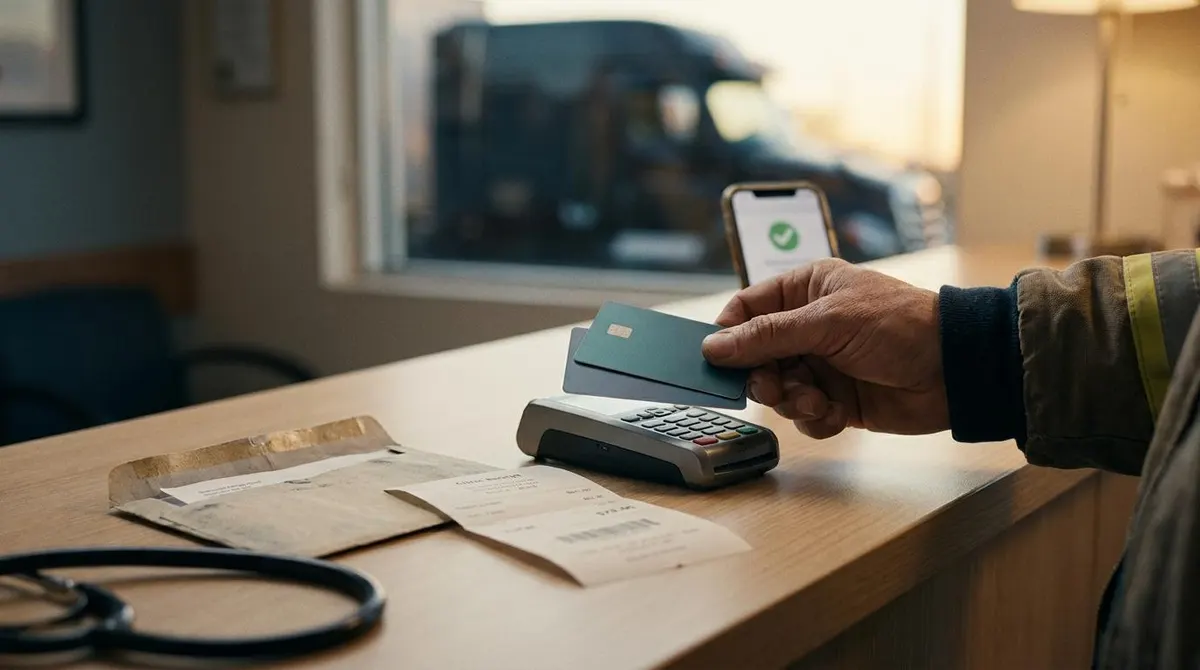
FSA/HSA cards may be usable for a DOT physical self pay visit when the expense qualifies as medical care under tax rules, but you should confirm plan-specific rules before paying. According to the IRS, eligible medical expenses generally include amounts paid for the diagnosis, cure, mitigation, treatment, or prevention of disease.
In practical terms, many drivers successfully use FSA/HSA cards for qualifying exam-related health expenses, but card acceptance and plan administration are not identical across employers or account providers. A clinic may accept the card, yet your specific plan may still require documentation or impose restrictions on reimbursement timing.
The safest approach is simple. Ask the clinic whether FSA/HSA cards are accepted and save the receipt, visit summary, and any documentation showing the nature of the medical exam visit. If your card is declined, you may still be able to submit the expense later through your plan administrator depending on the account rules.
KEY TAKEAWAY: FSA/HSA cards can help with DOT physical self pay costs, but you should confirm both clinic acceptance and your own plan rules before relying on them.
Once payment is clear, the next decision is choosing the right examiner.
Finding the Right Self-Pay Provider: Certification, Convenience, and Value

The right self-pay provider is one who is properly certified, transparent on cost, and experienced with DOT physicals. Provider choice matters because certification quality, documentation accuracy, and turnaround time all affect the outcome.
A DOT physical examination must be completed by a professional on the National Registry of Certified Medical Examiners. That is the baseline requirement. Beyond that, value comes from practical strengths such as easy scheduling, clear pricing, responsive staff, and familiarity with common driver issues like diabetes logs, sleep apnea records, or medication review.
The best provider is rarely the one with the loudest marketing. The best provider is usually the one who answers detailed questions clearly before the appointment. That includes what records to bring, what services are bundled, how long the visit usually takes, and what happens if the examiner needs more documentation before issuing the medical certificate.
If you are looking for a starting point on the broader exam process, DOT physical forms and paperwork: the complete guide for commercial drivers can help you prepare your documents before you book.
KEY TAKEAWAY: A high-value self-pay provider combines National Registry eligibility, practical DOT experience, clear pricing, and smooth paperwork handling.
The first screen should always be the examiner’s certification status.
The Critical Importance of a Certified Medical Examiner (NRCME)

A certified medical examiner is essential because only an eligible examiner can perform the exam for federal driver qualification purposes. The National Registry requirement protects the validity of your DOT certification and reduces the risk of paperwork errors.
Certified medical examiners are listed through the National Registry, which is the FMCSA system used to identify qualified examiners. This matters because a physical exam from a nonqualified provider may not support your medical examiner's certificate, even if the provider is otherwise licensed in general practice.
A certified medical provider who regularly performs DOT physicals is also more likely to understand common issues such as visual acuity thresholds, peripheral vision standards, hearing test methods, medical waiver forms, and documentation for ongoing treatment. Experience does not guarantee certification, but it often improves efficiency and reduces avoidable delays.
When booking, do not ask only whether the clinic offers DOT exams. Ask whether the specific examiner is currently listed on the National Registry and whether the clinic routinely handles commercial motor vehicle exams.
KEY TAKEAWAY: National Registry status is not optional because the validity of your DOT physical exam depends on a properly qualified examiner.
After confirming certification, you can compare the types of clinics that usually offer self-pay exams.
Where to Look for Self-Pay DOT Physicals:

Self-pay DOT physicals are commonly available through urgent care, occupational health, and selected primary care clinics, but National Registry status should always come first. Where you book matters because experience and workflow can vary more than price.
Common places to look include:
Occupational health clinics that regularly handle employer and driver exams
Urgent care providers that advertise DOT physicals
Multi-site walk-in clinics with occupational medicine services
Local medical offices where the examiner is listed on the National Registry
Some drivers search brand names first, but the better approach is to start with the examiner qualification, then compare convenience and fee structure. National chains and local clinics can both be good options if the examiner is qualified and the paperwork process is well run. If a provider cannot clearly explain the process, keep looking.
Midway through your research, it can help to review who needs a DOT physical so you can confirm exactly which driving role or vehicle class applies to you.
KEY TAKEAWAY: The best place to book is the clinic with a qualified examiner, clear pricing, and a smooth DOT workflow rather than the clinic with the most familiar name.
Before you confirm the appointment, ask a few targeted questions.
Key Questions to Ask Before Your Appointment:

The right questions before booking can save time, money, and repeat visits. A DOT physical self pay appointment goes more smoothly when the clinic answers operational questions clearly before you arrive.
Ask these questions before you book:
Is the examiner on the National Registry of Certified Medical Examiners?
What is the full self-pay fee and what does it include?
Are drug testing or on-site lab testing separate charges?
Do you charge retesting fees or follow-up paperwork fees?
What documents should I bring if I have sleep apnea, diabetes, heart conditions, or other medical conditions?
Do you provide instructions for submitting the medical certificate after the exam?
Is same-day service available if I need a provider near you?
If the clinic answers these questions directly, that is a good sign. If the answers are vague, assume there may be confusion later in the process.
KEY TAKEAWAY: A few detailed pre-booking questions can prevent hidden costs, incomplete visits, and certification delays.
Once the provider is chosen, preparation becomes the biggest factor you can control.
Preparing for Your Self-Pay DOT Physical: A Practical Checklist

Preparation improves the odds of a smooth DOT physical examination because it reduces delays tied to missing records or incomplete forms. A practical DOT Physical Checklist is one of the best tools a self-paying driver can use.
Bring all identification, medication details, and condition-specific documents in one organized packet. That includes your photo ID, current Drivers License or Commercial Driver's License information, list of prescriptions, recent specialist notes if relevant, and any records that show ongoing control of a condition. For many drivers, the difference between a same-day decision and a delayed decision is documentation, not the condition itself.
Sleep-related records are a common example. If you have sleep apnea and use PAP treatment, bring a current CPAP compliance report. If you manage diabetes, bring your glucose records and information about monitoring. If you have hypertension, bring recent readings and medication details.
People who undergo this exam often find that the easiest appointment is the one prepared like a compliance file, not like a casual doctor visit. The examiner needs facts, dates, and records.
KEY TAKEAWAY: Strong preparation lowers the risk of repeat visits, extra fees, and delayed certification because documentation gaps are a common reason the process slows down.
Start that preparation with the documents the clinic will expect first.
Essential Documents and Information to Bring:

Essential documents include identity, driving credentials, medication information, and any records tied to ongoing medical conditions. These documents matter because the examiner needs both regulatory and medical context to complete the visit.
Bring:
Photo ID
Drivers License or Commercial Driver License details
Current DOT medical card if you already have one
Medication list with dosage
Names of treating clinicians
Recent specialist notes if applicable
CPAP compliance report if relevant
Blood sugar monitor data or glucose records if relevant
Any prior medical waiver forms if applicable
If you are changing carriers or renewing after a prior certificate, bring old paperwork as well. The more complete the file, the more efficiently the examiner can review your case.
KEY TAKEAWAY: The core rule is simple: bring enough documentation to prove your identity, treatment status, and current medical stability.
That core file should be supported by an accurate history.
Gathering Your Detailed Medical History:
A detailed medical history helps the examiner make a faster and safer certification decision because context matters as much as current symptoms. Medical history is one of the most important parts of the DOT physical examination.
Be ready to discuss surgeries, chronic diagnoses, medications, hospitalizations, past restrictions, and any episodes that could affect safe driving. That includes fainting, seizures, insulin use, heart procedures, sleep disorder treatment, and major medication changes. You should also be ready to explain how the condition is being managed today.
This is not the time to be vague. The medical examiner reviews your health history and health screening results together. A clear, consistent account is easier to assess than incomplete answers that require follow-up.
If blood pressure or sleep issues have affected prior exams, prepare for those topics before you arrive. For example, if you previously dealt with high blood pressure, review can you fail a DOT physical for high blood pressure to understand what documentation and control may matter.
KEY TAKEAWAY: A detailed medical history helps the examiner connect current exam findings with long-term health stability, which supports a cleaner certification decision.
Once the paperwork is ready, simple exam-day habits can still make a difference.
Practical Tips for a Smooth Exam Day:
A smooth exam day usually comes down to timing, hydration, organization, and calm communication. Practical habits matter because they reduce avoidable issues during the physical exam.
Arrive early with your documents organized. Bring glasses or hearing aids if you use them. Avoid rushing in after heavy caffeine, nicotine, or stress if blood pressure has been borderline in the past. Many patients report that a calm arrival and a complete paperwork packet make the entire medical exam visit easier.
You should also be ready to answer direct questions about sleep, medications, and symptoms. According to the CDC, adults generally need at least 7 hours of sleep per day, which helps explain why fatigue and untreated sleep issues receive attention during driver exams.
A calm, prepared approach does not guarantee a specific outcome, but it does reduce preventable friction.
KEY TAKEAWAY: The best exam-day strategy is to arrive early, bring complete records, and avoid simple factors that can create an unnecessarily stressful visit.
Preparation leads directly into what actually happens once the appointment begins.
What to Expect During Your DOT Physical Examination (The Self-Pay Process)

The self-pay process usually follows the same medical and regulatory steps as any other DOT physical examination, with payment handled directly by you. What to expect matters because clarity lowers stress and improves preparation.
Most visits begin with forms, payment, and a review of your health history. The examiner or clinic staff may confirm medications, prior diagnoses, specialist care, and any records you brought. After that, the core testing begins. This usually includes blood pressure, pulse, urine test, vision testing, and a hearing assessment before the hands-on physical exam is completed.
The physical exam itself reviews major body systems that can affect safe operation of a commercial motor vehicle. The examiner is considering whether your current condition supports safe driving, whether monitoring is needed, or whether more records are required before a final decision can be issued.
If all standards are met, you may leave with the medical examiner's certificate or instructions for the next submission step. If not, the outcome may be a shorter certificate, a delay pending more records, or a nonqualification decision based on the examiner’s findings.
KEY TAKEAWAY: The self-pay process is medically the same as any DOT exam, but direct payment gives you more control over scheduling and provider choice.
The first stage is the paperwork and history review.
The Initial Paperwork and Health History Review:
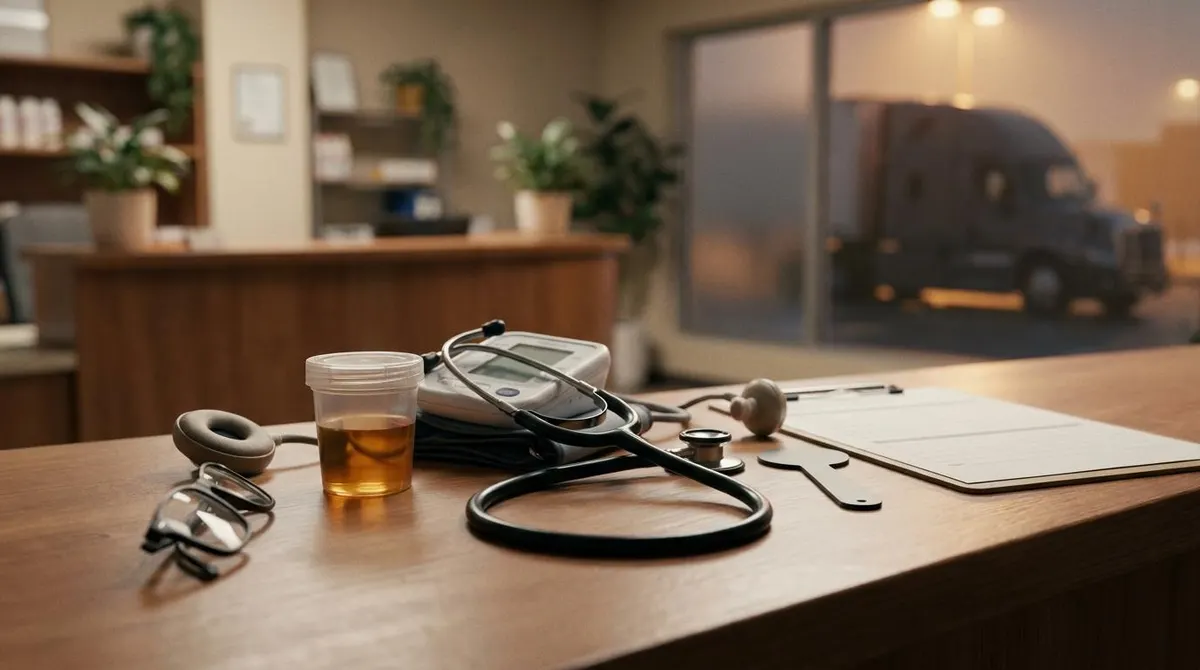
The initial review sets the tone for the entire appointment because incomplete forms can delay the certification decision before the exam even begins. The health history review matters because it frames how the examiner interprets later findings.
You will typically complete forms covering diagnoses, medications, symptoms, prior surgery, sleep issues, heart symptoms, vision or hearing concerns, and treatment history. The examiner compares those responses with any records you bring and may ask follow-up questions to clarify timelines or control of a condition.
This is also the stage where documents such as specialist notes, CPAP compliance report, or glucose records become especially useful. A clear and well-documented history gives the examiner more confidence in the overall picture.
The FMCSA paperwork process is structured for a reason. A medical examination report needs complete and supportable information. That is why accuracy matters more than speed during this part of the visit.
KEY TAKEAWAY: The paperwork review is not administrative filler because it directly influences how the examiner evaluates the rest of your exam.
After the forms come the core medical checks drivers usually think of first.
Key Components of the Physical Exam:

The key components of the physical exam are standardized checks that assess whether you can drive safely under federal standards. These components matter because the certification decision is based on functional safety, not only diagnosis labels.
Core components typically include:
Blood pressure and pulse
vision test and vision check
Visual acuity and peripheral vision review
Hearing test and hearing assessment
Urine test
General physical exam of major body systems
The examiner also looks at cardiovascular health, neurological function, respiratory status, and signs that a condition may interfere with safe driving. Blood pressure receives close attention because high blood pressure and uncontrolled cardiovascular risk can affect certification length. Hearing loss and visual acuity issues are also important because road safety depends on timely awareness of signals and hazards.
Research and guidance around sleep and fatigue also influence the practical exam conversation. According to the FMCSA and related clinical guidance, conditions such as sleep apnea matter because they can impair daytime alertness if untreated.
KEY TAKEAWAY: The physical exam combines vital signs, sensory screening, and system review to decide whether you meet the safety standard for commercial driving.
The final step is the certification outcome itself.
Receiving Your DOT Medical Card and Certification Decision:

Receiving your DOT medical card depends on whether the examiner finds that you meet the applicable standard at the time of the exam. The certification decision matters because it affects whether you can keep working without interruption.
If you qualify, the examiner issues the medical examiner's certificate, which many drivers refer to as the DOT medical card. In some cases the certificate lasts up to 24 months. In other cases the examiner may issue a shorter-term certificate when closer follow-up is appropriate. That often happens with conditions requiring monitoring rather than outright disqualification.
If you do not receive immediate certification, the result may be temporary delay rather than permanent denial. Missing records, recent treatment changes, or the need for specialist input may all affect timing. Drivers dealing with uncertain outcomes may also want to review failing a DOT physical: what every commercial driver needs to know.
KEY TAKEAWAY: A certification decision can be full-term, short-term, delayed pending records, or denied, so the best way to improve the outcome is preparation and documentation.
Even after the exam, there are compliance issues and medical hurdles you still need to manage.
Navigating Potential Hurdles and Ensuring Compliance for Self-Payers

Self-paying drivers still face the same medical and regulatory hurdles as everyone else, so planning after the exam matters as much as planning before it. Compliance matters because a valid medical certificate only helps if it is properly maintained and submitted.
The most common hurdles are not always the most feared ones. In many cases, the real challenge is timely documentation for ongoing care rather than the diagnosis itself. Drivers with sleep apnea, diabetes, high blood pressure, cardiac history, or medication complexity may need more records, shorter certification periods, or closer follow-up.
Self-paying drivers should also pay attention to timing. If the certificate is issued, you may still need to complete submission steps tied to your CDL record depending on the licensing framework that applies. Delays after the exam can create compliance problems even when the exam itself went well.
Self pay offers operational control, but it does not change the underlying federal requirements. The safest mindset is to treat the visit as one part of a full compliance cycle.
KEY TAKEAWAY: Passing the exam is only part of the process because ongoing documentation, renewal timing, and submission rules also affect your driving status.
The first major hurdle is how specific medical conditions are handled.
Addressing Medical Conditions That Could Affect Certification:

Medical conditions can affect certification length, timing, or eligibility, but documentation and control often matter more than the diagnosis name alone. This section matters because many drivers assume a condition automatically means failure when the reality is more nuanced.
Common concerns include high blood pressure, sleep apnea, diabetes, heart conditions, hearing loss, and neurological history. For example, sleep apnea is often relevant because untreated daytime sleepiness can affect safe operation. If sleep apnea is being treated, documentation such as a CPAP compliance report may help show stability. The American Academy of Sleep Medicine commonly references PAP adherence as at least 4 hours per night on at least 70% of monitored nights, which is useful context when treatment records are reviewed.
Similarly, blood pressure may influence certification length rather than trigger automatic disqualification in every case. Drivers with concern about related thresholds may want to review what blood pressure do you need to pass a DOT physical.
Medical nuance matters. A well-managed condition with good records may be easier to certify than a mild condition with poor documentation.
KEY TAKEAWAY: Many medical conditions do not automatically end certification, but they often require clearer documentation, stronger monitoring, or shorter-term follow-up.
Because fear and misinformation are common here, it helps to separate myths from facts.
Common Myths About DOT Physical Self Pay Debunked

DOT physical self pay is surrounded by myths that create unnecessary stress and bad decisions. Correcting these myths matters because many drivers overestimate both the cost risk and the medical risk.
MYTH: Paying cash means the exam is less official or less valid.
FACT: A self-pay exam is just as valid as any other DOT physical examination if it is performed by a qualified examiner on the National Registry. Payment method does not change the federal standard, the paperwork, or the examiner’s obligation to apply the same rules.
MYTH: Any urgent care can issue a valid DOT medical card.
FACT: The clinic setting alone is not enough. The specific examiner must be properly qualified. The FMCSA ties certification to the examiner’s National Registry status, not to the clinic’s marketing language.
MYTH: A medical condition always means automatic failure.
FACT: Many conditions are evaluated based on control, treatment, symptoms, and documentation. sleep apnea, high blood pressure, and diabetes often require records and monitoring, but they do not always lead to denial.
MYTH: The cheapest exam is the smartest choice.
FACT: A low advertised fee can become more expensive if the clinic adds retesting fees, paperwork fees, or separate on-site lab testing charges. Total value depends on bundled pricing, experience, and clean paperwork handling.
KEY TAKEAWAY: The biggest self-pay mistakes usually come from misinformation about validity, provider qualification, and what medical conditions actually mean in practice.
After clearing up those myths, it becomes easier to understand certification length.
Understanding Medical Examiner's Certificate Durations

Medical examiner's certificate durations vary because the examiner can issue either the maximum term or a shorter period when monitoring is needed. Duration matters because shorter certificates can affect planning, renewal costs, and work continuity.
According to the FMCSA, some drivers may receive certification for up to 24 months. Shorter certification is common when a condition requires periodic review, recent treatment stability needs to be confirmed, or additional follow-up is prudent. That is why two drivers with similar diagnoses may still receive different certificate lengths based on records and clinical judgment.
A short certificate is not necessarily bad news. In many cases it reflects caution and monitoring rather than disqualification. For self-paying drivers, the practical implication is financial and operational planning. Shorter certificates mean more frequent renewals and more future self-pay costs.
Understanding medical cards as part of an ongoing compliance cycle helps you plan better. Your first exam fee may not be your last cost for the year if follow-up certification is shorter.
KEY TAKEAWAY: Certification duration is based on medical judgment and documentation, so a shorter certificate often signals monitoring needs rather than failure.
Once the certificate is issued, timely submission becomes the next priority.
Ensuring Timely Submission of Your Medical Certificate for Your CDL

A timely submission process is essential because a valid exam result can still lead to compliance problems if your CDL record is not updated correctly. Submission matters because certification is only useful when the right agencies have the right documentation.
Depending on the rules that apply to your license class and driving type, you may need to submit the medical certificate through a state process after the exam. Some clinics help with electronic transmission, while others give you the documents and instructions. Ask this before the appointment so you know who is responsible.
Do not assume the exam alone finishes the process. Keep copies of your medical examiner's certificate, visit paperwork, and any submission confirmation. This is especially important for drivers operating in interstate commerce where compliance gaps can create work stoppages quickly.
KEY TAKEAWAY: A DOT medical certificate protects your driving status only when all required submission steps are completed on time and documented properly.
That compliance mindset also helps when thinking about long-term financial planning.
Maximizing Value and Financial Planning for Self-Pay Drivers

Maximizing value means treating DOT physical self pay as a recurring business or career expense rather than an isolated transaction. Financial planning matters because the cheapest one-time choice is not always the best long-term choice.
A higher-quality clinic may save money if it reduces repeat visits, paperwork errors, or time off the road. Faster scheduling and cleaner documentation can protect income in ways that are more meaningful than a small difference in exam fee. For commercial motor drivers, operational reliability often has more value than the lowest sticker price.
Self-paying drivers should also think about renewal timing, likely follow-up needs, and the probability of shorter certification periods if a condition requires monitoring. Budgeting for future exams is easier when you assume the process may recur sooner than the maximum 24-month term.
The long-term value proposition of self pay is predictability, control, and efficiency. That is especially true if you maintain a ready-to-use file of medications, records, and specialist updates.
KEY TAKEAWAY: The best self-pay strategy looks beyond the base fee and focuses on time saved, documentation quality, and fewer disruptions to work.
One smart way to preserve value is to revisit reimbursement possibilities even after paying upfront.
Reconsidering Employer Reimbursement Policies Even When Self-Paying Upfront

You may still benefit from reimbursement even if self pay was the fastest way to get the exam done. Reimbursement matters because paying first and resolving paperwork later is sometimes the best operational sequence.
If your employer has a reimbursement policy, save all receipts, the visit summary, and any payment confirmation. Some carriers reimburse only after hire, after orientation, or after proof of certification is submitted. That means self pay can still be the right short-term move even when employer coverage exists in theory.
This approach is especially useful when the choice is between paying now or risking a missed work window. A delayed exam can cost more in lost time than the visit itself.
KEY TAKEAWAY: Self pay and reimbursement are not opposites because paying upfront may still be the fastest path to compliance while keeping later reimbursement open.
Whether reimbursement happens or not, future renewal costs should be planned now.
Budgeting for Future DOT Physicals and Renewals

Budgeting for future DOT physicals is essential because certification may not always last the maximum term and follow-up costs can recur. Renewal planning matters because it turns a stressful compliance event into a predictable operating expense.
Set aside funds not only for the next exam but also for possible repeat visits, updated specialist notes, and supporting records if your health status changes. Drivers with sleep apnea, blood pressure monitoring, or other chronic medical conditions should expect that documentation maintenance may be part of the recurring cost.
A practical system is to keep a renewal calendar, a digital record folder, and a small reserve for exam-related expenses. That approach reduces last-minute scrambling and protects your ability to schedule with the provider you actually want.
KEY TAKEAWAY: Budgeting early for renewals, records, and follow-up care makes DOT physical self pay more manageable and less disruptive over time.
That planning supports the broader long-term value of paying directly.
The Long-Term Value Proposition of Self-Pay: Predictability, Control, and Efficiency

The long-term value of self pay comes from control over timing, provider selection, and process quality. Efficiency matters because professional drivers often lose more money from delays than from the exam fee itself.
Self pay works especially well when you maintain organized records and use providers who understand DOT workflows. Over time, that combination can reduce repeat questions, shorten visits, and make renewals more routine. In business terms, the return comes from consistency and reduced administrative drag.
For drivers who operate independently or change employers, self pay also offers continuity. You are not starting from zero each time a company policy changes. You are using a repeatable system you control.
KEY TAKEAWAY: The strongest case for self pay is not just convenience today but a more reliable certification process over the long run.
That long-term reliability rests on one core outcome: staying compliant.
The Confidence of Being in Compliance with Federal Regulations and Safety Standards

Compliance brings confidence because it protects your legal status, your work continuity, and road safety. Federal regulations matter because a valid DOT medical card is part of the framework that keeps commercial driving lawful and safe.
A compliant driver is not simply someone who passed once. A compliant driver maintains records, understands renewal timing, follows up on health concerns, and responds quickly when documentation is needed. That mindset reduces risk for you and for the public.
The FMCSA process can feel strict, but the logic is clear. Commercial vehicle operation is safety-sensitive work. Vision and hearing screenings, cardiovascular review, fatigue concerns, and medical documentation all exist because the consequences of impairment can be serious.
When you treat DOT physical self pay as part of a disciplined compliance system, the process becomes more manageable. Confidence comes from preparation, not guesswork.
KEY TAKEAWAY: True compliance is ongoing and document-based, and that is what gives you confidence every time certification comes due.
The most common remaining questions are usually practical, local, and high-intent.
Frequently Asked Questions
Can I pay for my own DOT physical?
Yes, you can usually pay for your own DOT physical. DOT physical self pay is common among owner-operators, independent contractors, applicants, and company drivers who need faster scheduling than employer coverage allows. The important requirement is not who pays. The important requirement is that the exam is performed by a qualified examiner on the National Registry of Certified Medical Examiners. Before you book, ask for the full self-pay fee, what it includes, and whether follow-up paperwork or extra testing could create added charges.
How much do DOT physicals cost at walk-in clinics or urgent care?
DOT physicals at walk-in clinics or urgent care usually fall within a local cash-pay range that varies by clinic type, location, and bundled services. The final price may change if the clinic adds drug testing, paperwork support, repeat blood pressure checks, or on-site lab testing. A lower advertised price is not always the lower total cost. Ask whether the fee includes the physical exam, urine test, paperwork review, and the medical examiner's certificate if you qualify. If you are comparing providers near you, total included value matters more than the headline price.
Is methadone disqualifying for DOT?
Methadone is a medication issue that requires careful review rather than a one-word answer. A DOT physical exam focuses on whether any medication or underlying condition affects safe driving, alertness, judgment, and overall medical qualification. The examiner may consider diagnosis, stability, side effects, and supporting records from the treating clinician. In practice, medication questions are highly individualized, which is why you should bring prescribing information and specialist notes if relevant. The safest approach is to disclose the medication fully and prepare documentation before the visit.
How do you get a DOT physical for a CLP or first CDL application?
To get a DOT physical for a CLP or first Commercial Driver License path, start by booking with an examiner listed on the National Registry. Bring your photo ID, permit-related documents if applicable, medication list, and any records tied to ongoing medical conditions. The exam itself follows the same core steps used for commercial motor drivers: paperwork, vital signs, urine test, vision and hearing screening, and the physical exam. If you qualify, the examiner issues the medical certificate needed for the next licensing step. Self pay is common in this stage because many applicants are not yet covered by an employer.
Are there free or low-cost DOT physical options?
Free DOT physicals are uncommon, but lower-cost options may exist through employer hiring programs, workforce programs, training schools, or promotional offers from selected clinics. Even when price is reduced, the same examiner qualification rules still apply. A low-cost option is only useful if the specific examiner is properly listed on the National Registry and the clinic handles the paperwork correctly. If you are searching for providers in your area, compare total included cost, not just the promotional fee, because repeat visits and extra charges can erase the savings quickly.
How long does a DOT physical appointment usually take?
A DOT physical appointment often takes less than an hour when your documents are complete and no major follow-up questions arise, but the total time can be longer if records are missing or extra review is needed. The visit usually includes check-in, health history forms, blood pressure, urine test, vision test, hearing test, and the hands-on physical exam. The fastest appointments are usually the best-prepared ones. Bring specialist notes, medication lists, glucose records, or sleep-related records if those apply to you. That preparation reduces the risk of a delayed certification decision.
Does self pay affect whether you pass the exam?
No, self pay does not affect whether you pass. Payment method has no role in the medical standard used for a DOT physical examination. The examiner must apply the same federal rules whether the exam is paid by you, an employer, or another party. What affects the outcome is the exam itself, your current health status, and the quality of your documentation. If you have a condition such as sleep apnea or high blood pressure, self pay may make scheduling easier, but it does not lower or raise the qualification standard.
What if I have sleep apnea and need testing before my DOT exam?
If sleep apnea is suspected or already diagnosed, the most important factor is documenting evaluation and treatment in a way the examiner can review clearly. According to the CDC, adults generally need at least 7 hours of sleep, and untreated sleep disruption can affect daytime function. If you need a convenient testing pathway, dumbo.health offers an at-home sleep test, which may help you move the evaluation process forward. If treatment has already started, bring a CPAP compliance report and any specialist notes to your exam.
Conclusion: Driving Forward with Confidence and a Valid DOT Medical Card
DOT physical self pay is often the smartest route when you need speed, pricing clarity, and control over your certification process. The most important steps are choosing a National Registry examiner, preparing complete records, understanding what the fee includes, and handling submission requirements on time. Self pay does not change the standard, but it can make the process more efficient and predictable. If you want to prepare for the broader exam requirements before booking, review how to pass a DOT physical: the complete commercial driver's guide for a practical next step.
Related DOT Physical Topics
- Does a DOT Physical Test for Weed or THC The Complete Guide for Commercial Drivers
- DOT Physical Out of Pocket What Commercial Drivers Actually Pay
- Online DOT Physical Self-Pay The Complete Guide for CDL Drivers and Owner-Operators
- DOT Medical Exam Self-Pay A Complete Guide for Commercial Drivers
- Can You Get a DOT Physical in Any State The Complete Guide for Commercial Drivers
- Can You Get a DOT Physical Online The Complete Guide for Commercial Drivers
- Remote DOT Physical The Complete Guide for Commercial Drivers
- DOT Physical Forms & Paperwork The Complete Guide for Commercial Drivers
- Online DOT Physical Without Insurance A Complete Guide for Commercial Drivers
- What Happens If Your DOT Physical Expires Compliance Guide for Commercial Drivers
- The Ultimate DOT Physical Guide for Commercial Drivers (2025–2026)
- Can You Get a Second Opinion on Your DOT Physical A Complete Guide for Commercial Drivers
- Online DOT Physical The Complete Guide for Commercial Drivers and Medical Examiners
- Navigating the Florida DOT Physical Your Essential Guide for CDL Drivers
- DOT Physical Insurance or Self Pay How to Choose the Right Payment Option for Your Exam
- BMI for DOT Physical What Commercial Drivers Need to Know
- What Happens During the DOT Physical Exam The Complete Guide for Drivers
- What are the current DOT requirements for sleep apnea testing for commercial drivers
- DOT Physical Requirements A Complete Guide for CDL Drivers
- Medical Examiner's Certificate (Form MCSA-5876) The Complete Guide for Commercial Drivers
- DOT Physical Self Pay Cost
- Essential 171 DOT Definitions for Commercial Drivers
- DOT Physical Cost Breakdown What Drivers Pay & Why
- Home Sleep Apnea Test for Commercial Drivers The CDL Holder's Complete Guide
- DOT Physical ICD-10 & Billing Codes The Complete Guide for Accurate Compliance and Reimbursement
- Walk In DOT Physical Self Pay
- How to Pass a DOT Physical The Complete Commercial Driver's Guide
- DOT Physical at Urgent Care What Commercial Drivers Need to Know
- Medical Examination Report (MER) – Form MCSA-5875 The Complete Guide for Commercial Drivers
- What Does DOT Stand for in a DOT Physical
- Is a drug test required for a DOT physical
- What Forms Do You Need for a DOT Physical
- Can You Fail a DOT Physical for Being Overweight
- How can drivers with sleep apnea qualify again after a failed DOT physical
- Your Complete Guide What's Included in a DOT Physical Exam
- What Is the Urine Test for in a DOT Physical
- CDL PHYSICAL SELF PAY
- New DOT Physical Requirements What Drivers MUST Know About New Updates
- DOT Physical Insurance & Recertification The Complete Driver's Guide
- DOT Physical Cash Pay
- DOT Physical Blood Pressure Requirements What Drivers Need to Know
- The Comprehensive Guide to Suboxone, Sleep Apnea, and FMCSA Compliance for Commercial Motor Vehicle Operators
- DOT Physical Chiropractor Your Complete Guide to CDL Exams
- Is a DOT physical the same as a regular physical
- Can You Fail a DOT Physical for High Blood Pressure
- What are the current FMCSA guidelines on sleep apnea for commercial drivers
- DOT Physical & Drug Test What Drivers Need to Know
- Non-DOT Physical A Comprehensive Guide to Workforce Health and Safety
- DOT Physical Texas The Essential Guide to Your Exam, Medical Card, and CDL Compliance
- Is a Sleep Study Required for a DOT Physical
- What Is the Difference Between a DOT and Non-DOT Physical
- Do They Check for Hernia During a DOT Physical
- What eye chart is used for a DOT physical
- The DOT Physical Exam Ensuring You're Fit for the Road
- Failing a DOT Physical What Every Commercial Driver Needs to Know
- What drugs do they test for in a DOT drug test
- What Can Disqualify You From a DOT Physical
- Does a DOT physical include a drug test
- Can You Pass a DOT Physical with Epilepsy
- When Can Sleep Apnea Affect a DOT Physical
- Can You Pass a DOT Physical With a Pacemaker
- What Should You Bring to a DOT Physical
- Can You Pass a DOT Physical With One Eye
- Telehealth Dot Physical
- Sleep Apnea Test for CDL Drivers
- Who needs a DOT physical
- DOT Physical & Alcohol Requirements
- DOT Physical Online Cost
- DOT Physical Vision & Eye Requirements
- Navigating Your DOT Physical with Common Medical Conditions
- Why do they measure your neck during a DOT physical
- Why DOT Sleep Tests at Home Matter for Your Career and Health
- Can You Get a DOT Physical Online
- Are there legal requirements for drivers with sleep apnea
- How Do You Submit Your DOT Physical to the DMV
- DOT Physical Exam Basics
- Can You Pass a DOT Physical With a Hernia
- Same Day DOT Physical
- Virtual DOT Physical
- Can you fail a DOT physical because of sleep apnea
- What blood pressure do you need to pass a DOT physical
- Online DOT Exam What Drivers and Medical Examiners Need to Know
- Do They Check Your Private Parts During a DOT Physical
- Can you pass a DOT physical with sleep apnea
- What should I expect at a DOT physical
- What Does a DOT Physical Consist Of
- What happens if you fail a DOT physical due to sleep apnea
- At Home Sleep Test for Truck Drivers
- Can You Pass a DOT Physical with Diabetes
- Can You Pass a DOT Physical with High Blood Pressure
- Does insurance cover a DOT physical
- DOT Physical Duration and Validity How Long Your Medical Card Lasts
- Guide to Obtaining and Managing Your DOT Medical Card Online
- Do You Have to Pee During a DOT Physical
- What Are the Requirements to Pass a DOT Physical
- What Do They Check During a DOT Physical
- Cheap DOT Physical Online
- Can You Fail a DOT Physical
- What is DOT Physical
- Are There New DOT Rules or Laws on Sleep Apnea Testing
Take the next step before your DOT physical
Start with the free quiz if you are unsure about your risk, or order an at-home sleep test if you have already been flagged for possible sleep apnea.
AI summary
DOT physical self pay is paying out of pocket for the FMCSA-regulated medical exam required to qualify a commercial driver to operate a commercial motor vehicle. The exam must be performed by a medical examiner listed on the National Registry of Certified Medical Examiners (NRCME), and the examiner must complete the medical examination report even if the driver is not qualified. Key components of a DOT physical exam include vision testing (acuity and peripheral vision), hearing assessment, blood pressure and pulse, a urine test used for health screening, and a hands-on physical exam. Outcomes include issuance of a medical examiner’s certificate (often called a DOT medical card), a shorter certification period when follow-up is needed, a delay pending additional records, or nonqualification. Self-pay decisions are driven by speed, scheduling control, privacy in communication, and upfront price clarity. Total cost can increase due to add-on services (drug testing, lab work), retesting fees, or follow-up paperwork. Drivers can reduce delays by bringing photo ID, CDL/driver’s license details, medication lists, and condition-specific documents such as CPAP compliance reports, glucose records, specialist notes, or waiver forms, and by completing required state CDL certificate submission steps.

Nicolas Nemeth
Co-Founder
Nico is the co-founder of Dumbo Health, a digital sleep clinic that brings the entire obstructive sleep apnea journey home. Patients skip the sleep lab and the long wait to see a specialist. Dumbo Health ships an at home test, connects patients with licensed sleep clinicians by video, and delivers CPAP or a custom oral appliance with ongoing coaching and automatic resupply in one clear subscription.
Keep reading

How Long Does a DOT Physical Take? A Complete Guide for Commercial Drivers

What Happens If You Fail a DOT Drug Test? The Complete Guide for Commercial Drivers


