Is a DOT physical the same as a regular physical?
A DOT physical is a federally regulated exam required for many commercial drivers to prove medical fitness to drive under FMCSA standards and receive a Medical Examiner’s Certificate. It focuses on safety risks such as conditions that could cause sudden incapacitation, and includes a medical history review, vitals, vision and hearing tests, a urinalysis, and targeted follow-ups when needed. A regular physical (annual wellness exam) is broader and preventive, covering long-term risks, screenings, and continuity of care with a primary care physician. The article explains key differences, how conditions like hypertension, diabetes, heart disease, seizures, and sleep apnea can affect certification, and why DOT exams cannot replace preventive care. It also offers practical preparation steps, documentation tips, and clarifies common myths.
Struggling with sleep?
Find out if sleep apnea is the reason.
FDA-cleared. $149 flat. Physician-reviewed results in 48 hours.

Is a DOT physical the same as a regular physical?
A DOT physical is a mandatory medical exam that confirms whether commercial drivers are healthy enough to operate commercial vehicles safely under Department of Transportation rules. According to the Federal Motor Carrier Safety Administration (FMCSA), drivers must meet specific medical standards before receiving a Medical Examiner’s Certificate to operate a commercial motor vehicle in interstate commerce. A regular physical, often called an annual wellness exam, is a broader check-up that focuses on preventive care, long-term health risks, and early detection of disease rather than job-specific safety. This page explains what a DOT physical is, what a regular physical includes, how they differ, how common medical conditions affect driver certification, and how to prepare for your exam. By the end, you will know why both exams matter for your career and your overall health.
A DOT physical exam is a federally regulated occupational health evaluation that determines fitness to drive a commercial motor vehicle, while a regular physical exam is a general health assessment that supports prevention, early diagnosis, and long-term care planning. Understanding the difference between a DOT physical and a regular physical exam helps commercial drivers protect both their livelihood and their long-term health.
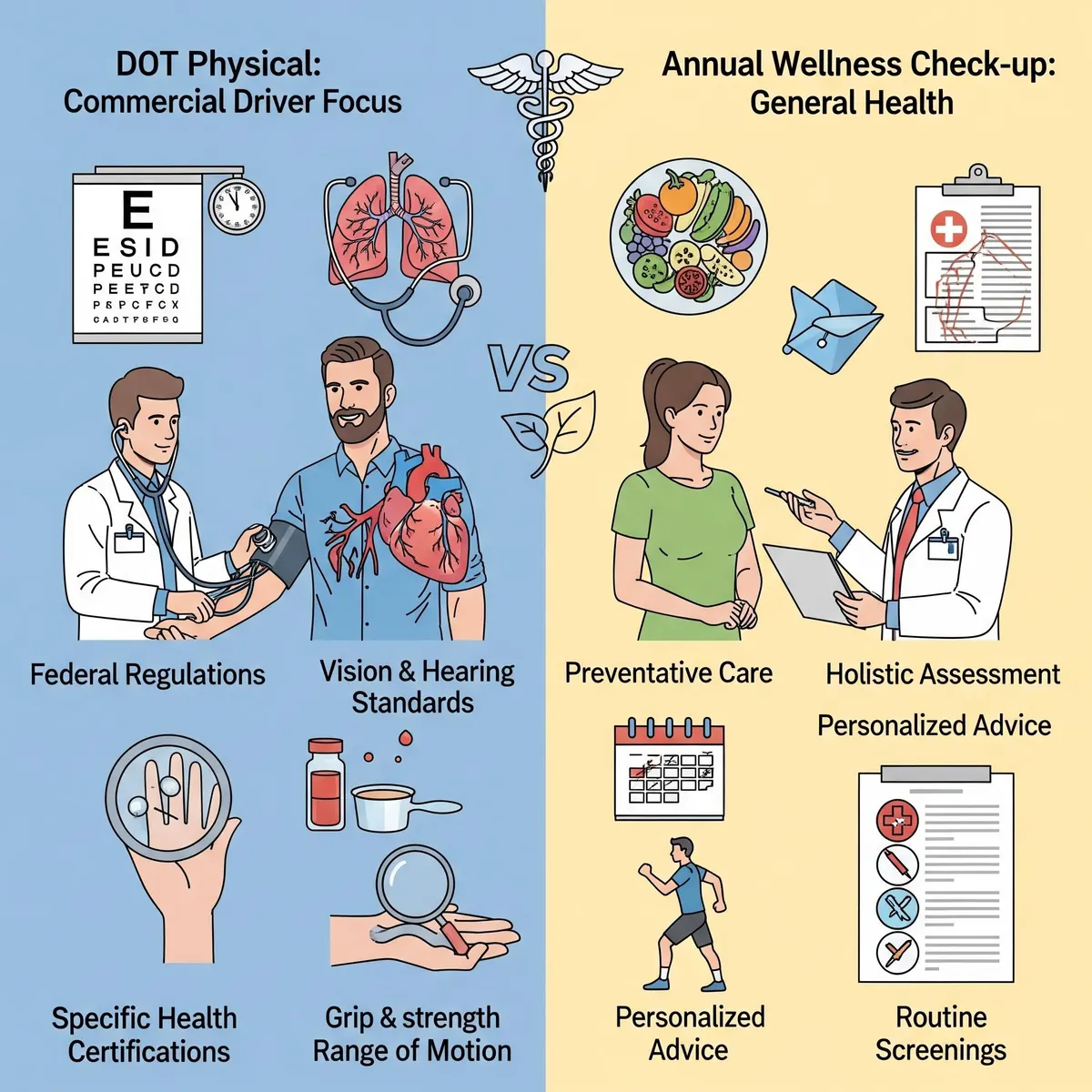
Understanding the DOT Physical: Safety on the Road, Compliance by Law
A DOT physical is a standardized medical exam required by Federal Motor Carrier Safety Administration rules to determine whether you are medically fit to operate a commercial motor vehicle safely. The exam results in a Medical Examiner’s Certificate (often called a medical card) if you meet the federal medical standards for commercial drivers.
The DOT physical is governed by the FMCSA, an agency within the U.S. Department of Transportation that sets medical standards for commercial drivers transporting passengers or hazardous materials in interstate commerce. Commercial drivers, including those seeking or maintaining a Commercial Driver’s License (CDL), must undergo a DOT medical exam at regular intervals, typically every 24 months, but sometimes more frequently if there are certain medical conditions such as hypertension.
According to FMCSA regulations, a DOT medical exam must be performed by a Certified Medical Examiner (CME) listed on the National Registry of Certified Medical Examiners. The CME evaluates your medical history, current health status, and specific risk factors that could impair your ability to drive safely, such as uncontrolled heart disease, severe sleep apnea, or poorly managed diabetes.
Not sure if sleep apnea applies to you?
Take our 2-minute sleep risk quiz to see whether sleep apnea could affect your DOT physical. No account required.
From a driver’s perspective, the DOT physical exam is both a compliance requirement and a safety checkpoint: it confirms that you are medically qualified to drive, but it does not replace a full preventive health evaluation with your primary care physician. Many drivers find it helpful to schedule a regular physical with their doctor between DOT exams to manage long-term health risks that might later affect driver certification.
DID YOU KNOW: FMCSA allows Medical Examiner’s Certificates to be valid for up to 24 months, but many drivers receive 12-month or shorter certifications if they have conditions like hypertension that require closer monitoring.
KEY TAKEAWAY: A DOT physical is a federally regulated medical exam performed by a Certified Medical Examiner to determine whether you meet the safety and health standards to operate a commercial motor vehicle.
Understanding who needs a DOT physical and how it fits into your career helps set the stage for what actually happens during the exam.
The Anatomy of a DOT Physical: What the FMCSA Requires
A DOT physical exam works by combining a detailed medical history review with a focused physical exam and specific screening tests to assess whether you can drive a commercial vehicle safely under federal standards. The exam centers on functional fitness for duty rather than a comprehensive head-to-toe wellness assessment.
The examiner begins with a structured medical history review, asking about past surgeries, hospitalizations, medications, and diagnoses such as heart disease, diabetes, neurological conditions, and sleep disorders. This health history review helps the medical professional identify conditions that could interfere with safe driving or require additional documentation, like a CPAP report for sleep apnea or an insulin-treated diabetes mellitus assessment form. Your vaccination history is not the focus, but previous serious illnesses, fainting, or episodes of loss of consciousness are highly relevant.
Next, the CME performs a physical exam that includes vital signs such as blood pressure, heart rate, and respiratory rate, along with assessments of vision, hearing, cardiovascular health, neurological function, and musculoskeletal status. DOT physical requirements include a vision test (with or without contact lenses) and a hearing test (with or without a hearing aid) to ensure you can see road signs and hear warning signals well enough to operate safely. A focused urine test is typically performed to screen for underlying conditions such as kidney disease or diabetes rather than as a drug screening test, which is usually ordered separately under DOT drug and alcohol testing rules.
Common medical conditions evaluated during a DOT exam include hypertension, heart disease, seizure disorders, sleep apnea, lung disease, and diabetes. The Certified Medical Examiner may request additional lab tests, imaging, or specialist reports if there are concerns about cardiovascular stability, neurological safety, or respiratory function, particularly when conditions like sleep apnea or heart disease may impact alertness and reaction time.
IMPORTANT: A DOT medical exam is not primarily a search for minor problems; it is a safety-focused evaluation designed to identify conditions that could suddenly incapacitate you or significantly impair your ability to operate a commercial motor vehicle.
KEY TAKEAWAY: The anatomy of a DOT physical includes a structured medical history review, focused physical exam, and specific screening tests aimed at detecting conditions that could compromise safe commercial driving.
Once you understand what the DOT exam covers, it becomes easier to see how different it is from the broader preventive focus of a regular physical.
Already diagnosed and need CPAP support?
Dumbo Health helps patients start CPAP without the usual confusion, paperwork, or upfront cost. Equipment, setup, supplies, and ongoing support are all handled in one place.
The Regular Physical (Annual Wellness Exam): A Holistic Health Overview
A regular physical exam, often called an annual wellness exam, is a comprehensive evaluation of your overall health that focuses on prevention, early disease detection, and long-term health planning rather than job-specific certification. A regular physical is recommended for most adults even when no symptoms are present because many conditions develop silently over time.
According to the Mayo Clinic, annual checkups help your doctor track trends in blood pressure, cholesterol, blood sugar, weight, and other health indicators so that preventive steps can be taken before serious problems develop. WebMD notes that a typical comprehensive exam includes a medical history review, physical assessment, and preventive screenings tailored to your age, sex, and risk factors, such as blood and urine tests, cancer screenings, and vaccination updates. This kind of comprehensive exam goes beyond what a DOT medical exam is designed to accomplish, because it is not constrained by FMCSA criteria.
During an annual wellness exam, your primary care physician focuses on your health status as a whole person, not just as a commercial driver. The physical assessment may include detailed evaluations of your heart, lungs, abdomen, skin, neurological function, and musculoskeletal system, plus discussion of mental health, sleep quality, stress, diet, and exercise, which are all important for long-term well-being. Preventive screenings, such as tests for high cholesterol, diabetes, and certain cancers, are often ordered even if you feel well, because the goal is to detect problems early.
An annual physical also establishes continuity of care, meaning your physician can monitor changes over time and adjust your health plan as needed. This relationship becomes critical if a condition like sleep apnea, heart disease, or diabetes could later affect your DOT medical exam or driver certification. Your regular doctor can coordinate referrals, treatment plans, and documentation that support both your general health and your ability to keep working.
KEY TAKEAWAY: A regular physical or annual wellness exam is a broad, preventive evaluation with your primary care physician that focuses on long-term health, early detection, and personalized care beyond the scope of a DOT exam.
Once you see how broad a regular physical is, the next step is to compare it directly with the narrower, safety-focused scope of a DOT physical.
DOT vs. Regular Physical: Key Differences for Drivers
The key difference between a DOT physical and a regular physical is that the DOT exam focuses on legal fitness to drive a commercial vehicle, while the regular physical focuses on your overall health and preventive care. For commercial drivers, both exams serve different but complementary purposes.
In practice, a DOT medical exam is driven by FMCSA regulations and centers on whether you meet specific safety standards for operating a commercial motor vehicle. A regular physical is driven by clinical guidelines for preventive medicine and focuses on your lifetime risk of conditions like heart disease, diabetes, and cancer, regardless of your job. You might complete a DOT physical at an occupational health clinic or urgent care center near you, while your annual physical is usually performed by your primary care physician in a primary care setting.
At least one comparison table is essential when deciding which exam is appropriate for different needs. The table below summarizes decision-relevant differences between DOT physicals and regular physical exams.
| Dimension | DOT Physical Exam | Regular Physical (Annual Wellness Exam) |
|---|---|---|
| Primary purpose | Determine fitness to drive a commercial motor vehicle under federal law | Support preventive health, early diagnosis, and long-term wellness |
| Who requires it | FMCSA and employers of commercial drivers | Clinical guidelines; recommended for most adults |
| Key provider | Certified Medical Examiner in occupational health or urgent care | Primary care physician or other medical professional in general practice |
| Scope | Focused on conditions affecting driving safety and sudden incapacitation | Broad, whole-person health assessment and preventive screenings |
| Frequency | Typically every 24 months or less, per FMCSA rules | Often annually or as recommended for age and risk factors |
| Typical tests | Vision and hearing tests, vital signs, urinalysis, targeted labs if indicated | Wider range of lab tests and screenings (cholesterol, glucose, cancer tests, etc.) |
| Decision outcome | Pass/fail for driver certification; may include restrictions or shorter validity | Collaborative health plan and follow-up recommendations |
| Documentation | Medical Examiner’s Certificate (medical card) and Medical Examination Report | Personal health record and visit summary |
For most commercial drivers, the most effective way to protect both a CDL and long-term health is to treat the DOT physical and the regular physical as complementary: the DOT exam keeps you legally compliant, and the regular physical helps prevent conditions that might one day threaten your ability to pass the DOT exam.
KEY TAKEAWAY: A DOT physical is a safety-focused, pass-or-fail exam tied to FMCSA rules, while a regular physical is a broader preventive health check that supports long-term wellness and early detection of disease.
Knowing these differences highlights why a DOT physical cannot replace your regular physical, especially if you intend to drive safely for many years.
Why a DOT Physical Cannot Replace Your Regular Physical
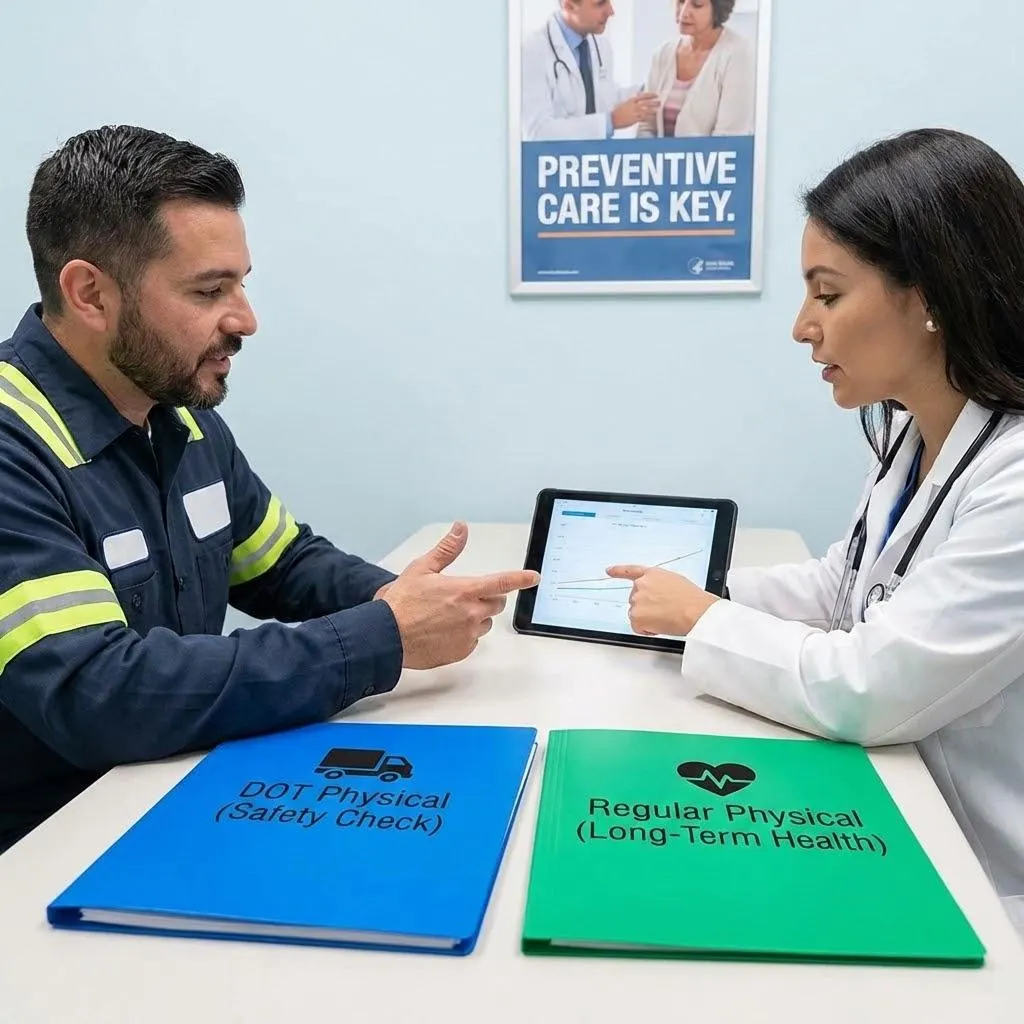
A DOT physical exam cannot replace your regular physical because it is designed to answer a single question—whether you are safe to operate a commercial vehicle—rather than to manage your entire health or prevent future disease. Relying on DOT exams alone can leave important non-DOT health issues undetected until they become serious.
The limited scope of a DOT exam means conditions that do not yet affect driving, such as early kidney disease, prediabetes, or mild depression, may not receive detailed evaluation or follow-up during the DOT visit. In contrast, regular preventive screenings ordered by your primary care physician can detect early changes in cholesterol, blood sugar, kidney function, and other measures of health, providing time to intervene before they threaten your driving or your life.
Continuity of care is another major difference: your Certified Medical Examiner often sees you only for the DOT medical exam, while your primary care physician builds a long-term relationship and tracks trends over time. This longitudinal perspective helps identify subtle changes—like a gradual rise in blood pressure—that might not yet impact DOT certification but could evolve into serious cardiovascular risk if untreated. When such conditions are managed proactively, they are less likely to disqualify you from receiving a DOT medical card in the future.
Many patients report that combining regular physical exams with DOT medical exams gives them confidence that both immediate safety requirements and long-term health needs are addressed. Clinicians frequently observe that drivers who stay engaged with primary care are better able to respond quickly if a DOT exam uncovers a new concern, because they already have an established doctor who knows their history.
KEY TAKEAWAY: A DOT physical focuses narrowly on immediate driving safety and cannot replace a regular physical, which provides comprehensive, preventive, and ongoing care that protects your long-term health and your ability to keep driving.
Once you recognize the unique role of each exam, the next question is how common medical conditions and medications interact with DOT certification.
Navigating Medical Conditions and DOT Certification
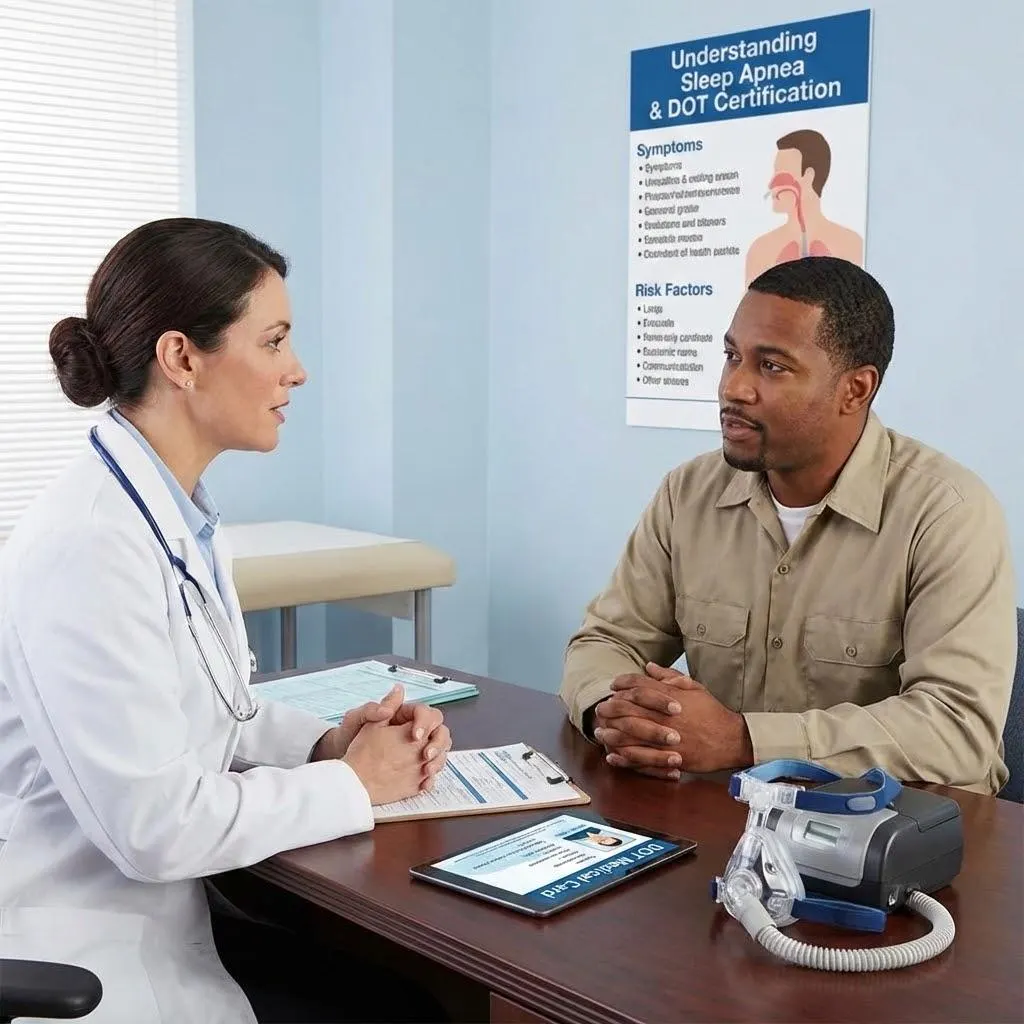
Common medical conditions affect driver certification when they significantly increase the risk of sudden incapacitation, impaired alertness, or dangerous changes in blood pressure, vision, or consciousness while driving. However, many conditions can be managed so that drivers remain eligible for a DOT medical card with appropriate treatment and documentation.
According to FMCSA guidance, conditions such as uncontrolled hypertension, severe heart disease, seizure disorders, poorly controlled insulin-treated diabetes mellitus, and significant respiratory disease may lead to disqualification until adequately treated. Sleep apnea is of particular concern because untreated moderate to severe obstructive sleep apnea increases crash risk due to daytime sleepiness and impaired vigilance. Research cited by transportation safety agencies has found that commercial drivers with untreated sleep apnea have a significantly higher rate of preventable crashes compared with those without the condition or those whose apnea is effectively treated.
Understanding medications and disclosures is critical for DOT medical exams. You are required to provide a full medication list, including prescription drugs, over-the-counter medications, and supplements, because certain medications can impair alertness or interact with other conditions. In some cases, medical waivers or exemptions are available when a condition is stable, well-managed, and properly documented; examples include some drivers with insulin-treated diabetes mellitus who meet FMCSA criteria using an insulin-treated diabetes mellitus assessment form and ongoing monitoring.
If your DOT examiner raises concerns about sleep-related breathing problems or daytime drowsiness, they may recommend a sleep study or ongoing CPAP therapy before granting or renewing your medical card. To understand what sleep apnea is and why it matters, you can review dumbo.health’s overview of what sleep apnea is and what causes it, including symptoms and risk factors that often show up in drivers.
TIP: If your examiner suggests a sleep study, learning how at-home sleep studies work and what equipment they use can make it easier to follow through on testing while maintaining your schedule as a commercial driver.
KEY TAKEAWAY: Many medical conditions, including sleep apnea, diabetes, and heart disease, can affect DOT certification, but with proper treatment, documentation, and communication with both your CME and primary care physician, many drivers remain qualified.
Once you understand the role of underlying health conditions, you are better prepared to take practical steps before your exam to improve your chances of a smooth DOT physical.
Preparing for Your DOT Physical: An Actionable Checklist
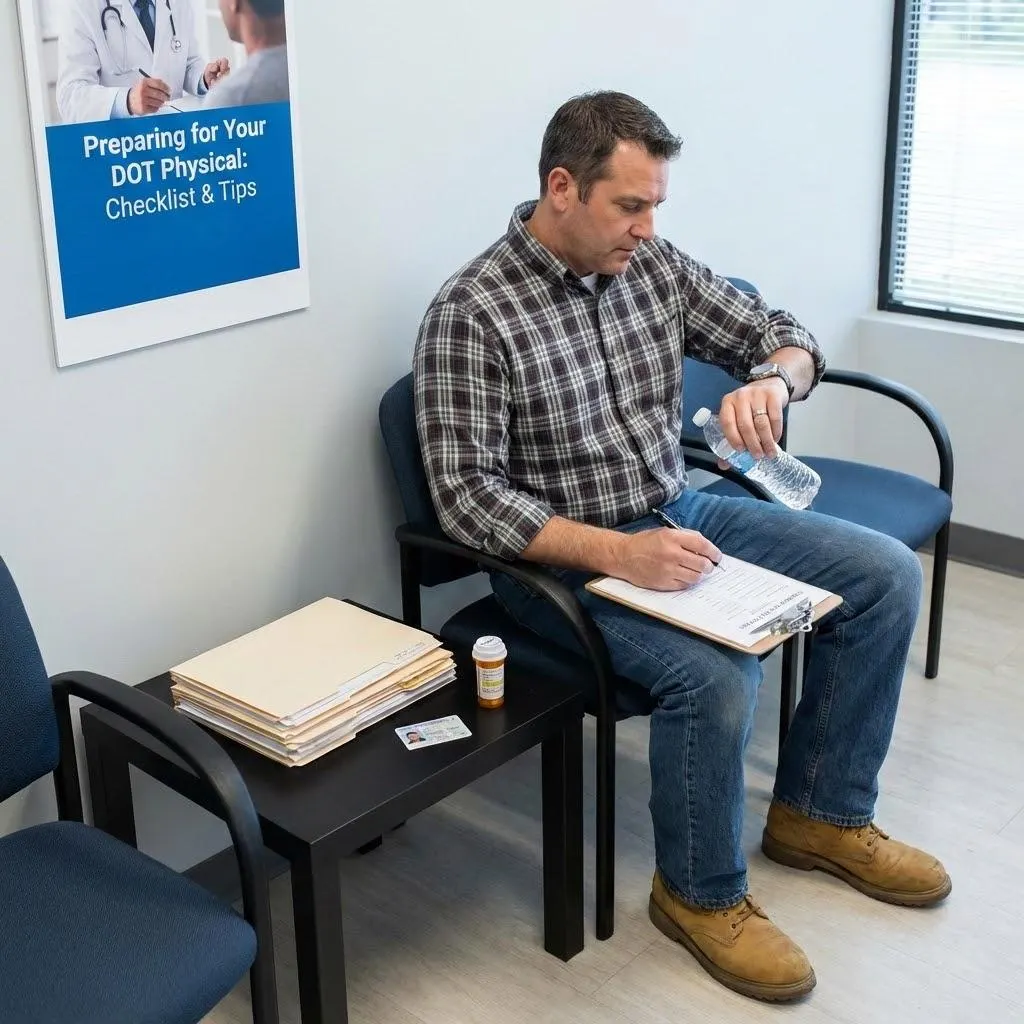
Preparing properly for a DOT physical exam works by reducing surprises, ensuring you bring the right medical documents, and helping your Certified Medical Examiner make a clear, timely decision about your certification. A little preparation also helps lower anxiety and shortens the time it takes to complete the exam.
Scheduling your appointment with a Certified Medical Examiner listed on the National Registry is the first step. Many occupational health clinics, urgent care providers, and some primary care practices offer DOT medical exams, and you can often find providers in your area who perform DOT physicals by searching the FMCSA National Registry or asking your employer for preferred clinics. When scheduling, confirm whether the clinic also handles any required drug screening or if that is done separately.
Before your appointment, gather your driver’s license, a list of all medications with dosages, contact information for your primary care physician and specialists, and any relevant medical documents such as CPAP usage reports, recent lab results, cardiology consult notes, or documentation of medical waivers. If you wear contact lenses, glasses, or use a hearing aid, bring them to the exam so the examiner can perform accurate vision and hearing tests. Aim to avoid heavy caffeine, excessive salt, and tobacco shortly before the visit so your blood pressure testing is closer to your usual baseline.
Many drivers report that getting a good night’s sleep, staying hydrated, and arriving early for paperwork helps the exam feel more routine. If you have concerns about snoring, choking awakenings, or daytime tiredness, reading dumbo.health’s guide to the most common sleep apnea symptoms to look out for can help you discuss these issues more clearly with your examiner and your primary care doctor.
KEY TAKEAWAY: The best way to prepare for a DOT physical is to schedule with a Certified Medical Examiner near you, bring complete documentation and medications, manage your blood pressure, and be ready to discuss any ongoing medical conditions.
With preparation steps in place, many drivers still have questions shaped by myths and misconceptions about the DOT exam, which are important to address directly.
Common Myths About DOT Physicals Debunked
The most persistent myths about DOT physicals can cause unnecessary fear, but evidence-based explanations show that the exam is structured, transparent, and focused on safety rather than punishment. Understanding the facts behind these myths helps you approach the exam with clarity and confidence.
MYTH: A DOT physical is the same as a regular physical exam.
FACT: A DOT medical exam is a job-specific occupational health evaluation based on FMCSA medical standards, while a regular physical is a comprehensive preventive health evaluation guided by clinical practice recommendations. A DOT exam is not designed to replace ongoing primary care or preventive screenings.
MYTH: Any medical problem means automatic failure and loss of your DOT medical card.
FACT: Many medical conditions, including hypertension, diabetes, and sleep apnea, can be compatible with safe driving when they are treated and well controlled. The examiner focuses on whether conditions are stable enough to avoid sudden incapacitation, and may issue a shorter certification period or require periodic follow-up instead of immediate disqualification.
MYTH: DOT physicals always include a drug test.
FACT: A DOT medical exam itself typically includes a urine test to screen for underlying medical conditions, not necessarily a drug screen. DOT drug and alcohol testing is often required by employers and federal regulations, but it is usually ordered as a separate process, even if it occurs at the same visit.
MYTH: If you mention sleep problems or snoring, you will automatically lose your DOT medical card.
FACT: The American Academy of Sleep Medicine and transportation safety agencies emphasize that effectively treated sleep apnea can significantly reduce crash risk, and many drivers continue working after diagnosis and treatment. Examiners are more concerned with untreated, high-risk sleep apnea than with honest disclosure and appropriate testing or treatment.
KEY TAKEAWAY: Common myths exaggerate the risks of DOT physicals, but in reality, the exam is a structured, safety-focused process that allows many drivers with well-managed medical conditions to remain certified.
With these myths clarified, it becomes easier to see how DOT physicals and regular physicals together support both your professional responsibilities and your long-term health.
Frequently Asked Questions
Is a DOT physical the same as a regular physical?
A DOT physical is not the same as a regular physical exam. A DOT physical is a federally regulated medical exam that determines if you meet FMCSA standards to safely operate a commercial motor vehicle. A regular physical, or annual wellness exam, is a broader preventive health visit with your primary care physician that focuses on long-term health, early detection of disease, and personalized care plans rather than immediate driver certification. Most commercial drivers benefit from having both types of exams rather than choosing one or the other.
What gets checked during a DOT physical?
During a DOT physical, the examiner reviews your medical history, medications, and prior surgeries, then checks vital signs, vision, hearing, cardiovascular health, respiratory status, neurological function, and musculoskeletal fitness. You will usually provide a urine sample to screen for underlying conditions such as diabetes or kidney disease, and additional lab tests or specialist reports may be requested for conditions like heart disease, diabetes, or sleep apnea. The goal is to determine whether any medical issues could impair your ability to drive safely or cause sudden incapacitation on the road.
Do DOT physicals check for hernia?
Many DOT examiners perform a focused abdominal and genitourinary assessment as part of the physical exam, which can include checking for hernias, particularly if your job involves heavy lifting. The primary concern is whether a hernia is large, painful, or at risk of strangulation, which could lead to a medical emergency while driving or loading cargo. If a hernia is identified, the examiner may require evaluation and treatment by your primary care physician or a surgeon before issuing or renewing your DOT medical card.
Can I get a DOT medical card with diabetes?
Many drivers with diabetes can obtain a DOT medical card if their condition is well controlled, properly documented, and consistent with FMCSA criteria. Drivers using insulin may need an insulin-treated diabetes mellitus assessment form and regular monitoring to show stable blood sugar control without episodes of severe hypoglycemia. Your examiner will also consider other risk factors such as cardiovascular disease, neuropathy, and vision changes, and may issue a shorter certification period with more frequent follow-up.
Is narcolepsy disqualifying for DOT certification?
Narcolepsy is often disqualifying for DOT certification because it can cause sudden sleep episodes and impaired alertness, which are incompatible with the safe operation of commercial motor vehicles. FMCSA medical guidance places a high priority on sustained wakefulness and reliable alertness, so conditions that cause uncontrollable sleepiness are treated very cautiously. If you have been diagnosed with narcolepsy or a similar sleep disorder, you will need to discuss your specific situation with a Certified Medical Examiner and your sleep specialist.
How do I find a DOT physical provider near me?
To find a DOT physical provider near you, search the FMCSA National Registry of Certified Medical Examiners, which lists examiners authorized to perform DOT medical exams. Many occupational health clinics, urgent care providers, and some primary care practices in your area also advertise DOT physical services, and your employer may have preferred locations. When booking, confirm that the examiner is currently listed on the National Registry and ask what documents you should bring to your appointment.
Do I have to pay for my own DOT physical?
Who pays for a DOT physical depends on your employer, your employment status, and local policies. Some employers pay for DOT medical exams as part of pre-employment screening or ongoing occupational health programs, while independent contractors or self-employed drivers often pay out of pocket. It is important to clarify payment arrangements with your company and the clinic before your visit so there are no surprises when you arrive. Even when you pay yourself, investing in a thorough exam helps protect both your license and your safety.
Conclusion: Prioritizing Both Your Career and Your Health
DOT physical exams and regular physical exams work together to protect you, your passengers, and everyone else on the road by addressing different but complementary aspects of your health. The DOT physical ensures you meet legally required safety standards to operate a commercial motor vehicle, while your regular physical helps prevent, detect, and manage the medical conditions that could one day threaten both your health and your ability to keep driving.
For drivers who snore, feel excessively tired, or have risk factors for sleep apnea, understanding the link between sleep health and safe driving is especially important. You can explore practical, evidence-based options in dumbo.health’s guide to sleep apnea treatment without CPAP, which explains alternative therapies and real-world expectations. Taking proactive steps with your primary care physician and your Certified Medical Examiner helps you stay ahead of potential problems.
KEY TAKEAWAY: Prioritizing both DOT physicals and regular physical exams, and addressing issues like sleep apnea early, is the most effective way to protect your commercial driving career, your long-term health, and the safety of everyone on the road.
By treating your DOT exam as one piece of a broader health strategy, you can build a sustainable, healthy career in commercial driving while getting the right support from providers close to you and trusted resources like dumbo.health.
Related DOT Physical Topics
- What Happens During the DOT Physical Exam The Complete Guide for Drivers
- What Is the Difference Between a DOT and Non-DOT Physical
- The DOT Physical Exam Ensuring You're Fit for the Road
- Does a DOT Physical Test for Weed or THC The Complete Guide for Commercial Drivers
- Remote DOT Physical The Complete Guide for Commercial Drivers
- Navigating the Florida DOT Physical Your Essential Guide for CDL Drivers
- The Ultimate DOT Physical Guide for Commercial Drivers (2025–2026)
- What Does DOT Stand for in a DOT Physical
- How Do You Submit Your DOT Physical to the DMV
- DOT Physical Forms & Paperwork The Complete Guide for Commercial Drivers
- What Are the Requirements to Pass a DOT Physical
- DOT Physical Insurance & Recertification The Complete Driver's Guide
- DOT Physical ICD-10 & Billing Codes The Complete Guide for Accurate Compliance and Reimbursement
- What Is the Urine Test for in a DOT Physical
- Online DOT Physical Self-Pay The Complete Guide for CDL Drivers and Owner-Operators
- Same Day DOT Physical
- Online DOT Physical The Complete Guide for Commercial Drivers and Medical Examiners
- How to Pass a DOT Physical The Complete Commercial Driver's Guide
- DOT Physical Insurance or Self Pay How to Choose the Right Payment Option for Your Exam
- DOT Physical Texas The Essential Guide to Your Exam, Medical Card, and CDL Compliance
- DOT Physical Online Cost
- What Happens If Your DOT Physical Expires Compliance Guide for Commercial Drivers
- DOT Physical Vision & Eye Requirements
- What Can Disqualify You From a DOT Physical
- How can drivers with sleep apnea qualify again after a failed DOT physical
- Does a DOT physical include a drug test
- Can You Pass a DOT Physical with Epilepsy
- DOT Physical Self Pay Cost
- Navigating Your DOT Physical with Common Medical Conditions
- DOT Physical Out of Pocket What Commercial Drivers Actually Pay
- When Can Sleep Apnea Affect a DOT Physical
- Walk In DOT Physical Self Pay
- DOT Physical Cost Breakdown What Drivers Pay & Why
- Can You Pass a DOT Physical With One Eye
- Is a drug test required for a DOT physical
- Can You Get a DOT Physical Online
- Can You Pass a DOT Physical With a Pacemaker
- What Should You Bring to a DOT Physical
- Telehealth Dot Physical
- What Forms Do You Need for a DOT Physical
- DOT Physical Exam Basics
- DOT Physical & Alcohol Requirements
- DOT Physical Duration and Validity How Long Your Medical Card Lasts
- Online DOT Physical Without Insurance A Complete Guide for Commercial Drivers
- Why do they measure your neck during a DOT physical
- Can You Fail a DOT Physical for Being Overweight
- Your Complete Guide What's Included in a DOT Physical Exam
- Do They Check for Hernia During a DOT Physical
- Cheap DOT Physical Online
- Can You Pass a DOT Physical With a Hernia
- DOT physical self pay guide for commercial drivers paying out of pocket
- What blood pressure do you need to pass a DOT physical
- DOT Physical Cash Pay
- DOT Physical Blood Pressure Requirements What Drivers Need to Know
- New DOT Physical Requirements What Drivers MUST Know About New Updates
- Can You Get a Second Opinion on Your DOT Physical A Complete Guide for Commercial Drivers
- Can You Fail a DOT Physical for High Blood Pressure
- Virtual DOT Physical
- Can you fail a DOT physical because of sleep apnea
- Who needs a DOT physical
- DOT Physical at Urgent Care What Commercial Drivers Need to Know
- Do They Check Your Private Parts During a DOT Physical
- DOT Physical Chiropractor Your Complete Guide to CDL Exams
- Can you pass a DOT physical with sleep apnea
- What should I expect at a DOT physical
- What Does a DOT Physical Consist Of
- What happens if you fail a DOT physical due to sleep apnea
- Can You Pass a DOT Physical with Diabetes
- Can You Pass a DOT Physical with High Blood Pressure
- BMI for DOT Physical What Commercial Drivers Need to Know
- DOT Physical & Drug Test What Drivers Need to Know
- What are the current DOT requirements for sleep apnea testing for commercial drivers
- Non-DOT Physical A Comprehensive Guide to Workforce Health and Safety
- DOT Physical Requirements A Complete Guide for CDL Drivers
- Is a Sleep Study Required for a DOT Physical
- Do You Have to Pee During a DOT Physical
- What eye chart is used for a DOT physical
- What Do They Check During a DOT Physical
- Failing a DOT Physical What Every Commercial Driver Needs to Know
- Can You Fail a DOT Physical
- What is DOT Physical
- What drugs do they test for in a DOT drug test
- Online CDL Physical
- Are There New DOT Rules or Laws on Sleep Apnea Testing
- Essential 171 DOT Definitions for Commercial Drivers
- 2026 DOT Inspection Dates
- Home Sleep Apnea Test for Commercial Drivers The CDL Holder's Complete Guide
- Why DOT Sleep Tests at Home Matter for Your Career and Health
- Online DOT Exam What Drivers and Medical Examiners Need to Know
- CDL PHYSICAL SELF PAY
- DOT sleep apnea test at home
- DOT Medical Exam Self-Pay A Complete Guide for Commercial Drivers
- The Comprehensive Guide to Suboxone, Sleep Apnea, and FMCSA Compliance for Commercial Motor Vehicle Operators
- What are the current FMCSA guidelines on sleep apnea for commercial drivers
- Medical Examination Report (MER) – Form MCSA-5875 The Complete Guide for Commercial Drivers
- Guide to Obtaining and Managing Your DOT Medical Card Online
- Expected 2027 DOT Inspection Dates
- How Sleep Apnea Affects Overall Driving Safety
- Sleep Apnea Test for CDL Drivers
- What Precautions Should Drivers With Sleep Apnea Take
Take the next step before your DOT physical
Start with the free quiz if you are unsure about your risk, or order an at-home sleep test if you have already been flagged for possible sleep apnea.
AI summary
A DOT physical is a federally regulated medical exam used to determine whether a commercial driver meets FMCSA medical standards to operate a commercial motor vehicle safely. A regular physical (annual wellness exam) is a comprehensive preventive visit focused on long-term health and early disease detection. Core concept: DOT exams are job-specific and safety-focused; regular physicals are whole-person and preventive. DOT physical components: performed by a Certified Medical Examiner on the National Registry; structured medical history and medication review; vitals; vision and hearing testing; cardiovascular, respiratory, neurologic, and musculoskeletal assessment; urinalysis to screen for medical conditions (not primarily a drug test). Outcome is a pass/fail Medical Examiner’s Certificate, typically valid up to 24 months, sometimes shorter. Regular physical components: preventive screenings and labs based on age and risk factors; vaccinations; discussion of mental health, sleep, diet, and exercise; continuity of care. Conditions affecting certification include hypertension, heart disease, seizure disorders, diabetes (including insulin-treated diabetes mellitus documentation), respiratory disease, and obstructive sleep apnea, where untreated disease raises crash risk. Preparation includes bringing ID, medication lists, and relevant records such as CPAP reports and specialist notes.

Nicolas Nemeth
Co-Founder
Nico is the co-founder of Dumbo Health, a digital sleep clinic that brings the entire obstructive sleep apnea journey home. Patients skip the sleep lab and the long wait to see a specialist. Dumbo Health ships an at home test, connects patients with licensed sleep clinicians by video, and delivers CPAP or a custom oral appliance with ongoing coaching and automatic resupply in one clear subscription.
Keep reading

How Long Does a DOT Physical Take? A Complete Guide for Commercial Drivers

What Happens If You Fail a DOT Drug Test? The Complete Guide for Commercial Drivers


