Can You Get a DOT Physical Online?
This article explains what you can and cannot do online for a DOT physical under FMCSA rules. It clarifies that the DOT medical exam must be completed in person by a National Registry-listed Certified Medical Examiner, even if scheduling and intake are digital. You will learn which steps can be handled online, including appointment booking, Health History Review, DOT forms, and medical record uploads. It also outlines what happens during the in-person visit, including vision, hearing, urine testing, and blood pressure checks. The guide covers common conditions that may require extra documentation and how digital preparation can prevent delays. It also highlights warning signs of misleading online-only certification claims and why keeping paper and digital copies of the Medical Examiner’s Certificate is still important.
Struggling with sleep?
Find out if sleep apnea is the reason.
FDA-cleared. $149 flat. Physician-reviewed results in 48 hours.

Can You Get a DOT Physical Online?
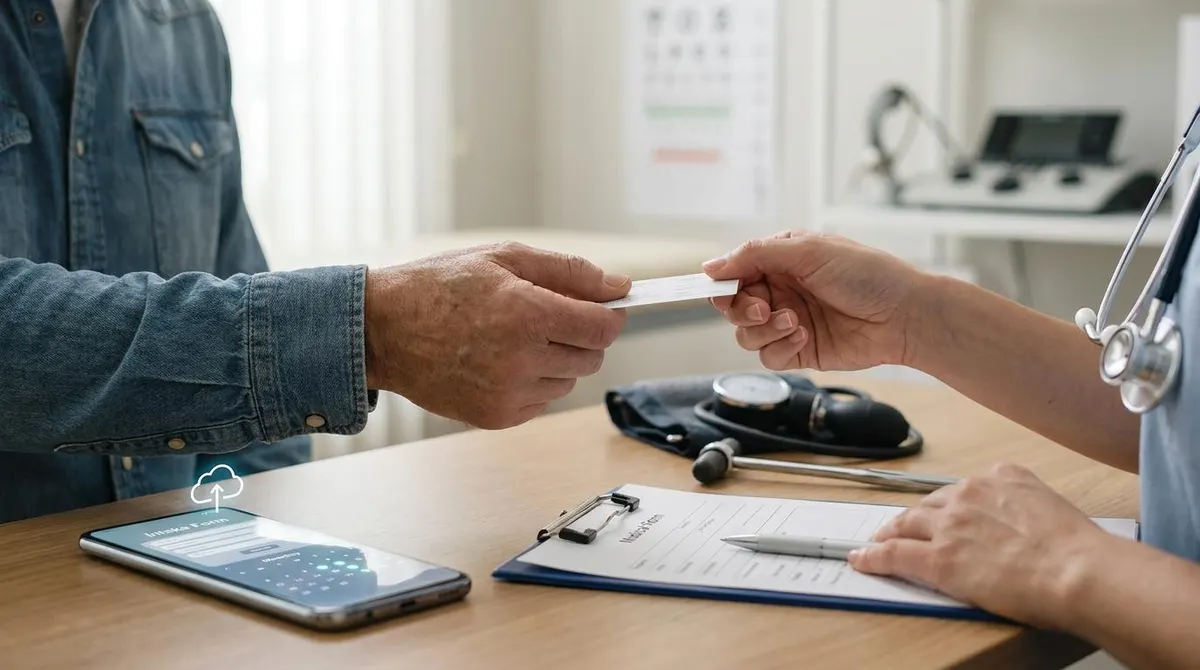
Can you get a DOT physical online is a question about convenience, but the direct answer is that the DOT physical exam itself must still be completed in person for most drivers. The Federal Motor Carrier Safety Administration, or FMCSA, requires an in-person medical examination and uses standard forms such as the Medical Examination Report and Medical Examiner's Certificate as part of the process. A lot of the journey can still happen online, including scheduling, paperwork, document upload, and in some cases submission support after the exam. This article explains what online really means, why the physical exam must be face to face, what happens during the exam, how digital tools help, and how to avoid misleading offers. Keep reading to understand the safest and smartest way to handle DOT medical certification today. (FMCSA)
The Truth About Online DOT Physicals: In-Person Exam, Digital Process
No, a DOT physical cannot be done entirely online. A compliant DOT physical exam is an in-person medical exam, but many parts of the broader medical certification process can be handled through a web-based platform.
DOT Physicals are medical certification exams used to assess whether commercial drivers can safely operate a commercial motor vehicle under federal regulations. The Federal Motor Carrier Safety Administration requires interstate commercial motor vehicle drivers to maintain a current Medical Examiner's Certificate, and drivers must complete the medical history section of the Medical Examination Report as part of the process. That means the exam involves both paperwork and live clinical assessment, not just a video call or online questionnaire. (FMCSA)
The practical answer is that online tools support the process before and after the appointment. Online tools can help you find Certified Medical Examiners on the National Registry, book visits, complete DOT physical forms, upload Medical records, and sometimes access exam results or driver certificates after the visit. The actual physical exam, however, still depends on in-person testing and observation by qualified Medical Examiners. (FMCSA)
Many patients report confusion because clinics market convenience features as online DOT Physicals. In real-world use, the most accurate description is a hybrid model: digital administration plus an in-person DOT medical exam. That distinction matters because choosing a provider that promises an online-only certification can put your medical card and CDL status at risk.
Not sure if sleep apnea applies to you?
Take our 2-minute sleep risk quiz to see whether sleep apnea could affect your DOT physical. No account required.
| Process step | Can it be done online? | Must it be in person? | Why it matters |
|---|---|---|---|
| Appointment booking systems | Yes | No | Saves time and helps you find a provider near you |
| Health History Review and DOT physical forms | Yes, often | Sometimes reviewed again in clinic | Speeds up check-in and reduces errors |
| Vision test, hearing test, urine test, Blood pressure test | No | Yes | These are part of the physical exam |
| Medical examination and certification decision | No | Yes | The certified DOT examiner must assess you directly |
| Certificate delivery and document storage | Yes, often | No | Helps with recordkeeping and compliance |
IMPORTANT: If a clinic claims you can complete the full DOT exam without any in-person medical examination, that claim does not match the current FMCSA framework. (FMCSA)
KEY TAKEAWAY: A DOT physical exam is not fully online, but the surrounding paperwork, scheduling, and document handling often are.
Once that distinction is clear, the next step is to understand what the word online really covers in day-to-day driver use.
Understanding the Core Question: What "Online" Truly Means
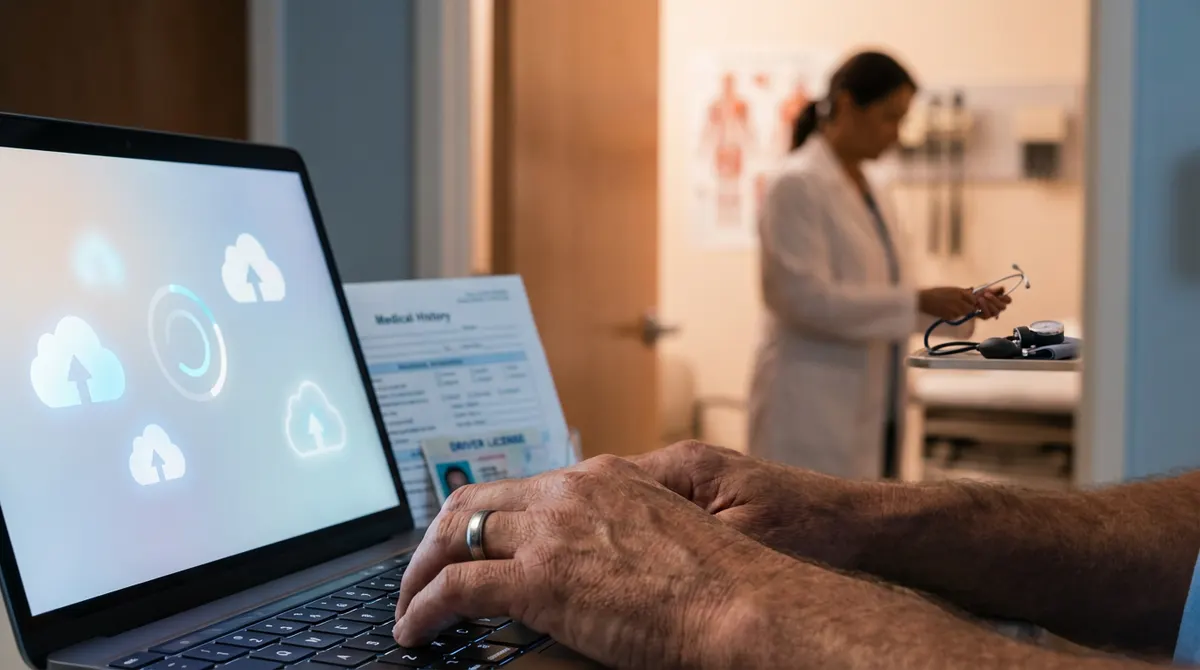
Online in this context means digital support around the DOT physical requirements, not a remote replacement for the physical exam. Online tools improve speed and convenience, but they do not eliminate the in-person exam.
A DOT physical is a federal safety exam for a CMV driver, CDL holder, or other commercial drivers who need medical certification to operate commercial vehicles. A compliant provider may let you complete a Health History Review before arrival, upload medical documents, confirm your driver's license information, and prepare your Medical records in advance. This reduces front-desk delays and helps the medical provider focus on the actual exam rather than basic data entry. (FMCSA)
Online also increasingly means digital record movement after the exam. Under National Registry II, FMCSA moved toward electronic transmission of medical certification information to State licensing agencies, although some states continued using paper procedures while noncompliant with the newer workflow. FMCSA guidance explains that states that had not implemented National Registry II could still require paper Medical Examiner's Certificates until the state became compliant. (FMCSA)
This digital shift helps explain why drivers see mixed instructions online. Some drivers can rely more on electronic systems, while others still need to hand-carry or submit paperwork depending on their state and timing. If you want a simpler path, choosing a clinic with a strong web-based platform and clear post-exam instructions usually reduces avoidable delays.
KEY TAKEAWAY: Online usually means digital scheduling, paperwork, and record handling, while the DOT exam itself remains an in-person compliance step.
The reason that split still exists becomes easier to understand when you look at what the examiner must actually measure.
Why an In-Person Physical Exam Is Non-Negotiable
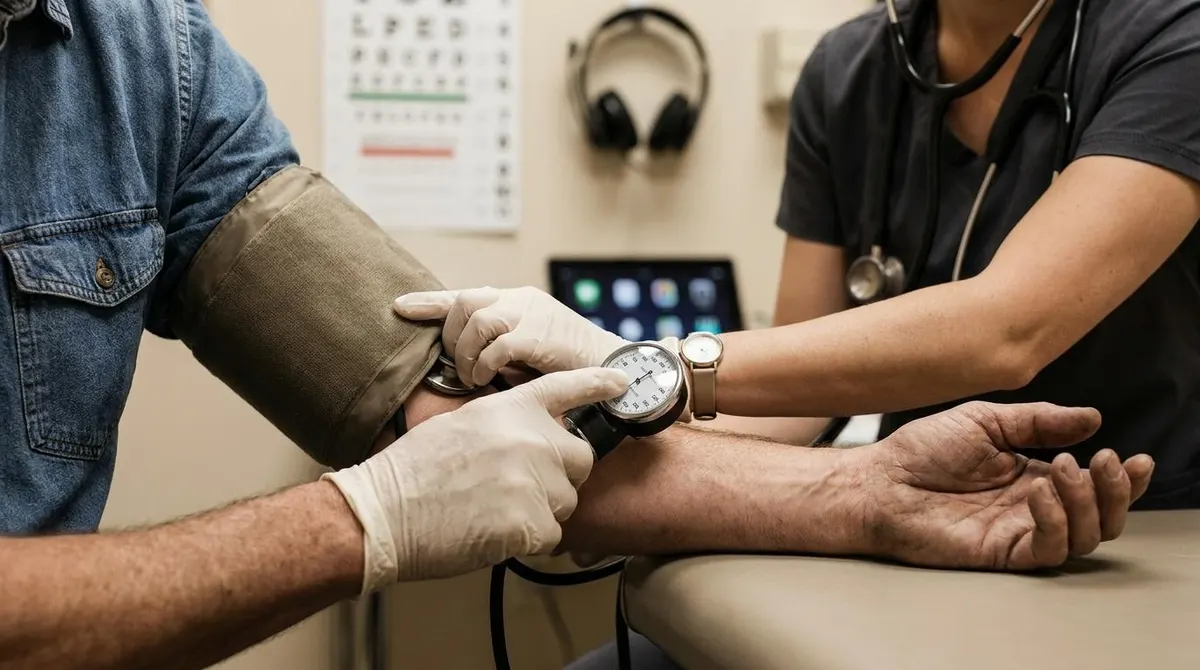
An in-person physical exam is required because a certified examiner must directly measure, observe, and document findings that cannot be verified reliably through a remote form alone. The DOT physical exam is a safety exam, not just a paperwork review.
The Federal Motor Carrier Safety Administration requires a medical examination that includes a medical history review and the examiner's assessment of whether the driver is physically qualified. In practice, that means the provider must evaluate Blood pressure, pulse, vision, hearing, urine findings, and signs of medical conditions that could affect safe driving. A remote questionnaire cannot replace a compliant vision test, hearing test, urine test, or hands-on review of exam-related findings. (FMCSA)
The physical exam matters because small findings can change the certification outcome. Peripheral vision, visual acuity, hearing loss, medication effects, neurologic history, and cardiovascular risks can all affect whether a driver receives certification, a shorter certification period, or a request for additional records. People who undergo this exam often find that issues they thought were minor, such as poorly controlled blood pressure or missing documentation for a chronic condition, become the main reason for delays.
Already diagnosed and need CPAP support?
Dumbo Health helps patients start CPAP without the usual confusion, paperwork, or upfront cost. Equipment, setup, supplies, and ongoing support are all handled in one place.
A DOT physical exam is an in-person medical examination used to determine whether a commercial vehicle operator meets federal medical standards. A DOT physical exam matters because certification affects legal driving status, employer compliance, and road safety.
DID YOU KNOW: FMCSA requires the driver to complete the medical history portion of the Medical Examination Report, and the examiner then decides whether to issue the Medical Examiner's Certificate. (FMCSA)
KEY TAKEAWAY: The in-person exam is required because core parts of the DOT physical depend on direct testing, observation, and certification by the examiner.
The good news is that technology can still remove a lot of friction from everything around the appointment.
Leveraging Technology: How Online Tools Streamline Your DOT Physical Journey
Technology can make the DOT medical exam easier to schedule, prepare for, and manage afterward. Technology helps with logistics, but it does not replace the required in-person physical exam.
The most useful digital tools are practical rather than flashy. Good clinics use appointment booking systems, secure forms, reminders, online intake, and document portals so drivers can complete DOT physical forms, upload medical documents, and reduce waiting time. This is especially helpful for commercial drivers with tight delivery windows, rotating shifts, or employer-driven schedule revisions. Choosing providers in your area that clearly explain the process is usually better than chasing the cheapest listing with vague promises.
Digital prep also helps drivers with medical conditions arrive ready. If you have diabetes, sleep apnea, hypertension, seizure history, or methadone or other medication questions, online instructions can tell you which Medical records to bring and whether a treating clinician's note may help. That preparation does not guarantee certification, but it often reduces repeat visits and incomplete files. You can also review related guidance on what can disqualify you from a DOT physical if you want a fuller list of common risk points before your appointment.
A web-based platform is most valuable when it reduces administrative mistakes. A clean intake flow can help prevent wrong driver license numbers, missing signatures, outdated medication lists, or lost medical documents from delaying the medical certification process.
KEY TAKEAWAY: Technology improves convenience and reduces paperwork errors, especially when you use it to prepare records before the in-person exam.
The next question is where technology helps first: finding and booking the right appointment.
Finding and Scheduling Your Appointment Online
You can often find and schedule a DOT exam online even though the exam itself must happen in person. The safest approach is to confirm that the provider uses Certified DOT Medical Examiners listed on the National Registry.
The National Registry is FMCSA's directory of certified examiners who are authorized to perform DOT medical exams. Searching the National Registry helps you avoid unqualified listings and gives you a starting point for comparing clinic hours, occupational health services, and availability close to you. For many drivers, the best option is the one that combines certified providers, clear documentation requirements, and fast appointment booking systems rather than the one that simply advertises “instant online DOT Physicals.” (FMCSA)
When you book, pay attention to what the clinic asks for in advance. A legitimate provider usually requests your medical history, medication list, driver's license, prior medical card if applicable, and supporting medical documents for ongoing conditions. If you need related sleep evaluation support, Dumbo Health's at-home sleep test may be useful when a provider asks for more information about possible sleep apnea, although the DOT physical itself still remains an in-person exam.
Many patients report that online booking is the easiest part of the process. The bigger differentiator is whether the clinic gives accurate pre-visit instructions that help you avoid a second trip.
KEY TAKEAWAY: Online scheduling is helpful, but the real priority is booking with a National Registry-certified examiner who explains the requirements clearly.
After the appointment is booked, digital preparation usually has the biggest impact on speed and accuracy.
Digital Preparation: Completing Forms and Submitting Information
Digital preparation can shorten check-in time and reduce avoidable delays. The most effective way to prepare is to complete the DOT physical forms carefully and gather all relevant Medical records before the visit.
The Medical Examination Report, or Medical Examination Report Form MCSA-5875, includes the medical history portion that drivers are required to complete. That means your medical history is not a minor intake detail. It is a core part of the medical exam, and omissions can create compliance issues or trigger follow-up questions during the visit. FMCSA specifically states that drivers are required to fill out the medical history portion of the MER as part of the physical. (FMCSA)
Digital preparation is especially important if you have ongoing medical conditions. Examples include diabetes, high blood pressure, neurologic history, sleep apnea, hearing loss, or use of Hearing aids. A complete packet may include recent Medical records, medication lists, physician letters, CPAP compliance reports if applicable, and any specialist notes that clarify whether the condition is stable. If high blood pressure is a concern, it also helps to review what blood pressure do you need to pass a DOT physical before your appointment.
Many drivers store medical documents in Google Drive or Microsoft One Drive so they can access them from the road. That can work well if the files are current, readable, and easy to share securely with the clinic. Using a simple checklist before the visit is one of the best ways to protect your physical exam results from preventable paperwork problems.
TIP: Bring both digital copies and paper copies of key Medical records when possible, because some clinics still move faster with printed supporting documents.
KEY TAKEAWAY: Accurate digital prep improves the odds of a smoother visit by helping the examiner review your medical history and records without missing key details.
Once the exam is complete, the next benefit of technology is how your certificate and records are handled.
Post-Exam Digitalization: Receiving and Managing Your Certificate
After the in-person exam, digital systems can make it easier to receive, store, and submit certification documents. Post-exam digitalization does not change the exam itself, but it can reduce administrative stress.
If you qualify, the examiner may issue a Medical Examiner's Certificate, also called the MEC or medical card. FMCSA states that when the driver is found physically qualified, the Medical Examiner completes and provides the Medical Examiner's Certificate, Form MCSA-5876. That document is the key output of the DOT medical exam and is often the document employers and licensing agencies care about most. (FMCSA)
The post-exam process is changing because federal systems are becoming more digital. FMCSA guidance on National Registry II says states were required to implement electronic receipt of medical certification information by June 23, 2025, but noncompliant states could continue using paper Medical Examiner's Certificates until implementation caught up. FMCSA also published state-by-state instructions for submission updates, which is why drivers still see mixed rules online. (FMCSA)
As of 2025 and 2026, FMCSA also issued waiver-related communications allowing paper copies to remain important in parts of the transition period. For that reason, you should still keep a paper copy, a phone photo, and a secure digital backup of your driver certificates and related medical documents even if your state is increasingly electronic. (FMCSA)
A Medical Examiner's Certificate is the official document showing that a driver met medical qualification standards at the time of the exam. A Medical Examiner's Certificate matters because employers, state agencies, and roadside enforcement may all rely on accurate certification status.
KEY TAKEAWAY: Digital certificate handling is improving, but keeping both paper and digital copies is still the safest approach during the transition.
To understand why the exam still matters so much, it helps to know what actually happens during the in-person visit.
What to Expect During the In-Person DOT Physical Exam
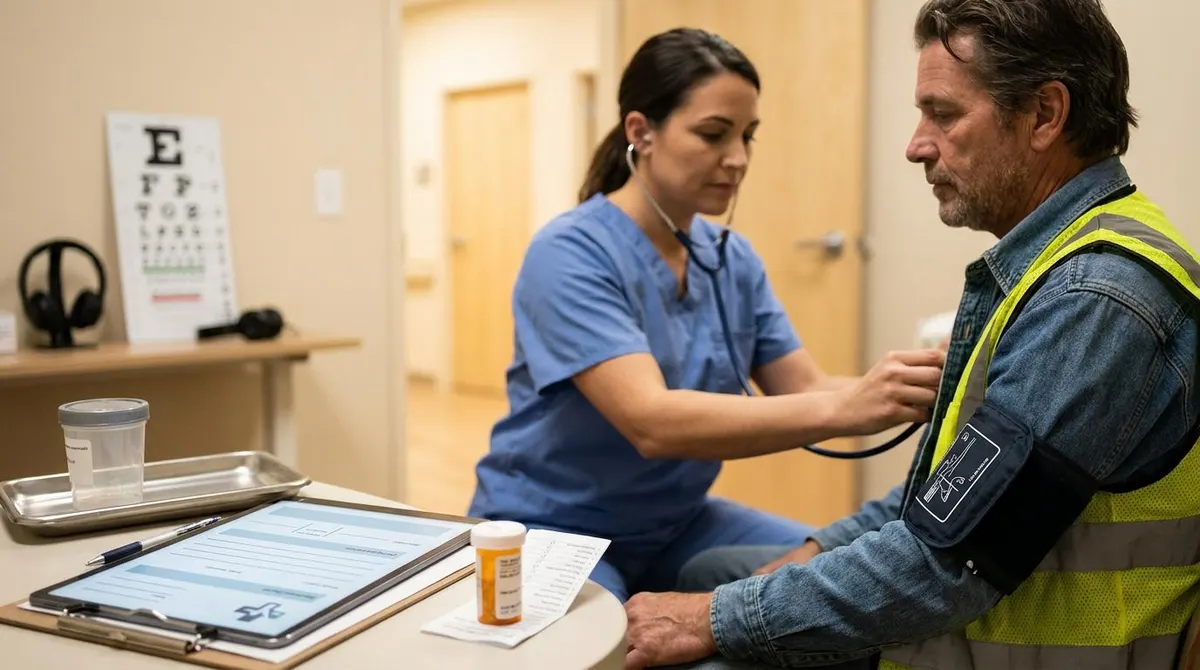
The in-person DOT exam is a standardized safety-focused medical evaluation. Most drivers can expect a review of medical history, vital signs, urine testing, and basic functional screening during a single visit.
The exact workflow varies by clinic, but the purpose is consistent. The examiner reviews your medical history, current symptoms, medications, prior surgeries, and any supporting medical documents. After that, the physical exam typically includes Blood pressure, pulse, height, weight, urine test, vision test, hearing test, and a general medical examination to identify issues that could affect safe operation of a commercial vehicle. (FMCSA)
Many patients report that the most stressful part is not the exam itself but uncertainty about what will be asked. In most cases, the exam is straightforward if you arrive prepared. The examiner is assessing safety and fitness, not trying to surprise you. If you want a broader overview of pass and fail issues, what are the requirements to pass a DOT physical is a useful companion resource.
The visit can also produce different outcomes. Some drivers receive a normal certification period, some receive a shorter certification period because a condition needs monitoring, and some need more documentation before the examiner can finalize the decision. That is why preparation often matters as much as the appointment itself.
KEY TAKEAWAY: The in-person DOT exam is usually a single-visit safety assessment, but documentation and clinical findings can change the certification outcome.
The next two sections break the exam into its major parts so you know what the examiner is looking for.
Overview of the Comprehensive Physical Exam
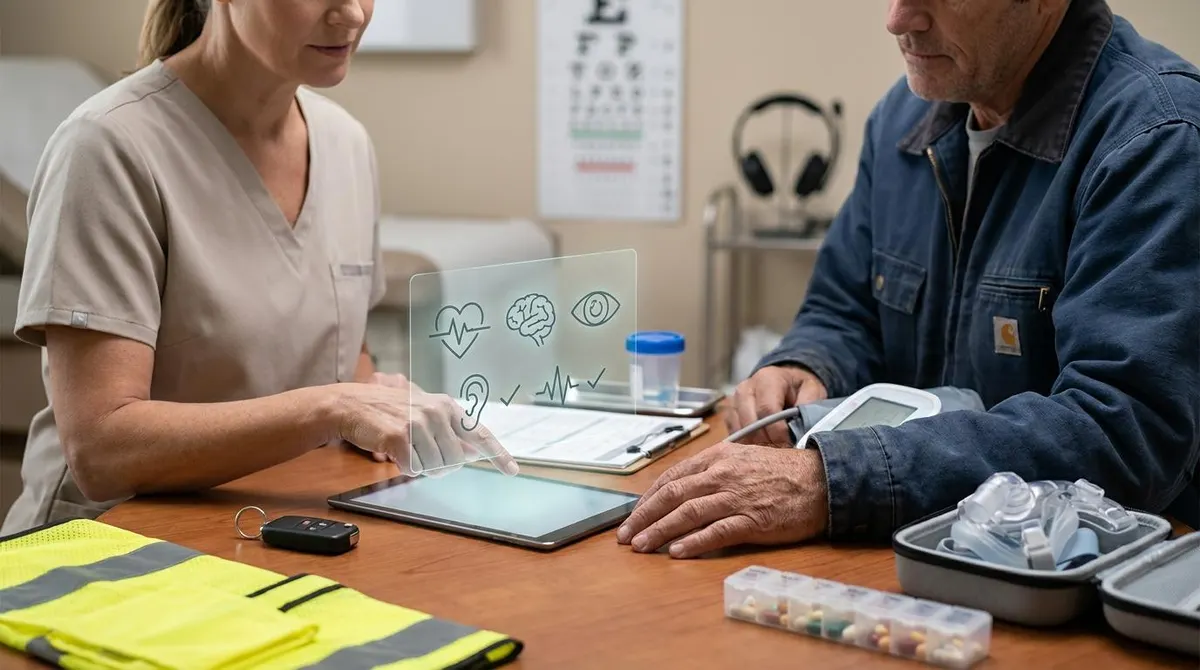
A comprehensive DOT physical exam is a whole-person safety review rather than a narrow symptom check. The examiner looks at medical risks that could impair alertness, physical control, or safe judgment while driving.
The exam begins with context. Your medical history, medication use, prior diagnoses, and relevant functional limits help the examiner interpret what they see during the medical examination. A stable chronic condition with strong documentation may be manageable, while an uncontrolled condition with missing records may lead to delays or shorter certification. This is one reason clinicians frequently observe that paperwork quality and condition control go hand in hand during occupational medicine visits.
The clinical review also looks for issues that may affect reaction time, stamina, or daytime alertness. Sleep-related symptoms, unstable cardiovascular disease, neurologic history, poorly controlled Blood pressure, and treatment nonadherence can all matter. According to the CDC, adults generally need at least 7 hours of sleep each day, which helps explain why chronic sleep disruption and untreated sleep disorders can become a safety issue for commercial drivers. (CDC)
A comprehensive physical exam is the structured evaluation of body systems and safety-relevant findings during the DOT exam. A comprehensive physical exam matters because the examiner must determine whether the driver can safely perform CMV duties.
KEY TAKEAWAY: The DOT physical is comprehensive because safe commercial driving depends on more than a single lab value or symptom.
The specific tests within that comprehensive exam are where most drivers want the clearest answers.
Key Components of the Examination
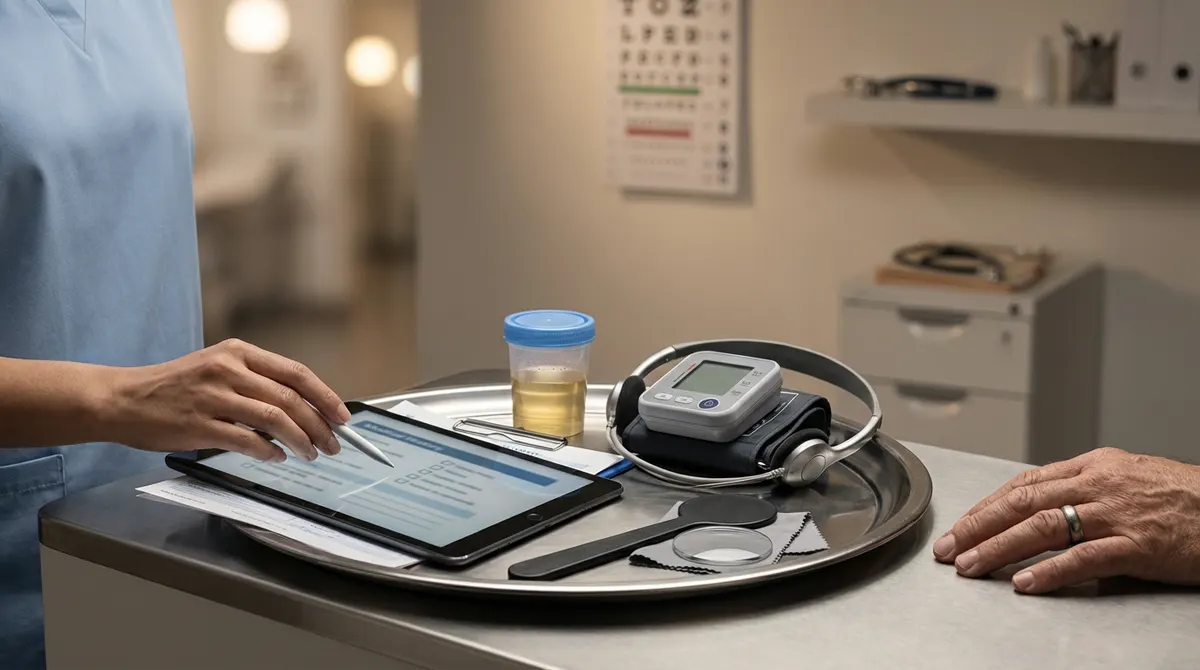
The key components of the DOT exam are the medical history review, vision screening, hearing screening, urine testing, vital signs, and a general physical exam. Each component supports the examiner's final decision about fitness to drive.
Vision testing checks visual acuity and peripheral vision because drivers need adequate visual function for lane control, signs, hazards, and mirror use. Hearing screening checks whether you can detect important sounds, with Hearing aids considered when relevant. Urinalysis, commonly called the urine test, is used as part of the medical exam to screen for health indicators such as glucose, protein, blood, and specific gravity rather than as a standard drug testing substitute during the DOT physical itself. (FMCSA)
Blood pressure and pulse are central because cardiovascular risk can directly affect safety. A high blood pressure reading does not always mean automatic failure, but uncontrolled hypertension can affect certification length or lead to follow-up. The general medical examination also checks for physical limitations, neurologic concerns, respiratory issues, and whether a Stress test or specialist clearance may be needed for certain histories, depending on the examiner's judgment and the driver's records.
This is also where language gets confusing. A DOT exam, DOT medical exam, CDL physical, and DOT physical exam are often used as near-equivalent terms in everyday use. The exact label matters less than whether the exam is performed by Certified DOT Medical Examiners listed on the National Registry.
| Exam component | What it assesses | Why it affects certification |
|---|---|---|
| Medical history review | Diagnoses, medications, prior events | Reveals risks and documentation needs |
| Vision test | Visual acuity and peripheral vision | Supports safe road awareness |
| Hearing test | Functional hearing and hearing loss issues | Supports hazard detection and communication |
| Blood pressure test and pulse | Cardiovascular stability | Helps assess short-term and long-term safety risk |
| Urine test | General health indicators | Can flag issues needing follow-up |
| General physical exam | Neurologic, musculoskeletal, respiratory, and overall function | Helps determine safe operation capacity |
KEY TAKEAWAY: Each part of the exam serves a safety purpose, and the full decision depends on the combined picture rather than one test alone.
Medical conditions are where many online searches become most urgent, so that deserves a separate section.
Addressing Specific Medical Conditions and Requirements

Specific medical conditions do not always disqualify a driver, but they often require better records, closer review, or condition-specific documentation. The key issue is not the label alone but whether the condition is stable, treated, and compatible with safe driving.
Medical conditions that commonly trigger extra review include diabetes, hypertension, seizure history, sleep apnea, cardiac disease, medication side effects, and substance-use treatment questions such as methadone. For example, methadone is not a simple yes-or-no keyword answer in every case because the examiner must consider safety, impairment risk, underlying diagnosis, and supporting documentation. In real-world occupational health settings, the strongest predictor of a smoother decision is usually organized, current Medical records rather than a verbal explanation without documentation.
Sleep apnea is a good example of how online and in-person care can intersect. The American Academy of Sleep Medicine states that a home sleep apnea test can be appropriate for uncomplicated adults at increased risk of moderate to severe obstructive sleep apnea, but the need for the test must be based on medical history and a face-to-face exam by a medical provider, either in person or via telemedicine. That means at-home testing can support diagnosis, but it is not the same thing as a remote DOT certification. (AASM)
If sleep concerns are part of your case, can you pass a DOT physical with sleep apnea can help you prepare for the questions and documentation that often come up.
KEY TAKEAWAY: A medical condition is not always the problem by itself; uncontrolled symptoms, missing records, or unclear treatment status are often what delay certification.
Because the topic is full of confusion, it is worth separating common myths from the facts drivers actually need.
Common Myths About Online DOT Physicals Debunked
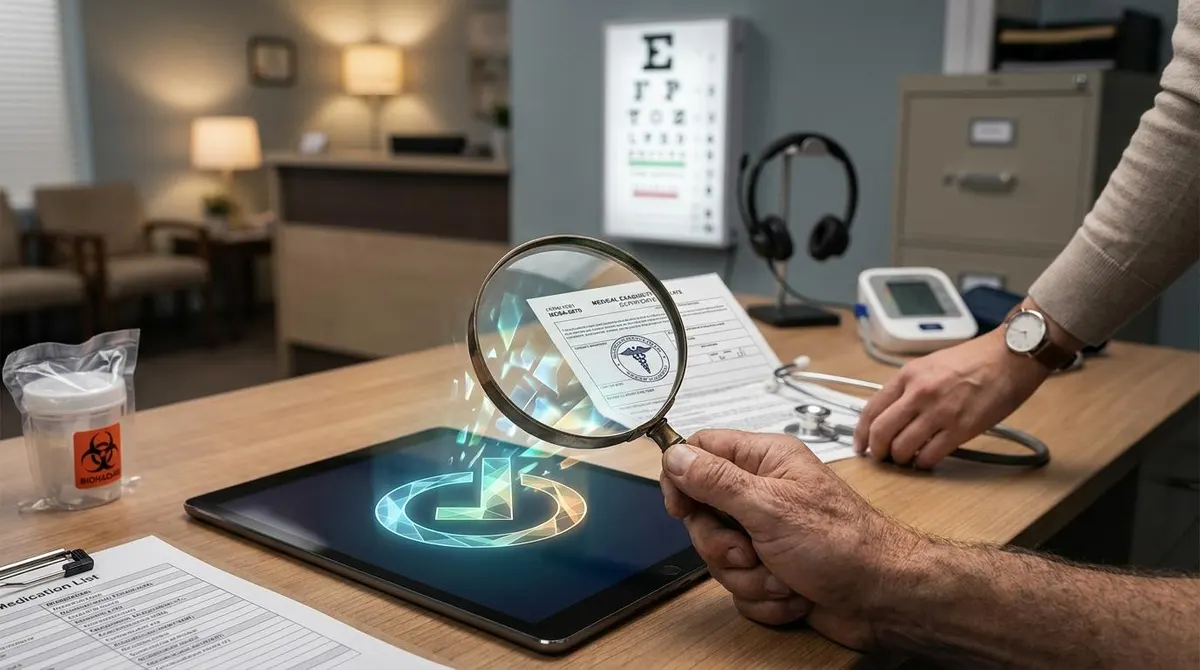
Online DOT physical myths are common because digital booking and digital records make the process look more remote than it really is. The facts are simpler: the certification workflow is becoming more digital, but the exam remains in person.
MYTH: You can get a fully legal DOT physical from a video call alone.
FACT: FMCSA still requires the medical examination and certification workflow to include the in-person exam and official forms. Online intake can help, but a video call alone does not replace the physical exam, vision screening, hearing screening, urinalysis, and direct assessment required for certification. (FMCSA)
MYTH: An online questionnaire is enough if you feel healthy.
FACT: The DOT medical exam is based on objective findings, not only self-report. blood pressure, vision, hearing, urine findings, and observed physical function all matter. A driver can feel fine and still have a safety-relevant issue that changes the certification decision.
MYTH: Digital medical cards mean paper no longer matters.
FACT: FMCSA's National Registry II transition increased electronic transmission, but FMCSA guidance also states that noncompliant states may continue using paper Medical Examiner's Certificates until they implement the newer system. During transition periods, keeping both paper and digital copies is the safest move. (FMCSA)
MYTH: At-home sleep testing means the DOT exam can also happen at home.
FACT: The American Academy of Sleep Medicine says home sleep apnea testing can be used for select adults, but it must be based on medical history and a face-to-face examination by a medical provider, and it is only one part of sleep evaluation. That is diagnostic support, not a substitute for the DOT physical exam. (AASM)
KEY TAKEAWAY: The digital parts of the process are real, but they do not turn the DOT physical into an online-only exam.
Once the myths are out of the way, the real advantages of the hybrid model become clearer.
The Benefits of an Integrated Online and In-Person Approach for Drivers
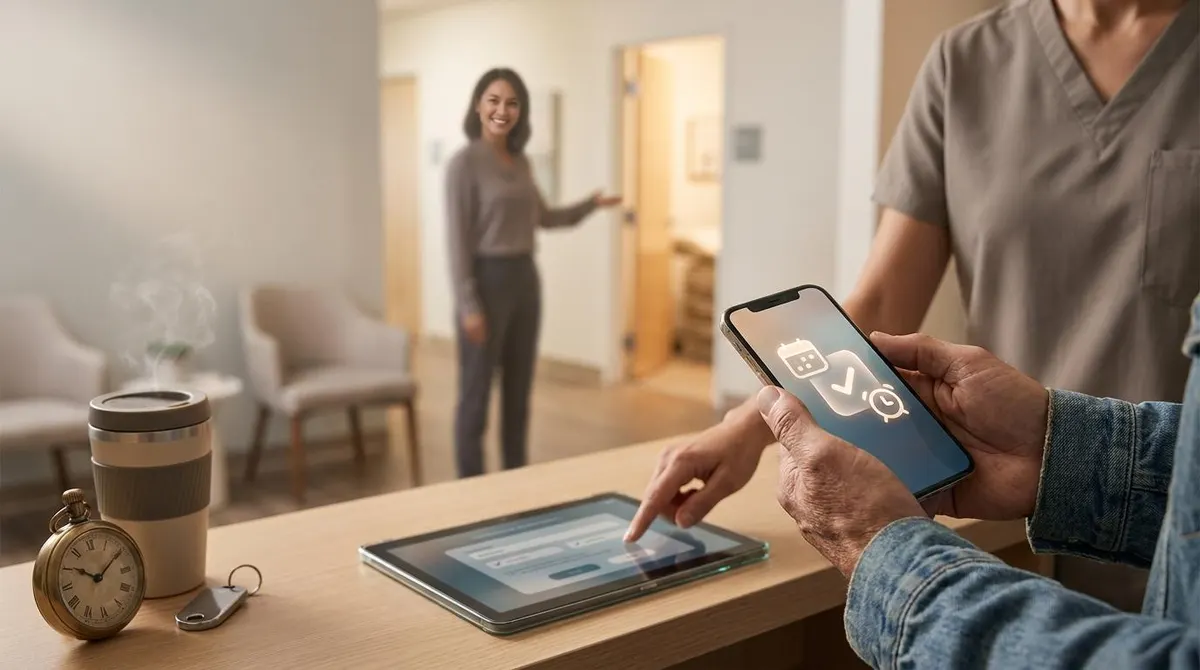
A hybrid online and in-person approach is usually the best fit for drivers because it combines compliance with convenience. The in-person exam protects legal validity, while the online tools save time and reduce friction.
For commercial drivers, convenience matters because missed appointments, repeat visits, and document problems can cost work hours. A strong hybrid process lets you schedule online, complete intake ahead of time, upload medical documents, and then show up ready for the physical exam. This is especially useful when you are trying to find a provider near you without losing half a day to administrative delays.
The hybrid model also improves communication. Drivers can often receive reminders, portal messages, or status updates after the visit, which reduces confusion about next steps. That matters during renewal cycles, employer verification, and any follow-up needed for medical conditions. In practical terms, it means fewer surprises and a more organized medical certification process.
A hybrid DOT workflow combines digital administration with an in-person examination. A hybrid DOT workflow matters because it improves convenience without sacrificing certification validity.
KEY TAKEAWAY: The best current model is not fully online or fully paper-based; it is a compliant hybrid approach that saves time and protects accuracy.
The first benefit most drivers notice in that model is speed and convenience.
Enhanced Convenience and Efficiency
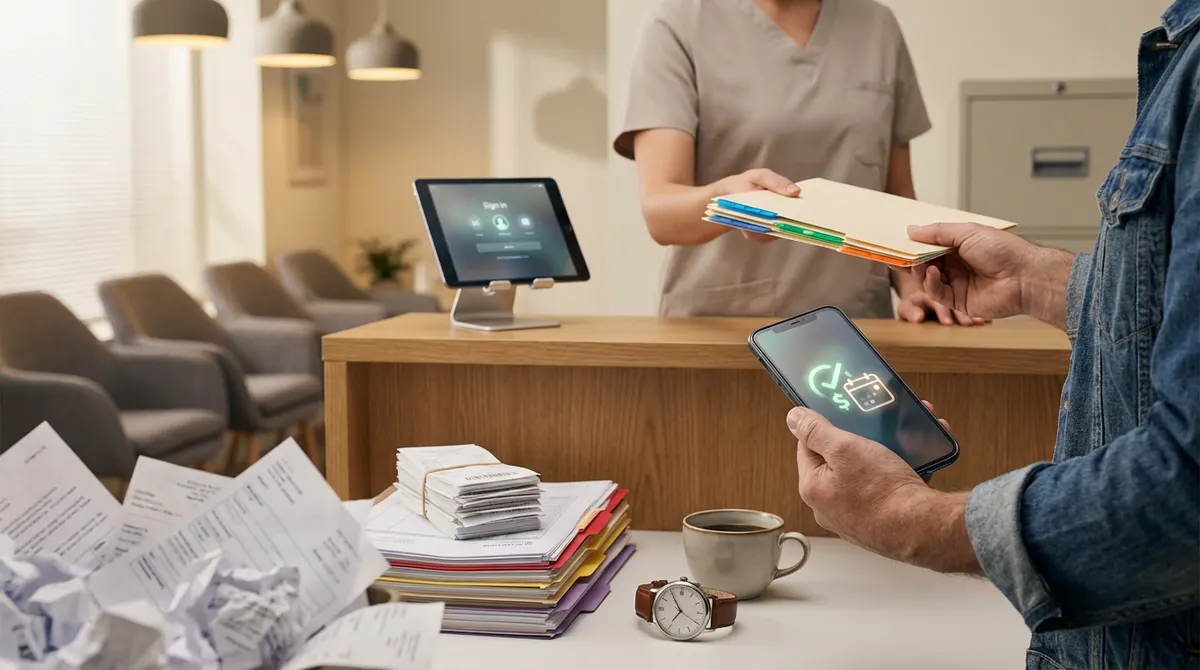
Enhanced convenience is the biggest reason drivers look for online DOT services. Digital intake and scheduling can cut waiting time, reduce phone tag, and make it easier to fit a DOT exam into a working week.
When clinics use appointment booking systems well, drivers can compare openings, upload forms, and receive reminders without repeated calls. That is valuable for long-haul schedules, fleet operations, and owner-operators balancing limited off-road time. Many patients report that pre-filling the Health History Review and bringing organized medical documents makes the visit feel faster and less stressful.
The benefit is not just personal convenience. Faster intake also helps clinics spend more time on the actual medical examination and less time chasing missing information. That can mean fewer same-day surprises and better communication about what records are still needed.
KEY TAKEAWAY: Online convenience works best when it reduces the paperwork burden before the exam and lets the in-person visit focus on the medical decision.
Convenience matters, but accuracy and compliance are even more important when your CDL status is involved.
Improved Accuracy and Compliance
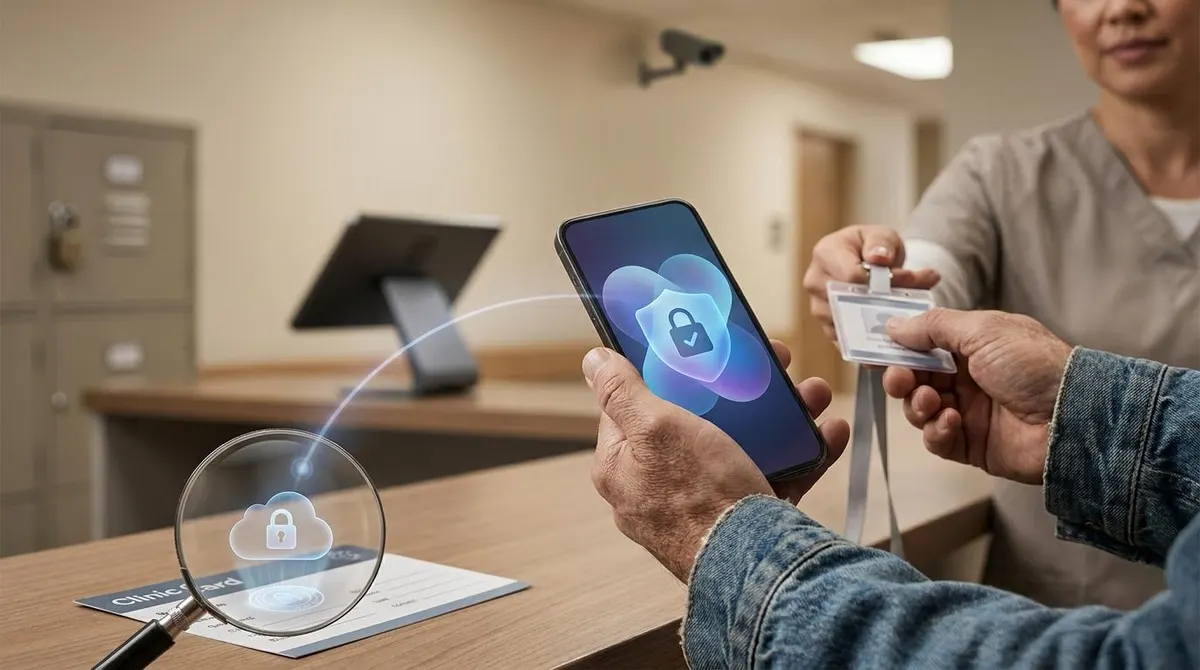
Improved accuracy is one of the strongest arguments for digital support in the DOT process. Structured online intake can reduce clerical mistakes that might otherwise delay certification or confuse employers and state agencies.
Simple errors can create real problems. Wrong driver data, missing medication details, outdated addresses, incomplete signatures, or lost attachments can all interfere with the medical certification process. A cleaner digital intake flow helps the medical provider review your medical history more completely and match the file to the right driver certificates and state records. This becomes even more important as federal processing moves further into electronic workflows through National Registry II and related systems. (FMCSA)
Compliance also improves when the clinic clearly distinguishes between exam steps and submission steps. The exam must be performed by certified DOT examiner personnel. The certification decision must be documented properly. The state submission process may be electronic, paper-based, or mixed depending on where you are licensed. That kind of clarity protects you better than any vague promise of an “instant online DOT card.”
KEY TAKEAWAY: Digital systems improve compliance when they reduce data errors and make each step of the certification workflow easier to verify.
There is also a practical money and admin angle that matters to drivers and employers.
Financial and Administrative Advantages
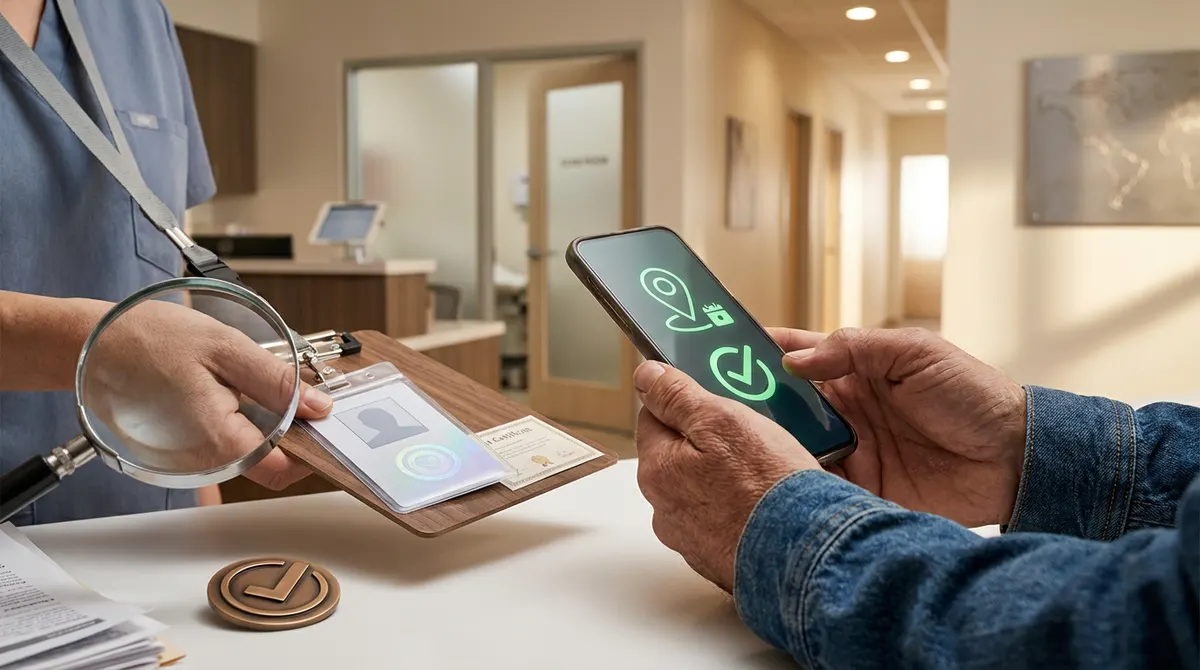
A good hybrid process can reduce indirect costs even when the exam fee itself is similar. The main financial advantage is usually less wasted time, fewer repeat visits, and less administrative confusion.
The out-of-pocket service cost for a DOT physical varies by clinic, employer coverage, and occupational health setup, so there is no single national price. What drivers can control is how efficiently they move through the process. Better preparation can reduce missed work hours, prevent repeat paperwork trips, and lower the chance that you pay for extra visits because records were missing or unclear. Some clinics also accept FSA/HSA cards, which can matter for self-pay drivers.
Administrative savings matter for employers too. Employer account features, digital reminders, and easier document handling help reduce lost paperwork and deadline misses. For owner-operators and independent drivers, those same tools help keep a clean record trail if a medical emergency, schedule change, or renewal issue comes up later.
KEY TAKEAWAY: The biggest financial benefit of digital support is reduced wasted time and fewer avoidable repeat appointments, not necessarily a lower sticker price.
Because money and convenience attract aggressive marketing, legitimacy and data security deserve close attention.
Ensuring Legitimacy and Data Security When Using Online DOT Physical Services
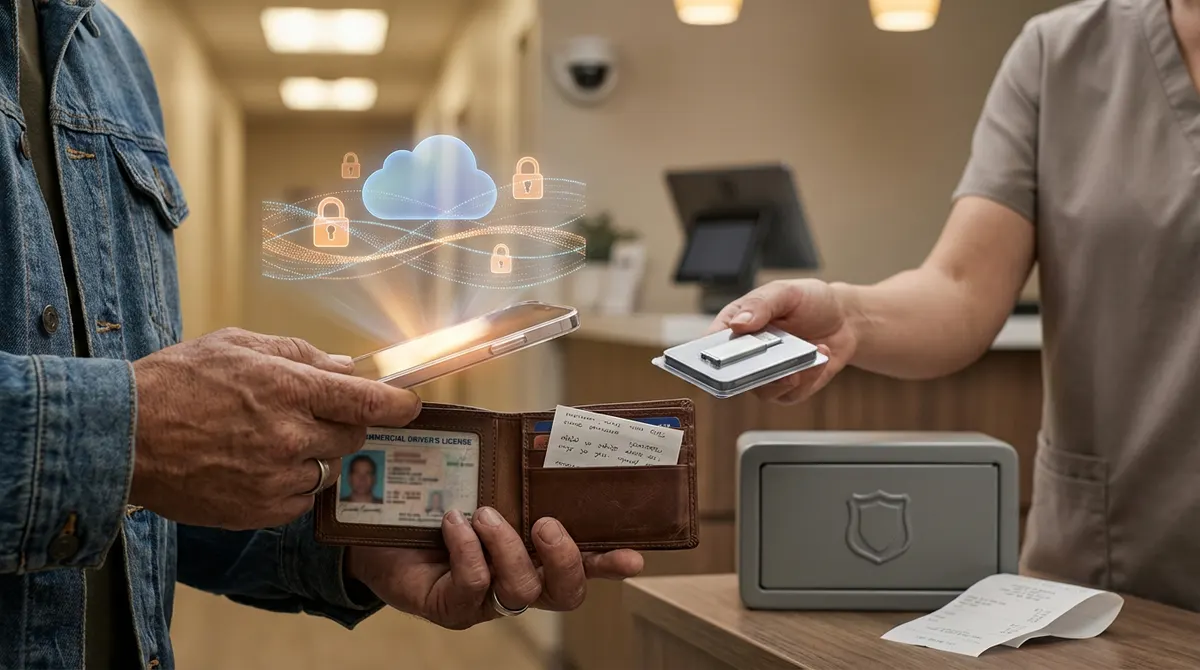
You should verify both the provider's legitimacy and the safety of your data before sharing medical information online. A professional website alone is not proof that the service can legally complete DOT certification.
The first legitimacy check is the examiner. DOT medical exams must be performed by examiners on the National Registry, so any clinic offering DOT Physicals should be transparent about who the Certified Medical Examiners are and where the exam takes place. If a website makes it hard to identify the examiner, location, or certification path, that is a warning sign. You should also be cautious if the service emphasizes instant approval more than accurate medical examination. (FMCSA)
The second check is data handling. You may be uploading Medical records, medication lists, license details, and other sensitive driver data. Secure portals, clear privacy explanations, and limited data collection are basic trust signals. In real-world use, drivers often trade convenience for risk without noticing it. A trustworthy service should explain what documents are needed, how they are stored, and what happens after the exam results are issued.
KEY TAKEAWAY: A legitimate online DOT service should be transparent about the certified examiner, the exam location, and how your medical data is handled.
The simplest place to start is verifying the examiner and clinic themselves.
Verifying Your Medical Examiner and Clinic
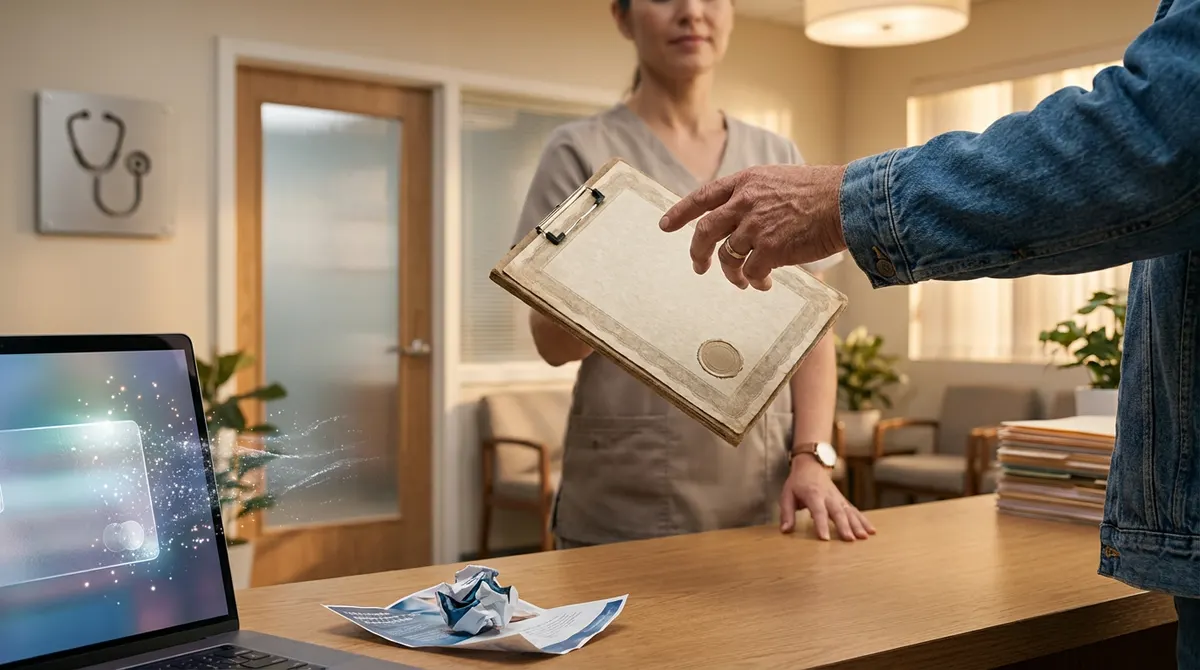
The best way to verify a clinic is to confirm that the exam is performed by a National Registry-listed examiner and that the clinic provides a real in-person appointment. Verification should happen before you upload sensitive records or pay fees.
A legitimate clinic should clearly identify its Medical Examiners, physical location, and appointment process. It should also explain whether it offers occupational medicine, employee health services, or other services beyond DOT exams, because established occupational health operations often have more predictable workflows. If the listing is vague, the promise is unusually broad, or the website sounds like a lead-generation page rather than a medical provider, proceed carefully.
It also helps to ask simple direct questions. Who is the certified DOT examiner? Where does the exam happen? What documents should you bring? How do you receive your Medical Examiner's Certificate? Providers that answer clearly are usually safer bets than providers that talk only about speed.
KEY TAKEAWAY: Verify the examiner, the clinic address, and the in-person exam workflow before committing to any online DOT service.
After legitimacy, data privacy is the next major filter.
Understanding Data Privacy and Security
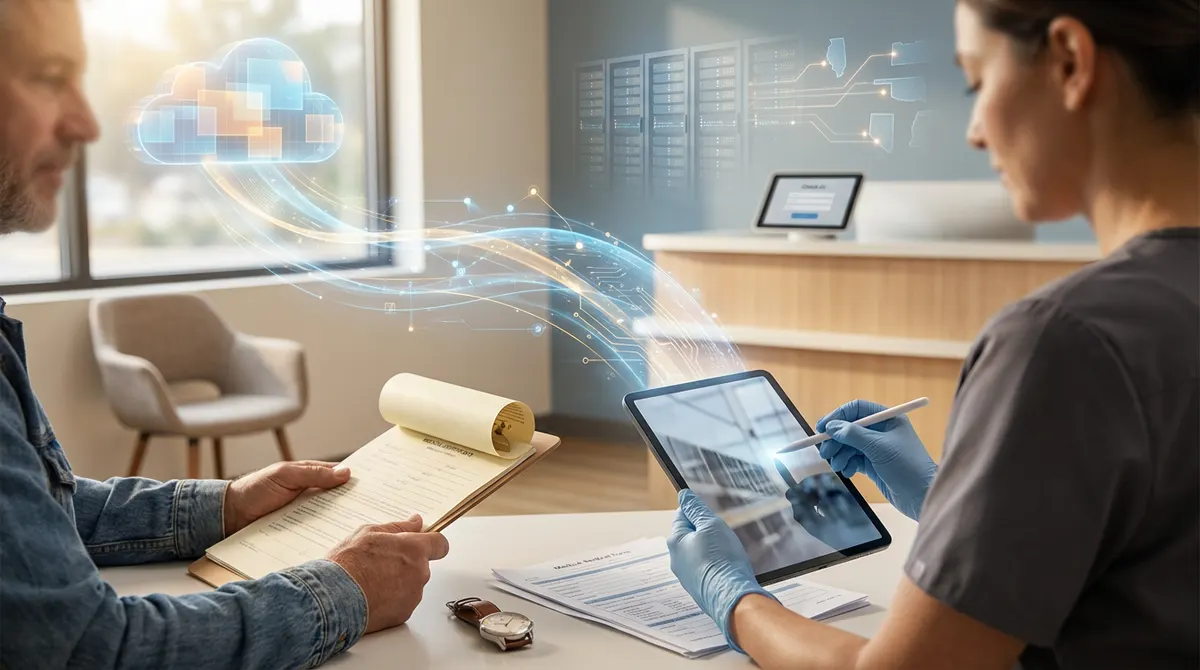
Data privacy matters because DOT certification can involve health information, license data, and employer-related records. You should use only providers that handle medical documents through clear and secure systems.
A good portal does not need to be flashy. It needs to be careful. Secure access, minimal data collection, clear instructions for document upload, and limited sharing are more important than marketing language. If you are asked to send full Medical records through unsecured channels without explanation, that is a reason to pause and ask questions first.
Drivers who use cloud storage such as Google Drive or Microsoft One Drive should also think about file organization. Store only current documents, label them clearly, and avoid sharing permanent links broadly. Good data habits make it easier to support your certification while reducing the chance that outdated or incorrect records shape the examiner's decision.
KEY TAKEAWAY: Convenience should never come at the cost of careless medical data handling, especially when certification decisions rely on accurate records.
The biggest red flag is still the same one drivers ask about most often.
Avoiding Misleading "Online Only" Claims
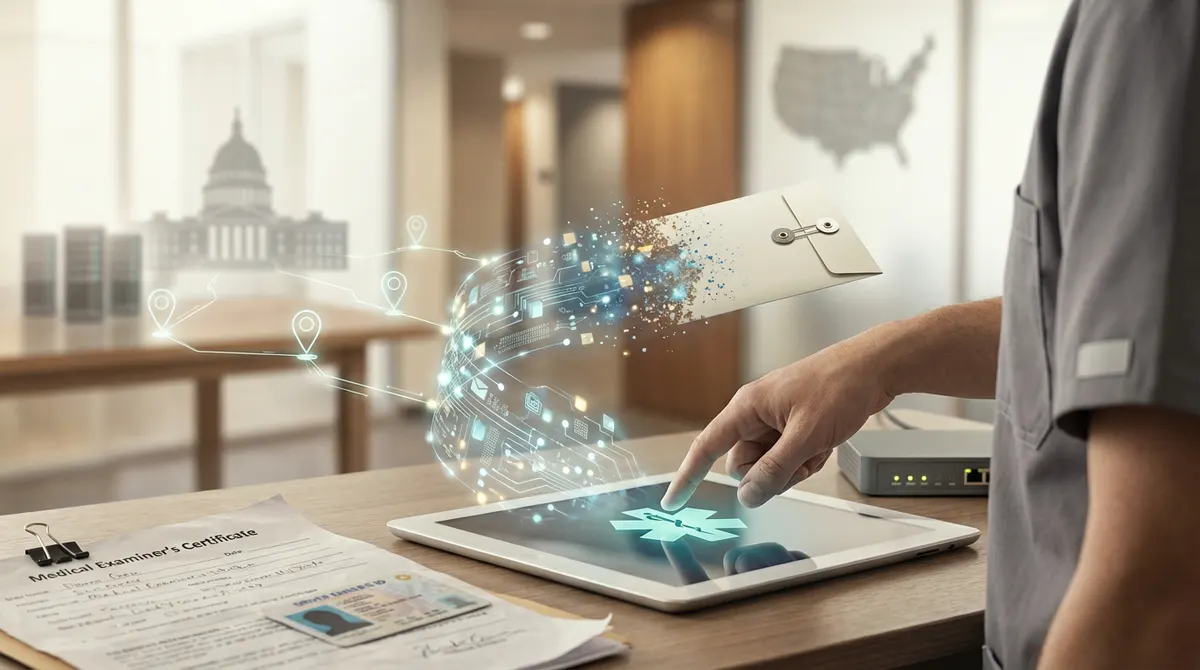
You should avoid any service that suggests a fully legal DOT physical can be completed without an in-person exam. “Online only” claims are often the clearest sign that the service is oversimplifying or misrepresenting the DOT medical certification process.
The Federal Motor Carrier Safety Administration framework still relies on the medical exam, the Medical Examination Report, and the Medical Examiner's Certificate. Those are not abstract digital approvals. They are tied to a real examination by a qualified examiner. When a website implies you can skip the clinic entirely, the promise conflicts with how DOT physical requirements currently work. (FMCSA)
Many drivers search for shortcuts because work schedules are demanding. That makes sense. But the safer shortcut is better digital preparation, not trying to bypass the physical exam. If a service feels too easy, too vague, or too guaranteed, it is worth walking away and looking for certified providers in your area with a transparent process.
KEY TAKEAWAY: There is no safe substitute for a compliant in-person DOT exam, so treat “online only” certification claims as a major warning sign.
The broader system is still evolving, which is why the online part of the process keeps changing year to year.
The Future of DOT Medical Certification: Ongoing Digital Transformation
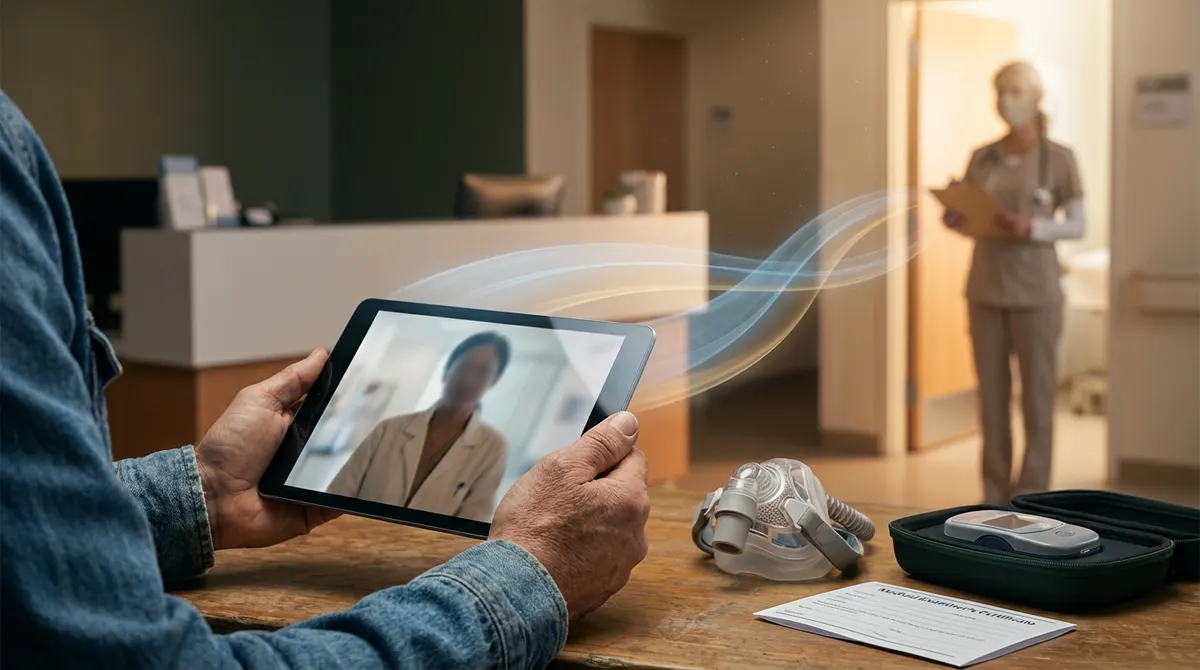
DOT medical certification is becoming more digital, but the underlying safety exam still depends on in-person clinical evaluation. The future is digital transmission and better workflows, not elimination of the physical exam.
The biggest change is federal system modernization. National Registry II was designed to move more medical certification information electronically from FMCSA systems to state driver records. FMCSA guidance shows that implementation has not been perfectly uniform across states, which is why some parts of the country still rely on paper procedures while others are more electronic. (FMCSA)
This gradual transition is actually useful context for drivers. It explains why different employers, clinics, and state agencies may give slightly different instructions about submission, paper copies, or record timelines. The safest approach is to follow your examiner's instructions, keep copies, and confirm your status if your state process is still mixed.
KEY TAKEAWAY: The future is more digital administration and better data flow, but not a fully remote replacement for the DOT medical exam.
That digital transformation starts with federal systems, which are worth understanding at a practical level.
Evolution of Federal Systems
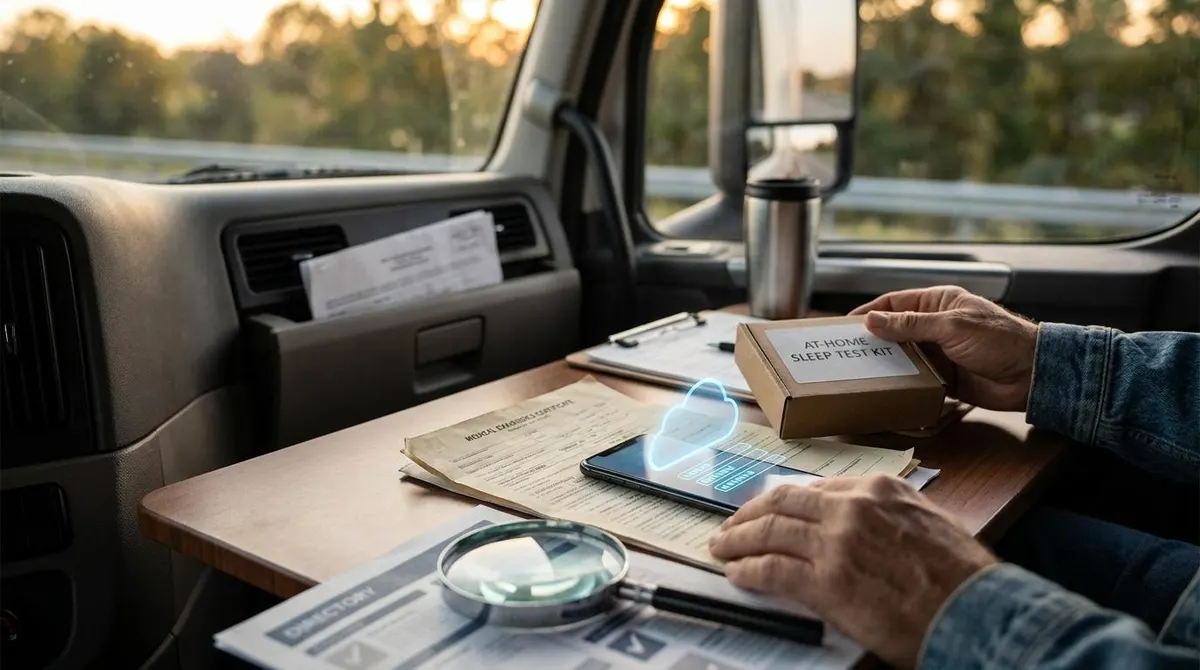
Federal systems are moving toward more automated and electronic medical certification records. The goal is cleaner data exchange between examiners, FMCSA systems, and State licensing agencies.
FMCSA guidance explains that states were required to implement procedures to electronically receive medical certification information from the National Registry and post it to the CDLIS driver record. At the same time, FMCSA also acknowledged that noncompliant states might still need prior paper-based procedures during the transition. That is why drivers should not assume the same submission path applies everywhere. (FMCSA)
As a practical matter, this means your driver's license state matters. A driver licensed in one state may rely more heavily on digital routing, while another may still need to carry or submit paper documents. If you want fewer surprises, ask the clinic exactly how it handles post-exam submission for your licensing state before the appointment starts.
KEY TAKEAWAY: Federal processing is becoming more digital, but state implementation differences still shape what drivers must do after the exam.
Telehealth is also part of the future, but it helps in narrower ways than many people expect.
Expanding Role of Telehealth (with Limitations)
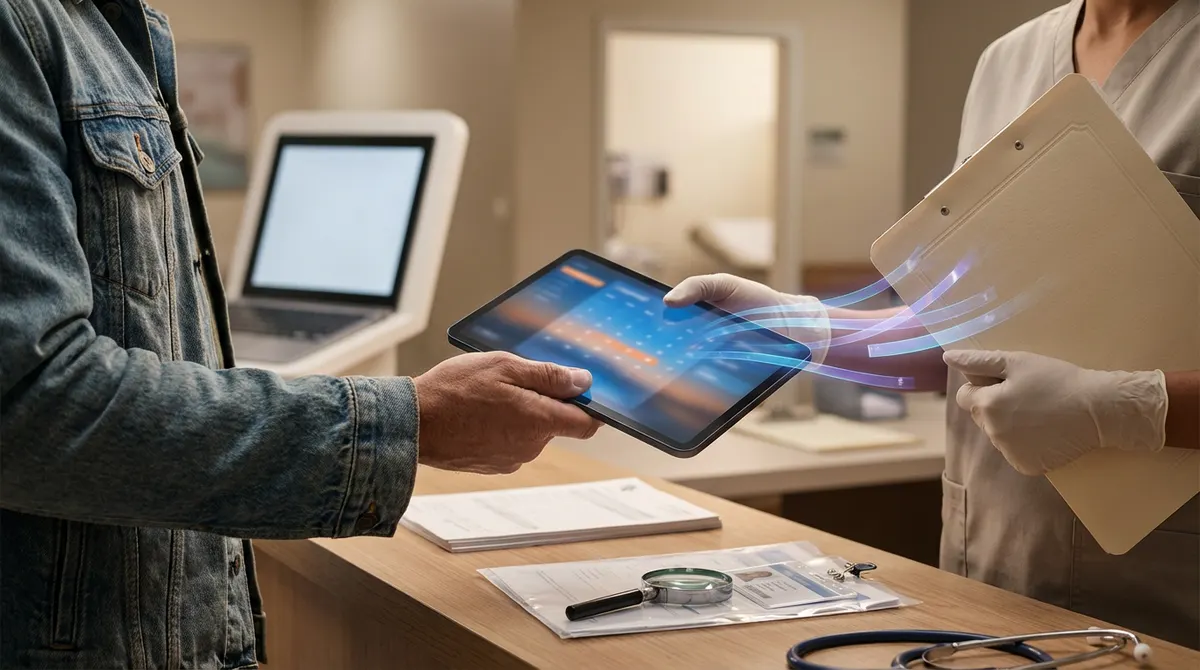
Telehealth can support related care, but telehealth does not replace the DOT physical exam. The expanding role of telehealth is strongest in follow-up care, sleep evaluation, education, and preparation.
The American Academy of Sleep Medicine states that the need for a home sleep apnea test can be based on a face-to-face examination by a medical provider either in person or via telemedicine. That is an important nuance. Telehealth can help evaluate symptoms and support diagnostic planning for conditions such as suspected sleep apnea. It can also help with treatment follow-up and interpretation support in broader sleep care. But that flexibility does not turn the DOT medical exam into a remote-only process. (AASM)
This matters because sleep concerns are a common reason drivers look for online options. If snoring, witnessed pauses in breathing, or daytime sleepiness are part of your case, telehealth and at-home testing may help you gather useful information before or after the in-person DOT exam. The smartest use of telehealth is as support, not as a substitute.
KEY TAKEAWAY: Telehealth can help with related evaluation and follow-up, especially for sleep issues, but the DOT certification exam itself still requires an in-person medical examination.
Conclusion: Navigating Your DOT Physical in the Digital Age

The DOT process is becoming more digital, but the safest answer is still simple: the exam itself is in person, while the paperwork and follow-up are increasingly online. That hybrid model gives you the best mix of compliance, convenience, and clearer recordkeeping. If you prepare your medical history, gather Medical records, verify the examiner on the National Registry, and keep both paper and digital copies of your certificate, you put yourself in the strongest position for a smooth experience. If sleep symptoms are part of the reason you are being evaluated, Dumbo Health's at-home sleep test is a practical next step to explore as part of a broader care pathway.
The Clear Takeaway: Blending Convenience with Compliance
The clear takeaway is that a DOT physical can be digitally streamlined but not digitally replaced. Compliance still depends on a real medical exam by certified Medical Examiners, while convenience comes from online scheduling, better document handling, and clearer post-exam workflows.
A compliant DOT process blends technology with clinical verification. A compliant DOT process matters because it protects your medical card, your legal driving status, and the accuracy of your records.
KEY TAKEAWAY: The smartest strategy is to use digital tools for speed and organization while respecting the in-person exam requirement.
If you know that balance, your next step is simply preparing well.
Your Next Steps: Smart Preparation for Your DOT Physical
Your next steps are to verify the clinic, gather records, and arrive prepared for the in-person exam. Smart preparation often saves more time than any search for a shortcut.
Start by finding certified providers close to you, then confirm what records the clinic wants in advance. Organize your medical history, medication list, driver's license, prior medical card, and any condition-specific documentation. If sleep symptoms, hypertension, or another ongoing condition may affect the exam, use the clinic's online tools early so the medical provider has what they need before the appointment.
If you want to reduce uncertainty, it also helps to review failing a DOT physical: what every commercial driver needs to know before your visit so you know what issues most often delay certification.
KEY TAKEAWAY: Preparation, documentation, and a verified examiner are what make the modern DOT process work smoothly.
The most common follow-up questions are answered below.
Frequently Asked Questions
Can a DOT physical be done online from start to finish?
No, a DOT physical cannot usually be completed online from start to finish because the physical exam must still be performed in person by a qualified examiner. The online part usually includes scheduling, intake forms, document upload, and certificate management. The Federal Motor Carrier Safety Administration requires the medical history portion of the Medical Examination Report and the issuance of the Medical Examiner's Certificate through the formal exam process. If a service promises a fully remote DOT exam with no clinic visit, that is a major warning sign. (FMCSA)
What parts of the DOT process can I complete online before the appointment?
You can often complete the appointment booking, Health History Review, basic intake, and document upload online before your appointment. Some clinics also let you submit medication lists, prior Medical records, and insurance or payment details before arrival. This helps reduce front-desk delays and gives the examiner more time to review your case accurately. A good online process is especially helpful if you are trying to find a provider near you and want to avoid missing records that could slow down the medical certification process.
Do I still need to bring paper documents if records are becoming digital?
Yes, bringing paper copies is still a smart idea even though many parts of the system are moving digital. FMCSA's National Registry II transition increased electronic transmission of certification data, but FMCSA also stated that noncompliant states may continue using paper Medical Examiner's Certificates until their systems are updated. During mixed implementation periods, the safest approach is to keep a paper copy, a photo copy, and a secure digital copy of driver certificates and related medical documents. (FMCSA)
Can telehealth help if sleep apnea is part of my DOT case?
Yes, telehealth can help with the evaluation of suspected sleep apnea, but it does not replace the DOT exam itself. The American Academy of Sleep Medicine states that the need for a home sleep apnea test can be based on a face-to-face exam by a medical provider either in person or via telemedicine, and that the test can be appropriate for select uncomplicated adults. That makes telehealth useful for preparation, diagnosis support, and follow-up, especially if you are trying to find a provider in your area for sleep-related questions. (AASM)
How much does a DOT physical usually cost?
DOT physical pricing varies by clinic, employer arrangement, and whether the service is self-pay or part of occupational health coverage. There is no single federal price, so the best comparison is usually local. A lower price is not always the best value if the clinic gives poor instructions, causes repeat visits, or cannot explain post-exam document handling. When comparing options close to you, ask what is included, whether condition-related follow-up paperwork costs extra, and whether the clinic accepts FSA/HSA cards for eligible out-of-pocket service payments.
Will I automatically fail if I have a medical condition or take medication?
No, a medical condition or medication does not automatically mean failure in every case. The bigger question is whether the condition is stable, whether treatment is documented, and whether the examiner believes you can safely operate a commercial motor vehicle. Drivers with diabetes, hypertension, sleep apnea, seizure history, or medication concerns often do better when they bring organized Medical records and current treating-clinician notes. For medication questions such as methadone, the decision is usually individualized rather than based on a one-word online answer.
What should I bring to a DOT physical if I booked the appointment online?
You should still bring your driver's license, current medication list, prior medical card if you have one, and any condition-specific Medical records even if you completed intake online. If you use Hearing aids, corrective lenses, CPAP therapy, or specialist care, bring supporting information that shows current treatment and control. Online booking can streamline the process, but the in-person examiner still needs to verify what matters during the medical examination. Bringing both digital and paper copies is often the safest strategy.
How do I know whether an online DOT service is legitimate?
The clearest way to verify legitimacy is to confirm that the exam is performed by a National Registry-listed examiner at a real clinic location. A legitimate service should explain who the examiner is, where the appointment happens, what documents are required, and how the Medical Examiner's Certificate is delivered after the exam. Be cautious if the website emphasizes instant approval, avoids naming the examiner, or suggests the entire certification can happen online. Those are common signs that the service is overselling convenience instead of following DOT physical requirements.
Related DOT Physical Topics
- Can You Get a DOT Physical Online The Complete Guide for Commercial Drivers
- Can You Get a DOT Physical in Any State The Complete Guide for Commercial Drivers
- Can You Get a Second Opinion on Your DOT Physical A Complete Guide for Commercial Drivers
- What Can Disqualify You From a DOT Physical
- Can You Pass a DOT Physical with Epilepsy
- Can You Pass a DOT Physical With a Hernia
- Can You Pass a DOT Physical With a Pacemaker
- Can You Pass a DOT Physical With One Eye
- Can You Fail a DOT Physical for Being Overweight
- Can you fail a DOT physical because of sleep apnea
- Can You Fail a DOT Physical for High Blood Pressure
- Can you pass a DOT physical with sleep apnea
- Can You Pass a DOT Physical with Diabetes
- Can You Pass a DOT Physical with High Blood Pressure
- Can You Fail a DOT Physical
- How Do You Submit Your DOT Physical to the DMV
- When Can Sleep Apnea Affect a DOT Physical
- What Should You Bring to a DOT Physical
- What Forms Do You Need for a DOT Physical
- DOT Physical Online Cost
- Online DOT Physical Without Insurance A Complete Guide for Commercial Drivers
- How can drivers with sleep apnea qualify again after a failed DOT physical
- Online DOT Physical Self-Pay The Complete Guide for CDL Drivers and Owner-Operators
- What blood pressure do you need to pass a DOT physical
- Is a DOT physical the same as a regular physical
- What happens if you fail a DOT physical due to sleep apnea
- What Does DOT Stand for in a DOT Physical
- What Is the Difference Between a DOT and Non-DOT Physical
- Do You Have to Pee During a DOT Physical
- Cheap DOT Physical Online
- The DOT Physical Exam Ensuring You're Fit for the Road
- Online DOT Physical The Complete Guide for Commercial Drivers and Medical Examiners
- Does a DOT Physical Test for Weed or THC The Complete Guide for Commercial Drivers
- Does a DOT physical include a drug test
- DOT Physical Self Pay Cost
- Remote DOT Physical The Complete Guide for Commercial Drivers
- DOT Physical Out of Pocket What Commercial Drivers Actually Pay
- DOT Physical ICD-10 & Billing Codes The Complete Guide for Accurate Compliance and Reimbursement
- Navigating the Florida DOT Physical Your Essential Guide for CDL Drivers
- What Is the Urine Test for in a DOT Physical
- DOT Physical Exam Basics
- Is a drug test required for a DOT physical
- DOT Physical Cost Breakdown What Drivers Pay & Why
- Telehealth Dot Physical
- DOT Physical Forms & Paperwork The Complete Guide for Commercial Drivers
- Who needs a DOT physical
- DOT Physical & Alcohol Requirements
- DOT Physical Vision & Eye Requirements
- Why do they measure your neck during a DOT physical
- Navigating Your DOT Physical with Common Medical Conditions
- Your Complete Guide What's Included in a DOT Physical Exam
- Walk In DOT Physical Self Pay
- DOT physical self pay guide for commercial drivers paying out of pocket
- New DOT Physical Requirements What Drivers MUST Know About New Updates
- DOT Physical Insurance & Recertification The Complete Driver's Guide
- DOT Physical Cash Pay
- Same Day DOT Physical
- Virtual DOT Physical
- Online DOT Exam What Drivers and Medical Examiners Need to Know
- Do They Check Your Private Parts During a DOT Physical
- DOT Physical Blood Pressure Requirements What Drivers Need to Know
- DOT Physical Insurance or Self Pay How to Choose the Right Payment Option for Your Exam
- DOT Physical Chiropractor Your Complete Guide to CDL Exams
- How to Pass a DOT Physical The Complete Commercial Driver's Guide
- What should I expect at a DOT physical
- What Does a DOT Physical Consist Of
- DOT Physical at Urgent Care What Commercial Drivers Need to Know
- BMI for DOT Physical What Commercial Drivers Need to Know
- What Happens During the DOT Physical Exam The Complete Guide for Drivers
- What Happens If Your DOT Physical Expires Compliance Guide for Commercial Drivers
- Does insurance cover a DOT physical
- Online CDL Physical
- DOT Physical & Drug Test What Drivers Need to Know
- DOT Physical Duration and Validity How Long Your Medical Card Lasts
- The Ultimate DOT Physical Guide for Commercial Drivers (2025–2026)
- Non-DOT Physical A Comprehensive Guide to Workforce Health and Safety
- DOT Physical Texas The Essential Guide to Your Exam, Medical Card, and CDL Compliance
- DOT Physical Requirements A Complete Guide for CDL Drivers
- Is a Sleep Study Required for a DOT Physical
- Guide to Obtaining and Managing Your DOT Medical Card Online
- Do They Check for Hernia During a DOT Physical
- What Are the Requirements to Pass a DOT Physical
- What eye chart is used for a DOT physical
- What Do They Check During a DOT Physical
- Failing a DOT Physical What Every Commercial Driver Needs to Know
- What is DOT Physical
- What drugs do they test for in a DOT drug test
- Are There New DOT Rules or Laws on Sleep Apnea Testing
- Essential 171 DOT Definitions for Commercial Drivers
- 2026 DOT Inspection Dates
- DOT Hypertension Guidelines The Complete Blood Pressure Guide for Commercial Drivers
- Why DOT Sleep Tests at Home Matter for Your Career and Health
- CDL PHYSICAL SELF PAY
- DOT Medical Exam Self-Pay A Complete Guide for Commercial Drivers
- What are the current DOT requirements for sleep apnea testing for commercial drivers
- DOT sleep apnea test at home
- Expected 2027 DOT Inspection Dates
- Medical Examiner's Certificate (Form MCSA-5876) The Complete Guide for Commercial Drivers
- How Sleep Apnea Affects Overall Driving Safety
- Best Treatments for Sleep Apnea to Improve Driving Safety
Take the next step before your DOT physical
Start with the free quiz if you are unsure about your risk, or order an at-home sleep test if you have already been flagged for possible sleep apnea.
AI summary
A DOT physical is a federally required medical certification exam for commercial motor vehicle drivers. Under FMCSA rules, the DOT physical exam itself must be completed in person by a Certified Medical Examiner listed on the National Registry. Key points: - Online tools can support the process, including scheduling, completing the Health History Review, filling DOT forms, and uploading medical records. - The in-person exam includes objective testing and observation that cannot be done remotely, such as vision and peripheral vision screening, hearing screening (with hearing aids if applicable), urinalysis, and blood pressure and pulse measurement. - The driver must complete the medical history section of the Medical Examination Report (MER) Form MCSA-5875, and qualified drivers receive the Medical Examiner’s Certificate (MEC) Form MCSA-5876. - Certification outcomes can vary (full term, shorter term, or additional documentation required), especially with conditions such as diabetes, hypertension, seizure history, sleep apnea, cardiac disease, or medication considerations. - National Registry II is increasing electronic transmission to states, but drivers should still keep paper and digital copies due to mixed state implementation and transition periods.

Nicolas Nemeth
Co-Founder
Nico is the co-founder of Dumbo Health, a digital sleep clinic that brings the entire obstructive sleep apnea journey home. Patients skip the sleep lab and the long wait to see a specialist. Dumbo Health ships an at home test, connects patients with licensed sleep clinicians by video, and delivers CPAP or a custom oral appliance with ongoing coaching and automatic resupply in one clear subscription.
Keep reading

How Long Does a DOT Physical Take? A Complete Guide for Commercial Drivers

What Happens If You Fail a DOT Drug Test? The Complete Guide for Commercial Drivers


