Walk In DOT Physical Self Pay
A walk-in, self-pay DOT physical helps commercial drivers complete the FMCSA-required medical exam without insurance verification or appointment delays. The article explains what the visit typically includes, including history review, vital signs, vision and hearing checks, a physical exam, and the required urinalysis on Form MCSA-5875. It clarifies that the urine test screens for health markers like specific gravity, protein, blood, and sugar, and is not a DOT drug test. You will learn which documents to bring, how missing paperwork can trigger a pending determination, and how certification can be issued for up to two years or shorter monitoring periods. It also outlines how common conditions such as high blood pressure, diabetes, and sleep apnea are evaluated based on control and documentation. Practical prep tips cover sleep, hydration, medication timing, and avoiding last-minute caffeine or strenuous activity to reduce avoidable delays.
Struggling with sleep?
Find out if sleep apnea is the reason.
FDA-cleared. $149 flat. Physician-reviewed results in 48 hours.

Walk In DOT Physical Self Pay
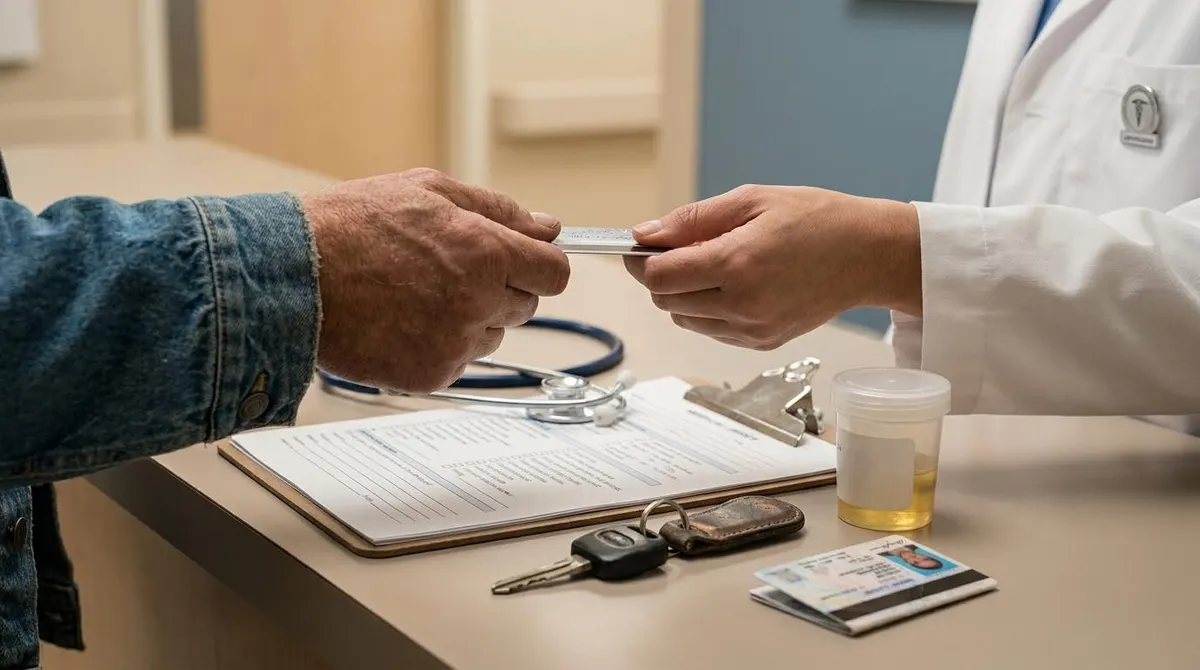
Walk in dot physical self pay is a direct way for commercial drivers to complete a required DOT medical exam without relying on insurance or advance scheduling. The Federal Motor Carrier Safety Administration, or FMCSA, requires many commercial drivers to hold a valid Medical Examiner’s Certificate, and certified exams are performed only by medical examiners listed on the National Registry of Certified Medical Examiners. This page explains what a walk-in self-pay visit includes, how the urine test fits into the exam, what documentation helps avoid delays, how certification timelines work, and what happens if you have a condition such as high blood pressure, diabetes, or sleep apnea. The goal is simple: help you get through the process with fewer surprises and better preparation. (FMCSA)
The Fast Lane to DOT Compliance: Your Walk-In, Self-Pay Solution

A walk-in, self-pay DOT physical gives you same-day access to a certified exam and removes two common delays: insurance verification and appointment wait times. For drivers whose work depends on a current medical card, faster access can protect both compliance and income.
A DOT physical is a federal medical qualification exam used to determine whether you can safely operate a commercial motor vehicle. A valid exam matters because the FMCSA framework allows certified medical examiners on the National Registry to issue the Medical Examiner’s Certificate that many drivers need to keep working legally.
Walk-in care is especially useful if your card is expiring soon, a new employer needs documentation quickly, or you are trying to fit the exam around a route. Many patients report that convenience matters almost as much as the exam itself, because missing work for scheduling delays can be costly even when the physical is routine. (FMCSA)
KEY TAKEAWAY: A walk-in self-pay DOT physical is designed for drivers who need speed, predictable access, and a certified exam without insurance-related delays.
Not sure if sleep apnea applies to you?
Take our 2-minute sleep risk quiz to see whether sleep apnea could affect your DOT physical. No account required.
That convenience becomes even more valuable when you look at why appointment-free care fits the realities of commercial driving.
Ditch the Appointments: The Convenience Drivers Deserve
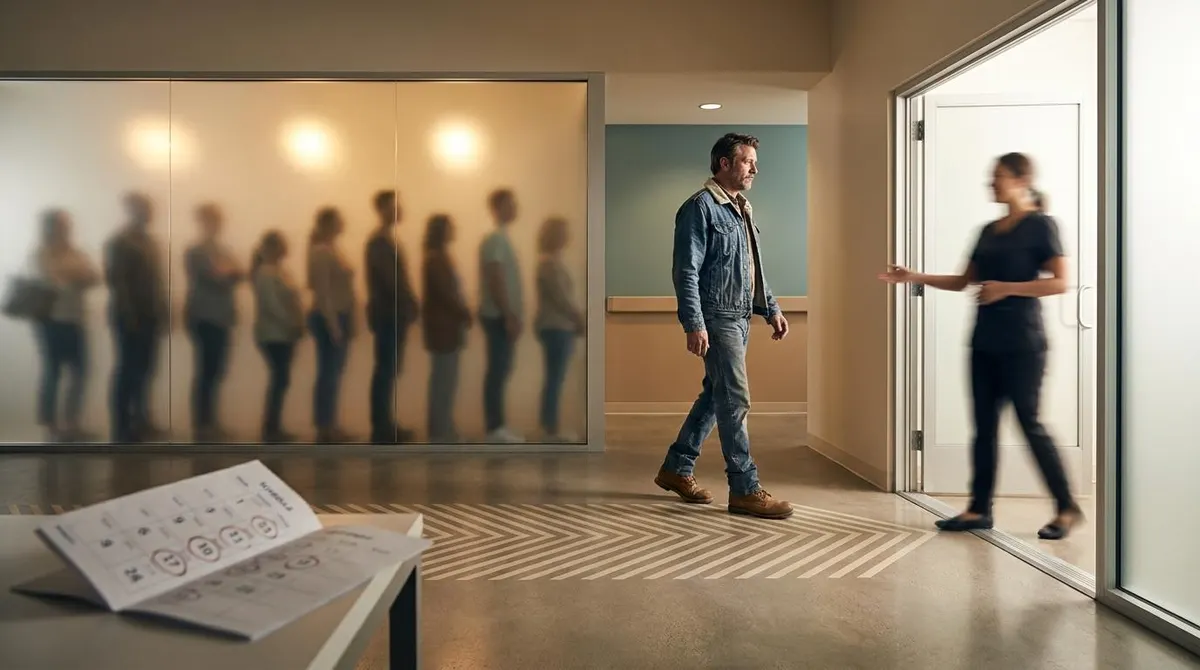
Walk-in DOT physicals work best when your schedule is uncertain and your medical card timeline is tight. A flexible exam model can reduce missed work time and lower the risk of a certification gap. (FMCSA)
Commercial driving rarely follows a neat office-hours schedule. Routes change, dispatches move, and a driver may need paperwork with very little notice. A walk-in model lets you handle the exam when it fits your workday instead of shaping your workday around the clinic. That is why many drivers searching for a DOT physical near you or providers in your area start with walk-in options.
The convenience is not only about speed at the front desk. The convenience is also about reducing unnecessary friction. If you are already carrying medication lists, prior records, or sleep apnea paperwork, the last thing you want is another week of waiting just to start the review. Clinicians frequently observe that a simpler process also helps drivers arrive calmer, which matters because stress can temporarily affect blood pressure readings. FMCSA guidance ties blood pressure readings directly to certification periods, so small avoidable stressors can matter more than drivers expect. (FMCSA)
TIP: If your card is close to expiring, do not wait for the final day. Even a routine exam can turn into a follow-up visit if a document is missing.
KEY TAKEAWAY: Walk-in access gives drivers a practical way to complete a required exam on a real work schedule, not an idealized one.
Once convenience is clear, the next question is usually why paying directly can be simpler than billing insurance.
Why Self-Pay for Your DOT Physical? Streamlined and Transparent

Self-pay DOT physicals are often simpler because the price is discussed upfront and the exam can begin without insurance processing. For many drivers, transparency is the biggest benefit of self-pay. (FMCSA)
A self-pay DOT physical means you pay the clinic directly for the occupational exam. Self-pay matters because a DOT physical is not the same as a routine preventive visit, and insurance handling can vary by plan, network, and clinic policy. When the goal is a fast medical certification decision, direct payment often removes the slowest administrative step. (FMCSA)
The most useful self-pay model tells you what is included before the exam starts. A standard visit generally includes the medical history review, vital signs, vision and hearing checks, the physical exam, and the urine test required on the Medical Examination Report Form MCSA-5875. The FMCSA instructions specifically require the examiner to record numerical urinalysis findings for specific gravity, protein, blood, and sugar, which is why the urine test is a routine part of the exam rather than an optional add-on. (FMCSA)
If you want a deeper overview of the pass criteria themselves, see what the requirements are to pass a DOT physical. That guide complements self-pay questions by explaining the actual medical standards drivers are trying to meet.
KEY TAKEAWAY: Self-pay usually works best when the clinic explains exactly what the exam includes and avoids hidden administrative complexity.
Already diagnosed and need CPAP support?
Dumbo Health helps patients start CPAP without the usual confusion, paperwork, or upfront cost. Equipment, setup, supplies, and ongoing support are all handled in one place.
To understand why that pricing model matters, it helps to understand the exam’s role in your driving career.
What is a DOT Physical and Why Does it Matter for Your Career?
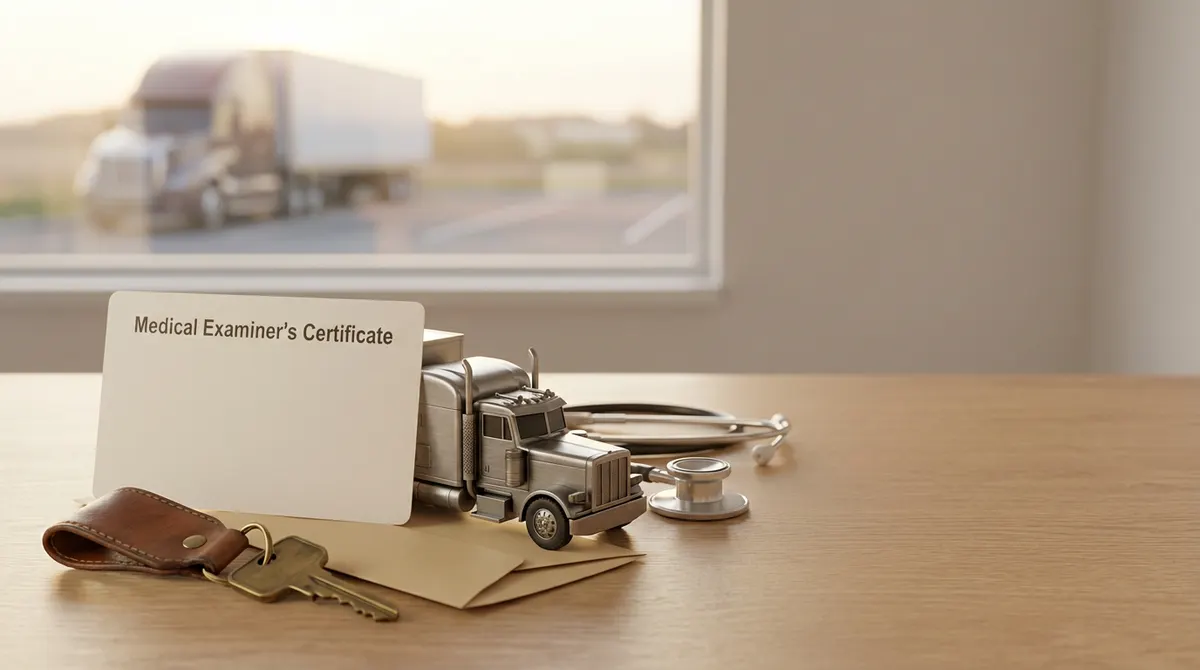
A DOT physical is a medical certification exam that determines whether you meet federal standards to operate a commercial motor vehicle safely. The result can affect your legal eligibility to drive and your ability to keep earning without interruption.
The exam exists to identify health issues that could interfere with safe driving. The Medical Examination Report requires the examiner to review your health history, measure blood pressure, assess vision and hearing, document a urine test, and examine body systems for abnormalities that may affect safe operation of a commercial vehicle. (FMCSA)
The certification decision is not only pass or fail. FMCSA materials show that an examiner may determine that you qualify for up to a 2-year certification, qualify but need periodic monitoring, need a pending determination while more information is gathered, or do not meet the standard. The form instructions also state that a pending determination may delay the decision for up to 45 days while follow-up information is obtained. That nuance matters because many drivers assume the exam always ends with an immediate yes or no. (FMCSA)
A DOT physical is also a practical health checkpoint. Drivers often discover that the exam is the first time an elevated blood pressure reading, vision change, or possible sleep issue is tied directly to driving safety and work continuity. If you are concerned about disqualification triggers, what can disqualify you from a DOT physical gives more detail on common medical barriers and how they are typically evaluated.
KEY TAKEAWAY: A DOT physical is both a regulatory requirement and a career protection tool because the exam directly affects whether you can stay on the road.
The next step is knowing exactly what happens during a walk-in visit from check-in to certification decision.
The Mandate: Ensuring Driver Safety on Our Roads

The federal medical certification system exists to reduce the risk that a medical condition will impair a driver behind the wheel. The DOT physical is a safety tool first and a paperwork requirement second.
The FMCSA handbook explains that certified medical examiners apply federal physical qualification standards when deciding whether an individual can safely operate an interstate commercial motor vehicle. The same handbook states that the medical examiner, not the treating clinician, ultimately decides whether the driver meets those standards, even when specialists provide supporting records.
That separation matters for safety. A treating doctor may know your condition well, but the DOT examiner is evaluating a specific job function: safe commercial driving. The examiner is not just asking whether a condition exists. The examiner is asking whether the condition, symptoms, treatment, or side effects create a functional risk for long-haul or commercial vehicle operation.
Drivers sometimes view the exam as a barrier. A better way to view it is as an evidence-based checkpoint tied to public safety, licensing integrity, and your own long-term employability. That perspective becomes especially important if you have a manageable chronic condition that needs documentation rather than guesswork.
KEY TAKEAWAY: The DOT physical is designed to protect both the public and the driver by evaluating whether real-world medical risk could affect commercial driving safety.
That safety purpose also explains why the exam can protect your livelihood, not just your compliance status.
Beyond Compliance: Protecting Your Livelihood and Future
A DOT physical protects more than legal status because uninterrupted certification supports uninterrupted work. A current medical card is often the difference between staying dispatch-ready and being sidelined. (FMCSA)
A short lapse can create outsized consequences. Even if a medical issue is minor, a missing document, an uncontrolled reading, or a delayed follow-up can interrupt onboarding, route assignments, or employer clearance. Many patients report that the true stress of the DOT physical is not the exam itself but the risk of lost driving time if something is incomplete. (FMCSA)
The FMCSA hypertension guidance is a good example of how health management affects work continuity. A driver with blood pressure under 140/90 may be certified for 2 years. A first-time Stage 1 reading of 140-159/90-99 may support a 1-year certification, while a first-time Stage 2 reading of 160-179/100-109 may lead to a one-time 3-month certification window. A Stage 3 reading above 180/110 is disqualifying until the blood pressure is reduced. Those thresholds show why even treatable conditions can affect scheduling, certification length, and income planning. (FMCSA)
Self-pay walk-in access can help here because it removes one source of delay. When timing matters, a direct route to an examiner on the National Registry can be more valuable than a slower billing pathway that adds no medical value.
KEY TAKEAWAY: The DOT physical protects your livelihood when it helps identify and document manageable health issues before they turn into work-stopping certification problems.
With that in mind, it helps to know exactly how a walk-in exam usually unfolds.
Your Walk-In DOT Physical: A Step-by-Step Guide

A walk-in DOT physical usually follows a set order: registration, medical history, vital signs, testing, physical exam, and medical determination. Knowing the sequence can make the visit faster and easier to navigate. (FMCSA)
Before the exam starts, clinic staff usually verify your identity and collect your driver information. The FMCSA instructions for MCSA-5875 ask for information such as your name as written on your license, license number, issuing state, health history details, and medication list. If you answer yes to certain health history questions, the form expects more explanation. That is one reason incomplete paperwork can slow a same-day visit.
Next comes the testing portion. The FMCSA form instructions require documentation of pulse, height, weight, blood pressure, urinalysis, vision, and hearing. The physical examination then reviews body systems and whether an abnormal finding could affect safe commercial driving. The examiner may issue a 2-year certificate, issue a shorter certification with periodic monitoring, place the decision in pending status while records are gathered, or determine that the standard is not met. (FMCSA)
The urine test deserves special clarification because drivers often confuse it with a regulated drug screen. In the DOT physical, the urine test is a health screening element that records specific gravity, protein, blood, and sugar. That urine test can point to dehydration, glucose issues, kidney-related concerns, or other findings that may require clinical follow-up. It is not the same thing as a separate federally mandated DOT drug test. (FMCSA)
KEY TAKEAWAY: A walk-in DOT physical is usually straightforward when you understand the sequence and bring the information the examiner needs to make a safe, timely decision.
The easiest way to improve the visit is to prepare before you arrive.
Before You Arrive: Essential Information and What to Bring
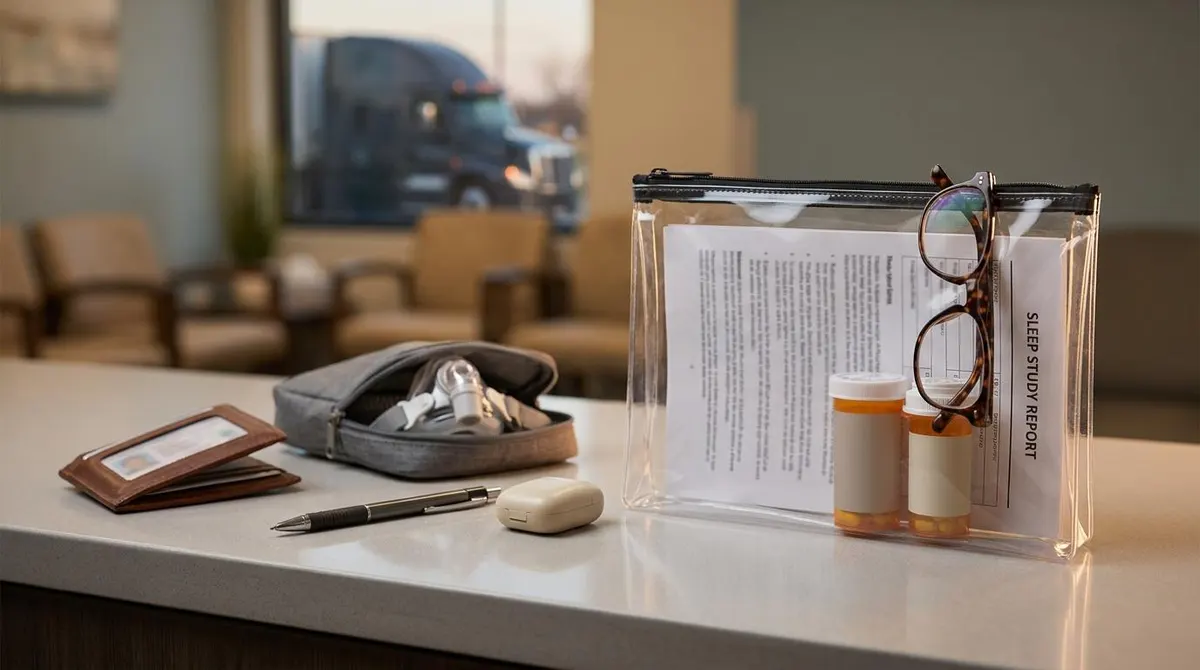
Bringing the right documents can reduce delays, deferrals, and repeat visits. The most prepared drivers usually make the walk-in process the smoothest.
Start with your photo ID and license information. Then bring a full medication list with names, dosages, and prescribing clinicians. If you wear glasses, contacts, or hearing aids, bring them. If you have a known condition such as hypertension, diabetes, seizure history, or sleep apnea, bring supporting records that show current status, treatment, and follow-up. The FMCSA handbook makes clear that the examiner can consider specialist information, but the examiner remains responsible for the final qualification decision.
Sleep apnea paperwork is especially important because untreated daytime sleepiness is directly relevant to safe driving. The National Heart, Lung, and Blood Institute, part of the NIH, defines sleep apnea as a condition in which breathing stops and restarts many times during sleep, which can reduce oxygen and contribute to excessive daytime sleepiness. If you are already in evaluation or treatment, documentation can help the examiner distinguish a managed condition from an undocumented risk. (NHLBI, NIH)
If sleep concerns are part of your exam history, Dumbo Health’s at-home sleep test may be a useful next step to discuss with your own clinician, especially if you need a practical testing option close to you.
KEY TAKEAWAY: Bring ID, medication details, corrective devices, and any condition-specific records so the examiner has the information needed to avoid unnecessary delays.
Once you arrive prepared, the next question is what the examiner is actually looking for.
The Examination Process: What Our Certified Examiners Look For

The examiner looks for whether a medical condition, symptom pattern, or treatment effect could interfere with safe commercial driving. The goal is functional safety, not perfect health.
The FMCSA process includes history review, vital signs, vision, hearing, urinalysis, and a system-based physical examination. The examiner reviews conditions such as cardiovascular disease, respiratory issues, neurological history, musculoskeletal limitations, metabolic conditions, and anything else that could impair alertness, judgment, strength, coordination, or endurance behind the wheel. (FMCSA)
Sleep apnea is one of the most misunderstood areas. Sleep apnea is a sleep-related breathing disorder marked by repeated pauses in breathing during sleep. Sleep apnea matters in DOT exams because untreated symptoms can contribute to excessive daytime sleepiness, and excessive daytime sleepiness can affect driving safety. The NHLBI states that sleep apnea can prevent the body from getting enough oxygen and may be associated with poor sleep quality and daytime sleepiness. (NHLBI, NIH)
The examiner also evaluates treatment and stability, not just diagnosis labels. A controlled condition with records and adherence evidence is usually easier to review than an uncontrolled condition with no documentation. This is why two drivers with the same diagnosis may not receive the same certification timeline.
KEY TAKEAWAY: Certified examiners assess whether your overall health status supports safe driving, with special attention to function, treatment stability, and documented risk.
After the exam, you need to understand what the result means and what happens next.
Understanding Your Results and Certification: What Happens Next
DOT physical results can include full certification, shorter certification, pending review, or non-qualification. Understanding those outcomes helps you plan your next steps without confusion. (FMCSA)
The MCSA-5875 instructions state that a qualified driver may receive a 2-year Medical Examiner’s Certificate. The same instructions also allow the examiner to issue a shorter certification when periodic monitoring is needed. If more information is required, the instructions allow a pending determination with a return date on or before a 45-day expiration period. (FMCSA)
That means a shorter card is not automatically a failure. In many cases, a shorter certification is a monitoring tool. It gives the examiner a way to keep you qualified while making sure a condition such as hypertension is controlled, follow-up records are reviewed, or treatment is documented. This is one of the most important nuances drivers miss when they assume anything under 2 years is bad news. (FMCSA)
If you are worried about an immediate non-pass outcome, can you fail a DOT physical explains how failures, deferrals, and condition-based decisions usually work in practice.
KEY TAKEAWAY: A DOT result is often more nuanced than pass or fail, and shorter certification or pending review can still be a workable path to staying compliant.
The strongest way to improve your outcome is to prepare before the exam day begins.
Maximize Your Readiness: How to Prepare for Your Walk-In Physical

Preparation improves both speed and clarity during a walk-in DOT physical. The best preparation focuses on documents, routine health habits, and avoiding preventable exam-day issues.
Get a reasonable night of sleep before the exam, take prescribed medications as directed unless your clinician has told you otherwise, and bring any records that prove current treatment stability. The CDC states that adults aged 18 to 60 generally need 7 or more hours of sleep per night, which helps explain why poor sleep can worsen fatigue and stress on exam day. (CDC)
Avoid treating the exam like a test you can hack at the last minute. Large amounts of caffeine, nicotine use right before check-in, dehydration, or rushing in after heavy exertion may not change your long-term health, but they can temporarily affect how you feel and how some readings present. People who undergo this exam often find that simple preparation does more to improve the visit than searching for tricks online. (FMCSA)
A useful rule is this: show up documented, rested, and honest. The examiner is not looking for perfection. The examiner is looking for an accurate picture of whether you can drive safely under federal standards.
KEY TAKEAWAY: Good preparation means better records, better exam-day stability, and a better chance of avoiding delays caused by preventable issues.
Preparation becomes easier when you break it into documents, healthy habits, and things to avoid.
Key Documents and Information to Have Handy
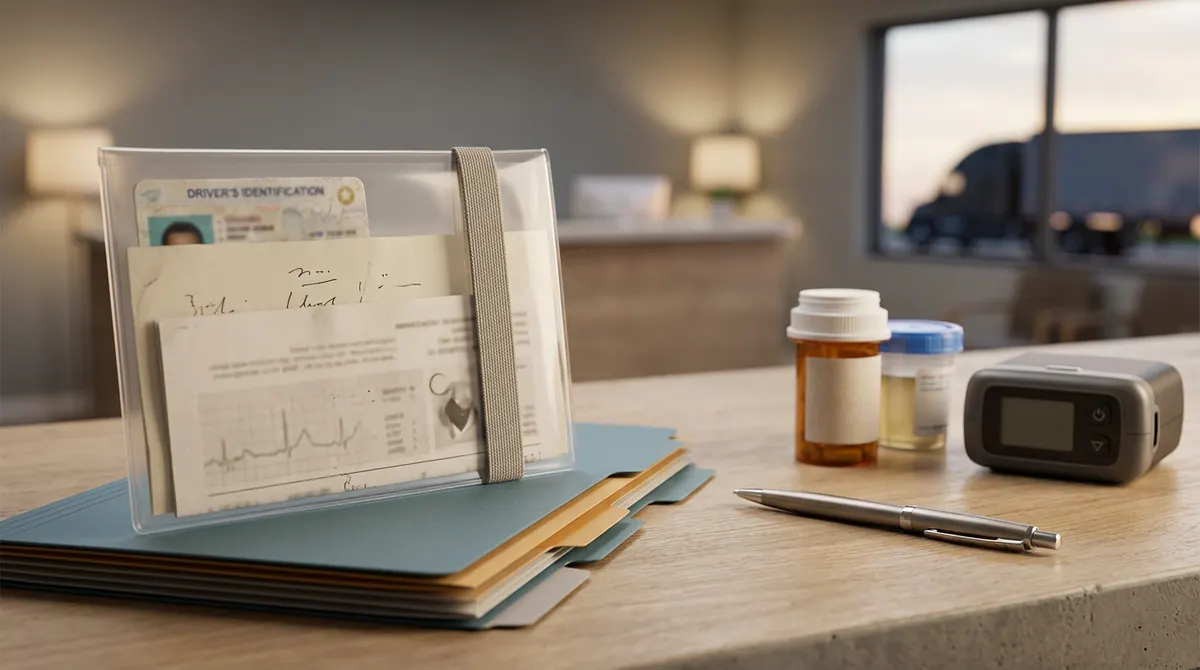
The most important exam-day documents are the ones that prove identity, current treatment, and medical stability. Missing paperwork is one of the most common avoidable reasons for delayed decisions.
Bring your driver’s license or other photo ID, your medication list, glasses or hearing aids if used, and any recent records relevant to a known medical condition. For example, a driver with hypertension should be ready to discuss medications and current control. A driver with sleep apnea should bring compliance or follow-up records if requested. A driver with diabetes may need recent management information depending on the treatment context and examiner concerns.
The FMCSA forms also require accurate history disclosure. If you mark yes to health history items, the form expects further explanation. That is why vague answers such as “on meds” are less helpful than a complete list with dose and purpose. The more clearly your records tell the story, the less likely the examiner needs to pause the process.
KEY TAKEAWAY: The right paperwork turns a walk-in visit from a guessing exercise into a faster, better-supported medical decision.
Once the paperwork is ready, your day-of routine can still influence how smoothly the visit goes.
Simple Steps for Optimal Health on Exam Day (Hydration, Sleep, Medication Timing)

Small day-of choices can support a smoother DOT physical, especially when the exam includes blood pressure measurement and a urine test. The goal is not to manipulate the exam but to arrive in a stable, typical state. (FMCSA)
Hydration helps because the exam includes a urine test, and moderate hydration makes sample collection easier. The FMCSA urinalysis requirement records specific gravity, protein, blood, and sugar, so showing up severely dehydrated is not useful. Getting adequate sleep also matters because poor sleep can worsen fatigue, irritability, and stress. The CDC’s sleep guidance reinforces that most adults need at least 7 hours. (FMCSA)
Take prescribed medications on your normal schedule unless your own clinician has given different instructions. Skipping regular medication to try to alter the exam can backfire and create a less accurate picture of your functioning. In real-world use, the safest approach is to show the examiner how you function on your actual treatment plan.
KEY TAKEAWAY: Arrive hydrated, rested, and on your usual prescribed regimen so the exam reflects your real-world medical stability.
Just as important as what to do is knowing what to avoid before check-in.
What to Avoid Before Your Physical (e.g., caffeine, certain medications, strenuous activity)
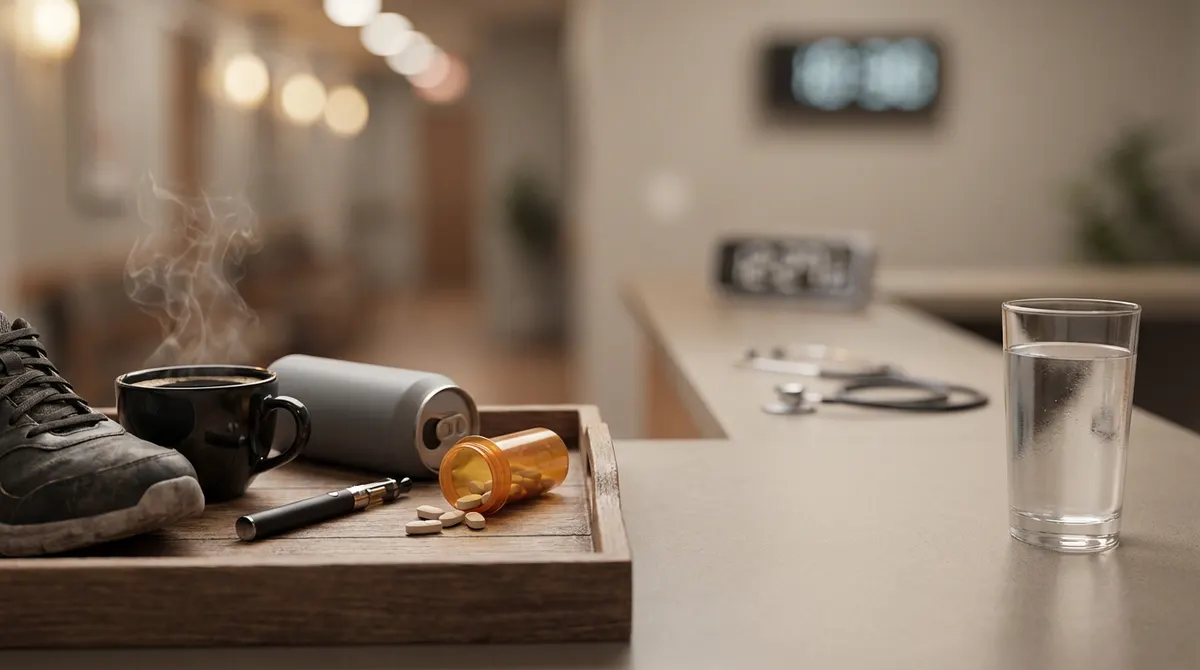
Avoid last-minute habits that can create temporary exam-day noise without improving your health. The best approach is consistency, not shortcuts. (FMCSA)
Heavy caffeine use right before the exam may raise stress and make some drivers feel jittery. Intense exertion immediately before check-in can also leave you overheated or physiologically activated. Neither choice helps if blood pressure is already a concern. FMCSA blood pressure guidance uses specific thresholds that affect certification length, so even temporary spikes are worth avoiding. (FMCSA)
Do not stop prescribed medication without guidance in an attempt to “pass naturally.” That decision may create more risk, not less. The examiner is trying to assess safe operation under your actual medical circumstances, including stable treatment. Honesty about symptoms, treatment, and follow-up is usually safer than trying to control the narrative through last-minute changes.
IMPORTANT: The examiner can request follow-up information if the clinical picture is unclear, so inaccurate or incomplete history can slow the process more than a stable chronic diagnosis.
KEY TAKEAWAY: Avoid exam-day choices that can distort your readings or hide important treatment information because stability and honesty serve you better.
With preparation covered, the next major concern is what self-pay pricing really means in practice.
Unpacking Self-Pay: Our Transparent Pricing Model for Your DOT Physical

A transparent self-pay model explains what the standard exam includes, what may cost extra, and when follow-up could be needed. That clarity helps drivers compare options without guesswork. (FMCSA)
Because no price was provided here, the safest way to compare payment models is by decision-making criteria rather than invented dollar amounts. The table below shows how self-pay typically compares with insurance-billed and employer-paid pathways.
| Payment model | Best for | Speed | Billing complexity | Price clarity | Most common tradeoff |
|---|---|---|---|---|---|
| Self-pay | Drivers who want predictable checkout and fast access | High | Low | High | Out-of-pocket payment at visit |
| Insurance-billed | Drivers whose plan may cover occupational visits | Medium to low | Medium to high | Variable | Coverage uncertainty and admin delays |
| Employer-paid | Drivers sent by an employer or fleet | High to medium | Low for driver | Usually high | May depend on employer process or clinic network |
For most drivers seeking a same-day walk-in solution, self-pay is usually the best fit because it reduces administrative friction and makes the exam process easier to plan. Insurance-billed care may still work well when coverage is already confirmed, but it is often less predictable for time-sensitive certification needs. (FMCSA)
Mid-page CTA: If you are comparing options because blood pressure is a concern, what blood pressure do you need to pass a DOT physical explains the thresholds that most directly affect certification.
KEY TAKEAWAY: Transparent self-pay works best when it tells you exactly what is included, what is not, and how follow-up decisions are handled.
That leads directly to the first pricing question drivers usually ask: why direct payment can sometimes be the cleaner option.
The Advantages of Direct Payment: No Hidden Fees, No Insurance Hassles

Direct payment reduces uncertainty because the transaction is handled at the time of service and the exam can proceed without waiting for claim rules. For time-sensitive occupational exams, simplicity is often a real advantage. (FMCSA)
Insurance can be helpful for broader healthcare, but a DOT physical is a specific fitness-for-duty certification. That means the administrative side can be less predictable than many drivers assume. Direct payment removes questions about network status, coded visit types, or whether an occupational certification exam is processed the same way as routine care. (FMCSA)
Self-pay can also improve comparison shopping. If two clinics both use a certified examiner on the National Registry, the more useful question may be which clinic is clearer about inclusions, timing, and follow-up. That is often more valuable than choosing based on a vague promise that insurance “might” apply.
KEY TAKEAWAY: Direct payment is often the cleanest option because it reduces billing uncertainty and keeps the focus on the exam itself.
The next logical question is what a standard self-pay exam should actually cover.
Your Investment: What Our Standard Self-Pay Fee Covers Completely

A standard self-pay DOT physical should cover the full core certification exam, not a stripped-down visit with surprise add-ons. The key is knowing what “standard” really includes before the exam begins. (FMCSA)
Based on the FMCSA examination workflow, the core exam includes the required history review, identification and form completion, blood pressure and other vital sign documentation, vision and hearing checks, urinalysis, physical examination, and medical examiner determination. The urinalysis component specifically requires recording specific gravity, protein, blood, and sugar, so the urine test is part of the core exam structure rather than an optional extra.
What should count as outside the standard exam is anything beyond the required certification visit itself, such as separate treatment, outside specialist consultation, or follow-up testing that is not inherently included in the one-time physical. Clear clinics explain this before you pay. That is what pricing transparency should look like in practice. (FMCSA)
KEY TAKEAWAY: A standard self-pay DOT physical should include the entire required certification exam, including the urine test and medical determination, with no ambiguity about the core components.
Even with a transparent model, there are situations where additional costs or follow-up steps can arise.
When Additional Costs Might Arise (And How We Handle Them Transparently)

Additional costs can arise when the issue is not the standard exam itself but the need for more medical information, repeat visits, or outside evaluation. The key is clear disclosure before those extra steps happen. (FMCSA)
The FMCSA form allows a pending determination when more information is needed, with follow-up allowed within a defined time frame. In practice, that may happen if records are missing, a condition needs clarification, or an examiner wants evidence of treatment stability before issuing certification. A driver may also need repeat evaluation if blood pressure must be rechecked or if specialist documentation is incomplete. (FMCSA)
Sleep apnea is a common example of this nuance. A diagnosis does not automatically end certification, but undocumented symptoms, untreated risk, or missing records may trigger additional evaluation. If sleep apnea screening is part of your next step, is a sleep study required for a DOT physical can help you understand when that question becomes relevant. (NHLBI, NIH)
KEY TAKEAWAY: Extra costs usually come from follow-up needs, not from the standard exam, and a transparent clinic should explain that boundary clearly.
The quality of the exam also depends heavily on who performs it.
Trust Our Experts: Certified Examiners for Your DOT Physical
A DOT physical should be performed by a medical examiner who is certified and listed on the FMCSA National Registry. That credential is central to the validity of the exam.
The FMCSA handbook states that only medical examiners who are certified and listed on the National Registry are allowed to conduct physical qualification examinations and issue Medical Examiner’s Certificates to qualified individuals. That means certification status is not a marketing detail. Certification status is part of what makes the exam count.
The National Registry matters because DOT exams are not ordinary physicals. The examiner must understand both medicine and the specific functional demands of commercial driving. The handbook explains that the examiner must be knowledgeable about the physical and mental demands associated with operating a commercial motor vehicle and the federal qualification standards used in the decision.
KEY TAKEAWAY: The right DOT physical starts with the right examiner, and that means a professional who is certified on the National Registry.
That is why FMCSA certification is more than a formality.
The Importance of a FMCSA Certified Medical Examiner

An FMCSA certified medical examiner is trained to apply federal driver qualification standards, not just general clinical judgment. That distinction is why examiner credentials matter so much.
A general clinician may understand your diagnosis, but the DOT examiner has to assess whether your condition fits a specific federal driving standard. The FMCSA handbook makes clear that the medical examiner decides whether the individual meets the physical qualification standards, even when treating providers or specialists submit supporting information. That role requires both clinical knowledge and regulatory context.
For drivers, this means two things. First, a certified examiner is better positioned to explain what documentation actually matters. Second, a certified examiner is more likely to distinguish between a manageable condition and an unsafe functional limitation. That kind of nuance can make the process fairer and more predictable.
KEY TAKEAWAY: FMCSA-certified examiners add value because they apply the correct federal framework to real-world medical decisions that affect your ability to drive.
That expertise should also translate into quality and consistency at the clinic level.
Our Commitment to Quality: Meet Our National Registry Listed Professionals

Quality in a DOT clinic means more than short wait times. Quality means accurate exams, clear communication, and medical decisions grounded in the correct FMCSA process.
National Registry listed professionals are expected to use the required forms, document the required elements, and make qualification decisions under the federal framework. That includes completing the full medical examination even when a potentially disqualifying condition is identified, because the process still requires a complete evaluation and proper documentation. The MCSA-5875 instructions say exactly that. (FMCSA)
For drivers, this quality standard matters because incomplete or casual exam practices can create confusion later with employers, regulators, or renewal visits. A high-quality exam should feel organized, evidence-based, and easy to understand, even when the outcome involves monitoring or follow-up rather than a simple 2-year card. (FMCSA)
KEY TAKEAWAY: Quality DOT care means using the correct FMCSA process from start to finish, not just moving drivers through quickly.
The final piece is whether the clinic actually understands how drivers live and work.
A Driver-Friendly Approach: Understanding Your Unique Needs and Lifestyle

A driver-friendly DOT physical respects the realities of commercial driving while still applying safety standards correctly. The best clinics combine regulatory accuracy with practical communication.
Commercial drivers deal with irregular sleep schedules, changing routes, long hours sitting, limited meal control, and inconsistent access to follow-up care in their area. Those realities do not remove the medical standards, but they do shape how a clinic should explain preparation, records, and next steps. A driver-friendly approach means fewer assumptions and clearer guidance. (CDC)
This also matters for conditions like sleep apnea and hypertension. A practical examiner can explain what documents to bring, what shorter certification means, and what action is most likely to keep you working safely. Generic advice is less useful than advice that matches how commercial driving actually works. (FMCSA)
KEY TAKEAWAY: A driver-friendly clinic applies the rules accurately while communicating in a way that fits the day-to-day realities of commercial work.
A few common medical questions come up so often that they deserve direct answers before the FAQ section.
Common Questions About Your Walk-In DOT Physical, Answered

The most common walk-in DOT questions are about chronic conditions, card validity, non-pass outcomes, and visit length. Those questions are normal because each one affects whether you can work without interruption. (FMCSA)
Pre-existing conditions do not automatically prevent certification. A condition such as hypertension, diabetes, or sleep apnea is usually assessed based on control, treatment, symptoms, and supporting records, not just diagnosis name. The most important practical rule is documentation: a managed condition with current records is easier to review than an unmanaged condition with missing information. (FMCSA)
Medical card validity also varies. The FMCSA exam process allows up to a 2-year certification for qualified drivers, but shorter certification periods are common when periodic monitoring is needed. That shorter timeline is not unusual and does not automatically mean you are failing the system. It often means the examiner wants a closer follow-up interval. (FMCSA)
Drivers also ask how long the visit takes. The FMCSA forms do not assign a fixed visit duration, so timing depends on check-in volume, documentation quality, and whether follow-up questions arise. In practice, a well-prepared driver usually moves faster than a driver who arrives without medication details or condition records.
KEY TAKEAWAY: Most common DOT questions come down to four things: documentation, treatment stability, certification length, and whether your records let the examiner make a timely decision.
One area deserves its own clarification because myths about sleep and DOT exams are especially common.
Common Myths About Sleep Apnea Debunked

Sleep apnea myths often make drivers delay evaluation or assume a diagnosis automatically ends their career. The reality is more nuanced and more manageable than many drivers expect. (NHLBI, NIH)
MYTH: A sleep apnea diagnosis automatically fails a DOT physical.
FACT: A diagnosis alone does not automatically equal non-qualification. The key issue is whether symptoms are managed and whether the examiner has enough information to assess safe driving. The NHLBI explains that sleep apnea involves repeated breathing interruptions during sleep and may cause daytime sleepiness, which is why documentation and treatment matter more than the label alone. (NHLBI, NIH)
MYTH: The urine test in a DOT physical is the same as a DOT drug test.
FACT: The FMCSA MCSA-5875 instructions show that the urinalysis in the physical records specific gravity, protein, blood, and sugar. That urine test is part of a health screening exam. It is distinct from a separate federally regulated drug test process that may be required by an employer or another rule. (FMCSA)
MYTH: A 1-year or 3-month card means the examiner thinks you are unsafe to drive.
FACT: Shorter certification often means monitoring, not automatic rejection. FMCSA guidance specifically ties some blood pressure ranges to shorter certification periods, including 1 year for first-time Stage 1 readings and 3 months for first-time Stage 2 readings. A shorter card can be a structured path to staying compliant while a condition is reviewed or stabilized. (FMCSA)
KEY TAKEAWAY: Most DOT myths come from confusing diagnosis with disqualification, monitoring with failure, and routine exam elements with separate testing programs.
With the myths cleared up, it is easier to see the bigger value of the exam beyond immediate compliance.
Beyond the Exam: Prioritizing Your Long-Term Health and Driving Career
A DOT physical is not just an annual or biennial hurdle. A DOT physical can also become an early warning system for health issues that affect both safety and long-term work stability. (FMCSA)
Blood pressure is the clearest example. FMCSA guidance links measurable thresholds to certification duration, which means a manageable health issue can be addressed before it becomes a career interruption. Sleep-related symptoms matter too. The CDC recommends at least 7 hours of sleep for most adults, and the NHLBI explains that sleep apnea can disrupt sleep quality and contribute to daytime sleepiness. Those facts matter because safe commercial driving depends on alertness as much as paperwork. (FMCSA)
A good DOT visit should leave you with more than a card. A good DOT visit should leave you with a clearer understanding of what to monitor, what records to keep, and what changes could protect your work capacity over time.
KEY TAKEAWAY: The smartest way to view a DOT physical is as a practical health checkpoint that can support a longer, safer driving career.
That broader health view makes the exam more useful, not more intimidating.
A Health Snapshot: Opportunities for Proactive Care and Wellness Discussions
The DOT physical can reveal issues worth addressing early, even when they do not immediately stop certification. That makes the exam an opportunity for prevention as well as compliance. (FMCSA)
The urinalysis alone can be a useful example. The FMCSA instructions require the urine test to record specific gravity, protein, blood, and sugar. Those findings are not diagnoses by themselves, but they can point toward dehydration, glucose concerns, or other issues worth discussing with your own clinician. When drivers treat the exam only as paperwork, they can miss the value of these early signals. (FMCSA)
Many patients report that the DOT visit prompts overdue conversations about blood pressure, sleep quality, weight changes, or medication side effects. Those are practical concerns for commercial driving, and dealing with them earlier usually makes future renewals easier. (FMCSA)
KEY TAKEAWAY: The DOT physical can provide useful early signals about health issues that are easier to address before they become certification problems.
That is why long-term health management is one of the best strategies for protecting your career.
Sustaining Your Driving Career Through Ongoing Health Management

The best way to reduce DOT exam stress over time is to manage chronic issues consistently between exams. Ongoing control usually matters more than last-minute exam tactics. (FMCSA)
Drivers with hypertension, diabetes, or sleep-related symptoms usually benefit from regular follow-up, medication adherence, and organized records. For example, FMCSA blood pressure guidance makes clear that control level affects certification length. That turns routine management into a practical career strategy, not just a general wellness goal. (FMCSA)
The same principle applies to sleep concerns. Sleep apnea is easier for an examiner to evaluate when the condition has been assessed, discussed, and documented rather than ignored until the day of the exam. If you need to find a provider near you for further evaluation, planning ahead is almost always easier than trying to solve a sleep concern during a renewal deadline. (NHLBI, NIH)
KEY TAKEAWAY: Consistent health management between exams is one of the most reliable ways to protect your certification timeline and your earning power.
The final step is choosing a practical, transparent path when you are ready for the next exam.
Ready for Your Stress-Free DOT Physical? Visit Us Today!

A stress-free DOT physical starts with clear expectations, a certified examiner, and a payment model that does not create extra confusion. For most drivers, that is exactly what a walk-in self-pay visit is meant to provide.
The most important qualities to look for are simple: an examiner on the National Registry, a clinic that explains what the standard exam includes, and a process that tells you how follow-up is handled if more information is needed. Those details matter more than generic promises of speed alone.
KEY TAKEAWAY: A good walk-in self-pay DOT clinic combines convenience, transparency, and FMCSA-compliant expertise.
Before you go, it helps to know what practical location and access questions to check first.
Our Convenient Locations and Walk-In Hours

Convenient access matters because a DOT physical is most useful when it fits your real work schedule. Location and hours can be as important as price for drivers balancing routes and renewals. (FMCSA)
When comparing clinics, check whether the provider actually offers walk-ins during the hours you can realistically attend. A clinic that is technically close to you but only available at impractical times may be less useful than one slightly farther away with better same-day access. Drivers searching for providers in your area should compare hours, required documents, and whether the examiner is clearly identified as FMCSA-certified.
KEY TAKEAWAY: The best clinic is not just nearby. The best clinic is accessible on your schedule and clear about how its walk-in process works.
That practicality is one reason many drivers choose a self-pay walk-in model in the first place.
Why Choose Us for Your Next DOT Physical: Convenience, Transparency, and Expertise

The best reason to choose a walk-in self-pay DOT physical is that it combines speed, pricing clarity, and qualified evaluation in one visit. That mix is what most drivers actually need when renewal timing is tight.
Convenience matters because missing work has a cost. Transparency matters because unclear billing adds stress without adding clinical value. Expertise matters because only the right examiner can issue a valid certificate under the FMCSA framework. When those three elements come together, the exam feels less like an obstacle and more like a manageable requirement.
KEY TAKEAWAY: Convenience, transparency, and certified expertise are the three qualities that make a walk-in self-pay DOT physical the strongest choice for most drivers.
The last practical question is how to choose the right clinic efficiently.
How to Locate Our Nearest Clinic and Get Directions

The fastest way to locate a suitable DOT clinic is to verify examiner certification first, then compare access and process details. A nearby clinic is only useful if the exam will actually meet FMCSA requirements.
Start by confirming that the medical examiner is listed on the National Registry. Then compare walk-in availability, required documents, payment process, and whether the clinic clearly explains standard exam coverage and follow-up steps. If you need a DOT physical near you, use those criteria rather than choosing only by proximity. That approach usually saves time and reduces the risk of having to repeat the process elsewhere.
KEY TAKEAWAY: The right clinic is the one that is accessible, transparent, and staffed by a properly certified examiner on the National Registry.
The final section below answers the most common remaining search questions in a concise, self-contained format.
Frequently Asked Questions
Can I pay for my own DOT physical?
Yes, you can usually pay for your own DOT physical when a clinic offers a self-pay option. A self-pay DOT physical means you pay the clinic directly for the certification exam instead of routing the visit through insurance or an employer billing arrangement. For many drivers, self-pay is the fastest option because it reduces administrative delays and makes pricing clearer before the exam begins. The most important thing is not who pays. The most important thing is whether the exam is performed by a certified medical examiner listed on the FMCSA National Registry and whether the visit includes the required exam elements, including the urine test and medical determination.
Do you have to pay upfront at a walk-in clinic?
Many walk-in DOT clinics ask for payment at the time of service, especially for self-pay visits, because the exam is being provided directly without waiting for outside billing. That is one reason self-pay is often simpler for time-sensitive occupational exams. The exact payment timing depends on the clinic, but the best clinics explain the standard exam fee, what it includes, and what follow-up situations could involve extra charges before the exam starts. If you are comparing providers near you, ask whether the posted price includes the full DOT physical, the urine test, and the medical examiner determination rather than just the first part of the visit. (FMCSA)
How long is a DOT medical card valid after a walk-in physical?
A DOT medical card can be valid for up to 2 years if the examiner determines that you meet the federal standard without needing shorter-term monitoring. The FMCSA exam instructions also allow shorter certification periods when periodic monitoring is required, which is common for some chronic conditions or follow-up needs. For example, FMCSA hypertension guidance ties certain blood pressure ranges to shorter certification lengths, including 1 year or even 3 months in some first-time elevated readings. A shorter card does not automatically mean failure. A shorter card often means the examiner wants documented stability before extending the certification period. (FMCSA)
What if I have high blood pressure at my walk-in DOT physical?
High blood pressure does not automatically mean you will fail, but it can change the certification timeline. FMCSA guidance says a driver with blood pressure under 140/90 may be certified for 2 years. A first-time Stage 1 reading of 140-159/90-99 may support a 1-year certification, while a first-time Stage 2 reading of 160-179/100-109 may result in a one-time 3-month certification window. A reading above 180/110 is disqualifying until the blood pressure is reduced. If blood pressure is your main concern, can you fail a DOT physical for high blood pressure covers the issue in more detail. (FMCSA)
Does the DOT physical include a drug test?
A DOT physical does include a urine test, but that urine test is not the same as a separate regulated DOT drug test. The FMCSA MCSA-5875 instructions require the examiner to record urinalysis findings for specific gravity, protein, blood, and sugar as part of the medical examination. That urine test is a health screening component used to identify issues that may need follow-up. A federally regulated drug screen, when required by an employer or testing rule, follows a different testing process. This distinction matters because drivers often prepare for the wrong test when they hear the word urinalysis. (FMCSA)
Can you pass a walk-in DOT physical with sleep apnea?
Yes, many drivers can still be certified with sleep apnea when the condition is evaluated and managed appropriately, but the examiner will focus on risk, symptoms, and documentation. The NHLBI explains that sleep apnea involves repeated pauses in breathing during sleep and can contribute to poor sleep quality and excessive daytime sleepiness. For a DOT examiner, the core issue is whether symptoms or untreated risk could impair safe driving. If sleep apnea is suspected or under review, can you pass a DOT physical with sleep apnea and is a sleep study required for a DOT physical are useful next reads. (NHLBI, NIH)
How long does a walk-in DOT physical usually take?
There is no fixed FMCSA-mandated visit length for a walk-in DOT physical, so timing depends on clinic flow, paperwork quality, and whether extra review is needed. A driver who arrives with complete documents, medication details, and any needed condition records will usually move through the process faster than a driver who has to reconstruct history at check-in. The exam itself includes registration, history review, blood pressure and other measurements, vision and hearing checks, a urine test, the physical exam, and the final medical determination. If more information is needed, the examiner may use a pending determination rather than issuing an immediate certificate.
What should I bring to a walk-in DOT physical near me?
Bring a photo ID, license information, a complete medication list, any glasses or hearing aids you use, and records for any medical condition that could affect the exam. Examples include blood pressure treatment records, specialist notes, diabetes management details, or sleep apnea documentation if relevant. The FMCSA forms expect accurate health history disclosure and follow-up explanation for yes answers, so complete documentation can save time and reduce the chance of a delayed decision. If you are looking for a clinic close to you, being fully prepared can matter as much as choosing the right location.
Conclusion
A walk-in self-pay DOT physical is often the most practical option when you need fast access, clear pricing, and an exam performed by a certified medical examiner on the National Registry. The process works best when you arrive prepared with accurate history, medication details, and records for any chronic condition that may need review. The exam is not only about compliance. The exam is also about protecting your ability to keep driving safely and consistently. For a next step, explore what the requirements are to pass a DOT physical or review Dumbo Health’s at-home sleep test if sleep-related concerns may affect your certification path.
Related DOT Physical Topics
- DOT Physical Self Pay Cost
- Online DOT Physical Self-Pay The Complete Guide for CDL Drivers and Owner-Operators
- DOT physical self pay guide for commercial drivers paying out of pocket
- DOT Physical Insurance or Self Pay How to Choose the Right Payment Option for Your Exam
- DOT Physical Out of Pocket What Commercial Drivers Actually Pay
- DOT Physical Cost Breakdown What Drivers Pay & Why
- CDL PHYSICAL SELF PAY
- DOT Physical Cash Pay
- DOT Medical Exam Self-Pay A Complete Guide for Commercial Drivers
- Is a DOT physical the same as a regular physical
- What Does DOT Stand for in a DOT Physical
- What Is the Difference Between a DOT and Non-DOT Physical
- Can You Get a DOT Physical in Any State The Complete Guide for Commercial Drivers
- Can You Get a DOT Physical Online The Complete Guide for Commercial Drivers
- How Do You Submit Your DOT Physical to the DMV
- Does a DOT Physical Test for Weed or THC The Complete Guide for Commercial Drivers
- What Can Disqualify You From a DOT Physical
- Does a DOT physical include a drug test
- Can You Pass a DOT Physical with Epilepsy
- Remote DOT Physical The Complete Guide for Commercial Drivers
- DOT Physical Exam Basics
- When Can Sleep Apnea Affect a DOT Physical
- Can You Pass a DOT Physical With a Hernia
- Is a drug test required for a DOT physical
- DOT Physical ICD-10 & Billing Codes The Complete Guide for Accurate Compliance and Reimbursement
- Can You Pass a DOT Physical With One Eye
- Navigating the Florida DOT Physical Your Essential Guide for CDL Drivers
- Can You Pass a DOT Physical With a Pacemaker
- What Is the Urine Test for in a DOT Physical
- Telehealth Dot Physical
- DOT Physical Forms & Paperwork The Complete Guide for Commercial Drivers
- What Should You Bring to a DOT Physical
- Who needs a DOT physical
- What Forms Do You Need for a DOT Physical
- DOT Physical & Alcohol Requirements
- DOT Physical Online Cost
- DOT Physical Vision & Eye Requirements
- Can You Fail a DOT Physical for Being Overweight
- Why do they measure your neck during a DOT physical
- Navigating Your DOT Physical with Common Medical Conditions
- Online DOT Physical Without Insurance A Complete Guide for Commercial Drivers
- Your Complete Guide What's Included in a DOT Physical Exam
- How can drivers with sleep apnea qualify again after a failed DOT physical
- Can You Get a DOT Physical Online
- New DOT Physical Requirements What Drivers MUST Know About New Updates
- DOT Physical Insurance & Recertification The Complete Driver's Guide
- Same Day DOT Physical
- Virtual DOT Physical
- Can you fail a DOT physical because of sleep apnea
- What blood pressure do you need to pass a DOT physical
- Do They Check Your Private Parts During a DOT Physical
- DOT Physical Blood Pressure Requirements What Drivers Need to Know
- DOT Physical Chiropractor Your Complete Guide to CDL Exams
- Can You Fail a DOT Physical for High Blood Pressure
- How to Pass a DOT Physical The Complete Commercial Driver's Guide
- Can you pass a DOT physical with sleep apnea
- What should I expect at a DOT physical
- What Does a DOT Physical Consist Of
- What happens if you fail a DOT physical due to sleep apnea
- DOT Physical at Urgent Care What Commercial Drivers Need to Know
- Can You Pass a DOT Physical with Diabetes
- Can You Pass a DOT Physical with High Blood Pressure
- BMI for DOT Physical What Commercial Drivers Need to Know
- What Happens During the DOT Physical Exam The Complete Guide for Drivers
- What Happens If Your DOT Physical Expires Compliance Guide for Commercial Drivers
- Does insurance cover a DOT physical
- DOT Physical & Drug Test What Drivers Need to Know
- DOT Physical Duration and Validity How Long Your Medical Card Lasts
- The Ultimate DOT Physical Guide for Commercial Drivers (2025–2026)
- Non-DOT Physical A Comprehensive Guide to Workforce Health and Safety
- DOT Physical Texas The Essential Guide to Your Exam, Medical Card, and CDL Compliance
- DOT Physical Requirements A Complete Guide for CDL Drivers
- Is a Sleep Study Required for a DOT Physical
- Do They Check for Hernia During a DOT Physical
- Do You Have to Pee During a DOT Physical
- What Are the Requirements to Pass a DOT Physical
- What eye chart is used for a DOT physical
- Can You Get a Second Opinion on Your DOT Physical A Complete Guide for Commercial Drivers
- What Do They Check During a DOT Physical
- Cheap DOT Physical Online
- The DOT Physical Exam Ensuring You're Fit for the Road
- Online DOT Physical The Complete Guide for Commercial Drivers and Medical Examiners
- Failing a DOT Physical What Every Commercial Driver Needs to Know
- Can You Fail a DOT Physical
- What is DOT Physical
- What drugs do they test for in a DOT drug test
- Are There New DOT Rules or Laws on Sleep Apnea Testing
- Essential 171 DOT Definitions for Commercial Drivers
- 2026 DOT Inspection Dates
- DOT Hypertension Guidelines The Complete Blood Pressure Guide for Commercial Drivers
- Navigating DOT Stroke Guidelines for CMV Drivers What You Need To Know
- Why DOT Sleep Tests at Home Matter for Your Career and Health
- Online DOT Exam What Drivers and Medical Examiners Need to Know
- Online CDL Physical
- What are the current DOT requirements for sleep apnea testing for commercial drivers
- DOT sleep apnea test at home
- Guide to Obtaining and Managing Your DOT Medical Card Online
- Expected 2027 DOT Inspection Dates
- Medical Examiner's Certificate (Form MCSA-5876) The Complete Guide for Commercial Drivers
- Best Treatments for Sleep Apnea to Improve Driving Safety
Take the next step before your DOT physical
Start with the free quiz if you are unsure about your risk, or order an at-home sleep test if you have already been flagged for possible sleep apnea.
AI summary
A walk-in self-pay DOT physical is a same-day option for commercial drivers who need an FMCSA DOT medical exam without relying on insurance or advance scheduling. The exam must be performed by a medical examiner listed on the FMCSA National Registry of Certified Medical Examiners and can result in a Medical Examiner’s Certificate. Core exam elements follow the Medical Examination Report (MCSA-5875): medical history review, vital signs (including blood pressure), vision and hearing checks, physical examination, and urinalysis. The required urinalysis records specific gravity, protein, blood, and sugar. It is a health screening component and is not the same as a federally regulated DOT drug test. Certification outcomes are not strictly pass or fail. Drivers may receive up to a 2-year certificate, a shorter certification for monitoring, a pending determination while records are gathered (up to 45 days), or non-qualification. Preparation focuses on bringing photo ID, a complete medication list, corrective devices, and condition-specific records (e.g., hypertension, diabetes, sleep apnea). Stable treatment and documentation reduce delays and support timely certification.

Nicolas Nemeth
Co-Founder
Nico is the co-founder of Dumbo Health, a digital sleep clinic that brings the entire obstructive sleep apnea journey home. Patients skip the sleep lab and the long wait to see a specialist. Dumbo Health ships an at home test, connects patients with licensed sleep clinicians by video, and delivers CPAP or a custom oral appliance with ongoing coaching and automatic resupply in one clear subscription.
Keep reading

How Long Does a DOT Physical Take? A Complete Guide for Commercial Drivers

What Happens If You Fail a DOT Drug Test? The Complete Guide for Commercial Drivers


