Guide to Obtaining and Managing Your DOT Medical Card Online
This guide explains how commercial drivers can handle DOT medical certification using online tools for scheduling, record access, and state submission. It clarifies who needs a DOT medical card, including interstate drivers operating vehicles over 10,001 pounds, and why FMCSA compliance matters. It outlines how to find a Certified Medical Examiner through the FMCSA National Registry and what to prepare before an appointment. The article reviews what happens during the DOT physical, including vision, hearing, blood pressure, and urinalysis screening. It details certification length rules, common myths, and the consequences of an expired card. Practical tips cover digital uploads to the state CDL section, tracking expiration dates, and managing costs with online payments, HSA, or FSA funds.
Struggling with sleep?
Find out if sleep apnea is the reason.
FDA-cleared. $149 flat. Physician-reviewed results in 48 hours.

Guide to Obtaining and Managing Your DOT Medical Card Online

DOT medical card online is a digital process for scheduling, tracking, and submitting the medical certification required for commercial motor vehicle operators. According to the Federal Motor Carrier Safety Administration, medical certification is a mandatory requirement for drivers who operate in interstate commerce. This pillar page serves as a comprehensive resource for commercial drivers seeking to understand the transition to digital records and online scheduling. You will find detailed information regarding the role of Certified Medical Examiners, the components of a physical examination, and how to maintain compliance with federal regulations. We cover everything from vision standards to blood pressure thresholds and the submission process to your driver license office. By the end of this guide, you will have a clear roadmap for securing and renewing your certification with minimal downtime. Follow these steps to ensure your CDL remains active and your career stays on track.
Embracing the Online Advantage: Convenience in Your DOT Medical Card Journey

A DOT medical card online strategy allows drivers to find a medical provider near you, schedule appointments digitally, and access electronic copies of their medical certificate for faster state reporting. This approach minimizes downtime and ensures that commercial drivers remain compliant with federal safety standards.
Medical Provider is a healthcare professional such as an MD, DO, PA, or NP who is authorized to conduct physicals. These individuals ensure drivers meet safety standards to operate commercial vehicles safely.
Drivers who utilize digital scheduling often find that they can compare prices and availability across multiple clinics in their area. This convenience is essential for maintaining a valid medical certificate while managing a busy driving schedule. The ability to receive digital copies of your medical certificate means you can instantly upload documents to state portals, reducing the risk of a lost paper form. Many drivers report that online portals for the Kansas Division of Vehicles or similar state agencies make the License Eligibility Application process much simpler than visiting a physical location.
DID YOU KNOW: According to the FMCSA, there are over 70,000 Certified Medical Examiners currently listed in the National Registry to help drivers maintain their certification.
Not sure if sleep apnea applies to you?
Take our 2-minute sleep risk quiz to see whether sleep apnea could affect your DOT physical. No account required.
KEY TAKEAWAY: Digital tools simplify finding an examiner and submitting your results, ensuring you spend less time on paperwork and more time on the road.
Understanding the legal foundation of these requirements helps you navigate the complexities of federal and state laws.
Understanding the Foundation: Who Needs a DOT Medical Card and Why

Any commercial driver operating a commercial vehicle with a Gross Vehicle Weight Rating over 10,001 pounds in interstate commerce must possess a valid DOT medical card. This requirement ensures that every operator of a heavy commercial motor vehicle is physically capable of handling the demands of long haul driving.
Interstate Commerce is the transportation of property or passengers across state or international lines. It determines which Federal Motor Carrier Safety Regulation applies to a driver's medical status.
The Department of Transportation mandates these checks to improve road safety and reduce the frequency of accidents caused by medical emergencies. If you drive a commercial vehicle across state lines, you fall under the jurisdiction of the Federal Motor Carrier Safety Administration. Drivers involved in intrastate commerce may also be required to obtain a medical certificate depending on specific state laws. Knowing whether you fall into Excepted Interstate or non-excepted categories is vital for your Driver Qualification File. Proper medical certification protects both the driver and the general public from risks associated with untreated medical conditions.
IMPORTANT: Operating a commercial vehicle without a valid medical examiner's certificate can lead to significant fines and the immediate suspension of your driving privileges.
KEY TAKEAWAY: Medical cards are a federal safety requirement for most heavy vehicle operators to ensure they can safely manage the physical rigors of the job.
Once you identify the need for a card, the next step is finding a qualified professional to perform the exam.
The Online Path: Finding and Scheduling Your Certified DOT Physical

Drivers can locate a medical provider near you by searching the FMCSA National Registry to ensure the examiner is properly qualified. This online database is the only authorized source for finding Certified Medical Examiners who meet federal training standards.
The FMCSA National Registry is an online database of Certified Medical Examiners who have completed training and testing to perform a DOT medical exam. It protects the integrity of the Driver Qualification process.
Searching for a medical provider in your area through the National Registry of Certified Medical Examiners ensures that your physical exam will be recognized by the Department of Transportation. When you find a provider near you, you can often book your DOT physical exam online to save time. Most modern clinics offer digital booking systems that provide instant confirmation and reminders. This digital path reduces the likelihood of visiting an unauthorized examiner, which would void your medical certification. Many drivers prefer this method as it allows them to see reviews and check the turnaround time for receiving their Form MCSA-5876.
TIP: Always verify the National Registry number of your examiner before your appointment to ensure they are currently certified to perform the medical examination.
Already diagnosed and need CPAP support?
Dumbo Health helps patients start CPAP without the usual confusion, paperwork, or upfront cost. Equipment, setup, supplies, and ongoing support are all handled in one place.
KEY TAKEAWAY: Using the official FMCSA National Registry is the only way to guarantee your examiner is authorized to issue a valid medical certificate.
After finding a provider, you should prepare for the specific logistical steps of the online booking process.
Booking Your DOT Physical Exam Online: Convenience at Your Fingertips

Scheduling your DOT physical exam online allows you to compare pricing and find available time slots for a physical examination at a full-service exam office. Many providers now offer a streamlined License Eligibility Application through their own websites to collect medical history before you arrive.
DOT Physical Exam is a specific medical assessment required by the FMCSA to evaluate a driver's physical, mental, and emotional fitness. It is a prerequisite for obtaining or renewing a Commercial Driver's License.
By entering your details into an online system, you provide the medical examiner with a head start on reviewing your medical history. This process often includes filling out the driver portion of the medical examination report before the actual physical examination begins. Online booking platforms frequently allow for the prepaying of fees, which can include discounts for Class A drivers. These systems are designed to get you back soon to your route by minimizing waiting room time. Whether you are renewing a CDL Medical Certificate or getting one for the first time, digital scheduling is the most efficient choice for modern drivers.
DID YOU KNOW: Some clinics report that drivers who book online experience 30 percent shorter wait times compared to those who walk in without an appointment.
KEY TAKEAWAY: Online booking reduces administrative delays and helps you manage your schedule by providing clear arrival times and pre-visit paperwork.
With the appointment set, it is important to understand what the examiner will actually look for during the visit.
What to Expect During Your DOT Physical Examination

During a DOT physical, a medical examiner reviews your medical history and performs a comprehensive medical examination to ensure you are fit for duty. The process is thorough and covers multiple body systems to identify any risks to public safety.
Physical Exam is a clinical assessment where a medical provider checks vital signs, organ systems, and physical capabilities. It is the core requirement for receiving a Form MCSA-5876.
The examiner will start by discussing any chronic medical conditions you may have, such as heart disease or sleep apnea. You will be asked about any medications you currently take and if you have ever had issues with hearing loss. The examiner will also review your history regarding neurological disorders or previous surgeries. This part of the physical examination is critical for establishing a baseline of your health. It is essential to be honest during this phase, as failing to disclose a condition can lead to the revocation of your medical certification. If you are worried about the process, you can read about failing a DOT physical to understand common pitfalls.
IMPORTANT: Bring a complete list of your current medications and the contact information for your primary care doctor to the physical examination to avoid delays.
KEY TAKEAWAY: The DOT physical is a systemic check of your overall health history and current physical state to ensure you can safely operate commercial vehicles.
The physical portion of the exam is broken down into several specialized health assessments.
The Comprehensive Physical Exam: Key Components

The medical exam includes a series of tests ranging from simple blood pressure checks to more complex neurological screenings. Every component is designed to satisfy the Federal Motor Carrier Safety Regulation requirements.
Form MCSA-5876 is the official medical examiner's certificate issued to a commercial driver after they pass their medical examination. This document must be carried at all times while operating commercial vehicles.
The examiner will check your pulse and evaluate your overall physical appearance for signs of fatigue or illness. They will perform a physical examination of your abdomen, limbs, and spine to check for musculoskeletal issues. They also evaluate your reflexes and coordination through various knowledge and skills tests. This ensures that you have the physical capability to operate the controls of a large commercial vehicle. If the examiner finds everything in order, they will issue your medical certification, often for a period of two years. Understanding the requirements to pass a DOT physical can help you prepare for these specific checks.
TIP: Wear loose-fitting clothing to your appointment to make the physical examination of your limbs and chest easier for the medical provider.
KEY TAKEAWAY: Each part of the exam, from the physical check to the knowledge and skills tests, serves to verify your readiness for commercial driving.
One of the most critical parts of the assessment is the evaluation of your sensory capabilities.
Meeting Vision Standards for Commercial Driving

Vision standards are strictly enforced during the DOT medical exam because drivers must be able to see hazards, signals, and pedestrians clearly. You must have at least 20/40 acuity in each eye, with or without corrective lenses.
Vision Standards are the specific visual acuity and field of vision requirements set by the Department of Transportation. These standards ensure drivers can identify road hazards and read signs accurately.
During the medical examination, the provider will test your peripheral vision and your ability to distinguish colors, specifically red, green, and amber. If you wear glasses or contacts for interstate driving, you must wear them during the test. The examiner will record whether you need corrective lenses on your medical examiner's certificate. Failure to meet these vision standards is a common reason for a temporary disqualification. If you want to know more about the specific tools used, you can check what eye chart is used for a DOT physical for more detail. Maintaining your vision is a key part of the Driver Qualification process.
The FMCSA vision requirements ensure that commercial motor vehicle operators can identify distant hazards and navigate complex intersections safely. Federal vision standards mandate 20/40 visual acuity in each eye and a horizontal field of vision of at least 70 degrees. Commercial motor vehicle operators must demonstrate color recognition for traffic signals to maintain compliance with federal regulations.
DID YOU KNOW: According to the FMCSA, drivers must have a field of vision of at least 70 degrees in the horizontal meridian in each eye to pass the vision portion of the exam.
KEY TAKEAWAY: Excellent vision is non-negotiable for commercial drivers, and meeting the 20/40 acuity standard is a fundamental requirement for your medical card.
In addition to seeing the road, you must also be able to hear important auditory signals.
Hearing Requirements and the Audiometry Test
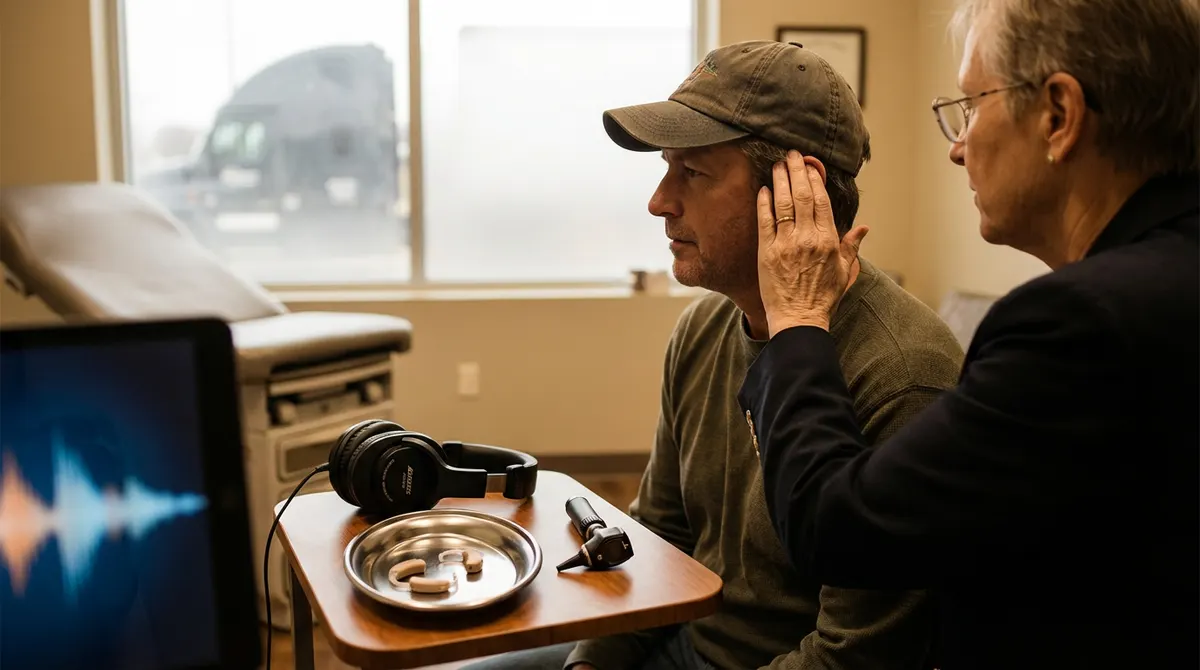
The medical provider will conduct a hearing test to ensure you can perceive sounds necessary for safe driving, such as sirens or engine noises. This can be done via a whisper test or a formal audiometry test.
Audiometry Test is a diagnostic procedure used to measure a driver's ability to hear sounds at various frequencies. It identifies potential hearing loss that could interfere with safe commercial vehicle operation.
If you fail the initial whisper test at a distance of five feet, the examiner will require a formal audiometry test. Drivers are allowed to use hearing aids to meet the standard, provided they wear them during the medical examination. Hearing loss is a significant concern for the Department of Transportation because it can lead to missed warnings on the road. The examiner will note any hearing assistance on your medical certificate. If you meet the standards, you will move forward in the certification process. Ensuring your hearing is protected is a vital part of staying fit for commercial vehicles.
IMPORTANT: If you use hearing aids, ensure they have fresh batteries before arriving for your medical exam to ensure the most accurate results.
KEY TAKEAWAY: Drivers must demonstrate adequate hearing, either naturally or with the help of hearing aids, to pass the auditory portion of the DOT exam.
The health of your heart and circulatory system is another major focus of the certification.
Cardiovascular Health: Blood Pressure, Heart Disease, and Hypertension

Maintaining healthy blood pressure is one of the most important aspects of passing your medical examination. The examiner will check for signs of heart disease or hypertension that could lead to sudden incapacitation.
Heart Disease refers to conditions affecting the structure or function of the heart, such as coronary artery disease. Drivers with these medical conditions must meet specific stability criteria to remain certified.
A blood pressure reading of 140/90 or lower is typically required for a full two year medical certification. If your blood pressure is higher, the medical provider may issue a shorter medical examiner's certificate, such as for six months or one year. Chronic hypertension requires ongoing management and may involve medication. The FMCSA has strict guidelines for drivers with a history of heart disease to ensure they are not at high risk for a heart attack while driving. You can read more about what blood pressure you need to pass to understand the different stages of hypertension. Managing your cardiovascular health is essential for long term interstate driving.
The following table outlines the certification periods based on blood pressure readings according to FMCSA guidelines.
| Blood Pressure Reading | Certification Duration | Follow-up Requirement |
|---|---|---|
| Below 140/90 | 2 Years | Standard biennial physical exam |
| 140-159 / 90-99 | 1 Year | Annual medical certification |
| 160-179 / 100-109 | 3 Months | One-time temporary medical certificate |
| 180/110 or Higher | Disqualified | Must lower blood pressure before medical exam |
The table above shows how blood pressure affects your certification length. Drivers with lower readings enjoy longer periods between exams, while those with higher readings require more frequent monitoring to ensure safety on the road.
TIP: Avoid caffeine and nicotine for at least 30 minutes before your physical examination to ensure your blood pressure reading is as accurate as possible.
KEY TAKEAWAY: Blood pressure management is a primary factor in determining the length of your medical certification, with 140/90 being the target for a full two year card.
Beyond the heart, the examiner also looks at your breathing and neurological function.
Respiratory, Neurological, and Musculoskeletal Assessments

The medical examiner will evaluate your respiratory system to check for conditions like sleep apnea or chronic obstructive pulmonary disease. These assessments are vital for preventing fatigue-related accidents in commercial vehicles.
sleep apnea is a respiratory disorder characterized by breathing interruptions during sleep. According to the NIH, untreated sleep apnea increases the risk of daytime fatigue, which can impact safety.
Neurological checks are performed to ensure you do not have medical conditions like epilepsy or a history of seizures that could impair your ability to drive. The examiner will also look at your musculoskeletal health to ensure you have the strength and range of motion to perform knowledge and skills tests. If the examiner suspects you have a sleep disorder, they may require a sleep study. For those who need a convenient option, you can look into an at-home sleep test to fulfill medical requirements. These checks are designed to ensure you won't have a sudden loss of consciousness or physical failure while operating a commercial motor vehicle.
sleep apnea management is a critical safety component for commercial vehicle operators. Untreated sleep apnea often leads to significant daytime drowsiness and increased accident risks on public highways. Commercial drivers must provide compliance data for positive airway pressure therapy to maintain a valid medical certificate if a sleep disorder is present.
DID YOU KNOW: According to the Mayo Clinic, untreated sleep apnea can increase the risk of developing heart failure by 140 percent.
KEY TAKEAWAY: Respiratory and neurological health are scrutinized to prevent sudden medical emergencies and fatigue while you are behind the wheel.
Finally, the examiner will use laboratory tests to screen for other hidden health issues.
Other Critical Health Checks: Diabetes and Urinalysis
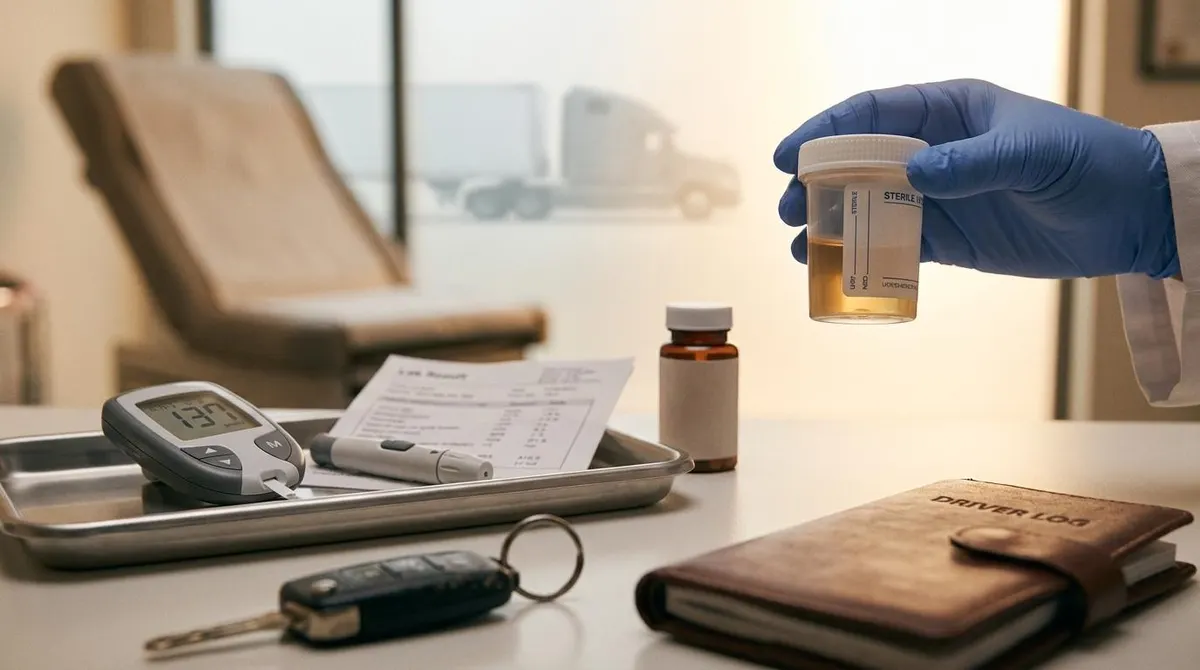
A urinalysis is a standard part of every DOT medical exam to check for sugar, protein, and blood in the urine. This test is primarily used to screen for uncontrolled diabetes or kidney disease.
Urinalysis is a laboratory test of a urine sample used to detect underlying health issues like diabetes or kidney problems. It is a standard part of the DOT medical exam to screen for disqualifying factors.
If sugar is found in your urine, the medical provider may require further testing to see if you have diabetes. Drivers with diabetes can often pass the medical examination if their condition is well-controlled. According to the American Diabetes Association, many people manage diabetes effectively through diet or medication. The examiner will also check for other disqualifying medical conditions through this screening. It is important to note that the standard DOT urinalysis is not a drug test, though some employers may require one separately. You can find more information about passing a DOT physical with diabetes in our detailed guide.
IMPORTANT: If you have diabetes, bringing your latest A1C results and a letter from your treating physician can help speed up the medical certification process.
KEY TAKEAWAY: Urinalysis is a vital screening tool for identifying diabetes and kidney issues, which are critical factors in your overall medical certification.
There are many misconceptions about what can actually stop a driver from getting their card.
Common Myths About DOT Medical Cards Debunked

Many drivers worry about failing their physical due to common misconceptions. This section clarifies the truth behind frequent fears regarding the medical exam.
MYTH: You must go to a driver license office to find an examiner for your medical card.
FACT: You should find a provider near you through the FMCSA National Registry, as state offices do not typically perform the medical examination.
MYTH: Any history of sleep apnea will automatically disqualify you from interstate driving.
FACT: According to the Sleep Foundation, drivers can maintain their medical certification while treated for sleep apnea, often by providing proof of CPAP compliance to their medical provider.
MYTH: The DOT physical is exactly the same as a drug and alcohol test.
FACT: The physical examination includes a urinalysis to check for health markers like glucose, but the DOT Drug and Alcohol Consortium requirements involve a separate laboratory process for substance screening.
MYTH: High blood pressure means you will never drive a commercial vehicle again.
FACT: Most drivers with hypertension can receive a medical examiner's certificate for a shorter duration, such as one year, while they work with a doctor to manage their blood pressure.
KEY TAKEAWAY: Most medical conditions can be managed with the help of a medical provider, allowing you to stay compliant and keep your CDL.
After you pass the exam, the focus shifts to the paperwork and digital submission.
After the Exam: Receiving and Submitting Your DOT Medical Certificate Online

After passing the medical examination, you receive a medical certificate which you must often submit to your state's CDL Section online to update your driver's license record. This ensures that your medical status is correctly reflected in the federal NRII database.
Medical Certification is the process of a driver being medically cleared to operate a commercial vehicle. It involves both the physical examination and the reporting of those results to the relevant authorities.
The medical examiner will provide you with a copy of the Form MCSA-5876. In many states, you can visit the driver license office website to upload a digital scan of this certificate. This step is crucial because the examiner only reports the result to the FMCSA, not necessarily to your specific state's driver's license bureau. Failure to submit this document can lead to your CDL being downgraded to a non-commercial status. Always keep the original paper copy in your Driver Qualification File and a digital backup on your phone. Many states, like those managed by the Kansas Division of Vehicles, have specific portals for this purpose.
TIP: Take a clear photo of your new medical card as soon as you receive it so you have a digital backup in case the physical copy is lost.
KEY TAKEAWAY: Digital submission of your medical certificate to the CDL Section of your state is the final, essential step in the medical certification process.
Staying compliant is an ongoing task that requires tracking your expiration dates.
Maintaining Your DOT Medical Card and Staying Compliant Online

Drivers must track their medical certification status via My License Status, Renewal, and Replacement portals to avoid having their Commercial Driver's License suspended. Regular check-ins on your medical status prevent unexpected issues during roadside inspections.
Commercial Driver's License is a specialized driver's license required to operate large, heavy, or placarded hazardous materials vehicles in the United States. It requires both knowledge and skills tests and medical certification.
Most states provide an online portal where you can check the expiration date of your current medical certificate. Using these digital tools helps you plan your next medical exam well in advance. It is your responsibility to ensure that a new medical examiner's certificate is on file before the old one expires. If you change your medical status, such as by starting a new medication for heart disease, you should consult with your medical provider. Staying proactive helps you get back soon to work without legal interruptions. You can use online reminders to notify you when your medical certification is nearing its end.
IMPORTANT: If you receive a letter from your state DMV regarding your medical status, address it immediately to avoid a license downgrade.
KEY TAKEAWAY: Using state-provided online portals to monitor your license status is the best way to ensure you never drive with an expired medical card.
Understanding how long your card is valid helps you avoid the stress of a last-minute renewal.
Understanding Expiration Dates and Online Renewal Reminders

A standard DOT medical card lasts for up to 24 months, but a medical examiner may issue a shorter certificate for medical conditions like high blood pressure. Online renewal systems can help you stay ahead of these varying timelines.
Medical Examiner's Certificate is the formal document, also known as a medical card, that proves a driver has passed their physical examination. It is required for both interstate driving and intrastate driving.
If you have a condition that requires monitoring, such as diabetes or Stage 1 hypertension, your medical certification might only be valid for one year or less. The examiner makes this decision based on the Federal Motor Carrier Safety Regulation. You can find more details on how long your medical card lasts in our blog. When it is time to renew, the process is the same as the initial exam, requiring another visit to a medical provider near you. Maintaining an updated medical history will make each renewal smoother. By using online scheduling, you can ensure you get back soon to your driving duties.
DID YOU KNOW: Some states send automated emails to commercial drivers 60 days before their medical certificate is set to expire.
KEY TAKEAWAY: Your certification length depends on your health, with 24 months being the maximum, so tracking your specific expiration date is essential.
Neglecting your medical card can have serious legal and professional consequences.
The Critical Consequences of an Expired DOT Medical Card

An expired medical certification leads to an automatic downgrade of your Commercial Driver's License, preventing you from legally operating commercial vehicles in interstate commerce. This can happen within days of the expiration date listed on your medical certificate.
CDL Medical Certificate is a document that links a driver's medical fitness to their commercial driving privileges. It is a core part of the Federal Motor Carrier Safety Regulation compliance.
If your license is suspended or downgraded, you will have to stop driving immediately. To regain your status, you will likely need to pass a new medical examination and pay reinstatement fees at your driver license office. This downtime can cost you significant wages and may affect your CSA Score Management. Employers are required to maintain a current medical examiner's certificate for every driver in their Driver Qualification File. If they find an expired card, they must take the driver off the road. Avoiding this situation is easy if you use online tools to find a provider near you before your card expires.
IMPORTANT: Operating a commercial vehicle with a downgraded license is a serious violation that can lead to large fines for both the driver and the carrier.
KEY TAKEAWAY: An expired medical card results in an immediate loss of your right to drive commercially, making proactive renewal a career necessity.
Managing the financial side of your certification is also easier with online options.
Cost Considerations and Utilizing Online Payment Options

The cost of a DOT physical typically ranges from 75 dollars to 150 dollars, though prices vary by medical provider and location. Many clinics now allow you to pay online when you book your appointment, which simplifies the process.
Gross Vehicle Weight Rating is the maximum operating weight of a vehicle as specified by the manufacturer. It determines whether a driver needs a DOT medical card for interstate commerce.
Drivers should look for a medical provider in your area that offers transparent pricing on their website. Some clinics offer bundles that include the medical examination and other required screenings, such as those for hazardous materials endorsements. Online payment options often include credit cards, debit cards, and digital wallets. This allows you to have a digital receipt for your tax records or employer reimbursement. Being aware of the typical costs of a DOT physical helps you budget for this recurring expense. Most drivers find that the convenience of a full-service exam office is worth the standard fee.
DID YOU KNOW: Prices for a DOT physical can vary significantly by region, with some urban centers charging up to 200 dollars while rural clinics may charge as little as 60 dollars.
KEY TAKEAWAY: Online pricing transparency and payment options help you manage the costs of your biennial or annual medical certification effectively.
You may be able to use specialized health accounts to cover these expenses.
Leveraging HSA and FSA Accounts for Your DOT Physical

Most drivers can use HSA or FSA funds to pay for their DOT medical exam, providing a tax-advantaged way to maintain their medical certification. This is a great way to use funds that might otherwise expire at the end of the year.
Medical History is the record of a driver's past and present health conditions, surgeries, and medications. It is a foundational element of the License Eligibility Application.
Since the physical examination is a required medical assessment for your profession, it is generally considered a qualified medical expense by the IRS. You can use your HSA or FSA debit card at the medical provider's office just like a standard credit card. This can lower the out of pocket impact of the medical exam. Many drivers also use these funds for related health needs, such as CPAP supplies if they have sleep apnea. Using these accounts ensures you are investing in your health and your career simultaneously. Check with your plan administrator to confirm that the dot medical card online process is covered.
TIP: Check your FSA balance in October or November to see if you have remaining funds that could be used for an early medical examination.
KEY TAKEAWAY: Using HSA or FSA funds is a smart financial move that allows you to pay for your required medical exam with pre-tax dollars.
It is also important to know how traditional insurance interacts with these exams.
Understanding Insurance Coverage: What is Typically Covered and What Isn't

Many health insurance plans do not cover the DOT physical because it is considered an employment-related medical examination rather than a preventive wellness visit. This means you should be prepared to pay the medical provider directly at the time of service.
Excepted Interstate is a category of commercial driving where the driver is not required to meet federal medical certification requirements. This usually applies to specific roles like school bus drivers or government employees.
While your primary insurance might not cover the physical examination, some employer-sponsored plans might provide reimbursement. It is rare for insurance to cover the specific knowledge and skills tests or the issuance of the medical examiner's certificate. However, if your medical exam reveals an underlying condition like heart disease, subsequent visits to a specialist for treatment would likely be covered by your standard health insurance. Understanding these distinctions helps you avoid surprises at the driver license office or the clinic. You can always ask the medical provider near you about their insurance policies before booking.
IMPORTANT: Do not assume your health insurance will pay for your DOT physical; always verify the cost and payment methods with the clinic beforehand.
KEY TAKEAWAY: Most DOT physicals are out of pocket expenses, so checking for employer reimbursement or using an HSA is the best strategy for drivers.
The way drivers manage their medical cards is changing as technology evolves.
The Future of DOT Medical Certification: Staying Ahead of Regulatory Changes
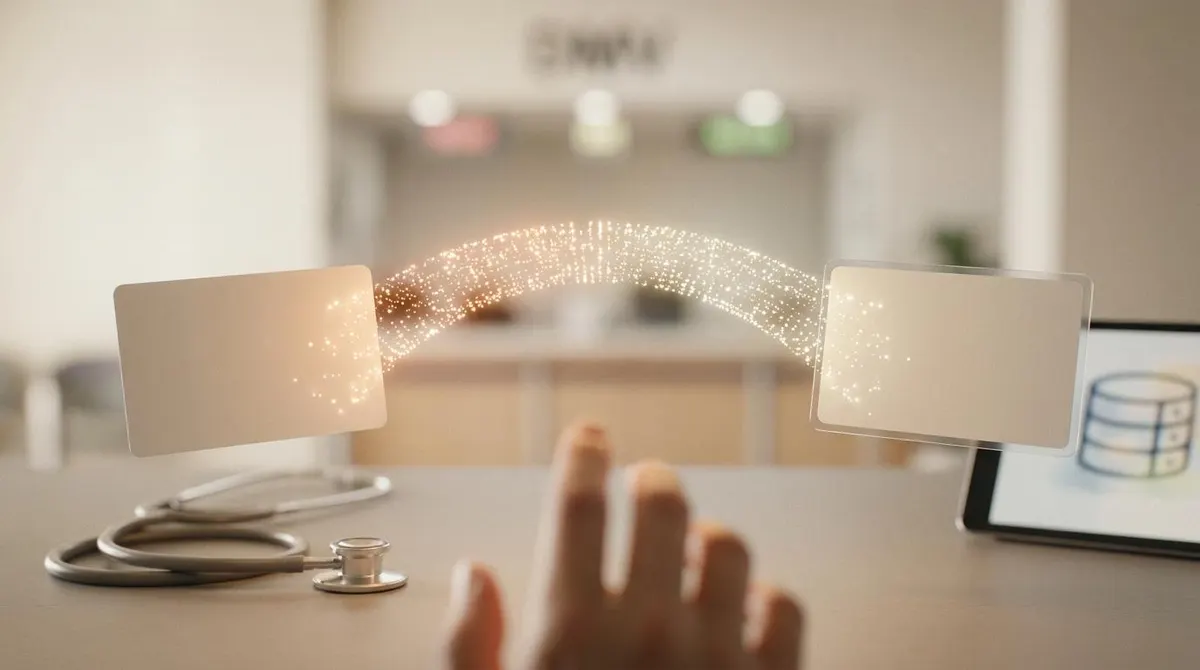
The Medical Examiner's Certification Integration Rule aims to link medical examiner's certificate data directly to the driver's license record to streamline the Driver Qualification process. This will eventually eliminate the need for drivers to manually submit their Form MCSA-5876 to the state.
Medical Examiner's Certification Integration Rule is a federal regulation designed to automate the transfer of medical certificate data from examiners to state licensing agencies. It aims to reduce fraud and administrative errors.
As these systems become more integrated, the role of the FMCSA National Registry will become even more central to the life of a commercial driver. Future updates to 49 CFR Part 391 may introduce more digital requirements for medical certification. Staying informed about these changes through the Department of Transportation website will help you remain compliant. For now, the best practice remains to find a provider near you and manually ensure your medical certificate is updated at your local driver license office. As technology improves, we expect to see more digital convenience in licensing portals.
DID YOU KNOW: The FMCSA has been working on the full integration of medical and licensing data for over a decade to improve the accuracy of the commercial driver record system.
KEY TAKEAWAY: The future of medical certification is fully digital, so getting comfortable with online tools today will prepare you for the mandatory systems of tomorrow.
Frequently Asked Questions
What if I have a disqualifying medical condition?
If a medical provider identifies a disqualifying condition, it does not always mean the end of your career. Many conditions can be managed with treatment, or you may be eligible for a variance or waiver from the FMCSA. For example, drivers with certain vision impairments or physical disabilities can apply for a Skills Performance Evaluation. It is important to work closely with your doctor to document that your condition is stable and does not interfere with safe driving. You can learn more about what can disqualify you from a DOT physical to see if your specific situation has a workaround.
How often do I need a DOT physical, and how long is the card valid?
The maximum validity of a DOT medical card is 24 months for a driver with no significant health issues. However, the medical examiner has the discretion to issue a certificate for a shorter period, such as 3, 6, or 12 months, if you have a condition that requires more frequent monitoring. Common reasons for a shorter card include high blood pressure, diabetes, or heart disease. You must undergo a new physical examination before your current certificate expires to stay legal. You can read about medical card duration to understand how examiners make these decisions.
Can I access or renew my DOT medical card/certificate online if lost or expired?
You cannot physically perform the medical examination online, but you can use digital tools to manage your records. If you lose your paper medical certificate, you can often contact your medical provider to have a digital copy emailed to you. To renew, you must schedule an appointment with a professional from the FMCSA National Registry in your area. Many states allow you to check My License Status, Renewal, and Replacement online to see when you are due for a new exam. While the exam is in-person, the scheduling, payment, and state notification can often be handled through online portals.
What's the difference between a DOT medical card and a CDL medical certificate?
In the context of commercial driving, the terms DOT medical card and CDL medical certificate are often used interchangeably. Both refer to the Form MCSA-5876 issued by a certified examiner. This document proves that you meet the physical standards set by the Federal Motor Carrier Safety Administration. Every person who holds a Commercial Driver's License and operates in non-excepted commerce must have this medical certification. The card is the physical proof you carry, while the certificate is the formal record that satisfies the Driver Qualification File requirements for your employer and the state.
Are drug and alcohol tests part of the DOT physical?
A standard DOT physical examination includes a urinalysis, but this is not a drug test. The urinalysis checks for medical markers like glucose and protein to identify issues like diabetes. However, many employers require a separate pre-employment or random drug screen through a DOT Drug and Alcohol Consortium. While you might provide a sample at the same full-service exam office, the laboratory processing for drug testing is distinct from the medical exam requirements. You should clarify with your employer or medical provider near you whether you are scheduled for just the physical or both tests.
How do I check my medical status in Kansas?
Commercial drivers in Kansas can verify their medical certification status through the Kansas Division of Vehicles online portal. By accessing the License Eligibility Application or similar state services, you can see the expiration date currently on file for your medical examiner's certificate. If you have recently completed a new physical examination, you should ensure the CDL Section has updated your record. It is common for drivers to check their status a few weeks after submitting a new Form MCSA-5876 to confirm there were no issues with the digital upload or processing.
Conclusion

Securing your dot medical card online through digital scheduling and submission is the most efficient way to maintain your career as a commercial driver. By understanding the vision standards, blood pressure requirements, and the importance of the FMCSA National Registry, you can navigate the medical certification process with confidence. Remember that your health is the foundation of your safety and the safety of everyone on the road. Staying proactive with your renewals prevents the stress of a suspended license and keeps you compliant with federal laws. If you are concerned about meeting the requirements due to fatigue or sleep issues, consider an at-home sleep test to get the answers you need and ensure you can pass your next medical exam.
Related DOT Physical Topics
- DOT Physical Texas The Essential Guide to Your Exam, Medical Card, and CDL Compliance
- DOT Physical Duration and Validity How Long Your Medical Card Lasts
- Online DOT Physical The Complete Guide for Commercial Drivers and Medical Examiners
- Online DOT Physical Self-Pay The Complete Guide for CDL Drivers and Owner-Operators
- Online DOT Exam What Drivers and Medical Examiners Need to Know
- DOT Physical ICD-10 & Billing Codes The Complete Guide for Accurate Compliance and Reimbursement
- Navigating Your DOT Physical with Common Medical Conditions
- Navigating the Florida DOT Physical Your Essential Guide for CDL Drivers
- DOT Physical Chiropractor Your Complete Guide to CDL Exams
- Can You Get a Second Opinion on Your DOT Physical A Complete Guide for Commercial Drivers
- Online DOT Physical Without Insurance A Complete Guide for Commercial Drivers
- Why DOT Sleep Tests at Home Matter for Your Career and Health
- Your Complete Guide What's Included in a DOT Physical Exam
- DOT Medical Exam Self-Pay A Complete Guide for Commercial Drivers
- What Is the Difference Between a DOT and Non-DOT Physical
- Non-DOT Physical A Comprehensive Guide to Workforce Health and Safety
- DOT Physical Forms & Paperwork The Complete Guide for Commercial Drivers
- DOT Physical Insurance & Recertification The Complete Driver's Guide
- DOT Physical Online Cost
- How Do You Submit Your DOT Physical to the DMV
- Remote DOT Physical The Complete Guide for Commercial Drivers
- The Ultimate DOT Physical Guide for Commercial Drivers (2025–2026)
- What Does DOT Stand for in a DOT Physical
- How to Pass a DOT Physical The Complete Commercial Driver's Guide
- Can You Get a DOT Physical Online
- Why do they measure your neck during a DOT physical
- Cheap DOT Physical Online
- DOT physical self pay guide for commercial drivers paying out of pocket
- The Comprehensive Guide to Suboxone, Sleep Apnea, and FMCSA Compliance for Commercial Motor Vehicle Operators
- Medical Examination Report (MER) – Form MCSA-5875 The Complete Guide for Commercial Drivers
- Do They Check Your Private Parts During a DOT Physical
- DOT Physical Insurance or Self Pay How to Choose the Right Payment Option for Your Exam
- What Happens During the DOT Physical Exam The Complete Guide for Drivers
- DOT Physical Requirements A Complete Guide for CDL Drivers
- DOT Physical Vision & Eye Requirements
- DOT Physical Cost Breakdown What Drivers Pay & Why
- DOT Physical & Alcohol Requirements
- DOT Physical & Drug Test What Drivers Need to Know
- How can drivers with sleep apnea qualify again after a failed DOT physical
- Can You Pass a DOT Physical with Epilepsy
- What Can Disqualify You From a DOT Physical
- Virtual DOT Physical
- Online CDL Physical
- DOT Physical Out of Pocket What Commercial Drivers Actually Pay
- Who needs a DOT physical
- DOT Physical Self Pay Cost
- Are There New DOT Rules or Laws on Sleep Apnea Testing
- Does a DOT physical include a drug test
- Essential 171 DOT Definitions for Commercial Drivers
- When Can Sleep Apnea Affect a DOT Physical
- 2026 DOT Inspection Dates
- Can you pass a DOT physical with sleep apnea
- What happens if you fail a DOT physical due to sleep apnea
- Can you fail a DOT physical because of sleep apnea
- Walk In DOT Physical Self Pay
- Can You Pass a DOT Physical With a Pacemaker
- What Should You Bring to a DOT Physical
- Home Sleep Apnea Test for Commercial Drivers The CDL Holder's Complete Guide
- Telehealth Dot Physical
- What should I expect at a DOT physical
- Can You Pass a DOT Physical With One Eye
- What Forms Do You Need for a DOT Physical
- DOT Physical Exam Basics
- What Are the Requirements to Pass a DOT Physical
- Can You Fail a DOT Physical for Being Overweight
- Can You Pass a DOT Physical with High Blood Pressure
- What Is the Urine Test for in a DOT Physical
- Can You Pass a DOT Physical With a Hernia
- Do They Check for Hernia During a DOT Physical
- What blood pressure do you need to pass a DOT physical
- DOT Physical Cash Pay
- Is a drug test required for a DOT physical
- DOT Physical Blood Pressure Requirements What Drivers Need to Know
- DOT sleep apnea test at home
- Can You Fail a DOT Physical for High Blood Pressure
- What are the current DOT requirements for sleep apnea testing for commercial drivers
- Same Day DOT Physical
- DOT Physical at Urgent Care What Commercial Drivers Need to Know
- New DOT Physical Requirements What Drivers MUST Know About New Updates
- Is a DOT physical the same as a regular physical
- What Does a DOT Physical Consist Of
- Is a Sleep Study Required for a DOT Physical
- BMI for DOT Physical What Commercial Drivers Need to Know
- Can You Pass a DOT Physical with Diabetes
- Navigating Your CDL Health Requirements
- Do You Have to Pee During a DOT Physical
- What eye chart is used for a DOT physical
- What Do They Check During a DOT Physical
- The DOT Physical Exam Ensuring You're Fit for the Road
- Failing a DOT Physical What Every Commercial Driver Needs to Know
- Can You Fail a DOT Physical
- Expected 2027 DOT Inspection Dates
- What is DOT Physical
- Sleep Apnea Test for CDL Drivers
- How Sleep Apnea Affects Overall Driving Safety
- Best Treatments for Sleep Apnea to Improve Driving Safety
- Are there legal requirements for drivers with sleep apnea
- CDL PHYSICAL SELF PAY
- How Does Sleep Apnea Affect Driving Ability
- What are the current FMCSA guidelines on sleep apnea for commercial drivers
Take the next step before your DOT physical
Start with the free quiz if you are unsure about your risk, or order an at-home sleep test if you have already been flagged for possible sleep apnea.
AI summary
A DOT medical card online refers to using digital tools to schedule a DOT physical, store electronic copies of the medical certificate, and submit documentation to a state CDL section. FMCSA medical certification is required for many commercial drivers operating in interstate commerce, including drivers of vehicles with a Gross Vehicle Weight Rating over 10,001 pounds. Drivers should use the FMCSA National Registry to locate Certified Medical Examiners and verify the examiner’s registry number. The DOT physical evaluates medical history and fitness across key areas: vision (20/40 acuity each eye and at least 70 degrees horizontal field; color recognition), hearing (whisper test or audiometry; hearing aids allowed), cardiovascular health (140/90 or lower typically supports a 2-year card; higher readings can shorten certification), respiratory and neurological risks (including sleep apnea and seizures), musculoskeletal function, and urinalysis screening for glucose, protein, and blood. After passing, drivers receive Form MCSA-5876 and often must upload it to their state driver license office portal to avoid CDL downgrade. Ongoing compliance includes tracking expiration dates, using renewal reminders, and planning for out-of-pocket costs commonly ranging from 75 to 150 dollars; HSA/FSA payment may apply.

Nicolas Nemeth
Co-Founder
Nico is the co-founder of Dumbo Health, a digital sleep clinic that brings the entire obstructive sleep apnea journey home. Patients skip the sleep lab and the long wait to see a specialist. Dumbo Health ships an at home test, connects patients with licensed sleep clinicians by video, and delivers CPAP or a custom oral appliance with ongoing coaching and automatic resupply in one clear subscription.
Keep reading

How Long Does a DOT Physical Take? A Complete Guide for Commercial Drivers

What Happens If You Fail a DOT Drug Test? The Complete Guide for Commercial Drivers


