Same Day DOT Physical
A same-day DOT physical is the standard FMCSA-regulated medical exam completed in one visit so commercial drivers can avoid downtime and stay legally eligible to operate a commercial motor vehicle. The article explains what the exam includes, from medical history and physical exam to vision and hearing screening and urinalysis for health markers. It outlines why Certified Medical Examiners listed on the National Registry are required for valid certification. It reviews common conditions that can affect outcomes, including blood pressure, diabetes, sleep apnea, cardiovascular and neurological history, mental health, and medication considerations under 49 CFR 391.41. You’ll learn what documents to bring, how certification periods are determined, and why some results are deferred for more information. It also covers costs, self-pay expectations, and how to choose a reliable clinic.
Struggling with sleep?
Find out if sleep apnea is the reason.
FDA-cleared. $149 flat. Physician-reviewed results in 48 hours.

Same Day DOT Physical

Same day DOT physical is a federally regulated medical exam completed quickly so a commercial driver can stay eligible to operate a commercial motor vehicle without unnecessary delay. According to the Federal Motor Carrier Safety Administration, medical certification may be issued for up to 24 months, although many drivers receive shorter periods when follow-up is needed. This page explains what a same-day exam includes, who can perform it, what documents to bring, how medical conditions affect the outcome, how the medical card process works, what costs to expect, and how to find a reliable provider near you. The goal is to help you prepare thoroughly, reduce downtime, and avoid preventable delays. Keep reading to understand the full process from booking to certification.
The Urgency of "Same-Day": Why Drivers Need Fast DOT Physicals

A same-day appointment matters because DOT compliance can affect whether you can legally keep driving today, not next week. Same-day access is often the difference between staying on the road and losing income.
A DOT physical is a medical qualification exam required for many interstate drivers who operate a commercial motor vehicle. The exam matters because expired certification can interrupt work, delay onboarding, and create compliance problems for both the commercial driver and employer.
Many drivers seek a same-day visit because of a renewal deadline, new employment paperwork, a fleet compliance notice, or a last-minute request tied to hazardous materials or other regulated driving duties. In real-world use, drivers often find the urgency is less about convenience and more about protecting pay, routes, and licensing status.
KEY TAKEAWAY: Same-day access matters because a delayed DOT physical can quickly become a work interruption and a compliance risk.
Not sure if sleep apnea applies to you?
Take our 2-minute sleep risk quiz to see whether sleep apnea could affect your DOT physical. No account required.
Understanding the practical reason for speed makes it easier to see why downtime matters so much.
Minimizing Downtime and Maximizing Road Time

The main benefit of a same-day exam is less time off the road and less disruption to earning capacity. Speed matters most when the exam is performed correctly the first time.
Commercial drivers are paid to move freight, meet schedules, and stay available. Every extra day spent waiting for an appointment, missing documents, or repeating a physical exam can mean lost loads, delayed start dates, or missed opportunities. Many patients report that the most frustrating part of the process is not the examination itself, but the lost time caused by poor preparation or clinics that do not handle DOT workflows efficiently.
A fast and organized clinic reduces repeat visits by collecting medical history, performing the hearing test and vision test promptly, documenting the urine sample correctly, and issuing paperwork without confusion. For many drivers, the real value of same-day service is not just speed but predictability.
KEY TAKEAWAY: The best same-day DOT physical minimizes lost work time by combining speed, organization, and complete documentation.
Once downtime is on the line, the next issue is understanding the legal framework behind the exam.
Understanding DOT Compliance for Commercial Motor Vehicles

DOT compliance means meeting the federal medical standards required to operate a commercial motor vehicle safely. The exam is about road safety, legal qualification, and public protection.
The Department of Transportation oversees transportation safety at a national level, and the Federal Motor Carrier Safety Administration manages medical fitness standards for interstate drivers. A commercial motor vehicle driver may need active medical certification to maintain full operating privileges depending on job type, vehicle class, and licensing status. This is why the DOT physical exam is not treated like optional preventive care.
Commercial motor vehicles include large trucks, buses, and other vehicles that meet federal size, passenger, or hazardous materials thresholds. Commercial vehicles and commercial motor vehicles are related terms, but in federal medical rules the precise regulatory language matters. That wording shapes who needs the exam and when it must be current.
KEY TAKEAWAY: DOT compliance is a legal and safety requirement, not just an employer preference or hiring formality.
The legal framework becomes clearer when you look at the agency and law behind the process.
The Role of the Federal Motor Carrier Safety Administration (FMCSA) and Federal Law

The Federal Motor Carrier Safety Administration sets the medical qualification framework used in interstate trucking and other regulated driving roles. Federal Law gives the agency authority to define who is medically fit to drive.
Already diagnosed and need CPAP support?
Dumbo Health helps patients start CPAP without the usual confusion, paperwork, or upfront cost. Equipment, setup, supplies, and ongoing support are all handled in one place.
According to the Federal Motor Carrier Safety Administration, drivers who operate covered commercial motor vehicles in interstate commerce must meet physical qualification standards under federal regulations. Those regulations include medical fitness rules that address vision, hearing, Blood pressure, neurological status, medication use, and other physical condition factors that can affect safe driving.
The medical standard is tied to safety outcomes. The exam is designed to reduce the likelihood that a driver will experience sudden impairment, serious fatigue, or a medical event while operating a commercial vehicle. This is why the process is structured, evidence-based, and handled by qualified medical professionals rather than informal workplace screening alone.
KEY TAKEAWAY: FMCSA medical rules exist to ensure that drivers who operate commercial motor vehicles can do so safely under enforceable federal standards.
That legal role explains why drivers often need fast access for specific time-sensitive situations.
Instant Needs: Renewals, New Employment, and Unexpected Requirements

Drivers usually need same-day appointments because a deadline has already arrived or is very close. Renewals, new jobs, and surprise compliance requests are the most common triggers.
A driver may need a same-day exam because a medical card is about to expire, an employer needs immediate proof of qualification, or a state record must be updated before dispatch. New hires often discover that start dates move faster than medical scheduling. Existing drivers often face the opposite problem: they assume there is more time left than there really is.
A same-day DOT physical is especially valuable when a commercial driver is switching employers, returning after a lapse, or trying to prevent a disruption in eligibility. Many clinics advertise speed, but the better question is whether the clinic can complete the full medical exam, review medical history, and issue accurate paperwork without delay.
KEY TAKEAWAY: Same-day demand is usually created by real deadlines, especially renewals, hiring steps, and last-minute compliance needs.
Once the urgency is clear, it helps to define exactly what the appointment includes.
What is a Same-Day DOT Physical? A Comprehensive Overview

A same-day DOT physical is a federally required medical exam completed in one visit so you can receive a decision without waiting days for routine processing. The standards are the same as any other DOT physical.
A same-day service does not lower the bar or skip required steps. The exam still includes medical history review, a physical examination, vision and hearing screening, urinalysis, and assessment of relevant medical conditions. The difference is timing, workflow, and clinic readiness.
A same-day DOT physical works best when the provider regularly performs DOT medical exams and when the driver arrives with the correct information. The process is fast only when the documentation is complete and the medical examiner has what is needed to make a safe, supportable decision.
KEY TAKEAWAY: A same-day DOT physical is the standard DOT exam delivered quickly, not a shortcut around federal requirements.
To understand the exam properly, it helps to define the formal medical evaluation behind it.
Defining the Commercial Driver Medical Examination

The Commercial Driver Medical Examination is the formal medical evaluation used to determine whether a commercial driver meets federal fitness standards. The exam matters because it supports legal medical qualification.
The Commercial Driver Medical Examination focuses on whether your medical conditions, treatment status, and functional ability allow safe operation of commercial motor vehicles. It is more specific than most employment physicals because it is tied to federal safety criteria rather than general workplace wellness. The evaluation addresses physical condition, symptom control, medications, and risk of sudden incapacitation.
The exam also creates a formal record. That record supports a pass decision, a shorter certification period, a request for more information, or a disqualification when the safety risk is too high. In that sense, the medical examination is both a clinical review and a regulatory decision point.
KEY TAKEAWAY: The Commercial Driver Medical Examination is the structured federal process that determines whether you are medically qualified to drive.
That definition leads directly to the reason the exam exists in the first place.
The Purpose: Ensuring Driver Safety and Fitness for the Road

The purpose of the DOT physical is to confirm that you can operate a commercial motor vehicle safely without medical impairment that raises public risk. The exam is about fitness for duty, not generic health scoring.
The exam screens for conditions that may reduce alertness, judgment, coordination, hearing, vision, or cardiovascular stability. Conditions such as uncontrolled Blood pressure, poorly managed diabetes, untreated sleep apnea, major neurological problems, and medication side effects can affect safe driving. The examiner is not looking for perfect health. The examiner is looking for a reasonable level of control and safety.
According to the National Heart, Lung, and Blood Institute, sleep apnea can cause daytime sleepiness and other health problems, which helps explain why fatigue-related symptoms matter in a driving exam. This is also why chronic health issues must be documented, not hidden.
KEY TAKEAWAY: The exam exists to protect both your safety and the public by identifying conditions that could interfere with safe driving.
Because the decision carries regulatory weight, not every clinician can perform it.
Who Can Perform Your DOT Physical? The Certified Medical Examiner (CME)

Only a qualified certified examiner can perform an interstate DOT physical that supports valid medical qualification. Choosing the right provider is essential.
A medical examiner is a licensed clinician who has completed the required FMCSA training and testing process to perform driver certification exams. The medical examiner reviews your medical history, performs the physical exam, applies federal criteria, and documents the result. Medical examiner decisions shape whether you receive a medical card, a shorter certificate, or a request for follow-up information.
Certified Medical Examiners are expected to understand the federal rules and apply them consistently. That expertise matters when the exam involves diabetes, cardiovascular history, medication review, hearing loss, or complex documentation. A general clinician may be excellent in other settings, but interstate DOT certification requires the right credential.
KEY TAKEAWAY: Your DOT physical should be performed by a certified medical examiner who understands both the clinical and regulatory side of the exam.
The best way to confirm that qualification is through the federal registry.
The National Registry of Certified Medical Examiners: Ensuring Qualified Professionals

The National Registry of Certified Medical Examiners helps drivers find examiners who are approved to perform interstate DOT physicals. Registry status protects the validity of the exam.
According to the National Registry of Certified Medical Examiners, interstate drivers should use a certified examiner listed in the federal registry. The National Registry of Certified Medical Examiners matters because not every clinic offering a physical exam is qualified to complete a federally accepted DOT medical certification.
The practical takeaway is simple. When you search for providers in your area, ask whether the specific examiner on site is currently listed on the National Registry and available that day. A fast appointment does not help if the paperwork cannot support a valid certification outcome.
KEY TAKEAWAY: The federal registry is the safest way to verify that your same-day DOT physical provider is properly qualified.
Once you have the right examiner, the next question is what happens during the visit.
Your Same-Day DOT Physical: What to Expect During the Examination

A same-day DOT visit usually includes intake, medical history review, screening tests, a physical exam, and a certification decision. The visit is straightforward when you know what is coming.
The process is designed to move from paperwork to clinical evaluation to documentation. You will usually check in, provide identification, complete the long-form health questionnaire, and then proceed to testing and examination. Clinics that specialize in DOT medical exams often move efficiently because they know which records, forms, and follow-up questions commonly slow drivers down.
Many patients report that the exam feels more manageable once they understand that it is not a mystery process. It is a structured medical examination with defined components, predictable decision points, and clear documentation standards.
KEY TAKEAWAY: Knowing the exam flow in advance makes the appointment easier and improves the odds of a true same-day result.
The first phase usually starts with questions, not equipment.
The Initial Consultation: Medical History and Essential Questions

The medical history section is one of the most important parts of the DOT physical because it frames how the examiner interprets the rest of the visit. Incomplete answers often lead to delay.
Medical history is your documented account of current and past health issues, treatment, medications, and functional status. Medical history matters because the examiner uses it to identify safety risks, ask follow-up questions, and decide whether more records are needed.
Expect questions about surgeries, diabetes, seizures, heart disease, sleep apnea, mental health treatment, medication use, hearing loss, vision issues, hospitalizations, and substance use history. Be truthful and specific. It is far better to disclose a well-controlled condition with documentation than to omit it and create a credibility problem later.
KEY TAKEAWAY: Honest, complete medical history is one of the fastest ways to prevent unnecessary delays during a same-day exam.
After history comes the hands-on clinical portion.
Comprehensive Physical Exam Components:
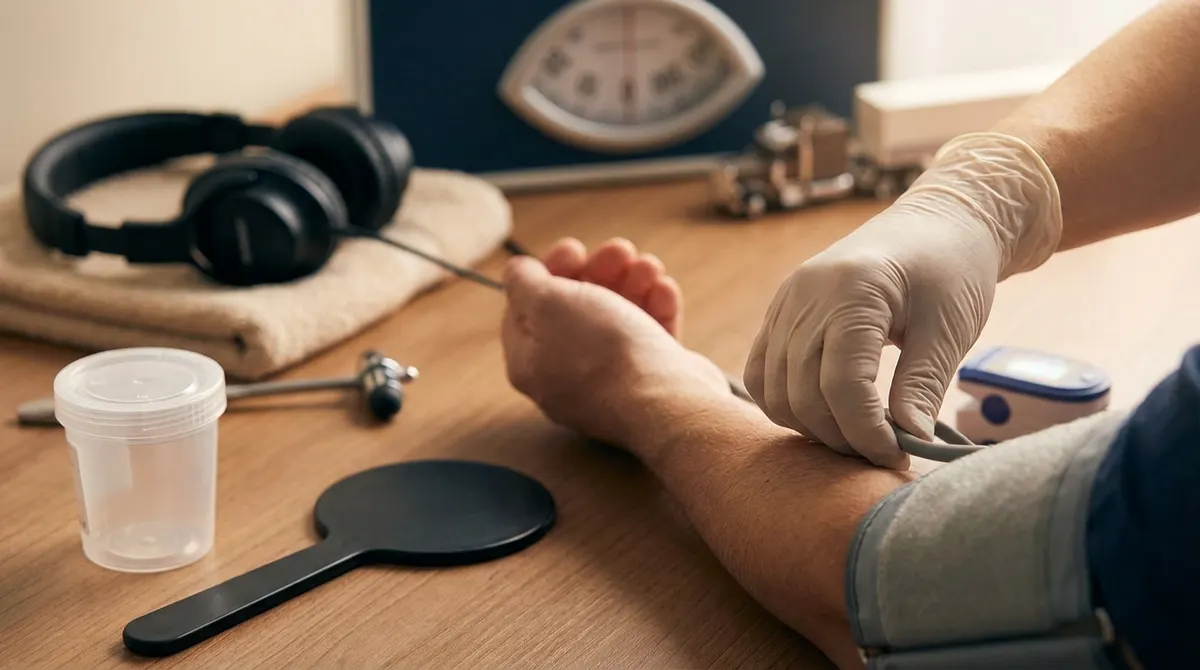
The physical exam includes core medical screening elements used to assess whether you can safely operate a commercial vehicle. Each component supports a specific safety decision.
The physical exam typically includes height, weight, pulse, blood pressure, general appearance, cardiovascular and respiratory checks, abdomen, spine, extremities, and a basic Neurological exam. The hearing test and Vision test are major components because safe driving depends heavily on sensory function. According to FMCSA standards, drivers generally must meet minimum thresholds for visual acuity, peripheral vision, color recognition, and hearing with or without aids depending on the specific requirement.
A urine sample is also commonly collected. In the DOT physical, the urine sample and urine test usually look for health markers such as glucose, blood, protein, and specific gravity. That urine sample is not the same thing as a separate DOT drug test. This distinction matters because many new drivers confuse medical screening with federal drug and alcohol screening rules.
KEY TAKEAWAY: The exam combines general medical review with specific safety checks for vision, hearing, Blood pressure, and basic health markers.
All of those findings are then captured on the required federal form.
Understanding the Medical Examination Report (MER) Form (Long Form)

The MER is the official long-form document used to record the DOT medical exam findings and certification decision. Accurate form completion is essential for valid certification.
The Medical Examination Report, formally tied to the federal MCSA-5875 form, includes your responses, medical history, exam findings, and the examiner's final determination. The Medical Examination Report matters because it provides the written support for the decision to certify, limit, defer, or disqualify. It also documents why a driver may receive a 3 month, 6 month, 1 year, or 2 year certification period.
Medical records and specialist letters often influence what gets documented in the report. When a clinic handles the MER well, same-day certification becomes much more likely. When forms are incomplete or inconsistent, even a medically fit driver can end up delayed.
KEY TAKEAWAY: The long form is the core legal and medical record behind your DOT certification decision.
Good paperwork starts before you ever arrive at the clinic.
Preparing for a Seamless Same-Day DOT Physical
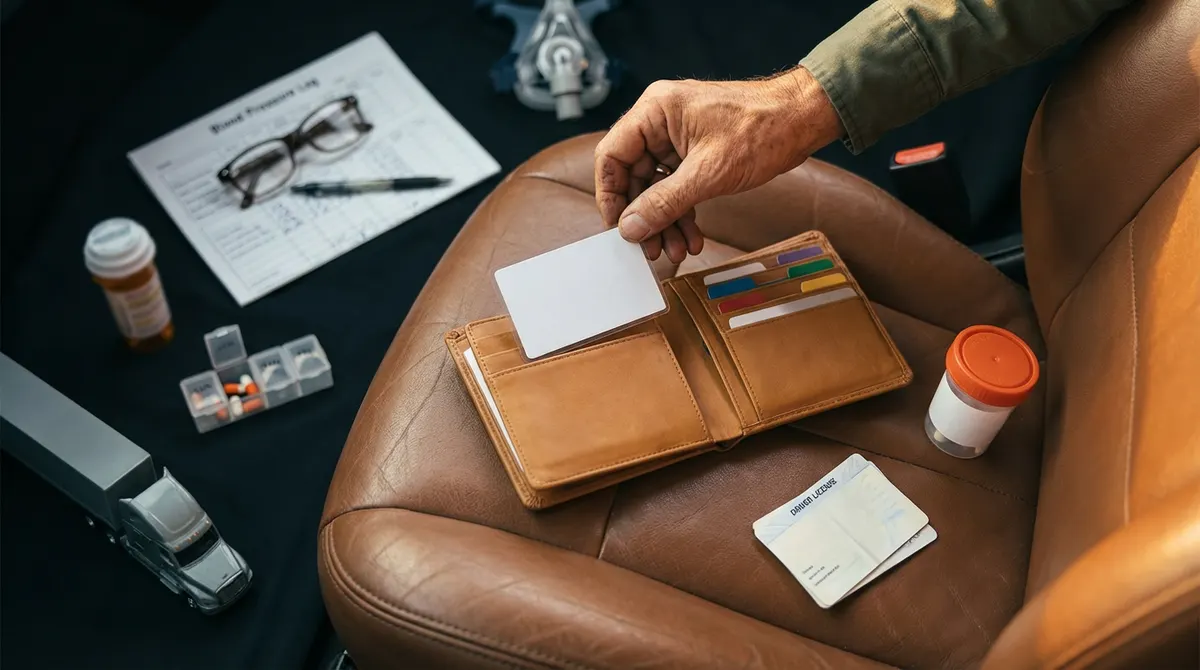
Preparation is the biggest controllable factor in whether a same-day DOT physical actually finishes the same day. Strong preparation reduces repeat visits and avoids avoidable deferrals.
You can think of preparation in three categories: identity and licensing documents, health documentation, and condition-specific proof. Drivers who show up with only a driver's license and no supporting details for major medical conditions are far more likely to hear that the examiner needs more information. Drivers who arrive organized often move through the process much faster.
If you suspect sleep-related symptoms may come up, reviewing what is sleep apnea or starting with Dumbo Health's at-home sleep test can help you address concerns before they become certification obstacles.
KEY TAKEAWAY: Same-day success depends heavily on preparation, especially when chronic conditions or prior medical events are involved.
The most useful preparation step is gathering the right materials in advance.
Essential Documents and Information to Bring:

Bring identity documents, treatment information, and any records needed to explain relevant medical conditions. The right paperwork often determines whether the visit ends with a card or a delay.
A strong preparation folder should usually include:
Your current driver's license
Any existing medical card
A complete medication list
Relevant Medical records
Specialist letters if you have ongoing treatment
Blood pressure logs if hypertension has been an issue
CPAP compliance information if sleep apnea has been diagnosed
Diabetes documentation, including insulin-related forms when applicable
Proof of hearing aid or corrective lens use when relevant
Employer paperwork if the clinic needs to complete it
If you are managing insulin-treated diabetes, FMCSA uses specific documentation requirements tied to the treating clinician assessment form. If you use medical device dependencies such as CPAP or other therapy devices, usage records may be important. Organized documents make it easier for the medical team to make a safe same-day decision.
KEY TAKEAWAY: The most important documents are identification, medication details, and condition-specific records that allow the examiner to clear you without extra follow-up.
What you do on exam day also affects the outcome.
Best Practices for the Day of Your Exam:

Simple day-of habits can help the exam go more smoothly and reduce false red flags. Small choices matter more than many drivers realize.
Take prescribed medication as directed unless your own clinician has told you otherwise. Avoid showing up dehydrated, rushed, or sleep deprived. Bring glasses, contact lenses, or Hearing aids if you use them. Eat normally unless a separate employer test has different instructions. Arrive early enough to complete forms carefully rather than guessing through them.
Blood pressure is a common example of why routine matters. If you rush in, use stimulants excessively, or arrive already stressed, your reading may be higher than usual. Since Blood pressure can influence certification length directly, a calm and prepared arrival is often worth the extra planning.
TIP: Treat the appointment like a professional fitness-for-duty evaluation, not a casual walk-in errand.
KEY TAKEAWAY: Calm, organized exam-day habits can improve accuracy and reduce the chance of avoidable delays or short certification periods.
Even with good preparation, certain health issues still deserve careful attention.
Navigating Common Medical Conditions and Potential Disqualifications

Most medical conditions do not create automatic permanent disqualification, but many conditions can change the pace or outcome of the exam. The key issue is safety, control, and documentation.
Medical conditions are health problems that may affect your ability to drive safely or meet federal standards. Medical conditions matter in the DOT exam because even common diagnoses can change certification length, require records, or trigger specialist review.
The most common areas of concern include Blood pressure, diabetes, sleep apnea, cardiovascular history, neurological conditions, mental health treatment, and medication use. The examiner looks at whether the condition is stable, whether treatment is working, and whether there is a meaningful risk of sudden impairment or reduced alertness. Drivers often fear disqualification, but in practice many problems are managed through documentation, treatment proof, shorter certification intervals, or follow-up requirements.
KEY TAKEAWAY: Most medical concerns are evaluated on control and safety, not diagnosis name alone.
vision is one of the clearest examples of a condition area with defined thresholds.
Vision Requirements and Management: Cataracts, Glaucoma, and Corrective Lenses
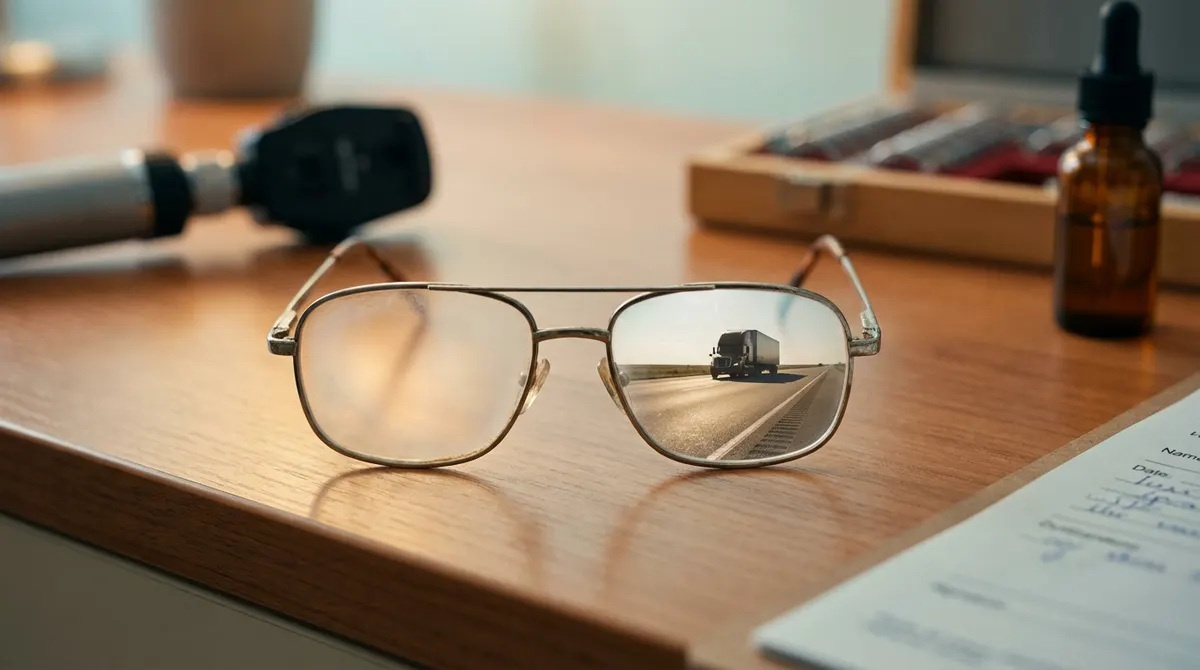
Vision standards are strict because safe driving depends on seeing clearly, recognizing hazards, and responding quickly. Treated vision problems may still be compatible with certification.
According to the Federal Motor Carrier Safety Administration, drivers generally need at least 20/40 visual acuity in each eye, with or without correction, at least 70 degrees of peripheral vision in each eye, and the ability to recognize traffic signal colors. Visual acuity is the clarity of your sight at a given testing distance. Peripheral vision is the ability to detect what is around you without looking directly at it. These standards matter because blind spots, poor detail recognition, and color confusion can directly affect road safety.
Cataracts, glaucoma, and other eye disorders do not always mean disqualification, but they may require treatment evidence or closer review. If you use corrective lenses, bring them. If you recently had eye surgery or have changing symptoms, bring updated records.
KEY TAKEAWAY: Vision problems can often be managed for certification, but you must meet the federal thresholds for acuity, field of view, and color recognition.
Hearing is another sensory area where clear standards matter.
Hearing Standards and the Use of Hearing Aids

Hearing standards focus on whether you can perceive sound well enough to operate safely, with or without assistive devices. Hearing aids can support qualification when they allow you to meet the standard.
According to the Federal Motor Carrier Safety Administration, the hearing standard generally allows hearing loss no greater than 40 decibels in the better ear at 500, 1000, and 2000 Hz, with or without a hearing aid. A hearing test may be done by whispered voice screening or audiometric method depending on the clinic. Hearing loss matters because you must still detect environmental cues, warnings, and other operational signals needed for safe driving.
If you already use Hearing aids, bring them and make sure they are functioning well. Stable hearing loss with effective assistive correction is different from untreated or poorly documented hearing impairment.
KEY TAKEAWAY: Hearing loss does not automatically prevent certification if you can meet the FMCSA standard, often with Hearing aids when appropriate.
blood pressure is one of the most common reasons drivers receive shorter cards.
Blood Pressure Management: Understanding Hypertensive Conditions and Certification Periods

blood pressure control directly affects whether you receive a full certification period, a short card, or a delay. Hypertension is one of the most common issues in DOT medical exams.
According to FMCSA guidance, drivers with Blood pressure below 140/90 may qualify for longer certification, while higher readings can reduce the certification period or require follow-up before certification continues. Blood pressure matters because uncontrolled hypertension raises concern about cardiovascular risk, sudden medical events, and long-term driving safety.
Many patients report that this is the area they underestimate most. They may feel fine, yet still present with a reading high enough to change the outcome. Home monitoring, medication adherence, sleep improvement, and steady primary care follow-up can make a major difference at renewal time.
KEY TAKEAWAY: Blood pressure is one of the most practical and controllable factors affecting DOT certification length.
Diabetes is another condition where documentation and stability are crucial.
Diabetes: Insulin-Treated vs. Non-Insulin-Treated Diabetes Mellitus Assessment

diabetes can be compatible with certification when it is stable, monitored, and well documented. The key concern is whether diabetes or treatment creates unsafe driving risk.
According to the Federal Motor Carrier Safety Administration, insulin-treated drivers must provide the required treating clinician assessment form for the medical examiner. Non-insulin-treated diabetes is still reviewed for control, symptoms, and risk of hypoglycemia. The examiner also considers whether the condition is causing complications that could affect safe operation.
The older phrase Diabetes waiver still appears in conversation, but current practice centers more on the defined federal documentation pathway than the older exemption language many drivers still use. Bring glucose logs, medication details, and any recent clinician notes if diabetes management may come up.
KEY TAKEAWAY: Diabetes does not automatically block certification, but stable control and correct documentation are essential for a same-day decision.
Sleep issues deserve separate attention because they are closely tied to daytime alertness.
Sleep Apnea: Diagnosis, Treatment, and Documentation Requirements
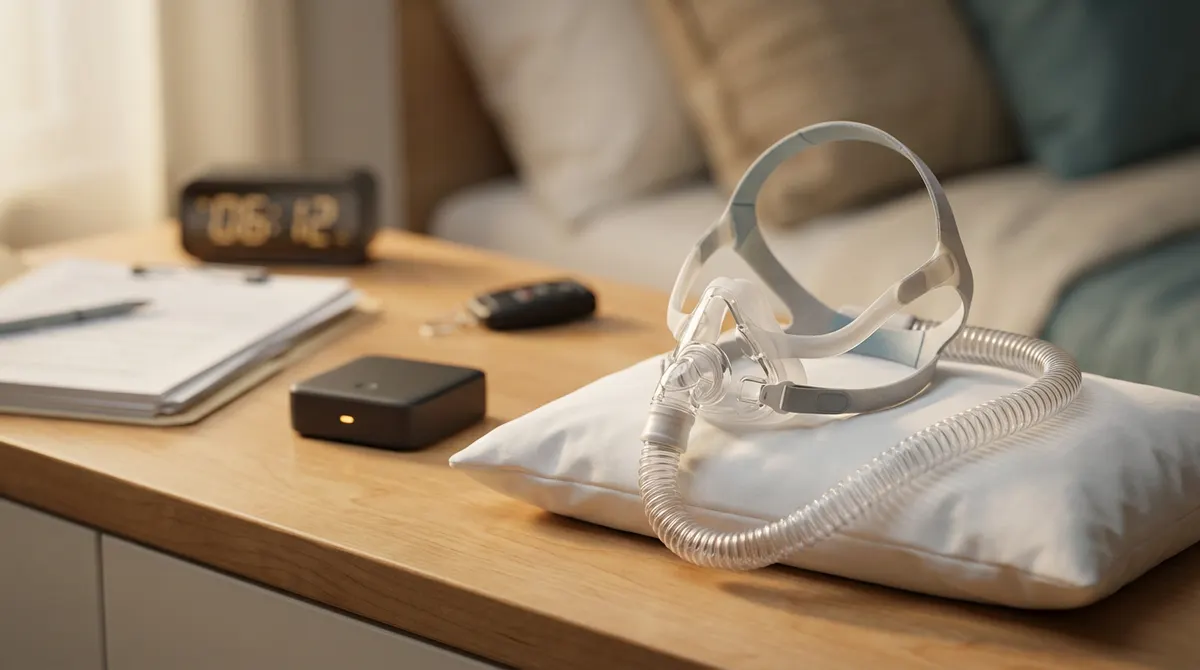
sleep apnea is a major DOT concern because untreated sleep-disordered breathing can reduce alertness and increase crash risk. Treated sleep apnea may still be compatible with certification.
According to the National Heart, Lung, and Blood Institute, sleep apnea causes repeated breathing interruptions during sleep and can contribute to daytime sleepiness. The American Academy of Sleep Medicine also describes obstructive sleep apnea as a common disorder with significant health and safety implications. Sleep apnea matters in the DOT setting because the examiner must assess whether your condition or symptoms could impair safe driving.
If symptoms such as loud snoring, witnessed pauses, morning headaches, or daytime fatigue raise concern, the examiner may ask for a Sleep test or treatment records. If sleep apnea has already been diagnosed, bring therapy documentation. Drivers often find it helpful to understand what are the main causes of sleep apnea, the 9 most common sleep apnea symptoms to look out for, and can sleep apnea be treated without CPAP before the exam.
sleep apnea is a breathing disorder marked by repeated airway obstruction or breathing pauses during sleep. Sleep apnea matters in a DOT exam because untreated daytime sleepiness can affect alertness, reaction time, and certification.
KEY TAKEAWAY: sleep apnea often becomes a certification issue only when symptoms are untreated, poorly documented, or clearly affecting daytime safety.
Cardiovascular history is another area where detail matters more than many drivers expect.
Cardiovascular Health: Heart Attacks, Strokes, Pacemakers, and Stress Tests

Cardiovascular history can affect certification timing, documentation requirements, and the need for specialist clearance. Past heart events do not always mean you are disqualified.
The examiner may ask about heart attacks, strokes, rhythm disorders, chest pain, pacemakers, and prior cardiac testing such as a Stress test. The core question is whether your cardiovascular status creates an unacceptable risk of sudden impairment while operating commercial vehicles. Stable recovery with specialist follow-up may support continued certification, while unstable symptoms or incomplete evaluation may not.
This is one of the clearest examples of why Medical records matter. A driver with organized cardiology notes and treatment proof may receive a same-day answer. A driver with an old history but no documentation may be deferred.
KEY TAKEAWAY: Cardiovascular history is judged on current stability and documented safety, not on diagnosis name alone.
Neurological conditions require similar review because of their potential effect on alertness and control.
Neurological Conditions: Epilepsy, Seizures, and Head Injuries
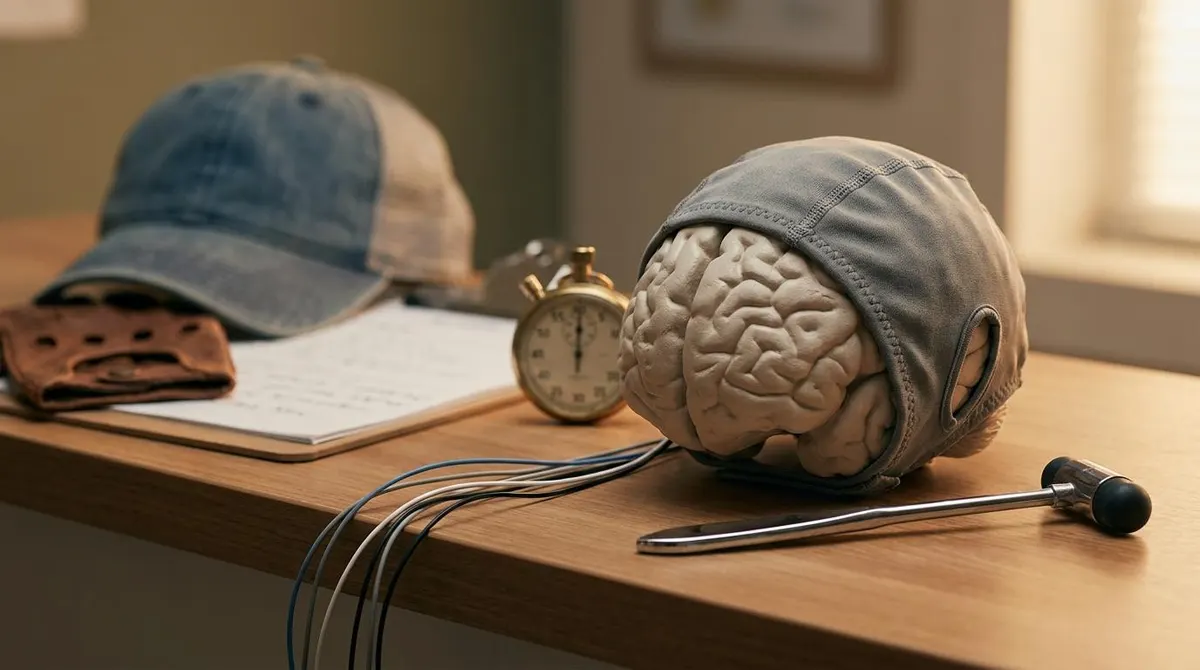
Neurological conditions matter because they may affect consciousness, coordination, and reaction time while driving. Past events are evaluated for recurrence risk and current stability.
The examiner may review seizure history, epilepsy, head injuries, dizziness, loss of consciousness, weakness, or cognitive symptoms. A basic Neurological exam may be part of the visit, but the key decision often depends on specialist records and functional status. The concern is not only whether an event happened in the past, but whether there is ongoing risk that could make commercial motor vehicles unsafe to operate.
Drivers are sometimes surprised that old events still matter. The reason is simple: the medical examiner must evaluate whether there is any present-day implication for safe driving and not merely whether you feel recovered.
KEY TAKEAWAY: Neurological history often requires strong documentation because the examiner must assess the risk of sudden impairment very carefully.
Mental health is another topic that is often misunderstood.
Mental Health: Understanding the Impact on Driving Safety

Mental health conditions do not automatically disqualify a driver, but symptoms and medication effects can influence certification. Stability and safe functioning are the key issues.
The examiner may ask about depression, anxiety, bipolar disorder, psychiatric hospitalization, sleep quality, attention, and medication side effects. The question is whether the condition or treatment reduces alertness, judgment, emotional control, or safe decision-making. Many drivers with stable treatment continue to qualify, especially when the medical team can see that symptoms are controlled.
This section is often misunderstood because drivers may assume any mental health diagnosis is disqualifying. In practice, the focus is function, stability, side effects, and safety. Clear records and honest discussion usually help more than avoidance.
KEY TAKEAWAY: Mental health is evaluated through the lens of safe driving function, not stigma or diagnosis alone.
Substance use questions are handled separately from many drivers' assumptions.
Alcoholism and Drug Use: Regulations and the Role of Drug and Alcohol Screening (Separate from Physical)
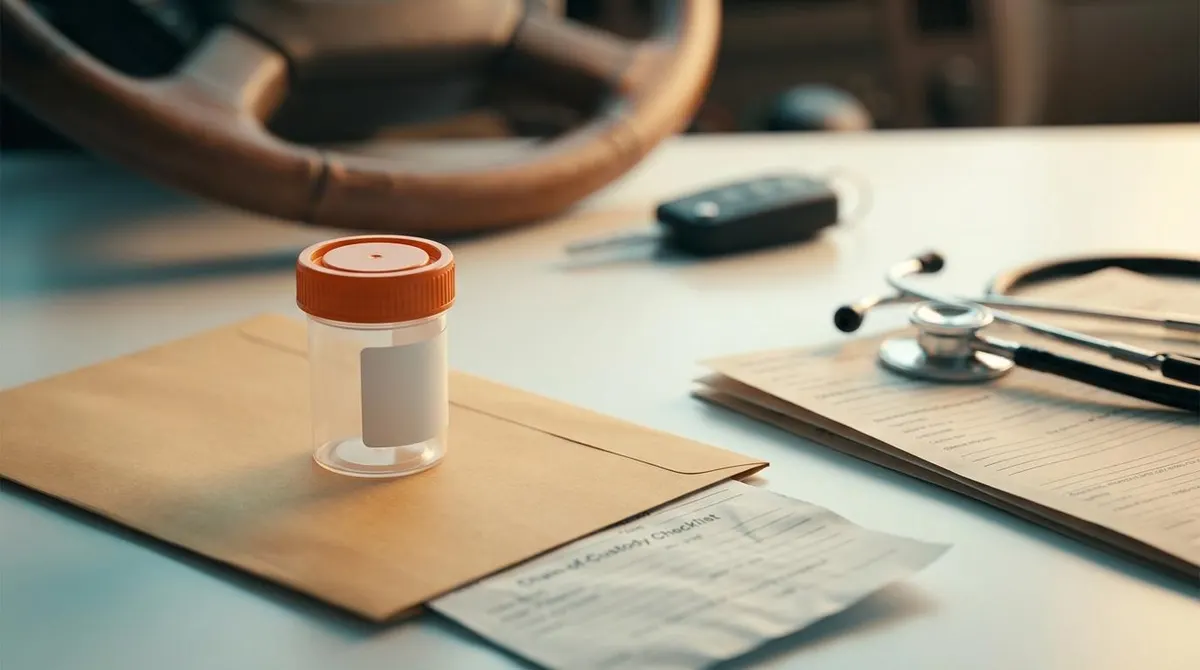
Substance use issues can affect certification, but the DOT physical and formal drug testing process are not the same thing. That distinction is essential.
Alcoholism and drug use are reviewed during the medical exam because they can affect judgment, alertness, and risk. The examiner may ask about past treatment, current use, impairment history, or prescribing issues. A separate DOT drug test, pre-employment drug test, or Reasonable Suspicion test follows different federal procedures and rules. Drug and alcohol screening in the employment testing sense is not the same as the urine test used in the physical exam.
drug test confusion is extremely common. The DOT physical urine sample is usually focused on health indicators. A separate drug test is ordered and administered under distinct testing protocols. If your employer needs both, confirm that before you book.
IMPORTANT: A same-day DOT physical may still require a separate employer-ordered drug test on the same day, but the two processes serve different purposes.
KEY TAKEAWAY: The DOT physical reviews substance-related safety concerns, but formal federal drug testing is a separate process with separate rules.
Medication review is closely tied to that same safety lens.
Medication Considerations: 49 CFR 391.41 and Disqualifying Medications
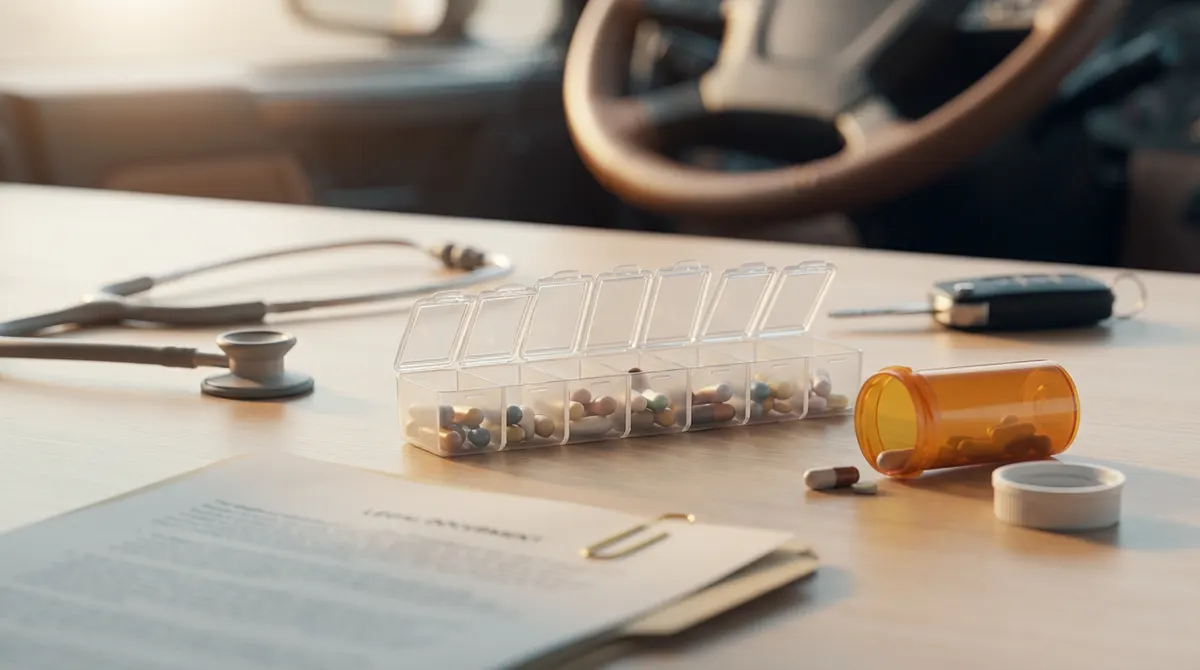
Medication use is evaluated based on side effects, impairment risk, and fitness to drive under federal rules. The issue is not simply whether you take a prescription, but whether you can drive safely while taking it.
Under 49 CFR 391.41, the examiner must consider whether a medication, medical condition, or combination of factors makes safe operation of commercial motor vehicles unsafe. Sedation, slowed reaction time, impaired judgment, and unstable symptom control matter much more than brand names alone. This is why questions such as whether a certain medication is always disqualifying rarely have a simple answer.
Bring an accurate medication list, prescribing details, and any relevant clinician statements. The more specific the documentation, the easier it is for the examiner to make a fair decision. Missing information is a common cause of deferrals in same-day settings.
KEY TAKEAWAY: Medication concerns are judged on safety impact and documentation, not on assumptions or medication name alone.
When a driver does not neatly fit standard criteria, waivers and exemptions may become relevant.
Understanding Medical Waivers and Exemptions: When and How to Apply

Waivers and exemptions may provide a path forward in limited situations when a driver does not meet a standard requirement in the usual way. They are specialized tools, not routine shortcuts.
A medical waiver is an exception process that may allow a driver to continue operating under defined conditions when standard qualification is not met. A medical waiver matters because some drivers can still work legally if the federal or state pathway applies to their circumstance. The exact process depends on the condition and the current regulatory framework.
Not every issue has a waiver route, and many problems are handled instead through treatment documentation, shorter certification periods, or specialist review. If a waiver or exemption may apply, use a certified examiner who understands the process and can explain the next step clearly. Fast action matters, but informed action matters more.
KEY TAKEAWAY: Waivers and exemptions exist for limited circumstances, but most same-day outcomes depend more on documentation and treatment stability than on exception processes.
If you qualify, the next step is the document drivers care about most.
The Outcome: Your Medical Examiner's Certificate (Medical Card)
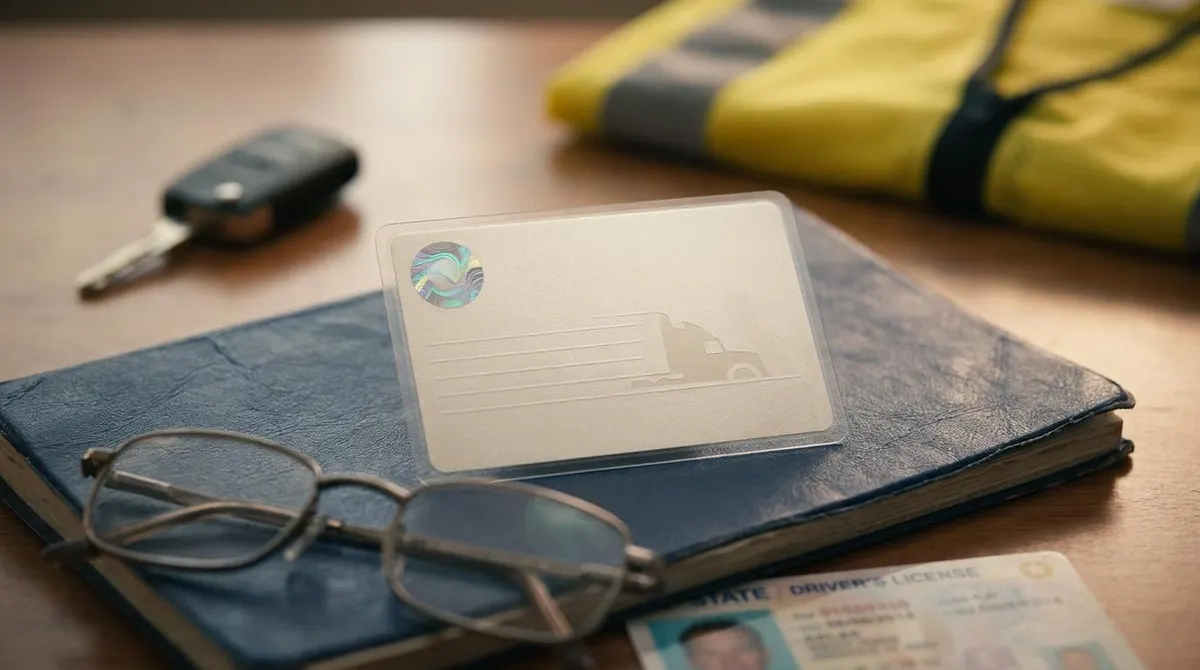
The main outcome of a passed DOT physical is your Medical Examiner's Certificate, often called the medical card. This document proves your medical qualification status.
The medical card is the certificate that shows you passed the required medical exam and are medically qualified to operate commercial vehicles for the period granted by the examiner. The medical card matters because your employer, licensing system, and compliance record may depend on it being valid and current. It is different from the long-form Medical Examination Report, which stays in the background as the full clinical documentation.
If you do not receive the card immediately, ask why. The answer may be simple, such as needing an extra note or a corrected form, rather than an outright failure.
KEY TAKEAWAY: The medical card is the practical proof of qualification, but it depends on accurate exam findings and correct federal paperwork.
Many drivers want to know whether they can actually leave with it on the spot.
Receiving Your Medical Card: Immediate Certification (if compliant)
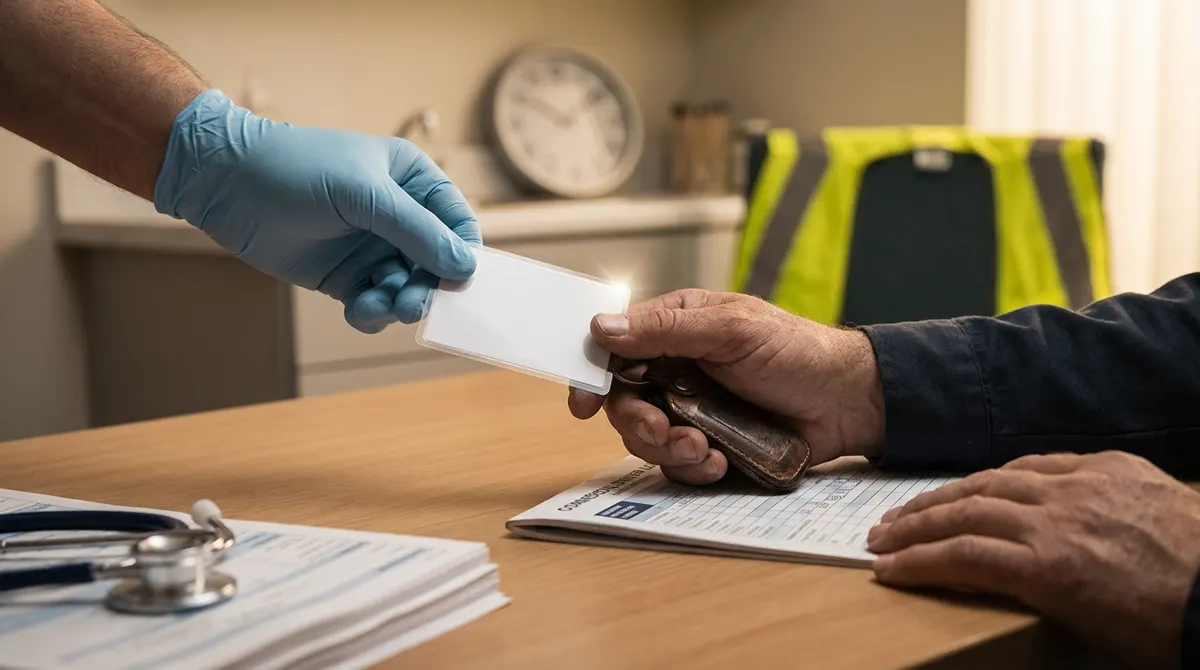
Yes, many drivers receive their medical card immediately after the exam when the findings are straightforward and all required records are present. Immediate certification is common when there are no unresolved red flags.
The examiner can usually issue the certificate the same day if your medical history is clear, your Blood pressure is acceptable, your hearing test and Vision test meet the standard, and no extra specialist review is needed. This is why well-prepared drivers often have a very different experience from drivers who arrive without medication details or condition-specific documentation.
Immediate certification does not mean the examiner rushed. It means the evidence available was sufficient to support a safe decision on the day of service.
KEY TAKEAWAY: Same-day certification is common when your health status is stable and your supporting records are complete.
The next issue is how long that certification will last.
Understanding Certification Periods (3 months, 6 months, 1 year, 2 years)

Certification length depends on your medical risk profile and whether ongoing monitoring is needed. Not every passing driver receives the same certification period.
According to FMCSA, medical certification may be issued for up to 24 months, but shorter periods are common when the examiner needs to monitor a condition more closely. In practice, drivers may receive 3 months, 6 months, 1 year, or 2 years depending on Blood pressure, diabetes status, sleep apnea treatment, cardiovascular follow-up, and other medical conditions. A shorter card is often a risk-management decision rather than a sign that you failed.
Many drivers who receive a shorter certificate are still fully able to work. The shorter period simply means the examiner wants updated evidence before granting a longer interval. This is common and should be treated as a follow-up plan, not a panic moment.
KEY TAKEAWAY: Certification length reflects monitoring needs and safety risk, not just pass or fail status.
Sometimes the result is not immediate certification, even when the issue may still be fixable.
What Happens if You Don't Pass Immediately: Conditional Certification or Disqualification
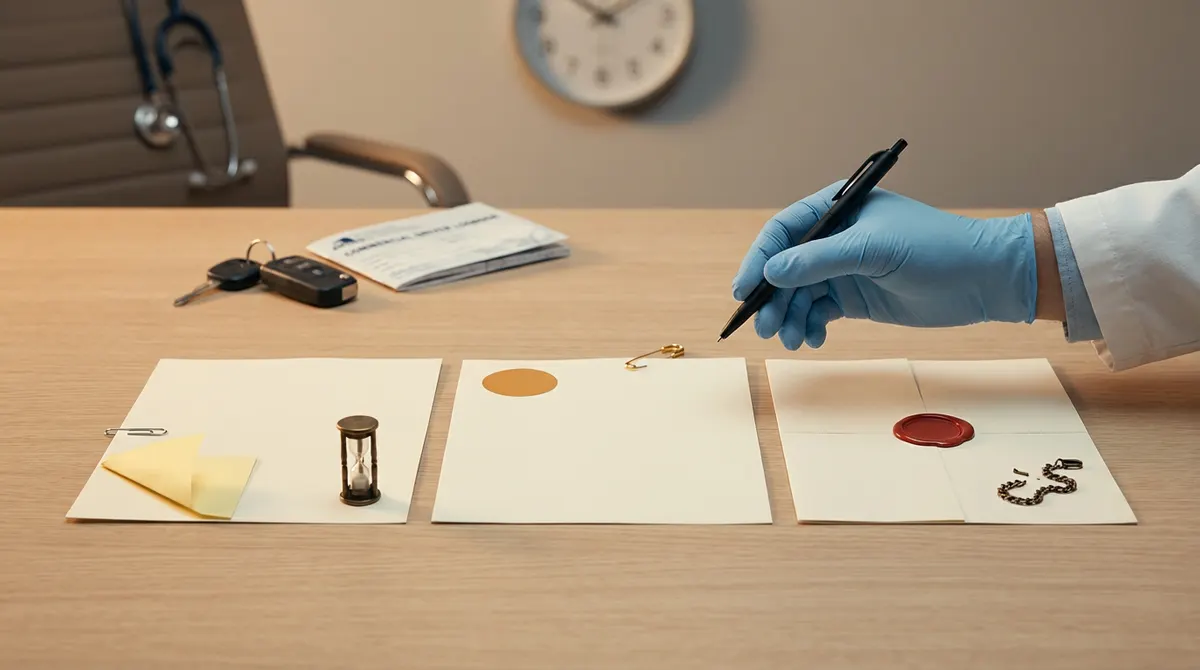
If you do not pass immediately, the result may be a deferral for more information, a short conditional certification, or a disqualification if the risk is too high. Immediate failure is not always the end of the process.
Conditional or delayed outcomes often happen when the examiner needs Medical records, specialist input, updated Blood pressure measurements, medication clarification, or proof that treatment is effective. Disqualification is more likely when symptoms are uncontrolled, impairment risk is significant, or federal criteria are clearly not met. In many cases, the next step is documentation, not defeat.
Drivers often assume that not getting the card on the spot means they can never qualify. That is often incorrect. The more accurate question is what evidence the examiner still needs to make a safe decision.
KEY TAKEAWAY: Not passing immediately often means more documentation is needed, although true disqualification can occur when safety standards are not met.
After a pass, state record handling becomes the next practical step.
Steps After Passing: Providing Proof to Your State's Department of Motor Vehicles (e.g., Indiana Bureau of Motor Vehicles)

Passing the exam is not always the final step because your state driver record must also reflect current medical certification. State processing matters for your ongoing CDL or permit status.
According to the Indiana Bureau of Motor Vehicles, Indiana requires current medical certification for CDL or learner permit status and explains that exam information is transmitted electronically through the National Registry. That is a useful example of why drivers should still confirm that their state record is updated properly after the exam, especially when they need to work immediately.
If your state system does not update as expected, a same-day exam can still become a next-day problem. Always ask what happens after the certificate is issued and how to confirm the record is active.
KEY TAKEAWAY: A passed exam only protects your driving status when the state record reflects the certification correctly.
cost is usually the next concern drivers ask about.
Cost and Payment for Your Same-Day DOT Physical

Most same-day DOT physicals are self-pay services, and cost depends on what is included in the visit. A low advertised price is not always the lowest real cost.
The base price may cover the medical exam, physical examination, paperwork, hearing test, Vision test, and urine test, but not every clinic bundles those items the same way. Extra employer forms, repeat visits, a separate DOT drug test, or added review of complex medical records may increase the total. This is why one listed price rarely tells the whole story.
The most cost-effective option is usually the one that can complete the process correctly in one visit. A cheap visit that leads to delay, missing documentation, or a repeat appointment can cost more in the end through lost work time and added fees.
KEY TAKEAWAY: The true cost of a same-day DOT physical depends on what is included and whether the clinic can finish the process without repeat visits.
That is why self-pay comes up so often in DOT exam discussions.
Understanding Self-Pay DOT Physicals: An Out-of-Pocket Service

Most DOT exams are self-pay DOT Physicals because the service is considered a regulatory fitness exam rather than routine preventive healthcare. That makes the visit an out-of-pocket service for many drivers.
Self-pay DOT Physicals are common in urgent care and occupational health settings. An out-of-pocket service usually means you pay directly rather than relying on standard health insurance billing. This is one reason drivers compare clinics based on speed, clarity, and included services as much as price.
If a clinic lists the exam as self-pay, ask for full details. Clarify whether the quote includes the medical card, the urine sample, the hearing test, and all standard paperwork. Transparent pricing is part of quality care in this setting.
KEY TAKEAWAY: Self-pay is the norm for many DOT exams, so clear pricing and service details are essential before you book.
Drivers also want realistic expectations around the numbers.
Typical Price Ranges and What's Included

pricing varies by clinic, region, and service bundle, so what matters most is what the quoted fee actually includes. Included services can differ more than many drivers expect.
A typical quoted same-day exam may include the DOT physical, hearing test, Vision test, urine test, and completion of the medical certificate paperwork. Some clinics also include employer forms, while others charge separately. If a clinic performs both DOT physicals and employment physicals, make sure you are being scheduled for the correct service. The wrong appointment type can delay the entire process.
The best question to ask is not only "How much?" but "What exactly is included?" That prevents confusion and helps you compare clinics in your area more intelligently.
KEY TAKEAWAY: Price comparisons are only useful when you compare the included services, not just the headline number.
Payment flexibility can also matter when you need care quickly.
Accepted Payment Methods: Cash, Credit/Debit, FSA/HSA Cards

Most clinics accept standard direct payment methods, but not every clinic handles health spending accounts the same way. Payment details are worth confirming before arrival.
Common methods include cash, credit cards, and debit cards. Some locations also accept FSA/HSA cards, which can be helpful for drivers who need to manage out-of-pocket healthcare-related expenses more strategically. If this matters to you, verify it during booking rather than assuming all occupational health or urgent care clinics handle the same payment types.
Fast access should not mean unclear billing. A quick phone call can save time and prevent check-in problems on the day of the exam.
KEY TAKEAWAY: Confirm payment methods in advance so your same-day exam is not disrupted by avoidable billing surprises.
Insurance is another area where drivers are often misinformed.
Insurance Coverage: Why Most DOT Physicals Are Not Covered by Health Insurance

Most health insurance plans do not cover DOT physicals in the same way they cover routine medical care. The exam is usually treated as a regulatory or occupational requirement.
A DOT physical is designed to determine driving fitness under Department of Transportation and FMCSA rules. Because of that purpose, insurers often do not classify it like a standard preventive visit or treatment appointment. This is why drivers frequently pay directly even when they have active health insurance coverage.
If coverage questions are important to you, ask both the clinic and your insurer for clarification. For many drivers, the better planning strategy is to assume self-pay unless told otherwise and then verify any exception in writing.
KEY TAKEAWAY: Most DOT physicals are paid directly because they are considered regulatory fitness exams rather than standard covered care.
That makes the value of a high-quality appointment even more important.
The Value of Investing in a Prompt, Professional Exam

Paying for a prompt and professional exam often saves more money than choosing the cheapest low-information option. The best value comes from accuracy, speed, and reduced repeat visits.
A professional DOT clinic understands how to handle medical history, Medical records, urine sample processing, employer requirements, and same-day decision-making. That reduces the risk of wasted appointments and missed work. In real-world use, drivers often discover that efficient communication and condition-specific expertise are more valuable than a minor price difference.
The most effective way to lower the total burden of the exam is to avoid delay. A clinic that gets the process right in one visit often delivers the best overall return.
KEY TAKEAWAY: The best-value same-day DOT physical is the one that gets you a correct, defensible outcome with minimal repeat effort.
Choosing the right provider is how you protect that value.
Finding a Reliable Same-Day DOT Physical Provider

A reliable provider combines certified examiners, efficient workflow, and clear communication about documentation. Reliability matters more than marketing language.
When searching for a provider near you, start with the National Registry and then confirm the details by phone or online. Ask whether the clinic performs same-day DOT medical exams regularly, whether a certified examiner is on site that day, and whether the team is used to handling complex medical conditions. If the answer sounds vague, keep looking.
Providers in your area should be able to explain the process clearly. They should tell you what to bring, what the price includes, whether walk-ins are accepted, and how they handle follow-up documentation. That level of clarity is often a strong sign that the clinic knows DOT workflows well.
KEY TAKEAWAY: A reliable same-day provider should be certified, organized, transparent, and experienced with DOT-specific documentation.
The first filter is what qualities actually signal that reliability.
Key Qualities to Look For in a Clinic or Medical Professional

The best DOT clinics are not just fast. They are accurate, communicative, and experienced with the medical and regulatory details that affect certification.
Look for these qualities:
A certified examiner listed on the federal registry
Clear same-day scheduling or walk-in process
Experience with commercial driver exams
Comfort reviewing Medical records and specialist letters
Transparent pricing
Strong front-desk communication
Ability to explain next steps when a condition needs follow-up
Medical professionals who handle DOT exams frequently are more likely to recognize what documentation is needed for diabetes, sleep apnea, heart history, medication concerns, and hearing loss. That experience often makes the difference between a same-day answer and a preventable deferral.
KEY TAKEAWAY: The right clinic combines certification, communication, and real DOT experience rather than relying on speed alone.
Urgent care and private clinics can both play a role here.
Benefits of Urgent Care Centers and Private Practice Clinics Offering Dedicated DOT Services
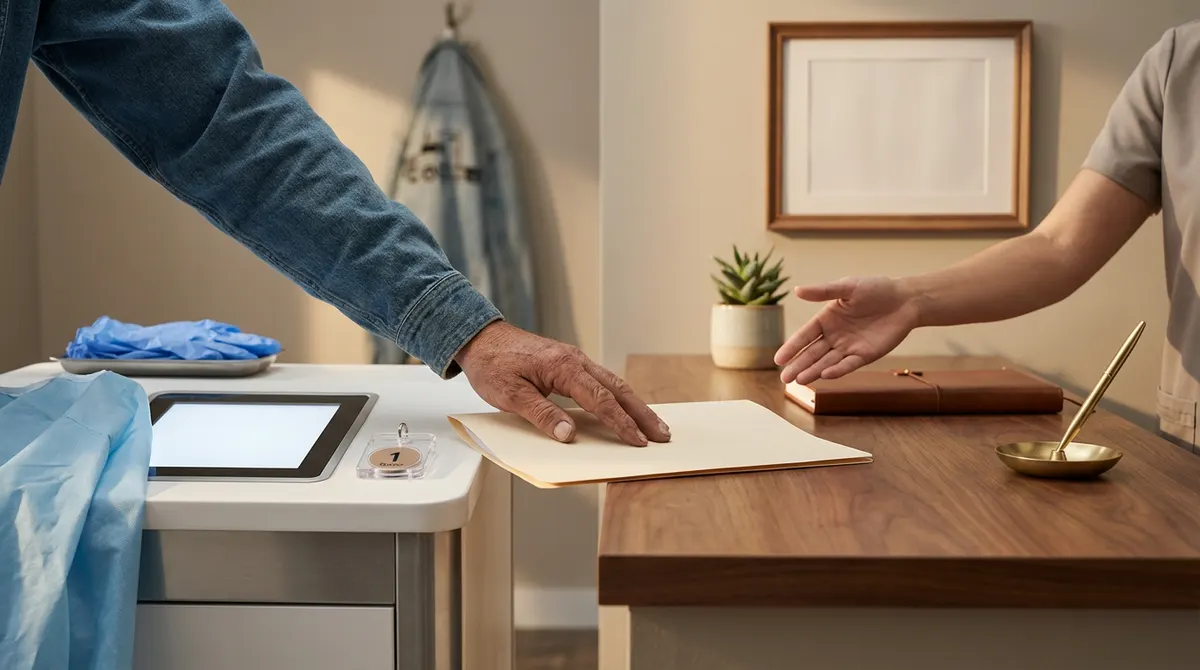
Both urgent care and private practice clinics can work well for same-day exams when they have the right examiner and process. The best option depends on workflow, not clinic label alone.
Urgent care sites may offer extended hours, walk-in flexibility, and convenient access for drivers on tight schedules. Private practice clinics may offer more continuity, condition-specific familiarity, and a calmer setting for complex cases. Private practice clinics can be especially useful when the same provider handles repeat follow-up visits or long-term monitoring.
Dedicated DOT services matter because the exam is different from general employment physicals. Whether you choose urgent care or private practice clinics, the real question is whether the provider can perform DOT medical exams efficiently and correctly.
KEY TAKEAWAY: Urgent care and private clinics can both work well, but dedicated DOT experience matters more than clinic category.
Convenience also shapes the provider decision for many drivers.
The Convenience of Walk-In Appointments and Online Scheduling Platforms (e.g., Solv)

Convenience features can save time, but they should support quality rather than replace it. Walk-ins and online booking are useful only when the clinic can still deliver a valid same-day result.
Walk-in access may help when you need the exam immediately, while online platforms can make it easier to compare opening hours and availability close to you. The risk is assuming that every listed provider has the right certified examiner, the right process, and the ability to handle your medical conditions. Always confirm the details before relying on a listing.
A convenient appointment is valuable, but the best appointment is the one that ends with complete paperwork and a safe certification decision. Booking tools should be the beginning of the process, not the whole evaluation.
KEY TAKEAWAY: Convenience tools help you find appointments faster, but provider verification still matters more than booking speed.
That is why the right pre-booking questions are so important.
Questions to Ask When Choosing a Location

The smartest way to choose a DOT clinic is to ask a few targeted questions before booking. The answers often reveal whether the location is truly prepared for same-day service.
Useful questions include:
Is the examiner on today's schedule listed in the National Registry of Certified Medical Examiners?
Do you perform DOT physicals every day?
What documents should I bring for diabetes, sleep apnea, heart issues, or medications?
Does the price include the medical card and routine testing?
Can you also perform a separate pre-employment drug test if needed?
How do you handle follow-up records or specialist notes?
How quickly is the final certificate issued?
These questions save time because they identify gaps before you show up. A clinic that answers clearly is usually more prepared to manage the process well.
KEY TAKEAWAY: A short pre-booking checklist can help you avoid clinics that advertise speed but are not equipped for complete same-day DOT service.
General examples can also help you understand the provider landscape.
Examples of Providers Offering Same-Day Services (general examples, not specific recommendations)

Same-day DOT services are commonly offered by urgent care centers, occupational health clinics, and some private medical offices. The right choice depends on examiner certification and workflow quality.
Drivers often search broad clinic categories rather than specific names first. That approach makes sense because chain clinics, regional urgent care groups, and independent occupational health providers may all offer DOT physicals. What matters is whether the site actually has a certified examiner available, can handle your records, and can complete the paperwork correctly the same day.
This is also why general online reviews should be interpreted carefully. A clinic can be excellent for minor urgent care needs and still be poor at DOT documentation. The best fit is the provider with strong DOT process, not simply the most visible listing.
KEY TAKEAWAY: Provider category matters less than confirmed DOT expertise, examiner availability, and paperwork reliability.
Beyond compliance, long-term health is what makes future renewals easier.
Beyond Compliance: Proactive Health Management for Commercial Drivers
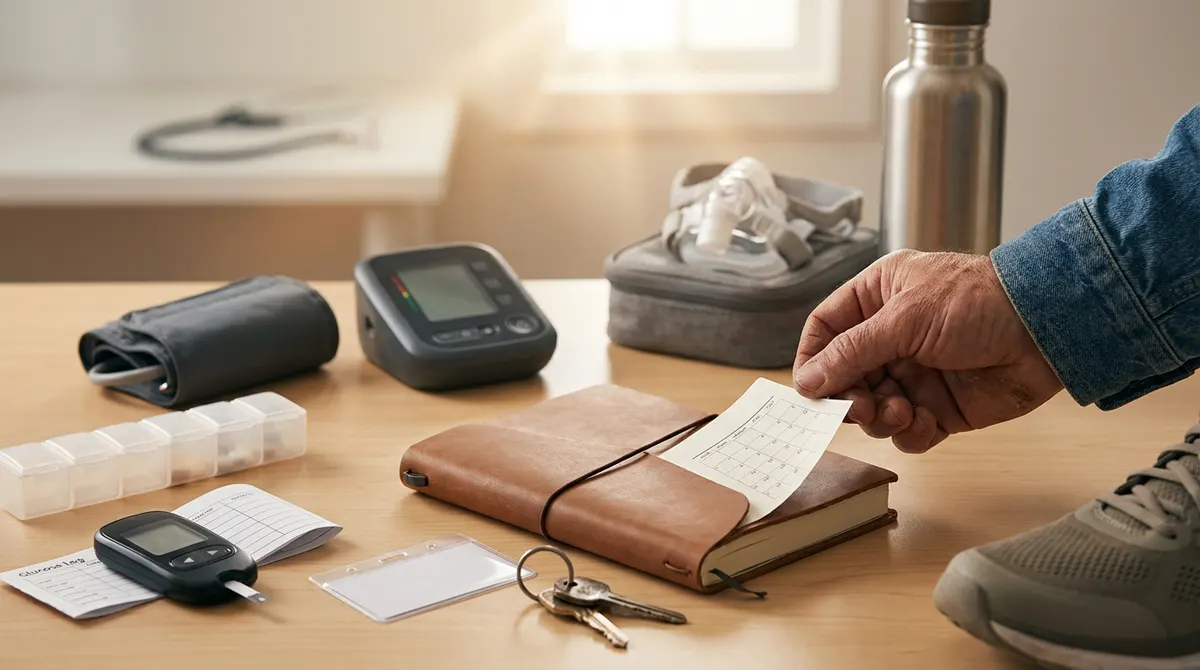
The best long-term DOT strategy is not repeated crisis booking. The best strategy is proactive health management that makes future certification easier.
Commercial driver health is shaped by sleep quality, Blood pressure control, weight, diabetes management, medication review, and consistent care. Small improvements made between exams often have the biggest impact on future certification. The goal is to reduce surprises and maintain safe driving function over time.
If sleep quality may be affecting alertness, you may also benefit from learning what equipment you need for a home sleep study, whether smart watches can track sleep apnea, and which wearable sleep tracker is right for you. Those tools do not replace diagnosis, but they can increase awareness and encourage earlier action.
KEY TAKEAWAY: Proactive health habits can make DOT renewals smoother, reduce delay risk, and support safer long-term driving.
That broader view starts with understanding why health matters beyond passing the next exam.
The "Why" of Long-Term Health: Safety, Longevity, and Career Stability

Long-term health supports safe driving, longer careers, and fewer licensing disruptions. A healthier driver is usually a more consistently qualified driver.
According to the Centers for Disease Control and Prevention, adults generally need at least 7 hours of sleep, and short sleep is associated with poorer health outcomes. For commercial drivers, inadequate sleep and untreated fatigue do not just affect how you feel. They can influence job performance, alertness, and whether symptoms raise concern during a future DOT Physical Exam.
People often think of the DOT physical as a one-day hurdle. In reality, it reflects your health patterns over time. Safer driving, longer work life, and more stable certification all tend to come from the same foundation.
KEY TAKEAWAY: Long-term health is not separate from DOT compliance; it is one of the strongest predictors of future certification success.
That is why regular monitoring matters so much.
Regular Check-ups and Monitoring of Chronic Health Conditions

Routine care for chronic conditions makes same-day DOT visits easier because it reduces surprises and improves documentation. Monitoring is one of the most practical ways to protect your certification.
Chronic health conditions such as hypertension, diabetes, sleep apnea, cardiovascular disease, and hearing or vision decline can all influence the exam outcome. Chronic health conditions matter because they often change slowly, which means there is usually time to improve control before the next certification deadline. Regular check-ups, updated records, and treatment consistency give the medical team a clearer picture and give the examiner more confidence.
Many drivers build long-term relationships with primary care clinicians or specialists and find that future renewals become simpler because the paperwork is easier to gather and the treatment history is easier to show. That continuity can make a major difference.
KEY TAKEAWAY: Ongoing monitoring of chronic conditions is one of the best ways to reduce exam stress and improve future DOT outcomes.
Before the FAQ, it helps to clear up several common misconceptions directly.
Common Myths About Same-Day DOT Physicals Debunked

Many fears around same-day exams come from misunderstanding how DOT medical certification actually works. The facts are usually more practical and less extreme than the myths suggest.
MYTH: A same-day DOT physical is less strict than a regular DOT exam. FACT: The standards are the same. FMCSA medical rules still apply to vision, hearing, Blood pressure, medical history, medication review, and certification documentation. Same-day service changes the timeline, not the federal threshold for safety.
MYTH: The urine test in a DOT physical is always a DOT drug test. FACT: The urine test in the medical exam usually looks at health markers such as glucose, blood, protein, and specific gravity. A formal DOT drug test, Reasonable Suspicion test, or pre-employment drug test is a separate regulated process with different procedures and purposes.
MYTH: You cannot get a medical card if you have diabetes or sleep apnea. FACT: Many drivers with diabetes or sleep apnea do qualify when the condition is stable and properly documented. The decision depends on control, treatment effectiveness, symptom impact, and the evidence available to the examiner.
MYTH: A short certification period means you failed. FACT: A 3 month, 6 month, or 1 year card often means the examiner wants closer follow-up, not that you are unfit to drive permanently. Short certification is commonly used to monitor Blood pressure, treatment adjustment, or documentation follow-up.
KEY TAKEAWAY: Most same-day DOT myths come from mixing up speed with lower standards or confusing medical screening with separate testing rules.
The most common remaining questions are the ones drivers ask directly in search and AI tools.
Frequently Asked Questions
How long does it take to get your DOT physical?
Most same-day DOT physicals take about 30 to 60 minutes when the clinic is organized and your paperwork is complete. The exact timing depends on wait time, medical history complexity, Blood pressure readings, and whether the examiner needs extra documentation. A straightforward visit with a stable health profile often ends with an immediate decision and same-day medical card. A more complex visit may still happen the same day but take longer if records need to be reviewed carefully.
For the DOT medical do you usually get the results the same day?
Yes, many drivers do get the result the same day, especially when the clinic regularly performs DOT medical exams and the driver arrives prepared. Same-day results are most common when the hearing test, Vision test, urine sample, physical examination, and medical history review do not reveal unresolved issues. Delays usually happen when the examiner needs specialist records, treatment proof, medication clarification, or follow-up measurements. The best way to improve your chances is to bring complete records and choose a provider with strong DOT workflow.
Can you get a DOT medical card with diabetes?
Yes, many drivers can still qualify for a medical card with diabetes when the condition is stable and well documented. The examiner will consider how well diabetes is controlled, whether you have significant symptoms, and whether treatment creates a risk such as hypoglycemia that could affect safe driving. If you use insulin, the required federal assessment form and recent records are especially important. Bringing logs, medication details, and clinician notes can make same-day clearance much more likely.
Is methadone disqualifying for DOT?
Methadone can create serious qualification issues, but the answer is not always a simple universal yes or no. The examiner must consider whether the medication, diagnosis, and overall treatment plan affect safe operation of commercial motor vehicles. Sedation, impaired judgment, and unstable function are major concerns. If you take methadone or another potentially impairing medication, disclose it honestly and bring documentation from the prescribing clinician. The safest approach is to let the certified examiner review the full context rather than guess based on online anecdotes.
How much does CVS charge for a DOT physical?
Pricing varies by provider, service bundle, and region, so the more useful question is what the quoted fee includes. Some retail-style clinics may not offer the same DOT workflow depth as dedicated occupational health or urgent care providers, and service availability can change. Before booking anywhere, ask whether the visit includes the medical exam, medical certificate paperwork, hearing test, Vision test, and urine test. Also ask whether a separate pre-employment drug test would cost extra. Cost comparisons work best when you compare full service details, not just headline pricing.
How much did your DOT physical cost?
Actual cost varies, but the biggest price differences usually come from what is included and whether you need extra visits. A simple self-pay DOT Physicals appointment may cost less overall than a cheaper-seeming option that excludes paperwork, repeat checks, or extra forms. Drivers should ask whether the price covers the full DOT physical exam, routine screening, and same-day documentation. If you are comparing providers near you, focus on all-in value rather than just the lowest advertised rate.
Can I go take my permit tomorrow before getting the DOT PHYSICAL?
That depends on your state and the permit process involved, so you should verify the exact rule with your state licensing authority. In some states, current medical certification is required as part of CDL or learner permit eligibility. Indiana is one example where the state explains that current medical certification is tied to CDL and permit status. The practical lesson is that you should not assume the sequence is flexible. Check the requirement before you show up and avoid preventable delays in your licensing process.
DOT Physical for Medical Card?
Yes, the DOT physical is the exam that supports issuance of the medical card when you meet the federal standard. The long form records your medical history and exam findings, and the pass result leads to the Medical Examiner's Certificate. If the examiner needs more information, the card may be delayed or issued for a shorter period rather than denied outright. If your goal is a same-day card, bring your documents, understand your medical conditions, and use a certified examiner.
Ground delivery do I need a DOT physical?
It depends on the type of vehicle, job duties, weight thresholds, and whether your role falls under covered commercial driving rules. Some ground delivery roles require DOT medical certification because the driver is operating a commercial motor vehicle or performing regulated interstate work. Other delivery roles may not. The safest approach is to confirm with your employer and review the applicable vehicle and licensing requirements rather than relying on job title alone.
Any particular place I should avoid while going for my DOT physical?
Rather than avoiding a specific brand or clinic category, avoid any location that cannot clearly confirm certified examiner status, included services, and DOT experience. Be cautious with clinics that seem unsure about documentation requirements, cannot explain what happens if you have diabetes or sleep apnea, or do not know the difference between the DOT physical urine test and a separate drug test. A good provider in your area should answer DOT-specific questions clearly before you ever arrive. That level of clarity usually predicts a smoother exam.
Conclusion

A same-day DOT physical can help you protect your work schedule, maintain compliance, and reduce stress, but speed only helps when the exam is done correctly. The strongest approach is to choose a provider with a certified medical examiner, bring full medical history and Medical records, understand how your medical conditions may affect the result, and confirm what happens after certification. If sleep concerns, fatigue, or possible sleep apnea could affect your future DOT exams, Dumbo Health's at-home sleep test is a practical next step for getting clearer information and moving toward better documentation and safer long-term driving.
Related DOT Physical Topics
- Is a DOT physical the same as a regular physical
- What Does DOT Stand for in a DOT Physical
- What Is the Difference Between a DOT and Non-DOT Physical
- Can You Get a DOT Physical in Any State The Complete Guide for Commercial Drivers
- Can You Get a DOT Physical Online The Complete Guide for Commercial Drivers
- Does a DOT Physical Test for Weed or THC The Complete Guide for Commercial Drivers
- What Can Disqualify You From a DOT Physical
- Does a DOT physical include a drug test
- Can You Pass a DOT Physical with Epilepsy
- DOT Physical Self Pay Cost
- Remote DOT Physical The Complete Guide for Commercial Drivers
- DOT Physical Out of Pocket What Commercial Drivers Actually Pay
- Navigating the Florida DOT Physical Your Essential Guide for CDL Drivers
- When Can Sleep Apnea Affect a DOT Physical
- Is a drug test required for a DOT physical
- DOT Physical Cost Breakdown What Drivers Pay & Why
- Can You Pass a DOT Physical With a Pacemaker
- What Should You Bring to a DOT Physical
- Can You Pass a DOT Physical With One Eye
- Telehealth Dot Physical
- DOT Physical Forms & Paperwork The Complete Guide for Commercial Drivers
- Who needs a DOT physical
- What Forms Do You Need for a DOT Physical
- DOT Physical & Alcohol Requirements
- DOT Physical Online Cost
- DOT Physical Vision & Eye Requirements
- DOT Physical ICD-10 & Billing Codes The Complete Guide for Accurate Compliance and Reimbursement
- Navigating Your DOT Physical with Common Medical Conditions
- Online DOT Physical Without Insurance A Complete Guide for Commercial Drivers
- Can You Fail a DOT Physical for Being Overweight
- Why do they measure your neck during a DOT physical
- How can drivers with sleep apnea qualify again after a failed DOT physical
- Your Complete Guide What's Included in a DOT Physical Exam
- Walk In DOT Physical Self Pay
- What Is the Urine Test for in a DOT Physical
- DOT physical self pay guide for commercial drivers paying out of pocket
- Can You Get a DOT Physical Online
- Online DOT Physical Self-Pay The Complete Guide for CDL Drivers and Owner-Operators
- How Do You Submit Your DOT Physical to the DMV
- New DOT Physical Requirements What Drivers MUST Know About New Updates
- DOT Physical Exam Basics
- DOT Physical Insurance & Recertification The Complete Driver's Guide
- Can You Pass a DOT Physical With a Hernia
- Virtual DOT Physical
- DOT Physical Cash Pay
- Can you fail a DOT physical because of sleep apnea
- What blood pressure do you need to pass a DOT physical
- Do They Check Your Private Parts During a DOT Physical
- DOT Physical Blood Pressure Requirements What Drivers Need to Know
- DOT Physical Insurance or Self Pay How to Choose the Right Payment Option for Your Exam
- DOT Physical Chiropractor Your Complete Guide to CDL Exams
- Can You Fail a DOT Physical for High Blood Pressure
- How to Pass a DOT Physical The Complete Commercial Driver's Guide
- Can you pass a DOT physical with sleep apnea
- What should I expect at a DOT physical
- What Does a DOT Physical Consist Of
- What happens if you fail a DOT physical due to sleep apnea
- DOT Physical at Urgent Care What Commercial Drivers Need to Know
- Can You Pass a DOT Physical with Diabetes
- Can You Pass a DOT Physical with High Blood Pressure
- BMI for DOT Physical What Commercial Drivers Need to Know
- What Happens During the DOT Physical Exam The Complete Guide for Drivers
- What Happens If Your DOT Physical Expires Compliance Guide for Commercial Drivers
- Does insurance cover a DOT physical
- DOT Physical & Drug Test What Drivers Need to Know
- DOT Physical Duration and Validity How Long Your Medical Card Lasts
- The Ultimate DOT Physical Guide for Commercial Drivers (2025–2026)
- Non-DOT Physical A Comprehensive Guide to Workforce Health and Safety
- DOT Physical Texas The Essential Guide to Your Exam, Medical Card, and CDL Compliance
- DOT Physical Requirements A Complete Guide for CDL Drivers
- Is a Sleep Study Required for a DOT Physical
- Do They Check for Hernia During a DOT Physical
- Do You Have to Pee During a DOT Physical
- What Are the Requirements to Pass a DOT Physical
- What eye chart is used for a DOT physical
- Can You Get a Second Opinion on Your DOT Physical A Complete Guide for Commercial Drivers
- What Do They Check During a DOT Physical
- Cheap DOT Physical Online
- The DOT Physical Exam Ensuring You're Fit for the Road
- Online DOT Physical The Complete Guide for Commercial Drivers and Medical Examiners
- Failing a DOT Physical What Every Commercial Driver Needs to Know
- Can You Fail a DOT Physical
- What is DOT Physical
- What drugs do they test for in a DOT drug test
- Are There New DOT Rules or Laws on Sleep Apnea Testing
- Essential 171 DOT Definitions for Commercial Drivers
- 2026 DOT Inspection Dates
- Why DOT Sleep Tests at Home Matter for Your Career and Health
- CDL PHYSICAL SELF PAY
- DOT Medical Exam Self-Pay A Complete Guide for Commercial Drivers
- Online DOT Exam What Drivers and Medical Examiners Need to Know
- Online CDL Physical
- What are the current DOT requirements for sleep apnea testing for commercial drivers
- DOT sleep apnea test at home
- Guide to Obtaining and Managing Your DOT Medical Card Online
- Expected 2027 DOT Inspection Dates
- Medical Examiner's Certificate (Form MCSA-5876) The Complete Guide for Commercial Drivers
- How Sleep Apnea Affects Overall Driving Safety
- Best Treatments for Sleep Apnea to Improve Driving Safety
- Home Sleep Apnea Test for Commercial Drivers The CDL Holder's Complete Guide
Take the next step before your DOT physical
Start with the free quiz if you are unsure about your risk, or order an at-home sleep test if you have already been flagged for possible sleep apnea.
AI summary
A same-day DOT physical is a federally regulated medical qualification exam performed for many interstate commercial motor vehicle drivers under FMCSA standards. It is the same DOT medical exam delivered in one visit, with a same-day certification decision when documentation is complete. Core components include medical history review, physical examination, vision and hearing testing, blood pressure measurement, and urinalysis for health markers (not a DOT drug test). Results and findings are recorded on the Medical Examination Report (MER), Form MCSA-5875, and the passing outcome is the Medical Examiner’s Certificate (medical card). Only a Certified Medical Examiner (CME) listed on the National Registry of Certified Medical Examiners can issue valid certification for interstate drivers. Certification can be up to 24 months, but shorter periods (3 months, 6 months, 1 year) are common when follow-up is needed. Common issues affecting outcomes include hypertension, diabetes (including insulin-treated documentation via the treating clinician assessment form), sleep apnea and CPAP compliance records, cardiovascular and neurological history, mental health stability, substance use concerns, and medication safety review under 49 CFR 391.41. Preparation with ID, medication lists, medical records, and specialist letters reduces deferrals and repeat visits.

Nicolas Nemeth
Co-Founder
Nico is the co-founder of Dumbo Health, a digital sleep clinic that brings the entire obstructive sleep apnea journey home. Patients skip the sleep lab and the long wait to see a specialist. Dumbo Health ships an at home test, connects patients with licensed sleep clinicians by video, and delivers CPAP or a custom oral appliance with ongoing coaching and automatic resupply in one clear subscription.
Keep reading

How Long Does a DOT Physical Take? A Complete Guide for Commercial Drivers

What Happens If You Fail a DOT Drug Test? The Complete Guide for Commercial Drivers


