When Can Sleep Apnea Affect a DOT Physical?
Sleep apnea can impact a DOT physical whenever a certified medical examiner identifies risk factors, symptoms, or related conditions that raise safety concerns. This article explains why obstructive sleep apnea matters for CDL drivers, including its effects on alertness, reaction time, and crash risk. It outlines common triggers for evaluation such as medical history disclosure, high blood pressure, elevated BMI, large neck circumference, and sleepiness symptoms. It reviews sleep study options, how AHI severity is classified, and when treatment is typically required. It details DOT compliance expectations, including CPAP data reporting and oral appliance documentation. Drivers also learn how conditional certification works and how proactive documentation protects their medical card.
Struggling with sleep?
Find out if sleep apnea is the reason.
FDA-cleared. $149 flat. Physician-reviewed results in 48 hours.

When Can Sleep Apnea Affect a DOT Physical?

sleep apnea can affect a DOT physical at any point where a certified medical examiner identifies risk factors, symptoms, or related health conditions associated with the disorder. The NIH estimates that obstructive sleep apnea affects approximately 25 million adults in the United States, making it one of the most frequently encountered conditions in commercial driver health evaluations. Left unaddressed, sleep apnea impairs reaction times, causes excessive daytime sleepiness, and significantly raises the risk of accidents involving commercial motor vehicles. This page covers the specific triggers that prompt sleep apnea evaluation during a DOT physical, how the diagnosis and treatment process works, what treatment compliance looks like under FMCSA regulations, and how CDL drivers can protect their medical certification at every stage. Whether you are preparing for an upcoming exam or navigating a recent diagnosis, this guide covers everything you need to know.
The Importance of the DOT Physical for Commercial Drivers

The DOT physical is the federally required medical evaluation that determines whether a commercial driver is fit to operate a commercial motor vehicle on public roads. Passing the exam results in a valid DOT medical card, which must be current at all times for CDL drivers operating in interstate commerce. The Federal Motor Carrier Safety Administration oversees the exam standards and requires that every certified medical examiner conducting DOT physical exams be listed on the FMCSA National Registry.
Commercial driving demands sustained alertness, precise judgment, and reliable physical function across extended operating periods. A fully loaded commercial motor vehicle can weigh up to 80,000 pounds, and the consequences of impaired driving at that scale are severe. This is the context in which the DOT physical was designed, and it explains why conditions that compromise sleep quality, cognitive function, or cardiovascular health receive direct attention from medical examiners.
The American Transportation Research Institute has identified driver fatigue as one of the leading contributing factors in large truck crashes. sleep apnea is a recognised and measurable driver of excessive daytime sleepiness in commercial driver populations. The connection between untreated sleep disorders and fatigue-related incidents is the central reason sleep apnea receives priority focus in the DOT physical exam process.
DID YOU KNOW: The American Trucking Associations has noted that commercial truck drivers collectively travel hundreds of billions of miles annually across the United States, which underscores the public safety significance of maintaining rigorous medical fitness standards for CDL drivers.
Not sure if sleep apnea applies to you?
Take our 2-minute sleep risk quiz to see whether sleep apnea could affect your DOT physical. No account required.
A DOT physical evaluates multiple systems simultaneously, including cardiovascular function, blood pressure, vision, hearing, neurological health, and respiratory conditions. Sleep apnea sits at the intersection of respiratory and cardiovascular health, which is why it tends to emerge from multiple angles during a single exam rather than being assessed in isolation.
KEY TAKEAWAY: The DOT physical is a federally mandated exam that directly determines a commercial driver's right to operate legally, and sleep apnea is among the conditions most likely to affect the outcome of that evaluation.
Knowing what the DOT physical is designed to protect against helps clarify why sleep apnea receives the level of attention that it does throughout the examination process.
Understanding Sleep Apnea: A Silent Threat to Road Safety

sleep apnea is a sleep disorder in which breathing repeatedly stops and starts during sleep, disrupting sleep architecture and reducing blood oxygen levels throughout the night. The most common form, obstructive sleep apnea, occurs when the throat muscles relax during sleep and narrow or completely block the upper airway. Because these events happen during sleep, many people with the condition have no awareness that their breathing is being interrupted dozens or hundreds of times each night.
Defining Sleep Apnea: Obstructive Sleep Apnea (OSA) Explained
Obstructive sleep apnea is a respiratory disorder defined by recurrent episodes of partial or complete upper airway obstruction during sleep, resulting in reduced airflow, drops in blood oxygen levels, and disrupted sleep architecture. Each obstruction episode ends when the brain briefly rouses the body to restore normal breathing, but this awakening is typically too brief to be remembered. The cumulative effect is chronic sleep deprivation even when a driver has spent the expected number of hours in bed.
Obstructive sleep apnea is classified by severity using the apnea-hypopnea index, which measures the number of breathing interruption events per hour of sleep. An AHI below 5 is considered normal. An AHI of 5 to 14 indicates mild sleep apnea. An AHI of 15 to 29 indicates moderate sleep apnea. An AHI of 30 or above indicates severe sleep apnea. Moderate to severe sleep apnea is the range most likely to trigger mandatory treatment requirements during the DOT certification process.
Obstructive sleep apnea is a sleep disorder characterised by repeated collapse of the upper airway during sleep. Obstructive sleep apnea affects an estimated 25 million adults in the United States and is among the most commonly identified conditions during commercial driver health evaluations. Untreated obstructive sleep apnea raises the risk of excessive daytime sleepiness, impaired reaction times, and serious accidents involving commercial motor vehicles.
For commercial drivers, the core danger of obstructive sleep apnea is what it does to waking performance. Learn what sleep apnea is and how it develops so you can discuss risk with a medical provider from an informed position.
Common Symptoms and Their Impact on Driving Performance
The most commonly reported symptoms of sleep apnea include loud snoring, gasping or choking during sleep, waking with a dry mouth or morning headache, excessive daytime sleepiness, difficulty concentrating, and a persistent sense of unrefreshing sleep. For commercial drivers, each of these symptoms translates into reduced operational safety behind the wheel.
Research published by the Sleep Foundation shows that people with untreated obstructive sleep apnea are significantly more likely to experience microsleep episodes, which are brief, involuntary periods of unconsciousness lasting a fraction of a second to several seconds. At highway speeds, a two-second microsleep event means travelling over 50 metres with no awareness of the road. The cumulative cognitive impairment caused by severe sleep deprivation is comparable in effect to that caused by significant alcohol consumption, with similar degradation of response speed and decision-making ability.
Reviewing the 9 most common sleep apnea symptoms can help drivers recognise the warning signs before a DOT physical surfaces them during examination.
Related Health Conditions and Comorbidities
Sleep apnea rarely exists without related health conditions. High blood pressure, heart disease, heart failure, type 2 diabetes, and obesity are among the most commonly associated comorbidities. Each of these conditions is independently assessed during a DOT physical exam, which means a driver presenting with multiple comorbidities is more likely to be referred for sleep apnea evaluation even when no single finding crosses a hard threshold on its own.
Already diagnosed and need CPAP support?
Dumbo Health helps patients start CPAP without the usual confusion, paperwork, or upfront cost. Equipment, setup, supplies, and ongoing support are all handled in one place.
High blood pressure is particularly significant in this context. Obstructive sleep apnea causes repeated overnight stress responses that chronically elevate blood pressure over time. Mayo Clinic notes that treatment-resistant hypertension is a recognised indicator of possible undiagnosed sleep apnea. Blood pressure readings above 140/90 millimetres of mercury already affect DOT physical outcomes independently, and when they appear alongside other risk factors, the clinical case for sleep apnea evaluation becomes substantially stronger.
Heart disease and heart failure are also associated with obstructive sleep apnea. The oxygen fluctuations that occur during apnea events place sustained stress on the cardiovascular system, raising the risk of heart attack and arrhythmia over time. Medical examiners are trained to view cardiovascular findings in the context of the driver's overall health picture, and sleep apnea risk is part of that picture. Learn more about obstructive sleep apnea in adults and how its health consequences develop.
KEY TAKEAWAY: Sleep apnea disrupts sleep quality through mechanisms that are invisible to the driver but that directly impair reaction times, cognitive performance, and cardiovascular health in ways the DOT physical is specifically designed to detect.
Understanding what sleep apnea is and why it matters provides the foundation for understanding how the DOT physical exam is structured to identify it.
The DOT Physical Exam: What Medical Examiners Are Looking For
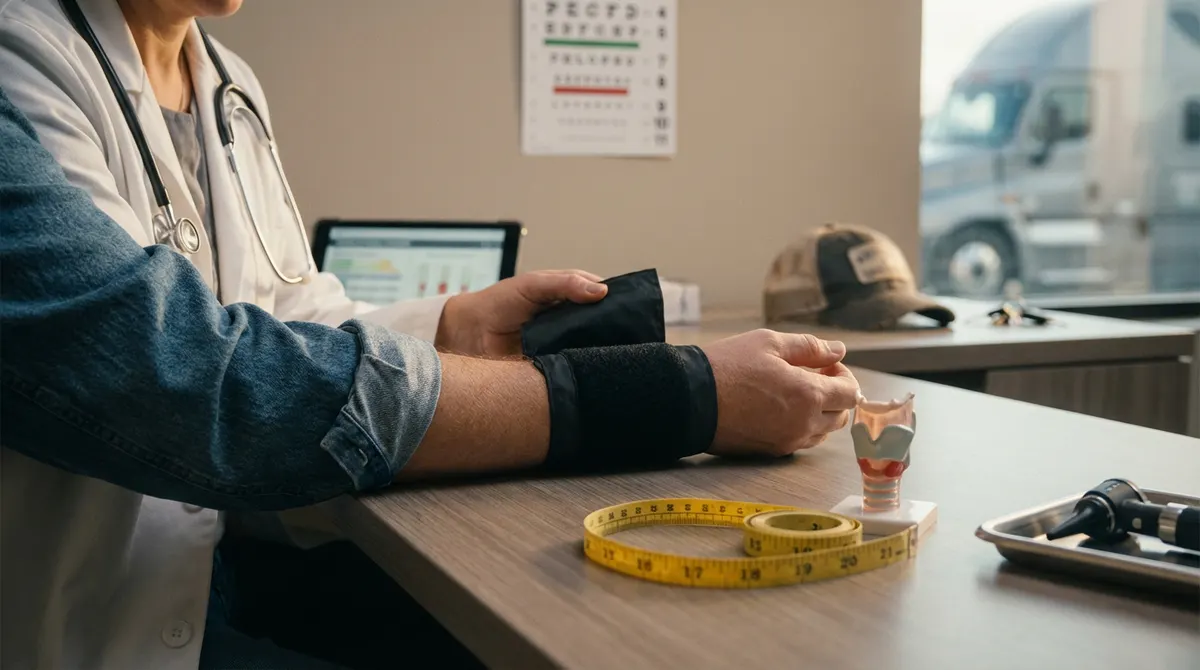
A DOT physical exam is a targeted medical evaluation conducted against federal standards by a certified medical examiner. Its purpose is not routine wellness screening but determining whether a commercial driver is physically and cognitively fit to operate a commercial motor vehicle safely. Medical examiners follow protocols established by the FMCSA and exercise clinical discretion within those guidelines.
Purpose of the DOT Physical and Medical Certification Requirements
The purpose of the DOT physical is to confirm that a driver's health does not create a safety risk during the operation of a commercial motor vehicle. The exam is not a routine health check. It is a targeted evaluation against federal medical standards designed specifically for the demands of commercial driving. Passing the exam results in the issuance of a medical certificate, commonly called the DOT medical card, which certifies that the driver meets federal health requirements.
Medical certification requirements cover a broad range of conditions, including cardiovascular disease, vision deficits, hearing impairment, seizure disorders, limb function, and sleep disorders. The exam is structured to detect conditions that are likely to cause sudden incapacitation, impair sustained alertness, or compromise the physical ability to control a large vehicle. Sleep apnea qualifies on the alertness and physical impairment criteria, which is why it is treated as a priority condition in DOT physical exams.
The Role of the Certified Medical Examiner
A certified medical examiner is a licensed healthcare provider who has completed FMCSA-approved training and passed the required national examination. Certified medical examiners include physicians, physician assistants, advanced practice nurses, and doctors of chiropractic, all operating within their scope of practice when conducting DOT physical exams.
A certified medical examiner is a federally trained healthcare professional responsible for determining whether commercial drivers meet FMCSA medical fitness standards. Certified medical examiners conduct DOT physical exams, issue or deny DOT medical cards, and retain clinical discretion to refer commercial drivers for additional evaluation including sleep apnea testing. The certified medical examiner's decision is the central factor that determines whether a commercial driver receives the medical certification required to operate legally in interstate commerce.
This clinical discretion is significant in the context of sleep apnea. No single binding federal rule currently mandates a sleep study for all drivers above specific physical thresholds. Individual certified medical examiners use clinical judgment, established risk stratification tools, and their professional training to identify the drivers who warrant further evaluation.
Understanding the DOT Medical Card and Certification Period
The DOT medical card documents a driver's certification status and expiry date. The standard maximum certification period is 24 months, though the FMCSA may specify shorter periods for drivers with conditions requiring closer monitoring. A driver in the early stages of sleep apnea evaluation or treatment may receive a conditional certificate covering 90 days, six months, or one year, allowing time for follow-up before a longer certification period is granted.
A shortened certification period is not a disqualification. It is a structured monitoring mechanism that allows the certified medical examiner to require follow-up before granting a longer period of unmonitored certification. CDL drivers who understand this distinction can plan their scheduling and documentation accordingly rather than treating a shortened certificate as a cause for alarm.
Federal Motor Carrier Safety Administration Guidelines and Regulations
The FMCSA governs medical certification requirements for commercial drivers under 49 CFR Part 391. While the FMCSA has not enacted a single binding national rule mandating sleep studies for all drivers above specific physical thresholds, it has produced advisory criteria that many certified medical examiners follow. These advisory criteria identify BMI, neck circumference, and blood pressure as primary physical indicators for sleep apnea risk screening during DOT physical exams.
In the absence of a mandated rule, variation exists between individual examiners in how proactively sleep apnea risk is pursued. Drivers can minimise uncertainty by understanding their own risk profile and arriving at their DOT physical exam with current documentation of any managed conditions. DOT regulations create a clear obligation for drivers to disclose known medical conditions truthfully, and this obligation applies fully to sleep apnea in all its forms.
KEY TAKEAWAY: DOT physical exams are conducted by federally certified medical examiners who use both standardised protocols and clinical discretion to assess sleep apnea risk, with the DOT medical card serving as the tangible outcome of that assessment.
With a clear understanding of the exam structure, the next section addresses the specific circumstances that cause sleep apnea to become a direct factor in the evaluation.
The Crucial "When": Specific Triggers for Sleep Apnea Evaluation During a DOT Physical

Sleep apnea becomes an active concern during a DOT physical when the certified medical examiner identifies one or more clinical or historical triggers associated with the condition. These triggers do not all carry equal weight individually, but in combination they create a clinical picture that informs the examiner's decision about whether to proceed with standard certification or to require a sleep evaluation before the medical card is issued.
Driver Medical History and Self-Reporting
The medical history form completed at the start of a DOT physical exam is the first and most direct pathway for sleep apnea to enter the evaluation. Federal regulations require commercial drivers to disclose known medical conditions truthfully. A prior sleep apnea diagnosis, a history of CPAP therapy use, a referral for a sleep study that was not completed, or a self-reported symptom such as excessive daytime sleepiness will all be noted and factored into the assessment.
Drivers sometimes avoid disclosing sleep apnea out of fear that it will trigger automatic disqualification. In practice, a disclosed and treated sleep apnea diagnosis supported by documentation of treatment compliance places a driver in a substantially stronger position than undisclosed symptoms that the examiner identifies independently through physical examination or clinical interview.
Observable Physical Characteristics During the Exam
Physical examination findings are the most consistent and examiner-independent triggers for sleep apnea evaluation. A neck circumference greater than 17 inches for men or 16 inches for women is a widely recognised risk marker. A body mass index above 33 is another commonly cited threshold. Anatomical features including a recessed jaw, enlarged tonsils, a narrow oropharynx, or a low-set soft palate increase the likelihood of upper airway obstruction during sleep and are assessed visually during the physical component of the exam.
blood pressure readings are among the most clinically weighted individual markers in the assessment. Readings consistently above 140/90 millimetres of mercury are associated with elevated sleep apnea risk and can independently affect certification eligibility. When elevated blood pressure appears alongside other physical risk markers such as a large neck size or high BMI, the cumulative case for sleep apnea evaluation becomes considerably more compelling.
Symptoms Reported or Observed by the Medical Examiner
The medical interview that forms part of every DOT physical exam covers sleep-related symptoms directly. Excessive daytime sleepiness, reports of witnessed apnea events from a bed partner, persistent morning headaches, and difficulty maintaining concentration during extended driving shifts are symptoms that a certified medical examiner will note and explore further when disclosed or suspected.
Some drivers report these symptoms without realising their specific relevance to sleep apnea or DOT certification. Others are hesitant to disclose them out of concern about the outcome. Medical examiners are trained to surface sleep-related symptoms through structured questioning, and the standardised interview process is designed to identify them even when drivers have not pre-identified them as concerns.
Referrals from Previous Medical Providers or Employers
Documentation from a prior treating physician flagging sleep apnea risk, records from a previous DOT physical noting an outstanding referral for sleep evaluation, or employer safety reports related to fatigue incidents can all factor into the current examiner's assessment. While this trigger category is less consistent than physical examination findings, it creates a documented basis for further evaluation that certified medical examiners are required to consider alongside other findings.
The Medical Examiner's Overall Clinical Judgment
The most encompassing trigger is the certified medical examiner's overall clinical judgment based on the totality of findings. A driver may present with blood pressure at the high end of acceptable, a borderline neck circumference, moderate daytime fatigue, and a BMI of 32. None of these findings individually crosses a hard threshold, but their combination presents a plausible pattern of elevated sleep apnea risk that a well-trained examiner will not overlook.
Many certified medical examiners use structured screening tools such as the STOP-BANG questionnaire, which scores drivers on eight variables: snoring, tiredness, observed apnea, blood pressure, BMI, age, neck size, and gender. A high score on this or a similar clinical tool increases the likelihood of a sleep apnea referral being issued, even when the driver has not previously received a diagnosis.
TIP: Before your DOT physical exam, note your most recent blood pressure readings, know your current BMI, and reflect honestly on whether you experience any of the common sleep apnea symptoms. Arriving with this awareness and any relevant documentation helps the exam proceed efficiently and reduces the risk of unexpected outcomes.
KEY TAKEAWAY: Sleep apnea evaluation is triggered during a DOT physical by the cumulative weight of medical history, physical findings, reported symptoms, and clinical judgment rather than by any single measurement or rule on its own.
Once a sleep apnea referral is issued, drivers enter the structured diagnostic process described in the section below.
The Sleep Apnea Diagnosis Process for Commercial Drivers

When a DOT physical exam raises sufficient concern about sleep apnea, the certified medical examiner will typically defer full certification until a sleep study is completed and results are reviewed. This step is not punitive. It is the clinical mechanism for obtaining objective evidence to support an informed certification decision.
When a Sleep Study Is Recommended
A sleep study referral is issued when the medical examiner has identified enough risk indicators to warrant objective testing. The examiner has not made a diagnosis at this stage. The referral simply means the available evidence supports further evaluation. Drivers at this stage typically receive a temporary or conditional medical certificate for 30 to 90 days, within which the sleep study must be completed and results submitted to support the certification decision.
Acting promptly on a sleep study referral protects the driver's certification timeline. Delays in completing the evaluation can result in the conditional period expiring and the medical card lapsing entirely. CDL drivers who address the referral quickly, using services designed to minimise disruption to working schedules, maintain operational continuity throughout the process.
Types of Sleep Studies
Two primary types of sleep studies are used to diagnose sleep apnea in commercial driver populations.
In-lab polysomnography is conducted overnight at a sleep lab under the supervision of sleep lab technicians. It is the most comprehensive form of sleep evaluation available, simultaneously measuring brain activity, eye movement, muscle tone, heart rate, blood oxygen levels, and airflow. In-lab testing is typically recommended for complex diagnostic situations or when a home sleep test result is inconclusive.
An at-home sleep test uses a portable monitoring device with chest, finger, and wrist sensors to measure breathing patterns, blood oxygen levels, and airflow during a normal night of sleep in the driver's own home. The NIH has validated home sleep apnea testing as a first-line diagnostic tool for moderate to severe obstructive sleep apnea. For CDL drivers managing tight schedules, an at-home sleep test is a practical option that requires no overnight travel to a facility and can be completed within the driver's normal routine.
An at-home sleep test is a clinically validated diagnostic method that uses portable sensors to measure breathing patterns and blood oxygen levels during sleep at home. At-home sleep testing is accepted for diagnosing moderate to severe obstructive sleep apnea and delivers results that qualified medical providers can use to develop a treatment plan. For commercial drivers managing DOT certification timelines, at-home sleep testing offers a flexible diagnostic pathway that causes minimal disruption to a working schedule.
Dumbo Health's at-home sleep test connects drivers with qualified medical providers who oversee the testing process and review results promptly to support DOT compliance timelines. Drivers looking for sleep care online or seeking a provider close to you will find at-home testing a highly compatible first step.
| Factor | In-Lab Polysomnography | At-Home Sleep Test |
|---|---|---|
| Setting | Sleep lab facility | Driver's own home |
| Supervision | Sleep lab technicians present overnight | Remote, unsupervised |
| Sensors Used | Brain, eye, muscle, heart, oxygen, airflow | Chest, finger, and wrist sensors |
| Best For | Complex cases or inconclusive home results | Moderate to severe OSA, working drivers |
| Typical Cost | Higher | Lower |
| Convenience | Requires overnight travel to facility | No travel required |
| CDL Suitability | Comprehensive but less schedule-friendly | Practical first-line option for drivers |
For most commercial drivers with identified risk factors and no unusual diagnostic complexity, an at-home sleep test is the recommended first step. In-lab polysomnography is reserved for cases where greater diagnostic detail is required.
Understanding Your Sleep Study Results
Sleep study results are summarised using the apnea-hypopnea index. A result below 5 is considered normal. An AHI of 5 to 14 indicates mild sleep apnea. An AHI of 15 to 29 indicates moderate sleep apnea. An AHI of 30 or above indicates severe sleep apnea. Moderate to severe sleep apnea is the range that typically triggers mandatory treatment requirements before full DOT certification can be granted or renewed.
Results are interpreted by a sleep medicine professional who communicates findings to the driver and coordinates with treating medical providers. Drivers should request written documentation of their sleep study results and retain a copy for inclusion in their medical file alongside DOT physical records.
The Role of Sleep Medicine Professionals and Sleep Specialists
Sleep medicine professionals and sleep specialists hold clinical expertise in diagnosing and treating sleep disorders including obstructive sleep apnea. Their written assessment and treatment recommendations provide the documentation that certified medical examiners need to make informed certification decisions. For commercial drivers, working with a qualified sleep medicine professional ensures that the documentation trail meets the standards required for DOT compliance.
Sleep medicine professionals can also guide decisions about which treatment approach is most appropriate based on the severity of the diagnosis, the driver's anatomy, lifestyle, and prior treatment history. Their input shapes the treatment plan that forms the basis of ongoing medical certification.
KEY TAKEAWAY: The sleep apnea diagnosis process for commercial drivers uses sleep studies to establish diagnosis and severity objectively, with at-home testing offering a practical and accepted first-line option for drivers whose schedules demand flexibility.
With a confirmed diagnosis, the path forward centres on treatment and demonstrating compliance with DOT requirements.
Treatment and DOT Compliance: Navigating Your Options

Active, documented compliance with an effective treatment plan is what allows CDL drivers with a sleep apnea diagnosis to continue operating commercially. The diagnosis itself does not block certification. The absence of treatment, or failure to document treatment adequately, is what creates the certification barrier.
Continuous Positive Airway Pressure (CPAP) Therapy: The Gold Standard
Continuous positive airway pressure therapy is the most widely used and most thoroughly evidenced treatment for moderate to severe obstructive sleep apnea. CPAP therapy delivers a steady stream of pressurised air through a mask worn during sleep, maintaining positive airway pressure throughout the night to prevent the airway from collapsing. This eliminates the apnea events that fragment sleep, reduce blood oxygen levels, and cause the chronic impairment that affects driver performance.
CPAP therapy is considered the clinical gold standard for treating moderate to severe obstructive sleep apnea and is the most widely used treatment approach in commercial driver populations. CPAP therapy works by delivering pressurised air through a mask to keep the airway open throughout sleep, eliminating the breathing interruptions that cause daytime impairment. For DOT compliance purposes, CPAP devices generate automated usage data that serves as objective evidence of treatment adherence during medical certification reviews.
For commercial drivers, CPAP therapy offers a significant practical advantage beyond its effectiveness: it produces objective compliance data automatically. Modern CPAP devices record daily usage in hours, mask seal quality, and residual AHI. This data can be downloaded and presented to a certified medical examiner as direct evidence of treatment adherence. Explore CPAP therapy options available through Dumbo Health to understand what to expect from treatment and how to get started.
An AutoPAP machine, also known as an APAP device, automatically adjusts air pressure settings throughout the night based on real-time feedback about breathing patterns. AutoPAP devices can improve comfort and long-term adherence compared with fixed-pressure CPAP devices while still generating the compliance data that DOT medical reviews require. PAP therapy in either form is accepted for DOT compliance when adequately documented.
Alternative Treatments for DOT Compliance
Oral appliances, also called oral devices or mandibular advancement devices, are custom-fitted oral devices worn during sleep that reposition the lower jaw to maintain airway patency. Oral device therapy is generally appropriate for mild to moderate sleep apnea or for commercial drivers who cannot tolerate CPAP therapy. Learn how oral appliances work for sleep apnea and what outcomes drivers typically experience with this approach.
Unlike CPAP devices, oral appliances do not automatically generate compliance data. Demonstrating DOT compliance on oral device therapy relies on clinical records, regular follow-up assessments with a sleep medicine dentist or sleep specialist, and repeat sleep testing to confirm treatment effectiveness. Drivers using this approach should ensure their sleep medicine professional provides written confirmation of ongoing treatment efficacy at each certification renewal.
Positional therapy and weight management are supplementary strategies that can reduce sleep apnea severity in some cases, particularly when the condition is strongly driven by sleep position or excess body weight. These approaches are rarely sufficient as standalone treatments for moderate to severe sleep apnea but may complement a primary treatment plan. Find out more about sleep apnea treatment options beyond CPAP and what the evidence supports.
| Treatment Option | Best For | Compliance Documentation | DOT Accepted |
|---|---|---|---|
| CPAP Therapy | Moderate to severe OSA | Automated device data | Yes |
| AutoPAP (APAP) | Moderate to severe OSA | Automated device data | Yes |
| Oral Appliance | Mild to moderate OSA or CPAP intolerance | Clinical records plus follow-up testing | Yes, with documentation |
| Positional Therapy | Positional OSA only | Clinical assessment | As adjunct only |
| Weight Management | Obesity-related OSA | Clinical assessment | As adjunct only |
CPAP or AutoPAP therapy represents the most straightforward compliance path for CDL drivers with moderate to severe obstructive sleep apnea because the automated data output removes ambiguity from the documentation process at each certification renewal.
The Importance of Adhering to Sleep Therapy
Treatment adherence is the single most consequential compliance factor for commercial drivers managing sleep apnea. The standard compliance threshold commonly applied in clinical and DOT-related contexts is a minimum of four hours of CPAP use per night on at least 70 percent of nights over a 30-day monitoring period. Drivers who fall consistently below this threshold without medical justification risk denial of certification renewal or a requirement to demonstrate improvement before a full certificate is issued.
Beyond the compliance requirement, consistent CPAP therapy use produces real and measurable improvements in daytime alertness, concentration, and cardiovascular health. CDL drivers who adhere consistently to their sleep therapy frequently report improvements in how they feel during long shifts that are as meaningful as the certification benefits the treatment provides.
KEY TAKEAWAY: CPAP or AutoPAP therapy is the most effective and most easily documented treatment path for commercial drivers with moderate to severe sleep apnea, and consistent adherence to any approved treatment plan is the foundation of sustainable DOT certification.
Understanding what treatment compliance looks like in practice sets up the critical question of how to pass a DOT physical when sleep apnea is already part of a driver's medical history.
Passing Your DOT Physical with Diagnosed Sleep Apnea

Passing a DOT physical with a diagnosed sleep apnea condition is possible and is achieved by a large number of CDL drivers every year. The determining factor is not the diagnosis but the presence of a documented, effective treatment plan and consistent adherence to it over time.
Understanding Conditional Certification
Conditional certification is the structured mechanism that allows commercial drivers to continue operating while completing a sleep apnea evaluation or establishing a treatment plan. A certified medical examiner may issue a conditional medical certificate for a period as short as 30, 60, or 90 days, giving the driver time to complete a sleep study or begin treatment before full certification is reviewed. This is not a disqualification. It is a time-limited path toward full compliance.
Many CDL drivers receive conditional certification during the first DOT physical exam at which sleep apnea is identified. The expectation is that the driver will complete the evaluation, initiate treatment, and return to the examiner with supporting documentation before the conditional period expires. Drivers who manage this timeline successfully commonly proceed to a standard annual or biannual certification without further disruption.
Maintaining Compliance for Ongoing Medical Certification
Once a treatment plan is established, ongoing medical certification depends on demonstrating continued compliance. For drivers on CPAP therapy, this means maintaining adequate nightly usage and presenting download reports at each renewal. For drivers on oral device therapy, it means maintaining clinical records, follow-up assessments, and repeat sleep testing results that confirm ongoing effectiveness.
A driver who successfully demonstrates compliance with sleep apnea treatment and whose other health markers are stable may be eligible for a full 12-month or 24-month certification period. The certification period is reviewed at each renewal, and a consistent compliance record built over multiple review cycles often leads to progressively longer certification intervals.
What Happens if You Fail to Comply with Treatment
Failure to comply with prescribed sleep apnea treatment carries direct consequences for DOT medical certification. A driver who abandons CPAP therapy without medical justification, fails to complete a required sleep study within the conditional period, or arrives at a renewal exam without evidence of ongoing treatment adherence risks denial of certification renewal.
This directly affects CDL status and employment eligibility. Commercial drivers operating without a current DOT medical card are in violation of federal regulations. Drivers who have lost certification due to sleep apnea non-compliance can regain it by restarting the evaluation process, demonstrating treatment compliance over a defined period, and returning to a certified medical examiner with complete documentation. Providers in your area and sleep care online platforms can guide the path from that point forward.
KEY TAKEAWAY: Diagnosed sleep apnea does not end a commercial driving career when it is managed actively, documented clearly, and reported honestly to a certified medical examiner at each renewal cycle.
Understanding the reality of sleep apnea and DOT physicals requires confronting several widespread misconceptions that cause drivers to make decisions against their own interests.
Common Myths About Sleep Apnea and DOT Physicals Debunked

MYTH: Disclosing sleep apnea during a DOT physical automatically leads to losing your CDL.
FACT: Disclosure of a treated sleep apnea diagnosis does not result in automatic disqualification. FMCSA guidance is clear that commercial drivers with adequately managed sleep apnea can continue to operate commercial motor vehicles. What matters is whether the condition is being controlled effectively, not whether it exists. CDL drivers who arrive at their DOT physical with documented treatment compliance are routinely certified without disruption to their career.
MYTH: Sleep apnea only affects overweight drivers, so if your weight is within the normal range you have nothing to worry about.
FACT: While obesity and high BMI are recognised risk factors, sleep apnea affects people across a wide range of body types. Mayo Clinic identifies anatomical features such as a narrow airway, enlarged tonsils, or a recessed chin as independent contributors to obstructive sleep apnea regardless of body weight. Neck circumference, age, sex, and family history are all independent risk factors that certified medical examiners assess. A driver at a healthy weight can still receive a sleep apnea referral when other physical or clinical markers are present.
MYTH: If you were not flagged during a previous DOT physical, you definitely do not have sleep apnea.
FACT: Screening during a DOT physical is designed to identify risk, not to rule out a diagnosis definitively. Sleep Foundation research indicates that a significant proportion of people with obstructive sleep apnea, particularly those with mild or moderate severity, are unaware of their condition. Symptoms can also develop or worsen between certification renewals. Not being flagged at one exam does not guarantee that sleep apnea is absent or that it will not be identified at a future DOT physical exam.
MYTH: CPAP therapy is the only treatment that DOT medical examiners will accept for sleep apnea compliance.
FACT: While CPAP therapy is the most common and most easily documented treatment for moderate to severe sleep apnea, it is not the only accepted option. Custom-fitted oral devices and, in appropriate cases, surgical treatment are clinically recognised alternatives. Medical examiners require evidence that the chosen treatment is effectively controlling the sleep apnea, not that a specific treatment type must be used. Oral device therapy, when documented with follow-up sleep testing showing adequate AHI control, is accepted for DOT compliance.
MYTH: Concealing a sleep apnea diagnosis from a medical examiner protects a driver's certification.
FACT: Concealing a known sleep disorder creates far greater risk than disclosure. Certified medical examiners are trained to identify sleep apnea risk independently through physical examination and clinical interview, regardless of self-reporting. Federal regulations require truthful disclosure of known medical conditions on the DOT physical health history form. Drivers who withhold a known diagnosis are in violation of these regulations. More critically, operating a commercial motor vehicle with untreated moderate to severe sleep apnea creates a direct and documented safety risk for the driver and the public.
KEY TAKEAWAY: The most damaging misconceptions about sleep apnea and DOT physicals lead drivers toward avoidance and concealment, which carries far greater personal and professional risk than transparent, proactive management consistently does.
With these misconceptions addressed, the practical steps that protect both health and certification are clear.
Proactive Steps for Drivers: Managing Your Health and Certification

Commercial drivers who take proactive steps to assess and manage their sleep health are in a significantly stronger position at every DOT physical exam than those who address the issue only when prompted. Proactive management is not about gaming the certification process. It is about recognising that driver health directly affects road safety and career longevity for CDL drivers in all vehicle classes.
Prioritising Driver Health and Well-being
Proactive attention to sleep health starts with recognising warning signs before a DOT physical exam forces the issue. If a partner has reported that you snore loudly or stop breathing during sleep, if you wake feeling unrefreshed despite adequate time in bed, if you struggle to maintain alertness during long driving shifts, or if you experience persistent morning headaches, these are signals worth investigating well ahead of your next exam.
Sleep habits and sleep patterns that have changed over time are worth discussing with your primary care provider. Drivers who identify and begin managing sleep apnea between certification cycles arrive at their DOT physical with current documentation of a managed condition rather than discovering an unaddressed problem under examination pressure. This distinction matters for how smoothly the certification process proceeds.
Understanding the DOT Regulations and Certification Process
CDL drivers benefit from understanding the specific thresholds and documentation requirements that certified medical examiners apply during DOT physical exams. Knowing that blood pressure above 140/90, a neck circumference above 17 inches for men, and a BMI above 33 are among the primary physical markers for sleep apnea risk allows drivers to monitor these indicators proactively and work with their healthcare provider on management strategies between exams.
DOT regulations require accurate disclosure of known medical conditions at every exam. Drivers who have been previously diagnosed with sleep apnea or referred for a sleep test at a prior exam should bring all relevant documentation to their next DOT physical. Certified medical examiners make better decisions with complete information, and complete information more consistently supports straightforward certification outcomes than partial or withheld records do.
Seeking Professional Guidance for Sleep Care Online or at Clinics Near You
Access to sleep apnea evaluation and treatment has improved substantially in recent years. Telehealth platforms and at-home sleep testing services make it possible for CDL drivers to complete a full sleep evaluation without taking significant time away from the road. Drivers seeking sleep care online or looking for a provider near you now have access to a clinically valid diagnostic pathway that fits around a demanding working schedule.
Starting an at-home sleep test through Dumbo Health connects drivers with qualified medical providers who review results, develop an appropriate treatment plan, and provide the documentation required for DOT compliance. Drivers who manage this process on their own timeline, rather than under the pressure of an approaching certification deadline, arrive at their next DOT physical prepared and in control of the outcome.
Sleep care online is a federally accepted pathway for sleep apnea diagnosis and management. Commercial drivers who use it proactively demonstrate both health awareness and professional responsibility, which are qualities that support a long and uninterrupted commercial driving career.
KEY TAKEAWAY: Proactive sleep health management, early testing, appropriate treatment, and current documentation are the most reliable tools a CDL driver has for protecting long-term DOT medical certification when sleep apnea is part of the picture.
Frequently Asked Questions
Can I pass a DOT physical if I have sleep apnea?
Yes, drivers with sleep apnea can pass a DOT physical provided the condition is diagnosed and actively treated. A sleep apnea diagnosis alone does not disqualify a commercial driver from holding a valid DOT medical card. Medical examiners assess whether the condition is being managed effectively, not simply whether it is present. Drivers who present documented evidence of CPAP therapy compliance, oral device use, or another approved treatment plan are routinely certified. Untreated or undisclosed sleep apnea creates far greater certification risk than a managed and properly documented diagnosis does.
What is the 3% rule for sleep apnea and DOT physicals?
The 3% rule is not an official FMCSA certification standard. It is a reference found in some medical examiner training materials related to interpreting sleep study results, specifically referring to oxygen desaturation events where blood oxygen levels drop by 3% or more from a baseline reading during sleep. The apnea-hypopnea index remains the primary clinical metric for classifying sleep apnea severity in DOT evaluations. Certified medical examiners base certification decisions on a combination of AHI results, clinical findings, and overall health profile rather than any single percentage threshold alone.
How does the DOT know if you have sleep apnea?
The DOT does not maintain a centralised database of individual sleep apnea diagnoses. However, commercial drivers are required by federal regulations to accurately disclose known medical conditions on their DOT physical health history form. Certified medical examiners are also trained to identify sleep apnea risk independently through physical examination, including assessment of blood pressure, neck circumference, and BMI, and through a clinical interview covering symptoms such as excessive daytime sleepiness and reported apnea events. A risk profile that warrants further evaluation can trigger a sleep test referral even when no prior diagnosis exists.
Can you drive a DOT-regulated commercial motor vehicle with sleep apnea?
Yes, commercial drivers with sleep apnea can legally operate a commercial motor vehicle if the condition is being treated and a certified medical examiner has issued a current DOT medical card. FMCSA guidelines permit CDL drivers with moderate to severe obstructive sleep apnea to maintain certification when they are actively compliant with an effective treatment plan. Knowingly driving while impaired by untreated sleep apnea creates a federal compliance violation and a direct road safety risk. Ongoing certification depends on documented treatment adherence and regular follow-up with a qualified medical provider.
Will you lose your CDL if diagnosed with sleep apnea?
A sleep apnea diagnosis alone does not cause CDL loss. CDL drivers who receive a sleep apnea diagnosis, begin treatment, and demonstrate compliance with an approved treatment plan can continue operating commercial motor vehicles. The certification period may be shortened initially while treatment is being established, but this is a standard monitoring step rather than a punitive action. Drivers face the greatest CDL risk when they refuse to complete a required sleep study, fail to begin prescribed treatment, or demonstrate persistent non-compliance with their treatment plan across multiple certification reviews.
What happens if I do not complete a sleep study after being referred at a DOT physical?
Failing to complete a sleep study after a DOT physical referral typically results in certification being deferred until the evaluation is completed and reviewed. A conditional certificate covering a short period, usually 30 to 90 days, may be issued to allow time for the evaluation. Drivers who allow this period to expire without completing the study risk losing their DOT medical card entirely. Finding sleep care online or at a provider close to you and acting promptly after the referral is issued is the most effective way to protect your certification timeline and avoid unnecessary disruption to your working schedule.
Are there DOT-compatible sleep study options that work for commercial drivers with demanding schedules?
Yes, at-home sleep testing is a federally accepted diagnostic pathway for obstructive sleep apnea and is particularly practical for commercial drivers managing tight schedules. At-home tests use portable devices with chest, finger, and wrist sensors and can be completed during a normal night of sleep at home, with no travel to a sleep lab required. Results are reviewed by qualified medical providers and can be used directly in DOT compliance documentation. Drivers looking for a provider near you or seeking sleep care online will find at-home testing a compatible and time-efficient first step in the diagnosis and certification process.
Conclusion

Sleep apnea and DOT physicals are connected in ways that every commercial driver needs to understand clearly. A sleep apnea diagnosis does not signal the end of a driving career. What it signals is a responsibility to address the condition, document the treatment, and maintain that documentation at every certification renewal. The commercial drivers who face the most disruption are those who wait for sleep apnea to be identified under exam pressure rather than managing it before that moment arrives. CPAP therapy, oral device therapy, and at-home sleep testing have made the path from diagnosis to compliance more accessible than at any previous point. Understanding your own risk profile, being transparent with your certified medical examiner, and staying consistent with your treatment plan are the three things that matter most for long-term certification. Take the first step with an at-home sleep test through Dumbo Health and get the clinical clarity you need before your next exam.
Related DOT Physical Topics
- How can drivers with sleep apnea qualify again after a failed DOT physical
- Can you fail a DOT physical because of sleep apnea
- Can you pass a DOT physical with sleep apnea
- What happens if you fail a DOT physical due to sleep apnea
- Can You Get a DOT Physical in Any State The Complete Guide for Commercial Drivers
- Can You Get a DOT Physical Online The Complete Guide for Commercial Drivers
- Are There New DOT Rules or Laws on Sleep Apnea Testing
- What Can Disqualify You From a DOT Physical
- Can You Pass a DOT Physical with Epilepsy
- Can You Pass a DOT Physical With a Hernia
- Can You Pass a DOT Physical With a Pacemaker
- Can You Pass a DOT Physical With One Eye
- Can You Get a DOT Physical Online
- Can You Fail a DOT Physical for Being Overweight
- What Are the DOT Requirements for Drivers With Sleep Apnea
- Is a DOT physical the same as a regular physical
- Can You Fail a DOT Physical for High Blood Pressure
- Can You Pass a DOT Physical with Diabetes
- Can You Pass a DOT Physical with High Blood Pressure
- How Does Sleep Apnea Affect Driving Ability
- What are the current DOT requirements for sleep apnea testing for commercial drivers
- Is a Sleep Study Required for a DOT Physical
- What Does DOT Stand for in a DOT Physical
- DOT sleep apnea test at home
- What Is the Difference Between a DOT and Non-DOT Physical
- Can You Get a Second Opinion on Your DOT Physical A Complete Guide for Commercial Drivers
- Can You Fail a DOT Physical
- How Do You Submit Your DOT Physical to the DMV
- Does a DOT Physical Test for Weed or THC The Complete Guide for Commercial Drivers
- Does a DOT physical include a drug test
- DOT Physical Self Pay Cost
- Remote DOT Physical The Complete Guide for Commercial Drivers
- DOT Physical Exam Basics
- Is a drug test required for a DOT physical
- DOT Physical Cost Breakdown What Drivers Pay & Why
- DOT Physical ICD-10 & Billing Codes The Complete Guide for Accurate Compliance and Reimbursement
- Best Treatments for Sleep Apnea to Improve Driving Safety
- Home Sleep Apnea Test for Commercial Drivers The CDL Holder's Complete Guide
- Telehealth Dot Physical
- Sleep Apnea Test for CDL Drivers
- How Sleep Apnea Affects Overall Driving Safety
- DOT Physical Forms & Paperwork The Complete Guide for Commercial Drivers
- Who needs a DOT physical
- What Forms Do You Need for a DOT Physical
- DOT Physical & Alcohol Requirements
- Navigating Your DOT Physical with Common Medical Conditions
- Online DOT Physical Without Insurance A Complete Guide for Commercial Drivers
- DOT Physical Out of Pocket What Commercial Drivers Actually Pay
- Why do they measure your neck during a DOT physical
- Why DOT Sleep Tests at Home Matter for Your Career and Health
- What Precautions Should Drivers With Sleep Apnea Take
- Navigating the Florida DOT Physical Your Essential Guide for CDL Drivers
- What Is the Urine Test for in a DOT Physical
- DOT Physical Online Cost
- Walk In DOT Physical Self Pay
- Are there legal requirements for drivers with sleep apnea
- Online DOT Physical Self-Pay The Complete Guide for CDL Drivers and Owner-Operators
- What Should You Bring to a DOT Physical
- DOT physical self pay guide for commercial drivers paying out of pocket
- Your Complete Guide What's Included in a DOT Physical Exam
- New DOT Physical Requirements What Drivers MUST Know About New Updates
- DOT Physical Insurance & Recertification The Complete Driver's Guide
- DOT Physical Cash Pay
- Same Day DOT Physical
- Virtual DOT Physical
- DOT Physical Vision & Eye Requirements
- What blood pressure do you need to pass a DOT physical
- Do They Check Your Private Parts During a DOT Physical
- DOT Physical Blood Pressure Requirements What Drivers Need to Know
- DOT Physical Insurance or Self Pay How to Choose the Right Payment Option for Your Exam
- The Comprehensive Guide to Suboxone, Sleep Apnea, and FMCSA Compliance for Commercial Motor Vehicle Operators
- DOT Physical Chiropractor Your Complete Guide to CDL Exams
- How to Pass a DOT Physical The Complete Commercial Driver's Guide
- What should I expect at a DOT physical
- What Does a DOT Physical Consist Of
- DOT Physical at Urgent Care What Commercial Drivers Need to Know
- BMI for DOT Physical What Commercial Drivers Need to Know
- What Happens During the DOT Physical Exam The Complete Guide for Drivers
- What are the current FMCSA guidelines on sleep apnea for commercial drivers
- What Happens If Your DOT Physical Expires Compliance Guide for Commercial Drivers
- Does insurance cover a DOT physical
- DOT Physical & Drug Test What Drivers Need to Know
- DOT Physical Duration and Validity How Long Your Medical Card Lasts
- The Ultimate DOT Physical Guide for Commercial Drivers (2025–2026)
- Non-DOT Physical A Comprehensive Guide to Workforce Health and Safety
- DOT Physical Texas The Essential Guide to Your Exam, Medical Card, and CDL Compliance
- DOT Physical Requirements A Complete Guide for CDL Drivers
- Do They Check for Hernia During a DOT Physical
- Do You Have to Pee During a DOT Physical
- What Are the Requirements to Pass a DOT Physical
- What eye chart is used for a DOT physical
- What Do They Check During a DOT Physical
- Cheap DOT Physical Online
- The DOT Physical Exam Ensuring You're Fit for the Road
- Online DOT Physical The Complete Guide for Commercial Drivers and Medical Examiners
- Failing a DOT Physical What Every Commercial Driver Needs to Know
- What is DOT Physical
- What drugs do they test for in a DOT drug test
- Essential 171 DOT Definitions for Commercial Drivers
- 2026 DOT Inspection Dates
Take the next step before your DOT physical
Start with the free quiz if you are unsure about your risk, or order an at-home sleep test if you have already been flagged for possible sleep apnea.
AI summary
Sleep apnea is a sleep disorder in which breathing repeatedly stops and starts during sleep, reducing oxygen levels and disrupting sleep. In DOT physicals, obstructive sleep apnea (OSA) is a key concern because it can cause excessive daytime sleepiness, impaired reaction time, and fatigue-related crash risk. During a DOT exam, a certified medical examiner may flag OSA risk based on medical history (prior diagnosis, CPAP use, incomplete referrals), reported symptoms (snoring, witnessed apnea, morning headaches, sleepiness), and physical findings. Common screening indicators include BMI above 33, neck circumference over 17 inches (men) or 16 inches (women), and blood pressure above 140/90. Some examiners use tools like STOP-BANG. If risk is high, certification may be deferred with a temporary card (often 30–90 days) while a sleep study is completed. Diagnosis severity is based on AHI: 5–14 mild, 15–29 moderate, 30+ severe. DOT certification generally depends on documented, effective treatment. CPAP or AutoPAP is the most straightforward because it produces objective usage reports; a common adherence benchmark is at least 4 hours per night on 70% of nights over 30 days. Oral appliances can be accepted but require clinical records and follow-up testing to confirm effectiveness.

Nicolas Nemeth
Co-Founder
Nico is the co-founder of Dumbo Health, a digital sleep clinic that brings the entire obstructive sleep apnea journey home. Patients skip the sleep lab and the long wait to see a specialist. Dumbo Health ships an at home test, connects patients with licensed sleep clinicians by video, and delivers CPAP or a custom oral appliance with ongoing coaching and automatic resupply in one clear subscription.
Keep reading

How Long Does a DOT Physical Take? A Complete Guide for Commercial Drivers

What Happens If You Fail a DOT Drug Test? The Complete Guide for Commercial Drivers


