Remote DOT Physical: The Complete Guide for Commercial Drivers
Remote DOT physicals let commercial drivers complete the FMCSA-required medical exam by live video instead of an in-person clinic visit. The guide explains when telehealth exams are legally valid, including the requirement to use a Certified Medical Examiner listed on the FMCSA National Registry and to complete all elements under 49 CFR Part 391. It outlines what the virtual exam covers, such as medical history review, vision and hearing screening, and observed home blood pressure readings. It also details how sleep apnea, diabetes, and hypertension affect certification length. You will learn how to prepare documentation, set up your exam environment, compare provider types and costs, and handle certification submission steps after the exam.
Struggling with sleep?
Find out if sleep apnea is the reason.
FDA-cleared. $149 flat. Physician-reviewed results in 48 hours.

Remote DOT Physical: The Complete Guide for Commercial Drivers
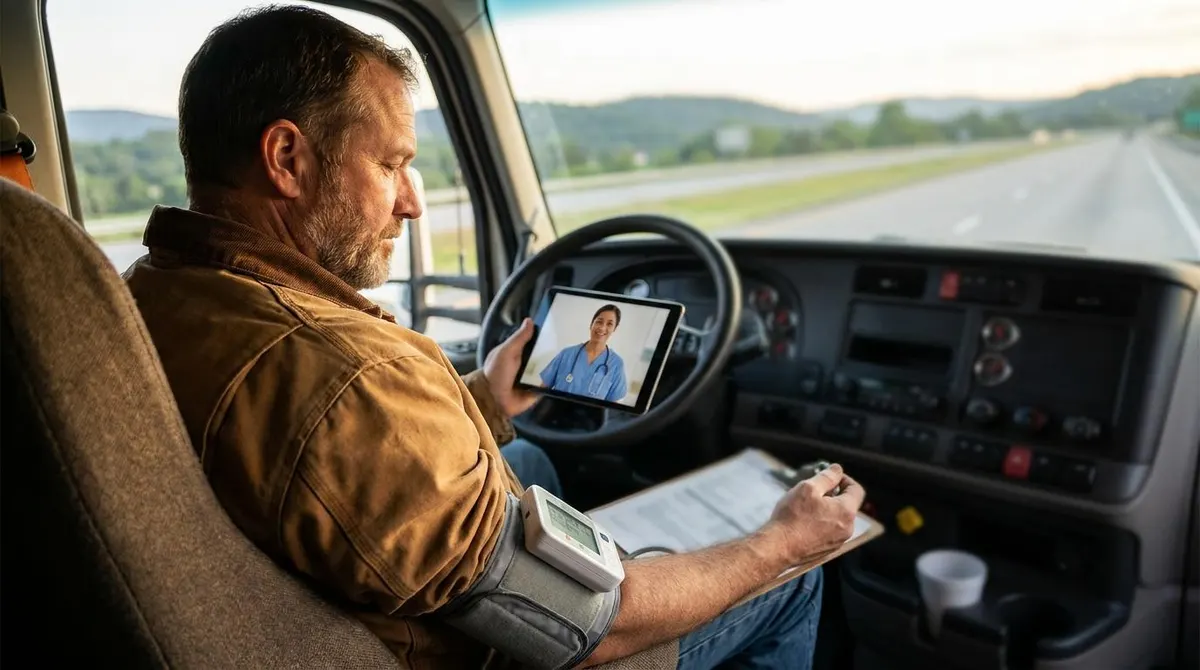
A remote DOT physical is a telemedicine-based examination allowing commercial drivers to meet federal fitness-for-duty requirements without a clinic visit. The Federal Motor Carrier Safety Administration requires all commercial motor vehicle operators above a specified weight threshold to hold a valid Medical Examiner's Certificate, regardless of how the examination is delivered. Telehealth platforms have expanded access to this essential certification process, particularly for drivers with demanding schedules or limited access to medical providers in their area. This guide covers how remote DOT physicals work, their legal standing, what the virtual examination involves, how to prepare, and how to find a qualified provider near you. Whether you are completing your first exam or renewing an existing certificate, understanding the remote option helps you stay compliant without disrupting your work schedule.
What Is a DOT Physical and Why Is It Required?

A DOT physical exam is a mandatory medical evaluation required by the U.S. Department of Transportation for all commercial drivers who operate vehicles above a specified weight threshold or transport passengers and hazardous materials. It establishes whether a driver is physically and mentally fit to safely operate a commercial vehicle on public roads.
The FMCSA mandates this examination under 49 CFR Part 391 for any driver operating a commercial motor vehicle with a gross vehicle weight rating above 10,001 pounds in interstate commerce. Commercial drivers holding a Commercial Driver's License must pass a physical examination and maintain a valid Medical Examiner's Certificate to remain eligible for commercial vehicle operation.
The DOT physical exam covers vision, hearing, blood pressure, cardiovascular function, neurological health, musculoskeletal condition, and a review of any medical conditions or medications that could impair safe driving. The examination is designed to protect both the driver and the public by ensuring that only medically qualified individuals operate large commercial vehicles.
Medical fitness for duty is the core standard the DOT physical is designed to evaluate. Drivers who do not meet this standard may receive a conditional certification pending treatment or may be temporarily disqualified until a condition is managed. Understanding what can disqualify you from a DOT physical before your appointment is a practical step toward a successful outcome.
Not sure if sleep apnea applies to you?
Take our 2-minute sleep risk quiz to see whether sleep apnea could affect your DOT physical. No account required.
DID YOU KNOW: The FMCSA requires commercial drivers to renew their DOT medical card at least every 24 months, though drivers with conditions such as controlled high blood pressure may receive certification for shorter periods of 12 months, six months, or three months depending on clinical findings.
KEY TAKEAWAY: A DOT physical is a federally required medical evaluation that confirms a commercial driver's fitness to operate a commercial vehicle safely, and it must be conducted by a Certified Medical Examiner listed on the FMCSA National Registry of Certified Medical Examiners.
The introduction of telemedicine has changed how many drivers access this required evaluation, and the next section explains exactly what the remote format involves.
What Is a Remote DOT Physical?
A remote DOT physical is a federally compliant medical examination conducted through a secure, live video connection that allows a Certified Medical Examiner to evaluate a commercial driver's fitness for duty without requiring travel to a physical examination location. The exam meets the same FMCSA standards as a traditional in-person physical examination.
Telemedicine DOT physical exams connect the driver and the examiner through a HIPAA-compliant video platform accessible via a web browser or dedicated application. The examiner reviews the driver's completed medical history form, discusses existing medical conditions, and conducts visual assessments through the live video connection. These assessments include observations of general appearance, skin discoloration, body language, and gait.
Remote DOT physicals emerged as a practical alternative to clinic-based exams in response to growing demand from drivers in rural communities, those with limited access to providers close to them, and drivers whose schedules make weekday clinic appointments difficult. Telehealth has expanded the number of available appointment slots and reduced the time drivers must spend away from work to maintain compliance.
The remote format does not change the regulatory requirements or the standards a driver must meet. All assessment components that can be evaluated through video are conducted during the session. Where a hands-on assessment is clinically necessary, the driver is referred for supplementary in-person testing, ensuring the resulting Medical Examiner's Certificate is based on a complete evaluation.
Remote DOT physical examinations are typically offered by primary care practices, occupational health clinics, and dedicated telehealth networks. The key difference between remote and in-person physical exams is delivery method, not regulatory rigor.
KEY TAKEAWAY: A remote DOT physical uses live video technology to deliver a federally compliant examination by a Certified Medical Examiner, meeting the same FMCSA standards as an in-person exam while offering greater scheduling flexibility for commercial drivers.
Before choosing the remote format, drivers naturally want to know whether these exams are legally recognized, which the next section addresses directly.
Is a Remote DOT Physical Legally Valid?
Remote DOT physicals are legally valid when conducted by a Certified Medical Examiner listed on the FMCSA's National Registry of Certified Medical Examiners and when all required examination components under 49 CFR Part 391 are completed. The delivery method does not affect the legal standing of the resulting certification.
The FMCSA does not prohibit telemedicine as a delivery format for DOT physical examinations. A Medical Examiner's Certificate issued following a compliant remote exam is recognized in the same way as one issued after an in-person examination. Drivers and fleet operators can verify any examiner's credentials through the FMCSA National Registry before booking, whether the appointment is remote or in person.
Already diagnosed and need CPAP support?
Dumbo Health helps patients start CPAP without the usual confusion, paperwork, or upfront cost. Equipment, setup, supplies, and ongoing support are all handled in one place.
It is essential that drivers use only examiners who appear on the National Registry of Certified Medical Examiners. Providers who are not registered cannot legally issue a DOT medical certificate. This requirement applies regardless of whether the exam is conducted via telehealth or at a physical location. Using an unregistered provider results in an invalid certificate that does not satisfy federal requirements and places the driver's CDL status at risk.
Some states have enacted specific telehealth regulations that affect how remote appointments are structured. Drivers should confirm that their chosen provider is authorized to conduct examinations in their state, particularly if the examiner's practice operates from a different state. Telehealth networks specializing in DOT physicals typically manage these compliance requirements and can confirm their state-level authorization on request.
IMPORTANT: Always verify that your remote DOT physical provider is listed on the FMCSA National Registry of Certified Medical Examiners before booking. An exam conducted by an unlicensed or unregistered provider cannot produce a legally valid DOT medical card, regardless of how thoroughly the appointment was conducted.
KEY TAKEAWAY: Remote DOT physicals are fully legally valid when performed by an FMCSA-registered Certified Medical Examiner, and the resulting Medical Examiner's Certificate carries the same federal standing as one issued after a traditional in-person examination.
Knowing that remote exams are legally sound allows drivers to focus on what to expect during the actual appointment, which the next section explains in detail.
What Happens During a Remote DOT Physical Examination?
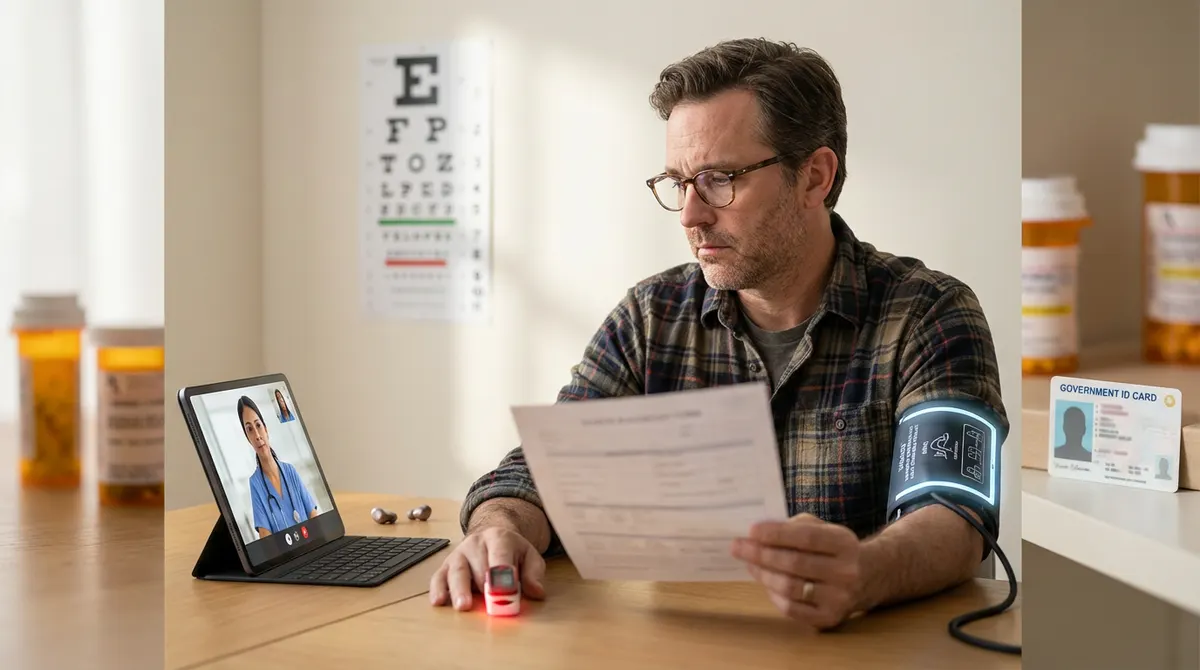
A remote DOT physical examination follows the same structured assessment format as a traditional clinic-based exam, covering medical history, visual and hearing assessments, blood pressure readings, a review of relevant medical conditions, and a physical examination of all components that can be evaluated through a live video connection.
The appointment begins with a virtual check-in during which the examiner confirms the driver's identity and reviews the completed medical history form. Drivers must complete this form before the session and should have all relevant medical records, prescription details, and documentation of ongoing treatment ready to reference during the appointment. Accurate medical history disclosure is a regulatory requirement, not an optional step.
The examiner conducts a visual physical examination through the video connection, observing the driver for signs that may indicate an underlying medical condition. This includes assessing skin discoloration, posture and gait, body language, and any visible signs of fatigue or neurological difficulty. Trained medical professionals can identify many clinically relevant findings through a high-quality video connection, even when organ palpitations and direct physical assessments are not possible remotely.
vision and hearing are assessed according to FMCSA requirements. Drivers may be asked to complete a vision chart assessment before the session or during the call using a third-party tool. Hearing is evaluated through direct conversation. Drivers who use corrective lenses or hearing aids must declare this, as both are permitted provided minimum standards are met.
Blood pressure readings are a required component of every DOT physical. For remote exams, drivers use a validated home blood pressure cuff to take measurements during the session, with the examiner observing. Multiple blood pressure readings may be requested to confirm accuracy. According to FMCSA guidelines, readings at or above 180/110 mmHg result in disqualification until the condition is brought under control.
The examiner also conducts an in-depth discussion of any medical conditions relevant to driving safety, including sleep apnea, diabetes, and high blood pressure. Drivers may be asked to provide medical notes or physician letters to support the certification decision. Drug testing and lab tests are separate requirements governed by distinct federal regulations and are not part of the DOT physical exam itself.
TIP: Before your remote DOT physical, test your video connection and camera, ensure your room is well-lit, and have your blood pressure cuff, corrective lenses, and all medical documentation within reach. A prepared environment helps the exam run without interruptions and reduces the chance of a delayed result.
KEY TAKEAWAY: A remote DOT physical covers all required assessment areas including medical history review, visual and hearing screening, blood pressure readings, and a structured discussion of relevant medical conditions, delivered through a live video session with a qualified Certified Medical Examiner.
Being clear on what the examiner will review makes preparation more targeted, and the next section walks through each preparation step in sequence.
How to Prepare for Your Remote DOT Physical
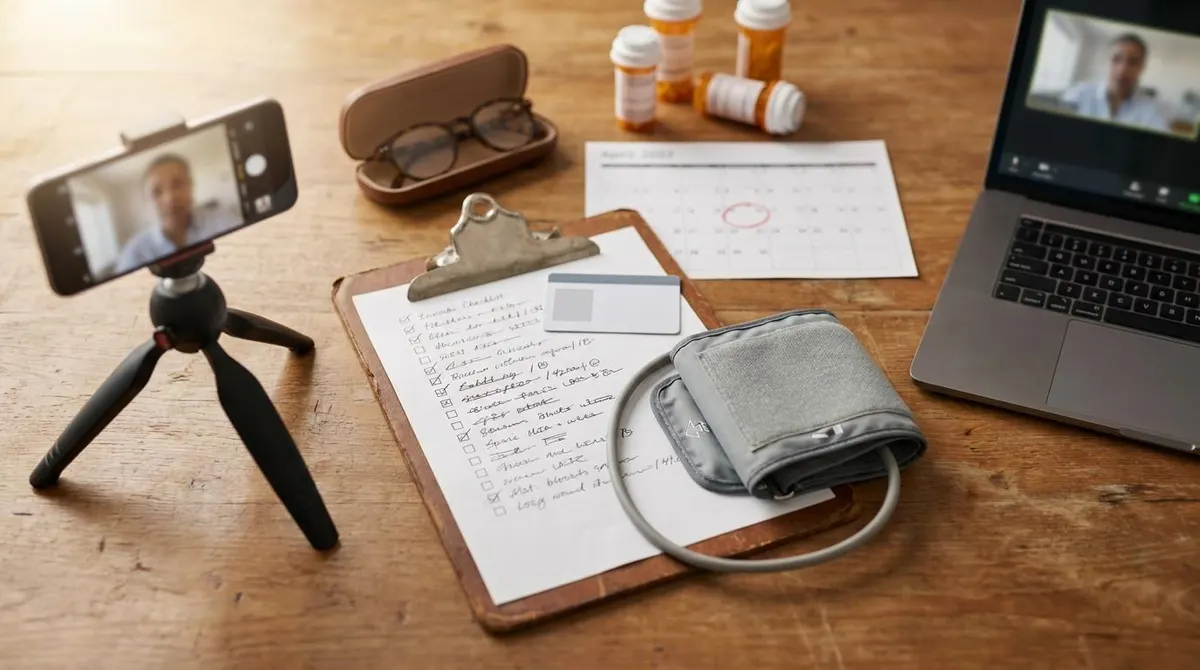
Thorough preparation is one of the most effective ways to ensure a smooth remote DOT physical and avoid delays in receiving your certification. Drivers who arrive with complete documentation and a suitable exam environment typically complete their evaluation without complications.
The first step is confirming that your chosen examiner is listed on the FMCSA National Registry of Certified Medical Examiners and offers telehealth appointments. Once confirmed, book your appointment and request the medical history form to complete before the session. This form covers current medications, medical conditions, prior surgeries, and relevant family history.
Before the session, gather the following items:
Valid government-issued photo identification
A complete and current list of medications including dosages
Medical records and physician letters relating to any ongoing health conditions
A validated blood pressure cuff for live readings during the session
Corrective lenses or hearing aids if applicable
Sleep study results and PAP therapy compliance data if you are being treated for sleep apnea
Any FMCSA exemption documentation if applicable
Set up your exam environment in a quiet, well-lit room with a stable internet connection. Position your camera at face height and test your audio and video before the appointment to prevent technical issues. Closing unnecessary applications reduces the risk of connection problems during the session.
Drivers with a history of sleep apnea should review whether a sleep study is required for a DOT physical before their appointment. Having diagnosis and treatment compliance documentation available during the session prevents referrals that delay certification. If you have not yet been evaluated for sleep apnea, an at-home sleep test from dumbo.health is a convenient way to obtain the diagnostic information your examiner may request, without needing a separate clinic visit.
KEY TAKEAWAY: Preparing for a remote DOT physical means verifying examiner credentials, completing your medical history form accurately in advance, gathering all supporting documentation, and setting up a quiet, well-lit environment with a reliable internet connection before the session.
Understanding how medical conditions are reviewed during the exam helps drivers with ongoing health issues know exactly what to expect, which the next section addresses directly.
Medical Conditions Assessed During a Remote DOT Physical
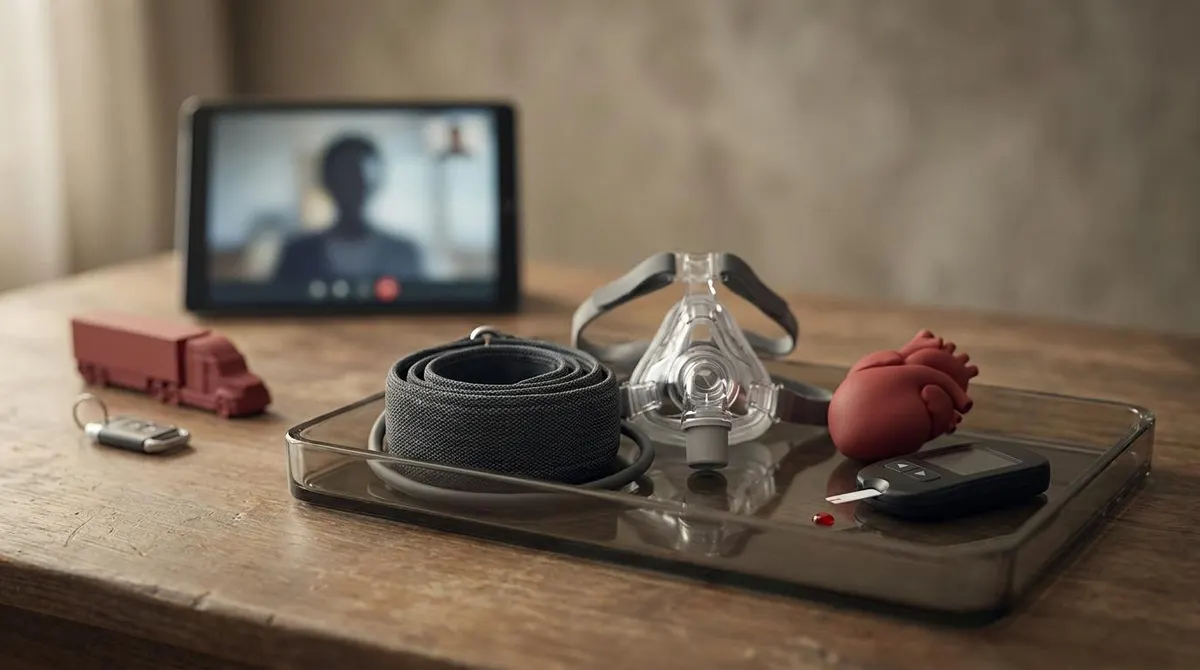
The remote DOT physical places significant clinical emphasis on identifying and reviewing medical conditions that could impair a driver's ability to safely operate a commercial vehicle. The examiner's assessment is comprehensive and covers both conditions disclosed on the medical history form and observations made during the video session.
Sleep apnea is among the most clinically significant conditions assessed during a DOT physical. The Sleep Foundation reports that obstructive sleep apnea affects approximately 26 percent of adults between the ages of 30 and 70. Commercial drivers face elevated risk due to irregular schedules, extended sedentary driving periods, and common risk factors such as elevated body mass index and increased neck circumference. The American Academy of Sleep Medicine has identified commercial truck drivers as having a higher prevalence of obstructive sleep apnea compared to the general population, making screening during the DOT physical particularly important.
Sleep apnea is assessed through a combination of reported symptoms, physical observations, and a review of prior diagnostic testing or treatment documentation. Drivers already diagnosed and compliant with CPAP, AutoPAP, or oral appliance therapy can typically receive full certification by providing documented compliance data. Drivers who have not been evaluated may be referred for a sleep study before certification is confirmed. Understanding the full picture of passing a DOT physical with sleep apnea helps drivers approach the exam with realistic expectations and the right documentation prepared.
High blood pressure receives close attention during the remote DOT physical. FMCSA guidelines categorize blood pressure readings into stages that determine the certification period. Readings below 140/90 mmHg qualify a driver for full 24-month certification. Stage 1 hypertension, between 140/90 and 159/99 mmHg, may result in a reduced certification period. Stage 2, between 160/100 and 179/109 mmHg, typically results in one-year certification with a requirement to return for a follow-up reading. Stage 3 readings at or above 180/110 mmHg result in temporary disqualification until the condition is controlled.
Diabetes is reviewed in terms of insulin use, current glucose management, and any complications such as neuropathy or vision changes that could affect driving safety. Insulin-dependent diabetic drivers operating in interstate commerce may need to apply for an FMCSA exemption, as standard certification requirements restrict certain insulin regimens for interstate commercial vehicle operations.
Cardiovascular conditions, neurological conditions, and musculoskeletal limitations are also discussed during the appointment. The examiner evaluates whether these conditions are stable, well-managed, and unlikely to cause sudden incapacitation while driving. Drivers managing multiple chronic conditions should prepare comprehensive medical notes from their treating physicians ahead of the session.
DID YOU KNOW: Research published in peer-reviewed literature indicates that untreated obstructive sleep apnea is associated with a two- to three-fold increased risk of motor vehicle accidents, which is why FMCSA examiners are directed to screen all commercial drivers for this condition at every physical examination.
KEY TAKEAWAY: Remote DOT physicals assess a full range of medically relevant conditions including sleep apnea, high blood pressure, diabetes, and cardiovascular health through clinical questioning, visual observation, and a review of supporting documentation, with referrals issued when a hands-on assessment is clinically necessary.
Separating clinical facts from common misconceptions helps drivers approach the remote format with confidence, which the next section addresses directly.
Common Myths About Remote DOT Physicals Debunked

MYTH: A remote DOT physical is less thorough than an in-person exam. FACT: A remote DOT physical conducted by a Certified Medical Examiner follows the same FMCSA-mandated assessment standards as a traditional clinic-based exam. Components that cannot be fully assessed via video are referred for in-person evaluation, ensuring the final certification is based on complete clinical information. Thoroughness is determined by regulatory compliance, not physical location.
MYTH: Any online provider can issue a DOT medical certificate. FACT: Only licensed medical professionals listed on the FMCSA's National Registry of Certified Medical Examiners are legally authorized to conduct DOT physicals and issue a valid Medical Examiner's Certificate. An exam conducted by an unlicensed or unregistered provider does not produce a valid certificate, regardless of whether it is delivered online or in person. Drivers must verify credentials through the FMCSA registry before every appointment.
MYTH: Drivers with sleep apnea will automatically fail a DOT physical. FACT: A sleep apnea diagnosis does not automatically disqualify a commercial driver. According to FMCSA guidance, drivers who are diagnosed and demonstrably compliant with an approved treatment such as CPAP or AutoPAP therapy can receive full certification. The critical factor is documented treatment compliance, not the diagnosis itself. Drivers with untreated or undiagnosed sleep apnea face a higher likelihood of being referred for a sleep study before certification can be confirmed.
MYTH: Blood pressure cannot be accurately measured during a remote exam. FACT: Blood pressure readings taken with a validated home blood pressure cuff during a live video session can be clinically reliable when correct measurement protocol is followed. Clinicians frequently observe that home readings are often more representative of a patient's resting blood pressure than those recorded in a clinical environment. Examiners typically request multiple readings to confirm accuracy and may ask for a repeated measurement if a result appears inconsistent.
MYTH: Remote DOT physicals are only available to drivers with no medical conditions. FACT: Remote DOT physicals are available to drivers managing a range of chronic conditions, including high blood pressure, diabetes, and sleep apnea. Drivers with complex medical histories may be asked to provide additional physician documentation during the session, but the remote format does not exclude them from the examination process. Medical professionals conducting these exams are trained to assess and discuss ongoing conditions within the telehealth environment.
KEY TAKEAWAY: Remote DOT physicals meet the same federal standards as in-person exams, accommodate drivers with a wide range of medical conditions, and produce legally valid certifications, provided the examination is conducted by a registered Certified Medical Examiner who meets all FMCSA requirements.
Choosing the right examiner and provider is the practical step that follows understanding what the remote format can offer, and the next section covers how to verify credentials and make that decision.
The Certified Medical Examiner and How to Verify Credentials

The Certified Medical Examiner is the licensed medical professional who conducts the DOT physical examination and issues the Medical Examiner's Certificate. In a remote setting, the examiner performs all required assessment components through a live video session and is responsible for documenting and submitting the results to the FMCSA within 24 hours.
Certified Medical Examiners must be listed on the FMCSA's National Registry of Certified Medical Examiners to conduct DOT physicals legally. This registry is a publicly searchable database that lists all examiners who have completed the required training and passed a certification examination. Drivers can search the registry by name or location to verify that a provider is currently authorized before booking an appointment.
Eligible medical professionals who can become Certified Medical Examiners include licensed physicians, advanced practice registered nurses, physician assistants, optometrists, and chiropractors who have completed the FMCSA-required training program. Medical professionals conducting remote exams must hold the same credentials and registry status as those performing in-person examinations.
Verifying credentials before booking is a regulatory responsibility, not merely a recommendation. A driver who uses an unlicensed or unregistered provider and receives an invalid certificate will be required to repeat the full examination with a qualified examiner, potentially creating delays in renewing their CDL status. Independent credential verification through the FMCSA registry provides certainty that the resulting certification will be accepted.
When searching for a provider close to you or through a telehealth platform, confirm that the examiner's name appears on the FMCSA National Registry, that they are currently licensed to practice in your state, and that they offer remote appointments. Most reputable telehealth networks maintain internal compliance checks, but independent verification provides an additional layer of assurance.
IMPORTANT: The FMCSA National Registry is publicly accessible and free to use. Drivers should verify examiner credentials directly through the registry rather than relying solely on a provider's self-reported certification status.
KEY TAKEAWAY: The Certified Medical Examiner must be listed on the FMCSA National Registry of Certified Medical Examiners to issue a legally valid DOT medical certificate, and drivers should verify these credentials independently through the FMCSA's public registry before every appointment.
The next step after confirming credentials is choosing the specific provider or platform that best fits your schedule, health history, and budget, which the following section covers in detail.
Choosing a Provider for Your Remote DOT Physical

Choosing the right provider for a remote DOT physical determines both the quality of the examination and the legal validity of the resulting certification. Providers must be FMCSA-registered, and drivers benefit from selecting a platform or clinic with demonstrated experience in commercial driver health assessments.
Remote DOT physicals are available through several types of providers, each with different strengths depending on the driver's situation. The table below compares common provider types to help drivers make an informed decision.
| Provider Type | Best For | Typical Cost Range | Scheduling | Key Consideration |
|---|---|---|---|---|
| Primary Care Practice | Drivers with an established patient relationship | $75 to $150 | Weekdays, limited telehealth | Examiner must be FMCSA-registered |
| Occupational Health Clinic | Employer-referred drivers and fleet operators | $100 to $175 | Business hours | Often experienced with commercial driver exams |
| Telehealth Network (e.g. HCC Network, TeamCME) | Drivers seeking flexible, evening, or weekend scheduling | $80 to $160 | Extended hours and weekends | Confirm FMCSA registration per individual examiner |
| Mobile DOT Clinics | Drivers in areas with limited local provider access | $90 to $165 | Scheduled regional visits | May not offer full remote option in all locations |
Remote DOT physicals are generally priced comparably to traditional in-person physical exams, with many telehealth platforms offering flat-rate pricing that covers the complete examination. Some employers cover the cost of DOT physicals for CDL drivers as part of a fleet compliance program, making it worth checking with your employer before booking independently.
When searching for a provider in your area, use the FMCSA National Registry search tool to filter for examiners who offer telehealth services in your state. Not all registered examiners provide remote appointments, so confirming telehealth availability and state authorization before booking avoids unnecessary delays. Drivers with complex medical histories should also consider occupational health clinics that specifically market DOT physical services, as these practices often have examiners with greater experience in commercial driver assessments.
KEY TAKEAWAY: Selecting a remote DOT physical provider requires verifying FMCSA credentials, comparing provider types based on your schedule and health history, and confirming that the examiner is authorized to conduct telehealth exams in your state before booking.
Once the examination is complete, understanding what happens to your certification and how to submit it to the relevant authorities ensures your driving record stays current and your CDL remains active.
After Your Remote DOT Physical: Certification and Next Steps

After passing a remote DOT physical, the Certified Medical Examiner issues a Medical Examiner's Certificate, also referred to as a DOT medical certificate or med card, which serves as proof of medical fitness for duty and is required for active commercial vehicle operation. This document must be renewed before its expiration date to maintain CDL eligibility.
Under FMCSA regulations, the examiner is required to submit examination results to the FMCSA within 24 hours of the appointment. This submission updates the driver's record in the FMCSA system. Drivers should also provide a copy of their medical card to their state DMV, as most states require this step to maintain an active Commercial Driver's License. State submission requirements vary, so confirming the process with your state DMV directly is advisable.
Medical certificates are issued for a maximum period of 24 months for drivers who meet all health standards without qualification. Drivers with conditions requiring closer monitoring, such as controlled high blood pressure or treated sleep apnea, may receive certification for a reduced period such as 12 months, six months, or three months. The Certified Medical Examiner determines the certification period based on the driver's overall health profile at the time of the examination.
If the examiner identifies a condition that requires further evaluation during the remote exam, the driver may be referred for in-person assessment, specialist review, or additional testing before certification can be issued. This does not represent permanent disqualification in most cases. Drivers should review the full guidance on failing a DOT physical to understand what options are available and how to address a conditional or deferred result.
Drivers with applicable FMCSA exemptions, such as those for insulin-treated diabetes or vision impairment, must ensure their exemption documentation is current and included in the exam file. The examiner will need to review this documentation before finalizing the certification decision.
KEY TAKEAWAY: After a remote DOT physical, the examiner submits your results to the FMCSA within 24 hours and issues your Medical Examiner's Certificate, which you should track carefully and renew in advance to prevent any interruption to your CDL eligibility.
Staying proactive about health and certification renewal is the most reliable way to maintain long-term compliance across every renewal cycle, which the final section before the FAQ addresses.
Maintaining Medical Fitness for Long-Term Compliance

Maintaining medical fitness for duty is an ongoing responsibility that extends beyond passing a single DOT physical examination. Commercial drivers who monitor their health proactively are better positioned to meet certification requirements at every renewal and to identify and address conditions before they affect their ability to operate.
The DOT physical renewal cycle, typically every one to two years, provides a structured opportunity for a comprehensive health and wellness review. Drivers should treat this interval as a minimum standard, particularly when managing a chronic condition such as sleep apnea, diabetes, or hypertension. Scheduling health check-ins with a treating physician between renewal periods helps identify changes in health status that could affect the next certification outcome.
Drivers managing sleep apnea should maintain consistent compliance with PAP therapy and retain compliance data from their device for submission at renewal appointments. Examiners routinely request compliance reports as evidence of ongoing treatment, and usage data showing regular nightly use strengthens the case for a full 24-month certification period. Drivers who have not yet been evaluated for sleep apnea but are approaching a renewal exam should consider completing an at-home sleep test well in advance.
Blood pressure management is another area where consistent effort between renewal cycles pays dividends. Drivers with Stage 1 or Stage 2 hypertension who demonstrate improved readings through medication adherence, dietary changes, and lifestyle adjustment may qualify for a longer certification period at their next DOT physical. Keeping a log of home blood pressure readings between appointments provides useful supporting documentation for the examiner.
Understanding the full scope of requirements helps drivers maintain compliance across all assessment areas. Reviewing the requirements to pass a DOT physical serves as a useful reference for drivers who want to stay ahead of their next renewal and ensure every component is addressed proactively.
KEY TAKEAWAY: Long-term medical fitness compliance requires proactive health monitoring between renewal cycles, consistent management of chronic conditions such as sleep apnea and high blood pressure, and timely scheduling of DOT physical renewals before certification expires.
The following frequently asked questions address the most common inquiries from commercial drivers considering or preparing for a remote DOT physical.
Frequently Asked Questions
Are remote DOT physicals legally valid and accepted by the FMCSA?
Yes, remote DOT physicals are legally valid when conducted by a Certified Medical Examiner listed on the FMCSA National Registry of Certified Medical Examiners and when all examination components required under 49 CFR Part 391 are completed. The FMCSA does not prohibit telemedicine as a delivery method for DOT physical examinations. A Medical Examiner's Certificate issued following a compliant remote exam is accepted for CDL purposes in the same way as one issued after an in-person examination. Drivers should verify their provider's registry status through the FMCSA before booking.
What technical setup do I need for a remote DOT physical?
Drivers need a device with a functioning camera and microphone, such as a laptop, tablet, or smartphone, and a stable internet connection capable of supporting a live video call. A web browser that supports video conferencing is sufficient for most platforms. The exam environment should be well-lit and quiet to allow the examiner to observe the driver clearly. Drivers should also have a validated home blood pressure cuff available for taking readings during the session and test their equipment in advance to avoid technical delays on the day of the appointment.
How much does a remote DOT physical cost?
The cost of a remote DOT physical typically ranges from approximately $75 to $175, depending on the provider type and whether additional assessments are required. Telehealth networks specializing in DOT physicals often offer flat-rate pricing that covers the full examination. Some employers cover this cost as part of a fleet compliance program, making it worth checking before booking independently. Remote exams are generally priced comparably to in-person physical exams at an occupational health clinic, so cost alone is rarely the deciding factor between the two formats.
Can sleep apnea affect the outcome of my remote DOT physical?
Sleep apnea can affect a DOT physical result if the condition is undiagnosed or untreated. During the exam, the examiner will assess risk factors including neck circumference, body mass index, and reported symptoms. Drivers diagnosed and compliant with CPAP or AutoPAP therapy can typically receive full certification by providing compliance documentation. Drivers without a prior evaluation may be referred for a sleep study before certification is confirmed. An at-home sleep test is a convenient option for drivers who want to clarify their status before their appointment.
What happens if I do not pass a component of the remote DOT physical?
If a driver does not meet a required standard during a remote DOT physical, the examiner may issue a conditional result, request supporting documentation from a treating physician, refer the driver for in-person assessment, or defer certification until the relevant condition is addressed. A single failed component does not represent permanent disqualification in most cases. Drivers can often address the underlying health issue and return for a follow-up evaluation. Reviewing available guidance on what happens after a DOT physical conditional or deferred outcome helps drivers understand their options and the steps available to them.
How do I find a remote DOT physical provider near me?
Drivers can find a provider near them by using the FMCSA National Registry of Certified Medical Examiners search tool to filter for examiners offering telehealth services in their state. Telehealth networks specializing in DOT physicals, such as HCC Network and TeamCME, also maintain searchable directories of remote providers. When evaluating providers in your area, confirm FMCSA registration, telehealth authorization, and current state licensing. Checking reviews and confirming appointment availability before your required renewal date helps avoid last-minute scheduling difficulties that could create a lapse in certification.
Does a remote DOT physical include drug testing?
No, drug testing is not part of the DOT physical examination. Drug testing is a separate federal requirement governed by distinct regulations and is typically managed through the driver's employer or a third-party testing administrator. The DOT physical exam focuses solely on the driver's medical fitness for duty. Drivers must comply with both the medical examination requirement and any applicable DOT drug testing program requirements independently, as these are distinct regulatory obligations that operate on separate schedules and through separate administrative processes.
How long is a DOT medical certificate valid after a remote exam?
A DOT medical certificate issued after a remote exam is valid for a maximum of 24 months for drivers who meet all health standards without qualification. Drivers with conditions requiring ongoing monitoring, such as controlled high blood pressure or treated sleep apnea, may receive certification for a shorter period such as 12 months, six months, or three months. The Certified Medical Examiner determines the certification period based on the driver's overall health profile at the time of examination. Drivers should record their certificate expiration date immediately after receiving it and schedule renewal well in advance to avoid any interruption to their CDL status.
Conclusion

Remote DOT physicals give commercial drivers a flexible, federally compliant path to meeting their medical fitness for duty requirements without the scheduling burden of a traditional clinic visit. When conducted by a Certified Medical Examiner listed on the FMCSA National Registry, a remote exam produces the same legally valid Medical Examiner's Certificate as a traditional physical examination. The keys to a successful outcome are choosing a verified provider, completing your medical history accurately, and arriving at the session with full documentation of any ongoing conditions. For drivers managing sleep apnea, getting tested before the exam puts you in the strongest possible position. Start with an at-home sleep test from dumbo.health to gather the documentation you need before your next DOT physical appointment.
Related DOT Physical Topics
- Does a DOT Physical Test for Weed or THC The Complete Guide for Commercial Drivers
- Can You Get a DOT Physical in Any State The Complete Guide for Commercial Drivers
- Can You Get a DOT Physical Online The Complete Guide for Commercial Drivers
- DOT Physical Forms & Paperwork The Complete Guide for Commercial Drivers
- What Happens During the DOT Physical Exam The Complete Guide for Drivers
- What Happens If You Fail a DOT Physical Twice The Complete Guide for Commercial Drivers
- Online DOT Physical The Complete Guide for Commercial Drivers and Medical Examiners
- Online DOT Physical Without Insurance A Complete Guide for Commercial Drivers
- Online DOT Physical Self-Pay The Complete Guide for CDL Drivers and Owner-Operators
- DOT Hypertension Guidelines The Complete Blood Pressure Guide for Commercial Drivers
- The Ultimate DOT Physical Guide for Commercial Drivers (2025–2026)
- What Happens If You Fail a DOT Drug Test The Complete Guide for Commercial Drivers
- How Long Does a DOT Physical Take A Complete Guide for Commercial Drivers
- Can You Get a Second Opinion on Your DOT Physical A Complete Guide for Commercial Drivers
- DOT Physical ICD-10 & Billing Codes The Complete Guide for Accurate Compliance and Reimbursement
- Home Sleep Apnea Test for Commercial Drivers The CDL Holder's Complete Guide
- Medical Examiner's Certificate (Form MCSA-5876) The Complete Guide for Commercial Drivers
- Navigating the Florida DOT Physical Your Essential Guide for CDL Drivers
- DOT physical self pay guide for commercial drivers paying out of pocket
- DOT Medical Exam Self-Pay A Complete Guide for Commercial Drivers
- How to Pass a DOT Physical The Complete Commercial Driver's Guide
- What Happens If Your DOT Physical Expires Compliance Guide for Commercial Drivers
- What are the current DOT requirements for sleep apnea testing for commercial drivers
- Medical Examination Report (MER) – Form MCSA-5875 The Complete Guide for Commercial Drivers
- DOT Physical Requirements A Complete Guide for CDL Drivers
- The Ultimate DOT Preparation Checklist for Motor Carriers and Commercial Drivers
- DOT Physical Insurance & Recertification The Complete Driver's Guide
- BMI for DOT Physical What Commercial Drivers Need to Know
- The DOT Physical Exam Ensuring You're Fit for the Road
- Essential 171 DOT Definitions for Commercial Drivers
- DOT Physical Out of Pocket What Commercial Drivers Actually Pay
- What Is the Urine Test for in a DOT Physical
- Your Complete Guide What's Included in a DOT Physical Exam
- What Are the DOT Requirements for Drivers With Sleep Apnea
- DOT Physical Insurance or Self Pay How to Choose the Right Payment Option for Your Exam
- The Comprehensive Guide to Suboxone, Sleep Apnea, and FMCSA Compliance for Commercial Motor Vehicle Operators
- DOT Physical Chiropractor Your Complete Guide to CDL Exams
- Is a DOT physical the same as a regular physical
- DOT Physical at Urgent Care What Commercial Drivers Need to Know
- What are the current FMCSA guidelines on sleep apnea for commercial drivers
- DOT Physical Texas The Essential Guide to Your Exam, Medical Card, and CDL Compliance
- What Does DOT Stand for in a DOT Physical
- What Is the Difference Between a DOT and Non-DOT Physical
- Sleep Apnea Test at Home The Complete Guide to Home Sleep Testing for Adults
- How Do You Submit Your DOT Physical to the DMV
- Is a drug test required for a DOT physical
- DOT Physical Cost Breakdown What Drivers Pay & Why
- What Forms Do You Need for a DOT Physical
- Navigating DOT Stroke Guidelines for CMV Drivers What You Need To Know
- How can drivers with sleep apnea qualify again after a failed DOT physical
- Can You Fail a DOT Physical for Being Overweight
- New DOT Physical Requirements What Drivers MUST Know About New Updates
- DOT Physical Blood Pressure Requirements What Drivers Need to Know
- Can You Fail a DOT Physical for High Blood Pressure
- DOT Physical & Drug Test What Drivers Need to Know
- Non-DOT Physical A Comprehensive Guide to Workforce Health and Safety
- Is a Sleep Study Required for a DOT Physical
- Do They Check for Hernia During a DOT Physical
- What Are the Requirements to Pass a DOT Physical
- What eye chart is used for a DOT physical
- Home Sleep Apnea Test The Complete Guide to At-Home Sleep Apnea Testing
- At-Home Sleep Apnea Test The Complete Guide to Testing, Results, and Treatment
- Failing a DOT Physical What Every Commercial Driver Needs to Know
- Sleep Apnea Test The Complete Guide to Diagnosis, Home Testing, and What Your Results Mean
- Sleep Apnea Testing The Complete Guide to Diagnosis, Home Tests, and What Your Results Mean
- Home Sleep Test The Complete Guide to At-Home Sleep Apnea Testing
- What drugs do they test for in a DOT drug test
- What Can Disqualify You From a DOT Physical
- Does a DOT physical include a drug test
- Can You Pass a DOT Physical with Epilepsy
- DOT Physical Self Pay Cost
- DOT Physical Exam Basics
- Can You Pass a DOT Physical With a Hernia
- Can You Pass a DOT Physical With One Eye
- Can You Pass a DOT Physical With a Pacemaker
- Telehealth Dot Physical
- Sleep Apnea Test for CDL Drivers
- Who needs a DOT physical
- DOT Physical & Alcohol Requirements
- Why do they measure your neck during a DOT physical
- Navigating Your DOT Physical with Common Medical Conditions
- Why DOT Sleep Tests at Home Matter for Your Career and Health
- DOT Physical Online Cost
- Walk In DOT Physical Self Pay
- Are there legal requirements for drivers with sleep apnea
- What Should You Bring to a DOT Physical
- Can You Get a DOT Physical Online
- DOT Physical Cash Pay
- Same Day DOT Physical
- Virtual DOT Physical
- DOT Physical Vision & Eye Requirements
- Can you fail a DOT physical because of sleep apnea
- What blood pressure do you need to pass a DOT physical
- When Can Sleep Apnea Affect a DOT Physical
- Online DOT Exam What Drivers and Medical Examiners Need to Know
- Do They Check Your Private Parts During a DOT Physical
- Can you pass a DOT physical with sleep apnea
- What should I expect at a DOT physical
- What Does a DOT Physical Consist Of
- What happens if you fail a DOT physical due to sleep apnea
Take the next step before your DOT physical
Start with the free quiz if you are unsure about your risk, or order an at-home sleep test if you have already been flagged for possible sleep apnea.
AI summary
A remote DOT physical is a DOT medical exam delivered by telemedicine using a secure, live video visit. It is legally valid when performed by a Certified Medical Examiner (CME) listed on the FMCSA National Registry and when all required elements under 49 CFR Part 391 are completed. Key components include identity verification, medical history review, visual observation (appearance, gait, posture), vision and hearing screening, and observed blood pressure measurements using a validated home cuff. The examiner reviews conditions that affect driving safety, including obstructive sleep apnea, hypertension, diabetes, cardiovascular issues, neurological concerns, and musculoskeletal limitations. Untreated or unevaluated sleep apnea may trigger a sleep study referral; treated drivers may need CPAP or AutoPAP compliance data. Blood pressure categories influence certification length; readings at or above 180/110 mmHg are disqualifying until controlled. After the exam, the CME submits results to FMCSA within 24 hours and issues a Medical Examiner’s Certificate (DOT medical card), which the driver typically must also submit to their state DMV. Certificates are issued for up to 24 months, with shorter periods for monitored conditions.

Nicolas Nemeth
Co-Founder
Nico is the co-founder of Dumbo Health, a digital sleep clinic that brings the entire obstructive sleep apnea journey home. Patients skip the sleep lab and the long wait to see a specialist. Dumbo Health ships an at home test, connects patients with licensed sleep clinicians by video, and delivers CPAP or a custom oral appliance with ongoing coaching and automatic resupply in one clear subscription.
Keep reading

How Long Does a DOT Physical Take? A Complete Guide for Commercial Drivers

What Happens If You Fail a DOT Drug Test? The Complete Guide for Commercial Drivers


