DOT Hypertension Guidelines: The Complete Blood Pressure Guide for Commercial Drivers
This guide explains how FMCSA DOT hypertension rules affect a commercial driver’s medical card, using the JNC-6 blood pressure staging system. It clarifies the key pass threshold of 140/90 mmHg and what certification length you can receive at each stage. You will learn the exact outcomes for Stage 1, Stage 2, and Stage 3 readings, including one-time extensions, 3-month cards, disqualification, and required rechecks. It also outlines how blood pressure is measured during a DOT physical and how repeat readings may be used. Practical steps cover exam preparation, white coat syndrome, home monitoring, and documentation. Medication compatibility, lifestyle strategies like the DASH diet, and related risks such as diabetes and sleep apnea are also addressed.
Struggling with sleep?
Find out if sleep apnea is the reason.
FDA-cleared. $149 flat. Physician-reviewed results in 48 hours.

DOT Hypertension Guidelines: The Complete Blood Pressure Guide for Commercial Drivers

DOT hypertension guidelines set the official blood pressure standards that determine whether a commercial driver can receive, maintain, or lose their medical certification under Federal Motor Carrier Safety Administration rules. According to the FMCSA, a blood pressure reading of 140/90 mmHg or lower is the critical threshold that unlocks a full two-year medical card for CDL holders. This page covers every hypertension stage, certification outcome, recheck protocol, medication rules, lifestyle strategies, and what to expect during your DOT physical exam. Whether you are renewing your medical certificate for the first time or managing a chronic blood pressure condition, understanding these rules protects both your health and your livelihood. Read on for everything you need to know to stay compliant, stay certified, and stay on the road.
Understanding DOT Blood Pressure Guidelines: The Official Requirements

DOT blood pressure guidelines are federal standards established by the FMCSA under 49 CFR 391.41(b)(6), which states that a commercial driver is physically qualified only if they have no current clinical diagnosis of high blood pressure likely to interfere with the safe operation of a commercial motor vehicle. The FMCSA Cardiovascular Advisory Panel Guidelines, which draw from the Sixth Report of the Joint National Committee on Prevention, Detection, Evaluation, and Treatment of High Blood Pressure, form the clinical foundation of these requirements.
blood pressure is measured in millimeters of mercury, written as mmHg. Every reading produces two numbers: the systolic pressure, which is the force your heart exerts when it beats, and the diastolic pressure, which is the residual pressure when your heart rests between beats. A reading is written as systolic over diastolic, for example 120/80 mmHg.
The FMCSA does not use the American College of Cardiology's 2017 threshold of 130/80 mmHg to define hypertension. Instead, certified medical examiners apply the older JNC-6 staging framework, which identifies 140/90 mmHg as the boundary between normal and Stage 1 hypertension for DOT certification purposes. This distinction matters because a reading that your personal physician classifies as Stage 1 hypertension under current clinical guidelines may still qualify you for a full two-year medical card under FMCSA rules.
DID YOU KNOW: A meta-analysis published in the Journal of Postgraduate Medicine found that the pooled prevalence of hypertension among professional drivers worldwide is approximately 34%, significantly higher than in many other occupational groups, underscoring why the FMCSA prioritises blood pressure screening for commercial drivers.
The Federal Motor Carrier Safety Administration requires that all DOT physical exams be conducted by a licensed medical examiner listed on the FMCSA National Registry of Certified Medical Examiners. Only physicians, doctors of osteopathy, physician assistants, advanced practice nurses, and doctors of chiropractic who have completed FMCSA-required training and passed the certification exam are legally authorised to issue a Medical Examiner's Certificate. You can find a certified medical examiner near you using the FMCSA National Registry search tool.
KEY TAKEAWAY: The FMCSA uses the JNC-6 staging framework to classify blood pressure, meaning the official DOT threshold differs from newer clinical guidelines. Knowing which framework applies is the first step to understanding your certification outcome.
The staging system directly determines your certification length, so the next step is understanding exactly what each stage means for your medical card.
Decoding Hypertension Stages and Your DOT Medical Card Certification

Hypertension stages under FMCSA rules translate directly into specific certification periods and action requirements. The four categories below define every possible outcome from your blood pressure reading on exam day, and each carries a distinct pathway for maintaining or regaining your commercial driving privileges.
Normal Blood Pressure (Below 140/90 mmHg): Full 2-Year Medical Certification

A blood pressure reading below 140/90 mmHg is the standard that medical examiners use to issue a full two-year DOT medical certificate. Drivers in this range, with or without well-controlled antihypertensive medication and no other disqualifying conditions, qualify for the maximum certification period. If you are on medication and your reading is below 140/90 on exam day, you can still receive the two-year card provided the treatment is well tolerated and produces no side effects that impair your driving ability.
According to 49 CFR 391 Appendix A, drivers with controlled hypertension on treatment should ideally receive at least annual certification rather than the full two years, though the examiner retains discretion based on overall cardiovascular health.
Stage 1 Hypertension (140-159/90-99 mmHg): Conditional 1-Year Certification

Stage 1 hypertension is defined by a systolic reading between 140 and 159 mmHg and/or a diastolic reading between 90 and 99 mmHg. A driver in this range is at low risk for a hypertension-related acute incapacitation event, according to the FMCSA Medical Advisory Criteria. The medical examiner may certify the driver for a one-year period rather than the standard two years.
At each annual recertification exam, the blood pressure must be at or below 140/90 mmHg to renew the one-year certificate. If the reading falls between 140/90 and 159/99 at a subsequent annual exam, the examiner may grant a single one-time three-month extension to allow the driver to bring the reading under control. This one-time extension is not repeatable.
Stage 2 Hypertension (160-179/100-109 mmHg): Temporary 3-Month Certification and Recheck Protocol

Stage 2 hypertension is defined as a systolic reading of 160 to 179 mmHg and/or a diastolic reading of 100 to 109 mmHg. Under 49 CFR 391 Appendix A, this range is an absolute indication for antihypertensive drug therapy. The driver is issued a one-time, non-renewable three-month certificate to allow time to initiate or adjust medication and reduce blood pressure to 140/90 mmHg or lower.
If the driver successfully brings the reading to 140/90 or below within the three-month period and treatment is well tolerated, the medical examiner may certify the driver for one year from the date of the original exam. Annual certification continues thereafter. If the driver fails to reach 140/90 by the three-month recheck, they are disqualified from operating a commercial motor vehicle until the reading is controlled.
IMPORTANT: The three-month certificate issued for Stage 2 hypertension is a one-time allowance. If you receive this temporary certificate, you must use that window to start effective medication and document that your blood pressure is controlled. There is no additional grace period.
Stage 3 Hypertension (180/110 mmHg or Higher): Immediate Disqualification and the Path to Recertification

Stage 3 hypertension occurs when a blood pressure reading reaches 180/110 mmHg or higher. The FMCSA classifies this as a high-risk threshold for an acute blood pressure-related event. A driver with a reading in this range is immediately disqualified and cannot be certified even temporarily until the blood pressure is reduced to 140/90 mmHg or lower and treatment is well tolerated.
Once blood pressure is successfully controlled, the driver may be certified for a six-month period. Recertification continues at six-month intervals indefinitely, meaning a driver who has reached Stage 3 will never return to a two-year or one-year certificate cycle. This permanent six-month restriction reflects the elevated cardiovascular risk associated with a prior Stage 3 reading.
Understanding Certification Lengths and Recertification Requirements

The table below summarises every possible certification outcome under current FMCSA hypertension guidelines.
| Hypertension Stage | Blood Pressure Range | Certification Outcome | Follow-Up Frequency |
|---|---|---|---|
| Normal | Below 140/90 mmHg | Up to 2-year medical card | Every 24 months |
| Stage 1 | 140-159/90-99 mmHg | 1-year medical card | Annually |
| Stage 2 | 160-179/100-109 mmHg | One-time 3-month card, then 1-year if controlled | Annually once controlled |
| Stage 3 | 180/110 mmHg or higher | Immediate disqualification | Every 6 months once controlled |
These certification periods apply specifically to the blood pressure finding. Other medical conditions, including diabetes, kidney disease, or sleep apnea, may require shorter certification periods that take precedence over the blood pressure-based timeline.
KEY TAKEAWAY: Every hypertension stage has a defined outcome and a clear pathway back to full certification. Stage 3 is the only category that results in permanent six-month recertification intervals.
With the rules established, the practical question becomes how blood pressure is actually measured and evaluated on exam day.
The DOT Physical Examination: What to Expect for Blood Pressure Checks

The DOT physical exam is an FMCSA-required fitness-for-duty examination that every commercial motor vehicle driver must complete to obtain or renew their Medical Examiner's Certificate. Understanding what happens during the blood pressure portion of the exam gives you the best opportunity to present an accurate and representative reading.
Preparing for Your Exam: Key Steps for Optimal Blood Pressure Readings

Preparation before your appointment meaningfully affects the accuracy of your blood pressure measurement. The certified medical examiner is evaluating your typical cardiovascular status, and avoidable factors can temporarily elevate a reading beyond your normal range.
In the 30 minutes before your exam, avoid caffeine, tobacco, and vigorous physical activity, all of which can raise blood pressure acutely. Arrive a few minutes early and sit quietly before the exam begins. If you are on antihypertensive medication, take it as prescribed on the day of your exam. Bring a complete list of all medications with dosages, because the examiner will ask. Ensure you have had adequate sleep the night before, since sleep deprivation is associated with elevated blood pressure readings.
TIP: Many drivers benefit from tracking their blood pressure at home for two to four weeks before their exam using a validated blood pressure monitor. This gives you and your examiner a realistic picture of your typical readings and can support clinical decisions if your reading on exam day is unexpectedly elevated.
The Blood Pressure Measurement Process During the DOT Physical

During the physical examination, the certified medical examiner will measure your blood pressure using a standard sphygmomanometer. According to the FMCSA Medical Examiner Handbook, an elevated finding should be confirmed by at least two subsequent measurements before a staged classification is applied. The examiner will typically ask you to sit quietly with your arm supported at heart level and your feet flat on the floor before taking the reading.
If your first reading is elevated, remain calm and ask for a short rest period before a second measurement. This is a standard and reasonable request that many examiners accommodate. The goal of the protocol is to confirm a true elevated reading rather than a transient spike caused by situational stress.
The Certified Medical Examiner's Assessment and Discretion in Certification Examinations

The certified medical examiner holds significant discretion in the DOT physical evaluation. Hypertension alone is unlikely to interfere with the safe operation of a commercial motor vehicle, according to the FMCSA Medical Advisory Criteria, but the risk increases when target organ damage is present, particularly cerebrovascular disease, heart disease, or kidney damage. If organ damage is detected or suspected, the examiner may require specialist evaluation before issuing any certification, regardless of the blood pressure stage.
The examiner's clinical judgment also applies when reviewing medication history, side-effect profiles, and documentation from your treating physician. Providing organised, complete records works in your favour and gives the examiner a fuller picture of your cardiovascular health beyond a single-day reading.
Strategies for Addressing White Coat Syndrome

White coat syndrome is a well-documented phenomenon in which a patient's blood pressure rises specifically in a clinical setting due to anxiety or stress, producing a reading that does not reflect their true resting blood pressure. Mayo Clinic notes that white coat hypertension can be a concern because even temporary spikes may indicate a long-term risk, but in the context of a DOT exam, examiners are permitted to consider ambulatory blood pressure monitoring data.
If you routinely experience elevated readings during clinical exams but your home measurements are consistently below 140/90 mmHg, discuss ambulatory blood pressure monitoring with your treating physician. This 24-hour monitoring device records blood pressure during both activity and rest and can provide documented evidence of your typical cardiovascular profile. Some certified medical examiners will accept this data and schedule a follow-up visit after a short rest or brief delay period before making a final determination. Practising deep breathing, mindfulness techniques, and relaxation before and during the exam can also help bring the reading down to a more representative level.
KEY TAKEAWAY: The examination process allows for repeat measurements and medical examiner discretion. Preparation, documentation, and honest communication with your examiner are your best tools for achieving an accurate and fair result.
Understanding the exam is only half the picture. Managing your blood pressure effectively over the long term is what keeps your CDL secure.
Effective Strategies for Managing Hypertension and Maintaining Your CDL

Managing hypertension as a commercial driver requires a combination of immediate clinical action and sustainable long-term lifestyle change. Both elements are equally important because a one-time reading below 140/90 mmHg is not enough if your blood pressure climbs again between certification exams.
Immediate Steps for Elevated Blood Pressure Readings (The Recheck Process)

If your blood pressure is elevated on exam day, the most important immediate step is to request a repeat measurement after a rest period. If the elevated reading is confirmed and you receive a Stage 1 or Stage 2 certificate, contact your primary care physician or a cardiologist within days of the exam, not weeks. For Stage 2, the three-month window is shorter than it appears. Initiating antihypertensive drug therapy early and monitoring your response gives your treating physician time to adjust dosing before your recheck appointment.
Bring documentation from your treating physician to your recheck appointment. A letter confirming your current medication regimen, your most recent blood pressure measurements, and your clinical status helps the certified medical examiner make an informed decision. Drivers who present well-organised medical records consistently report smoother recertification experiences.
Long-Term Lifestyle Changes for Sustainable Blood Pressure Control: Diet, Exercise, and Stress Management

Long-term blood pressure control for commercial drivers depends on consistent lifestyle habits that work within the constraints of the job. Mayo Clinic explains that the Dietary Approaches to Stop Hypertension, or DASH diet, is a balanced eating plan specifically designed to prevent and treat high blood pressure through foods rich in potassium, calcium, and magnesium. Research published by the NIH National Center for Biotechnology Information found that the DASH diet combined with weight management produced systolic blood pressure reductions of up to 16.1 mmHg in participants with hypertension.
For commercial drivers, practical implementation means choosing higher-potassium foods such as bananas, leafy greens, and legumes when stopping at truck stops or rest areas. Reducing sodium intake to 2,300 mg per day, the standard DASH target, is achievable even on the road by avoiding heavily processed fast food and choosing grilled or steamed options. Staying well hydrated with water rather than high-caffeine beverages also supports blood pressure management.
Physical activity is equally important. Resistance bands are one practical tool for drivers because they can be used during rest breaks without gym access. Even a 30-minute brisk walk during a mandatory rest period, done consistently five days per week, supports meaningful cardiovascular improvement over time. The CDC recommends at least 150 minutes of moderate-intensity aerobic activity per week for general cardiovascular health.
Stress management is a significant but often overlooked component of blood pressure control for commercial drivers. Long hours, traffic, scheduling pressure, and time away from home create chronic stress that contributes to elevated blood pressure. Mindfulness techniques, structured breathing exercises during rest stops, and maintaining consistent sleep schedules all contribute to lower resting blood pressure over time.
The Role of Blood Pressure Medication: Controlled Hypertension and Medical Compliance

Anti-hypertensive drug therapy is acceptable and fully compatible with DOT medical certification, provided the medication effectively controls blood pressure to 140/90 mmHg or below and causes no side effects that impair driving ability. The FMCSA does not prohibit any specific antihypertensive drug class, meaning beta-blockers, ACE inhibitors, ARBs, calcium channel blockers, and diuretics are all permissible if well tolerated.
Medication adherence is critical. Taking antihypertensive medication inconsistently leads to blood pressure fluctuations that may disqualify you at your next certification exam. Missing doses in the days before an exam and then catching up does not produce the same controlled result as consistent daily use. Clinicians frequently observe that drivers who struggle with recertification often have inconsistent medication-taking habits rather than unresponsive hypertension.
Bring your current medication list, including dosages and prescribing physician details, to every DOT physical exam. If your medication has been changed or adjusted since your last exam, bring documentation confirming the current regimen and a note from your physician indicating that the treatment is well tolerated with no adverse side effects.
Importance of Medication Adherence and Regular Monitoring for Cardiovascular Health

Regular blood pressure monitoring between certification exams is one of the most practical steps a commercial driver can take to protect their career. A portable blood pressure monitor is an inexpensive tool that allows you to check your readings at home or in your cab. The American Heart Association recommends monitoring blood pressure at the same time each day, after sitting quietly for five minutes, and using the average of two or three consecutive readings for accuracy.
If your home readings begin trending above 130/80 mmHg, contact your treating physician to review your medication and lifestyle plan. Early intervention prevents a manageable elevation from reaching a stage that triggers a shortened certification period or disqualification at your next exam.
KEY TAKEAWAY: Blood pressure control is a continuous process, not a one-time achievement. Consistent medication adherence, regular home monitoring, and proactive communication with your physician are the three pillars of maintaining your CDL through every recertification cycle.
Blood pressure does not exist in isolation. Several other medical conditions directly influence both cardiovascular health and DOT certification outcomes.
Holistic Health: How Other Medical Conditions Impact Blood Pressure and Certification

Commercial drivers are more likely than the general population to carry multiple cardiovascular risk factors simultaneously. A BMJ Open systematic review of 73 studies found strong evidence that truck drivers generally exhibit poor cardiometabolic risk profiles, including elevated rates of overweight, obesity, hypertension, hypercholesterolaemia, and high blood glucose. Managing these conditions together is essential for both health and certification.
The Interplay of Diabetes, Sleep Apnea, and Overall Cardiovascular Health
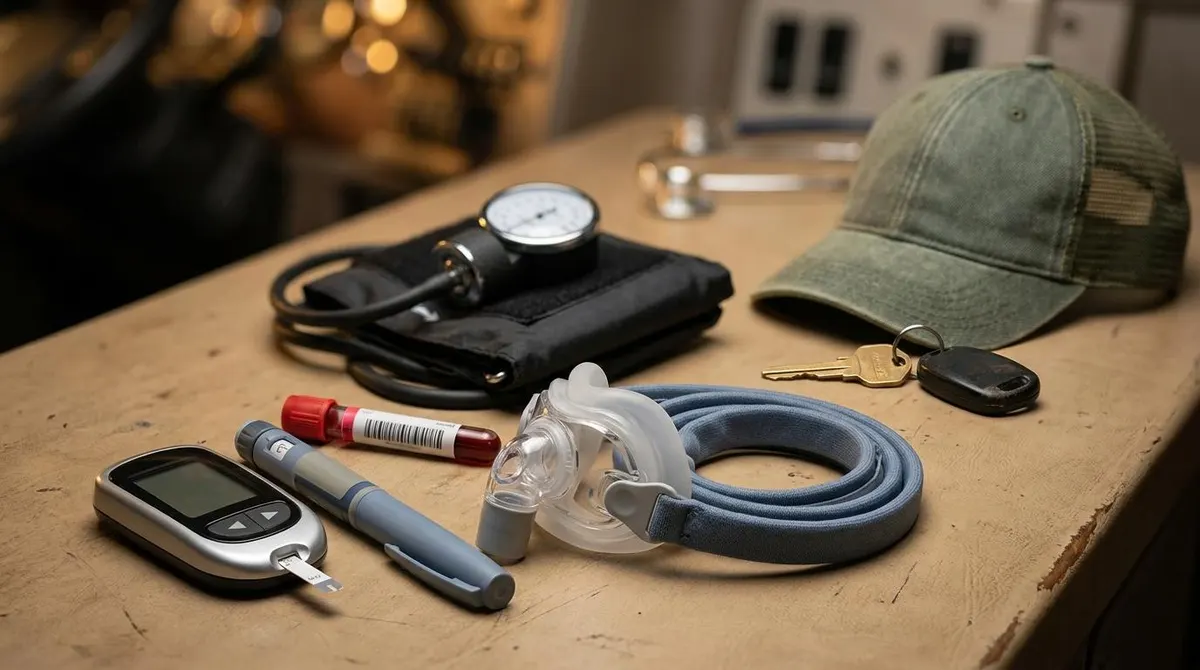
diabetes and high blood pressure frequently co-exist in commercial drivers and amplify each other's risk. Drivers with Type 1 or Type 2 diabetes require additional documentation at their DOT physical, including recent HbA1c results. If blood glucose is uncontrolled, the examiner may shorten the certification period independently of the blood pressure finding.
sleep apnea is another condition that both elevates blood pressure and affects CDL eligibility. The FMCSA-sponsored University of Pennsylvania study found that approximately 28 percent of commercial truck drivers have mild to severe sleep apnea. Untreated sleep apnea causes repeated nocturnal breathing interruptions that trigger the release of stress hormones, directly raising resting blood pressure over time. A driver whose blood pressure is poorly controlled despite medication may benefit from evaluation for undiagnosed sleep apnea, since treating it can independently reduce blood pressure.
If a certified medical examiner suspects sleep apnea based on BMI, neck circumference, or reported symptoms, they may require a sleep study before issuing or renewing a medical certificate. Dumbo Health offers a convenient at-home sleep test for commercial drivers at a transparent one-time cost of $149, with no insurance required, no prior authorisations, and no surprise bills. If a sleep disorder is identified, the Dumbo Health CPAP treatment programme starts at $59 per month with no contracts and includes physician interpretation, equipment, and follow-up care.
Comprehensive Health Assessment for Commercial Motor Vehicle (CMV) Drivers

The certified medical examiner evaluates commercial drivers across multiple systems during a DOT physical, including cardiovascular, respiratory, neurological, musculoskeletal, and urinary health. Blood pressure is one of the most weighted findings because hypertension is both highly prevalent among CMV drivers and directly linked to the risk of acute incapacitation events such as heart attack and stroke behind the wheel.
A research study published in PubMed found that the prevalence of hypertension among truck drivers was 45.2% in the study population, nearly double the general adult prevalence in many developed countries. Age above 40 and abdominal obesity were independently associated with elevated odds of hypertension in that cohort, which is relevant for the majority of experienced commercial drivers.
The DOT physical is not a pass-or-fail event in isolation. It is part of an ongoing health monitoring framework. Drivers who treat it as a regular health checkpoint, rather than a bureaucratic hurdle, are far more likely to maintain consistent certification and identify cardiovascular risks before they become career-ending events.
KEY TAKEAWAY: Blood pressure, diabetes, sleep apnea, and obesity frequently cluster together in commercial drivers and compound each other's certification risk. Addressing all of these conditions proactively, not just on exam day, is the most reliable path to long-term CDL eligibility.
The regulatory landscape can feel complex, but the essential resources are straightforward to access and use.
Common Myths About DOT Hypertension Debunked

Many commercial drivers carry inaccurate assumptions about how blood pressure affects their DOT medical certification. These misconceptions can lead to unnecessary disqualification, poor preparation, or missed opportunities to address a manageable condition before exam day.
MYTH: You cannot get a DOT medical card if you take blood pressure medication.
FACT: Blood pressure medication is fully compatible with DOT certification. The FMCSA requires only that your blood pressure is controlled to 140/90 mmHg or below and that the medication produces no side effects that impair your driving ability. Drivers on well-managed antihypertensive therapy routinely receive standard medical certificates. The key requirement is documented control, not medication-free status.
MYTH: A high reading at one exam permanently disqualifies you from driving commercially.
FACT: Even Stage 3 hypertension, the most severe category, has a defined pathway back to certification. Once blood pressure is controlled to 140/90 mmHg or below and treatment is well tolerated, the driver may be recertified at six-month intervals. Stage 1 and Stage 2 hypertension both have structured recertification pathways that allow drivers to return to full active certification status.
MYTH: White coat syndrome does not count and examiners will always fail you for a high reading.
FACT: Certified medical examiners are trained to recognise situational blood pressure elevation. The FMCSA Medical Advisory Criteria state that elevated findings should be confirmed by at least two subsequent measurements. Many examiners will allow a short rest period and take a second reading. Ambulatory blood pressure monitoring data documenting normal home readings can also be submitted to support a more accurate clinical assessment.
MYTH: Only your systolic number matters for DOT certification.
FACT: Both the systolic pressure and diastolic pressure contribute to the staging determination. A driver with a normal systolic reading but an elevated diastolic, for example 135/105 mmHg, falls into Stage 2 hypertension under FMCSA rules. Both numbers are evaluated independently, and whichever places you in a higher stage governs the certification outcome.
MYTH: Lifestyle changes alone are too slow to make a difference before a recheck exam.
FACT: Research published in the NIH National Library of Medicine found that participants following the DASH diet experienced significant reductions in blood pressure within two weeks of starting the plan. When combined with reduced sodium intake and aerobic exercise, short-term lifestyle interventions can produce clinically meaningful reductions in blood pressure that support a successful three-month recheck for Stage 2 drivers.
KEY TAKEAWAY: Most barriers to DOT certification related to blood pressure are manageable with the right information and the right clinical approach. Myths that discourage drivers from seeking treatment delay certification and increase long-term health risk.
Understanding the myths helps you navigate the regulatory environment with more confidence. The next step is knowing exactly where to find the authoritative rules.
Navigating the Regulations: Essential Resources for Commercial Drivers

The FMCSA hypertension guidelines are publicly available and accessible to every commercial driver. Knowing where to find them allows you to verify information independently and prepare for conversations with your certified medical examiner.
Demystifying Federal Motor Carrier Safety Regulations (FMCSRs)

The Federal Motor Carrier Safety Regulations are the body of federal rules governing commercial motor vehicle operations in the United States. The specific regulation governing medical certification is 49 CFR Part 391, and the blood pressure standard appears at 49 CFR 391.41(b)(6). This regulation states that a person is physically qualified to drive a commercial motor vehicle if they have no current clinical diagnosis of high blood pressure likely to interfere with their ability to operate a CMV safely.
The Medical Advisory Criteria, which translate this standard into the hypertension staging system with specific certification periods, are found in 49 CFR 391 Appendix A. These criteria were updated in the 2024 Medical Examiner Handbook to restore the original JNC-6 stage-based framework after a period in which alternative language was used. Drivers and examiners should always reference the current version of Appendix A to ensure they are applying the most current guidance.
Key Information from the Medical Examiner Handbook

The FMCSA Medical Examiner Handbook is the primary clinical reference document for certified medical examiners. It contains detailed guidance on how to evaluate each physical qualification standard, including hypertension, and explains the rationale behind the Cardiovascular Advisory Panel Guidelines that underpin the staging system. The handbook clarifies that hypertension alone is unlikely to disqualify a driver unless it is accompanied by target organ damage, and it provides structured decision trees for each stage.
Drivers who want to understand exactly how their examiner will evaluate their blood pressure reading can review the publicly available handbook. This transparency allows you to anticipate the outcome of your exam and prepare accordingly, bringing the right documentation and medications to support the most favourable clinical assessment.
The Value of Clear Communication with Your Certified Medical Examiner

Open, accurate communication with your certified medical examiner is one of the most underrated factors in a successful DOT physical outcome. Many drivers hesitate to disclose conditions or medications because they fear automatic disqualification, but undisclosed conditions discovered during the exam typically result in a worse outcome than proactively documented and managed conditions.
If you are managing hypertension, bring a letter from your treating physician describing your diagnosis, your current medication regimen, your most recent blood pressure readings, and a clinical statement that your treatment is well tolerated. If you have had a prior elevated reading, bring evidence of what you have done to address it. Certified medical examiners have meaningful discretion in their certification decisions, and a well-documented medical history works in your favour. Find providers in your area using the FMCSA National Registry to ensure you are seeing a properly credentialled examiner who can issue a valid medical certificate.
KEY TAKEAWAY: The full regulatory text governing DOT blood pressure standards is publicly available in 49 CFR 391 Appendix A and the FMCSA Medical Examiner Handbook. Reading the source documents directly puts you in control of your certification preparation.
The final and most important layer is building a long-term strategy that keeps your blood pressure and your career on solid ground.
Sustaining Your Career: A Proactive Approach to Long-Term CDL Eligibility

Long-term CDL eligibility requires treating your cardiovascular health as an ongoing professional responsibility, not a biennial administrative task. Drivers who build consistent healthy habits between certification exams maintain better blood pressure control and experience fewer disruptions to their driving careers.
Continuous Blood Pressure Control and Health Monitoring

Blood pressure control management between DOT physical exams is the single most effective strategy for maintaining uninterrupted certification. Use a home blood pressure monitor regularly, ideally tracking readings two to three times per week at the same time of day. Keep a written log and share it with your treating physician at every appointment.
If you are on antihypertensive medication, refill prescriptions promptly and do not skip doses. Inconsistent medication adherence is the most common reason drivers who were previously certified experience a failed recheck. Long-haul schedules can make it easy to miss doses, so consider using a pill organiser or phone reminder to maintain consistency while on the road.
Building Healthy Habits for a Lifetime of Driving Safety

Commercial driving is a physically demanding and sedentary profession simultaneously, which creates a unique cardiovascular risk profile. Regular aerobic exercise, consistent sleep schedules, reduced sodium intake, and moderation of alcohol consumption all directly lower blood pressure and improve long-term heart health. The Sleep Foundation recommends that adults aim for seven to nine hours of sleep per night, a target that is meaningful for commercial drivers because chronic sleep deprivation independently raises blood pressure and increases the risk of cardiovascular events.
In real-world use, drivers who make incremental changes, such as switching from fast food to higher-potassium, lower-sodium meal options and completing a 20 to 30 minute walk during each mandatory rest break, often see measurable improvements in blood pressure within four to eight weeks. These changes are not only health-positive but financially practical, since maintaining a full two-year certification avoids the added cost and inconvenience of more frequent physical exams.
Planning for Recertification: Staying Ahead of the Requirements

Plan your recertification appointment at least four to six weeks before your current certificate expires. This gives you time to address any unexpected findings, obtain specialist referrals if required, and gather documentation from your treating physician without rushing. If your certificate expires while your application for recertification is pending, you cannot legally operate a commercial motor vehicle, so timing matters.
If you are in a Stage 1 or Stage 2 certification cycle and approaching your annual exam date, schedule a pre-exam appointment with your physician two to three weeks in advance. This allows time to adjust medication if your readings have drifted upward. Many drivers who receive a shortened certification benefit from a structured approach to the comprehensive sleep and health solutions available through telehealth platforms, which provide access to physician review and treatment without requiring time away from work.
KEY TAKEAWAY: Proactive health management between certification exams, including regular home monitoring, medication adherence, and physician follow-up, is the most reliable strategy for maintaining long-term CDL eligibility and career stability.
Frequently Asked Questions
What is the maximum blood pressure for a DOT physical?
The maximum blood pressure for receiving any form of DOT medical certification is 179/109 mmHg, which corresponds to Stage 2 hypertension. At this level, the certified medical examiner may issue a one-time, non-renewable three-month certificate to allow the driver time to initiate antihypertensive drug therapy and reduce the reading to 140/90 mmHg or below. A reading of 180/110 mmHg or higher is considered Stage 3 hypertension and results in immediate disqualification from operating a commercial motor vehicle. For a standard two-year medical card, blood pressure must be below 140/90 mmHg on exam day.
Can I get a DOT medical card with Stage 1, 2, or 3 hypertension?
Yes, with specific conditions attached to each stage. Stage 1 hypertension, defined as 140 to 159 systolic and/or 90 to 99 diastolic, qualifies you for a one-year certificate with annual recertification required. Stage 2 hypertension, defined as 160 to 179 systolic and/or 100 to 109 diastolic, qualifies you for a one-time three-month certificate, after which you must demonstrate a reading at or below 140/90 mmHg to receive a one-year certificate. Stage 3 hypertension at 180/110 mmHg or higher results in immediate disqualification, but drivers can regain certification once blood pressure is controlled to 140/90 or below, though they are permanently restricted to six-month certification intervals.
What happens if my blood pressure is high during my DOT physical?
If your blood pressure is elevated during the exam, the certified medical examiner should confirm the reading with at least two subsequent measurements. You may request a short rest period before the second reading. If the elevated reading is confirmed, your certification outcome depends on which stage your reading falls into. For Stage 1, you receive a one-year certificate. For Stage 2, you receive a three-month certificate and must begin antihypertensive treatment. For Stage 3, you are disqualified and must bring blood pressure under control before returning for a new exam. In all cases, connecting with your treating physician immediately after the exam is the most important next step.
How soon can I get a recheck after an elevated reading?
For Stage 2 hypertension, your recheck appointment can occur at any point within the three-month certification window once you have initiated treatment and believe your reading is controlled. You do not need to wait until the three-month mark. Many drivers schedule their recheck four to six weeks after starting medication, once their treating physician confirms the blood pressure is consistently at or below 140/90 mmHg. For Stage 3 disqualification, there is no mandatory waiting period other than demonstrating controlled blood pressure with well-tolerated treatment before a certified medical examiner. Acting promptly rather than waiting minimises the time off the road.
Which anti-hypertensive drug therapy is acceptable for DOT drivers?
The FMCSA does not prohibit any specific class of antihypertensive medication. Beta-blockers, ACE inhibitors, ARBs, calcium channel blockers, and diuretics are all acceptable provided they effectively control blood pressure to 140/90 mmHg or below and produce no side effects that could impair safe driving. The key requirement is that the medication is well tolerated, meaning no drowsiness, dizziness, impaired vision, or other side effects that could reduce driving ability. Your treating physician and certified medical examiner will evaluate the full medication profile. Bring your current medication list with dosages to every DOT physical exam.
What if my general physician is not a certified medical examiner?
A general physician who has not completed FMCSA-required training and passed the National Registry certification exam cannot legally conduct a DOT physical or issue a valid Medical Examiner's Certificate, regardless of their qualifications or specialty. Your regular physician can manage your blood pressure treatment, provide documentation of your condition, and prepare a letter for your certified medical examiner, but the physical examination itself and the issuance of the medical card must be performed by a provider listed on the FMCSA National Registry. You can search for certified medical examiners near you using the FMCSA National Registry tool available at the FMCSA website.
Does lifestyle change really help me pass my DOT physical and maintain my medical certificate?
Yes, and the evidence is clear. Research published in the NIH National Library of Medicine found that participants following the DASH diet experienced reductions in blood pressure within two weeks of beginning the plan. When combined with regular aerobic exercise and sodium reduction, lifestyle changes can lower systolic blood pressure by 10 to 16 mmHg in individuals with hypertension, which is often sufficient to move a Stage 2 reading into the normal certification range. In real-world use, drivers who combine medication with consistent lifestyle changes typically achieve better blood pressure control than those who rely on medication alone. Starting changes immediately after an elevated exam reading, rather than in the final week before a recheck, produces the most reliable results.
Conclusion: Your Commitment to Health, Safety, and Your Driving Career
DOT hypertension guidelines exist to protect both commercial drivers and the public from the serious risks that uncontrolled high blood pressure creates behind the wheel. Every stage of hypertension has a structured pathway that balances public safety with a genuine commitment to keeping qualified drivers on the road. The key to navigating these guidelines successfully is not luck or timing. It is consistent health management, accurate documentation, and proactive communication with both your treating physician and your certified medical examiner.
If you are managing hypertension and also concerned about sleep apnea, which directly affects blood pressure control and CDL eligibility, explore the Dumbo Health sleep apnea assessment to understand your risk and access convenient, affordable care designed specifically for working drivers.
Related DOT Physical Topics
- Does a DOT Physical Test for Weed or THC The Complete Guide for Commercial Drivers
- Can You Get a DOT Physical in Any State The Complete Guide for Commercial Drivers
- Can You Get a DOT Physical Online The Complete Guide for Commercial Drivers
- Remote DOT Physical The Complete Guide for Commercial Drivers
- DOT Physical Forms & Paperwork The Complete Guide for Commercial Drivers
- What Happens During the DOT Physical Exam The Complete Guide for Drivers
- Online DOT Physical The Complete Guide for Commercial Drivers and Medical Examiners
- Medical Examiner's Certificate (Form MCSA-5876) The Complete Guide for Commercial Drivers
- Home Sleep Apnea Test for Commercial Drivers The CDL Holder's Complete Guide
- Online DOT Physical Without Insurance A Complete Guide for Commercial Drivers
- Online DOT Physical Self-Pay The Complete Guide for CDL Drivers and Owner-Operators
- DOT Medical Exam Self-Pay A Complete Guide for Commercial Drivers
- What are the current DOT requirements for sleep apnea testing for commercial drivers
- Medical Examination Report (MER) – Form MCSA-5875 The Complete Guide for Commercial Drivers
- The Ultimate DOT Physical Guide for Commercial Drivers (2025–2026)
- Can You Get a Second Opinion on Your DOT Physical A Complete Guide for Commercial Drivers
- DOT Physical ICD-10 & Billing Codes The Complete Guide for Accurate Compliance and Reimbursement
- Navigating the Florida DOT Physical Your Essential Guide for CDL Drivers
- DOT physical self pay guide for commercial drivers paying out of pocket
- How to Pass a DOT Physical The Complete Commercial Driver's Guide
- What are the current FMCSA guidelines on sleep apnea for commercial drivers
- What Happens If Your DOT Physical Expires Compliance Guide for Commercial Drivers
- DOT Physical Requirements A Complete Guide for CDL Drivers
- Essential 171 DOT Definitions for Commercial Drivers
- Navigating DOT Stroke Guidelines for CMV Drivers What You Need To Know
- DOT Physical Insurance & Recertification The Complete Driver's Guide
- DOT Physical Blood Pressure Requirements What Drivers Need to Know
- The Comprehensive Guide to Suboxone, Sleep Apnea, and FMCSA Compliance for Commercial Motor Vehicle Operators
- Can You Fail a DOT Physical for High Blood Pressure
- BMI for DOT Physical What Commercial Drivers Need to Know
- The DOT Physical Exam Ensuring You're Fit for the Road
- DOT Physical Out of Pocket What Commercial Drivers Actually Pay
- What Is the Urine Test for in a DOT Physical
- Your Complete Guide What's Included in a DOT Physical Exam
- What blood pressure do you need to pass a DOT physical
- DOT Physical Insurance or Self Pay How to Choose the Right Payment Option for Your Exam
- DOT Physical Chiropractor Your Complete Guide to CDL Exams
- DOT Physical at Urgent Care What Commercial Drivers Need to Know
- Can You Pass a DOT Physical with High Blood Pressure
- DOT Physical Texas The Essential Guide to Your Exam, Medical Card, and CDL Compliance
- What Does DOT Stand for in a DOT Physical
- What Is the Difference Between a DOT and Non-DOT Physical
- What drugs do they test for in a DOT drug test
- How Do You Submit Your DOT Physical to the DMV
- Is a drug test required for a DOT physical
- DOT Physical Cost Breakdown What Drivers Pay & Why
- Sleep Apnea Test for CDL Drivers
- What Forms Do You Need for a DOT Physical
- Can You Fail a DOT Physical for Being Overweight
- How can drivers with sleep apnea qualify again after a failed DOT physical
- Why DOT Sleep Tests at Home Matter for Your Career and Health
- Are there legal requirements for drivers with sleep apnea
- New DOT Physical Requirements What Drivers MUST Know About New Updates
- Online DOT Exam What Drivers and Medical Examiners Need to Know
- Is a DOT physical the same as a regular physical
- At Home Sleep Test for Truck Drivers
- DOT Physical & Drug Test What Drivers Need to Know
- Non-DOT Physical A Comprehensive Guide to Workforce Health and Safety
- Is a Sleep Study Required for a DOT Physical
- Guide to Obtaining and Managing Your DOT Medical Card Online
- Do They Check for Hernia During a DOT Physical
- What Are the Requirements to Pass a DOT Physical
- What eye chart is used for a DOT physical
- Failing a DOT Physical What Every Commercial Driver Needs to Know
- Are There New DOT Rules or Laws on Sleep Apnea Testing
- What Can Disqualify You From a DOT Physical
- Does a DOT physical include a drug test
- Can You Pass a DOT Physical with Epilepsy
- DOT Physical Self Pay Cost
- 2026 DOT Inspection Dates
- DOT Physical Exam Basics
- When Can Sleep Apnea Affect a DOT Physical
- Can You Pass a DOT Physical With a Hernia
- Best Treatments for Sleep Apnea to Improve Driving Safety
- Can You Pass a DOT Physical With One Eye
- Can You Pass a DOT Physical With a Pacemaker
- Telehealth Dot Physical
- What Should You Bring to a DOT Physical
- Who needs a DOT physical
- DOT Physical & Alcohol Requirements
- DOT Physical Online Cost
- DOT Physical Vision & Eye Requirements
- Why do they measure your neck during a DOT physical
- Navigating Your DOT Physical with Common Medical Conditions
- What Precautions Should Drivers With Sleep Apnea Take
- Walk In DOT Physical Self Pay
- Can You Get a DOT Physical Online
- DOT Physical Cash Pay
- Same Day DOT Physical
- Virtual DOT Physical
- Can you fail a DOT physical because of sleep apnea
- Do They Check Your Private Parts During a DOT Physical
- Can you pass a DOT physical with sleep apnea
- What should I expect at a DOT physical
- What Does a DOT Physical Consist Of
- What happens if you fail a DOT physical due to sleep apnea
- Can You Pass a DOT Physical with Diabetes
- Does insurance cover a DOT physical
- DOT Physical Duration and Validity How Long Your Medical Card Lasts
- DOT sleep apnea test at home
AI summary
DOT hypertension guidelines are FMCSA medical standards that determine CDL medical certification based on blood pressure at the DOT physical. FMCSA uses the JNC-6 staging framework (not the 2017 ACC/AHA 130/80 threshold) under 49 CFR 391.41(b)(6) and 49 CFR 391 Appendix A. Key certification thresholds: Normal: below 140/90 mmHg typically qualifies for up to a 2-year medical card (examiners may shorten if on treatment). Stage 1 (140-159/90-99): eligible for a 1-year card; at renewal, BP must be 140/90 or lower; a one-time 3-month extension may be granted. Stage 2 (160-179/100-109): one-time, non-renewable 3-month card; must reduce to 140/90 or lower for a 1-year card or be disqualified. Stage 3 (180/110 or higher): immediate disqualification; once controlled to 140/90 or lower, certification is limited to 6-month intervals. Exam process and constraints: Elevated readings should be confirmed with repeat measurements. Medical examiner discretion increases when target organ damage (heart, cerebrovascular, kidney) is suspected. Antihypertensive medications are permitted if effective and without impairing side effects. Preparation includes avoiding caffeine/tobacco/exertion before the exam, taking prescribed meds, home BP logs, and considering ambulatory monitoring for white coat hypertension. Lifestyle tools include DASH diet, sodium reduction, exercise, sleep, and stress management; diabetes and sleep apnea can shorten certification and worsen BP control.

Nicolas Nemeth
Co-Founder
Nico is the co-founder of Dumbo Health, a digital sleep clinic that brings the entire obstructive sleep apnea journey home. Patients skip the sleep lab and the long wait to see a specialist. Dumbo Health ships an at home test, connects patients with licensed sleep clinicians by video, and delivers CPAP or a custom oral appliance with ongoing coaching and automatic resupply in one clear subscription.
Keep reading

How Long Does a DOT Physical Take? A Complete Guide for Commercial Drivers

What Happens If You Fail a DOT Drug Test? The Complete Guide for Commercial Drivers


