What Does a Home Sleep Apnea Test Consist Of? Sensors, Equipment, and What to Expect
A home sleep apnea test (HSAT) is a one-night, at-home study that records breathing-related signals to evaluate obstructive sleep apnea. It typically measures nasal airflow, blood oxygen saturation, heart rate, and breathing effort using a nasal cannula, finger pulse oximeter, and chest or abdominal belts connected to a small recorder. The article explains how to set up the equipment, what to do on test day, and how to avoid common issues like nail polish interfering with oximeter readings. It also explains how results are scored using the apnea-hypopnea index (AHI) and what happens if results are inconclusive. You will learn when HSAT is appropriate, key limitations versus in-lab polysomnography, and typical cost and turnaround timelines.
Struggling with sleep?
Find out if sleep apnea is the reason.
FDA-cleared. $149 flat. Physician-reviewed results in 48 hours.

What Does a Home Sleep Apnea Test Consist Of? Sensors, Equipment, and What to Expect
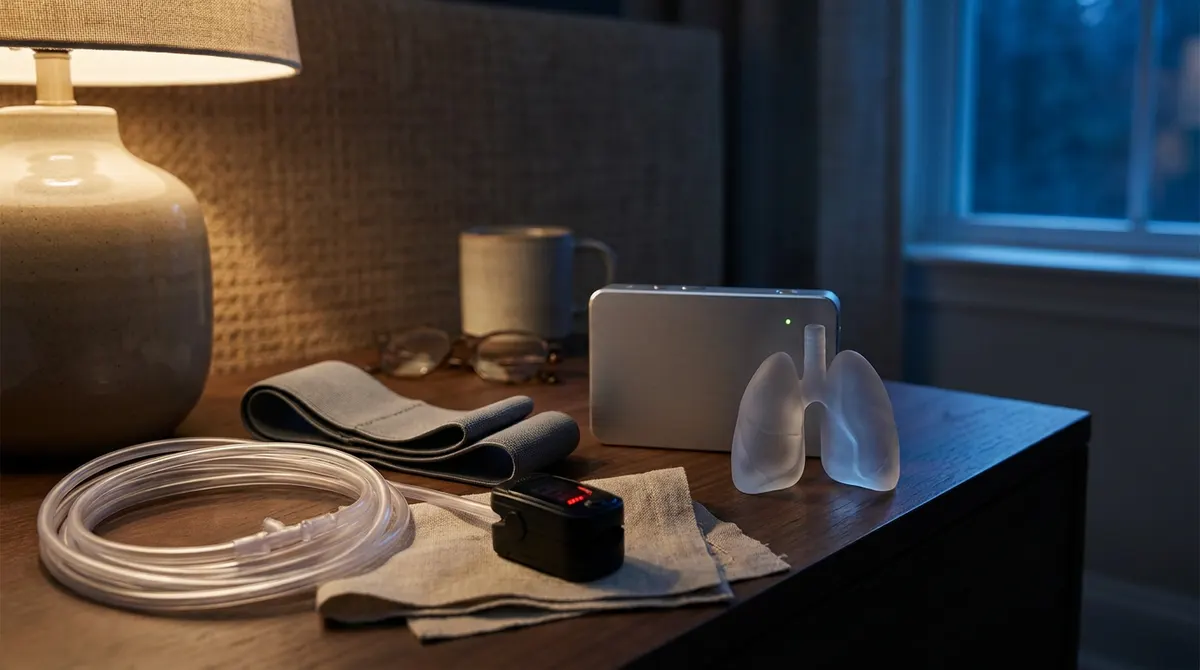
A home sleep apnea test consists of a portable device with sensors that measure your breathing patterns, blood oxygen levels, heart rate, and airflow while you sleep in your own bed. The test is designed to detect obstructive sleep apnea without requiring an overnight stay at a sleep center. According to the American Academy of Sleep Medicine, home sleep apnea testing is an accepted method for diagnosing obstructive sleep apnea in adults with a moderate to high pre-test probability of the condition. This article is for anyone considering a home sleep test, including commercial drivers facing DOT requirements, patients referred by a physician, and people experiencing symptoms like loud snoring, gasping, or excessive daytime fatigue. You will learn exactly what equipment is involved, how each sensor works, how to prepare for the test, what happens with your results, and how home sleep apnea testing compares to an in-lab polysomnography. Understanding the process before your test night removes uncertainty and helps you get accurate results.
Quick Answer
A home sleep apnea test consists of a portable recording device with sensors that measure nasal airflow, blood oxygen levels, heart rate, and breathing effort while you sleep at home. Most devices use a nasal cannula, a finger-mounted pulse oximeter, and chest or abdominal belts. The test records one night of sleep data, which a physician then interprets to determine whether obstructive sleep apnea is present and how severe it is. dumbo.health offers a complete home sleep test for $149 with physician interpretation available through monthly care plans starting at $59 per month.
Key Takeaways
- A home sleep apnea test typically measures four core signals: nasal airflow, blood oxygen saturation, heart rate, and respiratory effort
- The test uses sensors including a nasal cannula, pulse oximeter, and elastic chest or abdominal belts connected to a small recording device
- home sleep apnea testing is validated for diagnosing obstructive sleep apnea but is not recommended for central sleep apnea or other complex sleep disorders
- Results are scored by a physician or sleep specialist using the apnea-hypopnea index, with 5 or more events per hour indicating sleep apnea
- dumbo.health provides a home sleep test for $149 with no insurance required, and ongoing CPAP therapy plans starting at $59 per month
- Most home sleep tests take one night to complete, with results typically available within days of returning the device
What a Home Sleep Apnea Test Actually Measures
A home sleep apnea test measures the physiological signals that indicate whether your breathing stops or becomes restricted during sleep. These measurements allow a physician to calculate how many apnea and hypopnea events occur per hour, known as the apnea-hypopnea index (AHI).
home sleep apnea testing, sometimes abbreviated as HSAT, focuses on four core data channels. Each channel captures a different dimension of what happens to your body during sleep.
Airflow
A nasal cannula sits just below your nostrils and detects the movement of air as you breathe in and out. This sensor identifies complete breathing pauses (apneas) and partial reductions in airflow (hypopneas). The airflow channel is the primary measurement used to count apnea events.
Blood Oxygen Levels
A pulse oximeter clips onto your fingertip and continuously measures your oxygen saturation levels. When breathing pauses occur, oxygen levels drop. These desaturation events confirm the clinical significance of each apnea or hypopnea. The National Heart, Lung, and Blood Institute notes that repeated drops in blood oxygen during sleep are a hallmark of obstructive sleep apnea and can increase cardiovascular risk over time.
Heart Rate
The same pulse oximeter that measures oxygen also tracks your heart rate throughout the night. Heart rate changes often accompany apnea events. When breathing stops, heart rhythms can slow or spike as the body responds to falling oxygen. Tracking heart rate patterns helps a sleep medicine specialist identify the severity and physiological impact of sleep-disordered breathing.
Breathing Effort
Flexible elastic belts worn around the chest and sometimes the abdomen detect the expansion and contraction of your torso as you breathe. These effort belts distinguish obstructive sleep apnea from central sleep apnea. In obstructive events, the chest continues to move because the body is trying to breathe against a collapsed upper airway. In central events, chest movement stops because the brain temporarily fails to send the signal to breathe.
DID YOU KNOW: According to the Sleep Foundation, obstructive sleep apnea accounts for roughly 80 to 90 percent of all sleep apnea cases, making it the primary condition that home sleep tests are designed to detect.
KEY TAKEAWAY: A home sleep apnea test measures airflow, blood oxygen levels, heart rate, and breathing effort to identify and quantify apnea events during sleep.
Understanding these measurements sets the foundation for recognizing the specific equipment and sensors involved in the test.
Home Sleep Test Equipment and Sensors Explained
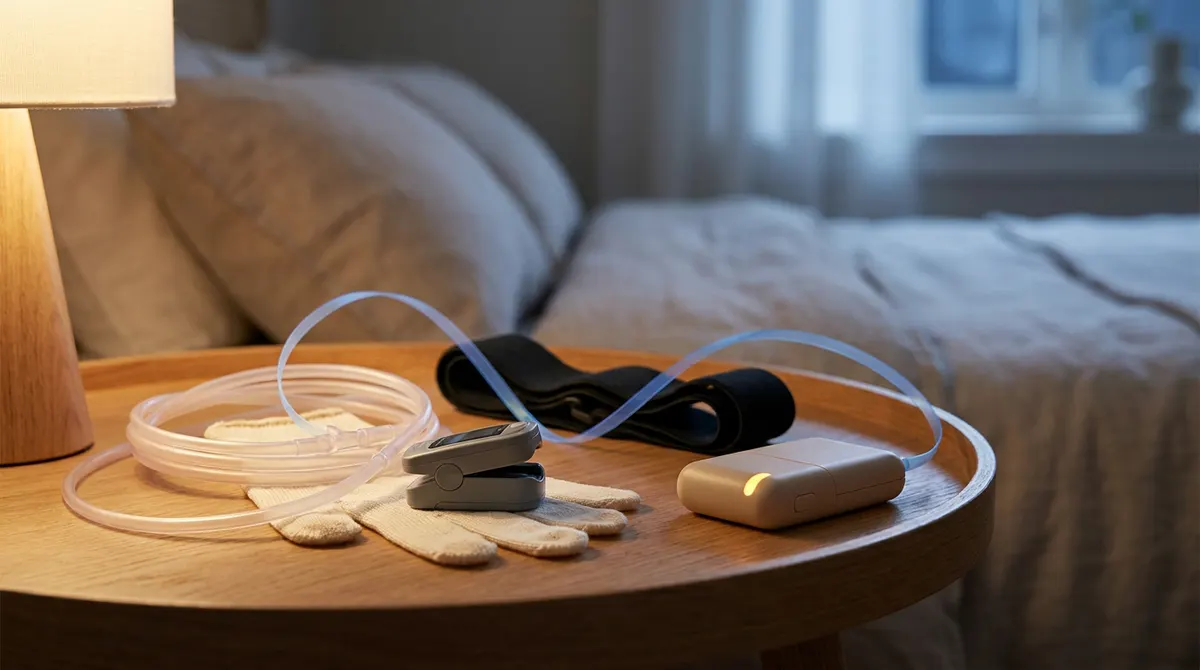
Each home sleep test device uses a combination of sensors connected to a compact recording device that stores your sleep data. The equipment is designed to be simple enough for a patient to set up at home without medical assistance.
Nasal Cannula
The nasal cannula is a thin, flexible tube that loops over your ears and rests at the entrance of your nostrils. It detects the pressure changes created by each breath. This is the primary air movement sensor and provides the data used to identify apneas and hypopneas. Most patients find the cannula lightweight and minimally disruptive.
Pulse Oximeter
A pulse oximeter is a small sensor that attaches to your fingertip. It uses light wavelengths to measure oxygen saturation levels and heart rate continuously throughout the night. Some devices use a clip-style oximeter, while others use a soft, flexible wrap. The oximeter is one of the most critical sensors because drops in blood oxygen confirm the clinical significance of breathing pauses.
IMPORTANT: If you wear acrylic nails or nail polish on the finger where the oximeter clips, the sensor may not read accurately. Remove nail polish or acrylic nails from at least one finger before your test night.
Chest Strap and Abdominal Belt
Flexible elastic belts wrap around your chest and sometimes your abdomen. These belts contain sensors that detect the rise and fall of your torso with each breath. The breathing effort data helps differentiate between obstructive and central apnea events. The belts are adjustable and stretch to accommodate normal sleeping movement.
Recording Device
All sensors connect to a small, portable recording device. This unit stores the data collected during your sleep session. Depending on the device model, the recording unit may clip to a belt, attach to a wristband, or rest on a bedside surface. After your test night, the data is either uploaded to a cloud-based server or the device is returned to the provider for download and interpretation.
Common HSAT Device Models
Several FDA-approved home sleep test devices are used by providers across the country. The WatchPAT One, manufactured by Itamar Medical, is a wrist-worn disposable HSAT device that measures peripheral arterial tone, oxygen saturation, heart rate, and body position. The SleepImage Ring is another compact option that uses finger-based sensors. Lofta offers devices that bundle a traditional multi-sensor setup with a smartphone app for guided setup and data transmission.
dumbo.health provides an at-home sleep test for $149 that includes the testing device and one night of recording. No insurance card is required, and there are no prior authorizations to navigate.
Comparing Home Sleep Test Equipment to In-Lab Sensors
Home sleep tests use fewer sensors than an in-lab polysomnography. The following comparison highlights the key differences between the two testing approaches.
Number of Sensors
- Home Sleep Test: 3 to 5 sensors (airflow, oximeter, effort belts, optional position sensor)
- In-Lab polysomnography: 15 to 25 sensors including EEG leads for brain waves, EMG, EOG, and video monitoring
What Is Measured
- Home Sleep Test: Airflow, blood oxygen, heart rate, breathing effort, and sometimes body position
- In-Lab polysomnography: All of the above plus brain waves, eye movement, muscle tone, leg movement, and sleep stages
Setup Complexity
- Home Sleep Test: Self-applied by the patient using simple instructions
- In-Lab Polysomnography: Applied by a trained respiratory therapist or sleep technologist at a sleep center
Sleep Staging
- Home Sleep Test: Does not measure sleep stages (no EEG)
- In-Lab Polysomnography: Full sleep architecture analysis with staging
For most adults with a high clinical suspicion of obstructive sleep apnea, a home sleep test provides sufficient data for diagnosis. In-lab polysomnography is reserved for complex cases, suspected central sleep apnea, or when an HSAT produces inconclusive results.
KEY TAKEAWAY: Home sleep test equipment typically includes a nasal cannula, pulse oximeter, chest strap, and a small recording device, which together capture the essential data needed to diagnose obstructive sleep apnea.
Knowing the equipment helps you prepare properly, which is the next critical step before your test night.
How to Prepare for a Home Sleep Apnea Test
Proper preparation directly affects the accuracy of your home sleep test results. Following a few straightforward steps on the day of your test ensures the sensors capture clean data and reduces the chance of needing a repeat study.
Preparation Checklist Before Your Test Night
- Avoid caffeinated products after noon on the day of your test
- Avoid alcoholic beverages for at least 24 hours before testing, as alcohol relaxes the airway and can distort results
- Remove nail polish or acrylic nails from the finger where the pulse oximeter will be placed
- Avoid hair styling products near your face or forehead that could interfere with sensor placement
- Take your regular prescription medication unless your doctor advises otherwise
- Charge or check the battery of the recording device if your provider instructs you to do so
- Review the setup instructions or watch the instructional video provided with your device
- Set up the device and practice sensor placement before you are ready to sleep
- Sleep in your usual position and environment to capture a representative night of data
- Complete any required sleep questionnaire provided by your provider or testing service
TIP: Many patients report that reading through the sensor placement instructions twice before bed reduces setup anxiety and improves data quality.
What to Avoid
Caffeine and alcohol are the two most common substances that affect test accuracy. Caffeine can delay sleep onset and reduce total recording time, while alcohol can worsen airway collapses and produce artificially elevated apnea events. Both should be avoided in the hours leading up to your test.
Body lotions or oils on the fingertip can also interfere with the pulse oximeter reading. Clean, dry hands produce the most reliable oxygen saturation data.
KEY TAKEAWAY: Avoiding caffeine, alcohol, nail polish, and hair styling products on your test day helps ensure your home sleep test produces accurate, usable data.
With preparation covered, the next step is understanding exactly what happens during the test itself.
Step-by-Step: What Happens During a Home Sleep Apnea Test
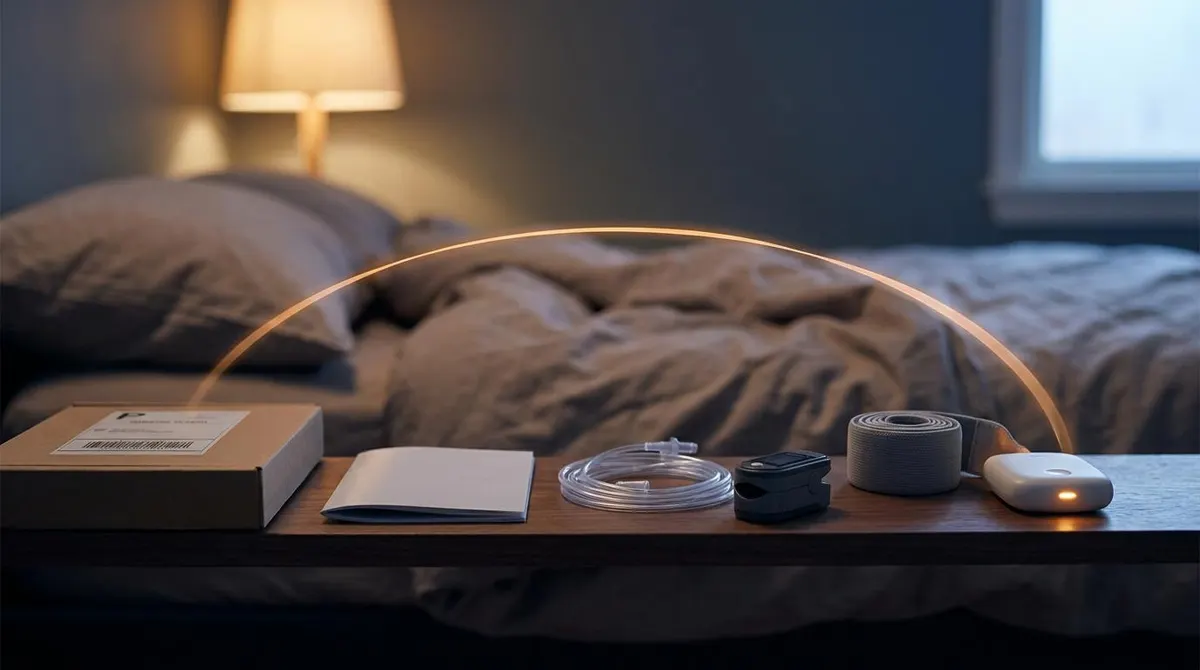
A home sleep apnea test follows a straightforward process from ordering to results. Understanding each step removes uncertainty and helps you complete the test successfully on the first attempt.
How to Complete Your Home Sleep Test
1. Order your test through a provider or testing service. dumbo.health offers a home sleep apnea test for $149 with no insurance required and no prior authorization needed.
2. Receive the testing device by mail or from your provider's office. Review all setup instructions, sensor components, and the recording device before your test night.
3. On your test night, apply the sensors in order. Place the nasal cannula under your nose and loop the tubing over your ears. Clip the pulse oximeter onto your fingertip. Wrap the chest strap around your torso at the level of your sternum. If an abdominal belt is included, position it around your midsection.
4. Turn on the recording device according to the instructions. Some devices start recording automatically when sensors detect contact, while others require pressing a button.
5. Go to sleep in your normal bed, in your usual sleeping position. The device records data continuously throughout the night.
6. In the morning, remove all sensors and turn off the recording device. Some devices upload data automatically through a smartphone app or connected care platform. Others require you to return the device to the provider.
7. A physician or sleep medicine specialist reviews the recorded data, scores the apnea events, and generates a clinical interpretation of your results.
8. You receive your results and discuss next steps with your provider, which may include a CPAP prescription, a referral to a sleep specialist, or a recommendation for an in-lab polysomnogram if the data is inconclusive.
After completing these steps, most patients have a clear diagnosis within days. With dumbo.health's Premium Plan at $89 per month, patients receive priority results turnaround along with physician interpretation and a dedicated sleep coach.
KEY TAKEAWAY: A home sleep apnea test involves ordering a device, applying sensors before bed, sleeping one night with the equipment on, and returning the device for physician interpretation of results.
Once the test is complete, understanding how your results are interpreted becomes the most important next step.
How Home Sleep Test Results Are Interpreted
home sleep test results are interpreted by a physician or sleep specialist who reviews the recorded data and calculates the apnea-hypopnea index. The AHI is the primary metric used to diagnose sleep apnea and determine its severity.
What the AHI Score Means
The apnea-hypopnea index counts the average number of apnea events and hypopnea events per hour of recorded time. An apnea event is a complete pause in airflow lasting at least 10 seconds. A hypopnea is a partial reduction in airflow that causes a drop in blood oxygen or an arousal from sleep.
AHI Severity Classification
- AHI below 5: Normal (no clinically significant sleep apnea)
- AHI 5 to 14: Mild obstructive sleep apnea
- AHI 15 to 29: Moderate obstructive sleep apnea
- AHI 30 or higher: Severe obstructive sleep apnea
The American Academy of Sleep Medicine defines these thresholds and uses them as the standard for clinical diagnosis. A physician will also consider the oxygen desaturation index, which measures how many times per hour your blood oxygen drops by 3 percent or more.
What Happens After Diagnosis
If your HSAT results confirm obstructive sleep apnea, your physician may recommend CPAP therapy, which is the gold-standard therapy for moderate to severe cases. Other treatments may include a custom-fit mouthpiece (oral appliance therapy), positional therapy, weight management, or in some cases medication or GLP-1 care for patients where obesity is a contributing factor.
For patients diagnosed through dumbo.health, CPAP therapy and equipment are included in all monthly care plans. The Essentials Plan at $59 per month covers physician interpretation, a CPAP prescription, equipment, and standard follow-up care. No contracts are required and patients can cancel anytime.
When Results Are Inconclusive
Not every home sleep test produces a definitive diagnosis. If data quality is poor due to sensor displacement, insufficient recording time, or technical issues, the test may need to be repeated. In cases where the AHI is borderline or the clinical picture does not match the HSAT findings, a sleep specialist may recommend an in-lab polysomnography for a more comprehensive sleep study.
A polysomnogram measures brain waves, eye movements, and muscle activity in addition to the respiratory signals captured by an HSAT. This makes it the definitive diagnostic tool for complex sleep disorders, including central sleep apnea, periodic limb movement disorder, and narcolepsy.
KEY TAKEAWAY: Home sleep test results are scored using the apnea-hypopnea index, with 5 or more events per hour indicating sleep apnea, and a physician determines severity and recommends treatment based on the full clinical picture.
Knowing how results work leads naturally to the question of how home testing compares to the traditional in-lab sleep study.
Home Sleep Test vs. In-Lab Polysomnography
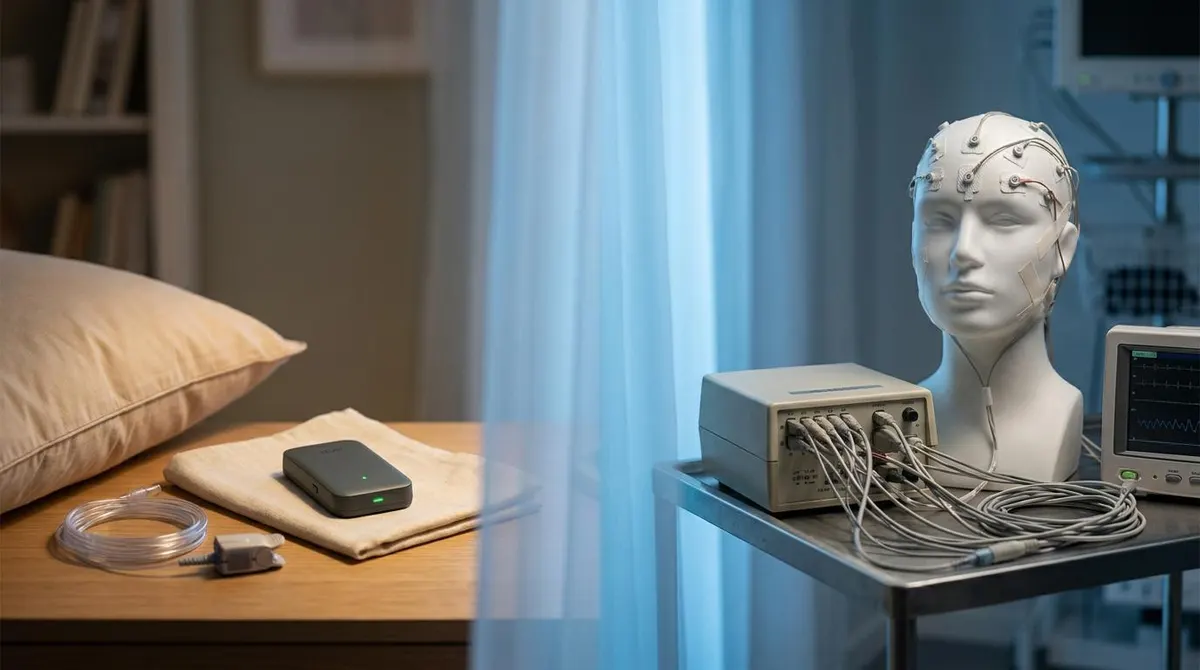
A home sleep test is a simplified version of the in-lab polysomnography that captures enough data to diagnose obstructive sleep apnea in most adults. The key difference is that polysomnography monitors brain activity, sleep stages, and a wider range of physiological signals, while an HSAT focuses specifically on respiratory function.
Setting
- Home Sleep Test: Your own bed at home
- Polysomnography: Sleep lab, sleep center, or hospital facility
Cost
- Home Sleep Test: Typically $149 to $500 out of pocket
- Polysomnography: Often $1,000 to $3,000 or more without insurance
Convenience
- Home Sleep Test: High, no travel or overnight stay required
- Polysomnography: Lower, requires scheduling and an overnight stay at a facility
Data Collected
- Home Sleep Test: Airflow, oxygen levels, heart rate, breathing effort
- Polysomnography: All HSAT channels plus EEG brain waves, eye movement, muscle tone, leg movement, body position, and video
Best For
- Home Sleep Test: Adults with moderate to high suspicion of obstructive sleep apnea
- Polysomnography: Complex cases, suspected central sleep apnea, inconclusive HSAT results, or patients with multiple medical conditions
Turnaround Time
- Home Sleep Test: Results typically available within 3 to 7 business days
- Polysomnography: Results may take 1 to 3 weeks depending on the facility
The Mayo Clinic notes that home sleep tests are appropriate for many patients but recommends in-lab polysomnography when the clinical presentation is complex or when a home test does not explain the symptoms adequately.
For most patients with straightforward symptoms of obstructive sleep apnea such as snoring, gasping, and daytime fatigue, a home sleep test provides reliable diagnostic data at a fraction of the cost. dumbo.health's home sleep test at $149 is one of the most accessible entry points for patients who need testing without the delays of insurance authorization or waiting for sleep lab availability near you.
KEY TAKEAWAY: A home sleep test is more affordable and convenient than polysomnography and is clinically appropriate for most adults suspected of having obstructive sleep apnea, while polysomnography remains necessary for complex or inconclusive cases.
Cost and insurance realities are often the deciding factor for patients choosing between testing options.
Cost, Insurance, and Medicare Coverage for Home Sleep Testing
The cost of a home sleep apnea test ranges from $149 to $500 when paying out of pocket, depending on the provider and device used. Insurance coverage varies, and understanding your options upfront prevents unexpected bills and delays.
Cash-Pay vs. Insurance
Many sleep testing providers require insurance pre-authorization before scheduling an HSAT. This process can add days or weeks of delay, and not all insurance plans cover home sleep testing fully. Some plans cover only in-lab polysomnography, requiring patients to justify why a home test is medically appropriate.
Cash-pay options eliminate these barriers. dumbo.health operates on a cash-pay model with no insurance required, no prior authorizations, and no surprise bills. The home sleep test costs $149 as a one-time purchase before the test night.
Medicare Coverage for Home Sleep Tests
Medicare does cover home sleep apnea testing under certain conditions. The patient must have signs and symptoms of obstructive sleep apnea, and the test must be ordered by a treating physician. Medicare coverage also applies to CPAP therapy for patients who meet adherence requirements during the initial trial period.
However, Medicare has specific documentation and compliance requirements that can complicate the process. Patients who prefer a simpler pathway may choose to pay out of pocket for the test and use the results to establish care with their preferred provider.
Ongoing Treatment Costs
Diagnosis is only the first step. Ongoing CPAP therapy involves equipment costs, supply replacements, follow-up appointments, and adherence monitoring. These costs can accumulate quickly, especially without insurance.
dumbo.health addresses this by bundling ongoing care into monthly plans. The Essentials Plan at $59 per month covers physician review, CPAP therapy, equipment, and follow-up care. The Premium Plan at $89 per month adds a dedicated sleep coach and advanced adherence monitoring. The Elite Plan at $129 per month includes concierge clinical support and direct physician messaging. All plans operate with no contracts, and patients can cancel anytime.
KEY TAKEAWAY: Home sleep apnea tests typically cost $149 to $500 out of pocket, and cash-pay options like dumbo.health remove insurance delays while bundling ongoing treatment into predictable monthly plans with no contracts.
Not everyone is a candidate for home sleep testing, and understanding the limitations is essential for choosing the right diagnostic path.
Limitations and Risks of Home Sleep Apnea Testing
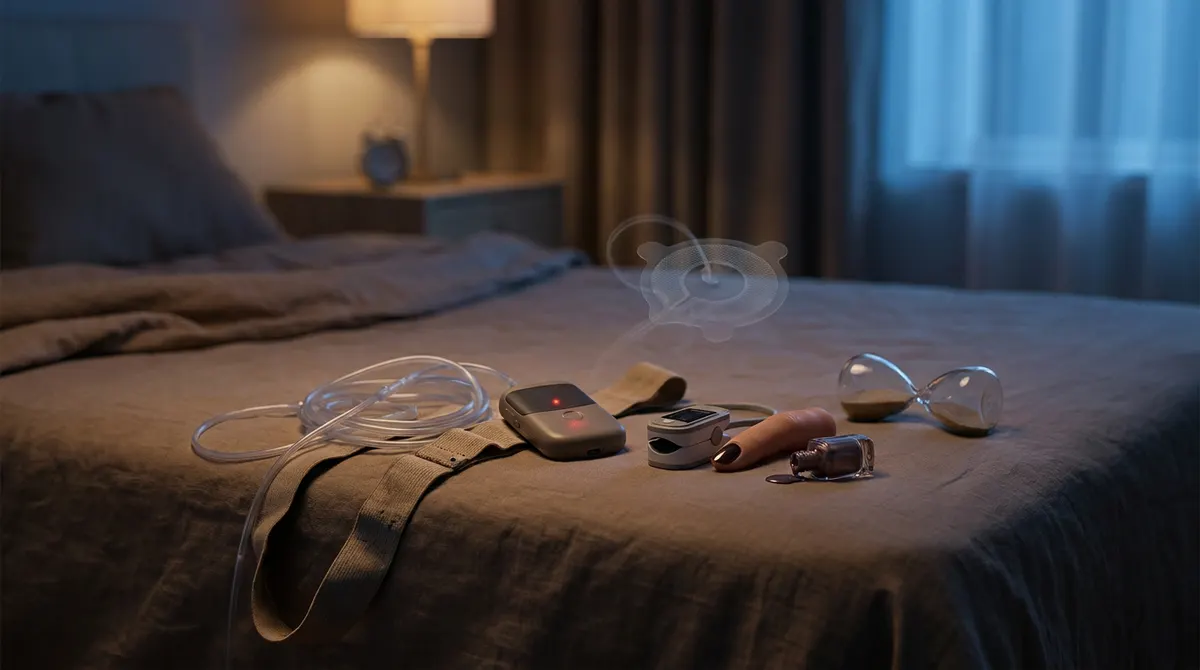
home sleep apnea testing is effective for diagnosing obstructive sleep apnea in many adults, but it has specific limitations that patients and providers should consider before ordering the test.
It Does Not Detect Central Sleep Apnea Reliably
HSAT devices are designed primarily to detect obstructive sleep apnea, where the upper airway collapses during sleep. Central sleep apnea, which occurs when the brain temporarily stops sending signals to the breathing muscles, requires brain wave monitoring (EEG) that only an in-lab polysomnogram provides. If a patient has risk factors for central sleep apnea, such as heart failure, opioid use, or a history of stroke, a sleep specialist will typically recommend in-lab testing instead.
It Cannot Measure Sleep Stages
Because home sleep tests do not include EEG sensors, they cannot determine when you are asleep versus awake. This means the AHI calculated from an HSAT uses total recording time as the denominator rather than actual sleep time. If you spend significant time awake during the test, the calculated AHI may underestimate the true severity of your sleep apnea. The Cleveland Clinic notes this is one of the reasons HSAT can produce false-negative results, where apnea is present but not detected at a clinically significant level.
Sensor Displacement Can Compromise Data
Patients who move frequently during sleep or who have restless sleep may accidentally dislodge the nasal cannula, pulse oximeter, or chest strap. If a sensor comes loose partway through the night, the recording may not contain enough usable data for interpretation. In these cases, the test must be repeated.
It Is Not Recommended for All Patients
The American Academy of Sleep Medicine recommends HSAT for adults with a high pre-test probability of moderate to severe obstructive sleep apnea without significant comorbid medical conditions. Patients with suspected sleep disorders other than OSA, such as narcolepsy, periodic limb movement disorder, or insomnia, require a full polysomnogram. Patients with severe cardiovascular disease, neuromuscular conditions, or chronic respiratory conditions may also need in-lab monitoring.
How dumbo.health Mitigates These Limitations
dumbo.health provides physician oversight for every test through its care plans. If an HSAT result is inconclusive or suggests a condition beyond obstructive sleep apnea, the reviewing physician can recommend further testing, including referral to a sleep center or in-lab polysomnography in your area. The Premium and Elite plans include access to a dedicated sleep coach or concierge clinical support team who guide patients through next steps when results are unclear.
KEY TAKEAWAY: Home sleep apnea testing is not suitable for diagnosing central sleep apnea, measuring sleep stages, or evaluating complex sleep disorders, and patients with these concerns should discuss in-lab polysomnography with their physician.
Real-world examples help illustrate how home sleep testing fits into different patient scenarios.
Who Benefits Most from a Home Sleep Apnea Test
Home sleep apnea testing serves a wide range of patients, from commercial drivers who need DOT clearance to adults who have been told they snore heavily but have never been evaluated. The following scenarios show how the test applies in practice.
Real-World Examples
A 48-year-old long-haul truck driver with a BMI of 36 is flagged during a DOT physical for suspected obstructive sleep apnea. The examining physician requires a sleep study before recertifying the driver's medical card. The driver works on a tight schedule and cannot take two days off for an in-lab sleep study at a sleep center. He orders a home sleep test through dumbo.health for $149, completes the test on a night off, and receives his results within days. His AHI comes back at 22, confirming moderate obstructive sleep apnea. He enrolls in the Premium Plan at $89 per month to begin CPAP therapy with a dedicated sleep coach monitoring his adherence, which satisfies his DOT compliance requirements.
A 55-year-old office worker has been experiencing gasping episodes at night, morning headaches, and persistent daytime fatigue. Her partner has noticed loud snoring and occasional breathing pauses during sleep. Her primary care doctor suspects obstructive sleep apnea and recommends a sleep study. She does not want to wait six weeks for an available slot at the local sleep lab. She completes a home sleep apnea test at home, and her results show an AHI of 34, indicating severe obstructive sleep apnea. Her physician prescribes positive airway pressure therapy, and she starts CPAP through dumbo.health's Essentials Plan.
A 38-year-old owner-operator with no insurance has been experiencing restless sleep and morning fatigue for over a year. He has avoided testing because he assumed a sleep study would cost over $1,000 and require insurance. After learning that a cash-pay home sleep test is available for $149 with no insurance card required, he orders through dumbo.health. His AHI is 8, confirming mild obstructive sleep apnea. His physician recommends positional therapy and follow-up monitoring rather than immediate CPAP.
These examples illustrate how home sleep testing removes financial and logistical barriers for patients who might otherwise delay or avoid diagnosis.
KEY TAKEAWAY: Home sleep apnea tests are particularly valuable for commercial drivers facing DOT requirements, patients without insurance, and anyone who needs a faster, more affordable alternative to in-lab sleep testing.
Many patients approach home sleep testing with misconceptions that can affect their decisions, so addressing the most common myths directly is essential.
Common Myths About Home Sleep Apnea Tests Debunked
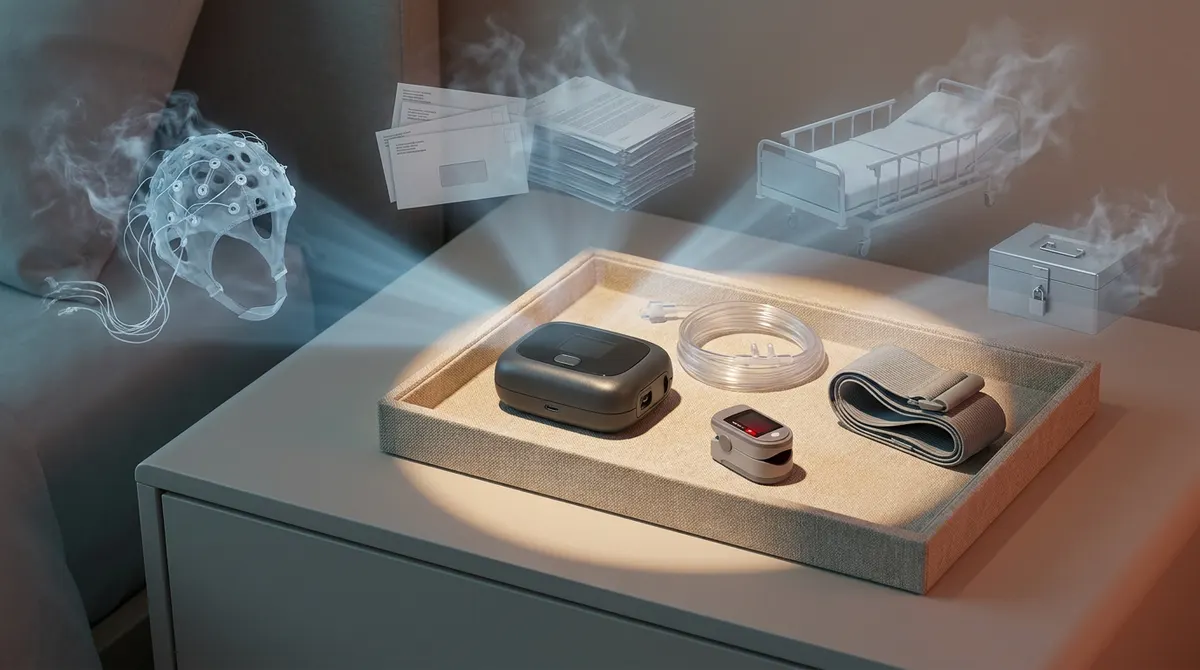
MYTH: A home sleep apnea test is less accurate than an in-lab sleep study.
FACT: For diagnosing obstructive sleep apnea in adults with a moderate to high clinical suspicion, home sleep tests have demonstrated strong diagnostic accuracy. The American Academy of Sleep Medicine endorses HSAT as an appropriate diagnostic tool for uncomplicated obstructive sleep apnea. The limitation is not accuracy for OSA detection but rather the inability to measure sleep stages or diagnose non-respiratory sleep disorders.
MYTH: You need a doctor's referral to get a home sleep test.
FACT: While a physician must interpret the results and prescribe treatment, many testing services including dumbo.health allow patients to begin the process through a free sleep assessment without a pre-existing referral. A physician reviews the clinical information and orders the test as part of the care pathway. Patients do not need to visit a sleep center or obtain a separate referral letter before ordering.
MYTH: Home sleep tests are uncomfortable and make it impossible to sleep normally.
FACT: Most patients report that home sleep testing is significantly more comfortable than sleeping in a sleep lab with 15 to 25 attached sensors. The nasal cannula, finger oximeter, and chest strap used in a typical HSAT are lightweight and minimally intrusive. Clinicians frequently observe that patients achieve more representative sleep data at home than in an unfamiliar clinical environment.
MYTH: If your home sleep test is negative, you definitely do not have sleep apnea.
FACT: HSAT can produce false-negative results because it uses total recording time rather than actual sleep time to calculate the AHI. If a patient was awake for a significant portion of the recording, the AHI may be artificially low. The NIH recommends that patients with persistent symptoms and a negative HSAT should be evaluated further with an in-lab polysomnogram.
MYTH: Medicare does not cover home sleep tests.
FACT: Medicare does cover home sleep apnea testing when the test is ordered by a treating physician for a patient with signs and symptoms of obstructive sleep apnea. Medicare coverage also extends to CPAP therapy when adherence criteria are met during the initial trial period. However, the documentation requirements can be complex, which is why some patients choose cash-pay options for faster access.
KEY TAKEAWAY: Home sleep apnea tests are clinically validated for obstructive sleep apnea diagnosis, do not require a pre-existing referral through services like dumbo.health, and are generally more comfortable than in-lab studies, though a negative result does not always rule out sleep apnea entirely.
With myths cleared up, the final consideration is bringing everything together into a clear path forward.
Conclusion
A home sleep apnea test consists of a portable set of sensors that measure airflow, blood oxygen levels, heart rate, and breathing effort during one night of sleep at home. The test provides a physician with the data needed to diagnose obstructive sleep apnea and determine appropriate treatment. For most adults with symptoms of sleep-disordered breathing, home sleep testing is a clinically validated, affordable, and convenient alternative to in-lab polysomnography.
If you are experiencing snoring, gasping, daytime fatigue, or have been referred for sleep apnea testing, you can take the first step by completing a free sleep assessment at dumbo.health. The home sleep test is $149 with no insurance required, and monthly care plans that include CPAP therapy and physician oversight start at $59 per month with no contracts.
Frequently Asked Questions About Home Sleep Apnea Tests
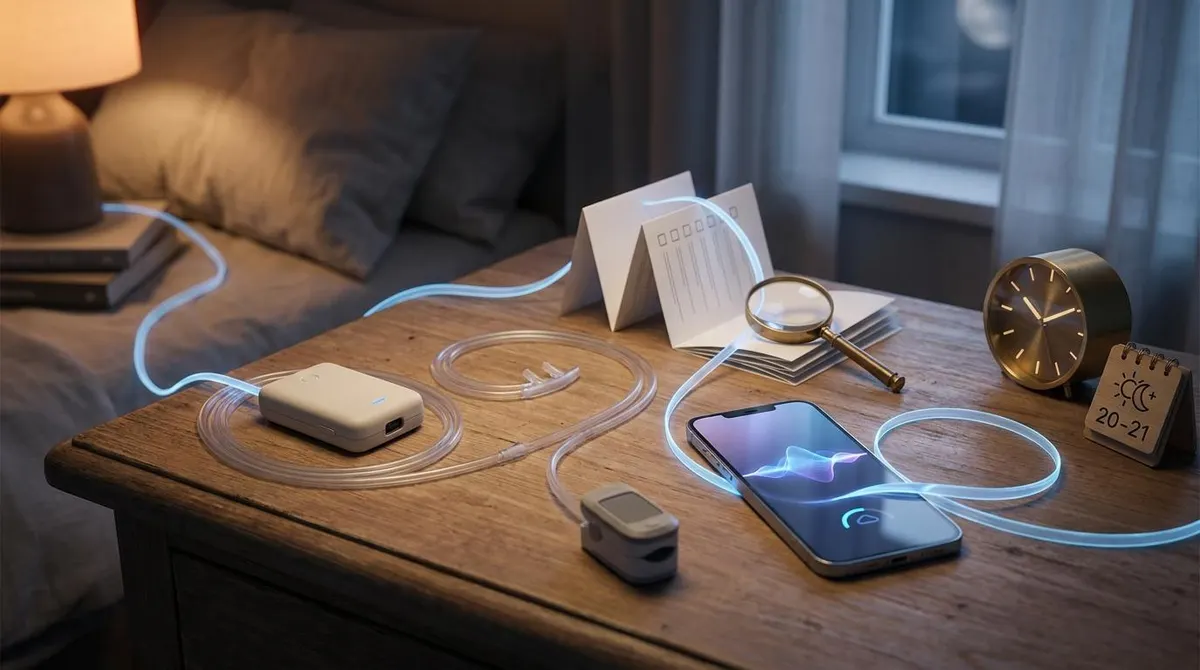
What is a home sleep apnea test?
A home sleep apnea test (HSAT) is a simplified, portable sleep study you complete in your own bed to help evaluate whether you have obstructive sleep apnea. The test uses a small recording device with sensors that measure breathing patterns, airflow, blood oxygen levels, heart rate, and respiratory effort while you sleep. A physician then reviews the recorded data to assess whether breathing interruptions occurred during the night. HSATs are recognised by the American Academy of Sleep Medicine as an appropriate first-line evaluation option for adults with a high likelihood of moderate to severe obstructive sleep apnea.
What does a home sleep apnea test consist of?
A home sleep apnea test typically consists of a portable recording device and a set of sensors worn on the body during a single night of sleep. Depending on the device, the setup may include a nasal cannula to measure airflow, a pulse oximeter worn on the finger to track blood oxygen saturation, flexible elastic belts or a chest strap to measure breathing effort and respiratory movement, and a heart rate sensor. Some newer devices, such as the WatchPAT and SleepImage Ring, use wrist or finger-based wearable technology to capture sleep metrics without traditional belts or cannulas. The device records data throughout the night, which is then reviewed by a physician or sleep medicine specialist.
What does a home sleep test measure?
A home sleep test measures several key indicators of sleep-disordered breathing. These typically include airflow through the nose and mouth, blood oxygen saturation levels, heart rate, breathing effort, and respiratory movement. Some devices also capture snoring intensity, body position, and sleep duration. The recorded data is used to calculate the apnea-hypopnea index (AHI), which reflects the average number of breathing pauses or reductions per hour of sleep. This is the primary metric used by physicians to assess the presence and severity of obstructive sleep apnea.
How does a home sleep apnea test work?
A home sleep apnea test works by recording your breathing and physiological responses during a night of sleep at home. After receiving the device, you attach the sensors according to the instructions, typically placing a nasal cannula, a finger oximeter, and chest or abdominal belts. The device records data passively while you sleep. In the morning, you return or upload the data, depending on the device. A physician or sleep medicine specialist reviews the recorded data and generates an interpretation report. Some platforms, including at-home sleep testing services, offer physician-reviewed results with reports sent directly to you or your referring provider.
How accurate are home sleep apnea tests?
Home sleep apnea tests are generally accurate for diagnosing moderate to severe obstructive sleep apnea in adults without significant complicating medical conditions. The American Academy of Sleep Medicine supports their use as a validated diagnostic tool for appropriate candidates. However, HSATs can underestimate sleep apnea severity because the device records total recording time rather than confirmed sleep time, which can lower the measured apnea-hypopnea index. They are less reliable for detecting central sleep apnea, complex sleep disorders, or sleep apnea in patients with serious cardiovascular or respiratory conditions. A healthcare professional can help determine whether an at-home test is appropriate for your situation.
What are the benefits of an at-home sleep test?
At-home sleep tests offer several practical advantages over in-lab polysomnography. You sleep in your own environment, which many people find more comfortable and representative of a typical night. Testing is generally faster to schedule, lower in cost, and does not require an overnight stay at a sleep center or facility. Results are often available within days. For many patients with a high clinical likelihood of obstructive sleep apnea, an HSAT provides sufficient diagnostic information to guide treatment. dumbo.health offers a $149 at-home sleep test with transparent cash-pay pricing, no insurance required, and no prior authorizations.
What are the limitations of an at-home sleep test?
Home sleep tests have important limitations. They typically measure fewer physiological signals than an in-lab sleep study and cannot record brain waves, eye movements, or limb movements. This means they cannot diagnose conditions such as restless leg syndrome, narcolepsy, parasomnias, or REM sleep behaviour disorder. HSATs may also miss or underestimate sleep apnea in patients with complex medical conditions, suspected central sleep apnea, or low pre-test probability. If an at-home test result is negative but symptoms persist, a physician may recommend an in-lab polysomnography for a more complete evaluation. A healthcare professional should always review your results in the context of your full medical history.
When is a home sleep apnea test appropriate?
A home sleep apnea test is generally appropriate for adults who have symptoms suggesting a high likelihood of moderate to severe obstructive sleep apnea and who do not have significant complicating conditions. Common symptoms that may prompt evaluation include loud snoring, witnessed breathing pauses during sleep, gasping or choking on waking, excessive daytime sleepiness, and waking with a dry mouth or headache. A healthcare professional can help determine whether an HSAT is a suitable first step or whether an in-lab sleep study is more appropriate based on your symptoms, risk factors, and medical history.
What sleep disorders can a home sleep apnea test detect?
Home sleep apnea tests are designed primarily to detect obstructive sleep apnea, which is the most common form of sleep-disordered breathing. Some devices can identify patterns suggestive of central sleep apnea, though in-lab polysomnography is generally preferred for confirming this diagnosis. HSATs cannot reliably detect other sleep disorders such as narcolepsy, restless leg syndrome, periodic limb movement disorder, or parasomnias. According to the American Academy of Sleep Medicine, HSATs are validated specifically for the evaluation of obstructive sleep apnea in appropriate adult patients. If your symptoms suggest a broader sleep disorder, a sleep medicine specialist may recommend a more comprehensive evaluation.
What is the difference between a home sleep test and an in-lab sleep study?
A home sleep test is a portable, simplified study completed in your own bed, measuring a focused set of signals such as airflow, oxygen saturation, heart rate, and breathing effort. An in-lab sleep study, also called polysomnography, is conducted at a sleep center under the supervision of trained staff and measures a much broader range of signals, including brain waves, eye movements, muscle activity, heart rhythms, and limb movements. Polysomnography can diagnose a wider range of sleep disorders and is generally considered the gold-standard diagnostic tool for complex cases. A physician or sleep specialist can advise which type of study is most appropriate for your symptoms and medical history.
How do I prepare for a home sleep apnea test?
Preparing for a home sleep apnea test typically involves following a set of straightforward instructions provided with the device. Most clinicians advise avoiding caffeinated products and alcoholic beverages on the evening of the test, as these can affect sleep quality and breathing patterns. You should generally avoid heavy hair styling products, acrylic nails, or nail polish on the finger used for the oximeter sensor, as these can interfere with accurate oxygen saturation readings. Try to follow your normal sleep routine and go to bed at your usual time. Read the device instructions carefully before your test night so sensor placement is correct when you are ready to sleep.
What if I cannot sleep well during a home sleep apnea test?
It is common to sleep less well than usual when wearing sensors for the first time. Most home sleep apnea test devices require only a few hours of recorded sleep to generate a usable dataset for physician review. If the recording quality is too poor to interpret or the device malfunctions during the night, many providers will arrange for a repeat test. A healthcare professional reviewing your results can advise whether the data collected is sufficient for a reliable interpretation or whether additional testing is needed.
How soon will I receive my home sleep apnea test results?
Results timelines vary by provider, but many at-home sleep apnea test services return physician-interpreted results within a few business days of receiving or uploading the recorded data. dumbo.health's Premium plan includes priority results turnaround as part of its physician interpretation and ongoing care service. Once results are ready, your provider will typically prepare a written report summarising the findings and any clinical recommendations. A healthcare professional should review the results with you to explain what the findings mean and whether treatment is appropriate.
How much does a home sleep apnea test cost?
The cost of a home sleep apnea test varies depending on the provider and whether insurance is used. With insurance, out-of-pocket costs depend on your plan, deductible, and coverage terms. Cash-pay options are available for patients who prefer transparent, predictable pricing. dumbo.health offers a $149 at-home sleep test with no insurance required, no prior authorizations, and no surprise bills. Monthly plans for ongoing care, including physician interpretation, CPAP therapy, equipment, and adherence follow-up, start at $59 per month with no contracts and the option to cancel at any time. You can review sleep apnea care options to compare what is included in each plan.
Does insurance cover a home sleep apnea test?
Insurance coverage for home sleep apnea testing varies by plan and insurer. Many private health insurance plans and Medicare do cover HSATs when ordered by a physician and when the patient meets clinical criteria for obstructive sleep apnea evaluation. However, coverage often depends on prior authorization, physician referral, or network restrictions, and out-of-pocket costs can still be significant depending on your deductible. Patients who prefer to avoid insurance barriers can use cash-pay services such as dumbo.health, which offers straightforward pricing with no insurance required and no prior authorizations needed. A qualified healthcare professional can help determine whether insurance-covered testing is the right path for your situation.
Do I need a prescription for a home sleep apnea test or a CPAP machine?
In most cases, a prescription or physician order is required for both a home sleep apnea test and a CPAP machine. CPAP, or continuous positive airway pressure therapy, is a prescription medical device in the United States, meaning a diagnosis from a licensed clinician is required before it can be dispensed. Some at-home sleep test services include physician oversight as part of the process, which can streamline the path from testing to treatment. dumbo.health includes physician interpretation and a clinical report as part of its care workflow, and CPAP therapy and equipment are available through ongoing monthly plans following a positive diagnosis.
Who should not take a home sleep apnea test?
Home sleep apnea tests are not suitable for everyone. They are generally not recommended for patients with suspected central sleep apnea, complex cardiorespiratory conditions, significant heart failure, chronic obstructive pulmonary disease, neuromuscular disorders, or other conditions that require comprehensive in-lab monitoring. They are also not appropriate for evaluating sleep disorders beyond obstructive sleep apnea, such as narcolepsy or parasomnias. Children are typically evaluated with in-lab polysomnography rather than HSATs. A healthcare professional can assess whether a home sleep test is clinically appropriate for you based on your symptoms, medical history, and risk profile.
How does a home sleep apnea test diagnose obstructive sleep apnea?
A home sleep apnea test diagnoses obstructive sleep apnea by recording physiological data during sleep and calculating the apnea-hypopnea index. An apnea is a complete pause in breathing lasting at least ten seconds, while a hypopnea is a partial reduction in airflow accompanied by a drop in blood oxygen saturation. A physician reviews these events in the context of the full overnight recording. According to the American Academy of Sleep Medicine, an AHI of 5 to 14 events per hour generally indicates mild obstructive sleep apnea, 15 to 29 indicates moderate, and 30 or more indicates severe. The physician uses this data alongside your symptoms and medical history to determine whether a diagnosis is appropriate.
How is sleep apnea related to cardiovascular health?
Obstructive sleep apnea is associated with an increased risk of cardiovascular disease, including high blood pressure, irregular heart rhythms, heart failure, and stroke. During apnea events, repeated drops in blood oxygen saturation place physiological stress on the cardiovascular system. The Mayo Clinic notes that untreated obstructive sleep apnea is linked to elevated blood pressure and a higher risk of cardiovascular complications over time. Treating obstructive sleep apnea with CPAP therapy may help reduce some of these cardiovascular risks, though outcomes vary and treatment decisions should always involve a qualified healthcare professional. If you have cardiovascular symptoms alongside sleep concerns, seek medical evaluation promptly.
Can a home sleep apnea test detect snoring or restless sleep?
A home sleep apnea test can detect snoring intensity and, on some devices, body position and movement, which may reflect restless sleep patterns. However, snoring alone does not confirm obstructive sleep apnea, and an HSAT is not designed to evaluate all causes of restless sleep. If your primary concerns are snoring, frequent waking, or restlessness without other obstructive sleep apnea symptoms, a healthcare professional can help determine whether an HSAT is the right evaluation tool or whether a broader clinical review is needed. Starting with a free sleep assessment can help you identify whether at-home testing may be a useful next step.
What happens after a home sleep apnea test confirms obstructive sleep apnea?
After a home sleep apnea test confirms obstructive sleep apnea, a physician will typically discuss treatment options with you. CPAP therapy is the most widely used and evidence-supported treatment for moderate to severe obstructive sleep apnea. Other options may include oral appliance therapy, positional therapy, or weight management depending on the severity and pattern of your sleep apnea. Treatment decisions should always be guided by a qualified healthcare professional. dumbo.health's monthly care plans include CPAP therapy, equipment, physician oversight, and adherence follow-up starting at $59 per month, with no contracts and the option to cancel at any time.
Do commercial drivers need a sleep apnea test, and can they use a home test?
Commercial drivers operating under FMCSA regulations may be referred for sleep apnea evaluation by a certified medical examiner as part of the DOT physical process. The FMCSA does not mandate a specific type of sleep study, so a home sleep apnea test may be an appropriate evaluation pathway for some commercial drivers depending on the medical examiner's clinical judgment. At-home testing can offer a faster, more convenient option than waiting for a sleep lab appointment. dumbo.health can support DOT sleep apnea testing at home and provide documentation for ongoing care, but certification decisions are made by a certified medical examiner, not by dumbo.health.
How does CPAP therapy relate to a home sleep apnea test result?
A home sleep apnea test result showing moderate to severe obstructive sleep apnea often leads to a CPAP prescription. CPAP, or continuous positive airway pressure therapy, works by delivering a steady stream of air through a mask to keep the upper airway open during sleep, preventing apnea events. According to the Sleep Foundation, CPAP is the most effective treatment for obstructive sleep apnea and can significantly reduce daytime sleepiness and cardiovascular risk when used consistently. Adherence monitoring, which tracks nightly CPAP usage data, is an important part of ongoing care and may be required for DOT-related documentation. A clinician should guide all treatment decisions based on your specific test results.
How do I find at-home sleep apnea testing near me?
At-home sleep apnea testing is widely available through telehealth platforms, sleep medicine clinics, and direct-to-consumer services, making it accessible to patients across the country without requiring a local sleep lab appointment. You do not need to be near a specific facility to complete an HSAT, as the device is typically shipped to your home. If you are looking for testing options available in your area or want to explore transparent cash-pay pricing, getting started with dumbo.health takes only a few minutes and includes a free sleep assessment to help determine whether at-home testing is appropriate for you.
Is a home sleep apnea test painful or uncomfortable?
A home sleep apnea test is not painful. The sensors are lightweight and non-invasive, attaching to the skin surface without needles or procedures. Some people find the nasal cannula or chest belts mildly uncomfortable at first, particularly if they are not used to sleeping with anything attached to their body. Most patients adapt quickly and complete the test successfully in a single night. If you experience persistent discomfort or the device does not feel properly secured, contact your provider for guidance. The test should not cause any physical harm, and there are no known medical risks associated with wearing the standard HSAT sensors.
What should I expect after completing a home sleep apnea test?
After completing the test night, you will return the device or upload the recorded data according to your provider's instructions. A physician or sleep medicine specialist will review the data, calculate the apnea-hypopnea index, and prepare an interpretation report. You will typically receive results within a few days, though timelines vary by provider. Your clinician will then discuss the findings with you and recommend next steps, which may include CPAP therapy, further in-lab evaluation, or lifestyle recommendations. If you are using dumbo.health, your physician interpretation report and any updates to your referring provider are included as part of your ongoing sleep apnea care plan.
Related Home Sleep Apnea Test Topics
- What Is a Home Sleep Apnea Test How At-Home Sleep Testing Works, What It Measures, and Who Needs One
- How Long Does a Home Sleep Apnea Test Take What to Expect Before, During, and After Testing
- Home Sleep Apnea Test The Complete Guide to At-Home Sleep Apnea Testing
- How Does a Home Sleep Apnea Test Work A Complete Guide to At-Home Sleep Testing
- How Is a Home Sleep Apnea Test Done A Complete Guide to At-Home Sleep Testing
- Can You Test for Sleep Apnea at Home A Complete Guide to Home Sleep Testing
- How Do You Get a Home Sleep Apnea Test The Complete Guide to At-Home Sleep Testing
- Sleep Apnea Test at Home The Complete Guide to Home Sleep Testing for Adults
- Home Sleep Test The Complete Guide to At-Home Sleep Apnea Testing
- Sleep Apnea Test The Complete Guide to Diagnosis, Home Testing, and What Your Results Mean
- Sleep Apnea Checker How to Screen for Sleep Apnea and What Your Results Mean
- Does Anyone Ever Pass a Sleep Apnea Test What Normal Results Actually Look Like
- Sleep Apnea Test Near Me How to Find Local and At-Home Testing Options
- Home Sleep Apnea Test Near Me How to Get Tested Without a Sleep Lab Visit
- At-Home Sleep Apnea Test The Complete Guide to Testing, Results, and Treatment
- Can My Doctor Prescribe a Home Sleep Apnea Test What You Need to Know
- Sleep Apnea Diagnosis How Sleep Apnea Is Detected, Tested, and Confirmed
- Sleep Apnea Testing The Complete Guide to Diagnosis, Home Tests, and What Your Results Mean
- Sleep Apnea Testing Near Me How to Find the Right Test, Provider, and Path to Diagnosis
- Apnea Monitor The Complete Guide to Breathing Monitors for Sleep Apnea and Infant Care
- Do You Need a Prescription for a Home Sleep Apnea Test
- Disadvantages of Home Sleep Testing What Patients and Providers Need to Know
- Are Home Sleep Apnea Tests Accurate What the Evidence Actually Shows
- CPAP Test What It Is, How It Works, and What Your Results Mean
- Sleep Test to CPAP How Sleep Apnea Testing Leads to Treatment
- How to Get Tested for Sleep Apnea The Complete Guide to Diagnosis, Sleep Studies, and Treatment
- Best At Home Sleep Apnea Test A Clinical Comparison
- Cost of Sleep Apnea Testing What You Will Actually Pay
- HSAT The Complete Guide to Home Sleep Apnea Testing
AI summary
A home sleep apnea test (HSAT) is a portable, at-home study used to diagnose obstructive sleep apnea (OSA) in adults with moderate to high pre-test probability. It records respiratory signals during one night of sleep without an overnight sleep lab stay. Core measurements include nasal airflow, blood oxygen saturation, heart rate, and breathing effort. Typical components are a nasal cannula for airflow, a finger pulse oximeter for oxygen and heart rate, and chest or abdominal effort belts to capture respiratory movement and help distinguish obstructive from central patterns. Data are stored on a small recording device and then uploaded or returned for physician interpretation. Results are scored using the apnea-hypopnea index (AHI): below 5 is normal, 5–14 mild OSA, 15–29 moderate OSA, and 30 or higher severe OSA. HSAT does not measure sleep stages (no EEG), can underestimate severity if the patient is awake for part of the recording, and may require repeat testing if sensors dislodge. In-lab polysomnography is preferred for suspected central sleep apnea, complex comorbidities, or inconclusive HSAT findings.

Nicolas Nemeth
Co-Founder
Nico is the co-founder of Dumbo Health, a digital sleep clinic that brings the entire obstructive sleep apnea journey home. Patients skip the sleep lab and the long wait to see a specialist. Dumbo Health ships an at home test, connects patients with licensed sleep clinicians by video, and delivers CPAP or a custom oral appliance with ongoing coaching and automatic resupply in one clear subscription.
Keep reading

VA At Home Sleep Apnea Test: The Complete Guide for Veterans

Home Sleep Apnea Test App: What Works, What Doesn't, and How to Get a Real Diagnosis


