HSAT: The Complete Guide to Home Sleep Apnea Testing
HSAT is a portable Type 3 sleep study done at home to evaluate obstructive sleep apnea in adults with moderate to high clinical suspicion. It records airflow via nasal cannula, respiratory effort with a chest belt, blood oxygen saturation using pulse oximetry, and body position, with some devices also tracking snoring and heart rate. A sleep medicine physician scores the study using the apnoea-hypopnea index (AHI), which can underestimate severity because it uses total recording time. The guide explains setup steps, a pre-test checklist, and how to avoid unusable data. It also compares HSAT to in-lab polysomnography and outlines when in-lab testing is needed after negative or inconclusive results. Cost, insurance barriers, DOT use cases, and the pathway to CPAP therapy and adherence monitoring are covered.
Struggling with sleep?
Find out if sleep apnea is the reason.
FDA-cleared. $149 flat. Physician-reviewed results in 48 hours.

HSAT: The Complete Guide to Home Sleep Apnea Testing
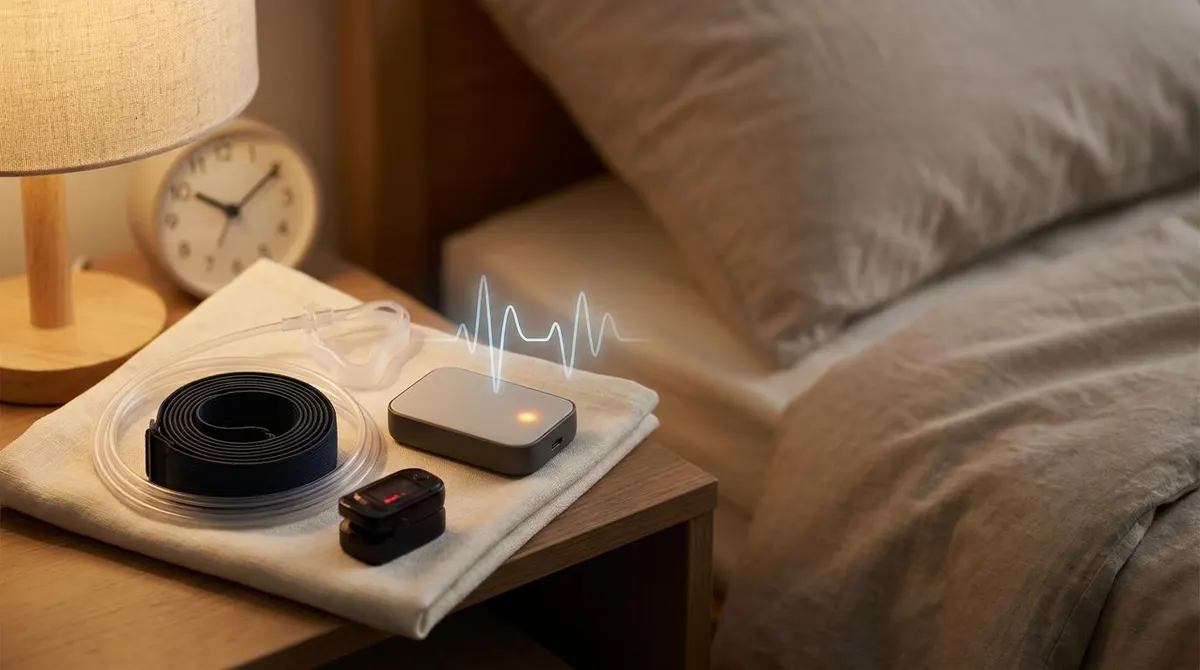
HSAT stands for home sleep apnea test, a portable diagnostic study that measures breathing, airflow, blood oxygen levels, and body position while you sleep in your own bed. The American Academy of Sleep Medicine recognizes HSATs as an accepted method for diagnosing obstructive sleep apnea in adults with a moderate to high pretest probability of the condition. This guide is written for adults who suspect they have sleep apnea, commercial drivers facing DOT screening requirements, and anyone referred for a sleep study by their physician. You will learn how HSATs work, what the device measures, how results are scored, how HSATs compare to in-lab polysomnography, and when a home sleep test may not be appropriate. Understanding every step of the process helps you move from suspicion to diagnosis to treatment with confidence.
Quick Answer
An HSAT is a Home sleep apnea test, a Type 3 sleep study you complete at home using a portable device that records airflow, respiratory effort, blood oxygen saturation, and body position overnight. A sleep medicine physician reviews the raw data to determine whether you have obstructive sleep apnea based on the apnoea-hypopnea index. HSATs are less expensive and more convenient than in-lab polysomnography, though they are not appropriate for all patients or all sleep disorders. dumbo.health offers a home sleep test for $149 with physician interpretation available through monthly care plans starting at $59 per month.
Key Takeaways
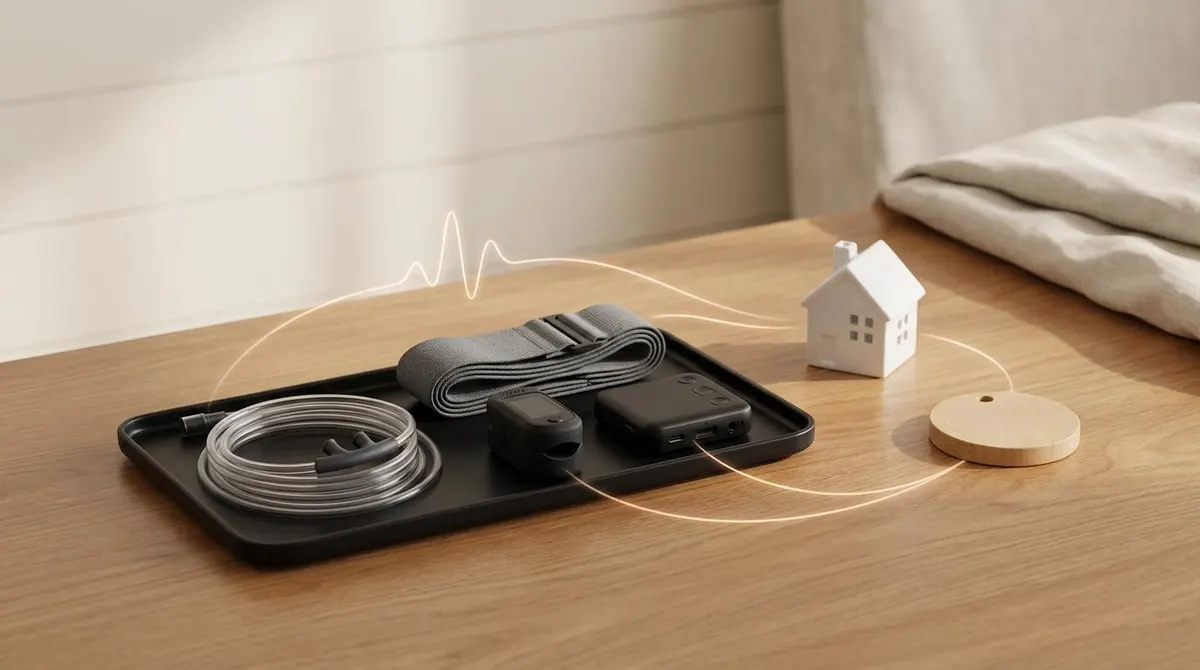
- HSAT stands for Home Sleep Apnea Test, classified as a Type 3 sleep study that records a minimum of airflow, respiratory effort, and blood oxygen levels
- The AASM recommends HSATs only for adults with a moderate to high clinical suspicion of obstructive sleep apnea and no significant comorbid sleep disorders
- An HST device typically uses nasal pressure sensors, an elastic belt for thoracic effort, a pulse oximetry finger probe, and a body position sensor
- Results are scored using the apnoea-hypopnea index, where 5 or more events per hour in the presence of symptoms supports a diagnosis of obstructive sleep apnea
- A negative or inconclusive HSAT does not rule out sleep apnea and may require follow-up with in-lab polysomnography
- dumbo.health provides a complete home sleep test for $149 with no insurance required and care plans starting at $59 per month that include physician interpretation, CPAP therapy, and equipment
What Is an HSAT and How Does It Work?
An HSAT is a self-administered test that records cardiopulmonary data while you sleep at home, giving a sleep medicine physician the information needed to diagnose or rule out obstructive sleep apnea. Unlike in-lab polysomnography, which requires an overnight stay at a sleep center with a technician monitoring you, an HSAT uses a portable device you set up yourself following paper instructions or a video guide.
What HSAT Devices Measure
home sleep apnea testing equipment records several key physiological signals during your sleep time. The specific sensors vary by device, but the core measurements required for a Type 3 sleep study include:
- Airflow, typically measured through a nasal pressure cannula placed under the nose
- Respiratory effort, recorded by an elastic belt or effort belt worn around the chest to detect thoracic effort and breathing efforts
- Blood oxygen levels, tracked through a pulse oximetry sensor clipped to the finger, which reports SpO2 and desaturation indices
- Body position, captured by a body position sensor within the device housing that logs whether you sleep on your back, side, or stomach
Some HST devices also record snoring intensity, heart rate via pulse, and additional cardiopulmonary data channels. The combination of these sensors allows the reviewing physician to identify episodes where airflow drops or stops, whether respiratory effort continues during those episodes (pointing to obstructive rather than central events), and how severely blood oxygen levels fall.
Common HSAT Devices Used in Clinical Practice
Several devices have been validated for home sleep apnea testing. Each records the same core data channels but differs in design, comfort, and additional features.
The ResMed Apnea Link Air HSAT is a compact single-unit device that clips to the chest with an effort belt and uses a nasal cannula for airflow measurement. It records nasal pressure, respiratory effort, SpO2, pulse, and body position.
The Alice Night-One HSAT device uses a similar configuration with disposable sensors for the nasal cannula and reusable parts for the main unit. It includes a body position sensor and effort belt.
The ApneaTrak Core and ApneaTrak Legacy devices are also used in clinical settings. The ApneaTrak Core is a newer model with enhanced signal quality, while the ApneaTrak Legacy uses a slightly older sensor platform. Both record airflow, thoracic effort, oximetry, and body position.
All of these devices are classified as testing equipment for Type 3 sleep studies under CPT 95800. They do not use electrodes to measure brainwave activity, which means they cannot determine when you are actually asleep versus simply lying in bed. This distinction matters for how results are calculated.
DID YOU KNOW: According to the American Academy of Sleep Medicine, a Type 3 sleep study must record at least four data channels, including airflow, respiratory effort, heart rate or ECG, and oxygen saturation, to qualify as an HSAT.
KEY TAKEAWAY: An HSAT uses portable sensors to record airflow, respiratory effort, blood oxygen saturation, and body position while you sleep at home, providing the data a sleep medicine physician needs to evaluate you for obstructive sleep apnea.
Understanding what the device measures is essential, but equally important is knowing how to set it up correctly, which directly affects the quality of your results.
How to Complete an HSAT at Home
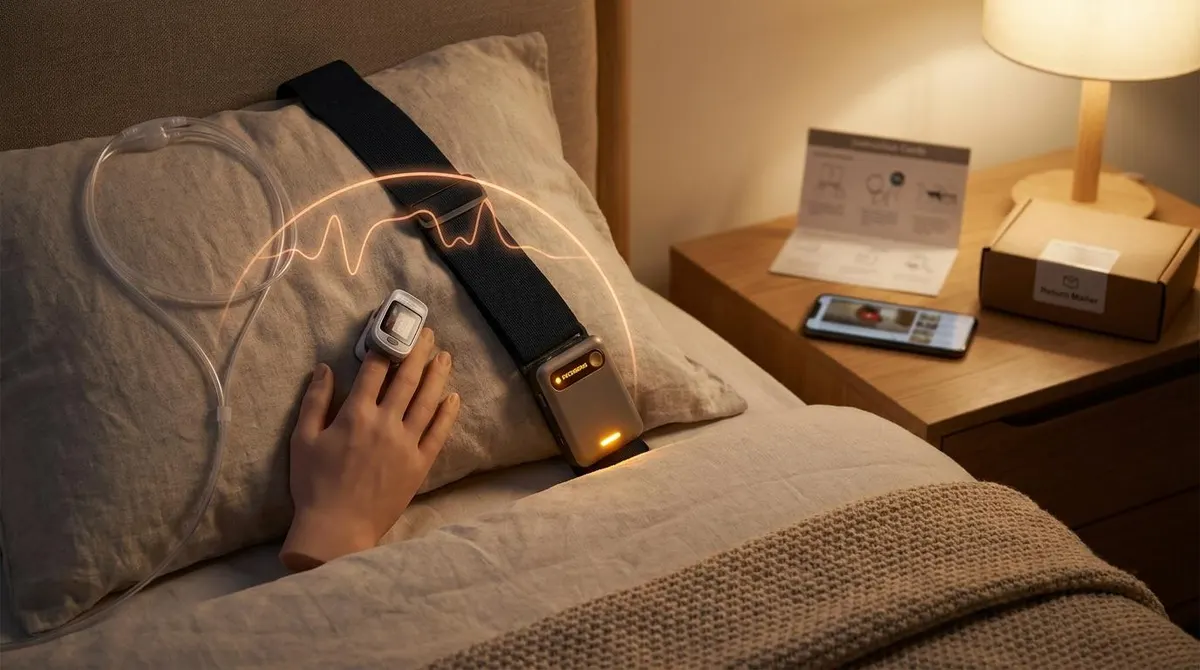
Following the device instructions precisely is the single most important factor in getting usable data from your home sleep test. A poorly attached sensor or loose elastic belt can produce raw data that is unreadable, forcing you to repeat the test.
Step-by-Step Process for Completing Your Home Sleep Test
1. Receive your HST device by mail or from your sleep center, and read all paper instructions or watch the instructional video before your test night. dumbo.health ships the home sleep test device directly to your door after you order it for $149.
2. On your test night, attach the nasal pressure cannula under your nose and secure it behind your ears with the provided clips. The nasal cannula must remain in place throughout the night to record airflow accurately.
3. Wrap the elastic belt or effort belt around your chest at the level indicated in the instructions, ensuring it is snug but not tight enough to restrict your breathing efforts.
4. Clip the pulse oximetry sensor onto your index finger. Make sure your fingernail is clean and free of nail polish, which can interfere with SpO2 readings.
5. Power on the device and confirm the indicator light shows it is recording. Place the main unit in the position recommended by the manufacturer, typically clipped to the chest belt or placed on your bedside table depending on the model.
6. Go to sleep in your normal sleeping position. The body position sensor will log changes throughout the night. Aim for at least six hours of recording time to give the reviewing physician enough data.
7. In the morning, power off the device, remove all sensors, and package the equipment for return according to the instructions provided.
After completing these steps, your device is returned for data download and physician review. With dumbo.health, results are reviewed by a sleep medicine physician as part of any monthly care plan, with the Premium Plan offering priority results turnaround for $89 per month.
Pre-Test Checklist
Before your test night, verify the following:
- You have read all paper instructions or watched the video guide in your preferred language (instructions are commonly available in English, Spanish, and other languages)
- Your nasal cannula is unused and properly connected to the device
- Your elastic belt is adjusted to your chest circumference
- Your pulse oximetry finger sensor is clean and functional
- The device battery is fully charged or new batteries are installed
- You have removed nail polish from the finger you will use for the oximetry sensor
- You plan to avoid alcohol and sedatives on the test night, as these can alter your breathing patterns and affect result accuracy
- You have set aside at least six hours for the recording
- You know how to contact your support team or patient support line if you have a problem during setup
IMPORTANT: If a sensor comes loose during the night or the device stops recording, the test may need to be repeated. Proper sensor attachment before falling asleep is critical for usable results.
KEY TAKEAWAY: Completing an HSAT correctly requires careful sensor attachment, a minimum of six hours of sleep time, and following all device-specific instructions to avoid the need for a repeat test.
Getting the test right the first time matters because what happens next is the interpretation of your results by a qualified physician.
Understanding Your HSAT Results
HSAT results are scored by a sleep medicine physician who reviews the raw data recorded by your device, not by the device itself. The primary metric used to diagnose obstructive sleep apnea is the apnoea-hypopnea index.
How the Apnoea-Hypopnea Index Is Calculated
The apnoea-hypopnea index (AHI) measures the average number of apnea and hypopnea events per hour of recording time. An apnea is a complete pause in airflow lasting at least 10 seconds. A hypopnea is a partial reduction in airflow, typically 30 percent or more, lasting at least 10 seconds and associated with a drop in SpO2 of at least 3 percent or an arousal.
Because HSATs do not use electrodes to track brain activity, they cannot confirm when you are asleep. Instead of dividing events by actual sleep time, HSAT scoring typically divides events by total recording time. This means the AHI from an HSAT may underestimate the true severity of sleep-disordered breathing compared to in-lab polysomnography, where a technician monitors actual sleep stages.
The AASM classifies obstructive sleep apnea severity as follows:
- Mild: AHI of 5 to 14 events per hour
- Moderate: AHI of 15 to 29 events per hour
- Severe: AHI of 30 or more events per hour
Additional Data Points in Your Results
Beyond the AHI, your HSAT results may include:
- Obstructive apnoea index, which counts only full obstructive apneas per hour
- Desaturation indices, measuring how often and how far your SpO2 drops below baseline
- Minimum and average SpO2 values during the recording
- Body position data showing whether events are more frequent in supine (back) versus lateral (side) sleeping positions
- Snoring data, including intensity and duration
- Heart rate and pulse trends
These details help the reviewing physician determine not just whether you have obstructive sleep apnea, but how severe it is, whether it worsens in certain body positions, and how significantly your blood oxygen levels are affected. This information directly shapes treatment recommendations, including whether CPAP therapy is indicated.
dumbo.health's Essentials Plan at $59 per month includes physician interpretation of your HSAT results along with CPAP therapy and equipment if treatment is needed, creating a direct pathway from diagnosis to treatment without separate billing for each step.
KEY TAKEAWAY: Your HSAT results center on the apnoea-hypopnea index, which measures breathing disruption frequency per hour, but additional data such as SpO2 desaturation indices and body position analysis give your physician a complete picture of your sleep-disordered breathing.
Knowing how results are scored leads to the natural next question: how does an HSAT compare to the gold standard of in-lab polysomnography?
HSAT vs. In-Lab Polysomnography: Which Sleep Study Is Right for You?
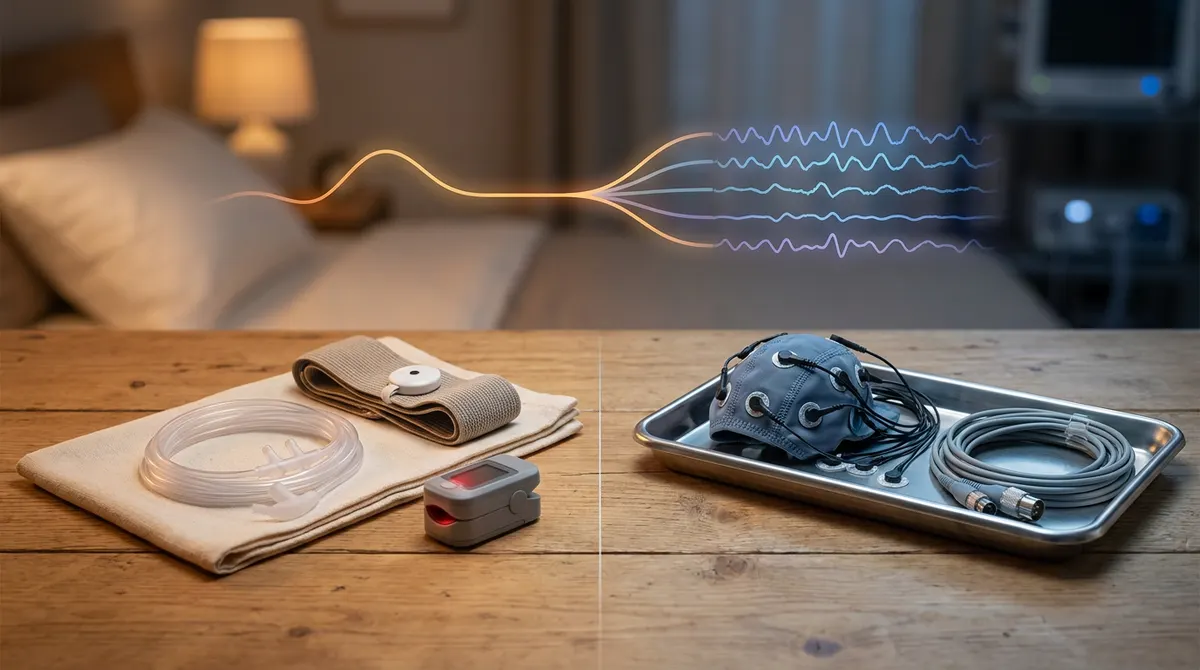
An HSAT is appropriate for most adults with a high clinical suspicion of moderate to severe obstructive sleep apnea and no significant comorbid conditions, while in-lab polysomnography remains necessary for complex cases, other sleep disorders, and inconclusive home test results. Choosing the right test depends on your medical history, the sleep disorder being investigated, and practical considerations like cost and convenience.
Setting
- Home Sleep Apnea Test: Your own bed at home with no technician present
- In-Lab polysomnography (Polysomnogram): Sleep center or hospital with a technician monitoring you overnight
Channels Recorded
- Home Sleep Apnea Test: Minimum 4 channels including airflow, respiratory effort, SpO2, and pulse or heart rate. Most devices also record body position and snoring.
- In-Lab polysomnography: Typically 16 or more channels including EEG electrodes for brain activity, EOG for eye movements, EMG for muscle tone, ECG, airflow, respiratory effort, SpO2, body position, snoring, and limb movement sensors
Sleep Stage Detection
- Home Sleep Apnea Test: Not available. The device cannot determine when you are asleep.
- In-Lab Polysomnography: Available. Electrodes on the scalp measure brainwave patterns to identify sleep stages and arousals.
AHI Calculation
- Home Sleep Apnea Test: Events per hour of total recording time, which may underestimate true severity
- In-Lab Polysomnography: Events per hour of actual sleep time, providing a more precise measurement
Cost
- Home Sleep Apnea Test: Typically $149 to $500 without insurance. dumbo.health offers the test for $149.
- In-Lab Polysomnography: Often $1,000 to $3,000 or more, depending on the sleep center and whether insurance covers it
Convenience
- Home Sleep Apnea Test: High. No travel, no overnight stay at a facility. You sleep in your own bed.
- In-Lab Polysomnography: Lower. Requires scheduling at a sleep center, traveling to the facility, and sleeping overnight in an unfamiliar environment.
Who It Is Best For
- Home Sleep Apnea Test: Adults with moderate to high pretest probability of obstructive sleep apnea, no significant cardiopulmonary disease, and no suspected comorbid sleep disorders
- In-Lab Polysomnography: Patients with suspected central sleep apnea, narcolepsy, periodic limb movement disorder, or other non-respiratory sleep disorders. Also required when HSAT results are negative or inconclusive in a patient with high clinical suspicion.
For most adults who snore heavily, experience witnessed breathing pauses, and have daytime sleepiness, an HSAT provides enough diagnostic information to confirm or rule out obstructive sleep apnea at a fraction of the cost of an in-facility sleep test. When results are unclear or when the clinical picture is complex, in-lab polysomnography remains the gold standard.
home sleep apnea testing through dumbo.health provides a straightforward pathway for adults who meet HSAT candidacy criteria. The $149 test covers the device and one night of testing, and results are interpreted by a physician through any of the monthly care plans.
KEY TAKEAWAY: HSATs are a cost-effective and convenient alternative to in-lab polysomnography for diagnosing obstructive sleep apnea in appropriately selected adults, but polysomnography remains necessary for complex or inconclusive cases.
Understanding the comparison between testing options matters, but it is equally important to know when an HSAT is not the right choice.
When an HSAT May Not Be the Right Choice: Limitations and Risks
An HSAT is not appropriate for every patient or every suspected sleep disorder. Recognizing the limitations of home sleep testing protects you from a missed diagnosis and ensures you receive the correct evaluation.
Clinical Limitations of HSATs
The AASM guidelines specify several situations where an HSAT should not be used as the primary diagnostic tool:
Suspected non-obstructive sleep disorders. HSATs are designed to detect obstructive sleep apnea. They cannot diagnose central sleep apnea, narcolepsy, periodic limb movement disorder, REM sleep behavior disorder, or other sleep disorders that require electroencephalography and other channels only available during in-lab polysomnography. If your physician suspects a condition beyond obstructive sleep apnea, an in-center sleep test with full polysomnography is required.
Significant comorbid medical conditions. Patients with severe cardiopulmonary disease, including conditions classified using the New York Heart Association functional classification for heart failure, chronic obstructive pulmonary disease with oxygen dependency, or neuromuscular disorders affecting respiratory function may produce unreliable HSAT data. These medical conditions can complicate airflow and respiratory effort patterns in ways that the limited sensor array of an HST device cannot adequately capture.
Pediatrics. HSATs are generally not validated for use in children. Pediatric sleep-disordered breathing, including conditions like adenoid hypertrophy that may lead to adenotonsillectomy, requires in-lab polysomnography with age-appropriate monitoring. Cognitive impairment in pediatric patients may also prevent proper use of a self-administered test.
Technical Limitations
Because HSATs do not measure brain activity, they have inherent technical limitations:
- No sleep staging means the device records total time in bed, not actual sleep time. If you lie awake for two hours, those hours dilute the AHI calculation and may make your sleep apnea appear less severe than it truly is.
- Sensor displacement during the night is a common problem with self-administered tests. Without a technician present to reattach a loose nasal cannula or effort belt, the data from that portion of the night is lost.
- Single-night testing captures only one night of sleep. Night-to-night variability in sleep-disordered breathing severity means that a single HSAT may not represent your typical pattern, especially if you slept poorly, used alcohol, or had an unusual night.
What Happens After a Negative or Inconclusive HSAT
A negative HSAT does not definitively rule out obstructive sleep apnea. According to the AASM, if clinical suspicion remains high after a negative home sleep test, the patient should be referred for in-lab polysomnography. This is a critical point that many patients and even some providers overlook. The sensitivity of HSATs is lower than polysomnography, meaning false negatives can occur, particularly in patients with mild sleep apnea or those who did not achieve adequate sleep time during the test.
dumbo.health's care plans include physician review of all results, and the clinical team can guide you on whether your HSAT data is sufficient for a diagnosis or whether further evaluation through in-lab testing is warranted. The Premium Plan at $89 per month includes a dedicated sleep coach who can help navigate these next steps.
KEY TAKEAWAY: HSATs are not appropriate for suspected non-obstructive sleep disorders, pediatric patients, individuals with severe comorbid conditions, or cases where a negative result contradicts strong clinical suspicion, and these situations require in-lab polysomnography.
Knowing the boundaries of what an HSAT can and cannot do sets the stage for understanding who benefits most from this type of testing.
Who Should Get an HSAT: Eligibility and Real-World Scenarios
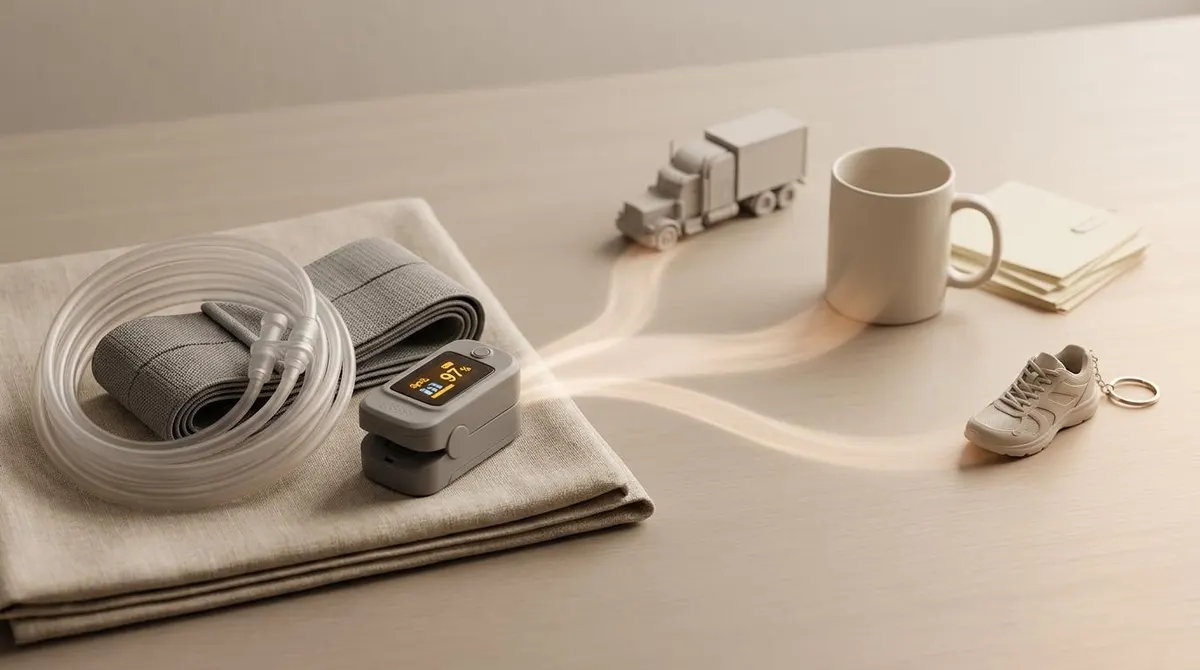
Adults with a moderate to high pretest probability of obstructive sleep apnea and no significant comorbidities are the ideal candidates for an HSAT. The referring physician's clinical evaluation, including symptom history, physical examination, and risk factor assessment, determines whether a home sleep test is appropriate.
Clinical Criteria for HSAT Candidacy
The AASM recommends HSATs for patients who meet all of the following criteria:
- Age 18 or older
- High pretest probability of moderate to severe obstructive sleep apnea based on symptoms such as snoring, witnessed apneas, and excessive daytime sleepiness
- No significant cardiopulmonary disease, neuromuscular disease, or suspected comorbid sleep disorders
- No history suggesting central sleep apnea
- Ability to follow instructions and apply the device independently or with caregiver assistance
Real-World Scenarios
A 48-year-old long-haul truck driver with a BMI of 34, loud snoring reported by a partner, and daytime fatigue that worsens on long drives. During a DOT physical, the examining provider flags him for sleep apnea screening based on neck circumference and symptom history. This driver is an ideal HSAT candidate because his clinical profile strongly suggests obstructive sleep apnea, he has no known cardiopulmonary disease, and he needs a fast, affordable pathway to diagnosis to maintain his CDL certification. He orders a home sleep test through dumbo.health for $149, completes it in one night, and receives physician-reviewed results through the Essentials Plan at $59 per month. His AHI comes back at 22 events per hour, confirming moderate obstructive sleep apnea, and he starts CPAP therapy included in the same plan.
A 55-year-old office manager who has gained 30 pounds over the past five years and notices she wakes up gasping three to four times per week. Her primary care physician refers her for a sleep study. She has no heart disease, no lung conditions, and no symptoms suggesting anything other than obstructive sleep apnea. An HSAT at home is the appropriate first step. She completes the test using the device shipped to her door, avoids the inconvenience of an overnight sleep center visit, and gets a clear diagnosis without navigating insurance company pre-authorization delays.
A 30-year-old athlete with occasional snoring but no daytime sleepiness and a BMI of 23. His physician considers sleep apnea unlikely based on the clinical evaluation. In this case, an HSAT is not the best first step because the pretest probability is low. A negative HSAT in a low-probability patient provides limited diagnostic value, and the AASM advises against using HSATs in this population. If testing is still desired, in-lab polysomnography would be more informative.
These scenarios illustrate that the value of an HSAT depends on matching the test to the right patient. The test works best when clinical suspicion is moderate to high and the patient can follow the device instructions independently.
KEY TAKEAWAY: The best HSAT candidates are adults with high pretest probability of obstructive sleep apnea, no major comorbidities, and the ability to complete a self-administered test at home.
Once you understand candidacy, the next practical concern for most patients is cost and how to access testing without insurance barriers.
HSAT Cost, Insurance, and Access: What You Actually Pay
The average cost of an HSAT ranges from $149 to $500 when paying out of pocket, making it significantly less expensive than in-lab polysomnography, which often exceeds $1,000. For patients without insurance or those looking to avoid prior authorization delays, cash-pay options provide the fastest route to diagnosis.
Why Insurance Can Complicate HSAT Access
Many patients assume their insurance company will cover a home sleep test without friction. In practice, obtaining insurance coverage for an HSAT often involves prior authorization from the insurance company, referral documentation from the referring physician, and potential appeals if the initial request is denied. These steps can add weeks to the process before you even receive the testing equipment.
Some insurance plans require that the test be ordered through a contracted sleep center, limiting your ability to choose a provider near you. Others may cover the test but not the physician interpretation separately, creating confusion about the total cost. Private Payer Advocacy resources exist to help patients navigate these issues, but the process remains time-consuming for many.
Cash-Pay HSAT Through dumbo.health
dumbo.health eliminates these barriers with a straightforward cash-pay model. The home sleep apnea test costs $149 as a one-time purchase. No insurance is required. No prior authorizations. No surprise bills.
After the test, you choose a monthly plan for ongoing care:
The Essentials Plan costs $59 per month, roughly $2 per day, and includes physician interpretation and report, CPAP therapy and equipment, standard follow-up care, and updates sent to your referring physician. There are no contracts, and you can cancel anytime.
The Premium Plan costs $89 per month, roughly $3 per day, and adds a dedicated sleep coach from a licensed care team, advanced adherence monitoring, and priority results turnaround.
The Elite Plan costs $129 per month, roughly $4 per day, and includes concierge clinical support with priority care team access, direct physician messaging, and custom reporting for your practice.
This pricing structure means a patient can go from ordering the test to receiving a diagnosis and starting treatment without ever contacting an insurance company or waiting for authorization.
TIP: If you are a commercial driver who needs a fast turnaround for DOT compliance, the Premium Plan's priority results and dedicated sleep coach can help you meet FMCSA requirements without delays.
KEY TAKEAWAY: An HSAT through dumbo.health costs $149 with no insurance required, and monthly care plans starting at $59 cover physician interpretation, CPAP therapy, and equipment with no contracts.
Beyond cost, many patients have questions about what happens after the diagnosis, specifically how treatment begins and how adherence is monitored.
From HSAT Diagnosis to Treatment: CPAP Therapy and Ongoing Care
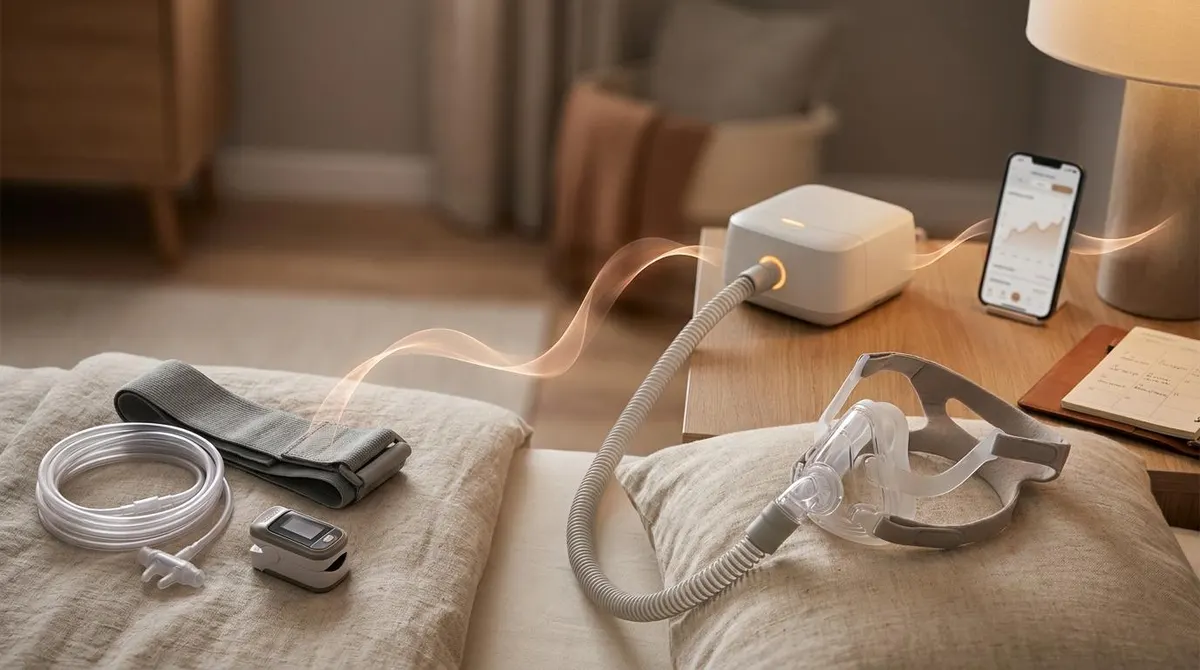
When an HSAT confirms obstructive sleep apnea, the most common first-line treatment is CPAP therapy, which uses continuous positive airway pressure to keep the upper airway open during sleep. Starting treatment promptly after diagnosis improves treatment efficacy and reduces the long-term health risks associated with untreated sleep-disordered breathing.
How CPAP Therapy Works After an HSAT Diagnosis
CPAP therapy delivers a steady stream of pressurized air through a mask worn during sleep. The air pressure prevents the soft tissues in the throat from collapsing, which is the mechanical cause of obstructive apneas and hypopneas. An auto-titrating CPAP device adjusts pressure automatically throughout the night based on the breathing patterns detected by the machine, eliminating the need for a separate in-lab titration study in many cases.
According to the National Heart, Lung, and Blood Institute, CPAP therapy is the standard treatment for moderate to severe obstructive sleep apnea. The AASM recommends that patients use CPAP for at least four hours per night on at least 70 percent of nights to achieve meaningful health benefits. Meeting this threshold is particularly important for commercial drivers, as the FMCSA evaluates treatment compliance when making CDL medical certification decisions.
Adherence Monitoring and Remote Support
One of the most significant challenges with CPAP therapy is adherence. Studies published on PubMed indicate that roughly 30 to 50 percent of patients prescribed CPAP do not use it consistently enough to meet AASM adherence thresholds. Remote Monitoring technology built into modern CPAP machines allows care teams to track nightly usage, mask leak, and residual AHI data without requiring the patient to visit a clinic.
dumbo.health integrates remote monitoring and adherence support into every care plan. The Essentials Plan includes standard follow-up care, while the Premium Plan provides advanced adherence monitoring and a dedicated sleep coach who proactively contacts you if usage patterns suggest you need support. This approach addresses the adherence gap that undermines treatment efficacy for many patients.
Some advanced platforms use tools like EnsoData AI and Sleep Insights to analyze CPAP data and flag clinically significant patterns, helping care teams intervene earlier and keep patients on track.
The complete HSAT-to-treatment pathway through dumbo.health works like this: you order the test for $149, complete it at home, receive a physician-reviewed diagnosis, and start CPAP therapy with equipment included in your chosen monthly plan. The care team monitors your progress and provides ongoing support, creating a closed loop from testing through treatment. If you are ready to start this process, you can take the free sleep assessment to determine your next steps.
KEY TAKEAWAY: CPAP therapy is the standard treatment after an HSAT confirms obstructive sleep apnea, and consistent adherence monitoring through remote technology and care team support significantly improves treatment outcomes.
Treatment adherence is well documented, but misconceptions about HSATs and sleep apnea testing continue to prevent people from getting evaluated in the first place.
Common Myths About Home Sleep Apnea Tests Debunked
MYTH: An HSAT is less accurate than an in-lab sleep study, so it is not worth doing.
FACT: For patients with a high pretest probability of moderate to severe obstructive sleep apnea, HSATs have strong diagnostic agreement with in-lab polysomnography. The AASM recognizes HSATs as an appropriate diagnostic tool for this population. While HSATs may underestimate AHI because they divide events by recording time rather than actual sleep time, this means a positive HSAT result is highly reliable. The limitation is primarily with negative results, which may require follow-up polysomnography to confirm.
MYTH: You need a referral from a specialist to get a home sleep test.
FACT: While a clinical evaluation is necessary to determine HSAT candidacy, you do not always need to see a sleep specialist first. Many primary care physicians and DOT examiners can identify patients with a high probability of obstructive sleep apnea and initiate the testing process. dumbo.health's sleep apnea care solutions allow patients to access home sleep testing and physician review without navigating traditional referral chains.
MYTH: If your home sleep test is negative, you definitely do not have sleep apnea.
FACT: A negative HSAT does not rule out obstructive sleep apnea with certainty. The AASM states that patients with a high clinical suspicion and a negative HSAT should undergo in-lab polysomnography. False negatives can occur due to sensor displacement, insufficient sleep time during the test, or mild disease that falls below detection thresholds. Approximately 15 to 20 percent of HSATs may produce inconclusive data that warrants retesting or further evaluation.
MYTH: Home sleep tests are only for people who snore.
FACT: Snoring is a common symptom of obstructive sleep apnea, but it is not the only indicator. Witnessed breathing pauses, gasping or choking during sleep, excessive daytime sleepiness, morning headaches, and unexplained hypertension are all clinical signs that may prompt a sleep study. Some people with obstructive sleep apnea do not snore at all. The decision to order an HSAT is based on a comprehensive clinical evaluation, not a single symptom.
MYTH: CPAP therapy after an HSAT diagnosis means wearing a mask every night for the rest of your life with no flexibility.
FACT: While long-term nightly use of CPAP is recommended for most patients with moderate to severe obstructive sleep apnea, treatment plans are individualized. Weight loss, positional therapy, oral appliances, and surgical interventions such as nasal endoscopy or adenotonsillectomy for anatomical contributors may reduce or eliminate the need for CPAP in some patients over time. Regular follow-up with your care team allows treatment adjustments based on your progress. The CPAP treatment program through dumbo.health includes ongoing physician oversight to adapt your plan as needed.
KEY TAKEAWAY: Most myths about HSATs stem from misunderstanding their clinical role, and knowing that a positive result is highly reliable while a negative result may need follow-up helps patients make informed decisions about their care.
Clearing up these misconceptions leads to the practical question of what specific physiological signals the HSAT captures and why each one matters.
The Science Behind HSAT Sensors: What Each Measurement Tells Your Physician
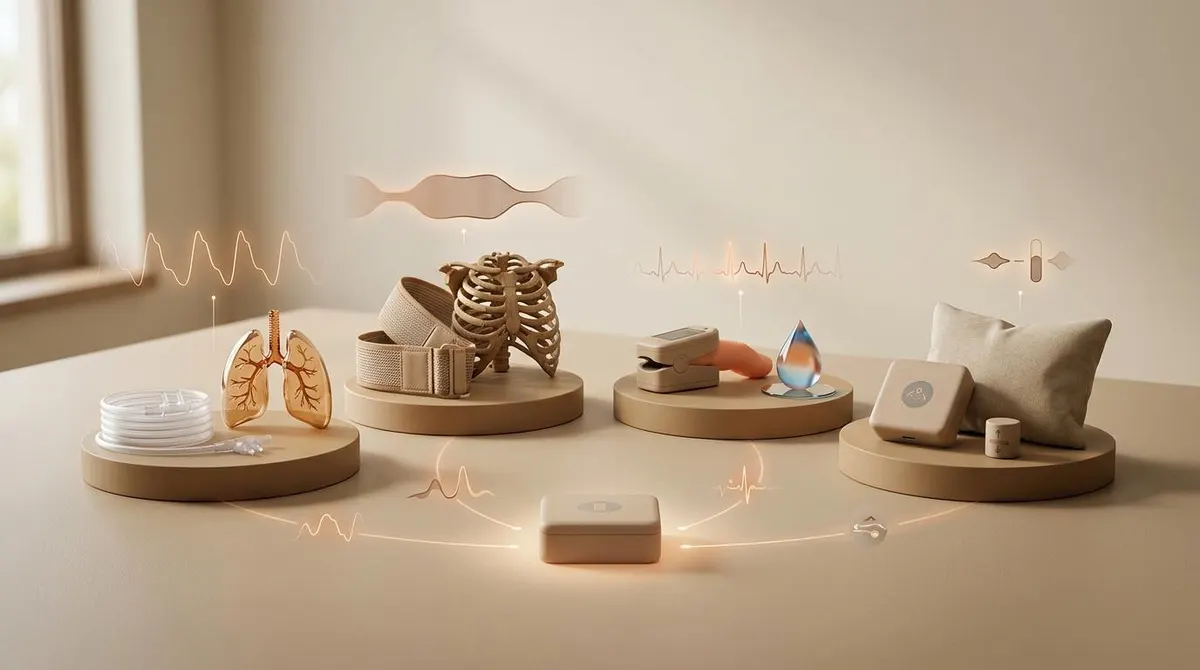
Each sensor on an HST device captures a specific physiological signal, and together they form a comprehensive picture of your breathing during sleep. Understanding what each sensor does helps you appreciate why proper placement matters and what your physician learns from the data.
Nasal Pressure and Airflow
The nasal pressure cannula is the primary sensor for measuring airflow. It detects the subtle pressure changes created by air moving in and out through your nose during each breath. When airflow drops by 30 percent or more for at least 10 seconds, the event is classified as a hypopnea. When airflow stops completely for 10 seconds or more, it is classified as an apnea. Nasal pressure is more sensitive than older thermal airflow sensors, which is why the AASM recommends it as the preferred airflow measurement for HSATs.
Respiratory Effort and Thoracic Movement
The effort belt, typically an elastic belt worn around the chest, detects thoracic effort by measuring the expansion and contraction of your ribcage during breathing efforts. In obstructive sleep apnea, the airway collapses but the chest and diaphragm continue trying to breathe. This ongoing effort in the absence of airflow is what distinguishes obstructive events from central apneas, where both airflow and effort cease. Some devices use a single thoracic belt, while others add an abdominal belt for more detailed respiratory effort data.
Pulse Oximetry and Blood Oxygen Levels
The finger probe uses pulse oximetry to measure SpO2, the percentage of hemoglobin in your blood that is carrying oxygen. In healthy individuals, SpO2 typically stays above 94 percent during sleep. Repeated drops in SpO2 corresponding to apnea and hypopnea events produce desaturation indices, which quantify how often and how severely oxygen levels fall. According to the Sleep Foundation, significant oxygen desaturation during sleep is associated with cardiovascular strain, cognitive effects, and metabolic disruption.
Body Position
The body position sensor logs your sleeping position throughout the night. Obstructive sleep apnea is often worse in the supine position because gravity pulls the tongue and soft palate backward, narrowing the airway. Position-dependent sleep apnea, where the AHI is at least twice as high on the back compared to other positions, occurs in a substantial proportion of patients and may influence treatment recommendations, including positional therapy as an adjunct to CPAP.
home sleep apnea testing captures these signals simultaneously, generating raw data that a sleep medicine physician reviews manually or with the assistance of analytical software. This clinical evaluation converts the raw data into the AHI, desaturation indices, obstructive apnoea index, and other metrics that determine your diagnosis and treatment pathway.
KEY TAKEAWAY: Each HSAT sensor records a distinct physiological signal, and the combination of airflow, respiratory effort, oximetry, and body position data allows a physician to diagnose obstructive sleep apnea, assess its severity, and identify position-dependent patterns.
With a clear understanding of the clinical and technical aspects of HSATs, the final consideration is how to take the first step toward testing.
How to Get Started With a Home Sleep Apnea Test
Getting started with an HSAT requires a clinical evaluation confirming that you are a candidate for home testing, followed by ordering the device and completing the test. The process can be completed in days rather than weeks when you use a direct-access pathway that does not depend on insurance authorization.
If you suspect you have obstructive sleep apnea based on symptoms like persistent snoring, witnessed breathing pauses, morning headaches, or excessive daytime sleepiness, the first step is to assess your risk. dumbo.health's free sleep assessment helps you determine whether you are likely a candidate for home sleep testing and connects you with the clinical team for next steps.
For commercial drivers, timely sleep apnea testing can directly affect CDL certification. The FMCSA requires that drivers identified as at risk during a DOT physical address the concern before certification can proceed. A home sleep test for truck drivers through dumbo.health provides a fast, affordable option that fits a driver's schedule without requiring a visit to a sleep center in your area.
The entire HSAT process through dumbo.health follows a simple path: complete the assessment, order the $149 home sleep test, receive the device, complete one night of testing, return the device, and get your results reviewed by a sleep medicine physician. If diagnosed with obstructive sleep apnea, you can begin CPAP therapy immediately through a care plan that includes the equipment, monitoring, and support you need.
KEY TAKEAWAY: Starting the HSAT process is straightforward when you use a direct-access model that combines clinical oversight with at-home convenience, and taking the first step with a free sleep assessment can set the entire pathway in motion.
The path from suspicion to testing to treatment does not need to be complicated, and understanding every component of the HSAT process ensures you are prepared for each step.
Conclusion
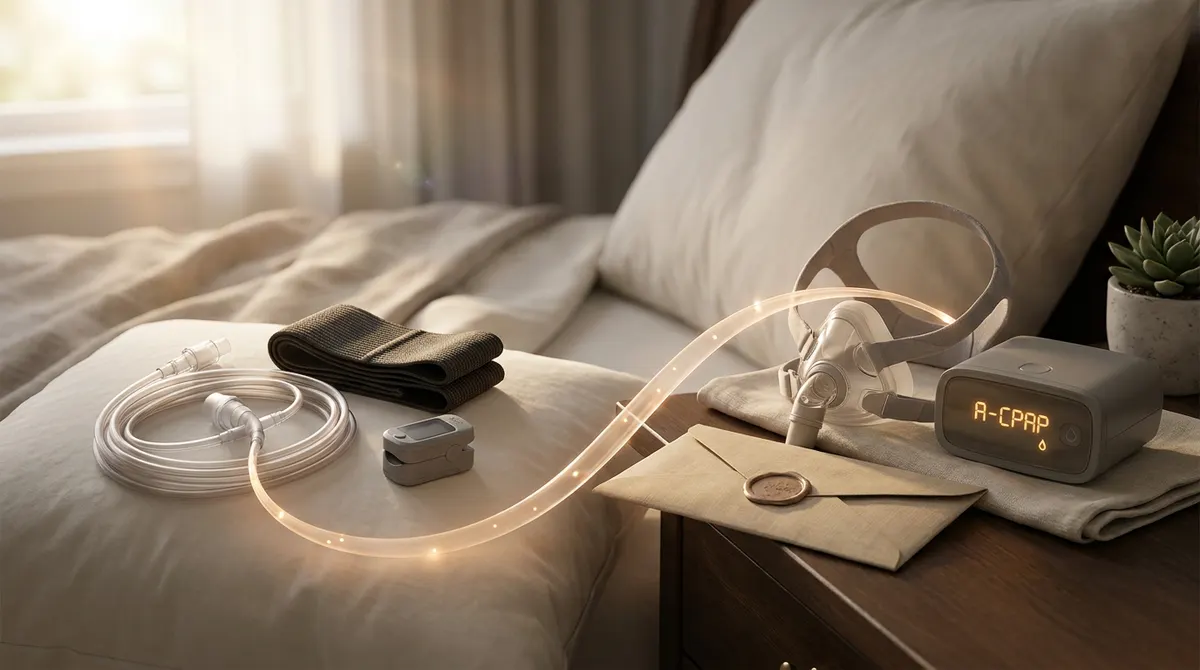
An HSAT is the most accessible and cost-effective way for most adults to get evaluated for obstructive sleep apnea without the expense, inconvenience, or scheduling delays of an in-lab sleep study. The test records the core physiological data a sleep medicine physician needs to make a diagnosis, and when matched to the right patient, it provides results that are clinically reliable and actionable. Understanding the device, the sensors, the scoring methodology, and the limitations of home testing puts you in control of your care. dumbo.health offers the complete pathway from a $149 home sleep test through physician-reviewed results and ongoing CPAP therapy starting at $59 per month with no insurance required and no contracts. If you are ready to find out whether sleep apnea is affecting your health and daily function, take the free sleep assessment to get started.
Frequently Asked Questions About HSAT (Home Sleep Apnea Testing)
What is a home sleep apnea test (HSAT)?
A home sleep apnea test (HSAT) is a simplified, portable sleep study that a patient completes in their own home to help evaluate for obstructive sleep apnea. The device typically measures airflow, breathing effort, blood oxygen levels, pulse, respiratory rate, and body position during sleep. According to the American Academy of Sleep Medicine (AASM), HSATs are classified as Type 3 sleep studies and are validated for use in adults with a high clinical suspicion of moderate to severe obstructive sleep apnea. A sleep medicine physician reviews the raw data and generates a report. HSAT is not a substitute for a full in-lab sleep study in all cases.
Who is an HSAT a good fit for?
HSAT is generally a good fit for adults who have symptoms strongly suggestive of obstructive sleep apnea, such as loud snoring, witnessed breathing pauses, excessive daytime sleepiness, and no significant complicating medical conditions. The American Academy of Sleep Medicine recommends HSAT as an appropriate diagnostic pathway when a patient has a high pre-test probability of moderate to severe obstructive sleep apnea and no serious comorbidities. A healthcare professional can help determine whether at-home testing is clinically appropriate for your situation. You can also take a free sleep assessment to help decide whether home sleep testing may be a reasonable next step.
When is HSAT not a good fit?
HSAT may not be appropriate for everyone. Patients with significant comorbid conditions such as moderate to severe heart or lung disease, oxygen dependency, cognitive impairment, or those suspected of having sleep disorders other than obstructive sleep apnea are generally better evaluated with a full polysomnogram in a supervised sleep center. HSAT also has limitations in detecting central sleep apnea, periodic limb movement disorder, and parasomnias. If your referring physician or sleep medicine clinician has concerns about complex sleep-disordered breathing or other medical conditions, an in-lab study may be recommended. Always discuss the appropriate testing pathway with a qualified healthcare professional.
What is the difference between an HSAT and a polysomnogram?
A polysomnogram (PSG) is a comprehensive in-lab sleep study conducted in a supervised sleep center with a trained technician present. It records brain activity using electrodes, eye movements, muscle activity, heart rhythm, airflow, respiratory effort, blood oxygen levels, and body position simultaneously. An HSAT is a simplified portable device used at home that focuses primarily on cardiopulmonary data including airflow, nasal pressure, thoracic effort, blood oxygen saturation, pulse, and body position. PSG captures more detailed physiological signals and is considered the gold standard for diagnosing complex sleep disorders. HSAT is a validated, convenient alternative for straightforward obstructive sleep apnea evaluation in appropriate patients.
What does an HSAT device typically measure?
Most HSAT devices used for diagnosing obstructive sleep apnea measure airflow through nasal pressure, respiratory effort using a thoracic effort belt or elastic belt, blood oxygen levels via pulse oximetry, heart rate, body position, and sleep time. Depending on the specific device, some HSAT systems also record oxygen desaturation indices, the apnoea-hypopnea index, and the obstructive apnoea index. Common devices used in clinical practice include systems such as the ResMed ApneaLink Air, Alice Night-One, and similar Type 3 portable monitors. Sensors are typically self-administered by the patient following written or video instructions provided with the device.
How do I set up and use the HSAT device?
Most HSAT devices are designed to be self-administered using the paper instructions or video instructions provided with your testing equipment. General steps typically include attaching a nasal pressure cannula for airflow measurement, securing a thoracic effort belt or elastic belt around your chest, applying a pulse oximetry sensor to your finger to measure blood oxygen levels, and ensuring all sensors are connected to the main recording device. You should follow the specific instructions included with your device exactly. If you have questions about your device setup, contact your provider's patient support line before your test night. dumbo.health provides step-by-step support as part of its at-home sleep test process.
When should I take the home sleep test?
You should take the home sleep test on a night when you can follow your normal sleep routine as closely as possible. Avoid alcohol, sedatives not prescribed for sleep, and caffeine in the hours before your test. Go to bed at your usual time and try to sleep for a full night. Most HSAT devices require a minimum amount of sleep time to generate valid data for physician interpretation. If you are unable to test on your scheduled first night, contact your provider's customer service team to reschedule. Consistent, representative sleep behavior gives the physician the most accurate data for reviewing your results.
What time should I go to bed on the night of my sleep test?
Go to bed at your usual bedtime on the night of your home sleep test. HSAT devices record data during your natural sleep period, and going to bed at a time that reflects your typical sleep pattern gives the most representative results. Staying up significantly later or going to bed much earlier than usual may affect sleep time data and the quality of the recording. Follow any specific timing instructions provided with your device. If your instructions include a device activation step before sleep, make sure sensors are properly attached and the device is recording before you attempt to fall asleep.
What happens if I cannot complete the test on the first night?
If you are unable to complete the home sleep test on the first scheduled night due to illness, technical difficulty, or any other reason, contact your provider's customer service team as soon as possible to report the issue and arrange a replacement or reschedule. Many HSAT programs allow for a repeat test night if the first recording is technically inadequate or incomplete. Do not attempt to reuse disposable sensors from a failed test night. A valid HSAT recording requires sufficient sleep time and adequate signal quality for the sleep medicine physician to generate an accurate interpretation and report.
When will I receive the results of my home sleep test?
HSAT results are typically available within a few business days after the device is returned and the data is reviewed by a sleep medicine physician. Turnaround times vary depending on the provider and the plan selected. dumbo.health's Premium Plan includes priority results turnaround as part of its dedicated sleep coaching and advanced adherence monitoring tier. Once your physician interpretation is complete, you will receive a report outlining findings such as your apnea-hypopnea index, oxygen desaturation data, and any clinical recommendations. A healthcare professional should review the results with you to explain findings and discuss appropriate next steps.
What happens after my home sleep test results are ready?
After your HSAT results are available, a sleep medicine physician reviews the raw data and generates a clinical report. If obstructive sleep apnea is identified, the physician may recommend treatment such as CPAP therapy. Your results report may also be sent to your referring physician or care team. dumbo.health monthly plans include physician interpretation, CPAP therapy and equipment, adherence follow-up, and provider updates. The sleep apnea care solutions page explains what is included across each plan. Treatment decisions should always involve a qualified clinician reviewing your individual results and medical history.
Is an HSAT accurate for diagnosing obstructive sleep apnea?
HSAT is a validated diagnostic tool for obstructive sleep apnea in appropriate adult patients. The American Academy of Sleep Medicine recognises Type 3 portable sleep studies as clinically acceptable for diagnosing obstructive sleep apnea when used correctly in suitable candidates. Because HSAT does not capture brain activity or full sleep staging, it may underestimate the apnea-hypopnea index compared to a full polysomnogram. This means a negative or borderline HSAT result in a patient with strong clinical symptoms may still warrant an in-lab sleep study. A sleep medicine physician interprets your results in the context of your full clinical picture.
What are the limitations of home sleep apnea testing?
HSAT has several important limitations. It cannot diagnose sleep disorders other than obstructive sleep apnea, including central sleep apnea, periodic limb movement disorder, or parasomnias. Because it does not record brain activity using electrodes, HSAT cannot provide full sleep staging data. Signal quality can be affected by sensor displacement during the night, particularly in patients who move frequently or sleep on their side. HSAT may not be appropriate for patients with significant cardiopulmonary conditions, cognitive impairment, or complex sleep-disordered breathing. When HSAT results are inconclusive or inconsistent with symptoms, a polysomnogram in a supervised sleep center is typically recommended.
Can HSAT be used to confirm treatment efficacy for sleep apnea?
HSAT can be used in some clinical contexts to assess treatment efficacy after therapy has been initiated, though the specific application depends on the clinical question and the patient's circumstances. According to the American Academy of Sleep Medicine, home sleep testing billed under CPT 95800 and similar codes covers unattended sleep studies for diagnostic purposes. Auto-titrating CPAP devices and remote monitoring tools such as those integrated into some CPAP platforms can provide ongoing adherence and efficacy data without a repeat sleep study in many cases. A sleep medicine physician should determine whether a follow-up home sleep test or in-lab study is appropriate based on your treatment response and symptoms.
How much does a home sleep apnea test cost?
The cost of a home sleep apnea test varies by provider. dumbo.health offers a $149 one-time at-home sleep test with transparent cash-pay pricing. This covers the HSAT device and one test night. There are no insurance requirements, no prior authorizations, and no surprise bills. The $149 home sleep test is purchased separately from monthly care plans. If testing confirms obstructive sleep apnea and treatment is needed, dumbo.health monthly plans start at $59 per month for physician interpretation, CPAP therapy, equipment, and follow-up care. Detailed pricing information is available on the dumbo.health plans page.
Do I need insurance to get an HSAT through dumbo.health?
No. dumbo.health is a cash-pay only platform. You do not need insurance, a referral, or prior authorization to access an at-home sleep apnea test through dumbo.health. The home sleep test is $149 one-time, and ongoing monthly care plans start at $59 per month. All pricing is transparent and published upfront so patients can plan without surprise bills. This model is designed to remove common barriers to sleep apnea testing and care, particularly for patients without adequate insurance coverage or those who prefer to pay directly for healthcare services.
What is included in dumbo.health monthly care plans?
dumbo.health monthly plans cover physician interpretation and report, CPAP therapy and equipment, standard follow-up care, and updates sent to your referring provider. The Essentials Plan is $59 per month. The Premium Plan at $89 per month adds a dedicated sleep coach from a licensed care team, advanced adherence monitoring, and priority results turnaround. The Elite Plan at $129 per month adds concierge clinical support, direct physician messaging, and custom reporting. All plans are month-to-month with no contracts and can be cancelled at any time. The home sleep test at $149 is a separate one-time purchase billed before the test night.
What is CPAP therapy and is it used after an HSAT diagnosis?
CPAP, or continuous positive airway pressure, is the most common treatment for obstructive sleep apnea. A CPAP machine delivers a steady stream of air through a mask worn during sleep to keep the upper airway open and prevent breathing interruptions. The Mayo Clinic describes CPAP as the first-line treatment for most adults with obstructive sleep apnea. An auto-titrating CPAP device automatically adjusts pressure levels in response to the patient's breathing patterns throughout the night. If your HSAT results indicate obstructive sleep apnea, a clinician will review appropriate treatment options with you. dumbo.health monthly plans include CPAP therapy and equipment as part of ongoing care.
Why does CPAP adherence matter after sleep apnea is diagnosed?
CPAP adherence means consistently using your CPAP device every night for the recommended number of hours. Poor adherence reduces the clinical benefit of treatment and may leave obstructive sleep apnea inadequately controlled. Insurance and DOT-related monitoring programs often require evidence of regular CPAP use. Adherence data is typically captured through the CPAP device and reviewed by a clinician. dumbo.health Premium and Elite plans include advanced adherence monitoring and dedicated sleep coaching to help patients maintain consistent therapy. A healthcare professional should be involved in reviewing adherence data and adjusting treatment if needed.
Do commercial drivers need an HSAT for their DOT physical?
Commercial drivers are not automatically required to complete a home sleep apnea test for every DOT physical, but a certified medical examiner may refer a driver for sleep apnea evaluation if they identify clinical risk factors such as obesity, a large neck circumference, hypertension, excessive daytime sleepiness, or a history of snoring and witnessed apneas. The FMCSA does not currently have a universal mandatory sleep apnea testing rule, but individual medical examiners apply clinical judgment based on FMCSA guidance. If a driver is referred for evaluation, an HSAT may be an appropriate and convenient testing pathway. Learn more about DOT sleep apnea testing at home.
Can CDL drivers use an at-home sleep test to meet DOT sleep apnea requirements?
CDL drivers who are referred for sleep apnea evaluation by a certified medical examiner may be able to complete a home sleep apnea test as part of that evaluation process, depending on their clinical profile and the medical examiner's guidance. HSAT is a validated diagnostic tool for obstructive sleep apnea and is widely used in commercial driver health programs. However, the certified medical examiner makes all decisions regarding DOT medical certification, not the testing provider. dumbo.health supports testing and care documentation but does not guarantee DOT certification or medical clearance. The CDL driver sleep apnea testing guide provides additional information for commercial drivers.
What happens if a commercial driver is diagnosed with sleep apnea after an HSAT?
If a commercial driver is diagnosed with obstructive sleep apnea following an HSAT, the certified medical examiner will typically consider whether the driver is on effective treatment before making a medical certification decision. Drivers who are diagnosed and begin compliant CPAP therapy may be able to maintain their medical certificate with appropriate documentation and regular adherence follow-up. The specific certification outcome depends on the individual driver's health profile, treatment adherence, and the judgment of the certified medical examiner. dumbo.health does not guarantee DOT certification. For more information, review the complete guide for commercial drivers on the dumbo.health blog.
Where can I find home sleep apnea testing near me?
Home sleep apnea testing is available through sleep centers, sleep medicine clinics, primary care providers, and digital health platforms in most areas. Because HSAT devices are shipped directly to the patient and completed at home, you do not need to travel to a sleep center to access testing. dumbo.health offers at-home sleep testing with transparent cash-pay pricing and ships testing equipment directly to patients, making it a convenient option regardless of your location. If you have complex symptoms or a complicating medical history, a sleep center or sleep medicine specialist in your area may be better suited to evaluate your needs with a full in-lab study.
What symptoms should prompt me to consider a home sleep apnea test?
Common symptoms that may indicate obstructive sleep apnea include loud or frequent snoring, witnessed pauses in breathing during sleep, waking with a dry mouth or headache, excessive daytime sleepiness, difficulty concentrating, and unrefreshing sleep. The Sleep Foundation notes that risk factors include obesity, a large neck circumference, male sex, and middle age, though sleep apnea affects people of all body types and ages. If you experience these symptoms regularly, speaking with a healthcare professional is a reasonable first step. A sleep assessment or clinical evaluation can help determine whether a home sleep apnea test is appropriate for your situation.
What should I do if I have urgent breathing symptoms or chest pain at night?
If you experience severe shortness of breath, chest pain, choking, or any urgent symptoms that concern you during the night or at any time, seek emergency medical care promptly. A home sleep apnea test is a diagnostic tool for evaluating suspected obstructive sleep apnea in stable patients and is not appropriate for urgent or emergency situations. dumbo.health is a sleep testing and ongoing care platform and is not a substitute for emergency care or a personal physician. If you have serious health concerns, contact a healthcare professional, call emergency services, or go to the nearest emergency department.
Related Home Sleep Apnea Test Topics
- Home Sleep Apnea Test The Complete Guide to At-Home Sleep Apnea Testing
- How Do You Get a Home Sleep Apnea Test The Complete Guide to At-Home Sleep Testing
- Sleep Apnea Test at Home The Complete Guide to Home Sleep Testing for Adults
- Home Sleep Test The Complete Guide to At-Home Sleep Apnea Testing
- How Is a Home Sleep Apnea Test Done A Complete Guide to At-Home Sleep Testing
- Can You Test for Sleep Apnea at Home A Complete Guide to Home Sleep Testing
- How Does a Home Sleep Apnea Test Work A Complete Guide to At-Home Sleep Testing
- At-Home Sleep Apnea Test The Complete Guide to Testing, Results, and Treatment
- Sleep Apnea Test The Complete Guide to Diagnosis, Home Testing, and What Your Results Mean
- Sleep Apnea Testing The Complete Guide to Diagnosis, Home Tests, and What Your Results Mean
- Apnea Monitor The Complete Guide to Breathing Monitors for Sleep Apnea and Infant Care
- What Is a Home Sleep Apnea Test How At-Home Sleep Testing Works, What It Measures, and Who Needs One
- How to Get Tested for Sleep Apnea The Complete Guide to Diagnosis, Sleep Studies, and Treatment
- Cost of Sleep Apnea Testing What You Will Actually Pay
- Sleep Apnea Testing Near Me How to Find the Right Test, Provider, and Path to Diagnosis
- Sleep Apnea Test Near Me How to Find Local and At-Home Testing Options
- How Long Does a Home Sleep Apnea Test Take What to Expect Before, During, and After Testing
- Home Sleep Apnea Test Near Me How to Get Tested Without a Sleep Lab Visit
- Are Home Sleep Apnea Tests Accurate What the Evidence Actually Shows
- Sleep Test to CPAP How Sleep Apnea Testing Leads to Treatment
- Sleep Apnea Diagnosis How Sleep Apnea Is Detected, Tested, and Confirmed
- Sleep Apnea Checker How to Screen for Sleep Apnea and What Your Results Mean
- Do You Need a Prescription for a Home Sleep Apnea Test
- Can My Doctor Prescribe a Home Sleep Apnea Test What You Need to Know
- Disadvantages of Home Sleep Testing What Patients and Providers Need to Know
- What Does a Home Sleep Apnea Test Consist Of Sensors, Equipment, and What to Expect
- Best At Home Sleep Apnea Test A Clinical Comparison
- Does Anyone Ever Pass a Sleep Apnea Test What Normal Results Actually Look Like
- CPAP Test What It Is, How It Works, and What Your Results Mean
AI summary
A home sleep apnea test (HSAT) is an unattended Type 3 sleep study used to evaluate adults for obstructive sleep apnea (OSA) at home. It is recognized by the American Academy of Sleep Medicine (AASM) for adults with moderate to high pretest probability of OSA and without major comorbid sleep disorders. Core concept: HSAT captures cardiopulmonary signals that allow a sleep medicine physician to identify obstructive apneas and hypopneas. Key components and measurements: airflow (nasal pressure cannula), respiratory effort (thoracic effort belt), oxygen saturation and desaturation indices (pulse oximetry, SpO2), and body position; some devices also record snoring and pulse/heart rate. Devices referenced include ResMed ApneaLink Air, Alice Night-One, and ApneaTrak Core/Legacy. Type 3 qualification includes at least four channels and aligns with CPT 95800. Interpretation: Results are physician-scored using the apnoea-hypopnea index (AHI). Because HSAT lacks EEG sleep staging, AHI is typically calculated using total recording time and may underestimate severity versus in-lab polysomnography. Constraints and implications: HSAT is not appropriate for suspected central sleep apnea, narcolepsy, periodic limb movement disorder, pediatrics, or significant cardiopulmonary/neuromuscular disease. Negative or inconclusive HSAT with high clinical suspicion should be followed by in-lab polysomnography. If OSA is confirmed, CPAP (often auto-titrating) and adherence monitoring are typical next steps.

Nicolas Nemeth
Co-Founder
Nico is the co-founder of Dumbo Health, a digital sleep clinic that brings the entire obstructive sleep apnea journey home. Patients skip the sleep lab and the long wait to see a specialist. Dumbo Health ships an at home test, connects patients with licensed sleep clinicians by video, and delivers CPAP or a custom oral appliance with ongoing coaching and automatic resupply in one clear subscription.
Keep reading

VA At Home Sleep Apnea Test: The Complete Guide for Veterans

Home Sleep Apnea Test App: What Works, What Doesn't, and How to Get a Real Diagnosis


