Can You Test for Sleep Apnea at Home? A Complete Guide to Home Sleep Testing
Home sleep apnea testing (HSAT) is a clinically validated way for most adults to evaluate suspected obstructive sleep apnea without an in-lab sleep study. The guide explains what HSAT devices measure, including airflow, oxygen saturation, heart rate, breathing effort, snoring, and body position. It outlines the step-by-step process, how to prepare, and how physicians use the Apnea-Hypopnea Index (AHI) to classify severity. You will learn who qualifies for home testing and who should go straight to polysomnography, including people with suspected central sleep apnea or significant cardiopulmonary disease. Practical sections cover common testing pitfalls, typical timelines, and cost ranges, plus what happens after a positive diagnosis, including CPAP therapy and alternatives.
Struggling with sleep?
Find out if sleep apnea is the reason.
FDA-cleared. $149 flat. Physician-reviewed results in 48 hours.

Can You Test for Sleep Apnea at Home? A Complete Guide to Home Sleep Testing
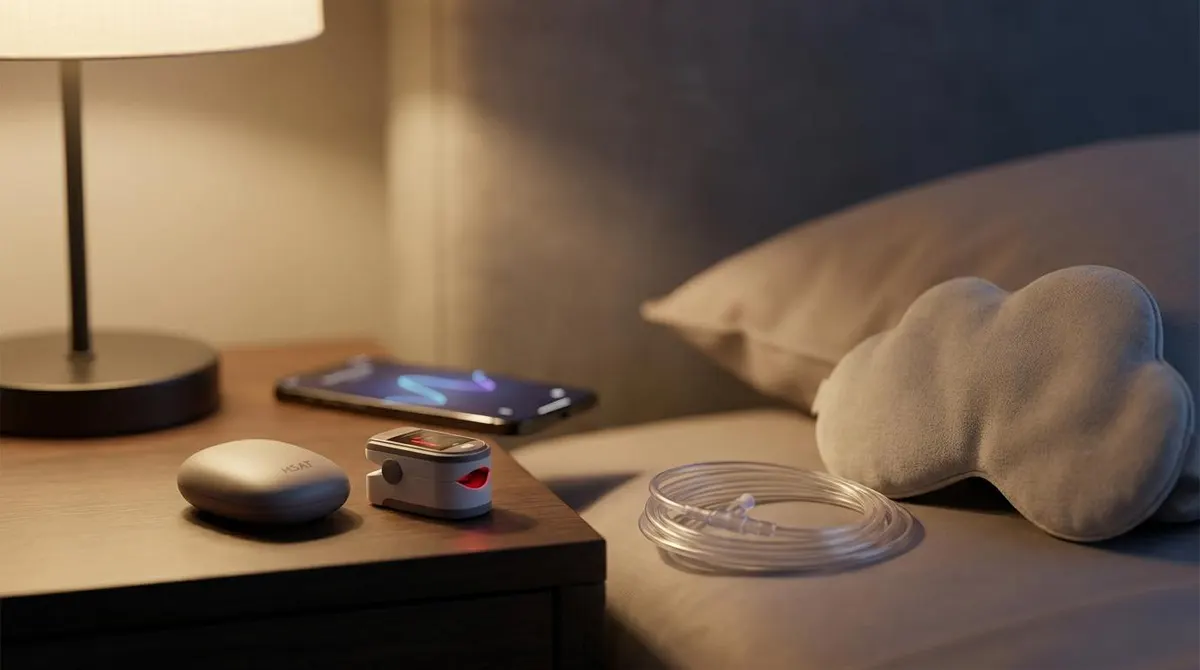
Can you test for sleep apnea at home? Yes, and for most adults with suspected obstructive sleep apnea, a home sleep apnea test is the clinically recommended first step. The American Academy of Sleep Medicine supports home sleep apnea testing as a validated diagnostic pathway for uncomplicated obstructive sleep apnea in adults. This guide is written for anyone experiencing symptoms like loud snoring, witnessed breathing pauses, or excessive daytime sleepiness, as well as commercial drivers facing DOT screening requirements. You will learn exactly how home sleep tests work, what they measure, how they compare to lab-based sleep studies, who qualifies, and what to do with your results. If you have been putting off testing because of cost, convenience, or confusion about the process, the answers below will help you take the next step with confidence.
Quick Answer
Yes, you can test for sleep apnea at home using a home sleep apnea test, also called an HSAT. The device measures airflow, blood oxygen levels, heart rate, and breathing effort while you sleep in your own bed. Home sleep tests are clinically validated for diagnosing obstructive sleep apnea in adults without significant comorbidities. A physician reviews the recorded sleep data to determine your Apnea-Hypopnea Index score and recommend treatment. dumbo.health offers a complete home sleep test for $149 with no insurance required.
Key Takeaways
- A home sleep apnea test is a clinically validated method for diagnosing obstructive sleep apnea in adults, supported by the American Academy of Sleep Medicine.
- Home sleep tests measure airflow, oxygen saturation, heart rate, and breathing effort using sensors you apply yourself before bed.
- The Apnea-Hypopnea Index score from a home sleep test determines sleep apnea severity: mild (5 to 14), moderate (15 to 29), or severe (30 or higher).
- home sleep testing is not recommended for patients with significant cardiopulmonary diseases, neuromuscular disease, or suspected central sleep apnea.
- dumbo.health provides a home sleep test for $149 with physician interpretation starting at $59 per month, no insurance or prior authorization needed.
- CPAP therapy remains the gold-standard therapy for moderate to severe obstructive sleep apnea, and treatment can begin shortly after diagnosis.
What Is a Home Sleep Apnea Test?
A home sleep apnea test is a portable diagnostic device that records your breathing patterns, oxygen levels, and heart rate overnight while you sleep in your own bed. Unlike in-lab polysomnography, an HSAT allows you to complete sleep apnea testing without traveling to a sleep clinic or spending a night away from home.
Home sleep apnea test (HSAT) is a simplified sleep study conducted outside a clinical sleep laboratory using portable monitoring equipment. An HSAT records enough physiological data to identify obstructive sleep apnea in most adult patients.
The device typically weighs less than a pound and uses between three and seven sensors depending on the model. You wear it for one night, return or ship it back, and a sleep specialist or physician interprets the recorded sleep data. According to the American Academy of Sleep Medicine, home sleep apnea testing is appropriate for adults with a high pretest probability of moderate to severe obstructive sleep apnea and no significant comorbidities.
Home sleep testing has expanded significantly as a diagnostic pathway. Medicare and most commercial insurance plans cover HSAT when ordered by a qualified provider, though many patients prefer cash-pay options to avoid prior authorizations and scheduling delays. dumbo.health offers a home sleep test for $149 as a one-time cost, with no insurance verification required.
KEY TAKEAWAY: A home sleep apnea test is a portable, clinically validated device that records breathing, oxygen levels, and heart rate overnight to diagnose obstructive sleep apnea without requiring a sleep lab visit.
Understanding what an HSAT measures helps clarify why it works and where its boundaries are.
What Does a Home Sleep Test Measure?
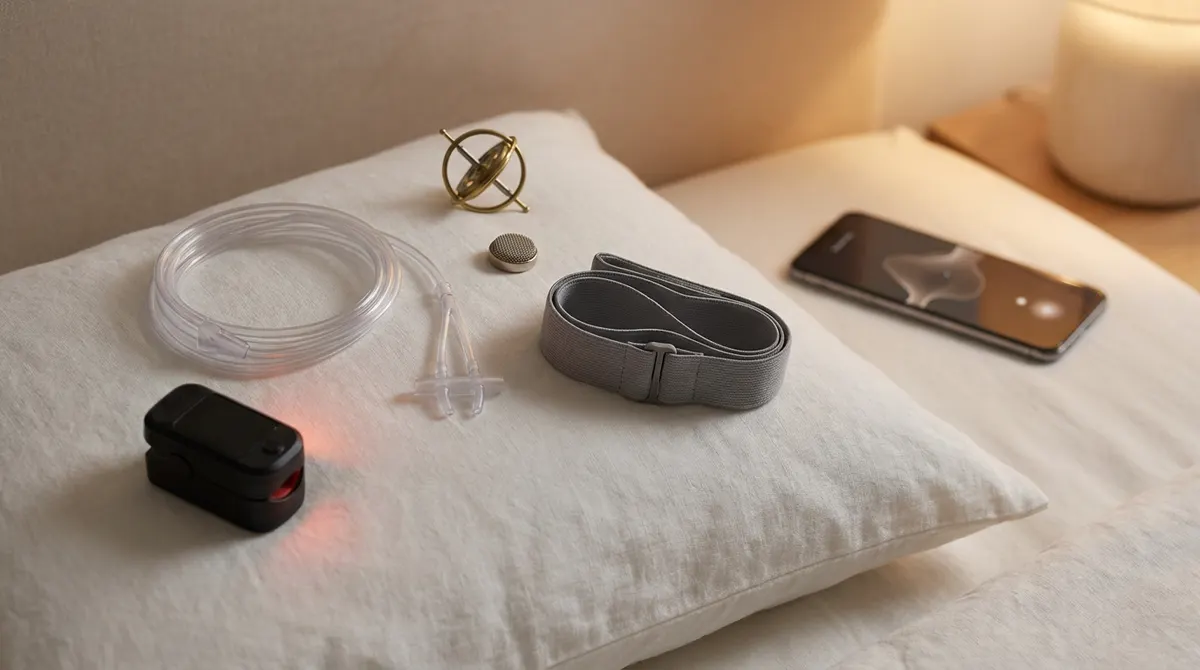
A home sleep test measures airflow, blood oxygen levels, heart rate, respiratory effort, and body position to detect sleep-disordered breathing events. These metrics allow a physician to calculate your Apnea-Hypopnea Index score and determine whether you have obstructive sleep apnea.
Airflow
A nasal cannula or pressure transducer placed near your nose detects respiratory flow and reductions in air movement. The sensor identifies apneas (complete pauses in breathing) and hypopneas (partial reductions in airflow lasting at least 10 seconds).
Oxygen Saturation
A pulse oximeter clipped to your fingertip continuously measures blood oxygen levels throughout the night using pulse oximetry. Drops in oxygen saturation that coincide with breathing pauses are a hallmark indicator of obstructive sleep apnea. The National Heart, Lung, and Blood Institute notes that repeated oxygen desaturations during sleep are linked to cardiovascular disease and other systemic health risks.
Heart Rate
The same pulse oximeter that tracks oxygen saturation also records your heart rate. Fluctuations in heart rate often correspond with apnea events, as the body's autonomic nervous system responds to each breathing interruption.
Respiratory Effort
Many home sleep test devices use a belt placed around the chest or abdomen to measure breathing effort through respiratory inductance plethysmography. This sensor detects whether you are attempting to breathe during an apnea event, which helps distinguish obstructive sleep apnea from central sleep apnea.
Snoring and Body Position
Some HSAT devices include a microphone for snore detection and an accelerometer or movement sensor for tracking body position. Snoring intensity and positional data add clinical context, since obstructive events often worsen when sleeping on the back.
DID YOU KNOW: According to the Sleep Foundation, an estimated 80 percent of moderate to severe obstructive sleep apnea cases remain undiagnosed, making accessible home sleep testing a critical tool for closing the diagnostic gap.
KEY TAKEAWAY: A home sleep test records airflow, oxygen saturation, heart rate, breathing effort, and snoring to give a physician the data needed to diagnose obstructive sleep apnea accurately.
The specific device used for your home sleep test affects the sensors available and the data quality of your results.
Types of Home Sleep Apnea Test Devices
Home sleep apnea test devices range from multi-sensor kits with nasal cannulas and chest belts to single-point wearable devices that measure peripheral arterial tone. The right device depends on your clinical situation, your provider's preference, and the level of data needed for accurate diagnosis.
WatchPAT ONE
WatchPAT ONE is an FDA-approved disposable HSAT device manufactured by Itamar Medical. It wraps around the wrist and fingertip, measuring peripheral arterial tonometry, oxygen saturation, heart rate, actigraphy, and body position. WatchPAT uses peripheral arterial tone signals to detect breathing disturbances without requiring a nasal cannula or chest belt. The device connects to a smartphone app that records and uploads sleep data to a cloud-based server for physician interpretation. Many patients report that WatchPAT ONE is comfortable and simple to use because it eliminates the need for a belt or cannula.
Multi-Sensor HSAT Kits
Traditional multi-sensor home sleep test kits include a nasal cannula for measuring respiratory flow, a pulse oximeter for oxygen levels and heart rate, and one or two belts for respiratory inductance plethysmography. Some models add a photoplethysmography sensor or snore detection microphone. These devices collect more data channels than single-sensor options, which can be helpful for patients with complex presentations.
Emerging Wearable and Touchless Options
Newer approaches to home sleep monitoring include ring-based devices like the SleepImage Ring, which uses photoplethysmography to track cardiopulmonary coupling and oxygen levels. Research into touchless measurement technologies using radar or radio waves is ongoing, though these tools have not yet replaced validated HSAT devices in clinical practice guidelines.
Comparing Home Sleep Test Device Types
Here is how the main device categories compare across key decision factors.
Sensors Used
- WatchPAT ONE: Wrist and fingertip sensors measuring peripheral arterial tonometry, actigraphy, and pulse oximetry
- Multi-Sensor Kit: Nasal cannula, chest or abdominal belt, and finger pulse oximeter
- Wearable Ring: Finger-based photoplethysmography sensor
Comfort
- WatchPAT ONE: High, no cannula or belt required
- Multi-Sensor Kit: Moderate, multiple attachment points
- Wearable Ring: High, minimal contact
Data Channels
- WatchPAT ONE: Peripheral arterial tone, oxygen saturation, heart rate, actigraphy, body position
- Multi-Sensor Kit: Airflow, respiratory effort, oxygen saturation, heart rate, snoring
- Wearable Ring: Cardiopulmonary coupling, oxygen saturation, heart rate
FDA Approval Status
- WatchPAT ONE: FDA approved
- Multi-Sensor Kit: FDA approved (varies by manufacturer)
- Wearable Ring: Varies, check specific device clearance
For most patients undergoing initial sleep apnea testing, either WatchPAT ONE or a multi-sensor HSAT kit provides sufficient data for a physician to make a diagnosis. dumbo.health ships an at-home sleep test directly to your door with clear setup instructions and no need to visit a clinic in your area.
KEY TAKEAWAY: WatchPAT ONE and multi-sensor HSAT kits are the most widely used FDA-approved home sleep test devices, each offering a different balance of comfort, data depth, and ease of use.
Knowing how these devices work is useful, but understanding how the full testing process unfolds from start to finish helps you prepare.
How to Complete a Home Sleep Test: Step-by-Step Process
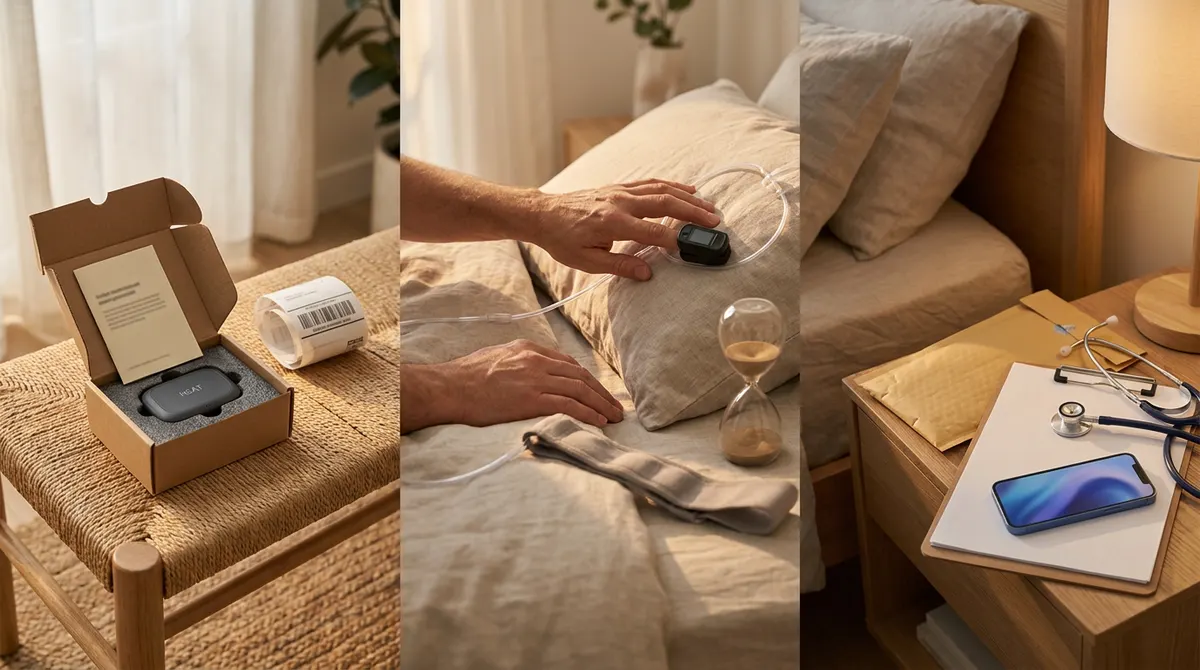
Completing a home sleep apnea test involves ordering or receiving a device, applying sensors, sleeping for one night, and returning the device for physician interpretation. Most patients receive their results within a few days.
Steps to Complete Your Home Sleep Apnea Test
1. Get a referral or order your test. A physician, sleep specialist, or provider must authorize the test. With dumbo.health, you can start by completing a free sleep assessment online and a clinician will determine if home sleep testing is right for you.
2. Receive the device at home. The HSAT device arrives by mail with detailed instructions. dumbo.health ships your home sleep test kit directly to your address for $149.
3. Apply the sensors before bed. Follow the included instructions or smartphone app guide to attach the nasal cannula, finger sensor, chest belt, or wrist device depending on your specific equipment.
4. Sleep in your own bed for one full night. Try to follow your normal bedtime routine. The device records sleep data automatically while you sleep.
5. Remove the sensors in the morning. Power off the device and package it for return shipping if required, or confirm that data has uploaded via the smartphone app.
6. A physician reviews your sleep data. A board-certified sleep medicine specialist or qualified physician interprets the results, calculates your AHI score, and prepares a diagnostic report.
7. Receive your results and next steps. Your provider contacts you with findings and treatment recommendations. With dumbo.health, results and physician interpretation are included starting with the Essentials Plan at $59 per month.
After completing these steps, you will have a definitive answer about whether you have obstructive sleep apnea and a clear path to treatment if needed.
KEY TAKEAWAY: A home sleep apnea test takes one night, involves applying a few sensors before bed, and produces results that a physician uses to diagnose obstructive sleep apnea and guide treatment.
Before testing, it helps to know exactly what to do and bring to ensure your test night goes smoothly.
How to Prepare for Your Home Sleep Test
Proper preparation increases the accuracy of your home sleep test results. Small steps like avoiding alcohol and following sensor placement instructions closely can prevent the need for a retest.
Pre-Test Checklist
- Confirm your test night is scheduled for a night with a normal bedtime routine
- Avoid alcohol for at least 24 hours before testing, as it can alter breathing patterns and skew results
- Avoid caffeine after noon on the day of your test
- Skip naps on the test day so you are sufficiently tired at bedtime
- Remove nail polish from the finger where the pulse oximeter will be placed, as polish can interfere with oxygen saturation readings
- Charge your smartphone if your device requires an app connection for data upload
- Read the full device instruction guide or watch the setup video before your test night
- Keep the device packaging and return label accessible for morning return shipping
- Complete the free sleep assessment at dumbo.health before ordering if you are unsure whether a home test is appropriate for your symptoms
Many patients report that a calm, familiar sleep environment improves both comfort and data quality. Clinicians frequently observe that first-night testing at home produces more representative sleep data than a first night in an unfamiliar sleep lab.
IMPORTANT: If your device falls off or you sleep fewer than four hours, the test may need to be repeated. Follow sensor attachment instructions carefully and allow enough time for a full night of recording.
KEY TAKEAWAY: Preparing properly for your home sleep test by avoiding alcohol, removing nail polish, and following sensor instructions reduces the chance of needing a retest.
Once you understand the preparation process, it is worth comparing home testing directly to in-lab polysomnography so you can see the tradeoffs clearly.
Home Sleep Test vs. Polysomnography: Which Do You Need?
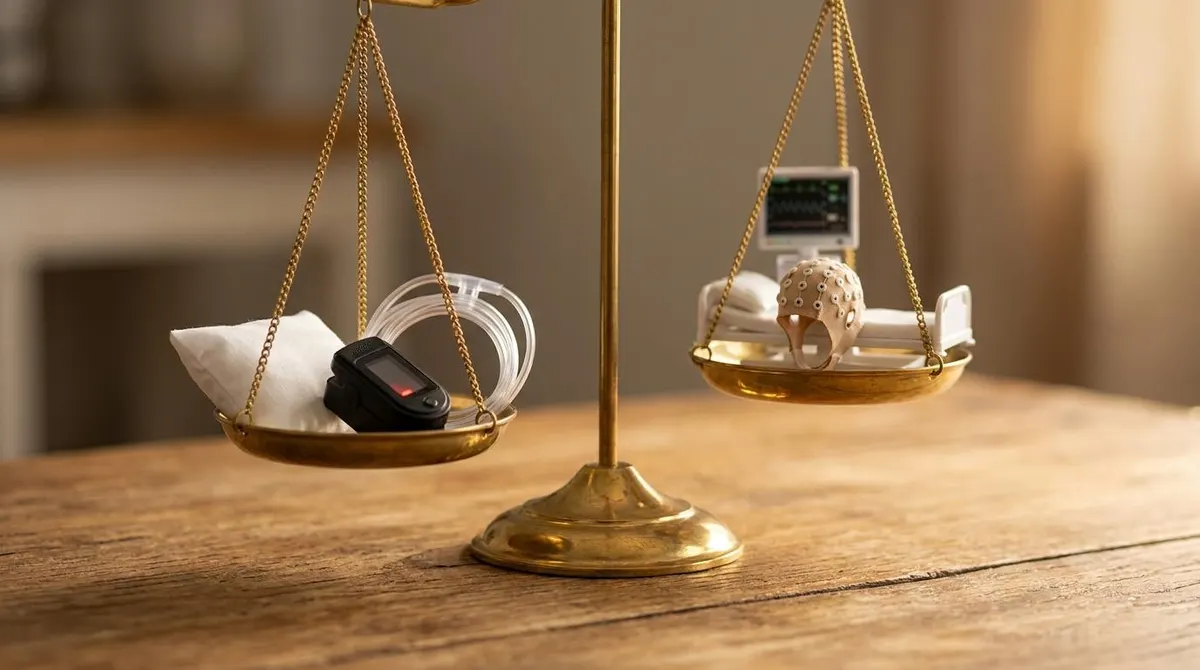
A home sleep test is appropriate for most adults with suspected obstructive sleep apnea, while polysomnography is needed for patients with complex sleep disorders, significant comorbidities, or when an HSAT result is inconclusive. The choice depends on your clinical profile, not personal preference alone.
polysomnography is an overnight sleep study conducted in a sleep laboratory where a sleep technician monitors brain waves using electroencephalography, eye movement, muscle activity via Electromyogram, respiratory flow, respiratory effort, oxygen saturation, heart rate, and sleep staging throughout the night. It is considered the gold-standard diagnostic test for all sleep disorders, including obstructive sleep apnea, central sleep apnea, and other sleep-related breathing disorders.
A polysomnogram captures far more data than a home sleep test, including brain waves for sleep staging and detection of neurological conditions that affect sleep. However, for uncomplicated obstructive sleep apnea, studies published in peer-reviewed journals and referenced by the American Academy of Sleep Medicine confirm that home sleep apnea tests produce comparable diagnostic accuracy for moderate to severe cases.
Comparing Home Sleep Test and Polysomnography
Setting
- home sleep apnea test: Your own bed at home
- polysomnography: Sleep clinic or hospital laboratory
Cost
- Home Sleep Apnea Test: Typically $149 to $500 out of pocket (dumbo.health charges $149)
- polysomnography: Often $1,000 to $3,000 or more without insurance
Sensors
- Home Sleep Apnea Test: 3 to 7 channels including airflow, oxygen saturation, heart rate, respiratory effort
- polysomnography: 12 or more channels including brain waves, eye movement, muscle tone, sleep staging
Who It Is Best For
- Home Sleep Apnea Test: Adults with suspected moderate to severe obstructive sleep apnea and no major comorbidities
- Polysomnography: Patients with suspected central sleep apnea, heart failure, neuromuscular disease, or neurological conditions
Convenience
- Home Sleep Apnea Test: High, no travel, no overnight facility stay
- Polysomnography: Lower, requires scheduling and an overnight stay at a sleep clinic
Turnaround Time
- Home Sleep Apnea Test: Results often available within 2 to 5 business days
- Polysomnography: Results may take 1 to 3 weeks depending on the lab
For the majority of patients, a home sleep test provides sufficient diagnostic criteria to confirm obstructive sleep apnea and initiate CPAP therapy or other treatment. Lab-based sleep studies become necessary when the home test is negative but symptoms persist, or when the physician suspects a condition beyond obstructive sleep apnea.
According to Mayo Clinic, polysomnography remains the preferred test when evaluating for multiple sleep disorders simultaneously or when a split-night protocol is needed, where diagnosis and CPAP titration happen in the same night.
KEY TAKEAWAY: Choose a home sleep test for straightforward obstructive sleep apnea screening and polysomnography when complex conditions like central sleep apnea, heart failure, or neurological conditions are suspected.
Understanding who qualifies for a home test and who does not helps you avoid wasted time and unnecessary costs.
Who Should Get a Home Sleep Apnea Test?
Adults with symptoms of obstructive sleep apnea and no significant comorbidities are the best candidates for home sleep apnea testing. A physician or sleep specialist determines eligibility based on your symptoms, medical history, and risk profile.
Common symptoms that prompt testing include loud snoring, witnessed apneas (someone sees you stop breathing during sleep), excessive daytime sleepiness, morning headaches, restless sleep, and difficulty concentrating. The CDC estimates that roughly 1 in 4 men and 1 in 10 women in the United States have some form of sleep-disordered breathing, with many cases going undetected.
Ideal Candidates for Home Sleep Testing
You are likely a good candidate for an HSAT if you meet most of these criteria:
- You are an adult (18 years or older)
- You have at least two classic symptoms of obstructive sleep apnea such as loud snoring and daytime sleepiness
- You have a body mass index of 30 or higher
- You have a neck circumference greater than 17 inches for men or 16 inches for women
- You do not have significant heart failure, severe cardiopulmonary diseases, or neuromuscular disease
- You do not have suspected central sleep apnea
- You have not been previously diagnosed with other sleep disorders that require polysomnography
Many providers use a validated sleep questionnaire like the STOP-BANG to screen patients before ordering a home sleep test. A score of 3 or higher on the STOP-BANG questionnaire indicates an elevated risk for obstructive sleep apnea.
Commercial Drivers and DOT Requirements
Commercial drivers seeking DOT medical certification face specific sleep apnea screening protocols. A medical examiner may refer you for sleep apnea testing based on BMI, neck circumference, or observed symptoms during your DOT physical. dumbo.health supports CDL holders with a streamlined process from at-home sleep testingthrough CPAP therapy and compliance documentation. You can learn more about DOT-specific considerations in the home sleep apnea test guide for commercial drivers.
KEY TAKEAWAY: Adults with classic obstructive sleep apnea symptoms and no major comorbidities are ideal candidates for home sleep testing, while patients with suspected central sleep apnea or significant heart or neurological conditions need polysomnography.
Knowing who qualifies also means understanding who does not, which brings us to the clinical limitations of home sleep testing.
Limitations and Risks of Home Sleep Apnea Testing
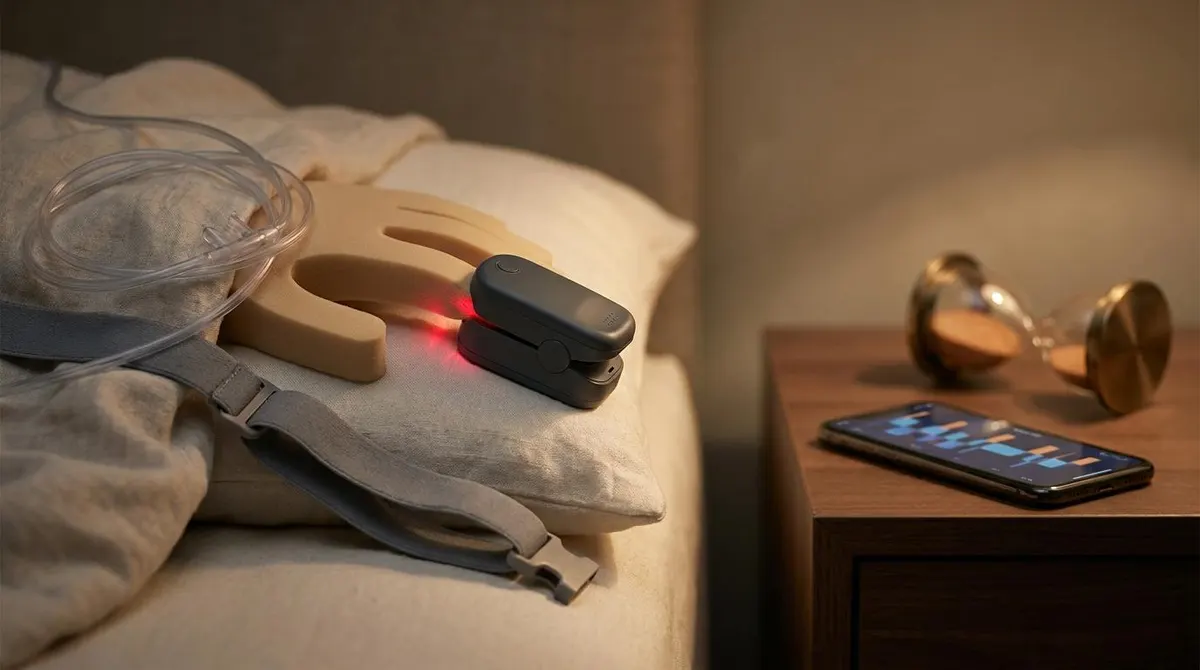
Home sleep apnea tests are highly effective for diagnosing obstructive sleep apnea in the right patient population, but they have clear limitations that can affect accuracy and clinical decision-making. Acknowledging these boundaries is essential for getting the right diagnosis.
It Cannot Diagnose Central Sleep Apnea
Home sleep tests are designed to detect obstructive events where the airways collapse despite continued breathing effort. Central sleep apnea, where the brain temporarily fails to send signals to the muscles that control breathing, requires polysomnography with electroencephalography and respiratory monitoring to identify. If you have heart failure, are on opioid medication, or have neurological conditions, your physician should order a lab-based sleep study instead.
It May Underestimate Severity
Because home sleep tests do not measure brain waves or sleep staging, they cannot determine total sleep time with the same precision as polysomnography. The AHI score from an HSAT is calculated based on recording time rather than confirmed sleep time, which can underestimate the true number of apneas per hour of actual sleep. The American Academy of Sleep Medicine clinical practice guideline recommends that if an HSAT is negative or inconclusive but symptoms strongly suggest sleep apnea, the patient should proceed to polysomnography.
Sensor Displacement Can Invalidate Results
If a nasal cannula shifts, a belt loosens, or the pulse oximeter detaches during the night, the resulting sleep data may be incomplete or unreliable. Many patients report that sleeping with unfamiliar equipment takes some adjustment. In clinical studies, approximately 10 to 20 percent of home sleep tests require a retest due to data quality issues.
Not Suitable for All Sleep Disorders
An HSAT evaluates for sleep-disordered breathing but cannot diagnose narcolepsy, periodic limb movement disorder, parasomnias, or other complex sleep disorders. If your symptoms include more than snoring and daytime sleepiness, such as vivid dream enactment, severe insomnia, or sudden muscle weakness, polysomnography is necessary.
How dumbo.health Addresses These Limitations
dumbo.health pairs every home sleep test with physician review and clinical oversight. If your results are inconclusive or suggest a condition beyond obstructive sleep apnea, your dumbo.health care team will recommend the appropriate next step, which may include a referral for lab-based polysomnography with a sleep medicine specialist close to you. The Essentials Plan at $59 per month includes physician interpretation and follow-up care, so you are never left without clinical guidance after your test.
TIP: If you score as high-risk on a screening questionnaire but your home sleep test comes back negative, do not assume you are in the clear. Discuss polysomnography with your provider.
KEY TAKEAWAY: Home sleep tests cannot diagnose central sleep apnea, may underestimate AHI scores, and require proper sensor placement to produce usable data, making physician oversight essential for accurate results.
With a clear picture of what home testing can and cannot do, the next question most people ask is how much it costs and how to pay for it.
How Much Does a Home Sleep Test Cost?
A home sleep apnea test typically costs between $149 and $500 out of pocket, depending on the provider and device used. This is significantly less than polysomnography, which can cost $1,000 to $3,000 or more without insurance.
For patients with insurance, Medicare and many commercial plans cover home sleep testing when a qualified physician orders it. However, insurance coverage often involves prior authorizations, wait times, and copays that vary widely. According to Medicare guidelines, home sleep tests are a covered benefit when performed with an approved device and interpreted by a qualified physician.
If you prefer to skip insurance hassles entirely, dumbo.health offers a straightforward cash-pay model. The home sleep test from dumbo.health costs $149 as a one-time payment with no insurance required, no prior authorizations, and no surprise bills. Monthly care plans starting at $59 per month cover physician interpretation, CPAP therapy, equipment, and follow-up. All plans are FSA/HSA eligible.
Cost Breakdown: Insurance vs. Cash Pay
Upfront Test Cost
- Insurance Route: Varies by plan, copay may range from $0 to $200 or more
- dumbo.health Cash Pay: $149 one-time, no hidden fees
Authorization Required
- Insurance Route: Yes, prior authorization typically needed
- dumbo.health Cash Pay: No prior authorization
Wait Time to Start
- Insurance Route: Days to weeks depending on approval process
- dumbo.health Cash Pay: Device shipped after order, test on your schedule
Monthly Treatment Cost (if diagnosed)
- Insurance Route: Varies, copays for CPAP equipment and visits
- dumbo.health Cash Pay: $59 to $129 per month depending on plan, cancel anytime
For many patients, the total cost of sleep apnea testing and treatment through a cash-pay provider like dumbo.health is comparable to or less than the combined copays, deductibles, and out-of-pocket expenses under insurance.
KEY TAKEAWAY: A home sleep test costs $149 through dumbo.health with no insurance, no prior authorization, and no surprise bills, making it one of the most affordable and accessible paths to a sleep apnea diagnosis.
After receiving your diagnosis, understanding what your AHI score means guides the treatment conversation.
Understanding Your Home Sleep Test Results
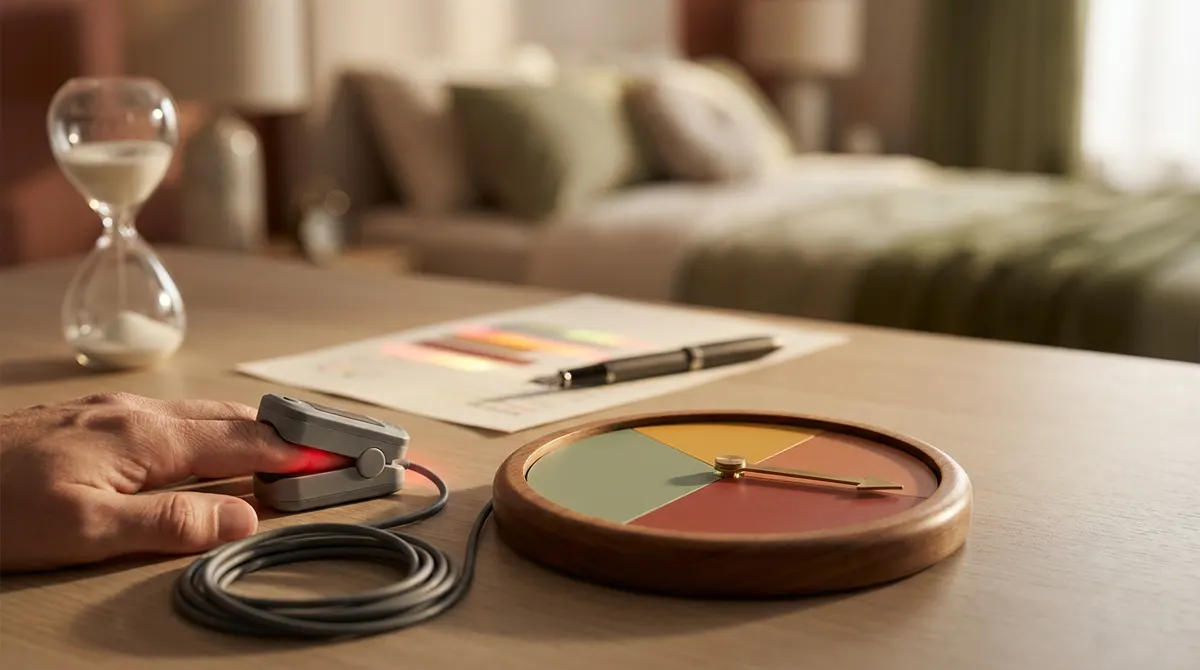
Your home sleep test results center on the Apnea-Hypopnea Index, a number that counts the average number of apneas and hypopneas you experience per hour of recorded time. The AHI score determines the severity of your obstructive sleep apnea and guides treatment decisions.
Apnea-Hypopnea Index (AHI) is a clinical metric that measures the frequency of complete breathing pauses (apneas) and partial breathing reductions (hypopneas) per hour during sleep. The AHI score is the primary diagnostic criteria used by physicians to classify obstructive sleep apnea severity.
AHI Score Ranges
- Normal: fewer than 5 events per hour
- Mild obstructive sleep apnea: 5 to 14 events per hour
- Moderate obstructive sleep apnea: 15 to 29 events per hour
- Severe obstructive sleep apnea: 30 or more events per hour
Your report will also include data on your lowest oxygen saturation level, average oxygen levels, total recording time, and the percentage of time spent below specific oxygen thresholds. A physician uses these sleep metrics together, not just the AHI score alone, to make treatment recommendations.
According to the National Heart, Lung, and Blood Institute, untreated moderate to severe obstructive sleep apnea is associated with increased risk of cardiovascular disease, stroke, type 2 diabetes, and motor vehicle accidents.
With dumbo.health, your results are reviewed by a qualified physician as part of your monthly care plan. The Essentials Plan at $59 per month includes physician interpretation and a diagnostic report, with updates sent to your referring provider if applicable.
KEY TAKEAWAY: The AHI score from your home sleep test classifies sleep apnea severity and directly determines whether treatment such as CPAP therapy is recommended.
Once you know your diagnosis and severity level, the next step is understanding the treatment options available to you.
What Happens After a Positive Home Sleep Test Diagnosis?
If your home sleep test confirms obstructive sleep apnea, treatment typically begins with CPAP therapy, oral appliances, or lifestyle modifications depending on severity. A physician prescribes the appropriate treatment based on your AHI score and clinical profile.
CPAP Therapy
CPAP therapy is the gold-standard therapy for moderate to severe obstructive sleep apnea. A CPAP device delivers continuous positive airway pressure through a mask worn during sleep, keeping the airways open and preventing apneas. The American Academy of Sleep Medicine recommends CPAP as the first-line treatment for adults with an AHI of 15 or higher, or an AHI of 5 to 14 with symptoms or cardiovascular risk factors.
CPAP therapy is effective when used consistently. Studies show that using CPAP for at least 4 hours per night on 70 percent of nights is the minimum adherence threshold used by Medicare and most insurers. dumbo.health offers CPAP therapy and equipment as part of all monthly care plans, starting at $59 per month with the Essentials Plan. The Premium Plan at $89 per month adds a dedicated sleep coach and advanced adherence monitoring to help you meet compliance targets.
Oral Appliances
For patients with mild to moderate obstructive sleep apnea who cannot tolerate CPAP, oral appliances offer an alternative. A custom-fit mouthpiece repositions the lower jaw forward during sleep to keep the airway open. Dental impressions are taken by a qualified dental provider, and the appliance is fitted and adjusted over several visits. Oral appliances are less effective than CPAP for severe cases but can significantly reduce the AHI score in appropriately selected patients.
Lifestyle and Positional Therapy
Weight loss, avoiding alcohol before bed, and positional therapy (sleeping on the side rather than the back) can reduce apnea severity in some patients. These interventions are typically recommended alongside CPAP or oral appliances rather than as standalone treatments for moderate to severe disease.
Medication and Emerging Treatments
While no medication directly treats obstructive sleep apnea, providers increasingly consider GLP-1 care and weight management as complementary approaches for patients whose sleep apnea is closely linked to obesity. Surgical options exist for selected patients but are generally considered after CPAP and oral appliances have been tried.
DID YOU KNOW: According to the Sleep Foundation, consistent CPAP use can reduce daytime sleepiness, lower blood pressure, and decrease the risk of cardiovascular events in patients with moderate to severe obstructive sleep apnea.
KEY TAKEAWAY: CPAP therapy is the recommended first-line treatment for moderate to severe obstructive sleep apnea, with oral appliances as an alternative for milder cases or patients who cannot use CPAP.
Treatment access depends on where and how you get care, which is where telehealth and cash-pay models have changed the landscape.
Getting a Home Sleep Test Through Telehealth
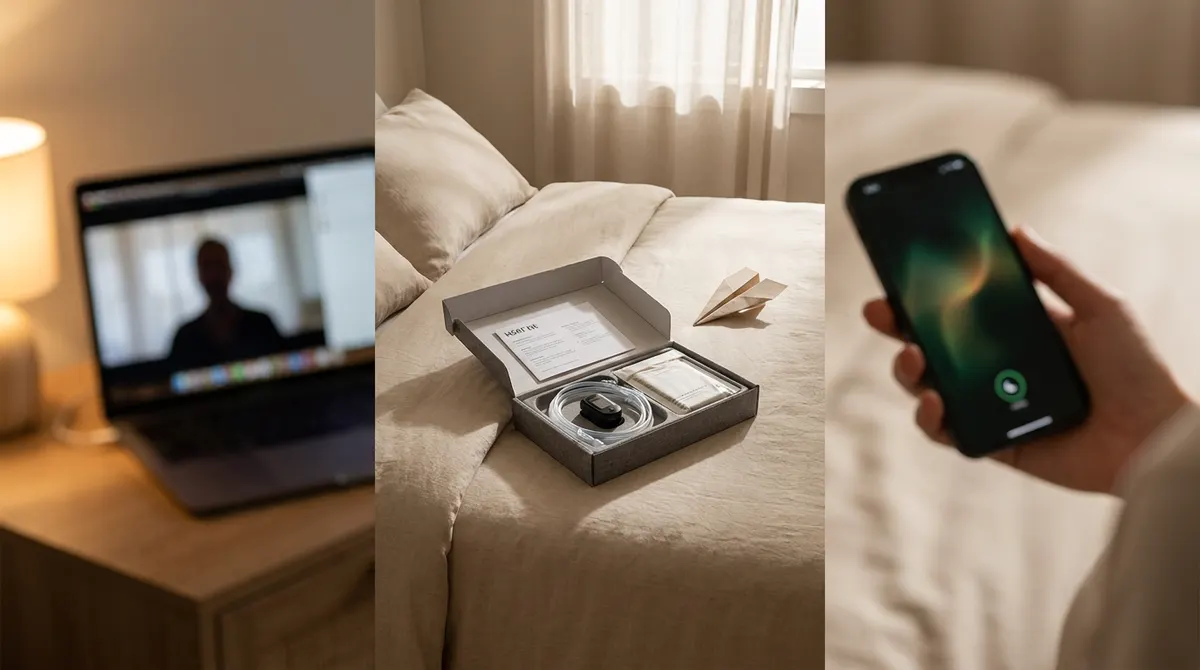
Telehealth has made home sleep apnea testing more accessible by allowing patients to consult a physician, receive a test order, and begin treatment without visiting a clinic. A telemedicine visit or virtual appointment with a qualified provider is now a widely accepted pathway to order an HSAT.
Several companies offer telehealth-based sleep apnea care, including dumbo.health, Lofta, and BlueSleep Sleep Clinic. The key differences are in pricing, physician involvement, treatment integration, and ongoing support.
dumbo.health uses a fully integrated telehealth model. You complete a free sleep assessment online, a clinician reviews your information, and if appropriate, a home sleep test is ordered and shipped to your home. After testing, a physician interprets your results and, if obstructive sleep apnea is confirmed, prescribes CPAP therapy. All of this happens through digital visits with no need to find a provider near you or schedule in-person appointments.
The platform is HIPAA compliant and accepts FSA/HSA payments. There are no contracts on any plan, and you can cancel anytime. For commercial drivers, dumbo.health provides the documentation and compliance tracking needed for DOT medical certification through a complete sleep apnea care pathway.
Telehealth sleep testing expands access for people in rural areas, those with demanding work schedules, and anyone who has delayed testing because of inconvenience. In real-world use, patients who use telehealth for sleep apnea care often report faster time-to-diagnosis compared to traditional referral pathways that involve multiple in-person visits.
KEY TAKEAWAY: Telehealth enables the entire home sleep testing and treatment process to happen remotely, from initial assessment through CPAP prescription and ongoing care, eliminating the need for in-person clinic visits.
Real-world scenarios help illustrate how home sleep testing fits into different lives and situations.
Real-World Examples of Home Sleep Testing
home sleep apnea testing applies to a wide range of people with different circumstances, risk profiles, and motivations. These scenarios show how the process works in practice.
A 48-Year-Old Long-Haul Truck Driver
Marcus, a 48-year-old owner-operator with a BMI of 36 and a neck circumference of 18 inches, was flagged during his DOT physical for potential sleep apnea. His medical examiner issued a conditional certification and required him to complete a sleep apnea test within 90 days. Marcus did not have health insurance and could not afford to take days off for a lab sleep study. He ordered a home sleep test through dumbo.health for $149, completed the test at home between hauls, and received his results within days. His AHI score came back at 22, indicating moderate obstructive sleep apnea. He enrolled in the Premium Plan at $89 per month, which included CPAP therapy, equipment, a dedicated sleep coach, and adherence monitoring that generated the compliance reports his medical examiner required.
A 55-Year-Old Office Manager With Daytime Fatigue
Sandra, a 55-year-old office manager, had been experiencing daytime sleepiness, morning headaches, and difficulty concentrating for over a year. Her primary care physician suspected obstructive sleep apnea and suggested a sleep study. Sandra's insurance required a prior authorization that took three weeks, followed by a two-month wait for an available sleep lab appointment. Frustrated with the delay, she opted to pay out of pocket for a home sleep test. Her AHI score was 31, indicating severe obstructive sleep apnea. Her physician prescribed CPAP therapy, and Sandra began treatment within a week of her test night.
A 34-Year-Old Partner of a Heavy Snorer
James, 34, did not suspect sleep apnea himself. His partner recorded his loud snoring and captured audio of what sounded like breathing pauses during sleep. After completing a free online sleep questionnaire that flagged him as high-risk, James ordered a home sleep apnea test. His results showed mild obstructive sleep apnea with an AHI of 9. His physician recommended positional therapy, weight management, and follow-up retesting in six months. Without the nudge from his partner and the low barrier of a home test, James may not have sought testing for years.
KEY TAKEAWAY: home sleep testing works for commercial drivers facing DOT deadlines, patients frustrated by insurance delays, and individuals who would not otherwise seek a diagnosis due to cost or inconvenience barriers.
With common scenarios in mind, it is important to address persistent myths that discourage people from getting tested.
Common Myths About Home Sleep Apnea Testing Debunked
Misinformation about home sleep testing creates unnecessary fear and delays diagnosis. These are the most common myths and the facts that correct them.
MYTH: Home sleep tests are not accurate enough to diagnose sleep apnea.
FACT: The American Academy of Sleep Medicine endorses home sleep apnea testing as clinically valid for diagnosing obstructive sleep apnea in adults with a high pretest probability and no significant comorbidities. Multiple studies confirm that HSAT devices like WatchPAT ONE produce AHI scores that correlate closely with polysomnography results for obstructive sleep apnea.
MYTH: You need to go to a sleep lab for any kind of sleep apnea diagnosis.
FACT: Lab-based polysomnography is necessary for complex cases involving central sleep apnea, neuromuscular disease, or multiple concurrent sleep disorders. For straightforward obstructive sleep apnea, a home sleep test provides the diagnostic criteria a physician needs. The CDC and major sleep medicine organizations support home testing as a first-line diagnostic tool for most adults.
MYTH: Insurance will not cover treatment if you use a home sleep test instead of a lab study.
FACT: Medicare and most commercial insurance plans accept a valid HSAT result as the basis for a CPAP prescription when the test is ordered by a qualified physician and meets clinical practice guideline standards. Cash-pay providers like dumbo.health bypass insurance entirely, so coverage concerns do not apply if you choose that route.
MYTH: You can diagnose sleep apnea yourself with a consumer wearable or smartphone app.
FACT: Consumer wearables and smartphone apps can track sleep patterns and oxygen trends, but they are not FDA-approved medical devices for diagnosing sleep apnea. An accurate diagnosis requires an FDA-approved HSAT device and physician interpretation. Self-screening tools can motivate you to seek testing, but they cannot replace clinical evaluation.
MYTH: CPAP is the only treatment for sleep apnea, and it is impossible to tolerate.
FACT: While CPAP therapy is the gold-standard therapy for moderate to severe obstructive sleep apnea, oral appliances and positional therapy are alternatives for selected patients. Modern CPAP devices are quieter, lighter, and more comfortable than earlier models. According to the Sleep Foundation, CPAP adherence improves significantly when patients receive ongoing support from a sleep coach or care team.
KEY TAKEAWAY: Home sleep tests are clinically validated, accepted by Medicare and insurers, and produce reliable diagnoses for obstructive sleep apnea when used appropriately and interpreted by a qualified physician.
After clearing up common misconceptions, here is a summary of the care plans that make home testing and treatment accessible.
dumbo.health Care Plans for Sleep Apnea Testing and Treatment
dumbo.health offers transparent, cash-pay pricing for every stage of sleep apnea care, from testing to ongoing CPAP therapy. There are no contracts, no insurance requirements, and no surprise bills.
Home Sleep Test
The home sleep test costs $149 as a one-time payment. This covers the at-home sleep test device and one night of testing. The test is purchased separately before your test night and is not included in monthly plans.
Essentials Plan at $59 Per Month
The Essentials Plan covers physician interpretation and report, CPAP therapy with equipment, standard follow-up care, and updates sent to your referring provider. There are no contracts, and you can cancel anytime.
Premium Plan at $89 Per Month
The Premium Plan includes everything in the Essentials Plan plus a dedicated sleep coach from a licensed care team, advanced adherence monitoring, and priority results turnaround. This is the most popular plan for patients who want active support.
Elite Plan at $129 Per Month
The Elite Plan adds concierge clinical support with priority care team access, direct physician messaging, and custom reporting for your practice. This plan is designed for patients or providers who want the highest level of Connected Care.
All plans are FSA/HSA eligible and HIPAA compliant. dumbo.health operates on a cash-pay model, which means no insurance verification, no prior authorizations, and no waiting for approvals. You can explore all options at dumbo.health sleep apnea solutions.
KEY TAKEAWAY: dumbo.health provides complete sleep apnea care from a $149 home test through monthly CPAP plans starting at $59, all without insurance, contracts, or surprise costs.
Conclusion
Testing for sleep apnea at home is clinically validated, widely accessible, and far more affordable than most people expect. A home sleep apnea test measures the data a physician needs to diagnose obstructive sleep apnea and start you on treatment, all without a sleep lab visit. The key is to use an FDA-approved device with proper physician oversight, understand your AHI score, and follow through with the right treatment plan. If you have been experiencing snoring, breathing pauses, or daytime fatigue, delaying testing only delays relief. dumbo.health makes it straightforward with a $149 home sleep test, no insurance required, and monthly care plans starting at $59 that you can cancel anytime.
Frequently Asked Questions About Testing for Sleep Apnea at Home
What is a home sleep apnea test?
A home sleep apnea test (HSAT) is a portable diagnostic tool that allows you to screen for obstructive sleep apnea in your own bed rather than in a clinical setting. The device typically measures breathing patterns, blood oxygen levels, heart rate, airflow, and snoring intensity while you sleep. A physician or sleep specialist then reviews the recorded sleep data to calculate your apnea-hypopnea index (AHI) and determine whether obstructive sleep apnea is present. Home sleep testing is widely used as a convenient, accessible first step for adults who may have sleep-disordered breathing. You can learn more at dumbo.health's at-home sleep test page.
Can you really test for sleep apnea at home?
Yes, you can test for sleep apnea at home using an FDA-approved home sleep apnea test device. home sleep apnea testing is a clinically recognised method for evaluating obstructive sleep apnea in adults who are likely candidates based on symptoms and risk factors. The American Academy of Sleep Medicine supports the use of home sleep apnea tests for patients with a high pretest probability of moderate to severe obstructive sleep apnea. A qualified physician interprets the results, calculates your AHI score, and determines whether treatment such as CPAP therapy is appropriate. A healthcare professional can help confirm whether at-home testing is right for your situation.
What does a home sleep apnea test measure?
A home sleep apnea test measures the key physiological signals associated with sleep-disordered breathing. Most HSAT devices record breathing effort, respiratory flow, oxygen saturation, heart rate, body position, and snoring intensity. Some devices also use peripheral arterial tonometry or photoplethysmography sensors to detect changes in blood oxygen levels and pulse patterns linked to breathing interruptions. The data collected is used to calculate the apnea-hypopnea index, which reflects how many times per hour breathing is disrupted during sleep. Home sleep tests do not typically measure brain waves, eye movements, or muscle activity, which is why they are designed specifically to evaluate obstructive sleep apnea rather than broader sleep disorders.
How accurate is a home sleep apnea test compared to an in-lab sleep study?
Home sleep apnea tests are considered reliable for diagnosing moderate to severe obstructive sleep apnea in otherwise healthy adults. The American Academy of Sleep Medicine notes that HSAT can produce accurate AHI results when used in appropriate patients. However, home tests tend to underestimate AHI slightly compared to full in-lab polysomnography because they measure respiratory events relative to total recording time rather than confirmed sleep time. In-lab polysomnography remains the gold standard because it records brain waves, eye movements, oxygen saturation, and muscle activity simultaneously. A sleep specialist can help determine which type of testing is most appropriate based on your symptoms and medical history.
What is the difference between a home sleep apnea test and a traditional sleep clinic study?
A home sleep apnea test is a portable, self-administered study completed in your own home, while a traditional sleep clinic study, known as polysomnography, is conducted overnight in a monitored laboratory setting. Polysomnography records a broader range of signals including electroencephalography (brain waves), electromyogram (muscle activity), eye movements, oxygen saturation, and respiratory effort, overseen by a sleep technician. In-lab studies can also follow a split-night protocol, where diagnosis and CPAP titration occur in the same session. home sleep testing is typically simpler, lower cost, and more convenient, but it is best suited to patients with a high likelihood of obstructive sleep apnea and no significant cardiopulmonary or neurological conditions.
Who is a good candidate for a home sleep apnea test?
Adults who have classic symptoms of obstructive sleep apnea, such as loud snoring, witnessed breathing pauses, restless sleep, morning headaches, or daytime sleepiness, are generally considered reasonable candidates for a home sleep apnea test. The test is most appropriate for people with a high pretest probability of moderate to severe obstructive sleep apnea and no significant cardiovascular disease, heart failure, respiratory conditions, or neurological conditions that might complicate interpretation. According to the NHLBI, sleep apnea occurs when the airway repeatedly collapses during sleep, disrupting breathing and reducing oxygen levels. A healthcare professional should assess your symptoms and medical history before recommending home sleep testing.
Who should not use a home sleep apnea test?
home sleep apnea testing is not appropriate for everyone. People with suspected central sleep apnea, significant heart failure, cardiopulmonary diseases, neuromuscular disease, or neurological conditions that affect breathing are generally not suitable candidates for HSAT alone. These conditions can complicate result interpretation and may require full in-lab polysomnography. Children and patients with complex or unusual sleep-related breathing disorders are also typically referred for laboratory-based studies. If you have symptoms beyond snoring and interrupted breathing, such as limb movements, sleepwalking, or unusual sleep behaviours, a broader evaluation at a sleep clinic may be more appropriate. Always consult a qualified healthcare professional before choosing a testing approach.
What types of sleep disorders can a home sleep apnea test detect?
Home sleep apnea tests are designed primarily to detect obstructive sleep apnea, the most common form of sleep-disordered breathing. They can identify patterns consistent with moderate to severe obstructive sleep apnea by measuring AHI score, oxygen desaturation events, snoring intensity, and breathing effort. HSAT devices are not designed to diagnose the full range of sleep disorders. They do not reliably identify central sleep apnea, restless legs syndrome, narcolepsy, parasomnias, or other conditions that require brain wave monitoring, sleep staging, or specialised testing. If your clinician suspects a condition beyond obstructive sleep apnea, a referral for in-lab polysomnography or specialist evaluation may be recommended.
How does a home sleep apnea test work?
A home sleep apnea test device is typically shipped or handed to you with written instructions. On the test night, you attach the sensor components before going to bed. Depending on the device, this may involve a finger probe such as a pulse oximeter, a cannula positioned near the nostrils to measure airflow, a belt or strap around the chest to measure respiratory effort, or a wrist-worn monitor. The device records sleep data throughout the night. You return or ship the device the following day, and a physician or sleep specialist reviews the recorded data to calculate your AHI and produce an interpretation report. Some devices transmit data to a cloud-based server automatically.
How do I prepare for an at-home sleep apnea test?
Preparing for a home sleep apnea test is straightforward. On the night of the test, avoid alcohol and sedatives before bed, as these can affect breathing patterns and skew results. Try to follow your normal sleep routine as closely as possible. Read the device instructions carefully before attaching any sensors or belts so the equipment is positioned correctly. Avoid napping excessively during the day before the test to ensure you sleep normally at night. Do not apply lotions or nail polish to the finger being used for a pulse oximeter sensor, as these can interfere with oxygen saturation readings. A healthcare provider or the testing service can walk you through device setup if needed.
How many nights do I need to complete a home sleep apnea test?
Most home sleep apnea tests require only one night of recording, and a single night is typically sufficient to calculate a reliable AHI score in patients with a high likelihood of obstructive sleep apnea. Some clinicians or testing protocols may recommend a second night if the first recording produced insufficient data, the patient slept very little, or the results were borderline. In general, one full night of quality sleep data is enough for a physician to assess sleep-disordered breathing and make an interpretation. Your testing provider will advise whether a repeat study is needed based on the quality and completeness of the recorded data.
What happens if I cannot sleep during a home sleep apnea test?
If you sleep poorly or do not sleep enough during a home sleep apnea test night, the recording may not capture enough data for a valid interpretation. In this case, your testing provider or physician may request a repeat study. Poor sleep during testing is a recognised limitation of home sleep apnea tests because, unlike in-lab polysomnography, there is no sleep technician present to confirm actual sleep time. This is one reason why HSAT can slightly underestimate AHI, as it calculates respiratory events based on total recording time rather than confirmed sleep time. Testing in a familiar environment tends to reduce this problem compared to sleeping in a clinic.
Can I get up to use the bathroom during a home sleep apnea test?
Yes, you can get up during a home sleep apnea test to use the bathroom. The device will continue recording or will pause automatically depending on the model. You do not need to restart the test. Simply return to bed and continue sleeping normally. Any brief interruptions in the recording are generally accounted for during physician interpretation. The goal is to capture enough sleep data from the full night to calculate a reliable AHI score. If you are unsure how your specific device handles interruptions, check the instructions provided with the equipment or contact your testing provider.
How soon will I receive my home sleep apnea test results?
Results from a home sleep apnea test are typically available within a few days of returning or transmitting the device data. The timeline depends on the provider and whether the data is transmitted automatically to a cloud-based server or returned physically. A physician or sleep specialist must review and interpret the raw data before results are shared. Some telehealth-based sleep testing services offer faster turnaround. At dumbo.health, the Premium Plan includes priority results turnaround as part of ongoing care. A healthcare professional reviews your results and discusses next steps, which may include CPAP therapy or further evaluation.
How do I interpret my home sleep apnea test results?
home sleep apnea test results are interpreted by a physician or sleep specialist, not the patient alone. The key metric in the report is the apnea-hypopnea index, which reflects the average number of breathing interruptions per hour of sleep. An AHI below 5 is generally considered normal. An AHI of 5 to 14 suggests mild obstructive sleep apnea. An AHI of 15 to 29 suggests moderate obstructive sleep apnea. An AHI of 30 or above suggests severe obstructive sleep apnea. The report will also include oxygen saturation data, snore detection findings, and respiratory flow patterns. Your clinician will use these findings alongside your symptoms to recommend next steps such as CPAP therapy or a referral for further testing.
How much does a home sleep apnea test cost?
The cost of a home sleep apnea test varies depending on the provider. Out-of-pocket costs can range from under a hundred dollars to several hundred dollars depending on whether interpretation and follow-up care are included. At dumbo.health, a home sleep apnea test is available for $149 as a one-time cash-pay purchase. This covers the at-home test device and one night of testing. Ongoing care, including physician interpretation, CPAP therapy, equipment, and adherence follow-up, is available through monthly plans starting at $59 per month. There are no contracts, no insurance requirements, and no prior authorizations. You can review transparent sleep apnea care options at dumbo.health.
Does insurance cover a home sleep apnea test?
Insurance coverage for home sleep apnea testing depends on your plan, insurer, and whether the test is ordered by a qualifying physician. Many private insurance plans and Medicare cover HSAT when it is medically indicated and ordered by a licensed provider. However, coverage often requires prior authorisation, specific diagnostic codes, and documented symptoms. Out-of-pocket costs after insurance can still be significant depending on your deductible and plan structure. Some patients prefer a cash-pay option to avoid prior authorisation delays and billing uncertainty. dumbo.health offers home sleep apnea testing at a flat $149 cash-pay price with no insurance required, no prior authorizations, and no surprise bills.
Does Medicare cover home sleep apnea testing?
Medicare may cover home sleep apnea testing when it is ordered by a treating physician and meets Medicare's coverage criteria for sleep-disordered breathing evaluation. Coverage typically applies to HSAT devices classified under Medicare's durable medical equipment benefit. The specific Medicare plan you hold, whether Part A, Part B, or a Medicare Advantage plan, can affect what is covered and what your cost-sharing responsibilities are. If you are unsure about your coverage, checking your red, white, and blue Medicare card and contacting your plan directly is advisable. A healthcare professional or sleep medicine specialist can help confirm whether HSAT meets your plan's clinical criteria.
Do I need a prescription or physician referral to get a home sleep apnea test?
In most cases, a physician order or prescription is required to obtain and interpret a home sleep apnea test, particularly if the results are to be used for diagnosis and treatment planning such as CPAP therapy. Some direct-to-consumer testing services allow patients to begin the process through an online sleep questionnaire or virtual assessment, after which a physician reviews eligibility before the test is sent. At dumbo.health, you can start with a free sleep assessment to determine whether at-home testing may be appropriate. A healthcare professional ultimately reviews all test data and produces an interpretation report. Visit dumbo.health to take the first step.
Do I need a prescription for a CPAP machine?
Yes, a CPAP machine requires a prescription in the United States. The prescription specifies the pressure settings needed to keep the airway open during sleep, which are determined by a physician or sleep specialist based on your sleep study results. CPAP is considered a medical device regulated by the FDA, and pharmacies, durable medical equipment suppliers, and telehealth platforms require a valid prescription before dispensing equipment. If you have recently completed a home sleep apnea test and received a diagnosis, your interpreting physician can issue a CPAP prescription as part of your care plan. dumbo.health monthly plans include CPAP therapy and equipment as part of ongoing sleep apnea care. Learn more about CPAP therapy and equipment.
What is the apnea-hypopnea index and why does it matter?
The apnea-hypopnea index, commonly called the AHI, is the primary metric used to diagnose and classify obstructive sleep apnea. It measures the average number of apnea events (complete breathing pauses) and hypopnea events (partial breathing reductions) per hour of sleep. A higher AHI indicates more frequent breathing disruptions and more severe sleep-disordered breathing. Physicians use AHI alongside oxygen saturation data, symptom history, and clinical context to determine whether treatment is needed. According to the American Academy of Sleep Medicine, an AHI of 5 to 14 is classified as mild, 15 to 29 as moderate, and 30 or above as severe obstructive sleep apnea. Treatment decisions are made by a qualified healthcare professional based on the full clinical picture.
How does sleep apnea affect cardiovascular health?
Obstructive sleep apnea is associated with significant cardiovascular risk. Each time the airway collapses during sleep, oxygen saturation drops and the body responds with a stress reaction that raises heart rate and blood pressure. Over time, repeated episodes of oxygen desaturation and arousal can contribute to hypertension, cardiovascular disease, irregular heart rhythms, and heart failure. The NHLBI explains that untreated sleep apnea increases the risk of serious cardiovascular conditions. Treating obstructive sleep apnea with CPAP therapy may help reduce some of these risks, though outcomes vary and are not guaranteed. If you have symptoms of sleep-disordered breathing alongside heart concerns, seek prompt evaluation from a qualified healthcare professional.
What are the benefits of testing for sleep apnea at home?
The main benefits of at-home sleep apnea testing include convenience, lower cost, faster access, and the ability to sleep in a familiar environment. Patients do not need to travel to a sleep clinic, spend a night in an unfamiliar bed, or wait weeks for a laboratory appointment. Home sleep testing is well established for adults with symptoms suggestive of obstructive sleep apnea. Many patients find that testing in their own home produces more representative sleep data than an overnight clinic stay. At-home testing also supports faster access to treatment such as CPAP therapy, which matters for patients experiencing significant symptoms or commercial drivers who need timely documentation for occupational purposes.
What are the limitations of testing for sleep apnea at home?
Home sleep apnea tests have meaningful limitations. They measure fewer physiological signals than in-lab polysomnography, so they cannot diagnose conditions that require brain wave monitoring, sleep staging, or specialised sensors. HSAT cannot reliably detect central sleep apnea, parasomnias, or movement-related sleep disorders. Because home tests calculate AHI based on total recording time rather than confirmed sleep time, they can slightly underestimate the severity of obstructive sleep apnea. Device displacement, poor sensor contact, or very restless sleep can also reduce data quality. A healthcare professional can review test data quality and determine whether a repeat study or in-lab polysomnography is needed.
Can commercial drivers or CDL holders test for sleep apnea at home?
Yes, commercial drivers and CDL holders can use a home sleep apnea test as part of their evaluation for sleep-disordered breathing. Sleep apnea is a recognised safety concern for commercial drivers because untreated obstructive sleep apnea can impair alertness and reaction time behind the wheel. A DOT-relevant sleep apnea evaluation typically includes testing, physician interpretation, and documentation of treatment adherence such as CPAP use data. dumbo.health can support commercial drivers with at-home sleep apnea testing, physician reports, and ongoing care documentation. However, it is important to understand that a certified medical examiner makes DOT certification decisions, not dumbo.health. Learn more at the at-home sleep test for truck drivers guide.
How does CPAP therapy treat obstructive sleep apnea?
CPAP, which stands for continuous positive airway pressure, is the most widely recommended treatment for moderate to severe obstructive sleep apnea. A CPAP machine delivers a continuous stream of pressurised air through a mask worn during sleep, keeping the airway open and preventing the breathing pauses that characterise obstructive sleep apnea. According to the Mayo Clinic, CPAP therapy can reduce daytime sleepiness, lower blood pressure, and reduce the risk of cardiovascular complications associated with untreated sleep apnea. Consistent nightly use is essential for benefit. Many patients require a period of adjustment to the mask and pressure settings. Adherence monitoring and follow-up support from a care team can help improve long-term CPAP use.
What is CPAP adherence and why does it matter?
CPAP adherence refers to how consistently and for how long a patient uses their CPAP machine each night. Most clinical guidelines consider adequate adherence to be at least four hours of CPAP use per night on at least 70 percent of nights, though individual targets may vary. Poor adherence reduces the therapeutic benefit of CPAP and can leave symptoms of obstructive sleep apnea unresolved. For commercial drivers, CPAP adherence data may be reviewed by a certified medical examiner as part of ongoing DOT certification. Regular follow-up with a sleep specialist or sleep coach can help identify barriers to CPAP use and improve long-term adherence. dumbo.health monthly plans include adherence monitoring and follow-up support.
What ongoing care is available after a home sleep apnea test?
After completing a home sleep apnea test and receiving a diagnosis, ongoing care typically includes CPAP therapy, equipment provision, adherence monitoring, and follow-up appointments with a physician or sleep specialist. Some patients also benefit from access to a sleep coach who can help with mask fitting, pressure adjustment concerns, and lifestyle factors that affect sleep quality. dumbo.health monthly plans cover physician interpretation, CPAP therapy and equipment, standard or advanced adherence monitoring, and provider updates. Plans start at $59 per month with no contracts and no insurance required. The Premium Plan adds a dedicated sleep coach and priority results turnaround. Explore sleep apnea care solutions to compare plan options.
When is an in-lab sleep study needed instead of a home test?
An in-lab sleep study, or polysomnography, is recommended when a home sleep apnea test would not provide sufficient diagnostic information. Situations where in-lab testing is typically preferred include suspected central sleep apnea, complex sleep-disordered breathing, significant heart failure, cardiopulmonary diseases, neuromuscular disease, neurological conditions affecting breathing, or when prior home testing produced inconclusive results. In-lab polysomnography is also used when a patient needs simultaneous CPAP titration during the same overnight session using a split-night protocol. Children and patients with unusual or complex sleep complaints are generally referred for laboratory-based evaluation. A healthcare professional or sleep medicine specialist can advise on which approach is appropriate for your situation.
How does sleep apnea relate to snoring?
Snoring is one of the most common and recognisable symptoms of obstructive sleep apnea, though not everyone who snores has sleep apnea. Snoring occurs when the airway partially narrows during sleep, causing turbulent airflow and vibration of the soft tissue at the back of the throat. In obstructive sleep apnea, the airway collapses more completely, causing full breathing pauses that may be followed by choking, gasping, or loud resumption of snoring. Snoring intensity and frequency are measured as part of most home sleep apnea tests. Loud, persistent snoring combined with daytime sleepiness, morning headaches, or witnessed breathing pauses are signs that warrant evaluation for sleep-disordered breathing by a healthcare professional.
Can I find at-home sleep apnea testing providers near me?
At-home sleep apnea testing is accessible regardless of where you live because the device is shipped to your home and results are reviewed remotely by a physician. This means you do not need to find a local sleep clinic to begin the testing process. Telehealth-based sleep testing services and digital care platforms have made it possible for patients in most locations to access home sleep apnea testing without visiting a specialist in person. dumbo.health provides at-home sleep apnea testing with cash-pay pricing and physician interpretation available to patients across the United States. If you are unsure where to start, the free sleep assessment can help identify whether testing is appropriate for you. Get started with a sleep assessment today.
Related Home Sleep Apnea Test Topics
- How Do You Get a Home Sleep Apnea Test The Complete Guide to At-Home Sleep Testing
- Sleep Apnea Test at Home The Complete Guide to Home Sleep Testing for Adults
- Sleep Test at Home The Complete Guide to Home Sleep Apnea Testing
- How to Get a Sleep Apnea Test at Home The Complete Guide to Home Sleep Testing
- How Is a Home Sleep Apnea Test Done A Complete Guide to At-Home Sleep Testing
- How Does a Home Sleep Apnea Test Work A Complete Guide to At-Home Sleep Testing
- Home Sleep Test The Complete Guide to At-Home Sleep Apnea Testing
- Home Sleep Testing Companies A Complete Guide to At-Home Sleep Apnea Diagnosis
- Home Sleep Apnea Test The Complete Guide to At-Home Sleep Apnea Testing
- What Is a Home Sleep Apnea Test How At-Home Sleep Testing Works, What It Measures, and Who Needs One
- Sleep Apnea Test The Complete Guide to Diagnosis, Home Testing, and What Your Results Mean
- Sleep Apnea Testing The Complete Guide to Diagnosis, Home Tests, and What Your Results Mean
- How to Get Tested for Sleep Apnea The Complete Guide to Diagnosis, Sleep Studies, and Treatment
- CPAP Test at Home The Complete Guide to Home Sleep Apnea Testing and Treatment
- Sleep Test to CPAP How Sleep Apnea Testing Leads to Treatment
- Polysomnography at Home How Home Sleep Testing Compares to In-Lab Sleep Studies
- At-Home Sleep Apnea Test The Complete Guide to Testing, Results, and Treatment
- Sleep Apnea Testing Near Me How to Find the Right Test, Provider, and Path to Diagnosis
- What Happens After a Home Sleep Apnea Test Results, Diagnosis, and Next Steps
- Home Sleep Test Cost What You Actually Pay With and Without Insurance
- Sleep Apnea Diagnosis How Sleep Apnea Is Detected, Tested, and Confirmed
- How Much Does a Home Sleep Apnea Test Cost Complete Pricing Breakdown for Self-Pay and Insured Patients
- Can Dentists Prescribe a Home Sleep Apnea Test What You Need to Know
- Are Sleep Studies Covered by Insurance What You Actually Pay for Sleep Apnea Testing
- Apnea Monitor The Complete Guide to Breathing Monitors for Sleep Apnea and Infant Care
- Do You Need a Prescription for a Home Sleep Apnea Test
- Can My Doctor Prescribe a Home Sleep Apnea Test What You Need to Know
- HSAT The Complete Guide to Home Sleep Apnea Testing
- Disadvantages of Home Sleep Testing What Patients and Providers Need to Know
- Home Sleep Apnea Test Near Me How to Get Tested Without a Sleep Lab Visit
- Can a Home Sleep Apnea Test Be Wrong Accuracy, False Negatives, and What to Do Next
- Does Insurance Cover a Home Sleep Apnea Test What You Actually Pay
- Sleep Apnea Test at Home DOT Approved Options for Commercial Drivers
- Sleep Apnea Test Near Me How to Find Local and At-Home Testing Options
- How Long Does a Home Sleep Apnea Test Take What to Expect Before, During, and After Testing
- Sleep Apnea Checker How to Screen for Sleep Apnea and What Your Results Mean
- Sleep Test What It Measures, How It Works, and What Your Results Mean
- Does Medicare Cover a Home Sleep Apnea Test What Beneficiaries Need to Know
- What Is the Best At-Home Sleep Apnea Test A Clinical Comparison of Devices, Accuracy, and Cost
- Sleep Apnea Test at Home with Insurance What Your Plan Actually Covers and How to Get Tested
- Cost of Sleep Apnea Testing What You Will Actually Pay
- What Does a Home Sleep Apnea Test Consist Of Sensors, Equipment, and What to Expect
- Does a Home Sleep Apnea Test Measure Apneas What the Device Actually Records
- Best At Home Sleep Apnea Test A Clinical Comparison
- Does Anyone Ever Pass a Sleep Apnea Test What Normal Results Actually Look Like
- Do At-Home Sleep Apnea Tests Work Clinical Accuracy, Limitations, and What the Evidence Shows
- Are Home Sleep Apnea Tests Accurate What the Evidence Actually Shows
- Are Home Sleep Apnea Tests Reliable Clinical Evidence, Accuracy, and What the Data Actually Shows
- CPAP Test What It Is, How It Works, and What Your Results Mean
AI summary
Home sleep apnea testing (HSAT) is a portable, FDA-approved diagnostic approach used to evaluate obstructive sleep apnea (OSA) in adults outside a sleep lab. HSAT typically records airflow (nasal cannula/pressure transducer), oxygen saturation and heart rate (pulse oximetry), respiratory effort (chest/abdomen belt), and sometimes snoring and body position. A clinician interprets the recording to calculate the Apnea-Hypopnea Index (AHI), which classifies severity: mild 5–14, moderate 15–29, severe 30+. HSAT is recommended for adults with high pretest probability of moderate to severe OSA and no significant comorbidities. It is not appropriate for suspected central sleep apnea, significant heart failure or cardiopulmonary disease, neuromuscular disease, or complex sleep disorders that require polysomnography with EEG and sleep staging. Limitations include possible underestimation of AHI (recording time vs total sleep time) and retests when sensors detach (reported 10–20%). If HSAT is negative or inconclusive but symptoms persist, polysomnography is recommended. Positive HSAT results commonly lead to treatment with CPAP; oral appliances and positional or lifestyle therapy may be used in selected cases.

Nicolas Nemeth
Co-Founder
Nico is the co-founder of Dumbo Health, a digital sleep clinic that brings the entire obstructive sleep apnea journey home. Patients skip the sleep lab and the long wait to see a specialist. Dumbo Health ships an at home test, connects patients with licensed sleep clinicians by video, and delivers CPAP or a custom oral appliance with ongoing coaching and automatic resupply in one clear subscription.
Keep reading

VA At Home Sleep Apnea Test: The Complete Guide for Veterans

Home Sleep Apnea Test App: What Works, What Doesn't, and How to Get a Real Diagnosis


