Does Medicare Cover a Home Sleep Apnea Test? What Beneficiaries Need to Know
Medicare Part B generally covers home sleep apnea testing when a doctor documents medical necessity to diagnose obstructive sleep apnea. Coverage applies to unattended Type II, Type III, and certain Type IV devices under CMS National Coverage Determination rules, with physician interpretation included. Beneficiaries typically pay the Part B deductible plus 20% coinsurance, and costs can rise if a provider does not accept Medicare assignment. Medicare Advantage plans may add prior authorization and network requirements. The article explains when an in-lab polysomnography is more appropriate and why home tests can be inconclusive or underestimate AHI. It also outlines CPAP coverage criteria and the 13-week adherence trial, plus a cash-pay option priced at $149.
Struggling with sleep?
Find out if sleep apnea is the reason.
FDA-cleared. $149 flat. Physician-reviewed results in 48 hours.

Does Medicare Cover a Home Sleep Apnea Test? What Beneficiaries Need to Know
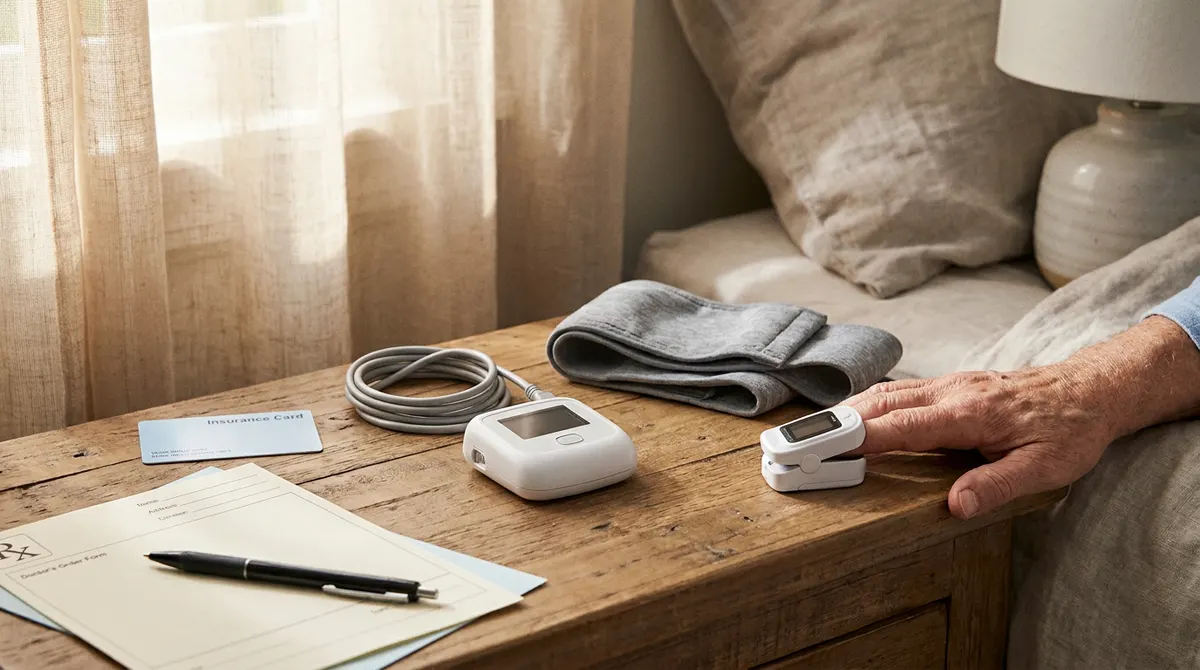
does Medicare cover a home sleep apnea test? Yes, Medicare Part B generally covers home sleep apnea tests when a doctor determines the test is medically necessary to diagnose obstructive sleep apnea. According to the Centers for Medicare and Medicaid Services, coverage applies to several types of home sleep testing devices, including Type II, Type III, and Type IV monitors. This article is for Medicare beneficiaries, caregivers, and anyone on Medicare who suspects they have a sleep disorder and wants to understand what testing options are covered, what out-of-pocket costs to expect, and how to navigate the process from referral to diagnosis and treatment. You will also learn how the coverage rules differ between original Medicare, Medicare Advantage plans, and cash-pay alternatives like dumbo.health that simplify sleep apnea testing for those who want to skip insurance complexity altogether.
Quick Answer
Medicare Part B covers home sleep apnea tests when ordered by a doctor who has evaluated the patient for signs of obstructive sleep apnea. The patient typically pays 20% of the Medicare-approved amount after meeting the annual Part B deductible. Coverage extends to Type II, Type III, and Type IV home sleep testing devices as outlined in the National Coverage Determination. For beneficiaries who want a simpler path, dumbo.health offers a home sleep test for $149 with no insurance required.
Key Takeaways

- Medicare Part B covers home sleep apnea tests when a doctor documents medical necessity for diagnosing obstructive sleep apnea
- After meeting the Part B deductible, beneficiaries typically owe 20% coinsurance of the Medicare-approved amount for the test
- Medicare recognizes Type II, Type III, and Type IV home sleep testing devices but does not cover Type IV actigraphy-only devices for sleep apnea diagnosis
- A face-to-face clinical evaluation and documented signs or symptoms of obstructive sleep apnea are required before Medicare will authorize testing
- Medicare also covers CPAP therapy for up to a 13-week trial period if the home sleep test confirms a diagnosis with an Apnea-Hypopnea Index of 15 or greater, or 5 to 14 with documented symptoms
- dumbo.health provides a home sleep test for a one-time cost of $149 with no insurance paperwork, no prior authorization, and results interpreted by a physician
How Medicare Part B Covers Home Sleep Apnea Tests
Medicare Part B covers home sleep apnea tests as outpatient diagnostic testing when a health care provider determines the test is medically necessary. This coverage falls under the broader category of sleep testing services that Medicare funds to diagnose sleep disorders, with specific rules outlined in the National Coverage Determination for sleep testing.
The National Coverage Determination issued by the Centers for Medicare and Medicaid Services establishes which types of sleep tests Medicare will pay for and under what clinical conditions. For home sleep apnea testing, Medicare requires that the ordering doctor has performed a clinical evaluation, documented signs and symptoms consistent with obstructive sleep apnea (often abbreviated OSAHS), and concluded that a home-based test is appropriate rather than requiring an in-lab sleep study.
Medicare Part B specifically covers unattended home sleep testing using devices classified as Type II, Type III, or Type IV. These portable monitoring devices measure different combinations of physiological signals during sleep, including airflow, respiratory effort, heart rate, and oxygen levels. The coverage is not limited to a single brand or device model, but the device must meet the measurement criteria that Medicare defines for each type.
DID YOU KNOW: According to the Centers for Medicare and Medicaid Services, the National Coverage Determination for sleep testing was updated to expand coverage to include home sleep testing devices, giving Medicare beneficiaries an alternative to overnight in-lab polysomnography.
Once the test is complete, a qualified sleep specialist or doctor must provide the interpretation of the results. Medicare pays for both the technical component (the test itself) and the professional component (the physician interpretation) as part of the covered diagnostic testing service.
KEY TAKEAWAY: Medicare Part B covers home sleep apnea tests when a doctor documents medical necessity, and coverage includes Type II, Type III, and Type IV portable monitoring devices along with physician interpretation of results.
Understanding which specific device types Medicare covers helps clarify what happens during the actual test.
Types of Home Sleep Testing Devices Medicare Covers
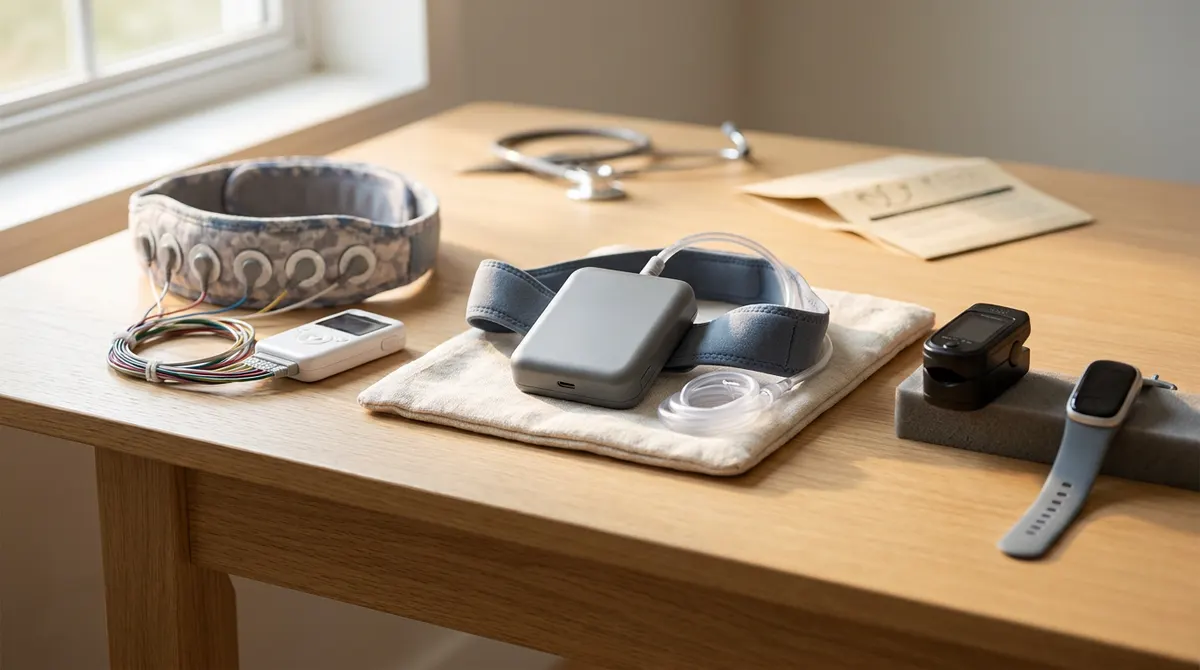
Medicare covers three categories of home sleep testing devices, each measuring a different set of physiological signals. The type of device your doctor orders determines what data is collected and how the test is scored.
Type II Sleep Testing Device
A Type II sleep testing device is the most comprehensive portable monitor. It records a minimum of seven channels, including brain waves (electroencephalography), eye movements, chin muscle activity, heart rate, airflow, respiratory effort, and oxygen desaturation via pulse oximetry. Type II devices closely replicate the measurements of a Type I Polysomnography performed in a sleep lab, but the patient wears the device at home without a sleep technologist present. Because of the complexity, Type II devices are used less frequently for routine home sleep apnea testing.
Type III Sleep Testing Device
A Type III sleep testing device measures at least four channels: airflow, respiratory effort, heart rate, and blood oxygen levels (oximetry). This is the most commonly used home sleep apnea test device for diagnosing obstructive sleep apnea. The device is portable, typically worn on the chest and finger, and does not require electrode placement on the scalp. Many providers near you use Type III devices because they balance diagnostic accuracy with patient comfort and simplicity.
Type IV Sleep Testing Device
A Type IV sleep testing device measures one or two channels. Common configurations include pulse oximetry alone or peripheral arterial tone combined with oximetry. The Watch-PAT100 is one example of a Type IV device that uses peripheral arterial tone technology to detect breathing disruptions. Medicare covers Type IV devices that measure at least three channels of data or peripheral arterial tone, but does not cover actigraphy-only devices for the diagnosis of obstructive sleep apnea.
How These Compare
Here is how these device types compare across key attributes:
Channels Measured
- Type II: Seven or more (brain waves, airflow, respiratory effort, heart rate, oximetry, eye movement, muscle activity)
- Type III: Four or more (airflow, respiratory effort, heart rate, oximetry)
- Type IV: One to three (commonly pulse oximetry and/or peripheral arterial tone)
Diagnostic Accuracy for OSA
- Type II: Highest among home devices, closest to in-lab polysomnography
- Type III: High for moderate to severe obstructive sleep apnea
- Type IV: Variable, depends on specific channels and device
Ease of Use at Home
- Type II: More complex setup, multiple sensors
- Type III: Moderate setup, fewer sensors than Type II
- Type IV: Simplest setup, fewest sensors
Medicare Coverage
- Type II: Covered
- Type III: Covered
- Type IV: Covered when meeting minimum channel requirements, not covered for actigraphy-only
For most Medicare beneficiaries being evaluated for obstructive sleep apnea, a Type III device provides the best combination of diagnostic accuracy and home convenience. dumbo.health uses clinically validated home sleep test devices that collect the data physicians need for an accurate diagnosis, available for $149 without navigating Medicare paperwork.
KEY TAKEAWAY: Medicare covers Type II, Type III, and Type IV home sleep testing devices, with Type III being the most commonly used for diagnosing obstructive sleep apnea at home.
Knowing what devices are covered is only part of the picture. The next critical step is understanding what you actually pay out of pocket.
What Medicare Beneficiaries Pay Out of Pocket for Home Sleep Tests
After meeting the annual Part B deductible, Medicare beneficiaries typically pay 20% of the Medicare-approved amount for a home sleep apnea test. The exact dollar amount depends on the Medicare-approved amount for the test, which varies by geographic region and the specific device used.
Part B Deductible
The Part B deductible is the annual amount a Medicare beneficiary must pay before Medicare begins covering its share. As of 2026, this deductible applies to all Part B services, including diagnostic testing for sleep apnea. If you have already met your deductible for the year through other medical services, you move directly to the 20% coinsurance stage for your home sleep test.
Coinsurance After the Deductible
Once the Part B deductible is met, Medicare pays 80% of the Medicare-approved amount for the home sleep test. The beneficiary owes the remaining 20% as coinsurance. If the provider accepts Medicare assignment, they agree to accept the Medicare-approved amount as full payment, which protects you from additional costs beyond your coinsurance.
If the provider does not accept assignment, you could owe more than 20% because the provider may charge up to 15% above the Medicare-approved amount. Always confirm whether your provider accepts assignment before scheduling.
Medigap and Supplemental Coverage
A Medigap policy (also called Medicare Supplement Insurance) may cover some or all of the 20% coinsurance, depending on the plan. Beneficiaries with a Medigap policy should check whether their specific plan covers Part B coinsurance for diagnostic testing. Medigap does not replace Medicare Part B. It works alongside it to reduce out-of-pocket costs.
Medicare Advantage Plans
Medicare Advantage plans must cover everything that original Medicare covers, including home sleep apnea tests. However, Medicare Advantage plans may have different cost-sharing rules, such as copays instead of coinsurance, or they may require prior authorization before the test. Some Medicare Advantage plans also have network restrictions, meaning you must use providers in your area who participate in the plan's network.
IMPORTANT: Always verify coverage, prior authorization requirements, and network restrictions with your Medicare Advantage plan before scheduling a home sleep test to avoid unexpected additional costs.
The Cash-Pay Alternative
For beneficiaries who find the Medicare process cumbersome or who want to avoid prior authorization delays, dumbo.health offers a home sleep apnea test for a flat $149. There is no insurance required, no deductible to meet, and no surprise bills. The test includes a validated home sleep test device and one night of testing, with physician interpretation available through monthly care plans starting at $59 per month.
KEY TAKEAWAY: Medicare beneficiaries typically owe 20% of the Medicare-approved amount after meeting the Part B deductible, but costs vary based on assignment status, Medigap coverage, and whether you have a Medicare Advantage plan with different cost-sharing rules.
Understanding costs is essential, but so is knowing the clinical requirements you must meet before Medicare will approve the test.
Clinical Requirements for Medicare Coverage of Home Sleep Testing

Medicare requires a documented clinical evaluation before covering a home sleep apnea test. The ordering doctor must perform a face-to-face assessment and determine that the patient shows signs and symptoms consistent with obstructive sleep apnea.
What the Doctor Must Document
The referring doctor must note specific findings that support the medical necessity of a home sleep test. These findings typically include:
- Reported symptoms such as excessive daytime sleepiness, chronic fatigue, or loud habitual snoring
- Witnessed apneas or gasping during sleep reported by a bed partner
- Physical exams findings such as a crowded airway, enlarged neck circumference, or elevated body mass index
- Relevant medical history including hypertension, cardiovascular events, or other conditions associated with obstructive sleep apnea
- A completed sleep questionnaire such as the Epworth Sleepiness Scale, which quantifies daytime sleepiness on a scale of 0 to 24
According to the American Academy of Sleep Medicine, an Epworth Sleepiness Scale score of 10 or higher suggests excessive daytime sleepiness that warrants further evaluation. Many sleep specialists and primary care doctors use this tool as part of the initial clinical evaluation before ordering sleep testing.
Referral to a Sleep Specialist
In some cases, the primary care doctor may provide the referral directly. In other cases, particularly for complex presentations involving narcolepsy, parasomnias, or other sleep disorders beyond obstructive sleep apnea, a referral to a sleep specialist or sleep medicine provider may be necessary. Medicare does not always require a specialist referral for a home sleep test, but some Medicare Advantage plans do. Check your specific plan requirements.
When Medicare Requires an In-Lab Study Instead
Medicare may not cover a home sleep test if the clinical presentation suggests a sleep disorder other than obstructive sleep apnea. Conditions such as narcolepsy, parasomnias, or central sleep apnea typically require a Type I Polysomnography in a sleep lab or sleep laboratory where a sleep technologist monitors brain waves, sleep cycle patterns, and other signals in real time.
A split-night study, where the first half of the night is used for diagnosis and the second half for CPAP titration, is another in-lab option Medicare covers. This approach is sometimes preferred when moderate to severe obstructive sleep apnea is strongly suspected and immediate treatment initiation is clinically appropriate.
Home sleep apnea tests are designed primarily for patients with a high pretest probability of moderate to severe obstructive sleep apnea without significant comorbid sleep disorders. This is an important distinction that affects which testing pathway Medicare will approve.
KEY TAKEAWAY: Medicare requires a documented face-to-face clinical evaluation with signs and symptoms of obstructive sleep apnea before covering a home sleep test, and patients with suspected conditions beyond OSA may need in-lab polysomnography instead.
Once you understand the requirements, knowing how the home sleep test process works from start to finish makes the experience less stressful.
How to Get a Medicare-Covered Home Sleep Apnea Test: Step by Step
Getting a home sleep apnea test through Medicare involves a specific sequence of steps, starting with a clinical evaluation and ending with a diagnosis that may qualify you for treatment.
Step-by-Step Process for Medicare Beneficiaries
1. Schedule an appointment with your doctor or a sleep specialist and describe your symptoms, including snoring, daytime sleepiness, witnessed breathing pauses, or chronic fatigue.
2. Complete a clinical evaluation that includes physical exams, a sleep questionnaire such as the Epworth Sleepiness Scale, and a review of your medical history including any history of hypertension or cardiovascular events.
3. Receive a written order from your doctor for a home sleep apnea test, which documents the medical necessity and specifies the type of testing device.
4. Confirm with your provider or Medicare Advantage plan that the test is covered, check whether prior authorization is required, and verify that the testing provider accepts Medicare assignment.
5. Pick up or receive the home sleep test device from the testing provider or sleep clinic, along with instructions for wearing the sensor, attaching the airflow and oximetry monitors, and recording your sleep position.
6. Wear the device for one night of testing at home, following all instructions for proper sensor placement to ensure accurate measurement of heart rate, airflow, respiratory effort, and blood oxygen levels.
7. Return the device to the provider and wait for a sleep specialist or qualified doctor to complete the interpretation of your results, including your Apnea-Hypopnea Index and oxygen desaturation data.
After the interpretation is complete, your doctor will review the lab results with you and discuss whether the test confirmed obstructive sleep apnea. If the Apnea-Hypopnea Index meets diagnostic thresholds, you may qualify for CPAP therapy or other treatment covered by Medicare.
KEY TAKEAWAY: The Medicare home sleep test process requires a clinical evaluation, a written doctor order, insurance verification, one night of at-home testing, and physician interpretation before a diagnosis can be made.
For those who qualify for treatment, Medicare's CPAP coverage rules come with their own specific requirements worth understanding in advance.
How Medicare Covers CPAP Therapy After a Sleep Apnea Diagnosis
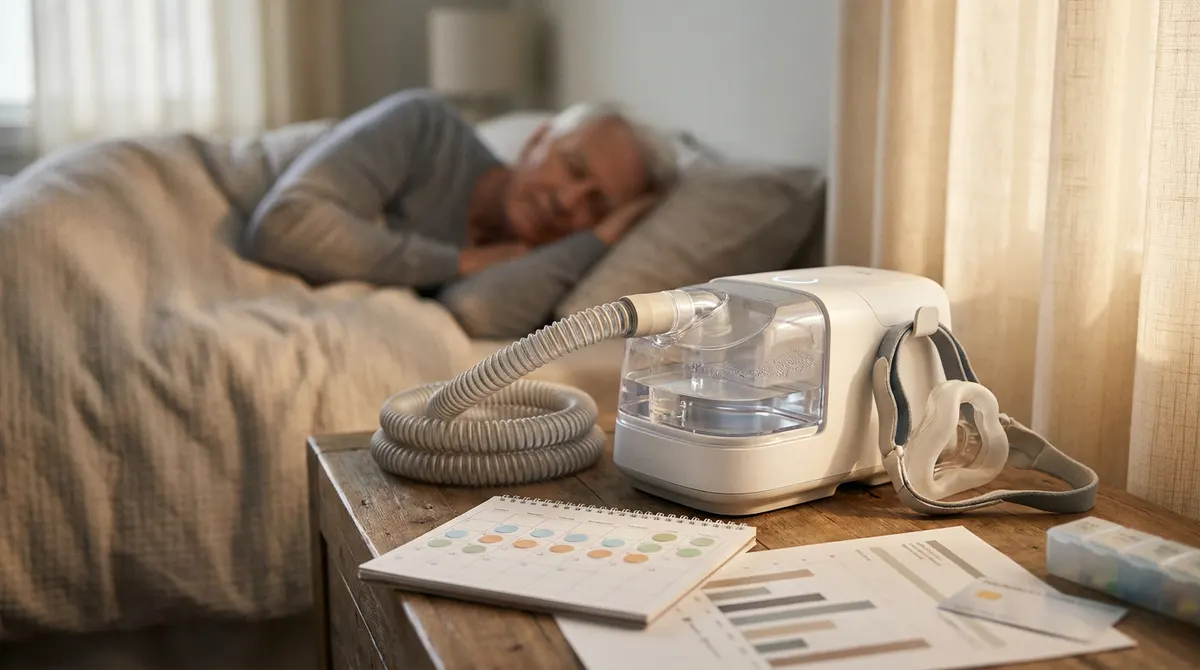
Medicare covers CPAP therapy as durable medical equipment when a home sleep test or in-lab sleep study confirms a diagnosis of obstructive sleep apnea that meets specific criteria. Coverage is not automatic and requires meeting both diagnostic thresholds and an initial compliance trial.
Diagnostic Thresholds for CPAP Coverage
According to Medicare's National Coverage Determination, CPAP therapy is covered when the patient has an Apnea-Hypopnea Index of 15 or greater. Medicare also covers CPAP when the Apnea-Hypopnea Index is between 5 and 14, provided the patient has documented symptoms such as excessive daytime sleepiness, impaired cognition, mood disorders, or hypertension, or has a history of cardiovascular events such as stroke or heart disease.
The respiratory disturbance index may also be used in some interpretations, though the Apnea-Hypopnea Index remains the primary metric Medicare references for CPAP eligibility.
The 13-Week CPAP Trial Period
Medicare provides CPAP therapy on a trial basis for the first 13 weeks (approximately 3 months). During this period, the beneficiary receives a CPAP machine, mask, hoses, humidifier, and related accessories from a DME supplier (durable medical equipment supplier). Medicare pays its share of the cost, and the beneficiary pays the applicable coinsurance.
At the end of the 13-week trial, the prescribing doctor must document that the patient is benefiting from CPAP therapy and is using the device consistently. The American Academy of Sleep Medicine and Medicare generally define adequate adherence as using the CPAP machine for at least 4 hours per night on at least 70% of nights during a consecutive 30-day period within the trial.
If the patient does not meet adherence requirements, Medicare may discontinue coverage for the CPAP machine and accessories. This is one of the most common reasons Medicare beneficiaries lose CPAP coverage, and it underscores the importance of consistent use and proper mask fittings from the start.
What CPAP Equipment Medicare Covers
Medicare covers the CPAP machine itself, including auto CPAP devices in some cases, along with:
- Mask (nasal, full-face, or nasal pillow)
- Mask cushions and mask fittings (replacements on a set schedule)
- Hoses
- Humidifier
- Filters and other accessories on a replacement schedule
After the initial 13-week trial, Medicare continues to cover CPAP rental for up to 13 months total. After that period, the beneficiary owns the machine outright. Replacement supplies such as mask cushions, hoses, and filters continue to be covered on a schedule defined by Medicare.
Where dumbo.health Fits for CPAP Therapy
Navigating Medicare's 13-week trial, adherence monitoring, and DME supplier requirements can be complex. dumbo.health offers CPAP therapy through monthly plans starting at $59 per month with no contracts and no insurance paperwork. The Essentials Plan includes a physician interpretation, CPAP equipment, and standard follow-up care. The Premium Plan at $89 per month adds a dedicated sleep coach and advanced adherence monitoring to help you stay on track, which directly addresses the adherence challenge that causes many Medicare beneficiaries to lose coverage.
KEY TAKEAWAY: Medicare covers CPAP therapy after a confirmed diagnosis with an Apnea-Hypopnea Index of 15 or greater (or 5 to 14 with documented symptoms), but requires adherence during a 13-week trial period to continue coverage.
Not every situation calls for a home test, and understanding those limitations helps you avoid unnecessary delays.
Limitations and When a Home Sleep Apnea Test May Not Be the Right Choice
A home sleep apnea test is effective for diagnosing obstructive sleep apnea in many patients, but it has specific limitations that can affect diagnostic accuracy and Medicare coverage eligibility. Recognizing these limitations helps you and your doctor choose the right testing pathway.
Limitation 1: Not Designed for All Sleep Disorders
Home sleep apnea tests are specifically designed to detect obstructive sleep apnea. They do not reliably diagnose narcolepsy, parasomnias, periodic limb movement disorder, or central sleep apnea. These conditions require a Type I Polysomnography in a sleep laboratory where a sleep technologist monitors brain waves, sleep cycle patterns, and additional physiological signals that portable monitoring devices do not capture. If your doctor suspects a sleep disorder beyond OSA, they should order an in-lab sleep study instead. A Multiple Sleep Latency Test or Maintenance of Wakefulness Test, which evaluate daytime sleepiness and alertness, also require a facility-based setting.
Limitation 2: Higher Risk of Inconclusive Results
Home sleep testing depends on the patient correctly applying the sensor, airflow monitor, and pulse oximetry device without assistance. If a sensor becomes dislodged during the night or the device malfunctions, the data may be insufficient for accurate interpretation. Studies published in peer-reviewed literature indicate that home sleep tests have a higher rate of technically inadequate studies compared to in-lab polysomnography, sometimes requiring a repeat test night. Patients with significant insomnia or difficulty sleeping in unfamiliar conditions may also produce data that underestimates the severity of their obstructive sleep apnea.
Limitation 3: May Underestimate Severity
Because home sleep tests typically calculate the Apnea-Hypopnea Index using total recording time rather than actual sleep time (since most home devices do not measure brain waves to confirm sleep), the resulting AHI may be lower than what an in-lab study would show. This means mild cases of obstructive sleep apnea could be missed, and moderate cases might appear milder than they actually are. The American Academy of Sleep Medicine notes this limitation in its clinical guidelines for home sleep apnea testing.
Limitation 4: Medicare Authorization Delays
For original Medicare, the National Coverage Determination process is relatively straightforward if your doctor documents medical necessity. However, Medicare Advantage plans may impose prior authorization requirements, network restrictions, or additional administrative steps that delay testing. Some medicare contractors in certain regions may have local coverage determinations with additional criteria. These delays can be frustrating for patients experiencing significant symptoms.
dumbo.health addresses several of these barriers directly. For patients who need quick answers without authorization delays, the at-home sleep test is available for $149 with no prior authorization, no insurance hassles, and physician interpretation included through care plans. If a home test result is inconclusive, your dumbo.health physician can advise on next steps, including whether a facility-based study is warranted.
Limitation 5: Not Suitable for Certain Patient Populations
Medicare's National Coverage Determination and clinical guidelines from the American Academy of Sleep Medicine recommend in-lab polysomnography for patients with significant cardiopulmonary disease, neuromuscular conditions, or chronic opioid use, as these conditions can produce complex breathing patterns during sleep that home devices may not adequately capture.
KEY TAKEAWAY: Home sleep apnea tests have real limitations, including inability to diagnose non-OSA sleep disorders, risk of inconclusive data, potential underestimation of severity, and authorization delays with some Medicare plans.
With these limitations in mind, comparing home testing to in-lab testing helps clarify which option best fits your situation.
Home Sleep Apnea Test vs. In-Lab Polysomnography: How to Decide
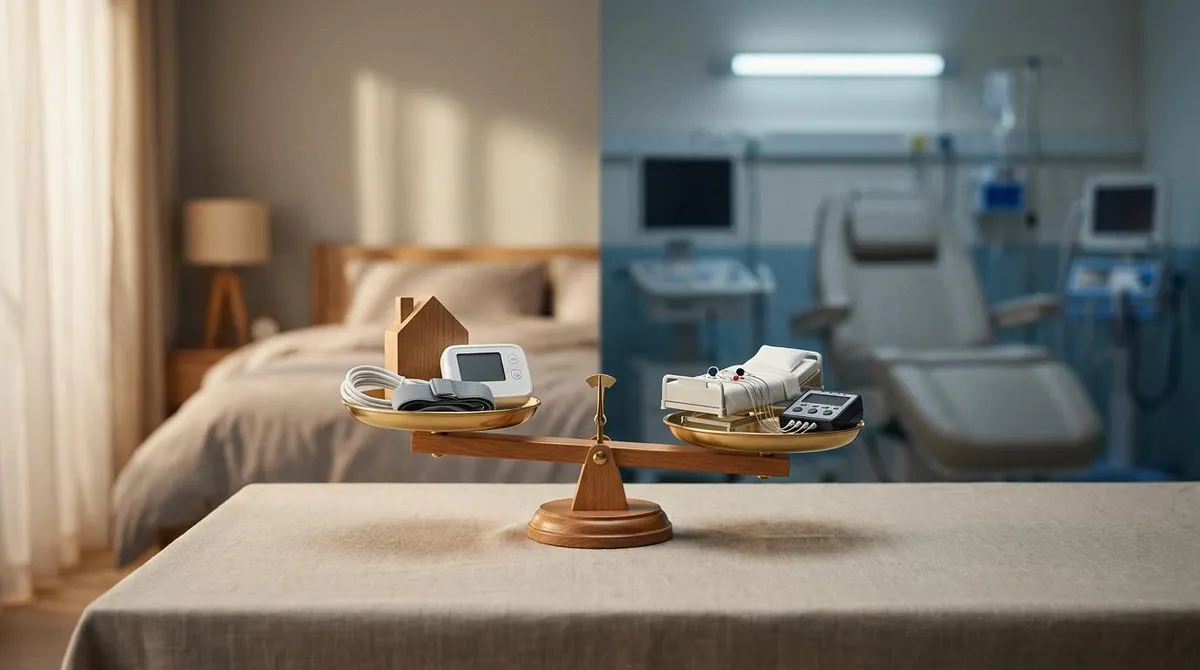
The key difference between a home sleep apnea test and in-lab polysomnography is where the test happens and how much data is collected. Both can diagnose obstructive sleep apnea, but each has distinct advantages depending on the clinical scenario.
Setting
- Home Sleep Apnea Test: Your own bed at home
- In-Lab Polysomnography (Type I): Sleep lab, sleep center, or hospital outpatient setting
Channels Measured
- Home Sleep Apnea Test: 1 to 7 channels depending on device type (Type II through Type IV)
- In-Lab Polysomnography: Comprehensive, typically 16 or more channels including brain waves, eye movements, and muscle activity
Cost with Medicare
- Home Sleep Apnea Test: Lower; 20% coinsurance after Part B deductible
- In-Lab Polysomnography: Higher; 20% coinsurance after Part B deductible, but the Medicare-approved amount is significantly more
Cost Without Insurance
- Home Sleep Apnea Test: $149 through dumbo.health; $150 to $500 through other providers
- In-Lab Polysomnography: Often $1,000 to $3,000 or more at a sleep lab facility
Convenience
- Home Sleep Apnea Test: High; no travel, sleep in your own bed
- In-Lab Polysomnography: Low; requires an overnight stay at a facility with a sleep technologist monitoring throughout
Diagnostic Scope
- Home Sleep Apnea Test: Obstructive sleep apnea only
- In-Lab Polysomnography: All sleep disorders including narcolepsy, parasomnias, central sleep apnea, and periodic limb movements
Turnaround for Results
- Home Sleep Apnea Test: Typically days to 1 to 2 weeks for interpretation
- In-Lab Polysomnography: Typically 1 to 3 weeks for interpretation
Best For
- Home Sleep Apnea Test: Patients with a high clinical suspicion of moderate to severe OSA without significant comorbid sleep disorders
- In-Lab Polysomnography: Patients with suspected non-OSA sleep disorders, complex medical histories, or inconclusive home test results
For most Medicare beneficiaries being evaluated for obstructive sleep apnea based on symptoms like snoring, witnessed apneas, and daytime sleepiness, a home sleep apnea test provides sufficient diagnostic accuracy with far greater convenience and lower cost. The in-lab sleep study remains the standard when a broader diagnostic evaluation is needed or when the home test produces inconclusive results.
KEY TAKEAWAY: A home sleep apnea test is the more convenient and cost-effective choice for straightforward obstructive sleep apnea diagnosis, while in-lab polysomnography is reserved for complex cases or when non-OSA sleep disorders are suspected.
Seeing how these options play out for real people makes the decision even clearer.
Real-World Scenarios: Medicare and Home Sleep Apnea Testing
Understanding how Medicare coverage works in practice is easier with concrete examples. These scenarios reflect common situations Medicare beneficiaries encounter when seeking sleep apnea diagnosis.
Scenario 1: A 67-Year-Old Retired Teacher on Original Medicare
Margaret is a 67-year-old retired teacher enrolled in original Medicare Part B with a Medigap policy. Her husband has noticed loud snoring and occasional gasping during sleep for several years. She reports chronic fatigue and scores 14 on the Epworth Sleepiness Scale, indicating significant daytime sleepiness. Her primary care doctor performs physical exams, documents her symptoms, and orders a Type III home sleep apnea test.
Margaret picks up the device from a local sleep clinic, wears it for one night, and returns it the next day. The interpretation by a sleep specialist reveals an Apnea-Hypopnea Index of 22, confirming moderate obstructive sleep apnea. Because her provider accepts Medicare assignment, she owes 20% of the Medicare-approved amount after her Part B deductible. Her Medigap policy covers the remaining 20%, resulting in zero out-of-pocket costs for the test. She is prescribed CPAP therapy and receives her CPAP machine and mask from a DME supplier, beginning her 13-week trial.
Scenario 2: A 72-Year-Old Veteran on a Medicare Advantage Plan
Robert is a 72-year-old veteran enrolled in a Medicare Advantage plan. He has hypertension, a BMI of 34, and his wife reports that he stops breathing during sleep. His sleep doctor orders a home sleep apnea test, but the Medicare Advantage plan requires prior authorization. The authorization process takes 10 days. After receiving approval, Robert completes the test at home using a Type III device. His Apnea-Hypopnea Index comes back at 8 with documented oxygen desaturation events. Because his AHI is between 5 and 14 and he has documented hypertension and symptoms, he qualifies for CPAP coverage under Medicare.
Robert finds the authorization process and network restrictions frustrating. A friend mentions that dumbo.health offers a home sleep test for $149 with no prior authorization, which he bookmarks for future reference in case his follow-up testing encounters similar delays.
Scenario 3: A 60-Year-Old Self-Employed Consultant Not Yet on Medicare
Susan is a 60-year-old self-employed consultant with a high-deductible health plan. She has read about home sleep testing and suspects she has obstructive sleep apnea based on chronic snoring, morning headaches, and difficulty concentrating. She is not yet eligible for Medicare and finds that her insurance requires a $3,000 deductible before covering diagnostic testing. After researching options, Susan orders a home sleep test through dumbo.health for $149, completes it in one night, and enrolls in the Premium Plan at $89 per month for physician interpretation, CPAP therapy with equipment, a dedicated sleep coach, and advanced adherence monitoring. She avoids her high deductible entirely and starts treatment within two weeks of her initial order.
These three scenarios illustrate how insurance type, authorization requirements, and personal circumstances all influence the path from symptoms to diagnosis and treatment.
KEY TAKEAWAY: The experience of getting a home sleep apnea test varies significantly depending on whether you have original Medicare, a Medicare Advantage plan, or choose a cash-pay pathway like dumbo.health.
Before moving toward a decision, separating common myths from clinical facts helps you approach testing with accurate expectations.
Common Myths About Medicare and Home Sleep Apnea Tests Debunked
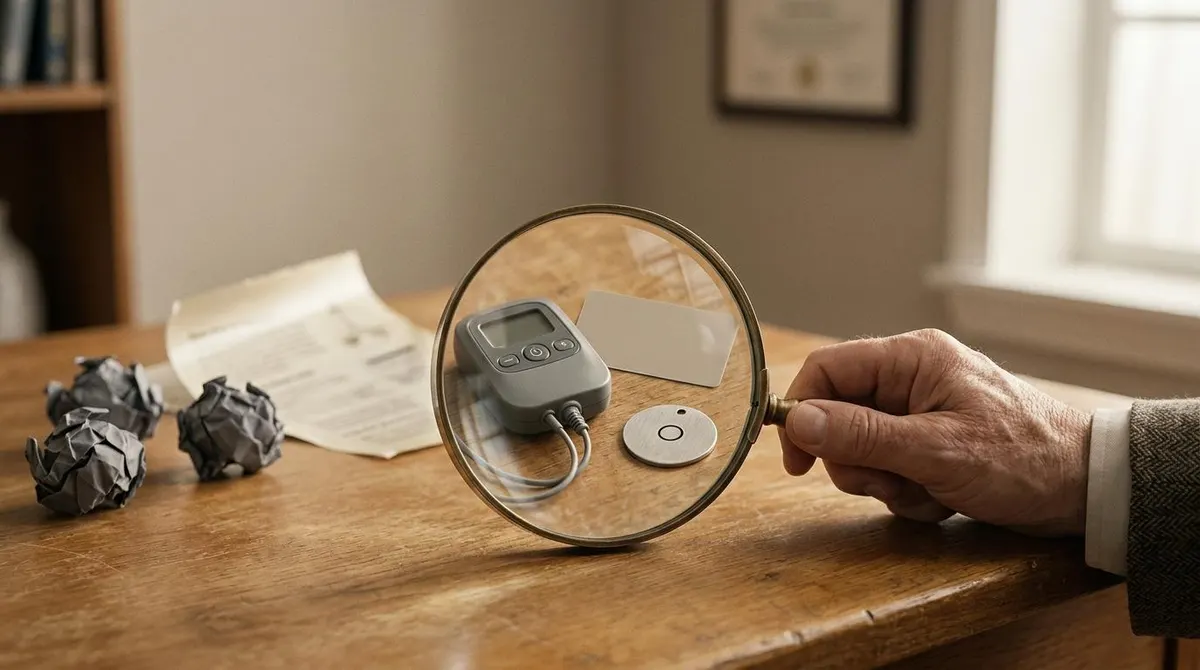
MYTH: Medicare does not cover home sleep tests, only in-lab sleep studies.
FACT: Medicare Part B covers home sleep apnea tests using Type II, Type III, and Type IV devices when a doctor documents medical necessity for diagnosing obstructive sleep apnea. The National Coverage Determination explicitly includes home sleep testing as a covered service. In-lab polysomnography is also covered but is not the only option.
MYTH: A home sleep test is not accurate enough to diagnose sleep apnea.
FACT: Research published in peer-reviewed journals and endorsed by the American Academy of Sleep Medicine confirms that Type III home sleep testing devices have sufficient diagnostic accuracy for identifying moderate to severe obstructive sleep apnea in patients with a high pretest probability. While home tests may slightly underestimate the Apnea-Hypopnea Index compared to in-lab studies, they remain a clinically validated and widely used diagnostic tool. According to the AASM, home sleep apnea testing is appropriate when OSA is the primary suspected diagnosis.
MYTH: You need to see a sleep specialist before Medicare will cover a home sleep test.
FACT: Original Medicare does not require a specialist referral for a home sleep test. A primary care doctor can order the test directly after completing a clinical evaluation and documenting medical necessity. However, some Medicare Advantage plans may require a referral to a sleep specialist as part of their network and authorization rules. Always check your specific plan requirements.
MYTH: If you fail the CPAP adherence requirement, you can never get CPAP coverage again through Medicare.
FACT: Medicare's 13-week CPAP trial requires documented adherence of at least 4 hours per night on 70% of nights during a 30-day period. If a patient does not meet this threshold, Medicare may discontinue coverage. However, patients can work with their doctor to address adherence barriers, retry the compliance evaluation, or explore alternative treatments such as oral appliances or surgery. Patients can also access CPAP therapy outside of Medicare through services like dumbo.health, where monthly plans start at $59 per month with no adherence-triggered coverage loss.
MYTH: Home sleep tests require an overnight stay somewhere other than your home.
FACT: Home sleep apnea tests are specifically designed to be performed in the patient's own bed. The patient picks up or receives the portable monitoring device, wears it for one night at home, and returns it. No overnight stay at a sleep lab, sleep center, or hospital outpatient setting is required for a home test.
KEY TAKEAWAY: Most common concerns about Medicare coverage and home sleep test accuracy are based on outdated information or confusion between original Medicare and Medicare Advantage plan rules.
With the myths cleared up, a preparation checklist makes sure you are ready for a smooth testing experience.
Preparing for Your Home Sleep Apnea Test
Proper preparation improves the quality of your home sleep test data and reduces the chance of needing a repeat night. Whether your test is covered by Medicare or you are using a cash-pay service like dumbo.health, these steps apply.
Pre-Test Checklist
- Confirm your doctor has completed the clinical evaluation and written the order for a home sleep test
- Verify Medicare coverage or Medicare Advantage plan authorization, including whether prior authorization is required
- Confirm that the sleep testing provider accepts Medicare assignment to protect against additional costs
- Pick up or receive the home sleep test device and review all instructions for the sensor, airflow monitor, and pulse oximetry attachment
- Avoid alcohol and sedative medications on the test night unless your doctor instructs otherwise, as these substances can alter airflow patterns and oxygenation
- Avoid caffeine after noon on the test day
- Follow your normal bedtime routine and sleep in your usual sleep position
- Ensure the device battery is charged or the device is ready for use per the provider instructions
- Set up your sleeping environment to be dark, quiet, and comfortable
- Keep the provider contact number accessible in case you have questions about the device during the night
- Complete the free sleep assessment at dumbo.health if you want an alternative path without insurance complexity
TIP: Sleeping in your normal sleep position rather than forcing yourself into an unfamiliar posture helps ensure the test captures data that reflects your typical night. Sleep position can influence the severity of airflow obstruction, so accurate positioning matters for your results.
KEY TAKEAWAY: Following a simple preparation checklist and wearing the device correctly on the test night reduces the risk of inconclusive results and avoids the need for a repeat study.
Beyond the test itself, knowing all your treatment options after diagnosis helps you make the best long-term decision.
Treatment Options After a Sleep Apnea Diagnosis
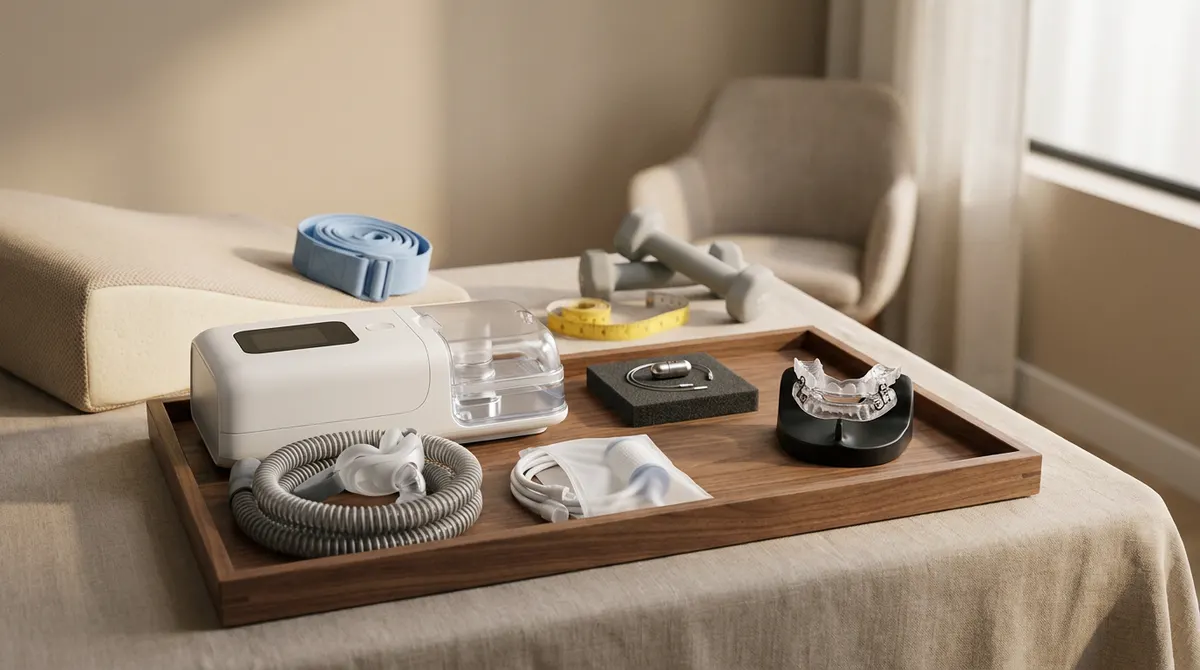
CPAP therapy is the most common and well-studied treatment for obstructive sleep apnea, but it is not the only option. After a diagnosis confirmed by a home sleep test or in-lab polysomnography, treatment selection depends on the severity of the condition, patient preference, and anatomical factors.
CPAP and Auto CPAP
CPAP therapy delivers continuous positive airway pressure through a mask to keep the airway muscles from collapsing during sleep. Medicare covers CPAP machines, auto CPAP devices (which adjust pressure automatically), masks, mask cushions, hoses, humidifiers, and accessories through DME suppliers. The 13-week trial period discussed earlier applies. According to the National Heart, Lung, and Blood Institute, consistent CPAP use reduces daytime sleepiness, lowers blood pressure in patients with hypertension, and may decrease the risk of cardiovascular events over time.
dumbo.health offers CPAP therapy and equipment through its monthly plans. The Essentials Plan at $59 per month includes physician oversight, CPAP equipment, and standard follow-up. The Premium Plan at $89 per month adds a dedicated sleep coach and advanced adherence monitoring. The Elite Plan at $129 per month provides concierge clinical support, direct physician messaging, and custom reporting. All plans are month-to-month with no contracts.
Oral Appliances
Oral appliances are custom-fitted dental devices that reposition the lower jaw and tongue to keep the airway open during sleep. They are typically recommended for mild to moderate obstructive sleep apnea or for patients who cannot tolerate CPAP therapy. Medicare may cover oral appliances under certain conditions, though coverage is less straightforward than for CPAP. Some patients explore dental savings plans to offset costs. The American Academy of Sleep Medicine recommends oral appliances as a first-line alternative to CPAP for specific patient populations.
Surgical Options
Surgery for obstructive sleep apnea is generally reserved for patients who do not respond to CPAP or oral appliances, or who have specific anatomical abnormalities. Procedures include:
- Uvulopalatopharyngoplasty (UPPP), which removes excess tissue from the soft palate and throat
- Genioglossus advancement, which repositions the tongue muscle attachment to prevent airway collapse
- Mandibular maxillary osteotomy, which repositions the jaw bones to enlarge the airway
- Inspire therapy, a surgically implanted device that stimulates the hypoglossal nerve to keep airway muscles active during sleep
Medicare may cover these surgical procedures when medically necessary and documented by the treating physician. Each has specific clinical outcomes, recovery timelines, and risks that should be discussed with a sleep specialist or surgeon.
Lifestyle and Positional Therapy
Weight loss, positional therapy (avoiding sleeping on the back), and avoiding alcohol before bed are adjunctive treatments that can reduce the severity of obstructive sleep apnea. These are not standalone treatments for moderate to severe OSA but can improve clinical outcomes when combined with CPAP or other therapies.
Home sleep apnea testing through dumbo.health captures sleep position data, which helps your physician determine whether positional therapy could play a role in your overall sleep apnea care plan.
KEY TAKEAWAY: CPAP therapy is the primary treatment Medicare covers for obstructive sleep apnea, but oral appliances, surgery, and lifestyle modifications offer alternatives depending on severity and patient tolerance.
With treatment options mapped out, a broader look at sleep health and why timely testing matters reinforces the importance of taking action.
Why Timely Sleep Apnea Testing Matters for Medicare Beneficiaries
Untreated obstructive sleep apnea carries serious long-term health consequences that disproportionately affect the medicare population. According to the National Heart, Lung, and Blood Institute, obstructive sleep apnea is associated with increased risk of hypertension, heart failure, atrial fibrillation, stroke, and type 2 diabetes. The CDC reports that adults need at least 7 hours of sleep per night, and repeated breathing interruptions from untreated OSA fragment sleep architecture and reduce blood oxygenation, compounding these risks.
Obstructive sleep apnea affects an estimated 30 million adults in the United States, according to the American Academy of Sleep Medicine, yet a significant percentage remain undiagnosed. Among Medicare-age adults over 65, the prevalence is even higher due to age-related changes in airway muscles, increased rates of obesity, and higher burden of cardiovascular disease.
Early diagnosis through sleep testing, whether via a Medicare-covered home sleep apnea test or a cash-pay option through dumbo.health, allows treatment to begin before complications escalate. Consistent CPAP therapy has been shown to reduce blood pressure, improve oxygenation during sleep, decrease daytime sleepiness measured by tools like the Epworth Sleepiness Scale, and improve overall sleep health.
Delaying testing because of cost concerns, insurance confusion, or inconvenience puts long-term health at risk. The availability of home sleep apnea testing, both through Medicare and through accessible platforms like dumbo.health, has removed many of the barriers that previously required patients to wait weeks for an opening at a sleep lab facility.
Home sleep apnea testing provides Medicare beneficiaries with a clinically validated, convenient diagnostic pathway for obstructive sleep apnea. The home sleep apnea test measures airflow, respiratory effort, heart rate, and blood oxygen levels during sleep, producing data that a physician uses to calculate the Apnea-Hypopnea Index and determine whether treatment is warranted. This testing can be completed in one night without visiting a sleep laboratory or hospital outpatient setting.
KEY TAKEAWAY: Untreated obstructive sleep apnea significantly increases the risk of serious cardiovascular and metabolic conditions, making timely testing and treatment essential for Medicare beneficiaries.
Conclusion

Medicare Part B covers home sleep apnea tests when a doctor documents medical necessity for diagnosing obstructive sleep apnea. After meeting the Part B deductible, you typically owe 20% of the Medicare-approved amount, with Medigap policies potentially covering the rest. The process requires a clinical evaluation, a written order, and proper documentation of symptoms. CPAP therapy is covered following diagnosis, subject to a 13-week adherence trial.
For those who want to bypass insurance complexity, dumbo.health offers a home sleep test for $149 with no insurance required, no prior authorization, and no surprise bills. Monthly care plans starting at $59 per month include physician interpretation, CPAP equipment, and follow-up care with no contracts and the ability to cancel anytime. Taking the first step toward diagnosis is the most important decision you can make for your sleep health and long-term wellbeing.
Frequently Asked Questions About Does Medicare Cover a Home Sleep Apnea Test
What is sleep apnea?
Sleep apnea is a sleep disorder in which breathing repeatedly stops and starts during sleep. The most common form is obstructive sleep apnea (OSA), which occurs when the muscles at the back of the throat relax and block the airway. According to the National Heart, Lung, and Blood Institute, untreated obstructive sleep apnea is associated with increased risk of high blood pressure, cardiovascular events, and excessive daytime sleepiness. Diagnosis typically requires sleep testing, and treatment often involves CPAP therapy to keep the airway open during sleep.
What is a sleep study and who needs one?
A sleep study is a diagnostic test that monitors breathing, oxygen levels, heart rate, brain waves, and body movement during sleep to identify sleep disorders such as obstructive sleep apnea, narcolepsy, and parasomnias. Sleep studies may be recommended for people who snore loudly, wake repeatedly during the night, experience excessive daytime sleepiness, or have risk factors such as obesity or hypertension. A healthcare provider can assess whether a formal sleep study is appropriate based on symptoms, physical exams, and sleep questionnaire results such as the Epworth Sleepiness Scale.
Does Medicare cover sleep studies?
Yes, Medicare Part B covers sleep studies when they are medically necessary and ordered by a qualified healthcare provider. Coverage applies to both in-lab sleep studies and home sleep apnea tests under the National Coverage Determination established by the Centers for Medicare and Medicaid Services. To qualify, a physician must document that the patient has signs or symptoms consistent with obstructive sleep apnea or another covered sleep disorder. Standard Medicare cost-sharing applies, meaning the Part B deductible and 20 percent coinsurance typically apply after Medicare pays its share.
Does Medicare cover a home sleep apnea test specifically?
Yes, Medicare covers home sleep apnea testing when it is ordered by a treating physician and meets specific clinical criteria. According to CMS coverage policy, home sleep tests must use devices capable of recording a minimum number of physiological channels, including airflow, respiratory effort, and oxygen saturation. Type III and some Type II sleep testing devices are the most commonly covered portable monitoring options under Medicare. A healthcare provider must determine that a home sleep test is clinically appropriate before Medicare will consider covering it.
What types of home sleep tests does Medicare cover?
Medicare recognises several types of sleep testing devices. Type I polysomnography is the full in-lab sleep study conducted in a sleep lab facility. Type II devices are portable full polysomnography units used outside a facility. Type III sleep testing devices measure airflow, respiratory effort, oxygen levels, and heart rate and are the most widely used home sleep apnea test format covered by Medicare. Type IV devices, which typically measure only one or two channels such as pulse oximetry, generally do not meet Medicare coverage requirements for diagnosing obstructive sleep apnea on their own.
What are the criteria for Medicare to cover a sleep study?
Medicare requires that a sleep study be ordered by a treating physician based on documented clinical need. The patient must have signs or symptoms consistent with a covered sleep disorder such as obstructive sleep apnea. For home sleep apnea testing, the device used must meet CMS technical requirements, including recording airflow, respiratory effort, and oxygen saturation at minimum. A qualified healthcare provider must interpret the results. Snoring alone is generally not considered sufficient clinical justification for a Medicare-covered sleep study without additional supporting symptoms or risk factors.
Does Medicare cover both in-lab and at-home sleep studies?
Yes, Medicare Part B covers both attended facility-based polysomnography conducted in a sleep lab and unattended home sleep apnea testing. The appropriate test type depends on the clinical presentation and the ordering physician's judgment. In-lab polysomnography may be required when a patient has complex sleep disorders, significant cardiovascular or respiratory conditions, or when a home sleep test result is inconclusive. The American Academy of Sleep Medicine provides guidance on which patients are appropriate candidates for home sleep testing versus full in-lab evaluation.
Does Medicare cover sleep apnea diagnosis and treatment?
Medicare Part B covers diagnostic sleep testing for obstructive sleep apnea and other sleep disorders when medically necessary. If a diagnosis of obstructive sleep apnea is confirmed, Medicare also covers CPAP therapy as a treatment option, including the CPAP machine, mask, tubing, and related accessories as durable medical equipment under Part B. Coverage for CPAP equipment is subject to a 13-week initial trial period during which the patient must demonstrate adequate adherence before ongoing coverage continues. A healthcare provider must supervise and document this process.
Does Medicare cover CPAP machines?
Yes, Medicare Part B covers CPAP machines and related equipment as durable medical equipment when a diagnosis of obstructive sleep apnea has been confirmed through a covered sleep study. Medicare pays the Medicare-approved amount for CPAP equipment from Medicare-approved DME suppliers, and the patient is responsible for the Part B deductible and 20 percent coinsurance. To maintain coverage beyond the initial period, patients must show that CPAP therapy is providing clinical benefit and that they are meeting minimum usage requirements. A treating physician must remain involved in monitoring adherence and outcomes.
Does Medicare cover CPAP masks, humidifiers, and accessories?
Medicare covers CPAP-related supplies including masks, mask cushions, hoses, and humidifiers as durable medical equipment under Part B, provided the CPAP machine itself is covered and the items are obtained from a Medicare-approved DME supplier. Replacement schedules for supplies such as mask cushions and hoses follow CMS guidelines. Items must be medically necessary and cannot be replaced more frequently than Medicare allows. Patients should confirm with their DME supplier that items are billed under Medicare assignment to avoid unexpected out-of-pocket costs.
Does Medicare cover BiPAP machines for sleep apnea?
Medicare may cover BiPAP, also called bilevel positive airway pressure therapy, for patients with obstructive sleep apnea when standard CPAP therapy has been tried and found inadequate, or when a sleep specialist determines that BiPAP is clinically appropriate. Coverage criteria are similar to CPAP and require documented diagnosis, physician oversight, and adherence monitoring. As with CPAP, patients are responsible for the Part B deductible and coinsurance, and equipment must be obtained from a Medicare-approved DME supplier.
Does Medicare cover Inspire therapy for sleep apnea?
Medicare may cover Inspire therapy, a surgically implanted upper airway stimulation device, for qualifying patients with moderate to severe obstructive sleep apnea who cannot tolerate CPAP therapy. According to NerdWallet's coverage analysis, Medicare coverage for Inspire therapy requires that the patient meet specific clinical criteria, including a confirmed diagnosis, documented CPAP intolerance, and evaluation by a qualified sleep specialist or surgeon. Coverage decisions may vary by Medicare Advantage plan, and prior authorization may be required. Patients should speak with their healthcare provider and insurance plan to confirm individual eligibility.
Does Medicare cover oral appliances for sleep apnea?
Medicare coverage for oral appliances used to treat obstructive sleep apnea is generally limited. While mandibular advancement devices are an accepted treatment option for mild to moderate OSA, Medicare's durable medical equipment coverage for these devices can be inconsistent, and coverage may depend on specific LCD policies in your area. Some Medicare Advantage plans may offer broader coverage for oral appliances than Original Medicare. A healthcare provider or sleep specialist can advise on whether oral appliance therapy is clinically appropriate and how to navigate coverage for your specific plan.
What conditions does Medicare cover sleep studies for?
Medicare covers sleep studies primarily for the diagnosis of obstructive sleep apnea and obstructive sleep apnea-hypopnea syndrome (OSAHS). Coverage may also apply to other sleep disorders such as narcolepsy, which may require a Multiple Sleep Latency Test or Maintenance of Wakefulness Test, and certain parasomnias when clinically indicated. The specific conditions covered are defined by CMS National Coverage Determinations and local coverage determinations issued by Medicare contractors. A treating physician must document the clinical indication for the study and confirm that it meets Medicare's criteria.
When does Medicare cover a sleep study?
Medicare covers a sleep study when a qualified healthcare provider orders it based on documented signs or symptoms of a covered sleep disorder, most commonly obstructive sleep apnea. Relevant symptoms that may support medical necessity include loud snoring, witnessed breathing pauses during sleep, excessive daytime sleepiness, and relevant risk factors such as obesity or hypertension. A sleep questionnaire or clinical evaluation is typically completed before the order is placed. Coverage is not automatic and depends on whether the ordering physician documents sufficient clinical justification in line with CMS criteria.
When does Medicare not cover a sleep study?
Medicare does not cover a sleep study if it is ordered without sufficient medical justification, if snoring is the only reported symptom without additional supporting evidence, or if the test type used does not meet CMS technical requirements. Sleep studies ordered purely for screening purposes without documented symptoms are generally not covered. Tests performed using Type IV devices that record only one physiological channel, such as oximetry alone, typically do not meet Medicare's diagnostic standards for obstructive sleep apnea. If a study is denied, patients have the right to appeal the decision through Medicare's standard appeals process.
How much does Medicare pay for a sleep study?
Medicare Part B pays 80 percent of the Medicare-approved amount for a covered sleep study after the annual Part B deductible is met. The patient is generally responsible for the remaining 20 percent coinsurance. The actual amount Medicare pays depends on whether the study is performed in a sleep lab facility or at home and whether the provider accepts Medicare assignment. In-lab polysomnography typically has a higher total cost than home sleep apnea testing. A Medigap policy may help cover coinsurance and deductible costs depending on the plan selected.
How much do sleep studies cost without Medicare coverage?
Without Medicare or insurance coverage, in-lab polysomnography can range from several hundred to over a thousand dollars depending on the facility, location, and test complexity. Home sleep apnea tests are generally less expensive. For patients who are not Medicare beneficiaries or who prefer a straightforward cash-pay option, at-home sleep testing through dumbo.health costs $149 as a one-time fee with transparent pricing, no prior authorization, and no surprise bills. A qualified physician reviews and interprets the results as part of the ongoing care pathway.
Will I have to pay anything out of pocket for a Medicare-covered sleep study?
Yes, most Medicare beneficiaries have some out-of-pocket costs for covered sleep studies. Under Original Medicare Part B, you are typically responsible for the annual Part B deductible and a 20 percent coinsurance on the Medicare-approved amount. If the sleep study is performed in a hospital outpatient setting, additional facility fees may apply. A Medigap policy can help reduce or eliminate coinsurance costs depending on your plan. Medicare Advantage plans may have different cost-sharing structures, so reviewing your specific plan details before scheduling a study is advisable.
How often will Medicare pay for a sleep study?
Medicare does not specify a rigid frequency limit for sleep studies, but additional studies must each meet medical necessity criteria independently. A follow-up sleep study or repeat diagnostic test is more likely to be covered if there is a documented clinical reason, such as a change in symptoms, a failed treatment trial, or an inconclusive initial result. Routine repeat testing without new clinical indications is generally not covered. A healthcare provider should document the specific reason for any additional study to support the coverage request.
Will Medicare pay for a second sleep study?
Medicare may cover a second sleep study if there is a documented clinical reason such as an inconclusive initial home sleep test result that requires confirmation with in-lab polysomnography, a significant change in the patient's condition, or an evaluation of a different sleep disorder. A split-night study, where the first part of the night is diagnostic and the second part involves CPAP titration, may be covered as a single study. Each additional sleep study must be supported by physician documentation demonstrating medical necessity. Approval is not guaranteed and depends on the individual clinical situation.
Will Medicare cover another sleep study if I could not fall asleep during the original test?
Medicare may consider covering a repeat sleep study if the original in-lab study was technically inadequate due to inability to sleep, equipment failure, or insufficient recording time, as long as the treating physician documents the reason and clinical need for repeating the test. Whether coverage is approved will depend on the specific circumstances and how the claim is submitted. Patients should speak with their healthcare provider about documenting the situation clearly and about whether an alternative test format such as a home sleep apnea test may be more appropriate for their circumstances.
How old can a sleep study be for Medicare to accept it?
Medicare does not publish a universal expiration date for sleep study results, but the clinical relevance of a previous study is determined by the treating physician and the certified medical examiner or specialist reviewing the case. A sleep study that is several years old may not reflect a patient's current condition, particularly if there has been significant weight change, new symptoms, or changes in health status. If a provider or specialist considers an existing study outdated, a new medically necessary study can be ordered and submitted for Medicare coverage consideration with appropriate documentation.
Does Medicare require prior authorization for sleep studies?
Original Medicare Part B generally does not require prior authorization for covered sleep studies, but the ordering physician must document medical necessity thoroughly. Some Medicare Advantage plans do require prior authorization before a sleep study will be covered. Patients enrolled in a Medicare Advantage plan should check with their plan before scheduling a sleep study to understand any prior authorization requirements. Failing to obtain required authorisation from a Medicare Advantage plan can result in denied claims and unexpected out-of-pocket costs.
Can I refer myself for a sleep study or do I need a doctor's order?
Most Medicare-covered sleep studies require an order from a treating physician or qualified healthcare provider. Self-referral is generally not sufficient for Medicare coverage. A healthcare provider evaluates your symptoms, reviews your medical history, and documents clinical justification before ordering a sleep study. Patients who are concerned about symptoms such as loud snoring, daytime sleepiness, or witnessed apneas should speak with their primary care provider or a sleep specialist. If you are unsure whether your symptoms warrant testing, a free sleep assessment can help you understand your next steps.
How do I know if my symptoms are serious enough for a sleep study?
Common symptoms that may indicate a need for sleep testing include loud or disruptive snoring, waking frequently during the night, gasping or choking during sleep witnessed by a partner, excessive daytime sleepiness, morning headaches, and difficulty concentrating. Risk factors such as obesity, hypertension, and a large neck circumference can also increase the likelihood of obstructive sleep apnea. The Epworth Sleepiness Scale and similar screening tools are commonly used by providers to assess symptom severity. A healthcare professional can help determine whether a formal sleep study is the appropriate next step.
Is snoring alone a sufficient reason for Medicare to cover a sleep study?
Snoring alone is generally not considered sufficient clinical justification for a Medicare-covered sleep study. Medicare requires documented medical necessity, which typically means the presence of additional symptoms or risk factors beyond snoring, such as witnessed breathing pauses, daytime sleepiness, cardiovascular risk factors, or an abnormal result on a standardised screening tool. A treating physician must document the clinical rationale in the patient's medical record. Patients who snore and also experience other symptoms should discuss a comprehensive clinical evaluation with their provider rather than relying on snoring as the sole indicator.
Who is eligible for Medicare-covered sleep services?
Medicare beneficiaries enrolled in Part B who have documented signs and symptoms of a covered sleep disorder and whose treating physician has ordered a medically necessary sleep study are generally eligible for covered sleep services. Eligibility also depends on using a Medicare-enrolled provider and a Medicare-approved testing facility or home sleep test supplier. Patients under 65 who qualify for Medicare due to disability or certain conditions may also be eligible. Medicare Advantage enrollees should check their plan's specific coverage rules, as benefits can vary between plans.
Who can interpret a sleep study for a Medicare patient?
Medicare requires that sleep study results be interpreted by a physician who is qualified in sleep medicine. For in-lab polysomnography, a board-certified sleep specialist or physician with documented training in sleep medicine typically performs the interpretation. Home sleep apnea tests must also be interpreted by a qualified physician, and the interpretation must be documented in a formal report used to guide treatment decisions. The quality of interpretation is an important part of ensuring diagnostic accuracy and supporting appropriate treatment planning such as CPAP therapy prescriptions.
Does Medicare cover in-home sleep apnea testing?
Yes, Medicare Part B covers home sleep apnea testing when ordered by a treating physician and performed using a device that meets CMS technical requirements. Covered home sleep tests must record at least airflow, respiratory effort, and oxygen saturation to qualify under most Medicare local coverage determinations. The test must be clinically appropriate for the patient based on their symptoms and health history. A physician must interpret the results and document them formally. Home sleep testing is generally appropriate for patients with a high pre-test probability of obstructive sleep apnea who do not have significant comorbidities requiring full in-lab evaluation.
What sleep services are covered through Medicare?
Medicare Part B covers a range of sleep-related services including diagnostic sleep studies such as in-lab polysomnography and home sleep apnea testing, CPAP therapy and related durable medical equipment, physician consultations for sleep disorders, and in some cases specialised testing such as the Multiple Sleep Latency Test for narcolepsy. Coverage is subject to medical necessity criteria and requires physician orders and documentation. Some Medicare Advantage plans offer expanded sleep health benefits beyond Original Medicare. A sleep specialist or primary care provider can help determine which services apply to your individual situation and how to access them through your specific plan.
Does Medicaid cover sleep apnea tests and sleep studies?
Medicaid coverage for sleep apnea testing and sleep studies varies by state, as each state administers its own Medicaid program within federal guidelines. Many state Medicaid programs cover diagnostic sleep studies and CPAP therapy when they are deemed medically necessary and ordered by a qualified provider. Prior authorisation is commonly required for sleep studies under Medicaid. Patients should contact their state Medicaid program or managed care plan directly to confirm what sleep-related services are covered, what documentation is required, and whether home sleep testing is an accepted option under their specific plan.
What if I do not have insurance or prefer not to use Medicare for sleep testing?
Patients who prefer to avoid insurance complexity or who want transparent pricing without prior authorisations can pursue cash-pay sleep apnea testing independently of Medicare. dumbo.health offers a $149 one-time at-home sleep test with physician interpretation included in ongoing monthly care plans, with no insurance required and no surprise bills. Monthly plans start at $59 per month and include CPAP therapy, equipment, and adherence follow-up. This option may suit patients who want to move quickly, avoid insurance barriers, or who are not Medicare beneficiaries. Choosing cash-pay testing does not affect your Medicare eligibility for future services.
What ongoing care does Medicare cover after a sleep apnea diagnosis?
After a confirmed diagnosis of obstructive sleep apnea, Medicare Part B covers CPAP therapy as durable medical equipment including the machine, mask, hoses, and humidifier. Coverage continues beyond the initial 13-week trial period if the treating physician documents that CPAP is providing clinical benefit and the patient demonstrates adequate adherence, typically defined as using the device for at least four hours per night on 70 percent of nights during a consecutive 30-day period within the first three months. Regular follow-up visits with the treating provider are an important part of maintaining Medicare coverage for CPAP equipment and supplies.
What is the Apnea-Hypopnea Index and why does it matter for Medicare coverage?
The Apnea-Hypopnea Index (AHI) measures the average number of apnea and hypopnea events per hour of sleep. It is the primary metric used to classify obstructive sleep apnea severity: mild OSA is generally defined as an AHI of 5 to 14, moderate as 15 to 29, and severe as 30 or above. Medicare coverage for CPAP therapy requires a confirmed diagnosis based on AHI or respiratory disturbance index results meeting defined thresholds, along with documented symptoms. The AHI generated by a home sleep apnea test or polysomnography is central to determining whether treatment coverage criteria are met.
How does Medicare CPAP adherence monitoring work?
Medicare requires that CPAP users demonstrate minimum adherence to qualify for continued equipment coverage beyond the initial trial period. The standard requirement is that the patient uses the CPAP device for at least four hours per night on at least 70 percent of nights during a consecutive 30-day period within the first three months of therapy. Most modern CPAP machines include built-in adherence monitoring that records usage data, which the treating provider downloads and reviews. If adherence requirements are not met, Medicare may not continue to cover the CPAP equipment. A sleep coach or adherence follow-up programme can help patients build consistent usage habits. Explore CPAP therapy and adherence support options if you are managing ongoing treatment.
Can commercial drivers use Medicare for sleep apnea testing and DOT compliance?
Commercial drivers who are Medicare beneficiaries can use Medicare-covered sleep testing to diagnose obstructive sleep apnea, and that documented diagnosis and treatment history may be relevant to their DOT physical evaluation. However, a certified medical examiner makes all DOT certification decisions independently based on FMCSA guidelines, and Medicare coverage of a sleep study does not guarantee any particular outcome in the DOT physical process. Commercial drivers who want faster access to testing or transparent pricing for documentation purposes may also consider home sleep testing for commercial drivers outside of Medicare as a practical alternative.
Is a home sleep apnea test accurate enough for a Medicare diagnosis?
Home sleep apnea tests are considered clinically valid for diagnosing obstructive sleep apnea in appropriate patients. According to the American Academy of Sleep Medicine, portable monitoring using Type III devices can accurately identify patients with a high pre-test probability of OSA who are likely to benefit from CPAP treatment. Home sleep tests may underestimate AHI severity in some cases because they record total recording time rather than actual sleep time, potentially resulting in a lower AHI than a full in-lab study would produce. For patients with complex presentations or significant comorbidities, in-lab polysomnography may provide more complete diagnostic information.
When might an in-lab sleep study be recommended instead of a home sleep test?
An in-lab sleep study, also called polysomnography, may be recommended when a patient has significant cardiovascular or respiratory disease, suspected central sleep apnea, symptoms of narcolepsy or parasomnias, or when a home sleep test result is inconclusive or does not match the clinical picture. In-lab studies allow continuous monitoring by a sleep technologist and record additional channels such as brain waves, eye movements, and muscle activity that home devices do not capture. Medicare covers in-lab polysomnography in a hospital outpatient setting or accredited sleep lab facility when medical necessity is documented by the treating provider.
Where can I find a Medicare-covered sleep study near me?
Medicare-covered sleep studies can be conducted at accredited sleep centers, hospital outpatient sleep lab facilities, and through Medicare-approved home sleep testing suppliers in your area. Your primary care provider or a sleep specialist can refer you to a Medicare-enrolled sleep lab or DME supplier. To confirm that a facility or supplier accepts Medicare assignment, patients can use the Medicare provider directory at Medicare.gov or ask their provider for a referral to a participating facility. Ensuring the provider accepts Medicare assignment helps avoid higher out-of-pocket costs from balance billing.
Related Home Sleep Apnea Test Topics
- Does Insurance Cover a Home Sleep Apnea Test What You Actually Pay
- What Is a Home Sleep Apnea Test How At-Home Sleep Testing Works, What It Measures, and Who Needs One
- How Much Does a Home Sleep Apnea Test Cost Complete Pricing Breakdown for Self-Pay and Insured Patients
- What Is the Best At-Home Sleep Apnea Test A Clinical Comparison of Devices, Accuracy, and Cost
- Sleep Apnea Test at Home with Insurance What Your Plan Actually Covers and How to Get Tested
- Home Sleep Apnea Test The Complete Guide to At-Home Sleep Apnea Testing
- Can Dentists Prescribe a Home Sleep Apnea Test What You Need to Know
- Can My Doctor Prescribe a Home Sleep Apnea Test What You Need to Know
- How Does a Home Sleep Apnea Test Work A Complete Guide to At-Home Sleep Testing
- What Does a Home Sleep Apnea Test Consist Of Sensors, Equipment, and What to Expect
- Are Sleep Studies Covered by Insurance What You Actually Pay for Sleep Apnea Testing
- Home Sleep Test Cost What You Actually Pay With and Without Insurance
- How Do You Get a Home Sleep Apnea Test The Complete Guide to At-Home Sleep Testing
- Sleep Test at Home The Complete Guide to Home Sleep Apnea Testing
- How to Get a Sleep Apnea Test at Home The Complete Guide to Home Sleep Testing
- How Is a Home Sleep Apnea Test Done A Complete Guide to At-Home Sleep Testing
- How Long Does a Home Sleep Apnea Test Take What to Expect Before, During, and After Testing
- Sleep Apnea Test at Home The Complete Guide to Home Sleep Testing for Adults
- Does a Home Sleep Apnea Test Measure Apneas What the Device Actually Records
- Home Sleep Test The Complete Guide to At-Home Sleep Apnea Testing
- Can You Test for Sleep Apnea at Home A Complete Guide to Home Sleep Testing
- Cost of Sleep Apnea Testing What You Will Actually Pay
- HSAT The Complete Guide to Home Sleep Apnea Testing
- Does Anyone Ever Pass a Sleep Apnea Test What Normal Results Actually Look Like
- What Happens After a Home Sleep Apnea Test Results, Diagnosis, and Next Steps
- Home Sleep Testing Companies A Complete Guide to At-Home Sleep Apnea Diagnosis
- Do You Need a Prescription for a Home Sleep Apnea Test
- CPAP Test at Home The Complete Guide to Home Sleep Apnea Testing and Treatment
- Home Sleep Apnea Test Near Me How to Get Tested Without a Sleep Lab Visit
- Disadvantages of Home Sleep Testing What Patients and Providers Need to Know
- Can a Home Sleep Apnea Test Be Wrong Accuracy, False Negatives, and What to Do Next
- Sleep Apnea Test The Complete Guide to Diagnosis, Home Testing, and What Your Results Mean
- Sleep Apnea Checker How to Screen for Sleep Apnea and What Your Results Mean
- At-Home Sleep Apnea Test The Complete Guide to Testing, Results, and Treatment
- Sleep Test to CPAP How Sleep Apnea Testing Leads to Treatment
- Do At-Home Sleep Apnea Tests Work Clinical Accuracy, Limitations, and What the Evidence Shows
- Sleep Test What It Measures, How It Works, and What Your Results Mean
- Polysomnography at Home How Home Sleep Testing Compares to In-Lab Sleep Studies
- Sleep Apnea Test at Home DOT Approved Options for Commercial Drivers
- Sleep Apnea Test Near Me How to Find Local and At-Home Testing Options
- Are Home Sleep Apnea Tests Accurate What the Evidence Actually Shows
- Are Home Sleep Apnea Tests Reliable Clinical Evidence, Accuracy, and What the Data Actually Shows
- Sleep Apnea Diagnosis How Sleep Apnea Is Detected, Tested, and Confirmed
- Home Sleep Testing The Complete Guide to Diagnosing Sleep Apnea From Your Own Bed
- Sleep Apnea Testing The Complete Guide to Diagnosis, Home Tests, and What Your Results Mean
- Best At Home Sleep Apnea Test A Clinical Comparison
- Sleep Apnea Testing Near Me How to Find the Right Test, Provider, and Path to Diagnosis
- CPAP Test What It Is, How It Works, and What Your Results Mean
- Apnea Monitor The Complete Guide to Breathing Monitors for Sleep Apnea and Infant Care
- How to Get Tested for Sleep Apnea The Complete Guide to Diagnosis, Sleep Studies, and Treatment
AI summary
A home sleep apnea test (HSAT) is an unattended, at-home diagnostic study used primarily to evaluate obstructive sleep apnea (OSA/OSAHS) by recording signals such as airflow, respiratory effort, heart rate, and oxygen saturation. Medicare Part B generally covers HSAT when a treating physician completes a face-to-face clinical evaluation, documents signs and symptoms consistent with OSA, and orders the test as medically necessary. CMS National Coverage Determination guidance recognizes Type II, Type III, and qualifying Type IV portable monitors; actigraphy-only Type IV devices are not covered for OSA diagnosis. Medicare payment includes both the technical component and physician interpretation. Typical cost-sharing under Original Medicare is the annual Part B deductible plus 20% coinsurance of the Medicare-approved amount. Costs may be higher if the provider does not accept Medicare assignment; Medigap may reduce coinsurance. Medicare Advantage plans must cover HSAT but may require prior authorization and in-network providers. If HSAT confirms OSA, Medicare covers CPAP when AHI is 15+, or 5–14 with documented symptoms or comorbidities, with continued coverage dependent on a 13-week adherence trial (commonly 4 hours/night on 70% of nights). HSAT is not designed to diagnose narcolepsy, parasomnias, or central sleep apnea, and inconclusive results may require in-lab polysomnography.

Nicolas Nemeth
Co-Founder
Nico is the co-founder of Dumbo Health, a digital sleep clinic that brings the entire obstructive sleep apnea journey home. Patients skip the sleep lab and the long wait to see a specialist. Dumbo Health ships an at home test, connects patients with licensed sleep clinicians by video, and delivers CPAP or a custom oral appliance with ongoing coaching and automatic resupply in one clear subscription.
Keep reading

VA At Home Sleep Apnea Test: The Complete Guide for Veterans

Home Sleep Apnea Test App: What Works, What Doesn't, and How to Get a Real Diagnosis


