VA At Home Sleep Apnea Test: The Complete Guide for Veterans
This guide explains how Veterans can complete a Home Sleep Apnea Test (HSAT) through the VA using a portable device worn for one night. It covers what the test measures, including airflow, respiratory effort, oxygen saturation, heart rate, and how results generate an apnea-hypopnea index (AHI). You will learn how to request a referral, what screening tools may be used, and typical timelines for receiving results. The article compares VA HSAT, in-lab polysomnography, and private home testing based on cost, wait times, and diagnostic limits. It outlines CPAP, oral appliances, and key lifestyle steps after diagnosis, plus when an in-lab study is needed. It also connects sleep study documentation, service connection, nexus letters, and Diagnostic Code 6847 ratings to VA disability claims.
Struggling with sleep?
Find out if sleep apnea is the reason.
FDA-cleared. $149 flat. Physician-reviewed results in 48 hours.

VA At Home Sleep Apnea Test: The Complete Guide for Veterans
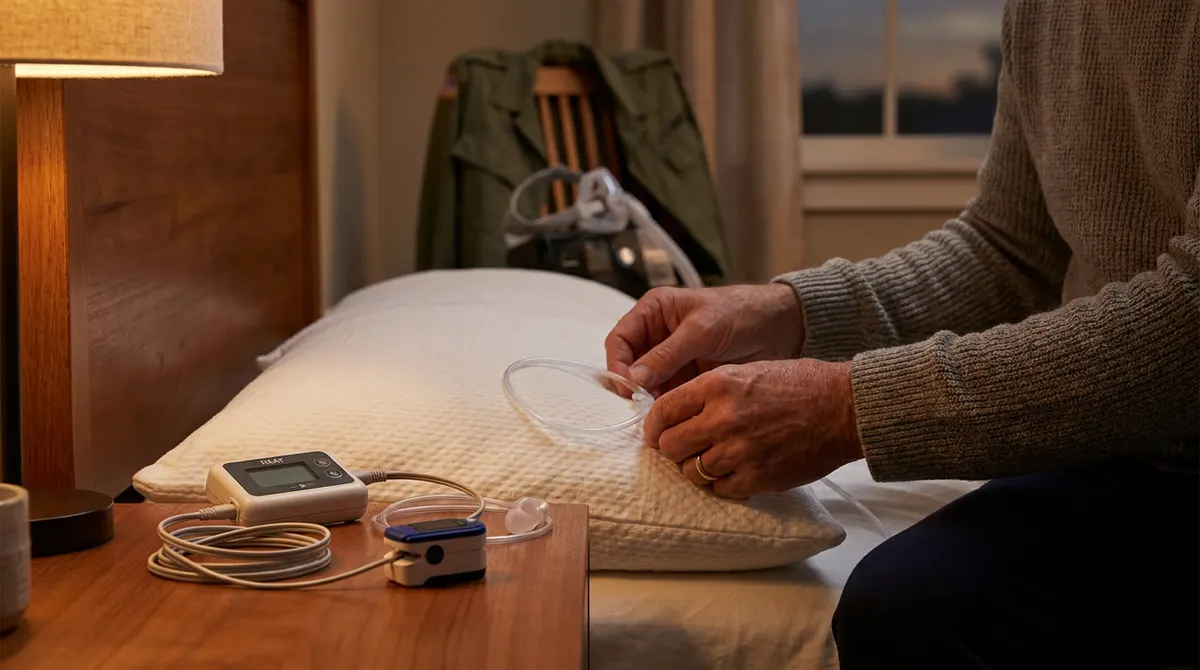
VA at home sleep apnea test programs allow eligible Veterans to complete a diagnostic sleep study from home using a portable monitoring device provided through the Department of Veterans Affairs. According to the American Academy of Sleep Medicine, home sleep apnea testing has become a widely accepted diagnostic method for obstructive sleep apnea in adults without significant comorbidities. This guide is for Veterans, service members, and their advocates who need to understand how VA home sleep testing works, what the process involves, and how results connect to treatment and disability claims. The article covers VA eligibility, test equipment, the diagnostic process, CPAP treatment pathways, service connection for sleep apnea, disability ratings, and alternative testing options when VA wait times or access barriers create delays. If you are a Veteran weighing your options for sleep apnea testing, this resource will help you make an informed decision.
Quick Answer
A VA at home sleep apnea test is a portable sleep study that Veterans complete at home after receiving a referral from a VA primary care provider or sleep medicine specialist. The device measures breathing patterns, oxygen saturation, airflow, and heart rate during one night of sleep. Results are reviewed by a VA sleep physician who determines whether the Veteran has obstructive sleep apnea, central sleep apnea, or another sleep disorder. Not all Veterans qualify for home testing through the VA, and wait times can vary by facility. dumbo.health offers an alternative home sleep test for $149 with no insurance or VA referral required.
Key Takeaways
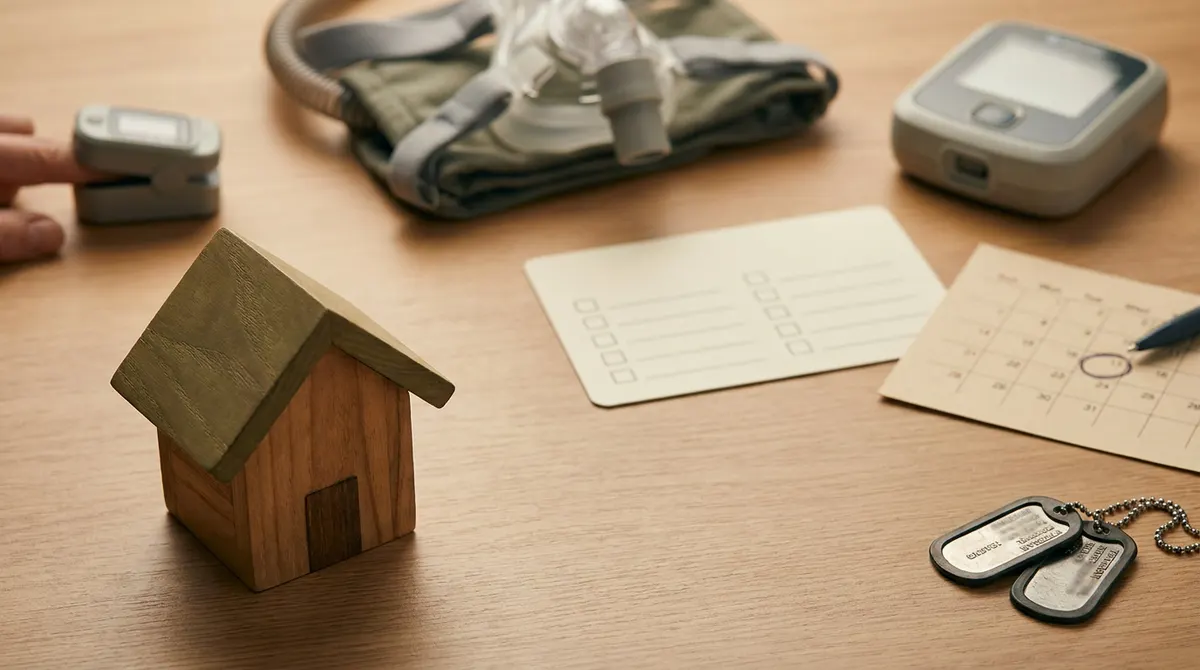
- Veterans can access home sleep apnea testing through the VA after a referral from their primary care provider or a sleep medicine specialist at a VA Medical Center (VAMC).
- Home sleep apnea tests measure airflow, respiratory effort, oxygen levels, and heart rate using portable sensors worn during one night of sleep.
- The VA uses sleep study results to guide CPAP therapy, oral appliance treatment, or other interventions, and these results can also support a VA disability claim for sleep apnea.
- VA sleep apnea disability ratings are assigned at 0%, 30%, 50%, or 100% based on symptom severity and treatment requirements, with 50% being the most common rating for Veterans prescribed a CPAP machine.
- Wait times for VA sleep studies can range from weeks to several months depending on the VAMC location and demand for sleep medicine services.
- dumbo.health provides a home sleep test for $149 with physician interpretation available through monthly plans starting at $59 per month, with no VA referral, insurance, or prior authorization needed.
How the VA Home Sleep Apnea Test Works
A VA home sleep apnea test is a portable diagnostic study that records sleep data while a Veteran sleeps at home. The test uses a compact device with sensors that track breathing, oxygen levels, and body position overnight.
The VA refers to this test as a Home Sleep Apnea Test (HSAT). It is clinically distinct from an in-lab sleep study, also called polysomnography, which requires an overnight stay at a sleep lab or sleep center. The American Academy of Sleep Medicine recognizes HSAT as an appropriate diagnostic tool for uncomplicated obstructive sleep apnea in adults.
Veterans receive the HSAT device from their VA sleep clinic or through a VA Community Care referral. The device is worn for one night, then returned so a VA sleep physician can analyze the data. Results typically indicate whether the Veteran has obstructive sleep apnea, central sleep apnea, mixed sleep apnea, or no clinically significant sleep disorder.
The HSAT does not measure brain activity the way an in-lab polysomnogram does. This means it cannot diagnose conditions like restless legs syndrome, insomnia caused by psychological conditions such as PTSD, or other complex sleep disorders that require full polysomnography.
KEY TAKEAWAY: The VA home sleep apnea test is a portable overnight study that measures breathing patterns and oxygen levels, but it does not replace a full in-lab sleep study for complex sleep disorders.
Understanding what the HSAT device actually measures helps Veterans know what to expect on test night.
What Does a Home Sleep Apnea Test Measure?
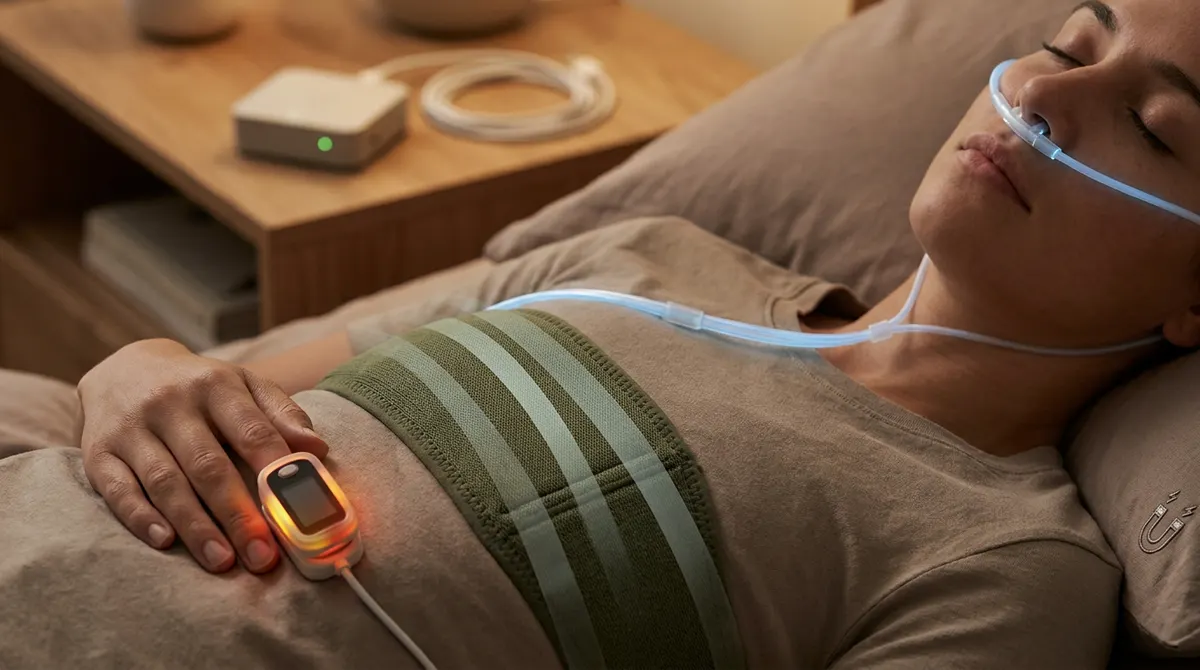
A home sleep apnea test measures four primary body functions: airflow through the nose and mouth, respiratory effort in the chest and abdomen, blood oxygen levels, and heart rate. These measurements are used to calculate an apnea-hypopnea index (AHI), which determines whether sleep apnea is present and how severe it is.
Sensors and Equipment in a Home Sleep Test Kit
The Home Sleep Study Kit typically includes several components. A nasal cannula tracks airflow by detecting breathing patterns through the nose. A pulse oximeter clips to the finger and continuously records oxygen saturation and heart rate. A belt or sensor band worn around the chest measures respiratory effort. Some devices also include a body position sensor and a small computer that stores the sleep data.
DID YOU KNOW: According to the Sleep Foundation, home sleep apnea tests can detect moderate to severe obstructive sleep apnea with accuracy rates comparable to in-lab studies when used correctly, though they may underestimate mild cases.
The equipment is designed for a single night of use. Veterans set up the device following printed or video instructions, sleep with the sensors attached, and return the device the next day. The sleep testing recorders store all data internally, and a technician or technologist downloads it for physician review.
What the Results Show
Results from an HSAT produce an AHI score. An AHI of 5 to 14 events per hour indicates mild obstructive sleep apnea. An AHI of 15 to 29 indicates moderate sleep apnea. An AHI of 30 or higher indicates severe sleep apnea. The National Heart, Lung, and Blood Institute defines obstructive sleep apnea as a condition in which the upper airway becomes partially or completely blocked during sleep, causing repeated pauses in breathing.
A VA sleep doctor reviews the data and provides a diagnosis. If the AHI is elevated, the physician typically recommends treatment, most commonly CPAP therapy.
KEY TAKEAWAY: Home sleep tests measure airflow, oxygen saturation, respiratory effort, and heart rate to calculate an AHI score that determines sleep apnea severity.
Knowing what the test measures is important, but Veterans first need to understand how to get referred for one through the VA system.
How Veterans Get a VA Home Sleep Test Referral
Veterans access home sleep apnea testing through the VA healthcare system by requesting a referral from their primary care provider at a VAMC or Community-Based Outpatient Clinic. The provider evaluates symptoms, medical history, and risk factors before deciding whether a sleep study is appropriate.
Common Symptoms That Trigger a Referral
VA providers typically refer Veterans for sleep testing when they report symptoms such as loud snoring, witnessed breathing pauses during sleep, excessive daytime sleepiness, morning headaches, difficulty concentrating, or waking up gasping for air. A high body mass index (BMI of 30 or above), a neck circumference over 17 inches, and existing conditions like PTSD, rhinitis, or a deviated septum can also prompt a referral.
According to the CDC, an estimated 30 million adults in the United States have obstructive sleep apnea, though many remain undiagnosed. Veterans may have higher prevalence rates due to service-related conditions such as toxic exposure from burn pits, service-connected nasal trauma, sinusitis, or chronic rhinitis that can contribute to airway obstruction.
The VA Referral Process Step by Step
1. Schedule an appointment with your VA primary care provider and describe your sleep-related symptoms, including snoring, daytime fatigue, and any breathing difficulties.
2. Your provider reviews your medical records, conducts a physical examination, and may screen you using a validated questionnaire such as the STOP-BANG or Epworth Sleepiness Scale.
3. If the screening suggests a moderate to high probability of sleep apnea, your provider submits a referral to the VA Sleep Medicine Program or a VA sleep clinic.
4. A sleep medicine specialist reviews the referral and determines whether a home sleep test (HSAT) or an in-lab sleep study (polysomnography) is appropriate based on the complexity of your case.
5. If approved for an HSAT, you receive a Home Sleep Study Kit with instructions for setup. Some VA facilities mail the kit while others require pickup from the sleep center.
6. Complete the test at home for one night, following all sensor placement instructions carefully.
7. Return the device to the VA sleep clinic or mail it back using the provided packaging so the sleep data can be downloaded and analyzed.
8. A VA sleep physician interprets the results, and your provider contacts you with a diagnosis and treatment plan.
After completing these steps, Veterans typically receive results within two to four weeks, though turnaround times vary by facility. For Veterans who want faster results or cannot get a timely VA referral, dumbo.health offers a home sleep apnea test for $149 with no referral required and physician interpretation available through plans starting at $59 per month.
KEY TAKEAWAY: Getting a VA home sleep test requires a provider referral, a sleep medicine screening, and returning the HSAT device after one night of testing.
Once a Veteran understands the referral process, the next step is knowing how the VA test compares to other testing options.
VA Home Sleep Test vs. In-Lab Sleep Study vs. Private Home Sleep Test
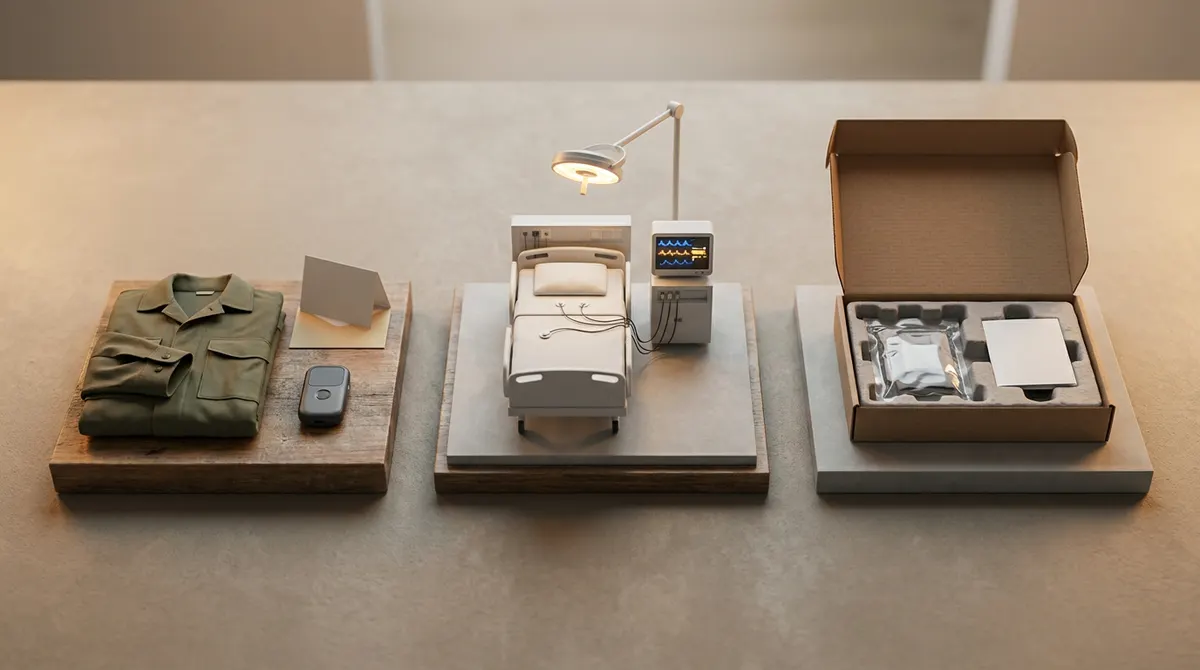
Veterans have three primary options for sleep apnea testing: a VA home sleep apnea test, a VA in-lab sleep study at a sleep lab or sleep center, or a private home sleep test from a provider like dumbo.health. Each option differs in cost, convenience, wait time, and diagnostic capability.
Setting
- VA Home Sleep Test (HSAT): Veteran's own home
- VA In-Lab Sleep Study (Polysomnography): VA sleep lab or contracted sleep center
- Private Home Sleep Test (dumbo.health): Veteran's own home
Cost to the Veteran
- VA Home Sleep Test (HSAT): No cost for enrolled Veterans
- VA In-Lab Sleep Study (Polysomnography): No cost for enrolled Veterans, though some may have a copay
- Private Home Sleep Test (dumbo.health): $149 one-time for the test, plus monthly plans starting at $59 per month for physician interpretation and treatment
Wait Time for Testing
- VA Home Sleep Test (HSAT): Weeks to months depending on VAMC location and demand
- VA In-Lab Sleep Study (Polysomnography): Often longer wait times due to limited sleep lab availability
- Private Home Sleep Test (dumbo.health): Ships directly with no referral or prior authorization needed
What It Measures
- VA Home Sleep Test (HSAT): Airflow, oxygen saturation, heart rate, respiratory effort
- VA In-Lab Sleep Study (Polysomnography): All of the above plus brain activity, eye movements, muscle activity, and body position with a technologist present
- Private Home Sleep Test (dumbo.health): Airflow, oxygen saturation, heart rate, respiratory effort
Best For
- VA Home Sleep Test (HSAT): Veterans with suspected uncomplicated obstructive sleep apnea who are enrolled in VA healthcare
- VA In-Lab Sleep Study (Polysomnography): Veterans with complex sleep disorders, central sleep apnea, PTSD-related insomnia, or other comorbidities requiring full monitoring
- Private Home Sleep Test (dumbo.health): Veterans who face long VA wait times, are not enrolled in VA healthcare, or want faster access to testing and treatment
For Veterans who are already enrolled in VA healthcare and have a straightforward presentation, the VA HSAT is a practical no-cost option. However, Veterans in areas with limited VA sleep medicine services or long wait times may benefit from ordering a home sleep test through dumbo.health to avoid delays in diagnosis and treatment.
IMPORTANT: A home sleep test (whether through the VA or a private provider) cannot diagnose central sleep apnea, restless legs syndrome, or sleep disorders that require brain activity monitoring. Veterans with these concerns need a full in-lab polysomnography.
KEY TAKEAWAY: VA home sleep tests are free for enrolled Veterans but may involve long wait times, while private options like dumbo.health offer faster access for $149 with no referral required.
After testing, the next critical question for many Veterans is how sleep apnea connects to VA disability benefits.
Sleep Apnea and VA Disability Ratings
Sleep apnea is one of the most commonly rated disabilities among Veterans. The Department of Veterans Affairs assigns disability ratings for sleep apnea based on symptom severity and treatment requirements, with ratings that directly affect monthly disability benefits.
How the VA Rates Sleep Apnea
VA disability ratings for sleep apnea follow a specific schedule under 38 CFR Part 4, Diagnostic Code 6847. The four possible ratings are:
- 0% rating: Asymptomatic sleep apnea with documented diagnosis but no current symptoms
- 30% rating: Persistent daytime hypersomnolence (excessive sleepiness) not fully controlled by treatment
- 50% rating: Requires use of a breathing assistance device such as a CPAP machine (this is the most commonly assigned rating for Veterans with obstructive sleep apnea)
- 100% rating: Chronic respiratory failure with carbon dioxide retention or cor pulmonale, or requires a tracheostomy
The 50% rating is by far the most common because it applies to any Veteran who is prescribed and uses a CPAP machine. According to Veterans Law attorneys at firms like Hill and Ponton and Woods and Woods, this rating has significant financial implications, as a 50% VA rating for a single Veteran without dependents provides substantial monthly compensation.
Service Connection for Sleep Apnea
To receive a VA rating for sleep apnea, a Veteran must establish service connection. Service connection means proving that the sleep apnea either began during military service, was caused by military service, or was caused or aggravated by another service-connected disability.
There are three primary pathways to service connection for sleep apnea:
Direct service connection requires evidence that sleep apnea symptoms began during active duty or that in-service events, injuries, or exposures caused the condition. Medical records from the service period showing complaints of snoring, witnessed apneas, or daytime fatigue strengthen this claim.
Secondary service connection is the most common pathway. This applies when a Veteran's sleep apnea is caused or aggravated by another service-connected disability. Common secondary connections include PTSD, rhinitis, sinusitis, deviated septum, service-connected nasal trauma, septal deformity, cervical spine disability, and conditions related to toxic exposure from burn pits. A VA examiner or independent medical professional evaluates whether the secondary condition has a medical nexus to the sleep apnea.
Presumptive service connection may apply in limited circumstances. Veterans exposed to burn pits or other toxic substances during service in Southwest Asia or certain other locations may qualify for presumptive conditions under the PACT Act. While sleep apnea is not currently listed as a presumptive condition under the PACT Act, toxic exposure claims involving airway damage from burn pits and other environmental hazards continue to evolve as the VA updates its policies.
The Role of a Nexus Letter
A nexus letter is a medical opinion written by a physician or qualified medical professional that establishes a connection between the Veteran's sleep apnea and their military service or a service-connected disability. The nexus letter is often the single most important piece of evidence in a VA claim for sleep apnea.
The letter must state that it is "at least as likely as not" (50% or greater probability) that the Veteran's sleep apnea is connected to service or to another service-connected condition. The physician should reference the Veteran's medical records, medical literature supporting the connection, and any relevant lay statements from the Veteran or family members describing symptoms during or after service.
Veterans who obtain a sleep apnea diagnosis through a private provider like dumbo.health can use those results as supporting medical evidence in their VA claim. A confirmed diagnosis from any licensed physician, whether VA or private, carries clinical weight when combined with a strong nexus letter.
TIP: If you are filing a VA claim for sleep apnea, obtain your sleep study results (whether from the VA or a private test), gather any in-service medical records documenting symptoms, and work with a Veterans Law attorney or accredited claims agent to secure a compelling nexus letter.
KEY TAKEAWAY: Most Veterans with diagnosed sleep apnea who use a CPAP machine receive a 50% VA disability rating, but establishing service connection through direct, secondary, or presumptive pathways requires a medical nexus linking the condition to military service.
Understanding the claims process is important, but Veterans also need to know what treatment looks like after a sleep apnea diagnosis.
CPAP Treatment and Other Options After Diagnosis
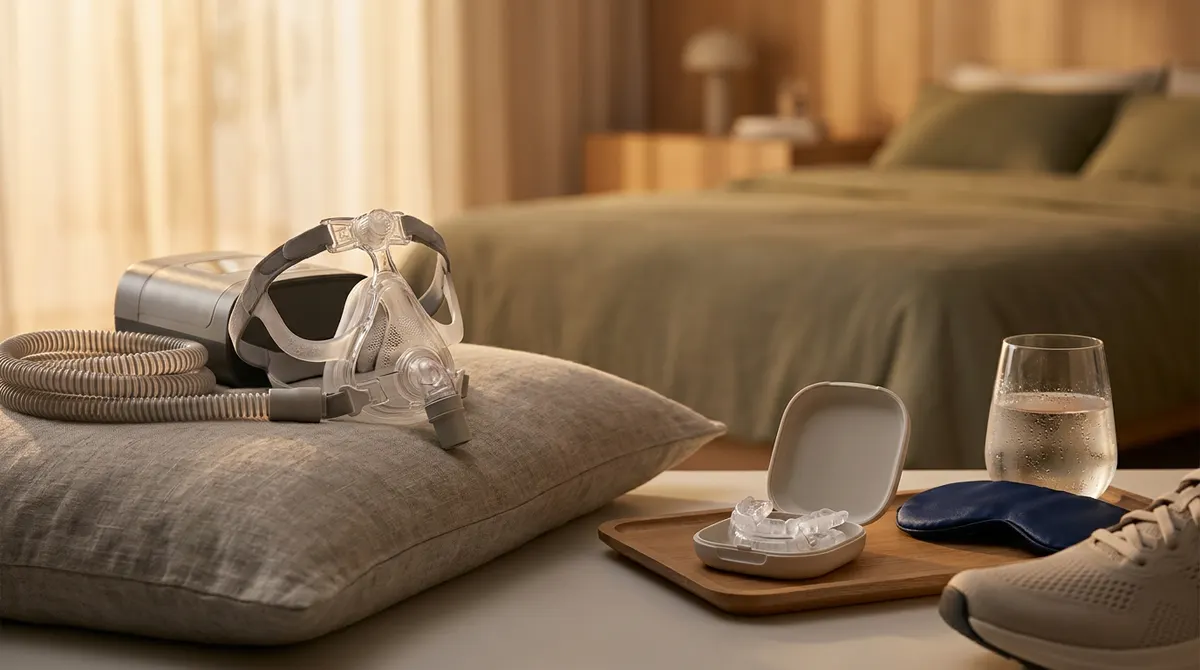
CPAP therapy is the most commonly prescribed treatment for obstructive sleep apnea in Veterans and the general population. A CPAP machine delivers continuous positive airway pressure through a mask worn during sleep, keeping the airway open and preventing breathing interruptions.
How CPAP Therapy Works
A CPAP machine consists of a base unit that generates pressurized air, tubing that carries the air, and a CPAP mask that fits over the nose, mouth, or both. The device is set to a specific pressure level determined by the sleep physician based on the Veteran's AHI and sleep study results. The American Academy of Sleep Medicine recommends that patients with moderate to severe obstructive sleep apnea use CPAP for at least four hours per night on at least 70% of nights to meet adherence standards.
The VA provides CPAP machines and supplies to Veterans with service-connected sleep apnea at no cost. However, Veterans who are not enrolled in VA healthcare, who have claims pending, or who experience long waits for VA-issued equipment may need alternative access to CPAP therapy. dumbo.health provides CPAP therapy and equipment through monthly plans starting at $59 per month with no contracts, no insurance required, and the ability to cancel anytime.
Oral Appliance Therapy
For Veterans with mild to moderate obstructive sleep apnea who cannot tolerate CPAP, an oral appliance is an alternative treatment. An oral appliance is a custom-made dental device that repositions the lower jaw forward to keep the airway open during sleep. These devices are typically fitted by a dentist trained in sleep medicine and are less intrusive than a CPAP mask.
Oral appliances are generally less effective than CPAP for severe sleep apnea. The VA may cover oral appliance therapy for eligible Veterans, though availability varies by facility.
Lifestyle and Behavioral Modifications
Sleep physicians also recommend behavioral changes alongside device-based treatment. Reducing alcohol intake before bed, avoiding caffeine in the afternoon and evening, maintaining a healthy weight, and sleeping on your side rather than your back can all reduce the frequency of apnea events. These modifications are not standalone treatments for moderate to severe sleep apnea but can improve treatment outcomes when combined with CPAP or oral appliance therapy.
Medication and Other Interventions
No FDA-approved medication cures obstructive sleep apnea. Some medications may address secondary symptoms such as daytime sleepiness, and surgical options exist for specific anatomical causes of airway obstruction, including nasal trauma, deviated septum, nasal pyramid abnormalities, or severe septal deformity. The VA evaluates surgical options on a case-by-case basis.
KEY TAKEAWAY: CPAP therapy is the primary treatment for obstructive sleep apnea, and the VA provides equipment at no cost to eligible Veterans, while dumbo.health offers an alternative pathway with CPAP plans starting at $59 per month for Veterans who need faster access.
Treatment access is critical, but some Veterans face barriers that make getting tested and treated through the VA more difficult than expected.
Barriers Veterans Face with VA Sleep Apnea Testing
Long wait times, geographic distance from VAMCs, and administrative complexity are the three most common barriers Veterans encounter when seeking sleep apnea testing and treatment through the VA.
Wait Times and Appointment Access
VA sleep medicine services are in high demand. The Office of Specialty Care Services has worked to expand access through Clinical Resource Hubs and telehealth, but many VAMCs still have wait lists for sleep studies. In some locations, Veterans report waiting two to six months from initial referral to completed sleep study and results. Veterans in rural areas or those served by smaller VA facilities may face even longer delays.
The VA Sleep Medicine Program has increased adoption of telehealth services for sleep consultations, allowing Veterans to meet with sleep physicians remotely. However, the actual sleep test still requires physical equipment, whether for a home study or an in-lab polysomnogram. Telehealth can speed up the referral and follow-up process but does not eliminate the wait for testing devices.
Geographic Access
Not all VAMCs have dedicated sleep labs or sleep centers. Veterans who live far from a VAMC with sleep medicine capabilities may need to travel long distances for an in-lab sleep study. The VA Community Care program can refer Veterans to private sleep clinics in their area, but this process adds another layer of administrative coordination and potential delay.
Administrative and Claims-Related Challenges
Veterans pursuing a VA disability claim for sleep apnea often face a parallel challenge. They need a confirmed diagnosis to support their claim, but getting that diagnosis through the VA can take months. Meanwhile, their claim may be denied or delayed due to insufficient medical evidence.
For Veterans facing these barriers, obtaining a private home sleep test can accelerate the diagnostic process without waiting for VA scheduling. dumbo.health ships a home sleep test directly to your door for $149, with no referral, no prior authorization, and no insurance required. The results can be used as medical evidence to support a VA claim alongside a nexus letter from a qualified medical professional.
DID YOU KNOW: According to the Department of Veterans Affairs, the VA is the largest integrated healthcare system in the United States, serving over 9 million enrolled Veterans, which contributes to capacity constraints in specialty services like sleep medicine.
KEY TAKEAWAY: VA wait times for sleep studies can stretch from weeks to months, and Veterans in rural areas or those filing disability claims may benefit from private testing options to avoid diagnostic delays.
Even with access barriers addressed, Veterans should understand when a home sleep test may not be the right diagnostic tool.
When a Home Sleep Test May Not Be the Right Choice
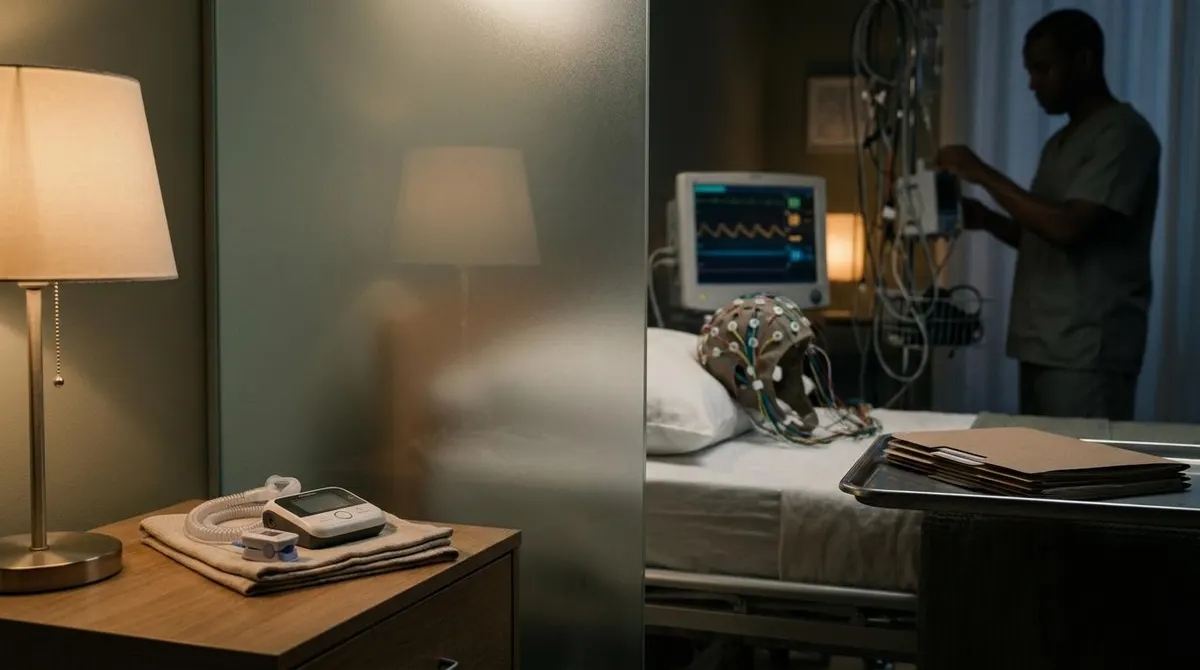
A home sleep apnea test is not appropriate for every Veteran or every type of sleep disorder. Understanding the limitations of HSAT helps Veterans and their providers choose the right diagnostic pathway.
Limitations of Home Sleep Apnea Testing
Home sleep tests are designed to detect obstructive sleep apnea in adults with a moderate to high pre-test probability based on symptoms and risk factors. They have three significant limitations that Veterans should be aware of.
First, HSAT cannot diagnose central sleep apnea. Central sleep apnea occurs when the brain fails to send proper signals to the muscles that control breathing, rather than a physical airway obstruction. Diagnosing central sleep apnea requires measurement of brain activity through electroencephalography (EEG), which is only available during a full in-lab polysomnography. Veterans with conditions affecting the central nervous system, including traumatic brain injuries or certain neurological conditions, may have central or mixed sleep apnea that a home test will miss.
Second, home sleep tests may underestimate the severity of mild sleep apnea. Because HSAT devices do not measure actual sleep time (they record total recording time instead), the AHI calculated from a home test may be lower than the AHI from an in-lab study. This matters for Veterans near the diagnostic threshold, where an underestimated AHI could result in a missed diagnosis or an inaccurately low VA disability rating.
Third, Veterans with comorbid sleep disorders such as insomnia, restless legs syndrome, or parasomnias related to PTSD need comprehensive testing that evaluates brain activity, eye movements, and muscle activity. A home sleep test cannot identify these conditions. Clinicians frequently observe that Veterans with PTSD have overlapping sleep disorders that complicate diagnosis and require a full polysomnogram for accurate evaluation.
Who Should Request an In-Lab Study Instead
Veterans should request a full in-lab sleep study rather than a home test if they have:
- Suspected central sleep apnea or mixed sleep apnea
- Significant comorbid sleep disorders such as severe insomnia, restless legs syndrome, or PTSD-related sleep disruption
- Prior home sleep test results that were inconclusive or technically inadequate
- Neuromuscular disease, congestive heart failure, or chronic opioid use, all of which increase the risk of central apnea events
- A clinical presentation that does not clearly point to uncomplicated obstructive sleep apnea
A VA sleep medicine specialist or sleep doctor can determine which test is appropriate based on the Veteran's medical history and symptom profile.
What Happens If Your Home Test Is Negative but Symptoms Persist
A negative home sleep test does not always rule out sleep apnea. If a Veteran continues to experience symptoms such as excessive daytime sleepiness, witnessed breathing pauses, or morning headaches after a negative HSAT, the next step is a full in-lab polysomnography. The American Academy of Sleep Medicine recommends that patients with a high clinical suspicion for sleep apnea and a negative HSAT undergo in-lab testing to confirm or rule out the diagnosis.
KEY TAKEAWAY: Home sleep tests cannot diagnose central sleep apnea, may underestimate mild cases, and are not sufficient for Veterans with complex sleep disorders, PTSD-related insomnia, or comorbid conditions requiring full polysomnography.
Knowing the limitations of testing helps Veterans make better decisions, but seeing how the process plays out in real scenarios adds practical clarity.
Real-World Scenarios: How Veterans Navigate Sleep Apnea Testing
Veterans approach sleep apnea testing from different situations depending on their service history, current symptoms, and relationship with the VA healthcare system. These scenarios illustrate common pathways.
Scenario 1: Active VA Patient with Straightforward Symptoms
A 48-year-old Army Veteran enrolled in VA healthcare in Virginia reports loud snoring, daytime fatigue, and a BMI of 33 during a routine primary care visit at his local VAMC. His provider screens him using the STOP-BANG questionnaire and he scores a 5 out of 8, indicating high risk for obstructive sleep apnea. The provider submits a referral to the VA Sleep Medicine Program. Three weeks later, the Veteran receives a Home Sleep Study Kit by mail, completes the test overnight, and returns it. His results show an AHI of 22, indicating moderate obstructive sleep apnea. His VA sleep physician prescribes a CPAP machine, which the VA provides at no cost. Because the Veteran has no other service-connected conditions related to his sleep apnea, he does not file a disability claim.
Scenario 2: Veteran Filing a Secondary Service Connection Claim
A 38-year-old Marine Veteran in Maryland has a 30% VA rating for PTSD and a 10% rating for chronic rhinitis resulting from service-connected nasal trauma sustained during deployment. She begins experiencing worsening sleep quality, frequent nighttime awakenings, and her partner reports loud snoring and gasping. Her VA provider refers her for a home sleep study, but the wait time at her VAMC is estimated at four months. Rather than wait, she orders a home sleep test through dumbo.health for $149 and receives the device within days. Her results show an AHI of 31, indicating severe obstructive sleep apnea. She enrolls in the dumbo.health Essentials Plan at $59 per month to begin CPAP therapy immediately while her VA claim is processed. Her Veterans Law attorney helps her obtain a nexus letter from an independent medical professional stating that her obstructive sleep apnea is at least as likely as not caused or aggravated by her service-connected rhinitis and nasal trauma. She files a VA claim for sleep apnea as a secondary service-connected disability and ultimately receives a 50% rating.
Scenario 3: Veteran with Complex Sleep Complaints and PTSD
A 55-year-old Navy Veteran in Jackson, Mississippi, reports severe insomnia, nightmares, and daytime exhaustion. He has a 70% combined VA rating including 50% for PTSD and 10% for bilateral tinnitus. His VA sleep medicine specialist determines that a home sleep test is not appropriate because his symptoms suggest a combination of PTSD-related insomnia and possible obstructive sleep apnea. He is scheduled for an in-lab polysomnography at his VAMC sleep lab. The polysomnogram confirms moderate obstructive sleep apnea with an AHI of 18 and also identifies periodic limb movements consistent with restless legs syndrome. His treatment plan includes CPAP therapy for the apnea and a medication adjustment for his PTSD to address the insomnia. His attorney files an additional secondary service connection claim linking the sleep apnea to his PTSD.
These scenarios show that no single pathway fits every Veteran. The right approach depends on symptom complexity, existing service-connected disabilities, and access to VA sleep medicine services in your area.
KEY TAKEAWAY: Veterans with straightforward symptoms may complete the VA home sleep test process within weeks, while those with complex conditions or pending claims may benefit from private testing to avoid delays and strengthen their disability claim evidence.
Real-world examples make the process tangible, but common misconceptions about sleep apnea testing and VA claims can still lead Veterans in the wrong direction.
Common Myths About VA Sleep Apnea Testing and Claims Debunked
MYTH: You can only get a sleep apnea diagnosis through the VA if you want to file a disability claim.
FACT: The VA does not require a disability claim to provide a sleep apnea diagnosis and treatment. Any enrolled Veteran can request a sleep study evaluation through their VA primary care provider. Separately, Veterans can also obtain a diagnosis from a private provider and use those results to support a VA claim. The Department of Veterans Affairs accepts medical evidence from qualified non-VA physicians.
MYTH: A home sleep test is just as thorough as an in-lab sleep study.
FACT: A home sleep apnea test measures fewer body functions than a full in-lab polysomnography. According to the American Academy of Sleep Medicine, HSAT does not measure brain activity, eye movements, or muscle activity, which means it cannot diagnose central sleep apnea, restless legs syndrome, or other complex sleep disorders. The HSAT is appropriate for uncomplicated suspected obstructive sleep apnea, not for all sleep complaints.
MYTH: If you are diagnosed with sleep apnea, the VA automatically gives you a 50% disability rating.
FACT: A diagnosis alone does not guarantee a 50% rating. The Veteran must establish service connection through direct, secondary, or presumptive evidence. The 50% rating applies specifically to Veterans whose service-connected sleep apnea requires the use of a CPAP machine. Without a confirmed service connection supported by a nexus letter and medical records, the VA will deny the claim regardless of the diagnosis.
MYTH: You need a VA sleep study specifically to file a VA disability claim for sleep apnea.
FACT: The VA accepts sleep study results from any licensed healthcare provider or accredited sleep testing facility. A private home sleep test, such as the one available through dumbo.health for $149, produces clinically valid results that can be submitted as medical evidence in a VA claim. What matters is the quality of the diagnosis, the supporting nexus letter, and the medical records linking the condition to service.
MYTH: Burn pit exposure automatically qualifies you for a sleep apnea disability rating.
FACT: While the PACT Act expanded presumptive conditions for Veterans exposed to toxic substances including burn pits, obstructive sleep apnea is not currently listed as a presumptive condition under the PACT Act as of 2026. However, Veterans can still file claims arguing that toxic exposure caused airway damage, chronic rhinitis, sinusitis, or other respiratory conditions that secondary caused or aggravated their sleep apnea. Medical literature linking burn pit exposure to respiratory and airway conditions can strengthen these claims.
KEY TAKEAWAY: Veterans should not assume that VA testing is required for claims, that home tests are equivalent to in-lab studies, or that a diagnosis alone guarantees a disability rating. Understanding these distinctions prevents costly mistakes in the claims process.
With myths cleared up, Veterans who are ready to take action need a clear checklist for getting started.
Preparing for Your Sleep Apnea Test: Checklist for Veterans
Whether you test through the VA or a private provider, proper preparation ensures accurate results and avoids the need for a repeat study.
Pre-Test Checklist
- Confirm your referral has been processed (for VA testing) or order your test device (for private testing through a provider like dumbo.health)
- Review all setup instructions for the Home Sleep Study Kit before your test night
- Avoid alcohol for at least 24 hours before the test, as alcohol relaxes airway muscles and can distort results
- Avoid caffeine after noon on the day of the test to support normal sleep patterns
- Do not take any new medication on the night of the test without consulting your physician
- Remove nail polish from at least one finger so the pulse oximeter can accurately measure oxygen saturation
- Sleep in your usual position and environment to produce results that reflect your typical sleep patterns
- Make sure the nasal cannula is properly positioned under your nose and the chest belt is snug but comfortable
- Charge or check the battery on the device if required by the model
- Set a backup alarm in case you need to return the device to a VA sleep clinic by a specific date
- Keep your medical records, including any prior sleep study results, available for your follow-up appointment
- Complete the free sleep assessment at dumbo.health if you want to evaluate your risk level before ordering a test
Following this checklist reduces the chance of a technically inadequate study, which would require repeating the test and further delaying your diagnosis and treatment.
KEY TAKEAWAY: Proper preparation for a home sleep test, including avoiding alcohol and caffeine, correctly placing sensors, and following all device instructions, is essential for accurate results.
Once prepared, Veterans should understand the full step-by-step process from testing through treatment and claims.
Step-by-Step Process: From Sleep Test to Treatment and VA Claim
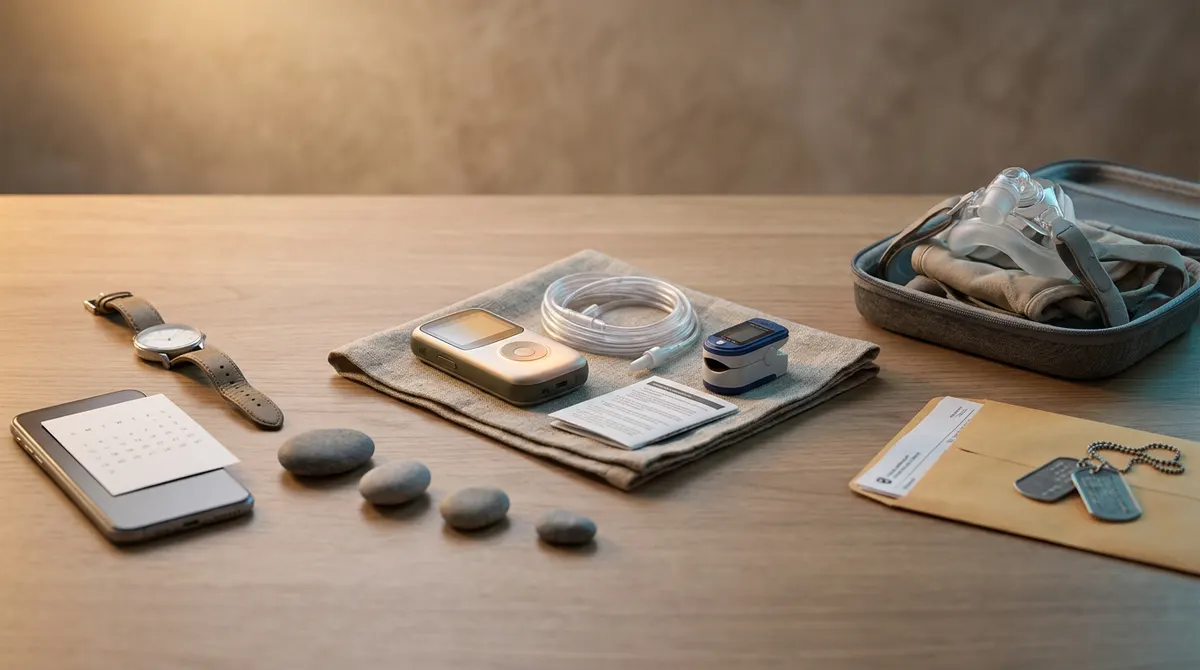
Getting from initial symptoms to a confirmed diagnosis, active treatment, and a potential VA disability rating involves a clear sequence of steps.
How to Complete the Full Process
1. Report your symptoms (snoring, gasping, daytime fatigue, witnessed breathing pauses) to your VA primary care provider or take the free sleep assessment at dumbo.health to evaluate your risk.
2. Obtain a sleep study referral through the VA or order a home sleep test directly from dumbo.health for $149 with no referral or insurance required.
3. Complete the home sleep test by wearing the device sensors for one full night of sleep, following all provided instructions.
4. Return the device (VA) or ship it back (private provider) so the sleep data can be downloaded and analyzed.
5. Receive your results and diagnosis from a VA sleep physician or through a dumbo.health physician interpretation plan starting at $59 per month.
6. Begin treatment as prescribed, typically CPAP therapy, and meet adherence standards of at least four hours per night on 70% of nights as recommended by the AASM.
7. If filing a VA disability claim, gather your sleep study results, medical records, a nexus letter from a qualified medical professional, and any lay statements from family members or fellow service members documenting your symptoms during or after service.
8. Submit your VA claim through the VA benefits portal or work with a Veterans Law attorney or accredited claims agent to file for direct or secondary service connection.
After completing these steps, the VA reviews the claim, may schedule a Compensation and Pension (C&P) exam, and issues a disability rating decision. Veterans prescribed a CPAP machine for service-connected sleep apnea typically receive a 50% rating. For Veterans who also qualify for Total Disability Individual Unemployability (TDIU), a sleep apnea rating combined with other service-connected disabilities may result in compensation at the 100% level even without a schedular 100% rating.
KEY TAKEAWAY: The process from sleep testing to a VA disability rating involves obtaining a diagnosis, starting treatment, gathering medical evidence including a nexus letter, and filing a claim with the VA.
Understanding the full process prepares Veterans to take action, but having a trusted testing and treatment partner makes each step easier to complete.
How dumbo.health Supports Veterans with Sleep Apnea Testing and Treatment
dumbo.health provides Veterans with direct access to home sleep apnea testing and CPAP treatment without the wait times, referrals, or insurance barriers that can delay care through traditional systems.
The dumbo.health home sleep test costs $149 as a one-time purchase. The test device ships to your home, and you complete the study in one night. No VA referral, no prior authorization, and no insurance are required. This is particularly valuable for Veterans who face long wait times at their VAMC, who are not yet enrolled in VA healthcare, or who need a confirmed diagnosis to support a pending VA disability claim.
After testing, Veterans can choose from three monthly care plans that cover physician interpretation, CPAP therapy, equipment, and ongoing adherence support:
Cost
- Essentials Plan: $59 per month (approximately $2 per day)
- Premium Plan: $89 per month (approximately $3 per day)
- Elite Plan: $129 per month (approximately $4 per day)
What Is Included
- Essentials Plan: Physician interpretation, CPAP therapy and equipment, standard follow-up care, updates to referring provider
- Premium Plan: Everything in Essentials plus a dedicated sleep coach, advanced adherence monitoring, and priority results turnaround
- Elite Plan: Everything in Premium plus concierge clinical support, direct physician messaging, and custom reporting
Contract Terms
- Essentials Plan: No contracts, cancel anytime
- Premium Plan: No contracts, cancel anytime
- Elite Plan: No contracts, cancel anytime
All plans operate on a cash-pay basis with no surprise bills. Veterans who later receive VA approval for CPAP equipment can transition their care accordingly.
The sleep study results from dumbo.health are clinically valid and can be used as medical evidence in a VA disability claim. Veterans working with a Veterans Law attorney can submit these results alongside a nexus letter to establish service connection for sleep apnea.
For Veterans exploring their sleep apnea care options, dumbo.health provides a transparent, accessible alternative to navigating VA scheduling bottlenecks while ensuring diagnosis and treatment begin without unnecessary delay.
KEY TAKEAWAY: dumbo.health offers Veterans a $149 home sleep test with no referral and monthly CPAP treatment plans starting at $59 per month, providing a faster alternative to VA wait times while producing results that can support a VA disability claim.
Conclusion
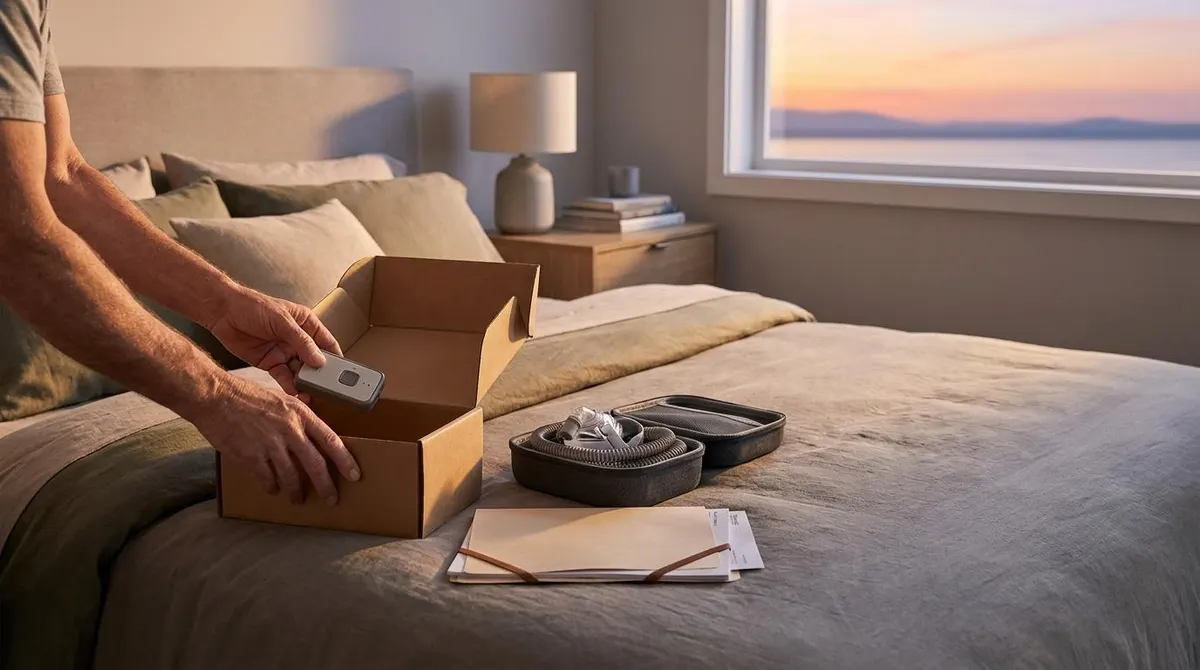
Veterans deserve timely access to sleep apnea testing and treatment, whether through the VA system or through a trusted private provider. A VA at home sleep apnea test is a no-cost option for enrolled Veterans, but wait times, geographic barriers, and administrative complexity can delay diagnosis and treatment by months. Understanding the testing process, treatment options, VA disability ratings, and the importance of a strong nexus letter empowers Veterans to take control of their sleep health and their benefits. For Veterans who want to start testing and treatment without waiting for a VA referral, dumbo.health offers a home sleep test for $149 with CPAP therapy plans starting at $59 per month, no contracts, no insurance required, and the ability to cancel anytime.
Frequently Asked Questions About VA At-Home Sleep Apnea Testing
What is sleep apnea and why does it matter for veterans?
Sleep apnea is a sleep disorder in which breathing repeatedly stops and starts during sleep. The most common form is obstructive sleep apnea, which occurs when the airway becomes partially or fully blocked. Central sleep apnea, where the brain fails to send proper signals to breathing muscles, and mixed sleep apnea are also recognised forms. According to the American Academy of Sleep Medicine, sleep apnea is associated with serious health risks including cardiovascular disease, high blood pressure, and daytime impairment. Veterans are diagnosed with sleep apnea at elevated rates, partly due to connections with PTSD, obesity, nasal trauma, and toxic exposure during service.
What is a VA at-home sleep apnea test?
A VA at-home sleep apnea test, also called a home sleep apnea test or HSAT, is a simplified sleep testing method that allows a veteran to record breathing data overnight in their own home rather than attending a hospital sleep lab. The device typically measures airflow, oxygen saturation, respiratory effort, and breathing patterns using a nasal cannula, pulse oximeter, and sensor belt. A sleep physician then reviews the recorded data and produces a report. The VA has expanded access to home sleep apnea testing as part of broader telehealth and remote care initiatives, making it more convenient for veterans to receive sleep disorder evaluations.
How does a VA home sleep apnea test differ from an in-lab sleep study?
A home sleep apnea test records a focused set of respiratory and oxygen data overnight at home, while an in-lab sleep study, also called polysomnography, records a comprehensive range of signals including brain activity, eye movements, heart rate, limb movements, and oxygen levels under direct supervision by a sleep technologist. The American Academy of Sleep Medicine explains that home sleep apnea tests are appropriate for diagnosing moderate to severe obstructive sleep apnea in patients without significant comorbidities, but an in-lab sleep study may be needed if complex sleep disorders, central sleep apnea, restless legs syndrome, or other conditions are suspected.
What equipment is used during a home sleep apnea test?
A home sleep apnea test typically uses a compact device that includes a nasal cannula to measure airflow, a pulse oximeter to monitor blood oxygen levels and heart rate, a sensor belt worn around the chest or abdomen to detect respiratory effort, and a small recording unit that stores all sleep data overnight. Some devices also include a position sensor. The equipment is designed to be straightforward to apply without a sleep technologist present. Instructions are provided so the patient can set up the device independently before going to sleep.
What should I do on the day of my home sleep apnea test?
On the day of your home sleep apnea test, avoid caffeine and alcohol in the hours before sleep, as both can affect breathing patterns and sleep quality and may interfere with accurate data recording. Follow the specific instructions provided with your test kit. Shower before applying sensors if advised. Avoid napping during the day so that you are genuinely sleepy at your normal bedtime. Wear comfortable sleep clothing that allows the sensor belt and cannula to be positioned correctly. If you take prescription medications, speak with your healthcare provider or prescribing physician before changing your routine.
Can I take medications or sleeping aids during a home sleep apnea test?
You should follow the guidance of your healthcare provider regarding medications on test night. Prescription medications should generally not be stopped or changed without medical advice. Over-the-counter sleeping aids may be permitted in some protocols, but you should confirm this with your ordering physician or sleep clinic before using them, as certain sedatives can affect respiratory measurements. Do not assume that taking a sleeping aid is safe for your specific test without checking first. A healthcare professional familiar with your medical history is best placed to advise on what is appropriate for you on the night of testing.
Do I need to sleep at a specific time or in a specific position during the test?
You should go to sleep at your normal bedtime unless your provider advises otherwise. There is generally no requirement to go to bed at a fixed time for a home sleep apnea test. You do not need to sleep exclusively on your back. Most home sleep apnea test protocols accept data recorded in any sleep position, and positional information is often captured automatically by the device. Trying to sleep in an unnatural position may make it harder to fall asleep and could affect the quality of the recording, so sleeping in your usual position is generally preferred.
What if I need to use the bathroom during the night?
You can get up to use the bathroom during a home sleep apnea test. The recording device will continue running, and most devices are designed to tolerate brief interruptions. If your device has a pause or event button, check the instructions for whether to press it when you get up. Simply return to bed and resume sleep as normal. The sleep physician reviewing your data can identify periods of wakefulness or movement in the recorded data and will account for these when interpreting the results. Brief bathroom visits will not invalidate your test.
What if I cannot fall asleep during the home sleep apnea test?
If you have significant difficulty falling asleep during the test, the recording may capture insufficient sleep data for a reliable interpretation. In this case, your provider may ask you to repeat the test on another night. It is common to sleep somewhat less well on a test night, particularly the first night, but most patients record enough usable data for a physician to reach a conclusion. If you are concerned about your ability to sleep during the test, speak with your ordering provider, who may be able to offer guidance or consider whether an in-lab sleep study would be more appropriate for your situation.
How long do I need to wear the home sleep apnea test device?
You should wear the device for the full duration of your sleep period on the test night. Most home sleep apnea test protocols require a minimum of four hours of recorded data to produce a reliable result, though a full night of sleep is strongly preferred. If the device records fewer than four hours of usable data, your provider may ask you to repeat the test. Keep the device on until you wake up in the morning and then follow the instructions for removing and returning or uploading the data from the recording unit.
How many nights does a home sleep apnea test cover?
Most home sleep apnea tests involve a single night of recording. One night of recording is generally sufficient to diagnose obstructive sleep apnea when the data quality is adequate. If the first night produces insufficient data due to equipment issues, low recording time, or inconclusive results, a second test night may be requested. Some protocols routinely include two nights of recording to improve diagnostic accuracy. Your ordering physician will advise you on whether one or more test nights are required based on your clinical situation. Follow the specific instructions provided with your home sleep apnea test kit.
How will I know whether my home sleep apnea test recorded properly?
Many home sleep apnea test devices include indicator lights or a display that confirms the recording is active. Check the device instructions for specific guidance on how to confirm the device is working correctly after you have applied the sensors. If you see blinking lights, refer to the instruction guide included with your kit, as different devices use different light patterns to indicate normal operation, low battery, or sensor errors. If you are unsure whether the recording was successful after completing the test, contact your provider or the testing service that issued the device before returning or uploading the data.
Can I use my CPAP machine during a home sleep apnea test?
No. You should not use your CPAP machine during a home sleep apnea test unless specifically instructed to do so by your physician for a particular titration or compliance assessment purpose. A standard diagnostic home sleep apnea test is designed to record your natural breathing without treatment so that the severity of sleep apnea can be assessed. Using CPAP during a diagnostic test would suppress the apnea events the test is trying to measure and would produce misleading results. If you use CPAP regularly, inform your ordering provider before the test so that appropriate instructions can be given.
Can I use an oral appliance during the home sleep apnea test?
You should not use a prescribed oral appliance during a diagnostic home sleep apnea test unless instructed to do so by your provider. Like CPAP, an oral appliance is a treatment device designed to reduce airway obstruction during sleep. Using it during a diagnostic test would alter the results and may prevent an accurate assessment of the underlying sleep apnea severity. If your provider wants to assess how well your oral appliance is working, a separate treatment-effectiveness study can be arranged. Always follow the specific guidance from your ordering physician regarding what devices to use or avoid on test night.
What is sleep apnea service connection for VA disability purposes?
Service connection for sleep apnea means that the Department of Veterans Affairs has determined that a veteran's sleep apnea is related to their military service. To establish service connection, a veteran generally needs to demonstrate three things: a current diagnosis of sleep apnea, evidence of an in-service event, injury, or illness that could have contributed to the condition, and a medical nexus linking the diagnosis to that in-service occurrence. The nexus is typically provided through a nexus letter from a qualified medical professional. Service connection can be established directly, through secondary connection to another service-connected condition, or presumptively for eligible veterans.
What qualifies as a current diagnosis of sleep apnea for VA purposes?
A current diagnosis of sleep apnea for VA purposes must be made by a qualified medical professional and typically requires confirmation through a formal sleep study, either a polysomnogram conducted in a sleep lab or an accepted home sleep apnea test. Self-reported symptoms alone are not sufficient. The diagnosis must be documented in medical records and must meet recognised diagnostic criteria for obstructive sleep apnea, central sleep apnea, or mixed sleep apnea. Veterans who were not diagnosed during active service but who receive a diagnosis after discharge may still qualify for service connection if the other elements of the claim can be established.
Can I get a VA disability rating for sleep apnea if I was not diagnosed until after service?
Yes. A post-service diagnosis of sleep apnea does not automatically disqualify a veteran from receiving a VA disability rating. Many sleep disorders go undiagnosed during active duty because symptoms such as snoring, fatigue, and daytime sleepiness are attributed to other causes. What matters for VA purposes is whether the veteran can demonstrate a current diagnosis, an identifiable in-service event or contributing factor, and a credible medical nexus connecting the two. Lay statements from the veteran and fellow service members describing symptoms during service can also support a claim. A healthcare professional and a veterans law specialist can help assess the strength of the evidence.
What qualifies as an in-service event for a VA sleep apnea claim?
An in-service event for a VA sleep apnea claim can include physical trauma such as nasal trauma, a deviated septum, or septal deformity caused during service, as well as conditions acquired during service such as chronic rhinitis, sinusitis, or a cervical spine disability that affects the airway. Toxic exposure, including burn pit exposure covered under the PACT Act, may also be relevant. Significant weight gain during service, sleep deprivation, and psychological conditions such as PTSD developed during service may also be considered contributing factors. The in-service event does not need to be the sole cause of sleep apnea but must have a plausible connection to the condition.
What is a VA nexus letter for sleep apnea?
A nexus letter is a written statement from a qualified medical professional, such as a sleep medicine physician, that explains the medical relationship between a veteran's current sleep apnea diagnosis and their military service. For VA disability purposes, the nexus letter must state that the sleep apnea is at least as likely as not related to the identified in-service event, injury, or illness. The letter should reference the veteran's medical records, service records, and relevant medical literature where applicable. A strong nexus letter addresses the specific mechanism connecting service to the diagnosis and is one of the most important pieces of evidence in a sleep apnea disability claim.
What is secondary service connection for sleep apnea?
Secondary service connection allows a veteran to establish a VA disability rating for sleep apnea by demonstrating that the condition was caused or aggravated by another condition that is already service-connected. Common secondary service connection pathways for sleep apnea include PTSD, which is associated with sleep-disordered breathing, rhinitis, sinusitis, a deviated septum, nasal trauma, or a cervical spine disability that contributes to airway obstruction. A medical professional must provide a nexus letter explaining how the already-rated service-connected condition caused or worsened the sleep apnea. Veterans with PTSD in particular are increasingly successful in establishing secondary service connection for sleep apnea.
What is presumptive service connection for sleep apnea?
Presumptive service connection means that the VA automatically presumes a condition is connected to military service for veterans who meet specific eligibility criteria, without requiring the veteran to prove a direct link. Under the PACT Act, veterans with qualifying toxic exposure, including exposure to burn pits, Agent Orange, or other hazardous substances, may be eligible for presumptive service connection for certain conditions. Veterans should check current FMCSA and VA eligibility guidance to determine whether their service history and conditions qualify. Eligibility criteria for presumptive conditions can change, so speaking with a veterans law specialist or accredited claims agent is advisable for up-to-date guidance.
Do I need a sleep study to get a VA disability rating for sleep apnea?
Yes. A formal diagnosis of sleep apnea confirmed by a sleep study is generally required to support a VA disability rating for sleep apnea. The VA will not typically accept a diagnosis based on symptoms alone. A polysomnogram conducted in a sleep lab is the diagnostic gold standard, but home sleep apnea testing is widely accepted when conducted and interpreted by a qualified sleep physician. Veterans who have not yet completed a sleep study should arrange one before filing or pursuing a sleep apnea claim. A home sleep apnea test can be a practical and cost-effective way to obtain a formal diagnosis.
How does the VA rate sleep apnea for disability purposes?
The VA rates sleep apnea under Diagnostic Code 6847 using a tiered schedule based on symptom severity. A 0 percent rating applies when sleep apnea is asymptomatic but documented. A 30 percent rating applies when sleep apnea causes persistent daytime sleepiness. A 50 percent rating applies when the condition requires use of a breathing assistance device such as a CPAP machine. A 100 percent rating applies when sleep apnea causes chronic respiratory failure with carbon dioxide retention or requires surgical treatment such as a tracheotomy. The rating assigned reflects the level of functional impairment and the treatment required, not simply the diagnosis.
Is sleep apnea automatically rated at 50 percent if a CPAP is prescribed?
A CPAP prescription does not automatically guarantee a 50 percent VA disability rating, but a requirement for a CPAP or similar breathing assistance device is the criterion that triggers the 50 percent rating under the current VA rating schedule for sleep apnea. If a veteran has a service-connected sleep apnea diagnosis and requires CPAP therapy as prescribed by a physician, the 50 percent rating is generally appropriate under current rules. However, the VA must first establish service connection before any rating percentage is assigned. Veterans should ensure their CPAP prescription is clearly documented in their medical records as part of their claim evidence.
Can VA disability rating rules for sleep apnea change?
VA disability rating criteria can be reviewed and revised through a regulatory rulemaking process. There have been proposals to update the diagnostic criteria for several conditions, including sleep apnea, tinnitus, and mental health conditions. Any changes to the rating schedule would be published through formal channels before taking effect. Veterans who file claims before new rating criteria take effect may be evaluated under the more favorable version of the applicable rules. Monitoring official VA announcements and consulting a veterans law specialist is the most reliable way to stay informed about any upcoming changes to sleep apnea rating criteria.
Will existing sleep apnea ratings be protected if the VA changes its rating rules?
Veterans who are already receiving a VA disability rating for sleep apnea have protections under VA law that generally prevent a previously assigned rating from being reduced without clear and convincing evidence of improvement. Additionally, veterans who file a claim before any new rating rules take effect may have the more favorable version of the rules applied to their case. The specific protections available depend on the nature of the rating and when it was assigned. Veterans with concerns about how potential rating changes may affect their benefits should consult an accredited veterans law specialist for advice specific to their situation.
How do I prove CPAP compliance for VA purposes?
CPAP compliance is typically documented through data downloaded from the CPAP machine's built-in compliance tracking system, which records nightly usage hours, mask leak rates, apnea-hypopnea index values during therapy, and other adherence metrics. Most modern CPAP machines store this data automatically. Veterans may be asked to provide a compliance report from their CPAP supplier, sleep physician, or VA healthcare provider. Consistent use of at least four hours per night for at least 70 percent of nights is a commonly referenced threshold in sleep medicine, according to the American Academy of Sleep Medicine, though VA-specific compliance standards should be confirmed with your provider.
Will the VA reduce my sleep apnea rating if I stop using my CPAP?
The VA may reassess a disability rating if there is evidence that the condition has improved or that a required treatment is no longer being used. If a veteran's rating was partly based on the requirement to use a CPAP and the veteran stops using CPAP therapy, this could potentially affect the rating if the VA has reason to review the case. Veterans considering stopping CPAP therapy should speak with a sleep medicine physician before doing so, as untreated sleep apnea carries significant health risks. Rating reductions are subject to procedural protections, and veterans have the right to challenge proposed reductions. A veterans law specialist can advise on individual circumstances.
What evidence does the VA need to support a sleep apnea claim?
The VA generally requires three categories of evidence for a sleep apnea disability claim: a confirmed current diagnosis from a formal sleep study, documentation of an in-service event, injury, or illness that could have contributed to the condition, and a medical nexus letter linking the diagnosis to the in-service occurrence. Supporting evidence can include service medical records, post-service treatment records, buddy statements or lay statements from fellow service members, a private medical opinion or nexus letter, and any relevant imaging or specialist reports. The stronger and more complete the evidence package, the lower the risk of a denial or unfavorable rating decision.
Why do the VA deny sleep apnea claims?
VA sleep apnea claims are commonly denied because of missing evidence in one or more of the three required elements: no formal sleep study diagnosis, no documented in-service event, or no adequate medical nexus connecting the diagnosis to service. Claims may also be denied if the nexus letter is vague, if the in-service event is not well documented, or if the VA's own examination produces an unfavorable opinion. A lack of contemporaneous service records documenting symptoms during active duty is a frequent challenge. Veterans who receive a denial should consider requesting a review of the decision, obtaining a stronger private nexus letter, and working with an accredited veterans claims representative.
Can I appeal a denied or underrated VA sleep apnea claim?
Yes. Veterans who receive a denial or believe their sleep apnea has been underrated have several appeal options under the Appeals Modernisation Act, including requesting a supplemental claim with new and relevant evidence, requesting a higher-level review, or appealing directly to the Board of Veterans' Appeals. Gathering stronger medical evidence, such as an independent nexus letter, updated sleep study results, or additional service records, can strengthen a supplemental claim. Veterans with denied or underrated claims are encouraged to consult an accredited veterans law specialist or veterans service organisation to evaluate the best pathway for their individual situation.
What is TDIU and can sleep apnea qualify?
Total Disability based on Individual Unemployability, known as TDIU, is a VA benefit that allows a veteran to receive compensation at the 100 percent rate even if their combined disability rating is below 100 percent, if the disabilities prevent them from maintaining substantially gainful employment. Sleep apnea alone or in combination with other service-connected conditions may qualify a veteran for TDIU if the symptoms, including severe daytime sleepiness, cognitive impairment, or fatigue, prevent the veteran from working. A vocational expert opinion can help support a TDIU claim by documenting how the functional limitations caused by sleep apnea affect employability.
What are the service-related causes of sleep apnea in veterans?
Veterans may develop sleep apnea through several service-related pathways. Nasal trauma, deviated septum, septal deformity, chronic rhinitis, and sinusitis caused by physical injury or toxic exposure during service can contribute to airway obstruction and obstructive sleep apnea. PTSD, which is highly prevalent among veterans, is independently associated with sleep-disordered breathing. Toxic exposure from burn pits, chemicals, and environmental hazards may contribute to respiratory conditions, including sleep disorders. Significant weight changes during or after service may also be relevant. The FMCSA and Department of Veterans Affairs recognise that sleep disorders in veterans frequently have multifactorial causes rooted in military service conditions.
Can veterans use telehealth for VA sleep apnea testing and care?
Yes. The VA has significantly expanded its telehealth and virtual care capabilities, including for sleep medicine. Veterans can access telehealth consultations with sleep medicine specialists, receive home sleep apnea test kits by mail, and have results reviewed remotely by VA sleep physicians through VA telehealth services. VAMCs and Clinical Resource Hubs support remote sleep care coordination. Veterans who are unable to travel to a VA sleep center or sleep lab may find that a home sleep apnea test combined with a telehealth consultation is the most practical pathway. Availability of specific telehealth sleep medicine services varies by VA facility and region.
What is an at-home sleep apnea test option outside the VA?
Veterans who want an alternative to the VA system or who need faster access to testing can use an independent at-home sleep apnea testing service. dumbo.health offers a $149 one-time home sleep apnea test with transparent cash-pay pricing, no insurance required, no prior authorizations, and no surprise bills. The test includes the device and one night of testing, with physician interpretation and a report available through a monthly care plan. For veterans who need documentation, treatment follow-up, or CPAP support outside the VA system, at-home sleep apnea care options like dumbo.health can provide convenient and affordable access.
What ongoing care is available after a home sleep apnea test?
After completing a home sleep apnea test and receiving physician-interpreted results, ongoing care typically includes CPAP therapy and equipment, adherence monitoring, and follow-up appointments with a sleep physician or care team. dumbo.health offers monthly care plans starting at $59 per month that include physician interpretation, CPAP therapy and equipment, standard follow-up, and provider reporting. The Premium plan at $89 per month adds a dedicated sleep coach, advanced adherence monitoring, and priority results turnaround. The Elite plan at $129 per month includes concierge clinical support, direct physician messaging, and custom reporting. All plans are no-contract and can be cancelled at any time. Learn more about CPAP therapy and ongoing care.
How much does an at-home sleep apnea test cost outside the VA?
Outside the VA system, at-home sleep apnea test costs vary depending on the provider. dumbo.health offers a $149 one-time home sleep apnea test with transparent cash-pay pricing. This covers the device and one night of testing. Physician interpretation and an ongoing care plan are available separately through monthly subscriptions starting at $59 per month with no contract and no surprise bills. For veterans paying out of pocket or seeking a faster testing pathway than the VA can provide, transparent cash-pay options can help remove the uncertainty around cost and wait times. Start with a free sleep assessment to explore whether at-home testing is appropriate for you.
Is insurance required for a home sleep apnea test outside the VA?
No. dumbo.health does not require insurance for at-home sleep apnea testing or ongoing care. All pricing is transparent cash-pay with no prior authorizations and no surprise bills. This makes it a practical option for veterans who are not enrolled in VA healthcare, are waiting for VA scheduling, or prefer to manage their sleep apnea care independently. Veterans with insurance may wish to check whether their plan covers home sleep apnea testing separately, as coverage varies widely. A healthcare professional can help determine whether testing is clinically appropriate based on your symptoms and health history.
Related Home Sleep Apnea Test Topics
- At Home Sleep Apnea Test for VA Disability The Complete Guide for Veterans
- At-Home Sleep Apnea Test for VA The Complete Guide for Veterans
- Self Home Sleep Apnea Test The Complete Guide to Testing for Sleep Apnea at Home
- Home Sleep Apnea Test ICD-10 Codes The Complete Coding and Diagnostic Guide for Sleep Apnea Testing
- Sleep Apnea Test at Home The Complete Guide to Home Sleep Testing for Adults
- Home Sleep Apnea Test The Complete Guide to At-Home Sleep Apnea Testing
- Overnight Home Sleep Apnea Test The Complete Guide to At-Home Sleep Apnea Testing
- Home Sleep Apnea Testing The Complete Guide to Diagnosing Sleep Apnea at Home
- How Do You Get a Home Sleep Apnea Test The Complete Guide to At-Home Sleep Testing
- How to Get a Sleep Apnea Test at Home The Complete Guide to Home Sleep Testing
- Home Sleep Test The Complete Guide to At-Home Sleep Apnea Testing
- Can You Test for Sleep Apnea at Home A Complete Guide to Home Sleep Testing
- Sleep Test at Home The Complete Guide to Home Sleep Apnea Testing
- CPT for Home Sleep Apnea Test Complete Coding and Billing Guide for Sleep Study Providers
- Level 2 Home Sleep Apnea Test The Complete Guide to At-Home Sleep Diagnostics
- Sleep Apnea Testing at Home The Complete Guide to Home Sleep Tests, Devices, and Results
- Sleep Apnea Diagnosis at Home The Complete Guide to Home Sleep Testing
- Best Home Sleep Apnea Test A Clinical Guide to Choosing the Right At-Home Sleep Study
- At Home Sleep Study for Sleep Apnea The Complete Guide to Testing in Your Own Bed
- Sleep Study Test for Sleep Apnea The Complete Guide to Diagnosis, Testing Types, and Next Steps
- Home Sleep Apnea Test Ring How Ring-Based Sleep Testing Works for Sleep Apnea Detection
- How Is a Home Sleep Apnea Test Done A Complete Guide to At-Home Sleep Testing
- Home Sleep Apnea Test CPT Code Complete Coding and Billing Guide for Sleep Studies
- CPT Code for Home Sleep Apnea Test The Complete Coding and Billing Guide
- How Does a Home Sleep Apnea Test Work A Complete Guide to At-Home Sleep Testing
- CPAP Test at Home The Complete Guide to Home Sleep Apnea Testing and Treatment
- At-Home Sleep Apnea Test DOT Approved The Complete Guide for Commercial Drivers
- Top-Rated Home Sleep Apnea Test Kits Available in the US
- At-Home Sleep Apnea Test The Complete Guide to Testing, Results, and Treatment
- At Home Sleep Apnea Test with Ring How Ring-Based Sleep Testing Works and Whether It Can Diagnose Sleep Apnea
- Apnea Monitor The Complete Guide to Breathing Monitors for Sleep Apnea and Infant Care
- Pediatric Home Sleep Apnea Test A Complete Guide for Parents and Providers
- Sleep Apnea Test The Complete Guide to Diagnosis, Home Testing, and What Your Results Mean
- Home Sleep Testing The Complete Guide to Diagnosing Sleep Apnea From Your Own Bed
- How to Get Tested for Sleep Apnea The Complete Guide to Diagnosis, Sleep Studies, and Treatment
- CPT Code for Home Sleep Apnea Test Complete Billing and Coding Guide
- Home Sleep Testing Companies A Complete Guide to At-Home Sleep Apnea Diagnosis
- Home Sleep Apnea Test Types A Clinical Guide to At-Home Sleep Testing Devices and What They Measure
- Home Sleep Apnea Test Finger Sensor How Finger-Based Devices Detect Sleep Apnea at Home
- How to Read Home Sleep Apnea Test Results A Complete Guide to Understanding Your Sleep Study Report
- Sleep Apnea Sleep Study The Complete Guide to Testing, Diagnosis, and Treatment
- Obstructive Sleep Apnea Sleep Study The Complete Guide to Diagnosis, Testing, and Treatment
- Sleep Study for Sleep Apnea What the Test Measures, How It Works, and What Your Results Mean
- Home Sleep Apnea Test FSA Eligible How to Use Your Flexible Spending Account for Sleep Testing
- At-Home Sleep Apnea Test FSA How to Use Your Flexible Spending Account for Sleep Testing
- At Home Sleep Apnea Test HSA How to Use Your Health Savings Account for Sleep Testing
- Home Sleep Apnea Test for Children What Parents Need to Know About Pediatric Sleep Testing
- Home Sleep Apnea Test for Kids What Parents Need to Know About Pediatric Sleep Testing
- At-Home Sleep Apnea Test for Toddlers What Parents Need to Know About Pediatric Sleep Testing
- HSAT The Complete Guide to Home Sleep Apnea Testing
- What Is a Home Sleep Apnea Test How At-Home Sleep Testing Works, What It Measures, and Who Needs One
- Sleep Apnea Testing The Complete Guide to Diagnosis, Home Tests, and What Your Results Mean
- Home Sleep Apnea Test CPT Codes A Complete Guide to Billing, Coding, and Reimbursement
- How Much Does a Home Sleep Apnea Test Cost Complete Pricing Breakdown for Self-Pay and Insured Patients
- What Is the Cost of a Sleep Apnea Test at Home
- Average Cost of a Home Sleep Apnea Test Kit Shipped in the US
- Do I Need a Prescription for a Home Sleep Apnea Test Device
- Sleep Apnea Test at Home DOT Approved Options for Commercial Drivers
- Do You Need a Prescription for a Home Sleep Apnea Test
- Kids at Home Sleep Apnea Test What Parents Need to Know About Pediatric Sleep Testing
- Does a Home Sleep Apnea Test Measure Apneas What the Device Actually Records
- Home Sleep Apnea Test Contraindications When an HSAT Is Not the Right Choice
- Home Sleep Apnea Test Near Me How to Get Tested Without a Sleep Lab Visit
- Home Sleep Apnea Test Indications Who Qualifies and When At-Home Testing Is Clinically Appropriate
- Sleep Apnea Checker How to Screen for Sleep Apnea and What Your Results Mean
- What Is the Best At-Home Sleep Apnea Test A Clinical Comparison of Devices, Accuracy, and Cost
- Home Sleep Apnea Test Type 3 What It Measures, How It Works, and Who It Is For
- Type 3 Home Sleep Apnea Test What It Measures, How It Works, and Who It Is For
- Disposable Home Sleep Apnea Test What It Is, How It Works, and Which Devices Lead the Market
- Requisition for Home Sleep Apnea Test What You Need, Who Can Order It, and How to Get Tested
- Disadvantages of Home Sleep Testing What Patients and Providers Need to Know
- Home Sleep Apnea Test Cost What You Actually Pay With and Without Insurance
- Can I Get a CPAP Machine After a Home Sleep Apnea Test
- Sleep Study for Sleep Apnea What Happens, What It Measures, and What Your Results Mean
- Sleep Test to CPAP How Sleep Apnea Testing Leads to Treatment
- Can a Sleep Study Diagnose Sleep Apnea and Other Sleep Disorders
- What to Expect During a Sleep Study for Sleep Apnea
- Does Insurance Cover a Home Sleep Apnea Test What You Actually Pay
- Where Can I Buy a Home Sleep Apnea Test Without a Prescription
- Does Medicare Cover a Home Sleep Apnea Test What Beneficiaries Need to Know
- How Do Home Sleep Apnea Tests Compare to In-Lab Sleep Studies
- Can Dentists Prescribe a Home Sleep Apnea Test What You Need to Know
- What Happens After a Home Sleep Apnea Test Results, Diagnosis, and Next Steps
- Sleep Apnea Test at Home with Insurance What Your Plan Actually Covers and How to Get Tested
- Home Sleep Apnea Test FDA Approved What Devices Are Cleared and How They Work
- Polysomnography at Home How Home Sleep Testing Compares to In-Lab Sleep Studies
- At-Home Sleep Apnea Test Covered by Medicaid What You Need to Know Before Getting Tested
- Home Sleep Apnea Test Medicaid Coverage What Patients Need to Know
- Sleep Apnea Test Near Me How to Find Local and At-Home Testing Options
- Can My Doctor Prescribe a Home Sleep Apnea Test What You Need to Know
- Are Home Sleep Apnea Tests Accurate What the Evidence Actually Shows
- Are Home Sleep Apnea Tests Reliable Clinical Evidence, Accuracy, and What the Data Actually Shows
- What Does a Home Sleep Apnea Test Consist Of Sensors, Equipment, and What to Expect
- Home Sleep Apnea Test Guidelines Clinical Standards, Eligibility, and What Every Patient Should Know
- Home Sleep Apnea Test Parameters What Every Measurement Means and Why It Matters
- Sleep Apnea Diagnosis How Sleep Apnea Is Detected, Tested, and Confirmed
- Can a Home Sleep Apnea Test Be Wrong Accuracy, False Negatives, and What to Do Next
- Home Sleep Apnea Test Questionnaire Screening Tools, Risk Scores, and What Happens Next
- Home Sleep Apnea Test False Negative Why It Happens and What to Do Next
- FDA Approved Home Sleep Apnea Test What Devices Are Cleared, How They Work, and How to Get Tested
AI summary
A VA at-home sleep apnea test is a Home Sleep Apnea Test (HSAT) completed at home with a portable monitoring device after a referral from a VA primary care provider or sleep specialist. HSAT measures airflow, respiratory effort, oxygen saturation, and heart rate to calculate the apnea-hypopnea index (AHI). AHI thresholds in the article are 5–14 (mild), 15–29 (moderate), and 30+ (severe). HSAT is appropriate for uncomplicated suspected obstructive sleep apnea, but it does not measure brain activity and cannot diagnose central sleep apnea, restless legs syndrome, or complex PTSD-related sleep disorders; these may require in-lab polysomnography. Veterans typically start with symptom reporting and screening (STOP-BANG or Epworth Sleepiness Scale), then complete one night of testing and return the device for physician interpretation. VA wait times can range from weeks to months by facility. For VA disability, sleep apnea is rated under 38 CFR Part 4, Diagnostic Code 6847 at 0%, 30%, 50%, or 100%. Claims require a diagnosis plus service connection (direct, secondary, or limited presumptive considerations) supported by medical records and a nexus letter stating “at least as likely as not.”

Nicolas Nemeth
Co-Founder
Nico is the co-founder of Dumbo Health, a digital sleep clinic that brings the entire obstructive sleep apnea journey home. Patients skip the sleep lab and the long wait to see a specialist. Dumbo Health ships an at home test, connects patients with licensed sleep clinicians by video, and delivers CPAP or a custom oral appliance with ongoing coaching and automatic resupply in one clear subscription.
Keep reading

Home Sleep Apnea Test App: What Works, What Doesn't, and How to Get a Real Diagnosis

Requisition for Home Sleep Apnea Test: What You Need, Who Can Order It, and How to Get Tested


