Level 2 Home Sleep Apnea Test: The Complete Guide to At-Home Sleep Diagnostics
A level 2 home sleep apnea test is an unattended, multi-channel sleep study you complete in your own bed to evaluate suspected obstructive sleep apnea. It records at least seven signals, including EEG-based sleep staging, airflow, breathing effort, oxygen saturation, heart rate, muscle activity, and body position. The guide explains how level 2 compares with level 1 polysomnography and level 3 HSATs, and why EEG-confirmed sleep time improves Apnea-Hypopnea Index accuracy. It outlines who qualifies, common referral scenarios (including DOT clearance), and key symptoms and risk factors. You will learn setup steps and preparation tips to reduce sensor-related data loss. It also covers typical costs, when in-lab testing is still needed, and what treatment options follow a positive diagnosis.
Struggling with sleep?
Find out if sleep apnea is the reason.
FDA-cleared. $149 flat. Physician-reviewed results in 48 hours.

Level 2 Home Sleep Apnea Test: The Complete Guide to At-Home Sleep Diagnostics
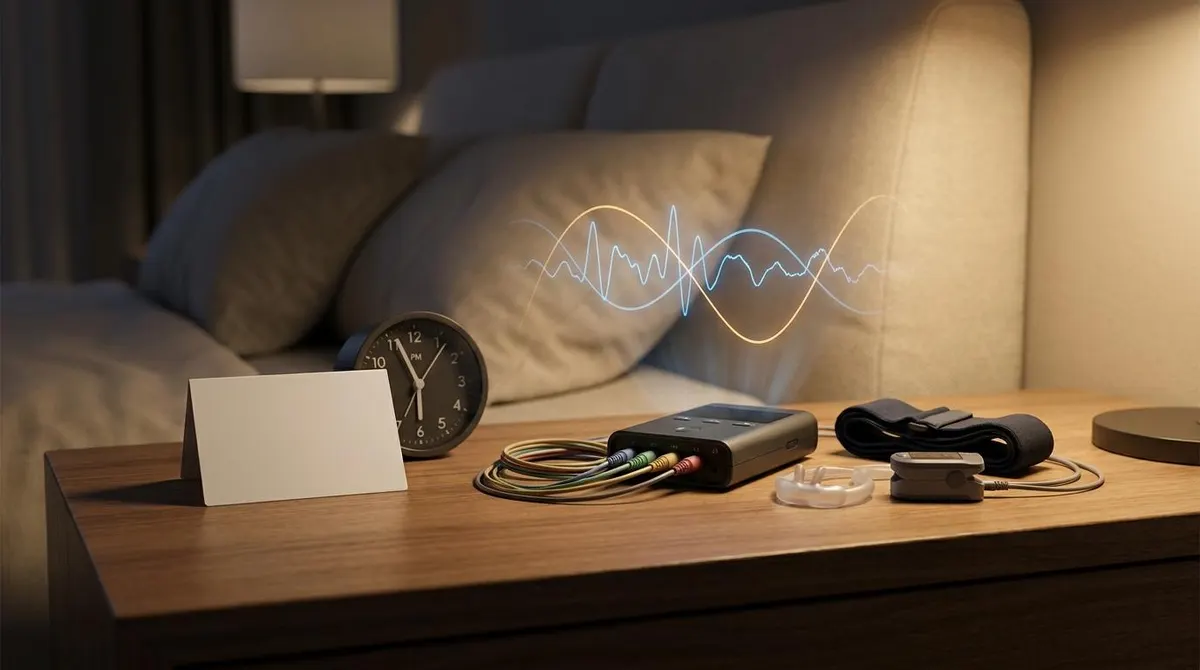
A level 2 home sleep apnea test is a comprehensive at-home sleep study that records brain waves, heart rate, oxygen levels, breathing effort, and muscle activity to diagnose sleep apnea without requiring an overnight stay in a sleep lab. According to the American Academy of Sleep Medicine, home sleep apnea testing has become a validated diagnostic pathway for adults with suspected obstructive sleep apnea. This guide is for patients considering at-home sleep testing, commercial drivers needing clearance, and anyone referred for a sleep study by their physician or primary care physician. You will learn exactly what a level 2 study measures, how it compares to other test levels, what equipment is involved, and how to interpret your results. Whether you are weighing cost, convenience, or clinical accuracy, this page covers every factor that shapes your decision.
Quick Answer
A level 2 home sleep apnea test is a portable sleep study performed in your own bed that records at least seven physiological channels, including electroencephalography for brain waves, oxygen saturation via oximetry, heart rate, breathing airflow, respiratory effort, muscle activity, and body position. It provides near-polysomnography-level data while offering at-home comfort. Level 2 testing is best suited for adults with moderate to high clinical suspicion of obstructive sleep apnea. dumbo.health offers a home sleep test for $149 with physician interpretation available through monthly care plans starting at $59 per month.
Key Takeaways
- A level 2 home sleep apnea test monitors a minimum of seven channels including brain activity, oxygen levels, heart rate, airflow, breathing effort, muscle activity, and body position, making it the most comprehensive home sleep testing option available.
- Level 2 studies are classified as type II devices and are the only home-based tests that include electroencephalography for true sleep staging, which distinguishes them from level 3 and level 4 tests.
- The Apnea-Hypopnea Index is the primary metric used to determine sleep apnea severity, with scores of 5 to 14 indicating mild, 15 to 29 indicating moderate, and 30 or above indicating severe obstructive sleep apnea.
- dumbo.health provides a home sleep test for a one-time cost of $149 with no insurance required, plus ongoing care plans starting at $59 per month that include physician interpretation, CPAP therapy, and equipment.
- Not all patients qualify for home sleep testing; individuals with suspected central sleep apnea, heart failure, or complex sleep disorders such as periodic limb movement disorder or REM Sleep Behaviour Disorder typically require in-lab polysomnography.
- The American Academy of Sleep Medicine recognizes home sleep apnea testing as an acceptable diagnostic tool when ordered by a licensed sleep physician or provider for patients without significant comorbidities.
What Is a Level 2 Home Sleep Apnea Test
A level 2 home sleep apnea test is a portable diagnostic sleep study that records brain waves, eye movements, muscle activity, heart rate, oxygen saturation, breathing airflow, and respiratory effort while you sleep at home. It is the most data-rich category of home sleep testing and the closest equivalent to an in-lab polysomnography available outside a hospital or sleep lab setting.
Sleep studies are classified into four levels based on the number and type of physiological channels recorded. The classification system, widely referenced in sleep medicine diagnostics, organizes tests from the most comprehensive (level 1) to the simplest (level 4). A level 2 sleep study falls just below a full attended polysomnography in scope but captures all the same core data channels without requiring a sleep technician to be present during the night.
How Level 2 Differs from Other Sleep Study Levels
Understanding where a level 2 study sits relative to other testing levels helps clarify what you gain and what you trade off.
A level 1 study is a full in-lab polysomnography supervised by sleep technologists or a Registered Polysomnographic Technologist. It records all physiological channels in a controlled sleep lab environment, making it the gold standard for diagnosing all sleep disorders including central sleep apnea, periodic limb movement disorder, and REM Sleep Behaviour Disorder.
A level 2 sleep study records the same channels as level 1, including electroencephalography for brain waves, but is unattended and performed at home. Type II devices are portable units that a patient sets up independently or with minimal guidance from a provider.
A level 3 study, commonly called an HSAT or home sleep apnea test in standard clinical practice, typically records four to seven channels. It measures breathing airflow, respiratory effort, oxygen saturation, and heart rate but does not include electroencephalography. Level three devices like the WatchPAT ONE, Nox-T3 Sleep Test, and equipment from manufacturers such as Nox Medical, SOMNOmedics, and Onera Health are widely used because they are simpler to set up at home.
A level four study is the most basic, often recording only one or two channels such as oximetry alone. Level four tests screen for oxygen desaturation patterns but cannot provide a full diagnosis of sleep apnea.
Channels Recorded in a Level 2 Study
A level 2 home sleep apnea test records the following physiological signals:
- Electroencephalography (EEG) for brain activity and sleep staging
- Electrooculography for eye movement to identify REM and non-REM sleep stages
- Electromyography for muscle activity, typically measured at the chin
- Electrocardiography or cardiac signal monitoring for heart rate
- Pulse oximetry for blood oxygen levels and oxygen saturation
- Nasal cannula or thermistor for breathing airflow and air movement detection
- Chest strap or effort belt for breathing effort and respiratory signals
- Body position sensor or movement sensor for tracking sleep position
This combination allows a board-certified sleep physician to perform true sleep staging, calculate the Apnea-Hypopnea Index, and identify the type and severity of apneas and respiratory obstructions occurring during each sleep stage.
KEY TAKEAWAY: A level 2 home sleep apnea test is the most comprehensive home-based sleep study available, recording brain waves, oxygen, heart rate, airflow, effort, and muscle activity to deliver near-polysomnography accuracy from your own bed.
Understanding what a level 2 test measures leads directly to the question of who actually needs this level of detail versus a simpler test.
Who Needs a Level 2 Home Sleep Apnea Test
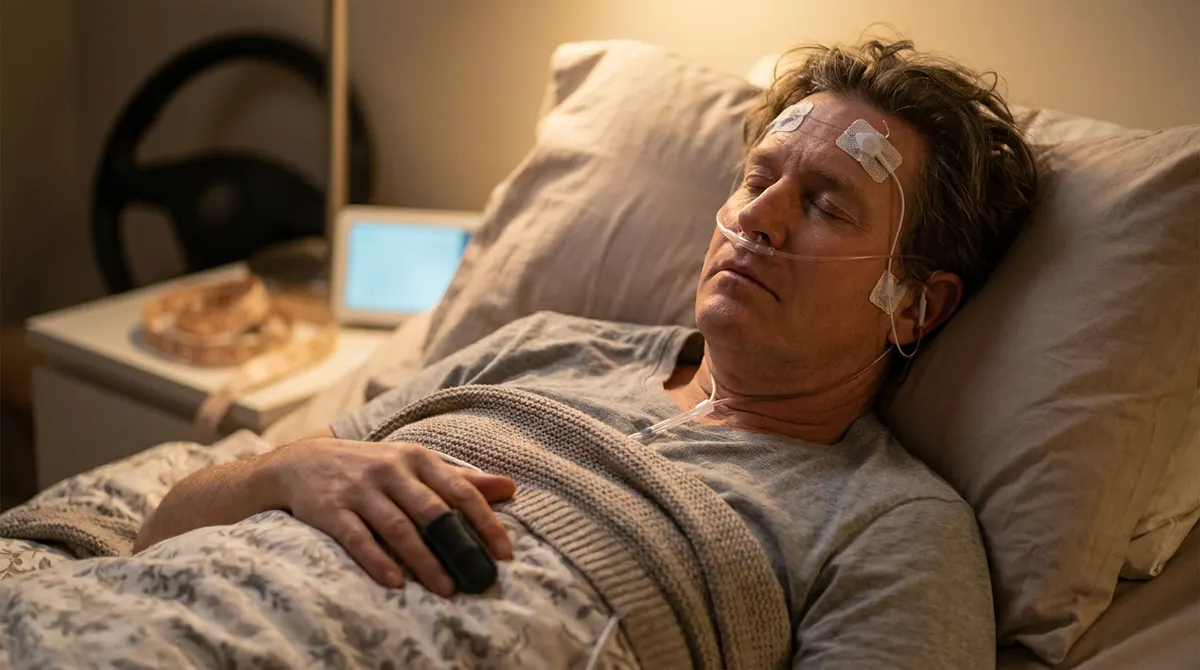
Patients with moderate to high clinical suspicion of obstructive sleep apnea who also need sleep staging data are the primary candidates for a level 2 study. Your provider or sleep specialist may recommend this test level when a standard level 3 HSAT does not capture enough information for a confident diagnosis.
The American Academy of Sleep Medicine states that home sleep apnea testing is appropriate for adults with a high pretest probability of moderate to severe obstructive sleep apnea and no significant comorbidities. A level 2 study extends this by adding electroencephalography, which allows the interpreting physician to distinguish between true sleep time and wakefulness. This distinction matters because the Apnea-Hypopnea Index calculated using actual sleep time is more accurate than one estimated from total recording time.
Common Scenarios Where Level 2 Testing Applies
A 48-year-old office worker reports loud snoring, witnessed apneas, and excessive daytime sleepiness. Her primary care physician completes a sleep questionnaire and suspects obstructive sleep apnea but wants objective sleep staging before starting treatment. A level 2 home sleep test lets her physician calculate a precise AHI based on confirmed sleep stages rather than estimates.
A 55-year-old commercial truck driver with a BMI of 38 is flagged during a DOT physical for suspected sleep-disordered breathing. His provider wants to confirm the diagnosis quickly without the weeks-long wait for a sleep lab appointment. A level 2 home study captures the clinical data a sleep physician needs to determine whether CPAP therapy is required for continued certification.
A 62-year-old patient had a previous level 3 home sleep test that showed borderline results. The Respiratory Event Index was ambiguous, and the interpreting physician could not confirm whether recorded epochs represented sleep or wakefulness. Repeating the study at level 2 with electroencephalography resolves the uncertainty by providing true sleep staging.
DID YOU KNOW: According to the Sleep Foundation, an estimated 80 percent of moderate to severe obstructive sleep apnea cases remain undiagnosed, which means millions of people with symptoms like snoring, restless sleep, and daytime fatigue have never completed a sleep study.
Symptoms That Prompt a Level 2 Referral
A physician or sleep specialist typically refers a patient for sleep apnea testing when multiple symptoms align. The most common symptoms include persistent loud snoring, observed breathing pauses during sleep, gasping or choking episodes at night, excessive daytime sleepiness, morning headaches, difficulty concentrating, and restless sleep. When these symptoms coexist with risk factors such as obesity, a large neck circumference, or a family history of sleep apnea, the clinical suspicion is high enough to warrant testing.
People who experience these symptoms often find that a home sleep test removes the biggest barrier to getting a diagnosis. Rather than waiting weeks for availability at a sleep lab near you, a home-based study lets you complete the test on your own schedule.
KEY TAKEAWAY: A level 2 home sleep apnea test is typically recommended when a provider needs sleep staging data alongside standard respiratory metrics, particularly for borderline cases, patients with comorbidities requiring precise AHI calculation, or situations where a level 3 study was inconclusive.
Knowing who qualifies leads naturally to understanding the specific equipment used and how a level 2 study captures its data.
Equipment Used in a Level 2 Home Sleep Apnea Test
Level 2 home sleep tests use a portable multi-channel recording device that combines EEG leads, respiratory sensors, oximetry, and cardiac monitoring into a single wearable system. The equipment is designed to replicate the data channels of a sleep lab polysomnography without requiring a sleep technician to attend the study.
Core Components of Level 2 Sleep Equipment
The type II devices used for level 2 studies include several sensor types, each responsible for recording a specific physiological signal:
- EEG electrodes placed on the scalp to record brain waves and enable sleep staging
- Electrooculography electrodes positioned near the eyes to detect eye movements associated with REM sleep
- Chin electromyography electrodes to measure muscle activity during different sleep stages
- A nasal cannula connected to a pressure transducer to detect breathing airflow and air movement
- A chest strap and an effort belt (or abdominal belt) to measure breathing effort and respiratory signals
- A pulse oximetry sensor, typically a photoplethysmography sensor worn on the finger, to measure blood oxygen levels and oxygen saturation
- A cardiac sensor or ECG lead to monitor heart rate and cardiac signal
- A body position and movement sensor, often integrated into the main recording unit
Devices from manufacturers such as SOMNOmedics, Cerebra, Nox Medical, and other companies produce portable type II polysomnography systems specifically designed for unattended home use. Some newer systems use fewer individual wires by consolidating sensors, which makes self-application easier.
How the Equipment Gets to You
The process for receiving level 2 equipment varies by provider. Some sleep clinics require an in-person pickup at a designated location, where a sleep technician demonstrates how to attach each sensor. Others ship the device directly to your home with detailed instructions.
dumbo.health streamlines the home sleep testing process by delivering a home sleep test kit for a one-time cost of $149, making it easy to get started without insurance verification, prior authorizations, or clinic visits. While dumbo.health's standard at-home test kit focuses on the channels most commonly needed for diagnosing obstructive sleep apnea, the physician team reviews all sleep data and determines whether additional testing is clinically indicated.
Setup Complexity
Applying level 2 sleep equipment at home is more involved than setting up a level 3 device. A typical level 3 HSAT might require only a nasal cannula, effort belt, and finger oximeter. A level 2 study adds EEG electrodes, EOG leads, and chin EMG, which increases setup time to approximately 20 to 45 minutes depending on the device and the patient's comfort with the instructions.
Many patients report that watching a setup tutorial video provided by the device manufacturer or their sleep team makes the process manageable. However, incorrect sensor placement is the most common cause of data loss in unattended home studies, which is why clear instructions and accessible support matter.
KEY TAKEAWAY: Level 2 home sleep equipment combines EEG, respiratory, cardiac, and movement sensors into a portable device that replicates most of what a sleep lab records, but self-application requires careful attention to sensor placement to avoid data loss.
With a clear picture of the equipment, the next step is understanding how the actual testing process works from start to finish.
How to Complete a Level 2 Home Sleep Apnea Test
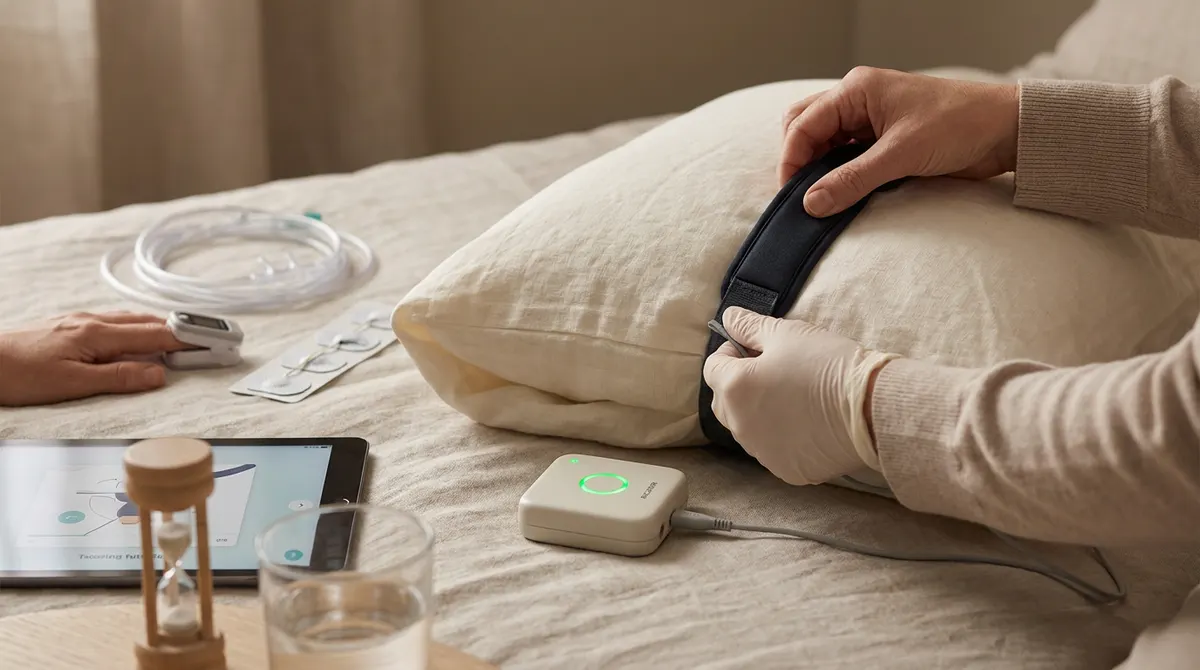
Completing a level 2 home sleep apnea test follows a structured process from referral through results. Each step builds on the previous one, and preparation on the night of testing directly affects data quality.
Step-by-Step Process for Completing Your Test
1. Obtain a referral or prescription from your physician, primary care physician, or sleep specialist. Some providers accept a telemedicine visit for this step, and dumbo.health offers a free sleep assessment to help determine whether testing is appropriate for your symptoms.
2. Order or receive your home sleep test device. If using dumbo.health, you can purchase the home sleep test for $149 online with no insurance required. The kit ships directly to your home.
3. Review all setup instructions, including any video tutorials, before the night of testing. Identify each sensor and its placement location. Charge the device fully if required.
4. On the test night, avoid caffeine after noon and skip naps. Follow your normal bedtime routine. Apply each sensor according to the instructions, starting with the nasal cannula and finger oximeter, then the chest strap and effort belt, then the EEG and EMG electrodes.
5. Activate the recording device, confirm that the indicator light or screen shows active recording, and go to sleep. Sleep in your normal position. If a sensor detaches during the night, reattach it if you notice.
6. In the morning, turn off the recording device, remove all sensors, and return the equipment according to your provider's instructions. Some services use prepaid shipping labels for return.
7. A board-certified sleep physician reviews the recorded sleep data, performs interpretation including sleep staging and AHI calculation, and generates a diagnostic report. dumbo.health's Essentials Plan at $59 per month includes physician interpretation and a report sent to your referring provider.
After completing these steps, your provider receives the results and discusses next steps, which may include CPAP therapy, oral appliances, positional therapy, or additional testing if the data is inconclusive.
Preparing for Test Night
What you do in the hours before testing affects data quality. Clinicians frequently observe that patients who follow preparation guidance produce cleaner recordings with fewer artifacts and less data loss.
Pre-Test Night Checklist
- Avoid caffeine after 12 pm on the day of your test
- Do not consume alcohol on the test night, as it alters sleep architecture and breathing patterns
- Remove nail polish from the finger where the oximetry sensor will be placed, as dark polish can interfere with blood oxygen level readings
- Shower before applying sensors, because clean, dry skin improves electrode adhesion
- Ensure your bedroom is dark, quiet, and at a comfortable temperature
- Charge the device fully or confirm battery status before attaching sensors
- Have the instruction guide or setup video accessible for reference during application
- Set a backup alarm in case the device does not have an automatic stop function
- Keep a phone nearby in case you need to contact your sleep team for setup support
- Complete the free sleep assessment at dumbo.health if you have not yet confirmed your eligibility for home testing
TIP: Apply sensors in the order recommended by the device manufacturer. Starting with the simpler sensors like the nasal cannula and finger clip before moving to the EEG electrodes reduces the chance of accidentally displacing earlier sensors.
KEY TAKEAWAY: Following a structured preparation and setup process on the night of your level 2 home sleep apnea test is the single most important factor in getting usable diagnostic data on the first attempt.
Once you have completed the test, the next question is what happens to your data and how results are interpreted.
Understanding Your Level 2 Sleep Test Results
The results of a level 2 home sleep apnea test are summarized in a diagnostic report that your interpreting sleep physician generates after reviewing all recorded channels. The Apnea-Hypopnea Index is the primary metric that determines whether you have sleep apnea and how severe it is.
What the Apnea-Hypopnea Index Means
The Apnea-Hypopnea Index, or AHI, counts the average number of apneas and hypopneas per hour of sleep. An apnea is a complete pause in breathing airflow lasting at least 10 seconds. A hypopnea is a partial reduction in airflow accompanied by a drop in oxygen saturation or an arousal from sleep.
According to the American Academy of Sleep Medicine, AHI severity classifications are:
- Normal: fewer than 5 events per hour
- Mild obstructive sleep apnea: 5 to 14 events per hour
- Moderate obstructive sleep apnea: 15 to 29 events per hour
- Severe obstructive sleep apnea: 30 or more events per hour
Because a level 2 study includes electroencephalography, the physician calculates the AHI using confirmed sleep time rather than total recording time. This produces a more accurate severity rating compared to level 3 tests, which estimate sleep time from movement and respiratory data.
Additional Metrics in Your Report
Beyond the AHI, a level 2 study report typically includes:
- Respiratory Event Index (REI), which may be used alongside or instead of AHI depending on the scoring methodology
- Oxygen desaturation index, showing how often blood oxygen levels drop by 3 percent or more per hour
- Minimum oxygen saturation recorded during the night, which indicates the lowest oxygenation your body reached
- Total sleep time versus total recording time, derived from EEG-based sleep staging
- Sleep stage distribution showing percentages of time spent in light sleep, deep sleep, and REM sleep
- Heart rate trends and any cardiac signal irregularities noted during the study
- Body position data correlating respiratory events with sleeping position
- Snoring frequency and intensity
Who Interprets the Results
A board-certified sleep physician or sleep specialist reviews the raw sleep data, applies scoring criteria, and writes the diagnostic interpretation. The interpreting physician should be credentialed in sleep medicine, as the American Academy of Sleep Medicine requires this level of expertise for clinical decision-making.
dumbo.health's monthly care plans include physician interpretation as a core service. The Essentials Plan at $59 per month covers physician review and a report, while the Premium Plan at $89 per month adds priority results turnaround and a dedicated sleep coach for patients who want guidance understanding their results.
A level 2 home sleep apnea test produces diagnostic data that includes sleep staging, AHI calculated from confirmed sleep time, oxygen desaturation patterns, and body position correlations. These data points allow a sleep physician to determine the type and severity of sleep-disordered breathing with high confidence.
KEY TAKEAWAY: The Apnea-Hypopnea Index from a level 2 study is calculated using EEG-confirmed sleep time, making it more precise than the estimated AHI from a level 3 home sleep test and directly comparable to in-lab polysomnography scoring.
Understanding your results naturally raises the question of how level 2 testing compares to other testing options in terms of accuracy, cost, and convenience.
Level 2 Home Sleep Test vs Polysomnography vs Level 3 HSAT
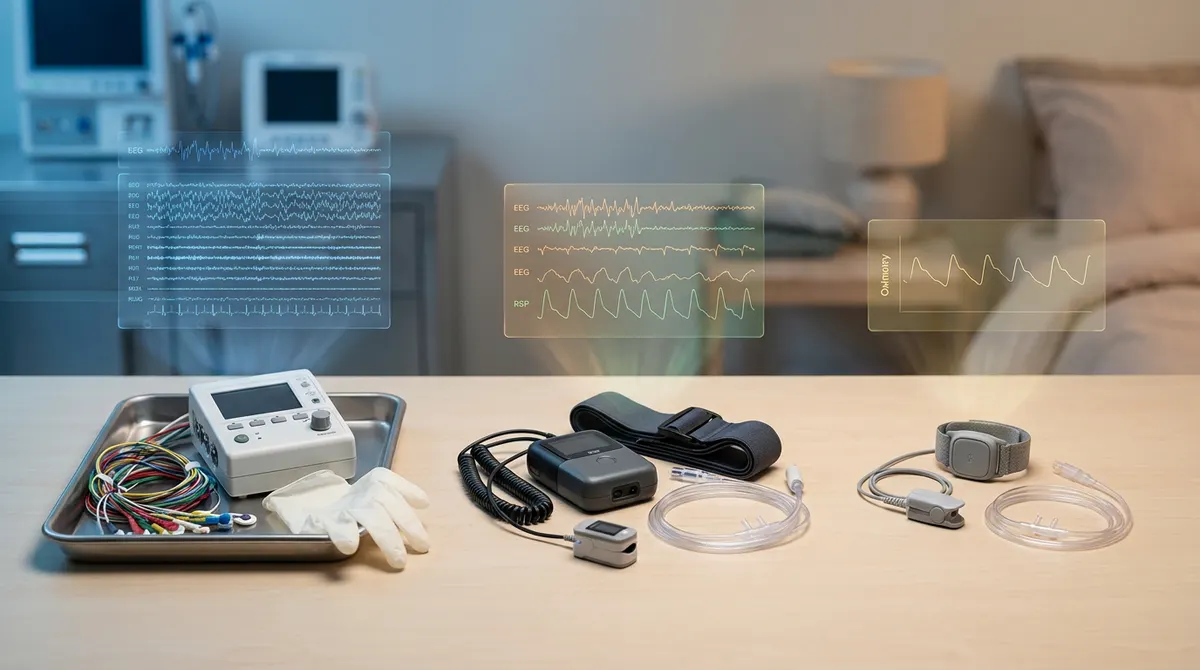
The key difference between a level 2 home sleep apnea test, a level 1 polysomnography, and a level 3 HSAT is the number of data channels recorded and whether brain wave monitoring is included. Each option involves tradeoffs between accuracy, convenience, and cost.
Setting
- Level 1 Polysomnography: Sleep lab or hospital, supervised by sleep technologists
- Level 2 Home Sleep Test: Your own bed at home, unattended
- Level 3 HSAT: Your own bed at home, unattended
Channels Recorded
- Level 1 Polysomnography: 14 or more channels including full EEG, EOG, EMG, ECG, respiratory, and limb movement
- Level 2 Home Sleep Test: 7 or more channels including EEG, EOG, EMG, ECG, respiratory, and oximetry
- Level 3 HSAT: 4 to 7 channels, typically airflow, effort, oximetry, and heart rate, no EEG
Sleep Staging
- Level 1 Polysomnography: Full sleep staging with attended EEG
- Level 2 Home Sleep Test: Full sleep staging with unattended EEG
- Level 3 HSAT: No true sleep staging; sleep time is estimated
AHI Accuracy
- Level 1 Polysomnography: Highest accuracy, gold standard
- Level 2 Home Sleep Test: High accuracy, AHI based on confirmed sleep time
- Level 3 HSAT: Moderate accuracy, AHI may underestimate severity because total recording time is used as denominator
Cost
- Level 1 Polysomnography: Typically $1,000 to $5,000 depending on insurance, location, and facility
- Level 2 Home Sleep Test: Typically $300 to $800 through sleep clinics; varies by provider
- Level 3 HSAT: Typically $149 to $500; dumbo.health offers a home sleep test for $149
Convenience
- Level 1 Polysomnography: Low, requires overnight clinic stay and scheduling weeks in advance
- Level 2 Home Sleep Test: Moderate, self-applied at home but setup is more complex
- Level 3 HSAT: High, simple setup with fewer sensors, completed at home
Ability to Diagnose Non-Apnea Disorders
- Level 1 Polysomnography: Yes, can diagnose periodic limb movement disorder, REM Sleep Behaviour Disorder, central sleep apnea, and other conditions
- Level 2 Home Sleep Test: Partial, EEG allows some detection but no attended observation
- Level 3 HSAT: No, limited to respiratory event detection
For most adults with suspected obstructive sleep apnea and no significant comorbidities, a level 3 HSAT provides sufficient diagnostic data. A level 2 study is the better choice when true sleep staging is clinically important, such as in borderline cases or when a previous level 3 test was inconclusive. In-lab polysomnography remains necessary for patients with suspected central sleep apnea, heart failure, or complex sleep disorders.
KEY TAKEAWAY: A level 2 home sleep test bridges the gap between the simplicity of a level 3 HSAT and the clinical depth of in-lab polysomnography by adding brain wave monitoring for true sleep staging without requiring a sleep lab visit.
This comparison leads directly into the practical question of cost and how different providers and payment models affect what you pay.
What a Level 2 Home Sleep Test Costs
A level 2 home sleep apnea test typically costs between $300 and $800 when ordered through a sleep clinic or hospital-based test program, though prices vary significantly by provider and geographic area. Adding physician interpretation, follow-up visits, and treatment initiation can raise the total cost further.
Factors That Affect Price
Several variables influence what you ultimately pay for a level 2 home sleep study:
- Whether you have insurance and whether your plan covers home sleep testing
- Whether prior authorization is required before the test is approved
- The specific device used and whether it is a reusable or disposable device
- Whether the interpreting physician charges separately for the diagnostic report
- Whether follow-up care, CPAP therapy, or additional testing is bundled
Many patients are surprised by the gap between the quoted test cost and the final bill after insurance processing. Surprise bills from out-of-network physicians, separate interpretation fees, and follow-up charges are common pain points in sleep medicine diagnostics.
How dumbo.health Simplifies Costs
dumbo.health eliminates insurance complexity by operating on a transparent cash-pay model. The home sleep test costs $149 as a one-time purchase, with no insurance required, no prior authorizations, and no surprise bills. Monthly care plans that include physician interpretation, CPAP therapy, and ongoing support start at $59 per month with no contracts and the option to cancel anytime.
For patients who need CPAP therapy after diagnosis, dumbo.health's Essentials Plan at $59 per month includes CPAP equipment, physician review, standard follow-up care, and updates sent to the referring provider. The Premium Plan at $89 per month adds a dedicated sleep coach, advanced adherence monitoring, and priority results turnaround. The Elite Plan at $129 per month adds concierge clinical support, direct physician messaging, and custom reporting.
IMPORTANT: Medicare covers home sleep apnea testing under certain conditions, but coverage for level 2 specifically depends on the ordering physician's documentation, the device used, and whether the study meets Medicare's criteria for medical necessity. Check with your provider or Medicare directly before assuming coverage.
Cost Comparison: In-Lab vs Home Testing
The cost difference between in-lab polysomnography and home sleep testing is substantial. According to the American Academy of Sleep Medicine, in-lab polysomnography is the most expensive sleep diagnostic option, often exceeding $2,000 without insurance. Home sleep tests, whether level 2 or level 3, reduce direct costs while also eliminating indirect costs like time off work, travel to a sleep lab, and overnight childcare.
For self-pay patients, owner-operators, or commercial drivers without employer-sponsored sleep benefits, the predictable pricing of a service like dumbo.health removes a significant barrier to getting tested. Knowing exactly what you will pay before ordering a test allows you to plan around the expense.
KEY TAKEAWAY: A level 2 home sleep test costs less than in-lab polysomnography in nearly all cases, and cash-pay options like dumbo.health's $149 home sleep test eliminate the insurance hassles that delay diagnosis for many patients.
After understanding costs, the next consideration is where level 2 testing has genuine limitations and when a different approach is the better choice.
Limitations and Risks of Level 2 Home Sleep Testing
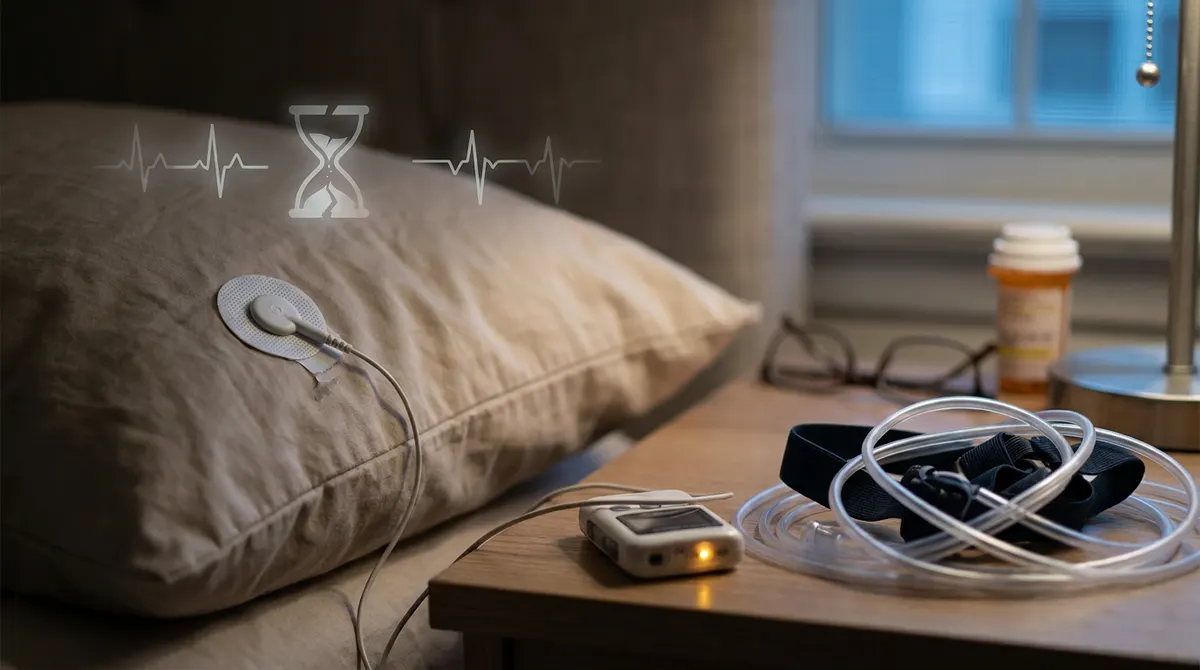
A level 2 home sleep apnea test is not appropriate for every patient or every clinical scenario, and understanding these limitations is essential for making an informed testing decision. No single test method works for all people or all sleep disorders.
When a Level 2 Home Test May Not Be the Right Choice
There are at least five clinical situations where a level 2 home sleep study may produce unreliable results or where a different test is the medically appropriate option:
First, patients with suspected central sleep apnea or complex sleep-disordered breathing typically require in-lab polysomnography. Central sleep apnea involves the brain failing to send proper signals to the muscles that control breathing, and its diagnosis often requires the attended observation and full montage available only in a sleep lab. The NIH notes that central sleep apnea is commonly associated with heart failure and other cardiovascular disease conditions that need close clinical monitoring.
Second, patients with significant comorbidities such as severe heart failure, advanced chronic obstructive pulmonary disease, or neuromuscular disease may need the supervised environment of a hospital-based test to ensure safety during the study.
Third, individuals suspected of having non-respiratory sleep disorders such as periodic limb movement disorder, REM Sleep Behaviour Disorder, or narcolepsy need the additional channels and attended observation provided by a full in-lab polysomnography. A level 2 home test records EEG but does not include the leg EMG leads or attended behavioral observation that these diagnoses require.
Fourth, data loss due to sensor displacement is a known risk of all unattended home studies. Because no sleep technician is present to reattach sensors during the night, a loose EEG electrode or dislodged nasal cannula can result in an uninterpretable study. Studies suggest that home sleep test failure rates due to technical issues range from approximately 3 to 18 percent depending on the device and patient population.
Fifth, patients with very mild symptoms or low clinical suspicion may not meet the criteria for home sleep apnea testing under guidelines from the American Academy of Sleep Medicine, which recommends home testing primarily for patients with a high pretest probability of obstructive sleep apnea.
How dumbo.health Addresses Common Barriers
While no home test can replace in-lab polysomnography for complex cases, dumbo.health mitigates several common limitations of home testing. The care plans include physician review of all sleep data, which means a board-certified sleep physician evaluates whether the study captured sufficient data for interpretation or whether a repeat study or in-lab referral is warranted. The Premium Plan's dedicated sleep coach also provides pre-test guidance that reduces the risk of sensor application errors.
If a home study is inconclusive, dumbo.health's clinical team can help coordinate the appropriate next step, whether that is a repeat home test or a referral to a sleep lab in your area.
KEY TAKEAWAY: Level 2 home sleep testing does not replace in-lab polysomnography for central sleep apnea, complex comorbidities, or non-respiratory sleep disorders, and sensor displacement during unattended studies remains a risk that proper preparation can reduce but not eliminate.
Recognizing these limitations provides the foundation for understanding what happens after a positive diagnosis.
What Happens After a Positive Sleep Apnea Diagnosis
A positive diagnosis of obstructive sleep apnea based on your level 2 home sleep apnea test triggers a treatment pathway that typically begins with CPAP therapy as the first-line recommendation. The specific treatment plan depends on your AHI severity, symptom burden, and clinical profile.
First-Line Treatment: CPAP Therapy
Continuous positive airway pressure, or CPAP, is the most widely prescribed treatment for moderate to severe obstructive sleep apnea. A CPAP device delivers a constant stream of pressurized air through a mask to keep the airway open during sleep, preventing the airway collapses that cause apneas and hypopneas.
According to the National Heart, Lung, and Blood Institute, CPAP therapy reduces daytime sleepiness, lowers blood pressure, and decreases cardiovascular risk when used consistently. The recommended minimum usage for therapeutic benefit is at least 4 hours per night on at least 70 percent of nights, a threshold also used by Medicare and most insurance carriers to define adherence.
dumbo.health provides CPAP therapy and equipment through its monthly plans, starting with the Essentials Plan at $59 per month. This includes the CPAP device, standard follow-up care, and updates sent to your referring provider. For patients who benefit from additional support, the Premium Plan at $89 per month includes a dedicated sleep coach and advanced adherence monitoring, which research consistently shows improves long-term CPAP compliance.
Alternative Treatments
Not all patients tolerate or require CPAP. Depending on the severity and type of sleep apnea, your sleep physician may recommend:
- Oral appliances, which are custom-fitted devices that reposition the lower jaw and tongue to maintain airway patency. These are most effective for mild to moderate obstructive sleep apnea and require dental impressions for proper fitting.
- Positional therapy for patients whose apneas occur primarily when sleeping on their back.
- Weight management, since the Sleep Foundation notes that even a 10 percent reduction in body weight can reduce AHI in overweight patients with obstructive sleep apnea.
- Surgery in select cases where a specific anatomical obstruction is identified.
- Medication is not a standard treatment for obstructive sleep apnea, though certain medications may be prescribed for residual daytime sleepiness.
Ongoing Monitoring and Follow-Up
Sleep apnea is a chronic condition that requires ongoing monitoring. After starting treatment, follow-up is necessary to confirm adherence, verify that the AHI has normalized under therapy, adjust pressure settings if needed, and address side effects such as mask discomfort, dry mouth, or nasal congestion.
dumbo.health's care model is built around continuous follow-up rather than one-time testing. The monthly plans include adherence monitoring, physician oversight, and accessible care pathways through sleep apnea solutions that adapt as your needs change.
KEY TAKEAWAY: CPAP therapy is the standard first-line treatment for moderate to severe obstructive sleep apnea, and consistent adherence of at least 4 hours per night on 70 percent of nights is the threshold needed to achieve clinical benefit and meet compliance requirements.
With treatment options covered, a closer look at specific devices used in level 2 and level 3 testing rounds out the practical information patients need.
Devices and Providers in Home Sleep Apnea Testing
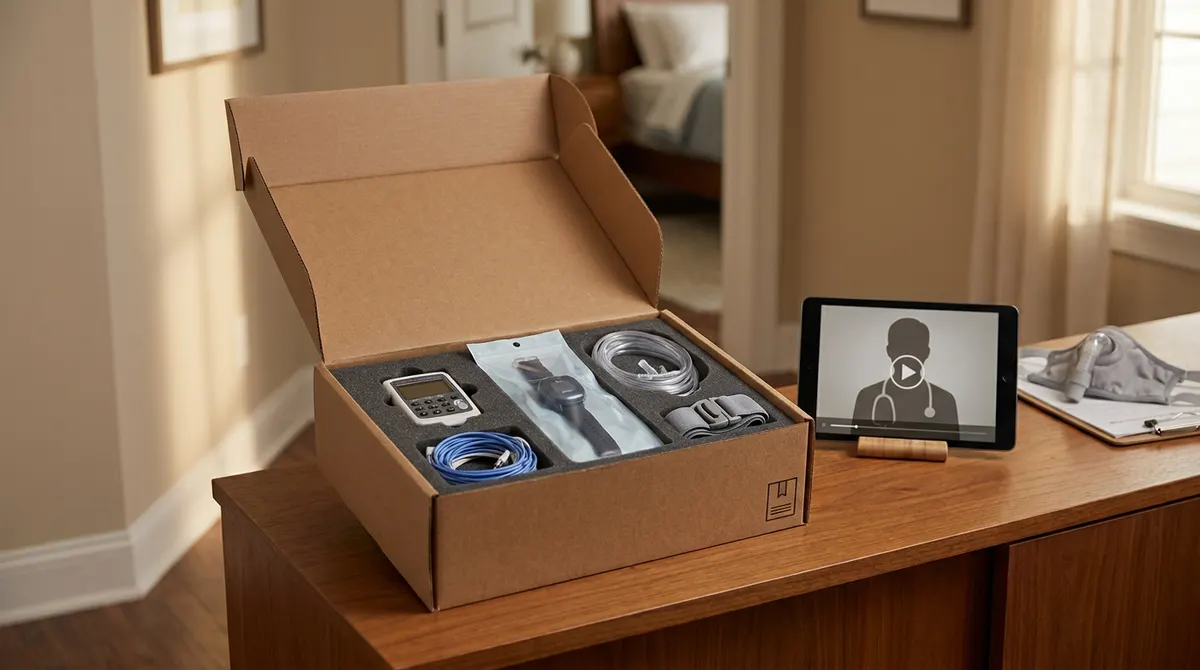
The home sleep testing landscape includes a range of devices from specialized manufacturers and a growing number of digital-first providers offering sleep diagnostics and treatment. Choosing the right combination depends on the level of study you need, the channels required, and whether you want a bundled care experience or a standalone test.
Level 2 Devices
Type II devices that support full unattended polysomnography at home include systems from SOMNOmedics, Cerebra, and Nox Medical. These devices are typically used by sleep clinics and research institutions. They offer comprehensive channel recording but are more expensive per study and require more sensor leads than level 3 devices.
Level 3 Devices
Level three home sleep testing devices are more widely used in clinical practice for suspected obstructive sleep apnea. The WatchPAT ONE, manufactured by Itamar Medical, is a disposable device worn on the wrist that uses Peripheral Arterial Tonometry, oximetry, and actigraphy to detect respiratory events and estimate sleep stages without EEG. The Nox-T3 Sleep Test from Nox Medical uses a nasal cannula, effort belt, and oximetry sensor. Other level 3 options include devices from Onera Health and systems used by clinical services like Aveiro Sleep, Sleep Medix, Careica Health, Lofta, and BlueSleep Sleep Clinic.
Digital and Telehealth Providers
Several companies now offer end-to-end sleep apnea care through digital visits, telemedicine visits, and remote monitoring. These providers handle the full pathway from screening through testing to treatment, reducing the need for in-person sleep lab visits.
dumbo.health operates as a cash-pay sleep apnea care platform that covers the complete care pathway. The one-time $149 home sleep test is followed by monthly plans that bundle physician interpretation, CPAP therapy, CPAP devices, equipment, and ongoing follow-up. No insurance verification is needed. No prior authorization is required. Plans start at $59 per month with no contracts.
DID YOU KNOW: According to the FDA, home sleep testing devices must receive FDA clearance before being marketed for clinical use. All FDA Approved or FDA-cleared sleep test devices meet regulatory standards for safety and diagnostic accuracy.
Choosing Between a Standalone Test and Bundled Care
A standalone test from a sleep lab or local provider gives you a diagnostic report and sends you elsewhere for treatment. A bundled care service like dumbo.health connects testing to treatment in a continuous workflow, which reduces gaps in care that can delay starting therapy.
Clinicians frequently observe that the transition from diagnosis to treatment is where many patients fall off the care pathway. A seamless process that moves from home sleep testing to physician interpretation to CPAP delivery without requiring multiple appointments at different locations improves the likelihood that patients actually begin and sustain treatment.
KEY TAKEAWAY: Home sleep testing devices range from comprehensive type II polysomnography units to simple single-sensor screeners, and choosing a bundled care service that connects testing to treatment can reduce the delays and drop-off rates that commonly occur between diagnosis and therapy initiation.
Before committing to any test level, understanding the most common misconceptions helps ensure you are making a decision based on facts.
Common Myths About Home Sleep Apnea Tests Debunked
MYTH: Home sleep tests are not accurate enough to diagnose sleep apnea.
FACT: The American Academy of Sleep Medicine recognizes home sleep apnea testing as a validated diagnostic method for obstructive sleep apnea in adults without significant comorbidities. Level 3 devices show sensitivity and specificity rates that support clinical decision-making, and level 2 devices add EEG-based sleep staging that brings accuracy closer to in-lab polysomnography. While no home test matches the fully attended, multi-channel environment of a sleep lab for complex cases, the data quality from modern home devices is clinically sufficient for the majority of suspected OSA cases.
MYTH: You need to go to a sleep lab to get a real sleep apnea diagnosis.
FACT: In-lab polysomnography is the gold standard, but it is not the only pathway to a valid diagnosis. The CDC and multiple clinical practice guidelines confirm that home sleep testing is an appropriate first step for patients with a high clinical suspicion of obstructive sleep apnea. Millions of patients receive accurate diagnoses through home-based tests each year. A sleep lab study is reserved for cases where home testing is inconclusive, where non-respiratory disorders are suspected, or where clinical complexity warrants supervised monitoring.
MYTH: Insurance is required to get a home sleep apnea test.
FACT: Insurance is not required. While many insurance plans cover home sleep testing with a prescription and prior authorization, cash-pay options make testing accessible without insurance. dumbo.health offers a home sleep test for $149 with no insurance required and no prior authorizations needed. Monthly care plans for ongoing treatment start at $59 per month. Self-pay patients often find that the total cost through a cash-pay provider is less than their insurance deductible would require.
MYTH: A home sleep test can diagnose any sleep disorder.
FACT: Home sleep tests are designed to detect obstructive sleep apnea. They are not validated for diagnosing conditions like periodic limb movement disorder, REM Sleep Behaviour Disorder, narcolepsy, or central sleep apnea. Even a level 2 home study with EEG cannot fully replace the attended multi-channel observation of a level 1 polysomnography for these conditions. If your provider suspects a non-respiratory sleep disorder, an in-lab study is the appropriate referral.
MYTH: CPAP is the only treatment option if you are diagnosed with sleep apnea.
FACT: CPAP therapy is the most common and most effective treatment for moderate to severe obstructive sleep apnea, but it is not the only option. Oral appliances, positional therapy, weight management, and in some cases surgery are all recognized treatments depending on severity and patient-specific factors. Your sleep physician will recommend the treatment approach that fits your diagnosis, severity level, and tolerance. CPAP devices remain the first-line recommendation because of their consistent effectiveness, but alternatives exist for patients who cannot tolerate positive airway pressure.
KEY TAKEAWAY: Most misconceptions about home sleep testing stem from outdated information or confusion between different test levels and device types, and understanding the facts helps patients make faster, better-informed decisions about their sleep health.
With the myths addressed, a real-world look at how different people navigate the testing process brings all the concepts together.
Real-World Scenarios: How Patients Use Level 2 Home Sleep Testing
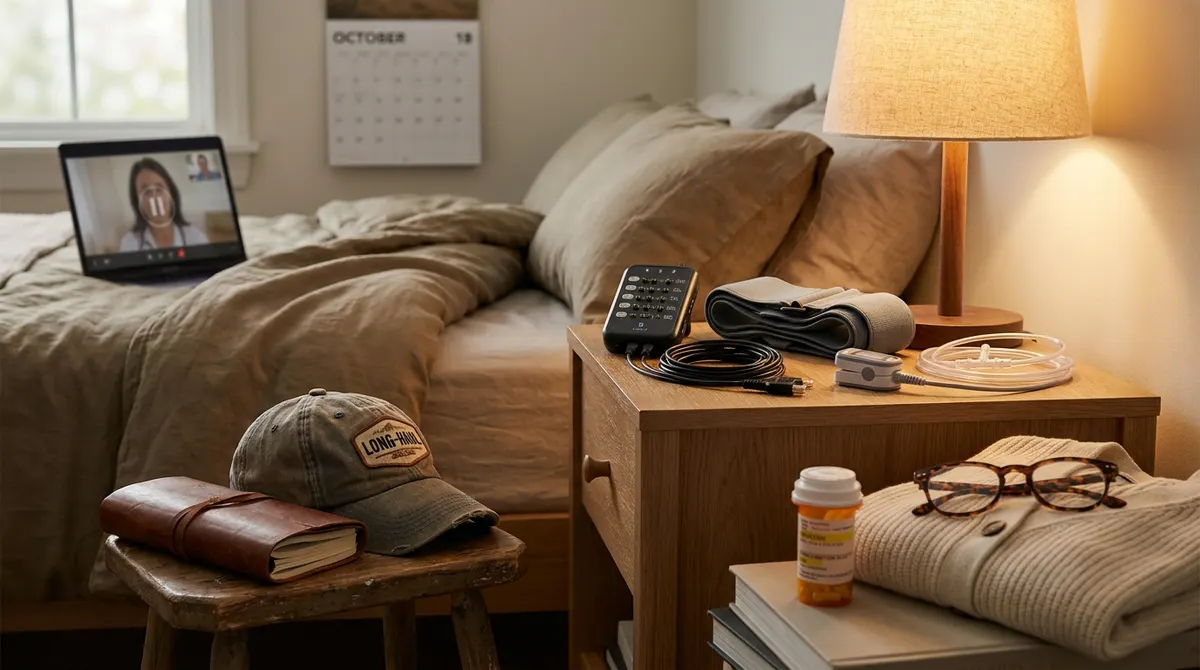
Concrete examples illustrate how level 2 home sleep apnea testing fits into different patient journeys and clinical contexts. These scenarios reflect common situations that sleep specialists encounter in practice.
Scenario 1: The Long-Haul Truck Driver Needing DOT Clearance
Marcus is a 50-year-old long-haul truck driver with a BMI of 36 and a neck circumference of 18 inches. During his DOT physical, the medical examiner notes loud snoring reported by his partner, persistent daytime fatigue, and a Mallampati score of 3. The examiner defers his medical certification pending a sleep study.
Marcus does not have health insurance through his employer. He finds dumbo.health, orders the at-home sleep test for $149, and completes the study on a Sunday night at home. His results show an AHI of 28, consistent with moderate obstructive sleep apnea. He enrolls in the Premium Plan at $89 per month, which provides CPAP therapy, a dedicated sleep coach, and advanced adherence monitoring. His sleep coach helps him reach consistent CPAP usage above 4 hours per night, and his physician sends a compliance report to his DOT examiner. Marcus receives his medical certificate.
Scenario 2: The Middle-Aged Professional with Borderline First-Test Results
Priya is a 45-year-old marketing director who completed a level 3 HSAT after her primary care physician noticed excessive daytime sleepiness and morning headaches. Her initial test showed a Respiratory Event Index of 6, which placed her in the mild range. However, her interpreting physician noted that the estimated sleep time appeared high relative to the actigraphy data, suggesting the REI may have been diluted by including wake time in the denominator.
Priya's sleep specialist recommends a level 2 home sleep apnea test with EEG to get a precise AHI based on confirmed sleep time. The level 2 study reveals that her actual total sleep time was 5.2 hours rather than the 7 hours estimated by the level 3 device. With the corrected denominator, her AHI recalculates to 11 events per hour, shifting her into the upper mild range. Her physician prescribes an oral appliance rather than CPAP, citing her preference and the moderate severity.
Scenario 3: The Retired Patient on Medicare with Multiple Comorbidities
David is a 68-year-old retired teacher with type 2 diabetes, hypertension, and a history of atrial fibrillation. He reports restless sleep, loud snoring, and episodes of gasping at night. His cardiologist suspects sleep-disordered breathing and wants to rule out both obstruct
Frequently Asked Questions About Level 2 Home Sleep Apnea Tests
What is a Level 2 home sleep apnea test?
A Level 2 home sleep apnea test is a comprehensive, portable sleep study conducted in your own home using a multi-channel recording device that captures many of the same signals measured during an in-lab polysomnography. Unlike a basic home sleep test, a Level 2 study records brain waves via electroencephalography, eye movements, muscle activity, oxygen saturation, heart rate, breathing effort, and airflow. This makes it one of the most detailed home sleep apnea testing options available. A healthcare professional can help determine whether a Level 2 study is appropriate based on your symptoms and medical history.
How does a Level 2 sleep study differ from Level 1, Level 3, and Level 4 sleep studies?
Sleep studies are classified by the number of channels recorded and the level of supervision involved. A Level 1 study is a full in-lab polysomnography conducted by sleep technologists with continuous monitoring. A Level 2 study uses a similar multi-channel device but is performed at home without a technician present. A Level 3 study records fewer channels, typically airflow, breathing effort, oxygen saturation, and heart rate, and is the most common home sleep apnea test type. A Level 4 study records only one or two channels, usually oximetry alone, and is considered a screening tool rather than a diagnostic test. The right level depends on your clinical presentation and what your physician needs to assess.
Who should consider a Level 2 home sleep study?
A Level 2 home sleep study is generally considered for patients who are suspected of having obstructive sleep apnea and need more detailed sleep data than a standard Level 3 test provides, but whose clinical circumstances do not require full in-lab monitoring. It may also be appropriate when sleep staging information is needed alongside respiratory data. A board-certified sleep physician or primary care physician should evaluate your symptoms, risk factors, and medical history before recommending a Level 2 study. Patients with complex conditions such as heart failure, suspected central sleep apnea, or certain neurological disorders may require a full in-lab Level 1 study instead.
Who should consider a Level 1 in-lab sleep study instead?
A Level 1 in-lab polysomnography is recommended when a home sleep test is unlikely to provide sufficient diagnostic information. This includes patients with suspected central sleep apnea, significant cardiovascular disease, heart failure, chronic lung conditions, neuromuscular disorders, or periodic limb movement disorder. The American Academy of Sleep Medicine recommends in-lab testing when clinical complexity requires continuous technician monitoring, full sleep staging, and assessment of muscle activity and brain waves simultaneously. A sleep physician can advise whether your symptoms and health history indicate that an in-lab study is the appropriate first step.
What does a Level 2 home sleep apnea test measure?
A Level 2 home sleep apnea test measures brain activity through electroencephalography, eye movements, muscle activity, airflow via a nasal cannula, breathing effort using a chest strap or effort belt, oxygen saturation through a photoplethysmography sensor or pulse oximetry, heart rate, and body position. These signals allow a sleep physician to calculate the Apnea-Hypopnea Index, identify apneas and hypopneas, assess sleep staging, and evaluate sleep-disordered breathing patterns. The resulting sleep data is interpreted by a qualified clinician to produce a diagnostic report.
What is the difference between a home sleep apnea test and polysomnography?
A home sleep apnea test is a portable, unattended sleep study performed in the patient's own home, while polysomnography is a comprehensive in-lab sleep study conducted by sleep technologists with continuous monitoring. Polysomnography records more channels, including full brain wave activity, detailed muscle signals, and eye movements, and allows real-time troubleshooting if a sensor dislodges. A Level 2 home sleep apnea test captures many of the same signals as polysomnography but without technician supervision. Because of this, home sleep tests can occasionally underestimate sleep apnea severity if sleep time is shorter than usual or if sensor data is lost during the recording.
How accurate are home sleep apnea tests compared to in-lab tests?
Home sleep apnea tests are considered clinically accurate for diagnosing moderate to severe obstructive sleep apnea in adults without significant comorbidities. The American Academy of Sleep Medicine supports the use of home sleep apnea testing as a diagnostic option for uncomplicated suspected obstructive sleep apnea. However, home tests may underestimate the Apnea-Hypopnea Index because they calculate events against recording time rather than actual sleep time, which can be lower. False negatives can occur, meaning a patient with sleep apnea may receive a result that does not meet the diagnostic threshold. A negative home sleep test in a symptomatic patient should be reviewed with a clinician, who may recommend further in-lab testing.
Can a home sleep apnea test be wrong?
Yes, a home sleep apnea test can produce inaccurate results in some circumstances. A false negative is possible if sensor signals are lost overnight, if the patient sleeps significantly less than the recording period, or if the test is conducted on an atypical night. A false positive is less common but can occur. Home sleep tests are also less reliable when the patient has complex comorbidities such as central sleep apnea, heart failure, or chronic obstructive pulmonary disease. If your symptoms strongly suggest sleep-disordered breathing but your home sleep test result is negative, a healthcare professional may recommend repeating the test or proceeding to an in-lab sleep study.
What sleep disorders can a home sleep apnea test detect?
Home sleep apnea tests are designed primarily to detect obstructive sleep apnea by measuring breathing interruptions, oxygen desaturation, and respiratory effort during sleep. A Level 2 home sleep test can also provide information about sleep stages, which may support evaluation of REM sleep behaviour disorder or other parasomnias. However, home sleep tests are not designed to diagnose periodic limb movement disorder, narcolepsy, insomnia, or most other non-respiratory sleep disorders. A full in-lab polysomnography is required to evaluate these conditions properly. If you have symptoms beyond snoring and daytime sleepiness, discuss them with a sleep physician before choosing a home test. You can learn more about home sleep apnea testing to understand what it can and cannot identify.
What are the benefits of a home sleep apnea test?
Home sleep apnea testing offers several practical advantages over in-lab testing. Patients sleep in their own environment, which tends to produce more representative sleep data than spending a night in an unfamiliar clinical setting. Testing is generally less expensive than polysomnography, easier to access, and does not require a stay in a sleep lab. Results are typically available faster, and the at-home format makes it easier for patients with demanding schedules or mobility limitations to complete testing. For uncomplicated suspected obstructive sleep apnea, a home sleep test is considered an appropriate and efficient first diagnostic step by the American Academy of Sleep Medicine.
What are the limitations of a home sleep apnea test?
Home sleep apnea tests have important limitations. They cannot monitor brain wave activity continuously in the same way as Level 1 polysomnography, which means sleep staging may be incomplete or absent in Level 3 devices. There is no sleep technician present to correct sensor problems during the recording. Home tests may miss mild sleep apnea or underestimate severity. They are not suitable for evaluating complex sleep disorders such as central sleep apnea, periodic limb movement disorder, narcolepsy, or significant parasomnias. Patients with major cardiovascular disease, respiratory failure, or significant neurological conditions are typically not good candidates for home sleep testing.
What symptoms suggest I should be tested for sleep apnea?
Common symptoms that may indicate obstructive sleep apnea include loud or frequent snoring, gasping or choking during sleep, witnessed pauses in breathing, waking with a dry mouth or sore throat, morning headaches, excessive daytime sleepiness, difficulty concentrating, and restless sleep. According to the National Heart, Lung, and Blood Institute, sleep apnea is a condition in which breathing repeatedly stops and starts during sleep, and it affects people of all ages. Not everyone with sleep apnea snores loudly. If you are experiencing these symptoms, a healthcare professional can assess whether sleep apnea testing is appropriate. You can also take the free sleep assessment at dumbo.health as a starting point.
How is sleep apnea related to heart health?
Sleep apnea is associated with a range of cardiovascular conditions. Repeated breathing interruptions during sleep cause drops in oxygen saturation and brief arousals that place stress on the cardiovascular system. Research published through the National Heart, Lung, and Blood Institute links untreated obstructive sleep apnea with increased risk of high blood pressure, irregular heart rhythms, coronary artery disease, stroke, and heart failure. The relationship between sleep apnea and cardiovascular disease is well established in sleep medicine, though treating sleep apnea does not guarantee resolution of cardiovascular conditions. Anyone with both cardiovascular disease and suspected sleep apnea should discuss evaluation and treatment with their physician.
What is the Apnea-Hypopnea Index and what does it mean?
The Apnea-Hypopnea Index, or AHI, is the primary measure used to diagnose and classify obstructive sleep apnea. It represents the average number of apneas and hypopneas per hour of sleep or recording time. An AHI of fewer than 5 events per hour is considered normal in adults. An AHI between 5 and 14 is classified as mild sleep apnea, between 15 and 29 is moderate, and 30 or more is severe. The AHI is calculated from the data captured during a home sleep test or in-lab study and is interpreted by a sleep physician alongside other clinical information. The Respiratory Event Index is a related measure sometimes used with home sleep tests.
What is a nasal cannula and why is it used during a home sleep test?
A nasal cannula is a small, flexible tube worn under the nose that measures airflow during sleep. It is commonly used as a sensor in home sleep apnea tests to detect reductions or pauses in breathing. The nasal cannula sits at the entrance to the nostrils and connects to a recording device worn on the body. Some home sleep test devices use alternative airflow sensors. The nasal cannula is one of several sensors used to identify apneas, hypopneas, and other respiratory events that contribute to the Apnea-Hypopnea Index. A healthcare professional or device instructions will guide proper placement before the test night.
What is the WatchPAT ONE and how does it work?
The WatchPAT ONE is a disposable, FDA-cleared home sleep apnea test device that uses Peripheral Arterial Tonometry technology to assess sleep-disordered breathing. It is worn on the wrist and finger and measures arterial tone changes, oxygen saturation, heart rate, body position, and movement. The WatchPAT ONE uses these signals to estimate sleep staging and calculate the Apnea-Hypopnea Index without requiring a nasal cannula or chest strap. It is designed for single-use and sends data automatically for physician interpretation. Because it uses photoplethysmography and cardiac signal analysis rather than direct airflow measurement, its methodology differs from traditional flow-based home sleep tests.
How does a home sleep study diagnose obstructive sleep apnea?
A home sleep study diagnoses obstructive sleep apnea by recording respiratory signals during sleep and calculating the frequency of breathing interruptions. Sensors measure airflow, blood oxygen levels, breathing effort, heart rate, and body position throughout the recording period. A sleep physician or board-certified sleep specialist then interprets the raw sleep data, calculates the Apnea-Hypopnea Index or Respiratory Event Index, and produces a clinical report. Diagnosis requires that the number of apneas and hypopneas per hour exceeds established thresholds, combined with relevant symptoms or risk factors. Physician interpretation is essential because raw home sleep test data alone does not constitute a diagnosis.
Do I need a prescription or referral to get a home sleep apnea test?
In most cases, a prescription or clinician referral is required to obtain a home sleep apnea test that includes physician interpretation. A primary care physician or sleep physician typically initiates the order based on a clinical evaluation. Some platforms, including dumbo.health, include a physician review process as part of their home sleep testing workflow. This means a qualified clinician evaluates your clinical profile before and after testing. A prescription is generally required to obtain CPAP therapy and CPAP devices regardless of how sleep apnea is diagnosed. A healthcare professional can confirm whether you meet the clinical criteria for home sleep testing before you proceed.
How do I prepare for a home sleep apnea test?
Preparing for a home sleep apnea test typically involves avoiding caffeine and alcohol on the test day, following any instructions from your provider about medications, placing sensors correctly according to device instructions, and sleeping in your normal position as much as possible. You should avoid napping during the day before the test to support a natural sleep period overnight. Read all setup instructions carefully before you attach the equipment, as improper sensor placement is one of the most common reasons for poor data quality. Some providers offer a telemedicine visit or video instructions to guide setup. If you have questions, contact your testing provider before the night of the recording.
How many nights do I need to complete a home sleep apnea test?
Most home sleep apnea tests are designed for a single night of recording, and one night is generally sufficient to diagnose moderate to severe obstructive sleep apnea in adults without comorbidities. However, if the first night produces insufficient data due to sensor displacement or poor signal quality, a repeat test may be needed. Some providers recommend two nights of recording to reduce the effect of night-to-night variability in sleep apnea severity. Your sleep physician or testing provider will advise whether a single-night or multi-night protocol is appropriate based on your clinical situation and the specific device used.
Can I use the bathroom or move around during a home sleep study?
Yes, you can get up to use the bathroom during a home sleep study. Most home sleep test devices are designed to tolerate brief interruptions in recording. If sensors become dislodged when you get up, replace them as instructed before returning to bed. Movement during sleep is normal and expected. The recording device will continue capturing data throughout the night. If you are concerned about movement disrupting the sensors, review the setup instructions for guidance on securing the equipment. Your sleep physician will account for periods of sensor disruption when interpreting the data.
Can I view my home sleep test results?
Whether you can view your home sleep test results directly depends on the platform or provider you use. Some services provide patients with access to their raw sleep data or a summary report alongside the physician interpretation. Others deliver results through a clinician consultation. In all cases, a qualified sleep physician or sleep specialist should interpret your results before any diagnosis or treatment decision is made. Raw data from a home sleep test can be difficult to interpret without clinical training, and self-interpretation without physician review is not recommended. Ongoing sleep apnea care solutions typically include a physician report as part of the testing and treatment workflow.
How much does a home sleep apnea test cost without insurance?
The cost of a home sleep apnea test without insurance varies depending on the provider and what is included. Some tests are available for as low as $149 on a cash-pay basis, while others may cost several hundred dollars depending on the device type and whether physician interpretation is bundled. dumbo.health offers a home sleep test for $149 as a one-time, cash-pay cost with no insurance required and no prior authorizations. This includes the at-home test device and one night of testing. Physician interpretation and ongoing care are available separately through monthly plans starting at $59 per month. Transparent, predictable pricing means you know what you are paying before you start. Learn more at the at-home sleep test page.
Does insurance cover a home sleep apnea test?
Insurance coverage for home sleep apnea tests varies by plan, provider, and geographic location. Medicare covers home sleep apnea testing when ordered by a physician and when clinical criteria are met. Private insurers often cover home sleep tests, though prior authorization may be required. Some patients find that insurance processes add delays, administrative burden, or unexpected costs. For patients who prefer a simpler, more predictable experience, cash-pay home sleep testing is available through providers like dumbo.health, which does not require insurance, prior authorizations, or insurance verification. A healthcare professional can advise whether insurance coverage applies in your situation.
What level of sleep apnea severity typically requires CPAP therapy?
Continuous positive airway pressure, or CPAP, therapy is typically recommended for patients with moderate to severe obstructive sleep apnea, defined as an Apnea-Hypopnea Index of 15 or more events per hour. CPAP may also be recommended for patients with mild sleep apnea, an AHI between 5 and 14, if they have significant symptoms such as excessive daytime sleepiness or cardiovascular comorbidities. Treatment decisions are made by a qualified clinician based on your AHI, symptoms, medical history, and preferences. Alternative treatments such as oral appliances or positional therapy may be appropriate in some cases. A sleep physician can advise on the most suitable treatment option for your specific diagnosis.
What happens after a home sleep apnea test diagnosis?
After a home sleep apnea test is interpreted and a diagnosis is confirmed, a clinician will discuss treatment options with you. For obstructive sleep apnea, CPAP therapy is the most commonly recommended first-line treatment. Your physician may also discuss oral appliances, positional therapy, weight management, or surgical options depending on the nature and severity of your condition. Ongoing CPAP adherence monitoring is important because consistent use is associated with better outcomes. dumbo.health monthly plans include physician interpretation, CPAP therapy and equipment, and adherence follow-up, with options for dedicated sleep coaching and advanced monitoring. CPAP therapy and support can be explored to understand what ongoing care may involve.
What is CPAP therapy and how does it work for sleep apnea?
CPAP, or continuous positive airway pressure, therapy is the primary treatment for obstructive sleep apnea. A CPAP device delivers a continuous stream of pressurised air through a mask worn over the nose or mouth during sleep. This air pressure acts as a pneumatic splint that keeps the upper airway open, preventing the airway collapses that cause apneas and oxygen desaturation. CPAP therapy does not cure obstructive sleep apnea but effectively controls it when used consistently. Regular adherence monitoring and follow-up with a clinician or sleep team are important to ensure effective treatment. A qualified physician must prescribe CPAP and determine the appropriate pressure settings based on your test results.
Why does CPAP adherence monitoring matter?
CPAP adherence monitoring measures how consistently and effectively a patient uses their CPAP device. Consistent nightly use is associated with better control of sleep apnea symptoms, improved daytime alertness, and potential cardiovascular benefit. Many insurers and DOT medical examiners, where relevant for commercial drivers, require documented adherence as part of ongoing clinical management. Poor adherence is common, and identifying usage barriers early allows the care team to make adjustments such as changing the mask, adjusting pressure settings, or providing additional support. Advanced CPAP adherence monitoring is included in higher-tier dumbo.health monthly plans to support ongoing treatment success.
Is it better to have a sleep study at home or in a sleep lab?
The right choice depends on your clinical situation. For adults with straightforward suspected obstructive sleep apnea and no significant comorbidities, a home sleep apnea test is a clinically appropriate and more convenient alternative to an in-lab study. The American Academy of Sleep Medicine supports home sleep testing for uncomplicated cases. An in-lab Level 1 polysomnography is preferable when complex sleep disorders are suspected, when home test results are inconclusive, or when the patient has conditions such as heart failure, central sleep apnea, or significant neurological disease that require full monitoring. A sleep physician can help determine which testing approach best fits your needs.
How do commercial drivers and CDL holders access sleep apnea testing?
Commercial drivers and CDL holders may need sleep apnea evaluation as part of managing their DOT physical requirements. FMCSA-certified medical examiners may refer drivers for sleep apnea testing if they identify risk factors such as a high body mass index, large neck circumference, hypertension, or witnessed apneas. At-home sleep apnea testing can be a practical and accessible option for drivers who need evaluation without disrupting their schedule. dumbo.health supports sleep apnea testing and care documentation for commercial drivers, but it is important to understand that a certified medical examiner makes DOT certification decisions, not dumbo.health. Learn more about sleep apnea testing for CDL drivers to understand the process.
What role does a certified medical examiner play in sleep apnea and DOT certification for commercial drivers?
A certified medical examiner, registered with the FMCSA National Registry, is the qualified professional who conducts DOT physicals and makes medical certification decisions for commercial drivers. If sleep apnea is identified or suspected, the medical examiner may require a sleep apnea evaluation and documented treatment adherence before issuing or renewing a medical certificate. According to the FMCSA, drivers must meet medical standards to operate commercial motor vehicles safely. dumbo.health can support the testing and care workflow for commercial drivers, but the certification decision rests entirely with the certified medical examiner. dumbo.health does not guarantee DOT certification or medical clearance. See the DOT sleep apnea test at-home guide for more detail.
What are the pros and cons of a home sleep study compared to an in-lab study?
Home sleep studies offer convenience, lower cost, more natural sleep environment, faster access, and no overnight clinic stay. They are well-suited for uncomplicated suspected obstructive sleep apnea. The drawbacks include the absence of a sleep technician during the recording, the possibility of sensor displacement without correction, less comprehensive monitoring compared to a Level 1 polysomnography, and limited ability to detect non-respiratory sleep disorders. In-lab studies offer more detailed data, real-time monitoring, and the ability to diagnose a wider range of sleep disorders, but they are more expensive, less convenient, and the unfamiliar environment can affect sleep quality. A clinician can advise on the most appropriate option for your situation.
Where can I find sleep apnea testing near me?
Sleep apnea testing is available through sleep clinics, hospital-based sleep labs, primary care referrals, and at-home testing services. Many patients find that accessing an in-lab sleep study involves waitlists, referral requirements, and significant cost. At-home sleep apnea testing is available directly through providers and platforms in many areas, making testing more accessible regardless of your location. dumbo.health offers at-home sleep testing with transparent cash-pay pricing, no insurance required, and physician interpretation included in ongoing care plans. Whether you are looking for testing providers in your area or a fully remote at-home option, speaking with a primary care physician is a useful first step in identifying the right testing pathway for your needs.
What recent advances have improved Level 2 home sleep testing?
Advances in home sleep testing technology have made Level 2 devices more accurate, more comfortable, and easier to use outside a clinical setting. Improvements in sensor miniaturisation, photoplethysmography, Peripheral Arterial Tonometry, and wireless data transmission have expanded the diagnostic capability of portable devices. Companies such as Nox Medical, SOMNOmedics, Onera Health, and others have developed devices that capture multi-channel sleep data comparable to traditional polysomnography in selected populations. Disposable devices such as the WatchPAT ONE have removed equipment return requirements. Digital data transfer and telemedicine platforms have also reduced the time between recording and physician interpretation. These advances support more efficient care pathways while maintaining diagnostic accuracy for uncomplicated obstructive sleep apnea.
Will expanded home sleep testing options lead to more efficient sleep apnea care?
Expanded home sleep testing options have the potential to improve care efficiency by reducing waitlists, lowering costs, and enabling faster diagnosis for patients with suspected obstructive sleep apnea. However, research has highlighted that clinical workflows must support appropriate patient selection, result interpretation, and follow-up. A study published in CHEST noted that when patients receive a negative home sleep apnea test result without adequate clinical follow-up, important sleep health questions may remain unanswered. Efficient care requires not just accessible testing but also physician interpretation, clear communication of results, and structured pathways to treatment. Platforms that combine at-home testing with physician review, CPAP care, and adherence monitoring help address this gap.
Related Home Sleep Apnea Test Topics
- Home Sleep Apnea Test The Complete Guide to At-Home Sleep Apnea Testing
- Sleep Study Test for Sleep Apnea The Complete Guide to Diagnosis, Testing Types, and Next Steps
- Home Sleep Apnea Testing The Complete Guide to Diagnosing Sleep Apnea at Home
- How Do You Get a Home Sleep Apnea Test The Complete Guide to At-Home Sleep Testing
- How to Get a Sleep Apnea Test at Home The Complete Guide to Home Sleep Testing
- Home Sleep Apnea Test ICD-10 Codes The Complete Coding and Diagnostic Guide for Sleep Apnea Testing
- Sleep Apnea Test at Home The Complete Guide to Home Sleep Testing for Adults
- Home Sleep Test The Complete Guide to At-Home Sleep Apnea Testing
- Sleep Test at Home The Complete Guide to Home Sleep Apnea Testing
- Sleep Apnea Testing at Home The Complete Guide to Home Sleep Tests, Devices, and Results
- Sleep Apnea Diagnosis at Home The Complete Guide to Home Sleep Testing
- Best Home Sleep Apnea Test A Clinical Guide to Choosing the Right At-Home Sleep Study
- How Is a Home Sleep Apnea Test Done A Complete Guide to At-Home Sleep Testing
- How Does a Home Sleep Apnea Test Work A Complete Guide to At-Home Sleep Testing
- CPAP Test at Home The Complete Guide to Home Sleep Apnea Testing and Treatment
- Can You Test for Sleep Apnea at Home A Complete Guide to Home Sleep Testing
- At-Home Sleep Apnea Test The Complete Guide to Testing, Results, and Treatment
- At Home Sleep Study for Sleep Apnea The Complete Guide to Testing in Your Own Bed
- At Home Sleep Apnea Test with Ring How Ring-Based Sleep Testing Works and Whether It Can Diagnose Sleep Apnea
- Home Sleep Apnea Test Ring How Ring-Based Sleep Testing Works for Sleep Apnea Detection
- Home Sleep Apnea Test CPT Code Complete Coding and Billing Guide for Sleep Studies
- CPT Code for Home Sleep Apnea Test The Complete Coding and Billing Guide
- At Home Sleep Apnea Test for VA Disability The Complete Guide for Veterans
- At-Home Sleep Apnea Test for VA The Complete Guide for Veterans
- Sleep Apnea Test The Complete Guide to Diagnosis, Home Testing, and What Your Results Mean
- Home Sleep Testing The Complete Guide to Diagnosing Sleep Apnea From Your Own Bed
- At-Home Sleep Apnea Test DOT Approved The Complete Guide for Commercial Drivers
- Home Sleep Testing Companies A Complete Guide to At-Home Sleep Apnea Diagnosis
- CPT for Home Sleep Apnea Test Complete Coding and Billing Guide for Sleep Study Providers
- Sleep Apnea Sleep Study The Complete Guide to Testing, Diagnosis, and Treatment
- Obstructive Sleep Apnea Sleep Study The Complete Guide to Diagnosis, Testing, and Treatment
- Apnea Monitor The Complete Guide to Breathing Monitors for Sleep Apnea and Infant Care
- Pediatric Home Sleep Apnea Test A Complete Guide for Parents and Providers
- HSAT The Complete Guide to Home Sleep Apnea Testing
- What Is a Home Sleep Apnea Test How At-Home Sleep Testing Works, What It Measures, and Who Needs One
- Sleep Apnea Testing The Complete Guide to Diagnosis, Home Tests, and What Your Results Mean
- How to Get Tested for Sleep Apnea The Complete Guide to Diagnosis, Sleep Studies, and Treatment
- Home Sleep Apnea Test CPT Codes A Complete Guide to Billing, Coding, and Reimbursement
- CPT Code for Home Sleep Apnea Test Complete Billing and Coding Guide
- Sleep Study for Sleep Apnea What the Test Measures, How It Works, and What Your Results Mean
- Top-Rated Home Sleep Apnea Test Kits Available in the US
- What Is the Cost of a Sleep Apnea Test at Home
- Average Cost of a Home Sleep Apnea Test Kit Shipped in the US
- Home Sleep Apnea Test FSA Eligible How to Use Your Flexible Spending Account for Sleep Testing
- At-Home Sleep Apnea Test FSA How to Use Your Flexible Spending Account for Sleep Testing
- At Home Sleep Apnea Test HSA How to Use Your Health Savings Account for Sleep Testing
- Home Sleep Apnea Test for Children What Parents Need to Know About Pediatric Sleep Testing
- Home Sleep Apnea Test for Kids What Parents Need to Know About Pediatric Sleep Testing
- Kids at Home Sleep Apnea Test What Parents Need to Know About Pediatric Sleep Testing
- Does a Home Sleep Apnea Test Measure Apneas What the Device Actually Records
- At-Home Sleep Apnea Test for Toddlers What Parents Need to Know About Pediatric Sleep Testing
- Home Sleep Apnea Test Contraindications When an HSAT Is Not the Right Choice
- Home Sleep Apnea Test Near Me How to Get Tested Without a Sleep Lab Visit
- Home Sleep Apnea Test Indications Who Qualifies and When At-Home Testing Is Clinically Appropriate
- How Much Does a Home Sleep Apnea Test Cost Complete Pricing Breakdown for Self-Pay and Insured Patients
- What Is the Best At-Home Sleep Apnea Test A Clinical Comparison of Devices, Accuracy, and Cost
- Home Sleep Apnea Test Cost What You Actually Pay With and Without Insurance
- Can I Get a CPAP Machine After a Home Sleep Apnea Test
- Sleep Test to CPAP How Sleep Apnea Testing Leads to Treatment
- Can a Sleep Study Diagnose Sleep Apnea and Other Sleep Disorders
- Does Insurance Cover a Home Sleep Apnea Test What You Actually Pay
- Where Can I Buy a Home Sleep Apnea Test Without a Prescription
- Does Medicare Cover a Home Sleep Apnea Test What Beneficiaries Need to Know
- How Do Home Sleep Apnea Tests Compare to In-Lab Sleep Studies
- Can Dentists Prescribe a Home Sleep Apnea Test What You Need to Know
- What Happens After a Home Sleep Apnea Test Results, Diagnosis, and Next Steps
- Do I Need a Prescription for a Home Sleep Apnea Test Device
- Sleep Apnea Test at Home with Insurance What Your Plan Actually Covers and How to Get Tested
- Home Sleep Apnea Test FDA Approved What Devices Are Cleared and How They Work
- Polysomnography at Home How Home Sleep Testing Compares to In-Lab Sleep Studies
- At-Home Sleep Apnea Test Covered by Medicaid What You Need to Know Before Getting Tested
- Home Sleep Apnea Test Medicaid Coverage What Patients Need to Know
- Sleep Apnea Test at Home DOT Approved Options for Commercial Drivers
- Sleep Apnea Test Near Me How to Find Local and At-Home Testing Options
- Do You Need a Prescription for a Home Sleep Apnea Test
- Can My Doctor Prescribe a Home Sleep Apnea Test What You Need to Know
- Are Home Sleep Apnea Tests Accurate What the Evidence Actually Shows
- Are Home Sleep Apnea Tests Reliable Clinical Evidence, Accuracy, and What the Data Actually Shows
- What Does a Home Sleep Apnea Test Consist Of Sensors, Equipment, and What to Expect
- Home Sleep Apnea Test Guidelines Clinical Standards, Eligibility, and What Every Patient Should Know
- Home Sleep Apnea Test Parameters What Every Measurement Means and Why It Matters
- Sleep Apnea Diagnosis How Sleep Apnea Is Detected, Tested, and Confirmed
- Can a Home Sleep Apnea Test Be Wrong Accuracy, False Negatives, and What to Do Next
- Home Sleep Apnea Test Questionnaire Screening Tools, Risk Scores, and What Happens Next
- Home Sleep Apnea Test False Negative Why It Happens and What to Do Next
- FDA Approved Home Sleep Apnea Test What Devices Are Cleared, How They Work, and How to Get Tested
- Sleep Apnea Testing Near Me How to Find the Right Test, Provider, and Path to Diagnosis
- Do At-Home Sleep Apnea Tests Work Clinical Accuracy, Limitations, and What the Evidence Shows
- How Long Does a Home Sleep Apnea Test Take What to Expect Before, During, and After Testing
- Sleep Apnea Checker How to Screen for Sleep Apnea and What Your Results Mean
- Best At Home Sleep Apnea Test A Clinical Comparison
- At-Home Sleep Apnea Test False Positive Why It Happens and What to Do Next
- Home Sleep Apnea Test Negative What It Means, Why It Happens, and What to Do Next
- Does Anyone Ever Pass a Sleep Apnea Test What Normal Results Actually Look Like
- How Does a Sleep Study Diagnose Sleep Apnea
- Sleep Study for Sleep Apnea What Happens, What It Measures, and What Your Results Mean
- Can Sleep Apnea Be Diagnosed Without a Sleep Study
- What to Expect During a Sleep Study for Sleep Apnea
- Which Companies Offer Home Sleep Apnea Testing Services with Fast Results
- Home Sleep Test Cost What You Actually Pay With and Without Insurance
AI summary
A level 2 home sleep apnea test is an unattended, at-home sleep study (type II device) used to evaluate suspected obstructive sleep apnea. It records seven or more physiological channels, including EEG for brain waves and true sleep staging, plus EOG, chin EMG, airflow (nasal cannula/thermistor), respiratory effort (chest/effort belts), pulse oximetry (oxygen saturation), heart rate/ECG signal, and body position. Key concept: EEG-confirmed total sleep time allows a more accurate Apnea-Hypopnea Index (AHI) than level 3 HSATs that often use total recording time. AHI severity: 5–14 mild, 15–29 moderate, 30 or more severe. Indications: adults with moderate to high clinical suspicion of OSA, borderline or inconclusive level 3 results, or situations where sleep staging matters (including some DOT evaluation workflows). Constraints: not appropriate for suspected central sleep apnea, significant comorbidities (e.g., severe heart failure, advanced COPD, neuromuscular disease), or complex sleep disorders needing attended polysomnography. Practical considerations include higher setup complexity and risk of data loss from sensor displacement. After diagnosis, common next steps include CPAP therapy (adherence threshold often 4 hours/night on 70% of nights), oral appliances, positional therapy, weight management, or in-lab referral when indicated.

Nicolas Nemeth
Co-Founder
Nico is the co-founder of Dumbo Health, a digital sleep clinic that brings the entire obstructive sleep apnea journey home. Patients skip the sleep lab and the long wait to see a specialist. Dumbo Health ships an at home test, connects patients with licensed sleep clinicians by video, and delivers CPAP or a custom oral appliance with ongoing coaching and automatic resupply in one clear subscription.
Keep reading

VA At Home Sleep Apnea Test: The Complete Guide for Veterans

Home Sleep Apnea Test App: What Works, What Doesn't, and How to Get a Real Diagnosis


