At-Home Sleep Apnea Test FSA: How to Use Your Flexible Spending Account for Sleep Testing
This guide explains how a home sleep apnea test can be paid for with a Flexible Spending Account when ordered or recommended by a physician. It outlines what HSAT devices measure, how results are physician-interpreted, and how AHI scores define mild, moderate, and severe obstructive sleep apnea. You will learn the standard FSA reimbursement process, including required documentation such as an itemized receipt and, in some plans, a letter of medical necessity. The article compares typical out-of-pocket costs ($149 to $500) and clarifies that CPAP therapy and supplies are usually FSA/HSA-eligible after diagnosis. It also covers preparation tips to improve data quality, limitations of home testing, and timing strategies to avoid losing expiring FSA funds.
Struggling with sleep?
Find out if sleep apnea is the reason.
FDA-cleared. $149 flat. Physician-reviewed results in 48 hours.

At-Home Sleep Apnea Test FSA: How to Use Your Flexible Spending Account for Sleep Testing
An at-home sleep apnea test is an FSA-eligible medical expense in most Flexible Spending Account plans, meaning you can use pre-tax healthcare dollars to pay for diagnostic sleep testing without traditional insurance. The American Academy of Sleep Medicine recognizes home sleep apnea testing as a validated diagnostic method for obstructive sleep apnea in adults with a high pretest probability. This guide is written for anyone considering a home sleep test and wanting to maximize FSA or HSA benefits to cover the cost. You will learn exactly how FSA reimbursement works for sleep apnea testing, what documentation you need, which devices and services qualify, and how to avoid common reimbursement pitfalls. Whether you are a commercial driver, a shift worker, or someone whose partner has noticed heavy snoring, the information ahead will help you make a confident, informed decision.
Quick Answer
An at-home sleep apnea test is generally FSA-eligible when ordered or recommended by a physician. Most Flexible Spending Account plans cover diagnostic medical tests, including home sleep apnea testing devices and related physician interpretation fees. You typically need a prescription or clinical recommendation, an itemized receipt, and a claim submission to your FSA administrator. The test itself usually costs between $149 and $500 out of pocket. dumbo.health offers an at-home sleep test for $149 with no insurance required, and the expense is FSA/HSA-eligible.
Key Takeaways
- Home sleep apnea tests are classified as diagnostic medical expenses and are FSA/HSA-eligible under most plan guidelines.
- You need a physician prescription or recommendation to qualify the test as an eligible FSA expense.
- dumbo.health offers an at-home sleep test for $149, which can be paid with FSA or HSA funds, with no insurance or prior authorization needed.
- The IRS requires itemized receipts and a letter of medical necessity for FSA reimbursement of diagnostic sleep tests.
- CPAP therapy and related equipment prescribed after diagnosis also qualify as FSA/HSA-eligible medical expenses.
- FSA funds expire at the end of the plan year in most cases, so timing your sleep test purchase before the deadline prevents losing unspent healthcare dollars.
What Is an At-Home Sleep Apnea Test?
An at-home sleep apnea test is a portable diagnostic device you wear during one night of sleep to detect obstructive sleep apnea. The device records breathing patterns, oxygen levels, heart rate, and airflow without requiring an overnight stay at a sleep lab.
Home sleep apnea testing, sometimes abbreviated as HSAT, measures several key sleep metrics. These include oxygen saturation (SpO2), respiratory effort, peripheral arterial tone, and body position. The data collected helps a physician determine whether you have sleep-disordered breathing and calculate your Apnea-Hypopnea Index, commonly called an AHI score.
The AHI score quantifies how many times per hour your breathing partially or fully stops during sleep. According to the American Academy of Sleep Medicine, an AHI of 5 to 14 indicates mild obstructive sleep apnea, 15 to 29 indicates moderate, and 30 or above indicates severe.
Unlike a full polysomnography conducted in a sleep lab, a home sleep study does not measure brain waves or sleep stages. This makes it less suitable for diagnosing central sleep apnea or complex sleep disorders. However, for most adults with suspected obstructive sleep apnea, a home sleep test provides the clinical data a sleep specialist needs to make a diagnosis.
DID YOU KNOW: According to the Sleep Foundation, approximately 80 percent of moderate to severe obstructive sleep apnea cases in adults remain undiagnosed, largely because traditional sleep lab testing presents barriers related to cost, scheduling, and inconvenience.
KEY TAKEAWAY: An at-home sleep apnea test is a portable, one-night diagnostic tool that records oxygen levels, breathing patterns, and heart rate to help physicians diagnose obstructive sleep apnea without a sleep lab visit.
Understanding what the test measures is essential before exploring how to pay for it with your FSA.
Can You Use FSA for an At-Home Sleep Apnea Test?
Yes, you can use a Flexible Spending Account to pay for an at-home sleep apnea test when the test is ordered by a licensed physician. The IRS classifies diagnostic sleep testing as an eligible medical expense under Section 213(d) of the Internal Revenue Code, which is the same standard most FSA plans follow.
A Flexible Spending Account allows you to set aside pre-tax income to cover qualified medical expenses. Because a home sleep apnea test is a diagnostic procedure, not an elective wellness product, it meets the IRS definition of a medical expense when a healthcare provider determines it is medically necessary.
This FSA eligibility applies to the test device itself, the physician interpretation of results, and any associated clinical fees. Both Health Savings Account and FSA funds can be used, though the rules differ slightly. HSA funds roll over year to year, while most FSA plans have a "use it or lose it" deadline at the end of the plan year, sometimes with a short grace period.
dumbo.health provides a $149 at-home sleep test that is FSA/HSA-eligible. The purchase is a one-time charge billed before the test night, with no insurance required and no prior authorizations. This straightforward pricing makes it easier to submit a clean reimbursement claim compared to providers that bill multiple line items across different dates.
IMPORTANT: Not all FSA plans have identical eligible expense lists. Always verify with your FSA administrator before purchasing, especially if your plan has a limited-purpose or dependent care designation, which may exclude diagnostic tests.
KEY TAKEAWAY: At-home sleep apnea tests qualify as FSA-eligible medical expenses under IRS guidelines when prescribed by a physician, covering both the testing device and physician interpretation fees.
Knowing that the test qualifies is the first step. Next, you need to understand exactly what documentation your FSA administrator will require.
How FSA Reimbursement Works for Sleep Apnea Testing
FSA reimbursement for a home sleep test follows a standard claims process that requires a physician order, an itemized receipt, and a completed claim form. The process is straightforward when you have the right paperwork in place before you purchase.
Step-by-Step Process for FSA Reimbursement
1. Get a physician prescription or clinical recommendation for a home sleep apnea test. This can come from your primary care provider, a sleep specialist, or a telehealth physician. dumbo.health connects you with a licensed physician who can evaluate your symptoms and order the test.
2. Purchase your at-home sleep test. Keep the itemized receipt showing the provider name, date, amount paid, and description of the service. If you order through dumbo.health, the receipt clearly reflects a $149 home sleep test charge.
3. Complete the sleep test at home following the device instructions. This step does not affect your FSA claim but is necessary for the diagnostic process to move forward.
4. Request a letter of medical necessity from the ordering physician if your FSA administrator requires one. This letter confirms that the test was ordered to diagnose a suspected medical condition.
5. Submit your FSA claim through your administrator's portal or app. Attach the itemized receipt, the prescription or physician order, and the letter of medical necessity if requested.
6. Receive reimbursement. Most FSA administrators process claims within 5 to 14 business days once all documentation is submitted.
After completing these steps, your FSA reimburses the cost of the test from pre-tax funds, effectively reducing what you pay by your marginal tax rate. For someone in the 22 percent federal tax bracket, a $149 test effectively costs around $116 after FSA tax savings.
Checklist: Documents You Need for FSA Sleep Test Reimbursement
- Physician prescription or order for a home sleep apnea test
- Itemized receipt from the test provider showing date, amount, and service description
- Letter of medical necessity from the ordering physician (if your FSA plan requires it)
- Completed FSA claim form from your plan administrator
- Explanation of benefits or denial letter from insurance (only if your FSA plan requires proof that insurance was not used)
- Copy of your FSA eligible expense list confirming diagnostic tests are covered
- Your FSA debit card transaction record (if you paid directly with your FSA card instead of submitting for reimbursement)
TIP: If you have an FSA debit card, you may be able to pay for the home sleep test directly at the point of purchase. This eliminates the need to submit a separate reimbursement claim, though you should still keep your receipt and prescription for audit purposes.
KEY TAKEAWAY: FSA reimbursement for a home sleep apnea test requires a physician order, an itemized receipt, and sometimes a letter of medical necessity, and most claims are processed within two weeks.
Once you understand the reimbursement process, the next consideration is whether CPAP therapy and related equipment are also FSA-eligible after your diagnosis.
FSA and HSA Eligibility for CPAP Therapy and Equipment
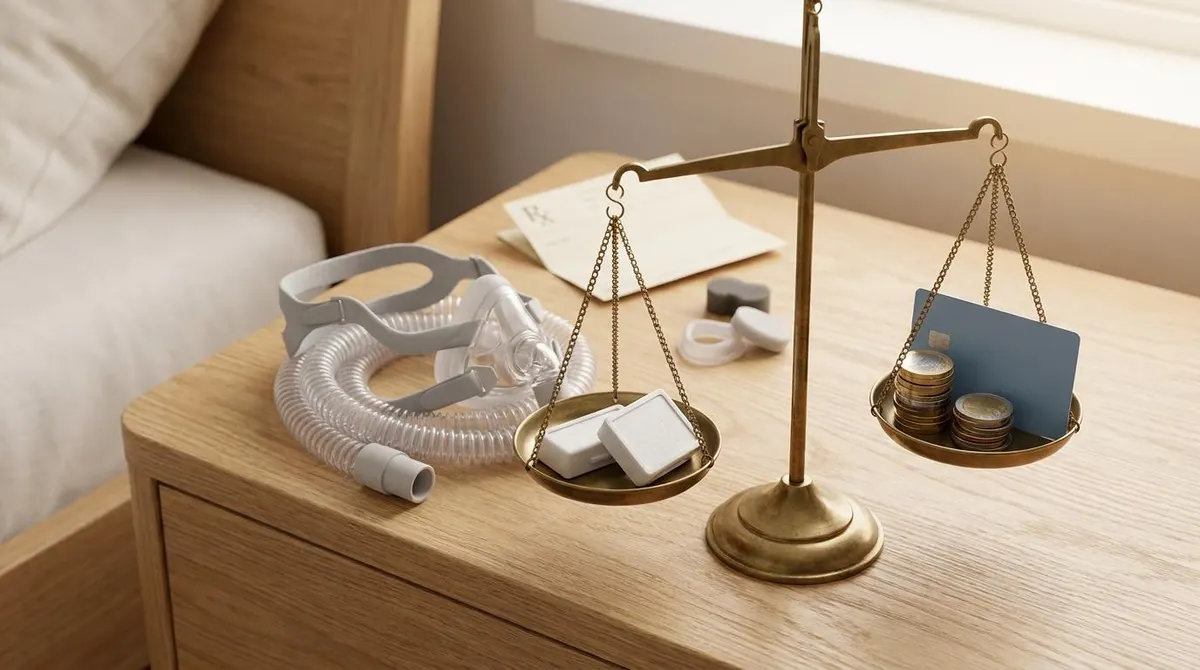
CPAP therapy and CPAP equipment prescribed to treat diagnosed sleep apnea are FSA/HSA-eligible medical expenses under IRS guidelines. This includes the CPAP machine, masks, replacement parts, and related supplies.
After a home sleep apnea test confirms a diagnosis of obstructive sleep apnea, a physician typically writes a CPAP prescription for ongoing treatment. Every component of that prescribed treatment plan qualifies for FSA or Health Savings Account spending. This covers CPAP machines, AutoPAP machines, BiPAP/BiLevel machines, travel CPAP machines such as the AirMini, and all associated accessories.
FSA-eligible CPAP supplies include:
- CPAP masks (Full Face Mask, Nasal Mask, Nasal Pillow Masks)
- CPAP Mask Kits and Mask Parts
- Machine Parts and Water Reservoirs
- Cleaning Supplies including UV-C light sanitizers such as the UV Light Paptizer
- CPAP Batteries including the Explore 5500 Backup Battery
- CPAP pillow and comfort accessories
- Zephair Universal Mask Adapter
- Dust Cover and Mat
dumbo.health plans include CPAP therapy and equipment as part of the monthly subscription. The Essentials Plan at $59 per month covers physician interpretation, CPAP therapy, CPAP equipment, and standard follow-up care. Because this is a prescribed medical treatment, the monthly plan cost is also typically FSA/HSA-eligible. This means you can use pre-tax healthcare dollars not only for the initial $149 home sleep test but also for your ongoing CPAP therapy through dumbo.health.
Comparing FSA Eligibility: Testing vs. Treatment
Expense Type
- Home Sleep Test: One-time diagnostic cost, FSA-eligible with physician order
- CPAP Machine and Supplies: Ongoing treatment cost, FSA-eligible with CPAP prescription
Typical Cost Range
- Home Sleep Test: $149 to $500
- CPAP Machine and Supplies: $200 to $3,000+ for equipment, plus ongoing supply replacements
Documentation Needed
- Home Sleep Test: Physician order, itemized receipt
- CPAP Machine and Supplies: CPAP prescription, itemized receipts for each purchase
FSA Debit Card Eligible
- Home Sleep Test: Yes, at most providers
- CPAP Machine and Supplies: Yes, at most medical supply providers
Medicare also covers home sleep apnea testing and CPAP therapy under specific conditions, though medicare coverage requires using Medicare-enrolled providers and following CMS documentation requirements. For people without insurance or those who prefer a simpler path, cash-pay options like dumbo.health eliminate the need for prior authorizations, deductibles, and reimbursement paperwork.
KEY TAKEAWAY: Both the initial home sleep apnea test and ongoing CPAP therapy with all related equipment and supplies qualify as FSA/HSA-eligible medical expenses when prescribed by a physician.
Understanding the financial side of testing is important, but choosing the right test device matters just as much for accurate results.
How At-Home Sleep Apnea Test Devices Work
At-home sleep apnea test devices work by recording respiratory and cardiovascular signals while you sleep in your own bed, then transmitting that sleep data to a physician for interpretation. Most FDA-approved home sleep testing devices measure between three and seven channels of physiological data.
The most commonly used devices in home sleep apnea testing include the WatchPAT ONE, Wesper Home Sleep Test, and the SleepImage Ring. Each takes a different approach to sensor placement and data collection, but all are designed to detect obstructive sleep apnea in adults.
WatchPAT ONE
WatchPAT ONE is an FDA-approved, single-use home sleep test device manufactured by Itamar Medical. It records peripheral arterial tone, oxygen saturation, heart rate, body position, and snoring intensity. The sensor is worn on the wrist with an additional finger probe, and it uses a proprietary algorithm to analyze respiratory events. Clinical validation studies published on PubMed have shown strong correlation between WatchPAT results and polysomnography findings for diagnosing obstructive sleep apnea.
Wesper Home Sleep Test
The Wesper Home Sleep Test uses a lightweight chest-worn sensor that measures respiratory effort, body position, and movement patterns. Wesper does not require a nasal cannula, which some patients find more comfortable. The device captures detailed sleep data that a physician reviews to determine the presence and severity of sleep-disordered breathing.
SleepImage Ring
The SleepImage Ring is a wearable sleep monitor worn on the finger that uses cardiopulmonary coupling analysis to assess sleep quality and detect sleep-disordered breathing. Its small form factor makes it one of the least intrusive home sleep testing options available.
What Sensors Measure During a Home Sleep Study
During a typical home sleep study, the device sensors collect data on several metrics. Oxygen saturation (SpO2) reflects blood oxygen levels throughout the night and identifies drops that correspond to apnea events. Heart rate tracking reveals patterns associated with respiratory disturbances. A nasal cannula, when included, measures airflow directly. A belt worn around the chest or abdomen records respiratory effort. Some devices also track body position, since obstructive sleep apnea often worsens when sleeping on the back.
A home sleep test does not record brain waves, which means it cannot formally score sleep stages or detect conditions like central sleep apnea. For suspected central sleep apnea, heart failure-related breathing disorders, or complex cases involving other sleep disorders, a physician may recommend a full polysomnography at a sleep lab instead.
dumbo.health ships an at-home sleep test device directly to your door. The $149 test includes the device and one night of testing. After you complete the test, a physician reviews your sleep data and provides a clinical interpretation as part of your selected monthly plan.
KEY TAKEAWAY: FDA-approved home sleep test devices like the WatchPAT ONE, Wesper, and SleepImage Ring measure oxygen levels, heart rate, respiratory effort, and airflow to provide the clinical data physicians need to diagnose obstructive sleep apnea.
Knowing how the devices work helps you prepare properly, which directly affects the accuracy of your results.
How to Prepare for Your At-Home Sleep Apnea Test
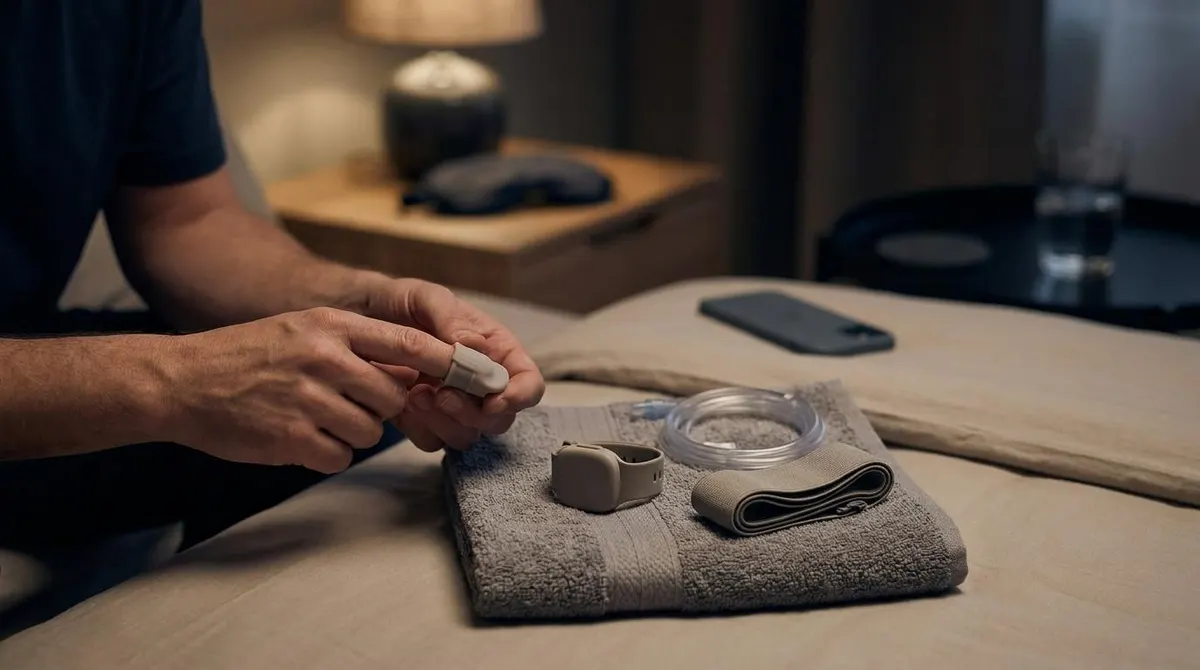
Proper preparation for a home sleep apnea test improves data quality and reduces the chance of needing a repeat test. The most common reasons for inconclusive results are sensor displacement, poor sleep environment, and testing on an atypical night.
Follow your provider's instructions exactly. Most home sleep test devices include a step-by-step guide for sensor placement, including where to position the finger probe, wrist sensor, nasal cannula, or chest belt depending on the device model. Incorrect sensor placement is the single most frequent cause of poor-quality data in home sleep testing.
Keep your sleep environment as normal as possible. Sleep in your own bed, at your usual bedtime, in a dark and quiet room. Avoid alcohol for at least four hours before the test, as alcohol relaxes the muscles of the upper airway and can artificially worsen apnea events, skewing your results. According to the Sleep Foundation, alcohol consumption before sleep can increase both the frequency and duration of apnea episodes.
Avoid caffeine after noon on the test day. Caffeine can delay sleep onset and reduce total sleep time, potentially resulting in insufficient data for a reliable AHI score.
Do not take sleep medications unless your physician specifically instructs you to continue them. Sedatives and certain medications alter sleep architecture and may affect respiratory patterns during the test.
If you wear the device incorrectly or experience a sensor malfunction during the night, contact your provider. dumbo.health includes guidance and support to help you complete the test correctly the first time. Many patients report that the process takes less than 10 minutes to set up before bed.
Sleep Environment Checklist for Test Night
- Sleep in your own bed in your normal sleeping position
- Keep the room dark, quiet, and at a comfortable temperature
- Avoid alcohol for at least four hours before bedtime
- Avoid caffeine after noon on the day of the test
- Do not take sleep medications unless directed by your physician
- Follow all sensor placement instructions provided with the device
- Charge or activate the device before bedtime if required
- Keep your phone nearby if the device connects via a mobile app for data upload
- Remove any jewelry that might interfere with finger sensors or wrist sensors
DID YOU KNOW: According to the American Academy of Sleep Medicine, a minimum of four hours of recorded sleep data is generally required for a home sleep test to produce a valid AHI score. Planning for a full night of sleep gives the best chance of meeting this threshold.
KEY TAKEAWAY: Preparing your sleep environment, avoiding alcohol and caffeine, and following sensor placement instructions carefully are the most important steps for getting accurate results from your at-home sleep apnea test.
Once the test is complete, the next phase is understanding what your results mean and what happens next.
Understanding Your Home Sleep Apnea Test Results
Your home sleep apnea test results are interpreted by a physician who reviews the recorded sleep data and assigns an AHI score that determines whether you have obstructive sleep apnea and how severe it is. Results are typically available within a few business days.
The Apnea-Hypopnea Index is the primary metric used to diagnose sleep apnea. The AHI score represents the average number of apnea and hypopnea events per hour of recorded sleep. An apnea event is a complete pause in airflow lasting at least 10 seconds. A hypopnea is a partial reduction in airflow with an associated drop in oxygen saturation or a cortical arousal.
The American Academy of Sleep Medicine classifies AHI scores into the following severity ranges:
- AHI below 5: Normal, no significant sleep apnea
- AHI 5 to 14: Mild obstructive sleep apnea
- AHI 15 to 29: Moderate obstructive sleep apnea
- AHI 30 or above: Severe obstructive sleep apnea
Your results will also include oxygen saturation data showing your lowest oxygen level during the night and the percentage of time spent below 90 percent saturation. Significant desaturation episodes indicate that your body is not receiving adequate oxygen during apnea events, which increases cardiovascular risk. According to the NIH, untreated obstructive sleep apnea is associated with elevated risk of hypertension, heart failure, stroke, and type 2 diabetes.
Heart rate patterns during the test can also provide clinical insight. Repeated spikes in heart rate following apnea events suggest the autonomic nervous system is working harder to restore normal breathing, which places additional strain on the cardiovascular system over time.
A physician interpretation is a critical component of the diagnostic process. The raw sleep data alone does not constitute a diagnosis. A board-certified sleep physician or qualified provider must review the data, correlate it with your medical history and symptoms, and issue a formal diagnosis. With dumbo.health, physician interpretation and a clinical report are included in every monthly plan, starting at $59 per month with the Essentials Plan. The physician also determines whether CPAP therapy, a referral to a sleep specialist, or further testing such as in-lab polysomnography is the appropriate next step.
Home sleep apnea test results are a critical component of clinical decision-making for sleep-disordered breathing. The AHI score, oxygen saturation data, and physician interpretation together form the basis of a sleep apnea diagnosis. dumbo.health sends updates to the referring provider so that the results integrate into your broader care plan.
KEY TAKEAWAY: A physician interprets your home sleep test results using the AHI score and oxygen saturation data to diagnose obstructive sleep apnea and determine whether CPAP therapy or further testing is needed.
Results are the bridge between testing and treatment, so knowing your options after diagnosis helps you act quickly.
What Happens After Diagnosis: Treatment Pathways
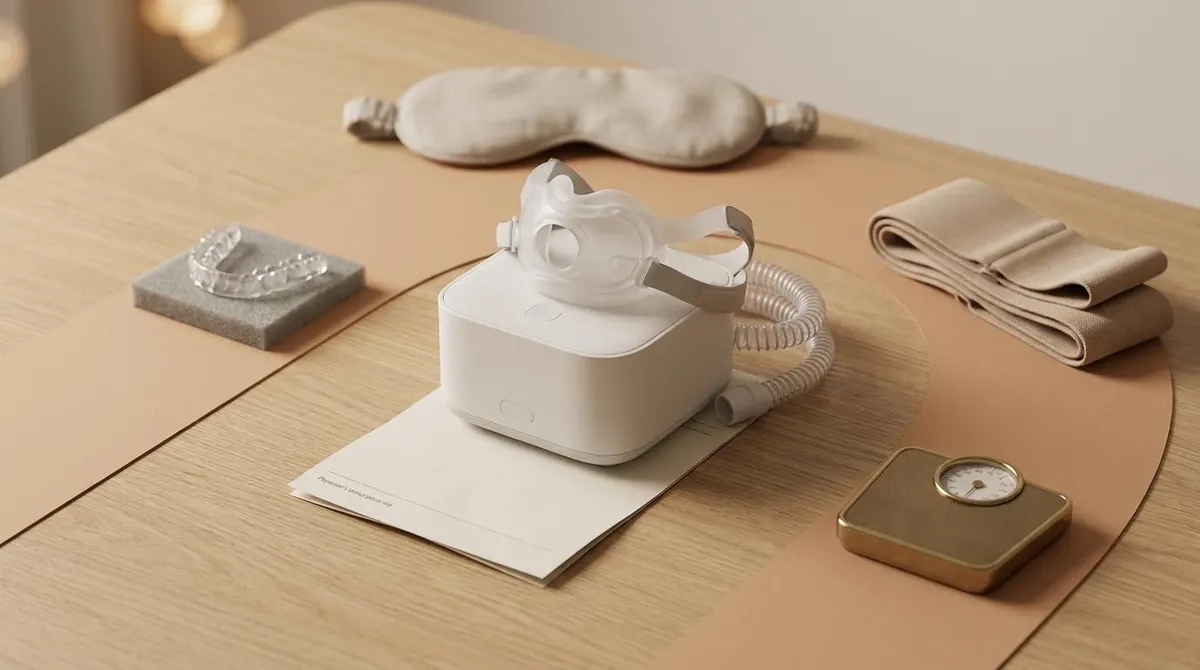
After a home sleep apnea test confirms a diagnosis of obstructive sleep apnea, the most common first-line treatment is CPAP therapy. Your physician writes a CPAP prescription based on your AHI score, symptom severity, and overall health profile.
CPAP stands for continuous positive airway pressure. A CPAP machine delivers a steady stream of pressurized air through a mask to keep the upper airway open during sleep, preventing the airway collapse that causes apnea events. According to Mayo Clinic, CPAP is the most effective nonsurgical treatment for moderate to severe obstructive sleep apnea.
CPAP machines come in several types. A standard CPAP delivers a fixed pressure setting determined by the physician. An AutoPAP machine automatically adjusts pressure throughout the night based on real-time detection of airway resistance. Travel CPAP machines like the AirMini offer portable options for people who need therapy on the road. BiPAP/BiLevel machines deliver different pressures for inhalation and exhalation, which some patients find more comfortable.
Mask selection significantly impacts adherence. Options include Full Face Masks for mouth breathers, Nasal Masks for those who breathe through the nose, and Nasal Pillow Masks for a minimal contact fit. A mask fitting guide can help identify the right style, and addressing issues like mask leaks early improves long-term compliance. ResMed is one of the most widely recognized manufacturers of CPAP machines and masks in the sleep industry.
dumbo.health simplifies the post-diagnosis treatment pathway. Once your physician reviews your results and writes a CPAP prescription, the sleep apnea care plan includes CPAP therapy, equipment, and follow-up care in one monthly subscription. The Essentials Plan at $59 per month covers physician interpretation, CPAP therapy, CPAP equipment, and updates to your referring provider. The Premium Plan at $89 per month adds a dedicated sleep coach, advanced adherence monitoring, and priority results turnaround. The Elite Plan at $129 per month includes concierge clinical support, direct physician messaging, and custom reporting.
All plans operate on a cash-pay, no-contract, cancel-anytime basis. No insurance is required. No prior authorizations. No surprise bills. For patients who want to use their FSA or HSA funds, these monthly plan charges are also typically eligible as prescribed medical treatment expenses.
Beyond CPAP, some patients benefit from additional interventions. Weight management, including emerging options like GLP-1 care, can reduce AHI severity in patients with obesity-related obstructive sleep apnea. Positional therapy, oral appliances, and surgical options may also be discussed with a sleep specialist depending on the clinical situation.
KEY TAKEAWAY: CPAP therapy is the standard first-line treatment after a home sleep apnea test diagnosis, and dumbo.health bundles the prescription, equipment, and ongoing care into a single monthly plan starting at $59 per month with no contracts.
Treatment is only effective if you use it consistently. The next section addresses common barriers and when home testing may not be the right fit.
Limitations and Risks of At-Home Sleep Apnea Testing
At-home sleep apnea testing is a reliable diagnostic tool for most adults with suspected obstructive sleep apnea, but it has specific limitations that every patient should understand before testing. Not every person or clinical situation is suitable for a home sleep study.
When Home Testing May Not Be Appropriate
Home sleep apnea tests are designed to detect obstructive sleep apnea. They are not validated for diagnosing central sleep apnea, which involves the brain failing to send proper signals to the muscles that control breathing. Patients with known heart failure, chronic opioid use, or suspected central sleep apnea typically require a full in-lab polysomnography. A sleep lab study records brain waves, eye movements, and muscle activity in addition to respiratory data, providing a more comprehensive evaluation.
Patients with significant comorbidities such as severe chronic obstructive pulmonary disease, neuromuscular disorders, or respiratory infections that could confound respiratory data during testing may also be directed to a sleep lab. The American Academy of Sleep Medicine recommends polysomnography over home testing when the pretest clinical assessment suggests a high likelihood of non-obstructive sleep disorders.
Data Quality Risks
A home sleep test relies on the patient to apply the sensors correctly and sleep with them in place throughout the night. If a nasal cannula shifts, a finger probe falls off, or a chest belt loosens during sleep, the resulting sleep data may be incomplete or unusable. Studies referenced by the AASM estimate that approximately 10 to 15 percent of home sleep tests require a repeat due to insufficient data.
This risk can be reduced with clear instructions and responsive support. dumbo.health provides guidance for proper sensor placement and offers support if issues arise during the test night.
Home Tests May Underestimate Severity
Because home sleep tests do not measure total sleep time directly (since they cannot detect brain waves), the AHI score is calculated using total recording time rather than actual sleep time. If you spend significant time awake during the test, the AHI may be lower than it would be if measured during polysomnography. This means a home test may classify someone as having mild sleep apnea when a lab test would show moderate severity.
Clinicians frequently observe this discrepancy in patients who report poor sleep quality on the test night. If your symptoms strongly suggest moderate to severe obstructive sleep apnea but your home test results show a borderline AHI, your physician may recommend repeating the test or ordering an in-lab polysomnography.
Limitations Summary
- Home sleep tests cannot diagnose central sleep apnea or complex sleep disorders
- Sensor displacement during the night can produce incomplete data
- AHI scores from home tests may slightly underestimate severity compared to polysomnography
- Patients with heart failure, neuromuscular conditions, or chronic respiratory infections may need in-lab testing
- A physician must interpret results for the data to have diagnostic value
dumbo.health mitigates several of these limitations by pairing every home test with physician interpretation and offering telehealth consultations to discuss whether home testing or an in-lab sleep study is the right choice for your situation. If your home test results are inconclusive, a physician can recommend the appropriate next step.
KEY TAKEAWAY: At-home sleep apnea tests are effective for diagnosing obstructive sleep apnea in most adults, but they cannot detect central sleep apnea, may underestimate severity, and require proper sensor placement for accurate results.
Understanding these limitations helps set realistic expectations. Real-world examples show how different people navigate the testing process.
Real-World Scenarios: Who Benefits from FSA-Covered Home Sleep Testing
Home sleep apnea testing paid through an FSA benefits a wide range of people. The following scenarios illustrate how different individuals use FSA funds for sleep apnea testing and treatment.
Common Scenarios
A 48-year-old long-haul truck driver with a BMI of 34 is referred for sleep apnea testing during a DOT physical. The medical examiner notes loud snoring and a neck circumference above 17 inches. The driver has no health insurance but has $500 remaining in an FSA from a previous employer's plan. The driver orders a home sleep test through dumbo.health for $149, pays with the FSA debit card, completes the test at home between routes, and receives results within days. The test reveals an AHI of 22, confirming moderate obstructive sleep apnea. The driver starts CPAP therapy through the dumbo.health Essentials Plan at $59 per month, also paid with FSA funds, and obtains the documentation needed for CDL renewal.
A 55-year-old office manager has been experiencing daytime fatigue, morning headaches, and her partner reports that her snoring has become louder over the past year. Her primary care physician suspects obstructive sleep apnea but the earliest available appointment at the nearest sleep lab is nine weeks away. She checks her FSA balance and finds $300 available before her plan year ends in six weeks. Rather than lose those healthcare dollars, she purchases a home sleep apnea test for $149, completes it the following week, and receives a physician interpretation confirming mild obstructive sleep apnea with an AHI of 11. Her physician discusses treatment options including positional therapy and a potential CPAP trial.
A 38-year-old owner-operator who drives regional freight has been flagged by a DOT-certified medical examiner for a high BMI and reports of excessive daytime sleepiness. He has a Health Savings Account with accumulated funds. He uses his HSA to pay for a home sleep test and, after receiving results showing severe obstructive sleep apnea with an AHI of 42 and oxygen levels dropping below 80 percent during the night, he enrolls in the dumbo.health Premium Plan at $89 per month. The dedicated sleep coach helps him establish CPAP adherence quickly, and advanced adherence monitoring documents his compliance for the Department of Transportation medical standards required for his CDL renewal.
Each of these scenarios reflects what many patients experience. The combination of FSA/HSA eligibility, convenient home testing, and physician-led interpretation removes the most common barriers to getting a diagnosis.
KEY TAKEAWAY: FSA-funded home sleep testing benefits commercial drivers facing DOT physical requirements, working professionals with limited time, and anyone with expiring FSA funds who needs a cost-effective path to sleep apnea diagnosis and treatment.
These real examples show how the process works in practice. The next section addresses common misunderstandings that prevent people from using their FSA for sleep testing.
Common Myths About Using FSA for Sleep Apnea Testing Debunked
MYTH: You need insurance to get a home sleep apnea test.
FACT: Insurance is not required for a home sleep apnea test. Home sleep testing is available on a cash-pay basis from providers like dumbo.health for $149, with no insurance, no prior authorizations, and no surprise bills. FSA and HSA funds can be used to cover the cost directly, regardless of your insurance status.
MYTH: FSA funds can only be used for in-lab sleep studies, not home tests.
FACT: The IRS classifies home sleep apnea tests as eligible diagnostic medical expenses under Section 213(d). Both home sleep tests and in-lab polysomnography qualify for FSA reimbursement when ordered by a physician. There is no IRS distinction between the testing location.
MYTH: You do not need a prescription to use FSA for a home sleep test.
FACT: Most FSA administrators require a physician prescription or clinical recommendation to approve a diagnostic test as an eligible medical expense. Without this documentation, your claim may be denied. A letter of medical necessity may also be required depending on your specific FSA plan.
MYTH: CPAP machines and supplies are not FSA-eligible.
FACT: All CPAP equipment prescribed to treat diagnosed sleep apnea qualifies as an FSA-eligible medical expense. This includes the CPAP machine, masks, replacement parts, cleaning supplies, batteries, and accessories. dumbo.health monthly plans that include CPAP therapy and equipment are also typically FSA/HSA-eligible as prescribed medical treatment.
MYTH: Home sleep tests are not accurate enough for a real diagnosis.
FACT: FDA-approved home sleep test devices like the WatchPAT ONE have undergone clinical validation studies showing strong correlation with in-lab polysomnography for detecting obstructive sleep apnea. The American Academy of Sleep Medicine endorses home sleep apnea testing for adults with a high pretest probability of moderate to severe obstructive sleep apnea and no significant comorbid conditions.
KEY TAKEAWAY: Home sleep apnea tests, CPAP therapy, and related equipment are all FSA-eligible medical expenses, and you do not need insurance to access testing or treatment through cash-pay providers like dumbo.health.
Clearing up these misconceptions helps you use your FSA benefits with confidence. The next section compares your options for where and how to purchase a home sleep test.
Comparing Home Sleep Test Providers and Costs
The cost and experience of a home sleep apnea test varies significantly depending on where you purchase it and whether you use insurance, FSA, or pay cash. Comparing providers helps you identify the best value for your situation.
Several direct-to-consumer home sleep testing services are available in your area and nationwide. Key factors to compare include total cost, what is included, turnaround time for results, and whether the service connects you to ongoing treatment.
Total Cost (Test Only)
- dumbo.health: $149 one-time (device plus one night of testing)
- Typical sleep lab HSAT: $300 to $600 (varies by location and insurance)
- Insurance-billed HSAT: Varies widely after deductibles and copays
What Is Included
- dumbo.health: Test device, one night of testing, physician interpretation and report included with monthly plan
- Typical sleep lab HSAT: Test device and interpretation (may bill separately)
- Insurance-billed HSAT: Coverage varies by plan, often requires prior authorization
Turnaround Time for Results
- dumbo.health: Results within days; Premium Plan offers priority turnaround
- Typical sleep lab HSAT: 1 to 3 weeks depending on provider scheduling
- Insurance-billed HSAT: Can take weeks due to authorization and scheduling delays
Treatment Pathway Included
- dumbo.health: Yes, monthly plans include CPAP therapy, equipment, and follow-up care
- Typical sleep lab HSAT: Separate referral process for CPAP prescription and equipment
- Insurance-billed HSAT: Requires additional authorizations for treatment
FSA/HSA Eligible
- dumbo.health: Yes
- Typical sleep lab HSAT: Yes
- Insurance-billed HSAT: Typically yes, but coordination with insurance complicates claims
For most people paying with FSA or HSA funds, the simplest path is a cash-pay provider with transparent pricing. dumbo.health's $149 home sleep test produces a single clean receipt that is easy to submit for FSA reimbursement, and the monthly plans that follow are also FSA/HSA-eligible. There are no deductibles to meet first, no prior authorization delays, and no surprise bills.
People who prefer to find a provider near you for in-person care can also ask a local sleep specialist about ordering a home sleep test. However, the convenience and cost advantage of a shipped, at-home device with telehealth-based physician review is why many patients choose the direct-to-consumer model.
KEY TAKEAWAY: dumbo.health offers one of the most straightforward and cost-effective home sleep apnea test options at $149 with clear FSA/HSA eligibility, transparent pricing, and an integrated treatment pathway.
Choosing the right provider is a practical decision. The next step is making sure you do not lose your FSA funds before using them.
FSA Deadline Strategy: Timing Your Sleep Test Purchase
FSA funds in most plans expire at the end of the calendar year, making the timing of your home sleep test purchase a financial decision as much as a health one. Planning ahead prevents you from losing unspent healthcare dollars.
According to the IRS, Flexible Spending Accounts operate on a "use it or lose it" basis. Some employers offer a grace period of up to 2.5 months after the plan year ends, and some plans allow a carryover of up to $640 into the following year as of 2025 IRS limits. However, many plans offer neither, meaning any unused FSA balance disappears on December 31.
If you have been experiencing symptoms of sleep apnea such as loud snoring, daytime fatigue, observed breathing pauses during sleep, or morning headaches, using your remaining FSA funds for a home sleep apnea test is a clinically and financially sound decision. You address a potential health concern while maximizing the pre-tax healthcare dollars you already set aside.
The same logic applies to CPAP supplies if you are already on treatment. Stocking up on replacement masks, filters, tubing, and cleaning supplies before your FSA deadline ensures you maintain your therapy without out-of-pocket costs later.
To take your free sleep assessment, visit dumbo.health and determine whether a home sleep test is the right next step. If testing is appropriate, you can order the $149 home sleep test and pay with your FSA card before your plan year ends.
IMPORTANT: Check your specific FSA plan for its deadline, grace period, and carryover rules. Contact your FSA administrator if you are unsure whether your plan offers any flexibility beyond the standard year-end expiration.
KEY TAKEAWAY: Purchasing a home sleep apnea test before your FSA deadline prevents losing unused pre-tax healthcare funds while addressing a potential health concern that affects sleep quality and long-term cardiovascular risk.
Before making a final decision, it helps to understand how home sleep testing connects to occupational health requirements.
Home Sleep Testing and DOT Physical Requirements
A home sleep apnea test can be the first step in meeting Department of Transportation medical standards for commercial drivers who are flagged for sleep apnea risk during a DOT physical. Understanding the connection between sleep testing and CDL certification helps drivers plan ahead.
During a DOT physical, a DOT-certified medical examiner evaluates whether a commercial driver meets the medical standards required to safely operate a commercial motor vehicle. The FMCSA does not mandate universal sleep apnea testing, but medical examiners have the authority to require a sleep apnea evaluation if clinical indicators suggest risk. Common triggers include a BMI above 35, a neck circumference above 17 inches for men or 16 inches for women, reported loud snoring, observed apnea episodes, and excessive daytime sleepiness.
If a medical examiner requires sleep apnea testing, the driver must complete the test and provide results before receiving full medical certification. A home sleep apnea test is accepted for this purpose as long as a physician interprets the results and provides a formal report.
dumbo.health serves commercial drivers and CDL holders by offering an affordable, fast home sleep test and treatment pathway. The $149 at-home sleep test can be completed between routes. Physician interpretation and a clinical report are included with every monthly plan. For drivers who test positive for obstructive sleep apnea, the Essentials Plan at $59 per month includes CPAP therapy and documentation that a respiratory therapist or physician can provide to the medical examiner for CDL renewal.
The DOT physical guide for commercial drivers on dumbo.health covers additional details about what to expect during the exam and how sleep apnea testing fits into the certification timeline.
WorkSTEPS Sleep and other occupational health screening programs also refer drivers for home sleep testing when risk factors are identified. Regardless of the referral source, the testing and treatment process follows the same clinical pathway.
KEY TAKEAWAY: Home sleep apnea testing meets Department of Transportation requirements for sleep apnea evaluation when interpreted by a physician, and dumbo.health provides the testing, treatment, and documentation commercial drivers need for CDL renewal.
With DOT requirements covered, the final section ties everything together.
Conclusion
Using your FSA or HSA to pay for an at-home sleep apnea test is one of the smartest ways to invest pre-tax healthcare dollars in your long-term health. The test is clinically validated, physician-interpreted, and recognized as an eligible medical expense under IRS guidelines. Whether you are a commercial driver preparing for CDL renewal, someone experiencing chronic snoring and fatigue, or simply looking to use your FSA balance before it expires, home sleep testing offers a convenient and affordable path to diagnosis and treatment.
dumbo.health makes the process straightforward. The at-home sleep test costs $149, requires no insurance, and is FSA/HSA-eligible. Monthly care plans start at $59 per month with no contracts and cancel anytime. Take the first step by completing the free sleep assessment at dumbo.health and find out whether a home sleep test is right for you.
Frequently Asked Questions About At-Home Sleep Apnea Tests and FSA Coverage
What is an at-home sleep apnea test and how does it work?
An at-home sleep apnea test, also called a home sleep apnea test or HSAT, is a portable diagnostic tool that records your breathing, oxygen saturation, heart rate, and respiratory effort while you sleep in your own bed. You wear a small device, typically including a finger sensor or finger probe, a nasal cannula, and sometimes a chest belt, for one night. The recorded sleep data is then reviewed by a sleep physician who produces an interpretation report. It is a simpler alternative to an in-lab polysomnography and is commonly used to evaluate suspected obstructive sleep apnea. Learn more at at-home sleep apnea testing.
What does a home sleep apnea test measure?
A home sleep apnea test typically measures oxygen saturation (SpO2), blood oxygen levels, heart rate, airflow through the nose, respiratory effort, and breathing interruptions during sleep. These measurements are used to calculate the Apnea-Hypopnea Index (AHI), which reflects the average number of apnea and hypopnea events per hour of sleep. Some devices also record peripheral arterial tone. The data helps a sleep physician determine whether obstructive sleep apnea is likely present and, if so, how severe it may be.
How does a home sleep study diagnose obstructive sleep apnea?
A home sleep study diagnoses obstructive sleep apnea by recording breathing patterns, oxygen saturation, airflow, and respiratory effort overnight. A sleep physician reviews the raw sleep data and calculates the Apnea-Hypopnea Index (AHI) score. According to the American Academy of Sleep Medicine, an AHI of 5 to 14 events per hour may indicate mild sleep apnea, 15 to 29 moderate, and 30 or more severe. The physician produces a written interpretation report based on this analysis. A home sleep test does not record brain waves, so it cannot diagnose all sleep disorders.
What sleep disorders can a home sleep apnea test detect?
Home sleep apnea tests are primarily designed to detect obstructive sleep apnea, which is the most common form of sleep-disordered breathing. They are not designed to diagnose central sleep apnea, periodic limb movement disorder, narcolepsy, or other complex sleep disorders that require full in-lab polysomnography with brain wave monitoring. If your physician suspects a condition beyond obstructive sleep apnea, they may recommend an in-lab sleep study instead. A healthcare professional can help determine whether a home sleep test is the right starting point for your symptoms.
How accurate are home sleep apnea tests?
Home sleep apnea tests are clinically validated for detecting moderate to severe obstructive sleep apnea and are supported by the American Academy of Sleep Medicine for use in appropriate patients. Because HSAT devices record fewer channels than in-lab polysomnography and do not monitor brain waves, they may underestimate AHI in some cases and are less reliable for mild sleep apnea or complex sleep disorders. Overall, research published through sources such as PubMed confirms that home sleep apnea testing shows good diagnostic agreement with polysomnography for uncomplicated obstructive sleep apnea when used in the right population.
When is a home sleep apnea test appropriate?
A home sleep apnea test is generally appropriate for adults who have a high probability of moderate to severe obstructive sleep apnea based on symptoms such as loud snoring, witnessed breathing pauses, and excessive daytime sleepiness, and who do not have significant comorbidities such as heart failure, severe respiratory infections, or other complex sleep disorders. It is not appropriate for patients where central sleep apnea, pediatric sleep apnea, or complex sleep-disordered breathing is suspected. A healthcare professional should assess your medical history and symptoms before recommending home sleep testing.
What are the pros and cons of a home sleep study?
The main advantages of a home sleep study are convenience, comfort, and lower cost compared to an in-lab sleep study. You sleep in your own bed, avoid a clinical overnight environment, and can often receive results more quickly. The main limitations are that home sleep tests measure fewer variables than polysomnography, do not record brain waves, may underestimate AHI severity, and are not suitable for patients with complex medical conditions or suspected non-obstructive sleep disorders. In-lab polysomnography remains the gold standard for sleep-disordered breathing diagnosis when home testing is inconclusive or clinically insufficient.
How should I prepare for an at-home sleep study?
Prepare for an at-home sleep study by following the instructions provided with your device carefully. Generally, you should avoid alcohol and caffeine on the night of the test, follow your normal sleep schedule, attach all sensors such as the finger sensor, nasal cannula, and chest belt as directed, and sleep in your usual position. Some providers advise not napping the day before the test. Avoid leaving the device running while awake for extended periods, as this can affect the quality of the recorded sleep data. Your device instructions or sleep physician will provide any specific preparation guidance.
What if I cannot sleep well during a home sleep study?
If you cannot sleep or sleep very little during a home sleep study, the test may not capture enough data for a reliable result. Many home sleep test devices require a minimum number of hours of recorded sleep data to generate a valid AHI score. If the test is inconclusive or produces insufficient data, your sleep physician may recommend repeating the test or may refer you for an in-lab sleep study instead. A single poor night is common and does not mean you cannot be assessed for sleep apnea.
How many times can I take an at-home sleep apnea test?
There is no universal limit on how many times you can take a home sleep apnea test. Retesting may be recommended if your initial test produces inconclusive results, insufficient sleep data, or if your symptoms or clinical picture change after treatment begins. Some patients undergo a repeat HSAT to evaluate CPAP therapy effectiveness. A healthcare professional or sleep physician will advise whether a repeat test is appropriate in your situation.
Can I use my FSA or HSA card for a home sleep apnea test?
Yes, in most cases a home sleep apnea test is an FSA-eligible and HSA-eligible medical expense. Flexible Spending Account and Health Savings Account funds can typically be used to pay for sleep apnea testing, CPAP machines, CPAP masks, CPAP equipment, and related sleep supplies, because these are recognised medical expenses by the IRS. You should verify eligibility with your FSA or HSA plan administrator before purchasing. Many sleep apnea testing and treatment providers accept FSA and HSA cards directly or provide itemised receipts for reimbursement. Explore sleep apnea care solutions to see how dumbo.health supports transparent cash-pay testing and treatment.
What counts as an FSA-eligible or HSA-eligible sleep apnea expense?
FSA-eligible and HSA-eligible sleep apnea expenses typically include home sleep apnea tests, in-lab sleep studies, CPAP machines, Auto CPAP machines, BiPAP machines, CPAP masks, CPAP mask parts, hoses, water reservoirs, cleaning supplies, and related medical equipment prescribed or recommended for treating sleep apnea. The IRS defines eligible medical expenses as those primarily for the diagnosis, cure, mitigation, treatment, or prevention of disease. Cosmetic or comfort-only accessories may not qualify. Confirm with your FSA or HSA administrator which specific items are covered under your plan.
How much does a home sleep apnea test cost?
The cost of a home sleep apnea test varies depending on the provider, whether insurance is used, and what is included in the test. Out-of-pocket prices typically range from around $150 to $400 or more depending on the device and physician interpretation fees. In-lab polysomnography generally costs significantly more. dumbo.health offers a home sleep test for $149 as a one-time cash-pay purchase with no insurance required and no surprise bills, including the at-home test device for one night of testing. Get an at-home sleep test with transparent pricing.
Will insurance cover a home sleep apnea test?
Insurance coverage for a home sleep apnea test depends on your specific plan, your deductible status, and whether the test meets your insurer's medical necessity criteria. Many insurance plans, including Medicare, do cover home sleep testing for qualifying patients. However, prior authorizations, deductibles, and coverage limits may apply. dumbo.health operates on a cash-pay model with no insurance required, no prior authorizations, and no surprise bills, which may be a simpler and more predictable option if you want to avoid insurance complexity or are unsure about your coverage.
Do I need a prescription or doctor's order for a home sleep apnea test?
Whether you need a prescription or doctor's order depends on the testing provider and your location. Some home sleep test providers require a physician's referral or order before you can access a test device, while others include physician review as part of the testing process. In the United States, a licensed physician typically must interpret the HSAT results for a formal sleep apnea diagnosis. A healthcare professional can also assess whether a home sleep test is appropriate for your specific symptoms and medical history before you begin.
How do I interpret the results of a home sleep study?
Home sleep study results are interpreted by a sleep physician who reviews your recorded sleep data and produces a written report. The key metric is the Apnea-Hypopnea Index (AHI) score, which indicates the average number of breathing events per hour. Your report will also include oxygen saturation levels, blood oxygen dip patterns, and heart rate data. A physician will explain what your results mean for your health and whether CPAP therapy or other treatment is recommended. You should not attempt to self-interpret HSAT data without clinician guidance, as accurate diagnosis requires trained medical review.
What is the Apnea-Hypopnea Index and why does it matter?
The Apnea-Hypopnea Index, or AHI, is the number of apnea and hypopnea events recorded per hour of sleep during a sleep study. Apneas are complete breathing pauses lasting at least 10 seconds, while hypopneas are partial reductions in airflow accompanied by oxygen desaturation or arousal. The AHI score is the primary metric used to classify sleep apnea severity. According to the American Academy of Sleep Medicine, mild sleep apnea is defined as an AHI of 5 to 14, moderate as 15 to 29, and severe as 30 or more events per hour. Higher AHI scores are typically associated with greater health risk.
Do I need a CPAP machine after a home sleep apnea test?
Whether you need a CPAP machine depends on your home sleep test results and a physician's clinical assessment. CPAP therapy, or continuous positive airway pressure, is the most common treatment for moderate to severe obstructive sleep apnea. Some patients with mild sleep apnea may be managed with other approaches. According to the NHLBI, CPAP therapy works by delivering a steady stream of air pressure through a mask to keep the airway open during sleep. A sleep physician will review your results and recommend whether CPAP or an alternative such as Auto CPAP is appropriate for your situation. Learn about CPAP therapy and equipment.
What is the difference between a CPAP machine and an Auto CPAP machine?
A CPAP machine delivers a fixed, continuous air pressure throughout the night as set by your prescribing physician. An Auto CPAP machine, also called an APAP or AutoPAP machine, automatically adjusts the air pressure in real time in response to your breathing patterns and changes in airway resistance. Both are effective treatments for obstructive sleep apnea. Auto CPAP is often considered more comfortable for patients whose pressure needs vary during the night. A sleep physician or respiratory therapist will recommend which type is better suited to your diagnosis, pressure requirements, and comfort preferences.
What is CPAP adherence and why does it matter?
CPAP adherence refers to how consistently and correctly a patient uses their CPAP or Auto CPAP machine each night. Adherence is typically measured by the number of hours per night the device is used and the number of nights per week it is used. Insurance programs, Medicare, and some workplace or DOT-related requirements may have minimum adherence thresholds. Poor CPAP adherence reduces the therapeutic benefit and can leave sleep apnea undertreated. Regular follow-up with a sleep physician or sleep coach helps patients identify and resolve issues such as mask leaks, discomfort, or pressure problems that reduce usage.
How does CPAP mask selection affect treatment?
Choosing the right CPAP mask significantly affects comfort, seal quality, and CPAP adherence. The main mask types are nasal masks, which cover only the nose; full face masks, which cover both the nose and mouth; and nasal pillow masks, which sit at the nostrils. Nasal masks are often preferred for patients who breathe through their nose during sleep. Full face masks are typically recommended for mouth breathers or patients who require higher pressures. A mask fitting guide from your provider or a respiratory therapist can help you identify the right size and style. Mask leaks are a common cause of poor CPAP performance and should be addressed promptly.
How long do I need to sleep for a home sleep study to be valid?
Most home sleep apnea test devices require at least four hours of recorded sleep data to generate a valid and clinically interpretable AHI score, though requirements can vary by device and laboratory protocol. Sleeping less than the minimum required duration may result in an inconclusive or invalid test. If your test captures insufficient sleep data, your sleep physician may recommend repeating the home sleep study or may refer you for an in-lab polysomnography to ensure an accurate assessment.
Can I go to the bathroom during a home sleep study?
Yes, you can go to the bathroom during a home sleep study. Most home sleep test devices are portable and designed to allow brief interruptions during the night. If your device includes a nasal cannula, chest belt, or finger sensor, these can typically be kept in place or briefly disconnected and reattached as needed. If you disconnect the device for an extended period, note the time so your sleep physician can account for any gaps in the data when interpreting your results.
What is the WatchPAT ONE home sleep test?
The WatchPAT ONE is a disposable, FDA-approved home sleep apnea test device developed by Itamar Medical that uses peripheral arterial tone technology alongside finger sensors to measure sleep-disordered breathing. It records oxygen saturation, heart rate, peripheral arterial tone signals, actigraphy, and snoring. The WatchPAT ONE is a single-use device worn on the wrist and finger, making it simple to set up without complex belts or nasal cannulas. It is considered clinically validated for detecting obstructive sleep apnea and is used by multiple sleep testing providers.
How accurate is the WatchPAT ONE compared to in-lab testing?
The WatchPAT ONE has been clinically validated against in-lab polysomnography and shows good diagnostic agreement for detecting obstructive sleep apnea in appropriate patient populations. Its peripheral arterial tone technology measures physiological signals related to sympathetic nervous system activation during apnea events, which differs from the airflow-based methods used by traditional HSAT devices. Studies cited in clinical literature indicate it performs reliably for moderate to severe obstructive sleep apnea. As with all home sleep apnea tests, it may be less reliable for patients with complex sleep disorders, central sleep apnea, or significant comorbidities.
Is a home sleep apnea test appropriate for commercial drivers or CDL holders?
Home sleep apnea testing can be a practical and accessible option for commercial drivers and CDL holders who need to be evaluated for sleep apnea, particularly given the Federal Motor Carrier Safety Administration's focus on driver safety and fatigue management. A home sleep test can provide a physician-interpreted diagnosis and report that supports a commercial driver's evaluation. However, the certified medical examiner makes all DOT physical and medical certificate decisions based on their clinical judgment, applicable FMCSA guidance, and the driver's full health picture. dumbo.health can support sleep apnea testing and documentation for commercial drivers, but does not guarantee DOT certification or medical clearance. See home sleep testing for truck drivers.
What level of sleep apnea may affect a CDL driver's medical certificate?
There is no single fixed AHI score that automatically disqualifies a CDL driver, as the FMCSA has not published a definitive rule specifying exact AHI thresholds for disqualification. A certified medical examiner evaluates each driver individually, considering AHI score, daytime sleepiness, treatment adherence, and overall health. Drivers with untreated moderate to severe obstructive sleep apnea may be considered a safety risk due to impaired alertness. Treated and CPAP-adherent drivers are generally evaluated more favourably. A certified medical examiner makes all DOT certification decisions. For a broader overview, see the ultimate DOT physical guide for commercial drivers.
What happens after I receive my home sleep test results?
After your home sleep test results are reviewed by a sleep physician, you will receive a written interpretation report that includes your AHI score, oxygen saturation data, and clinical findings. If sleep apnea is confirmed, your physician will typically recommend a treatment plan, which may include CPAP therapy, Auto CPAP therapy, or referral for additional evaluation. dumbo.health monthly plans include physician interpretation and report, CPAP therapy and equipment, and adherence follow-up. The Essentials Plan starts at $59 per month with no contracts and no insurance required. Start sleep apnea care with transparent pricing.
What is included in dumbo.health monthly sleep apnea care plans?
dumbo.health monthly plans support ongoing sleep apnea care after your home sleep test. The Essentials Plan at $59 per month includes physician interpretation and report, CPAP therapy and equipment, standard follow-up care, and updates sent to your referring provider. The Premium Plan at $89 per month adds a dedicated sleep coach from a licensed care team, advanced adherence monitoring, and priority results turnaround. The Elite Plan at $129 per month includes concierge clinical support, direct physician messaging, and custom reporting. All plans have no contracts and can be cancelled anytime. The $149 home sleep test is a separate one-time purchase. Compare sleep apnea care options.
Does dumbo.health require insurance for sleep apnea testing or care?
No. dumbo.health is a cash-pay platform that does not require insurance, prior authorizations, or long-term contracts. All pricing is transparent and known before you purchase. This can be useful for patients who are uninsured, underinsured, or who want to avoid insurance delays, deductibles, and prior authorization requirements. FSA and HSA funds may be usable for eligible purchases depending on your account administrator's guidelines. dumbo.health does not guarantee insurance reimbursement, and you should verify FSA or HSA eligibility with your account provider before purchasing.
How do I get started with at-home sleep apnea testing?
The first step is to take a free sleep assessment to help determine whether at-home sleep testing may be appropriate for your symptoms and situation. A healthcare professional should review your medical history and symptoms before testing begins. If you are a good candidate for home sleep apnea testing, you can order a test, complete it in the comfort of your own home, and receive a physician-interpreted report. Start with a free sleep assessment to take the next step toward understanding your sleep health.
What is sleep apnea?
Sleep apnea is a common sleep disorder characterised by repeated interruptions in breathing during sleep. The most common form is obstructive sleep apnea, where the throat muscles relax and partially or fully block the airway. According to the NHLBI, sleep apnea can cause reduced oxygen levels, fragmented sleep, daytime sleepiness, snoring, and increased risk of cardiovascular conditions including high blood pressure and heart failure if left untreated. Central sleep apnea, a less common form, occurs when the brain fails to send the correct signals to the breathing muscles. Diagnosis typically requires a sleep study reviewed by a sleep physician.
What are common symptoms of sleep apnea?
Common symptoms of sleep apnea include loud or persistent snoring, witnessed breathing pauses during sleep, waking with a dry mouth or headache, excessive daytime sleepiness, difficulty concentrating, and frequent nighttime urination. Not everyone who snores has sleep apnea, and some people with sleep apnea may not snore at all. Risk factors include excess body weight, a large neck circumference, being male, being over 40, and having a family history of sleep apnea. If you are experiencing these symptoms regularly, a healthcare professional can help determine whether sleep apnea testing is appropriate. Take the sleep assessment quiz.
Why is treating sleep apnea important?
Treating sleep apnea is important because untreated obstructive sleep apnea is associated with significantly increased risk of high blood pressure, heart disease, stroke, type 2 diabetes, and motor vehicle accidents caused by daytime sleepiness, according to the NHLBI. Commercial drivers with untreated sleep apnea face particular safety risks due to the fatigue demands of long-haul driving. Effective treatment with CPAP therapy can reduce apnea events, improve oxygen saturation, reduce daytime sleepiness, and support overall health. Treatment outcomes vary between individuals, and a sleep physician should guide diagnosis and treatment decisions.
Related Home Sleep Apnea Test Topics
- Home Sleep Apnea Test FSA Eligible How to Use Your Flexible Spending Account for Sleep Testing
- At Home Sleep Apnea Test HSA How to Use Your Health Savings Account for Sleep Testing
- Home Sleep Apnea Test Ring How Ring-Based Sleep Testing Works for Sleep Apnea Detection
- At Home Sleep Apnea Test with Ring How Ring-Based Sleep Testing Works and Whether It Can Diagnose Sleep Apnea
- How Do You Get a Home Sleep Apnea Test The Complete Guide to At-Home Sleep Testing
- How to Get a Sleep Apnea Test at Home The Complete Guide to Home Sleep Testing
- How Is a Home Sleep Apnea Test Done A Complete Guide to At-Home Sleep Testing
- Sleep Apnea Test at Home The Complete Guide to Home Sleep Testing for Adults
- How Does a Home Sleep Apnea Test Work A Complete Guide to At-Home Sleep Testing
- Can You Test for Sleep Apnea at Home A Complete Guide to Home Sleep Testing
- What Is a Home Sleep Apnea Test How At-Home Sleep Testing Works, What It Measures, and Who Needs One
- At Home Sleep Study for Sleep Apnea The Complete Guide to Testing in Your Own Bed
- Sleep Study for Sleep Apnea What the Test Measures, How It Works, and What Your Results Mean
- CPT for Home Sleep Apnea Test Complete Coding and Billing Guide for Sleep Study Providers
- Home Sleep Apnea Test for Children What Parents Need to Know About Pediatric Sleep Testing
- Home Sleep Apnea Test for Kids What Parents Need to Know About Pediatric Sleep Testing
- At-Home Sleep Apnea Test for Toddlers What Parents Need to Know About Pediatric Sleep Testing
- Home Sleep Test The Complete Guide to At-Home Sleep Apnea Testing
- Sleep Test at Home The Complete Guide to Home Sleep Apnea Testing
- Sleep Apnea Testing at Home The Complete Guide to Home Sleep Tests, Devices, and Results
- Sleep Apnea Diagnosis at Home The Complete Guide to Home Sleep Testing
- Best Home Sleep Apnea Test A Clinical Guide to Choosing the Right At-Home Sleep Study
- Sleep Test to CPAP How Sleep Apnea Testing Leads to Treatment
- Sleep Study Test for Sleep Apnea The Complete Guide to Diagnosis, Testing Types, and Next Steps
- Sleep Apnea Test at Home with Insurance What Your Plan Actually Covers and How to Get Tested
- Polysomnography at Home How Home Sleep Testing Compares to In-Lab Sleep Studies
- Kids at Home Sleep Apnea Test What Parents Need to Know About Pediatric Sleep Testing
- Sleep Apnea Test The Complete Guide to Diagnosis, Home Testing, and What Your Results Mean
- Home Sleep Testing The Complete Guide to Diagnosing Sleep Apnea From Your Own Bed
- How Much Does a Home Sleep Apnea Test Cost Complete Pricing Breakdown for Self-Pay and Insured Patients
- Home Sleep Testing Companies A Complete Guide to At-Home Sleep Apnea Diagnosis
- Home Sleep Test Cost What You Actually Pay With and Without Insurance
- Home Sleep Apnea Test ICD-10 Codes The Complete Coding and Diagnostic Guide for Sleep Apnea Testing
- Home Sleep Apnea Test The Complete Guide to At-Home Sleep Apnea Testing
- Sleep Study for Sleep Apnea What Happens, What It Measures, and What Your Results Mean
- Sleep Apnea Diagnosis How Sleep Apnea Is Detected, Tested, and Confirmed
- Sleep Apnea Testing The Complete Guide to Diagnosis, Home Tests, and What Your Results Mean
- How to Get Tested for Sleep Apnea The Complete Guide to Diagnosis, Sleep Studies, and Treatment
- Sleep Apnea Testing Near Me How to Find the Right Test, Provider, and Path to Diagnosis
- Are Sleep Studies Covered by Insurance What You Actually Pay for Sleep Apnea Testing
- Home Sleep Apnea Testing The Complete Guide to Diagnosing Sleep Apnea at Home
- Sleep Apnea Checker How to Screen for Sleep Apnea and What Your Results Mean
- Home Sleep Apnea Test Cost What You Actually Pay With and Without Insurance
- How Does a Sleep Study Diagnose Sleep Apnea
- Sleep Apnea Sleep Study The Complete Guide to Testing, Diagnosis, and Treatment
- Can a Sleep Study Diagnose Sleep Apnea and Other Sleep Disorders
- Obstructive Sleep Apnea Sleep Study The Complete Guide to Diagnosis, Testing, and Treatment
- What to Expect During a Sleep Study for Sleep Apnea
- Does Insurance Cover a Home Sleep Apnea Test What You Actually Pay
- Does Medicare Cover a Home Sleep Apnea Test What Beneficiaries Need to Know
- What Is the Cost of a Sleep Apnea Test at Home
- What Happens After a Home Sleep Apnea Test Results, Diagnosis, and Next Steps
- Sleep Test What It Measures, How It Works, and What Your Results Mean
- Average Cost of a Home Sleep Apnea Test Kit Shipped in the US
- At-Home Sleep Apnea Test Covered by Medicaid What You Need to Know Before Getting Tested
- Home Sleep Apnea Test Medicaid Coverage What Patients Need to Know
- Home Sleep Apnea Test Contraindications When an HSAT Is Not the Right Choice
- HSAT The Complete Guide to Home Sleep Apnea Testing
- What Is the Best At-Home Sleep Apnea Test A Clinical Comparison of Devices, Accuracy, and Cost
- Sleep Apnea Test Near Me How to Find Local and At-Home Testing Options
- Home Sleep Apnea Test CPT Code Complete Coding and Billing Guide for Sleep Studies
- At Home Sleep Apnea Test for VA Disability The Complete Guide for Veterans
- At-Home Sleep Apnea Test for VA The Complete Guide for Veterans
- CPAP Test at Home The Complete Guide to Home Sleep Apnea Testing and Treatment
- Home Sleep Apnea Test Near Me How to Get Tested Without a Sleep Lab Visit
- Home Sleep Apnea Test Indications Who Qualifies and When At-Home Testing Is Clinically Appropriate
- FDA Approved Home Sleep Apnea Test What Devices Are Cleared, How They Work, and How to Get Tested
- How Long Does a Home Sleep Apnea Test Take What to Expect Before, During, and After Testing
- Can Sleep Apnea Be Diagnosed Without a Sleep Study
- Sleep Study Apnea Hypopnea Index What Your AHI Score Means and Why It Matters
- Cost of Sleep Apnea Testing What You Will Actually Pay
- Disadvantages of Home Sleep Testing What Patients and Providers Need to Know
- At-Home Sleep Apnea Test The Complete Guide to Testing, Results, and Treatment
- How Do Home Sleep Apnea Tests Compare to In-Lab Sleep Studies
- Do I Need a Prescription for a Home Sleep Apnea Test Device
- Home Sleep Apnea Test FDA Approved What Devices Are Cleared and How They Work
- Sleep Apnea Test at Home DOT Approved Options for Commercial Drivers
- At-Home Sleep Apnea Test DOT Approved The Complete Guide for Commercial Drivers
- CPT Code for Home Sleep Apnea Test The Complete Coding and Billing Guide
- CPT Code for Home Sleep Apnea Test Complete Billing and Coding Guide
- Do You Need a Prescription for a Home Sleep Apnea Test
- Pediatric Home Sleep Apnea Test A Complete Guide for Parents and Providers
- Where Can I Get a Take-Home Sleep Study Kit
- Can I Get a CPAP Machine After a Home Sleep Apnea Test
- Top-Rated Home Sleep Apnea Test Kits Available in the US
- Where Can I Buy a Home Sleep Apnea Test Without a Prescription
- Can Dentists Prescribe a Home Sleep Apnea Test What You Need to Know
- Which Companies Offer Home Sleep Apnea Testing Services with Fast Results
- Home Sleep Apnea Test CPT Codes A Complete Guide to Billing, Coding, and Reimbursement
- Apnea Monitor The Complete Guide to Breathing Monitors for Sleep Apnea and Infant Care
- Can My Doctor Prescribe a Home Sleep Apnea Test What You Need to Know
- What Does a Home Sleep Apnea Test Consist Of Sensors, Equipment, and What to Expect
- Does a Home Sleep Apnea Test Measure Apneas What the Device Actually Records
- Home Sleep Apnea Test Guidelines Clinical Standards, Eligibility, and What Every Patient Should Know
- Home Sleep Apnea Test Parameters What Every Measurement Means and Why It Matters
- Can a Home Sleep Apnea Test Be Wrong Accuracy, False Negatives, and What to Do Next
- Home Sleep Apnea Test Questionnaire Screening Tools, Risk Scores, and What Happens Next
- Home Sleep Apnea Test False Negative Why It Happens and What to Do Next
- Best At Home Sleep Apnea Test A Clinical Comparison
- Does Anyone Ever Pass a Sleep Apnea Test What Normal Results Actually Look Like
AI summary
An at-home sleep apnea test, also called HSAT, is a one-night portable diagnostic study used to evaluate suspected obstructive sleep apnea. It records signals such as oxygen saturation (SpO2), airflow, heart rate, respiratory effort, peripheral arterial tone, and body position, and a physician interprets the data. FSA use: Home sleep apnea testing is generally FSA-eligible as a diagnostic medical expense under IRS Section 213(d) when ordered or recommended by a licensed physician. Eligible costs typically include the test device and physician interpretation fees. Reimbursement requirements: plans commonly require a physician order or clinical recommendation, an itemized receipt, a claim submission, and sometimes a letter of medical necessity. Claims are often processed in 5–14 business days. Results: diagnosis centers on the Apnea-Hypopnea Index (AHI): 5–14 mild, 15–29 moderate, and 30+ severe obstructive sleep apnea. After diagnosis: CPAP therapy and prescribed equipment and supplies are typically FSA/HSA-eligible. Limitations include reduced ability to assess central sleep apnea and the risk of repeat testing from poor sensor placement.

Nicolas Nemeth
Co-Founder
Nico is the co-founder of Dumbo Health, a digital sleep clinic that brings the entire obstructive sleep apnea journey home. Patients skip the sleep lab and the long wait to see a specialist. Dumbo Health ships an at home test, connects patients with licensed sleep clinicians by video, and delivers CPAP or a custom oral appliance with ongoing coaching and automatic resupply in one clear subscription.
Keep reading

VA At Home Sleep Apnea Test: The Complete Guide for Veterans

Home Sleep Apnea Test App: What Works, What Doesn't, and How to Get a Real Diagnosis


