Top-Rated Home Sleep Apnea Test Kits Available in the US
This guide reviews FDA-cleared home sleep apnea test kits used in the US to evaluate obstructive sleep apnea at home. It explains how HSAT devices measure airflow, oxygen saturation, heart rate, and respiratory effort to generate an Apnea-Hypopnea Index (AHI). It compares leading options such as WatchPAT ONE, ResMed ApneaLink Air, SleepImage Ring, Wesper patch, and Compumedics Somfit by sensors, comfort, sleep staging capability, and common use cases. It clarifies who qualifies for HSAT and when in-lab polysomnography is recommended. You will learn how to prepare for test night, interpret key metrics like SpO2 and AHI severity, and what treatment pathways may follow.
Struggling with sleep?
Find out if sleep apnea is the reason.
FDA-cleared. $149 flat. Physician-reviewed results in 48 hours.

Top-Rated Home Sleep Apnea Test Kits Available in the US
Home sleep apnea test kits available in the US include FDA-cleared devices such as the WatchPAT ONE, ResMed ApneaLink Air, SleepImage Ring, and Wesper patch, each measuring different combinations of airflow, oxygen saturation, and respiratory effort to detect obstructive sleep apnea at home. According to the American Academy of Sleep Medicine, home sleep apnea testing is a validated alternative to in-lab polysomnography for adults with a moderate to high pretest probability of obstructive sleep apnea without significant comorbidities. This guide is written for patients, commercial drivers, and healthcare providers comparing HSAT devices by accuracy, comfort, cost, and clinical acceptance. You will find detailed breakdowns of sensor technology, device-by-device comparisons, step-by-step testing instructions, limitations, real-world scenarios, and how to move from results to treatment. By the end, you will know exactly which home sleep test fits your situation and how to get started.
Quick Answer
Top-rated home sleep apnea test kits in the US include the WatchPAT ONE by Itamar Medical, ResMed ApneaLink Air, SleepImage Ring, Wesper patch, and Compumedics Somfit. Each FDA-cleared device records oxygen saturation, heart rate, and breathing patterns to calculate an Apnea-Hypopnea Index score. The best choice depends on sensor preference, comfort, clinical requirements, and cost. dumbo.health offers a complete home sleep test for $149 with physician interpretation available through monthly care plans starting at $59 per month.
Key Takeaways
- FDA-cleared HSAT devices such as the WatchPAT ONE, ApneaLink Air, and SleepImage Ring can accurately detect obstructive sleep apnea with an AHI score correlation above 85 percent when compared to polysomnography in peer-reviewed clinical trials.
- Home sleep apnea testing is appropriate for adults with symptoms like loud snoring, witnessed breathing pauses, and daytime sleepiness, but is not recommended for patients with central sleep apnea, heart failure, or severe pulmonary disease.
- The Apnea-Hypopnea Index measures the number of apneas and hypopneas per hour of sleep, with an AHI of 5 to 14 indicating mild, 15 to 29 moderate, and 30 or higher severe obstructive sleep apnea.
- dumbo.health provides a home sleep test for a one-time cost of $149 with no insurance required, no prior authorizations, and no surprise bills.
- CPAP therapy remains the gold-standard therapy for moderate to severe obstructive sleep apnea, and dumbo.health monthly plans starting at $59 per month include physician interpretation, CPAP equipment, and follow-up care with no contracts.
- Not all home sleep test kits measure sleep stage data, so device selection should match clinical needs and the referring physician's diagnostic requirements.
What Is a Home Sleep Apnea Test and How Does It Work
A home sleep apnea test is a portable diagnostic tool that records breathing, oxygen levels, and other sleep parameters overnight in your own bed to screen for obstructive sleep apnea. The National Heart, Lung, and Blood Institute classifies HSAT as a Type III or Type IV sleep study, depending on how many channels the device records.
How HSAT Devices Collect Data
Most home sleep apnea testing devices use a combination of sensors to track airflow through a nasal cannula, blood oxygen saturation via a pulse oximeter, heart rate through photoplethysmography, and respiratory effort using a chest strap or accelerometer. Some newer devices, such as the WatchPAT ONE, rely on peripheral arterial tonometry instead of a nasal cannula, measuring peripheral arterial tone at the fingertip to detect respiratory events.
The recorded data generates an Apnea-Hypopnea Index score. The AHI score counts how many times breathing partially or fully stops per hour. An AHI of 5 or above, combined with symptoms like loud snoring or excessive daytime sleepiness, typically confirms an obstructive sleep apnea diagnosis.
Channels Measured by Common HSAT Devices
Different devices measure different combinations of channels. A standard HSAT records at minimum airflow, oximetry, and respiratory effort. Advanced devices add actigraphy for sleep staging analysis, peripheral arterial tonometry for arrhythmia detection, and body position tracking. The number and type of channels directly affect diagnostic accuracy and the clinical information available to your sleep physician.
DID YOU KNOW: According to the American Academy of Sleep Medicine, HSAT devices must record at minimum airflow, respiratory effort, and blood oxygen saturation to qualify as a Type III portable monitor for diagnosing obstructive sleep apnea.
KEY TAKEAWAY: A home sleep apnea test records breathing, oxygen saturation, and heart rate overnight using portable sensors, then generates an AHI score that your physician uses to diagnose obstructive sleep apnea.
Understanding how these devices work sets the stage for comparing the specific kits currently available in the US market.
Top-Rated FDA-Cleared Home Sleep Apnea Test Kits in the US
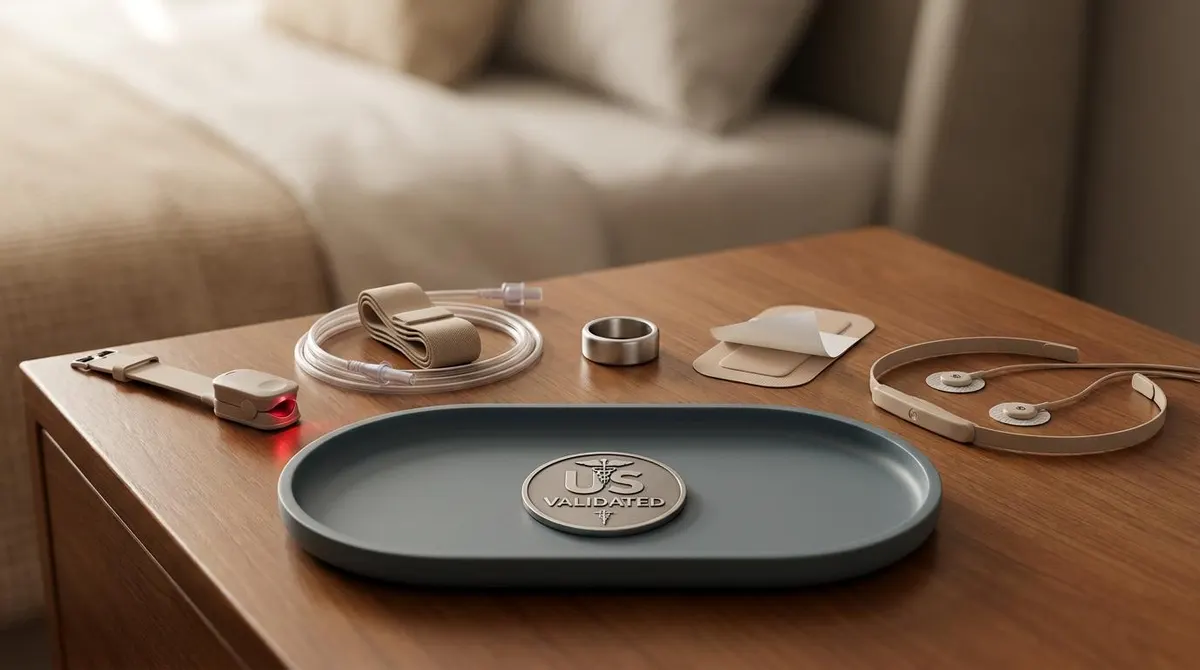
The most clinically validated and widely used HSAT devices in the US include the WatchPAT ONE, ResMed ApneaLink Air, SleepImage Ring, Wesper patch, and Compumedics Somfit. Each device holds FDA clearance and has supporting clinical trials published in peer-reviewed journals.
WatchPAT ONE by Itamar Medical
The WatchPAT ONE is a single-use, disposable home sleep apnea testing device manufactured by Itamar Medical. It uses peripheral arterial tonometry to measure peripheral arterial tone, oxygen saturation, heart rate, actigraphy, body position, and snoring intensity. The WatchPAT technology does not require a nasal cannula or chest strap, making it one of the least intrusive options. Clinical trials published via PubMed show the WatchPAT achieves an AHI correlation above 85 percent compared to in-lab polysomnography. The WatchPAT 300, a reusable version, functions on the same peripheral arterial tonometry platform. Cloud-based reporting allows results to reach the interpreting physician within hours of the test night.
ResMed ApneaLink Air
The ApneaLink Air by ResMed is a Type III portable monitor that measures nasal airflow via a nasal cannula, blood oxygen saturation through a finger pulse oximeter, respiratory effort using a chest strap sensor, and heart rate. It is one of the most widely used HSAT devices in clinical practice and has extensive validation data. ResMed designed the ApneaLink Air for reusable clinical deployment, meaning sleep clinics near you often stock and distribute this device directly.
SleepImage Ring and SleepImage Fingertip
The SleepImage Ring is a compact, ring-based sensor that uses photoplethysmography to track cardiopulmonary coupling, oxygen saturation, heart rate, and actigraphy. It does not require a nasal cannula or chest strap, offering a minimal-contact testing experience. The SleepImage Fingertip provides similar data in a fingertip-worn format. Both devices generate a Sleep Quality Index and a Respiratory Event Index that correlate with traditional AHI scoring.
Wesper Patch and Wesper Lab
Wesper uses a single disposable adhesive patch worn on the chest to measure respiratory effort, airflow, oxygen saturation, heart rate, body position, and snoring. The Wesper Lab configuration adds additional data channels for enhanced clinical detail. The patch form factor eliminates the need for separate cannula, chest strap, and finger sensor components. Wesper has gained traction among providers seeking a streamlined, patient-friendly device.
Compumedics Somfit
The Compumedics Somfit is a forehead-mounted device that records electroencephalogram, electrooculogram, and electromyogram signals alongside pulse oximetry, enabling true sleep staging analysis. This distinguishes Somfit from most other HSAT devices, which estimate sleep time through actigraphy rather than direct brainwave measurement. For patients and physicians who need sleep stage data alongside respiratory event detection, Somfit fills a gap that traditional portable monitors leave open.
Other Notable HSAT Devices
Several additional FDA-cleared home sleep testing devices serve specific clinical niches. The BRAEBON Medical Corporation MediByte is a multi-channel recorder used widely in sleep labs. The Cadwell ApneaTrak and Natus Medical Inc Embletta MPR-PG offer research-grade channel counts for detailed sleep disordered breathing analysis. The Belun Technology Belun Ring BLR-100X provides a ring-based oximetry and peripheral arterial tone approach. The Advanced Brain Monitoring Sleep Profiler focuses on EEG-based sleep staging. The Resmed NightOwl is a compact fingertip sensor used in some screening pathways. The Acurable AcuPebble SA100/Ox100/Ox200, Dormotech Medical DormoVision, and Neurobit Sleepfit represent emerging entries in the market, each addressing specific sensor and form-factor needs. The SleepView by Cleveland Medical Devices is another established mask-based device that captures nasal pressure, respiratory effort, and oximetry data.
IMPORTANT: Only use an HSAT device that holds current FDA clearance and is ordered or prescribed through a licensed sleep physician or qualified provider. Devices marketed without FDA clearance may not meet electrical safety or biocompatibility standards required under IEC 60601 and ISO 13485.
KEY TAKEAWAY: The WatchPAT ONE, ApneaLink Air, SleepImage Ring, Wesper patch, and Compumedics Somfit represent the most widely used and clinically validated home sleep apnea test kits in the US, each offering different sensor configurations and comfort profiles.
Knowing what each device measures is useful, but the practical differences between them become clearer when you compare them side by side.
How to Compare Home Sleep Apnea Test Kits
Choosing the right home sleep test depends on what sensors you can tolerate, what data your physician needs, and what you are willing to spend. The following structured comparison highlights the most decision-relevant differences across the leading HSAT devices.
Sensor Type
- WatchPAT ONE: Peripheral arterial tonometry via wrist-worn device and finger probe, no nasal cannula needed
- ApneaLink Air: Nasal cannula for airflow, finger pulse oximeter, chest strap for respiratory effort
- SleepImage Ring: Ring-based photoplethysmography sensor, no cannula or chest strap
- Wesper: Single adhesive chest patch with integrated sensors
- Compumedics Somfit: Forehead-mounted EEG, EOG, EMG sensors with pulse oximetry
Sleep Staging Capability
- WatchPAT ONE: Estimates sleep stages via actigraphy and peripheral arterial tonometry algorithms
- ApneaLink Air: Does not measure sleep stages directly
- SleepImage Ring: Estimates sleep quality through cardiopulmonary coupling, not direct EEG
- Wesper: Uses respiratory and movement patterns to estimate sleep time
- Compumedics Somfit: Measures true sleep stages via electroencephalogram, electrooculogram, and electromyogram
Comfort and Wearability
- WatchPAT ONE: Wrist device with finger probe, minimal setup, no facial contact
- ApneaLink Air: Requires nasal cannula taped to face and chest strap, moderate complexity
- SleepImage Ring: Single ring worn on finger, very minimal contact
- Wesper: Single patch on chest, no separate components
- Compumedics Somfit: Forehead adhesive sensor, lightweight but may shift during sleep
Typical Use Case
- WatchPAT ONE: Patients who want cannula-free testing, commercial drivers needing fast turnaround
- ApneaLink Air: Clinical settings requiring traditional multi-channel Type III data
- SleepImage Ring: Screening or longitudinal monitoring with minimal patient burden
- Wesper: Patients who want a simple single-device experience
- Compumedics Somfit: Cases where sleep staging data is clinically necessary
FDA Clearance Status
- WatchPAT ONE: FDA-cleared
- ApneaLink Air: FDA-cleared
- SleepImage Ring: FDA-cleared
- Wesper: FDA-cleared
- Compumedics Somfit: FDA-cleared
For most patients with suspected obstructive sleep apnea and no major comorbidities, the WatchPAT ONE or ApneaLink Air provides sufficient diagnostic data. If cannula-free comfort is the priority, the WatchPAT ONE or SleepImage Ring may be the better fit. When true sleep stage analysis is required, the Compumedics Somfit offers a capability that most HSAT devices lack.
When you order a home sleep test through dumbo.health for $149, the device selection is matched to your clinical profile and diagnostic needs. This removes the guesswork from choosing among the many options above.
KEY TAKEAWAY: The best home sleep apnea test kit for you depends on sensor comfort, whether your physician requires sleep stage data, and your budget, with cannula-free options like the WatchPAT ONE offering the simplest patient experience.
Once you understand the device landscape, the next step is knowing exactly what clinical data these tests produce and what those numbers mean.
Understanding Your Home Sleep Test Results
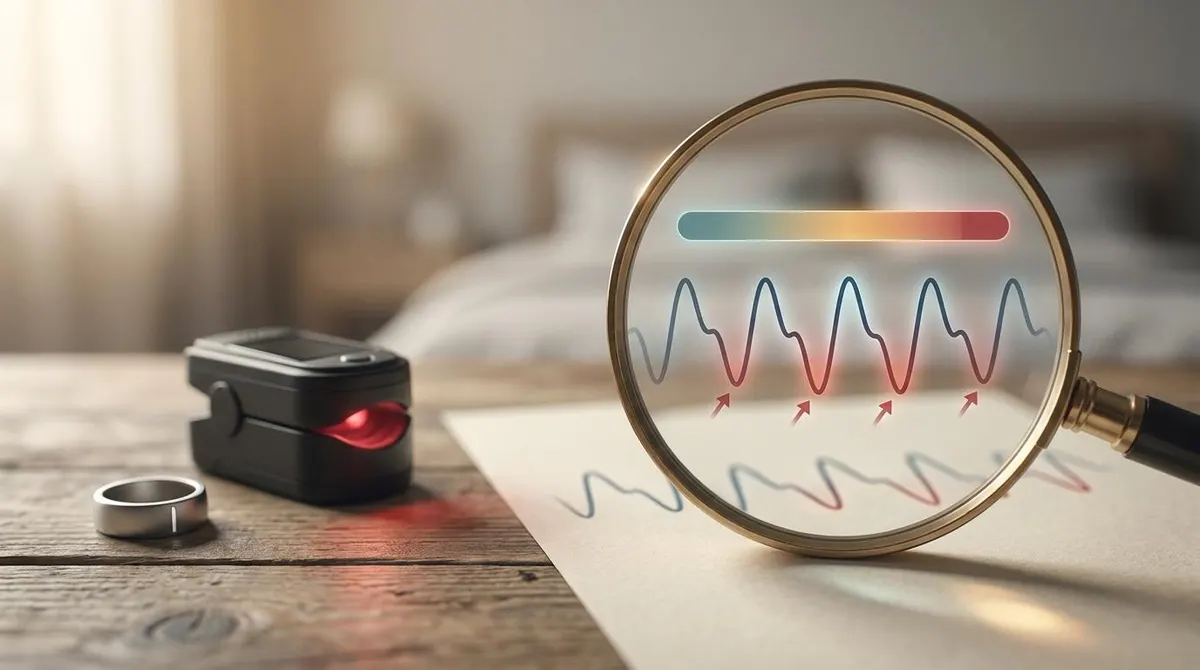
Home sleep apnea test results center on the Apnea-Hypopnea Index, which is the primary metric a sleep physician uses to diagnose and classify obstructive sleep apnea severity. The AHI score counts the total number of apneas and hypopneas recorded per hour of estimated sleep time.
What the AHI Score Means
An apnea is a complete pause in airflow lasting at least 10 seconds. A hypopnea is a partial reduction in airflow, typically 30 percent or more, lasting at least 10 seconds and associated with a drop in oxygen saturation of 3 percent or more, or an arousal. The American Academy of Sleep Medicine defines obstructive sleep apnea severity as follows: an AHI of 5 to 14 is mild, 15 to 29 is moderate, and 30 or higher is severe.
The apnea-hypopnea index is the single most important number in your results. It determines whether you need treatment, what type of treatment your physician recommends, and in the case of commercial drivers, whether your DOT medical certification may require additional conditions.
Other Metrics in Your Report
Beyond the AHI, most HSAT devices report oxygen saturation trends including minimum SpO2 and time spent below 90 percent, average heart rate and heart rate variability, the Respiratory Event Index, snoring duration and intensity, body position during sleep, and total estimated sleep time. Devices using peripheral arterial tonometry, such as the WatchPAT, also report sleep architecture estimates and may flag arrhythmia detection findings. Devices with EEG capability, such as the Compumedics Somfit, provide direct sleep staging analysis showing time spent in each sleep stage.
Oxygen desaturation data is particularly important. A patient whose blood oxygen saturation repeatedly drops below 88 percent faces higher cardiovascular risk. According to the NIH, chronic intermittent hypoxia from untreated obstructive sleep apnea is associated with increased risk of hypertension, stroke, and heart failure.
Who Interprets the Results
A board-certified sleep physician reviews the raw sensor data, applies scoring criteria, and generates a diagnostic report. This step is required regardless of which HSAT device is used. The device records the data, but the physician makes the diagnosis. dumbo.health Essentials, Premium, and Elite plans all include physician interpretation and a diagnostic report, with the Premium plan offering priority results turnaround.
KEY TAKEAWAY: Your AHI score is the primary diagnostic metric from a home sleep apnea test, with 5 to 14 classified as mild, 15 to 29 as moderate, and 30 or above as severe obstructive sleep apnea, and a board-certified sleep physician must interpret all results.
Knowing how to read your results helps, but understanding the full testing process from start to finish ensures you get the most accurate data on test night.
Step-by-Step Process for Completing a Home Sleep Apnea Test
Completing a home sleep apnea test involves a straightforward sequence that most patients finish in under a week from order to results.
How to Complete Your Home Sleep Test
1. Get screened by a provider or complete a free sleep assessment at dumbo.health to determine whether home sleep testing is appropriate based on your symptoms, medical history, and risk profile.
2. Order or receive your HSAT device. Through dumbo.health, the home sleep test costs $149 as a one-time purchase with no insurance or prior authorization required. The device ships directly to your home.
3. Review the setup instructions included with your specific device. Most kits involve attaching a finger sensor for oximetry, positioning a nasal cannula or chest patch depending on the device, and pressing a single button to start recording.
4. Go to sleep at your normal bedtime in your own bed. The test requires one full night of sleep data. Avoid alcohol and sedatives before the test, as these can suppress respiratory events and skew results.
5. Remove the device in the morning and follow return instructions. Some devices, like the WatchPAT ONE, are single-use and disposable. Others, like the ApneaLink Air, are returned to the provider for data download.
6. Your data is uploaded and sent to a board-certified sleep physician for interpretation. On a dumbo.health Premium plan, results receive priority turnaround so you are not waiting weeks for answers.
7. Receive your results and diagnostic report. Your physician will communicate whether your AHI score and oxygen saturation data indicate obstructive sleep apnea and, if so, what severity level.
After completing these steps, you will have a clear diagnosis and can move directly into a treatment pathway. If CPAP therapy is recommended, dumbo.health plans include CPAP equipment, ongoing adherence monitoring, and provider updates, all starting at $59 per month with no contracts.
KEY TAKEAWAY: A home sleep apnea test can be completed in one night with results interpreted by a physician shortly after, and the process from screening to diagnosis typically takes under a week.
Before you test, preparing properly on the night of the study makes a measurable difference in data quality.
How to Prepare for Your Home Sleep Test Night
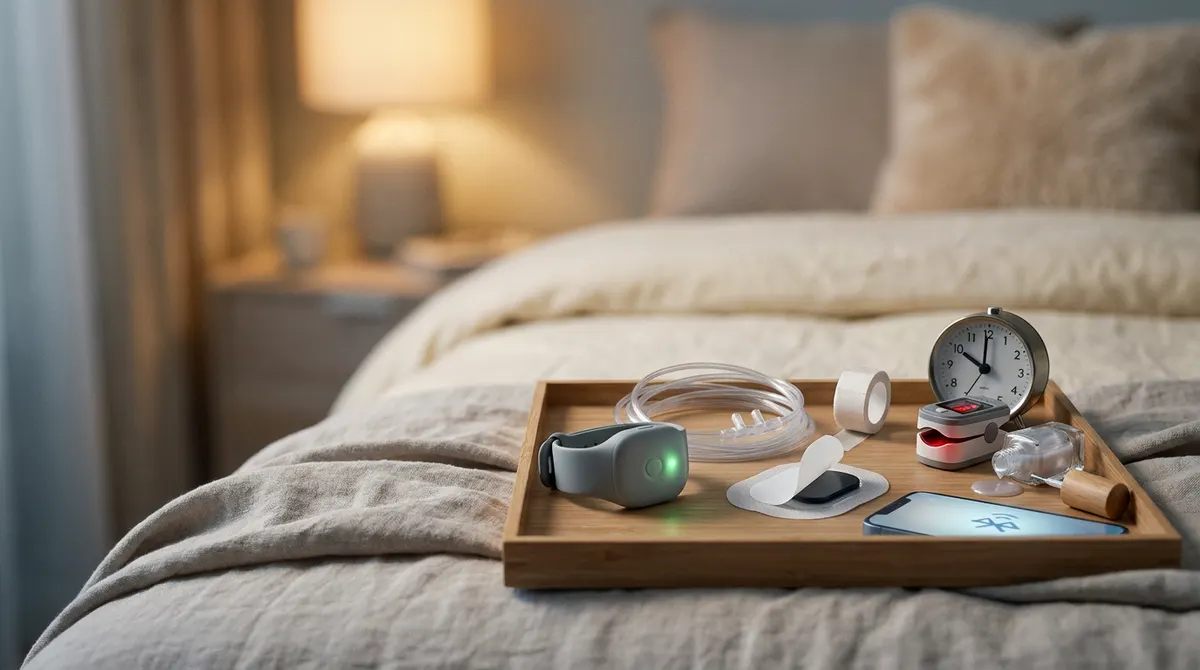
Proper preparation on test night directly affects the accuracy of your HSAT results. Sensor displacement, alcohol use, and sleep environment changes are the most common causes of failed or inconclusive recordings.
Pre-Test Night Checklist
- Confirm your device is fully charged or has fresh batteries as indicated in the kit instructions
- Avoid alcohol for at least 24 hours before the test, as alcohol relaxes airway tissue in the airway and tongue muscles, potentially masking or exaggerating respiratory events
- Avoid caffeine after noon on the day of the test
- Do not take sedative medications unless prescribed and discussed with your physician
- Remove nail polish or artificial nails from the finger where the pulse oximeter or oximetry sensor will be placed, as these can interfere with blood oxygen saturation readings
- Sleep in your own bed in your usual sleeping environment
- Secure the nasal cannula with the medical tape provided if your device uses one, to prevent the cannula from shifting during the night
- Place the chest strap snugly but comfortably if your device includes one
- Test Bluetooth technology pairing between the device and the companion app if applicable, before going to sleep
- Set a morning alarm at your normal wake time so you do not oversleep and accidentally record excess non-sleep data
- Keep the device instruction card on your nightstand in case you need to troubleshoot during the night
TIP: Clinicians frequently observe that the most common reason for a failed home sleep test is sensor displacement during sleep. Spending two extra minutes securing each sensor before turning off the lights significantly reduces the chance of needing a repeat test.
KEY TAKEAWAY: Avoid alcohol, secure all sensors properly, and sleep in your normal environment to maximize the accuracy of your home sleep apnea test data.
With preparation covered, it is important to understand when a home sleep test is the right choice and when it is not.
Limitations and Risks of Home Sleep Apnea Testing
Home sleep apnea testing is not appropriate for every patient or every type of sleep-related breathing disorder. Recognizing these limitations protects you from misdiagnosis and ensures you receive the right level of evaluation.
When HSAT May Not Be the Right Choice
The first and most significant limitation is that HSAT is validated primarily for obstructive sleep apnea in adults without major comorbidities. According to the American Academy of Sleep Medicine, home sleep testing is not recommended for patients with suspected central sleep apnea, significant heart failure, chronic obstructive pulmonary disease, neuromuscular disorders, or cognitive impairment that would prevent proper device use. These patients should be evaluated with in-lab polysomnography, which records electroencephalogram, electrooculogram, and electromyogram data alongside respiratory channels and provides direct observation by a sleep technician.
The second limitation involves data loss. If a sensor detaches during sleep, the recording may be incomplete or unscoreable. A systematic review published through PubMed found that HSAT failure rates due to technical issues range from 3 to 18 percent depending on the device and patient population. This means some patients will need to repeat the test or transition to a sleep lab study.
The third limitation is that most HSAT devices underestimate AHI compared to polysomnography. Because home devices estimate total sleep time through actigraphy rather than measuring it directly through EEG, any time spent awake in bed is counted as sleep time, which dilutes the AHI denominator. This can result in a lower reported AHI than the patient's true severity. The Compumedics Somfit partially addresses this by incorporating EEG-based sleep staging, but it remains the exception among portable devices.
A fourth consideration is that HSAT does not capture non-respiratory sleep conditions. If your symptoms include significant limb movements, parasomnias, or narcolepsy, a home test will not detect these. An in-lab polysomnography study remains the gold-standard therapy for comprehensive sleep evaluation.
Finally, children and adolescents with enlarged tonsils or craniofacial abnormalities should be evaluated with in-lab polysomnography per AASM guidelines. HSAT validation studies have focused almost exclusively on adult populations.
dumbo.health addresses several of these limitations through its care model. Every test result is reviewed by a physician who can identify inconclusive recordings and recommend a repeat study or escalation to in-lab testing. The Premium and Elite plans include dedicated sleep coach access and direct physician messaging, ensuring that borderline or complex cases receive appropriate clinical follow-up rather than falling through the cracks.
KEY TAKEAWAY: Home sleep apnea testing is not suitable for patients with central sleep apnea, heart failure, neuromuscular conditions, or suspected non-respiratory sleep disorders, and all borderline results should be reviewed by a qualified sleep specialist.
Understanding limitations helps you make a fully informed decision, and seeing how other patients have navigated this process makes that decision even more concrete.
Real-World Scenarios for Choosing a Home Sleep Apnea Test
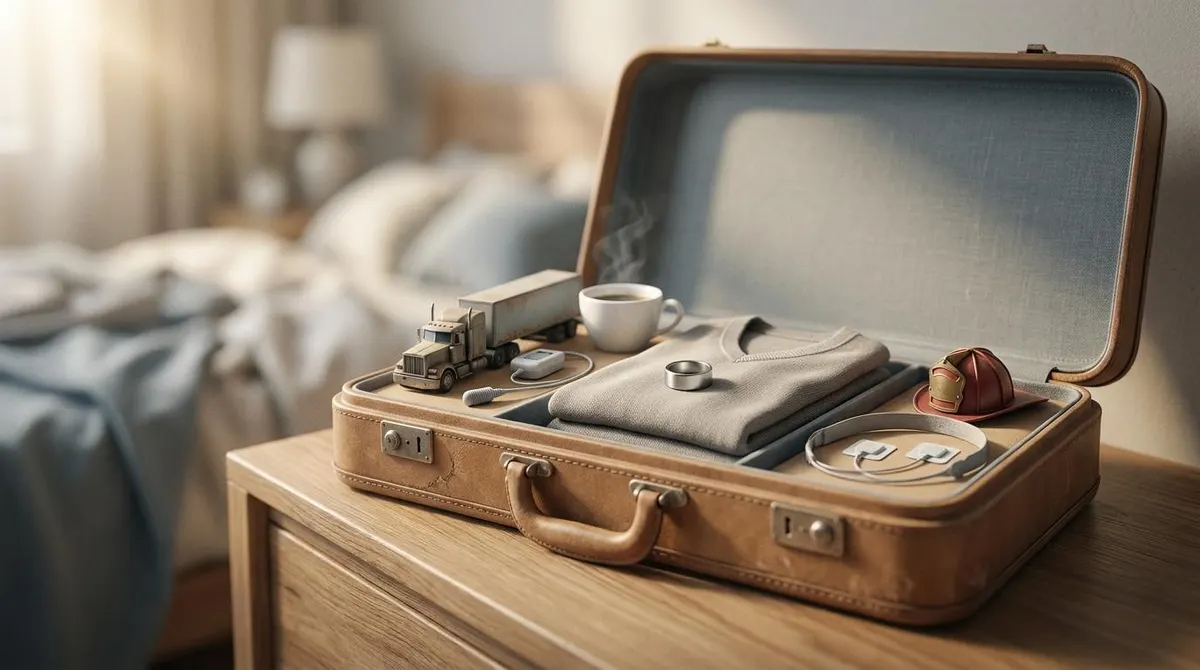
Comparing device specifications is helpful, but seeing how different people actually use home sleep tests clarifies which device and pathway fits which situation.
Common Scenarios
A 48-year-old long-haul truck driver with a BMI of 36 and a neck circumference of 18 inches was flagged during a DOT physical for suspected obstructive sleep apnea. His physician required a formal sleep study before clearing him for a 24-month medical certificate. Because he spends most weeks on the road, scheduling an in-lab polysomnography appointment near his home was impractical. He ordered a home sleep test through dumbo.health for $149, received the device at a relay stop, completed the test in his sleeper cab, and had results interpreted by a board-certified sleep physician within days. His AHI came back at 22, confirming moderate obstructive sleep apnea. He enrolled in the dumbo.health Essentials plan at $59 per month for CPAP therapy and equipment with adherence tracking, allowing his DOT examiner to receive compliance updates without additional office visits.
A 55-year-old office manager experienced years of loud snoring, morning headaches, and excessive daytime sleepiness. She mentioned these sleep apnea symptoms to her primary care provider, who referred her for home sleep apnea testing rather than a sleep lab visit because she had no history of heart failure, central sleep apnea, or neuromuscular disease. She chose a WatchPAT ONE-based test because she wanted to avoid wearing a nasal cannula and chest strap. The single-night recording showed an AHI of 11, indicating mild obstructive sleep apnea. Her physician recommended positional therapy and follow-up retesting in six months rather than immediate CPAP.
A 62-year-old retired firefighter with controlled hypertension and a family history of cardiovascular disease was referred to a sleep specialist after his wife observed repeated breathing pauses during sleep. His sleep physician specifically requested a device that could provide sleep staging analysis to rule out periodic limb movements and to characterize his sleep architecture. A Compumedics Somfit was used because of its EEG, electrooculogram, and electromyogram capabilities. The study confirmed severe obstructive sleep apnea with an AHI of 41 and showed severely fragmented sleep. He was prescribed auto-CPAP and referred for a cardiology follow-up.
These three scenarios illustrate how the choice of HSAT device, care pathway, and follow-up plan varies based on individual clinical needs, lifestyle, and comorbidities. In each case, the home sleep test provided the diagnostic data needed to move forward with confidence.
KEY TAKEAWAY: The right home sleep apnea test and care pathway depends on your specific medical history, symptoms, lifestyle, and the clinical data your physician needs, and there is no single best device for every patient.
Real-world examples demonstrate practical outcomes, but persistent myths about home sleep testing still prevent many people from getting screened.
Common Myths About Home Sleep Apnea Testing Debunked
MYTH: Home sleep apnea tests are not accurate enough to diagnose sleep apnea.
FACT: Multiple clinical trials and meta-analysis data published through PubMed confirm that FDA-cleared HSAT devices achieve diagnostic agreement with polysomnography above 85 percent for moderate to severe obstructive sleep apnea. The American Academy of Sleep Medicine endorses HSAT as a valid diagnostic pathway for adults with a high pretest probability of OSA and no significant comorbidities. Accuracy depends on proper device selection and sensor application, not on the home setting itself.
MYTH: You need insurance approval to get a home sleep test.
FACT: Many home sleep tests can be obtained on a cash-pay basis without insurance. dumbo.health offers a home sleep test for $149 with no insurance required, no prior authorizations, and no surprise bills. While some insurance plans cover HSAT, the prior authorization process can delay testing by weeks. Cash-pay eliminates that barrier entirely.
MYTH: Home sleep tests can diagnose central sleep apnea.
FACT: Standard home sleep apnea testing devices are validated only for obstructive sleep apnea. Central sleep apnea involves a failure of the brain's respiratory drive rather than a physical obstruction of the airway, and diagnosing it typically requires in-lab polysomnography with full EEG monitoring and direct observation. If central sleep apnea is suspected, your sleep physician should refer you for an in-lab sleep study rather than an HSAT.
MYTH: CPAP is the only treatment option if your home sleep test shows sleep apnea.
FACT: While CPAP therapy is the gold-standard therapy for moderate to severe obstructive sleep apnea, treatment options also include BiPAP, auto-CPAP, custom-fit mouthpiece devices (oral appliance therapy), positional therapy, weight management, and in some cases surgical intervention such as removal of enlarged tonsils or tongue base tissue in the airway. The appropriate therapy depends on AHI severity, patient preference, and comorbidities. A CPAP prescription is not automatic for every positive result.
MYTH: You can only get a home sleep test through a sleep lab in your area.
FACT: Home sleep apnea tests can be ordered through telehealth providers, direct-to-patient platforms, and sleep apnea care programs like dumbo.health that ship devices directly to your home. You do not need to visit a sleep lab or specialist office to begin the testing process. This is especially valuable for patients in rural areas or commercial drivers who are rarely near their home providers.
KEY TAKEAWAY: FDA-cleared home sleep apnea tests are clinically validated, available without insurance, and part of a broader diagnostic and treatment landscape that extends well beyond CPAP.
With myths cleared, the next important question is how much home sleep testing actually costs and what drives the price differences.
Cost of Home Sleep Apnea Testing in the US
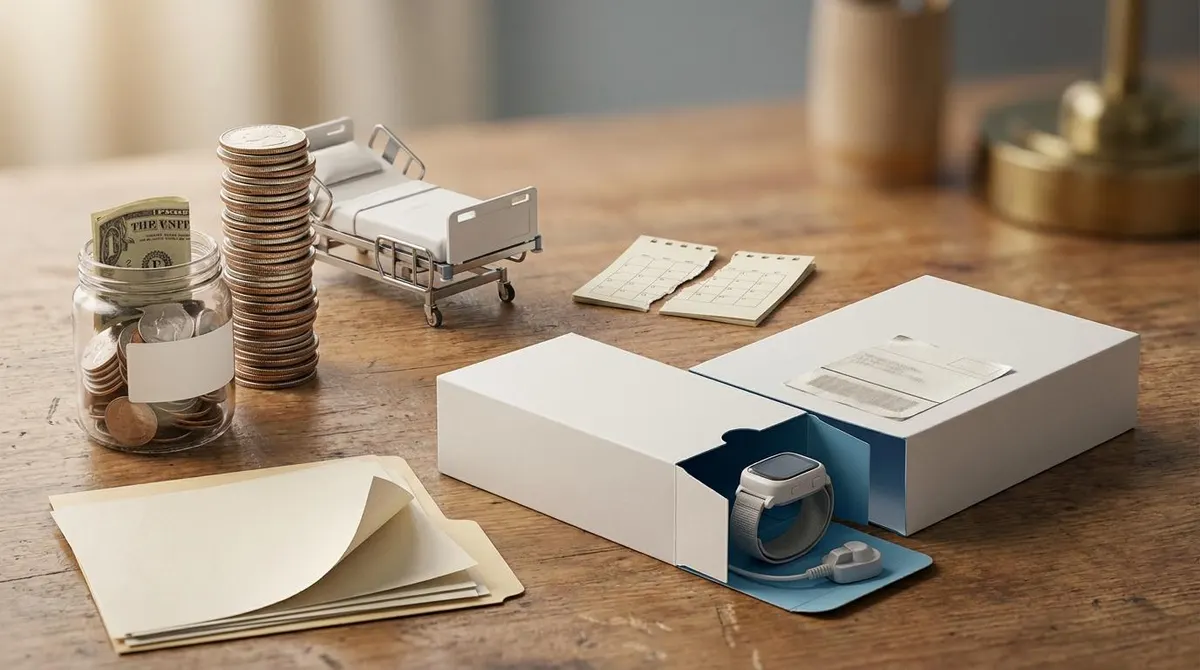
The cost of a home sleep apnea test in the US varies widely depending on the ordering pathway, device used, and whether insurance is involved. Cash-pay pricing typically ranges from $149 to $500 for the test device itself, while insurance-covered tests may involve copays, deductibles, and prior authorization delays.
What Drives the Cost
Several factors affect pricing. The device type matters: single-use disposable devices like the WatchPAT ONE carry a per-unit manufacturing cost, while reusable devices like the ApneaLink Air are amortized across multiple patients by the provider. Physician interpretation fees are sometimes bundled and sometimes billed separately. Sleep lab overhead, shipping logistics, and whether Bluetooth technology or cloud-based reporting infrastructure is included all influence the final price.
For patients paying out of pocket, the total cost includes the test device, physician interpretation, and any follow-up consultations. Through dumbo.health, the home sleep test is $149 as a one-time charge. Physician interpretation and ongoing care, including CPAP therapy and equipment if needed, are covered under monthly plans. The Essentials plan is $59 per month, the Premium plan is $89 per month, and the Elite plan is $129 per month, all with no contracts and cancel anytime flexibility.
How dumbo.health Pricing Compares
When compared to traditional pathways where a sleep study can cost $300 to $800 out of pocket for the test alone plus separate fees for physician review and CPAP equipment, the dumbo.health model provides transparent pricing patients can plan around. There are no surprise bills, no prior authorizations, and no insurance paperwork.
In-lab polysomnography costs substantially more. According to the Sleep Foundation, a full in-lab sleep study can range from $1,000 to $3,000 or more without insurance. While polysomnography provides the most comprehensive data, it is not necessary for every patient. For the majority of adults with suspected obstructive sleep apnea and no major comorbidities, a home sleep test delivers the diagnostic data needed at a fraction of the cost.
DID YOU KNOW: According to the Sleep Foundation, in-lab polysomnography can cost between $1,000 and $3,000 depending on the facility and geographic region, making home sleep testing a significantly more affordable alternative for eligible patients.
KEY TAKEAWAY: Home sleep apnea tests typically cost $149 to $500 on a cash-pay basis, compared to $1,000 to $3,000 for in-lab polysomnography, and dumbo.health offers a complete home sleep test for $149 with transparent monthly care plans for ongoing treatment.
After testing and diagnosis, the next decision is treatment, and understanding the full range of options matters.
Treatment Options After a Positive Home Sleep Apnea Test
CPAP therapy is the gold-standard therapy for moderate to severe obstructive sleep apnea, but it is not the only option. Treatment should be matched to your AHI severity, symptoms, anatomy, and personal tolerance.
CPAP, BiPAP, and Auto-CPAP
Continuous Positive Airway Pressure delivers a steady stream of pressurized air through a mask to keep the airway open during sleep. BiPAP provides two pressure levels, one for inhalation and a lower one for exhalation, which some patients find more comfortable. Auto-CPAP adjusts pressure automatically throughout the night based on detected respiratory events. According to the NIH, adherence to CPAP therapy for at least 4 hours per night on 70 percent or more of nights is the standard benchmark for therapeutic benefit.
Through dumbo.health, all monthly plans include CPAP therapy and equipment. The Essentials plan at $59 per month covers physician interpretation, CPAP equipment, standard follow-up care, and updates sent to your referring provider. The Premium plan at $89 per month adds a dedicated sleep coach from the licensed care team, advanced adherence monitoring, and priority results turnaround. The Elite plan at $129 per month adds concierge clinical support, direct physician messaging, and custom reporting.
Oral Appliance Therapy
A custom-fit mouthpiece, also called a mandibular advancement device, repositions the lower jaw forward to reduce airway collapse. The AASM recommends oral appliances for mild to moderate obstructive sleep apnea or for patients who cannot tolerate CPAP. These devices require fitting by a dentist trained in sleep medicine.
Positional Therapy, Weight Management, and Surgery
Positional therapy targets patients whose AHI is significantly worse when sleeping on their back. Weight management is relevant because excess tissue in the airway and around the tongue increases obstruction risk. Surgical options, including removal of enlarged tonsils or uvulopalatopharyngoplasty, may be considered when anatomical factors are the primary driver and other treatments have failed.
GLP-1 care for weight management has emerged as an area of interest for patients whose obstructive sleep apnea is closely linked to obesity, though this approach requires separate clinical management.
KEY TAKEAWAY: Treatment after a positive home sleep test is not limited to CPAP and should be individualized based on AHI severity, anatomy, comorbidities, and patient preference, with CPAP therapy available through dumbo.health plans starting at $59 per month.
Understanding treatment options is important, but the regulatory landscape behind these devices also affects which tests your provider can use and trust.
Regulatory Standards and Clinical Validation for HSAT Devices
Every home sleep apnea testing device used for clinical diagnosis in the US must hold FDA clearance, confirming the device meets safety and performance requirements for its intended use. FDA clearance is distinct from FDA approval and indicates the device has been demonstrated to be substantially equivalent to a legally marketed predicate device.
FDA Clearance and Safety Standards
The FDA evaluates HSAT devices under the 510(k) pathway. Devices must meet electrical safety standards under IEC 60601, which covers medical electrical equipment safety. Manufacturing quality systems must comply with ISO 13485, the international standard for medical device quality management systems. Biocompatibility standards apply to any sensor components that contact the skin, such as adhesive patches, nasal cannulas, and finger probes.
Statutory regulation varies by state regarding who can order, distribute, and interpret HSAT results. In most states, a licensed physician or a provider operating under physician supervision must order the test and interpret the data.
Clinical Trial Evidence
The strength of clinical validation varies by device. The WatchPAT platform has extensive peer-reviewed clinical trials indexed on PubMed demonstrating diagnostic accuracy for obstructive sleep apnea across multiple populations. The ApneaLink Air has a similarly robust evidence base established over more than a decade of clinical use. Newer devices such as Wesper and SleepImage Ring have growing but comparatively smaller bodies of published validation data. A systematic review or meta-analysis comparing multiple HSAT devices can provide a useful summary of relative performance, though head-to-head comparisons between specific devices remain limited.
The AASM periodically updates its clinical practice guidelines for home sleep apnea testing. As of 2026, the AASM continues to endorse HSAT as a diagnostic tool for uncomplicated obstructive sleep apnea in adults while emphasizing that device selection and result interpretation should involve a board-certified sleep physician.
KEY TAKEAWAY: All home sleep apnea test kits used for clinical diagnosis must hold FDA clearance and meet IEC 60601 and ISO 13485 standards, and the strength of clinical trial evidence varies by device.
Regulatory standards ensure device safety, but the role of the physician in the diagnostic process deserves its own focus.
The Role of the Physician in Home Sleep Apnea Testing
A home sleep apnea test records data, but only a qualified physician can diagnose obstructive sleep apnea. The device is a tool. The diagnosis is a clinical decision that accounts for the patient's full medical history, symptoms, physical examination findings, and test data.
Why Physician Interpretation Matters
Automated scoring algorithms embedded in HSAT devices provide a preliminary AHI and event counts. However, these algorithms can misclassify artifacts as respiratory events, miss true events obscured by signal noise, or fail to account for clinical context. A board-certified sleep physician manually reviews the raw data, applies AASM scoring criteria, correlates findings with patient-reported symptoms such as snoring, witnessed apneas, and daytime sleepiness, and generates a final diagnostic report.
Many patients report that the most confusing part of home sleep testing is waiting for results and not understanding who is reviewing their data. With dumbo.health, every plan includes physician interpretation as a core component. The Elite plan provides direct physician messaging for patients who want to discuss their results in detail and ask follow-up questions.
The Importance of Follow-Up Care
Diagnosis is not the endpoint. Sleep medicine best practice requires follow-up to confirm treatment efficacy, monitor adherence, adjust CPAP pressure if needed, and reassess symptoms over time. Clinicians frequently observe that patients who receive structured follow-up have higher treatment adherence rates and better outcomes. The Premium plan's dedicated sleep coach and advanced adherence monitoring directly address this need.
Home sleep apnea testing without physician oversight or structured follow-up carries the risk of underdiagnosis, misdiagnosis, or abandonment of treatment. The device data is only as valuable as the clinical framework around it.
KEY TAKEAWAY: A board-certified sleep physician must interpret home sleep test data and provide ongoing follow-up care, because the device alone cannot diagnose or manage obstructive sleep apnea.
With the clinical framework clear, a direct comparison between home testing and the traditional sleep lab experience helps finalize the decision for many patients.
Home Sleep Apnea Test vs In-Lab Polysomnography
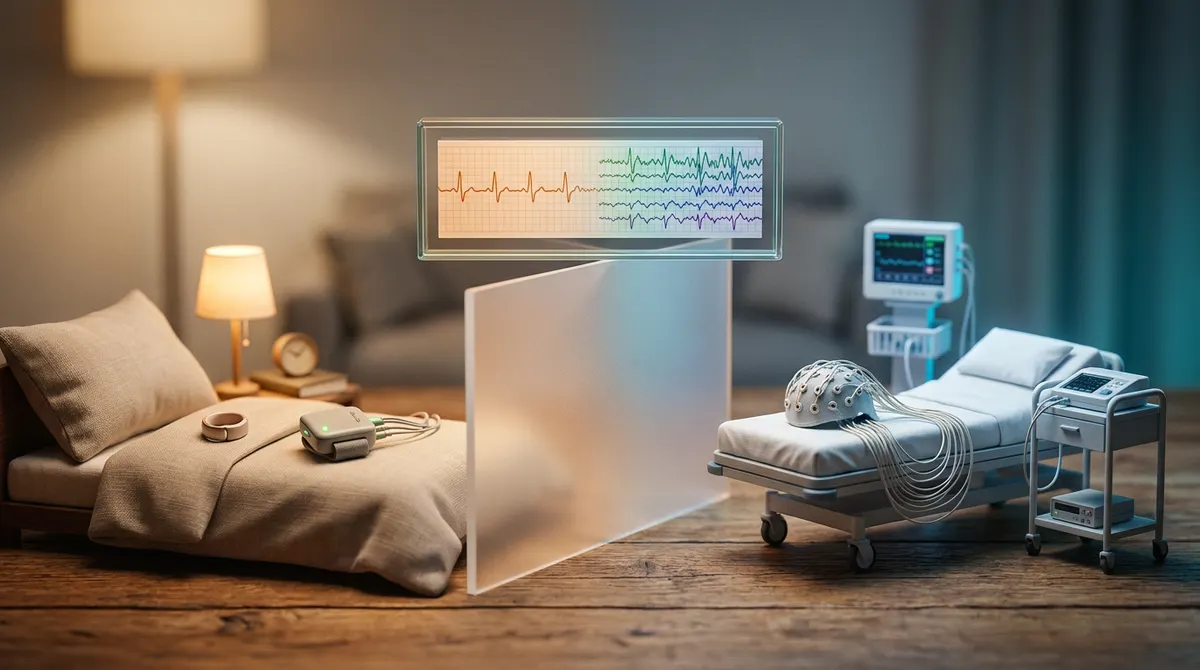
In-lab polysomnography remains the gold-standard diagnostic test for sleep-related breathing disorders, but home sleep apnea testing is the appropriate first-line option for most adults with suspected uncomplicated obstructive sleep apnea.
Setting
- Home Sleep Apnea Test: Your own bed at home or any comfortable location
- Polysomnography: Sleep clinic or hospital sleep lab
Channels Recorded
- Home Sleep Apnea Test: Typically 4 to 7 channels including airflow, oximetry, heart rate, and respiratory effort
- Polysomnography: 16 or more channels including full EEG, EOG, EMG, ECG, airflow, respiratory effort, oximetry, limb movements, body position, and snoring
Sleep Staging
- Home Sleep Apnea Test: Estimated via actigraphy or peripheral arterial tonometry in most devices, direct EEG only in the Compumedics Somfit
- Polysomnography: Direct measurement via electroencephalogram, electrooculogram, and electromyogram
Cost
- Home Sleep Apnea Test: $149 to $500 cash-pay, lower with insurance coverage
- Polysomnography: $1,000 to $3,000 or more, often requires insurance pre-authorization
Convenience
- Home Sleep Apnea Test: High, no travel or overnight facility stay required
- Polysomnography: Lower, requires scheduling, travel to a sleep lab near you, and sleeping in an unfamiliar environment
Turnaround Time
- Home Sleep Apnea Test: Results typically within days, faster on dumbo.health Premium plan
- Polysomnography: Results may take 1 to 3 weeks depending on the facility
Best For
- Home Sleep Apnea Test: Adults with moderate to high pretest probability of obstructive sleep apnea and no significant comorbidities
- Polysomnography: Patients with suspected central sleep apnea, heart failure, neuromuscular disease, parasomnia, narcolepsy, or inconclusive HSAT results
For the majority of patients being evaluated for obstructive sleep apnea, a home sleep test provides the necessary diagnostic information at a lower cost with greater convenience. If the home test is inconclusive or if complex sleep conditions are suspected, escalation to in-lab polysomnography is the appropriate next step.
KEY TAKEAWAY: Home sleep apnea testing is the validated first-line diagnostic option for uncomplicated obstructive sleep apnea, while polysomnography remains necessary for complex cases involving central sleep apnea, heart failure, or non-respiratory sleep disorders.
With the comparison between testing environments clear, the path from diagnosis to treatment is the final step to cover.
Getting Started With Home Sleep Apnea Testing Through dumbo.health
Starting a home sleep apnea test through dumbo.health follows a streamlined pathway designed to eliminate the barriers of insurance paperwork, scheduling delays, and hidden costs.
The process begins with a free sleep assessment that evaluates your symptoms, risk factors, and medical history. Based on your answers, the clinical team determines whether home sleep testing is appropriate for your situation. If testing is indicated, you order the home sleep test for a one-time cost of $149, and the device ships directly to you.
After completing the test and returning or disposing of the device, your data is sent to a board-certified sleep physician for interpretation. If your results confirm obstructive sleep apnea and CPAP therapy is recommended, you select a monthly care plan. The Essentials plan at $59 per month covers CPAP equipment, physician interpretation, standard follow-up care, and provider updates. The Premium plan at $89 per month adds a
Frequently Asked Questions About Home Sleep Apnea Test Kits
What is obstructive sleep apnea?
Obstructive sleep apnea (OSA) is a sleep-related breathing disorder in which the muscles and tissue at the back of the throat relax during sleep, causing repeated partial or complete blockages of the airway. These blockages interrupt normal breathing, reduce blood oxygen saturation, and force the brain to briefly wake the body to restore airflow. According to the National Heart, Lung, and Blood Institute (NHLBI), OSA is one of the most common sleep disorders in the United States and is associated with serious health risks including high blood pressure, cardiovascular disease, and daytime cognitive impairment. A healthcare professional can help determine whether testing is appropriate.
What is a home sleep apnea test and what does it measure?
A home sleep apnea test (HSAT) is an FDA-cleared portable device that allows patients to screen for obstructive sleep apnea in their own bed instead of a clinical sleep lab. Most HSAT devices measure oxygen saturation, airflow through a nasal cannula, respiratory effort, heart rate, and body position across one or more nights of sleep. These measurements allow a sleep physician to calculate an Apnea-Hypopnea Index (AHI) score, which reflects the average number of apnea and hypopnea events per hour of sleep. Some advanced devices also capture peripheral arterial tone (PAT) or actigraphy data to support sleep staging analysis.
How accurate are home sleep apnea tests compared to in-lab polysomnography?
Home sleep apnea tests are clinically validated for diagnosing moderate to severe obstructive sleep apnea in adults with a high pre-test probability of OSA, but they are generally less comprehensive than full in-lab polysomnography. Polysomnography records an electroencephalogram (EEG), electrooculogram, electromyogram, airflow, respiratory effort, oxygen saturation, and heart rate simultaneously, enabling detailed sleep staging analysis. The American Academy of Sleep Medicine (AASM) supports the use of HSAT devices for appropriate patients but notes that home tests can underestimate OSA severity because they calculate the AHI score against total recording time rather than confirmed sleep time. A sleep physician should interpret all results.
Can a home sleep apnea test produce an incorrect result?
Yes. Home sleep apnea tests can produce false negative results, meaning they may miss OSA in some patients. Because HSAT devices cannot confirm sleep stages with an electroencephalogram, the AHI score is calculated against the full recording period, which may include time spent awake. This can cause the measured severity to appear lower than it actually is. Device displacement, poor sensor contact, or a patient sleeping differently than usual on the test night can also affect data quality. If symptoms remain present after a normal HSAT result, a clinician may recommend an in-lab sleep study for further evaluation.
Is it better to do a home sleep study or an in-lab sleep study?
The right choice depends on clinical presentation and individual health history. For adults who primarily snore, report daytime sleepiness, or have a high likelihood of straightforward obstructive sleep apnea, an HSAT is often appropriate and more convenient. An in-lab polysomnography is generally recommended when central sleep apnea is suspected, when the patient has complex medical conditions such as heart failure, when previous home test results were inconclusive, or when additional sleep staging detail is clinically required. A qualified healthcare professional or sleep specialist should guide this decision based on symptoms, risk factors, and medical history. Learn more in our home sleep apnea test for commercial drivers guide.
What sleep disorders can home sleep apnea tests detect?
Home sleep apnea tests are designed primarily to detect obstructive sleep apnea and sleep-disordered breathing in adults. They are not designed to reliably detect central sleep apnea, narcolepsy, restless leg syndrome, parasomnias, or other complex sleep conditions. Most HSAT devices measure airflow, respiratory effort, oxygen saturation, heart rate, and body position. Some devices with peripheral arterial tonometry or photoplethysmography capability may provide additional data such as arrhythmia detection or limited sleep staging. A sleep physician should determine whether HSAT results are sufficient or whether polysomnography is needed for a complete evaluation.
What are the top-rated home sleep apnea test kits available in the US?
Several FDA-cleared home sleep apnea test devices are widely used in clinical practice in the United States. Commonly referenced options include the WatchPAT ONE and WatchPAT 300 from Itamar Medical, the ResMed ApneaLink Air, the Philips Alice NightOne, the Natus Medical Embletta MPR-PG, the SleepImage Ring and SleepImage Fingertip, the Wesper and Wesper Lab devices, the BRAEBON Medical Corporation MediByte, the Compumedics Somfit, the Cadwell ApneaTrak, the Resmed NightOwl, and the Acurable AcuPebble SA100 series. The right device for any individual patient depends on clinical factors, physician preference, and what the test needs to measure. A sleep physician or sleep specialist should select the appropriate device.
How does the WatchPAT ONE work?
The WatchPAT ONE is a single-use, FDA-cleared home sleep apnea test device developed by Itamar Medical. It uses peripheral arterial tonometry (PAT), a method that detects changes in peripheral arterial tone at the fingertip using photoplethysmography. The device attaches to the wrist, a finger sensor, and a chest strap. During sleep, it records PAT signal, oxygen saturation, actigraphy, heart rate, body position, and snoring. These signals allow the device's algorithm to estimate sleep staging and calculate an AHI score and Respiratory Event Index. Because it does not use a nasal cannula, some patients find it more comfortable than traditional nasal airflow devices.
How does the ResMed ApneaLink Air work?
The ResMed ApneaLink Air is an FDA-cleared home sleep apnea test device that measures airflow using a nasal cannula, respiratory effort using a chest strap, oxygen saturation using a pulse oximeter, and heart rate. The patient wears the device during one night of sleep at home. The collected data is then downloaded and reviewed by a sleep physician, who calculates the AHI score and assesses the severity of sleep-disordered breathing. The ApneaLink Air is designed for use in adults with a high clinical suspicion of obstructive sleep apnea and is not intended to detect central sleep apnea or other complex sleep conditions.
How does the Philips Alice NightOne work?
The Philips Alice NightOne is a wearable, FDA-cleared HSAT device designed for unattended home use. It records airflow via a nasal cannula, respiratory effort through a chest belt, oxygen saturation and heart rate via a pulse oximeter, body position, and snoring. The device is designed with simplified setup features to help patients apply sensors correctly without clinic assistance. Recorded data is reviewed by a qualified sleep physician for AHI score calculation and clinical interpretation. The Alice NightOne is intended for adults with suspected obstructive sleep apnea who do not have significant comorbidities that would require in-lab polysomnography.
How do you set up and use a home sleep apnea test device?
Setup varies by device but generally follows a similar process. You apply a nasal cannula to measure airflow, attach a pulse oximeter to a finger to measure oxygen saturation and heart rate, and secure a chest strap to measure respiratory effort. Some devices such as the WatchPAT ONE use a wrist unit and fingertip sensor instead of a nasal cannula. Most devices are provided with printed or video instructions. You sleep as normally as possible with the sensors in place. The device records data overnight, and the data is then reviewed by a physician for interpretation. Specific setup instructions will be provided by the testing provider.
How long do you need to sleep during a home sleep study?
Most home sleep apnea test protocols require a minimum of four hours of recorded data for the results to be considered clinically interpretable. Sleeping for a full night of at least six to eight hours improves data quality and provides a more representative recording. If the device records fewer than four hours of usable data due to sensor displacement, equipment issues, or difficulty sleeping, the test may need to be repeated. A sleep physician will review whether the recording duration is sufficient to support a reliable AHI score and clinical interpretation.
Can I use the bathroom during a home sleep study?
Yes. You can get up to use the bathroom during a home sleep study. Most HSAT devices continue recording during brief interruptions and do not require you to remain in bed for the entire night. Some devices use body position sensors, so moving around briefly will not invalidate the study. If sensors become dislodged during the night, try to reattach them as directed in your instructions. You should avoid removing the device entirely unless there is a medical reason to do so. A brief restroom visit has minimal impact on the overall quality of an overnight recording.
How do you prepare for a home sleep apnea test?
Preparation for a home sleep apnea test is straightforward. On the test night, avoid caffeine, alcohol, and sedatives unless your physician has specifically directed otherwise, as these can affect breathing patterns and sleep quality during recording. Try to maintain your normal sleep routine and sleep in your usual bed. Apply all sensors carefully according to the device instructions. Secure any cables using medical tape if provided. Do not use overnight skin lotions on the finger before attaching a pulse oximeter, as this can interfere with oxygen saturation readings. Contact your testing provider if you have questions before the test night.
How does a home sleep study diagnose obstructive sleep apnea?
A home sleep study does not independently diagnose obstructive sleep apnea. It collects objective sleep data including airflow, respiratory effort, oxygen saturation, heart rate, and body position, which a qualified sleep physician then reviews and interprets. The physician calculates the Apnea-Hypopnea Index (AHI) score, which measures the average number of apnea and hypopnea events per hour. According to the American Academy of Sleep Medicine, an AHI of 5 to 14 events per hour generally indicates mild OSA, 15 to 29 indicates moderate OSA, and 30 or more indicates severe OSA. A physician makes the final diagnosis based on clinical context and test results together.
What is the Apnea-Hypopnea Index and what does my score mean?
The Apnea-Hypopnea Index (AHI) is the primary metric used to assess the severity of obstructive sleep apnea. It measures the average number of complete breathing pauses (apneas) and partial breathing reductions (hypopneas) per hour of recorded sleep or recording time. A higher AHI score indicates more frequent breathing disruptions during sleep. In general terms, an AHI below 5 is considered normal, 5 to 14 indicates mild OSA, 15 to 29 indicates moderate OSA, and 30 or above indicates severe OSA. Your physician will interpret your AHI score alongside your symptoms, oxygen saturation data, and medical history to determine whether treatment is appropriate.
What level of sleep apnea requires CPAP therapy?
CPAP therapy is commonly recommended for moderate to severe obstructive sleep apnea, generally corresponding to an AHI of 15 or higher. However, some patients with mild OSA and significant symptoms such as severe daytime sleepiness, cardiovascular risk, or impaired quality of life may also be recommended for CPAP therapy by their physician. The decision to begin CPAP is a clinical one based on AHI score, symptom severity, oxygen saturation patterns, and individual health factors. A healthcare professional should guide all treatment decisions. A custom-fit mouthpiece or BiPAP may be considered in some cases as an alternative to standard CPAP. Learn about CPAP therapy and equipment through transparent cash-pay care options.
What happens after you receive your home sleep test results?
After your home sleep test data is reviewed and interpreted by a sleep physician, you will receive a report outlining your AHI score, oxygen saturation levels, breathing event frequency, and any recommended next steps. If OSA is confirmed, your physician may recommend CPAP therapy, a follow-up in-lab sleep study, or other treatment approaches depending on severity. If your results are normal but symptoms continue, your physician may suggest additional evaluation. For patients using dumbo.health, monthly plans cover physician interpretation and report, CPAP therapy and equipment, and adherence follow-up, with provider updates sent to your referring physician. Explore ongoing sleep apnea care solutions to understand what is included.
Do you need a prescription for a home sleep apnea test?
Yes. In the United States, a home sleep apnea test typically requires a physician order or prescription because the device is classified as prescription medical equipment and the results must be interpreted by a qualified healthcare professional. Some testing services provide access to a physician consultation as part of the process so that patients can obtain the required order without a separate clinic visit. dumbo.health supports patients through this process. If you do not yet have a referring physician, a sleep assessment can help determine whether testing is clinically appropriate before you proceed.
How much does a home sleep apnea test cost without insurance?
The cost of a home sleep apnea test without insurance varies depending on the provider, device, and whether physician interpretation is included. Prices generally range from around $150 to several hundred dollars when ordered through direct-to-consumer or cash-pay services. dumbo.health offers an at-home sleep test for $149 as a one-time, cash-pay purchase with no insurance required and no prior authorization. This covers the device and one test night. Physician interpretation and ongoing care such as CPAP therapy, equipment, and adherence follow-up are covered under separate monthly plans starting at $59 per month. There are no contracts and you can cancel anytime.
Can you get a free home sleep apnea test?
In most cases, you cannot obtain a completely free home sleep apnea test. Some insurance plans, including Medicare, may cover home sleep apnea testing when a physician determines it is medically necessary and ordered appropriately. Patients without insurance or those who prefer not to use insurance will generally pay out of pocket. Some employer wellness programs or clinical research studies may offer subsidised or no-cost testing in specific circumstances. If cost is a concern, cash-pay options such as dumbo.health offer transparent, predictable pricing for at-home sleep testing starting at $149 with no hidden fees or surprise bills. A free sleep assessment can help you determine whether testing is an appropriate next step.
Will insurance cover a home sleep apnea study?
Insurance coverage for home sleep apnea testing depends on your specific plan, insurer, and clinical documentation. Many private insurers and Medicare cover HSAT when a physician has documented medical necessity, ordered the appropriate device, and the study is interpreted by a qualified sleep physician. Prior authorization is often required. For patients who prefer to avoid the insurance process, cash-pay home sleep testing is available without prior authorization or insurance requirements. dumbo.health operates on a transparent cash-pay model, which means no insurance is needed, no prior authorizations are required, and there are no surprise bills.
How many times can you repeat an at-home sleep apnea test?
There is no strict universal limit on the number of times a patient can take a home sleep apnea test, but repeat testing is generally guided by clinical need. A physician may recommend a repeat HSAT if the initial test produced insufficient data, if sensor displacement affected recording quality, or if results were inconclusive despite significant symptoms. In some cases, a physician may recommend transitioning to an in-lab polysomnography after an inconclusive or borderline HSAT rather than repeating the home test. Discuss with your healthcare professional whether a repeat test or a different type of evaluation is appropriate for your situation.
What are the pros and cons of a home sleep apnea test?
The primary advantages of a home sleep apnea test include convenience, lower cost compared to in-lab studies, the ability to sleep in your own bed, and faster access to results in many cases. The main limitations are that HSAT cannot capture a full electroencephalogram for sleep staging, may underestimate OSA severity because AHI is calculated against total recording time rather than confirmed sleep time, cannot detect central sleep apnea reliably, and may produce unusable data if sensors are dislodged during the night. Home sleep apnea testing is well suited to adults with a high pre-test likelihood of OSA but may not be sufficient for patients with complex medical histories or suspected non-obstructive sleep disorders.
When is a home sleep apnea test appropriate?
According to the American Academy of Sleep Medicine, home sleep apnea testing is appropriate for adults who have a high pre-test probability of moderate to severe obstructive sleep apnea, do not have significant comorbidities such as heart failure, neuromuscular disease, or chronic lung disease, and do not have clinical suspicion of central sleep apnea or other complex sleep disorders. HSAT is not appropriate as a general population screening tool or for patients whose symptoms suggest a condition other than straightforward obstructive sleep apnea. A sleep physician or sleep specialist should assess your clinical picture before determining whether home testing is the right pathway.
How does a home sleep test differ from a polysomnography lab study?
A home sleep test is a simplified recording designed to measure key indicators of obstructive sleep apnea, including airflow, respiratory effort, oxygen saturation, heart rate, and body position. A polysomnography conducted in a sleep lab records all of these plus an electroencephalogram, electrooculogram, electromyogram, and additional physiological signals, allowing technicians to monitor detailed sleep staging in real time. Polysomnography is considered the gold-standard diagnostic tool for the full range of sleep disorders, while home sleep apnea testing is a validated, less intensive option appropriate for patients with a high likelihood of uncomplicated obstructive sleep apnea. Learn more about at-home sleep testing versus lab studies.
What are common symptoms that may suggest obstructive sleep apnea?
Common symptoms associated with obstructive sleep apnea include loud or frequent snoring, waking up short of breath, morning headaches, excessive daytime sleepiness, difficulty concentrating, irritability, and waking frequently during the night. A bed partner may report observed pauses in breathing during sleep. These symptoms do not confirm a diagnosis of OSA on their own, and other conditions can produce similar presentations. If you experience these symptoms regularly, a healthcare professional can help determine whether sleep apnea testing is appropriate. The free sleep assessment from dumbo.health can also help you evaluate whether at-home testing may be a reasonable first step.
Do commercial drivers need sleep apnea testing for DOT certification?
Commercial drivers are not universally required by the FMCSA to undergo sleep apnea testing as a blanket rule, but certified medical examiners may refer drivers for sleep apnea evaluation when clinical risk factors are present, such as obesity, a high body mass index, snoring, observed apneas, excessive daytime sleepiness, or uncontrolled hypertension. The FMCSA states that a driver must be free of any medical condition that could interfere with safe vehicle operation. A certified medical examiner makes all DOT certification decisions, not a testing provider. dumbo.health can support sleep apnea testing and documentation for commercial drivers, but it does not guarantee DOT clearance or medical certification. Learn more about DOT sleep apnea testing.
How does sleep apnea affect CDL drivers and their ability to keep their licence?
Untreated obstructive sleep apnea can impair daytime alertness, reaction time, and cognitive function, which are safety-critical abilities for commercial drivers. A certified medical examiner may disqualify a CDL driver from operating a commercial motor vehicle if the examiner determines that untreated sleep apnea poses a safety risk. Drivers who are diagnosed with OSA and begin compliant CPAP therapy may be able to demonstrate adequate treatment and return to medical certification, depending on the examiner's evaluation. CPAP adherence data is often reviewed as part of this process. A certified medical examiner makes all final certification decisions. For more information, see the CDL sleep apnea test guide.
What is CPAP therapy and why is adherence monitoring important?
CPAP, or continuous positive airway pressure, is widely recognised as the gold-standard therapy for moderate to severe obstructive sleep apnea. A CPAP machine delivers a continuous stream of pressurised air through a mask worn during sleep, which keeps the upper airway open and prevents apnea events. Adherence monitoring tracks how consistently and for how long a patient uses their CPAP device each night. The FMCSA and many certified medical examiners may review CPAP adherence data when evaluating commercial drivers for ongoing DOT medical certification. Consistent CPAP use is also associated with improved daytime alertness, oxygen saturation, and cardiovascular outcomes. Poor adherence may affect both health outcomes and DOT recertification decisions.
What ongoing care is available after a positive sleep apnea diagnosis?
After a diagnosis of obstructive sleep apnea, ongoing care typically includes CPAP therapy and equipment, adherence follow-up, and regular physician review to assess treatment effectiveness. Some patients benefit from sleep coaching to improve CPAP comfort and consistency. Provider reporting helps referring physicians stay updated on patient progress. dumbo.health monthly plans cover physician interpretation and report, CPAP therapy and equipment, standard or advanced adherence monitoring, and optional sleep coaching from a licensed care team, depending on the plan selected. Plans start at $59 per month with no contracts and no insurance required. Compare sleep apnea care plans to find the right level of support.
Is it safe to test for sleep apnea at home?
Home sleep apnea testing is considered safe for most adults when devices meet FDA clearance and relevant biocompatibility and electrical safety standards such as IEC 60601. The devices are non-invasive and designed for unsupervised overnight use. Patients with serious cardiovascular conditions, significant respiratory disease, or other complex medical needs may require in-lab monitoring rather than unattended home testing. If you experience severe symptoms such as chest pain, severe shortness of breath, or other urgent health concerns on your test night, seek medical care promptly rather than continuing the study. A healthcare professional can determine whether home testing is appropriate for your individual circumstances before you proceed.
Where can I find home sleep apnea testing near me?
Home sleep apnea testing is available through sleep clinics, pulmonologists, primary care physicians, and direct-to-consumer platforms across the United States. Many providers offer devices by mail so that patients can test from any location. If you are looking for at-home sleep apnea testing with transparent cash-pay pricing and no insurance required, dumbo.health ships an HSAT device directly to your door and provides physician interpretation as part of a connected care plan. You do not need to find a sleep lab in your area to access testing. The free dumbo.health sleep assessment can help you determine whether at-home testing is appropriate before you order a device.
Related Home Sleep Apnea Test Topics
- Home Sleep Apnea Test The Complete Guide to At-Home Sleep Apnea Testing
- At Home Sleep Apnea Test for VA Disability The Complete Guide for Veterans
- At-Home Sleep Apnea Test for VA The Complete Guide for Veterans
- Home Sleep Apnea Testing The Complete Guide to Diagnosing Sleep Apnea at Home
- Best Home Sleep Apnea Test A Clinical Guide to Choosing the Right At-Home Sleep Study
- How Do You Get a Home Sleep Apnea Test The Complete Guide to At-Home Sleep Testing
- At Home Sleep Apnea Test with Ring How Ring-Based Sleep Testing Works and Whether It Can Diagnose Sleep Apnea
- Home Sleep Apnea Test Ring How Ring-Based Sleep Testing Works for Sleep Apnea Detection
- How to Get a Sleep Apnea Test at Home The Complete Guide to Home Sleep Testing
- Home Sleep Apnea Test ICD-10 Codes The Complete Coding and Diagnostic Guide for Sleep Apnea Testing
- Sleep Apnea Test at Home The Complete Guide to Home Sleep Testing for Adults
- Home Sleep Test The Complete Guide to At-Home Sleep Apnea Testing
- Sleep Test at Home The Complete Guide to Home Sleep Apnea Testing
- Sleep Apnea Testing at Home The Complete Guide to Home Sleep Tests, Devices, and Results
- Sleep Apnea Diagnosis at Home The Complete Guide to Home Sleep Testing
- How Is a Home Sleep Apnea Test Done A Complete Guide to At-Home Sleep Testing
- How Does a Home Sleep Apnea Test Work A Complete Guide to At-Home Sleep Testing
- CPAP Test at Home The Complete Guide to Home Sleep Apnea Testing and Treatment
- Can You Test for Sleep Apnea at Home A Complete Guide to Home Sleep Testing
- What Is a Home Sleep Apnea Test How At-Home Sleep Testing Works, What It Measures, and Who Needs One
- At-Home Sleep Apnea Test The Complete Guide to Testing, Results, and Treatment
- At Home Sleep Study for Sleep Apnea The Complete Guide to Testing in Your Own Bed
- Sleep Study Test for Sleep Apnea The Complete Guide to Diagnosis, Testing Types, and Next Steps
- Sleep Study for Sleep Apnea What the Test Measures, How It Works, and What Your Results Mean
- What Is the Cost of a Sleep Apnea Test at Home
- Average Cost of a Home Sleep Apnea Test Kit Shipped in the US
- Home Sleep Apnea Test FSA Eligible How to Use Your Flexible Spending Account for Sleep Testing
- At-Home Sleep Apnea Test FSA How to Use Your Flexible Spending Account for Sleep Testing
- At Home Sleep Apnea Test HSA How to Use Your Health Savings Account for Sleep Testing
- At-Home Sleep Apnea Test DOT Approved The Complete Guide for Commercial Drivers
- Home Sleep Apnea Test CPT Code Complete Coding and Billing Guide for Sleep Studies
- CPT Code for Home Sleep Apnea Test The Complete Coding and Billing Guide
- CPT for Home Sleep Apnea Test Complete Coding and Billing Guide for Sleep Study Providers
- Home Sleep Apnea Test for Children What Parents Need to Know About Pediatric Sleep Testing
- Home Sleep Apnea Test for Kids What Parents Need to Know About Pediatric Sleep Testing
- Kids at Home Sleep Apnea Test What Parents Need to Know About Pediatric Sleep Testing
- Does a Home Sleep Apnea Test Measure Apneas What the Device Actually Records
- At-Home Sleep Apnea Test for Toddlers What Parents Need to Know About Pediatric Sleep Testing
- Home Sleep Apnea Test Contraindications When an HSAT Is Not the Right Choice
- Home Sleep Apnea Test Near Me How to Get Tested Without a Sleep Lab Visit
- Home Sleep Apnea Test Indications Who Qualifies and When At-Home Testing Is Clinically Appropriate
- Sleep Apnea Test The Complete Guide to Diagnosis, Home Testing, and What Your Results Mean
- Home Sleep Testing The Complete Guide to Diagnosing Sleep Apnea From Your Own Bed
- What Is the Best At-Home Sleep Apnea Test A Clinical Comparison of Devices, Accuracy, and Cost
- Home Sleep Testing Companies A Complete Guide to At-Home Sleep Apnea Diagnosis
- Disadvantages of Home Sleep Testing What Patients and Providers Need to Know
- Home Sleep Apnea Test Cost What You Actually Pay With and Without Insurance
- Can I Get a CPAP Machine After a Home Sleep Apnea Test
- Sleep Apnea Sleep Study The Complete Guide to Testing, Diagnosis, and Treatment
- Sleep Test to CPAP How Sleep Apnea Testing Leads to Treatment
- Can a Sleep Study Diagnose Sleep Apnea and Other Sleep Disorders
- Obstructive Sleep Apnea Sleep Study The Complete Guide to Diagnosis, Testing, and Treatment
- Where Can I Buy a Home Sleep Apnea Test Without a Prescription
- Does Insurance Cover a Home Sleep Apnea Test What You Actually Pay
- Does Medicare Cover a Home Sleep Apnea Test What Beneficiaries Need to Know
- How Do Home Sleep Apnea Tests Compare to In-Lab Sleep Studies
- Can Dentists Prescribe a Home Sleep Apnea Test What You Need to Know
- What Happens After a Home Sleep Apnea Test Results, Diagnosis, and Next Steps
- Do I Need a Prescription for a Home Sleep Apnea Test Device
- Home Sleep Apnea Test FDA Approved What Devices Are Cleared and How They Work
- Sleep Apnea Test at Home with Insurance What Your Plan Actually Covers and How to Get Tested
- FDA Approved Home Sleep Apnea Test What Devices Are Cleared, How They Work, and How to Get Tested
- At-Home Sleep Apnea Test Covered by Medicaid What You Need to Know Before Getting Tested
- Polysomnography at Home How Home Sleep Testing Compares to In-Lab Sleep Studies
- Home Sleep Apnea Test Medicaid Coverage What Patients Need to Know
- Sleep Apnea Test at Home DOT Approved Options for Commercial Drivers
- Sleep Apnea Test Near Me How to Find Local and At-Home Testing Options
- Home Sleep Apnea Test CPT Codes A Complete Guide to Billing, Coding, and Reimbursement
- Apnea Monitor The Complete Guide to Breathing Monitors for Sleep Apnea and Infant Care
- CPT Code for Home Sleep Apnea Test Complete Billing and Coding Guide
- Do You Need a Prescription for a Home Sleep Apnea Test
- Can My Doctor Prescribe a Home Sleep Apnea Test What You Need to Know
- Are Home Sleep Apnea Tests Accurate What the Evidence Actually Shows
- Are Home Sleep Apnea Tests Reliable Clinical Evidence, Accuracy, and What the Data Actually Shows
- What Does a Home Sleep Apnea Test Consist Of Sensors, Equipment, and What to Expect
- Pediatric Home Sleep Apnea Test A Complete Guide for Parents and Providers
- Home Sleep Apnea Test Guidelines Clinical Standards, Eligibility, and What Every Patient Should Know
- HSAT The Complete Guide to Home Sleep Apnea Testing
- Home Sleep Apnea Test Parameters What Every Measurement Means and Why It Matters
- Sleep Apnea Diagnosis How Sleep Apnea Is Detected, Tested, and Confirmed
- Can a Home Sleep Apnea Test Be Wrong Accuracy, False Negatives, and What to Do Next
- Home Sleep Apnea Test Questionnaire Screening Tools, Risk Scores, and What Happens Next
- Home Sleep Apnea Test False Negative Why It Happens and What to Do Next
- Sleep Apnea Testing The Complete Guide to Diagnosis, Home Tests, and What Your Results Mean
- How to Get Tested for Sleep Apnea The Complete Guide to Diagnosis, Sleep Studies, and Treatment
- Sleep Apnea Testing Near Me How to Find the Right Test, Provider, and Path to Diagnosis
- Do At-Home Sleep Apnea Tests Work Clinical Accuracy, Limitations, and What the Evidence Shows
- How Long Does a Home Sleep Apnea Test Take What to Expect Before, During, and After Testing
- Sleep Apnea Checker How to Screen for Sleep Apnea and What Your Results Mean
- How Much Does a Home Sleep Apnea Test Cost Complete Pricing Breakdown for Self-Pay and Insured Patients
- Best At Home Sleep Apnea Test A Clinical Comparison
- Does Anyone Ever Pass a Sleep Apnea Test What Normal Results Actually Look Like
- How Does a Sleep Study Diagnose Sleep Apnea
- Sleep Study for Sleep Apnea What Happens, What It Measures, and What Your Results Mean
- Can Sleep Apnea Be Diagnosed Without a Sleep Study
- What to Expect During a Sleep Study for Sleep Apnea
- Which Companies Offer Home Sleep Apnea Testing Services with Fast Results
- Home Sleep Test Cost What You Actually Pay With and Without Insurance
- Are Sleep Studies Covered by Insurance What You Actually Pay for Sleep Apnea Testing
- Sleep Study Apnea Hypopnea Index What Your AHI Score Means and Why It Matters
AI summary
A home sleep apnea test (HSAT) is an FDA-cleared portable study that records breathing-related signals overnight to evaluate obstructive sleep apnea (OSA) outside a sleep lab. HSAT typically measures airflow, oxygen saturation (SpO2), heart rate, and respiratory effort to calculate the Apnea-Hypopnea Index (AHI). Common US devices include WatchPAT ONE (Itamar Medical, peripheral arterial tonometry), ResMed ApneaLink Air (nasal cannula, oximetry, chest effort), SleepImage Ring (photoplethysmography and actigraphy), Wesper patch (adhesive chest patch with multiple channels), and Compumedics Somfit (forehead device with EEG/EOG/EMG for true sleep staging). HSAT is supported by American Academy of Sleep Medicine guidance for adults with moderate to high pretest probability of uncomplicated OSA. It is not recommended for suspected central sleep apnea, heart failure, severe pulmonary disease, neuromuscular disorders, or other complex sleep conditions. Results require physician interpretation. Typical severity bands are AHI 5–14 mild, 15–29 moderate, and 30+ severe. HSAT can fail due to sensor displacement and may underestimate AHI when sleep time is estimated rather than measured with EEG.

Nicolas Nemeth
Co-Founder
Nico is the co-founder of Dumbo Health, a digital sleep clinic that brings the entire obstructive sleep apnea journey home. Patients skip the sleep lab and the long wait to see a specialist. Dumbo Health ships an at home test, connects patients with licensed sleep clinicians by video, and delivers CPAP or a custom oral appliance with ongoing coaching and automatic resupply in one clear subscription.
Keep reading

VA At Home Sleep Apnea Test: The Complete Guide for Veterans

Home Sleep Apnea Test App: What Works, What Doesn't, and How to Get a Real Diagnosis


