Requisition for Home Sleep Apnea Test: What You Need, Who Can Order It, and How to Get Tested
A home sleep apnea test requires a requisition, which is a written medical order that establishes medical necessity and allows the test to be performed, interpreted, and billed. The article explains who can write this order, including primary care physicians, sleep specialists, and in some states nurse practitioners or physician assistants. It outlines what happens before an order is issued, such as symptom review, risk screening with tools like Epworth and STOP-BANG, and a focused physical exam. It compares Type I, II, III, and IV devices and what they measure, including airflow, respiratory effort, SpO2, and heart rate. It walks through the at-home process from setup to physician interpretation and result review. You will also learn Medicare and insurance documentation requirements, when HSAT is not appropriate, and how to prepare to avoid repeat testing.
Struggling with sleep?
Find out if sleep apnea is the reason.
FDA-cleared. $149 flat. Physician-reviewed results in 48 hours.

Requisition for Home Sleep Apnea Test: What You Need, Who Can Order It, and How to Get Tested
A requisition for a home sleep apnea test is a formal medical order from a licensed physician or qualified healthcare practitioner that authorizes you to undergo sleep testing outside a sleep laboratory. According to the American Academy of Sleep Medicine, home sleep apnea testing has become a validated, cost-effective alternative to in-lab polysomnography for diagnosing obstructive sleep apnea in adults with a moderate to high pretest probability of the condition. This article is for patients who suspect they have sleep apnea, commercial drivers who need clearance for DOT certification, and anyone navigating the process of getting a requisition, completing a home sleep study, and understanding results. You will learn who can write the requisition, what the test measures, how different device types compare, what Medicare and insurance require, and what to do after you receive your results. Whether you already have a referral or are starting from scratch, this guide walks you through every step.
Quick Answer
A requisition for a home sleep apnea test is a physician order that authorizes a patient to use a portable monitoring device at home to screen for obstructive sleep apnea. The requisition must come from a licensed provider such as a primary care physician, sleep specialist, or other qualified healthcare practitioner. Without a valid requisition, most sleep clinics, equipment suppliers, and insurance programs will not process the test. dumbo.health offers a streamlined pathway where eligible patients can complete a free sleep assessment and obtain the requisition they need to begin testing.
Key Takeaways
- A requisition is a formal physician order required before any home sleep apnea test can be performed or billed.
- Most home sleep apnea tests use Type III or Type IV portable monitoring devices that track airflow, respiratory effort, oxygen saturation, and heart rate.
- Medicare requires a face-to-face clinical evaluation and a written order before covering a home sleep study under the National Coverage Determination.
- The Apnea-Hypopnea Index is the primary metric used to diagnose obstructive sleep apnea from home sleep test results, with 5 or more events per hour indicating a positive finding.
- dumbo.health provides a home sleep test for $149 with no insurance required and monthly treatment plans starting at $59 per month.
- An estimated 80% of moderate to severe obstructive sleep apnea cases remain undiagnosed, according to the American Academy of Sleep Medicine.
What Is a Requisition for a Home Sleep Apnea Test
A requisition for a home sleep apnea test is a written medical order from a licensed physician or healthcare practitioner that formally requests diagnostic sleep testing for a specific patient. Without this requisition, a home sleep apnea test cannot be legally performed, interpreted, or billed.
The requisition serves three critical functions. First, it establishes medical necessity by documenting that the patient has signs, symptoms, or risk factors consistent with obstructive sleep apnea. Second, it identifies the ordering provider who takes clinical responsibility for the test and its interpretation. Third, it satisfies regulatory and insurance requirements, including those set by Medicare and private payers.
A home sleep apnea test requisition is not the same as a general referral. A referral sends a patient to another provider for consultation. A requisition is a direct order for a specific diagnostic test. Some providers issue both simultaneously, but the requisition itself must specify the type of test being ordered.
The requisition typically includes the patient's name, date of birth, relevant clinical history, the specific test being ordered (such as HSAT or home respiratory polygraphy), and the ordering provider's credentials and signature. Sleep clinics and equipment suppliers will not release a recording device without a valid requisition on file.
DID YOU KNOW: The American Sleep Apnea Association estimates that approximately 30 million Americans have obstructive sleep apnea, yet only about 6 million have been formally diagnosed, making the requisition process a critical first step toward closing that diagnostic gap.
KEY TAKEAWAY: A requisition is a mandatory physician order that authorizes home sleep apnea testing, establishes medical necessity, and satisfies both clinical and insurance requirements before any test can proceed.
Understanding what the requisition authorizes is the first step. Next, you need to know who has the authority to write one.
Who Can Write a Requisition for a Home Sleep Apnea Test
A requisition for a home sleep apnea test must come from a licensed provider authorized to order diagnostic tests in your jurisdiction. In most cases, a primary care physician, sleep specialist, pulmonologist, neurologist, or otolaryngologist can write this order.
Primary Care Physicians
Your primary care provider is often the fastest route to a requisition. If you report symptoms such as loud snoring, witnessed apneas, excessive daytime sleepiness, or morning headaches, your physician can evaluate you clinically and write the requisition directly. Many patients do not need a sleep specialist referral before getting tested.
Sleep Specialists and Sleep Medicine Providers
A sleep specialist is a physician with board certification in sleep medicine, typically trained through pulmonology, neurology, or internal medicine. Sleep specialists are the most experienced providers for ordering and interpreting home sleep tests. If your case is complex or your primary care provider prefers specialist oversight, a referral to a sleep medicine provider may be recommended.
Other Qualified Healthcare Practitioners
Depending on state regulations, nurse practitioners and physician assistants with prescriptive authority may also write requisitions for home sleep testing, often under a collaborative practice agreement. For commercial drivers, DOT-certified medical examiners may initiate the referral process if sleep apnea risk factors are identified during a DOT physical, though the requisition itself usually comes from the referring provider or a sleep specialist.
What Medicare Requires
The Centers for Medicare and Medicaid Services mandate that the ordering provider conduct a face-to-face clinical evaluation before writing a requisition for a home sleep study. According to the National Coverage Determination for sleep testing, the evaluation must document the patient's symptoms, relevant medical history, and the clinical rationale for testing. Medicare contractors may deny claims if this documentation is incomplete.
dumbo.health simplifies this process by connecting patients directly with licensed physicians who can evaluate symptoms, determine medical necessity, and provide the requisition needed to begin home sleep testing. The entire pathway can be initiated through a free sleep assessment without navigating insurance gatekeepers.
KEY TAKEAWAY: Primary care physicians, sleep specialists, and other qualified providers can write a requisition for a home sleep apnea test, but Medicare and most payers require a documented clinical evaluation before the order is valid.
Once you have the right provider, the next question is what happens before the requisition is actually written.
What Happens Before You Get a Requisition
The requisition is the outcome of a clinical evaluation, not the starting point. Before any provider writes an order for home sleep testing, they need to determine that testing is medically justified for your specific situation.
Clinical Evaluation and Symptom Assessment
Your provider will ask about key symptoms of obstructive sleep apnea. These include loud habitual snoring, witnessed breathing pauses during sleep, gasping or choking episodes at night, excessive daytime sleepiness, unrefreshing sleep, morning headaches, and difficulty concentrating. The National Heart, Lung, and Blood Institute identifies these as the core clinical features that prompt further evaluation.
Many providers use the Epworth Sleepiness Scale, a validated sleep questionnaire that scores daytime sleepiness on a scale of 0 to 24. A score of 10 or higher suggests excessive daytime sleepiness that warrants investigation. Some clinicians also use the STOP-BANG questionnaire, which assesses snoring, tiredness, observed apneas, blood pressure, BMI, age, neck circumference, and gender to stratify sleep apnea risk.
Physical Examination
Physical exams focus on anatomical and physiological features associated with obstructive sleep apnea. Your provider will typically measure your neck circumference (greater than 17 inches in men or 16 inches in women increases risk), assess BMI (a BMI over 30 is a significant risk factor), examine your airway for crowding or narrowing, check for enlarged tonsils, and evaluate nasal patency. Blood pressure measurement is standard because hypertension is both a risk factor for and a consequence of untreated sleep apnea. According to Mayo Clinic, resistant hypertension is one of the strongest clinical indicators for sleep apnea screening.
Sleep Diaries and Additional Screening
In some cases, your provider may ask you to keep a sleep diary for one to two weeks before ordering the test. Sleep diaries track bedtime, wake time, perceived sleep quality, caffeine and alcohol intake, and use of recreational drugs that may affect sleep architecture. This information helps the provider interpret your test results in context and rule out other sleep disorders.
Deciding Between Home Testing and In-Lab Study
Not every patient is a candidate for home sleep testing. Your provider uses the clinical evaluation to decide whether an HSAT is appropriate or whether an in-lab Type I polysomnography is necessary. Home testing is generally appropriate for patients with a moderate to high pretest probability of obstructive sleep apnea and no significant comorbidities. Patients with suspected central sleep apnea, significant cardiopulmonary disease, or other concurrent sleep disorders typically need in-lab evaluation.
KEY TAKEAWAY: The clinical evaluation, including symptom assessment, physical examination, and risk stratification, must happen before any provider can write a valid requisition for a home sleep apnea test.
With the evaluation complete and the requisition in hand, understanding the different types of home sleep testing devices helps you know exactly what your test will measure.
Types of Home Sleep Apnea Test Devices
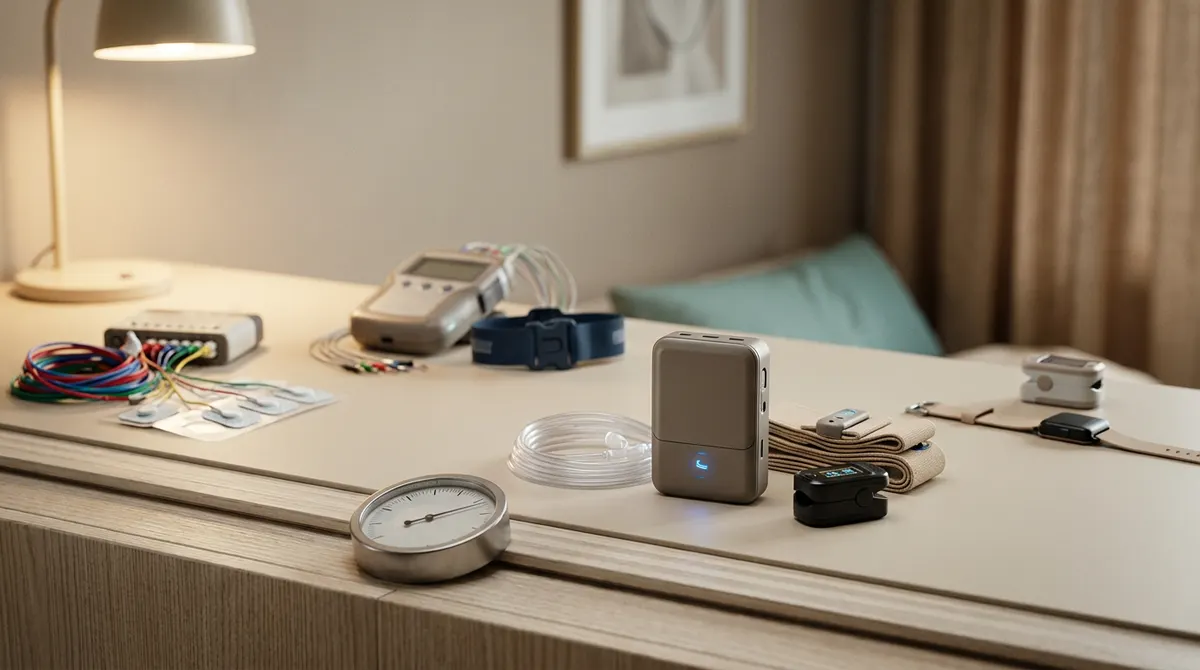
Home sleep apnea tests use portable monitoring devices that range from simple single-channel recorders to comprehensive multi-channel systems. The American Academy of Sleep Medicine classifies sleep testing devices into four types based on the number and type of channels they record.
Type I Polysomnography
Type I polysomnography is the gold standard for sleep testing. It is performed in a sleep laboratory with a polysomnographic technologist present throughout the night. Type I records a minimum of seven channels including electroencephalography, electromyography, electrooculography, airflow, respiratory effort, oxygen saturation, and heart rate. Because it requires a sleep lab facility and trained staff, Type I is not a home test. It serves as the benchmark against which all portable home devices are compared.
Type II Sleep Testing Devices
Type II sleep testing devices record the same channels as Type I polysomnography but are portable and can be used at home without a technologist present. Type II and Type III sleep testing devices both qualify for home use, but Type II is less commonly deployed for routine home sleep apnea testing because it is more complex and expensive. It is sometimes used in research settings or when a comprehensive portable study is needed.
Type III Sleep Testing Devices
Type III is the most commonly used home sleep apnea test device. A Type III sleep testing device records a minimum of four channels: airflow, respiratory effort, oxygen saturation (via pulse oximetry), and heart rate. Many Type III devices also record body position and snoring. These devices are the standard for home respiratory polygraphy and are what most providers order when they write a requisition for an HSAT. The American Academy of Sleep Medicine recommends Type III portable monitoring as a valid alternative to in-lab polysomnography for diagnosing OSAHS in patients with a high pretest probability.
Type IV Sleep Testing Devices
Type IV sleep testing devices record one or two channels only. The most common Type IV configuration is pulse oximetry alone or peripheral arterial tonometry combined with actigraphy. The Watch-PAT100, for example, is an FDA-approved Type IV device that uses peripheral arterial tone technology along with pulse oximetry and actigraphy to estimate the Apnea-Hypopnea Index. Type IV devices like the NightOwl Home Sleep Test use photoplethysmography to measure blood oxygenation and pulse rate from a fingertip sensor.
Type IV devices are the simplest to use at home, typically requiring only a finger sensor or a wrist-worn device. However, because they record fewer channels, their diagnostic accuracy may be lower for patients with mild sleep apnea or complex presentations.
Structured Comparison of Home Sleep Test Device Types
Here is how the four device types compare across key decision-relevant attributes:
Setting
- Type I: Sleep laboratory with technologist present
- Type II: Home (portable, multi-channel)
- Type III: Home (portable, 4+ channels)
- Type IV: Home (portable, 1 to 2 channels)
Channels Recorded
- Type I: 7 or more (EEG, EMG, EOG, airflow, effort, SpO2, heart rate)
- Type II: 7 or more (same as Type I, no technologist)
- Type III: 4 or more (airflow, effort, SpO2, heart rate)
- Type IV: 1 to 2 (typically oximetry and/or peripheral arterial tonometry)
Common Devices
- Type I: In-lab polysomnography equipment
- Type II: Portable PSG systems
- Type III: Standard HSAT devices (most common for home testing)
- Type IV: Watch-PAT100, NightOwl Home Sleep Test, pulse oximeter-based systems
Diagnostic Accuracy for OSA
- Type I: Highest (gold standard)
- Type II: High (comparable to Type I)
- Type III: High for moderate to severe OSA
- Type IV: Moderate; may underestimate mild cases
Best For
- Type I: Complex cases, central sleep apnea, multiple sleep disorders
- Type II: Research, comprehensive portable evaluation
- Type III: Routine screening for obstructive sleep apnea
- Type IV: Convenient screening with minimal equipment
For most patients receiving a requisition for a home sleep apnea test, a Type III device is the standard of care. dumbo.health provides an at-home sleep test that uses validated portable monitoring technology, shipped directly to your door for $149 with no insurance required.
KEY TAKEAWAY: Type III portable monitoring devices are the most commonly ordered for home sleep apnea testing, recording airflow, respiratory effort, oxygen saturation, and heart rate, while Type IV devices offer simpler setups with fewer channels.
Knowing the device types clarifies what will be measured. The next step is understanding what the test actually records and how those measurements become a diagnosis.
What a Home Sleep Apnea Test Measures
A home sleep apnea test measures the physiological signals needed to detect obstructive breathing events during sleep. The core data points include airflow, respiratory effort, blood oxygen levels, and heart rate.
Airflow and Breathing Patterns
The breathing sensor on most HSAT devices sits at the nose or mouth and detects changes in airflow with each breath. Reduced airflow lasting at least 10 seconds is classified as a hypopnea. Complete cessation of airflow for at least 10 seconds is classified as an apnea. The total number of apneas and hypopneas per hour of recording time produces the Apnea-Hypopnea Index, the single most important metric for diagnosing obstructive sleep apnea.
According to AASM criteria, an AHI of 5 to 14 events per hour indicates mild obstructive sleep apnea, 15 to 29 indicates moderate, and 30 or more indicates severe. These thresholds directly determine treatment recommendations and, for commercial drivers, DOT certification timelines.
Oxygen Saturation and Oxygen Desaturation
Pulse oximetry is used by every HSAT device type to measure oxygen saturation (SpO2) continuously throughout the test. The sensor, typically placed on the fingertip, uses photoplethysmography to measure blood oxygen levels by detecting changes in light absorption through the skin. Normal oxygen saturation during sleep stays above 90%. Repeated drops below 90%, called oxygen desaturation events, indicate that breathing interruptions are causing clinically significant reductions in blood oxygenation.
The respiratory disturbance index, a related metric, includes not only apneas and hypopneas but also respiratory effort-related arousals. The oxygen desaturation index counts the number of oxygen drops of 3% or more per hour of recording.
Heart Rate and Pulse Rate
Heart rate monitoring during a home sleep test provides additional physiological context. Obstructive breathing events typically cause characteristic heart rate patterns, specifically bradycardia during the apnea followed by tachycardia upon resumption of breathing. These patterns help confirm that respiratory events are genuinely obstructive rather than artifactual.
Respiratory Effort
Type III devices use sensors placed around the chest and abdomen to detect respiratory effort, meaning the physical expansion and contraction of the thorax and abdomen during breathing. This measurement is critical for distinguishing obstructive sleep apnea from central sleep apnea. In obstructive events, the airway collapses but the body continues to make breathing effort. In central events, the brain temporarily stops sending signals to breathe, and effort ceases.
Additional Sensors
Some devices record body position using an accelerometer, which matters because many patients have positional obstructive sleep apnea that worsens when sleeping on their back. Snoring intensity may also be recorded via a microphone or vibration sensor. Devices using peripheral arterial tonometry, such as the Watch-PAT100, measure changes in peripheral arterial tone to infer respiratory events and sleep stages without traditional airflow sensors.
IMPORTANT: A home sleep apnea test does not measure brain activity (EEG) and therefore cannot determine actual sleep stages or total sleep time. This means the AHI calculated from an HSAT uses total recording time rather than total sleep time, which may underestimate severity in patients who spend significant time awake during the test.
KEY TAKEAWAY: Home sleep apnea tests measure airflow, oxygen saturation, heart rate, and respiratory effort to calculate the Apnea-Hypopnea Index, which is the primary diagnostic metric for obstructive sleep apnea.
Understanding the measurements is essential, but the practical question most patients ask is: what does the process actually look like from start to finish?
Step-by-Step Process: From Requisition to Results
Getting tested for sleep apnea at home follows a structured pathway that begins with a clinical evaluation and ends with a treatment plan. Here is how the process works.
How to Complete a Home Sleep Apnea Test
1. Complete an initial clinical evaluation with your provider, either in person or via telemedicine, where symptoms such as snoring, witnessed apneas, daytime sleepiness, and relevant medical history are reviewed and documented.
2. Receive your requisition from the ordering physician after the clinical evaluation confirms you are a candidate for home sleep testing.
3. Obtain your home sleep test device from a sleep clinic, equipment provider, or directly from a service like dumbo.health, which ships an at-home sleep test to your door for $149 with no prior authorization needed.
4. Follow the device setup instructions on your test night, which typically involves attaching a nasal cannula or breathing sensor, placing the pulse oximeter on your fingertip, positioning chest and abdominal belts if included, and pressing the start button before going to sleep.
5. Sleep in your normal bed wearing your usual sleepwear, avoiding alcohol and recreational drugs on the test night as these can alter your natural breathing patterns and skew results.
6. Remove the device when you wake and return it according to the provider's instructions, or allow the sleep data to be automatically uploaded if your device supports wireless transmission.
7. Wait for physician interpretation of your sleep data, which typically takes 3 to 7 business days depending on the provider. dumbo.health Premium Plan members receive priority results turnaround.
8. Review your results with your ordering provider or the interpreting sleep specialist, who will explain your Apnea-Hypopnea Index, oxygen desaturation findings, and recommended next steps for treatment.
After completing these steps, you will have a definitive answer about whether you have obstructive sleep apnea and a clear path forward for treatment if needed. Many patients report that the home testing experience is far simpler than expected, especially compared to spending a night in a sleep lab facility.
KEY TAKEAWAY: The home sleep apnea test process follows eight clear steps from clinical evaluation through results review, and the entire pathway can be completed without visiting a sleep laboratory.
The process is straightforward, but there are specific situations where home testing is not the right choice. Knowing these limitations upfront helps you avoid wasted time and inaccurate results.
Limitations and Risks of Home Sleep Apnea Testing
Home sleep apnea testing is a validated diagnostic tool, but it is not appropriate for every patient or every clinical scenario. Understanding these limitations protects you from incomplete diagnosis and ensures you get the right test the first time.
When Home Testing May Not Work
The first major limitation is that HSATs cannot diagnose central sleep apnea. Because most home devices do not record electroencephalography or differentiate between obstructive and central events with full precision, patients with suspected central sleep apnea need Type I polysomnography in a sleep laboratory. The American Academy of Sleep Medicine specifically recommends against using portable monitoring for patients in whom central sleep apnea is clinically suspected.
Second, home testing may underestimate disease severity. Because HSATs calculate the AHI using total recording time rather than actual sleep time, patients who lie awake for extended periods during the test will have a lower AHI than they would in a lab study. This means some patients with mild to moderate obstructive sleep apnea could receive a falsely negative or understated result. Clinicians frequently observe this pattern and may order a follow-up in-lab study if clinical suspicion remains high despite a negative HSAT.
Third, patients with significant comorbidities may not be appropriate candidates. Those with severe congestive heart failure, chronic obstructive pulmonary disease, neuromuscular disease, or other conditions that affect respiratory mechanics may require the comprehensive monitoring available only through in-lab polysomnography. Similarly, patients with suspected concurrent sleep disorders such as narcolepsy, periodic limb movement disorder, or REM sleep behavior disorder need the full channel array of a Type I study.
Fourth, user error can compromise results. If the nasal cannula dislodges, the pulse oximeter slips off the finger, or the chest belt shifts during the night, the recording may be technically inadequate. Studies suggest that approximately 10% to 20% of home sleep tests require a repeat study due to technically inadequate data.
Fifth, a negative HSAT result does not rule out sleep apnea. The diagnostic accuracy of home portable monitoring is strongest for moderate to severe obstructive sleep apnea. For patients with mild disease or those with a lower pretest probability, a negative result should be followed by in-lab polysomnography if clinical suspicion persists.
How dumbo.health Addresses These Limitations
dumbo.health mitigates several of these risks through its care model. Every home sleep test result undergoes physician interpretation by a licensed sleep medicine provider, not an automated algorithm alone. If results are inconclusive or technically inadequate, the care team can recommend repeat testing or escalation to an in-lab study. Patients on the Premium Plan receive dedicated sleep coach support and advanced adherence monitoring, which means any issues with the test or its results are flagged and addressed quickly.
KEY TAKEAWAY: Home sleep apnea tests are not appropriate for suspected central sleep apnea, complex comorbidities, or concurrent sleep disorders, and a negative HSAT does not definitively rule out obstructive sleep apnea.
These limitations matter clinically, but they do not apply to the majority of patients. For most adults with suspected obstructive sleep apnea, home testing is both accurate and far more accessible. Understanding the cost and insurance landscape helps you decide how to proceed.
Cost of a Home Sleep Apnea Test: Insurance, Medicare, and Self-Pay

The cost of a home sleep apnea test varies significantly depending on whether you use insurance, qualify for Medicare coverage, or pay out of pocket. Understanding these pathways before you get your requisition prevents billing surprises.
Insurance Coverage
Most private insurance plans cover home sleep apnea testing when a valid requisition establishes medical necessity. However, the process typically requires prior authorization, which can delay testing by days or weeks. Co-pays, deductibles, and out-of-pocket maximums vary by plan. Many patients report confusion about whether their specific HSAT device type is covered, as some plans restrict coverage to certain device categories.
Medicare Coverage
Medicare covers home sleep apnea tests under the National Coverage Determination for sleep testing. For the medicare population, coverage requires a face-to-face clinical evaluation by the ordering provider, documentation of signs and symptoms consistent with obstructive sleep apnea, and use of a Type II, Type III, or Type IV device that meets CMS specifications. Medicare contractors review claims for compliance with these documentation standards. If the requisition or supporting clinical notes are incomplete, the claim may be denied.
According to CMS guidelines, Medicare also covers CPAP therapy for patients who demonstrate an AHI of 15 or greater, or an AHI of 5 to 14 with documented symptoms. Patients in the medicare population should confirm their device and provider are Medicare-enrolled before testing.
Self-Pay and Cash-Pay Options
For patients who lack insurance, have high deductibles, or want to avoid the prior authorization process entirely, self-pay is increasingly the fastest and most predictable option. dumbo.health offers a home sleep test for $149 as a one-time cost with no insurance required, no prior authorizations, and no surprise bills. The test is purchased before the test night and billed separately from monthly care plans.
After testing, ongoing care through dumbo.health is covered by monthly plans. The Essentials Plan at $59 per month includes physician interpretation and report, CPAP therapy and equipment, standard follow-up care, and updates sent to your referring provider. The Premium Plan at $89 per month adds a dedicated sleep coach, advanced adherence monitoring, and priority results turnaround. The Elite Plan at $129 per month adds concierge clinical support, direct physician messaging, and custom reporting for your practice. All plans are contract-free and can be cancelled anytime.
Cost Comparison: In-Lab vs. Home Testing
Typical Cost Range
- In-Lab Polysomnography: $1,000 to $3,500 without insurance
- Home Sleep Apnea Test (general market): $200 to $600 without insurance
- Home Sleep Apnea Test (dumbo.health): $149 one-time, no insurance required
Prior Authorization Required
- In-Lab Polysomnography: Almost always
- Home Sleep Apnea Test (general market): Usually
- Home Sleep Apnea Test (dumbo.health): No
Turnaround to Results
- In-Lab Polysomnography: 1 to 3 weeks after study night
- Home Sleep Apnea Test (general market): 3 to 10 business days
- Home Sleep Apnea Test (dumbo.health): 3 to 7 business days (priority available on Premium Plan)
For most patients with suspected obstructive sleep apnea who are appropriate candidates for home testing, the self-pay route through a service like dumbo.health eliminates the most common barriers to getting tested: cost unpredictability, insurance delays, and prior authorization requirements.
KEY TAKEAWAY: Home sleep apnea tests cost significantly less than in-lab studies, and dumbo.health offers testing at $149 with no insurance, no prior authorization, and no surprise bills.
With testing complete and results in hand, knowing how to interpret those results is the next critical step.
Understanding Your Home Sleep Apnea Test Results
Your home sleep apnea test results are summarized in a clinical report prepared by the interpreting physician. The report translates raw sleep data into actionable diagnostic findings that determine whether you have obstructive sleep apnea and how severe it is.
The Apnea-Hypopnea Index
The Apnea-Hypopnea Index is the centerpiece of your results. It represents the average number of apneas (complete breathing cessations) and hypopneas (partial airflow reductions) per hour of recording time. AASM criteria define severity thresholds as follows: an AHI of fewer than 5 is considered normal, 5 to 14 is mild obstructive sleep apnea, 15 to 29 is moderate, and 30 or higher is severe.
Because home sleep tests use recording time rather than actual sleep time, the AHI from an HSAT may be slightly lower than what an in-lab study would show. This is why some providers refer to the metric from portable monitoring as the respiratory event index or respiratory disturbance index rather than a true AHI.
Oxygen Desaturation Index and Blood Oxygen Levels
Your report will include the oxygen desaturation index, which counts how many times per hour your blood oxygen levels dropped by 3% or more. It will also show your minimum and average oxygen saturation during the recording period. Frequent desaturations below 90% are clinically significant and increase the urgency of treatment. According to the National Institutes of Health, chronic intermittent hypoxia from untreated sleep apnea is associated with increased risk of cardiovascular events, hypertension, and cognitive impairments.
What Your Provider Discusses With You
After the interpreting physician completes the report, your ordering provider or sleep specialist will review the findings with you. This discussion covers your AHI and severity classification, oxygen desaturation patterns, recommended treatment options such as CPAP therapy, oral appliances, lifestyle changes, or surgery, and any need for additional testing.
dumbo.health patients receive their physician interpretation and report as part of every monthly plan. Essentials Plan members at $59 per month get standard follow-up care, while Premium Plan members at $89 per month receive priority results turnaround and a dedicated sleep coach who walks through the results in detail.
Home sleep apnea tests detect obstructive sleep apnea through the Apnea-Hypopnea Index, oxygen desaturation patterns, and respiratory event data. Home sleep apnea test results are interpreted by a licensed physician and summarized in a clinical report that determines both diagnosis and treatment pathway. The Apnea-Hypopnea Index thresholds of 5, 15, and 30 events per hour classify obstructive sleep apnea as mild, moderate, or severe respectively.
KEY TAKEAWAY: The Apnea-Hypopnea Index is the primary diagnostic metric from your home sleep test, and understanding your AHI severity level directly determines which treatment options your provider will recommend.
Results lead to treatment, and the treatment landscape for obstructive sleep apnea has expanded significantly. The next section covers your options.
Treatment Options After a Positive Home Sleep Apnea Test
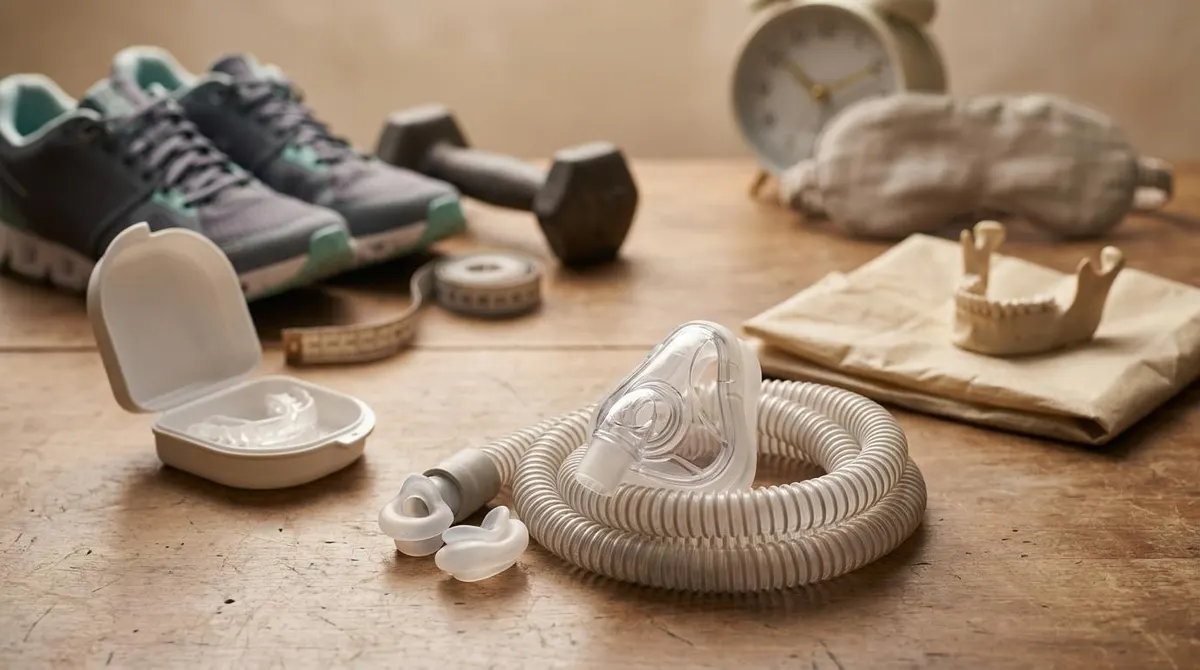
CPAP therapy is the first-line treatment for moderate to severe obstructive sleep apnea. However, treatment is not one-size-fits-all, and your provider will tailor recommendations based on your AHI, symptoms, anatomy, and personal preferences.
CPAP Therapy
Continuous positive airway pressure, or CPAP, works by delivering a steady stream of pressurized air through a mask to keep the airway open during sleep. The Sleep Foundation reports that CPAP therapy is effective in reducing the AHI to normal levels in the vast majority of patients when used consistently. The standard clinical target for CPAP adherence is at least 4 hours per night on at least 70% of nights over a 30-day period.
A CPAP machine, mask, and tubing are the core equipment. Auto CPAP devices, which automatically adjust pressure throughout the night based on detected events, are increasingly preferred over fixed-pressure machines because they improve comfort and adherence for many patients.
dumbo.health includes CPAP therapy and equipment in all monthly plans. The Essentials Plan at $59 per month covers the CPAP machine, mask, and standard follow-up care. The Premium Plan adds advanced adherence monitoring and a dedicated sleep coach, which research suggests can significantly improve long-term compliance. If you need CPAP treatment, dumbo.health makes the entire process contract-free and accessible without insurance.
Oral Appliances
Oral appliances are custom-fitted dental devices that reposition the lower jaw forward to keep the airway open. They are typically recommended for patients with mild to moderate obstructive sleep apnea or for patients who cannot tolerate CPAP. According to the American Academy of Sleep Medicine, oral appliances are a validated second-line therapy that can significantly reduce the AHI in appropriate candidates.
Lifestyle Changes
Lifestyle modifications play a supporting role in obstructive sleep apnea management. Weight loss is one of the most effective non-device interventions. A reduction of 10% or more in body weight can meaningfully reduce AHI in overweight patients, according to the National Heart, Lung, and Blood Institute. Other lifestyle changes include avoiding alcohol and sedatives before bed, sleeping on your side rather than your back, and maintaining consistent sleep schedules.
Surgery
Surgical options are generally reserved for patients who have failed CPAP and oral appliance therapy or who have specific anatomical obstructions. Procedures range from uvulopalatopharyngoplasty to maxillomandibular advancement to hypoglossal nerve stimulation. Surgery is not first-line treatment for most patients with OSAHS.
Choosing the Right Treatment
Your provider will recommend treatment based on your AHI severity, symptom burden, anatomical findings, and personal goals. For most patients with moderate to severe obstructive sleep apnea, CPAP therapy remains the most effective and evidence-based option. dumbo.health offers a complete sleep apnea care solution that includes testing, physician oversight, CPAP therapy, and ongoing support, all at transparent monthly pricing.
KEY TAKEAWAY: CPAP therapy is the gold standard for moderate to severe obstructive sleep apnea, and dumbo.health provides CPAP equipment and ongoing care starting at $59 per month with no contracts.
Treatment works best when it addresses the real-world situations patients face. The following examples show how different people navigate the requisition and testing process.
Real-World Scenarios: How Patients Get Tested
The path from symptoms to diagnosis looks different depending on who you are, where you start, and what barriers you face. These examples illustrate common scenarios.
A 48-Year-Old Commercial Driver Flagged During a DOT Physical
Marcus, a 48-year-old long-haul truck driver with a BMI of 36, is flagged for sleep apnea risk during his DOT physical. His medical examiner notes a neck circumference of 18 inches, reports of loud snoring from his partner, and an Epworth Sleepiness Scale score of 13. The examiner issues a conditional DOT medical certificate and provides a referral for sleep apnea testing.
Marcus needs a requisition from a qualified provider before he can test. Rather than waiting weeks for a sleep specialist appointment in his area, he completes the free sleep assessment on dumbo.health. A licensed physician reviews his history, confirms medical necessity, and provides the requisition. Marcus receives his home sleep test device within days, completes the test in his own bed, and gets his results interpreted by a sleep medicine physician. His AHI comes back at 22 events per hour, confirming moderate obstructive sleep apnea. He starts CPAP therapy through the dumbo.health Essentials Plan at $59 per month and provides his DOT medical examiner with documentation of treatment compliance.
A 55-Year-Old Medicare Beneficiary With Resistant Hypertension
Linda, a 55-year-old retired teacher on Medicare, has been struggling with resistant hypertension despite taking three blood pressure medications. Her primary care physician suspects obstructive sleep apnea may be contributing. The physician conducts a face-to-face clinical evaluation, documents Linda's symptoms (snoring, morning headaches, unrefreshing sleep), and writes a requisition for a home sleep apnea test.
Because Linda is in the medicare population, her physician ensures the documentation meets the National Coverage Determination requirements. Linda completes the home study using a Type III device. Her AHI is 18 events per hour with an oxygen desaturation index of 12, confirming moderate OSAHS. She begins auto CPAP therapy, and after three months of consistent use, her blood pressure improves enough to reduce one medication.
A 34-Year-Old Uninsured Worker With Daytime Sleepiness
James, a 34-year-old warehouse worker without health insurance, has been experiencing severe daytime sleepiness for over a year. He falls asleep easily during breaks and has nearly dozed off while driving twice. He knows something is wrong but has avoided seeing a doctor due to cost concerns.
James discovers dumbo.health through a search for affordable sleep testing near him. He completes the free online assessment, is connected with a physician who evaluates his symptoms via telehealth, and receives a requisition. He orders the home sleep test for $149 with no insurance needed. His results show an AHI of 42, indicating severe obstructive sleep apnea. He enrolls in the Premium Plan at $89 per month for CPAP therapy with a dedicated sleep coach, avoiding the thousands of dollars an in-lab study and traditional CPAP setup would have cost.
KEY TAKEAWAY: Patients reach the home sleep apnea test through different pathways, including DOT referrals, primary care evaluations, and self-pay options, and dumbo.health provides an accessible route for each scenario.
These real-world examples highlight common concerns and misunderstandings. The next section addresses the most persistent myths about home sleep apnea testing.
Common Myths About Home Sleep Apnea Testing Debunked
MYTH: You need to visit a sleep clinic to get diagnosed with sleep apnea.
FACT: Most adults with a moderate to high probability of obstructive sleep apnea can be accurately diagnosed using a home sleep apnea test ordered through a valid requisition. The American Academy of Sleep Medicine has endorsed Type III portable monitoring as an appropriate diagnostic alternative to in-lab polysomnography for uncomplicated obstructive sleep apnea since 2007. A sleep clinic visit is only necessary when home testing is inconclusive or when central sleep apnea or other complex sleep disorders are suspected.
MYTH: Home sleep apnea tests are not accurate enough to be trusted.
FACT: Type III home sleep apnea tests have demonstrated strong diagnostic accuracy for moderate to severe obstructive sleep apnea in multiple peer-reviewed studies. According to research cited by the National Institutes of Health, portable monitoring devices show sensitivity above 85% for detecting clinically significant obstructive sleep apnea when used in appropriate patient populations. The key to accuracy is proper patient selection, which is why the requisition and clinical evaluation process exists.
MYTH: Medicare will not pay for a home sleep apnea test.
FACT: Medicare covers home sleep apnea testing under the National Coverage Determination when the requisition is supported by a documented face-to-face clinical evaluation and the test uses a qualifying device. Medicare contractors process these claims routinely. The requirement is not different coverage; it is proper documentation. Patients in the medicare population should ensure their ordering provider meets all documentation standards before testing.
MYTH: If your home test is negative, you definitely do not have sleep apnea.
FACT: A negative HSAT result does not definitively rule out obstructive sleep apnea, particularly in patients with mild disease. Because home devices calculate AHI using total recording time rather than actual sleep time, results may underestimate severity. The American Academy of Sleep Medicine recommends that patients with a negative HSAT but continued clinical suspicion undergo in-lab Type I polysomnography for definitive evaluation.
MYTH: You can order a home sleep apnea test on your own without a doctor.
FACT: A valid requisition from a licensed physician or qualified healthcare practitioner is required before a home sleep apnea test can be performed, interpreted, and billed. Over-the-counter consumer sleep trackers that claim to detect sleep apnea do not meet the clinical standards required for a medical diagnosis. The requisition ensures that the right patient receives the right test with appropriate clinical oversight. dumbo.health streamlines this by connecting patients with licensed physicians who can evaluate symptoms and provide requisitions as part of the care pathway.
KEY TAKEAWAY: Home sleep apnea testing is clinically validated, covered by Medicare when properly documented, and requires a physician requisition to ensure diagnostic accuracy and appropriate patient selection.
With myths addressed, there are several practical steps you can take before your test night to ensure the best possible results.
Checklist: Preparing for Your Home Sleep Apnea Test
Proper preparation on the night of your home sleep test improves data quality and reduces the chance of needing a repeat study. Use this checklist before your test night.
Pre-Test Night Checklist
- Confirm your requisition is on file with the device provider or care team
- Read all device setup instructions before bedtime, not at 11 p.m.
- Avoid alcohol for at least 24 hours before the test, as it relaxes airway muscles and can artificially worsen results
- Avoid caffeine after noon on the day of the test
- Do not take sedatives or recreational drugs unless specifically instructed by your physician
- Shower before bed but do not apply lotions to your fingertip where the pulse oximeter will sit
- Wear loose, comfortable sleepwear that allows sensor belts to sit directly against your skin
- Remove nail polish or acrylic nails from the finger that will wear the pulse oximeter, as these interfere with photoplethysmography readings
- Set up the device on your nightstand and do a brief test fit of all sensors before turning off the lights
- Sleep in your normal bed, in your normal position, to capture your typical sleep patterns
- Charge or check the battery of your recording device if applicable
- Complete the free sleep assessment at dumbo.health if you have not yet obtained your requisition
Following this checklist reduces the approximately 10% to 20% failure rate associated with user error in home sleep studies. Many patients find that the entire setup takes fewer than 10 minutes once they have reviewed the instructions.
KEY TAKEAWAY: Preparing properly for your home sleep test night, including avoiding alcohol and ensuring sensors fit correctly, significantly reduces the likelihood of needing a repeat study.
Preparation matters, but so does choosing the right provider. Not all home testing services deliver the same experience or clinical rigor.
How to Choose the Right Home Sleep Apnea Test Provider
The right home sleep test provider delivers
Frequently Asked Questions About Requisition for Home Sleep Apnea Test
What is a requisition for a home sleep apnea test?
A requisition for a home sleep apnea test is a formal referral or order from a healthcare provider authorising a patient to undergo a home sleep apnea test (HSAT). It documents the clinical reason for testing, the patient's relevant symptoms and medical history, and the type of sleep study being requested. The requisition is typically completed by a physician, nurse practitioner, or other qualified healthcare practitioner and submitted to a sleep clinic, sleep lab, or sleep testing provider before the test device is issued to the patient.
Who needs a sleep study requisition form?
A sleep study requisition form is needed by any patient whose healthcare provider has identified signs or symptoms that may indicate a sleep disorder, particularly obstructive sleep apnea (OSA). This commonly includes patients reporting loud snoring, witnessed breathing interruptions during sleep, excessive daytime sleepiness, morning headaches, or unexplained high blood pressure. Referring providers complete the form on behalf of the patient before ordering a home sleep test or directing the patient to an in-lab sleep facility. Commercial drivers and other patients with occupational health requirements may also need formal documentation of their sleep apnea evaluation.
What is a home sleep apnea test and how does it work?
A home sleep apnea test (HSAT) is a simplified, portable diagnostic tool used to evaluate whether a patient has obstructive sleep apnea. The patient wears a small recording device at home during a normal night of sleep. Depending on the device type, it may measure airflow, respiratory effort, oxygen saturation, pulse rate, heart rate, blood oxygen levels, and body position. The recorded sleep data is then sent to a physician or sleep specialist for interpretation. The resulting report includes the apnea-hypopnea index (AHI), which helps inform a diagnosis and treatment plan, including whether CPAP therapy may be appropriate.
What is obstructive sleep apnea and why does it matter?
Obstructive sleep apnea (OSA), also referred to as obstructive sleep apnoea-hypopnoea syndrome (OSAHS), is a sleep disorder in which the airway repeatedly collapses during sleep, causing pauses in breathing called apneas and partial obstructions called hypopneas. These events reduce blood oxygenation and fragment sleep. According to the American Academy of Sleep Medicine, untreated OSA is associated with increased risk of cardiovascular diseases, hypertension, cognitive impairments, and daytime sleepiness that can affect driving safety. A home sleep apnea test or in-lab polysomnography can help identify the condition so that appropriate treatment, such as CPAP therapy, can be considered with a clinician.
What is the difference between a home sleep test and an in-lab sleep study?
A home sleep test (HST) allows a patient to sleep in their own environment while a portable monitoring device records breathing data. An in-lab sleep study, also called Type I polysomnography, takes place in a supervised sleep laboratory where a polysomnographic technologist monitors a broader range of physiological signals including brain activity, eye movements, muscle tone, oxygen saturation, and respiratory effort. The American Academy of Sleep Medicine explains that home sleep testing is generally appropriate for patients with a high clinical suspicion of moderate to severe obstructive sleep apnea without significant complicating conditions. Patients with suspected central sleep apnea, other sleep disorders, or complex medical histories may require a full in-lab study.
What are the different types of portable sleep testing devices?
Sleep testing devices are classified by the number of physiological channels they record. Type I is standard attended polysomnography conducted in a sleep lab facility. Type II devices are full polysomnography-equivalent portable monitors. Type III devices are the most commonly used for home sleep testing and record airflow, respiratory effort, oxygen saturation, and heart rate. Type IV devices typically record only one or two channels such as pulse oximetry or peripheral arterial tone. Some devices, such as the Watch-PAT100, use peripheral arterial tonometry and photoplethysmography to estimate sleep stages and detect apneas. A physician or sleep specialist determines which device is appropriate based on clinical presentation. You can learn more about home sleep apnea testing for commercial drivers on the dumbo.health blog.
How accurate is a home sleep apnea test compared to polysomnography?
Home sleep apnea tests have demonstrated clinically acceptable diagnostic accuracy for identifying moderate to severe obstructive sleep apnea in patients without significant comorbidities. Evidence reviewed by the Centers for Medicare and Medicaid Services (CMS) and referenced in National Coverage Determination guidelines confirms that Type II and Type III sleep testing devices can accurately identify patients with OSA who are likely to benefit from CPAP treatment. However, home sleep tests may underestimate the severity of OSA in some patients because they do not capture total sleep time as precisely as attended polysomnography. A physician reviewing HSAT results will consider the apnea-hypopnea index, oxygen desaturation events, and clinical presentation when making treatment decisions.
What information is required to complete a sleep study requisition form?
A sleep study requisition form typically requires the patient's full name, date of birth, contact information, and health coverage details. The referring provider must include their name, practice details, and clinical justification for the referral, such as reported symptoms, Epworth Sleepiness Scale score, relevant physical exam findings, body mass index, and known conditions such as hypertension. The form usually specifies the type of sleep study being ordered, whether a home sleep test or in-lab polysomnography. Incomplete forms are a common cause of processing delays, so it is important to ensure all required fields are filled in accurately before submission.
What are common mistakes to avoid when completing a sleep study requisition form?
Common mistakes include leaving clinical justification fields blank, omitting the patient's current medications or known cardiovascular conditions, failing to specify the type of sleep study requested, and submitting the form without the referring provider's signature. Using outdated form versions is another frequent error. Providers should confirm whether the patient has a history of central sleep apnea, complex respiratory conditions, or prior CPAP use, as this affects which diagnostic pathway is appropriate. Incomplete or inaccurate forms can delay the patient's access to testing, so reviewing all sections carefully before submission helps avoid unnecessary processing time.
How should a completed sleep study requisition form be submitted?
Submission methods vary by provider and jurisdiction. Many sleep clinics and sleep testing services accept forms by secure electronic submission, fax, or patient portal upload. Some providers offer telehealth or telemedicine intake pathways where the requisition can be completed and reviewed digitally. Patients should confirm the preferred submission method directly with their sleep testing provider or sleep clinic. After submission, it is worth requesting confirmation that the form has been received and is being processed to avoid delays in device dispatch or appointment scheduling.
What happens after a home sleep apnea test is completed?
Once the patient completes the test night at home, the recorded sleep data from the portable monitoring device is returned to the sleep testing provider or uploaded digitally. A physician or sleep specialist reviews and interprets the data, typically producing a report that includes the apnea-hypopnea index, oxygen saturation levels, respiratory disturbance index, and recommendations for treatment. If the results indicate obstructive sleep apnea, the physician may recommend CPAP therapy, oral appliances, lifestyle changes, or further evaluation depending on severity. The report is usually shared with the referring provider so that ongoing care can be coordinated.
What does the apnea-hypopnea index measure and why does it matter?
The apnea-hypopnea index (AHI) is the primary metric used to quantify the severity of sleep apnea. It represents the average number of apneas and hypopneas recorded per hour of sleep or recording time during a home sleep test. An AHI below 5 is generally considered normal in adults. Mild OSA is typically defined as an AHI of 5 to 14, moderate OSA as 15 to 29, and severe OSA as 30 or more events per hour, according to criteria used by the American Academy of Sleep Medicine. The AHI from a home sleep test informs whether CPAP therapy or other interventions are appropriate, though a clinician interprets results in the context of overall health and symptoms.
What happens if a home sleep test shows severe obstructive sleep apnea?
If a home sleep apnea test indicates severe obstructive sleep apnea, the interpreting physician will typically recommend prompt treatment, most commonly CPAP therapy. In some cases, particularly if the patient has complicating factors such as suspected central sleep apnea, significant cardiovascular disease, or other sleep disorders, the physician may recommend follow-up with an attended in-lab sleep study for more detailed evaluation. Patients should not delay seeking care for severe OSA. If you experience significant daytime sleepiness that affects your ability to drive or work safely, or if you have chest pain, shortness of breath, or other urgent symptoms, seek medical attention promptly.
Is a home sleep test covered by Medicare or insurance?
Medicare covers home sleep apnea testing when it meets specific clinical criteria under the National Coverage Determination for sleep testing. Coverage generally requires that the test be ordered by a treating physician, that the patient shows symptoms consistent with obstructive sleep apnea, and that an appropriate Type II, Type III, or Type IV device is used. Medicare contractors may have local coverage policies that apply additional criteria. Coverage through private insurance varies by plan and may require prior authorisation. For patients who prefer to avoid insurance complexity, cash-pay options are available. dumbo.health offers a $149 at-home sleep test with transparent pricing, no prior authorisation, and no surprise bills. Learn more at dumbo.health at-home sleep test.
Do I need a referral or requisition to get an at-home sleep test?
Whether a formal referral or requisition is required depends on the pathway you use to access testing. When testing is processed through Medicare or private insurance, a physician referral and completed requisition are typically required before a device is issued. Cash-pay platforms can often streamline this process. At dumbo.health, a free sleep assessment helps determine whether at-home sleep testing is appropriate, and physician oversight is included in the testing workflow. A healthcare professional can help determine whether testing is the right next step based on your symptoms and medical history. Start with a free sleep assessment to explore your options.
How long does it take to get results from a home sleep apnea test?
Processing time varies depending on the provider. After the patient completes the test night and the device or data is returned, a physician typically reviews and interprets the sleep data within a few days to a couple of weeks. Some platforms offer faster turnaround. Delays can occur if the device records insufficient data due to sensor displacement, incorrect equipment setup, or a disrupted sleep night. dumbo.health's Premium and Elite plans include priority results turnaround as part of their monthly plan features, which may be useful for patients or commercial drivers who need documentation on a tighter timeline.
What should I do if my sleep study requisition or test results are lost or delayed?
If a submitted requisition form is lost or your test results are delayed, contact your sleep testing provider or sleep clinic directly and request confirmation of receipt. Keep a copy of your completed requisition form and any submission confirmation you received. If results are delayed after the device has been returned, ask the provider to confirm that the data was successfully recorded and is being processed. Significant recording failures may require a repeat test night. For patients managing time-sensitive documentation needs, such as commercial drivers awaiting a report for a DOT physical, choosing a provider that offers clear timelines and responsive support can help reduce delays.
Can I get a home sleep apnea test without seeing a sleep specialist in person?
Many home sleep apnea tests can be initiated without an in-person visit to a sleep specialist. Telemedicine and telehealth pathways allow a physician to review a patient's symptoms, complete a clinical assessment, and issue a referral or order for a home sleep test remotely. This approach is recognised by many payers and supported by national sleep medicine guidelines for appropriate candidates. dumbo.health supports a fully remote pathway including sleep assessment, test device delivery, physician interpretation, and report generation, making at-home sleep apnea testing accessible without requiring an in-person clinic visit. A healthcare professional should still review your full medical history to confirm that home testing is appropriate for your situation.
What symptoms suggest I should request a home sleep apnea test?
Common symptoms that may indicate obstructive sleep apnea include loud or frequent snoring, gasping or choking during sleep as reported by a bed partner, excessive daytime sleepiness, unrefreshing sleep, morning headaches, difficulty concentrating, and unexplained hypertension. The Epworth Sleepiness Scale is a standardised questionnaire that clinicians frequently use to assess daytime sleepiness and help determine whether sleep testing is appropriate. These symptoms do not confirm a diagnosis on their own. A healthcare professional can help determine whether a home sleep apnea test or referral to a sleep specialist is the right next step based on your specific presentation.
Do commercial drivers or CDL holders need a special requisition for a home sleep apnea test?
Commercial drivers do not require a different type of requisition form, but their situation involves additional considerations. The FMCSA does not currently have a mandatory federal sleep apnea testing rule, but certified medical examiners may require commercial drivers to undergo sleep apnea evaluation based on risk factors identified during a DOT physical. If a driver is referred for testing, the results and any CPAP adherence documentation may be reviewed by the medical examiner as part of the certification decision. dumbo.health can support sleep apnea testing and care documentation for commercial drivers, but it is a certified medical examiner who makes DOT certification decisions, not dumbo.health. Learn more about DOT sleep apnea testing at home.
What ongoing care is available after a home sleep apnea test diagnosis?
Following a positive home sleep apnea test result, ongoing care typically includes initiation of CPAP therapy, equipment setup, adherence monitoring, and follow-up with a physician or sleep specialist to confirm treatment effectiveness. Some patients may be evaluated for oral appliances, surgery, or lifestyle changes as alternatives or additions to CPAP. Consistent CPAP adherence is important not only for health outcomes but also for patients who need to demonstrate compliance for employer or DOT requirements. dumbo.health monthly plans can support ongoing care including CPAP therapy and equipment, physician interpretation, provider reporting, and adherence follow-up from approximately $59 per month with no contracts and no insurance required.
What is CPAP therapy and how does it treat sleep apnea?
CPAP, which stands for continuous positive airway pressure, is the most commonly recommended treatment for moderate to severe obstructive sleep apnea. A CPAP machine delivers a steady stream of pressurised air through a mask worn during sleep, keeping the airway open and preventing apneas and hypopneas. The Sleep Foundation explains that consistent CPAP use can reduce daytime sleepiness, lower the risk of cardiovascular events associated with untreated OSA, and improve overall sleep quality. The pressure setting is determined by a physician based on sleep test results, and auto CPAP machines can adjust pressure automatically throughout the night. Regular adherence monitoring and follow-up care help confirm that therapy is working effectively.
How does CPAP adherence monitoring work and why does it matter?
CPAP adherence monitoring tracks how consistently and effectively a patient uses their CPAP machine each night. Most modern CPAP devices record usage data including hours of use, mask leak levels, residual AHI, and pressure delivery. This data can be reviewed by a physician or sleep coach to confirm that therapy is effective and to troubleshoot issues such as mask discomfort, pressure intolerance, or equipment fit. Adherence data is particularly important for commercial drivers who may need to demonstrate consistent CPAP use to a certified medical examiner as part of DOT certification review. dumbo.health's Premium and Elite plans include advanced adherence monitoring and dedicated sleep coaching support. Explore sleep apnea care solutions to compare options.
Can I use pulse oximetry alone to test for sleep apnea?
Pulse oximetry alone, which measures blood oxygen levels and pulse rate during sleep, is classified as a Type IV monitoring approach and is generally considered insufficient on its own for a definitive diagnosis of obstructive sleep apnea. While overnight pulse oximetry can detect oxygen desaturation events that suggest sleep-disordered breathing, it does not record airflow or respiratory effort and may miss apneas that do not cause significant drops in blood oxygenation. The American Academy of Sleep Medicine advises that Type III or higher devices, which capture airflow and respiratory effort alongside oximetry, provide more clinically reliable diagnostic information. A physician can advise on which testing approach is appropriate based on your specific clinical presentation.
Where can I find a home sleep apnea test provider near me?
Home sleep apnea testing providers include sleep clinics, sleep laboratories, hospital-affiliated sleep programs, and telehealth platforms that deliver test devices directly to patients. To find options near you, your primary care physician or referring provider can issue a requisition to a local sleep clinic or suggest a home testing pathway. Online directories and telemedicine platforms have expanded access significantly, meaning you are no longer limited to providers in your immediate area. dumbo.health offers a fully remote at-home sleep test for $149 with physician interpretation and transparent cash-pay pricing, making access convenient regardless of your location. Learn more about the at-home sleep test process.
Related Home Sleep Apnea Test Topics
- What Is a Home Sleep Apnea Test How At-Home Sleep Testing Works, What It Measures, and Who Needs One
- At Home Sleep Apnea Test with Ring How Ring-Based Sleep Testing Works and Whether It Can Diagnose Sleep Apnea
- FDA Approved Home Sleep Apnea Test What Devices Are Cleared, How They Work, and How to Get Tested
- How Do You Get a Home Sleep Apnea Test The Complete Guide to At-Home Sleep Testing
- Sleep Study for Sleep Apnea What the Test Measures, How It Works, and What Your Results Mean
- Sleep Apnea Test at Home with Insurance What Your Plan Actually Covers and How to Get Tested
- Home Sleep Apnea Test Ring How Ring-Based Sleep Testing Works for Sleep Apnea Detection
- Can You Test for Sleep Apnea at Home A Complete Guide to Home Sleep Testing
- Home Sleep Apnea Test Type 3 What It Measures, How It Works, and Who It Is For
- Type 3 Home Sleep Apnea Test What It Measures, How It Works, and Who It Is For
- Sleep Study for Sleep Apnea What Happens, What It Measures, and What Your Results Mean
- Can Dentists Prescribe a Home Sleep Apnea Test What You Need to Know
- How to Get a Sleep Apnea Test at Home The Complete Guide to Home Sleep Testing
- At-Home Sleep Apnea Test Covered by Medicaid What You Need to Know Before Getting Tested
- Home Sleep Apnea Test ICD-10 Codes The Complete Coding and Diagnostic Guide for Sleep Apnea Testing
- Can My Doctor Prescribe a Home Sleep Apnea Test What You Need to Know
- Home Sleep Apnea Test for Children What Parents Need to Know About Pediatric Sleep Testing
- Home Sleep Apnea Test for Kids What Parents Need to Know About Pediatric Sleep Testing
- At-Home Sleep Apnea Test for Toddlers What Parents Need to Know About Pediatric Sleep Testing
- Home Sleep Apnea Test Near Me How to Get Tested Without a Sleep Lab Visit
- How to Get Tested for Sleep Apnea The Complete Guide to Diagnosis, Sleep Studies, and Treatment
- Sleep Apnea Checker How to Screen for Sleep Apnea and What Your Results Mean
- CPT for Home Sleep Apnea Test Complete Coding and Billing Guide for Sleep Study Providers
- Level 3 Home Sleep Apnea Test What It Measures, How It Works, and Who Should Use One
- Home Sleep Apnea Test Types A Clinical Guide to At-Home Sleep Testing Devices and What They Measure
- Unattended Home Sleep Apnea Test What It Measures, How It Works, and Who Qualifies
- Portable Home Sleep Apnea Test How It Works, What It Measures, and Who Needs One
- Self Home Sleep Apnea Test The Complete Guide to Testing for Sleep Apnea at Home
- Home Sleep Apnea Test Strap What Each Belt and Sensor Does and How to Wear Them Correctly
- Home Sleep Apnea Test Finger Sensor How Finger-Based Devices Detect Sleep Apnea at Home
- Home Sleep Apnea Test Cost What You Actually Pay With and Without Insurance
- Home Sleep Apnea Test FDA Approved What Devices Are Cleared and How They Work
- Home Sleep Apnea Test FSA Eligible How to Use Your Flexible Spending Account for Sleep Testing
- How Is a Home Sleep Apnea Test Done A Complete Guide to At-Home Sleep Testing
- At-Home Sleep Apnea Test FSA How to Use Your Flexible Spending Account for Sleep Testing
- At Home Sleep Apnea Test HSA How to Use Your Health Savings Account for Sleep Testing
- Home Sleep Apnea Test CPT Code Complete Coding and Billing Guide for Sleep Studies
- Do You Need a Prescription for a Home Sleep Apnea Test
- Sleep Apnea Test at Home The Complete Guide to Home Sleep Testing for Adults
- How Does a Home Sleep Apnea Test Work A Complete Guide to At-Home Sleep Testing
- What Does a Home Sleep Apnea Test Consist Of Sensors, Equipment, and What to Expect
- Kids at Home Sleep Apnea Test What Parents Need to Know About Pediatric Sleep Testing
- Home Sleep Apnea Test Indications Who Qualifies and When At-Home Testing Is Clinically Appropriate
- Sleep Apnea Diagnosis How Sleep Apnea Is Detected, Tested, and Confirmed
- Can a Home Sleep Apnea Test Be Wrong Accuracy, False Negatives, and What to Do Next
- Home Sleep Apnea Test The Complete Guide to At-Home Sleep Apnea Testing
- How Long Does a Home Sleep Apnea Test Take What to Expect Before, During, and After Testing
- How Much Does a Home Sleep Apnea Test Cost Complete Pricing Breakdown for Self-Pay and Insured Patients
- Home Sleep Apnea Test Negative What It Means, Why It Happens, and What to Do Next
- Overnight Home Sleep Apnea Test The Complete Guide to At-Home Sleep Apnea Testing
- Disposable Home Sleep Apnea Test What It Is, How It Works, and Which Devices Lead the Market
- Home Sleep Apnea Test Results What Your Report Means and What Happens Next
- Home Sleep Apnea Test Report What Your Results Mean and What Happens Next
- Sleep Apnea Testing at Home The Complete Guide to Home Sleep Tests, Devices, and Results
- Home Sleep Apnea Testing The Complete Guide to Diagnosing Sleep Apnea at Home
- Best Home Sleep Apnea Test A Clinical Guide to Choosing the Right At-Home Sleep Study
- Can I Get a CPAP Machine After a Home Sleep Apnea Test
- Can a Sleep Study Diagnose Sleep Apnea and Other Sleep Disorders
- Sleep Study Test for Sleep Apnea The Complete Guide to Diagnosis, Testing Types, and Next Steps
- Does Insurance Cover a Home Sleep Apnea Test What You Actually Pay
- Does Medicare Cover a Home Sleep Apnea Test What Beneficiaries Need to Know
- What Happens After a Home Sleep Apnea Test Results, Diagnosis, and Next Steps
- Sleep Test What It Measures, How It Works, and What Your Results Mean
- Do I Need a Prescription for a Home Sleep Apnea Test Device
- Home Sleep Test Cost What You Actually Pay With and Without Insurance
- Home Sleep Apnea Test Medicaid Coverage What Patients Need to Know
- Sleep Apnea Test Near Me How to Find Local and At-Home Testing Options
- CPT Code for Home Sleep Apnea Test The Complete Coding and Billing Guide
- At Home Sleep Apnea Test for VA Disability The Complete Guide for Veterans
- At-Home Sleep Apnea Test for VA The Complete Guide for Veterans
- Pediatric Home Sleep Apnea Test A Complete Guide for Parents and Providers
- CPAP Test at Home The Complete Guide to Home Sleep Apnea Testing and Treatment
- Home Sleep Test The Complete Guide to At-Home Sleep Apnea Testing
- Home Sleep Apnea Test Guidelines Clinical Standards, Eligibility, and What Every Patient Should Know
- Home Sleep Apnea Test Parameters What Every Measurement Means and Why It Matters
- Home Sleep Apnea Test Questionnaire Screening Tools, Risk Scores, and What Happens Next
- Sleep Apnea Test The Complete Guide to Diagnosis, Home Testing, and What Your Results Mean
- Home Sleep Apnea Test False Negative Why It Happens and What to Do Next
- Are Sleep Studies Covered by Insurance What You Actually Pay for Sleep Apnea Testing
- What Is the Best At-Home Sleep Apnea Test A Clinical Comparison of Devices, Accuracy, and Cost
- CPT Code for Home Sleep Apnea Test Complete Billing and Coding Guide
- Sleep Test at Home The Complete Guide to Home Sleep Apnea Testing
- At-Home Sleep Apnea Test False Positive Why It Happens and What to Do Next
- Level 2 Home Sleep Apnea Test The Complete Guide to At-Home Sleep Diagnostics
- How to Read Home Sleep Apnea Test Results A Complete Guide to Understanding Your Sleep Study Report
- Sleep Apnea Diagnosis at Home The Complete Guide to Home Sleep Testing
- At-Home Sleep Apnea Test The Complete Guide to Testing, Results, and Treatment
- CPAP Test What It Is, How It Works, and What Your Results Mean
- Sleep Test to CPAP How Sleep Apnea Testing Leads to Treatment
- At Home Sleep Study for Sleep Apnea The Complete Guide to Testing in Your Own Bed
- What to Expect During a Sleep Study for Sleep Apnea
- Where Can I Buy a Home Sleep Apnea Test Without a Prescription
- How Do Home Sleep Apnea Tests Compare to In-Lab Sleep Studies
- What Is the Cost of a Sleep Apnea Test at Home
- Polysomnography at Home How Home Sleep Testing Compares to In-Lab Sleep Studies
- Sleep Apnea Test at Home DOT Approved Options for Commercial Drivers
- Apnea Monitor The Complete Guide to Breathing Monitors for Sleep Apnea and Infant Care
- Are Home Sleep Apnea Tests Reliable Clinical Evidence, Accuracy, and What the Data Actually Shows
- Does a Home Sleep Apnea Test Measure Apneas What the Device Actually Records
- Disadvantages of Home Sleep Testing What Patients and Providers Need to Know
AI summary
A requisition for a home sleep apnea test (HSAT) is a formal medical order that authorizes portable sleep testing outside a sleep laboratory. It documents medical necessity, identifies the ordering clinician, and is required for most clinics, equipment suppliers, Medicare, and private insurance billing. Eligible ordering providers commonly include primary care physicians, sleep specialists, pulmonologists, neurologists, and otolaryngologists; in some jurisdictions nurse practitioners and physician assistants may also order HSAT. Medicare (CMS) requires a face-to-face clinical evaluation and a written order consistent with the National Coverage Determination. HSAT typically uses Type III or Type IV devices. Type III records airflow, respiratory effort, oxygen saturation (SpO2), and heart rate; Type IV records fewer channels (often oximetry and/or peripheral arterial tonometry). Results focus on the Apnea-Hypopnea Index (AHI): 5–14 mild, 15–29 moderate, 30+ severe. HSAT does not record EEG, so severity can be underestimated because AHI is based on total recording time. HSAT is less appropriate for suspected central sleep apnea, significant cardiopulmonary comorbidities, or concurrent sleep disorders; technically inadequate studies may require repeat testing.

Nicolas Nemeth
Co-Founder
Nico is the co-founder of Dumbo Health, a digital sleep clinic that brings the entire obstructive sleep apnea journey home. Patients skip the sleep lab and the long wait to see a specialist. Dumbo Health ships an at home test, connects patients with licensed sleep clinicians by video, and delivers CPAP or a custom oral appliance with ongoing coaching and automatic resupply in one clear subscription.
Keep reading

VA At Home Sleep Apnea Test: The Complete Guide for Veterans

Home Sleep Apnea Test App: What Works, What Doesn't, and How to Get a Real Diagnosis


