How to Read Home Sleep Apnea Test Results: A Complete Guide to Understanding Your Sleep Study Report
This guide explains how to interpret a home sleep apnea test (HSAT) report by focusing on the few metrics that drive diagnosis and treatment. It breaks down what the Apnea-Hypopnea Index measures and the standard severity ranges used in clinical practice. You will learn why some reports show a Respiratory Event Index based on recording time, which can underestimate severity. It also covers oxygen measures such as mean and minimum SpO2, the Oxygen Desaturation Index, and time below 90% (T90). Supporting data like heart rate changes, snoring metrics, and positional AHI are explained to show how patterns affect recommendations. The article outlines when CPAP, oral appliances, positional therapy, surgery, or an in-lab polysomnography may be considered and how to prepare for a provider review.
Struggling with sleep?
Find out if sleep apnea is the reason.
FDA-cleared. $149 flat. Physician-reviewed results in 48 hours.

How to Read Home Sleep Apnea Test Results: A Complete Guide to Understanding Your Sleep Study Report
how to read home sleep apnea test results starts with understanding a small number of core metrics that reveal whether your breathing stops or slows during sleep, how far your oxygen drops, and how often these events happen each hour. The American Academy of Sleep Medicine defines these thresholds so your physician can classify the severity of sleep apnea and recommend the right treatment. This guide is for anyone who has completed a home sleep test and received a sleep study report filled with abbreviations, numbers, and charts that feel impossible to decode. You will learn what each metric means, how to interpret the Apnea-Hypopnea Index, what oxygen desaturation values signal, and when results point toward CPAP therapy or an oral appliance. By the end, every number on your report will make clinical sense.
Quick Answer
home sleep apnea test results center on the Apnea-Hypopnea Index, which counts the number of apneas and hypopneas per hour of recording time. An AHI below 5 is normal, 5 to 15 indicates mild obstructive sleep apnea, 15 to 30 is moderate, and above 30 is severe. Your report also includes oxygen saturation levels, the Oxygen Desaturation Index, heart rate data, and sleep position information. A physician interprets these metrics together to make a diagnosis and guide treatment decisions. Dumbo.health provides physician-reviewed results as part of every care plan, starting at $59 per month.
Key Takeaways

- The Apnea-Hypopnea Index is the single most important number on a home sleep apnea test report, with severity classified as mild (5 to 15), moderate (15 to 30), or severe (above 30 events per hour).
- Oxygen Desaturation Index tracks how many times per hour blood oxygen drops by 3% or more from baseline, and frequent desaturations signal greater cardiovascular risk.
- Home sleep tests do not measure sleep stages, brain waves, or muscle activity, so they report a Respiratory Event Index rather than a true AHI in some cases.
- Average blood oxygen saturation during sleep should stay above 90%, and time spent below this threshold helps determine how urgently treatment is needed.
- Dumbo.health offers a home sleep test for $149 with no insurance required, followed by physician interpretation and CPAP therapy starting at $59 per month.
- Sleep position data on your report can reveal whether breathing events cluster in the supine position, which may change treatment recommendations.
What a Home Sleep Apnea Test Actually Measures
A home sleep test records breathing, airflow, blood oxygen levels, and heart rate while you sleep in your own bed. Unlike a full polysomnography study performed in a sleep laboratory, a home sleep study does not monitor brain waves, rapid eye movement, or muscle activity.
Most home sleep test devices use between three and seven sensors. A nasal airflow sensor or cannula detects apneas and hypopneas by measuring changes in airflow through the nose. A pulse oximeter on the finger tracks oxygen saturation (SpO2) and heart rate continuously. Some devices, such as the WatchPAT, use Peripheral Arterial Tone technology and a sensor worn on the wrist and finger rather than a nasal cannula, offering an alternative approach that also estimates sleep stages through actigraphy.
A chest belt or respiratory effort band records the rise and fall of the chest to distinguish between obstructive apneas, where the airway is blocked but respiratory effort continues, and central sleep apnea, where the brain temporarily stops sending signals to the respiratory muscles. Sleep position sensors log whether you sleep on your back, side, or stomach, and some devices record snoring intensity through vibration or sound sensors.
Device recording time refers to the total time the equipment was actively collecting data. This number is not the same as total sleep time. Because home sleep tests cannot measure brain waves, they cannot identify when you actually fell asleep or moved through sleep cycles. This distinction matters when interpreting your results, which the next section explains in detail.
DID YOU KNOW: According to the American Academy of Sleep Medicine, home sleep apnea tests are validated for diagnosing obstructive sleep apnea in adults with a moderate to high pretest probability, but they are not recommended for screening patients with central sleep apnea, narcolepsy, restless leg syndrome, or other complex sleep disorders.
KEY TAKEAWAY: A home sleep test measures airflow, respiratory effort, oxygen saturation, heart rate, and sleep position, but it does not record brain waves or sleep stages the way an in-lab polysomnogram does.
Understanding the difference between what your device measured and what it estimated sets the stage for interpreting the specific numbers on your report.
Understanding the Apnea-Hypopnea Index
The Apnea-Hypopnea Index is the most important metric on your sleep study report, representing the average number of apneas and hypopneas per hour of recorded time.
What Apneas and Hypopneas Are
An apnea is a complete cessation of airflow lasting at least 10 seconds. A hypopnea is a partial reduction in airflow, typically defined as a 30% or greater decrease lasting at least 10 seconds and accompanied by either a 3% or 4% drop in oxygen saturation, depending on the scoring criteria used. The American Academy of Sleep Medicine recommends the 3% desaturation threshold with arousal as the standard scoring rule, though some labs and devices still use the 4% threshold.
Obstructive apneas occur when the airway physically collapses or becomes blocked despite continued breathing effort from the chest and diaphragm. Central apneas happen when the brain briefly stops sending signals to the respiratory muscles, resulting in no airflow and no effort. A central hypopnea follows the same pattern but involves a partial rather than complete loss of effort and airflow. Your report may list obstructive apneas and central apneas separately, and understanding this breakdown helps your physician determine the right treatment approach.
AHI Score Severity Scale
The AHI score is classified into four categories according to the American Academy of Sleep Medicine:
- Normal: fewer than 5 events per hour
- Mild sleep apnea: 5 to 15 events per hour
- Moderate sleep apnea: 15 to 30 events per hour
- Severe sleep apnea: more than 30 events per hour
A person with an AHI of 22 experiences roughly 22 breathing interruptions every hour. Over a seven-hour night, that adds up to more than 150 disruptions. Even mild sleep apnea at an AHI of 8 means the airway partially or fully closes approximately 56 times across a full night, enough to fragment sleep and reduce sleep efficiency.
AHI vs. Respiratory Event Index
Home sleep tests often report a Respiratory Event Index rather than a traditional Apnea-Hypopnea Index. The Respiratory Event Index divides the total number of respiratory events by the total recording time rather than total sleep time. Because home sleep tests cannot measure brain waves to determine exactly when sleep began and ended, using recording time as the denominator can underestimate the true severity of sleep apnea. If you were awake for two hours during the recording period, your actual per-hour event rate during sleep may be higher than the number on the report.
This is one reason the American Academy of Sleep Medicine recommends that a board-certified sleep physician review all home sleep test results. When results are borderline, particularly an AHI or Respiratory Event Index between 5 and 15, a physician may recommend a full polysomnography study in a sleep laboratory for confirmation. Dumbo.health includes physician interpretation in every monthly plan, ensuring that borderline or complex results receive the expert review they require.
IMPORTANT: An AHI or Respiratory Event Index below 5 does not always mean you are free of sleep-related breathing problems. If symptoms such as excessive daytime sleepiness, loud snoring, or witnessed apneas persist, your physician may recommend further evaluation, including an in-lab polysomnogram that tracks sleep stages, REM sleep, and RERAs.
KEY TAKEAWAY: The Apnea-Hypopnea Index counts apneas and hypopneas per hour, with severity classified as mild (5 to 15), moderate (15 to 30), or severe (above 30), and a sleep physician should always interpret borderline results.
Beyond the AHI, your oxygen data tells an equally important story about how your body responds to each breathing event.
Oxygen Saturation and Desaturation: What the Numbers Mean
Blood oxygen levels on your report reveal how much oxygen reaches your organs during sleep-related breathing disruptions, and sustained low levels carry serious cardiovascular risk.
Oxygen Saturation Baseline and Averages
Oxygen saturation, shown as SpO2 or SaO2 on your report, measures the percentage of hemoglobin molecules in your blood that are carrying oxygen. According to the National Heart, Lung, and Blood Institute, normal resting oxygen saturation for healthy adults is typically between 95% and 100%. During sleep, slight drops are common, but average oxygen saturation should generally remain above 90%.
Your sleep study report will typically show a mean SpO2 value, which is the average oxygen saturation across the entire recording period. It will also show the minimum SpO2, which is the lowest single reading captured during the night. A mean SpO2 of 93% with a minimum of 78% tells a very different story than a mean of 96% with a minimum of 89%. The minimum value indicates the deepest oxygen drop, which often corresponds to the longest or most severe apnea during the night. Reports sometimes label this event as the Longest Apnoea, noting both its duration in seconds and the associated oxygen nadir.
Understanding the Oxygen Desaturation Index
The Oxygen Desaturation Index counts how many times per hour your blood oxygen level drops by 3% or more (or 4% or more, depending on the scoring criteria) from baseline. An Oxygen Desaturation Index of 20 means oxygen levels dipped significantly 20 times each hour. This metric correlates closely with the AHI but provides distinct clinical information because it focuses specifically on the physiological impact of each breathing event rather than the event count alone.
Research published through the National Institutes of Health has shown that higher Oxygen Desaturation Index values are independently associated with increased risk of hypertension, atrial fibrillation, and other cardiovascular events. When the Oxygen Desaturation Index is significantly higher than the AHI, it may indicate that even partial breathing reductions are causing substantial oxygen drops, a pattern that sometimes influences treatment decisions toward earlier intervention.
What Percentage of Time Below 90% Means
Your report may include a metric showing the percentage of total recording time spent with oxygen saturation below 90%, sometimes labeled as T90 or "time below 90%." The National Heart, Lung, and Blood Institute considers sustained oxygen saturation below 90% clinically significant. Spending more than 10% of the night below 90% is a red flag that often prompts more aggressive treatment, including CPAP therapy or referral for additional evaluation to rule out conditions such as COPD or Asthma contributing to overnight hypoxemia.
Patients with significant oxygen desaturation levels are also more likely to experience morning headaches, cognitive impairment, and elevated blood pressure. These oxygen metrics add clinical context that the AHI alone cannot provide, which is why a physician reviewing the full picture is essential before any treatment decisions are made.
KEY TAKEAWAY: Oxygen saturation data on your report, including average SpO2, minimum SpO2, and the Oxygen Desaturation Index, quantifies the physiological toll of each breathing event and directly informs treatment urgency.
Your oxygen numbers gain even more meaning when examined alongside heart rate variability and sleep position data.
Heart Rate, Sleep Position, and Snoring Data on Your Report
Heart rate patterns, body position, and snoring intensity provide supporting evidence that helps a physician understand the full scope of your sleep-related breathing problem.
Heart Rate Variability During Sleep
Your home sleep test records heart rate through pulse rate sensors embedded in the finger oximeter. Normal heart rate during sleep decreases slightly from waking levels, reflecting parasympathetic nervous system activity. The report typically shows average heart rate, minimum heart rate, and maximum heart rate across the recording period.
Significant heart rate fluctuations often correlate with respiratory events. Each time an apnea or hypopnea occurs, the body responds with a brief surge in sympathetic nervous system activity, causing heart rate to spike. Repeated cycles of oxygen desaturation followed by reoxygenation place strain on the cardiovascular system. According to the Mayo Clinic, untreated obstructive sleep apnea is associated with increased risk of high blood pressure, heart failure, and irregular heart rhythms. Reviewing heart rate data alongside AHI and oxygen desaturation levels gives your physician a more complete picture of cardiovascular impact.
Positional Sleep Apnea
Sleep position data reveals whether your breathing events are influenced by body position. Many people experience significantly more apneas and hypopneas when sleeping in the supine position, which is on the back. The report may break down the AHI by position, showing separate values for supine, lateral (side), and prone (stomach) sleeping.
Positional sleep apnea is typically defined as having an overall AHI that is at least twice as high in the supine position compared to non-supine positions. If your supine AHI is 28 but your lateral AHI is 7, positional therapy such as a specialized sleep position device or positional pillow may be discussed as an adjunct to primary treatment. This positional breakdown adds valuable nuance to treatment planning that a single overall AHI number would miss.
Snoring Metrics
Some home sleep test devices record snoring intensity, measured in decibels or categorized by duration and frequency. While snoring alone does not confirm obstructive sleep apnea, heavy snoring that clusters with desaturation events and airflow reductions provides supportive evidence. A snore index on your report shows how frequently snoring occurred per hour. High snoring frequency paired with a low AHI may warrant further investigation, as RERAs (respiratory effort-related arousals) and upper airway resistance syndrome can cause significant sleep fragmentation and daytime symptoms even without enough apneas or hypopneas to elevate the AHI above diagnostic thresholds.
KEY TAKEAWAY: Heart rate spikes, positional AHI differences, and snoring patterns on your home sleep test report provide critical context that helps a physician match the right treatment to your specific breathing pattern.
These supporting metrics feed into the clinical interpretation process, where a physician synthesizes every data point into a clear diagnosis.
How a Physician Interprets Your Sleep Study Report
A sleep physician does not simply look at the AHI score in isolation. Clinical interpretation involves synthesizing every metric alongside your symptoms, medical history, and risk factors.
The Diagnostic Process
Diagnosis of obstructive sleep apnea requires both objective test results and clinical context. The American Academy of Sleep Medicine diagnostic criteria specify that a patient can be diagnosed with obstructive sleep apnea if the AHI or Respiratory Event Index is 15 or greater, or if the AHI is 5 or greater with associated symptoms such as excessive daytime sleepiness, witnessed apneas, or unrefreshing sleep.
This means a person with an AHI of 7 who scores highly on the Epworth Sleepiness Scale, reports loud habitual snoring, and has a bed partner who witnesses gasping episodes may receive a diagnosis of mild obstructive sleep apnea. Conversely, a person with an AHI of 6 and no symptoms might be monitored rather than treated immediately. The Epworth Sleepiness Scale is a validated questionnaire that measures daytime sleepiness on a scale of 0 to 24, with scores above 10 suggesting excessive sleepiness that may warrant evaluation.
Your physician also examines the respiratory disturbance index, which broadens the count to include apneas, hypopneas, and RERAs together. The Arousal Index, when available from in-lab studies, measures how frequently sleep is disrupted by brief awakenings. While home sleep tests do not directly measure the Arousal Index or sleep architecture, some advanced devices like the WatchPAT estimate REM sleep and light versus deep sleep through actigraphy and Peripheral Arterial Tone signals, providing a rough approximation.
Why Professional Review Matters
Home sleep test data is raw until a trained clinician applies clinical judgment. According to the National Institutes of Health, up to 17% of home sleep tests produce results that require further evaluation, either because the recording quality was insufficient, the device was not worn properly, or the results do not match the clinical presentation.
Dumbo.health addresses this directly. Every home sleep test ordered through dumbo.health, priced at $149 as a one-time purchase, includes physician interpretation as part of the monthly care plan. The Essentials Plan at $59 per month covers a full physician review of your results, a written report, and communication with your referring provider. You receive a clinical interpretation, not just a data dump, from a licensed physician who specializes in sleep-related breathing disorders.
TIP: If you are waiting for results from a recent home sleep test, you can prepare for your physician consultation by noting your usual sleep schedule, daytime symptoms, sleep position preferences, and any medications that may affect breathing or sedation.
KEY TAKEAWAY: A physician interprets AHI, oxygen data, heart rate, position, and symptom history together to make a diagnosis, and raw home sleep test data should never be self-diagnosed without professional review.
Once you have a diagnosis, the next step is understanding what treatment your results indicate.
What Your Results Mean for Treatment
Treatment decisions for sleep apnea depend on the severity of sleep apnea indicated by your AHI, your oxygen desaturation pattern, and your symptom burden, not on a single number in isolation.
Treatment Pathways by Severity
For mild obstructive sleep apnea with an AHI of 5 to 15, treatment options may include lifestyle modifications such as weight loss, positional therapy, and oral appliances. An oral appliance is a custom-fitted dental device that repositions the lower jaw to keep the airway open during sleep. The American Academy of Sleep Medicine recommends oral appliance therapy as a first-line treatment for mild to moderate sleep apnea in patients who prefer it over CPAP or who cannot tolerate positive airway pressure therapy.
For moderate sleep apnea with an AHI of 15 to 30, CPAP therapy becomes the standard first-line treatment. A CPAP machine delivers continuous positive airway pressure through a mask, creating a pneumatic splint that holds the airway open. According to the American Academy of Sleep Medicine, CPAP reduces the AHI to below 5 in the majority of patients when used consistently for at least four hours per night.
For severe sleep apnea with an AHI above 30, CPAP therapy is strongly recommended as the primary treatment. In some cases, BiPAP (bilevel positive airway pressure) or VPAP may be prescribed if a patient requires different pressure levels for inhalation and exhalation, or if there is a component of central sleep apnea. Surgery to modify the airway, such as uvulopalatopharyngoplasty or maxillomandibular advancement, is generally reserved for patients who cannot tolerate or do not respond to CPAP and oral appliances.
How Dumbo.health Supports Treatment After Diagnosis
Getting a diagnosis is only the first step. The real challenge for many patients is accessing affordable, ongoing CPAP therapy without insurance barriers. Dumbo.health eliminates these obstacles with cash-pay monthly plans that cover CPAP equipment, physician oversight, and adherence monitoring with no contracts and the ability to cancel anytime.
The Premium Plan at $89 per month includes everything in the Essentials Plan plus a dedicated sleep coach from a licensed care team, advanced adherence monitoring, and priority results turnaround. For patients who need the highest level of support, the Elite Plan at $129 per month adds concierge clinical support, direct physician messaging, and custom reporting. No prior authorizations, no surprise bills, and no insurance paperwork.
Structured Comparison: Treatment Options by Severity
Recommended For
- CPAP therapy: Moderate to severe obstructive sleep apnea (AHI 15 and above)
- Oral appliance therapy: Mild to moderate obstructive sleep apnea (AHI 5 to 30)
- Positional therapy: Positional sleep apnea where supine AHI is at least twice the non-supine AHI
- Surgery: Patients who fail or cannot tolerate CPAP and oral appliances
Typical Effectiveness
- CPAP therapy: Reduces AHI to below 5 in most patients when used consistently
- Oral appliance therapy: Reduces AHI by approximately 50% on average, varies by device and fit
- Positional therapy: Effective only for positional obstructive sleep apnea
- Surgery: Variable outcomes depending on procedure type and patient anatomy
Accessibility Through Dumbo.health
- CPAP therapy: Available through dumbo.health plans starting at $59 per month, no insurance needed
- Oral appliance therapy: Requires separate referral to a dental specialist
- Positional therapy: Available over the counter, no prescription required
- Surgery: Requires surgical referral and typically insurance preauthorization
For most patients with moderate to severe results, CPAP therapy offers the most consistent, evidence-based path to reducing apneas, improving oxygen levels, and restoring healthy sleep patterns.
KEY TAKEAWAY: Your AHI score, oxygen desaturation severity, and symptom profile together determine whether CPAP, an oral appliance, positional therapy, or surgery is the right treatment path.
Before acting on your results, it helps to understand the situations where a home sleep test may not provide the full picture.
Limitations and Risks: When a Home Sleep Test May Not Be Enough
A home sleep test is a validated screening tool for obstructive sleep apnea, but it has real limitations that can affect accuracy and diagnostic completeness.
Specific Limitations to Understand
First, home sleep tests cannot distinguish between sleep and wakefulness. Without electroencephalography to record brain waves, the device cannot determine sleep latency, sleep efficiency, or how much time you spent in each sleep stage. This means the Respiratory Event Index may underestimate severity, especially if you had a poor night of sleep with significant time awake during the recording.
Second, home sleep tests are not validated for diagnosing central sleep apnea, narcolepsy, restless leg syndrome, periodic limb movement disorder (PLMI), or sleep architecture abnormalities. The American Academy of Sleep Medicine recommends an in-lab polysomnography for patients suspected of having these conditions. If your home sleep test comes back negative but you have persistent symptoms, a polysomnogram in a sleep center near you can provide the detailed sleep architecture analysis, including sleep stages N1, N2, N3, and REM sleep measurement, that a home test cannot.
Third, sensor displacement during the night can compromise data quality. If the nasal cannula shifts, the finger oximeter loosens, or the chest belt moves, segments of the recording may be unusable. Most devices log device recording time alongside usable data time, and a significant gap between the two is a flag that results may be unreliable. Dumbo.health provides clear device instructions and follow-up support to minimize recording failures, and if a test is inconclusive, the clinical team works with you to determine next steps.
Fourth, home sleep tests are designed for adults and are generally not validated for adolescents or children, in whom sleep-related breathing disorders may present differently and require different diagnostic approaches.
When to Request an In-Lab Sleep Study
If your home sleep test shows a normal or borderline result but you continue to experience symptoms such as excessive daytime sleepiness, loud habitual snoring, morning headaches, or difficulty concentrating, your physician may recommend a full polysomnography. In-lab studies monitor brain waves, rapid eye movement activity, muscle activity, sleep stages, REM latency, sleep fragmentation, and periodic limb movements. This comprehensive data enables your sleep physician to evaluate the full spectrum of sleep disorders beyond obstructive sleep apnea.
KEY TAKEAWAY: Home sleep tests are effective for diagnosing obstructive sleep apnea in most adults but cannot evaluate sleep stages, central sleep apnea, or complex sleep disorders, and negative results with ongoing symptoms warrant an in-lab polysomnography referral.
Knowing these limitations helps set realistic expectations, but the majority of patients find that a home sleep test provides exactly the information needed to move forward with treatment.
Step-by-Step: How to Get Your Home Sleep Test Results Through Dumbo.health
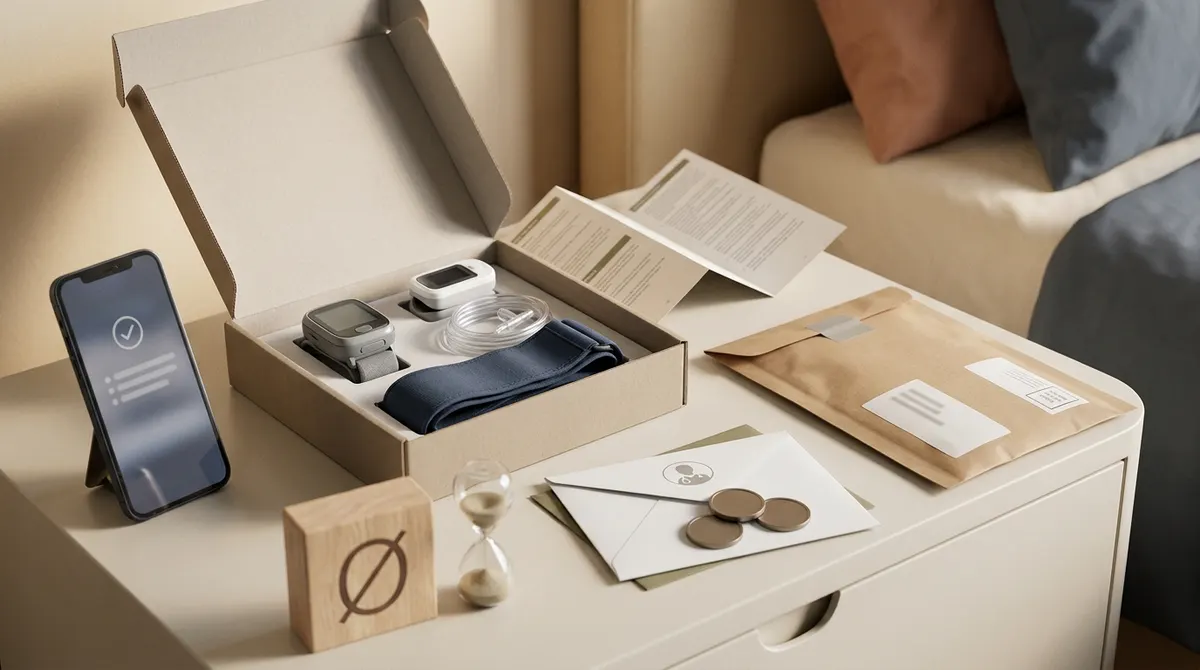
Getting from test to treatment involves a clear, straightforward process that removes the typical barriers of insurance paperwork and long wait times.
The Dumbo.health Process
1. Take the free sleep assessment on the dumbo.health website to determine whether a home sleep test is appropriate for your symptoms and risk profile.
2. Order your home sleep test for $149. The device ships directly to your home with clear instructions. No prescription hassle, no insurance authorization, and no clinic visit required.
3. Wear the device for one night of testing in your own bed. Follow the setup guide to ensure sensors are properly placed for accurate airflow, oxygen saturation, heart rate, and sleep position recording.
4. Return the device using the prepaid shipping materials included in your kit.
5. Enroll in a monthly care plan starting at $59 per month. Your plan covers physician interpretation of your results, a detailed sleep study report, and communication with your referring provider.
6. Receive your physician-reviewed results. Your sleep physician analyzes your AHI or Respiratory Event Index, oxygen desaturation data, heart rate patterns, and positional information to provide a clinical interpretation and diagnosis.
7. Begin treatment if indicated. If your results confirm obstructive sleep apnea, your plan includes CPAP therapy and equipment, with ongoing adherence monitoring and follow-up care.
After completing these steps, you have a clear diagnosis, a treatment plan, and continuous clinical support, all without navigating insurance barriers or waiting weeks for a sleep lab appointment in your area.
KEY TAKEAWAY: Dumbo.health streamlines the path from home sleep test to treatment with a $149 test, physician-reviewed results, and monthly plans starting at $59 that include CPAP therapy and ongoing care.
Real-world scenarios show how these results translate into actual clinical decisions for different types of patients.
Real-World Scenarios: How Different Results Lead to Different Outcomes
Understanding how results play out for real people makes the numbers on a sleep study report more meaningful and actionable.
Scenario One: A 48-Year-Old Office Worker With Mild Results
A 48-year-old office worker completes a home sleep test after years of feeling unrested despite getting seven to eight hours of sleep. Her report shows an AHI of 9, an average SpO2 of 94%, a minimum SpO2 of 87%, and an Oxygen Desaturation Index of 11. Her supine AHI is 14, while her lateral AHI is 4. She scores 13 on the Epworth Sleepiness Scale.
Her physician diagnoses mild obstructive sleep apnea with a significant positional component. Because she prefers not to use a CPAP machine, she and her physician discuss an oral appliance fitted by a dental sleep specialist, combined with positional therapy to reduce supine sleeping. She also receives sleep hygiene recommendations including consistent sleep schedules and avoiding alcohol before bed.
Scenario Two: A 55-Year-Old Long-Haul Truck Driver With Severe Results
A 55-year-old commercial driver with a BMI of 38 is referred for sleep apnea testing during a DOT physical. His home sleep test through dumbo.health reveals an AHI of 47, an average SpO2 of 88%, a minimum SpO2 of 71%, and an Oxygen Desaturation Index of 42. His heart rate data shows repeated spikes correlating with desaturation events. Snoring was recorded at high intensity throughout the night.
His physician diagnoses severe obstructive sleep apnea and prescribes CPAP therapy immediately. Through the dumbo.health Premium Plan at $89 per month, he receives a CPAP machine, a dedicated sleep coach who helps with mask fitting and adjustment, and advanced adherence monitoring that documents his nightly CPAP usage. His adherence data is shared with his referring provider to support DOT medical certification. Within three weeks of consistent CPAP use, his daytime sleepiness improves substantially.
Scenario Three: A 34-Year-Old With an Inconclusive Result
A 34-year-old woman with chronic insomnia, frequent awakenings, and restless sleep completes a home sleep test that shows an AHI of 3, normal oxygen saturation levels, and no significant positional variation. Despite the normal result, she continues to feel exhausted and reports difficulty maintaining focus during the day.
Her physician explains that the home sleep test effectively ruled out moderate to severe obstructive sleep apnea but cannot evaluate sleep architecture, sleep stages, REM latency, or periodic limb movements. She is referred for an in-lab polysomnography at a sleep center close to her. The polysomnogram reveals sleep fragmentation, elevated Arousal Index, reduced REM sleep percentage, and periodic limb movements consistent with restless leg syndrome. Her treatment plan now targets the correct underlying condition rather than sleep apnea.
KEY TAKEAWAY: The same type of test can lead to CPAP therapy, an oral appliance, positional therapy, or a referral for further testing depending on the individual's AHI, oxygen levels, symptoms, and clinical context.
These scenarios illustrate why physicians advise against self-interpreting results, but several persistent myths continue to cause confusion.
Common Myths About Home Sleep Apnea Test Results Debunked
MYTH: If your AHI is below 5, you definitely do not have a sleep problem.
FACT: An AHI below 5 on a home sleep test rules out moderate to severe obstructive sleep apnea but does not exclude other sleep disorders. Conditions such as upper airway resistance syndrome, restless leg syndrome, narcolepsy, and sleep fragmentation from periodic limb movements do not elevate the AHI. The American Academy of Sleep Medicine recommends further evaluation with a full polysomnogram when symptoms persist despite a normal home sleep test result.
MYTH: You can diagnose yourself by looking at your AHI number.
FACT: The AHI is one piece of a clinical puzzle. A physician considers AHI alongside oxygen desaturation data, heart rate patterns, sleep position breakdown, symptom severity measured by tools like the Epworth Sleepiness Scale, and medical history including blood pressure, BMI, and existing conditions such as COPD or Asthma. Self-diagnosis based on a single number risks both overtreatment and undertreatment.
MYTH: Home sleep tests are less accurate than lab studies and should not be trusted.
FACT: Home sleep tests are validated by the American Academy of Sleep Medicine for diagnosing obstructive sleep apnea in adults with moderate to high pretest probability. Research published through the National Institutes of Health shows high sensitivity for detecting moderate to severe obstructive sleep apnea. Where home tests have limitations, such as inability to measure brain waves or detect central sleep apnea, a qualified physician identifies those gaps and refers for a polysomnogram when needed.
MYTH: A normal oxygen level means you do not need treatment.
FACT: Some patients have an elevated AHI with relatively preserved oxygen saturation, particularly in cases of mild sleep apnea or in younger patients with greater physiological reserve. The National Heart, Lung, and Blood Institute notes that repeated airway obstruction and sleep fragmentation can cause cardiovascular and metabolic consequences even when average oxygen saturation remains above 90%. Treatment decisions account for the full clinical picture, not oxygen levels alone.
MYTH: CPAP is the only treatment for sleep apnea.
FACT: CPAP therapy is the gold standard for moderate to severe obstructive sleep apnea, but oral appliances, positional therapy, weight management, and surgery are all recognized treatment options depending on severity, patient preference, and clinical factors. The American Academy of Sleep Medicine supports oral appliance therapy as a first-line option for mild to moderate cases. Dumbo.health provides CPAP therapy through its care plans and can coordinate with your physician regarding alternative treatments.
KEY TAKEAWAY: Misunderstanding home sleep test results can lead to unnecessary anxiety or missed diagnoses, and consulting a physician for interpretation ensures treatment decisions are based on the complete clinical picture rather than a single number.
Before wrapping up, a quick preparation checklist ensures you get the most from your results review.
Preparing to Review Your Results With a Provider
Being prepared for your results consultation helps you ask better questions and understand your treatment options more clearly.
Checklist: What to Have Ready Before Your Results Review
- Your home sleep test report with AHI or Respiratory Event Index, oxygen saturation data, and positional breakdown
- A list of your current symptoms including daytime sleepiness, snoring frequency, witnessed apneas, and morning headaches
- Your completed Epworth Sleepiness Scale score (available through many sleep physician offices or online)
- A record of your typical sleep schedule including bedtime, wake time, and estimated hours of sleep
- A list of current medications, especially sedatives, opioids, or muscle relaxants that can affect breathing during sleep
- Your medical history including any diagnosis of high blood pressure, COPD, Asthma, heart disease, or diabetes
- Questions about treatment options including CPAP therapy, oral appliances, and positional therapy
- Information about your insurance status or interest in cash-pay options through dumbo.health sleep apnea care
Arriving with these items ensures your physician can provide a thorough interpretation and tailor treatment recommendations to your specific situation. Many patients report that having their questions written down in advance leads to a more productive consultation and clearer understanding of next steps.
KEY TAKEAWAY: Preparing a symptom list, medication record, and specific questions before your results review helps you and your physician make faster, better-informed treatment decisions.
Conclusion
Reading your home sleep apnea test results becomes straightforward once you understand the core metrics: the Apnea-Hypopnea Index measures how often your breathing stops or slows, oxygen saturation data shows the physiological impact, and supporting metrics like heart rate and sleep position add clinical context. The most important step is having a qualified physician interpret these numbers together, because a single metric in isolation never tells the full story.
If you are ready to take control of your sleep health, dumbo.health makes the process simple. Start with a free sleep assessment to see whether a home sleep test is right for you. The home sleep test is $149 with no insurance required, and monthly care plans starting at $59 per month include physician interpretation, CPAP therapy, and ongoing support with no contracts and the ability to cancel anytime.
Frequently Asked Questions About How to Read Home Sleep Apnea Test Results
What is a home sleep apnea test and what does it measure?
A home sleep apnea test (HSAT) is a simplified sleep study you complete in your own bed rather than a sleep laboratory. The device typically measures airflow, blood oxygen saturation (SpO2), heart rate, respiratory effort, snoring, and sleep position. Some devices, such as the WatchPAT, use peripheral arterial tone and pulse rate sensors to detect sleep stages and respiratory events. The results are then reviewed by a physician who generates a sleep study report summarising key findings including your apnea-hypopnea index, oxygen desaturation levels, and sleep position data. A healthcare professional can help interpret what those findings mean for your situation.
What is the WatchPAT and how does it work?
The WatchPAT is a wrist-worn home sleep apnea test device that measures sleep and breathing using peripheral arterial tone (PAT), a technology that detects changes in arterial blood flow at the fingertip caused by respiratory events and arousals. Rather than relying on traditional airflow sensors or chest belts alone, the WatchPAT uses PAT signal, blood oxygen saturation, heart rate, body position, snoring, and actigraphy to identify obstructive sleep apnea and estimate sleep stages. According to the American Academy of Sleep Medicine, WatchPAT is a validated type III or IV home sleep apnea testing device. A physician interprets the recorded data to produce your sleep study report.
What is the apnea-hypopnea index and why does it matter?
The apnea-hypopnea index (AHI) is the central metric in any sleep study report. It measures the average number of apneas and hypopneas per hour of sleep or recording time. An apnea is a complete pause in breathing lasting at least ten seconds. A hypopnea is a partial reduction in airflow, usually accompanied by oxygen desaturation or an arousal. The AHI determines the severity of sleep apnea: mild is an AHI of 5 to 14, moderate is 15 to 29, and severe is 30 or above, as defined by the American Academy of Sleep Medicine. A higher AHI generally indicates more frequent disruptions to breathing and sleep quality.
How is the apnea-hypopnea index calculated?
The AHI is calculated by dividing the total number of apneas and hypopneas recorded during the test by the total sleep time or recording time in hours. For example, if a patient had 90 apneas and 90 hypopneas during 6 hours of recording, the AHI would be 30. Importantly, both complete pauses in breathing and partial reductions in airflow count toward the same score. This means a patient who never fully stops breathing but experiences many hypopneas can score the same AHI as a patient with frequent full apneas. Understanding this distinction helps you read your sleep apnea test results more accurately.
What does my AHI score actually mean?
Your AHI score reflects how frequently breathing was disrupted during the test night. An AHI below 5 is generally considered within the normal range for adults. An AHI of 5 to 14 indicates mild sleep apnea. An AHI of 15 to 29 indicates moderate sleep apnea. An AHI of 30 or above indicates severe sleep apnea. However, the AHI score alone does not tell the full story. A physician will also consider your oxygen desaturation levels, sleep position, snoring data, and symptoms such as daytime sleepiness to form a complete picture. A healthcare professional should review your results before any treatment decisions are made.
What are the limitations of using AHI as the only measure of sleep apnea severity?
The AHI has recognised limitations as a standalone measure of obstructive sleep apnea severity. Two patients can have identical AHI scores with very different patterns. One may have 90 full apneas and 90 hypopneas; another may have zero apneas and 180 hypopneas, yet both score an AHI of 30. The AHI also does not directly reflect oxygen desaturation severity, sleep fragmentation, or the presence of respiratory effort-related arousals (RERAs). Research published via PubMed has questioned whether AHI alone is a sufficient measure of severity. Clinicians typically review oxygen saturation levels, sleep architecture, arousal index, and symptom burden alongside the AHI.
What is oxygen saturation and what do the numbers in my sleep report mean?
Oxygen saturation (SpO2 or SaO2) measures the percentage of haemoglobin in your blood that is carrying oxygen. During sleep, repeated breathing interruptions in obstructive sleep apnea cause oxygen levels to drop, a process called oxygen desaturation. Your sleep report will typically show the baseline oxygen saturation, the lowest point recorded (called the nadir), and the percentage of time spent below 90 percent saturation. Healthy adults generally maintain oxygen saturation above 94 percent during sleep. Spending significant time below 90 percent is associated with increased cardiovascular and metabolic risk. The NHLBI identifies oxygen desaturation as a key factor in assessing sleep apnea severity.
What is the oxygen desaturation index and how is it different from AHI?
The oxygen desaturation index (ODI) measures the number of times per hour that blood oxygen saturation drops by a defined threshold, typically 3 or 4 percent, from the baseline level. While the AHI counts breathing events based on airflow reduction, the ODI counts oxygen drops regardless of the cause. Some home sleep apnea tests use the ODI as a primary or supplementary metric because they cannot directly measure airflow. A physician reviewing your home sleep test report may use both the AHI and the ODI together to understand how frequently and severely your oxygen levels fell during the test night.
What other metrics appear in a home sleep study report?
Beyond the AHI and oxygen saturation data, a home sleep study report may include the respiratory disturbance index (RDI), which adds respiratory effort-related arousals to the apnea and hypopnea count. The report may also show the arousal index, sleep position data showing time spent supine versus on the side, snoring frequency, heart rate patterns, pulse rate sensor data, total recording time, estimated sleep efficiency, sleep stages if the device supports them, and the longest single apnea recorded. Devices such as the WatchPAT can estimate REM sleep and non-REM sleep stages. Each of these metrics adds important context when reading your home sleep apnea test results alongside AHI.
How does sleep position affect sleep apnea severity shown in test results?
Sleep apnea is often significantly worse when sleeping in the supine position, meaning flat on the back, because gravity causes the tongue and soft tissue to fall back and narrow the airway. Many sleep study reports include a positional breakdown showing your AHI in the supine position compared to sleeping on your side. If your AHI is substantially higher when supine, a clinician may consider positional therapy as part of treatment alongside or instead of other interventions. Understanding whether your breathing problems are position-dependent is one practical way to interpret your home sleep apnea test results and discuss options with your physician.
How accurate is a home sleep test compared to an in-lab polysomnography?
Home sleep apnea tests are validated tools for diagnosing moderate to severe obstructive sleep apnea in adults without significant comorbidities. However, they are less comprehensive than in-lab polysomnography (PSG). An in-lab sleep study records brain waves (EEG), muscle activity, eye movements, and full sleep staging in addition to breathing and oxygen data, allowing assessment of sleep architecture, sleep latency, REM latency, and conditions such as narcolepsy, restless leg syndrome, and periodic limb movement. Because home sleep tests cannot capture all of these signals, they may underestimate sleep apnea severity in some cases and are not appropriate for diagnosing all sleep disorders. A physician can advise whether an in-lab study is needed for your situation.
What is polysomnography and when might it be recommended instead of a home sleep test?
Polysomnography (PSG) is a comprehensive, in-lab sleep study that simultaneously records brain waves, eye movements, muscle activity, airflow, respiratory effort, blood oxygen levels, heart rate, and sleep position. It is considered the gold standard for diagnosing complex sleep disorders. A physician may recommend polysomnography instead of a home sleep test when central sleep apnea is suspected, when comorbidities such as COPD, heart failure, or neuromuscular disease are present, when previous home sleep tests have been inconclusive, or when a full assessment of sleep architecture including sleep stages N1, N2, N3, and REM sleep is clinically necessary. A healthcare professional should guide this decision based on your symptoms and medical history.
What is the respiratory disturbance index and how does it differ from AHI?
The respiratory disturbance index (RDI) is a broader measure than the AHI. It includes apneas and hypopneas but also adds respiratory effort-related arousals (RERAs), which are subtle breathing disruptions that cause brief awakenings without meeting the full criteria for a hypopnea. Because RERAs fragment sleep and cause daytime sleepiness, the RDI may better reflect the true burden of sleep-disordered breathing in some patients. A patient with a relatively low AHI but a high RDI may still benefit from treatment. Not all home sleep test devices capture RERAs, so this metric is more commonly reported in laboratory-based polysomnography studies.
What happens if my home sleep test results indicate sleep apnea?
If your home sleep test results indicate sleep apnea, a physician will typically review the full report and discuss appropriate next steps with you. Depending on the severity of your AHI, oxygen desaturation levels, and symptoms, treatment options may include CPAP therapy, an oral appliance, positional therapy, or further evaluation with an in-lab study. Starting treatment is a clinical decision that should be guided by a qualified healthcare professional. If you completed testing through dumbo.health, a physician interprets your results and your report can be shared with your referring provider to support coordinated care.
What is CPAP therapy and how is it used to treat sleep apnea?
CPAP, or continuous positive airway pressure, is the most widely used treatment for moderate to severe obstructive sleep apnea. A CPAP machine delivers a steady stream of pressurised air through a mask worn over the nose or mouth during sleep, keeping the upper airway open and preventing apneas and hypopneas. CPAP therapy requires consistent nightly use to be effective, and adherence is typically monitored by reviewing usage data from the machine. According to the Mayo Clinic, CPAP therapy can reduce daytime sleepiness, lower blood pressure, and improve overall sleep quality when used consistently. A physician should determine appropriate CPAP pressure settings based on your test results.
What is a good AHI score on a CPAP machine and how is adherence monitored?
A residual AHI below 5 events per hour while using CPAP therapy is generally considered a good treatment response, indicating that the therapy is effectively controlling apneas and hypopneas. Most modern CPAP machines record nightly usage hours, mask leak data, and residual AHI, which a clinician or sleep coach can review to assess adherence and adjust treatment. Consistent use of at least 4 hours per night on 70 percent of nights is a common benchmark used for insurance and compliance purposes. Ongoing adherence monitoring is an important part of long-term sleep apnea care, and dumbo.health's CPAP therapy and equipment plans include adherence follow-up as part of ongoing care.
Can I take a home sleep apnea test more than once?
Yes. A home sleep apnea test can be repeated for a number of reasons, including inconclusive initial results, significant weight change, changes in symptoms, or the need to reassess severity after starting or changing treatment. When comparing results from two different tests, it is important to account for whether the same device type was used, whether the same physician interpreted both studies, how much time has passed, and any changes in weight, sleep position habits, or health status. Comparing a home sleep test to an in-lab polysomnography or vice versa is not straightforward because they measure slightly different things. A physician can advise whether retesting is appropriate for your situation.
How do I know if my home sleep test device recorded data correctly?
Most home sleep test devices provide an indicator light, display, or post-test status signal to confirm that data was recorded. After the test night, the device is typically returned to a provider or connected to a mobile app or smartphone for data upload. A physician or technician reviewing the data can identify if recording quality was poor due to sensor displacement, insufficient recording time, or device malfunction. If the data quality is inadequate, a repeat test night may be required. Following the setup instructions carefully, including proper sensor placement and ensuring the device is fully charged before the test, helps maximise the chance of a successful recording.
Will I feel uncomfortable sleeping with a home sleep test device?
Most people find home sleep test devices manageable once they are set up correctly, though it is normal to feel slightly self-conscious on the first night. Depending on the device, you may wear a small finger probe, a wrist unit, and a nasal cannula or chest sensor. The WatchPAT, for example, is a relatively compact wrist-worn device that many patients find less intrusive than traditional multi-channel devices. Some initial discomfort may affect sleep quality on the test night, though the recorded data is generally still usable. If you genuinely cannot sleep during the test night, contact the testing provider, as a repeat night may be arranged.
What if I cannot sleep well during the home sleep test night?
Poor sleep on the test night is common and does not automatically invalidate your results. Physicians and sleep specialists interpret home sleep test data in the context of total recording time, not just ideal sleep conditions. However, a very short recording time or minimal sleep may reduce the reliability of the results. If the recording is insufficient, your provider may ask you to repeat the test. Interestingly, sleep apnea is often detectable even in shorter recordings because breathing events tend to recur throughout available sleep. A physician reviewing your results will assess whether the recording provides enough data to support a clinical conclusion.
What is the difference between obstructive sleep apnea and central sleep apnea in test results?
Obstructive sleep apnea occurs when the airway physically collapses or becomes blocked during sleep, causing respiratory effort to continue despite no airflow. Central sleep apnea occurs when the brain fails to send the correct signals to the respiratory muscles, resulting in both airflow and respiratory effort stopping simultaneously. Home sleep tests that measure airflow and respiratory effort can distinguish between obstructive apneas and central events in many cases, though in-lab polysomnography provides a more precise assessment. The treatment pathway differs significantly between the two conditions. A physician reviewing your home sleep test or polysomnogram report can clarify which type of sleep apnea is present and guide appropriate treatment.
How should I compare a new sleep study result to a previous one?
When comparing a new sleep study to a previous baseline study, it is important to compare like with like. The same test type should ideally be used, meaning home sleep test to home sleep test, or polysomnography to polysomnography, as differences in methodology can make direct comparison unreliable. Other factors to consider include changes in weight, because sleep apnea typically worsens with weight gain; age, because sleep apnea severity tends to increase over time; sleep position during testing; and whether the same device and interpreting physician were used. A clinician reviewing both reports can identify whether changes in AHI, oxygen saturation nadir, or sleep architecture represent true clinical change or methodological differences.
How much does a home sleep apnea test cost without insurance?
The cost of a home sleep apnea test without insurance varies depending on the provider and what is included. dumbo.health offers an at-home sleep test for a transparent one-time cost of $149, with no insurance required, no prior authorizations, and no surprise bills. The $149 covers the testing device and one night of testing. Physician interpretation and your sleep apnea care plan, including CPAP therapy and ongoing adherence follow-up, are covered separately under monthly plans starting at $59 per month. There are no long-term contracts and you can cancel anytime. You can learn more about the full testing and care process at dumbo.health's at-home sleep test page.
What is included in a sleep apnea care plan after testing?
After your home sleep test results are interpreted by a physician, a sleep apnea care plan typically includes a clinical diagnosis report, a treatment recommendation, CPAP therapy or alternative treatment where indicated, equipment support, and ongoing adherence monitoring. dumbo.health monthly care plans cover physician interpretation and report, CPAP therapy and equipment, follow-up care, and updates sent to your referring provider. The Premium plan, at $89 per month, adds a dedicated sleep coach from a licensed care team and advanced adherence monitoring. The Elite plan, at $129 per month, includes direct physician messaging and custom reporting. All plans are no-contract and can be cancelled anytime. Explore sleep apnea care solutions to compare plan options.
Do commercial drivers need special sleep apnea testing for DOT purposes?
Commercial drivers holding a CDL may be referred for sleep apnea evaluation as part of the DOT physical examination process. A certified medical examiner may consider body mass index, neck circumference, blood pressure, daytime sleepiness, and other risk factors when deciding whether a sleep apnea evaluation is warranted. If sleep apnea is identified and a driver begins CPAP therapy, adherence documentation may be required as part of ongoing DOT medical certification. Importantly, it is the certified medical examiner, not dumbo.health, who makes DOT certification decisions. dumbo.health can support at-home sleep apnea testing and adherence documentation for commercial drivers. Learn more at the home sleep apnea test for commercial drivers guide.
What is the Epworth Sleepiness Scale and how does it relate to sleep apnea testing?
The Epworth Sleepiness Scale (ESS) is a brief questionnaire that measures daytime sleepiness by asking how likely a person is to doze off in eight common situations, such as sitting quietly or watching television. Scores range from 0 to 24, with higher scores indicating greater daytime sleepiness. A score above 10 is generally considered abnormal and may prompt a clinician to recommend a sleep study. The ESS does not diagnose sleep apnea on its own, but it provides useful clinical context alongside objective test results such as AHI and oxygen saturation data. A healthcare professional will consider ESS scores alongside your home sleep test results when making treatment recommendations.
Where can I start if I think I might have sleep apnea?
If you have symptoms such as loud snoring, witnessed apneas, waking with a dry mouth or headache, or persistent daytime fatigue, a good first step is completing a sleep assessment to identify whether at-home testing may be appropriate for your situation. A healthcare professional can confirm whether a home sleep test or an in-lab study is the right evaluation for you. dumbo.health offers a free sleep assessment to help you understand your symptoms and decide whether at-home sleep apnea testing is a reasonable next step. Start with a free sleep assessment to begin the process with transparent cash-pay pricing and no insurance required.
Related Home Sleep Apnea Test Topics
- Sleep Apnea Testing at Home The Complete Guide to Home Sleep Tests, Devices, and Results
- Sleep Study for Sleep Apnea What the Test Measures, How It Works, and What Your Results Mean
- Sleep Apnea Test The Complete Guide to Diagnosis, Home Testing, and What Your Results Mean
- Sleep Apnea Testing The Complete Guide to Diagnosis, Home Tests, and What Your Results Mean
- How Do You Get a Home Sleep Apnea Test The Complete Guide to At-Home Sleep Testing
- How to Get a Sleep Apnea Test at Home The Complete Guide to Home Sleep Testing
- How Is a Home Sleep Apnea Test Done A Complete Guide to At-Home Sleep Testing
- How Does a Home Sleep Apnea Test Work A Complete Guide to At-Home Sleep Testing
- Sleep Study for Sleep Apnea What Happens, What It Measures, and What Your Results Mean
- Best Home Sleep Apnea Test A Clinical Guide to Choosing the Right At-Home Sleep Study
- At Home Sleep Study for Sleep Apnea The Complete Guide to Testing in Your Own Bed
- At Home Sleep Apnea Test with Ring How Ring-Based Sleep Testing Works and Whether It Can Diagnose Sleep Apnea
- Home Sleep Apnea Test Ring How Ring-Based Sleep Testing Works for Sleep Apnea Detection
- Sleep Apnea Test at Home The Complete Guide to Home Sleep Testing for Adults
- Home Sleep Test The Complete Guide to At-Home Sleep Apnea Testing
- Can You Test for Sleep Apnea at Home A Complete Guide to Home Sleep Testing
- Sleep Test at Home The Complete Guide to Home Sleep Apnea Testing
- CPT for Home Sleep Apnea Test Complete Coding and Billing Guide for Sleep Study Providers
- What Happens After a Home Sleep Apnea Test Results, Diagnosis, and Next Steps
- Sleep Test What It Measures, How It Works, and What Your Results Mean
- Sleep Apnea Diagnosis at Home The Complete Guide to Home Sleep Testing
- At-Home Sleep Apnea Test The Complete Guide to Testing, Results, and Treatment
- Sleep Study Test for Sleep Apnea The Complete Guide to Diagnosis, Testing Types, and Next Steps
- Home Sleep Apnea Test FSA Eligible How to Use Your Flexible Spending Account for Sleep Testing
- At-Home Sleep Apnea Test FSA How to Use Your Flexible Spending Account for Sleep Testing
- At Home Sleep Apnea Test HSA How to Use Your Health Savings Account for Sleep Testing
- What Is a Home Sleep Apnea Test How At-Home Sleep Testing Works, What It Measures, and Who Needs One
- Home Sleep Testing The Complete Guide to Diagnosing Sleep Apnea From Your Own Bed
- Sleep Apnea Checker How to Screen for Sleep Apnea and What Your Results Mean
- Home Sleep Testing Companies A Complete Guide to At-Home Sleep Apnea Diagnosis
- Home Sleep Apnea Test Types A Clinical Guide to At-Home Sleep Testing Devices and What They Measure
- Home Sleep Apnea Test Results What Your Report Means and What Happens Next
- Sleep Study Apnea Hypopnea Index What Your AHI Score Means and Why It Matters
- Home Sleep Apnea Test The Complete Guide to At-Home Sleep Apnea Testing
- Overnight Home Sleep Apnea Test The Complete Guide to At-Home Sleep Apnea Testing
- Self Home Sleep Apnea Test The Complete Guide to Testing for Sleep Apnea at Home
- Sleep Apnea Sleep Study The Complete Guide to Testing, Diagnosis, and Treatment
- Obstructive Sleep Apnea Sleep Study The Complete Guide to Diagnosis, Testing, and Treatment
- How to Get Tested for Sleep Apnea The Complete Guide to Diagnosis, Sleep Studies, and Treatment
- Home Sleep Apnea Test Results Interpretation What Your Numbers Actually Mean
- Home Sleep Apnea Testing The Complete Guide to Diagnosing Sleep Apnea at Home
- Home Sleep Apnea Test ICD-10 Codes The Complete Coding and Diagnostic Guide for Sleep Apnea Testing
- Level 2 Home Sleep Apnea Test The Complete Guide to At-Home Sleep Diagnostics
- Home Sleep Apnea Test Finger Sensor How Finger-Based Devices Detect Sleep Apnea at Home
- How Does a Sleep Study Diagnose Sleep Apnea
- Sleep Test to CPAP How Sleep Apnea Testing Leads to Treatment
- Can a Sleep Study Diagnose Sleep Apnea and Other Sleep Disorders
- Polysomnography at Home How Home Sleep Testing Compares to In-Lab Sleep Studies
- Home Sleep Apnea Test for Children What Parents Need to Know About Pediatric Sleep Testing
- Home Sleep Apnea Test for Kids What Parents Need to Know About Pediatric Sleep Testing
- Kids at Home Sleep Apnea Test What Parents Need to Know About Pediatric Sleep Testing
- At-Home Sleep Apnea Test for Toddlers What Parents Need to Know About Pediatric Sleep Testing
- Sleep Apnea Diagnosis How Sleep Apnea Is Detected, Tested, and Confirmed
- Home Sleep Apnea Test CPT Code Complete Coding and Billing Guide for Sleep Studies
- CPAP Test at Home The Complete Guide to Home Sleep Apnea Testing and Treatment
- Does Anyone Ever Pass a Sleep Apnea Test What Normal Results Actually Look Like
- Can Sleep Apnea Be Diagnosed Without a Sleep Study
- CPAP Test What It Is, How It Works, and What Your Results Mean
- What to Expect During a Sleep Study for Sleep Apnea
- Which Companies Offer Home Sleep Apnea Testing Services with Fast Results
- Sleep Apnea Testing Near Me How to Find the Right Test, Provider, and Path to Diagnosis
- Sleep Apnea Test at Home with Insurance What Your Plan Actually Covers and How to Get Tested
- CPT Code for Home Sleep Apnea Test The Complete Coding and Billing Guide
- At Home Sleep Apnea Test for VA Disability The Complete Guide for Veterans
- At-Home Sleep Apnea Test for VA The Complete Guide for Veterans
- Pediatric Home Sleep Apnea Test A Complete Guide for Parents and Providers
- Home Sleep Apnea Test Near Me How to Get Tested Without a Sleep Lab Visit
- FDA Approved Home Sleep Apnea Test What Devices Are Cleared, How They Work, and How to Get Tested
- At-Home Sleep Apnea Test DOT Approved The Complete Guide for Commercial Drivers
- Home Sleep Apnea Test CPT Codes A Complete Guide to Billing, Coding, and Reimbursement
- How Much Does a Home Sleep Apnea Test Cost Complete Pricing Breakdown for Self-Pay and Insured Patients
- CPT Code for Home Sleep Apnea Test Complete Billing and Coding Guide
- Where Can I Get a Take-Home Sleep Study Kit
- Home Sleep Test Cost What You Actually Pay With and Without Insurance
- How Do Home Sleep Apnea Tests Compare to In-Lab Sleep Studies
- Home Sleep Apnea Test FDA Approved What Devices Are Cleared and How They Work
- Sleep Apnea Test Near Me How to Find Local and At-Home Testing Options
- Apnea Monitor The Complete Guide to Breathing Monitors for Sleep Apnea and Infant Care
- Home Sleep Apnea Test Indications Who Qualifies and When At-Home Testing Is Clinically Appropriate
- HSAT The Complete Guide to Home Sleep Apnea Testing
- How Long Does a Home Sleep Apnea Test Take What to Expect Before, During, and After Testing
- Level 3 Home Sleep Apnea Test What It Measures, How It Works, and Who Should Use One
- Home Sleep Apnea Test Type 3 What It Measures, How It Works, and Who It Is For
- Type 3 Home Sleep Apnea Test What It Measures, How It Works, and Who It Is For
- Unattended Home Sleep Apnea Test What It Measures, How It Works, and Who Qualifies
- Portable Home Sleep Apnea Test How It Works, What It Measures, and Who Needs One
- Disposable Home Sleep Apnea Test What It Is, How It Works, and Which Devices Lead the Market
- Home Sleep Apnea Test Strap What Each Belt and Sensor Does and How to Wear Them Correctly
- Disadvantages of Home Sleep Testing What Patients and Providers Need to Know
- Home Sleep Apnea Test Cost What You Actually Pay With and Without Insurance
- Can I Get a CPAP Machine After a Home Sleep Apnea Test
- Top-Rated Home Sleep Apnea Test Kits Available in the US
- Does Insurance Cover a Home Sleep Apnea Test What You Actually Pay
- Where Can I Buy a Home Sleep Apnea Test Without a Prescription
- Does Medicare Cover a Home Sleep Apnea Test What Beneficiaries Need to Know
- Can Dentists Prescribe a Home Sleep Apnea Test What You Need to Know
- What Is the Cost of a Sleep Apnea Test at Home
- Average Cost of a Home Sleep Apnea Test Kit Shipped in the US
- Do I Need a Prescription for a Home Sleep Apnea Test Device
- At-Home Sleep Apnea Test Covered by Medicaid What You Need to Know Before Getting Tested
AI summary
A home sleep apnea test (HSAT) is an at-home sleep study that records airflow, respiratory effort, oxygen saturation (SpO2), heart rate, snoring, and sleep position to evaluate obstructive sleep apnea. Key metrics used to read results include: - Apnea-Hypopnea Index (AHI): events per hour; normal <5, mild 5–15, moderate 15–30, severe >30. - Respiratory Event Index (REI): events per hour of device recording time; may underestimate severity because HSAT cannot confirm total sleep time. - Oxygen metrics: mean SpO2, minimum SpO2 (oxygen nadir), Oxygen Desaturation Index (ODI; drops of 3% or 4% per hour), and time below 90% (T90). Sustained SpO2 <90% and T90 >10% increase urgency and may prompt evaluation for conditions such as COPD or asthma. - Context data: heart rate spikes tied to respiratory events, positional AHI (positional sleep apnea often defined as supine AHI at least twice non-supine), and snoring indices. Physicians integrate HSAT data with symptoms and tools such as the Epworth Sleepiness Scale, and may recommend CPAP, oral appliance therapy, positional therapy, or in-lab polysomnography when results are borderline, inconclusive, or symptoms persist.

Nicolas Nemeth
Co-Founder
Nico is the co-founder of Dumbo Health, a digital sleep clinic that brings the entire obstructive sleep apnea journey home. Patients skip the sleep lab and the long wait to see a specialist. Dumbo Health ships an at home test, connects patients with licensed sleep clinicians by video, and delivers CPAP or a custom oral appliance with ongoing coaching and automatic resupply in one clear subscription.
Keep reading

VA At Home Sleep Apnea Test: The Complete Guide for Veterans

Home Sleep Apnea Test App: What Works, What Doesn't, and How to Get a Real Diagnosis


