Sleep Test at Home: The Complete Guide to Home Sleep Apnea Testing
A home sleep apnea test (HSAT) is a one-night, at-home study used to diagnose obstructive sleep apnea with a portable device. The guide explains what HSAT measures, including airflow, oxygen saturation, heart rate, and breathing effort, and how sensors like a nasal cannula, pulse oximeter, and chest/abdominal belts work. It reviews how physicians interpret results using the apnea-hypopnea index (AHI) and oxygen desaturation patterns. You will learn who is a good candidate, when an in-lab polysomnography is needed, and how false negatives can occur. Practical prep steps reduce technical failures and repeat testing. It also covers costs, DOT considerations for commercial drivers, and common treatment paths after diagnosis.
Struggling with sleep?
Find out if sleep apnea is the reason.
FDA-cleared. $149 flat. Physician-reviewed results in 48 hours.

Sleep Test at Home: The Complete Guide to Home Sleep Apnea Testing
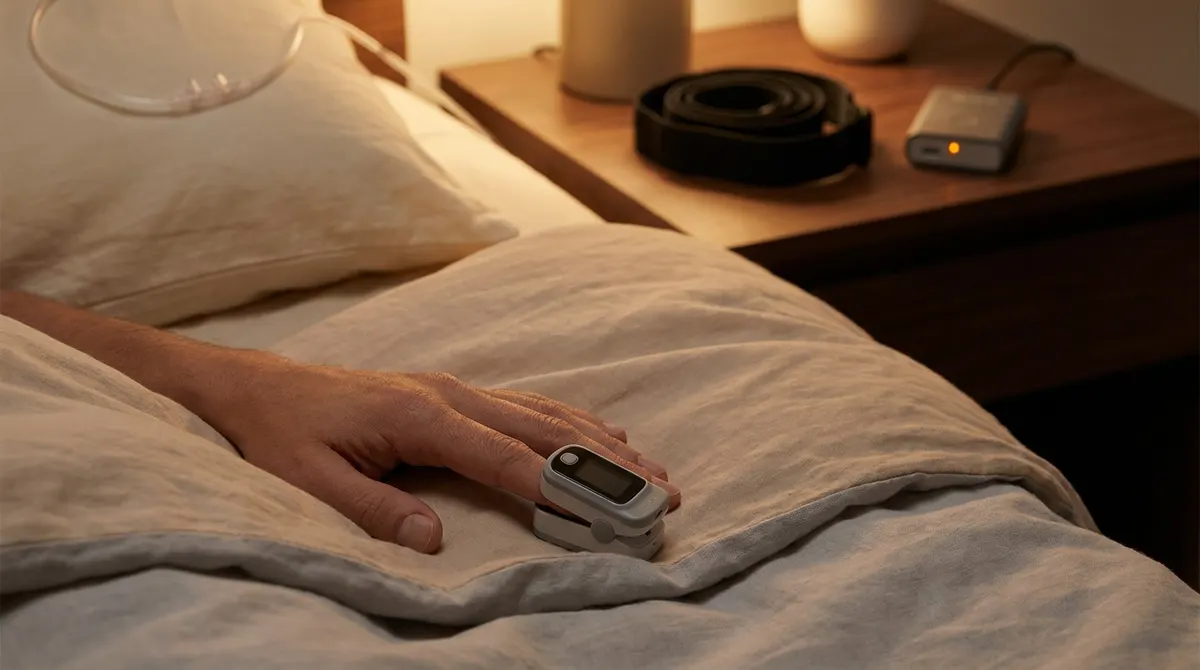
A sleep test at home is a clinically validated method for diagnosing obstructive sleep apnea using a portable device you wear for one night in your own bed. According to the American Academy of Sleep Medicine, home sleep apnea testing is an accepted diagnostic pathway for adults with a moderate to high likelihood of obstructive sleep apnea. This guide is written for anyone experiencing symptoms such as loud snoring, daytime fatigue, or observed breathing pauses during sleep, as well as commercial drivers who need sleep apnea testing for DOT medical certification. You will learn exactly how home sleep testing works, what sensors are involved, how results are interpreted, what treatment pathways follow a diagnosis, and how the process compares to an in-lab sleep study. By the end, you will know whether a home sleep test is the right next step for you.
Quick Answer
A sleep test at home uses a portable device with sensors that measure airflow, blood oxygen levels, heart rate, and breathing effort while you sleep. The device is worn for one night, and the collected sleep data is reviewed by a physician or sleep specialist who calculates your apnea-hypopnea index to determine whether you have obstructive sleep apnea. home sleep apnea testing is a lower-cost, more convenient alternative to in-lab polysomnography for most adults. dumbo.health offers a home sleep test for $149 with no insurance required.
Key Takeaways
- A home sleep apnea test measures airflow, oxygen saturation, heart rate, and respiratory effort using portable sensors worn overnight.
- The apnea-hypopnea index score from the test determines the severity of obstructive sleep apnea, with an AHI of 5 or higher indicating a diagnosis.
- Home sleep testing is validated for diagnosing obstructive sleep apnea but is not designed to detect central sleep apnea, narcolepsy, or other complex sleep disorders.
- dumbo.health provides a home sleep test for $149 as a one-time cost, with monthly care plans starting at $59 per month that include physician interpretation, CPAP therapy, and follow-up care.
- The FMCSA may require commercial drivers to undergo sleep apnea testing if a medical examiner identifies risk factors such as a BMI over 35 or a neck circumference over 17 inches.
- Most home sleep test results are available within days, compared to weeks of waiting common with traditional sleep lab scheduling.
What Is a Home Sleep Test and How Does It Work
A home sleep test is a portable diagnostic study that records sleep data overnight to identify obstructive sleep apnea. Unlike an in-lab sleep study, the entire process happens in your own bed using a small wearable device.
Home sleep apnea testing, also referred to as HSAT, uses sensors to track four core measurements: nasal and oral airflow, blood oxygen levels, heart rate, and breathing effort. These data points allow a physician to determine whether your airway collapses repeatedly during sleep, which is the hallmark of obstructive sleep apnea.
The device is typically shipped to your home or picked up from a provider. You wear it for a single night, following specific instructions about sensor placement. The next morning, the recording device stores or transmits the sleep data for clinical interpretation.
According to the American Academy of Sleep Medicine, home sleep apnea testing is appropriate for adults with a high pretest probability of moderate to severe obstructive sleep apnea and no significant comorbidities such as heart failure, chronic lung disease, or suspected central sleep apnea. This distinction matters because the test is designed to detect a specific sleep condition rather than serving as a general sleep disorder screening tool.
Home sleep apnea testing has gained broader clinical adoption because it reduces barriers to diagnosis. Many patients report that sleeping in their own bed produces more representative sleep data than spending a night in an unfamiliar sleep lab environment.
KEY TAKEAWAY: A home sleep test records airflow, oxygen levels, heart rate, and breathing effort overnight to diagnose obstructive sleep apnea using a portable device you wear in your own bed.
Understanding what the test measures is important, but knowing which sensors collect that data helps you set up the device correctly.
Sensors and Equipment Used in a Home Sleep Apnea Test
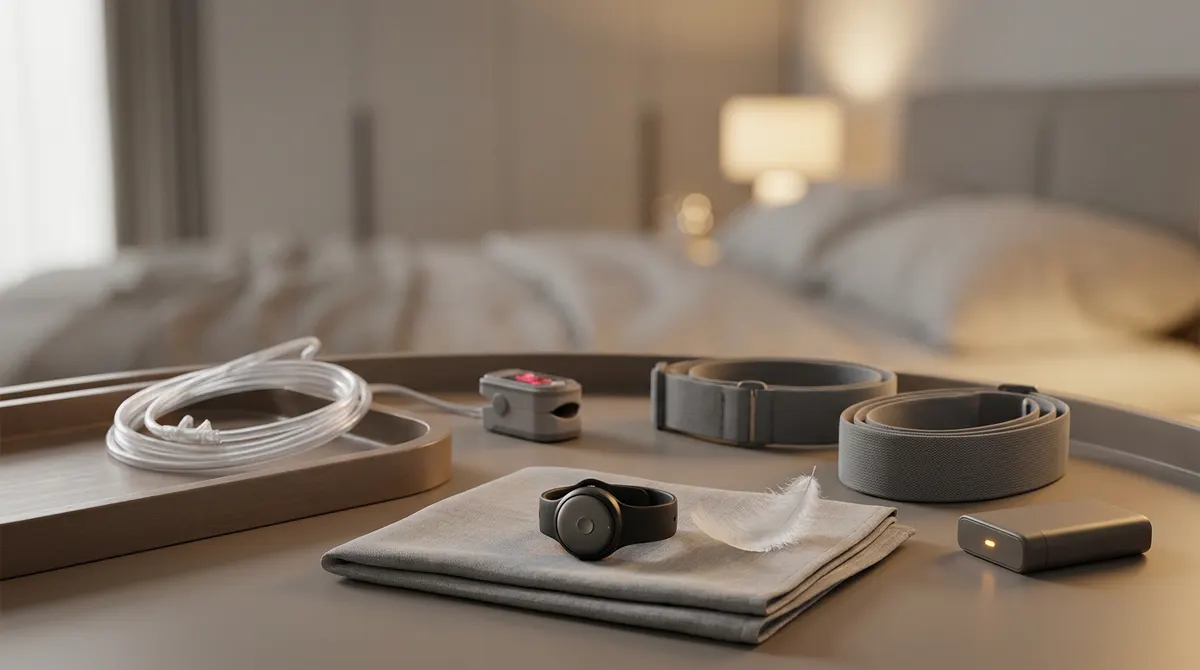
Home sleep test devices use a combination of sensors to capture the specific measurements a physician needs to calculate an AHI score. The equipment is compact, and most devices weigh less than a few ounces.
Nasal Cannula
A nasal cannula is a thin tube placed under your nose. It measures airflow and air movement through the nasal passages. The cannula detects when breathing stops or becomes shallow, which corresponds to apnea and hypopnea events.
Pulse Oximeter
A pulse oximeter clips onto your finger and measures oxygen saturation and pulse rate using a light-based technique called photoplethysmography. Blood oxygen levels drop when breathing stops during sleep, and the oximeter captures each of these desaturation events. According to the NIH, oxygen saturation below 90 percent during sleep is clinically significant and may indicate moderate to severe obstructive sleep apnea.
Chest and Abdominal Belts
Flexible elastic belts worn around the chest and abdomen measure respiratory effort and breathing effort. These belts, sometimes called a chest strap or sonu band depending on the device, detect the physical movement of your torso as you breathe. They help distinguish between obstructive events, where effort continues but the airway is blocked, and central events, where breathing effort itself pauses.
Peripheral Arterial Tonometry Devices
Some advanced home sleep test devices, such as the WatchPAT and WatchPAT ONE developed by Itamar Medical, use peripheral arterial tonometry instead of a traditional nasal cannula. These devices measure peripheral arterial tone at the fingertip, along with oxygen saturation and actigraphy, to estimate the AHI score. The WatchPAT ONE is a single-use, disposable device that simplifies the testing process and eliminates the need for a separate belt or cannula setup.
Additional Sensors
Depending on the specific equipment, a home sleep test may also include a movement sensor to track body position, a data monitor that stores the recording, and in some cases a SleepImage Ring that uses photoplethysmography to capture sleep metrics from the finger. The NightOwl Home Sleep Test is another compact device that uses a small fingertip sensor for simplified data collection.
DID YOU KNOW: The WatchPAT ONE can record over 7 channels of sleep data from a single wrist-worn device, making it one of the most streamlined home sleep apnea testing options available.
KEY TAKEAWAY: Home sleep test devices use a nasal cannula, pulse oximeter, elastic belts, and in some cases peripheral arterial tonometry sensors to collect the airflow, oxygen, heart rate, and breathing effort data needed for diagnosis.
With a clear picture of the equipment, the next step is understanding how to prepare for your test night.
How to Prepare for a Home Sleep Test
Proper preparation improves the accuracy of your home sleep test results. Small changes on the day of testing can reduce the risk of a failed or inconclusive recording.
Preparation Checklist
- Avoid caffeinated products after noon on the day of your test
- Avoid alcoholic beverages for at least 24 hours before testing, as alcohol relaxes the airway and can artificially alter results
- Remove nail polish or acrylic nails from at least one finger so the pulse oximeter can read oxygen saturation accurately
- Avoid heavy hair styling products that could interfere with any head or forehead sensors
- Confirm you have your prescription or physician order for the test
- Read all device instructions before bedtime rather than at the moment of setup
- Charge the recording device if it requires charging, or confirm battery status
- Complete the free sleep assessment at dumbo.health if you have not already been evaluated for sleep apnea risk
- Set your phone alarm for your normal wake time to ensure you remove the device at a consistent point
- Sleep in your normal position and bed to capture representative sleep data
Step-by-Step Process for Completing a Home Sleep Test
1. Open the home sleep test kit and review the printed or video instructions provided with your specific device.
2. Attach the nasal cannula by placing it under your nose with the prongs directed into each nostril, and secure the tubing behind your ears.
3. Place the flexible elastic belts around your chest and abdomen, adjusting the fit so they are snug but not uncomfortable.
4. Clip the pulse oximeter onto your finger, ensuring your nail is clean and the sensor sits flat against your skin.
5. Turn on the recording device and confirm the indicator light or display shows that recording has begun.
6. Go to sleep at your normal bedtime and sleep for a minimum of 4 hours to ensure the device captures enough sleep data for interpretation.
7. In the morning, remove all sensors and turn off the device according to the instructions.
8. Return the device to your provider or ship it back in the prepaid packaging. If you ordered through dumbo.health's at-home sleep test program, follow the return instructions included in your kit.
After completing the test, your sleep data is uploaded and sent to a board-certified sleep physician for interpretation. Most patients receive results within a few business days.
IMPORTANT: If the recording device falls off or you sleep fewer than 4 hours, the test may need to be repeated. Contact your provider the next morning if you suspect the device malfunctioned.
KEY TAKEAWAY: Avoiding caffeine, alcohol, nail polish, and hair products on the day of testing, combined with careful sensor placement, gives you the best chance of an accurate single-night recording.
Once the data is collected, the next phase is clinical interpretation, which determines whether you have obstructive sleep apnea.
How Home Sleep Test Results Are Interpreted
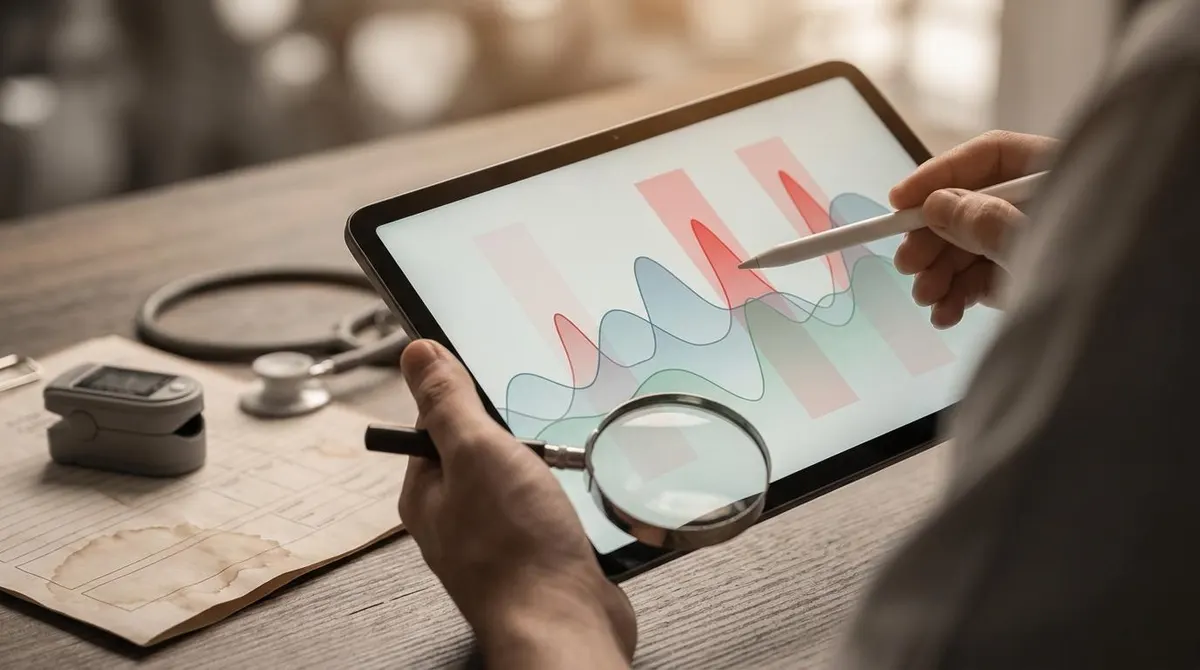
Home sleep test results are reviewed by a physician or sleep specialist who analyzes the recorded sleep data to determine whether obstructive sleep apnea is present and how severe it is. The primary measurement used for diagnosis is the apnea-hypopnea index.
Understanding the Apnea-Hypopnea Index
The apnea-hypopnea index, or AHI score, counts the average number of apnea and hypopnea events per hour of recorded time. An apnea is a complete pause in airflow lasting at least 10 seconds. A hypopnea is a partial reduction in airflow accompanied by a drop in oxygen saturation or an arousal from sleep.
According to the American Academy of Sleep Medicine, AHI score thresholds are classified as follows:
- Normal: fewer than 5 events per hour
- Mild obstructive sleep apnea: 5 to 14 events per hour
- Moderate obstructive sleep apnea: 15 to 29 events per hour
- Severe obstructive sleep apnea: 30 or more events per hour
Oxygen Saturation Patterns
Beyond the AHI, the physician reviews oxygen saturation trends throughout the night. Repeated drops in blood oxygen levels, called desaturations, indicate how significantly your breathing disruptions affect oxygen delivery. The National Heart, Lung, and Blood Institute notes that untreated obstructive sleep apnea is associated with increased risk of cardiovascular events, including heart failure and metabolic syndrome.
Clinical Interpretation and Next Steps
Board-certified sleep physicians review the raw sleep data, not just the automated scores generated by the device. This interpretation step is critical because the recording environment, device type, and total recording time all influence the reliability of the AHI. dumbo.health includes physician interpretation and a detailed report in every monthly care plan, starting with the Essentials Plan at $59 per month. The interpretation is performed by licensed physicians, and results are sent directly to your referring provider.
If your results indicate moderate to severe obstructive sleep apnea, the physician typically issues a CPAP prescription. For mild cases, treatment recommendations may include positional therapy, a dental appliance, behavioral changes such as weight management, or a combination approach. The specific pathway depends on your symptoms, AHI severity, and overall health profile.
KEY TAKEAWAY: The AHI score is the primary metric used to diagnose and classify sleep apnea severity, with 5 or more events per hour indicating a positive diagnosis that typically warrants treatment.
Knowing your AHI score is the starting point, but comparing home testing to the in-lab alternative helps you understand whether you chose the right diagnostic pathway.
Home Sleep Test vs In-Lab Sleep Study
A home sleep test and an in-lab sleep study both diagnose sleep apnea, but they differ significantly in scope, cost, convenience, and the types of conditions they can detect.
Polysomnography is the gold-standard sleep study conducted in a sleep lab or sleep center. It records a wider range of physiological data, including brain waves, brain and muscle activity, eye movements, heart rate, breathing, oxygen levels, and leg movements. This comprehensive monitoring allows polysomnography to diagnose not only obstructive sleep apnea but also central sleep apnea, narcolepsy, periodic limb movement disorder, and other complex sleep conditions.
A home sleep apnea test records fewer channels of data, focusing specifically on airflow, oxygen saturation, heart rate, and respiratory effort. This makes it effective for diagnosing obstructive sleep apnea but not suitable for detecting conditions that require brain wave monitoring.
Setting
- Home Sleep Apnea Test: Your own bed at home
- Polysomnography: Sleep lab, sleep center, or hospital
Cost
- Home Sleep Apnea Test: Lower, typically $149 to $500 without insurance. dumbo.health offers the test for $149 with no insurance required.
- Polysomnography: Higher, often $1,000 to $3,000 or more depending on location and insurance coverage
Channels Monitored
- Home Sleep Apnea Test: 4 to 7 channels including airflow, oxygen, heart rate, and breathing effort
- Polysomnography: 12 or more channels including brain waves, muscle activity, eye movement, and leg movement
Conditions Diagnosed
- Home Sleep Apnea Test: Obstructive sleep apnea
- Polysomnography: Obstructive sleep apnea, central sleep apnea, narcolepsy, parasomnias, periodic limb movement disorder
Convenience
- home sleep apnea test: High, no travel or overnight stay at a facility
- polysomnography: Lower, requires scheduling, travel, and sleeping in an unfamiliar environment
Turnaround for Results
- Home Sleep Apnea Test: Typically within days
- Polysomnography: Often 1 to 3 weeks depending on the sleep center
For most adults with symptoms of obstructive sleep apnea and no significant comorbidities, a home sleep apnea test is the recommended first step. The American Academy of Sleep Medicine supports home sleep apnea testing as an appropriate alternative to polysomnography in this population. Patients who test negative on a home study but continue to have symptoms may still need a follow-up in-lab sleep study.
KEY TAKEAWAY: A home sleep test is a validated, lower-cost alternative to polysomnography for diagnosing obstructive sleep apnea, but an in-lab study is necessary when central sleep apnea, narcolepsy, or other complex sleep disorders are suspected.
Understanding the comparison between testing options leads to the practical question of cost and how to pay for testing and treatment.
Cost of a Home Sleep Test and How to Pay
A home sleep apnea test typically costs between $149 and $500 when paying out of pocket, making it significantly more affordable than in-lab polysomnography. The total cost of your sleep apnea care depends on whether you need only the diagnostic test or ongoing treatment.
Insurance vs Self-Pay
Many insurance plans cover home sleep testing when ordered by a physician, but coverage varies widely. Prior authorizations, copays, deductibles, and network restrictions can delay testing by weeks. Some patients find that out-of-pocket costs through a self-pay pathway are comparable to or lower than their insurance copay, especially with high-deductible health plans.
Medicare covers home sleep apnea testing when ordered by a treating physician, though specific device requirements and documentation rules apply. FSA/HSA funds can also be used for sleep testing and CPAP supplies in most cases, as these are considered qualifying medical expenses.
dumbo.health Pricing
dumbo.health operates as a cash-pay platform with no insurance required, no prior authorizations, and no surprise bills. The pricing structure is designed so patients can plan their costs in advance.
The home sleep test from dumbo.health costs $149 as a one-time payment, which includes the at-home sleep test device and one night of testing. This is billed separately from the monthly plans.
Monthly care plans cover physician interpretation, CPAP therapy and equipment, follow-up care, and adherence monitoring:
- Essentials Plan: $59 per month, which includes physician interpretation, CPAP therapy and equipment, standard follow-up care, and updates to your referring provider
- Premium Plan: $89 per month, which adds a dedicated sleep coach, advanced adherence monitoring, and priority results turnaround
- Elite Plan: $129 per month, which adds concierge clinical support, direct physician messaging, and custom reporting
All plans operate with no contracts and you can cancel anytime. This structure means the total first-month cost for testing plus treatment starts at $208 ($149 for the test plus $59 for the Essentials Plan).
TIP: If you are paying out of pocket, compare the total cost of your insurance copay, deductible, and time spent on prior authorizations against a direct self-pay option before assuming insurance is cheaper.
KEY TAKEAWAY: A home sleep test costs $149 through dumbo.health with no insurance paperwork, and monthly treatment plans starting at $59 per month cover physician review, CPAP equipment, and ongoing care.
With the financial picture clear, it helps to understand who should consider a home sleep test and what symptoms or risk factors make testing a priority.
Who Should Take a Home Sleep Test
Adults who snore loudly, experience excessive daytime sleepiness, or have been told they stop breathing during sleep are primary candidates for a home sleep apnea test. A physician or provider may also recommend testing based on physical risk factors.
Common Symptoms That Warrant Testing
Obstructive sleep apnea occurs when tissue in the airway, including the tongue and tonsils, relaxes during sleep and causes the airway to narrow or collapse. This leads to repeated pauses in breathing, fragmented sleep, and drops in blood oxygen levels. The Sleep Foundation estimates that obstructive sleep apnea affects approximately 25 million adults in the United States, though a significant proportion remain undiagnosed.
Symptoms that commonly prompt a sleep apnea evaluation include:
- Loud, persistent snoring
- Witnessed breathing pauses or gasping during sleep
- Excessive daytime sleepiness despite adequate sleep duration
- Morning headaches that resolve within a few hours of waking
- Difficulty concentrating or memory problems
- Nasal congestion or mouth breathing during sleep
- Waking frequently to urinate at night
Risk Factors
Clinical guidelines identify several risk factors that increase the likelihood of obstructive sleep apnea:
- BMI of 30 or higher
- Neck circumference greater than 17 inches in men or 16 inches in women
- Age over 40
- Male sex, though risk increases in women after menopause
- Family history of sleep apnea
- Structural features such as a recessed jaw, large tonsils, or a large tongue relative to the airway
- Nasal congestion or chronic nasal obstruction
Screening Questionnaires
Many providers use a sleep questionnaire such as the STOP-BANG or Epworth Sleepiness Scale to assess your pretest probability before ordering a home sleep test. A high score on these validated tools suggests that home sleep apnea testing is likely to produce a diagnostic result. You can start with a free sleep assessment through dumbo.health to evaluate your risk before scheduling a formal test.
Real-World Examples
A 48-year-old long-haul truck driver with a BMI of 36 and a neck circumference of 18 inches is flagged during a DOT physical for sleep apnea risk. His medical examiner recommends a sleep study before issuing a full 24-month certification. Rather than waiting 3 weeks for a sleep lab appointment, he orders a home sleep test through dumbo.health for $149, completes the test in his own bed, and receives physician-interpreted results within days.
A 55-year-old office manager has been experiencing morning headaches and excessive daytime sleepiness for over a year. Her primary care provider suspects obstructive sleep apnea but her insurance requires a prior authorization that could take 2 weeks. She opts for a self-pay home sleep test to avoid the delay, and her AHI score comes back at 22 events per hour, confirming moderate obstructive sleep apnea.
A 38-year-old woman with a BMI of 28 reports loud snoring and fatigue but does not meet the typical high-risk profile for sleep apnea. Her physician orders a home sleep test as a first-line screening tool. Her results show an AHI of 8, indicating mild obstructive sleep apnea. Her treatment plan includes positional therapy and follow-up monitoring rather than immediate CPAP therapy.
KEY TAKEAWAY: Anyone with loud snoring, witnessed breathing pauses, excessive daytime sleepiness, or a high BMI should discuss home sleep testing with a provider, and a screening questionnaire can help determine whether testing is appropriate.
Not everyone is a candidate for a home sleep test, and there are situations where this testing method has clear limitations.
Limitations and Risks of Home Sleep Testing
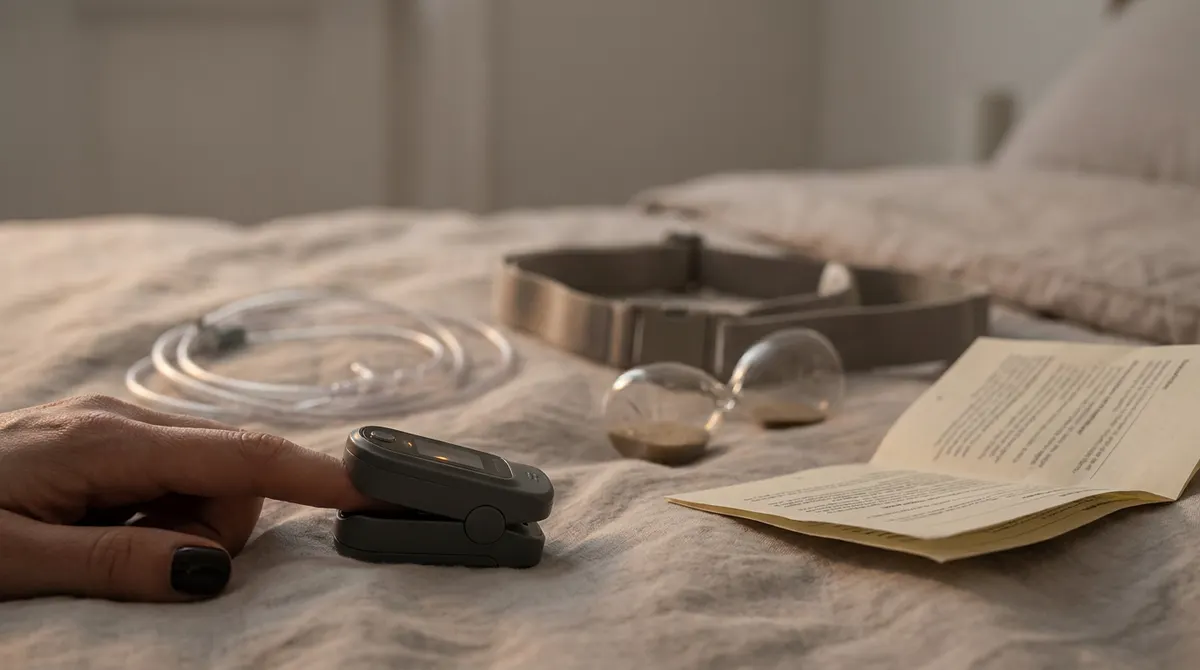
A home sleep test is effective for diagnosing obstructive sleep apnea in most adults, but it is not appropriate for every patient or every suspected sleep disorder. Understanding these limitations helps you and your provider choose the right diagnostic pathway.
Conditions That Home Sleep Tests Cannot Diagnose
Home sleep apnea testing does not measure brain waves or brain and muscle activity. This means it cannot diagnose central sleep apnea, where the brain fails to send proper signals to the breathing muscles, or other conditions such as narcolepsy, parasomnias, or periodic limb movement disorder. If your provider suspects one of these conditions, an in-lab sleep study with full polysomnography is necessary.
Patient Populations Where Home Testing May Not Be Accurate
The American Academy of Sleep Medicine recommends against using home sleep apnea testing as the sole diagnostic tool in patients with significant cardiopulmonary disease, including heart failure or chronic obstructive pulmonary disease. These conditions can complicate the interpretation of oxygen saturation data and respiratory effort patterns. Patients taking certain medication that affects sleep architecture, such as opioids or sedatives, may also produce unreliable results on a home test.
Risk of False Negatives
Home sleep tests can underestimate the AHI score because they measure events per hour of recording time rather than per hour of actual sleep time. If you spend significant time awake during the recording, the denominator increases and the resulting AHI appears lower than it truly is. According to a review published on PubMed, false-negative rates for home sleep testing range from approximately 10 to 20 percent depending on the device and patient population. A negative home test in a patient who remains symptomatic should be followed up with an in-lab polysomnography.
Technical Failures
Sensor displacement during the night is a real risk. If the nasal cannula shifts, the pulse oximeter falls off your finger, or the elastic belts loosen, the recording may be incomplete or uninterpretable. This typically requires repeating the test, which adds time and cost. Proper preparation and careful sensor placement reduce this risk substantially.
How dumbo.health Addresses These Limitations
dumbo.health pairs the home sleep test with physician oversight at every stage. If a test result is inconclusive or suggests a condition beyond what the home study can detect, the physician team can recommend next steps, including referral for an in-lab study. The Premium and Elite plans include advanced adherence monitoring and direct physician messaging, which allows for faster clinical decision-making when results are borderline. Patients enrolled in any dumbo.health plan also receive updates sent to their referring provider, ensuring continuity of care even when testing is done outside the traditional sleep lab pathway.
IMPORTANT: A negative home sleep test does not rule out all sleep disorders. If you continue to experience snoring, excessive daytime sleepiness, or headaches after a negative result, follow up with a sleep specialist for further evaluation.
KEY TAKEAWAY: Home sleep tests are not designed to detect central sleep apnea or complex sleep disorders, and false-negative results can occur, so a negative test in a symptomatic patient should always be followed up with a physician.
For those who do receive a positive diagnosis, the next critical step is understanding available treatment options.
Treatment Options After a Sleep Apnea Diagnosis
CPAP therapy is the most widely prescribed treatment for moderate to severe obstructive sleep apnea, but it is not the only option. Your treatment plan depends on the severity of your AHI score, your symptoms, and your individual health profile.
CPAP Therapy
CPAP, or continuous positive airway pressure, is considered the gold-standard therapy for obstructive sleep apnea. A CPAP machine delivers a steady stream of pressurized air through a mask, keeping the airway open during sleep. According to the American Academy of Sleep Medicine, CPAP therapy is recommended for all patients with an AHI of 15 or more and for patients with an AHI between 5 and 14 who have significant symptoms such as excessive daytime sleepiness.
Successful CPAP therapy requires consistent use. The standard adherence benchmark is a minimum of 4 hours per night for at least 70 percent of nights over a 30-day period. Meeting this threshold is particularly important for commercial drivers, as the FMCSA may require documented CPAP compliance for medical certification.
A CPAP prescription is required to obtain a device. After diagnosis through a home sleep test, the prescribing physician can issue this prescription as part of the care pathway. dumbo.health includes the CPAP prescription, CPAP therapy equipment, and CPAP supplies in all monthly plans, starting at $59 per month with the Essentials Plan. The CPAP treatment program through dumbo.health ships equipment directly and includes ongoing adherence monitoring.
Oral Appliance Therapy
A custom-fit mouthpiece, also called a dental appliance or mandibular advancement device, repositions the lower jaw forward during sleep to keep the airway open. Oral appliances are typically recommended for patients with mild to moderate obstructive sleep apnea or for patients who cannot tolerate CPAP. A dentist with training in sleep medicine fits the device.
Positional Therapy
Some patients experience obstructive sleep apnea primarily when sleeping on their back, a pattern called positional obstructive sleep apnea. Positional therapy involves wearing a device or using a modified pillow that encourages side sleeping. This approach works best for patients whose AHI is significantly worse in the supine position compared to other sleeping positions.
Behavioral Changes
Weight loss, regular exercise, and avoiding alcohol before bed can reduce the severity of obstructive sleep apnea. The Sleep Foundation notes that losing 10 percent or more of body weight can meaningfully reduce the AHI in overweight and obese patients. These behavioral changes are often recommended alongside other therapies rather than as a standalone treatment for moderate to severe cases.
Surgery
Surgical options exist for patients with specific anatomical causes of airway obstruction. Procedures may address enlarged tonsils, a deviated septum, or excess tissue in the airway. Surgery is generally considered a second-line treatment when CPAP therapy and oral appliances have been tried or are not tolerable. Cedars-Sinai and other academic medical centers offer comprehensive surgical evaluations for sleep-disordered breathing.
Emerging and Adjunctive Therapies
Acoustic Resonance Therapy and newer approaches such as hypoglossal nerve stimulation are being studied as alternatives for patients who do not respond to standard treatments. PAP therapy variations beyond standard CPAP, such as bilevel positive airway pressure, may be prescribed for patients with complex sleep-disordered breathing patterns or central sleep apnea.
DID YOU KNOW: According to the NIH, untreated obstructive sleep apnea is associated with a 2 to 3 times higher risk of hypertension, and treatment with CPAP has been shown to reduce blood pressure in many patients.
KEY TAKEAWAY: CPAP therapy is the gold-standard treatment for moderate to severe obstructive sleep apnea, but oral appliances, positional therapy, behavioral changes, and surgery provide alternatives depending on severity and patient tolerance.
Treatment decisions are important, but for commercial drivers, sleep apnea testing and treatment also carry regulatory implications.
Sleep Apnea Testing for Commercial Drivers and DOT Physicals
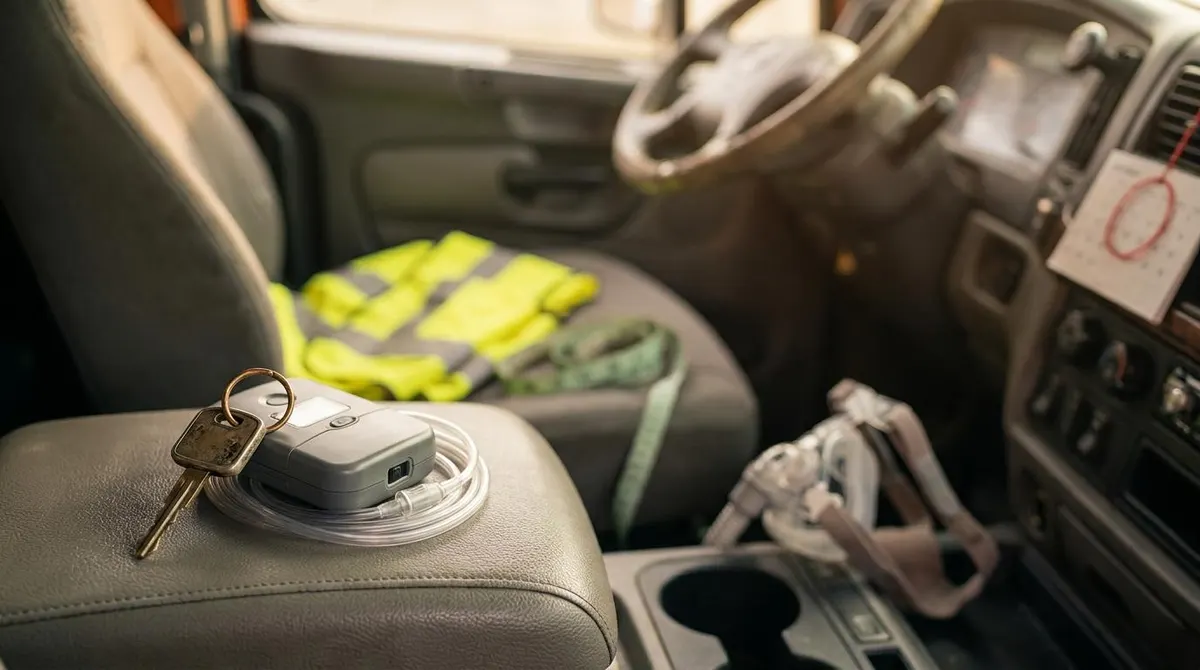
The FMCSA does not mandate universal sleep apnea testing for commercial drivers, but certified medical examiners can require a sleep study when clinical risk factors are present during a DOT physical. This creates a direct link between sleep apnea testing and a driver's ability to maintain medical certification.
When a DOT Examiner May Require Testing
During a DOT physical, the examiner evaluates several factors that are associated with obstructive sleep apnea risk. These include a BMI over 35, a neck circumference over 17 inches, observed anatomical features such as a large tongue or narrow airway, and self-reported symptoms including snoring or excessive daytime sleepiness. If the examiner determines that sleep apnea testing is necessary, the driver must complete the study and provide results before receiving full certification.
According to FMCSA guidelines, untreated sleep apnea is a disqualifying condition if it impairs a driver's ability to safely operate a commercial motor vehicle. However, drivers who are diagnosed and treated, typically with documented CPAP compliance, can receive medical certification for up to 24 months depending on the examiner's assessment.
How Home Sleep Testing Fits the DOT Process
A home sleep apnea testis an accepted method for completing the required sleep study. Drivers who choose home testing over a sleep lab appointment often benefit from faster turnaround times and lower costs, both of which matter when certification delays mean lost driving time and income. dumbo.health provides sleep apnea care solutions designed specifically to support drivers through testing, diagnosis, and treatment in a streamlined pathway.
Clinicians frequently observe that drivers who use a home sleep test complete the diagnostic process faster than those who wait for a sleep center appointment, which can have a waitlist of several weeks in some areas.
Compliance Monitoring for CDL Holders
If CPAP therapy is prescribed, the DOT examiner typically requires proof of adherence at follow-up visits. CPAP machines with built-in data tracking record nightly usage, and compliance reports can be generated for the examiner. dumbo.health's Premium Plan at $89 per month includes advanced adherence monitoring and a dedicated sleep coach to help drivers meet the minimum 4-hour-per-night usage threshold.
KEY TAKEAWAY: Commercial drivers flagged for sleep apnea risk during a DOT physical can use a home sleep test to expedite diagnosis and return to full medical certification faster, provided they demonstrate treatment compliance.
Drivers are one population with specific testing needs, but understanding common misconceptions about home sleep testing applies to everyone considering this pathway.
Common Myths About Home Sleep Testing Debunked
MYTH: A home sleep test is less accurate than an in-lab sleep study for diagnosing sleep apnea.
FACT: For obstructive sleep apnea, home sleep apnea tests have demonstrated strong diagnostic agreement with in-lab polysomnography. A systematic review cited on PubMed found that home sleep testing has sensitivity between 79 and 97 percent and specificity between 60 and 93 percent for moderate to severe obstructive sleep apnea. The key distinction is that home tests are designed to diagnose obstructive sleep apnea specifically, not the full range of sleep disorders that polysomnography covers.
MYTH: You need a referral to a sleep lab before you can take a home sleep test.
FACT: A home sleep test requires a physician order or prescription, but it does not require a referral to a sleep lab. Many providers now order home sleep apnea testing directly through telehealth consultations or primary care visits. dumbo.health offers a pathway where you can complete the free sleep assessment, get evaluated by a physician through telemedicine, and receive your test device without ever visiting a sleep center.
MYTH: If your home sleep test is negative, you definitely do not have sleep apnea.
FACT: False-negative results occur in approximately 10 to 20 percent of home sleep tests, particularly in patients with mild obstructive sleep apnea or in cases where the recording was technically suboptimal. The American Academy of Sleep Medicine recommends that symptomatic patients with a negative home test undergo in-lab polysomnography for definitive evaluation. A single negative result does not rule out a sleep disorder.
MYTH: CPAP is the only treatment for sleep apnea.
FACT: CPAP therapy is the gold-standard therapy for moderate to severe obstructive sleep apnea, but it is not the only option. Mild cases may respond to a custom-fit mouthpiece or dental appliance, positional therapy, behavioral changes including weight loss, or in some cases surgery. The best treatment depends on AHI severity, symptoms, anatomy, and patient preference.
MYTH: Home sleep tests are only for people who snore.
FACT: Snoring is the most recognizable symptom, but obstructive sleep apnea also causes excessive daytime sleepiness, morning headaches, difficulty concentrating, and repeated nighttime awakenings. Many patients with significant obstructive sleep apnea do not report loud snoring as their primary complaint. Risk factors such as a high BMI, large neck circumference, or a family history of sleep apnea can warrant testing even without prominent snoring.
KEY TAKEAWAY: Home sleep tests are clinically validated for obstructive sleep apnea, do not require a sleep lab referral, and a negative result in a symptomatic patient should always be followed up with further evaluation.
Beyond myths, the broader health consequences of untreated sleep apnea explain why timely testing matters.
Why Untreated Sleep Apnea Is a Serious Health Risk
Untreated obstructive sleep apnea increases the risk of cardiovascular disease, metabolic dysfunction, and accidents caused by excessive daytime sleepiness. The health consequences extend well beyond poor sleep quality.
Cardiovascular and Metabolic Effects
The National Heart, Lung, and Blood Institute identifies obstructive sleep apnea as an independent risk factor for hypertension, heart failure, atrial fibrillation, stroke, and type 2 diabetes. Repeated drops in blood oxygen levels during sleep trigger sympathetic nervous system activation and inflammatory responses that damage blood vessels over time.
Metabolic syndrome, a cluster of conditions including elevated blood pressure, high blood sugar, excess body fat around the waist, and abnormal cholesterol levels, occurs more frequently in patients with untreated obstructive sleep apnea. The relationship is bidirectional: obesity increases sleep apnea risk, and untreated sleep apnea makes weight management more difficult.
Impact on Longevity and Healthy Aging
Chronic sleep-disordered breathing disrupts restorative sleep stages, which are essential for healthy aging and longevity. According to the CDC, adults need a minimum of 7 hours of sleep per night for optimal health. Patients with untreated obstructive sleep apnea rarely achieve sustained deep sleep, even when their total time in bed appears adequate.
Driving and Occupational Safety
The National Highway Traffic Safety Administration estimates that drowsy driving contributes to thousands of crashes annually in the United States. Untreated obstructive sleep apnea is one of the leading medical causes of excessive daytime sleepiness behind the wheel. For commercial drivers, this risk is amplified by long hours and monotonous road conditions. Timely diagnosis through a home sleep test and treatment with CPAP therapy or another appropriate intervention directly reduces this risk.
Sleep apnea testing at home provides an accessible entry point for diagnosis. Many people who suspect they have a sleep condition delay testing because of cost, scheduling difficulty, or uncertainty about the process. Removing those barriers leads to earlier diagnosis and treatment.
KEY TAKEAWAY: Untreated obstructive sleep apnea is linked to heart failure, hypertension, metabolic syndrome, and drowsy driving accidents, making early testing and treatment essential for both health and safety.
For readers evaluating their options, choosing the right provider for home sleep testing is the final practical decision.
Choosing a Provider for Your Home Sleep Test
The best home sleep test provider offers transparent pricing, physician-reviewed results, and a clear pathway to treatment if you are diagnosed with obstructive sleep apnea. Not all providers include these elements.
What to Look For
When selecting a home sleep test provider near you, evaluate the following:
- Whether the test is interpreted by board-certified sleep physicians rather than automated algorithms alone
- Whether the provider offers a treatment pathway including CPAP prescription and equipment
- Whether pricing is transparent and includes all costs upfront
- Whether telehealth consultations are available for ordering and follow-up
- Whether the provider complies with HIPAA standards for data security and patient privacy
- Whether sleep data is stored securely and accessible for your records
Several companies offer home sleep testing, including Lofta, Aeroflow Sleep, and platforms using devices from SleepTestCRM or restASSURED systems. Each has a different care model, pricing structure, and level of physician involvement.
How dumbo.health Compares
dumbo.health is designed as a complete sleep apnea care platform rather than a standalone testing service. The $149 home sleep test is the entry point, but the value extends into ongoing care. Every plan includes physician interpretation by board-certified sleep physicians, CPAP therapy and equipment, adherence monitoring, and communication with your referring provider.
The sleep apnea solutions from dumbo.health are structured for patients who want a single provider managing testing, diagnosis, treatment, and follow-up. There are no contracts, no insurance paperwork, and no surprise bills. The Essentials Plan at $59 per month covers the core clinical pathway, while the Premium Plan at $89 per month adds a dedicated sleep coach and priority results turnaround.
For patients in your area who prefer a telehealth-first approach, dumbo.health offers physician evaluations, test ordering, and follow-up consultations through telemedicine, eliminating the need to visit a physical sleep center or find providers in your area who accept your insurance.
A home sleep apnea test ordered through dumbo.health includes clinical oversight from the moment you complete the free sleep assessment through ongoing CPAP management. This integrated model contrasts with providers who sell the test device but leave patients to coordinate interpretation and treatment separately.
KEY TAKEAWAY: Choose a home sleep test provider that offers transparent pricing, physician-interpreted results, and a clear treatment pathway, rather than one that only supplies the testing device.
Conclusion
A sleep test at home is a validated, convenient, and affordable way to diagnose obstructive sleep apnea without the scheduling delays and high costs of an in-lab sleep study. The test records airflow, oxygen levels, heart rate, and breathing effort in a single overnight session, and a physician uses the resulting AHI score to determine whether treatment is needed. For most adults with suspected obstructive sleep apnea, a home sleep test is the recommended first diagnostic step.
If you are ready to find out whether sleep apnea is affecting your health, driving safety, or daily energy, dumbo.health offers a home sleep test for $149 with no insurance required and monthly care plans starting at $59 per month that include physician review, CPAP therapy, and ongoing support with no contracts and the ability to cancel anytime.
Frequently Asked Questions About Sleep Test at Home
What is a home sleep test?
A home sleep test (HST), also called a home sleep apnea test (HSAT), is a simplified diagnostic tool used to evaluate whether a person may have obstructive sleep apnea. Instead of spending a night in a sleep lab, you wear a small recording device at home while you sleep. The device typically measures breathing patterns, oxygen saturation, heart rate, and airflow. A physician or board-certified sleep specialist then interprets the data. According to the American Academy of Sleep Medicine, home sleep apnea testing is a clinically appropriate option for many adults with a high likelihood of moderate to severe obstructive sleep apnea.
How does a home sleep test work?
A home sleep test works by recording key physiological signals while you sleep in your own bed. Depending on the device, sensors may include a nasal cannula to measure airflow, a chest strap or flexible elastic belt to track breathing effort and respiratory effort, and a pulse oximeter to monitor blood oxygen levels and heart rate. Some devices use peripheral arterial tonometry or photoplethysmography to measure peripheral arterial tone as a proxy for breathing disruptions. After the test night, the recorded sleep data is uploaded and reviewed by a qualified physician or sleep specialist who produces an interpretation and report.
What does a home sleep test measure?
A home sleep test measures several key signals related to sleep-disordered breathing. These typically include airflow through the nose and mouth, blood oxygen levels, oxygen saturation patterns, heart rate, breathing effort, and body movement or position. The results are used to calculate the apnea-hypopnea index (AHI), which reflects the number of apnea and hypopnea events per hour of sleep. The AHI score is a primary indicator used by physicians to assess the presence and severity of obstructive sleep apnea. A healthcare professional interprets these results in the context of your symptoms and medical history.
What are the benefits of an at-home sleep test?
At-home sleep apnea testing offers several practical advantages. Testing takes place in your own bed, which tends to produce more natural sleep compared to an unfamiliar sleep lab environment. Home sleep tests are typically faster to arrange, lower in cost, and require no overnight hospital or clinic stay. For many adults with suspected obstructive sleep apnea, the American Academy of Sleep Medicine recognises home sleep testing as a clinically valid alternative to polysomnography. dumbo.health offers an at-home sleep apnea test for $149 with transparent cash-pay pricing, no insurance required, and no prior authorizations.
What are the limitations of a home sleep test?
Home sleep apnea tests have important limitations that patients should understand. They are generally less comprehensive than an in-lab sleep study because they do not record brain waves, muscle activity, or full neurological sleep metrics the way polysomnography does. This means they may underestimate sleep apnea severity in some cases. Home sleep tests are not designed to detect all sleep disorders, and they are typically not appropriate for people with suspected central sleep apnea, complex sleep-disordered breathing, heart failure, or other significant medical conditions. A healthcare professional can help determine whether a home sleep test or an in-lab sleep study is the right choice for your situation.
When is an at-home sleep test appropriate?
An at-home sleep test is generally considered appropriate for adults who have a high likelihood of moderate to severe obstructive sleep apnea based on symptoms such as loud snoring, witnessed breathing pauses, and excessive daytime sleepiness, without significant complicating medical conditions. It is not typically recommended for people with suspected central sleep apnea, heart failure, chronic lung disease, or complex sleep conditions that require full polysomnography. A physician or sleep specialist should assess your symptoms and medical history before recommending home sleep testing. The free dumbo.health sleep assessment can help you decide whether at-home sleep testing may be a reasonable next step.
Who should not take a home sleep test?
Home sleep apnea testing is not suitable for everyone. It is generally not recommended for people with suspected central sleep apnea, significant heart or lung conditions including heart failure, moderate to severe chronic obstructive pulmonary disease, neurological conditions affecting sleep, or those who have had prior inconclusive home sleep tests. Children are not standard candidates for home sleep testing. People with complex sleep histories or multiple sleep disorders may need a full in-lab sleep study with polysomnography to receive an accurate assessment. A healthcare professional can advise whether home sleep testing is clinically appropriate for your individual circumstances.
How accurate is a home sleep apnea test compared to an in-lab sleep study?
Home sleep apnea tests are clinically validated for detecting obstructive sleep apnea in appropriate candidates, though they are generally considered less comprehensive than polysomnography conducted in a sleep lab. Because home devices record fewer channels of data and cannot measure brain waves or muscle activity, they may slightly underestimate AHI scores in some patients. However, research published in peer-reviewed literature and recognised by the American Academy of Sleep Medicine supports home sleep apnea testing as a reliable method for diagnosing obstructive sleep apnea in adults without complicating conditions. Physician interpretation of home sleep test results is essential for an accurate clinical assessment.
What sleep disorders can a home sleep test detect?
Home sleep apnea tests are primarily designed to detect obstructive sleep apnea, the most common form of sleep-disordered breathing. They can identify apnea and hypopnea events, measure the apnea-hypopnea index, and flag patterns of oxygen desaturation and disrupted airflow. They are not designed to diagnose central sleep apnea, restless legs syndrome, narcolepsy, parasomnias, insomnia, or other sleep conditions that require brain wave and muscle activity recording. If a broader sleep disorder evaluation is needed, a physician may recommend a full in-lab sleep study. A clinician can help determine which type of testing is appropriate for your symptoms.
What are the signs that I might need a sleep test at home?
Common symptoms that may indicate obstructive sleep apnea include loud or persistent snoring, waking up repeatedly during the night, gasping or choking during sleep, waking with a dry mouth, sore throat, or headache, and feeling excessively sleepy during the day despite a full night in bed. High-risk factors also include a high body mass index, large neck circumference, nasal congestion, and certain anatomical features such as large tonsils or excess tissue in the airway. According to the NHLBI, untreated sleep apnea is associated with increased risks for high blood pressure, heart disease, and metabolic syndrome. A healthcare professional can assess whether testing is appropriate.
Does snoring mean I have sleep apnea?
Snoring does not automatically mean you have sleep apnea, but it is one of the most common warning signs. Snoring occurs when airflow causes the soft tissue in the airway to vibrate during sleep. In obstructive sleep apnea, the airway can partially or fully collapse, causing breathing interruptions that may not be detectable by snoring alone. People with obstructive sleep apnea often snore loudly and may also gasp, choke, or have witnessed pauses in breathing. If snoring is accompanied by excessive daytime sleepiness, frequent night wakings, or morning headaches, a sleep test may be worth discussing with a healthcare professional.
How do I prepare for an at-home sleep test?
Preparing for a home sleep study is straightforward. On the night of your test, avoid caffeinated products and alcoholic beverages before bed, as these can affect sleep quality and test results. Follow any instructions provided with your testing device carefully. Avoid applying hair styling products, nail polish, or acrylic nails to fingers where a pulse oximeter or sensor may be placed, as these can interfere with oxygen saturation readings. Set up your device in a familiar sleep environment and aim for a normal bedtime. Your testing provider or physician will supply specific preparation instructions based on the device being used.
Can I go to the bathroom during a home sleep study?
Yes, you can get up to use the bathroom during a home sleep study. Most home sleep test devices are designed to be worn throughout the night and will continue recording when you return to bed. If sensors become dislodged while you are up, simply reattach them as directed before returning to sleep. It is a good idea to familiarise yourself with the device setup before starting the test so you can reposition sensors quickly if needed. Your physician or testing provider can advise on how to handle any technical issues that occur during the night.
How long do you need to sleep for a home sleep study?
Most home sleep test devices require a minimum of four to six hours of recorded sleep data to generate a clinically interpretable result. The more sleep data collected, the more accurate the apnea-hypopnea index calculation is likely to be. If you are unable to sleep enough during the test night, your provider may ask you to repeat the test. Some devices automatically assess whether sufficient data has been recorded and will notify you or your physician. A healthcare professional will confirm whether your test night produced enough data to support a reliable interpretation.
How many times can I take an at-home sleep apnea test?
There is no fixed limit on how many times a person can take a home sleep apnea test. A repeat test may be recommended if the first test produced insufficient sleep data, if results were inconclusive, or if symptoms change significantly over time. Some patients are retested after beginning treatment to assess response to CPAP therapy. If repeated home sleep tests are inconclusive or if clinical suspicion remains high, a physician may recommend an in-lab sleep study to obtain a more comprehensive assessment. A healthcare professional should guide decisions about repeat testing based on your individual results and symptoms.
How much does a home sleep apnea test cost?
The cost of a home sleep apnea test varies depending on the provider, whether insurance is used, and what is included in the testing package. In the United States, home sleep tests can range from around $150 to several hundred dollars when paying out of pocket. dumbo.health offers a home sleep test for $149 as a one-time cash-pay purchase, with no insurance required, no prior authorization, and no surprise bills. This covers the at-home test device and one night of testing. Physician interpretation and ongoing care are available separately through monthly plans starting at $59 per month. You can review sleep apnea care solutions to understand what is included.
Does insurance cover a home sleep test?
Many health insurance plans, including Medicare, cover home sleep apnea testing when it is ordered by a physician and meets clinical criteria. Coverage rules, copays, deductibles, and prior authorization requirements vary by plan and provider. Some patients find that navigating insurance for sleep testing involves delays or administrative barriers. dumbo.health operates as a cash-pay option with transparent pricing, meaning no insurance is required, no prior authorizations are needed, and there are no surprise bills. FSA and HSA funds may be usable for sleep testing costs depending on your plan. A healthcare professional or insurance representative can clarify your specific coverage options.
What is the apnea-hypopnea index and why does it matter?
The apnea-hypopnea index, or AHI, is the number of apnea and hypopnea events recorded per hour of sleep. An apnea is a complete pause in breathing lasting at least ten seconds, while a hypopnea is a partial reduction in airflow accompanied by a drop in oxygen saturation or an arousal from sleep. The AHI score is the primary metric used by physicians to classify sleep apnea severity. An AHI of 5 to 14 events per hour is generally classified as mild, 15 to 29 as moderate, and 30 or more as severe obstructive sleep apnea. A board-certified sleep physician interprets the AHI alongside your full clinical picture.
What is obstructive sleep apnea?
Obstructive sleep apnea (OSA) is a common sleep disorder in which the upper airway repeatedly collapses or becomes blocked during sleep, causing breathing interruptions. When the airway collapses, airflow stops or is significantly reduced, which can cause oxygen levels to drop and the brain to briefly arouse the sleeper to restore breathing. These episodes can occur dozens or even hundreds of times per night. According to the NHLBI, obstructive sleep apnea is associated with increased risks for high blood pressure, heart disease, stroke, metabolic syndrome, and excessive daytime sleepiness. Many people with OSA are unaware they have the condition because symptoms occur during sleep.
How is sleep apnea related to heart health?
Untreated obstructive sleep apnea is associated with an increased risk of cardiovascular problems, including high blood pressure, irregular heart rhythms, coronary artery disease, and in more serious cases, heart failure. Repeated breathing interruptions during sleep cause drops in blood oxygen levels and surges in heart rate and blood pressure, which place ongoing stress on the cardiovascular system. The NHLBI states that sleep apnea can disrupt normal heart function over time. Treating obstructive sleep apnea with CPAP therapy and other interventions may help reduce some of these cardiovascular risks, though outcomes vary by individual and should be discussed with a physician.
What happens after I complete my at-home sleep test?
After your test night, the recorded sleep data from the device is uploaded or returned to the testing provider. A board-certified sleep physician then reviews and interprets the data, calculates your AHI score, and prepares a clinical interpretation and report. Depending on the results, you may be recommended for CPAP therapy, further evaluation, an in-lab sleep study, or other clinical follow-up. With dumbo.health, physician interpretation and a report are included in the monthly care plans, which also cover CPAP therapy, equipment, and adherence follow-up. Reports can also be sent to your referring provider where applicable. You can get started with sleep testing to begin the process.
Do I need a prescription to take an at-home sleep apnea test?
In the United States, an at-home sleep apnea test typically requires physician oversight, meaning a clinician must be involved in ordering the test and interpreting the results. Some testing platforms, including dumbo.health, include physician review as part of the testing and care workflow, simplifying the process for patients. You do not necessarily need to arrange a separate doctor's appointment before testing with a platform that integrates physician involvement into the service. A healthcare professional reviews your results and determines whether further evaluation or treatment is appropriate. It is not advisable to self-interpret home sleep test data without clinical guidance.
What is CPAP therapy and when is it recommended?
CPAP, or continuous positive airway pressure, is the most commonly recommended treatment for moderate to severe obstructive sleep apnea. A CPAP machine delivers a continuous stream of pressurised air through a mask worn over the nose or mouth during sleep, keeping the airway open and preventing breathing interruptions. The American Academy of Sleep Medicine describes CPAP as the gold-standard therapy for obstructive sleep apnea. CPAP is typically prescribed following a confirmed diagnosis based on home sleep test or polysomnography results. Consistent use and proper equipment fit are important for treatment effectiveness. dumbo.health monthly plans include CPAP therapy and equipment as part of ongoing sleep apnea care.
What is CPAP adherence and why does it matter?
CPAP adherence refers to how consistently and effectively a patient uses their CPAP device each night. Insurance providers, Medicare, and clinical guidelines typically require a minimum usage threshold, often at least four hours per night on 70 percent of nights over a 30-day period, to confirm CPAP is being used effectively. Poor adherence can reduce the health benefits of treatment and may affect ongoing equipment coverage. Regular adherence monitoring, clinical follow-up, and sleep coaching can help patients overcome barriers such as mask discomfort or pressure intolerance. dumbo.health Premium and Elite plans include advanced adherence monitoring and dedicated sleep coach support from a licensed care team.
What is polysomnography and how is it different from a home sleep test?
Polysomnography is a comprehensive in-lab sleep study that records a wide range of physiological signals simultaneously, including brain waves, eye movements, muscle activity, heart rate, oxygen saturation, breathing effort, and limb movements. It is considered the most thorough method for diagnosing a full range of sleep disorders. A home sleep apnea test records a smaller set of signals focused on breathing, oxygen levels, and heart rate, making it well suited for diagnosing obstructive sleep apnea in appropriate patients but less comprehensive than polysomnography. A sleep specialist may recommend an in-lab sleep study when a home sleep test is inconclusive or when a broader sleep disorder evaluation is needed.
Can commercial drivers take an at-home sleep test for DOT requirements?
Commercial drivers who are referred for sleep apnea evaluation as part of their DOT physical process can use an at-home sleep apnea test as an initial step in their evaluation. A certified medical examiner assesses DOT medical certification decisions and may take into account sleep apnea symptoms, risk factors, test results, and treatment adherence. dumbo.health can support commercial drivers with at-home sleep apnea testing and ongoing care documentation, but it does not guarantee DOT certification or medical clearance. Drivers should work with both their treating sleep care provider and their certified medical examiner to meet any required documentation standards.
What ongoing care is available after a sleep apnea diagnosis?
Following a confirmed sleep apnea diagnosis, ongoing care typically includes CPAP therapy and equipment, adherence monitoring, physician follow-up, and in some cases, sleep coaching or positional therapy. Some patients also discuss dental appliances, weight management, behavioral changes, or surgical options with their care team depending on individual circumstances. dumbo.health monthly plans are designed to support ongoing sleep apnea care with physician interpretation, CPAP therapy and equipment, adherence follow-up, and provider reporting. Plans start at $59 per month with no contracts and no surprise bills. You can compare sleep apnea care options to find the plan that fits your situation.
How do I find a sleep test provider near me?
If you are looking for an at-home sleep test, a range of options are available both locally and online. Many telehealth and direct-to-patient platforms can ship a home sleep test device directly to your address, meaning you do not need to visit a clinic or sleep center in person. dumbo.health offers at-home sleep apnea testing with transparent cash-pay pricing, physician interpretation, and optional ongoing care plans, making it straightforward to access testing without insurance or a referral in many cases. If an in-lab sleep study is required, a local sleep center or sleep specialist referral from your primary care physician can help identify providers in your area.
Is an at-home sleep study safe?
An at-home sleep apnea test is generally safe for appropriate candidates. The devices used in home sleep testing are non-invasive and cleared by regulatory bodies for clinical use. Sensors such as a nasal cannula, chest strap, and pulse oximeter involve no medical procedures, injections, or sedation. The main safety consideration is not the test itself but ensuring that home sleep testing is clinically appropriate for your situation. People with serious medical conditions such as heart failure, severe lung disease, or complex sleep disorders may need a supervised in-lab study rather than home testing. A healthcare professional can advise on the safest and most suitable testing pathway for you.
What should I do if I have severe symptoms or urgent health concerns?
If you experience chest pain, severe shortness of breath, significant difficulty breathing during the night, signs of a cardiac event, or any other urgent health concern, seek emergency medical care promptly rather than waiting for a sleep test. A home sleep test is a planned diagnostic tool for evaluating suspected sleep apnea in clinically stable individuals. It is not an emergency monitoring service. If your symptoms are severe or rapidly worsening, contact emergency services or visit your nearest emergency department. A healthcare professional can help determine the appropriate clinical pathway once any urgent concerns have been addressed.
Related Home Sleep Apnea Test Topics
- How Do You Get a Home Sleep Apnea Test The Complete Guide to At-Home Sleep Testing
- How to Get a Sleep Apnea Test at Home The Complete Guide to Home Sleep Testing
- Sleep Apnea Test at Home The Complete Guide to Home Sleep Testing for Adults
- Home Sleep Test The Complete Guide to At-Home Sleep Apnea Testing
- How Is a Home Sleep Apnea Test Done A Complete Guide to At-Home Sleep Testing
- How Does a Home Sleep Apnea Test Work A Complete Guide to At-Home Sleep Testing
- Can You Test for Sleep Apnea at Home A Complete Guide to Home Sleep Testing
- Home Sleep Apnea Test The Complete Guide to At-Home Sleep Apnea Testing
- Home Sleep Testing Companies A Complete Guide to At-Home Sleep Apnea Diagnosis
- Sleep Apnea Test The Complete Guide to Diagnosis, Home Testing, and What Your Results Mean
- Home Sleep Testing The Complete Guide to Diagnosing Sleep Apnea From Your Own Bed
- What Is a Home Sleep Apnea Test How At-Home Sleep Testing Works, What It Measures, and Who Needs One
- Sleep Apnea Testing The Complete Guide to Diagnosis, Home Tests, and What Your Results Mean
- CPAP Test at Home The Complete Guide to Home Sleep Apnea Testing and Treatment
- How to Get Tested for Sleep Apnea The Complete Guide to Diagnosis, Sleep Studies, and Treatment
- At-Home Sleep Apnea Test The Complete Guide to Testing, Results, and Treatment
- Sleep Apnea Testing Near Me How to Find the Right Test, Provider, and Path to Diagnosis
- Sleep Test to CPAP How Sleep Apnea Testing Leads to Treatment
- Polysomnography at Home How Home Sleep Testing Compares to In-Lab Sleep Studies
- HSAT The Complete Guide to Home Sleep Apnea Testing
- What Happens After a Home Sleep Apnea Test Results, Diagnosis, and Next Steps
- Sleep Apnea Diagnosis How Sleep Apnea Is Detected, Tested, and Confirmed
- Apnea Monitor The Complete Guide to Breathing Monitors for Sleep Apnea and Infant Care
- Home Sleep Test Cost What You Actually Pay With and Without Insurance
- Disadvantages of Home Sleep Testing What Patients and Providers Need to Know
- How Much Does a Home Sleep Apnea Test Cost Complete Pricing Breakdown for Self-Pay and Insured Patients
- What Is the Best At-Home Sleep Apnea Test A Clinical Comparison of Devices, Accuracy, and Cost
- Sleep Apnea Test Near Me How to Find Local and At-Home Testing Options
- How Long Does a Home Sleep Apnea Test Take What to Expect Before, During, and After Testing
- Does a Home Sleep Apnea Test Measure Apneas What the Device Actually Records
- Home Sleep Apnea Test Near Me How to Get Tested Without a Sleep Lab Visit
- Sleep Test What It Measures, How It Works, and What Your Results Mean
- Do At-Home Sleep Apnea Tests Work Clinical Accuracy, Limitations, and What the Evidence Shows
- Does Insurance Cover a Home Sleep Apnea Test What You Actually Pay
- Does Medicare Cover a Home Sleep Apnea Test What Beneficiaries Need to Know
- Can Dentists Prescribe a Home Sleep Apnea Test What You Need to Know
- Are Sleep Studies Covered by Insurance What You Actually Pay for Sleep Apnea Testing
- Sleep Apnea Test at Home with Insurance What Your Plan Actually Covers and How to Get Tested
- Sleep Apnea Test at Home DOT Approved Options for Commercial Drivers
- Do You Need a Prescription for a Home Sleep Apnea Test
- Can My Doctor Prescribe a Home Sleep Apnea Test What You Need to Know
- Are Home Sleep Apnea Tests Accurate What the Evidence Actually Shows
- Are Home Sleep Apnea Tests Reliable Clinical Evidence, Accuracy, and What the Data Actually Shows
- What Does a Home Sleep Apnea Test Consist Of Sensors, Equipment, and What to Expect
- Can a Home Sleep Apnea Test Be Wrong Accuracy, False Negatives, and What to Do Next
- Sleep Apnea Checker How to Screen for Sleep Apnea and What Your Results Mean
- Best At Home Sleep Apnea Test A Clinical Comparison
- Does Anyone Ever Pass a Sleep Apnea Test What Normal Results Actually Look Like
- Cost of Sleep Apnea Testing What You Will Actually Pay
- CPAP Test What It Is, How It Works, and What Your Results Mean
AI summary
A home sleep apnea test (HSAT) is a portable, one-night diagnostic study used to identify obstructive sleep apnea in a patient’s own bed. It records breathing-related signals and a physician interprets the data to determine severity. Core concept: HSAT focuses on sleep-disordered breathing and produces an apnea-hypopnea index (AHI). Key measurements and equipment: nasal/oral airflow (nasal cannula), oxygen saturation and pulse rate (pulse oximeter using photoplethysmography), and respiratory effort (chest and abdominal belts). Some devices use peripheral arterial tonometry (WatchPAT, WatchPAT ONE) plus actigraphy; examples also include SleepImage Ring and NightOwl. Interpretation criteria: AHI <5 is normal; 5–14 mild; 15–29 moderate; ≥30 severe. Oxygen desaturations, including saturation below 90%, are clinically important. Constraints and limitations: HSAT does not diagnose central sleep apnea, narcolepsy, parasomnias, or periodic limb movement disorder. It may be less accurate in significant cardiopulmonary disease (heart failure, COPD) and can have false negatives (~10–20%). Negative HSAT with persistent symptoms should prompt in-lab polysomnography. Implications: Results guide treatment such as CPAP (especially AHI ≥15), oral appliances, positional therapy, behavioral changes, or surgery, and can support DOT evaluations for commercial drivers where CPAP adherence may be required.

Nicolas Nemeth
Co-Founder
Nico is the co-founder of Dumbo Health, a digital sleep clinic that brings the entire obstructive sleep apnea journey home. Patients skip the sleep lab and the long wait to see a specialist. Dumbo Health ships an at home test, connects patients with licensed sleep clinicians by video, and delivers CPAP or a custom oral appliance with ongoing coaching and automatic resupply in one clear subscription.
Keep reading

VA At Home Sleep Apnea Test: The Complete Guide for Veterans

Home Sleep Apnea Test App: What Works, What Doesn't, and How to Get a Real Diagnosis


