Does a Home Sleep Apnea Test Measure Apneas? What the Device Actually Records
Home sleep apnea testing (HSAT) can measure apneas by recording airflow interruptions, oxygen desaturation, heart rate, and breathing effort overnight. The article explains which sensors are used, including a nasal cannula, pulse oximeter, and chest belt, and how devices like WatchPAT ONE use peripheral arterial tonometry. It details how physicians score apneas and hypopneas to calculate AHI or REI, and what severity ranges mean. It also clarifies what HSAT cannot capture, such as EEG-based sleep stages and reliable central sleep apnea detection. You will learn when a negative HSAT should be followed by in-lab polysomnography and how to prepare to avoid data loss from misplaced sensors.
Struggling with sleep?
Find out if sleep apnea is the reason.
FDA-cleared. $149 flat. Physician-reviewed results in 48 hours.

Does a Home Sleep Apnea Test Measure Apneas? What the Device Actually Records
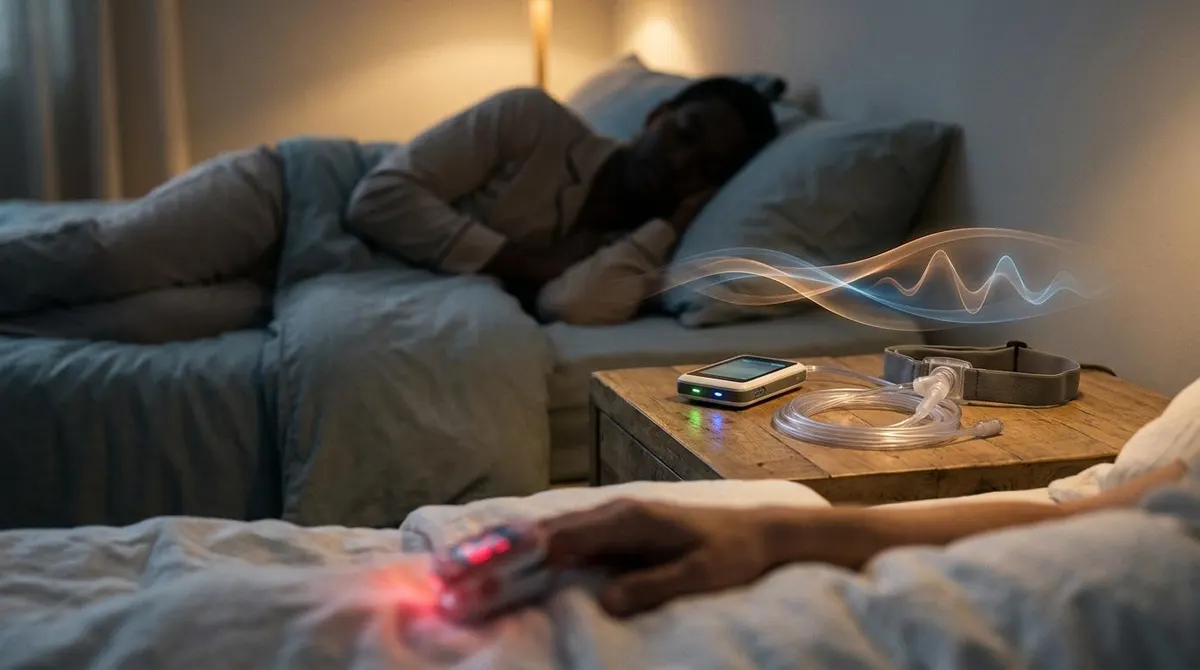
A home sleep apnea test measures apneas by tracking airflow interruptions, blood oxygen levels, and breathing effort while you sleep. According to the American Academy of Sleep Medicine, home sleep apnea testing (HSAT) is a validated method for diagnosing obstructive sleep apnea in adults with a moderate to high pretest probability. This article is for commercial drivers, people experiencing symptoms like loud snoring or daytime fatigue, and anyone considering a sleep test without the hassle of an overnight lab stay. You will learn exactly what sensors a home sleep test uses, which metrics it records, how results are scored, and where HSAT falls short. By the end, you will know whether a home test captures what your provider needs to make a diagnosis.
Quick Answer
A home sleep apnea test does measure apneas. The device uses sensors to detect pauses in airflow, drops in oxygen saturation, and changes in respiratory effort during sleep. These data points are used to calculate an Apnea-Hypopnea Index or Respiratory Event Index, which determines the presence and severity of obstructive sleep apnea. home sleep apnea testing cannot detect central sleep apnea or measure brain waves. dumbo.health offers a home sleep test for $149 with physician interpretation available through monthly care plans.
Key Takeaways

- A home sleep apnea test records airflow, oxygen saturation, heart rate, and respiratory effort to identify apneas and hypopneas during sleep.
- Results are scored using the Apnea-Hypopnea Index (AHI) or Respiratory Event Index (REI), with an AHI of 5 or more events per hour indicating sleep apnea according to AASM guidelines.
- HSAT is validated for diagnosing obstructive sleep apnea but does not reliably detect central sleep apnea, Cheyne-Stokes respiration, or other complex sleep disorders.
- The test does not record brain waves, so it cannot confirm total sleep time or identify sleep stages.
- dumbo.health provides a home sleep test for $149 with no insurance required, plus ongoing CPAP therapy plans starting at $59 per month.
- A negative HSAT result in a patient with high clinical suspicion should be followed up with an in-lab polysomnography study.
What a Home Sleep Apnea Test Actually Measures
A home sleep apnea test measures breathing disruptions, oxygen levels, and respiratory effort to identify obstructive sleep apnea. Unlike a full in-lab sleep study, HSAT focuses on respiratory and cardiac channels rather than neurological activity.
The core measurements include airflow through a nasal cannula, oxygen saturation via a finger clip or wrist sensor, heart rate, and respiratory movement detected by a chest strap or belt. Some devices, such as the WatchPAT ONE developed by Itamar Medical, use peripheral arterial tonometry to assess peripheral arterial tone changes associated with breathing events instead of traditional nasal sensors.
Each of these channels contributes specific data. The nasal cannula detects airflow reductions and complete cessation of breathing. The oximeter tracks blood oxygen levels and identifies oxygen desaturation events that accompany apneas. The chest sensor or belt monitors respiratory effort, which helps differentiate between obstructive events where the body tries to breathe against a blocked airway and central events where no breathing effort occurs at all.
DID YOU KNOW: According to the Sleep Foundation, approximately 80 percent of moderate to severe obstructive sleep apnea cases remain undiagnosed, making accessible testing a critical step toward treatment.
The device records data for one or more nights. A physician or sleep specialist then reviews the raw data and generates a sleep report with scored events. This interpretation determines whether the patient meets diagnostic criteria for obstructive sleep apnea.
KEY TAKEAWAY: A home sleep apnea test measures airflow, oxygen saturation, heart rate, and respiratory effort to identify apneas and hypopneas, giving your provider the data needed to diagnose obstructive sleep apnea.
Understanding exactly what the test records is the first step. Next, you need to know how sensors are placed and what each one does.
How Each Sensor Works During a Home Sleep Test
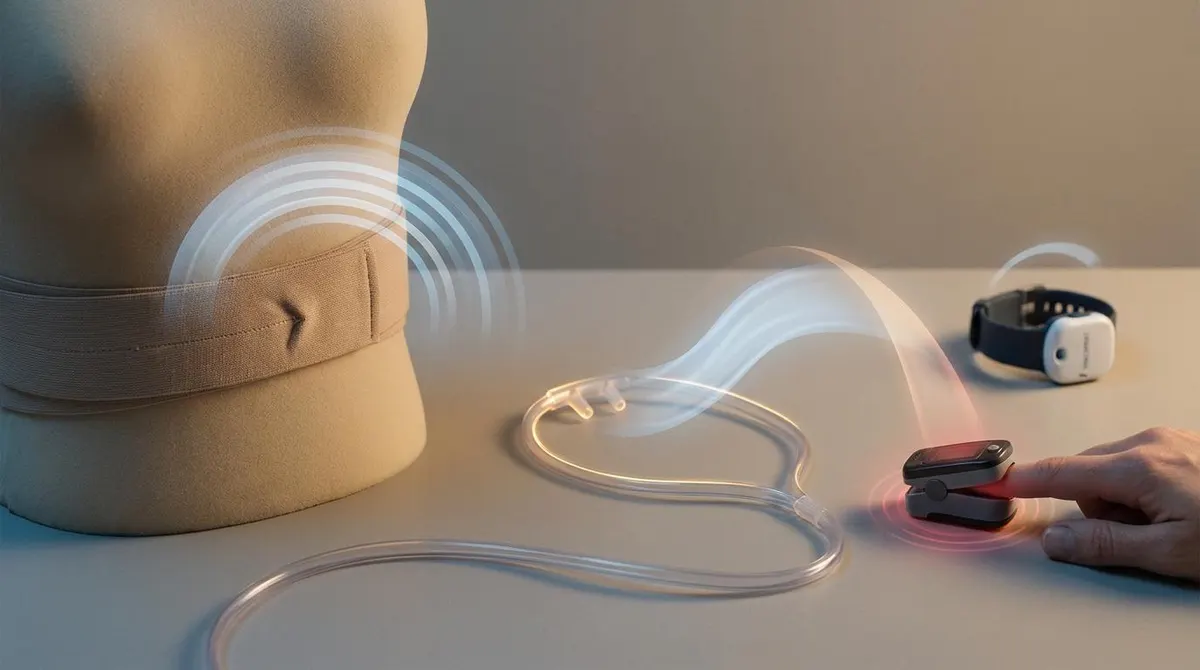
Each sensor on a home sleep test device has a specific role in capturing respiratory and physiological data while you sleep. Sensor placement takes about five minutes and does not require a sleep technologist.
Nasal Cannula
The nasal cannula is a lightweight tube placed just below the nostrils. It measures airflow through pressure changes as you inhale and exhale. Reductions or pauses in airflow are recorded as hypopneas or apneas, respectively. The nasal cannula is the primary sensor for detecting breathing events in most home sleep study devices.
Finger Clip (Pulse Oximeter)
A finger clip uses light-based pulse oximetry to measure oxygen saturation and heart rate. During an apnea event, oxygen levels drop because breathing stops temporarily. The oximeter records these desaturation events second by second. Normal oxygen saturation during sleep typically stays above 90 percent. Repeated dips below this threshold signal clinically significant breathing disruptions.
Chest Strap or Belt
A chest strap or belt wraps around the torso to detect respiratory movement. Respiratory Inductance Plethysmography (RIP) technology within the belt tracks chest expansion and contraction. This data confirms whether respiratory effort is present during airflow interruptions. If effort is present but airflow stops, the event is classified as obstructive. If effort is absent, the event may indicate central sleep apnea, though HSAT has limited sensitivity for central events.
WatchPAT and Peripheral Arterial Tonometry
The WatchPAT ONE uses peripheral arterial tonometry rather than a nasal cannula. A finger-mounted sensor measures peripheral arterial tone, which changes during respiratory events. The device also records oxygen saturation, heart rate, and sleep position through an inertial measurement unit. WatchPAT has received FDA 510(k) clearance and is widely used in clinical practice. Some providers in your area may offer WatchPAT-based testing as an alternative to traditional multi-channel HSAT.
Additional Sensors on Some Devices
Some portable units include a wrist strap for actigraphy to estimate sleep and wake periods, a chest sensor for body position tracking, or nasal sensors that combine pressure and thermal airflow measurement. The SleepImage Ring is another emerging option that uses cardiopulmonary coupling analysis. Not all home sleep test devices include every sensor type, so the specific channels recorded depend on the equipment your provider prescribes.
IMPORTANT: Correct sensor placement directly affects data quality. If the nasal cannula shifts during the night or the finger clip falls off, the test may need to be repeated.
KEY TAKEAWAY: Each sensor on a home sleep test captures a different physiological signal, and together they create a comprehensive picture of breathing patterns, oxygen levels, and respiratory effort during sleep.
With sensors explained, the next logical question is how those raw recordings translate into a diagnosis.
How Apneas and Hypopneas Are Scored From Test Results
Apneas and hypopneas are scored by a physician or sleep specialist using standardized criteria applied to the raw data from your home sleep test. The scoring process produces a numerical index that defines whether you have sleep apnea and how severe it is.
What Counts as an Apnea
An apnea is a complete or near-complete pause in airflow lasting at least 10 seconds. The American Academy of Sleep Medicine defines an obstructive apnea as a 90 percent or greater reduction in airflow with continued respiratory effort. A central apnea involves the same airflow reduction but without respiratory effort.
What Counts as a Hypopnea
A hypopnea is a partial reduction in airflow, typically defined as a 30 percent or greater decrease for at least 10 seconds, accompanied by a 3 percent or greater oxygen desaturation or an arousal from sleep. Because HSAT does not measure brain waves, arousals cannot be confirmed, so home test scoring relies primarily on oxygen desaturation to identify hypopneas.
The Apnea-Hypopnea Index and Respiratory Event Index
The Apnea-Hypopnea Index (AHI) or apnea hypopnea index is calculated by dividing the total number of apneas and hypopneas by total sleep time. In polysomnography, total sleep time is measured by electroencephalogram (EEG) readings that track brain waves. In home sleep testing, total sleep time is estimated based on recording time, which means the result is often reported as a Respiratory Event Index (REI) instead.
The REI divides respiratory events by total recording time rather than confirmed sleep time. Because you are awake for some portion of the recording, REI may underestimate severity compared to a lab-derived AHI score. The National Heart, Lung, and Blood Institute notes that this difference is clinically relevant and one reason why a negative HSAT should be followed by polysomnography if clinical suspicion remains high.
Severity Classification
Mild
- AHI or REI: 5 to 14 events per hour
Moderate
- AHI or REI: 15 to 29 events per hour
Severe
- AHI or REI: 30 or more events per hour
A sleep physician reviews the scored data alongside clinical history to make a formal diagnosis. Results from dumbo.health include physician interpretation as part of the Essentials, Premium, or Elite care plans, ensuring that your sleep report is reviewed by a qualified physician rather than auto-generated by software alone.
KEY TAKEAWAY: Apneas and hypopneas are scored using AASM criteria, and the resulting AHI or REI determines sleep apnea severity, with an index of 5 or more events per hour indicating a positive diagnosis.
Knowing how results are scored helps, but understanding how a home test compares to an in-lab study is essential for making the right testing decision.
Home Sleep Apnea Test vs. Polysomnography: What Each Test Records
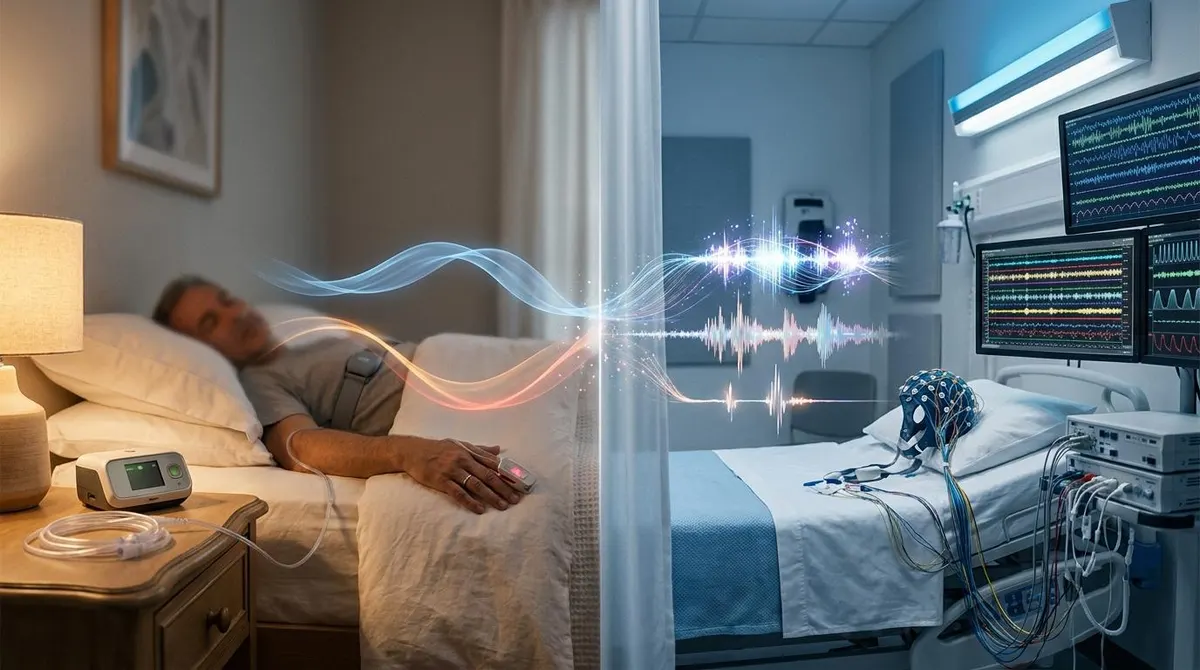
A home sleep apnea test records fewer channels than polysomnography but is sufficient for diagnosing obstructive sleep apnea in most adults without complex comorbidities. Polysomnography remains the gold-standard therapy for comprehensive sleep evaluation.
In-lab polysomnography uses an electroencephalogram to measure brain waves, an electrooculogram to track eye movements, and electromyography to monitor muscle activity. These neurological channels allow the sleep technologist to confirm sleep stages, calculate true total sleep time, and detect arousals. The test also records an electrocardiogram for cardiac rhythm analysis.
HSAT does not include any of these neurological sensors. This means it cannot confirm whether you are asleep or awake, it cannot identify REM versus non-REM sleep stages, and it cannot detect arousals caused by respiratory events.
Here is how the two approaches compare across key attributes.
Setting
- Home Sleep Apnea Test: Your own bed at home
- Polysomnography: Sleep clinic or hospital lab
Channels Recorded
- Home Sleep Apnea Test: Airflow, oxygen saturation, heart rate, respiratory effort, sometimes body position
- Polysomnography: All HSAT channels plus brain waves (EEG), eye movements (EOG), muscle activity (EMG), electrocardiogram (ECG)
Detects Obstructive Sleep Apnea
- Home Sleep Apnea Test: Yes, validated for moderate to high pretest probability
- Polysomnography: Yes, gold standard
Detects Central Sleep Apnea
- Home Sleep Apnea Test: Limited sensitivity, not recommended as standalone
- Polysomnography: Yes, reliably detects central events
Detects Other Sleep Disorders
- Home Sleep Apnea Test: No (does not detect narcolepsy, parasomnias, periodic limb movements)
- Polysomnography: Yes
Cost
- Home Sleep Apnea Test: Typically $149 to $500 out of pocket; dumbo.health offers it for $149
- Polysomnography: Often $1,000 to $3,000 or more depending on insurance and location
Convenience
- Home Sleep Apnea Test: High, sleep in your own bed, no travel required
- Polysomnography: Lower, requires overnight stay at a sleep lab
Turnaround for Results
- Home Sleep Apnea Test: Often within days; dumbo.health Premium plan offers priority results turnaround
- Polysomnography: Typically 1 to 3 weeks
For most adults suspected of having obstructive sleep apnea based on symptoms like snoring, witnessed apneas, or excessive daytime sleepiness, HSAT is the appropriate first-line test. An in-lab sleep study is recommended when HSAT results are inconclusive, when central sleep apnea or another sleep disorder is suspected, or when the patient has significant comorbidities such as heart failure, COPD, or neuromuscular disease.
KEY TAKEAWAY: Polysomnography records brain waves and neurological data that HSAT cannot capture, but for straightforward obstructive sleep apnea diagnosis, a home sleep apnea test provides the essential respiratory data at a fraction of the cost and inconvenience.
The comparison raises an important question: in what situations should you not rely on a home test?
Limitations and Risks: When a Home Sleep Apnea Test May Not Be Enough
A home sleep apnea test is not appropriate for every patient or every type of sleep disorder. Understanding the limitations prevents misdiagnosis and delayed treatment.
Cannot Reliably Detect Central Sleep Apnea
HSAT is designed primarily for obstructive sleep apnea. Central sleep apnea, including Cheyne-Stokes respiration commonly associated with congestive heart failure, involves a loss of respiratory effort rather than airway obstruction. While a chest belt can detect absent effort, the overall sensitivity of home testing for central events is significantly lower than polysomnography. The Heart Failure Society of America,American College of Cardiology,and American Heart Association recommend in-lab evaluation for patients with heart failure who are being assessed for sleep-disordered breathing.
Does Not Measure Brain Waves
Without an electroencephalogram, HSAT cannot confirm total sleep time, sleep stages, or cortical arousals. This means REI may underestimate true severity because time spent awake during the recording is counted as sleep time. If you have significant insomnia alongside suspected sleep apnea, a home test may produce a falsely low result.
Not Suitable for Complex Comorbidities
Patients with neuromuscular disease, COPD with oxygen dependency, atrial fibrillation with suspected sleep-disordered breathing, or cardiovascular disease requiring detailed cardiac monitoring should undergo polysomnography. These conditions can produce mixed or complex respiratory patterns that HSAT sensors are not equipped to differentiate.
Risk of Data Loss From Sensor Displacement
If a nasal cannula, finger clip, or chest strap becomes dislodged during sleep, the recording may be incomplete. Unlike an in-lab sleep study where a sleep technologist monitors signals in real time, there is no one to reattach sensors during a home test. Some patients need to repeat the test night. The sleep environment also matters. Excessive noise, irregular sleep schedules, or alcohol use before testing can affect data quality.
A Negative Result Does Not Always Rule Out Sleep Apnea
A key clinical nuance that generic content often misses: a negative HSAT result in someone with a high pretest probability for obstructive sleep apnea does not rule out the condition. The AASM clinical guidelines explicitly state that negative or inconclusive HSAT results should be followed up with in-lab polysomnography. If your home test comes back normal but you still snore loudly, wake gasping, or feel unrested despite adequate sleep hours, your provider should refer you for a lab study.
dumbo.health addresses this by including physician review in every care plan. If your HSAT results are inconclusive or suggest the need for further evaluation, your reviewing physician can recommend appropriate next steps, including referral for polysomnography, through dumbo.health's telehealth platform.
TIP: If you have been told you have symptoms of both obstructive and central sleep apnea, or if you have a history of heart failure or atrial fibrillation, ask your sleep physician whether an in-lab sleep study is more appropriate before ordering a home test.
KEY TAKEAWAY: A home sleep apnea test is not a substitute for polysomnography when central sleep apnea, complex comorbidities, or inconclusive results are involved, and a negative HSAT in a symptomatic patient always warrants follow-up testing.
Knowing the limitations helps you avoid wasted time and money. Next, here is exactly how to take a home sleep test from start to finish.
How to Complete a Home Sleep Apnea Test: Step by Step
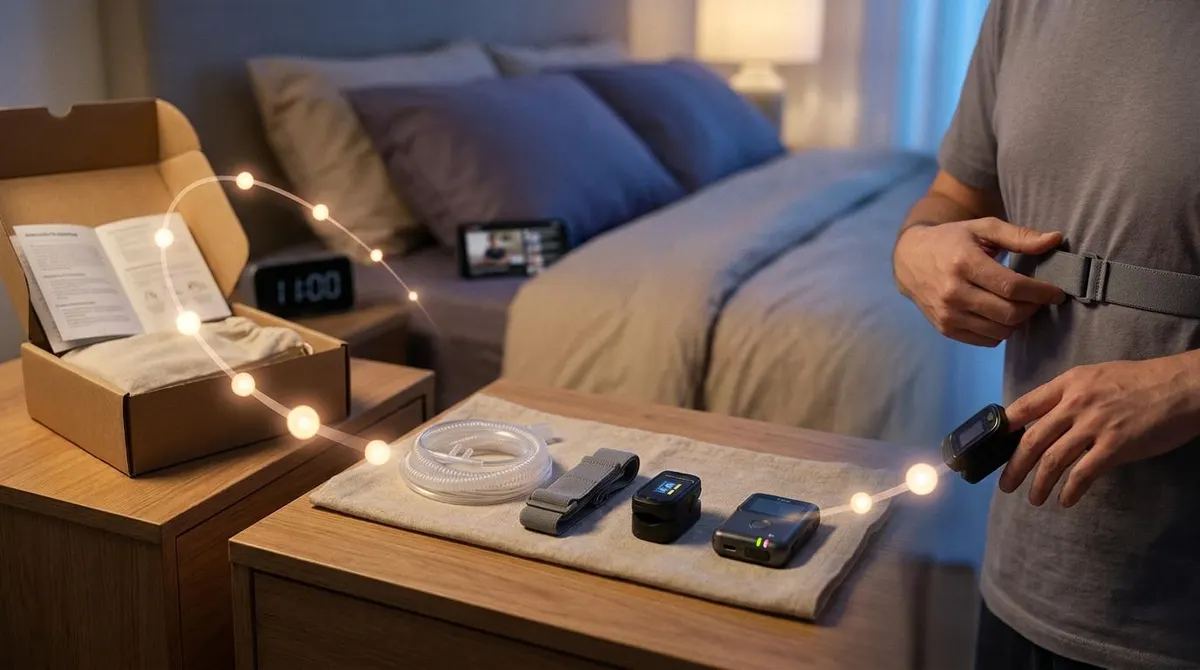
Completing a home sleep apnea test takes one night and requires no medical training. The process begins with ordering the test and ends with a physician-reviewed sleep report.
Step-by-Step Process
1. Get a prescription or order through a provider. A home sleep test typically requires a prescription from a physician or sleep specialist. Through dumbo.health, you can complete a free sleep assessment online to determine eligibility, and a clinician can issue a prescription if appropriate.
2. Receive the home sleep test device. The portable unit is shipped directly to your home. dumbo.health provides the complete home sleep test kit for $149, which includes the device and one night of testing with no insurance required.
3. Review the instructions and practice sensor placement. Before your test night, familiarize yourself with the nasal cannula, finger clip, and chest strap or belt. Most devices include printed or video instructions. Correct sensor placement is critical for accurate data.
4. Attach the sensors at bedtime. Place the nasal cannula, secure the chest sensor, clip the oximeter to your finger, and activate the device. Sleep in your normal sleep environment and follow your usual bedtime routine.
5. Sleep for at least 6 hours with the device on. The AASM recommends a minimum recording time to ensure sufficient data for interpretation. If sensors fall off early, you may need to repeat the test.
6. Return or upload the data. Depending on the device, you will either ship the unit back to the provider or upload data wirelessly. Some devices automatically transmit data once the recording is complete.
7. Receive your scored results and physician interpretation. A sleep physician reviews the data and generates a sleep report with your Apnea-Hypopnea Index or Respiratory Event Index score. dumbo.health's Essentials plan ($59 per month) includes physician interpretation and report, while the Premium plan ($89 per month) offers priority results turnaround and a dedicated sleep coach.
After the results are in, your physician will discuss whether treatment such as CPAP therapy, an oral appliance, or further testing is needed. If CPAP is recommended, dumbo.health care plans include CPAP therapy and equipment as part of the monthly subscription.
KEY TAKEAWAY: A home sleep apnea test involves ordering, wearing a sensor kit for one night, and receiving physician-reviewed results within days, with the entire process available through dumbo.health for $149 plus a care plan.
Once you understand the process, it helps to see how real people navigate testing in different situations.
Real-World Scenarios: Who Benefits Most From Home Sleep Testing
Home sleep apnea testing fits a wide range of people, but certain scenarios illustrate where it provides the greatest value.
Common Scenarios
A 48-year-old long-haul truck driver with a BMI of 34, loud snoring, and daytime sleepiness is flagged during a DOT physical for possible obstructive sleep apnea. The driver has no insurance and cannot afford to miss work for an overnight lab visit. Through dumbo.health, the driver orders an at-home sleep test for $149, completes the test on a night off, and receives results within days. The REI comes back at 22 events per hour, confirming moderate obstructive sleep apnea. The driver enrolls in dumbo.health's Essentials plan at $59 per month, receives a CPAP machine, and maintains DOT medical certification.
A 55-year-old owner-operator with a history of snoring and witnessed apneas wants to get tested but lives 90 miles from the nearest sleep lab. Traveling to a sleep clinic means losing an entire day of work. The driver completes an HSAT at home, avoiding travel. The physician interpretation identifies an AHI score of 38, which is severe obstructive sleep apnea. The driver upgrades to dumbo.health's Premium plan for $89 per month to access a dedicated sleep coach and advanced adherence monitoring to stay compliant for both health and CDL certification.
A 62-year-old patient with congestive heart failure and suspected Cheyne-Stokes respiration is referred for sleep apnea testing by a cardiologist. In this case, an HSAT would not be the right choice. The patient has a complex cardiac history with atrial fibrillation and fluid redistribution patterns that can produce central sleep apnea and mixed events. The cardiologist orders in-lab polysomnography, where the electroencephalogram, electrocardiogram, and full respiratory monitoring can differentiate central from obstructive events and guide treatment decisions, including whether phrenic nerve stimulation or autoPAP treatment may be appropriate.
These examples demonstrate that home sleep apnea testing is ideal for straightforward cases of suspected obstructive sleep apnea, especially when cost, convenience, or geographic distance are barriers. For patients with complex sleep disorders or significant cardiac comorbidities, polysomnography remains necessary.
KEY TAKEAWAY: Home sleep testing works best for adults with a moderate to high probability of obstructive sleep apnea, while complex cases involving heart failure, central sleep apnea, or multiple comorbidities require in-lab polysomnography.
To make the most informed decision, it helps to separate what is true from what is commonly misunderstood about home sleep testing.
Common Myths About Home Sleep Apnea Tests Debunked
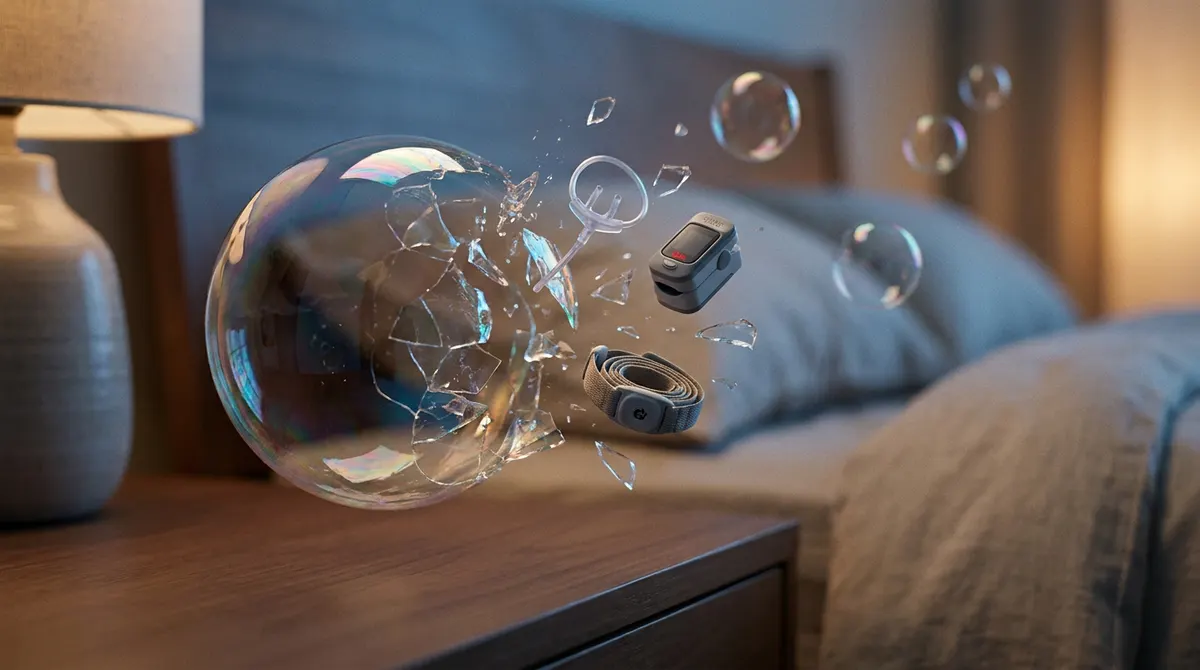
MYTH: A home sleep apnea test is not accurate enough to diagnose sleep apnea.
FACT: Multiple studies and the AASM clinical guidelines confirm that HSAT is a validated diagnostic tool for obstructive sleep apnea in patients with a moderate to high pretest probability. A systematic review published in the Journal of Clinical Sleep Medicine found that home sleep testing has high sensitivity and specificity for moderate to severe obstructive sleep apnea when proper protocols are followed. The test may underestimate severity slightly due to the absence of brain wave monitoring, but it is clinically accepted as a standalone diagnostic method for uncomplicated cases.
MYTH: Home sleep tests can detect any type of sleep disorder.
FACT: Home sleep apnea tests are designed specifically for obstructive sleep apnea. They do not detect central sleep apnea reliably, and they cannot diagnose narcolepsy, restless leg syndrome, parasomnias, or periodic limb movement disorder. These conditions require polysomnography with full neurological monitoring, including electroencephalogram, electrooculogram, and electromyography channels. If your symptoms include abnormal movements during sleep, excessive daytime sleepiness without snoring, or complex neurological complaints, your sleep specialist will likely recommend an in-lab sleep study instead.
MYTH: You need insurance to get a home sleep apnea test.
FACT: Many patients assume insurance is required, but cash-pay options make testing accessible without prior authorizations, referrals, or insurance networks. dumbo.health offers a complete home sleep test for $149 with no insurance required, no surprise bills, and no prior authorization needed. Medicare does cover HSAT under certain conditions, but the approval process can add weeks of delay. Paying out of pocket through a platform like dumbo.health eliminates that wait, and many patients use FSA/HSA funds to cover the cost.
MYTH: If your home sleep test is negative, you definitely do not have sleep apnea.
FACT: A negative HSAT result does not conclusively rule out obstructive sleep apnea, especially in patients with high clinical suspicion. The AASM recommends that a negative home test in a symptomatic patient be followed up with in-lab polysomnography. Factors such as a poor night of sleep during testing, sensor displacement, or mild sleep apnea that falls just below the scoring threshold can all produce false-negative results. This is why physician review of results, included in every dumbo.health care plan, is essential for appropriate clinical follow-up.
KEY TAKEAWAY: Home sleep apnea tests are clinically validated for obstructive sleep apnea but are not universal diagnostic tools, and a negative result in a symptomatic patient always warrants further evaluation.
With myths cleared up, the next step is preparing properly to get the most accurate results from your test night.
How to Prepare for Your Home Sleep Test Night
Proper preparation increases the chance of getting a complete, high-quality recording on the first attempt. Most failed home sleep tests result from preventable issues like sensor displacement or insufficient sleep time.
Pre-Test Checklist
- Confirm your test device is fully charged or has fresh batteries before bedtime
- Review the sensor placement instructions included with your device (video tutorials are available through most providers including dumbo.health)
- Avoid alcohol for at least 24 hours before the test, as alcohol relaxes airway muscles and can alter results
- Avoid caffeine after noon on the test day
- Skip daytime naps so you are tired enough to sleep at least 6 hours
- Remove nail polish from the finger where the oximeter clip will be placed (dark polish can interfere with oxygen saturation readings)
- Set your sleep environment to be cool, dark, and quiet
- Sleep in your usual sleep position to reflect real-world conditions
- Place the nasal cannula, chest strap, and finger clip according to instructions
- Keep a phone or clock nearby to note the time you go to bed and the time you wake up
- Complete the free sleep assessment at dumbo.health before ordering if you are unsure whether a home test is right for you
Following these steps helps ensure your sleep testing data is usable and that your physician can generate an accurate sleep report from a single night of recording.
KEY TAKEAWAY: Simple preparation steps like removing nail polish, avoiding alcohol, and following sensor placement instructions significantly reduce the risk of needing a repeat test.
Preparation matters, but so does understanding what happens after the data is collected and your results are ready.
Understanding Your Home Sleep Test Results
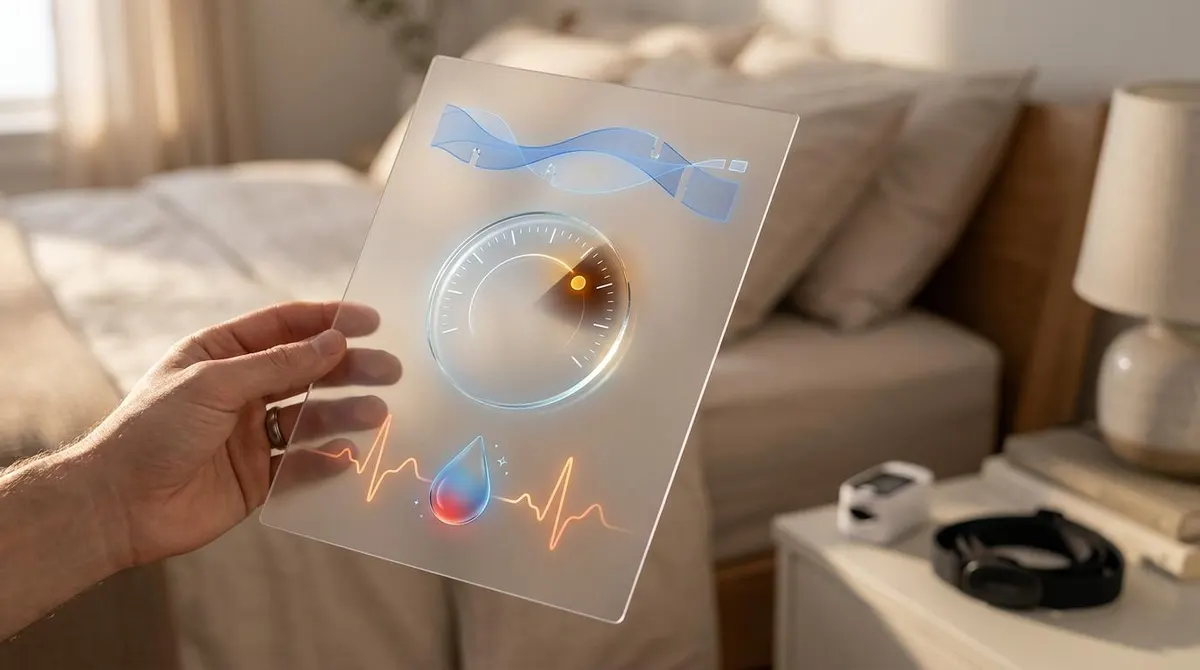
Your home sleep test results are presented in a sleep report that includes scored respiratory events, oxygen desaturation data, heart rate trends, and an overall severity index. A physician or sleep specialist interprets these findings in the context of your symptoms and clinical history.
Key Metrics in Your Sleep Report
The Respiratory Event Index (REI) or Apnea-Hypopnea Index (AHI) is the primary outcome. This number tells you how many apneas and hypopneas occurred per hour of recording or sleep time. An REI of fewer than 5 events per hour is considered normal. An REI between 5 and 14 indicates mild obstructive sleep apnea. Between 15 and 29 is moderate. An REI of 30 or more is severe.
The respiratory disturbance index (RDI) may also be reported. RDI includes apneas, hypopneas, and respiratory effort-related arousals (RERAs). Because HSAT cannot detect cortical arousals without brain wave data, RDI from a home test may be less comprehensive than RDI from polysomnography.
Oxygen saturation data shows your lowest recorded level, the average saturation throughout the night, and the percentage of time spent below key thresholds such as 90 percent and 88 percent. According to the National Heart, Lung, and Blood Institute, oxygen desaturation patterns help clinicians assess cardiovascular risk and the urgency of treatment.
Heart rate data reveals whether your heart rate elevates during apneic events, which is a common physiological response to oxygen deprivation. This data point adds context when assessing overall cardiovascular risk associated with untreated obstructive sleep apnea.
What Happens After You Get Your Results
If your results confirm obstructive sleep apnea, your physician will recommend a treatment pathway. The most common first-line treatment is CPAP therapy. A CPAP machine delivers continuous positive airway pressure through a mask to keep your airway open during sleep. dumbo.health includes CPAP therapy and equipment in all monthly care plans, starting at $59 per month with the Essentials plan. No contracts are required, and you can cancel anytime.
For patients who cannot tolerate CPAP, alternatives include oral appliances such as a custom-fit mouthpiece, positional therapy for position-dependent sleep apnea, or in some cases surgical evaluation. A night guard designed for sleep apnea differs from a dental night guard and should be fitted by a qualified provider.
If results are inconclusive or negative but you have persistent symptoms, your physician should refer you for an in-lab sleep study to rule out false negatives or to evaluate for other sleep disorders.
DID YOU KNOW: According to the CDC, adults generally need at least 7 hours of sleep per night, but untreated sleep apnea fragments sleep so severely that even 8 hours in bed may not produce restorative rest.
KEY TAKEAWAY: Your sleep report distills a night of sensor data into actionable numbers like REI, oxygen trends, and heart rate patterns, and a physician review ensures those numbers translate into the right treatment plan.
Results are only as useful as the actions they lead to. Here is how to move from diagnosis to treatment without delay.
What to Do After a Positive Home Sleep Apnea Test
Getting diagnosed with obstructive sleep apnea is the starting point for treatment, not the end of the road. The most effective response is to begin treatment promptly and maintain adherence.
CPAP therapy is the most widely recommended treatment for moderate to severe obstructive sleep apnea. According to the American Academy of Sleep Medicine, CPAP reduces the AHI to normal levels in most patients when used consistently. Medicare and most insurers define adequate CPAP adherence as at least 4 hours per night for at least 70 percent of nights over a 30-day period.
For commercial drivers, CDL sleep apnea testing and CPAP compliance are directly tied to medical certification. The FMCSA does not have a formal sleep apnea rule, but many medical examiners will issue conditional or shorter-duration certifications pending proof of treatment adherence. dumbo.health's Premium plan includes advanced adherence monitoring and a dedicated sleep coach to help drivers stay compliant.
Auto-CPAP (autoPAP treatment) automatically adjusts pressure throughout the night based on detected events, which many patients find more comfortable than fixed-pressure CPAP. A CPAP prescription is required to obtain any CPAP device, and dumbo.health care plans include the prescription and equipment together.
Some patients with mild sleep apnea may be candidates for an oral appliance as an alternative to CPAP. Oral appliances work by repositioning the jaw to keep the airway open. They are less effective than CPAP for severe sleep apnea but may improve adherence for patients who cannot tolerate positive airway pressure.
Lifestyle modifications also play a supporting role. Weight loss, avoiding alcohol before bed, and sleeping on your side rather than your back can reduce the severity of obstructive events. However, lifestyle changes alone are rarely sufficient for moderate to severe obstructive sleep apnea.
home sleep apnea testing through dumbo.health creates a streamlined path from testing to treatment. The $149 home sleep test leads directly into care plans that include physician review, CPAP equipment, and ongoing clinical support. The Essentials plan at $59 per month covers the fundamentals, while the Elite plan at $129 per month adds concierge clinical support and direct physician messaging for patients or practices that need more hands-on guidance.
KEY TAKEAWAY: A positive home sleep test result should lead to prompt treatment initiation, most commonly CPAP therapy, and platforms like dumbo.health bundle testing, interpretation, and treatment into a single cash-pay pathway with no insurance delays.
Treatment decisions are clearer when you know what each care plan includes. But before choosing, consider whether telehealth can simplify the entire process.
How Telehealth and Remote Sleep Medicine Are Changing Access
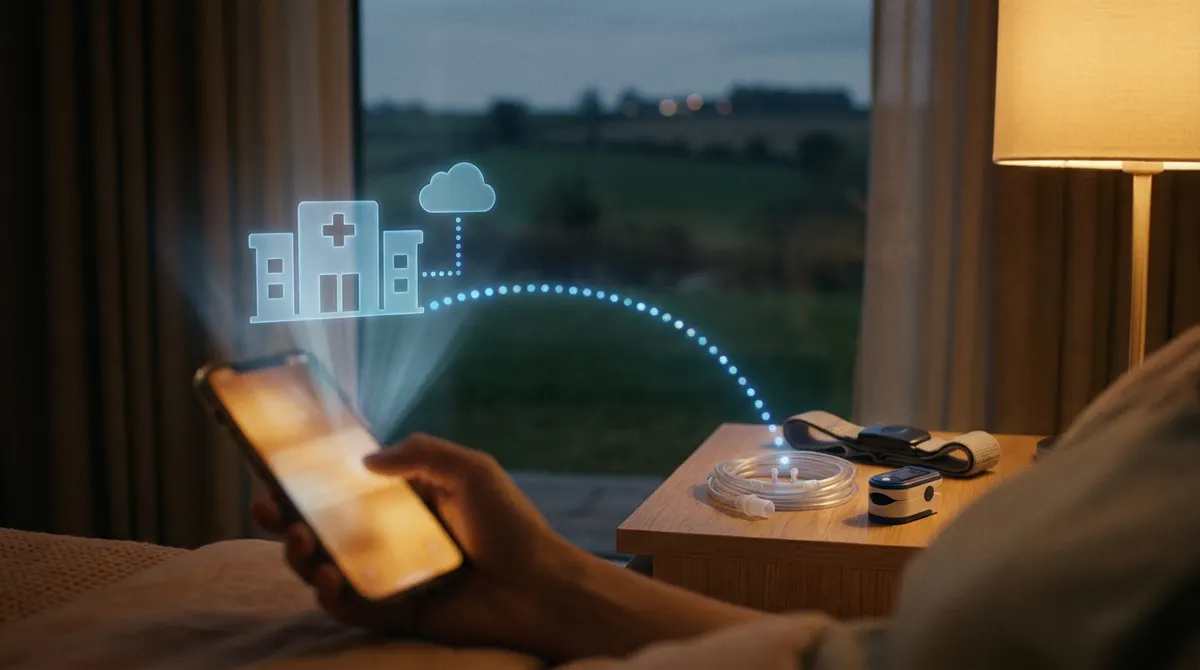
Telehealth has made sleep apnea diagnosis and treatment accessible to patients who previously faced geographic, scheduling, or financial barriers. Remote care removes the need to visit a sleep lab, travel to a specialist, or wait weeks for an appointment.
A patient in a rural area can now complete a virtual DOT physical and sleep apnea assessment without driving hours to the nearest sleep clinic. Medical providers who offer telehealth consultations can evaluate symptoms, issue a home sleep test prescription, and review results remotely. This model is especially valuable for commercial drivers, owner-operators, and anyone who cannot easily take time off work for in-person visits.
dumbo.health operates as a telehealth-first sleep care platform. Patients start with a free sleep assessment, order the home sleep test, and receive physician-reviewed results through the same platform. Follow-up care, CPAP setup, adherence monitoring, and clinical support all happen remotely. The Elite plan includes direct physician messaging, removing the friction of scheduling follow-up appointments.
Clinicians frequently observe that telehealth sleep medicine improves follow-through. Patients who might delay or skip an in-person appointment are more likely to complete testing and start treatment when the process is available from home. This is particularly relevant given that the Sleep Foundation estimates that most people with moderate to severe sleep apnea remain undiagnosed.
For providers near you looking to integrate sleep apnea testing into their practice, dumbo.health's Elite plan includes custom reporting that can be sent directly to the referring provider, making it easier to manage patients with sleep-disordered breathing without building an in-house sleep lab.
KEY TAKEAWAY: Telehealth sleep medicine through platforms like dumbo.health removes access barriers by delivering testing, diagnosis, and treatment to the patient's home, with physician oversight at every step.
Remote care expands access, but no discussion of home sleep testing is complete without addressing cost directly.
How Much Does a Home Sleep Apnea Test Cost Without Insurance?
A home sleep apnea test costs between $149 and $500 out of pocket at most providers, with significant variation depending on the device, interpretation fees, and follow-up services included. Lab-based polysomnography typically costs $1,000 to $3,000 or more without insurance.
dumbo.health offers the home sleep test for $149 as a one-time payment. This covers the at-home sleep test device and one night of testing. Physician interpretation and ongoing care are billed separately through monthly plans, which start at $59 per month. No insurance is required, no prior authorizations are needed, and there are no surprise bills.
Cost Comparison: Home Test vs. Sleep Lab
Device and Test Fee
- dumbo.health Home Sleep Test: $149 one-time
- Other HSAT providers: $150 to $500 depending on location and device
- In-Lab Polysomnography: $1,000 to $3,000+
Physician Interpretation
- dumbo.health: Included in monthly plans starting at $59/month
- Other providers: Often billed separately, $100 to $300+
- Sleep lab: Typically bundled but reflected in total cost
CPAP Equipment if Prescribed
- dumbo.health: Included in monthly plans
- Other providers: Purchased separately, $500 to $2,000+ for machine and supplies
- Insurance route: Covered partially but requires prior authorization and adherence documentation
Insurance or Authorization Required
- dumbo.health: No
- Other cash-pay providers: Varies
- Insurance-covered testing: Yes, often with delays of weeks
Medicare does cover HSAT and CPAP for qualifying patients, but the process involves prior authorization, specific documentation, and adherence tracking requirements. For patients who want to avoid these delays, cash-pay through dumbo.health is a faster alternative. Many patients use FSA/HSA accounts to cover the cost of both the test and the monthly care plan.
KEY TAKEAWAY: At $149 for the home sleep test and monthly plans starting at $59, dumbo.health makes sleep apnea testing and treatment predictable and affordable without insurance, prior authorizations, or surprise billing.
Now that you understand the costs, here is a summary of myths that still cause confusion for people considering home testing.
Conclusion
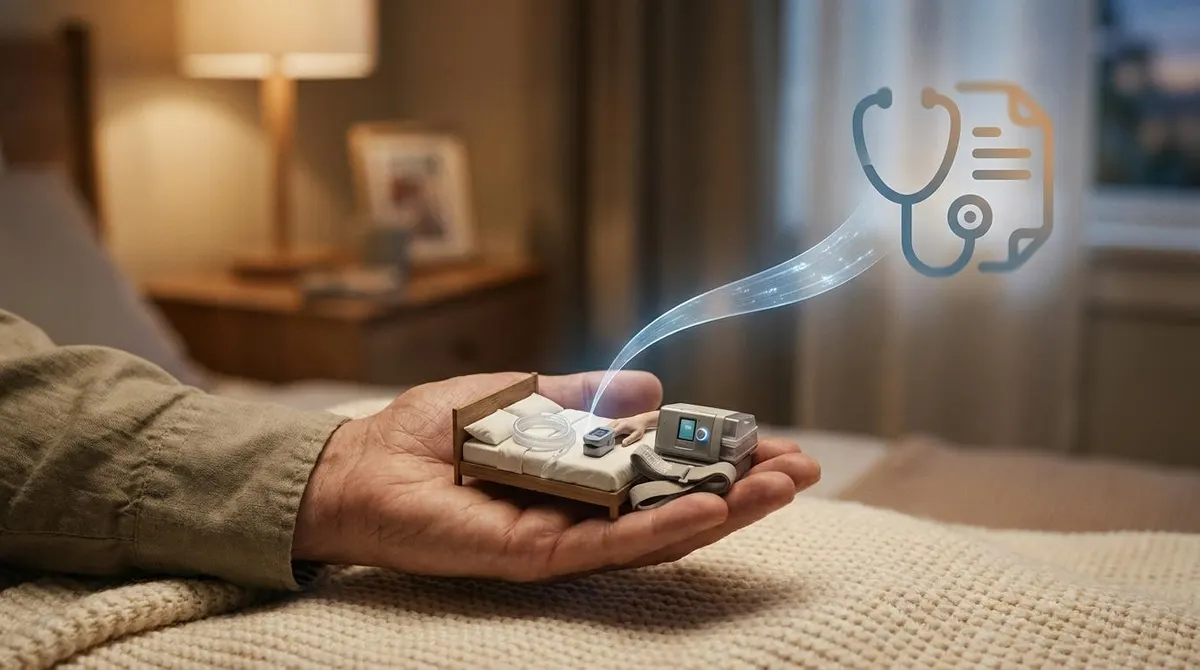
A home sleep apnea test measures apneas by recording airflow, oxygen saturation, heart rate, and respiratory effort through sensors you wear during a single night of sleep. These measurements produce an Apnea-Hypopnea Index or Respiratory Event Index that determines whether you have obstructive sleep apnea and how severe it is. HSAT is validated, convenient, and far less costly than an in-lab sleep study for straightforward cases. It does have limitations for central sleep apnea and complex conditions, but for most adults with suspected obstructive sleep apnea, it is the right first step. dumbo.health offers the complete home sleep test for $149 with no insurance required, plus care plans starting at $59 per month that include physician interpretation, CPAP therapy, and ongoing support. No contracts, cancel anytime.
Frequently Asked Questions About Home Sleep Apnea Tests
Does a home sleep apnea test measure apneas?
Yes, a home sleep apnea test measures apneas directly. The device records airflow, oxygen saturation, breathing effort, and heart rate throughout the night. When airflow stops completely, that event is classified as an apnea. When airflow reduces significantly, it is classified as a hypopnea. A physician uses these events to calculate the Apnea-Hypopnea Index, which reflects how many apneas and hypopneas occur per hour of sleep. This forms the basis of an obstructive sleep apnea diagnosis. A healthcare professional reviews the results and determines whether findings are clinically significant.
What is a home sleep apnea test?
A home sleep apnea test, also called an HSAT or home sleep test, is a portable diagnostic device used to evaluate whether a person has obstructive sleep apnea in their own home. The device records breathing patterns, oxygen saturation, heart rate, and airflow during sleep. According to the American Academy of Sleep Medicine, home sleep apnea testing is an accepted diagnostic approach for adults with a high likelihood of moderate to severe obstructive sleep apnea. Results are reviewed by a sleep physician or qualified clinician, who interprets the data and provides a formal report. An at-home sleep test from dumbo.health includes device delivery, one night of testing, and physician interpretation.
What does a home sleep apnea test measure?
A home sleep apnea test typically measures airflow through the nose and mouth, blood oxygen levels, heart rate, respiratory effort, and snoring intensity. Many devices also track sleep position and body movement. These signals allow a physician to identify apneas, hypopneas, and other breathing disruptions during sleep. The total number of these events per hour is used to calculate the Apnea-Hypopnea Index or Respiratory Event Index, which guides diagnosis. Some advanced devices, such as the WatchPAT ONE, use peripheral arterial tonometry and additional sensors to estimate sleep stages without traditional electrode placement.
What does a home sleep apnea test not measure?
A home sleep apnea test does not measure brain waves, eye movements, or muscle activity. In-lab polysomnography records an electroencephalogram, electrooculogram, and electromyography, which provide information about sleep stages and are necessary to diagnose conditions such as narcolepsy, periodic limb movement disorder, REM sleep behavior disorder, and central sleep apnea. Because home sleep tests cannot fully assess sleep architecture, they are generally not recommended for patients suspected of having conditions beyond obstructive sleep apnea. A sleep specialist can help determine whether an in-lab sleep study is more appropriate for your situation.
How does a home sleep apnea test work?
A home sleep apnea test works by recording physiological signals during sleep using a small portable device. Depending on the device, sensors may include a nasal cannula to measure airflow, a finger clip or wrist sensor to record oxygen saturation and heart rate, and a chest strap or belt to monitor respiratory effort. Some devices use peripheral arterial tonometry, which detects changes in blood flow at the fingertip as a proxy for breathing events and sleep disruption. After the test night, recorded data is uploaded or mailed to a clinical team. A physician interprets the data and produces a diagnostic report.
How does a home sleep study diagnose obstructive sleep apnea?
A home sleep study diagnoses obstructive sleep apnea by measuring how often breathing is interrupted during sleep. A physician reviews the data and calculates the Apnea-Hypopnea Index, which counts apneas and hypopneas per hour. According to the American Academy of Sleep Medicine, an AHI of 5 to 14 events per hour is mild obstructive sleep apnea, 15 to 29 is moderate, and 30 or more is severe. Because home devices may undercount events compared to in-lab polysomnography, some clinicians use the Respiratory Event Index instead. A qualified clinician makes the final diagnostic determination based on clinical context, symptoms, and test results.
What is the WatchPAT ONE and how does it work?
The WatchPAT ONE is an FDA-cleared, single-use home sleep apnea test device developed by Itamar Medical. It uses peripheral arterial tonometry, a technology that measures changes in peripheral arterial tone at the fingertip to detect sleep-disordered breathing events. The device includes a wrist unit, a finger clip sensor, and a chest sensor to record respiratory movement. Unlike traditional home sleep devices that rely solely on a nasal cannula, the WatchPAT ONE can estimate sleep stages using heart rate variability and movement data. It provides an Apnea-Hypopnea Index score and a sleep report for physician review. Because it is disposable, there is no device return required.
How accurate is a home sleep apnea test?
Home sleep apnea tests are considered accurate for diagnosing moderate to severe obstructive sleep apnea in adults without significant comorbidities. The American Academy of Sleep Medicine supports their use as a validated diagnostic tool in appropriate clinical settings. However, because home devices do not measure brain waves or total sleep time directly, they may underestimate AHI severity by dividing events by total recording time rather than confirmed sleep time. This means a borderline result may require follow-up with an in-lab sleep study. Accuracy can also be affected by sensor placement, sleep environment, and underlying health conditions. A physician interpreting results accounts for these factors.
Are home sleep apnea tests as accurate as in-lab sleep studies?
Home sleep apnea tests are accurate for identifying moderate to severe obstructive sleep apnea in otherwise healthy adults, but they are not equivalent to in-lab polysomnography in all cases. Polysomnography records brain waves, eye movements, and muscle activity in addition to breathing signals, providing a more complete picture of sleep. Home tests may undercount events because they measure total recording time rather than confirmed sleep time, which can lower the calculated AHI. The NHLBI explains that in-lab studies remain the reference standard for diagnosing complex or unclear sleep disorders. For straightforward obstructive sleep apnea assessment, home testing is a clinically accepted and convenient alternative.
When is a home sleep apnea test appropriate?
A home sleep apnea test is appropriate for adults who have symptoms suggesting moderate to severe obstructive sleep apnea, such as loud snoring, witnessed breathing pauses, and daytime sleepiness, and who do not have significant comorbidities that would complicate home testing. It may not be appropriate for people with heart failure, chronic obstructive pulmonary disease, neuromuscular disease, suspected central sleep apnea, or other complex conditions. A healthcare professional can assess your symptoms and medical history to determine whether a home test or an in-lab sleep study is the right approach for your situation. Starting with a free sleep assessment can help clarify your next step.
Who should not take a home sleep apnea test?
Home sleep apnea testing may not be appropriate for people with heart failure, congestive heart failure, significant cardiovascular disease, Cheyne-Stokes respiration, neuromuscular disease, chronic obstructive pulmonary disease, or suspected central sleep apnea. These conditions can affect breathing patterns in ways that home devices may not accurately capture, and they often require more comprehensive in-lab evaluation. People with atrial fibrillation or those being evaluated for phrenic nerve stimulation therapy may also need in-lab polysomnography. A sleep physician or qualified clinician can help determine whether home testing is safe and clinically appropriate based on your individual health history.
What sleep disorders can a home sleep apnea test detect?
Home sleep apnea tests are designed to detect obstructive sleep apnea and sleep-disordered breathing. They are not validated for diagnosing other sleep disorders such as narcolepsy, insomnia, periodic limb movement disorder, REM sleep behavior disorder, or central sleep apnea. Because home devices do not record brain waves, eye movements, or muscle activity, they cannot provide the data needed to evaluate conditions that depend on detailed sleep stage analysis. If your symptoms suggest a sleep disorder other than obstructive sleep apnea, or if your home test result does not match your clinical presentation, a sleep specialist may recommend an in-lab sleep study.
Is a home sleep study better than an in-lab sleep study?
Neither option is universally better. The right choice depends on your symptoms, medical history, and what your clinician is evaluating. Home sleep testing is more convenient, lower cost, and allows you to sleep in your own environment, which many patients find easier. In-lab polysomnography provides more detailed data, including brain wave activity, eye movements, muscle tone, and precise sleep staging, which is necessary for diagnosing complex or unclear sleep disorders. For most adults with a high clinical suspicion of obstructive sleep apnea and no significant comorbidities, a home sleep apnea test is a clinically appropriate and practical starting point.
How do you prepare for an at-home sleep study?
Preparing for an at-home sleep study involves a few practical steps. Avoid caffeine, alcohol, and sedatives on the test day unless instructed otherwise, as these can affect breathing and sleep quality. Follow the device setup instructions carefully, paying attention to sensor placement for the nasal cannula, finger clip, and chest strap or belt. Try to sleep in your normal position and environment. Avoid daytime napping on the test day to improve the likelihood of sleeping well that night. Read through the instructions before starting to avoid confusion during the night. If your provider has given specific preparation guidance, follow their instructions first.
How long do you need to sleep for a home sleep apnea test?
Most home sleep apnea test protocols require at least four hours of recorded data for the results to be interpretable. Sleeping through a full night of six to eight hours generally produces the most reliable data. If you sleep fewer than four hours or if the device sensors disconnect during the night, your clinical team may ask you to repeat the test. You do not need to sleep for a specific number of hours before starting the test, but going to bed at your usual time and following your normal sleep routine tends to produce the best results.
Can I go to the bathroom during a home sleep study?
Yes, you can use the bathroom during a home sleep study. Briefly removing or pausing the device for a short bathroom break is generally acceptable and will not invalidate the test. Most home sleep devices record continuously and a brief interruption in data is expected. If you need to disconnect a sensor, follow the device instructions for how to safely reattach it. Avoid turning the device off entirely if possible. The clinical team reviewing your results will account for short interruptions in the data. If you are unsure about your specific device, check the instructions or contact your provider.
What should I do if I cannot sleep during a home sleep study?
If you struggle to sleep during a home sleep study, do not worry. Sleeping in a slightly different way than usual is common and does not necessarily mean the test will be unusable. Try to sleep as you normally would and avoid fixating on the sensors or the testing process. If you sleep at least four hours with the sensors in place, the data may still be sufficient for analysis. If you sleep significantly less than that, contact your clinical team. They may ask you to repeat the test. Avoid sleeping pills unless your clinician has specifically approved them for the test night.
What if I wake up during the night while wearing the device?
Waking up briefly during the night is normal and will not invalidate your home sleep apnea test. Simply stay still and try to return to sleep. If a sensor has shifted or become uncomfortable, reposition it carefully using the device instructions. Most home sleep devices record continuously, so brief awakenings are captured as part of the normal recording. The physician interpreting your results is trained to identify these periods in the data. If the device stops recording entirely due to a disconnected sensor, note the approximate time and inform your clinical team when you return the device or upload your data.
What happens after a home sleep apnea test?
After your home sleep apnea test, the recorded data is uploaded digitally or the device is returned by mail, depending on the device used. A qualified physician or sleep specialist reviews the data and produces a diagnostic report that includes your Apnea-Hypopnea Index score, oxygen saturation readings, and a clinical interpretation. If obstructive sleep apnea is confirmed, your care team will discuss treatment options, which typically include CPAP therapy. dumbo.health monthly plans cover physician interpretation, CPAP therapy and equipment, and adherence follow-up, with plans starting at $59 per month. No insurance, prior authorizations, or long-term contracts are required.
How much does a home sleep apnea test cost without insurance?
The cost of a home sleep apnea test without insurance varies depending on the provider and what is included. dumbo.health offers a home sleep test for $149 as a one-time cash-pay purchase, which includes the at-home sleep test device and one night of testing. Physician interpretation and an ongoing care plan are available separately through monthly plans starting at $59 per month. There are no prior authorizations, no surprise bills, and no contracts. This transparent pricing structure makes it easier to plan your costs. For more detail on what commercial drivers pay for sleep apnea testing, see the DOT self-pay cost guide.
Is a home sleep apnea test covered by insurance or Medicare?
Home sleep apnea tests are often covered by private insurance and Medicare when ordered by a physician and medically necessary criteria are met. Medicare Part B covers home sleep apnea testing for beneficiaries who meet specific diagnostic criteria. Coverage requirements, prior authorization rules, and out-of-pocket costs vary by plan and insurer. If you prefer to avoid the insurance process entirely, cash-pay options such as dumbo.health offer transparent pricing with no prior authorizations required. A healthcare professional or your insurance provider can confirm what your specific plan covers before you proceed with testing.
Do I need a prescription or referral for a home sleep apnea test?
In most cases, a physician order or prescription is required before a home sleep apnea test is administered and interpreted. This is because the results are used to support a clinical diagnosis and, if needed, a CPAP prescription. Some at-home testing platforms include physician review as part of the process, so you do not need a separate referral to get started. dumbo.health includes physician interpretation and a clinical report as part of its care workflow, so you do not need to arrange a referral independently. A healthcare professional can help determine whether testing is appropriate based on your symptoms and medical history.
Do I need a prescription for a CPAP machine?
Yes, a CPAP machine requires a prescription in the United States. This is because CPAP therapy is a medical treatment that needs to be calibrated to the appropriate pressure settings based on your sleep apnea diagnosis. The prescription is typically issued by the physician who interprets your sleep test results. dumbo.health monthly plans cover physician interpretation, CPAP therapy, equipment, and follow-up care, so the prescription process is integrated into the care workflow. A healthcare professional makes the decision about whether CPAP is appropriate based on your test results, symptoms, and clinical history.
What level of sleep apnea requires CPAP therapy?
CPAP therapy is commonly recommended for moderate to severe obstructive sleep apnea, defined as an Apnea-Hypopnea Index of 15 or more events per hour. It may also be recommended for mild obstructive sleep apnea when symptoms such as significant daytime sleepiness, high blood pressure, or cardiovascular risk are present. According to the NHLBI, CPAP is considered the most effective treatment for obstructive sleep apnea when used consistently. The decision to prescribe CPAP, an auto-CPAP, or an alternative such as oral appliances is made by a qualified clinician based on your test results, symptom severity, and overall health. A physician will review your results and recommend the most appropriate treatment.
What is CPAP adherence and why does it matter?
CPAP adherence refers to how consistently and effectively a patient uses their CPAP machine each night. Insurance companies and Medicare typically define adequate adherence as using CPAP for at least four hours per night on 70 percent of nights over a 30-day period. Poor adherence reduces the health benefits of treatment and can affect whether ongoing CPAP coverage is approved. Regular adherence monitoring helps identify patients who are struggling with their equipment, mask fit, or comfort settings. dumbo.health Premium and Elite plans include advanced adherence monitoring and access to a dedicated sleep coach from a licensed care team to support consistent therapy use. Learn more about sleep apnea care solutions.
How are home sleep apnea test results interpreted?
Home sleep apnea test results are interpreted by a sleep physician or qualified clinician who reviews the recorded data and produces a formal report. The report typically includes the Apnea-Hypopnea Index or Respiratory Event Index, oxygen saturation data including the lowest recorded level and the percentage of time below 90 percent, heart rate patterns, snoring data, and any notable respiratory events. A clinician considers these findings alongside your reported symptoms and medical history before making a diagnostic determination. Results alone do not constitute a diagnosis. The physician's clinical interpretation and report are what support a diagnosis and any subsequent treatment decisions.
Can a home sleep apnea test produce a false negative result?
Yes, a home sleep apnea test can produce a false negative, meaning it may not detect sleep apnea even when it is present. This can happen when sensor placement is imperfect, when the patient sleeps in an unusual position, or when the device divides events by total recording time rather than actual sleep time, which can lower the calculated AHI. If your symptoms strongly suggest sleep apnea but your home test result is negative or borderline, a healthcare professional may recommend repeating the test or proceeding with an in-lab sleep study. A single negative home test result does not rule out sleep apnea in a patient with clear clinical symptoms.
Can I take a home sleep apnea test more than once?
Yes, you can take a home sleep apnea test more than once if needed. A repeat test may be recommended if the first test produced insufficient data, if sensor issues affected recording quality, or if results were inconclusive. Retesting may also be appropriate after significant weight changes, after starting or stopping treatment, or if your symptoms return or change. A clinician will advise whether a repeat home test or an in-lab sleep study is more appropriate in your case. dumbo.health offers its home sleep test as a standalone $149 one-time purchase, which can be repeated if clinically indicated.
Do symptoms like snoring or waking up tired mean I should get tested?
Snoring, waking up tired, morning headaches, dry mouth, or a sore throat on waking can all be signs of sleep-disordered breathing and may indicate obstructive sleep apnea. According to the NHLBI, other common symptoms include witnessed breathing pauses during sleep, gasping or choking at night, and difficulty concentrating during the day. These symptoms do not confirm a diagnosis on their own, but they are a reasonable reason to discuss sleep apnea testing with a healthcare professional. If you are unsure whether your symptoms warrant testing, the free sleep assessment at dumbo.health can help you take a first step.
How soon will I receive my home sleep apnea test results?
Result turnaround times vary by provider. With dumbo.health, the Premium plan includes priority results turnaround as part of its features, which means results are processed more quickly than under the standard Essentials plan. In general, once the device data is uploaded or returned, physician interpretation typically takes a few business days. Your clinical team will notify you when your report is ready and explain the findings. If you have urgent symptoms such as severe daytime sleepiness, chest pain, or significant breathing difficulties, seek medical care promptly rather than waiting for home test results.
How do commercial drivers get tested for sleep apnea under DOT rules?
Commercial drivers may be referred for sleep apnea evaluation by a certified medical examiner during a DOT physical if they show risk factors such as a high body mass index, large neck circumference, hypertension, or reported symptoms of daytime sleepiness. A certified medical examiner makes decisions about DOT certification based on FMCSA guidelines, and they may require documentation of sleep apnea evaluation and treatment before issuing or renewing a medical certificate. An at-home sleep apnea test can support the evaluation process. For more detail on how home sleep testing supports commercial drivers, see the home sleep test for truck drivers guide. dumbo.health does not guarantee DOT certification or medical clearance.
Can a CDL driver use a home sleep apnea test for DOT purposes?
A CDL driver may use a home sleep apnea test as part of a sleep apnea evaluation, but whether the results satisfy a certified medical examiner's requirements depends on the examiner's clinical judgment and the specific documentation provided. The FMCSA does not mandate a specific type of sleep study, but certified medical examiners are expected to follow guidance consistent with current sleep medicine standards. dumbo.health can support testing, physician interpretation, and documentation for commercial drivers, but a certified medical examiner makes the final determination about DOT certification. For a comprehensive overview of CDL sleep apnea requirements, see the CDL sleep apnea test guide.
Where can I find home sleep apnea testing near me?
Home sleep apnea testing is available through sleep clinics, primary care physicians, and telehealth platforms that serve patients in your area. Because a home sleep test is conducted in your own home rather than at a facility, your physical location is less of a barrier than it would be for an in-lab sleep study. dumbo.health provides at-home sleep apnea testing with physician interpretation and ongoing care to patients across the United States, with transparent cash-pay pricing and no insurance required. If you are looking for testing options in your area, explore sleep apnea care solutions to find a pathway that works for your location and schedule.
Related Home Sleep Apnea Test Topics
- What Is a Home Sleep Apnea Test How At-Home Sleep Testing Works, What It Measures, and Who Needs One
- Home Sleep Apnea Test The Complete Guide to At-Home Sleep Apnea Testing
- How Do You Get a Home Sleep Apnea Test The Complete Guide to At-Home Sleep Testing
- Does Insurance Cover a Home Sleep Apnea Test What You Actually Pay
- How to Get a Sleep Apnea Test at Home The Complete Guide to Home Sleep Testing
- Sleep Apnea Test at Home The Complete Guide to Home Sleep Testing for Adults
- How Does a Home Sleep Apnea Test Work A Complete Guide to At-Home Sleep Testing
- What Does a Home Sleep Apnea Test Consist Of Sensors, Equipment, and What to Expect
- Home Sleep Test The Complete Guide to At-Home Sleep Apnea Testing
- Sleep Test at Home The Complete Guide to Home Sleep Apnea Testing
- Does Anyone Ever Pass a Sleep Apnea Test What Normal Results Actually Look Like
- Does Medicare Cover a Home Sleep Apnea Test What Beneficiaries Need to Know
- Sleep Apnea Test at Home with Insurance What Your Plan Actually Covers and How to Get Tested
- How Is a Home Sleep Apnea Test Done A Complete Guide to At-Home Sleep Testing
- Are Home Sleep Apnea Tests Accurate What the Evidence Actually Shows
- Are Home Sleep Apnea Tests Reliable Clinical Evidence, Accuracy, and What the Data Actually Shows
- CPAP Test at Home The Complete Guide to Home Sleep Apnea Testing and Treatment
- Can You Test for Sleep Apnea at Home A Complete Guide to Home Sleep Testing
- Sleep Apnea Test The Complete Guide to Diagnosis, Home Testing, and What Your Results Mean
- How Long Does a Home Sleep Apnea Test Take What to Expect Before, During, and After Testing
- What Is the Best At-Home Sleep Apnea Test A Clinical Comparison of Devices, Accuracy, and Cost
- At-Home Sleep Apnea Test The Complete Guide to Testing, Results, and Treatment
- Can Dentists Prescribe a Home Sleep Apnea Test What You Need to Know
- What Happens After a Home Sleep Apnea Test Results, Diagnosis, and Next Steps
- Home Sleep Test Cost What You Actually Pay With and Without Insurance
- Can My Doctor Prescribe a Home Sleep Apnea Test What You Need to Know
- Home Sleep Apnea Test Near Me How to Get Tested Without a Sleep Lab Visit
- Can a Home Sleep Apnea Test Be Wrong Accuracy, False Negatives, and What to Do Next
- Home Sleep Testing The Complete Guide to Diagnosing Sleep Apnea From Your Own Bed
- Sleep Apnea Testing The Complete Guide to Diagnosis, Home Tests, and What Your Results Mean
- Do At-Home Sleep Apnea Tests Work Clinical Accuracy, Limitations, and What the Evidence Shows
- Are Sleep Studies Covered by Insurance What You Actually Pay for Sleep Apnea Testing
- Sleep Apnea Checker How to Screen for Sleep Apnea and What Your Results Mean
- How Much Does a Home Sleep Apnea Test Cost Complete Pricing Breakdown for Self-Pay and Insured Patients
- Home Sleep Testing Companies A Complete Guide to At-Home Sleep Apnea Diagnosis
- Sleep Test to CPAP How Sleep Apnea Testing Leads to Treatment
- Sleep Test What It Measures, How It Works, and What Your Results Mean
- Polysomnography at Home How Home Sleep Testing Compares to In-Lab Sleep Studies
- Sleep Apnea Test at Home DOT Approved Options for Commercial Drivers
- Sleep Apnea Test Near Me How to Find Local and At-Home Testing Options
- Cost of Sleep Apnea Testing What You Will Actually Pay
- Apnea Monitor The Complete Guide to Breathing Monitors for Sleep Apnea and Infant Care
- Do You Need a Prescription for a Home Sleep Apnea Test
- HSAT The Complete Guide to Home Sleep Apnea Testing
- Sleep Apnea Diagnosis How Sleep Apnea Is Detected, Tested, and Confirmed
- How to Get Tested for Sleep Apnea The Complete Guide to Diagnosis, Sleep Studies, and Treatment
- Sleep Apnea Testing Near Me How to Find the Right Test, Provider, and Path to Diagnosis
- Best At Home Sleep Apnea Test A Clinical Comparison
- CPAP Test What It Is, How It Works, and What Your Results Mean
- Disadvantages of Home Sleep Testing What Patients and Providers Need to Know
AI summary
A home sleep apnea test (HSAT) is a portable study used to diagnose obstructive sleep apnea by measuring breathing-related signals during sleep. HSAT typically records airflow (nasal cannula or similar), oxygen saturation and heart rate (pulse oximetry), and respiratory effort (chest strap using RIP). Some devices, such as WatchPAT ONE (Itamar Medical), use peripheral arterial tonometry plus oximetry and motion sensors (sleep position via inertial measurement). Clinicians score events using American Academy of Sleep Medicine (AASM) criteria. An apnea is a near-complete airflow pause lasting at least 10 seconds; a hypopnea is a partial airflow reduction lasting at least 10 seconds usually linked to oxygen desaturation. Results are summarized as AHI or, more commonly in HSAT, REI, which divides events by total recording time and can underestimate severity. HSAT does not record EEG brain waves, cannot confirm sleep stages or arousals, and has limited sensitivity for central sleep apnea and Cheyne-Stokes respiration. If HSAT is negative or inconclusive despite high clinical suspicion, follow-up in-lab polysomnography is recommended.

Nicolas Nemeth
Co-Founder
Nico is the co-founder of Dumbo Health, a digital sleep clinic that brings the entire obstructive sleep apnea journey home. Patients skip the sleep lab and the long wait to see a specialist. Dumbo Health ships an at home test, connects patients with licensed sleep clinicians by video, and delivers CPAP or a custom oral appliance with ongoing coaching and automatic resupply in one clear subscription.
Keep reading

VA At Home Sleep Apnea Test: The Complete Guide for Veterans

Home Sleep Apnea Test App: What Works, What Doesn't, and How to Get a Real Diagnosis


