Are Home Sleep Apnea Tests Reliable? Clinical Evidence, Accuracy, and What the Data Actually Shows
Home sleep apnea tests are a validated option for diagnosing obstructive sleep apnea in adults with moderate to severe symptoms and a high pre-test probability. The article explains what HSAT devices measure, including airflow, oxygen saturation, respiratory effort, and heart rate, and how these signals are used to calculate the Apnea-Hypopnea Index. It compares HSAT performance with in-lab polysomnography, citing agreement above 80% and sensitivity of 79% to 97% for AHI of 15 or higher. It outlines who qualifies and who should go straight to a sleep lab, including patients with suspected central sleep apnea or heart failure. It also covers common causes of false negatives, especially in mild OSA, and why physician interpretation and follow-up matter. Practical guidance is included on setup, next steps after results, and typical cash-pay costs.
Struggling with sleep?
Find out if sleep apnea is the reason.
FDA-cleared. $149 flat. Physician-reviewed results in 48 hours.

Are Home Sleep Apnea Tests Reliable? Clinical Evidence, Accuracy, and What the Data Actually Shows
are home sleep apnea tests reliable for diagnosing obstructive sleep apnea in most adults with moderate to severe symptoms. The American Academy of Sleep Medicine endorses home sleep apnea testing as a validated diagnostic pathway when used for appropriate candidates. This article is for anyone considering a home sleep test, including commercial drivers facing DOT requirements, people with symptoms like loud snoring and daytime fatigue, and healthcare providers evaluating testing options for their patients. You will learn how home sleep apnea tests work, what they measure, how their accuracy compares to in-lab polysomnography, who qualifies, and where the limitations exist. Understanding the clinical evidence behind these devices helps you make a confident, informed decision about your next step.
Quick Answer
Home sleep apnea tests are reliable for diagnosing obstructive sleep apnea in adults with a moderate to high pre-test probability of the condition. These portable monitors measure airflow, respiratory effort, oxygen saturation, and heart rate to calculate the Apnea-Hypopnea Index. Studies show agreement rates above 80% when compared to in-lab polysomnography for moderate to severe obstructive sleep apnea. Home sleep apnea tests are not recommended for central sleep apnea, heart failure patients, or other complex sleep disorders. dumbo.health offers a physician-reviewed home sleep test for $149 with no insurance required.
Key Takeaways
- Home sleep apnea tests are clinically validated for diagnosing moderate to severe obstructive sleep apnea in adults without significant comorbidities
- The AASM recommends home sleep apnea testing as an acceptable alternative to in-lab polysomnography for patients with a high pre-test probability of OSA
- Home sleep tests measure airflow, oxygen saturation, respiratory effort, and heart rate but do not record brain waves or sleep stages
- A negative or inconclusive home sleep test result in a symptomatic patient should be followed by an in-lab sleep study
- dumbo.health provides a home sleep test for $149 with physician interpretation starting at $59 per month on the Essentials Plan
- False negative rates are higher with home testing for mild obstructive sleep apnea, making clinical context and follow-up essential
What a Home Sleep Apnea Test Actually Measures
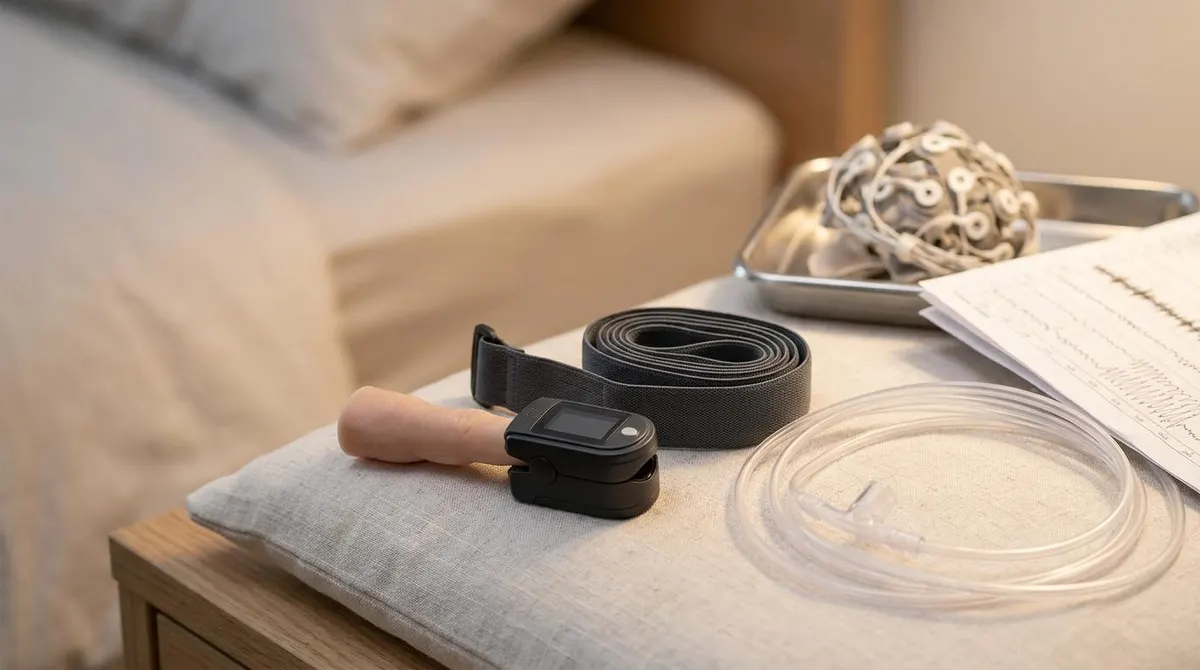
A home sleep apnea test (HSAT) measures the physiological signals most directly related to sleep-disordered breathing. Unlike a full in-lab sleep study, an HSAT focuses on respiratory channels rather than neurological activity.
The core measurements captured by most Type III portable monitors include:
- Airflow through a nasal cannula that detects breathing patterns and reductions in airflow
- Oxygen saturation via a pulse oximeter clipped to the fingertip, tracking blood oxygen levels throughout the night
- Respiratory effort using a chest strap or belt with Respiratory Inductance Plethysmography sensors that detect chest and abdominal movement
- Heart rate recorded continuously through the pulse oximeter using photoplethysmography
Some newer devices, including those using peripheral arterial tonometry, also capture sympathetic nervous system activation as a proxy for arousal events. The Wesper device and similar platforms use an inertial measurement unit combined with additional sensors to track body position and respiratory effort without requiring multiple attachment points.
These measurements feed into the calculation of the Apnea-Hypopnea Index (AHI), which counts the number of complete breathing pauses (apneas) and partial breathing reductions (hypopneas) per hour of recording time. An AHI of 5 to 14 indicates mild sleep apnea, 15 to 29 indicates moderate, and 30 or above indicates severe, according to the American Academy of Sleep Medicine.
What Home Sleep Tests Do Not Measure
Home sleep apnea tests do not include an electroencephalogram, which means they cannot record brain waves or determine sleep stages. Without electroencephalography, the device cannot distinguish between periods of wakefulness and actual sleep. This is an important distinction because in-lab polysomnography calculates AHI based on events per hour of sleep, while most HSATs calculate events per hour of total recording time.
This difference means that if you spend significant time awake during the test, the HSAT may underestimate your true AHI. The device also does not capture leg movements, eye movements, or other data needed to diagnose sleep disorders beyond sleep apnea, such as periodic limb movement disorder or narcolepsy.
DID YOU KNOW: According to the AASM, in-lab polysomnography records over 20 channels of physiological data including electroencephalography, electrocardiography, and electromyography, while most home sleep tests record 4 to 7 channels focused exclusively on respiratory function.
KEY TAKEAWAY: Home sleep apnea tests reliably measure airflow, oxygen saturation, respiratory effort, and heart rate to diagnose obstructive sleep apnea, but they do not capture brain waves or sleep stages, which limits their use for complex sleep disorders.
Understanding what these devices measure is essential to evaluating how accurate they truly are compared to the gold standard of in-lab testing.
How Accurate Are Home Sleep Apnea Tests Compared to In-Lab Polysomnography
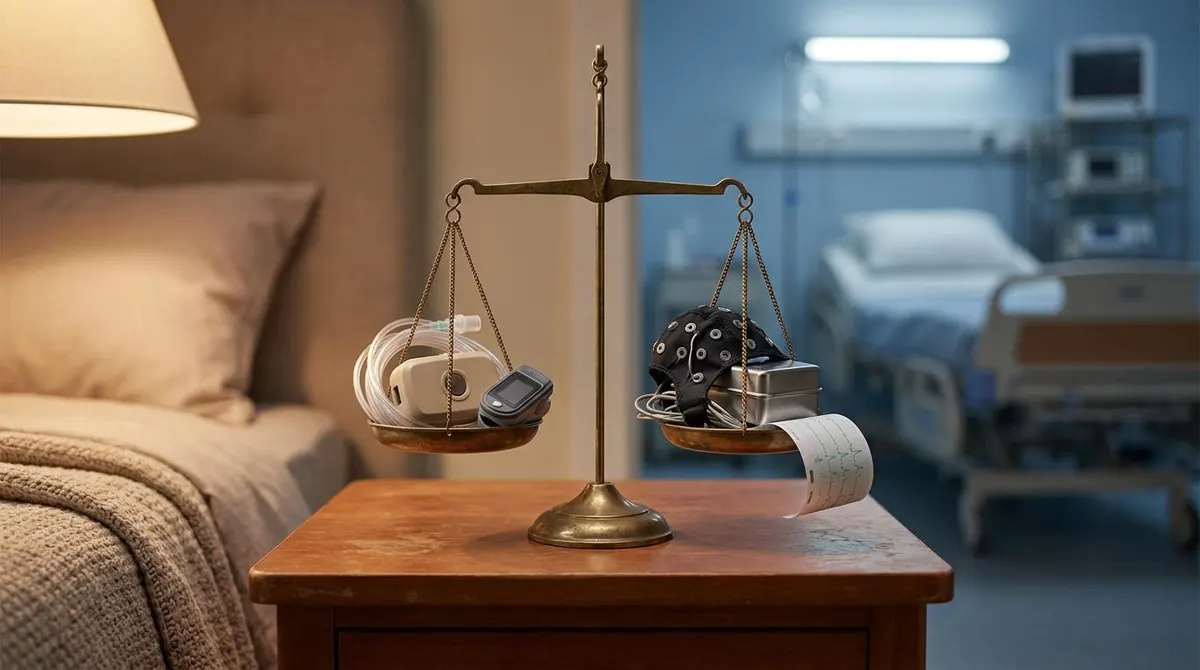
Home sleep apnea tests demonstrate strong diagnostic accuracy for moderate to severe obstructive sleep apnea when compared to in-lab polysomnography. Multiple peer-reviewed studies show sensitivity rates between 79% and 97% for detecting an AHI of 15 or higher.
Polysomnography remains the gold standard for sleep apnea testing because it records brain waves, oxygen saturation, airflow, respiratory effort, heart rate, sleep stages, body position, and limb movements simultaneously in a controlled sleep lab environment. A sleep specialist or trained technician monitors the data in real time, which allows for immediate troubleshooting if a sensor becomes displaced.
The clinical comparison between home sleep tests and polysomnography comes down to the tradeoff between diagnostic comprehensiveness and practical accessibility.
Accuracy
- Home Sleep Apnea Test: Sensitivity of 79% to 97% for moderate to severe OSA; lower sensitivity for mild OSA
- polysomnography: Considered the diagnostic gold standard with the highest accuracy across all severity levels
Channels Recorded
- Home Sleep Apnea Test: 4 to 7 channels including airflow, oxygen saturation, respiratory effort, and heart rate
- Polysomnography: 20 or more channels including electroencephalography, electrocardiography, electromyography, and electrooculography
Setting
- Home Sleep Apnea Test: Your own bed at home
- Polysomnography: Sleep laboratory or hospital
Cost
- Home Sleep Apnea Test: Typically $149 to $500 out of pocket; dumbo.health offers theirs for $149
- Polysomnography: Often $1,000 to $3,000 or more depending on location and insurance
Turnaround for Results
- Home Sleep Apnea Test: Results often available within days; dumbo.health plans include physician interpretation
- Polysomnography: Results may take 1 to 3 weeks depending on the sleep lab
Who It Is Best For
- Home Sleep Apnea Test: Adults with a high probability of moderate to severe obstructive sleep apnea without major comorbidities
- Polysomnography: Patients with suspected central sleep apnea, heart failure, complex sleep disorders, or inconclusive HSAT results
A 2017 systematic review published in the Journal of Clinical Sleep Medicine confirmed that portable monitors are an acceptable alternative to polysomnography for diagnosing OSA in uncomplicated adult patients. The review emphasized that clinical context matters and that a physician should always interpret results alongside patient history.
For most people near you who suspect obstructive sleep apnea based on symptoms like loud snoring, witnessed breathing pauses, and excessive daytime sleepiness, a home sleep test provides a clinically sound starting point. dumbo.health pairs every home sleep test with physician interpretation so that results are reviewed by a sleep medicine professional, not just generated by an algorithm.
KEY TAKEAWAY: Home sleep apnea tests are highly accurate for moderate to severe obstructive sleep apnea and are endorsed by the AASM as an alternative to in-lab polysomnography for appropriate candidates, though they may underestimate mild cases.
Knowing the accuracy profile helps, but understanding how the test process works in practice is equally important for getting reliable results.
How a Home Sleep Apnea Test Works Step by Step
A home sleep apnea test works by recording your breathing, oxygen levels, and heart rate overnight while you sleep in your own bed. The process is straightforward, but following each step correctly is essential for reliable results.
Step-by-Step Process for Completing a Home Sleep Test
1. Complete a clinical screening to confirm you are a candidate for home testing. You can start with the free sleep assessment at dumbo.health to determine whether an HSAT is appropriate for your symptoms and medical history.
2. Receive your home sleep test device by mail or from your provider. The dumbo.health home sleep test costs $149 and ships directly to you with no insurance or prior authorization required.
3. On the night of the test, attach the equipment before bed. This typically involves placing a nasal cannula under your nose, clipping a pulse oximeter to your fingertip, and wrapping a chest strap or belt around your torso to measure respiratory effort.
4. Turn on the recording device and go to sleep following your normal nighttime routines. Sleep on your usual pillow and in your typical sleep position to capture data that reflects your real sleep patterns.
5. In the morning, remove all sensors and power off the device. Some devices upload data automatically via Bluetooth technology, while others require you to return the device for data extraction.
6. A sleep specialist or physician reviews your data and generates an interpretation report. On the dumbo.health Essentials Plan at $59 per month, this includes physician interpretation, a formal report, and updates sent to your referring provider.
7. Based on your results, your physician discusses next steps, which may include starting CPAP therapy, exploring oral appliances, or recommending an in-lab sleep study if results are inconclusive.
After completing these steps, most patients receive their results within days. The entire process from ordering to receiving a clinical interpretation typically takes less than two weeks, compared to the weeks or months that an in-lab sleep study can require when factoring in scheduling delays.
IMPORTANT: Proper sensor placement is critical for reliable results. A displaced nasal cannula or loose chest strap can produce inaccurate data that leads to a false negative result.
KEY TAKEAWAY: Following the correct step-by-step process for setting up and wearing the home sleep test device is essential for generating clinically usable data, and services like dumbo.health simplify this by including physician interpretation with every test.
Completing the test correctly is one factor, but your eligibility for home testing in the first place depends on specific clinical criteria.
Who Qualifies for a Home Sleep Apnea Test
Adults with a high pre-test probability of moderate to severe obstructive sleep apnea and no significant comorbidities are the best candidates for home sleep apnea testing. The AASM published specific clinical guidelines defining who qualifies.
The core eligibility criteria include:
- Age 18 or older
- Symptoms consistent with obstructive sleep apnea such as loud snoring, witnessed apneas, excessive daytime sleepiness, or morning headaches
- No suspected central sleep apnea or Cheyne-Stokes respiration
- No significant cardiovascular comorbidities such as heart failure or atrial fibrillation that could complicate the interpretation of results
- No other suspected sleep disorders such as narcolepsy, periodic limb movement disorder, or hypoventilation syndromes
- No severe pulmonary disease that may affect oxygen levels independently of sleep apnea
Commercial drivers undergoing DOT physicals are a common population referred for sleep apnea testing. Clinicians frequently observe that drivers with a BMI above 35, a neck circumference above 17 inches, or a history of loud snoring are flagged during the medical exam. For these individuals, a home sleep test provides a fast and cost-effective pathway to either confirm or rule out obstructive sleep apnea without the scheduling delays of a sleep laboratory.
Eligibility Checklist Before Ordering a Home Sleep Test
- You are 18 years or older
- You have at least two symptoms of obstructive sleep apnea such as snoring, gasping during sleep, or daytime fatigue
- You have not been diagnosed with heart failure, atrial fibrillation, or other significant cardiovascular comorbidities
- You do not have symptoms suggesting central sleep apnea such as Cheyne-Stokes respiration
- You do not have a known neuromuscular disorder or severe chronic lung disease
- You are not currently using supplemental oxygen or a ventilator
- You have not had an inconclusive prior home sleep test that already warrants in-lab polysomnography
- Complete the free sleep assessment at dumbo.health to confirm your candidacy
If you are unsure whether home testing is right for you, a sleep medicine physician can evaluate your history and symptoms. dumbo.health connects patients with physicians who review eligibility as part of the care pathway, ensuring you are not tested with the wrong modality.
KEY TAKEAWAY: Home sleep apnea tests are appropriate for adults with a high likelihood of uncomplicated obstructive sleep apnea, but patients with heart failure, central sleep apnea, or complex medical histories should undergo in-lab polysomnography instead.
Eligibility is one part of the reliability equation, but understanding how test results are interpreted is where clinical accuracy truly takes shape.
How Home Sleep Test Results Are Interpreted
Home sleep test results are interpreted by calculating the Apnea-Hypopnea Index from the recorded data, which a physician then reviews alongside the patient's clinical history. The AHI is the primary metric used to diagnose and classify sleep apnea severity.
The Apnea-Hypopnea Index counts the total number of apneas and hypopneas detected per hour of recording time. An apnea is a complete cessation of airflow lasting at least 10 seconds. A hypopnea is a partial reduction in airflow, typically 30% or greater, accompanied by a drop in oxygen saturation of at least 3% or an arousal from sleep.
Based on the AHI, severity is classified as follows:
- Normal: fewer than 5 events per hour
- Mild obstructive sleep apnea: 5 to 14 events per hour
- Moderate obstructive sleep apnea: 15 to 29 events per hour
- Severe obstructive sleep apnea: 30 or more events per hour
Beyond the AHI, the physician also evaluates oxygen desaturation patterns. An oxygen desaturation index tracks how frequently blood oxygen saturation drops by 3% or more per hour. Significant oxygen drops during sleep are associated with increased cardiovascular risk. According to the National Heart, Lung, and Blood Institute, untreated sleep apnea with repeated oxygen desaturation is linked to hypertension, stroke, and other cardiovascular conditions.
Why Physician Interpretation Matters
Raw data from a home sleep test device requires clinical interpretation to become a meaningful diagnosis. Automated scoring algorithms can flag events, but only a physician trained in sleep medicine can account for factors like body position, total recording quality, signal artifact from a displaced nasal cannula, and the clinical context of the patient's symptoms and medical history.
Many patients report receiving conflicting information when results are auto-generated without physician review. This is why the AASM recommends that all home sleep apnea test results be interpreted by a board-certified sleep specialist or a physician with training in sleep medicine.
On the dumbo.health Essentials Plan, every test includes a physician interpretation and a formal report. The Premium Plan at $89 per month adds a dedicated sleep coach and priority results turnaround, which many patients prefer when they need results quickly for DOT certification or treatment decisions.
home sleep apnea test results interpreted by a physician provide a clinically valid basis for diagnosing obstructive sleep apnea and initiating treatment. The interpretation is what transforms recorded sensor data into an actionable clinical diagnosis.
KEY TAKEAWAY: The reliability of home sleep test results depends not just on the device, but on physician-level interpretation that accounts for signal quality, clinical context, and oxygen desaturation patterns alongside the AHI score.
Reliable interpretation is critical, but there are real scenarios where home testing may not produce the right answer, and knowing those boundaries protects your health.
Limitations and Risks of Home Sleep Apnea Tests
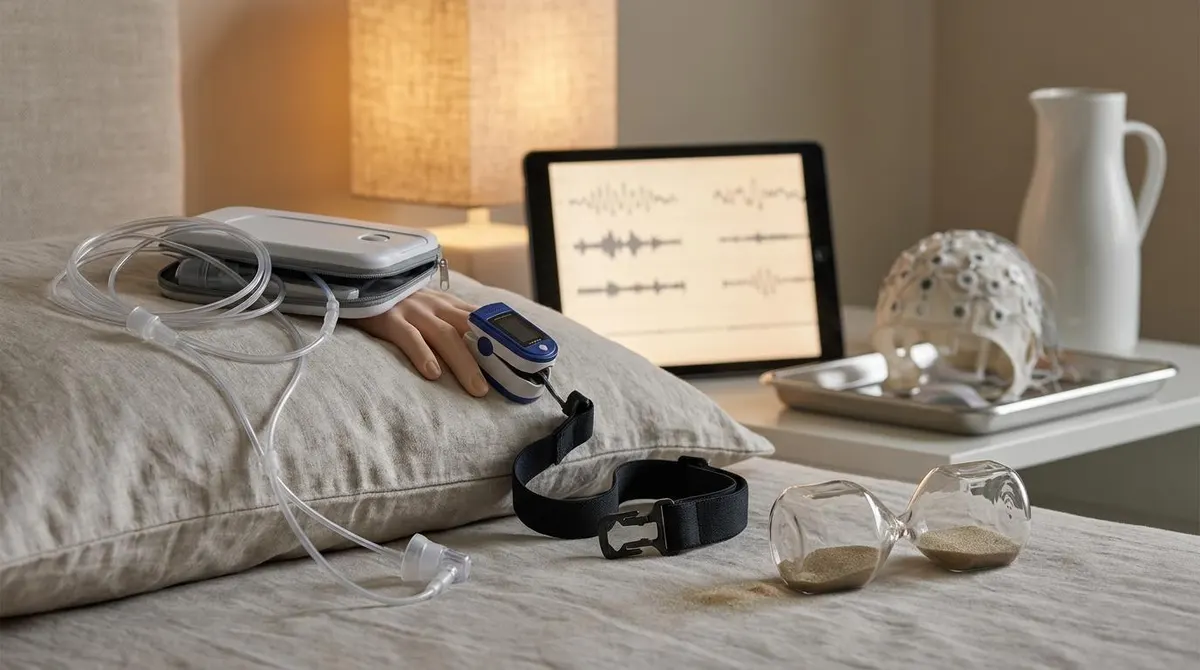
Home sleep apnea tests are not appropriate for every patient and carry specific limitations that can affect diagnostic accuracy. Recognizing these boundaries is essential for making the right testing decision.
Higher False Negative Rate in Mild Sleep Apnea
Because HSATs calculate the AHI based on total recording time rather than total sleep time, the index may be diluted if you spend significant time awake during the test. This is particularly problematic for patients with mild obstructive sleep apnea, where the true AHI may hover near the diagnostic threshold of 5 events per hour. A falsely normal result could delay treatment in someone who actually has the condition. The Sleep Foundation notes that negative HSAT results in symptomatic patients should prompt follow-up with an in-lab sleep study.
Cannot Detect Central Sleep Apnea
Central sleep apnea occurs when the brain fails to send proper signals to the breathing muscles, as opposed to the airway obstruction seen in obstructive sleep apnea. Home sleep tests lack the electroencephalography sensors needed to distinguish central apneas from obstructive apneas reliably. Patients with heart failure, atrial fibrillation, or Cheyne-Stokes respiration are at higher risk for central sleep apnea and should undergo polysomnography in a sleep lab where brain waves and other neurological signals are monitored. The American College of Cardiology and the Heart Failure Society of America have both noted the importance of proper diagnostic workup for sleep-disordered breathing in heart failure patients, where fluid shifts and fluid redistribution during sleep can worsen central events.
Sensor Displacement and Data Loss
Home sleep tests rely on the patient to self-apply the equipment correctly. If the nasal cannula shifts during the night, the chest strap loosens, or the pulse oximeter falls off a finger, the recording may contain gaps or artifact that makes the data uninterpretable. In a sleep laboratory, a technician monitors equipment in real time and can reattach sensors immediately. At home, there is no such safeguard.
Cannot Diagnose Other Sleep Disorders
HSATs are designed to detect sleep-related breathing disorders. They do not diagnose conditions such as narcolepsy, restless legs syndrome, periodic limb movement disorder, REM sleep behavior disorder, or other sleep disturbances that require a full polysomnography with electroencephalogram monitoring. If your primary symptoms include unusual movements during sleep, vivid dream enactment, or excessive sleepiness without clear respiratory symptoms, an HSAT is unlikely to provide the answer.
Limited Usefulness in Certain Populations
Patients with severe chronic obstructive pulmonary disease, neuromuscular diseases, or hypoventilation syndromes may have oxygen level abnormalities unrelated to sleep apnea, complicating HSAT interpretation. Chronic opioid use can also cause complex sleep-disordered breathing patterns that home testing cannot fully characterize.
When a home sleep test result is negative but clinical suspicion remains high, the appropriate next action is referral for in-lab polysomnography. dumbo.health includes physician review with every test, which means a qualified provider evaluates whether the result is consistent with your symptoms or whether further testing is warranted. This clinical oversight helps mitigate the risk of a missed diagnosis from a false negative home test.
TIP: If you complete a home sleep test and your results come back normal but you still feel excessively tired during the day, do not assume you are fine. Discuss in-lab testing with your physician or sleep specialist.
KEY TAKEAWAY: Home sleep apnea tests have real limitations including higher false negative rates for mild OSA, inability to detect central sleep apnea, risk of sensor displacement, and no capacity to diagnose non-respiratory sleep disorders, making physician oversight and follow-up essential.
Understanding these limitations in the abstract is useful, but seeing how they play out in real clinical scenarios makes the information actionable.
Real-World Scenarios Where Home Sleep Testing Makes a Difference
Home sleep apnea tests fit specific clinical situations well, and understanding real-world examples helps illustrate when this testing pathway delivers the most value.
Common Scenarios
A 48-year-old long-haul truck driver with a BMI of 38 is flagged during a DOT physical for suspected obstructive sleep apnea. His medical examiner requires a sleep study before issuing a full 24-month certification. The nearest sleep lab has a 6-week wait. This driver orders a home sleep test from dumbo.health for $149, completes the test at home within a week, and receives physician-interpreted results showing an AHI of 34, confirming severe OSA. He starts CPAP therapy through the dumbo.health Essentials Plan at $59 per month, which includes the equipment and follow-up care needed to demonstrate treatment adherence for DOT recertification. This entire process takes about two weeks instead of two months.
A 55-year-old office manager has experienced years of loud snoring, morning headaches, and difficulty concentrating at work. Her primary care physician suspects obstructive sleep apnea but she does not have insurance that covers an in-lab sleep study without a lengthy prior authorization process. She completes the dumbo.health free sleep assessment, qualifies for home testing, and receives a result showing moderate OSA with an AHI of 22 and significant oxygen drops below 88% during the night. Her physician uses the report to initiate treatment with positive airway pressure therapy.
A 34-year-old man with a BMI of 24 and no snoring history reports persistent daytime fatigue and poor cognitive function. His physician orders a home sleep test, which comes back with an AHI of 3, classified as normal. However, his symptoms persist. His physician appropriately refers him for in-lab polysomnography, which reveals periodic limb movement disorder and poor sleep architecture. This scenario illustrates exactly why a negative HSAT in a symptomatic patient requires follow-up rather than dismissal. The home test was reliable for what it measured, but the condition was outside its diagnostic scope.
A 62-year-old woman with a history of atrial fibrillation and congestive heart failure reports waking up gasping for breath at night. Her cardiologist suspects central sleep apnea with possible Cheyne-Stokes respiration related to cardiac-driven fluid redistribution during sleep. A home sleep test would not be appropriate here because it cannot differentiate central from obstructive events or capture the brain wave data needed for accurate diagnosis. She is referred directly to a sleep laboratory for attended polysomnography, which confirms central sleep apnea requiring specialized treatment beyond standard CPAP.
These examples demonstrate that home sleep apnea tests are highly effective when matched to the right patient, and that the key to reliability is clinical judgment about who should and should not use them.
KEY TAKEAWAY: Home sleep tests work best for adults with a clear clinical picture suggesting uncomplicated obstructive sleep apnea, while patients with atypical symptoms, negative results despite ongoing symptoms, or significant cardiovascular comorbidities need in-lab testing.
With real scenarios clarifying who benefits most, it helps to address the misconceptions that still prevent many people from pursuing testing at all.
Common Myths About Home Sleep Apnea Tests Debunked
MYTH: Home sleep apnea tests are not as accurate as in-lab studies, so they are not worth doing.
FACT: For moderate to severe obstructive sleep apnea, home sleep tests show sensitivity rates of 79% to 97% compared to polysomnography. The AASM endorses HSATs as a valid diagnostic alternative for appropriate candidates. The devices are less comprehensive than polysomnography, but for the specific question of whether obstructive sleep apnea is present, they provide clinically reliable answers in most uncomplicated cases.
MYTH: You need a doctor's referral and insurance approval to get a home sleep test.
FACT: Many providers, including dumbo.health, offer home sleep apnea testing on a cash-pay basis with no insurance required and no prior authorizations. The dumbo.health home sleep test costs $149 as a one-time payment. While a clinical screening is still important to confirm you are an appropriate candidate, the administrative barriers that traditionally delayed testing are no longer necessary for self-pay patients.
MYTH: If your home sleep test comes back normal, you definitely do not have sleep apnea.
FACT: A normal HSAT result does not always rule out sleep apnea, particularly mild cases. Because the AHI calculation is based on recording time rather than actual sleep time, the result can underestimate severity. According to Sleep Education, the patient-education arm of the AASM, a negative home test in a patient with persistent symptoms warrants follow-up with in-lab polysomnography. Clinicians should never rely on a single negative home test to close the diagnostic question in a symptomatic individual.
MYTH: Home sleep tests can diagnose any type of sleep disorder.
FACT: Home sleep tests are designed specifically for detecting sleep-related breathing disorders, primarily obstructive sleep apnea. They cannot diagnose central sleep apnea, narcolepsy, REM sleep behavior disorder, periodic limb movement disorder, or other conditions that require brain wave monitoring through electroencephalography. If your symptoms suggest a non-respiratory sleep condition, polysomnography in a sleep laboratory is the appropriate test.
MYTH: The equipment is too complicated for patients to set up correctly at home.
FACT: Modern home sleep test devices are designed for patient self-application and typically involve three main components: a nasal cannula, a pulse oximeter, and a chest strap or belt. Many patients report that setup takes under 10 minutes. Some devices use Bluetooth technology to verify that sensors are recording properly before you fall asleep. While sensor displacement remains a risk, clear instructions and simplified equipment design have significantly improved the usability of home testing. dumbo.health provides detailed guidance with each device to maximize the likelihood of a successful recording.
KEY TAKEAWAY: Most fears about home sleep test reliability stem from misunderstandings about what the tests are designed to do, and when used for the right patients with proper physician interpretation, they are a clinically validated diagnostic tool.
Clearing up these myths sets the stage for understanding how treatment begins once a diagnosis is confirmed.
What Happens After a Positive Home Sleep Test Result
A positive home sleep test result confirming obstructive sleep apnea leads directly to treatment planning, most commonly with CPAP therapy. The speed at which treatment begins depends on how the testing and care pathway is structured.
CPAP therapy is the first-line treatment for moderate to severe obstructive sleep apnea, according to the American Academy of Sleep Medicine. CPAP delivers continuous positive airway pressure through a mask worn during sleep, which keeps the airway open and prevents the tissue in the airway from collapsing. Research consistently shows that adherent CPAP use reduces the AHI to normal levels, improves oxygen saturation, lowers blood pressure, reduces cardiovascular risk, and improves cognitive function and daytime alertness.
The standard adherence benchmark used by Medicare and most insurance companies requires a minimum of 4 hours of use per night on at least 70% of nights during the first 90 days. Meeting this threshold is particularly important for commercial drivers who need to demonstrate treatment compliance for DOT medical certification.
dumbo.health structures its monthly plans around ongoing CPAP therapy and adherence support. The Essentials Plan at $59 per month includes CPAP equipment, physician oversight, and standard follow-up care. The Premium Plan at $89 per month adds a dedicated sleep coach from a licensed care team and advanced adherence monitoring, which many patients find valuable during the critical first 90 days when establishing consistent use. The Elite Plan at $129 per month includes concierge clinical support, direct physician messaging, and custom reporting for practices managing multiple patients.
All dumbo.health plans operate on a no-contract, cancel-anytime basis with transparent cash-pay pricing. There are no surprise bills, no insurance company negotiations, and no prior authorizations to navigate.
Alternative Treatments Beyond CPAP
For patients who cannot tolerate CPAP, alternative treatment options include:
- Oral appliances that reposition the lower jaw to keep the airway open, typically prescribed by a dentist trained in sleep medicine
- Hypoglossal nerve stimulation, a surgically implanted device that stimulates the tongue nerve to prevent airway collapse during sleep
- Positional therapy for patients whose sleep apnea is significantly worse when sleeping on their back
- Surgical options such as uvulopalatopharyngoplasty, tonsil removal, or turbinate hypertrophy reduction in select cases where specific anatomical findings are present
- Weight management, which can reduce the severity of obstructive sleep apnea in patients where excess weight contributes to airway narrowing
A sleep doctor or sleep medicine physician can help determine which treatment pathway is most appropriate based on the severity of your sleep apnea, your anatomy, and your preferences.
IMPORTANT: Untreated obstructive sleep apnea is associated with a two to threefold increase in the risk of stroke and is independently linked to hypertension, type 2 diabetes, and cardiovascular disease, according to the NIH. Early testing and treatment initiation matter for both immediate quality of life and long-term healthy aging and longevity.
KEY TAKEAWAY: A confirmed diagnosis from a home sleep test should lead to prompt treatment initiation, and dumbo.health provides an integrated care pathway from testing through CPAP therapy and ongoing adherence monitoring with plans starting at $59 per month.
Treatment pathways vary, but the fundamental question for many people still comes back to cost and accessibility, especially when insurance is not covering the process.
Home Sleep Test Cost and Accessibility Without Insurance
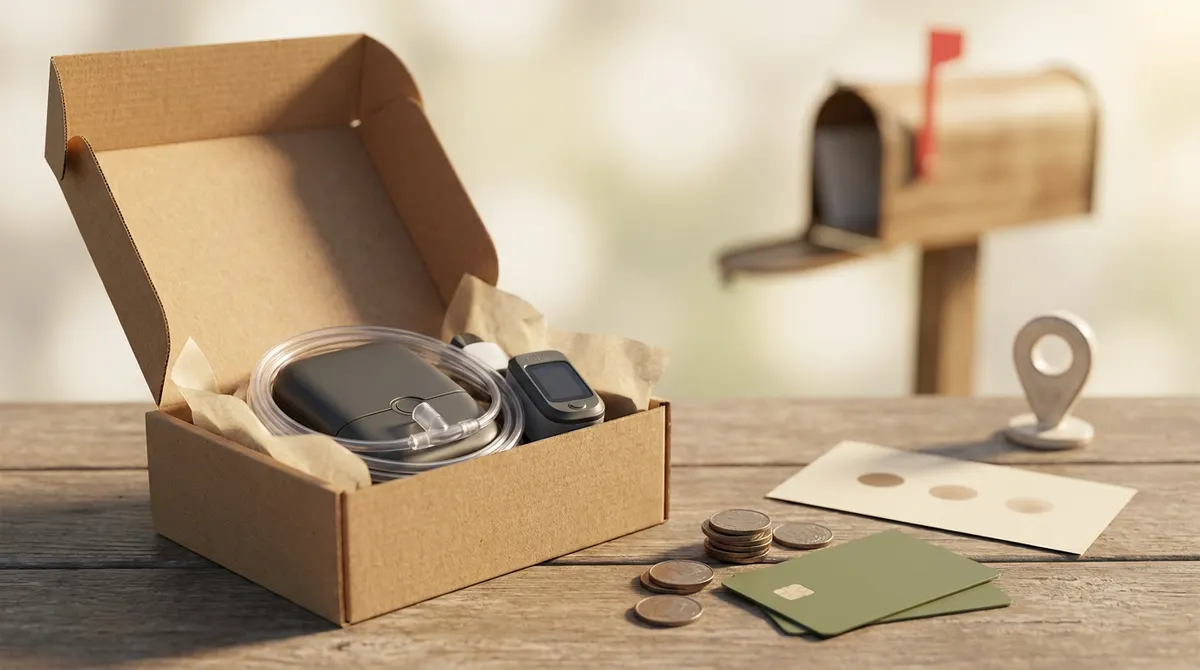
A home sleep apnea test without insurance typically costs between $149 and $500 depending on the provider and what is included. This is significantly less than in-lab polysomnography, which can range from $1,000 to $3,000 or more.
Many people delay sleep apnea testing because they assume insurance is required or that the process involves lengthy prior authorizations. For patients paying out of pocket, cash-pay home testing removes these barriers entirely. dumbo.health was built around this model: the at-home sleep test costs $149 as a one-time purchase, billed separately from the monthly care plans. There are no hidden fees, no insurance filings, and no surprise bills.
The monthly plans cover everything after the test, including physician interpretation, treatment, equipment, and follow-up. Here is how the plans compare:
Monthly Cost
- Essentials Plan: $59 per month, approximately $2 per day
- Premium Plan: $89 per month, approximately $3 per day
- Elite Plan: $129 per month, approximately $4 per day
What Is Included
- Essentials Plan: Physician interpretation and report, CPAP therapy and equipment, standard follow-up care, updates to referring provider
- Premium Plan: Everything in Essentials plus dedicated sleep coach, advanced adherence monitoring, priority results turnaround
- Elite Plan: Everything in Premium plus concierge clinical support, direct physician messaging, custom reporting for practices
Contract Terms
- Essentials Plan: No contract, cancel anytime
- Premium Plan: No contract, cancel anytime
- Elite Plan: No contract, cancel anytime
For commercial drivers in your area who need testing quickly to maintain DOT certification, this pricing model eliminates the scheduling delays and administrative friction that come with traditional insurance-based pathways. Many patients report that the total cost of a home sleep test plus a few months on the Essentials Plan is still less than the out-of-pocket cost of a single in-lab polysomnography session.
DID YOU KNOW: According to the CDC, an estimated 30 million adults in the United States have obstructive sleep apnea, but approximately 80% of moderate to severe cases remain undiagnosed, often because cost and access barriers prevent testing.
KEY TAKEAWAY: Cash-pay home sleep testing through providers like dumbo.health removes the insurance, cost, and scheduling barriers that prevent millions of people from getting diagnosed and treated for obstructive sleep apnea.
Cost transparency matters, but so does understanding the clinical standards that govern whether a home sleep test result is considered valid.
Clinical Standards and Guidelines for Home Sleep Apnea Testing
The AASM clinical practice guidelines published in the Journal of Clinical Sleep Medicine establish the evidence-based framework for when and how home sleep apnea tests should be used. These guidelines are the reference point for sleep medicine providers, insurance companies, and regulatory bodies.
The AASM recommends home sleep apnea testing (HSAT) for:
- Adult patients 18 and older with signs and symptoms that indicate an increased risk of moderate to severe obstructive sleep apnea
- Patients without significant comorbid medical conditions including heart failure, moderate to severe pulmonary disease, or neuromuscular disease
- Patients without suspected central sleep apnea, sleep-related hypoventilation, or other non-respiratory sleep disorders
The guidelines specifically state that HSAT should not be used as a general population screening tool. It is a diagnostic test intended for patients with a clinical pre-test probability that justifies testing. A physician evaluation before ordering the test is an essential part of the clinical standard.
The AASM also requires that Type III portable monitors used for home testing record a minimum of airflow, respiratory effort, and oxygen saturation. Some newer classifications include Type IV monitors that measure fewer channels, but these are generally considered less reliable and are not universally endorsed for standalone diagnosis.
According to the Mayo Clinic, home sleep tests are an effective first-line diagnostic tool for uncomplicated obstructive sleep apnea in adults, provided results are interpreted by a qualified sleep medicine provider.
The FMCSA does not mandate a specific type of sleep study for commercial drivers, but the medical examiner may require evidence of diagnosis and treatment adherence before issuing or renewing a DOT medical certificate. For CDL holders, a physician-interpreted home sleep test result is generally accepted as valid diagnostic documentation when it includes a formal report and AHI scoring.
KEY TAKEAWAY: Clinical guidelines from the AASM establish clear criteria for when home sleep tests are appropriate and require physician interpretation of all results, which is the standard that dumbo.health follows with every test.
With the clinical framework established, the final consideration is how all of this fits together for someone deciding whether to pursue home testing.
Conclusion
Home sleep apnea tests are a clinically validated, physician-endorsed diagnostic tool for obstructive sleep apnea in adults who meet the appropriate criteria. They are not a replacement for polysomnography in every situation, but for the majority of patients with suspected moderate to severe OSA, they provide reliable, actionable results at a fraction of the cost and time of in-lab testing. The key to reliability is pairing the right device with proper physician interpretation and clinical follow-up. If you are experiencing symptoms like loud snoring, daytime fatigue, or witnessed breathing pauses, taking the first step toward diagnosis does not need to be complicated or expensive. dumbo.health offers a complete sleep apnea care solution starting with a $149 home sleep test and monthly plans from $59 with no insurance required and no contracts. Getting tested is the single most important action you can take for your sleep, your health, and your long-term wellbeing.
Frequently Asked Questions About Home Sleep Apnea Test Reliability
What is a home sleep apnea test?
A home sleep apnea test (HSAT) is a portable diagnostic tool used to evaluate whether a person has obstructive sleep apnea while sleeping in their own bed. The device typically measures airflow, oxygen saturation, breathing effort, heart rate, and snoring patterns overnight. A qualified physician reviews the recorded data and generates a report. HSATs are widely used as a first-line evaluation for adults with a moderate-to-high clinical suspicion of obstructive sleep apnea and no significant complicating medical conditions.
Are home sleep apnea tests reliable?
Home sleep apnea tests are considered clinically reliable for diagnosing obstructive sleep apnea in adults who are otherwise healthy and have a moderate-to-high pre-test probability of the condition. The American Academy of Sleep Medicine supports their use in appropriate patients. However, HSATs can underestimate apnea severity because they measure total recording time rather than confirmed sleep time. Accuracy depends on the quality of the device, sensor placement, and physician interpretation. A healthcare professional can help determine whether an at-home test is appropriate for your specific situation.
How does a home sleep apnea test work?
A home sleep test device is worn overnight and records physiological data while you sleep. Most devices measure airflow through a nasal cannula, blood oxygen saturation using a pulse oximeter, respiratory effort using a chest strap or belt, and heart rate. Some advanced devices also use peripheral arterial tonometry or photoplethysmography to assess arousal and autonomic responses. The device stores the data, which a sleep physician then interprets to calculate the apnea-hypopnea index and assess sleep-related breathing patterns. You can learn more about the at-home sleep testing process at dumbo.health.
What does a home sleep test measure?
A home sleep test measures airflow at the nose and mouth, blood oxygen saturation, respiratory effort, heart rate, body position, and snoring intensity. These signals allow a physician to calculate the apnea-hypopnea index, which reflects how many breathing interruptions occur per hour of sleep. Unlike an in-lab polysomnography study, a standard HSAT does not measure brain waves, eye movements, or muscle activity, so it cannot identify sleep stages or diagnose conditions that require full electroencephalography monitoring.
How accurate are home sleep apnea tests compared to in-lab sleep studies?
Home sleep apnea tests show strong accuracy for diagnosing moderate-to-severe obstructive sleep apnea when compared to polysomnography. Research consistently shows that HSATs perform well in patients with a high clinical likelihood of obstructive sleep apnea and no major complicating conditions. However, because HSATs measure total recording time rather than actual sleep time, the apnea-hypopnea index may be slightly underestimated. The American Academy of Sleep Medicine notes that this limitation means some patients with milder or borderline findings may benefit from in-lab confirmation.
What is the difference between a home sleep apnea test and polysomnography?
A home sleep apnea test is a simplified portable monitor that records breathing, oxygen levels, heart rate, airflow, and respiratory effort. Polysomnography, performed in a sleep laboratory, additionally records brain waves via electroencephalogram, eye movements, muscle activity, and sleep stages, making it a more comprehensive study. Polysomnography can diagnose a wider range of sleep disorders, including central sleep apnea, periodic limb movement disorder, narcolepsy, and parasomnias. An HSAT is appropriate for evaluating uncomplicated obstructive sleep apnea, while a sleep lab study is often necessary when the clinical picture is more complex.
Can a home sleep test detect central sleep apnea?
Standard home sleep tests are not designed to reliably detect central sleep apnea. Central sleep apnea occurs when the brain fails to send consistent breathing signals rather than due to a physical airway obstruction, and its accurate identification typically requires full polysomnography with brain wave and respiratory effort analysis. Conditions associated with central sleep apnea, such as heart failure, Cheyne-Stokes respiration, and hypoventilation syndromes, generally require evaluation in a sleep laboratory. A sleep physician can advise whether an in-lab study is more appropriate based on your symptoms and medical history.
Who is a good candidate for home sleep apnea testing?
Adults who have classic symptoms of obstructive sleep apnea, such as loud snoring, witnessed breathing pauses, morning headaches, dry mouth on waking, and daytime sleepiness, and who have no significant complicating conditions are generally good candidates for home sleep testing. The American Academy of Sleep Medicine supports HSAT use in patients with a moderate-to-high clinical probability of obstructive sleep apnea. Home testing is typically less suitable for people with complex medical conditions, suspected non-obstructive sleep disorders, or significant cardiovascular or respiratory disease.
Who should not take a home sleep test?
home sleep testing is generally not recommended for people with suspected central sleep apnea, significant heart failure, severe chronic obstructive pulmonary disease, hypoventilation syndromes, or neuromuscular disorders affecting breathing. It is also less appropriate when the clinical suspicion points to sleep disorders beyond obstructive sleep apnea, such as narcolepsy or parasomnias. People with atrial fibrillation may also yield less reliable oximetry readings. A qualified healthcare professional or sleep specialist should assess whether a home test or a full in-lab sleep study is the right starting point for your evaluation.
When is an in-lab sleep study needed instead of a home test?
An in-lab sleep study, or polysomnography, is recommended when the clinical picture is complex, when a home test result is negative despite strong symptoms, when central or mixed sleep apnea is suspected, or when conditions such as heart failure, hypoventilation, or neuromuscular disease are present. The sleep laboratory setting also allows monitoring of brain waves, sleep stages, and muscle activity, which are not captured by home tests. According to the American Academy of Sleep Medicine, a follow-up in-lab study may also be warranted when a negative home test does not adequately explain a patient's symptoms.
Could sleeping in a lab environment affect sleep study results?
Some patients do find it difficult to sleep in an unfamiliar clinical environment during a polysomnography study, a phenomenon sometimes called the first-night effect. Sleep specialists at institutions such as University Hospitals have noted that when patients have significant difficulty sleeping in the lab, clinicians may consider sleep aids to support adequate data collection. A home sleep test avoids this challenge by allowing the patient to sleep in their own bed, which may more accurately reflect typical sleep patterns. However, home testing captures fewer physiological signals than a supervised in-lab study.
What are the benefits of a home sleep apnea test?
Home sleep apnea tests offer several practical benefits. They can be completed in your own bed without an overnight clinic stay, which reduces cost, eliminates travel, and may produce results that better reflect your typical sleep. They are widely recognised as clinically valid for diagnosing obstructive sleep apnea in appropriate patients. Results are typically available within a few days of returning the device. For patients who may otherwise delay evaluation due to cost or inconvenience, home testing can lower the barrier to getting a diagnosis and starting treatment.
What are the limitations of a home sleep apnea test?
Home sleep tests do not measure brain waves, sleep stages, eye movements, or muscle activity, so they cannot diagnose conditions beyond obstructive sleep apnea. Because they record total time rather than confirmed sleep time, the apnea-hypopnea index may be slightly lower than the true value. Device displacement, poor sensor contact, or patient movement can reduce data quality. A failed or inconclusive recording may require a repeat test or referral for polysomnography. For patients with complex medical histories or atypical symptoms, a sleep lab study typically provides more complete information.
Can home sleep tests accurately measure oxygen levels?
Yes, most home sleep apnea test devices use a pulse oximeter to measure blood oxygen saturation throughout the night. Oxygen drops associated with breathing interruptions are one of the primary signals used to identify apnea events. The pulse oximeter is generally accurate in patients without significant cardiovascular or circulatory conditions. In some patients, such as those with severe obesity, peripheral vascular disease, or atrial fibrillation, oximetry readings may be less reliable. A physician interpreting the results will consider these factors when reviewing the recorded oxygen saturation data.
Does a home sleep test show the apnea-hypopnea index?
Yes, a home sleep test generates data that allows a physician to calculate the apnea-hypopnea index, or AHI, which reflects the number of apnea and hypopnea events per hour. The AHI is the primary metric used to classify sleep apnea severity: mild is typically defined as 5 to 14 events per hour, moderate as 15 to 29, and severe as 30 or more. Because home tests calculate AHI based on total recording time rather than confirmed sleep time, the score may slightly underestimate true severity compared to a polysomnography study.
What sleep disorders can a home sleep test detect?
Home sleep tests are designed primarily to identify obstructive sleep apnea by measuring airflow, respiratory effort, oxygen saturation, and heart rate. They are not capable of diagnosing sleep disorders that require brain wave or muscle activity monitoring, such as narcolepsy, periodic limb movement disorder, REM sleep behaviour disorder, or parasomnias. Sleep-disordered breathing conditions that involve central components, hypoventilation, or Cheyne-Stokes respiration also require in-lab polysomnography for accurate evaluation. If your symptoms suggest a condition beyond obstructive sleep apnea, a sleep specialist can guide the appropriate diagnostic pathway.
How much does a home sleep apnea test cost?
The cost of a home sleep apnea test varies depending on the provider and whether insurance is used. At dumbo.health, the at-home sleep test is available for a one-time cash-pay cost of $149, with no insurance required, no prior authorization, and no surprise bills. This covers the test device and one night of testing. Physician interpretation and a clinical report are covered through a separate monthly plan starting at $59 per month, with no contracts and the option to cancel at any time. Explore the sleep apnea care options at dumbo.health for full details.
Does insurance cover a home sleep apnea test?
Many insurance plans, including Medicare, cover home sleep apnea tests when they are ordered by a physician and meet clinical criteria. Coverage terms, prior authorization requirements, and patient cost-sharing vary by plan. Some patients find that navigating insurance requirements adds delays to the testing process. dumbo.health offers a cash-pay alternative at $149 for the home sleep test, with no insurance required and no prior authorization, which can be a practical option for patients who want to proceed on their own timeline without administrative barriers.
How soon will I get results from a home sleep apnea test?
Results from a home sleep apnea test are typically available within a few days of the device being returned and the data being processed by a physician. The exact turnaround depends on the provider and the level of care selected. At dumbo.health, the Premium plan includes priority results turnaround as part of the service. A physician reviews the recorded data and generates a clinical interpretation report. For time-sensitive situations, such as commercial drivers managing DOT documentation, faster turnaround can be an important consideration.
How many times can I take a home sleep apnea test?
A home sleep test can be repeated if the initial recording yields insufficient data, if sensor displacement occurred during the night, or if the results are inconclusive. In some cases, a physician may also recommend repeat testing after a period of treatment to assess therapeutic response or if symptoms change. There is no strict limit on how many times a patient can take a home sleep test, though repeated inconclusive results may indicate that a full in-lab polysomnography study is a more appropriate next step. A healthcare professional can guide this decision.
What is obstructive sleep apnea?
Obstructive sleep apnea is a common sleep-related breathing disorder in which the upper airway repeatedly collapses or becomes partially blocked during sleep, causing breathing to stop or become shallow. These breathing interruptions, called apneas or hypopneas, can last from a few seconds to over a minute and may occur dozens of times per hour. According to the American Academy of Sleep Medicine, obstructive sleep apnea is associated with daytime sleepiness, reduced cognitive function, high blood pressure, cardiovascular disease, and increased accident risk. Diagnosis typically involves a sleep study to measure the apnea-hypopnea index.
What symptoms suggest I might have sleep apnea?
Common symptoms that may suggest obstructive sleep apnea include loud or frequent snoring, waking during the night, waking with a dry mouth or sore throat, morning headaches, excessive daytime sleepiness, and difficulty concentrating. A bed partner may observe episodes where breathing appears to stop. Not everyone with sleep apnea snores loudly, and some people have few obvious symptoms. If you recognise these signs, a healthcare professional can assess whether sleep apnea testing is appropriate. You can also take a free sleep assessment at dumbo.health as a starting point.
Do commercial drivers need a sleep apnea evaluation?
Commercial drivers, including CDL holders, may be required to undergo sleep apnea evaluation as part of the DOT physical process if a certified medical examiner identifies relevant risk factors. These risk factors can include obesity, a large neck circumference, witnessed apneas, excessive daytime sleepiness, or other clinical indicators. The Federal Motor Carrier Safety Administration does not currently mandate universal sleep apnea testing for all commercial drivers, but individual medical examiners have discretion to require evaluation. A certified medical examiner makes the DOT certification decision, not the testing provider. Learn more in the home sleep apnea test guide for commercial drivers.
How does sleep apnea testing support DOT medical certification for CDL drivers?
If a certified medical examiner identifies sleep apnea risk during a DOT physical, they may require documentation of sleep apnea evaluation and, if applicable, evidence of treatment adherence before issuing or renewing a medical certificate. An at-home sleep test can support this process by providing a clinical diagnosis and physician interpretation report. CPAP adherence monitoring data may also be required. dumbo.health can support testing, physician reporting, and adherence follow-up for commercial drivers, but it is important to understand that DOT certification decisions are made by the certified medical examiner, not by dumbo.health. Visit the DOT sleep apnea test guide for more information.
Can a home sleep test be used for CPAP treatment decisions?
Yes, a physician-interpreted home sleep apnea test that confirms obstructive sleep apnea and establishes the apnea-hypopnea index can support a clinical decision to initiate CPAP therapy. CPAP, or continuous positive airway pressure, is the most commonly recommended treatment for moderate-to-severe obstructive sleep apnea. The sleep test results inform the initial CPAP pressure settings and guide ongoing care. Adherence monitoring, which tracks how consistently the device is used, is typically part of ongoing CPAP management. dumbo.health monthly plans include CPAP therapy and equipment along with adherence follow-up.
What ongoing care is available after a home sleep apnea test?
After completing a home sleep test and receiving a diagnosis, ongoing care typically involves starting CPAP therapy, regular adherence monitoring, physician follow-up, and provider reporting. At dumbo.health, monthly plans cover physician interpretation, CPAP therapy and equipment, and follow-up care starting at $59 per month with no contracts. The Premium plan at $89 per month adds a dedicated sleep coach from a licensed care team and advanced adherence monitoring. The Elite plan at $129 per month includes concierge clinical support, direct physician messaging, and custom reporting. All plans are cancel-anytime with transparent pricing.
Are home sleep tests safe for patients with heart disease?
Home sleep testing is generally considered safe for most patients from a procedural standpoint, as the devices are non-invasive and worn passively overnight. However, for patients with significant cardiovascular conditions such as heart failure, atrial fibrillation, or complex arrhythmias, standard home sleep tests may yield less accurate results and may not capture the full clinical picture. Research published in journals including the Journal of Clinical Sleep Medicine has examined the feasibility of home sleep apnea testing in patients with advanced cardiac conditions. For patients with cardiovascular comorbidities, a sleep physician should assess whether an in-lab study is more appropriate.
Is a prescription required for a home sleep apnea test?
In most cases, a home sleep apnea test requires a physician order or prescription to ensure the results are clinically interpreted and medically actionable. This is also typically required for insurance coverage. At dumbo.health, the process includes physician oversight as part of the care pathway, so patients do not need to arrange a separate referral before getting started. A healthcare professional can help determine whether home sleep testing is appropriate and facilitate the prescription as part of the clinical workflow.
How can I find sleep apnea testing options near me?
Sleep apnea testing options vary by location and may include in-lab sleep centers, hospital-based sleep clinics, and at-home testing services available nationally. For patients who prefer not to travel to a sleep lab or who want to avoid the first-night effect of sleeping in a clinical setting, at-home testing can be arranged with a provider that ships the device directly to your home. dumbo.health offers cash-pay at-home sleep testing with physician interpretation that is accessible regardless of where you are in the United States, removing geographic barriers to evaluation and ongoing care.
Related Home Sleep Apnea Test Topics
- Do At-Home Sleep Apnea Tests Work Clinical Accuracy, Limitations, and What the Evidence Shows
- Are Home Sleep Apnea Tests Accurate What the Evidence Actually Shows
- What Is the Best At-Home Sleep Apnea Test A Clinical Comparison of Devices, Accuracy, and Cost
- Can a Home Sleep Apnea Test Be Wrong Accuracy, False Negatives, and What to Do Next
- What Is a Home Sleep Apnea Test How At-Home Sleep Testing Works, What It Measures, and Who Needs One
- Home Sleep Apnea Test The Complete Guide to At-Home Sleep Apnea Testing
- Sleep Apnea Testing The Complete Guide to Diagnosis, Home Tests, and What Your Results Mean
- How Do You Get a Home Sleep Apnea Test The Complete Guide to At-Home Sleep Testing
- What Does a Home Sleep Apnea Test Consist Of Sensors, Equipment, and What to Expect
- Does a Home Sleep Apnea Test Measure Apneas What the Device Actually Records
- Sleep Test at Home The Complete Guide to Home Sleep Apnea Testing
- Are Sleep Studies Covered by Insurance What You Actually Pay for Sleep Apnea Testing
- Sleep Apnea Test at Home with Insurance What Your Plan Actually Covers and How to Get Tested
- CPAP Test at Home The Complete Guide to Home Sleep Apnea Testing and Treatment
- How to Get a Sleep Apnea Test at Home The Complete Guide to Home Sleep Testing
- Sleep Apnea Test at Home The Complete Guide to Home Sleep Testing for Adults
- Home Sleep Test The Complete Guide to At-Home Sleep Apnea Testing
- Sleep Apnea Test The Complete Guide to Diagnosis, Home Testing, and What Your Results Mean
- Sleep Apnea Checker How to Screen for Sleep Apnea and What Your Results Mean
- How Is a Home Sleep Apnea Test Done A Complete Guide to At-Home Sleep Testing
- How Long Does a Home Sleep Apnea Test Take What to Expect Before, During, and After Testing
- Can You Test for Sleep Apnea at Home A Complete Guide to Home Sleep Testing
- Apnea Monitor The Complete Guide to Breathing Monitors for Sleep Apnea and Infant Care
- At-Home Sleep Apnea Test The Complete Guide to Testing, Results, and Treatment
- How Does a Home Sleep Apnea Test Work A Complete Guide to At-Home Sleep Testing
- Does Insurance Cover a Home Sleep Apnea Test What You Actually Pay
- What Happens After a Home Sleep Apnea Test Results, Diagnosis, and Next Steps
- Home Sleep Test Cost What You Actually Pay With and Without Insurance
- Home Sleep Testing Companies A Complete Guide to At-Home Sleep Apnea Diagnosis
- Sleep Apnea Diagnosis How Sleep Apnea Is Detected, Tested, and Confirmed
- How to Get Tested for Sleep Apnea The Complete Guide to Diagnosis, Sleep Studies, and Treatment
- Sleep Apnea Testing Near Me How to Find the Right Test, Provider, and Path to Diagnosis
- Does Anyone Ever Pass a Sleep Apnea Test What Normal Results Actually Look Like
- Sleep Apnea Test Near Me How to Find Local and At-Home Testing Options
- Home Sleep Apnea Test Near Me How to Get Tested Without a Sleep Lab Visit
- Cost of Sleep Apnea Testing What You Will Actually Pay
- Can My Doctor Prescribe a Home Sleep Apnea Test What You Need to Know
- Disadvantages of Home Sleep Testing What Patients and Providers Need to Know
- How Much Does a Home Sleep Apnea Test Cost Complete Pricing Breakdown for Self-Pay and Insured Patients
- Does Medicare Cover a Home Sleep Apnea Test What Beneficiaries Need to Know
- Can Dentists Prescribe a Home Sleep Apnea Test What You Need to Know
- Sleep Test What It Measures, How It Works, and What Your Results Mean
- Polysomnography at Home How Home Sleep Testing Compares to In-Lab Sleep Studies
- HSAT The Complete Guide to Home Sleep Apnea Testing
- Best At Home Sleep Apnea Test A Clinical Comparison
- Do You Need a Prescription for a Home Sleep Apnea Test
- CPAP Test What It Is, How It Works, and What Your Results Mean
- Sleep Test to CPAP How Sleep Apnea Testing Leads to Treatment
AI summary
Home sleep apnea testing (HSAT) is an at-home diagnostic method used to evaluate obstructive sleep apnea (OSA) using portable monitors. HSAT primarily records respiratory signals rather than brain activity. Core concept: HSAT calculates the Apnea-Hypopnea Index (AHI) from airflow (nasal cannula), oxygen saturation (pulse oximeter), respiratory effort (chest belt with respiratory inductance plethysmography), and heart rate (photoplethysmography). AHI thresholds are 5–14 mild, 15–29 moderate, and 30+ severe. Accuracy: Studies show agreement above 80% versus in-lab polysomnography and sensitivity of 79% to 97% for detecting moderate to severe OSA (AHI ≥ 15). Polysomnography remains the gold standard because it includes electroencephalography, sleep staging, and more channels. Constraints: HSAT can underestimate AHI because it uses total recording time rather than confirmed sleep time. False negatives are more common in mild OSA and when sensors are displaced. Indications: The American Academy of Sleep Medicine endorses HSAT for uncomplicated adults (18+) with high pre-test probability of moderate to severe OSA and without major comorbidities. Not recommended: suspected central sleep apnea, Cheyne-Stokes respiration, heart failure, atrial fibrillation with complicating factors, significant pulmonary or neuromuscular disease, hypoventilation syndromes, or other sleep disorders (e.g., narcolepsy, periodic limb movement disorder). Negative or inconclusive HSAT results in symptomatic patients should be followed by in-lab polysomnography.

Nicolas Nemeth
Co-Founder
Nico is the co-founder of Dumbo Health, a digital sleep clinic that brings the entire obstructive sleep apnea journey home. Patients skip the sleep lab and the long wait to see a specialist. Dumbo Health ships an at home test, connects patients with licensed sleep clinicians by video, and delivers CPAP or a custom oral appliance with ongoing coaching and automatic resupply in one clear subscription.
Keep reading

VA At Home Sleep Apnea Test: The Complete Guide for Veterans

Home Sleep Apnea Test App: What Works, What Doesn't, and How to Get a Real Diagnosis


