Sleep Apnea Test: The Complete Guide to Diagnosis, Home Testing, and What Your Results Mean
A sleep apnea test is a diagnostic study that tracks breathing interruptions, oxygen saturation, heart rate, airflow, and respiratory effort during sleep to confirm obstructive sleep apnea and guide treatment. This guide compares in-lab polysomnography with home sleep apnea tests, including Type I through Type IV study differences, typical costs, and what each test can and cannot diagnose. It explains how to prepare, what to expect during testing, and how home tests are completed from ordering to physician interpretation. You will learn how results are reported using the apnea hypopnea index and oxygen desaturation index, plus other key report metrics. The article also covers when home testing is not appropriate, common testing myths, and next-step treatment options such as CPAP, oral appliances, and lifestyle changes.
Struggling with sleep?
Find out if sleep apnea is the reason.
FDA-cleared. $149 flat. Physician-reviewed results in 48 hours.

Sleep Apnea Test: The Complete Guide to Diagnosis, Home Testing, and What Your Results Mean
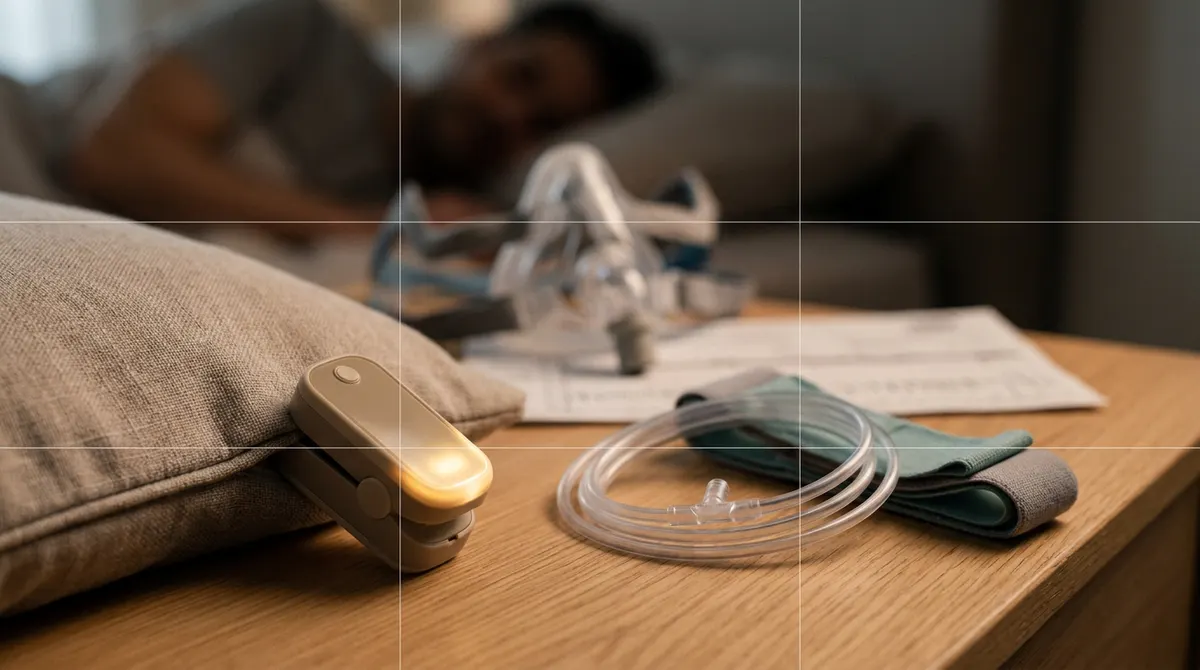
A sleep apnea test is a diagnostic study that measures breathing patterns, oxygen levels, heart rate, and airflow during sleep to determine whether you have sleep apnea. According to the American Academy of Sleep Medicine, an estimated 30 million Americans have obstructive sleep apnea, yet roughly 80% of moderate to severe cases remain undiagnosed. This guide is written for anyone who suspects they may have sleep apnea, commercial drivers facing DOT screening requirements, and patients who want to understand their testing options before committing to a specific path. You will learn exactly how each type of sleep apnea test works, what the results mean, how much testing costs with and without insurance, and when a home sleep test is clinically appropriate versus when a lab study is necessary. By the end, you will know which test fits your situation and how to move from diagnosis to treatment without unnecessary delays.
Quick Answer
A sleep apnea test measures breathing interruptions, blood oxygen levels, heart rate, and airflow while you sleep. The two main types are in-lab polysomnography and home sleep apnea tests. Polysomnography is the most comprehensive option, while home sleep tests offer a convenient, lower-cost alternative for adults with suspected obstructive sleep apnea. Results are scored using the apnea hypopnea index to determine severity. dumbo.health offers a home sleep test for $149 with physician interpretation available through monthly care plans starting at $59 per month.
Key Takeaways
- A sleep apnea test diagnoses obstructive sleep apnea by tracking breathing pauses, oxygen saturation, heart rate, and airflow during sleep.
- Home sleep apnea tests are FDA-approved portable devices that cost significantly less than in-lab polysomnography, which can exceed $1,000 without insurance.
- The apnea hypopnea index is the primary metric used to classify sleep apnea severity: mild (5 to 14 events per hour), moderate (15 to 29), or severe (30 or more).
- Not all patients qualify for home testing. Central sleep apnea, narcolepsy, and certain neurological conditions typically require in-lab polysomnography for accurate diagnosis.
- dumbo.health provides a home sleep test for $149 with no insurance required, plus ongoing CPAP therapy and physician oversight starting at $59 per month with no contracts.
- Untreated obstructive sleep apnea increases the risk of high blood pressure, stroke, heart disease, and depression, making timely testing a clinical priority.
What Is a Sleep Apnea Test and Why Does It Matter
A sleep apnea test is a diagnostic study that records physiological data during sleep to identify whether a patient experiences repeated breathing interruptions. These interruptions, called apneas and hypopneas, reduce blood oxygen levels and fragment sleep architecture, leading to measurable health consequences over time.
Sleep apnea testing matters because the condition affects more than breathing. The National Heart, Lung, and Blood Institute explains that untreated obstructive sleep apnea is associated with increased risk of high blood pressure, heart disease, stroke, type 2 diabetes, and depression. Daytime sleepiness caused by fragmented sleep also raises the risk of motor vehicle accidents. The National Highway Traffic Safety Administration has linked drowsy driving to thousands of crashes each year, making diagnosis especially critical for commercial drivers and anyone who operates heavy machinery.
Sleep apnea test results provide the clinical foundation for treatment decisions. Without a confirmed diagnosis and severity score, a provider cannot prescribe CPAP therapy, oral appliances, or other interventions. Testing also establishes a baseline that clinicians use to monitor treatment effectiveness over time.
Obstructive sleep apnea is the most common form of sleep apnea. It occurs when the muscles in the throat relax excessively during sleep, causing the airways to narrow or close. This leads to repeated drops in blood oxygen level, increased heart rate, and brief arousals that prevent deep, restorative sleep. The brain detects the oxygen drop and triggers a micro-awakening to reopen the airway, a cycle that can repeat dozens or even hundreds of times per night in severe cases.
DID YOU KNOW: According to the American Academy of Sleep Medicine, approximately 80% of moderate to severe obstructive sleep apnea cases remain undiagnosed, which means millions of people are living with treatable symptoms such as chronic snoring, daytime fatigue, and morning headaches without knowing the cause.
KEY TAKEAWAY: A sleep apnea test provides the objective data needed to diagnose obstructive sleep apnea, determine its severity, and guide treatment decisions that reduce serious cardiovascular and neurological health risks.
Understanding what a sleep apnea test measures is the first step. The next question is which type of test is right for your situation.
Types of Sleep Apnea Tests: Polysomnography vs Home Sleep Tests
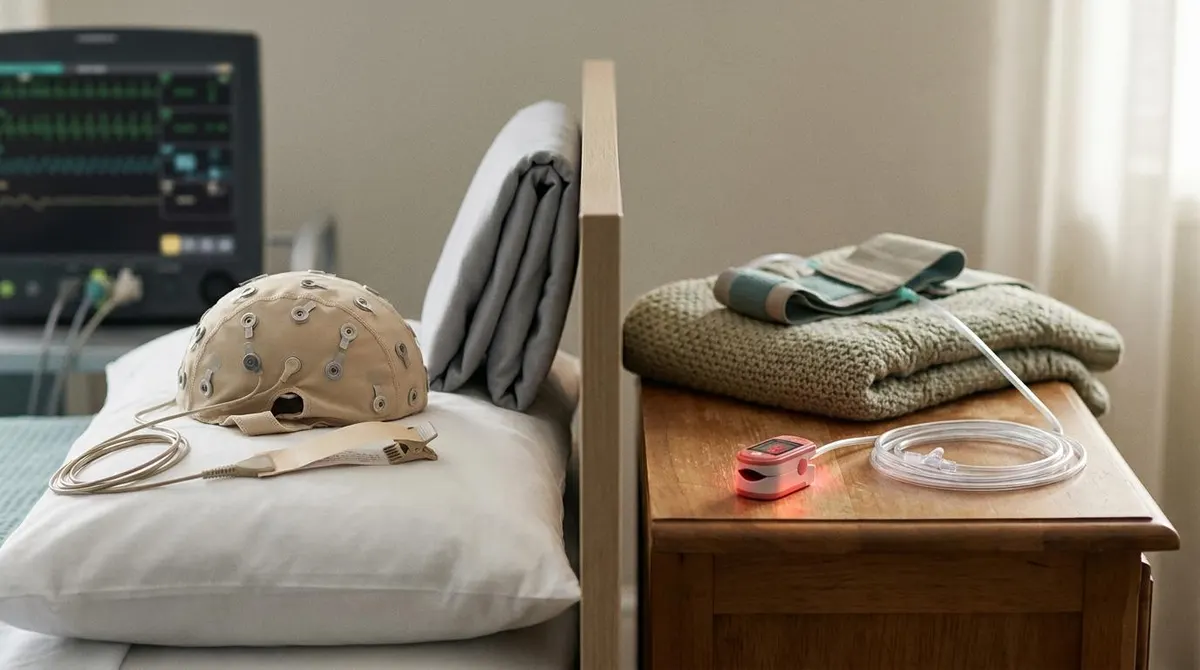
The two primary types of sleep apnea tests are in-lab polysomnography and home sleep apnea tests, and the right choice depends on your symptoms, medical history, and suspected diagnosis.
In-Lab Polysomnography (Type I Sleep Study)
Polysomnography is the gold standard for diagnosing sleep disorders. Conducted overnight in a sleep lab facility, a Type I sleep study records the most comprehensive set of physiological data available. A sleep technologist monitors the patient throughout the night and can adjust equipment or intervene if needed.
polysomnography records brain waves using electroencephalography, eye movements using electrooculography, muscle movement using electromyogram sensors, heart rate via electrocardiography, respiratory effort through respiratory inductance plethysmography, nasal flow, blood oxygen saturation via pulse oximeter, body position, and limb movements. This breadth of data allows polysomnography to diagnose not only obstructive sleep apnea but also central sleep apnea, narcolepsy, restless legs syndrome, circadian rhythm sleep disorders, and other complex sleep disorders.
polysomnography typically costs between $1,000 and $3,000 or more, depending on the facility and location. Insurance may cover part or all of the cost, but prior authorization is often required, and patients may still face a significant deductible.
Home Sleep Apnea Test (Type III and Type IV Studies)
A home sleep apnea test is a portable, FDA-approved diagnostic device that a patient wears during a normal night of sleep in their own bed. Home sleep tests are classified as Type III or Type IV studies depending on the number of channels recorded. A Type III device typically measures airflow, respiratory effort, blood oxygen saturation, and heart rate. A Type IV device records fewer channels, often focusing on oxygen saturation and airflow.
Home sleep apnea tests are designed specifically to diagnose obstructive sleep apnea in adults who have a moderate to high pretest probability of the condition. They do not record brain waves, which means they cannot measure sleep stages, detect narcolepsy, or diagnose central sleep apnea. However, for the majority of patients suspected of having obstructive sleep apnea, a home sleep test provides clinically sufficient data.
The American Academy of Sleep Medicine supports the use of home sleep apnea tests for uncomplicated adult patients when ordered and interpreted by a qualified provider. dumbo.health offers a home sleep apnea test for $149 with no insurance required and no prior authorization, making at-home testing accessible for patients who want a straightforward path to diagnosis.
How Type I, Type II, Type III, and Type IV Tests Compare
Sleep studies are categorized by the number of physiological channels they record and the setting in which they are conducted. Understanding these classifications helps you know exactly what data your test will capture.
Setting
- Type I (polysomnography): Sleep lab facility with a sleep technologist present
- Type II: Unattended portable device, full channel set, used at home or in a facility
- Type III (Home Sleep Test): Patient's home, unattended
- Type IV: Patient's home, unattended
Channels Recorded
- Type I: 7 or more channels including brain waves, eye movements, muscle activity, heart rate, airflow, respiratory effort, and oxygen saturation
- Type II: 7 or more channels similar to Type I but without technologist supervision
- Type III: 4 to 7 channels including airflow, respiratory effort, oxygen saturation, and heart rate
- Type IV: 1 to 3 channels, typically oxygen saturation and airflow
Diagnoses Supported
- Type I: Obstructive sleep apnea, central sleep apnea, narcolepsy, restless legs syndrome, circadian rhythm sleep disorders, and other complex sleep disorders
- Type II: Similar diagnostic range to Type I but with reduced accuracy due to lack of supervision
- Type III: Obstructive sleep apnea in adults with moderate to high pretest probability
- Type IV: Limited screening for obstructive sleep apnea
Typical Cost Range
- Type I: $1,000 to $3,000 or more
- Type II: $500 to $1,500
- Type III: $149 to $500
- Type IV: $100 to $300
For most adults with symptoms consistent with obstructive sleep apnea, a Type III home sleep apnea test provides the best balance of clinical accuracy, convenience, and cost. dumbo.health uses Type III home sleep monitoring devices that record airflow, respiratory effort, oxygen levels, and pulse rate, giving your physician the data needed for a reliable diagnosis.
KEY TAKEAWAY: polysomnography is the most comprehensive sleep apnea test and is required for complex sleep disorders, while home sleep apnea tests offer a clinically validated, lower-cost alternative for diagnosing obstructive sleep apnea in most adults.
Knowing the types of tests available is essential, but understanding what each test actually measures helps you interpret your results with confidence.
What a Sleep Apnea Test Measures: Sensors, Data, and Physiological Markers
A sleep apnea test measures specific physiological markers that reveal whether breathing is interrupted during sleep and how those interruptions affect the body.
Oxygen Saturation and Blood Oxygen Level
A pulse oximeter attached to the finger measures oxygen saturation throughout the night. Normal blood oxygen levels during sleep generally stay above 90%. Repeated oxygen dips below this threshold indicate that the airways are partially or fully blocked, preventing adequate oxygen from reaching the lungs. The oxygen desaturation index, which counts the number of times per hour that oxygen saturation drops by 3% or more, is a key metric in sleep apnea diagnosis.
Airflow and Nasal Flow
A nasal cannula or thermistor sensor placed near the nose and mouth measures airflow. This sensor detects apneas, which are complete cessation of airflow for 10 seconds or longer, and hypopneas, which are partial reductions in airflow accompanied by an oxygen drop or arousal. Nasal flow measurement is the foundation of the apnea hypopnea index calculation.
Respiratory Effort
A belt worn around the chest or abdomen detects respiratory effort using respiratory inductance plethysmography. This measurement distinguishes obstructive events, where the patient is trying to breathe but the airway is blocked, from central events, where the brain temporarily stops sending the signal to breathe. In a home sleep apnea test, the respiratory effort belt helps confirm that apneas are obstructive in nature.
Heart Rate and Pulse Rate
Heart rate is tracked throughout the night, typically via the pulse oximeter sensor or a dedicated heart rate monitor. Heart rate changes in response to apnea events, often spiking during arousals and slowing during breathing pauses. Consistent heart rate elevation during sleep can indicate the cardiovascular strain caused by repeated oxygen drops.
Brain Waves and Brain Activity
In-lab polysomnography records brain activity using electroencephalography. Brain wave patterns allow the sleep technologist and interpreting physician to determine sleep stages, measure sleep efficiency, and identify arousals. Sleep efficiency, which is the percentage of time in bed that is actually spent asleep, is a valuable metric for understanding how disrupted a patient's sleep truly is. Home sleep tests do not measure brain waves, which is why they cannot assess sleep stages or diagnose conditions such as narcolepsy.
Additional Sensors in Lab Studies
Polysomnography also records muscle movement via electromyogram sensors placed on the chin and legs, eye movements to identify REM sleep, and body position. Some advanced home sleep monitoring devices use peripheral arterial tonometry or photoplethysmography to gather additional cardiovascular data without the full sensor array of a lab study. Devices like the NightOwl Home Sleep Test use photoplethysmography via a finger piece to record oxygen saturation, pulse rate, and movement patterns.
A sleep apnea test captures patient data that a physician uses to calculate severity scores, particularly the apnea hypopnea index. This objective data is what separates clinical diagnosis from symptom-based suspicion.
KEY TAKEAWAY: Sleep apnea tests measure oxygen saturation, airflow, respiratory effort, heart rate, and in lab settings brain activity and muscle movement to objectively quantify breathing interruptions during sleep.
Once you understand what the test measures, the next step is knowing how to prepare for testing so your results are as accurate as possible.
How to Prepare for a Sleep Apnea Test
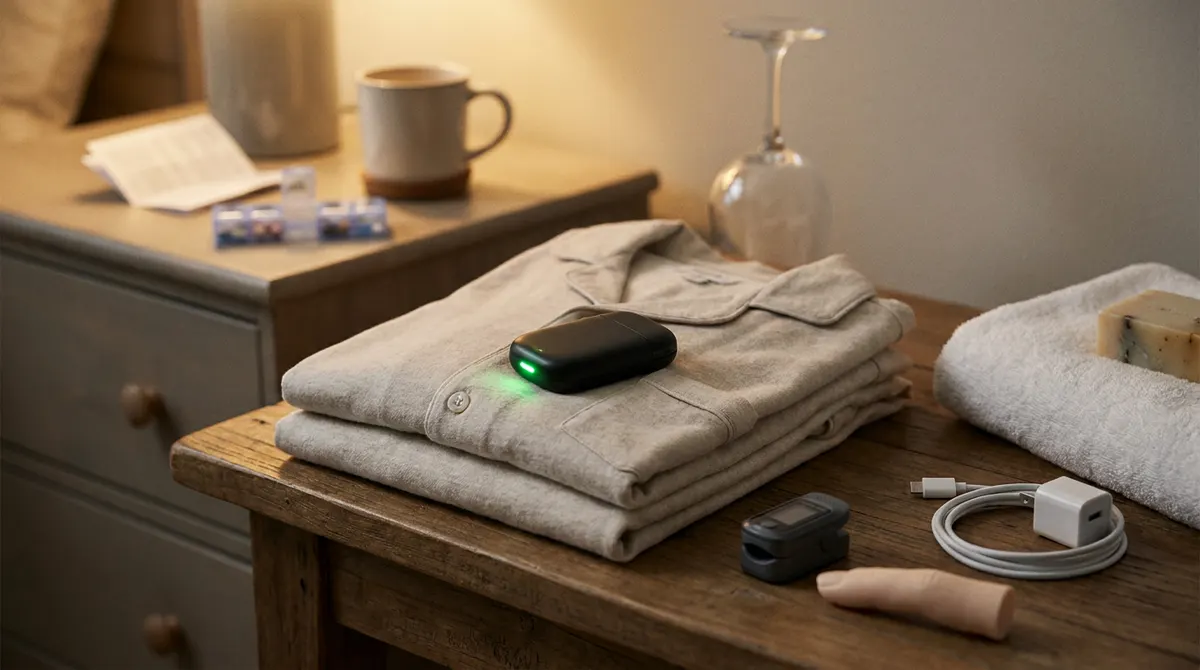
Proper preparation improves the accuracy of your sleep apnea test results, whether you are testing at home or in a sleep lab.
Preparation Checklist Before Your Sleep Study
- Confirm your test date and time with your provider or testing service
- Avoid caffeine after noon on the day of your test
- Avoid alcohol on the day of your test, as it can alter breathing patterns
- Skip napping on the test day so you are naturally sleepy at bedtime
- Shower before applying sensors, but do not use lotions, oils, or heavy moisturizers on your skin, especially on your face, chest, and fingers
- Remove nail polish from at least one finger to ensure the pulse oximeter reads accurately
- Wear comfortable, loose-fitting sleepwear
- Bring your regular medications and a list of all current prescriptions to an in-lab study
- Charge the sleep study device fully if using a home sleep test
- Review the device instructions before your test night so you are comfortable applying the sensor, belt, and nasal cannula
- Complete the free sleep assessment at dumbo.health if you are unsure whether you need testing
Following these steps reduces the chance of a failed test night, which would require retesting and delay your diagnosis.
What to Expect During an In-Lab Sleep Study
In a sleep lab facility, a sleep technologist will attach sensors to your scalp, face, chest, abdomen, and legs. The process takes about 30 to 45 minutes. You will then sleep in a private room while the equipment records data throughout the night. The technologist monitors the recording from an adjacent control room and can communicate with you through an intercom if adjustments are needed.
Most patients find the experience unfamiliar but manageable. Clinicians frequently observe that patients sleep more than they expect, even with the sensors attached. The sleep lab environment is designed to be quiet and dark to replicate normal sleeping conditions as closely as possible.
What to Expect During a Home Sleep Apnea Test
A home sleep test involves wearing a small recording device with a limited number of sensors. You typically apply the device yourself before bed following provided instructions. The sensors commonly include a nasal cannula for airflow, a finger piece with a pulse oximeter for oxygen saturation and pulse rate, and a belt around the chest for respiratory effort.
You sleep in your own bed, which many patients report as more comfortable and representative of a typical night. In the morning, you remove the device and return it or ship it back to the provider. dumbo.health ships the at-home testing kit directly to your home, and you return it after one night of testing. Results are then reviewed by a physician as part of the care plan.
IMPORTANT: If your home sleep test results are inconclusive or negative but your symptoms strongly suggest sleep apnea, your doctor may recommend an in-lab polysomnography to get a more detailed assessment. A negative home sleep test does not definitively rule out sleep apnea.
KEY TAKEAWAY: Preparation for a sleep apnea test involves avoiding caffeine and alcohol, ensuring clean skin for sensor contact, and familiarizing yourself with the equipment before your test night to maximize data quality.
With preparation covered, the next logical step is understanding how to actually complete a home sleep test from order to results.
How to Complete a Home Sleep Apnea Test: Step by Step
A home sleep apnea test follows a straightforward process from ordering the device to receiving your results and starting treatment.
Step-by-Step Process
1. Get evaluated for sleep apnea risk. Your doctor, a sleep specialist, or an online screening tool can determine whether your symptoms warrant testing. dumbo.health offers a free sleep assessment that helps identify whether home sleep testing is appropriate for your situation.
2. Order your home sleep test. You can order through your health care provider, a sleep clinic, or directly through a telehealth-based service. Through dumbo.health, the home sleep test costs $149 with no insurance required and no prior authorization.
3. Receive and set up the device. The at-home testing kit arrives with detailed instructions. Before bed on your test night, attach the nasal cannula, place the pulse oximeter on your finger, and position the chest belt according to the instructions. Most devices take fewer than 10 minutes to set up.
4. Sleep with the device for one full night. Go to bed at your normal time. The recording device will capture airflow, oxygen saturation, pulse rate, and respiratory effort throughout the night. Try to sleep for at least 6 hours to ensure sufficient data.
5. Remove the device in the morning and return it. Follow the return instructions included with your kit. dumbo.health provides prepaid return shipping with every test order.
6. Physician interpretation and results. A sleep medicine physician reviews your recorded sleep data and generates a diagnostic report. With dumbo.health's Essentials Plan at $59 per month, physician interpretation is included along with CPAP therapy and equipment if obstructive sleep apnea is diagnosed.
7. Begin treatment if diagnosed. Based on your apnea hypopnea index and overall results, your provider will recommend a treatment pathway. The most common treatment for moderate to severe obstructive sleep apnea is CPAP or positive airway pressure therapy.
After completing these steps, most patients have a confirmed diagnosis and a treatment plan within days rather than the weeks or months that traditional referral pathways often require.
KEY TAKEAWAY: Completing a home sleep apnea test involves ordering the device, wearing it for one night, returning it, and receiving physician-interpreted results that guide your treatment plan.
Getting results quickly matters, but understanding what those results actually mean is what empowers you to take the right next step.
Understanding Your Sleep Apnea Test Results
Sleep apnea test results are primarily reported using the apnea hypopnea index, which counts the average number of apnea and hypopnea events per hour of sleep (or per hour of recording time in home tests).
Apnea Hypopnea Index Severity Scale
The apnea hypopnea index is the standard metric used to classify the severity of obstructive sleep apnea. The American Academy of Sleep Medicine defines the thresholds as follows:
- Normal: fewer than 5 events per hour
- Mild obstructive sleep apnea: 5 to 14 events per hour
- Moderate obstructive sleep apnea: 15 to 29 events per hour
- Severe obstructive sleep apnea: 30 or more events per hour
A patient diagnosed with moderate or severe obstructive sleep apnea is typically prescribed positive airway pressure therapy. Mild cases may be managed with lifestyle changes, oral appliances, or positional therapy depending on the clinical picture.
Oxygen Desaturation Index
The oxygen desaturation index measures how many times per hour blood oxygen saturation drops by a defined percentage, usually 3% or 4%. A high oxygen desaturation index indicates frequent and potentially significant drops in oxygen during sleep. Combined with the apnea hypopnea index, this metric helps the interpreting physician understand the physiological impact of breathing interruptions.
Other Metrics in Your Report
Your results may also include total recording time, average and minimum oxygen saturation, average and peak heart rate, time spent below 90% oxygen saturation, and respiratory event duration. In polysomnography reports, you will also see sleep efficiency, sleep stage distribution, and periodic limb movement data.
The interpretation of these results requires a qualified physician. Raw data alone does not tell the full story. Context matters. A patient with an apnea hypopnea index of 12 and an oxygen saturation that frequently drops below 85% may need more aggressive treatment than the "mild" classification alone would suggest.
Through dumbo.health's care plans, physician interpretation is included with every plan tier. The Essentials Plan at $59 per month covers physician review and a diagnostic report, while the Premium Plan at $89 per month adds advanced adherence monitoring and a dedicated sleep coach for ongoing support.
KEY TAKEAWAY: The apnea hypopnea index is the primary score used to classify sleep apnea severity, but a complete clinical picture also includes the oxygen desaturation index, minimum oxygen saturation, and other physiological markers that guide treatment decisions.
Results point toward treatment. Knowing what treatment options exist helps you plan your next steps with confidence.
Treatment Options After a Sleep Apnea Diagnosis
CPAP therapy is the most widely prescribed and evidence-supported treatment for moderate to severe obstructive sleep apnea, but it is not the only option.
CPAP and Positive Airway Pressure Therapy
A CPAP machine delivers a continuous stream of pressurized air through a mask worn during sleep. This air pressure keeps the airways open, preventing the collapses that cause apnea events. According to the National Heart, Lung, and Blood Institute, CPAP therapy is effective at reducing apnea events, improving oxygen levels, and restoring normal sleep architecture when used consistently.
CPAP adherence is a well-documented challenge. The Centers for Medicare and Medicaid Services defines adherence as using the device for at least 4 hours per night on at least 70% of nights during a consecutive 30-day period. Many patients struggle to reach this threshold without support.
APAP (auto-adjusting positive airway pressure) and BiPAP (bilevel positive airway pressure) are variations that adjust pressure delivery based on real-time breathing patterns. BiPAP is often prescribed when patients cannot tolerate standard CPAP or when higher exhale pressures are needed.
dumbo.health includes CPAP therapy and equipment in all monthly care plans. The Essentials Plan at $59 per month covers CPAP equipment and standard follow-up care. The Premium Plan at $89 per month adds a dedicated sleep coach and advanced adherence monitoring, which helps patients build consistent usage habits. Modern CPAP devices from manufacturers like Resmed include features such as the myAir companion app and cloud-based data tracking through AirView to help patients and providers monitor treatment progress.
Oral Appliances and Mandibular Advancement Devices
For patients with mild to moderate obstructive sleep apnea who cannot tolerate CPAP, oral appliances offer an alternative. Mandibular advancement devices reposition the lower jaw forward during sleep to keep the airway open. These devices are custom-fitted by a dentist trained in sleep medicine. They are less effective than CPAP for severe obstructive sleep apnea but can significantly reduce the apnea hypopnea index in appropriate candidates.
Surgical and Implant Options
Inspire is an FDA-approved implantable device that stimulates the hypoglossal nerve to keep the airway open during sleep. It is designed for patients with moderate to severe obstructive sleep apnea who have not responded to or cannot tolerate CPAP. Surgical options such as uvulopalatopharyngoplasty or maxillomandibular advancement are considered when other treatments fail and anatomical factors contribute to airway obstruction.
Lifestyle Changes and Positional Therapy
Lifestyle changes can reduce the severity of obstructive sleep apnea, particularly in patients with excess body weight. The Sleep Foundation notes that even a 10% reduction in body weight can meaningfully improve the apnea hypopnea index. Sleeping on your side instead of your back can also reduce obstructive events in patients with positional sleep apnea. Avoiding alcohol before bed, maintaining a consistent sleep schedule, and treating nasal congestion are additional actions that support better breathing during sleep.
TIP: If you have been diagnosed with mild obstructive sleep apnea, ask your doctor whether a combination of lifestyle changes and positional therapy might be sufficient before committing to CPAP, or whether CPAP should be started immediately based on your symptoms and oxygen desaturation patterns.
KEY TAKEAWAY: CPAP therapy is the first-line treatment for moderate to severe obstructive sleep apnea, but oral appliances, surgical options, lifestyle changes, and positional therapy may be appropriate depending on severity and individual tolerance.
Treatment decisions depend on accurate diagnosis, but cost and access barriers are often the real obstacles standing between a patient and timely care.
Sleep Apnea Test Cost: What You Will Actually Pay
The cost of a sleep apnea test varies widely depending on the type of test, the facility, your insurance status, and your geographic location.
In-lab polysomnography typically costs between $1,000 and $3,000 without insurance. With medical insurance, patients may still pay several hundred dollars after meeting their deductible. Medicare Part B covers sleep studies when they are deemed medically necessary, but the patient is responsible for the Medicare-approved amount after the deductible is met, plus any additional costs if the provider does not accept assignment.
Home sleep apnea tests generally cost between $150 and $500 through traditional providers. Insurance may cover home sleep tests, but prior authorization requirements, referral chains, and billing and pricing complexity can delay testing by weeks.
dumbo.health eliminates these barriers with transparent, cash-pay pricing. The home sleep test costs $149 as a one-time purchase with no insurance required, no prior authorizations, and no surprise bills. This is a single upfront cost that covers the at-home testing device and one night of recording.
After testing, ongoing care is covered through monthly plans:
Essentials Plan
- $59 per month (approximately $2 per day)
- Includes physician interpretation and report, CPAP therapy and equipment, standard follow-up care, and updates sent to referring provider
- No contracts, cancel anytime
Premium Plan (Most Popular)
- $89 per month (approximately $3 per day)
- Everything in Essentials plus a dedicated sleep coach, advanced adherence monitoring, and priority results turnaround
- No contracts, cancel anytime
Elite Plan
- $129 per month (approximately $4 per day)
- Everything in Premium plus concierge clinical support, direct physician messaging, and custom reporting for your practice
- No contracts, cancel anytime
For patients paying out of pocket, dumbo.health's pricing model removes the unpredictability of insurance billing. There are no hidden fees, no network restrictions, and no multi-week waits for authorization.
DID YOU KNOW: According to a study published in the Journal of Clinical Sleep Medicine, the average time from initial referral to diagnosis through traditional sleep medicine pathways can exceed several weeks, during which patients with undiagnosed obstructive sleep apnea continue to face cardiovascular and cognitive risks.
KEY TAKEAWAY: In-lab polysomnography can cost $1,000 to $3,000 or more, while dumbo.health offers a home sleep test for $149 and monthly care plans starting at $59 with no insurance, no contracts, and no surprise bills.
Cost is one barrier to testing. Access, convenience, and clinical eligibility are others that deserve honest discussion.
Limitations and Risks: When a Home Sleep Test May Not Be the Right Choice
Home sleep apnea tests are a reliable diagnostic tool for most adults with suspected obstructive sleep apnea, but they are not appropriate for every patient or every clinical scenario.
Limitation 1: Cannot Diagnose Central Sleep Apnea or Complex Sleep Disorders
Home sleep tests do not record brain waves. Without electroencephalography data, the test cannot distinguish between obstructive and central sleep apnea. Central sleep apnea occurs when the brain fails to send proper signals to the muscles that control breathing, and it requires polysomnography for diagnosis. Similarly, conditions such as narcolepsy, restless legs syndrome, and circadian rhythm sleep disorders require the comprehensive data that only a Type I lab study can provide.
If your doctor suspects a neurological condition or a non-obstructive sleep disorder, in-lab polysomnography is the appropriate test. dumbo.health's care team can help determine whether a home test is suitable based on your symptoms, or refer you to a sleep specialist in your area if a lab study is needed.
Limitation 2: Risk of Inconclusive or Failed Test Nights
Home sleep tests depend on the patient correctly applying sensors and sleeping for a sufficient duration. If the nasal cannula shifts during the night, the pulse oximeter loses contact, or the patient sleeps fewer than 4 hours, the data may be insufficient for interpretation. The American Academy of Sleep Medicine recommends that providers have a protocol for retesting when home sleep test data is inadequate.
Many patients report that sleeping with unfamiliar equipment is initially uncomfortable. A failed test night does not mean you do not have sleep apnea. It means the data was not adequate to draw a conclusion, and a retest or in-lab study should be considered.
Limitation 3: May Underestimate Severity in Some Patients
Because home sleep tests calculate the apnea hypopnea index based on total recording time rather than total sleep time, they can underestimate the true severity of obstructive sleep apnea. If you spent 8 hours in bed but only slept 5 of those hours, the events are divided by 8 rather than 5, producing a lower index. Patients with significant insomnia or fragmented sleep may receive a result that understates their condition.
Limitation 4: Not Suitable for Certain Comorbidities
Patients with severe cardiopulmonary disease, chronic opioid use, or suspected hypoventilation syndromes may need the physiological monitoring that only polysomnography provides. Your health care provider should evaluate your full medical history before ordering a home test.
Limitation 5: Single-Night Snapshot
A home sleep test captures data from one night. Night-to-night variability in sleep position, alcohol intake, and other factors can influence results. If your symptoms are strongly suggestive of obstructive sleep apnea but your single-night result is borderline or normal, a repeat test or lab-based study may provide a more accurate picture.
Understanding these limitations is not a reason to avoid testing. It is a reason to test with a provider who can guide you through the right pathway. dumbo.health's physician team reviews every result and can recommend further evaluation if a home sleep test is inconclusive.
KEY TAKEAWAY: Home sleep tests are clinically validated for diagnosing obstructive sleep apnea in most adults, but they cannot detect central sleep apnea, may underestimate severity in some cases, and are not appropriate for patients with complex sleep disorders or certain comorbidities.
Limitations are clearer with real-world context. The following scenarios illustrate how different patients navigate the testing process.
Real-World Scenarios: Who Gets Tested and What Happens
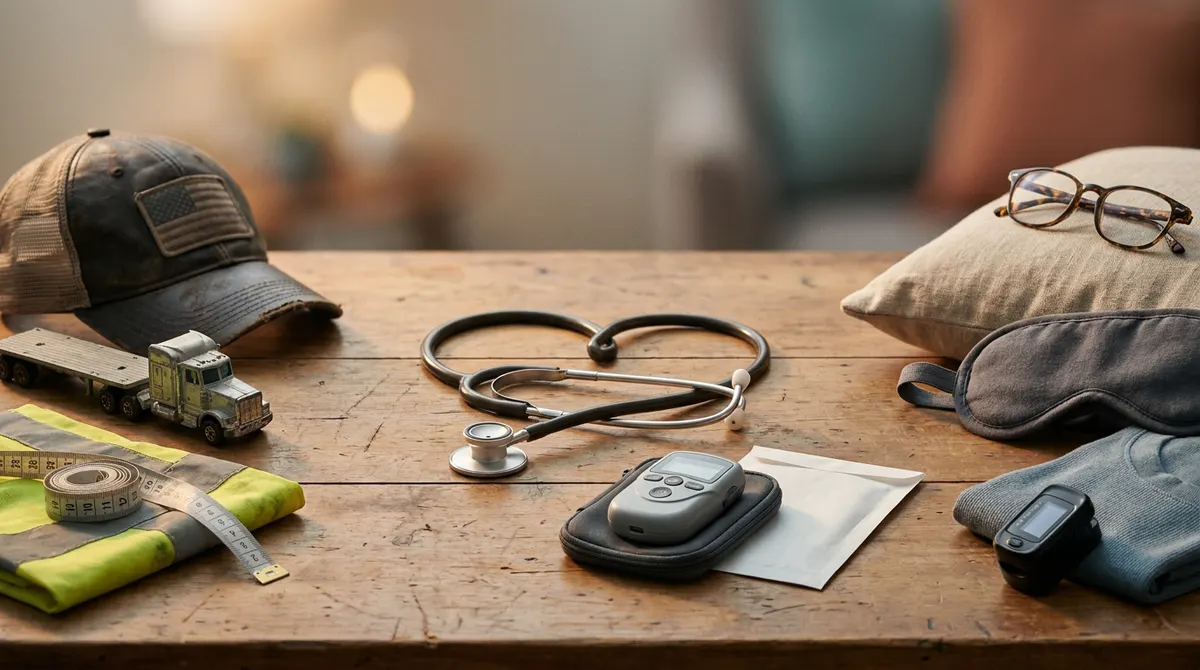
sleep apnea testing affects a wide range of people in different life and clinical situations. These realistic examples show how the diagnostic pathway works in practice.
Scenario 1: A 48-Year-Old Commercial Truck Driver Flagged During a DOT Physical
Marcus, a 48-year-old long-haul owner-operator with a BMI of 37, is flagged for sleep apnea screening during his DOT physical. His examiner notes a neck circumference above 17 inches and reports of loud snoring from his co-driver. Marcus needs a diagnosis quickly to maintain his CDL certification. He does not have employer-provided health insurance.
Marcus orders a home sleep test through dumbo.health for $149. The at-home testing kit arrives within days. His test shows an apnea hypopnea index of 28, indicating moderate obstructive sleep apnea with oxygen dips below 85%. He enrolls in the Premium Plan at $89 per month, which includes CPAP therapy, equipment, a dedicated sleep coach, and advanced adherence monitoring. His sleep apnea test results and treatment documentation are sent to his referring provider and DOT examiner, allowing him to continue driving with a shorter certification period and regular follow-up.
Scenario 2: A 55-Year-Old Woman With Daytime Fatigue and Depression
Linda, a 55-year-old office manager, has been experiencing worsening daytime fatigue, difficulty concentrating, and symptoms of depression. Her primary care doctor initially attributes these symptoms to stress and prescribes an antidepressant. After six months without improvement, a colleague suggests she ask about sleep apnea.
Linda's doctor orders a home sleep apnea test. Her results reveal mild obstructive sleep apnea with an apnea hypopnea index of 9 and an oxygen desaturation index of 7. Her provider recommends a combination of positional therapy, sleeping on her side, weight management, and a follow-up in three months. If her symptoms persist, she may trial CPAP or an oral appliance. Linda's case illustrates how sleep apnea can present as depression and fatigue rather than obvious snoring, a pattern that sleep experts note is particularly common in women.
Scenario 3: A 34-Year-Old Man With Loud Snoring and a Concerned Partner
Raj, a 34-year-old software engineer, does not feel excessively tired during the day, but his partner reports extreme snoring with audible breathing pauses multiple times per night. Raj assumes snoring is harmless and hesitates to see a doctor. After reading about the cardiovascular risks of untreated sleep apnea, he completes the free sleep assessment on the dumbo.health website, which flags him as a candidate for home testing.
His home sleep test reveals severe obstructive sleep apnea with an apnea hypopnea index of 42. His minimum oxygen saturation during the test dropped to 78%. He is immediately started on CPAP therapy through dumbo.health's Essentials Plan at $59 per month. Within two weeks of consistent CPAP use, his partner reports that the snoring has stopped, and Raj notices improved concentration and energy levels he did not realize he was missing.
These scenarios demonstrate that sleep apnea affects people across ages, body types, and symptom presentations. Testing is the only way to confirm the diagnosis and determine severity.
KEY TAKEAWAY: Sleep apnea testing applies to commercial drivers needing DOT compliance, patients whose fatigue or depression may stem from undiagnosed sleep apnea, and individuals whose bed partners report concerning snoring or breathing pauses.
Real-world examples clarify who benefits from testing. Persistent misconceptions, however, still prevent many people from getting tested in the first place.
Common Myths About Sleep Apnea Testing Debunked
MYTH: Only overweight people need a sleep apnea test.
FACT: While a higher BMI is a well-established risk factor, the American Academy of Sleep Medicine notes that obstructive sleep apnea occurs in people of all body types. Anatomical features such as a narrow airway, large tonsils, recessed jaw, or large neck circumference can cause sleep apnea regardless of weight. According to the Sleep Foundation, an estimated 10% to 20% of people with obstructive sleep apnea have a normal BMI. Anyone with persistent snoring, witnessed breathing pauses, or unexplained daytime sleepiness should consider testing.
MYTH: A home sleep test is not accurate enough to diagnose sleep apnea.
FACT: Multiple studies published in peer-reviewed journals, including those referenced by the American Academy of Sleep Medicine, have validated home sleep apnea tests (Type III devices) as diagnostically reliable for obstructive sleep apnea in adults with a moderate to high pretest probability. While they are less comprehensive than polysomnography, they correctly identify most cases of moderate to severe obstructive sleep apnea. The clinical limitation is in underestimating mild cases, not in producing false positive results.
MYTH: You have to go to a sleep lab to get tested for sleep apnea.
FACT: Home sleep apnea tests are widely accepted and clinically endorsed for most adult patients suspected of having obstructive sleep apnea. You do not need to visit a sleep lab facility to receive a reliable diagnosis. Telehealth-based providers like dumbo.health offer the entire pathway from assessment to home sleep test to treatment without requiring an in-person visit, making testing accessible for people who live far from a sleep lab or who have scheduling constraints.
MYTH: If you snore, you definitely have sleep apnea.
FACT: Snoring is a common symptom of obstructive sleep apnea, but not all snoring indicates sleep apnea. Primary snoring without airway obstruction or oxygen desaturation is a separate condition. The CDC estimates that nearly half of adults snore at some point, but obstructive sleep apnea affects a smaller percentage. Only a sleep apnea test can differentiate between benign snoring and clinically significant sleep-disordered breathing.
MYTH: Sleep apnea is not serious enough to warrant testing.
FACT: Untreated obstructive sleep apnea significantly increases the risk of high blood pressure, heart disease, stroke, type 2 diabetes, depression, and motor vehicle accidents. The National Heart, Lung, and Blood Institute classifies it as a serious chronic condition that warrants prompt diagnosis and treatment. The fact that approximately 80% of moderate to severe cases remain undiagnosed underscores the gap between the condition's prevalence and the number of people who actually get tested.
KEY TAKEAWAY: Misconceptions about who needs testing, the accuracy of home tests, and the seriousness of sleep apnea prevent millions of people from getting diagnosed, but the clinical evidence strongly supports accessible, timely testing for anyone with risk factors or symptoms.
With myths addressed, the final piece is pulling everything together so you can take action with clarity.
Conclusion
A sleep apnea test is the only reliable way to confirm whether your symptoms are caused by obstructive sleep apnea and to determine how severe the condition is. Whether you pursue in-lab polysomnography or a home sleep apnea test, the critical step is getting tested rather than waiting for symptoms to worsen. Untreated sleep apnea carries real cardiovascular, neurological, and daily-life consequences that are preventable with proper diagnosis and treatment.
If you are ready to take the first step, dumbo.health offers a home sleep apnea test for $149 with no insurance required and no contracts. Monthly care plans starting at $59 per month include physician interpretation, CPAP therapy, and ongoing support. There are no surprise bills, no prior authorizations, and you can cancel anytime.
Frequently Asked Questions About Sleep Apnea Tests
What is sleep apnea?
Sleep apnea is a sleep disorder in which breathing repeatedly stops and starts during sleep. The most common form, obstructive sleep apnea (OSA), occurs when the muscles at the back of the throat relax and partially or fully block the upper airway. These interruptions, called apneas or hypopneas, can happen dozens or even hundreds of times per night, reducing blood oxygen levels and disrupting sleep quality. According to the American Academy of Sleep Medicine, obstructive sleep apnea is one of the most prevalent sleep disorders, though many cases remain undiagnosed without formal sleep apnea testing.
What are the symptoms of sleep apnea?
Common symptoms of sleep apnea include loud snoring, gasping or choking during sleep, waking with a dry mouth or headache, excessive daytime sleepiness, difficulty concentrating, and irritability. A bed partner may notice breathing pauses during sleep. Not everyone with sleep apnea snores, and not everyone who snores has sleep apnea. Because many symptoms occur during sleep, they often go unnoticed for years. If you regularly feel unrefreshed after a full night of sleep or struggle with daytime fatigue, a healthcare professional can help determine whether a sleep apnea test is an appropriate next step.
What is a sleep apnea test?
A sleep apnea test is a diagnostic evaluation that records physiological data during sleep to assess whether a person has sleep apnea. Tests measure variables such as breathing patterns, airflow, blood oxygen saturation, heart rate, oxygen desaturation index, and respiratory effort. The two main types are in-lab polysomnography (Type I) and home sleep apnea tests (HSTs, typically Type III or Type IV). Results are expressed using the apnea-hypopnea index (AHI), which represents the average number of breathing interruptions per hour of sleep. A qualified clinician interprets the results and determines whether a diagnosis is appropriate.
What is a home sleep apnea test and how does it work?
A home sleep apnea test (HSAT) is a portable sleep monitoring device used in the patient's own home to collect data relevant to sleep apnea diagnosis. During the test, the device records breathing patterns, nasal airflow, blood oxygen levels, oxygen saturation, pulse rate, and sometimes respiratory effort using a belt placed around the chest. Some devices use photoplethysmography or peripheral arterial tonometry to measure blood oxygen and heart rate through a finger piece or pulse oximeter. The recorded sleep data is then sent to a sleep physician or sleep specialist for interpretation and reporting. You can learn more about the at-home sleep apnea testing process at dumbo.health.
What is a polysomnography sleep study?
Polysomnography (PSG) is a comprehensive, in-lab sleep study conducted at a sleep lab facility and considered the gold standard for diagnosing sleep disorders. It records brain waves via electroencephalography (EEG), brain activity, muscle movement via electromyogram, eye movements, heart rate, blood oxygen levels, respiratory effort, nasal flow, and respiratory inductance plethysmography. A trained sleep technologist monitors the study in real time. Polysomnography can diagnose a wide range of sleep disorders including obstructive sleep apnea, narcolepsy, restless legs syndrome, and circadian rhythm sleep disorders, making it more comprehensive than most home sleep tests.
What happens during an in-lab sleep study?
During an in-lab sleep study, a sleep technologist attaches sensors to the patient's scalp, face, chest, legs, and fingertip before sleep begins. These sensors record brain waves (EEG), eye movements, muscle movement, heart rate, breathing patterns, airflow, blood oxygen saturation, and respiratory effort throughout the night. The equipment monitors sleep efficiency and the different stages of sleep. Patients typically sleep in a private room at the sleep lab facility. The environment is designed to be reasonably comfortable, though some patients find it harder to fall asleep outside their home. Results are reviewed by a sleep physician, who prepares an interpretation and clinical report.
What happens during an at-home sleep apnea test?
During an at-home sleep apnea test, the patient uses a portable recording device in their own bed. Depending on the device type, the patient attaches a pulse oximeter to a finger, places a sensor or nasal cannula near the nose to measure nasal flow, and wears a belt around the chest to record respiratory effort. Some devices use a finger piece with photoplethysmography technology, such as the NightOwl Home Sleep Test. The device records sleep data overnight, including blood oxygen level, oxygen saturation, heart rate, and breathing patterns. The patient returns or uploads the device data, and a qualified sleep physician interprets the results.
Why would I need a sleep apnea test?
A sleep apnea test may be recommended if you experience symptoms such as loud snoring, witnessed breathing pauses, daytime sleepiness, morning headaches, poor concentration, or unrefreshed sleep. A healthcare provider may also recommend testing if you have risk factors such as obesity, high blood pressure, a large neck circumference, or a family history of sleep apnea. Untreated obstructive sleep apnea has been associated with increased risk of heart disease, stroke, high blood pressure, and depression. A qualified healthcare practitioner can help determine whether a sleep apnea test is appropriate based on your symptoms and risk factors.
Does everyone who snores need a sleep apnea test?
Not everyone who snores has sleep apnea, and not everyone who snores needs a formal sleep apnea test. Snoring alone is a common symptom, but it becomes clinically significant when accompanied by other signs such as observed breathing pauses, excessive daytime sleepiness, gasping during sleep, or risk factors such as obesity and high blood pressure. A healthcare professional can evaluate whether your snoring pattern, symptoms, and risk profile suggest that a sleep study is warranted. If you are unsure, the free dumbo.health sleep assessment can help you think through whether at-home sleep testing may be a reasonable next step.
Is a home sleep apnea test as accurate as an in-lab sleep study?
Home sleep apnea tests are generally considered accurate and clinically appropriate for diagnosing moderate to severe obstructive sleep apnea in adults without significant comorbidities. However, they measure fewer variables than in-lab polysomnography. Home sleep tests typically do not record brain waves, sleep stages, or muscle movement, which means they may underestimate sleep apnea severity in some cases. The American Academy of Sleep Medicine supports the use of home sleep testing for uncomplicated OSA evaluation. For patients with suspected complex sleep disorders, neurological conditions, insomnia, narcolepsy, or restless legs syndrome, an in-lab study may provide more complete diagnostic information.
Who can benefit from a home sleep apnea test?
Home sleep apnea tests are best suited for adults who have symptoms strongly suggesting obstructive sleep apnea, such as snoring, daytime sleepiness, and observed breathing pauses, and who do not have significant comorbid conditions such as severe heart or respiratory disease. They offer a convenient alternative to lab-based sleep studies for patients who prefer sleeping in their own home, have limited access to sleep lab facilities, or face cost or scheduling barriers. home sleep testing is not appropriate for all patients. A healthcare professional should assess whether an HSAT or in-lab polysomnography is the right diagnostic approach based on individual clinical circumstances.
Can you test yourself for sleep apnea at home?
You cannot formally diagnose sleep apnea yourself, but you can complete an at-home sleep apnea test using a home sleep testing device. These devices collect overnight sleep data including breathing patterns, blood oxygen levels, oxygen saturation, and heart rate. However, the sleep data must be reviewed and interpreted by a qualified sleep physician or sleep specialist to produce a clinical report and diagnosis. Self-interpretation of raw data is not a substitute for professional evaluation. A healthcare practitioner reviews the apnea-hypopnea index, oxygen desaturation index, and other variables before determining whether a diagnosis and treatment plan are appropriate.
Do I need a prescription for a home sleep apnea test?
In most cases, yes. A home sleep apnea test typically requires a prescription or physician order before the device is issued and before results can be formally interpreted. A sleep physician or qualified healthcare provider must review the sleep data and prepare a clinical interpretation report. This ensures that results are used safely to guide diagnosis and treatment decisions. Some services, including dumbo.health, can help connect patients with physician review as part of their at-home sleep testing process, making access more straightforward without requiring insurance, prior authorizations, or surprise bills. Visit dumbo.health's at-home sleep test page to learn how the process works.
How is sleep apnea treated?
The most common and effective treatment for obstructive sleep apnea is continuous positive airway pressure (CPAP) therapy. A CPAP machine delivers a steady stream of air through a mask to keep the airways open during sleep. Some patients use bilevel positive airway pressure (BiPAP) or auto-titrating positive airway pressure (APAP), which adjusts pressure automatically throughout the night. Other treatment options include oral appliances such as mandibular advancement devices, positional therapy such as sleeping on your side, lifestyle changes including weight loss, and in some cases surgical options such as Inspire therapy. A healthcare professional determines which treatment is appropriate based on diagnosis, severity, and individual health factors.
Will treating sleep apnea help?
Treating sleep apnea can significantly improve sleep quality, daytime alertness, and quality of life for many patients. Effective CPAP therapy has been associated in clinical research with reductions in daytime sleepiness, improvements in blood pressure, and reduced cardiovascular risk over time. However, outcomes vary by individual, treatment adherence, and severity of sleep apnea. No specific outcome can be guaranteed. A sleep physician or healthcare provider can explain what improvements are realistic based on your diagnosis and treatment plan. Consistent CPAP adherence is a key factor in achieving and sustaining the benefits of treatment.
What is CPAP adherence and why does it matter?
CPAP adherence refers to how consistently and effectively a patient uses their CPAP machine each night. Adherence is typically measured by the number of hours per night the device is used. Many sleep physicians and payers use a threshold of at least four hours per night on seventy percent or more of nights as a basic adherence benchmark, though clinical recommendations may vary. Poor CPAP adherence reduces treatment effectiveness and may allow sleep apnea symptoms to persist. Regular adherence monitoring, which may include cloud-based platforms such as AirView or companion apps like myAir from ResMed, helps clinicians track usage data and provide timely support. dumbo.health's Premium and Elite plans include advanced adherence monitoring as part of ongoing care. Explore CPAP therapy and equipment options at dumbo.health.
What are the health risks of untreated obstructive sleep apnea?
Untreated obstructive sleep apnea has been associated with serious long-term health conditions. According to the National Heart, Lung, and Blood Institute (NHLBI, untreated sleep apnea increases the risk of high blood pressure, heart disease, stroke, type 2 diabetes, and depression. Repeated drops in blood oxygen levels during apnea events place ongoing stress on the cardiovascular system. Chronic sleep disruption can also contribute to cognitive difficulties, mood changes, and impaired daytime functioning. Early sleep apnea testing and appropriate treatment are important steps in reducing these longer-term health risks. A healthcare professional can advise on your individual risk profile.
Are there any risks or side effects from a sleep apnea test?
Home sleep apnea tests and in-lab sleep studies are generally safe and non-invasive. There are no significant medical risks associated with wearing the sensors or recording devices used in most sleep tests. Some patients find the equipment mildly uncomfortable during the test night, which may make it harder to fall asleep naturally. In-lab polysomnography involves more sensors attached to the skin and scalp, which some patients find intrusive. Skin irritation from sensor adhesives is possible but uncommon. The main limitations are related to test accuracy rather than physical risk, particularly with home sleep tests that do not capture brain wave data or all sleep stages.
What if I cannot sleep during a sleep study?
It is common to sleep less than a full night during a sleep study, particularly in an unfamiliar lab environment. Sleep technologists and sleep experts are experienced with this and are trained to collect enough usable data even from a partial night of sleep. Home sleep apnea tests may also produce incomplete data if the patient sleeps significantly less than usual or if the sensor becomes dislodged during the night. In most cases, sufficient data can still be collected for a physician to interpret results. If the data quality is inadequate, a repeat test may be recommended. A healthcare provider can advise on what to do if results are inconclusive.
What do sleep apnea test results mean?
Sleep apnea test results are primarily expressed using the apnea-hypopnea index (AHI), which measures the average number of apnea and hypopnea events per hour of sleep. An AHI of fewer than five events per hour is generally considered within normal range. Five to fourteen events per hour typically indicates mild sleep apnea, fifteen to twenty-nine indicates moderate sleep apnea, and thirty or more indicates severe sleep apnea, though clinical thresholds may vary. Results also include data on blood oxygen levels, oxygen desaturation index, and oxygen saturation patterns. A qualified sleep physician reviews these results and determines whether a diagnosis and treatment plan are appropriate. Results do not constitute a self-diagnosis.
How soon will I get my home sleep apnea test results?
The time to receive results from a home sleep apnea test depends on the service provider and how quickly the sleep data is transmitted and reviewed by a physician. With some services, results can be returned within a few business days of the test night. dumbo.health's Premium plan includes priority results turnaround as part of its dedicated sleep coaching and advanced adherence monitoring package. The Essentials plan includes physician interpretation and report as standard. A physician review is always required before results are issued, as self-interpretation of raw sleep data is not clinically appropriate.
Do I need to prepare for a home sleep apnea test?
Preparation for a home sleep apnea test is generally straightforward. Most providers advise patients to avoid alcohol and sedatives on the test night, as these can affect breathing patterns and sleep quality in ways that may influence results. Patients should follow their usual bedtime routine as closely as possible to reflect typical sleep. The at-home testing kit includes instructions for attaching the sensor, nasal flow cannula, and any other components correctly. Patients should avoid caffeine in the afternoon and evening before the test. A healthcare practitioner or the testing service will provide specific preparation guidance relevant to the device being used.
How long does a home sleep apnea test take?
A home sleep apnea test takes one night. The patient wears the portable monitoring device from bedtime until waking, typically for six to eight hours, though the device records throughout the time it is worn. The total time from ordering the test to receiving interpreted results depends on delivery, the test night, data upload or device return, and physician review. With dumbo.health, the at-home sleep test is $149 as a one-time cost, and monthly plans provide physician interpretation, reporting, and ongoing care. The process is designed to be convenient without requiring a visit to a sleep lab facility.
Can sleep apnea cause other health problems?
Yes. Obstructive sleep apnea is associated with a range of serious health conditions beyond poor sleep. Repeated oxygen desaturation during apnea events places stress on the heart and blood vessels, contributing to high blood pressure, increased risk of heart attack, stroke, and heart rhythm disorders. Sleep Foundation explains that untreated sleep apnea is also linked to depression, impaired cognitive function, weight gain, and metabolic conditions including type 2 diabetes. Excessive daytime sleepiness from poor sleep quality can increase the risk of accidents, particularly for commercial drivers and those operating heavy machinery. Timely sleep apnea testing and appropriate treatment can help reduce these risks.
How does sleep apnea testing affect commercial drivers and CDL holders?
Commercial drivers, including those with a commercial driver's license (CDL), may be evaluated for obstructive sleep apnea as part of the DOT physical examination process. A certified medical examiner may consider a driver's symptoms, risk factors, body mass index, neck circumference, and blood pressure when deciding whether to refer a driver for a sleep apnea evaluation. If sleep apnea is suspected, the driver may be required to complete a sleep study and demonstrate CPAP adherence before receiving a medical certificate. It is important to understand that a certified medical examiner, not dumbo.health, makes all DOT certification decisions. For more detail, read the complete guide to DOT sleep apnea testing at home.
Can CDL drivers complete a sleep apnea test at home?
Many CDL drivers can complete a home sleep apnea test as part of their DOT-related sleep apnea evaluation, depending on the clinical assessment of the certified medical examiner overseeing their case. Home sleep testing can offer a more convenient and cost-effective alternative to in-lab polysomnography for drivers who meet appropriate clinical criteria. dumbo.health supports at-home sleep apnea testing and ongoing CPAP care documentation for commercial drivers, but a certified medical examiner determines whether the test results and treatment adherence documentation satisfy the requirements for DOT medical certification. Drivers should work closely with their healthcare provider and medical examiner throughout this process. Learn more about home sleep testing for truck drivers.
When might an in-lab sleep study be needed instead of a home test?
An in-lab sleep study may be recommended instead of a home sleep apnea test when a patient has complex or multiple suspected sleep disorders, significant cardiovascular or respiratory disease, neurological conditions, suspected narcolepsy, restless legs syndrome, circadian rhythm sleep disorders, or when a home sleep test has previously returned inconclusive results. In-lab polysomnography captures brain waves via EEG, brain activity, muscle movement, and a fuller range of physiological data than most portable home devices. A sleep specialist or healthcare provider should determine which test type is most appropriate for an individual patient's clinical needs.
How much does a sleep apnea test cost?
The cost of a sleep apnea test varies depending on the type of test and where it is performed. In-lab polysomnography at a sleep lab facility is generally more expensive and may involve facility fees, technologist fees, and physician interpretation fees. Home sleep apnea tests are typically more affordable. dumbo.health offers a home sleep test for $149 as a one-time, cash-pay cost with no insurance required, no prior authorizations, and no surprise bills. Monthly plans for ongoing care, including physician interpretation, CPAP therapy and equipment, and adherence follow-up, start at $59 per month with no contracts and the ability to cancel anytime. Explore sleep apnea care solutions to compare plan options.
Does insurance cover a sleep apnea test?
Many health insurance plans, including Medicare Part B, cover sleep studies when they are medically necessary and meet coverage criteria. Medicare-approved amounts, deductibles, and assignment rules vary, and additional costs may apply depending on your plan. Patients should verify coverage with their insurer before scheduling an in-lab study. For those without insurance, those who have been denied prior authorization, or those who prefer cash-pay pricing, dumbo.health offers a $149 at-home sleep test with transparent pricing and no insurance requirement. This can be a practical option for patients who want to access testing without navigating insurance barriers or waiting for prior authorization.
What is the apnea-hypopnea index and why does it matter?
The apnea-hypopnea index (AHI) is the primary metric used to measure the severity of sleep apnea. It represents the average number of apnea events (complete breathing stops) and hypopnea events (partial breathing reductions) per hour of sleep. A higher AHI indicates more frequent breathing interruptions. Clinicians use the AHI alongside oxygen desaturation index data, blood oxygen saturation patterns, and clinical symptoms to determine diagnosis and guide treatment decisions. The AHI is reported as part of the physician interpretation following both home sleep apnea tests and in-lab polysomnography. According to the American Academy of Sleep Medicine, AHI thresholds help classify sleep apnea severity.
What treatment options are available for obstructive sleep apnea?
Treatment options for obstructive sleep apnea range from device-based therapies to lifestyle changes and surgical interventions. CPAP therapy using a CPAP machine is the most widely used and evidence-supported treatment. APAP and BiPAP are alternative positive airway pressure therapies suited to specific patient needs. Oral appliances, including mandibular advancement devices, can reposition the jaw to keep the airway open and may be appropriate for mild to moderate cases. Lifestyle changes such as weight loss, sleeping on your side, and reducing alcohol intake can also improve symptoms. Inspire therapy is a surgically implanted device option for patients who cannot tolerate CPAP. A sleep physician determines which treatment is most appropriate.
What are the next steps after a sleep apnea diagnosis?
After receiving a sleep apnea diagnosis from a qualified clinician, the next steps typically involve discussing treatment options with a healthcare provider, selecting an appropriate therapy, obtaining the necessary CPAP machine or other equipment, and establishing an adherence monitoring routine. Follow-up appointments are important to assess how well treatment is working and to adjust settings if needed. Many patients benefit from ongoing clinical support, sleep coaching, and regular review of their CPAP adherence data. dumbo.health's monthly care plans can support this process, including physician reports, equipment, and adherence follow-up, from $59 per month with no contracts. A healthcare professional should guide all treatment and follow-up decisions.
Can I find sleep apnea testing near me?
Sleep apnea testing is available through sleep lab facilities, hospitals, and specialist clinics in many areas. However, access to providers and scheduling availability can vary significantly depending on your location. If you are looking for testing options in your area and are finding access difficult, at-home sleep apnea testing removes the need to travel to a facility. dumbo.health offers a home sleep test that can be completed in your own home, making it a practical alternative for patients who cannot easily access a sleep lab near them. A healthcare professional in your area can help assess whether home testing or an in-lab study is more appropriate for your clinical situation.
Related Home Sleep Apnea Test Topics
- Sleep Apnea Testing The Complete Guide to Diagnosis, Home Tests, and What Your Results Mean
- How Do You Get a Home Sleep Apnea Test The Complete Guide to At-Home Sleep Testing
- At-Home Sleep Apnea Test The Complete Guide to Testing, Results, and Treatment
- What Is a Home Sleep Apnea Test How At-Home Sleep Testing Works, What It Measures, and Who Needs One
- Sleep Apnea Test at Home The Complete Guide to Home Sleep Testing for Adults
- Home Sleep Test The Complete Guide to At-Home Sleep Apnea Testing
- How Is a Home Sleep Apnea Test Done A Complete Guide to At-Home Sleep Testing
- Can You Test for Sleep Apnea at Home A Complete Guide to Home Sleep Testing
- How Does a Home Sleep Apnea Test Work A Complete Guide to At-Home Sleep Testing
- Sleep Apnea Checker How to Screen for Sleep Apnea and What Your Results Mean
- Home Sleep Apnea Test The Complete Guide to At-Home Sleep Apnea Testing
- How to Get Tested for Sleep Apnea The Complete Guide to Diagnosis, Sleep Studies, and Treatment
- Sleep Apnea Testing Near Me How to Find the Right Test, Provider, and Path to Diagnosis
- CPAP Test What It Is, How It Works, and What Your Results Mean
- Sleep Apnea Diagnosis How Sleep Apnea Is Detected, Tested, and Confirmed
- Does Anyone Ever Pass a Sleep Apnea Test What Normal Results Actually Look Like
- Disadvantages of Home Sleep Testing What Patients and Providers Need to Know
- Sleep Test to CPAP How Sleep Apnea Testing Leads to Treatment
- How Long Does a Home Sleep Apnea Test Take What to Expect Before, During, and After Testing
- Apnea Monitor The Complete Guide to Breathing Monitors for Sleep Apnea and Infant Care
- What Does a Home Sleep Apnea Test Consist Of Sensors, Equipment, and What to Expect
- HSAT The Complete Guide to Home Sleep Apnea Testing
- Sleep Apnea Test Near Me How to Find Local and At-Home Testing Options
- Home Sleep Apnea Test Near Me How to Get Tested Without a Sleep Lab Visit
- Cost of Sleep Apnea Testing What You Will Actually Pay
- Best At Home Sleep Apnea Test A Clinical Comparison
AI summary
A sleep apnea test is an overnight diagnostic study that measures breathing interruptions and related physiological signals to diagnose sleep apnea, most commonly obstructive sleep apnea (OSA). Two main options are in-lab polysomnography (Type I) and home sleep apnea testing (Type III or Type IV). Polysomnography is the gold standard and records EEG brain waves, eye movements, muscle activity, ECG, airflow, respiratory effort, and oxygen saturation, enabling diagnosis of OSA and other disorders such as central sleep apnea, narcolepsy, restless legs syndrome, and circadian rhythm disorders. Home sleep tests typically record airflow, respiratory effort, oxygen saturation, and heart rate, but do not measure sleep stages and cannot reliably diagnose central sleep apnea. Results are interpreted using the apnea hypopnea index (AHI): mild 5 to 14, moderate 15 to 29, severe 30 or more events per hour. Reports may also include the oxygen desaturation index, minimum oxygen saturation, and time below 90% oxygen saturation. Home tests can be inconclusive if sensors dislodge or sleep time is short and may underestimate severity because AHI uses total recording time. Treatment after diagnosis may include CPAP, APAP or BiPAP, oral appliances, positional therapy, weight loss, or selected surgical options such as Inspire.

Nicolas Nemeth
Co-Founder
Nico is the co-founder of Dumbo Health, a digital sleep clinic that brings the entire obstructive sleep apnea journey home. Patients skip the sleep lab and the long wait to see a specialist. Dumbo Health ships an at home test, connects patients with licensed sleep clinicians by video, and delivers CPAP or a custom oral appliance with ongoing coaching and automatic resupply in one clear subscription.
Keep reading

VA At Home Sleep Apnea Test: The Complete Guide for Veterans

Home Sleep Apnea Test App: What Works, What Doesn't, and How to Get a Real Diagnosis


