Can Dentists Prescribe a Home Sleep Apnea Test? What You Need to Know
This article explains how dentists trained in Dental Sleep Medicine can screen for obstructive sleep apnea and, in many states, order a home sleep apnea test (HSAT). It clarifies the key distinction between screening and diagnosis, and why a board certified sleep physician typically must interpret the test and confirm the diagnosis. It outlines what HSATs measure, how AHI severity is classified, and when an in-lab polysomnogram is more appropriate. You will also learn how state dental boards affect scope of practice and why collaborative care is the clinical standard. Treatment pathways after diagnosis, including CPAP and oral appliance therapy, are compared. Practical prep tips and cost and access options, including cash-pay testing, are included.
Struggling with sleep?
Find out if sleep apnea is the reason.
FDA-cleared. $149 flat. Physician-reviewed results in 48 hours.

Can Dentists Prescribe a Home Sleep Apnea Test? What You Need to Know
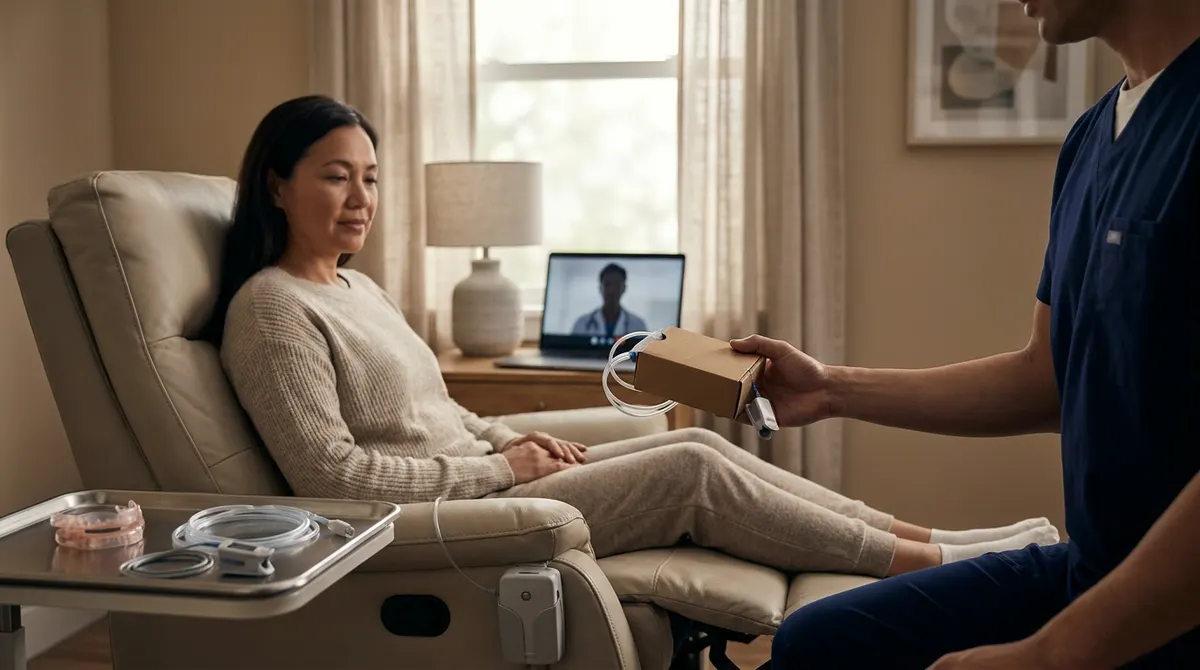
can dentists prescribe a home sleep apnea test? In most cases, yes, but with important caveats that vary by state. The American Academy of Sleep Medicine recommends that a board certified sleep physician interpret all diagnostic sleep studies. Dentists trained in Dental Sleep Medicine frequently screen for obstructive sleep apnea and can order home sleep tests in many jurisdictions, though collaborative care with sleep physicians remains the clinical standard. This article is for anyone wondering whether their dentist can initiate sleep apnea testing, including CDL holders, people experiencing chronic snoring, and patients already exploring oral appliance therapy. You will learn how the screening and diagnosis process works, which professionals are involved, what home sleep apnea tests measure, how treatment pathways compare, and where dumbo.health fits in. The details that follow could change how you approach your next dental visit.
Quick Answer
Dentists with training in Dental Sleep Medicine can screen for obstructive sleep apnea and, depending on state regulations, prescribe or order a home sleep apnea test (HSAT). However, a board certified sleep physician typically must interpret the results and confirm the diagnosis before treatment begins. Collaborative care between dentists and sleep physicians is the recommended standard. dumbo.health offers a $149 home sleep test with physician interpretation included in its monthly care plans, making the process straightforward regardless of who initiates the referral.
Key Takeaways
- Dentists trained in Dental Sleep Medicine can screen for sleep apnea and order home sleep tests in many states, but a sleep physician must confirm the diagnosis.
- Home sleep apnea tests (HSATs) measure airflow, oxygen levels, respiratory patterns, and heart rate to detect obstructive sleep apnea.
- The American Academy of Sleep Medicine requires that all diagnostic sleep studies be interpreted by a board certified sleep physician.
- State dental boards such as the Georgia Board of Dentistry and Pennsylvania Dental Board set varying rules on whether dentists can independently prescribe HSATs.
- Oral appliance therapy prescribed by dentists is an effective CPAP alternative for mild to moderate obstructive sleep apnea, but diagnosis must come first.
- dumbo.health provides a home sleep test for $149 with no insurance required, and monthly care plans starting at $59 per month cover physician interpretation and ongoing treatment.
How Dentists Fit Into Sleep Apnea Screening and Diagnosis
Dentists are often the first healthcare professionals to notice physical signs of obstructive sleep apnea. During routine dental examinations, a dentist can observe the airway, tongue position, oral cavities, enlarged tonsils, a high arched palate, and maxillofacial structural abnormalities that correlate with sleep disordered breathing.
Dental Sleep Medicine is a recognized discipline within dentistry focused on managing sleep related breathing disorders through oral appliance therapy and collaborative care with sleep physicians. The American Dental Association acknowledges that dentists play a role in screening for sleep disorders, particularly obstructive sleep apnea and snoring.
What Dentists Can Observe During an Exam
A standard dental examination reveals more than just oral health. Dentists trained in sleep screening look for specific anatomical features linked to airway obstruction.
These include a large tongue relative to the oral cavity, a narrow or high arched palate, retrognathic mandible positioning, enlarged tonsils, and signs of bruxism (teeth grinding). Bruxism is a strong clinical indicator of underlying sleep disordered breathing, and many patients who present with worn tooth surfaces or jaw pain are later found to have obstructive sleep apnea.
The American Academy of Sleep Medicine notes that anatomical features visible during an oral exam can raise clinical suspicion for sleep apnea, prompting further evaluation through screening questions and, when appropriate, home sleep testing.
The Difference Between Screening and Diagnosis
Screening identifies risk. Diagnosis confirms the condition. Dentists are well positioned for screening, but diagnosis of obstructive sleep apnea requires a sleep study interpreted by a qualified sleep physician.
This distinction matters because treatment decisions, including whether to pursue CPAP therapy, oral appliance therapy, or surgical options, depend on the severity and type of sleep apnea confirmed through objective tests. A dentist who suspects sleep apnea based on clinical findings and screening questions can initiate the testing process, but the diagnostic authority rests with a board certified sleep physician.
DID YOU KNOW: According to the American Academy of Sleep Medicine, an estimated 80 percent of moderate to severe obstructive sleep apnea cases remain undiagnosed, making dental screening a potentially critical first step in identification.
KEY TAKEAWAY: Dentists trained in Dental Sleep Medicine are well equipped to screen for obstructive sleep apnea, but a board certified sleep physician must interpret the sleep study and confirm the diagnosis before treatment begins.
Understanding what dentists can and cannot do sets the stage for how home sleep apnea tests actually work and what they measure.
What Is a Home Sleep Apnea Test and What Does It Measure?
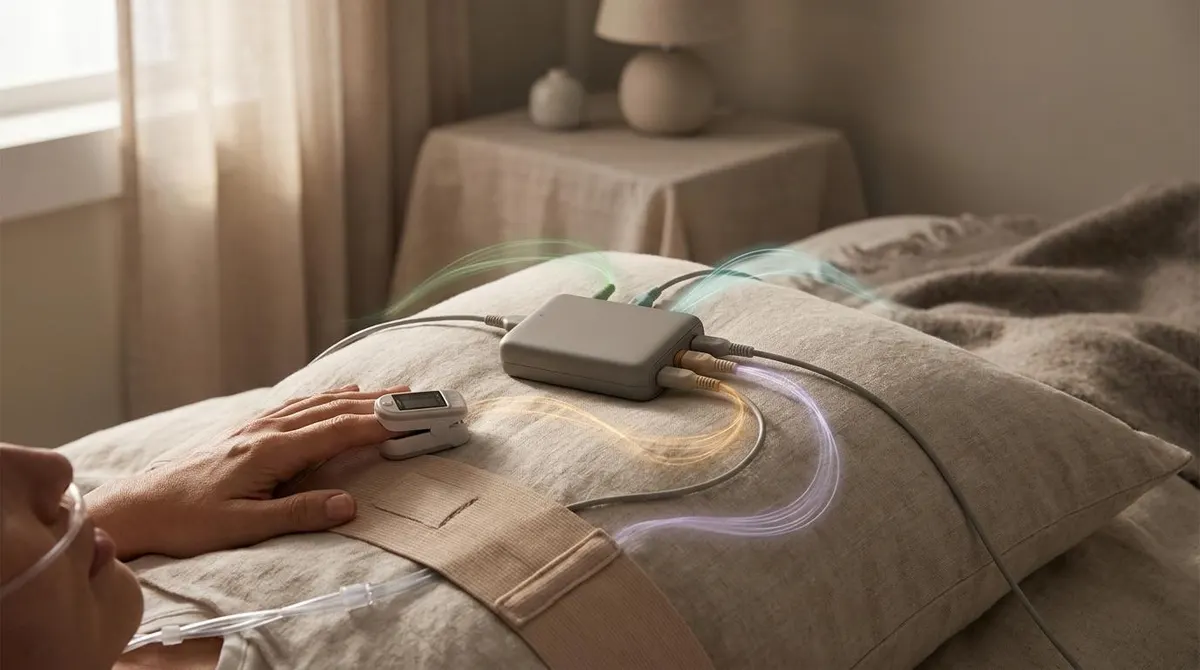
A home sleep apnea test (HSAT) is a portable diagnostic device that records breathing patterns, oxygen levels, airflow, and heart rate while you sleep in your own bed. HSATs are the primary alternative to in-lab polysomnography for diagnosing obstructive sleep apnea.
Home sleep testing uses sensors placed on the body to collect multiple channels of data overnight. Most HSAT devices are classified as Type 3 or Type 4 devices. Type 3 devices, also called cardiorespiratory monitors, typically measure airflow through a nasal cannula, respiratory effort via chest and abdominal belts, blood oxygen levels through pulse oximetry, and heart rate. Type 4 devices measure fewer channels, often limited to pulse oximetry and one or two additional signals.
How HSAT Devices Collect Data
Common HSAT devices include the WatchPAT One, Nox T3, and devices from manufacturers like ResMed and Watermark Medical. The Apnea Risk Evaluation System (ARES) is another home sleep diagnostic device that incorporates head position monitoring alongside standard respiratory measurements.
Each sensor records specific data. The nasal cannula tracks airflow reductions and cessations. Pulse oximetry measures blood oxygen levels and detects desaturation events. Respiratory effort belts identify whether breathing attempts continue during airway obstruction, which distinguishes obstructive events from central apnea events. Some devices also record head position, which is clinically relevant because REM-related sleep apnea and positional sleep apnea can produce different results depending on how you sleep.
The recorded data is analyzed to calculate an apnea-hypopnea index (AHI), which quantifies the number of breathing interruptions per hour of sleep. According to the American Academy of Sleep Medicine, an AHI of 5 to 14 indicates mild obstructive sleep apnea, 15 to 29 indicates moderate, and 30 or above indicates severe.
Home Sleep Test vs. In-Lab Polysomnogram
A polysomnogram (PSG) conducted in a sleep lab remains the gold standard for diagnosing sleep disorders. PSGs monitor more channels of data, including brain activity (EEG), eye movements, muscle tone, true sleep time, and sleep efficiency. In-lab testing can also diagnose conditions beyond obstructive sleep apnea, such as UARS (upper airway resistance syndrome), REM-related sleep apnea, and other complex sleep disorders.
HSATs are validated for diagnosing obstructive sleep apnea in patients with a moderate to high pretest probability and no significant comorbid sleep disorders. They are not recommended for patients suspected of having central sleep apnea, significant cardiovascular disease affecting respiratory patterns, or other complex conditions requiring full polysomnographic evaluation.
Here is how the two testing options compare across key attributes:
Setting
- Home Sleep Apnea Test: Your own bed at home
- In-Lab Polysomnogram: Sleep clinic or hospital sleep lab
Channels of Data Recorded
- Home Sleep Apnea Test: 4 to 7 channels (airflow, oxygen levels, respiratory effort, heart rate, head position)
- In-Lab Polysomnogram: 12 or more channels (adds EEG, EMG, EOG, leg movements, true sleep time)
Cost
- Home Sleep Apnea Test: Typically $149 to $500 out of pocket; dumbo.health offers it for $149
- In-Lab Polysomnogram: Often $1,000 to $3,000 or more without insurance
Convenience
- Home Sleep Apnea Test: High, no travel or overnight facility stay required
- In-Lab Polysomnogram: Lower, requires scheduling and sleeping in an unfamiliar environment
Best For
- Home Sleep Apnea Test: Adults with suspected moderate to high probability of obstructive sleep apnea
- In-Lab Polysomnogram: Complex cases, suspected central apnea, or when HSAT results are inconclusive
For most adults with symptoms of obstructive sleep apnea, a home sleep apnea test provides reliable data for diagnosis and is the more accessible starting point. dumbo.health provides a home sleep test for $149 with no insurance required, no prior authorization, and no surprise bills.
KEY TAKEAWAY: Home sleep apnea tests measure airflow, oxygen levels, respiratory patterns, and heart rate to diagnose obstructive sleep apnea, and they are a validated, cost-effective alternative to in-lab polysomnography for most suspected OSA cases.
With the testing process clear, the next question is what the legal and regulatory landscape actually allows dentists to do.
State Regulations and Scope of Practice for Dentists Ordering Sleep Tests
State dental boards determine whether dentists can order home sleep apnea tests independently. The answer varies significantly depending on where you live, and this inconsistency creates real confusion for patients and providers alike.
Some states permit dentists with appropriate training in Dental Sleep Medicine to order HSATs as part of a collaborative care model. Other states restrict the ordering of diagnostic sleep studies exclusively to physicians or sleep specialists. The Georgia Board of Dentistry, for example, has issued guidance on the scope of dental sleep medicine practice within that state. The Pennsylvania Dental Board has similarly addressed the boundaries of what dentists can prescribe or order related to sleep disordered breathing.
Collaborative Care: The Recommended Model
The American Academy of Sleep Medicine and the American Dental Association both support a collaborative care model. In this model, the dentist screens the patient, refers for diagnostic testing, and a board certified sleep physician interprets the results and establishes the diagnosis. Once the diagnosis is confirmed, the dentist can provide oral appliance therapy as the treating provider.
This model protects patients by ensuring that a physician with specialized training in sleep disorders reviews the diagnostic data. It also protects dentists from practicing outside their licensed scope while still allowing them to play a central role in identifying and treating sleep apnea.
What Happens in Practice
In real-world clinical settings, the process often works like this: a dentist identifies risk factors during a dental examination, administers screening questions, and then either orders an HSAT directly (where permitted) or refers the patient to a sleep physician who orders the test. After the sleep physician interprets the study and confirms a diagnosis, the treatment plan is developed collaboratively.
For patients who want to bypass scheduling delays or insurance complications, services like dumbo.health simplify this process. You can order a home sleep test directly for $149, have a physician interpret the results, and begin a treatment plan without navigating complex referral chains. The Essentials Plan at $59 per month covers physician interpretation, CPAP therapy and equipment, and standard follow-up care with no contracts required.
IMPORTANT: Even in states where dentists can order HSATs, the American Academy of Sleep Medicine recommends that a board certified sleep physician interpret the study and confirm the diagnosis before any treatment begins.
KEY TAKEAWAY: Whether a dentist can order a home sleep apnea test depends on state regulations, but the clinical standard is collaborative care where a sleep physician confirms the diagnosis regardless of who initiates the test.
Knowing who can order the test is one part of the equation. Understanding the full step-by-step process from screening to diagnosis is equally important.
How the Home Sleep Testing Process Works: From Dental Screening to Diagnosis
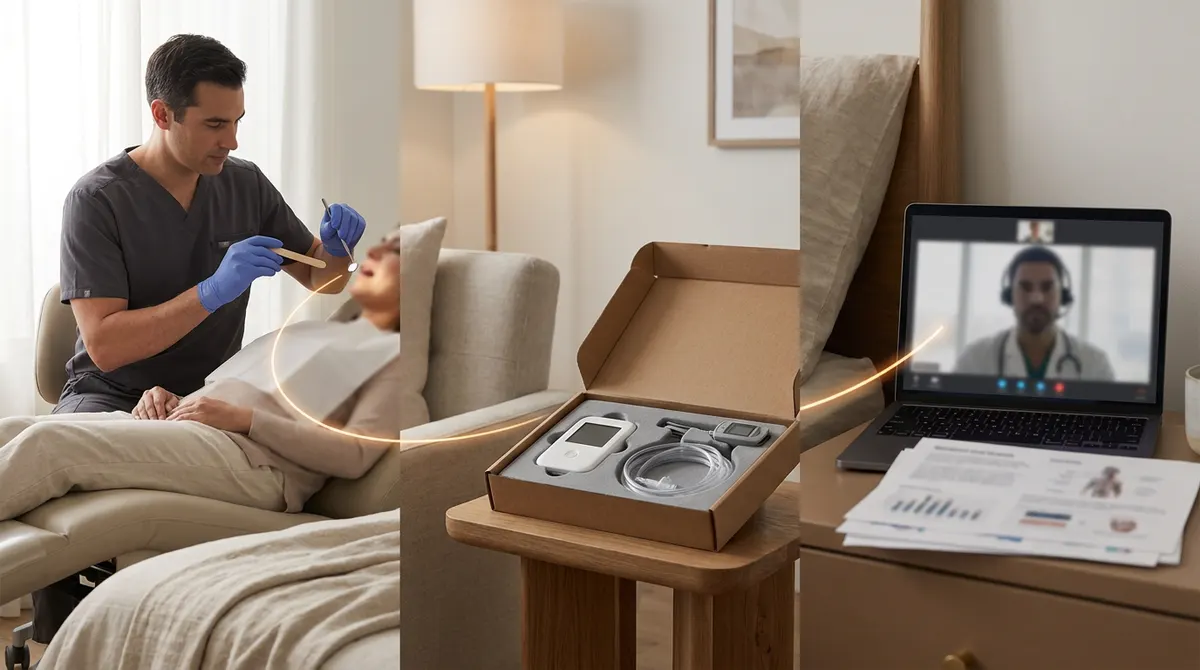
The process of getting a home sleep apnea test typically involves several steps, whether initiated by a dentist, a primary care physician, or a direct-to-patient service. Each step serves a specific clinical purpose.
Step-by-Step Process for Getting a Home Sleep Apnea Test
1. Your dentist or healthcare provider conducts a clinical screening, which includes reviewing symptoms such as chronic snoring, witnessed breathing pauses, daytime sleepiness, and examining the airway for physical risk factors like enlarged tonsils or a high arched palate.
2. Screening questions are administered to assess your risk level. Validated tools like the STOP-BANG questionnaire help quantify the probability of obstructive sleep apnea based on factors including BMI, neck circumference, age, and blood pressure.
3. An HSAT is ordered by a qualified provider. If your dentist practices in a state that permits direct ordering, they may handle this step. Otherwise, they refer you to a sleep physician. Alternatively, you can order directly through dumbo.health for $149 without needing a referral or insurance.
4. The home sleep test device is shipped to your home. You receive instructions for applying the sensors, which typically include a nasal cannula, a pulse oximeter finger sensor, and chest or abdominal effort belts depending on the device type.
5. You wear the device for one night of sleep in your own bed. The device records airflow, oxygen levels, respiratory patterns, heart rate, and in some cases head position while you sleep normally.
6. After the test night, you return the device or upload the data per the provider's instructions. A board certified sleep physician reviews the recorded channels of data and generates a diagnostic report.
7. The physician interpretation determines whether you have obstructive sleep apnea and classifies its severity as mild, moderate, or severe based on your AHI score. This report forms the basis for your treatment plan.
After completing these steps, you have a confirmed diagnosis and can proceed with treatment, whether that involves CPAP therapy, oral appliance therapy, positional therapy, or a combination approach. With dumbo.health, the entire process from ordering to physician interpretation is handled within the care platform, with results included in the monthly plan and updates sent to your referring provider.
KEY TAKEAWAY: The home sleep apnea testing process follows a clear path from clinical screening through overnight recording to physician-interpreted diagnosis, and services like dumbo.health streamline every step for $149 with monthly care starting at $59.
Once you have a diagnosis, the next decision is choosing the right treatment, and that is where dentists play a particularly active role.
Treatment Options After Diagnosis: CPAP, Oral Appliances, and Beyond
Treatment for obstructive sleep apnea depends on severity, patient anatomy, and individual preference. The two most common non-surgical treatments are continuous positive airway pressure (CPAP) therapy and oral appliance therapy, each with distinct advantages and limitations.
CPAP Therapy
CPAP therapy is the first-line treatment for moderate to severe obstructive sleep apnea. A CPAP machine delivers positive airway pressure through a mask worn during sleep, keeping the airway open and preventing the airway obstruction that causes apnea events.
According to the American Academy of Sleep Medicine, CPAP is highly effective when used consistently. The challenge is adherence. Studies published through the National Institutes of Health indicate that CPAP adherence rates hover around 50 to 60 percent at the one-year mark, often because patients find the mask uncomfortable or disruptive to their sleep patterns.
Titration, the process of adjusting CPAP pressure to the correct level, is a critical step in successful therapy. Some patients require an in-lab titration study, while others use auto-titrating CPAP machines that adjust pressure dynamically throughout the night.
dumbo.health's care plans include CPAP therapy and equipment starting at $59 per month with the Essentials Plan. The Premium Plan at $89 per month adds a dedicated sleep coach and advanced adherence monitoring, which addresses the compliance barrier that causes many patients to abandon treatment.
Oral Appliance Therapy
Oral appliance therapy is a treatment provided by dentists trained in Dental Sleep Medicine. An oral appliance is a custom-fitted device worn in the mouth during sleep that repositions the mandible (lower jaw) forward, which opens the airway and reduces airway obstruction.
The American Academy of Sleep Medicine recommends oral appliances for patients with mild to moderate obstructive sleep apnea, and for patients with severe OSA who cannot tolerate CPAP. Oral appliances differ significantly from a standard nightguard. While a nightguard protects teeth from bruxism, it does not advance the jaw or treat the underlying airway collapse.
Jaw repositioning achieved by oral appliances has been shown to reduce AHI scores, improve oxygen levels during sleep, decrease snoring, and improve sleep efficiency in appropriately selected patients. Follow-up with the dental team is essential to monitor for adverse effects such as temporomandibular joint discomfort or changes in bite alignment over time.
Comparing CPAP and Oral Appliance Therapy
How It Works
- CPAP: Delivers positive airway pressure through a mask to splint the airway open
- Oral Appliance: Repositions the mandible forward to physically open the airway
Best For
- CPAP: Moderate to severe obstructive sleep apnea
- Oral Appliance: Mild to moderate obstructive sleep apnea, or severe cases where CPAP is not tolerated
Effectiveness
- CPAP: Highly effective when used consistently; eliminates most apnea events at correct pressure
- Oral Appliance: Effective for reducing AHI in mild to moderate cases; less effective than CPAP in severe cases
Adherence
- CPAP: Lower long-term adherence (approximately 50 to 60 percent at one year)
- Oral Appliance: Higher reported adherence due to comfort and portability
Provider
- CPAP: Prescribed by sleep physicians; supplied by DME providers or services like dumbo.health
- Oral Appliance: Custom-fitted and managed by dentists trained in Dental Sleep Medicine
Cost
- CPAP: Varies widely; dumbo.health starts at $59 per month with equipment included
- Oral Appliance: Typically $1,500 to $3,000 out of pocket; insurance coverage varies
For many patients, the choice between CPAP and oral appliance therapy depends on severity, comfort tolerance, and lifestyle factors. Some patients benefit from combination therapy using both approaches. Your treatment plan should be developed collaboratively between your sleep physician and, when applicable, your dentist.
Other Treatment Pathways
Beyond CPAP and oral appliances, some patients may benefit from surgical options to address structural causes of airway obstruction. Positional therapy, where patients are trained to avoid sleeping on their back, can help those with position-dependent sleep apnea. Weight management also plays a significant role, as the Sleep Foundation notes that excess weight is one of the strongest modifiable risk factors for obstructive sleep apnea.
KEY TAKEAWAY: CPAP therapy is the gold standard for moderate to severe obstructive sleep apnea, while oral appliance therapy provided by dentists is an effective alternative for mild to moderate cases or patients who cannot tolerate CPAP.
Treatment effectiveness depends on accurate diagnosis, but it also depends on understanding who should and should not rely on home sleep testing alone.
Limitations and Risks: When a Home Sleep Test May Not Be Enough
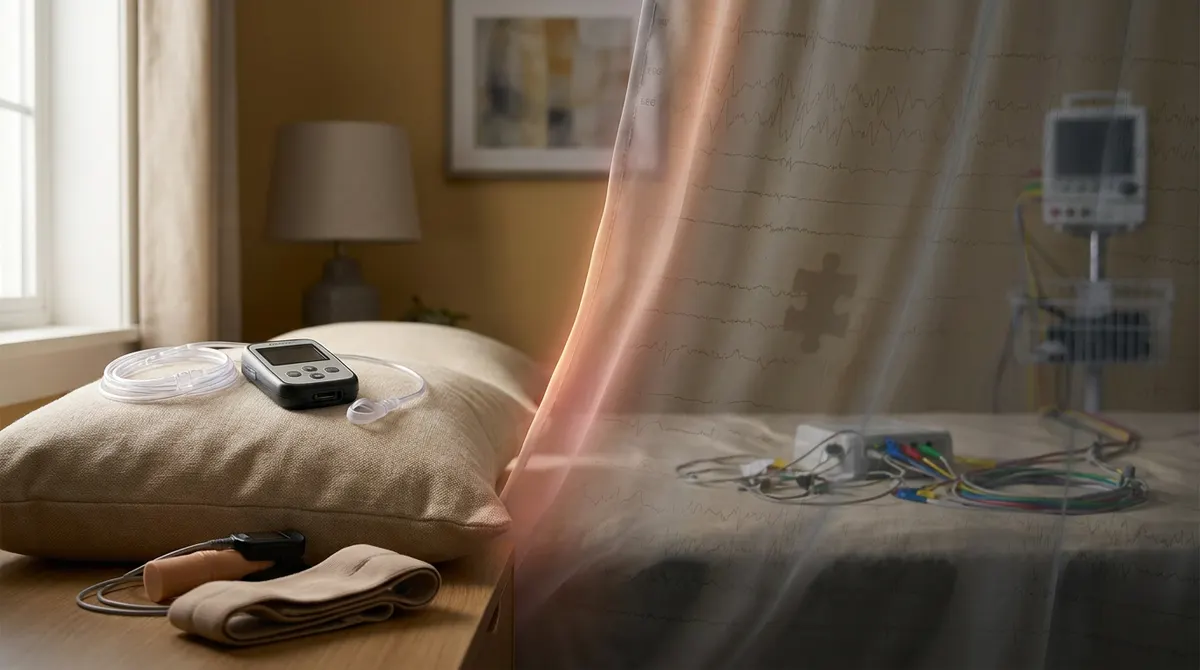
Home sleep apnea tests are validated and effective for many patients, but they are not appropriate for everyone. Understanding these limitations prevents misdiagnosis and ensures the right patients receive the right level of evaluation.
Limitation 1: HSATs Cannot Diagnose All Sleep Disorders
HSATs are designed to detect obstructive sleep apnea. They do not measure brain waves, true sleep time, or sleep stages, which means they cannot diagnose conditions like UARS, REM-related sleep apnea, narcolepsy, periodic limb movement disorder, or other complex sleep disorders. The American Academy of Sleep Medicine recommends lab-based polysomnography tests for patients suspected of having conditions beyond straightforward obstructive sleep apnea.
Limitation 2: False Negatives in Certain Populations
Because HSATs estimate sleep time rather than measuring it directly (they lack EEG), the AHI may be underestimated. If you have a fragmented sleep pattern, spend significant time awake during the recording, or have a mild case that only manifests in REM sleep or supine position, the HSAT may return a false negative. This is why inconclusive or negative HSAT results in a patient with high clinical suspicion should prompt an in-lab polysomnogram for further evaluation.
Limitation 3: Not Suitable for Complex Comorbidities
Patients with significant cardiovascular disease, chronic obstructive pulmonary disease, congestive heart failure, or other conditions that affect the respiratory system and respiratory patterns may not be appropriate candidates for home sleep testing. These patients often have central or mixed apnea components that HSATs cannot reliably distinguish from obstructive events.
Limitation 4: Single-Night Variability
HSATs typically involve one night of testing. Night-to-night variability in sleep apnea severity is well documented. If you sleep poorly on the test night due to discomfort with the device, anxiety, or simply an atypical night, results may not reflect your usual sleep patterns. Some providers recommend a second test night if results seem inconsistent with clinical findings.
How dumbo.health Addresses These Limitations
dumbo.health's care model includes physician interpretation of all test results by a qualified sleep physician, which adds a clinical review layer that catches potential issues with data quality or borderline results. If your home sleep test results are inconclusive, the physician can recommend further evaluation, including referral for in-lab polysomnography. The Premium Plan at $89 per month includes advanced adherence monitoring and a dedicated sleep coach who can identify early signs that your treatment plan needs adjustment.
TIP: If you have been told your HSAT results are normal but you still experience significant daytime sleepiness, loud snoring, or witnessed apneas, ask for a referral to a sleep lab for a comprehensive polysomnogram.
KEY TAKEAWAY: Home sleep apnea tests are effective for diagnosing obstructive sleep apnea in most adults, but they cannot detect all sleep disorders, may underestimate severity in some cases, and are not appropriate for patients with complex comorbidities.
Recognizing what HSATs can and cannot do is essential. Equally important is understanding the health consequences of leaving sleep apnea untreated.
Why Sleep Apnea Diagnosis Matters: Health Risks of Untreated OSA
Untreated obstructive sleep apnea significantly increases the risk of serious health complications. Getting tested and starting treatment is not just about improving sleep quality. It is about preventing long-term damage to multiple organ systems.
The National Heart, Lung, and Blood Institute states that obstructive sleep apnea is associated with an increased risk of cardiovascular disease, including hypertension, heart failure, atrial fibrillation, and stroke. Repeated drops in blood oxygen levels during sleep trigger a cascade of physiological stress responses that damage blood vessels, raise blood pressure, and disrupt metabolic function over time.
Cardiovascular Health
Each apnea event causes a temporary drop in oxygen levels and a surge in sympathetic nervous system activity. Over months and years, this pattern contributes to sustained hypertension, arterial stiffness, and increased cardiovascular risk. According to the CDC, heart disease remains the leading cause of death in the United States, and sleep apnea is an independent risk factor that compounds existing cardiovascular risk.
Metabolic Disorders and Diabetes
Sleep apnea disrupts glucose metabolism and insulin sensitivity. Research published through the NIH has linked obstructive sleep apnea to higher rates of type 2 diabetes, metabolic syndrome, and difficulty managing blood sugar levels even with medication. Treating sleep apnea with CPAP or oral appliance therapy can improve glycemic control in many patients.
Neurocognitive Function
Fragmented sleep caused by repeated airway obstruction impairs neurocognitive function, including memory consolidation, attention, executive function, and reaction time. This is particularly dangerous for commercial drivers and anyone operating heavy machinery. The FMCSA recognizes sleep apnea as a condition that can affect a driver's ability to safely operate a commercial vehicle, which is why screening during DOT physicals is increasingly common.
Other Associated Conditions
Emerging research has explored connections between sleep apnea and conditions including glaucoma, disruptions to the oral micro-biome, and even changes in cardiovascular health markers that appear reversible with consistent treatment. While these associations require further study, they underscore the systemic impact of untreated sleep disordered breathing.
DID YOU KNOW: According to the National Heart, Lung, and Blood Institute, untreated sleep apnea can increase the risk of high blood pressure by 2 to 3 times compared to those without the condition.
KEY TAKEAWAY: Untreated obstructive sleep apnea is linked to cardiovascular disease, diabetes, hypertension, and impaired neurocognitive function, making timely diagnosis and treatment critical for long-term health.
The health stakes are clear. Now let us look at real-world scenarios showing how different people navigate the path from dental screening to treatment.
Real-World Scenarios: How Patients Get From Dental Chair to Diagnosis
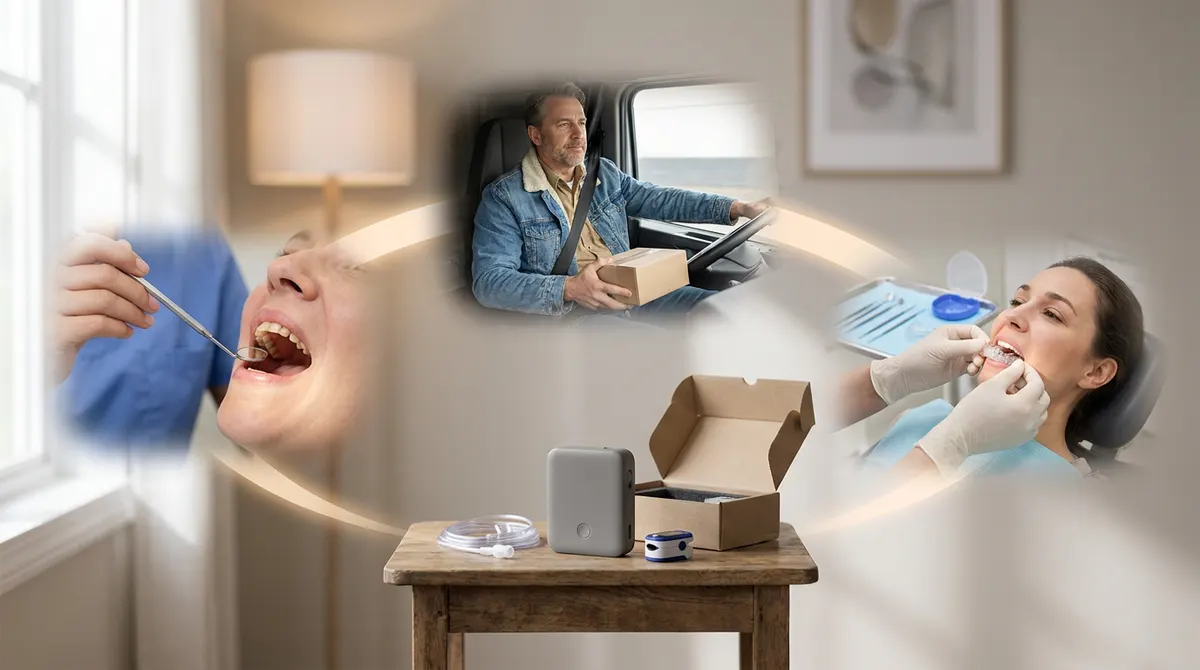
Real-world paths to sleep apnea diagnosis rarely follow a single template. These scenarios illustrate how different patients encounter the screening and testing process, and how the system works in practice.
Common Scenarios
Scenario 1: A 48-year-old woman visits her dentist for a routine cleaning. During the dental examination, her dentist notices significant tooth wear from bruxism and a scalloped tongue, both indicators of possible sleep disordered breathing. The dentist administers a brief set of screening questions and learns the patient also snores heavily and wakes unrefreshed. The dental practice, which operates under a Complete Health Dentistry model, refers her to a sleep physician. She receives a home sleep test and is diagnosed with moderate obstructive sleep apnea with an AHI of 22. Based on her preference for a non-CPAP option, her sleep physician and dentist collaborate on an oral appliance therapy treatment plan.
Scenario 2: A 55-year-old long-haul truck driver needs to complete his DOT physical and is flagged for a sleep apnea evaluation due to a BMI of 38 and a neck circumference above 17 inches. He does not have health insurance and needs results quickly to maintain his CDL certification. He orders a home sleep apnea test through dumbo.health for $149, completes the test at home, and receives physician-interpreted results confirming severe obstructive sleep apnea with an AHI of 41. He enrolls in the dumbo.health Essentials Plan at $59 per month, which includes CPAP therapy and equipment, and his results are sent to his referring provider. He avoids sleep clinic scheduling delays and insurance hassles entirely.
Scenario 3: A 34-year-old man visits a dentist who specializes in Dental Sleep Medicine after his partner reports loud snoring and occasional gasping during sleep. The dentist observes a narrow airway, a high arched palate, and enlarged tonsils. The dental team orders an HSAT directly, as permitted in their state. The home sleep study reveals mild obstructive sleep apnea with an AHI of 9. A board certified sleep physician reviews and confirms the diagnosis. Because the case is mild, the dentist fabricates a custom oral appliance for jaw repositioning, and the patient is scheduled for follow-up titration and monitoring to verify the appliance is reducing his AHI to an acceptable level.
These scenarios demonstrate that the entry point to sleep apnea diagnosis can vary, but the common thread is that a qualified sleep physician must interpret the study and a clear treatment plan must follow.
KEY TAKEAWAY: Whether you start at a dental practice, a DOT physical, or a direct-to-consumer testing service like dumbo.health, the diagnostic pathway for obstructive sleep apnea follows the same clinical framework of screening, testing, physician interpretation, and treatment.
With real scenarios covered, it helps to address the myths that still cause confusion and prevent people from getting tested.
Common Myths About Sleep Apnea and Dental Screening Debunked
MYTH: Only doctors can order a home sleep apnea test. Dentists cannot be involved.
FACT: Dentists trained in Dental Sleep Medicine can screen for sleep apnea and, in many states, order home sleep apnea tests. The American Dental Association supports dentists playing an active role in identifying sleep disordered breathing. The collaborative care model endorsed by the American Academy of Sleep Medicine includes dentists as key members of the diagnostic and treatment team, though a sleep physician must interpret the study.
MYTH: A home sleep test is not accurate enough to diagnose sleep apnea. You need a sleep lab.
FACT: Home sleep apnea tests using Type 3 devices measure airflow, oxygen levels, respiratory effort, and heart rate across multiple channels of data. The American Academy of Sleep Medicine has validated HSATs for diagnosing obstructive sleep apnea in patients with moderate to high pretest probability. Lab-based polysomnography tests are still required for complex cases, but for straightforward obstructive sleep apnea, an HSAT provides reliable data for diagnosis.
MYTH: Oral appliances are basically the same as nightguards from the drugstore.
FACT: Custom oral appliances used in Dental Sleep Medicine are precision devices that advance the mandible to open the airway. They are fundamentally different from over-the-counter nightguards, which protect teeth from bruxism but do not reposition the jaw or treat airway obstruction. Oral appliance therapy must be prescribed and fitted by a qualified dentist, with follow-up monitoring for effectiveness and adverse effects.
MYTH: Sleep apnea only affects overweight older men.
FACT: While obesity increases risk, sleep apnea affects people of all ages, body types, and genders. The Sleep Foundation notes that anatomical factors such as a narrow airway, large tongue, enlarged tonsils, and maxillofacial structural abnormalities can cause obstructive sleep apnea regardless of weight. Women, younger adults, and children can all have clinically significant sleep apnea.
MYTH: You need insurance to get a home sleep apnea test.
FACT: Insurance coverage for sleep testing varies and often involves prior authorizations, deductibles, and delays. dumbo.health offers a home sleep test for $149 as a one-time cash payment with no insurance required, no prior authorization, and no surprise bills. Monthly care plans covering physician interpretation, treatment, and follow-up start at $59 per month with no contracts.
KEY TAKEAWAY: Many common beliefs about who can order sleep tests, how accurate home testing is, and who gets sleep apnea are outdated or incorrect, and these myths often delay diagnosis and treatment for people who need it.
Clearing up myths is essential. The final step is making sure you know exactly what to have ready if you decide to pursue testing.
Preparing for a Home Sleep Apnea Test: What You Need
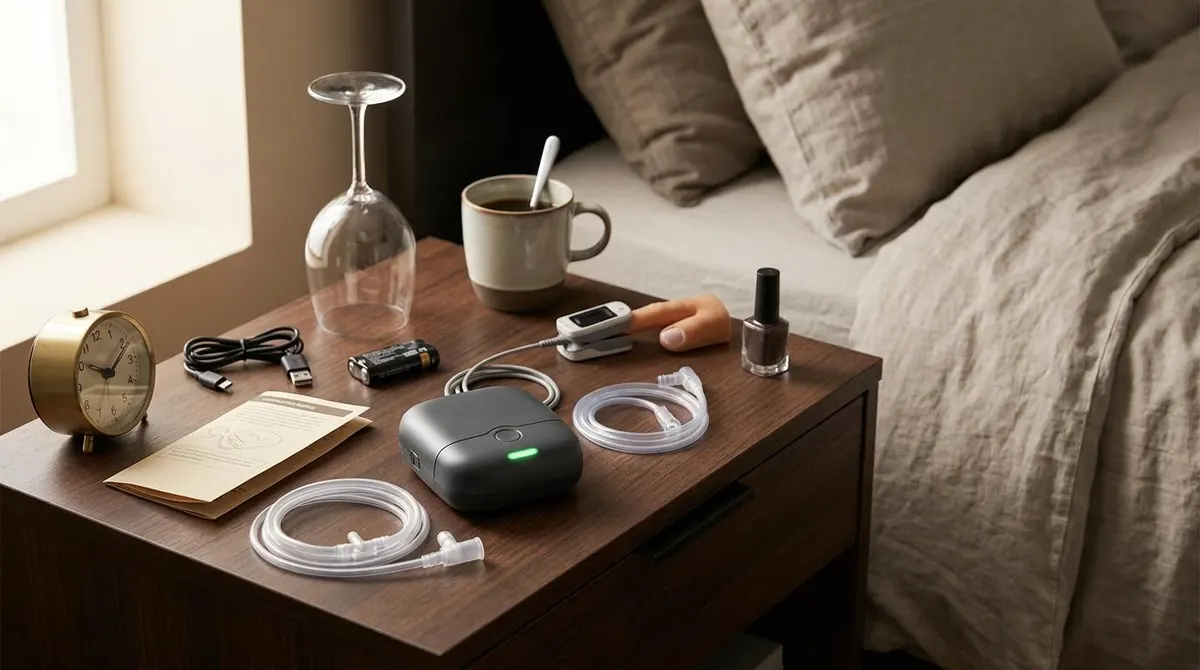
Proper preparation improves the quality of your home sleep test data and helps ensure an accurate diagnosis. Whether your dentist referred you or you ordered directly through a service like dumbo.health, follow these steps to get the most reliable results.
Pre-Test Checklist
- Confirm your test device has been fully charged or has a fresh battery before the test night
- Avoid alcohol and sedatives for at least 24 hours before the test, as these substances alter respiratory patterns and can affect results
- Skip caffeine after noon on the test day to support your ability to fall asleep at a normal time
- Review the device instructions carefully, paying attention to how each sensor attaches (nasal cannula, pulse oximeter finger sensor, chest belt)
- Sleep in your usual bed in your normal sleep position to capture your typical sleep patterns
- Remove nail polish from the finger where the pulse oximeter will be placed, as polish can interfere with oxygen level readings
- Keep your bedroom at a comfortable temperature and minimize disruptions to simulate a normal night
- Set a reminder to start the recording before you fall asleep and stop it when you wake up
- If ordered through dumbo.health, confirm your shipping address and plan your test night to ensure you can return the device promptly
- Write down any medications you are currently taking, as your interpreting physician will need this information
After completing the test, the device data will be analyzed and interpreted by a physician. With dumbo.health, physician interpretation is included in all monthly plans, and you can expect timely results with updates sent directly to your referring provider if applicable.
KEY TAKEAWAY: Following the pre-test checklist ensures your home sleep apnea test captures reliable data, which leads to a more accurate diagnosis and a better-informed treatment plan.
With preparation covered, let us look at how the consumer sleep tracking devices many people already own compare to medical-grade home sleep tests.
Consumer Sleep Trackers vs. Medical Home Sleep Tests
Consumer wearable devices cannot replace medical-grade home sleep apnea tests for diagnosing obstructive sleep apnea. While wearable technology has improved significantly, the clinical gap between consumer trackers and validated HSAT devices remains substantial.
Devices like the Apple Watch, FitBit, Jawbone, Beddit 3 Sleep Tracker, and Sleep Number bed sensors can track general sleep patterns, estimate sleep stages, and in some cases measure blood oxygen levels using pulse oximetry. However, these devices are not FDA-cleared for diagnosing sleep apnea and do not meet the data standards required by the American Academy of Sleep Medicine for clinical diagnosis.
What Consumer Devices Can and Cannot Do
Consumer sleep trackers can be useful for identifying trends that suggest a problem. For example, repeated notifications of low overnight oxygen levels on an Apple Watch or FitBit may prompt someone to seek formal evaluation. Sleep Number beds and the Beddit 3 Sleep Tracker can detect movement patterns and snoring frequency that might indicate sleep disordered breathing.
However, these devices do not measure airflow directly, do not record respiratory effort, and typically rely on wrist-based or contactless sensing that lacks the precision of medical-grade sensors. The Drowzle app and Zmachine are examples of devices that attempt to bridge the gap between consumer and clinical tools, but they still require validation for diagnostic use in most clinical settings.
Medical HSAT Devices
Validated HSAT devices like the WatchPAT One, Nox T3, and those distributed by ResMed and Watermark Medical measure airflow, respiratory effort, blood oxygen levels via pulse oximetry, heart rate, and in some cases body and head position. These devices produce the channels of data needed to calculate an accurate AHI, which is the metric sleep physicians use to diagnose and classify obstructive sleep apnea severity.
The distinction matters because a treatment plan, whether CPAP therapy at the right pressure or a properly calibrated oral appliance, depends on accurate diagnostic data. A consumer tracker that estimates your sleep quality is not a substitute for a medical test that quantifies your airway obstruction events per hour.
dumbo.health provides medical-grade at-home sleep testing for $149. The test includes a validated device shipped to your home with clear instructions, and physician interpretation of results is included in all monthly care plans.
KEY TAKEAWAY: Consumer wearable devices like the Apple Watch and FitBit can identify sleep trends but cannot diagnose sleep apnea; only medical-grade HSAT devices validated by sleep medicine standards provide the reliable data needed for diagnosis and treatment planning.
Understanding the difference between tracking and testing helps you make informed decisions. The next consideration for many patients is cost and how to access testing without insurance barriers.
Cost, Insurance, and Access: Getting Tested Without Barriers
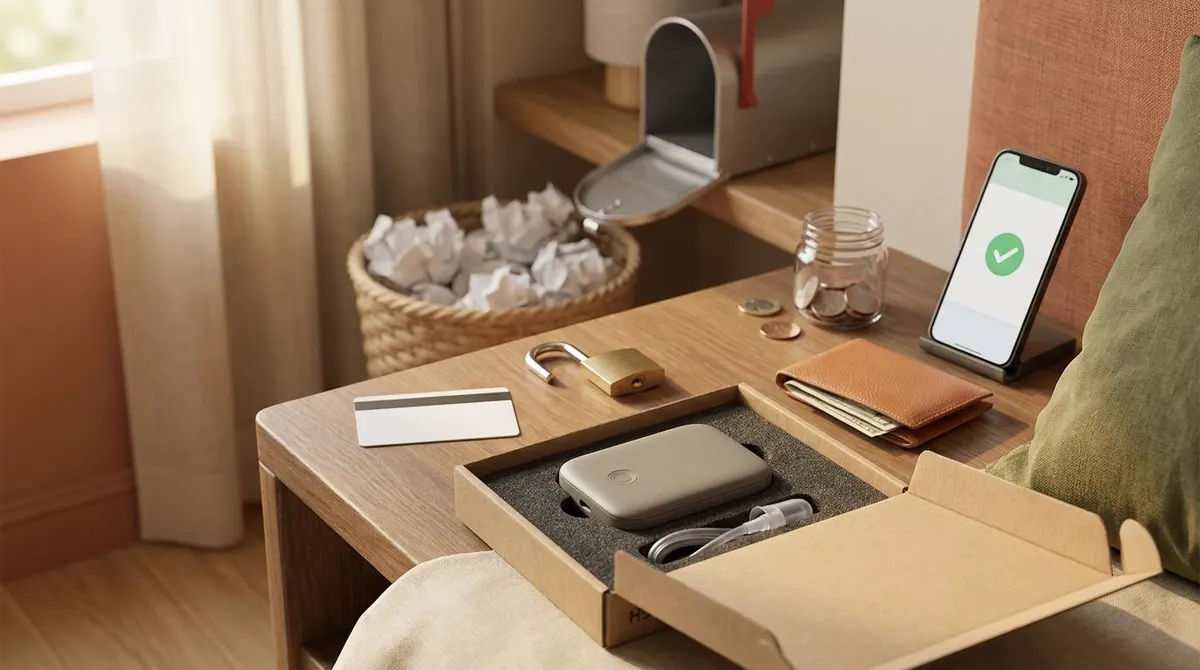
Cost and insurance complexity are among the top reasons people delay sleep apnea testing. Understanding your options helps you move from suspicion to diagnosis without unnecessary obstacles.
Insurance Coverage Challenges
Insurance coverage for home sleep apnea testing varies by plan, and many policies require prior authorization, a physician referral, and documentation of medical necessity before approving an HSAT. This process can add days or weeks of delay. Some plans cover in-lab polysomnography but not home sleep testing, or vice versa. Medical billing for sleep studies can also be confusing, with separate charges for the device, interpretation, and follow-up.
For patients referred by a dentist, the insurance landscape adds another layer of complexity. Some insurers require that a physician, not a dentist, order the test for it to be covered. This restriction can create frustration for patients who are already in a dental practice that offers collaborative sleep apnea care.
The Cash-Pay Alternative
Cash-pay testing eliminates insurance barriers entirely. dumbo.health operates on a transparent cash-pay model with no insurance required, no prior authorizations, and no surprise bills.
The home sleep test costs $149 as a one-time payment and is billed separately from the monthly care plans. After testing, patients choose a monthly plan that covers physician interpretation, treatment, and ongoing care:
The Essentials Plan at $59 per month (approximately $2 per day) includes physician interpretation and report, CPAP therapy and equipment, standard follow-up care, and updates to your referring provider. There are no contracts and you can cancel anytime.
The Premium Plan at $89 per month (approximately $3 per day) includes everything in Essentials plus a dedicated sleep coach from a licensed care team, advanced adherence monitoring, and priority results turnaround.
The Elite Plan at $129 per month (approximately $4 per day) includes everything in Premium plus concierge clinical support with priority care team access, direct physician messaging, and custom reporting for your practice.
Finding Providers Near You
If you prefer to start with an in-person evaluation, look for sleep clinics or dental practices specializing in Dental Sleep Medicine in your area. Many sleep specialists and dentists now work together in collaborative care arrangements. However, if access to providers near you is limited, or if scheduling at a sleep lab would cause delays, at-home sleep testing through dumbo.health provides a convenient alternative that works regardless of your location.
You can take the free sleep assessment at dumbo.health to determine whether a home sleep test is appropriate for your situation.
KEY TAKEAWAY: Insurance hurdles, prior authorizations, and confusing medical billing frequently delay sleep apnea diagnosis, but cash-pay options like dumbo.health's $149 home sleep test and monthly care plans starting at $59 remove these barriers entirely.
Cost barriers addressed, the final section ties everything together.
Conclusion
Dentists trained in Dental Sleep Medicine are valuable partners in identifying sleep apnea, but a board certified sleep physician must interpret the diagnostic study and confirm the diagnosis. Whether your path to testing starts in a dental chair, a DOT physical, or a direct-to-consumer platform, the clinical framework remains the same: screen, test, diagnose, treat.
The most important step is the first one. If you or your dentist suspect sleep apnea based on symptoms like chronic snoring, observed apneas, daytime fatigue, or physical findings during a dental examination, do not let cost or access barriers delay testing.
dumbo.health offers a home sleep apnea test for $149 with no insurance required and monthly care plans starting at $59 with no contracts. Take control of your sleep health today and get the answers you need.
Frequently Asked Questions About Can Dentists Prescribe a Home Sleep Apnea Test
Can dentists prescribe a home sleep apnea test?
In many US states, dentists can order or refer patients for a home sleep apnea test, but the rules vary by state dental board and local regulations. Some states permit qualified dentists working within a dental sleep medicine framework to order a home sleep apnea test as part of evaluating patients for oral appliance therapy. However, the formal diagnosis of obstructive sleep apnea and interpretation of results typically requires a licensed sleep physician or qualified medical professional. Patients should confirm their state's rules and consult a healthcare professional to understand who can order, interpret, and act on their home sleep apnea test results.
What is dental sleep medicine and why are dental practices implementing it?
Dental sleep medicine is a recognised specialty area in which qualified dentists screen patients for sleep-related breathing disorders, co-manage care with sleep physicians, and provide oral appliance therapy for conditions such as obstructive sleep apnea and snoring. Dentists are implementing it because dental examinations routinely reveal risk indicators such as enlarged tonsils, a high arched palate, bruxism, jaw and tongue positioning, and airway obstruction signs that general practitioners may not observe. The American Dental Association supports dentists playing a collaborative role in identifying and helping to manage sleep disordered breathing, making dental practices a practical front door for early screening and patient referral.
What is a home sleep apnea test and how does it work?
A home sleep apnea test, also called an HSAT or home sleep test, is a portable diagnostic device a patient wears overnight in their own home to record breathing patterns, oxygen levels, airflow, and respiratory effort during sleep. Type 3 devices typically measure multiple channels of data including oxygen saturation, heart rate, airflow, and respiratory movement, making them the most clinically recognised category for diagnosing obstructive sleep apnea outside a sleep lab. A physician then interprets the recorded data to assess the apnea-hypopnea index and determine whether obstructive sleep apnea is present. You can learn more about the at-home sleep test process and what to expect on test night.
Are home sleep apnea tests accurate?
Home sleep apnea tests are clinically validated for diagnosing moderate to severe obstructive sleep apnea in adults without significant comorbidities. The American Academy of Sleep Medicine supports the use of home sleep apnea testing in appropriate clinical situations. However, HSAT devices typically underestimate sleep apnea severity because they calculate the apnea-hypopnea index based on total recording time rather than true sleep time, meaning results can appear less severe than they are. Home sleep tests are also less reliable for detecting REM-related sleep apnea, upper airway resistance syndrome, or sleep disorders in patients with complex medical conditions, in which case a lab-based polysomnography test may be more appropriate.
When is a lab-based sleep study needed instead of a home sleep test?
A full in-lab polysomnography test is generally recommended when a patient has complex medical conditions such as moderate to severe heart failure, chronic lung disease, or neuromuscular conditions, or when the home sleep apnea test result is negative despite persistent symptoms. In-lab polysomnography captures more channels of data including brain activity, leg movements, and detailed sleep staging, which a portable home device cannot replicate. A sleep physician or qualified clinician should determine whether a home sleep test provides sufficient diagnostic information for a given patient or whether a more detailed lab-based assessment is clinically necessary.
What is the difference between Type 3 and Type 4 home sleep apnea test devices?
Type 3 home sleep apnea test devices are cardiorespiratory monitors that record at least four channels of data, typically including airflow, respiratory effort, oxygen saturation, and heart rate, and are the most widely accepted category for diagnosing obstructive sleep apnea outside a sleep lab. Type 4 devices, such as a basic pulse oximeter or single-channel sensor, record fewer data points and are generally considered screening tools rather than diagnostic devices. The clinical value of an HSAT device depends significantly on how many validated channels it monitors and whether it has been tested against in-lab polysomnography. Dental sleep medicine clinicians and sleep physicians typically prefer Type 3 devices for diagnostic use.
What is the ARES home sleep test device and how does it work?
The ARES, or Apnea Risk Evaluation System, is a forehead-worn home sleep apnea test device designed to measure oxygen saturation, pulse rate, airflow, snoring, head position, and movement during sleep. It was developed with dental sleep medicine workflows in mind, allowing dentists working collaboratively with sleep physicians to participate in the testing process. After a patient completes the ARES test at home, the recorded data is uploaded and reviewed by a board-certified sleep physician for diagnosis. Not all dental practices or states permit dentists to independently order the ARES device, so eligibility and workflow requirements should be confirmed with the supervising physician and relevant dental board.
Can a general dentist diagnose sleep apnea?
Generally, a general dentist cannot independently diagnose obstructive sleep apnea. Diagnosis requires interpretation of objective sleep test data by a licensed sleep physician or qualified medical professional. Dentists can, however, play an important role in screening patients for sleep-related breathing disorders during routine dental examinations by identifying risk indicators such as bruxism, large tongue, maxillofacial structural abnormalities, a high arched palate, and a restricted airway. The American Academy of Sleep Medicine and the American Dental Association both recognise a collaborative care model in which dentists refer patients to sleep specialists and co-manage treatment such as oral appliance therapy following a formal diagnosis.
What is oral appliance therapy and when is it used for sleep apnea?
Oral appliance therapy is a treatment for obstructive sleep apnea and snoring that involves wearing a custom-fitted dental device during sleep to reposition the mandible and tongue forward, helping to maintain an open airway and reduce airway obstruction. According to the American Academy of Sleep Medicine, oral appliances are recommended for patients with mild to moderate obstructive sleep apnea, particularly those who prefer them over continuous positive airway pressure therapy or who cannot tolerate a CPAP machine. Oral appliance therapy should be fitted by a dentist trained in dental sleep medicine and used following a formal diagnosis from a sleep physician.
How does sleep apnea affect oral health and why do dentists screen for it?
Sleep apnea and sleep-related breathing disorders are associated with several oral health signs that dentists routinely observe, including bruxism, dry mouth, acid erosion, scalloping of the tongue, and restricted airway anatomy. Dentists are uniquely positioned to notice these indicators during regular dental examinations before a patient has received any formal sleep apnea evaluation. Identifying these signs early and referring patients for home sleep apnea testing or a sleep physician evaluation can support earlier diagnosis and treatment, which may reduce the risk of associated health consequences including cardiovascular disease, high blood pressure, and metabolic disorders linked to untreated obstructive sleep apnea.
What health conditions are associated with untreated obstructive sleep apnea?
Untreated obstructive sleep apnea is associated with elevated blood pressure, cardiovascular disease, type 2 diabetes, and impaired neurocognitive function. Research published in Frontiers in Neurology has examined the relationship between obstructive sleep apnea and type 2 diabetes, noting that repeated drops in blood oxygen levels during apnea events may contribute to metabolic disruption. The Mayo Clinic explains that sleep apnea also increases the risk of heart arrhythmias, stroke, and daytime sleepiness that can impair functioning. A healthcare professional can help determine whether testing is appropriate based on individual symptoms and risk factors.
Do I need to visit a sleep lab to get tested for sleep apnea?
No, a sleep lab visit is not always required for sleep apnea testing. Home sleep apnea tests allow patients to complete an overnight test in their own home using a portable device that records breathing, oxygen saturation, airflow, and other respiratory patterns. The results are then reviewed by a physician who provides a diagnosis and interpretation report. Home sleep testing is appropriate for many adults suspected of having moderate to severe obstructive sleep apnea without major comorbidities. A clinician should determine whether a home test is sufficient or whether an in-lab polysomnography study is more appropriate for a given patient.
How much does a home sleep apnea test cost without insurance?
The cost of a home sleep apnea test varies depending on the provider and what is included. dumbo.health offers a $149 one-time home sleep apnea test with transparent cash-pay pricing, no insurance required, and no prior authorizations. The test includes the at-home device and one test night. Physician interpretation and ongoing care, including CPAP therapy, equipment, and adherence follow-up, are available through separate monthly plans starting at $59 per month with no contracts and the option to cancel anytime. Transparent pricing helps patients plan their care without the uncertainty of surprise bills. You can review sleep apnea care plans and pricing before getting started.
Does insurance cover home sleep apnea testing ordered by a dentist?
Medical insurance coverage for home sleep apnea tests ordered through a dental practice depends on the insurer, the specific policy, the ordering provider's credentials, and state regulations. In many cases, medical insurance reimburses for HSAT when it is ordered by a physician as part of a documented clinical evaluation. Tests ordered by dentists may or may not qualify for reimbursement depending on the insurer's criteria and whether a supervising physician is involved in the workflow. Patients who prefer to avoid insurance complexity, prior authorizations, and uncertain billing can use a cash-pay home sleep apnea test as a straightforward alternative. A benefits coordinator or healthcare professional can help clarify coverage eligibility.
What is CPAP therapy and when is it prescribed for sleep apnea?
Continuous positive airway pressure, or CPAP, is the most commonly prescribed treatment for moderate to severe obstructive sleep apnea. A CPAP machine delivers a steady stream of pressurised air through a mask to keep the airway open during sleep, preventing apnea events and oxygen desaturation. CPAP is typically prescribed following a formal diagnosis from a sleep physician based on home sleep test or polysomnography results. Patients who cannot tolerate CPAP may be candidates for oral appliance therapy as an alternative. CPAP therapy and equipment are available through dumbo.health as part of ongoing monthly care plans that include physician review and adherence follow-up.
Why does CPAP adherence matter and how is it monitored?
CPAP adherence refers to how consistently and effectively a patient uses their CPAP machine each night. Poor adherence is one of the most common reasons CPAP therapy fails to deliver clinical benefit and is a leading cause of treatment noncompliance. Most modern CPAP devices record nightly usage data, leak rates, and residual apnea events, which a clinician or sleep coach can review to assess whether therapy is working and whether any adjustments are needed. Inadequate CPAP titration, meaning incorrect pressure settings, can lead to both over-treatment and under-treatment. Ongoing adherence monitoring and clinical follow-up are important parts of effective sleep apnea care, which is why structured follow-up support is a meaningful part of any sleep apnea care plan.
How do dentists identify sleep apnea risk during a dental exam?
Dentists can identify several clinical signs during routine oral examinations that may indicate obstructive sleep apnea or sleep-related breathing disorders. These include bruxism, a large or scalloped tongue, restricted airway space, a high arched palate, enlarged tonsils, maxillofacial structural abnormalities, and jaw positioning issues. Dentists may also ask patients screening questions about snoring, daytime sleepiness, witnessed apneas, and cardiovascular health. These observations do not constitute a diagnosis but can prompt appropriate referral for a home sleep apnea test or evaluation by a sleep specialist. The dental team is an important point of contact for identifying patients who may benefit from further sleep disorder assessment.
Can wearable devices like a Fitbit or Apple Watch diagnose sleep apnea?
Consumer wearable devices such as a Fitbit, Apple Watch, or Beddit 3 Sleep Tracker can provide general information about sleep patterns, heart rate, and blood oxygen levels, but they are not validated diagnostic tools for obstructive sleep apnea. These devices are considered screening-level tools and are not equivalent to a clinically validated home sleep apnea test or polysomnography. A pulse oximeter used in isolation is classified as a Type 4 device and provides limited diagnostic information compared to a Type 3 cardiorespiratory monitor. Patients who suspect sleep apnea should speak with a healthcare professional about appropriate diagnostic testing rather than relying on consumer wearable data alone.
How many sleep tests are needed to diagnose sleep apnea?
In many cases, a single night of home sleep apnea testing provides sufficient data for a sleep physician to make a diagnosis of obstructive sleep apnea. However, if the first test produces an inconclusive result, insufficient data, or a result that conflicts with the clinical picture, a repeat home sleep test or an in-lab polysomnography study may be recommended. Night-to-night variability in sleep patterns can sometimes affect results, particularly for patients with REM-related sleep apnea or upper airway resistance syndrome. A sleep physician or qualified clinician should interpret results and determine whether additional testing is needed before establishing a treatment plan.
What should I look for when choosing a home sleep apnea test device?
A clinically useful home sleep apnea test device should be validated against in-lab polysomnography, record multiple channels of data including airflow, oxygen saturation, respiratory effort, and heart rate, and be simple enough for a patient to set up and use at home without assistance. Device usability matters because recording failures caused by incorrect setup can produce unreliable data. The WatchPAT One and Nox T3 are examples of validated home sleep apnea test devices used in clinical settings. A healthcare professional or sleep medicine clinician should guide device selection based on the patient's clinical needs, comorbidities, and the level of diagnostic detail required.
How do state dental board rules affect whether dentists can order home sleep tests?
State dental board regulations vary significantly in how they define the scope of practice for dentists regarding sleep apnea screening, home sleep test ordering, and oral appliance therapy. Some states have adopted rules that explicitly permit qualified dentists to participate in ordering home sleep apnea tests as part of a collaborative care workflow with a supervising sleep physician. Other states are more restrictive. Regulatory debates around terms such as "qualified dentist" and whether a board-certified sleep physician must be involved in diagnosis reflect ongoing tension between dental and medical boards in several states. Dentists and patients should consult their state dental board and seek guidance from a licensed healthcare professional to understand what is legally and clinically permissible in their jurisdiction.
Where can I find a home sleep apnea test near me?
Home sleep apnea tests are available through sleep clinics, physician offices, telehealth platforms, and cash-pay online providers that ship the device directly to your home. Many patients find at-home testing more convenient than attending a sleep lab in person. If you are looking for a provider in your area, your primary care physician or a board-certified sleep specialist can provide a referral. For a transparent cash-pay option without insurance requirements or prior authorizations, dumbo.health ships a home sleep apnea test device to your home for $149. You can start with a free sleep assessment to find out whether at-home sleep testing may be an appropriate next step based on your symptoms and risk factors.
Is home sleep apnea testing appropriate for commercial drivers?
Home sleep apnea testing can be a practical option for commercial drivers who need to evaluate and document sleep apnea as part of their DOT physical process. Sleep apnea is a recognised safety concern for commercial drivers because untreated obstructive sleep apnea impairs alertness and reaction time, which can increase crash risk. A certified medical examiner may consider symptoms, body mass index, blood pressure, and other risk factors when determining whether a CDL driver needs further sleep evaluation. dumbo.health supports commercial drivers with at-home sleep apnea testing and care documentation, but it does not guarantee DOT certification or medical clearance. You can read more in the guide to home sleep apnea testing for CDL drivers.
What ongoing care is available after a home sleep apnea test diagnosis?
After a home sleep apnea test and formal diagnosis, ongoing care typically involves CPAP therapy or oral appliance therapy, adherence monitoring, follow-up physician reviews, and updates to referring providers. dumbo.health monthly care plans start at $59 per month and include physician interpretation and report, CPAP therapy and equipment, and standard follow-up care. The Premium plan at $89 per month adds a dedicated sleep coach from a licensed care team and advanced adherence monitoring. The Elite plan at $129 per month includes concierge clinical support, direct physician messaging, and custom reporting. All plans are available with no contracts and can be cancelled at any time. Explore ongoing sleep apnea care solutions to compare what each plan includes.
Related Home Sleep Apnea Test Topics
- Can My Doctor Prescribe a Home Sleep Apnea Test What You Need to Know
- Can You Test for Sleep Apnea at Home A Complete Guide to Home Sleep Testing
- What Is a Home Sleep Apnea Test How At-Home Sleep Testing Works, What It Measures, and Who Needs One
- How Do You Get a Home Sleep Apnea Test The Complete Guide to At-Home Sleep Testing
- Home Sleep Apnea Test The Complete Guide to At-Home Sleep Apnea Testing
- Does Medicare Cover a Home Sleep Apnea Test What Beneficiaries Need to Know
- Does Insurance Cover a Home Sleep Apnea Test What You Actually Pay
- Sleep Test at Home The Complete Guide to Home Sleep Apnea Testing
- How to Get a Sleep Apnea Test at Home The Complete Guide to Home Sleep Testing
- How Is a Home Sleep Apnea Test Done A Complete Guide to At-Home Sleep Testing
- Do You Need a Prescription for a Home Sleep Apnea Test
- Sleep Apnea Test at Home The Complete Guide to Home Sleep Testing for Adults
- How Does a Home Sleep Apnea Test Work A Complete Guide to At-Home Sleep Testing
- What Does a Home Sleep Apnea Test Consist Of Sensors, Equipment, and What to Expect
- Home Sleep Test The Complete Guide to At-Home Sleep Apnea Testing
- Can a Home Sleep Apnea Test Be Wrong Accuracy, False Negatives, and What to Do Next
- What Is the Best At-Home Sleep Apnea Test A Clinical Comparison of Devices, Accuracy, and Cost
- What Happens After a Home Sleep Apnea Test Results, Diagnosis, and Next Steps
- Are Sleep Studies Covered by Insurance What You Actually Pay for Sleep Apnea Testing
- Sleep Apnea Test at Home with Insurance What Your Plan Actually Covers and How to Get Tested
- Home Sleep Test Cost What You Actually Pay With and Without Insurance
- Home Sleep Testing Companies A Complete Guide to At-Home Sleep Apnea Diagnosis
- How Long Does a Home Sleep Apnea Test Take What to Expect Before, During, and After Testing
- Does a Home Sleep Apnea Test Measure Apneas What the Device Actually Records
- CPAP Test at Home The Complete Guide to Home Sleep Apnea Testing and Treatment
- Home Sleep Apnea Test Near Me How to Get Tested Without a Sleep Lab Visit
- Disadvantages of Home Sleep Testing What Patients and Providers Need to Know
- Sleep Apnea Test The Complete Guide to Diagnosis, Home Testing, and What Your Results Mean
- Sleep Apnea Checker How to Screen for Sleep Apnea and What Your Results Mean
- Does Anyone Ever Pass a Sleep Apnea Test What Normal Results Actually Look Like
- At-Home Sleep Apnea Test The Complete Guide to Testing, Results, and Treatment
- Sleep Test to CPAP How Sleep Apnea Testing Leads to Treatment
- Do At-Home Sleep Apnea Tests Work Clinical Accuracy, Limitations, and What the Evidence Shows
- How Much Does a Home Sleep Apnea Test Cost Complete Pricing Breakdown for Self-Pay and Insured Patients
- Sleep Test What It Measures, How It Works, and What Your Results Mean
- Polysomnography at Home How Home Sleep Testing Compares to In-Lab Sleep Studies
- Sleep Apnea Test at Home DOT Approved Options for Commercial Drivers
- Sleep Apnea Test Near Me How to Find Local and At-Home Testing Options
- Cost of Sleep Apnea Testing What You Will Actually Pay
- Are Home Sleep Apnea Tests Accurate What the Evidence Actually Shows
- Are Home Sleep Apnea Tests Reliable Clinical Evidence, Accuracy, and What the Data Actually Shows
- Sleep Apnea Diagnosis How Sleep Apnea Is Detected, Tested, and Confirmed
- Home Sleep Testing The Complete Guide to Diagnosing Sleep Apnea From Your Own Bed
- Sleep Apnea Testing The Complete Guide to Diagnosis, Home Tests, and What Your Results Mean
- Best At Home Sleep Apnea Test A Clinical Comparison
- Sleep Apnea Testing Near Me How to Find the Right Test, Provider, and Path to Diagnosis
- CPAP Test What It Is, How It Works, and What Your Results Mean
- Apnea Monitor The Complete Guide to Breathing Monitors for Sleep Apnea and Infant Care
- HSAT The Complete Guide to Home Sleep Apnea Testing
- How to Get Tested for Sleep Apnea The Complete Guide to Diagnosis, Sleep Studies, and Treatment
AI summary
A home sleep apnea test (HSAT) is a portable diagnostic study used to evaluate obstructive sleep apnea (OSA) at home. It records physiologic signals such as airflow, oxygen saturation, respiratory effort, and heart rate, and results are used to calculate the apnea-hypopnea index (AHI). Dentists trained in Dental Sleep Medicine often identify OSA risk during routine exams by noting airway and anatomic findings (high arched palate, enlarged tonsils, tongue position, retrognathic mandible) and signs such as bruxism. They can perform screening and, depending on state dental board rules, may be able to order an HSAT; however, the American Academy of Sleep Medicine recommends that a board certified sleep physician interpret diagnostic sleep studies and confirm the diagnosis. HSATs (Type 3 or Type 4 devices) are appropriate for many adults with moderate to high pretest probability of OSA and without complex comorbidities. In-lab polysomnography is preferred for suspected central sleep apnea, complex cardiopulmonary disease, or inconclusive HSAT results. After diagnosis, treatment options include CPAP for moderate to severe OSA and oral appliance therapy for mild to moderate OSA or CPAP intolerance.

Nicolas Nemeth
Co-Founder
Nico is the co-founder of Dumbo Health, a digital sleep clinic that brings the entire obstructive sleep apnea journey home. Patients skip the sleep lab and the long wait to see a specialist. Dumbo Health ships an at home test, connects patients with licensed sleep clinicians by video, and delivers CPAP or a custom oral appliance with ongoing coaching and automatic resupply in one clear subscription.
Keep reading

VA At Home Sleep Apnea Test: The Complete Guide for Veterans

Home Sleep Apnea Test App: What Works, What Doesn't, and How to Get a Real Diagnosis


