Level 3 Home Sleep Apnea Test: What It Measures, How It Works, and Who Should Use One
A level 3 home sleep apnea test is an at-home, portable sleep study used to evaluate obstructive sleep apnea in adults. It records at least four channels: nasal airflow, respiratory effort, oxygen saturation, and heart rate, sometimes adding snoring and body position. The guide explains how the device is applied overnight, how physicians interpret results using the apnea-hypopnea index and oxygen desaturation index, and why AHI can be underestimated when based on recording time. It compares level 3 testing with in-lab polysomnography and outlines who qualifies and who should not use HSAT. It also covers cost ranges, common devices, and next steps if results are negative or inconclusive.
Struggling with sleep?
Find out if sleep apnea is the reason.
FDA-cleared. $149 flat. Physician-reviewed results in 48 hours.

Level 3 Home Sleep Apnea Test: What It Measures, How It Works, and Who Should Use One
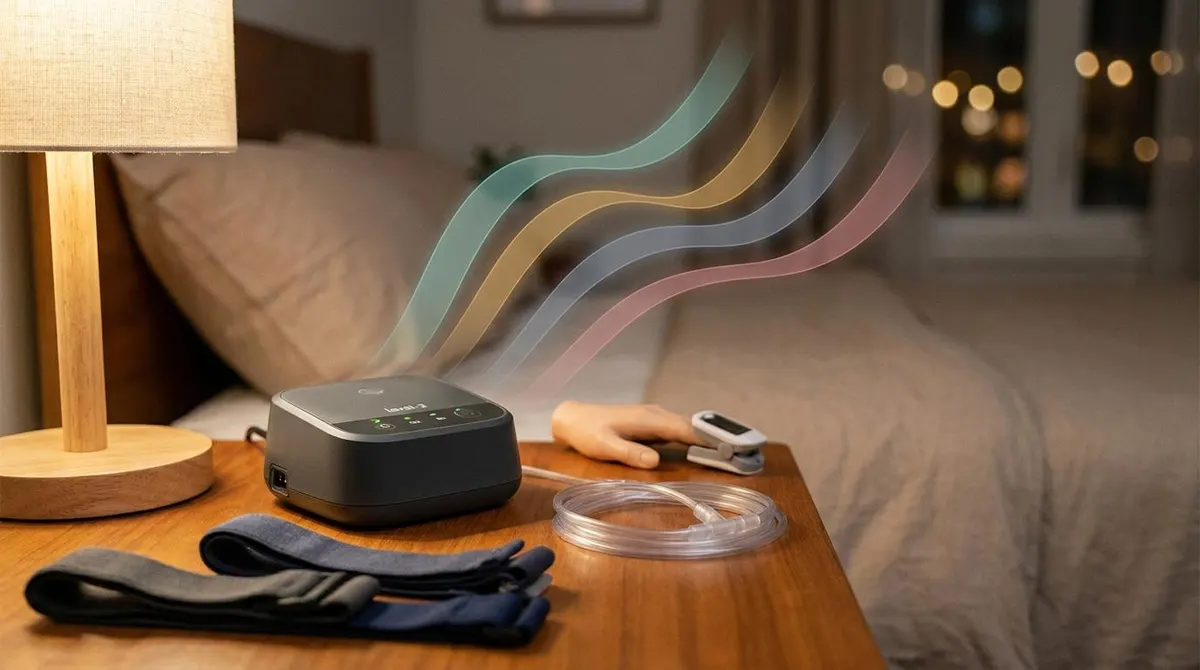
A level 3 home sleep apnea test is a portable sleep study that records airflow, respiratory effort, oxygen saturation, and heart rate while you sleep in your own bed. According to the American Academy of Sleep Medicine, home sleep apnea tests are a validated diagnostic pathway for obstructive sleep apnea in adults with a moderate to high pretest probability of the condition. This article is for anyone considering a home sleep test, including commercial drivers facing DOT requirements, adults with snoring or breathing concerns, and clinicians evaluating portable diagnostic options. You will learn exactly what a level 3 study measures, how it compares to in-lab polysomnography, who qualifies, what the limitations are, and how to move from testing to treatment. Whether you are exploring testing for the first time or comparing options near you, this guide covers every decision point.
Quick Answer
A level 3 home sleep apnea test is a portable sleep study that monitors at least four channels including airflow, respiratory effort, oxygen saturation, and heart rate. It is primarily used to diagnose obstructive sleep apnea in adults without complex comorbidities. The test is performed at home using a small device worn overnight and does not require a sleep technician. Results are interpreted by a physician who calculates the apnea-hypopnea index to determine severity. dumbo.health offers a home sleep test for $149 with physician interpretation available through monthly care plans starting at $59 per month.
Key Takeaways
- A level 3 home sleep apnea test records a minimum of four physiological channels: nasal airflow, respiratory effort, blood oxygen saturation, and heart rate.
- The test is validated for diagnosing obstructive sleep apnea in patients with moderate to high clinical suspicion and no significant comorbid sleep disorders.
- Level 3 studies do not measure brain waves, muscle activity, or sleep stages, which means they cannot detect conditions like periodic limb movement disorder or REM sleep behaviour disorder.
- The apnea-hypopnea index derived from a level 3 test uses recording time rather than total sleep time, which can underestimate severity in some patients.
- dumbo.health provides a home sleep test for $149 with no insurance required, plus ongoing CPAP therapy plans starting at $59 per month with no contracts.
- Negative or inconclusive level 3 results in a patient with persistent sleep apnea symptoms should be followed up with in-lab polysomnography.
What a Level 3 Home Sleep Apnea Test Actually Is
A level 3 home sleep apnea test is a portable diagnostic study that records cardiopulmonary data while you sleep at home, without the need for an overnight stay in a sleep lab. The American Academy of Sleep Medicine classifies sleep studies into four levels based on the number of channels monitored and the clinical setting where the test occurs. Level 3 sits between the comprehensive in-lab polysomnography (level 1) and basic single-channel oximetry screening (level 4).
Level 3 sleep studies are also referred to as home sleep apnea tests (HSATs), portable sleep studies, or respiratory polygraphy in clinical literature. The procedure code most commonly associated with this test is CPT 95800, which covers unattended sleep monitoring with a minimum of four recorded channels.
The device itself is compact. Most level 3 portable monitors are small enough to hold in one hand. The patient applies a nasal pressure sensor, a pulse oximeter finger clip, and one or two respiratory effort belts around the chest and abdomen. No electrodes are placed on the scalp, and no sleep technician is present during the recording.
The primary clinical purpose of a level 3 study is to diagnose obstructive sleep apnea. It is not designed to evaluate sleep architecture, detect seizure activity, or diagnose complex sleep disorders that require electroencephalography.
A level 3 home sleep apnea test provides enough diagnostic accuracy to confirm obstructive sleep apnea in the majority of adults with a moderate to high pretest probability. The test does not require a sleep lab visit, an overnight hospital stay, or insurance authorization when completed through a cash-pay pathway such as dumbo.health.
KEY TAKEAWAY: A level 3 home sleep apnea test is a portable, multi-channel study that diagnoses obstructive sleep apnea at home by recording airflow, respiratory effort, oxygen levels, and heart rate.
Understanding what the test records is essential before looking at the specific channels and sensors involved.
Channels and Sensors: What a Level 3 Study Measures
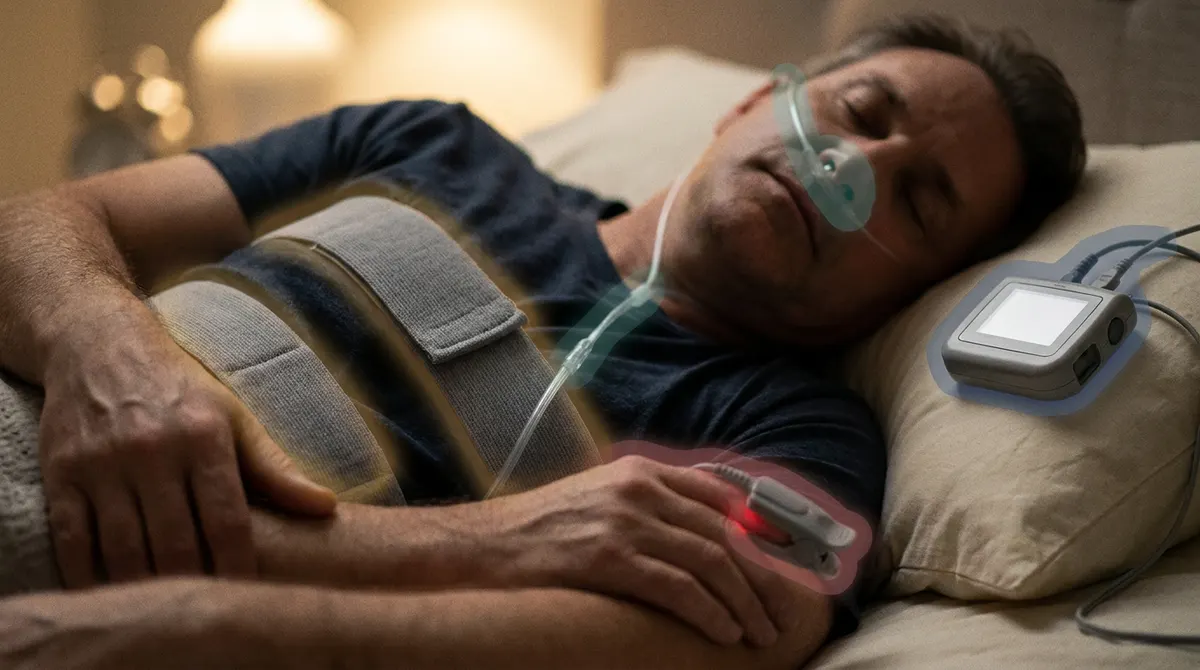
A level 3 home sleep apnea test records at least four distinct physiological channels, each captured by a dedicated sensor on the device. These channels work together to identify apneas, hypopneas, and oxygen desaturation events that characterize sleep-disordered breathing.
Nasal Airflow
Airflow monitoring is the primary channel for detecting apneas and hypopneas. A nasal pressure sensor, typically a small cannula placed at the nostrils, measures changes in nasal pressure with each breath. Some devices also use a thermistor to detect the presence or absence of airflow based on temperature changes. The nasal airflow channel is what distinguishes a complete breathing pause (apnea) from a partial reduction in breathing (hypopnea).
Respiratory Effort
Respiratory effort measurement uses one or two elastic belts placed around the thorax and abdomen. These belts detect thoracoabdominal movement during breathing. The distinction between obstructive and central apneas depends on this channel. In obstructive sleep apnea, respiratory effort continues even when airflow stops, because the airway is physically blocked. In central apneas, both airflow and effort cease simultaneously. This differentiation is clinically significant for determining the correct treatment plan.
Oxygen Saturation and Heart Rate
A pulse oximeter clipped to the fingertip measures blood oxygen saturation and heart rate simultaneously. Oxygen levels in healthy individuals typically stay above 94 percent during sleep, according to the National Heart, Lung, and Blood Institute. Repeated drops in oxygen saturation, known as desaturation events, correlate directly with apneas and hypopneas. The oximetry channel also captures heart rate monitoring data, which can reveal cardiac rhythm changes associated with breathing interruptions. Many patients with untreated obstructive sleep apnea show cyclical heart rate variations tied to each apnea event.
Additional Channels on Some Devices
Some level 3 portable monitors record additional data beyond the core four channels. Body position sensors detect whether the patient sleeps supine, lateral, or prone, which matters because obstructive sleep apnea is often worse in the supine position. Snoring frequency sensors, usually microphones or vibration detectors, record snoring intensity. These channels add clinical context but are not required for a study to qualify as level 3.
DID YOU KNOW: According to a systematic review published in the journal Respirology, level 3 portable monitors demonstrate sensitivity above 85 percent and specificity above 80 percent for diagnosing moderate to severe obstructive sleep apnea when compared to in-lab polysomnography.
KEY TAKEAWAY: A level 3 home sleep apnea test measures nasal airflow, respiratory effort, oxygen saturation, and heart rate as its core channels, with some devices adding body position and snoring data.
Knowing what the test measures leads to the next question: how it compares to the gold standard of in-lab sleep testing.
Level 3 vs Level 1 Polysomnography: How They Compare
The most effective way to understand the role of a level 3 home sleep apnea test is to compare it directly to level 1 in-lab polysomnography, which remains the gold standard for diagnosing sleep disorders. Both tests measure breathing and oxygenation, but they differ substantially in scope, setting, and the range of conditions they can identify.
Level 1 polysomnography records a minimum of seven channels, including electroencephalography (brain waves), electromyography (muscle activity), electrooculography (eye movements), airflow, respiratory effort, oxygen saturation, and heart rate. A Registered Polysomnographic Technologist monitors the patient throughout the night in a clinical sleep lab setting. This comprehensive monitoring allows the identification of sleep stages, sleep architecture, sleep efficiency, periodic limb movement disorder, REM sleep behaviour disorder, and other complex sleep disorders.
Level 3 testing records fewer channels and does not include brain wave, muscle activity, or eye movement data. This means it cannot determine sleep stages, calculate true total sleep time, or diagnose pediatric sleep disorders or conditions beyond sleep-disordered breathing.
Setting
- Level 3 Home Sleep Apnea Test: Your own bed at home
- Level 1 Polysomnography: Attended overnight study in a sleep lab or hospital
Channels Recorded
- Level 3 Home Sleep Apnea Test: Minimum 4 channels (airflow, respiratory effort, oxygen saturation, heart rate)
- Level 1 Polysomnography: Minimum 7 channels including brain waves, muscle activity, and eye movements
Sleep Stages Measured
- Level 3 Home Sleep Apnea Test: No, uses recording time instead of total sleep time
- Level 1 Polysomnography: Yes, full sleep architecture including REM and non-REM stages
Conditions Diagnosed
- Level 3 Home Sleep Apnea Test: Primarily obstructive sleep apnea
- Level 1 Polysomnography: Obstructive sleep apnea, central sleep apnea, periodic limb movement disorder, REM sleep behaviour disorder, narcolepsy, and other complex sleep disorders
Cost
- Level 3 Home Sleep Apnea Test: Typically $149 to $500 (dumbo.health offers it for $149)
- Level 1 Polysomnography: Often $1,000 to $3,000 or more
Convenience
- Level 3 Home Sleep Apnea Test: High, no travel or overnight facility stay required
- Level 1 Polysomnography: Lower, requires scheduling and an overnight stay in a clinical facility
Technician Present
- Level 3 Home Sleep Apnea Test: No, self-applied at home
- Level 1 Polysomnography: Yes, a sleep technician monitors throughout the night
For most adults with a clinical suspicion of obstructive sleep apnea and no significant comorbidities, a level 3 home sleep apnea test provides sufficient diagnostic accuracy to guide treatment decisions. In-lab polysomnography remains necessary when complex sleep disorders are suspected, when the level 3 test is inconclusive, or when the patient has conditions such as severe cardiopulmonary disease.
KEY TAKEAWAY: Level 3 home sleep apnea tests are a cost-effective, convenient alternative to in-lab polysomnography for diagnosing obstructive sleep apnea, but they cannot evaluate sleep architecture or detect non-respiratory sleep disorders.
With the comparison clear, the next step is understanding the complete range of sleep study levels and where level 3 fits in.
Understanding All Four Levels of Sleep Studies
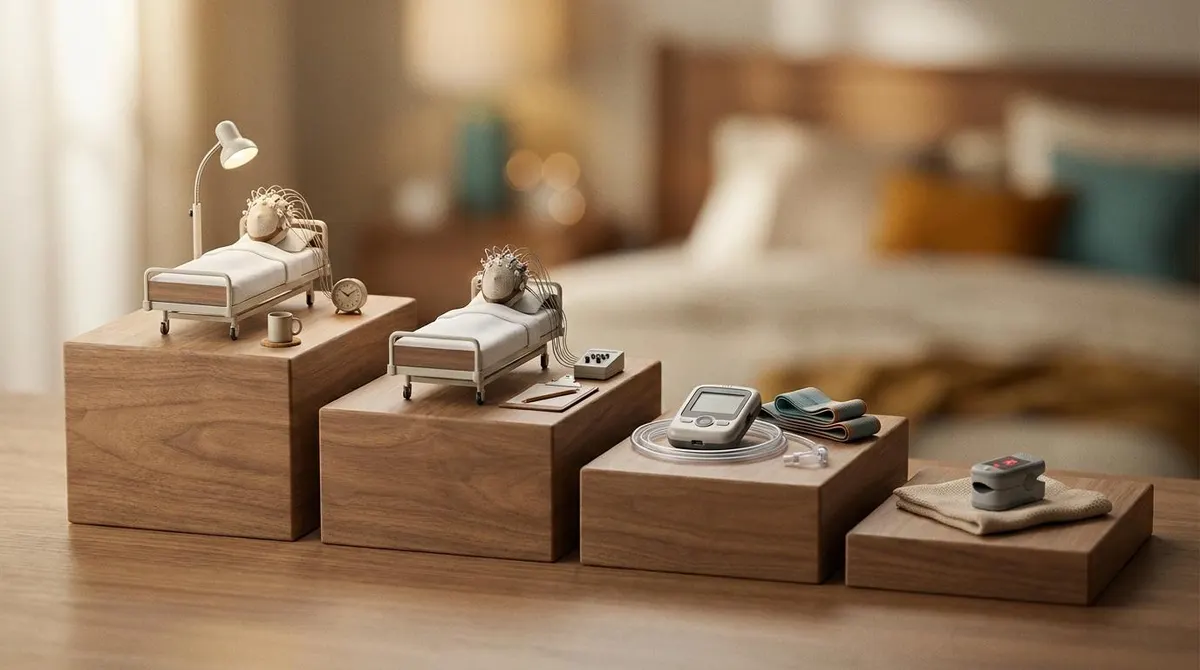
Sleep studies are classified into four levels based on the number of channels recorded, whether the study is attended by a technician, and the clinical setting. Each level serves a different diagnostic purpose, and knowing the differences helps you and your doctor choose the right test.
Level 1: In-Lab Polysomnography
Level 1 is the most comprehensive sleep study. It records a minimum of seven channels including brain waves, eye movements, muscle activity, airflow, respiratory effort, oxygen saturation, and heart rate. The study takes place in a sleep lab or hospital and is attended by a Registered Polysomnographic Technologist. Level 1 testing diagnoses the full range of sleep disorders and provides detailed sleep architecture data including sleep stages, sleep efficiency, and arousal indices.
Level 2: Unattended Full Polysomnography
A level 2 sleep study uses the same comprehensive monitoring equipment as level 1, recording brain waves, muscle activity, eye movements, and all respiratory and cardiac channels. The difference is that level 2 studies are unattended, meaning no technician monitors the patient in real time. Level 2 studies can be conducted at home but are rarely used in routine clinical practice because of the complexity of equipment setup and higher risk of technical failures without a technician present.
Level 3: Portable Sleep Study (HSAT)
Level 3 sleep studies are the most commonly used form of home sleep testing for obstructive sleep apnea. They record a minimum of four channels: airflow, respiratory effort, oxygen saturation, and heart rate. No brain wave electrodes are used. Level 3 devices are designed for patient self-application and are compact enough to be worn comfortably in the home sleep environment. The data is analyzed after the test night, and a physician interprets the results to calculate the apnea-hypopnea index.
Level 4: Single or Dual Channel Screening
Level 4 sleep apnea screening typically records only one or two channels, most commonly oximetry alone or oximetry with airflow. Level 4 tests are used as screening tools rather than diagnostic studies. They can suggest the presence of sleep-disordered breathing but generally do not provide enough information for a definitive diagnosis. A positive level 4 screening often leads to a level 3 or level 1 study for confirmation.
The American Academy of Sleep Medicine recommends level 3 home sleep apnea testing as a valid diagnostic alternative to polysomnography for uncomplicated adult patients with a high pretest probability of moderate to severe obstructive sleep apnea. For patients in your area who want a straightforward path to diagnosis, a home sleep test from dumbo.health covers the level 3 standard at $149 with no insurance required.
KEY TAKEAWAY: Level 3 home sleep apnea tests occupy the clinical sweet spot between full polysomnography and basic screening, providing enough diagnostic detail for obstructive sleep apnea without the cost and complexity of a lab visit.
Knowing the study levels makes it easier to understand who qualifies for a level 3 test and who needs a different approach.
Who Should Get a Level 3 Home Sleep Apnea Test
Adults with a moderate to high clinical suspicion of obstructive sleep apnea and no significant comorbid conditions are the primary candidates for a level 3 home sleep apnea test. Clinical guidelines from the American Academy of Sleep Medicine define clear criteria for when home testing is appropriate.
Clinical Assessment and Screening
Before ordering a level 3 test, a doctor typically conducts a clinical assessment that includes a review of sleep apnea symptoms, medical history, and a validated screening questionnaire. The Epworth Sleepiness Scale is one of the most commonly used tools, measuring subjective daytime sleepiness on a scale of 0 to 24. A score above 10 suggests excessive daytime sleepiness that warrants further evaluation. Other screening questionnaires such as the STOP-Bang assess risk factors including snoring, tiredness, observed apneas, blood pressure, BMI, age, neck circumference, and gender.
Patients who present with classic obstructive sleep apnea symptoms, including loud snoring, witnessed breathing pauses during sleep, gasping or choking during sleep, excessive daytime sleepiness, and morning headaches, are strong candidates for level 3 home sleep testing.
Who Is Not a Good Candidate
Level 3 testing is not appropriate for every patient. The following groups generally require in-lab polysomnography instead:
- Patients with suspected central sleep apnea or complex sleep apnea syndrome
- Patients with significant cardiopulmonary disease such as congestive heart failure or chronic obstructive pulmonary disease
- Patients with suspected periodic limb movement disorder, REM sleep behaviour disorder, or narcolepsy
- Patients with neuromuscular conditions affecting breathing
- Pediatric sleep disorders, as home sleep apnea tests are validated primarily for adults
- Patients who had an inconclusive or negative level 3 test but continue to have significant symptoms
IMPORTANT: A negative result on a level 3 home sleep apnea test does not rule out obstructive sleep apnea. The American Academy of Sleep Medicine states that patients with a high clinical suspicion and a negative home test should proceed to in-lab polysomnography for definitive evaluation.
Common Scenarios
A 48-year-old long-haul truck driver with a BMI of 34, a neck circumference above 17 inches, and a report of loud snoring from a spouse scores 14 on the Epworth Sleepiness Scale. This patient has a high pretest probability for obstructive sleep apnea and is an ideal candidate for a level 3 home sleep apnea test. Through dumbo.health's sleep assessment, this driver can begin the process without insurance authorization and receive a test device shipped directly.
A 35-year-old woman with mild snoring, no witnessed apneas, normal BMI, and an Epworth Sleepiness Scale score of 6 has a low pretest probability for obstructive sleep apnea. A level 3 study may produce a false-negative result in this patient because the condition, if present, is likely mild. A sleep physician may recommend in-lab polysomnography or watchful monitoring.
A 62-year-old man with congestive heart failure and reported Cheyne-Stokes breathing patterns needs in-lab polysomnography rather than a level 3 study because central sleep apnea must be evaluated alongside obstructive events, and full sleep architecture analysis is required.
KEY TAKEAWAY: Level 3 home sleep apnea testing is most accurate for adults with a moderate to high likelihood of obstructive sleep apnea and no significant comorbid sleep or cardiopulmonary conditions.
Understanding who qualifies naturally leads to the practical steps of how to actually complete the test at home.
How to Complete a Level 3 Home Sleep Apnea Test: Step by Step
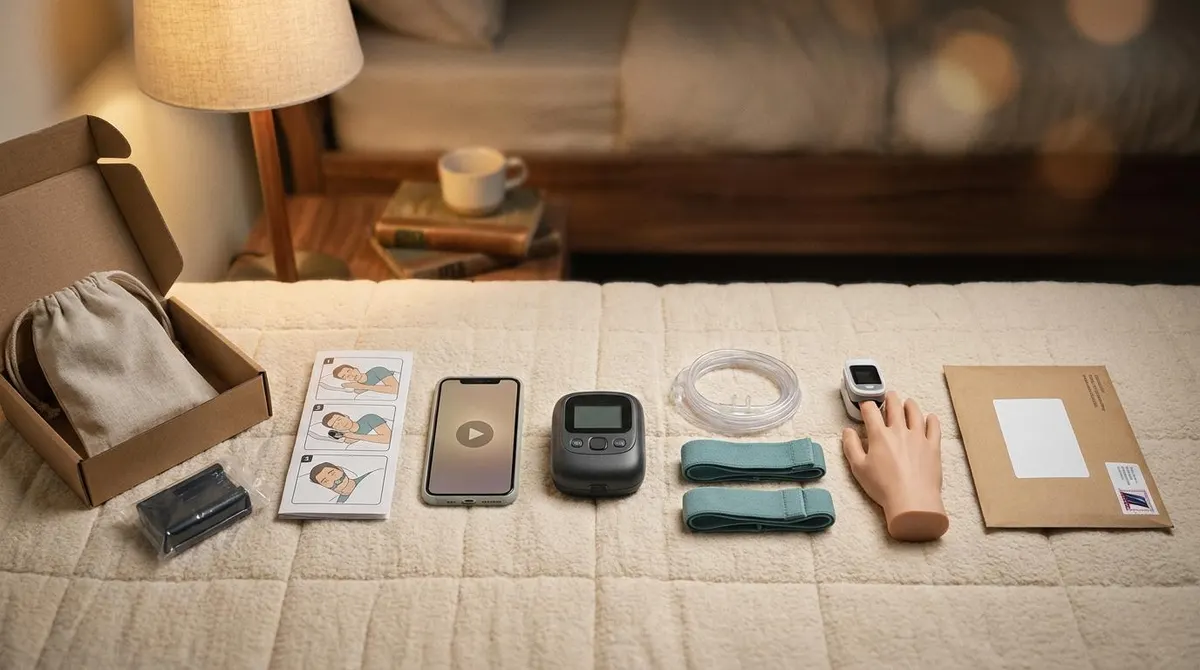
Completing a level 3 home sleep apnea test is straightforward, and most patients finish the process in under a week from ordering to receiving results. The test requires no lab visit, no sleep technician, and no insurance prior authorization when completed through a cash-pay service.
Step-by-Step Process
1. Complete a clinical screening or sleep assessment. This can be done through your doctor or by taking the free sleep assessment at dumbo.health. The screening evaluates your symptoms, risk factors, and whether a home sleep test is appropriate.
2. Order your home sleep test device. Through dumbo.health, the test costs $149 as a one-time fee with no insurance required. The device is shipped directly to your home.
3. On the test night, apply the device before going to bed. Attach the nasal pressure sensor (cannula) to your nostrils, place the pulse oximeter clip on your finger, and secure the respiratory effort belt around your chest. Most devices include clear printed instructions or a short video tutorial.
4. Sleep in your normal sleep environment. The device records data automatically throughout the night. Try to maintain your usual bedtime routine. Avoid alcohol and sedatives the evening of the test, as they can affect breathing patterns and test accuracy.
5. Remove the device in the morning and return it according to the instructions provided. Some services use prepaid shipping labels for return, while others allow data upload from the device.
6. A sleep physician reviews the recorded data and generates a diagnostic report. The report includes the apnea-hypopnea index, oxygen desaturation index, and a summary of respiratory events. Through dumbo.health, physician interpretation is included in the Essentials plan at $59 per month or the Premium plan at $89 per month, with results turnaround prioritized on the Premium and Elite plans.
7. Review your results with your care team. If obstructive sleep apnea is diagnosed, your physician will discuss severity and recommend a treatment plan, which most commonly involves CPAP therapy for moderate to severe cases.
After completing these steps, you will have a definitive diagnosis and a clear path to treatment, all without visiting a sleep lab or navigating insurance approvals.
Preparation Checklist
Before your test night, confirm the following:
- You have received the device and all included sensors (nasal cannula, oximeter clip, chest belt)
- You have read the setup instructions or watched the instructional video
- You have charged the device if it requires charging (some devices use disposable sensors and arrive pre-charged)
- You have identified a normal sleep night (avoid testing after an unusually exhausting day or after consuming alcohol)
- You have a flat, firm surface next to your bed where the device can rest
- Your sleep environment is comfortable and represents a typical night
- You plan to sleep for at least 6 hours to ensure adequate recording time
- You have the return label or data upload instructions ready for the morning
TIP: Many patients report that sleeping with the nasal cannula feels unfamiliar for the first few minutes but becomes unnoticeable within 10 to 15 minutes.
KEY TAKEAWAY: A level 3 home sleep apnea test requires only a single night of recording, self-applied sensors, and no overnight lab visit, making it one of the most accessible diagnostic pathways for obstructive sleep apnea.
Once you know how the test works in practice, the next important topic is understanding how results are interpreted.
How Level 3 Test Results Are Interpreted
The apnea-hypopnea index is the primary metric used to diagnose and classify the severity of obstructive sleep apnea from a level 3 home sleep apnea test. A sleep physician reviews the raw data, scores each respiratory event, and generates a clinical report.
The Apnea-Hypopnea Index Explained
The apnea-hypopnea index (AHI) represents the average number of apneas and hypopneas per hour of recording time. An apnea is a complete cessation of airflow for at least 10 seconds. A hypopnea is a partial reduction in airflow (typically 30 percent or more) lasting at least 10 seconds, accompanied by an oxygen desaturation of 3 percent or more or, in attended studies, an arousal.
According to the American Academy of Sleep Medicine, obstructive sleep apnea severity is classified as follows:
- Normal: AHI below 5 events per hour
- Mild obstructive sleep apnea: AHI of 5 to 14 events per hour
- Moderate obstructive sleep apnea: AHI of 15 to 29 events per hour
- Severe obstructive sleep apnea: AHI of 30 or more events per hour
The Recording Time Caveat
One important nuance that generic health content often overlooks is how level 3 tests calculate AHI. Because level 3 devices do not record brain waves, they cannot determine actual total sleep time. Instead, the AHI is calculated using total recording time, which includes any time the patient spends awake in bed. This can dilute the AHI and underestimate severity in patients who take a long time to fall asleep or who wake frequently during the night.
For example, if a patient records 8 hours of data but only sleeps for 5.5 hours, the AHI calculated from recording time will be lower than the true AHI based on actual sleep time. This is one reason why a negative level 3 result in a patient with strong clinical symptoms should prompt a follow-up with in-lab polysomnography, where total sleep time can be measured precisely.
Oxygen Desaturation Index
In addition to the AHI, the oxygen desaturation index (ODI) is reported. The ODI counts the number of times per hour that the oxygen saturation level drops by 3 percent or more from baseline. A high ODI alongside a high AHI strengthens the diagnosis and may indicate more severe cardiovascular risk. The National Heart, Lung, and Blood Institute notes that recurrent oxygen desaturation during sleep is associated with increased risk of hypertension, stroke, and cardiac arrhythmias.
What Happens After Diagnosis
Once the physician interprets the results, the next step depends on severity:
- Mild OSA may be managed with positional therapy, weight management, or oral appliances such as tongue stabilizing devices, depending on the clinical assessment.
- Moderate to severe OSA is most commonly treated with positive airway pressure therapy. CPAP therapy delivers continuous positive airway pressure through a mask worn during sleep, keeping the airway open and preventing apneas. Auto-adjusting positive airway pressure (APAP) devices are increasingly used as a first-line option because they adjust pressure automatically based on detected events.
dumbo.health includes physician interpretation and CPAP therapy in its monthly care plans. The Essentials plan at $59 per month covers physician review, CPAP equipment, and standard follow-up. The Premium plan at $89 per month adds a dedicated sleep coach and advanced adherence monitoring, which matters because CPAP adherence is one of the biggest challenges in sleep apnea treatment. The CDC notes that adherence to CPAP therapy significantly improves outcomes but remains a barrier for many patients without structured support.
KEY TAKEAWAY: The apnea-hypopnea index is the central diagnostic metric from a level 3 home sleep apnea test, but the recording time calculation can underestimate severity, making clinical context and follow-up essential.
Understanding results interpretation sets the stage for evaluating the specific devices used in level 3 testing.
Common Level 3 Portable Monitoring Devices
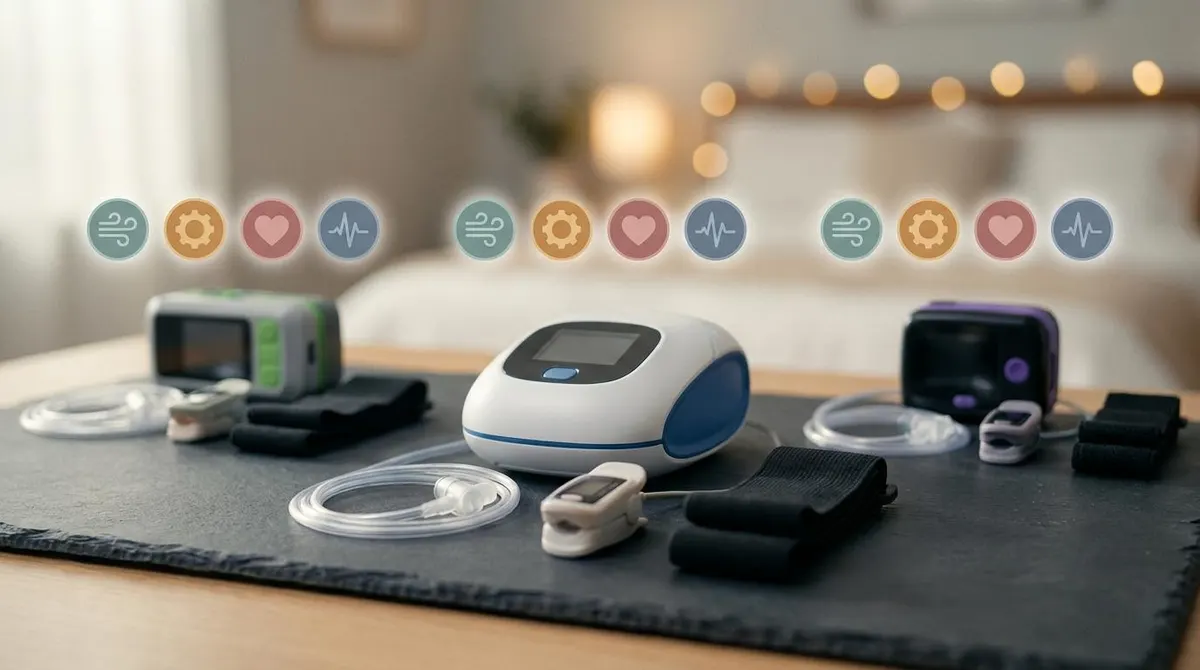
Several portable monitoring devices are used for level 3 home sleep apnea testing, each with slightly different designs, sensor configurations, and form factors. The core measurement channels remain consistent across devices, but patient experience and data quality can vary.
Widely Used Devices
The Embletta is one of the most established level 3 portable monitors in clinical use. Manufactured by Natus Medical, the Embletta records nasal airflow, thoracic and abdominal respiratory effort, oxygen saturation, heart rate, body position, and snoring. Clinicians frequently observe that the Embletta produces reliable, high-quality recordings in home settings.
The ApneaLink, produced by ResMed, is a compact device that has become popular because of its simplicity. Some versions record airflow and oximetry alone (qualifying as level 4), while more advanced models add respiratory effort belts to meet level 3 standards. The ApneaLink Air model records nasal pressure, respiratory effort, pulse oximetry, and snoring.
The Stardust, previously manufactured by Respironics (now Philips), was widely used in early home sleep testing programs. It recorded nasal airflow, respiratory effort, oxygen saturation, heart rate, body position, and snoring frequency. While newer devices have largely replaced it, the Stardust contributed significantly to the validation of home sleep testing.
Other devices include the Morpheus, the LifeShirt (which uses respiratory inductance plethysmography), the ApneaTrak Core, and the ApneaTrak Legacy. Each device captures the essential channels needed for a level 3 study. Some newer models use disposable sensors for hygiene and convenience.
Device Selection and Diagnostic Accuracy
The specific device used for your test does not typically change the diagnostic outcome for moderate to severe obstructive sleep apnea. A meta-analysis published in the journal Respirology found that level 3 portable devices as a class demonstrate high diagnostic accuracy for moderate to severe OSA compared to polysomnography. The critical factor is not which brand of monitor is used but whether the data is scored and interpreted by a qualified sleep physician.
When you order a home sleep apnea test through dumbo.health, the specific device provided is clinically validated and meets AASM standards for level 3 monitoring. The test costs $149 as a one-time purchase, and physician interpretation is included in any monthly care plan.
KEY TAKEAWAY: Multiple clinically validated level 3 devices exist, and while designs vary, diagnostic accuracy depends more on proper application and expert physician interpretation than on the specific device brand.
With devices covered, the next consideration is the practical cost of testing and treatment.
Cost of Level 3 Home Sleep Apnea Testing and Treatment
A level 3 home sleep apnea test typically costs between $149 and $500 when paid out of pocket, making it significantly less expensive than in-lab polysomnography, which often ranges from $1,000 to over $3,000 depending on location, facility fees, and whether insurance covers the study.
Why Insurance Can Complicate the Process
Many patients assume insurance will cover sleep testing, but the path to coverage often involves prior authorization, referral requirements, deductible obligations, and potential claim denials. For patients with high-deductible plans, the out-of-pocket cost through insurance may end up comparable to or higher than paying cash directly. This is especially relevant for commercial drivers and owner-operators who may not carry traditional health insurance.
Cash-Pay Pricing Through dumbo.health
dumbo.health operates on a transparent cash-pay model that eliminates insurance barriers entirely. The pricing structure is designed so patients can plan around clear costs with no surprise bills:
The home sleep test costs $149 as a one-time fee. This covers the test device and one night of testing. It is purchased before the test night and billed separately from any monthly plan.
Monthly plans cover ongoing care, physician interpretation, treatment, and follow-up:
The Essentials Plan costs $59 per month, which works out to roughly $2 per day. It includes physician interpretation and report, CPAP therapy and equipment, standard follow-up care, and updates sent to the referring provider. There are no contracts and you can cancel anytime.
The Premium Plan costs $89 per month, roughly $3 per day. It includes everything in the Essentials plan plus a dedicated sleep coach from a licensed care team, advanced adherence monitoring, and priority results turnaround.
The Elite Plan costs $129 per month, roughly $4 per day. It includes everything in the Premium plan plus concierge clinical support with priority care team access, direct physician messaging, and custom reporting for your practice.
Cost of Untreated Sleep Apnea
The financial argument for testing extends beyond the cost of the test itself. According to the American Academy of Sleep Medicine, untreated obstructive sleep apnea is associated with higher healthcare utilization, including increased emergency department visits, hospitalizations, and medication costs. One AASM-cited analysis estimated that undiagnosed sleep apnea costs the U.S. healthcare system billions annually in avoidable complications. For commercial drivers, untreated sleep apnea also carries the risk of lost income due to medical disqualification.
KEY TAKEAWAY: A level 3 home sleep apnea test through dumbo.health costs $149 with no insurance required, and monthly treatment plans start at $59 per month, making the entire pathway from diagnosis to treatment predictable and affordable.
Cost is one barrier. The next section addresses other limitations and situations where a level 3 test may not be the right choice.
Limitations and Risks of Level 3 Home Sleep Apnea Testing
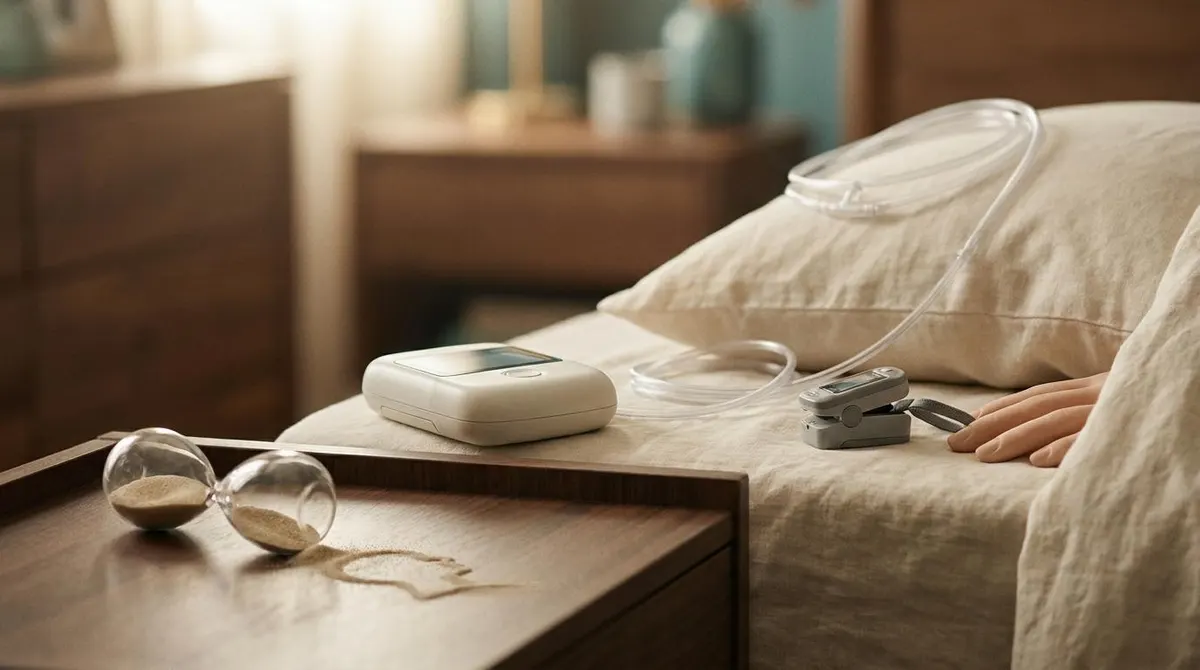
A level 3 home sleep apnea test is a reliable diagnostic tool for obstructive sleep apnea, but it has specific limitations that every patient and clinician should understand before choosing this pathway. Balanced, honest information about what the test cannot do is essential for making good clinical decisions.
Limitation 1: No Sleep Architecture Data
Because level 3 devices do not include electroencephalography electrodes, they cannot measure brain waves, sleep stages, or sleep architecture. This means conditions that require sleep stage identification, such as REM sleep behaviour disorder, periodic limb movement disorder, and narcolepsy, cannot be diagnosed with a level 3 study. Sleep efficiency, which measures the percentage of time in bed spent asleep, also cannot be calculated.
Limitation 2: AHI May Underestimate Severity
As discussed earlier, the apnea-hypopnea index from a level 3 test is based on recording time rather than actual total sleep time. This can underestimate the true severity of sleep apnea in patients who spend significant time awake during the recording. A patient with 50 apnea events during 5 hours of sleep within an 8-hour recording period would show a lower AHI than the same patient tested with polysomnography where the denominator is actual sleep time.
Limitation 3: Risk of Technical Failures
Self-applied sensors carry a risk of data loss. If the nasal cannula shifts during the night, or the oximeter clip loosens from the finger, the recording may be incomplete or unusable. Studies on home sleep testing report data loss rates of approximately 5 to 15 percent depending on the device and patient population. In real-world use, many patients need only a brief review of the instructions to avoid these issues, but the risk of a technically inadequate study is higher than in an attended lab setting where a sleep technician can adjust equipment in real time.
Limitation 4: Not Suitable for All Patient Populations
Level 3 testing is not validated for pediatric sleep disorders. Children have different respiratory physiology and require attended polysomnography for accurate diagnosis. Patients with severe cardiopulmonary disease, neuromuscular conditions, or suspected central sleep apnea syndrome also require in-lab evaluation. The AASM explicitly states that home sleep apnea tests should not be used as a screening tool in asymptomatic populations.
Limitation 5: False Negatives in Mild OSA
The diagnostic accuracy of level 3 studies is highest for moderate to severe obstructive sleep apnea. Sensitivity drops for mild obstructive sleep apnea (AHI 5 to 14), meaning some patients with mild disease may receive a negative test result. A negative or normal result in a patient who still reports persistent snoring, daytime sleepiness, or witnessed apneas should prompt a referral for in-lab polysomnography.
How dumbo.health Addresses These Limitations
dumbo.health mitigates several of these concerns through physician oversight at every stage. The physician interpretation included in monthly plans ensures that borderline or inconclusive results are not simply dismissed. The Premium plan's dedicated sleep coach can guide patients through device setup to reduce technical failure rates. When a level 3 test result is inconclusive, the care team can recommend next steps, including referral for in-lab polysomnography if needed.
KEY TAKEAWAY: Level 3 home sleep apnea tests have real limitations including the inability to measure sleep stages, potential AHI underestimation, and reduced sensitivity for mild OSA, all of which require physician judgment and follow-up.
Knowing the limitations prepares you to recognize common myths and misconceptions about home sleep testing.
Common Myths About Home Sleep Apnea Testing Debunked
MYTH: A home sleep apnea test is not as accurate as an in-lab sleep study.
FACT: For diagnosing moderate to severe obstructive sleep apnea in appropriate candidates, level 3 home sleep apnea tests demonstrate diagnostic accuracy comparable to in-lab polysomnography. The American Academy of Sleep Medicine endorses HSATs as a valid diagnostic pathway for uncomplicated adult patients. Accuracy drops for mild OSA and complex sleep disorders, which is why patient selection matters.
MYTH: You need insurance to get a home sleep apnea test.
FACT: Home sleep apnea tests are available through cash-pay services without any insurance requirement. dumbo.health offers the test for $149 with no prior authorization, no surprise bills, and no insurance needed. Many patients find cash-pay faster and more transparent than navigating insurance coverage.
MYTH: If your home sleep test comes back normal, you definitely do not have sleep apnea.
FACT: A negative level 3 result does not definitively exclude obstructive sleep apnea, particularly mild cases. The AASM recommends that patients with ongoing sleep apnea symptoms and a negative home test undergo in-lab polysomnography. The recording time denominator and potential sensor displacement can both contribute to false-negative results.
MYTH: Home sleep tests measure the same things as in-lab polysomnography.
FACT: Level 3 home sleep apnea tests measure airflow, respiratory effort, oxygen saturation, and heart rate. They do not measure brain waves, muscle activity, eye movements, or sleep stages. This means they cannot diagnose conditions such as periodic limb movement disorder, REM sleep behaviour disorder, or narcolepsy. The tests are designed specifically for obstructive sleep apnea screening and diagnosis.
MYTH: CPAP is the only treatment for sleep apnea diagnosed by a home test.
FACT: While CPAP therapy is the most common and well-studied treatment for moderate to severe obstructive sleep apnea, other options exist depending on severity and individual factors. Mild cases may respond to positional therapy, weight management, or oral appliances including tongue stabilizing devices. In select cases, surgery may be considered. The treatment plan should be individualized by a sleep physician based on the test results and the patient's overall health profile.
KEY TAKEAWAY: Most misconceptions about home sleep apnea testing relate to accuracy, insurance requirements, and the scope of what the test can diagnose, all of which are addressed by proper patient selection and physician oversight.
With myths cleared up, it helps to see how different people actually experience the testing and treatment process in practice.
Real-World Scenarios: How Level 3 Testing Works in Practice
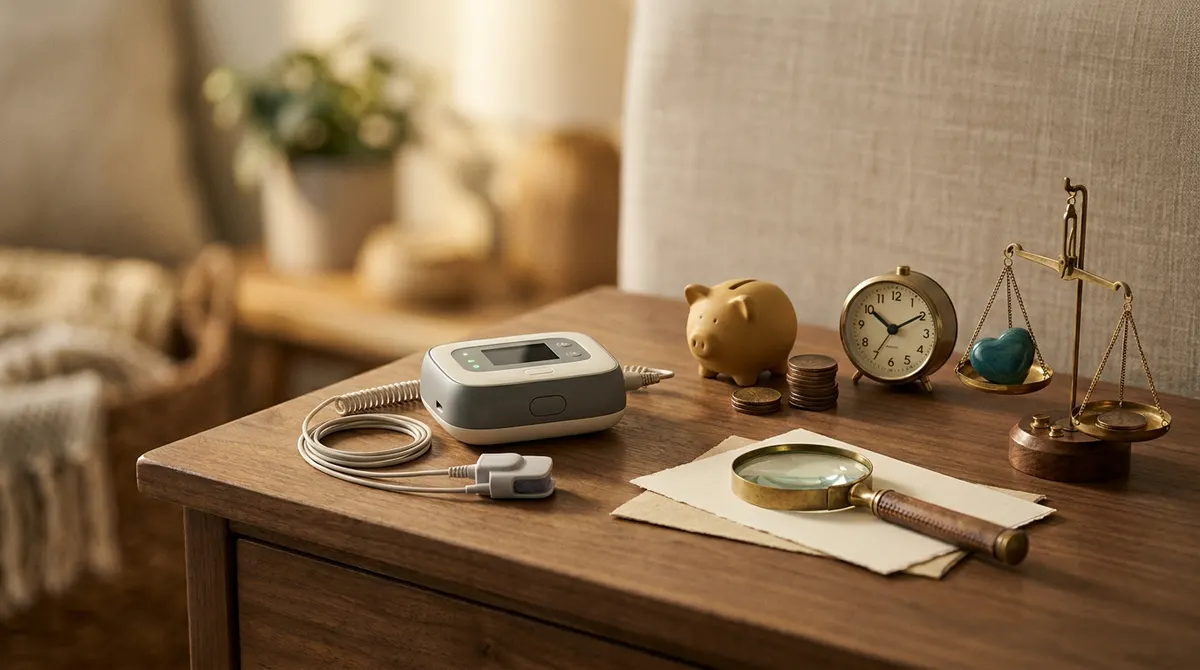
Concrete examples help illustrate who benefits most from level 3 home sleep apnea testing and how the process unfolds from initial concern to treatment.
Scenario 1: A Commercial Truck Driver Facing DOT Requirements
A 52-year-old owner-operator with a BMI of 36 is flagged during a DOT physical for possible obstructive sleep apnea. The examining physician notes a neck circumference of 18 inches, loud self-reported snoring, and an Epworth Sleepiness Scale score of 13. The driver does not carry health insurance and needs testing completed quickly to maintain CDL certification.
The driver orders a home sleep test through dumbo.health for $149. The device arrives within days, and the driver completes the test at home during a scheduled rest night. The results show an AHI of 28, consistent with moderate obstructive sleep apnea. The driver enrolls in the Premium plan at $89 per month, which includes CPAP therapy, equipment, a dedicated sleep coach, and advanced adherence monitoring. The sleep coach helps the driver meet the minimum 4 hours per night CPAP usage threshold that many DOT examiners and the FMCSA consider when evaluating compliance. The driver receives a follow-up report that can be shared with the DOT medical examiner.
Scenario 2: A 44-Year-Old Office Worker With Daytime Fatigue
A 44-year-old woman reports persistent daytime sleepiness, morning headaches, and a partner who has observed intermittent breathing pauses during sleep. Her BMI is 29, and her primary care doctor scores her at 11 on the Epworth Sleepiness Scale. She has no history of heart disease, neuromuscular conditions, or other complex sleep disorders.
Her doctor recommends a level 3 home sleep apnea test. She orders the test and completes it overnight. The results show an AHI of 9, indicating mild obstructive sleep apnea. Her physician discusses lifestyle modifications including weight management and positional therapy. If symptoms persist, a trial of auto-adjusting positive airway pressure may be considered. Her results and physician report are accessible through her care plan.
Scenario 3: A Patient With Suspected Central Sleep Apnea
A 67-year-old man with congestive heart failure and a history of atrial fibrillation reports gasping awake at night and extreme daytime fatigue. His cardiologist suspects central sleep apnea or complex sleep apnea syndrome. A level 3 home sleep apnea test would not be appropriate here because it cannot differentiate central from obstructive events with adequate reliability and cannot monitor sleep architecture. The cardiologist refers the patient directly to an attended in-lab polysomnography study, where brain wave monitoring and continuous technician observation provide the comprehensive data needed for diagnosis.
These scenarios illustrate that patient selection is the most important factor in determining whether a level 3 home sleep apnea test will produce clinically useful results.
KEY TAKEAWAY: Level 3 home sleep apnea testing works best for adults with clear risk factors for obstructive sleep apnea, while patients with complex comorbidities or atypical presentations need in-lab polysomnography.
Understanding who benefits from testing at home leads to the broader question of what happens after diagnosis and how treatment is managed.
From Diagnosis to Treatment: CPAP Therapy and Ongoing Care
CPAP therapy is the first-line treatment for moderate to severe obstructive sleep apnea, and starting treatment promptly after a level 3 diagnosis improves both symptoms and long-term cardiovascular outcomes. The key to success is not just prescribing the device but ensuring consistent adherence with structured support.
How CPAP Works
CPAP stands for continuous positive airway pressure. The device delivers a steady stream of pressurized air through a mask worn during sleep. This air pressure acts as a pneumatic splint, keeping the upper airway open and preventing the collapse that causes obstructive apneas and hypopneas. Auto-adjusting positive airway pressure (APAP) devices take this further by varying the pressure automatically throughout the night based on detected events, which many patients find more comfortable than fixed-pressure CPAP.
Why Adherence Matters
The Sleep Foundation reports that CPAP adherence, defined as using the device for at least 4 hours per night on at least 70 percent of nights, is one of the biggest challenges in sleep apnea management. Many patients struggle with mask discomfort, nasal dryness, claustrophobia, or simply forgetting to use the device. Without structured follow-up, dropout rates are high.
This is where the difference between receiving a device and receiving ongoing care becomes critical. dumbo.health's monthly plans are designed to address adherence head-on. The Essentials plan at $59 per month includes CPAP therapy, equipment, and standard follow-up. The Premium plan at $89 per month adds a dedicated sleep coach and advanced adherence monitoring, providing the accountability and troubleshooting support that clinicians frequently observe makes the difference between success and abandonment of therapy.
Connecting Testing to Treatment
The CPAP treatment pathway through dumbo.health connects the level 3 home sleep apnea test result directly to a treatment plan. There is no gap between diagnosis and receiving equipment. The physician who interprets the test result initiates the treatment recommendation, and CPAP equipment is included in the monthly plan. Updates are sent to the referring provider, which is especially important for commercial drivers who need documentation for DOT certification renewals.
For patients in your area who want a coordinated path from testing through treatment without insurance delays,
Frequently Asked Questions About Level 3 Home Sleep Apnea Tests
What is a Level 3 home sleep apnea test?
A Level 3 home sleep apnea test is a portable, at-home diagnostic study used to evaluate obstructive sleep apnea. It typically measures airflow, respiratory effort, oxygen saturation, and heart rate using a wearable device worn overnight in your own bed. Unlike a Level 1 in-lab polysomnography, a Level 3 study does not record brain waves, muscle activity, or sleep stages, but it captures the core cardiopulmonary data needed to calculate the apnea-hypopnea index and assess sleep-disordered breathing. A healthcare professional reviews the results and determines whether a diagnosis is appropriate.
What is the difference between Level 1, Level 2, Level 3, and Level 4 sleep studies?
Sleep studies are classified into four levels based on the number of channels recorded and the setting in which monitoring occurs. A Level 1 sleep study is a full in-lab polysomnography supervised by a registered polysomnographic technologist, recording brain waves, eye movements, muscle activity, airflow, oxygen saturation, and heart rate. A Level 2 study uses the same comprehensive channels but is conducted without a technician present, usually at home. A Level 3 study is a portable recording device that measures airflow, respiratory effort, oxygen saturation, and heart rate, but does not capture brain waves or sleep stages. A Level 4 study typically records only one or two channels, such as oxygen saturation, and is used for basic sleep apnea screening rather than diagnosis.
What data is collected during a Level 3 home sleep apnea test?
A Level 3 home sleep apnea test collects cardiopulmonary data including nasal airflow, thoracic and abdominal respiratory effort, oxygen saturation levels, and heart rate. Some devices also capture body position and snoring frequency. The data is used to calculate the apnea-hypopnea index, which measures the average number of apneas and hypopneas per hour of estimated sleep time. Because Level 3 devices do not record brain waves or sleep stages, sleep time is estimated rather than directly measured, which is an important limitation to understand before testing.
Who should consider a Level 3 home sleep apnea test?
A Level 3 home sleep apnea test is generally appropriate for adults with a moderate to high clinical likelihood of obstructive sleep apnea who do not have significant comorbidities that might complicate interpretation. The American Academy of Sleep Medicine explains that home sleep apnea testing using portable monitors is a suitable diagnostic option for uncomplicated suspected obstructive sleep apnea in adults. Patients with suspected complex sleep disorders such as central sleep apnea, REM sleep behaviour disorder, periodic limb movement disorder, or significant heart or lung disease are more likely to need a full Level 1 in-lab polysomnography. A healthcare professional can help determine whether Level 3 testing is appropriate for your situation.
Who should consider a Level 2 sleep study?
A Level 2 sleep study is typically considered when a clinician needs the comprehensive data of a full polysomnography but a patient cannot easily attend a sleep lab or prefers home-based testing. Because Level 2 studies record brain waves, eye movements, muscle activity, airflow, oxygen saturation, and heart rate without a technician present, they provide more detailed information about sleep architecture than a Level 3 study. However, they are less commonly used in routine clinical practice and may be recommended in specific cases where sleep stages and muscle activity data are clinically necessary.
Who should consider a Level 1 in-lab sleep study?
A Level 1 in-lab polysomnography is recommended when a full supervised assessment is clinically necessary. This includes patients with suspected complex sleep disorders such as REM sleep behaviour disorder, periodic limb movement disorder, narcolepsy, or central sleep apnea, as well as patients whose at-home sleep test results are inconclusive, negative despite strong clinical suspicion, or technically inadequate. Patients with significant cardiovascular, respiratory, or neuromuscular conditions may also be referred for in-lab Level 1 testing. A sleep physician or healthcare professional determines which level of study is appropriate based on symptoms, clinical assessment, and risk factors.
How does a Level 3 home sleep apnea test work?
A Level 3 home sleep apnea test uses a portable monitoring device that the patient applies at home before sleep. Sensors typically include a nasal pressure cannula to measure airflow, effort belts around the chest and abdomen to measure thoracoabdominal movement, a pulse oximeter to track blood oxygen saturation, and a sensor to record heart rate and body position. The device records data throughout the night. The following day, the recorded data is returned or transmitted for physician interpretation. A sleep physician or qualified clinician analyses the cardiopulmonary data to assess for sleep-disordered breathing and calculate the apnea-hypopnea index.
How accurate is a Level 3 home sleep apnea test?
Level 3 home sleep apnea tests have demonstrated reasonable diagnostic accuracy for moderate to severe obstructive sleep apnea in appropriate patient populations. Because these devices estimate sleep time rather than measuring it directly through brain wave recording, the apnea-hypopnea index may be slightly underestimated in some cases. The American Academy of Sleep Medicine recognises home sleep apnea testing as a valid diagnostic tool for uncomplicated obstructive sleep apnea in adults. Accuracy can be affected by technical failures, sensor displacement during sleep, or complex clinical presentations. A physician reviews the results and may recommend an in-lab study if the home test is inconclusive or the clinical picture is unclear.
What are the benefits of a Level 3 home sleep apnea test?
The main benefits of a Level 3 home sleep apnea test are convenience, comfort, and accessibility. Patients sleep in their own environment rather than in a clinical sleep lab, which can produce more natural sleep patterns for some individuals. Testing is typically less expensive than in-lab polysomnography. Results are generally available within a few days of the test night. For patients with a straightforward clinical presentation and moderate to high likelihood of obstructive sleep apnea, Level 3 testing can lead to a faster diagnosis and an earlier start to treatment. At-home sleep testing through transparent cash-pay services can also reduce cost barriers for patients without insurance.
What are the limitations of a Level 3 home sleep apnea test?
Level 3 home sleep apnea tests have several important limitations. They do not record brain waves or sleep stages, so sleep architecture, sleep efficiency, and certain sleep disorders such as REM sleep behaviour disorder or periodic limb movement disorder cannot be assessed. Sleep time is estimated rather than directly measured, which may affect the accuracy of the apnea-hypopnea index. Technical failures, such as sensor displacement or device malfunction, can result in inadequate recordings that require repeat testing. Patients with complex or atypical presentations may receive a false negative result. A healthcare professional should always review results and determine whether further investigation with an in-lab sleep study is needed.
What sleep disorders can a Level 3 home sleep apnea test detect?
A Level 3 home sleep apnea test is designed primarily to detect obstructive sleep apnea and assess the severity of sleep-disordered breathing. It can identify patterns of repeated airflow reduction, oxygen desaturation, and breathing interruptions associated with obstructive sleep apnea syndrome. However, it cannot reliably detect central sleep apnea, REM sleep behaviour disorder, narcolepsy, periodic limb movement disorder, or other sleep disorders that require brain wave monitoring, muscle activity recording, or full sleep stage analysis. If your clinician suspects a sleep disorder beyond obstructive sleep apnea, a Level 1 in-lab polysomnography may be recommended.
What symptoms might suggest I need a Level 3 home sleep apnea test?
Common symptoms that may indicate obstructive sleep apnea and prompt a clinician to recommend a Level 3 home sleep apnea test include loud snoring, waking up repeatedly during the night, waking with a dry mouth or sore throat, morning headaches, observed breathing pauses during sleep, and persistent daytime sleepiness. These symptoms do not confirm a diagnosis on their own. A healthcare professional uses a clinical assessment, sleep questionnaires such as the Epworth Sleepiness Scale, and relevant risk factors such as body mass index, neck circumference, and high blood pressure to determine whether testing is appropriate. If you are unsure whether you may be at risk, a free sleep assessment can be a useful first step.
How is sleep apnea related to heart health?
Obstructive sleep apnea causes repeated drops in oxygen saturation during sleep, which places stress on the cardiovascular system. According to the National Heart, Lung, and Blood Institute (NHLBI, untreated obstructive sleep apnea is associated with an increased risk of high blood pressure, heart disease, stroke, and irregular heart rhythms. Each apnea episode triggers a brief arousal, a surge in sympathetic nervous system activity, and a drop in blood oxygen saturation levels. Over time, these repeated disruptions can contribute to cardiovascular strain. Identifying and treating sleep apnea through testing and appropriate therapy may be relevant to long-term heart health, though individual outcomes vary and should be discussed with a clinician.
How long does a Level 3 home sleep apnea test take?
A Level 3 home sleep apnea test takes one night. The patient applies the monitoring device at home before their usual bedtime and wears it throughout their sleep period. Most devices record for the duration of the night and are returned or the data is uploaded the following day. The recording period is typically between six and eight hours, though the actual sleep time may be shorter. One night of recording is usually sufficient for a technically adequate study in most patients, but a repeat night may occasionally be needed if the first recording is incomplete or contains significant data gaps.
Can I take an at-home sleep apnea test more than once?
Yes, it is possible to repeat an at-home sleep apnea test if the first recording is technically inadequate, if a sensor became dislodged during the night, or if the results were inconclusive given the clinical picture. A healthcare professional reviews the recording quality and determines whether a second study is needed. In some cases, if an initial home test is negative but clinical suspicion for obstructive sleep apnea remains high, a clinician may recommend either a repeat home test or a full Level 1 in-lab polysomnography. The number of tests required depends on individual circumstances and the quality of each recording.
Does insurance cover a Level 3 home sleep apnea test?
Insurance coverage for a Level 3 home sleep apnea test varies depending on the insurer, the plan, and whether a referral or prior authorisation has been obtained. Some insurance plans cover home sleep apnea testing when ordered by a physician and when clinical criteria are met. Others may require prior authorisation or restrict coverage to specific devices or providers. For patients without insurance, with high deductibles, or who want to avoid prior authorisation delays, cash-pay options are available. dumbo.health offers a $149 at-home sleep test with transparent pricing, no insurance required, and no surprise bills.
How much does a home sleep apnea test cost?
The cost of a home sleep apnea test varies widely depending on whether it is ordered through insurance, obtained through a hospital system, or accessed through a direct cash-pay service. Insurance-billed studies may involve co-pays, deductibles, or balance billing. Cash-pay pricing for at-home sleep apnea testing typically ranges from around $149 to several hundred dollars depending on the provider and what is included. dumbo.health offers a one-time $149 home sleep test that includes the at-home device and one night of testing. Physician interpretation and ongoing care are available separately through monthly plans starting at $59 per month, with no contracts and no insurance required.
What is included in a monthly sleep apnea care plan after testing?
After completing a home sleep apnea test, ongoing care typically involves physician interpretation of results, a treatment plan, CPAP therapy and equipment if indicated, and adherence follow-up. dumbo.health offers monthly plans to support this ongoing care. The Essentials plan at $59 per month includes physician interpretation and report, CPAP therapy and equipment, standard follow-up care, and updates sent to a referring provider. The Premium plan at $89 per month adds a dedicated sleep coach, advanced adherence monitoring, and priority results turnaround. The Elite plan at $129 per month adds concierge clinical support, direct physician messaging, and custom reporting. All plans are contract-free and can be cancelled at any time. You can compare sleep apnea care options to find the right fit.
What is CPAP therapy and how does it relate to a Level 3 sleep apnea test?
CPAP, or continuous positive airway pressure, is the most commonly recommended treatment for moderate to severe obstructive sleep apnea. A Level 3 home sleep apnea test provides the apnea-hypopnea index and oxygen saturation data a clinician needs to determine whether CPAP therapy is appropriate and at what pressure settings to begin treatment. Auto-adjusting positive airway pressure devices are frequently prescribed based on home sleep test results. CPAP therapy works by delivering a continuous stream of air through a mask to keep the airway open during sleep, preventing apneas and reducing oxygen desaturation events. A clinician should guide CPAP initiation and monitor adherence over time. Learn more about CPAP therapy and equipment as part of ongoing sleep apnea care.
Does starting treatment with CPAP based on a home sleep test affect adherence?
Research suggests that initiating CPAP therapy based on home sleep test results does not significantly impair adherence compared to initiating treatment after in-lab polysomnography. A study published in Chest by Lettieri et al. found that home sleep testing did not impair CPAP adherence in patients with obstructive sleep apnea. Adherence is influenced by many factors including mask fit, patient education, device comfort, pressure settings, and ongoing clinical support. Structured adherence follow-up and access to a sleep coach can support consistent CPAP use over time, which is why ongoing care beyond the initial test night matters for long-term outcomes.
Do commercial drivers need a Level 3 home sleep apnea test for DOT compliance?
Commercial drivers who are referred for sleep apnea evaluation as part of a DOT physical may be required to complete a sleep study before a certified medical examiner determines their certification status. A Level 3 home sleep apnea test is one option that may be used in this evaluation process, depending on the clinical presentation and the medical examiner's assessment. The FMCSA does not currently have a single mandatory national sleep apnea standard, but certified medical examiners may follow established clinical guidance when evaluating drivers for sleep-disordered breathing. dumbo.health can support sleep apnea testing and care documentation for commercial drivers, but a certified medical examiner makes DOT certification decisions, not dumbo.health. See the home sleep apnea test guide for CDL drivers for more detail.
How does sleep apnea testing support DOT physical outcomes for truck drivers?
For commercial drivers, untreated obstructive sleep apnea poses a significant safety risk related to daytime sleepiness, reduced alertness, and impaired decision-making behind the wheel. A certified medical examiner conducting a DOT physical may evaluate a driver for sleep apnea risk based on symptoms, body mass index, neck circumference, blood pressure, and clinical history. If the examiner identifies elevated risk, they may defer certification until a sleep apnea evaluation is completed and, if treatment is indicated, until CPAP adherence has been established. Completing a Level 3 home sleep apnea test and demonstrating treatment adherence can support the documentation a driver needs for the medical examiner review. A certified medical examiner makes all final certification decisions. The DOT sleep apnea test at home guide covers this process in detail.
Can a Level 3 home sleep apnea test find sleep apnea near me without visiting a sleep lab?
Yes, a Level 3 home sleep apnea test allows patients to complete their sleep apnea evaluation at home without travelling to a sleep lab or clinic. The device is shipped to your address or collected from a nearby provider, depending on the service. You wear the monitoring equipment during your normal sleep period in your own bed. Results are then reviewed remotely by a physician. This model makes testing accessible to patients in areas where sleep labs are limited, for those with busy schedules, or for anyone who prefers to avoid an overnight clinical stay. Patients looking for convenient testing options in their area can get started with an at-home sleep test through dumbo.health.
What should I do if I have severe sleep apnea symptoms or urgent health concerns?
If you experience severe symptoms such as chest pain, significant shortness of breath, irregular heartbeat, or any other urgent health concern, seek medical care promptly and do not wait for a home sleep test. A Level 3 home sleep apnea test is appropriate for stable patients with suspected uncomplicated obstructive sleep apnea. It is not a substitute for emergency evaluation. If your symptoms are severe, persistent, or worsening, a healthcare professional should assess you in person before any home-based testing is arranged. Sleep apnea testing and treatment planning should always be guided by a qualified clinician who can consider your full medical history and risk factors.
Related Home Sleep Apnea Test Topics
- What Is a Home Sleep Apnea Test How At-Home Sleep Testing Works, What It Measures, and Who Needs One
- Sleep Study for Sleep Apnea What the Test Measures, How It Works, and What Your Results Mean
- At Home Sleep Apnea Test with Ring How Ring-Based Sleep Testing Works and Whether It Can Diagnose Sleep Apnea
- Level 2 Home Sleep Apnea Test The Complete Guide to At-Home Sleep Diagnostics
- Home Sleep Apnea Test Ring How Ring-Based Sleep Testing Works for Sleep Apnea Detection
- Sleep Study for Sleep Apnea What Happens, What It Measures, and What Your Results Mean
- Sleep Test What It Measures, How It Works, and What Your Results Mean
- FDA Approved Home Sleep Apnea Test What Devices Are Cleared, How They Work, and How to Get Tested
- Sleep Study Test for Sleep Apnea The Complete Guide to Diagnosis, Testing Types, and Next Steps
- How Do You Get a Home Sleep Apnea Test The Complete Guide to At-Home Sleep Testing
- Sleep Apnea Test at Home with Insurance What Your Plan Actually Covers and How to Get Tested
- Home Sleep Apnea Test FDA Approved What Devices Are Cleared and How They Work
- How to Get a Sleep Apnea Test at Home The Complete Guide to Home Sleep Testing
- Home Sleep Apnea Test FSA Eligible How to Use Your Flexible Spending Account for Sleep Testing
- How Is a Home Sleep Apnea Test Done A Complete Guide to At-Home Sleep Testing
- At-Home Sleep Apnea Test FSA How to Use Your Flexible Spending Account for Sleep Testing
- At Home Sleep Apnea Test HSA How to Use Your Health Savings Account for Sleep Testing
- Home Sleep Apnea Test ICD-10 Codes The Complete Coding and Diagnostic Guide for Sleep Apnea Testing
- How Does a Home Sleep Apnea Test Work A Complete Guide to At-Home Sleep Testing
- What Does a Home Sleep Apnea Test Consist Of Sensors, Equipment, and What to Expect
- Home Sleep Apnea Test Indications Who Qualifies and When At-Home Testing Is Clinically Appropriate
- Home Sleep Apnea Test Guidelines Clinical Standards, Eligibility, and What Every Patient Should Know
- Home Sleep Apnea Test The Complete Guide to At-Home Sleep Apnea Testing
- How Long Does a Home Sleep Apnea Test Take What to Expect Before, During, and After Testing
- Sleep Apnea Checker How to Screen for Sleep Apnea and What Your Results Mean
- Home Sleep Apnea Test Negative What It Means, Why It Happens, and What to Do Next
- Sleep Apnea Testing at Home The Complete Guide to Home Sleep Tests, Devices, and Results
- Home Sleep Apnea Testing The Complete Guide to Diagnosing Sleep Apnea at Home
- Home Sleep Apnea Test Cost What You Actually Pay With and Without Insurance
- Best Home Sleep Apnea Test A Clinical Guide to Choosing the Right At-Home Sleep Study
- CPAP Test What It Is, How It Works, and What Your Results Mean
- What Happens After a Home Sleep Apnea Test Results, Diagnosis, and Next Steps
- Sleep Apnea Test Near Me How to Find Local and At-Home Testing Options
- Home Sleep Apnea Test CPT Code Complete Coding and Billing Guide for Sleep Studies
- Home Sleep Apnea Test for Children What Parents Need to Know About Pediatric Sleep Testing
- Sleep Apnea Test at Home The Complete Guide to Home Sleep Testing for Adults
- Home Sleep Apnea Test for Kids What Parents Need to Know About Pediatric Sleep Testing
- Kids at Home Sleep Apnea Test What Parents Need to Know About Pediatric Sleep Testing
- CPAP Test at Home The Complete Guide to Home Sleep Apnea Testing and Treatment
- At-Home Sleep Apnea Test for Toddlers What Parents Need to Know About Pediatric Sleep Testing
- Home Sleep Test The Complete Guide to At-Home Sleep Apnea Testing
- Home Sleep Apnea Test Near Me How to Get Tested Without a Sleep Lab Visit
- Can You Test for Sleep Apnea at Home A Complete Guide to Home Sleep Testing
- Home Sleep Apnea Test Parameters What Every Measurement Means and Why It Matters
- Sleep Apnea Diagnosis How Sleep Apnea Is Detected, Tested, and Confirmed
- Can a Home Sleep Apnea Test Be Wrong Accuracy, False Negatives, and What to Do Next
- Home Sleep Apnea Test Questionnaire Screening Tools, Risk Scores, and What Happens Next
- Sleep Apnea Test The Complete Guide to Diagnosis, Home Testing, and What Your Results Mean
- Home Sleep Apnea Test False Negative Why It Happens and What to Do Next
- How Much Does a Home Sleep Apnea Test Cost Complete Pricing Breakdown for Self-Pay and Insured Patients
- What Is the Best At-Home Sleep Apnea Test A Clinical Comparison of Devices, Accuracy, and Cost
- Sleep Test at Home The Complete Guide to Home Sleep Apnea Testing
- CPT for Home Sleep Apnea Test Complete Coding and Billing Guide for Sleep Study Providers
- At-Home Sleep Apnea Test False Positive Why It Happens and What to Do Next
- Sleep Apnea Diagnosis at Home The Complete Guide to Home Sleep Testing
- At-Home Sleep Apnea Test The Complete Guide to Testing, Results, and Treatment
- Sleep Test to CPAP How Sleep Apnea Testing Leads to Treatment
- Can a Sleep Study Diagnose Sleep Apnea and Other Sleep Disorders
- Does Insurance Cover a Home Sleep Apnea Test What You Actually Pay
- Does Medicare Cover a Home Sleep Apnea Test What Beneficiaries Need to Know
- How Do Home Sleep Apnea Tests Compare to In-Lab Sleep Studies
- Can Dentists Prescribe a Home Sleep Apnea Test What You Need to Know
- What Is the Cost of a Sleep Apnea Test at Home
- Home Sleep Test Cost What You Actually Pay With and Without Insurance
- Polysomnography at Home How Home Sleep Testing Compares to In-Lab Sleep Studies
- At-Home Sleep Apnea Test Covered by Medicaid What You Need to Know Before Getting Tested
- Home Sleep Apnea Test Medicaid Coverage What Patients Need to Know
- CPT Code for Home Sleep Apnea Test The Complete Coding and Billing Guide
- Can My Doctor Prescribe a Home Sleep Apnea Test What You Need to Know
- Are Home Sleep Apnea Tests Reliable Clinical Evidence, Accuracy, and What the Data Actually Shows
- Does a Home Sleep Apnea Test Measure Apneas What the Device Actually Records
- Pediatric Home Sleep Apnea Test A Complete Guide for Parents and Providers
- Sleep Apnea Testing The Complete Guide to Diagnosis, Home Tests, and What Your Results Mean
- How to Get Tested for Sleep Apnea The Complete Guide to Diagnosis, Sleep Studies, and Treatment
- Sleep Apnea Testing Near Me How to Find the Right Test, Provider, and Path to Diagnosis
- Do At-Home Sleep Apnea Tests Work Clinical Accuracy, Limitations, and What the Evidence Shows
- Home Sleep Apnea Test CPT Codes A Complete Guide to Billing, Coding, and Reimbursement
- CPT Code for Home Sleep Apnea Test Complete Billing and Coding Guide
- Home Sleep Testing Companies A Complete Guide to At-Home Sleep Apnea Diagnosis
- Does Anyone Ever Pass a Sleep Apnea Test What Normal Results Actually Look Like
- Can I Get a CPAP Machine After a Home Sleep Apnea Test
- How Does a Sleep Study Diagnose Sleep Apnea
- Sleep Apnea Sleep Study The Complete Guide to Testing, Diagnosis, and Treatment
- Obstructive Sleep Apnea Sleep Study The Complete Guide to Diagnosis, Testing, and Treatment
- At Home Sleep Study for Sleep Apnea The Complete Guide to Testing in Your Own Bed
- What to Expect During a Sleep Study for Sleep Apnea
- Sleep Study Apnea Hypopnea Index What Your AHI Score Means and Why It Matters
- Top-Rated Home Sleep Apnea Test Kits Available in the US
- Where Can I Buy a Home Sleep Apnea Test Without a Prescription
- Average Cost of a Home Sleep Apnea Test Kit Shipped in the US
- Do I Need a Prescription for a Home Sleep Apnea Test Device
- Sleep Apnea Test at Home DOT Approved Options for Commercial Drivers
- Apnea Monitor The Complete Guide to Breathing Monitors for Sleep Apnea and Infant Care
- Do You Need a Prescription for a Home Sleep Apnea Test
- At Home Sleep Apnea Test for VA Disability The Complete Guide for Veterans
- Are Home Sleep Apnea Tests Accurate What the Evidence Actually Shows
- At-Home Sleep Apnea Test for VA The Complete Guide for Veterans
- Home Sleep Apnea Test Contraindications When an HSAT Is Not the Right Choice
- Disadvantages of Home Sleep Testing What Patients and Providers Need to Know
- Home Sleep Testing The Complete Guide to Diagnosing Sleep Apnea From Your Own Bed
AI summary
A level 3 home sleep apnea test (HSAT) is an unattended, portable sleep study used mainly to diagnose obstructive sleep apnea (OSA) in adults. It records cardiopulmonary signals during sleep at home. Core concept: It detects apneas, hypopneas, and oxygen desaturation without measuring sleep stages. Key measurements: nasal airflow (nasal pressure cannula), respiratory effort (thorax/abdomen belts), oxygen saturation and heart rate (pulse oximeter). Some devices also record snoring and body position. CPT 95800 commonly applies. Interpretation: A physician scores events and reports the apnea-hypopnea index (AHI) and oxygen desaturation index (ODI). AHI categories are normal <5, mild 5–14, moderate 15–29, severe ≥30. Because level 3 testing uses recording time rather than total sleep time, AHI can underestimate severity. Appropriate candidates: adults with moderate to high pretest probability of uncomplicated OSA. Constraints: not suited for suspected central sleep apnea, significant cardiopulmonary disease, neuromuscular conditions, pediatric patients, or suspected disorders like periodic limb movement disorder, REM sleep behaviour disorder, or narcolepsy. Negative or inconclusive HSAT with persistent symptoms should be followed by in-lab polysomnography.

Nicolas Nemeth
Co-Founder
Nico is the co-founder of Dumbo Health, a digital sleep clinic that brings the entire obstructive sleep apnea journey home. Patients skip the sleep lab and the long wait to see a specialist. Dumbo Health ships an at home test, connects patients with licensed sleep clinicians by video, and delivers CPAP or a custom oral appliance with ongoing coaching and automatic resupply in one clear subscription.
Keep reading

VA At Home Sleep Apnea Test: The Complete Guide for Veterans

Home Sleep Apnea Test App: What Works, What Doesn't, and How to Get a Real Diagnosis


