Home Sleep Apnea Test CPT Code: Complete Coding and Billing Guide for Sleep Studies
This guide explains how home sleep apnea tests (HSAT) are coded and billed for reimbursement. It breaks down the three main commercial CPT codes, 95800, 95801, and 95806, based on which channels a portable monitor records. It also clarifies that Medicare requires HCPCS G0398, G0399, or G0400 instead of CPT codes to avoid automatic denials. You will learn how ICD-10-CM diagnosis coding, especially G47.33 for obstructive sleep apnea, supports medical necessity. The article compares HSAT coding with in-lab polysomnography codes 95810 and 95811 and reviews device types such as Type II, Type III, Type IV, and peripheral arterial tone systems. It includes a step-by-step billing workflow, common denial reasons, and practical checks to submit cleaner claims.
Struggling with sleep?
Find out if sleep apnea is the reason.
FDA-cleared. $149 flat. Physician-reviewed results in 48 hours.

Home Sleep Apnea Test CPT Code: Complete Coding and Billing Guide for Sleep Studies
The home sleep apnea test CPT code most commonly used is 95800, 95801, or 95806, depending on which physiological channels the device records during an unattended overnight study. These CPT codes, maintained by the American Medical Association, classify home sleep testing procedures for billing and reimbursement across commercial payers and Medicare. According to the American Academy of Sleep Medicine, home sleep apnea testing has become the frontline diagnostic method for adults with suspected obstructive sleep apnea, making accurate coding essential for providers, billing staff, and patients navigating cost and coverage. This guide covers every CPT code, HCPCS code, ICD-10-CM diagnosis code, and billing policy relevant to home sleep testing. Whether you are a sleep medicine clinician, a medical billing specialist, or a patient trying to understand what you are being charged for, this article explains exactly how home sleep apnea test coding works and where common billing errors occur.
Quick Answer
The primary CPT codes for a home sleep apnea test are 95800, 95801, and 95806. Each code corresponds to a different combination of recorded channels, including respiratory airflow, oxygen saturation, heart rate, and respiratory effort. Medicare uses HCPCS codes G0398, G0399, and G0400 instead of CPT codes for home sleep testing. The correct code depends on the device type and the number of parameters measured. Dumbo.health offers a home sleep test for $149 with no insurance coding required.
Key Takeaways
- CPT codes 95800, 95801, and 95806 are the three main codes for unattended home sleep apnea tests, each defined by the number and type of recorded channels.
- Medicare does not recognize CPT codes for home sleep testing and instead requires HCPCS codes G0398, G0399, and G0400.
- The ICD-10-CM diagnosis code G47.33 is the primary code for obstructive sleep apnea, required on all sleep study claims.
- Medical necessity documentation and a supporting ICD-10-CM diagnosis code must accompany every home sleep test claim to avoid coverage denial.
- Dumbo.health provides a home sleep test for a one-time cost of $149 with no insurance, no preauthorization, and no surprise bills.
- Type III portable monitors record a minimum of four channels and align with CPT code 95806, the most commonly billed home sleep apnea test code.
What Is a Home Sleep Apnea Test CPT Code
A home sleep apnea test CPT code is a five-digit numeric code from the CPT code set that identifies a specific type of unattended sleep study performed outside a sleep lab. The American Medical Association maintains the CPT code set, which standardizes how medical procedures are reported to health insurance providers and claims processing systems.
Home sleep testing, sometimes called a Home Sleep Study Test, uses a portable monitor that the patient wears at home during a normal night of sleep. The device records physiological data such as respiratory airflow, oxygen saturation, heart rate, and respiratory effort. The number and type of channels recorded determine which CPT code applies.
Unlike in-lab polysomnography, which requires technologist attendance and records extensive sleep architecture data including electroencephalogram signals and sleep staging, home sleep apnea tests are unattended. No technologist is present. This distinction is fundamental to understanding why home sleep testing uses a separate set of CPT codes from polysomnographic studies.
The CPT code selected for billing directly affects reimbursement amounts, claim approval, and whether the study meets the payer's Local Coverage Determination criteria. Incorrect code selection is one of the most common reasons for coverage denial on sleep study claims.
KEY TAKEAWAY: A home sleep apnea test CPT code identifies the specific type of unattended sleep study performed and determines how the claim is processed for reimbursement.
Understanding which codes exist and when each applies is the first step to accurate billing, so the next section breaks down each code individually.
CPT Codes for Home Sleep Apnea Tests Explained
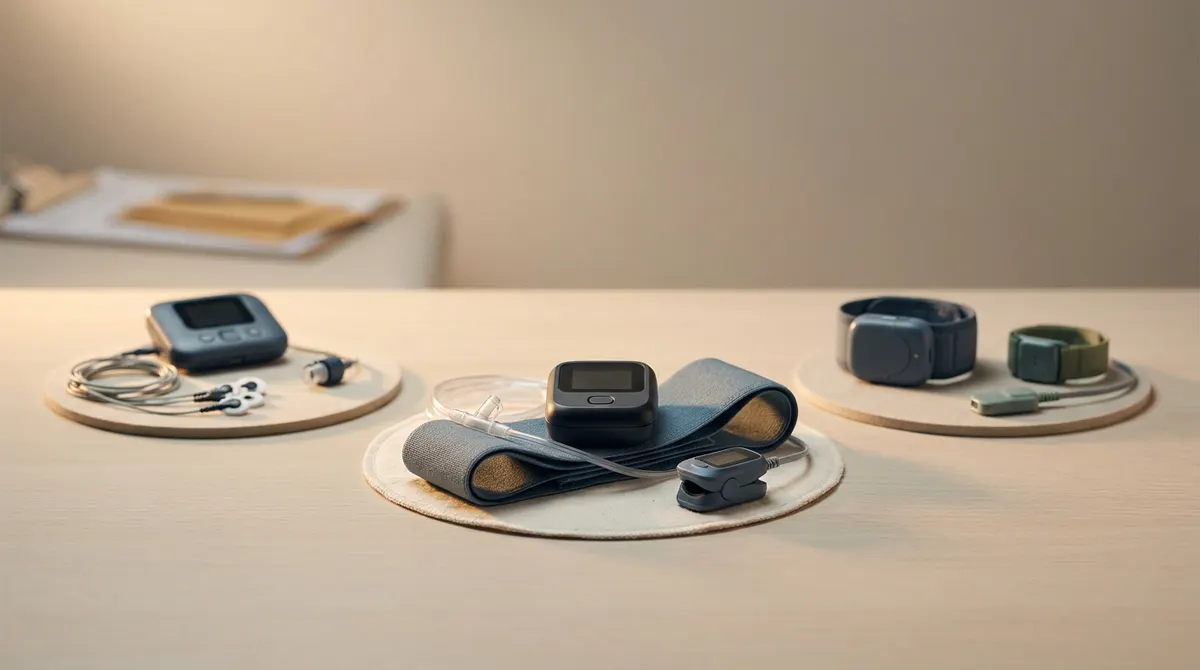
Three CPT codes cover the majority of home sleep apnea tests billed to commercial health insurance providers. Each code describes a different combination of physiological channels recorded during an unattended overnight study.
CPT Code 95800
CPT code 95800 applies to an unattended sleep study that simultaneously records ventilation, respiratory effort, heart rate, and oxygen saturation. This code is used when the device captures a broader set of respiratory movement data, including direct ventilation measurement. Some Type II portable monitor configurations that record additional respiratory channels may qualify under this code.
CPT Code 95801
CPT code 95801 covers an unattended sleep study with simultaneous recording of a minimum of heart rate, oxygen saturation, and respiratory analysis. The respiratory analysis component can be captured through airflow measurement or peripheral arterial tone technology. Devices like the WatchPat, which use peripheral arterial tone to derive respiratory data, are commonly billed under 95801.
CPT Code 95806
CPT code 95806 is the most frequently billed home sleep apnea test code. It applies to an unattended sleep study that simultaneously records heart rate, oxygen saturation, and respiratory airflow, with respiratory effort typically measured through thoracoabdominal movement sensors. This code aligns with the type III portable monitor, which records a minimum of four channels: respiratory airflow, respiratory effort, oxygen saturation, and heart rate. The American Academy of Sleep Medicine recognizes type III portable monitors as the standard device for home sleep apnea testing.
How to Choose the Correct CPT Code
The correct CPT code depends entirely on which channels the portable monitor records. If the device records peripheral arterial tone instead of direct respiratory airflow, 95801 is appropriate. If the device records standard respiratory airflow and respiratory movement via chest and abdominal belts along with heart rate and oxygen saturation, 95806 applies. Selecting the wrong code based on the actual device capabilities is a coding error that can trigger claim denials.
DID YOU KNOW: According to the American Academy of Sleep Medicine, home sleep apnea testing is recommended as the initial diagnostic test for uncomplicated obstructive sleep apnea in adults, making CPT code 95806 one of the most frequently submitted sleep medicine codes in the United States.
KEY TAKEAWAY: CPT codes 95800, 95801, and 95806 each correspond to a specific combination of recorded channels, and selecting the correct code requires matching the device's actual measurement capabilities to the code definition.
Medicare uses a different coding system entirely, which the next section explains.
HCPCS Codes for Home Sleep Testing Under Medicare
Medicare does not accept CPT codes 95800, 95801, or 95806 for home sleep apnea tests. Instead, Medicare requires providers to bill home sleep testing using HCPCS Level II codes from the HCPCS Code range G0398-G0400. This distinction is critical for any practice that sees Medicare beneficiaries.
HCPCS Code G0398
HCPCS code G0398 covers a home sleep test or a sleep study performed in a facility that is not a sleep lab, with the recording and interpretation performed on separate dates. This is the code used when the portable monitor data is collected on one night and the physician interpretation and report are completed on a different date, which is the standard workflow for most home sleep apnea tests.
HCPCS Code G0399
HCPCS code G0399 applies when the sleep study and the physician interpretation occur on the same date. In practice, this is less common for home sleep testing because the data is typically downloaded and reviewed after the patient returns the device.
HCPCS Code G0400
HCPCS code G0400 covers the professional interpretation of a home sleep test when that interpretation is performed independently of the technical component. This code is used in split billing scenarios where one entity provides the device and another physician performs the interpretation.
Why Medicare Uses HCPCS Instead of CPT Codes
Medicare's claims processing systems for home sleep testing are governed by CMS guidelines and the Medicare Benefit Policy Manual. The DME MAC (Durable Medical Equipment Medicare Administrative Contractor) handles claims related to CPAP therapy and sleep testing equipment. Because home sleep test devices are classified differently under Medicare's coverage framework, the HCPCS code set rather than the CPT code set applies. Providers who submit CPT codes for Medicare home sleep test claims will receive automatic denials.
The Medicare Benefit Policy Manual specifies that home sleep testing must demonstrate medical necessity and must be ordered by a treating physician. The Local Coverage Determination articles published by each Medicare Administrative Contractor provide region-specific billing policies and documentation requirements.
IMPORTANT: Submitting CPT codes instead of HCPCS codes for Medicare home sleep apnea test claims is one of the most common billing errors in sleep medicine and results in automatic claim rejection.
KEY TAKEAWAY: Medicare requires HCPCS codes G0398, G0399, or G0400 for home sleep apnea tests rather than CPT codes, and submitting the wrong code set guarantees a coverage denial.
Correct coding is only half the equation. The diagnosis code attached to the claim is equally important, as the next section explains.
ICD-10-CM Diagnosis Codes Used With Home Sleep Apnea Tests
Every home sleep apnea test claim must include a valid ICD-10-CM diagnosis code that establishes medical necessity for the study. The ICD-10-CM, which stands for International Classification of Disease, Tenth Revision, Clinical Modification, is the diagnosis code set used across all healthcare claims in the United States. The World Health Organization maintains the parent International Classification of Disease system, while the CDC's National Center for Health Statistics adapts it for clinical use in the U.S.
Primary Diagnosis Code: G47.33
The ICD-10-CM diagnosis code G47.33 represents obstructive sleep apnea. This is the most commonly paired diagnosis code for home sleep apnea test claims. When a patient presents with symptoms such as loud snoring, witnessed apneas, excessive daytime sleepiness, or a high body mass index, the ordering physician documents suspected obstructive sleep apnea and assigns G47.33 as the reason for the sleep study.
Other Relevant Sleep Disorder Codes
Home sleep tests may also be ordered under other ICD-10-CM codes for sleep disorders, though coverage varies by payer:
- G47.411 covers narcolepsy with cataplexy, though home sleep testing is not the primary diagnostic tool for narcolepsy
- G47.52 covers REM sleep behavior disorder, which typically requires in-lab polysomnography rather than home sleep testing for definitive diagnosis
- G47.30 covers sleep apnea, unspecified, which may be used when the specific type has not yet been determined
- R06.83 covers snoring as an isolated symptom
- Codes related to insomnia or hypersomnia may appear on referrals but do not typically support medical necessity for a home sleep apnea test
Medical Necessity and Diagnosis Pairing
Payers evaluate whether the ICD-10-CM diagnosis code on a claim supports the medical necessity of the ordered procedure. A home sleep apnea test billed with CPT code 95806 and ICD-10-CM code G47.33 represents the standard pairing that most health insurance providers accept. Claims submitted with a diagnosis code that does not align with obstructive sleep apnea testing, such as an insomnia code alone, are likely to be denied.
The Correct Coding Initiative, maintained by CMS, establishes rules about which procedure codes can be billed together and which diagnosis codes support specific procedures. Billing staff should verify that the diagnosis code, procedure code, and clinical documentation form a consistent clinical narrative.
Home sleep apnea tests through dumbo.health at $149 bypass insurance coding complexity entirely because the service is cash-pay. No ICD-10-CM code submission, no preauthorization, and no claim filing are required, which eliminates the risk of coverage denial for patients who choose the at-home sleep test pathway.
KEY TAKEAWAY: ICD-10-CM code G47.33 for obstructive sleep apnea is the primary diagnosis code paired with home sleep test procedure codes, and mismatched diagnosis codes are a leading cause of claim denials.
With diagnosis codes covered, the next section compares how home sleep test coding differs from in-lab polysomnography coding.
Home Sleep Test vs In-Lab Polysomnography: Coding Differences
Home sleep tests and in-lab polysomnography are distinct procedures that use entirely different CPT codes, record different numbers of channels, and carry different reimbursement rates. Understanding the coding differences prevents cross-coding errors that trigger audits and denials.
Polysomnography, performed in a sleep lab under direct technologist attendance, records comprehensive sleep architecture including electroencephalogram data, sleep staging, respiratory airflow, oxygen saturation, heart rate, limb movements, and other physiological signals. The standard polysomnography CPT codes are 95810 (for attended, comprehensive polysomnographic recording) and 95811 (for polysomnography with CPAP titration). These codes reimburse at significantly higher rates than home sleep test codes because of the facility, equipment, and technologist costs involved.
A home sleep apnea test, by contrast, is unattended, records fewer channels (typically four to seven), and does not capture sleep staging or sleep architecture in most configurations. The absence of electroencephalogram recording means home sleep tests cannot formally stage sleep, which is a key clinical limitation.
Structured Comparison: Home Sleep Test vs In-Lab Polysomnography
Setting
- Home Sleep Apnea Test: Patient's own bed at home
- In-Lab Polysomnography: Sleep center or hospital sleep lab
Technologist Required
- Home Sleep Apnea Test: No, unattended study
- In-Lab Polysomnography: Yes, technologist attendance required throughout
Minimum Channels Recorded
- Home Sleep Apnea Test: Four (type III portable monitor)
- In-Lab Polysomnography: Twelve or more, including electroencephalogram
Sleep Staging Capability
- Home Sleep Apnea Test: Not available on most devices
- In-Lab Polysomnography: Full sleep staging and sleep architecture recorded
Primary CPT Codes
- Home Sleep Apnea Test: 95800, 95801, 95806
- In-Lab Polysomnography: 95810, 95811
Medicare Billing Codes
- Home Sleep Apnea Test: HCPCS G0398, G0399, G0400
- In-Lab Polysomnography: CPT 95810, 95811
Typical Cost to Patient Without Insurance
- Home Sleep Apnea Test: $149 to $500
- In-Lab Polysomnography: $1,000 to $3,000 or more
Best For
- Home Sleep Apnea Test: Adults with high pretest probability of uncomplicated obstructive sleep apnea
- In-Lab Polysomnography: Complex sleep disorders, narcolepsy, REM sleep behavior disorder, or when home testing is inconclusive
For most adults with suspected obstructive sleep apnea and no significant comorbid sleep disorders, a home sleep apnea test is the clinically recommended first step. The American Academy of Sleep Medicine's clinical practice guidelines support home sleep testing as the initial diagnostic study when the pretest probability of moderate to severe obstructive sleep apnea is high. Dumbo.health provides this test for $149, which is substantially lower than most in-lab polysomnography costs and avoids the scheduling delays that sleep labs in your area may have.
KEY TAKEAWAY: Home sleep tests use CPT codes 95800, 95801, and 95806 and record fewer channels than in-lab polysomnography, which uses CPT codes 95810 and 95811. The correct code depends on whether the study is attended or unattended and which channels are recorded.
Beyond choosing the right procedure code, understanding how device types map to specific codes prevents the most common billing mistakes, covered next.
How Portable Monitor Types Map to CPT Codes
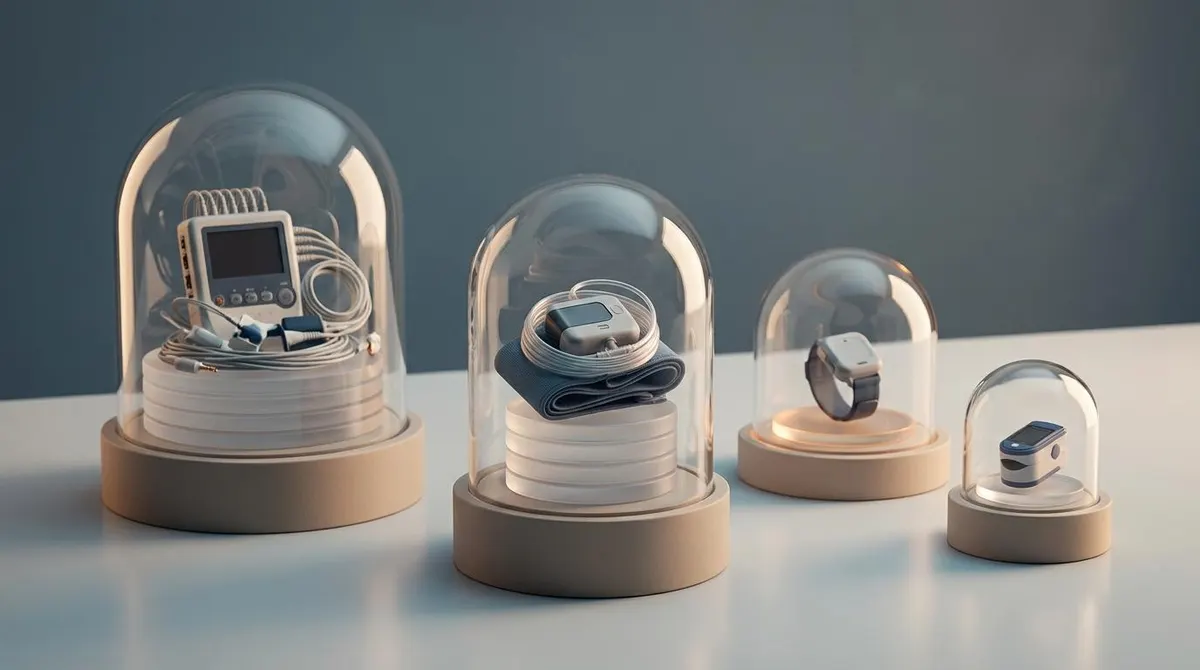
Portable sleep monitors are classified into types based on how many channels they record, and each type aligns with specific CPT codes. The American Academy of Sleep Medicine and the American Thoracic Society use a classification system that categorizes sleep testing devices from Type I through Type IV. Understanding this classification is essential for accurate CPT coding.
Type II Portable Monitor
A Type II portable monitor records a comprehensive set of channels similar to in-lab polysomnography, including electroencephalogram signals for sleep staging, respiratory airflow, respiratory effort, oxygen saturation, heart rate, and body position. Because it captures sleep architecture, a Type II monitor produces data comparable to attended polysomnography. However, Type II monitors are rarely used for routine home sleep testing due to their complexity and cost.
Type II portable monitor studies are typically billed under CPT code 95800, which requires recording of ventilation, respiratory effort, heart rate, and oxygen saturation. Some payers may require documentation of the additional channels to distinguish this from a Type III study.
Type III Portable Monitor
The type III portable monitor is the standard device for home sleep apnea testing. It records a minimum of four channels: respiratory airflow, respiratory effort (often through thoracoabdominal movement sensors), oxygen saturation, and heart rate. Many Type III devices also record body position and snore detection, though these additional channels do not change the CPT code.
Type III HST coding uses CPT code 95806. This is the most commonly billed code for home sleep apnea tests across both commercial payers and, when translated to G-codes, Medicare.
The SleepView Monitor is one example of a Type III portable monitor used in home sleep testing. Dumbo.health's at-home sleep test uses a clinically validated device that records the channels required for accurate diagnosis of obstructive sleep apnea, consistent with Type III HST coding standards.
Type IV Portable Monitor
A Type IV monitor records one or two channels, typically oxygen saturation alone or oxygen saturation plus airflow. Because Type IV monitors do not meet the minimum channel requirements for CPT codes 95800, 95801, or 95806, they are generally not billable under standard home sleep test CPT codes. Most payers, including Medicare, do not cover Type IV monitor studies for the diagnosis of obstructive sleep apnea.
Peripheral Arterial Tone Devices
Devices that use peripheral arterial tone technology, such as the WatchPat, derive respiratory data from arterial tone signals rather than traditional airflow sensors. These devices are billed under CPT code 95801, which specifically includes respiratory analysis by peripheral arterial tone as an accepted measurement method. The peripheral arterial tone approach has been validated in clinical studies, and payers generally accept 95801 for these devices, though some may request additional documentation.
KEY TAKEAWAY: Type III portable monitors align with CPT code 95806, Type II monitors may use 95800, and peripheral arterial tone devices use 95801. Type IV monitors generally do not qualify for standard CPT code billing.
Knowing the codes and device types is only useful if the claim is built correctly, which requires understanding the billing process from order to reimbursement.
Step-by-Step Billing Process for Home Sleep Apnea Tests
Accurate billing for a home sleep apnea test requires coordination between the ordering provider, the testing entity, and the billing team. Errors at any step can result in claim rejection, delayed reimbursement, or coverage denial.
How to Bill a Home Sleep Apnea Test Correctly
1. Obtain a physician order that documents the clinical indication for home sleep testing, including the suspected diagnosis (typically obstructive sleep apnea) and the relevant symptoms such as witnessed apneas, excessive daytime sleepiness, or loud snoring.
2. Verify the patient's insurance coverage and confirm whether the payer accepts CPT codes (for commercial insurance) or HCPCS codes (for Medicare). Check the applicable Local Coverage Determination article and any preauthorization requirements.
3. Dispense the portable monitor to the patient with clear instructions for the test night. Document the device type and the specific channels it records, as this determines the CPT code.
4. After the patient completes the one-night study and returns the device, download and score the data. Calculate the Apnea-Hypopnea Index and prepare the raw data for physician review.
5. Have a qualified physician perform the interpretation and generate a formal report. The physician interpretation must include the Apnea-Hypopnea Index, oxygen saturation findings, respiratory airflow analysis, and a clinical impression with a diagnosis.
6. Submit the claim with the correct procedure code (95806, 95801, or 95800 for commercial payers; G0398, G0399, or G0400 for Medicare), the ICD-10-CM diagnosis code (G47.33 for obstructive sleep apnea), and all required modifiers.
7. If the claim is denied, review the explanation of benefits for the denial reason. Common reasons include missing preauthorization, incorrect code selection, insufficient documentation of medical necessity, or use of CPT codes on a Medicare claim.
After completing these steps, the claim enters the payer's claims processing systems for adjudication. Turnaround time for reimbursement varies by payer but typically ranges from 14 to 45 days for clean claims.
For patients who want to skip the insurance and billing process entirely, dumbo.health's cash-pay home sleep test eliminates every step related to insurance verification, preauthorization, and claim submission. The $149 one-time fee covers the device and one night of testing, with physician interpretation available through monthly care plans starting at $59 per month.
KEY TAKEAWAY: The home sleep test billing process requires matching the device type to the correct CPT or HCPCS code, pairing it with a supporting ICD-10-CM diagnosis code, and documenting medical necessity. Skipping any step increases the risk of denial.
Even with the correct process, claims still get denied. The next section covers the most common reasons and how to prevent them.
Common Billing Errors and Coverage Denial Reasons

Coverage denial for home sleep apnea test claims is more common than many practices realize. According to billing data reported by coding specialists using Codify by AAPC, sleep study claims have higher-than-average denial rates due to the multiple coding systems involved and the specific documentation requirements that payers enforce.
Submitting CPT Codes to Medicare
The single most common error is billing Medicare with CPT codes 95800, 95801, or 95806 instead of the required HCPCS codes G0398, G0399, or G0400. Medicare's claims processing systems automatically reject claims with CPT codes for home sleep testing. This error wastes time and delays patient care.
Diagnosis Code Mismatch
Submitting a home sleep test claim with a diagnosis code that does not establish medical necessity for obstructive sleep apnea screening triggers denials. For example, billing a home sleep test with an insomnia code (G47.00) as the primary diagnosis will not meet most payers' coverage criteria. The primary ICD-10-CM diagnosis code should be G47.33 or another code that directly supports suspected obstructive sleep apnea.
Missing Preauthorization
Many commercial health insurance providers require preauthorization before a home sleep test is performed. If the test is completed without obtaining preauthorization, the claim may be denied retroactively regardless of the clinical results. Each payer's billing policies define whether preauthorization is required and what documentation must be submitted.
Incorrect Device-to-Code Matching
Billing CPT code 95806 for a study performed with a peripheral arterial tone device, or billing 95801 for a standard type III portable monitor with direct airflow sensors, creates a mismatch between the device capabilities and the code definition. Auditors and payers can request device specifications to verify that the billed code matches the actual channels recorded.
Insufficient Clinical Documentation
Claims that lack documented symptoms, a physician order, or a completed interpretation report may be denied for insufficient documentation of medical necessity. The physician interpretation must clearly state the clinical findings and diagnosis.
Patients who choose a cash-pay pathway avoid all of these denial risks. Dumbo.health's at-home sleep test requires no preauthorization, no diagnosis code submission, and no insurance claim. The $149 price is paid upfront with no surprise bills.
KEY TAKEAWAY: The most common home sleep test billing errors are submitting CPT codes to Medicare, using mismatched diagnosis codes, skipping preauthorization, and selecting the wrong procedure code for the device type.
Understanding these errors is especially important for practices working within Medicare's specific coverage framework, which has additional rules beyond code selection.
Medicare Coverage Policy for Home Sleep Testing
Medicare covers home sleep apnea tests when specific coverage criteria are met, but the policy includes restrictions that do not apply to most commercial payers. The Local Coverage Determination articles published by each Medicare Administrative Contractor define the regional requirements for home sleep test coverage.
Under CMS guidelines, Medicare covers home sleep testing for beneficiaries with clinical signs and symptoms consistent with obstructive sleep apnea. The ordering physician must document the medical necessity, and the test must be performed using a device that meets minimum channel requirements. Medicare's coverage framework is outlined in the Medicare Benefit Policy Manual and supplemented by CR Transmittals that communicate revisions to claims subject rules and billing policies.
Medicare Coverage Criteria
Medicare requires that the home sleep test record a minimum of airflow, respiratory effort, and oxygen saturation. Devices that record only one or two channels (Type IV monitors) do not qualify. The study must be ordered by the beneficiary's treating physician, and the physician must have evaluated the patient and determined that testing for obstructive sleep apnea is clinically appropriate.
Medicare also links home sleep testing coverage to downstream treatment. If the home sleep test confirms obstructive sleep apnea (typically defined by an Apnea-Hypopnea Index of 5 or higher with symptoms, or 15 or higher regardless of symptoms), the patient becomes eligible for CPAP therapy coverage under separate DME MAC billing rules. The CPAP titration process under Medicare follows a specific compliance pathway that requires documented adherence.
Part B Payments and Reimbursement Rates
Home sleep testing billed under HCPCS codes falls under Medicare Part B Payments. Reimbursement rates for G0398 vary by region but are generally lower than commercial payer rates for equivalent CPT codes. As of 2026, Medicare reimbursement for home sleep tests ranges roughly from $60 to $180 depending on the geographic region and whether the technical and professional components are billed together or separately.
Given these relatively low reimbursement amounts and the administrative burden of Medicare billing, some patients and providers find that a cash-pay option is more practical. Dumbo.health's $149 home sleep test cost is competitive with or lower than many Medicare copay amounts once deductibles are factored in.
TIP: Medicare beneficiaries can check their specific coverage details at Medicare.gov or by calling the number on their Beneficiary card. Patients who prefer to avoid Medicare billing complexity can access home sleep testing through cash-pay services near you without navigating preauthorization or claims processing.
KEY TAKEAWAY: Medicare covers home sleep apnea tests under HCPCS codes G0398 through G0400 when medical necessity criteria are met, but reimbursement rates are low and documentation requirements are strict.
Not every patient is a candidate for home sleep testing regardless of insurance status. The next section covers the clinical limitations.
Limitations and Risks of Home Sleep Apnea Testing
Home sleep apnea testing is effective for diagnosing obstructive sleep apnea in many adults, but it is not appropriate for every patient or every sleep disorder. Recognizing these limitations prevents misdiagnosis and ensures patients receive the right test.
Not Suitable for All Sleep Disorders
Home sleep tests are designed to detect obstructive sleep apnea. They do not diagnose narcolepsy, hypersomnia, insomnia, REM sleep behavior disorder, or other complex sleep disorders that require full polysomnographic evaluation with sleep staging and electroencephalogram recording. Patients with symptoms suggesting these conditions need in-lab polysomnography.
The American Academy of Sleep Medicine recommends home sleep testing only for patients with a high pretest probability of moderate to severe obstructive sleep apnea and without significant comorbid medical conditions such as chronic obstructive pulmonary disease, congestive heart failure, or neuromuscular disease. These comorbidities can produce respiratory patterns during sleep that a home sleep test cannot adequately characterize.
Risk of False-Negative Results
Home sleep tests can underestimate the severity of obstructive sleep apnea. Because these devices do not measure total sleep time through electroencephalogram-based sleep staging, the Apnea-Hypopnea Index is calculated using total recording time rather than actual sleep time. If a patient sleeps poorly during the test night or spends significant time awake, the index may appear lower than it would in a controlled sleep lab environment.
According to the National Heart, Lung, and Blood Institute, underdiagnosis of sleep apnea remains a significant public health concern. A negative or inconclusive home sleep test in a patient with strong clinical suspicion for obstructive sleep apnea should prompt an in-lab polysomnography study rather than a conclusion that the patient does not have sleep apnea.
Device Malfunction and Data Loss
Portable monitors used in home sleep testing can occasionally malfunction, become dislodged during the night, or produce unusable data. Without a technologist present to adjust sensors, data quality depends entirely on the patient's ability to correctly apply the device. Studies published in peer-reviewed journals indexed on PubMed indicate that approximately 10% to 15% of home sleep tests produce insufficient data for interpretation, requiring a repeat study.
How Dumbo.health Addresses These Limitations
Dumbo.health mitigates several common limitations through its care model. Every home sleep test ordered through dumbo.health includes clear device instructions to reduce data loss. The sleep apnea care solutions offered by dumbo.health include physician interpretation of results and, when results are inconclusive, guidance on next steps including referral for in-lab polysomnography if clinically indicated. The Premium Plan at $89 per month includes a dedicated sleep coach who monitors adherence and can identify when additional evaluation is warranted.
KEY TAKEAWAY: Home sleep apnea tests have meaningful limitations including the inability to diagnose non-apnea sleep disorders, the risk of underestimating severity, and a 10% to 15% data loss rate. These limitations must be understood by both providers and patients.
Seeing how these codes and limitations play out in real patient scenarios helps illustrate the practical implications.
Real-World Scenarios: How CPT Codes Apply in Practice
Understanding home sleep apnea test CPT codes is most useful when applied to realistic patient situations. The following examples illustrate how coding decisions are made in common clinical scenarios.
Scenario 1: Long-Haul Truck Driver Referred During a DOT Physical
A 48-year-old long-haul truck driver with a BMI of 37 and a neck circumference of 18 inches is referred for sleep apnea testing during a routine DOT physical. The driver's spouse reports loud snoring and witnessed breathing pauses. The medical examiner documents suspected obstructive sleep apnea and orders a home sleep test.
The clinic uses a type III portable monitor that records respiratory airflow via nasal cannula, respiratory effort via chest and abdominal belts, oxygen saturation via pulse oximetry, and heart rate. The test is performed at home over one night. The study is billed to the driver's commercial insurance using CPT code 95806 with ICD-10-CM diagnosis code G47.33.
The test reveals an Apnea-Hypopnea Index of 22, confirming moderate obstructive sleep apnea. The driver is started on CPAP therapy, and adherence documentation is submitted to the medical examiner to maintain CDL certification.
For drivers paying out of pocket or without insurance, dumbo.health provides the same type of at-home sleep testfor $149 and CPAP therapy through monthly plans starting at $59 per month.
Scenario 2: Medicare Beneficiary With Daytime Sleepiness
A 67-year-old retired woman presents to her primary care physician with excessive daytime sleepiness, morning headaches, and hypoxemia during a recent hospitalization. She is a Medicare beneficiary. The physician orders a home sleep test for suspected obstructive sleep apnea.
The billing team submits the claim using HCPCS code G0398 because the recording and interpretation occur on separate dates. The ICD-10-CM diagnosis code G47.33 is attached. Preauthorization is not required by her specific Medicare Administrative Contractor, but the physician documents the clinical symptoms and the medical necessity rationale in the patient's chart.
Her test shows an Apnea-Hypopnea Index of 31, indicating severe obstructive sleep apnea. She is referred for CPAP therapy, and the DME MAC processes her equipment claim separately.
Scenario 3: Young Professional Using a Peripheral Arterial Tone Device
A 34-year-old software engineer reports persistent fatigue, difficulty concentrating, and a bed partner who notices loud snoring. His physician orders a home sleep test using a WatchPat device, which measures peripheral arterial tone, oxygen saturation, heart rate, and actigraphy-derived sleep data.
Because the WatchPat uses peripheral arterial tone rather than traditional respiratory airflow sensors, the billing team submits the claim under CPT code 95801. The ICD-10-CM diagnosis code is G47.33. His commercial insurance covers the test after meeting his deductible.
The results show an Apnea-Hypopnea Index of 12, indicating mild obstructive sleep apnea. His physician recommends positional therapy, weight management, and follow-up testing in six months. An oral device is considered as a treatment alternative.
KEY TAKEAWAY: The correct CPT code in each scenario depends on the device type (type III portable monitor vs peripheral arterial tone device), the payer (commercial insurance vs Medicare), and the channels recorded. Real-world coding requires matching all three elements.
Given how many variables affect coding and billing, many people wonder whether common assumptions about home sleep test billing are actually accurate.
Common Myths About Home Sleep Apnea Test CPT Codes Debunked
MYTH: There is only one CPT code for home sleep apnea tests.
FACT: Three distinct CPT codes exist for home sleep apnea testing: 95800, 95801, and 95806. Each corresponds to a different set of recorded physiological channels. The correct code depends on whether the device measures direct ventilation, peripheral arterial tone, or standard respiratory airflow and effort. Using a single code for all devices is a coding error that can result in claim denials.
MYTH: Medicare accepts the same CPT codes as commercial insurance for home sleep tests.
FACT: Medicare does not accept CPT codes for home sleep apnea tests. Medicare requires HCPCS codes G0398, G0399, or G0400. Submitting a CPT code to Medicare for a home sleep test results in automatic rejection. This is one of the most frequent billing errors in sleep medicine according to medical billing specialists who reference Codify by AAPC for code verification.
MYTH: Any portable sleep monitor qualifies for CPT code 95806.
FACT: CPT code 95806 requires simultaneous recording of respiratory airflow, oxygen saturation, and heart rate, with respiratory effort typically captured through thoracoabdominal movement sensors. A Type IV monitor that records only one or two channels does not meet the code definition for 95806 and generally cannot be billed under any standard home sleep test CPT code. Only Type III monitors and above meet the minimum channel requirements.
MYTH: You always need insurance to get a home sleep apnea test.
FACT: Insurance is not required for home sleep apnea testing. Cash-pay options are widely available. Dumbo.health offers a complete home sleep test for $149 with no insurance required, no preauthorization, and no surprise bills. The Sleep Foundation notes that the cost of undiagnosed sleep apnea, including increased accident risk and cardiovascular complications, far exceeds the cost of testing.
MYTH: A home sleep test can diagnose any sleep disorder.
FACT: Home sleep tests are validated for diagnosing obstructive sleep apnea. They cannot diagnose narcolepsy, REM sleep behavior disorder, periodic limb movement disorder, or other conditions that require polysomnographic recording with electroencephalogram-based sleep staging. The American Academy of Sleep Medicine recommends in-lab polysomnography for patients with suspected non-apnea sleep disorders.
KEY TAKEAWAY: Most billing myths about home sleep apnea test CPT codes stem from confusion between CPT and HCPCS systems, incorrect device-to-code matching, and the assumption that insurance is always required.
For providers and billing teams looking to prevent these errors, a pre-submission checklist can catch problems before claims are filed.
Home Sleep Test Billing Checklist for Providers
Submitting a clean claim requires verifying multiple elements before the claim enters the payer's system. The following checklist covers the essential items that billing staff and providers should confirm for every home sleep apnea test claim.
Pre-Submission Billing Checklist
- Confirm the patient has a documented physician order specifying the clinical indication for home sleep apnea testing
- Verify the suspected diagnosis is documented with the appropriate ICD-10-CM diagnosis code (G47.33 for obstructive sleep apnea)
- Identify whether the payer is commercial insurance or Medicare to determine whether CPT codes or HCPCS codes are required
- Confirm the specific portable monitor type and verify which channels it records (airflow, respiratory effort, oxygen saturation, heart rate, peripheral arterial tone)
- Match the device channel configuration to the correct CPT code (95806 for type III portable monitors, 95801 for peripheral arterial tone devices, 95800 for devices recording ventilation)
- For Medicare claims, use the correct HCPCS code from the G0398 through G0400 range
- Check whether the payer requires preauthorization and obtain it before the test is performed
- Verify that the physician interpretation report includes the Apnea-Hypopnea Index, oxygen saturation data, respiratory airflow analysis, clinical impression, and diagnosis
- Confirm that the date of service, patient demographics, and provider information are accurate on the claim form
- For split billing, ensure the technical and professional components are billed with the correct modifiers
- Review the applicable Local Coverage Determination article for payer-specific requirements
- For patients who prefer to bypass insurance entirely, direct them to cash-pay options such as the $149 home sleep test available through dumbo.health
This checklist addresses the most common failure points in home sleep test claim processing. Clinicians frequently observe that practices which implement a standardized verification workflow see significantly fewer denials.
KEY TAKEAWAY: A pre-submission checklist that verifies the diagnosis code, procedure code, device type, payer requirements, and documentation completeness prevents the majority of home sleep test claim denials.
Beyond individual claim accuracy, understanding how reimbursement compares across payment pathways helps both providers and patients make informed decisions.
Cost and Reimbursement: Insurance vs Cash-Pay for Home Sleep Tests
Reimbursement for home sleep apnea tests varies widely depending on the payer, geographic region, and whether the patient has met their deductible. The total cost to the patient can differ dramatically between the insurance pathway and the cash-pay pathway.
Commercial insurance reimbursement for CPT code 95806 typically ranges from $200 to $600 for the combined technical and professional components. However, the patient's actual out-of-pocket cost depends on their deductible status, copay percentage, and whether the provider is in-network. Many patients report that after accounting for their deductible, the effective out-of-pocket cost of an insured home sleep test is between $100 and $400.
Medicare reimbursement under HCPCS code G0398 is generally lower, ranging from $60 to $180 depending on the region and the Medicare Administrative Contractor's fee schedule. Patients on Medicare may still owe a 20% coinsurance after their Part B deductible is met.
Cash-Pay as an Alternative
Cash-pay home sleep testing eliminates the variables of deductibles, coinsurance, preauthorization, and claim processing delays. Dumbo.health's home sleep test is a flat $149 one-time payment that covers the device and one night of testing. No insurance is needed, no prior authorizations are required, and there are no surprise bills.
For patients who need treatment after diagnosis, dumbo.health's Essentials Plan provides physician interpretation, CPAP therapy and equipment, and standard follow-up care for $59 per month with no contracts and the ability to cancel anytime. The Premium Plan at $89 per month adds a dedicated sleep coach and advanced adherence monitoring. The Elite Plan at $129 per month includes concierge clinical support and direct physician messaging.
Home sleep apnea test coding and reimbursement through dumbo.health is a fundamentally different model. Cash-pay patients do not need to understand CPT codes, HCPCS codes, or ICD-10-CM diagnosis codes because no claim is submitted. The free sleep assessment at dumbo.health helps patients determine whether a home sleep test is the right next step without any billing complexity.
Structured Comparison: Insurance Billing vs Cash-Pay
Out-of-Pocket Cost
- Insurance Pathway: $100 to $400+ depending on deductible and copay
- Cash-Pay Through Dumbo.health: $149 flat fee
Preauthorization Required
- Insurance Pathway: Often required by commercial payers
- Cash-Pay Through Dumbo.health: Not required
Claim Denial Risk
- Insurance Pathway: Present, especially with coding errors
- Cash-Pay Through Dumbo.health: None, no claim is filed
Time to Access Test
- Insurance Pathway: Days to weeks (preauthorization and scheduling)
- Cash-Pay Through Dumbo.health: Immediate ordering
Ongoing Treatment Access
- Insurance Pathway: Subject to separate DME authorization
- Cash-Pay Through Dumbo.health: Monthly plans from $59/month include CPAP therapy
For most patients who want a straightforward path to diagnosis and treatment without insurance delays, the cash-pay model through dumbo.health offers a faster, simpler, and more predictable experience.
KEY TAKEAWAY: Insurance reimbursement for home sleep tests varies widely and involves significant administrative complexity, while
Frequently Asked Questions About Home Sleep Apnea Test CPT Codes
What is a home sleep apnea test, and how is it different from in-lab polysomnography?
A home sleep apnea test (HSAT) is a portable diagnostic study that measures key sleep parameters in the patient's own home, typically used to evaluate obstructive sleep apnea. Unlike in-lab polysomnography, which records sleep staging, brain activity via electroencephalogram, limb movements, and multiple physiological channels under direct technologist attendance, a home sleep test uses a portable monitor to track respiratory effort, respiratory airflow, oxygen saturation, and heart rate. The American Academy of Sleep Medicine recognises HSAT as an appropriate first-line evaluation tool for adults with a high clinical likelihood of obstructive sleep apnea and no significant comorbidities.
What CPT codes are used for home sleep apnea testing?
Home sleep apnea testing is billed using specific CPT codes that correspond to the type of portable monitor used. The most commonly used codes include CPT 95800, CPT 95801, and CPT 95806, depending on the number of channels recorded and whether sleep time is measured. CPT 95806 applies to unattended sleep studies that record airflow, respiratory effort, oxygen saturation, and heart rate without sleep staging. Medicare also uses HCPCS codes G0398, G0399, and G0400 for Type II, Type III, and Type IV portable monitors respectively. A sleep medicine billing specialist or qualified healthcare professional can confirm which code applies to a specific study.
What is the difference between CPT codes 95800, 95801, and 95806 for sleep testing?
CPT 95800 covers a sleep study with a minimum of heart rate, oxygen saturation, respiratory analysis, and sleep time, performed without technologist attendance. CPT 95801 records a minimum of heart rate, oxygen saturation, and respiratory analysis but does not measure sleep time. CPT 95806 covers unattended sleep studies that record airflow, respiratory effort, oxygen saturation, and heart rate but also exclude sleep staging. Each code reflects a different level of clinical data captured. The appropriate code depends on the specific portable monitor used and the channels recorded, and coding decisions should be made by a qualified medical billing professional familiar with the current CPT code set published by the American Medical Association.
What are the HCPCS codes G0398, G0399, and G0400, and when are they used?
HCPCS codes G0398, G0399, and G0400 are Level II HCPCS codes used for billing home sleep testing under Medicare when CPT codes are not accepted. G0398 applies to a Type II portable monitor, which records a minimum of seven channels including sleep staging. G0399 applies to a Type III portable monitor, which records a minimum of four channels including respiratory movement, respiratory airflow, oxygen saturation, and heart rate. G0400 applies to a Type IV portable monitor, which records a minimum of three channels. The HCPCS Code range G0398-G0400 was introduced to distinguish home sleep testing from full in-lab polysomnography for claims processing purposes. A DME MAC or Medicare Administrative Contractor can clarify which code is appropriate for a specific claim.
What is a Type III portable monitor, and what does it measure?
A Type III portable monitor is an unattended home sleep testing device that records a minimum of four channels, typically including respiratory effort, respiratory airflow, oxygen saturation, and heart rate. Type III monitors are the most commonly used devices for home sleep apnea testing and form the basis for HCPCS code G0399. They do not record sleep staging, so they cannot diagnose conditions that require full polysomnographic data such as narcolepsy, hypersomnia, REM sleep behavior disorder, or complex sleep disorders. The apnea-hypopnea index generated by a Type III monitor is calculated against total recording time rather than total sleep time, which may underestimate severity compared to an in-lab study.
What ICD-10-CM diagnosis codes are used when billing for a home sleep apnea test?
Billing for a home sleep apnea test typically requires a supporting ICD-10-CM diagnosis code that reflects the clinical reason for the study. G47.33 is the ICD-10-CM code for obstructive sleep apnea. Other relevant codes include G47.411 for narcolepsy with cataplexy and G47.52 for REM sleep behavior disorder, although these conditions generally require in-lab polysomnography rather than home sleep testing. Hypoxemia, insomnia, and hypersomnia each carry their own ICD-10-CM codes. A qualified healthcare professional or medical billing specialist should select the appropriate ICD-10-CM diagnosis code based on documented clinical findings and the treating clinician's assessment.
Does Medicare cover home sleep apnea testing?
Medicare covers home sleep apnea testing under Part B when medical necessity criteria are met, as outlined in the relevant Local Coverage Determination and the CMS Billing and Coding article for polysomnography and other sleep studies. Coverage generally applies to adults with signs and symptoms consistent with obstructive sleep apnea who do not have comorbidities that would require in-lab polysomnography. A physician or qualified non-physician practitioner must order the test and document clinical necessity. Claims are processed by a Medicare Administrative Contractor, and coverage criteria vary based on the Medicare Benefit Policy Manual and any applicable Local Coverage Determination in the patient's state.
What is a Local Coverage Determination, and how does it affect home sleep test billing?
A Local Coverage Determination (LCD) is a policy issued by a Medicare Administrative Contractor that defines when a specific service, such as home sleep testing, is considered medically necessary for Medicare beneficiaries in a particular geographic region. LCDs specify covered diagnosis codes, documentation requirements, and any restrictions related to provider qualifications or patient comorbidities. Because LCDs vary by contractor region, a home sleep apnea test that is covered under one contractor's jurisdiction may have different requirements under another. Providers and patients can search for applicable LCDs and associated billing and coding articles using the CMS MCD Search tool or by contacting their regional Medicare Administrative Contractor directly.
How do I find out whether a specific CPT code is covered in my state?
Coverage for specific CPT codes, including home sleep apnea test codes, varies by payer and state. For Medicare, the CMS MCD Search tool allows providers to search for Local Coverage Determinations and national coverage policies by Document ID, CPT code, or service type. For commercial payers, coverage is determined by each health insurance provider's individual billing policies, benefit plan, and any applicable preauthorization requirements. A provider's billing and coding team should verify coverage with the specific payer before ordering a home sleep study. If a claim is denied, the explanation of benefits or remittance advice will typically identify the reason for the denial.
Does home sleep testing require prior authorization?
Whether home sleep testing requires prior authorization depends on the payer. Medicare does not typically require preauthorization for home sleep testing when medical necessity documentation is in place, but some Medicare Advantage plans and commercial health insurance providers may require it. Prior authorization requirements may also depend on the provider's network status, the patient's benefit plan, and the specific CPT or HCPCS code being submitted. Providers should check with the payer before scheduling the study to avoid claim denials. Patients paying out of pocket do not need prior authorization, which is one reason cash-pay options can simplify access to home sleep testing.
What is the appropriate place of service code for home sleep apnea test billing?
Home sleep apnea tests are performed in the patient's home, so claims are typically submitted using place of service code 12, which designates the patient's home as the service location. Some payers may have specific instructions for billing unattended sleep studies, and the correct place of service code should be confirmed in the payer's billing policies or by contacting the payer's claims processing team directly. Using the wrong place of service code is a common reason for claim denials, so billing and coding accuracy is important when submitting claims for home sleep testing.
What is the allowable amount for a home sleep apnea test under Medicare, and how are technical and professional components billed?
Medicare reimbursement for home sleep testing is split into a technical component and a professional component. The technical component covers the cost of the device and data collection, while the professional component covers physician interpretation of the results. When both components are performed by the same provider or entity, a global claim is submitted. When a separate physician interprets the study, a modifier is used to distinguish the professional component from the technical component. Allowable amounts vary by contractor region and are updated through the Medicare Physician Fee Schedule. Providers should consult their Medicare Administrative Contractor or the CMS Part B payment schedule for current reimbursement rates.
Is a home sleep apnea test subject to Medicare deductibles or coinsurance?
Yes, home sleep apnea testing billed under Medicare Part B is generally subject to the Part B deductible and coinsurance. Once the annual Part B deductible is met, Medicare typically covers 80 percent of the Medicare-approved amount, and the patient is responsible for the remaining 20 percent coinsurance. Patients with supplemental coverage or Medigap policies may have some or all of the coinsurance covered depending on their plan. Patients who prefer to avoid deductibles, coinsurance, prior authorizations, and insurance paperwork may find cash-pay options more predictable. The dumbo.health at-home sleep test is available for a flat $149 with no insurance required and no surprise bills.
Are there comorbidities that can restrict a patient's access to home sleep testing?
Yes, certain comorbidities may make a patient ineligible for home sleep testing and require in-lab polysomnography instead. According to the American Academy of Sleep Medicine, conditions such as moderate to severe chronic obstructive pulmonary disease, congestive heart failure, neuromuscular disease, or suspected central sleep apnea may require the more comprehensive data provided by an attended in-lab study. Conditions that require sleep staging for diagnosis, including narcolepsy, hypersomnia, REM sleep behavior disorder, and certain parasomnias, also cannot be evaluated adequately with a Type III or Type IV portable monitor. A qualified healthcare professional should assess whether home sleep testing is clinically appropriate for a given patient.
Are there provider qualification requirements that affect who can order or interpret a home sleep apnea test?
Medicare and many commercial payers require that home sleep apnea tests be ordered by a physician or qualified non-physician practitioner and interpreted by a clinician with appropriate credentials in sleep medicine. Some payers specify board certification in sleep medicine or relevant specialties such as pulmonology, neurology, or otolaryngology as a requirement for the interpreting provider. Local Coverage Determinations may include specific language about provider qualifications. Providers should review the applicable LCD, the payer's billing policies, and any relevant guidance from the American Academy of Sleep Medicine or the American Thoracic Society to confirm their eligibility to bill for home sleep testing services.
What should I do if a home sleep apnea test claim is denied?
If a home sleep apnea test claim is denied, start by reviewing the explanation of benefits or Medicare remittance advice to identify the specific denial reason. Common reasons include missing or insufficient documentation of medical necessity, incorrect CPT or HCPCS codes, missing ICD-10-CM diagnosis codes, prior authorization not obtained, or use of an incorrect place of service code. Most payers have a formal appeals process, and providers may be able to submit additional clinical documentation to support the claim. For Medicare coverage denials, CMS guidance and the Medicare Administrative Contractor's customer service team can provide information on the redetermination and appeals process. A qualified medical billing professional can help navigate the appeals workflow.
What is the apnea-hypopnea index, and why does it matter for home sleep test results?
The apnea-hypopnea index (AHI) is the number of apnea and hypopnea events per hour of recording and is the primary metric used to assess obstructive sleep apnea severity. On a home sleep apnea test, the AHI is calculated against total recording time rather than confirmed sleep time, which can result in a lower AHI than an in-lab study would show. An AHI below 5 is generally considered normal, 5 to 14 mild, 15 to 29 moderate, and 30 or above severe, though clinical thresholds may vary. According to the American Academy of Sleep Medicine, AHI results should always be interpreted alongside symptoms and clinical context by a qualified healthcare professional.
When is an in-lab polysomnography study needed instead of a home sleep apnea test?
In-lab polysomnography is needed when full sleep staging is required for diagnosis, when significant comorbidities make home testing insufficient, or when a home sleep apnea test produces a negative or inconclusive result in a patient with strong clinical suspicion for obstructive sleep apnea. Conditions such as narcolepsy, hypersomnia, REM sleep behavior disorder, and complex sleep-disordered breathing typically require attended polysomnographic recording with sleep staging, electroencephalogram, and technologist supervision. The Sleep Foundation explains that in-lab studies provide more comprehensive data but are more costly and less convenient than home testing. A clinician should determine which type of study is appropriate based on the patient's full clinical picture.
Can a home sleep apnea test diagnose conditions other than obstructive sleep apnea?
No, a standard home sleep apnea test using a Type III or Type IV portable monitor cannot diagnose conditions that require sleep staging. Narcolepsy, hypersomnia, insomnia disorders, REM sleep behavior disorder, and parasomnias require in-lab polysomnography with full electroencephalogram and sleep architecture data. Home sleep testing is specifically validated for evaluating obstructive sleep apnea in adults without significant comorbidities. If a clinician suspects a sleep disorder beyond obstructive sleep apnea based on symptoms or home test results, an in-lab study or specialist referral may be recommended. A healthcare professional should guide diagnostic decisions based on clinical symptoms and history.
How does CPAP therapy relate to home sleep apnea test results?
A home sleep apnea test that indicates obstructive sleep apnea may lead a clinician to recommend CPAP therapy as a first-line treatment. Continuous positive airway pressure ventilation works by delivering pressurised air through a mask to keep the upper airway open during sleep, reducing apnea and hypopnea events. Some patients begin CPAP with an auto-titrating device based on home test results, while others may require an in-lab CPAP titration study for optimal pressure setting. Ongoing adherence monitoring is important because Medicare and many insurers require documented CPAP usage to continue coverage. dumbo.health monthly plans can support CPAP therapy, equipment, physician review, and adherence follow-up with transparent cash-pay pricing.
What ongoing care is available after a home sleep apnea test?
After a home sleep apnea test, ongoing care typically includes physician interpretation of results, a clinical report, discussion of treatment options, CPAP therapy initiation if indicated, equipment provision, and adherence follow-up. Regular follow-up helps ensure treatment is effective and that CPAP usage meets clinical and, where applicable, regulatory requirements. dumbo.health sleep apnea care solutions cover physician interpretation, CPAP therapy and equipment, adherence monitoring, and provider reporting through monthly plans starting at $59 per month with no contracts and no insurance required. A dedicated sleep coach and advanced adherence monitoring are available in higher-tier plans.
How does home sleep apnea testing affect commercial drivers and DOT requirements?
Commercial drivers who are identified as high risk for obstructive sleep apnea by a certified medical examiner may be referred for sleep testing before receiving or renewing their DOT medical certificate. The FMCSA does not currently have a published federal mandate requiring all commercial drivers to undergo sleep testing, but certified medical examiners may require evaluation based on clinical judgment and risk factors such as body mass index, neck circumference, daytime sleepiness, and snoring. A home sleep apnea test can support this evaluation process. dumbo.health can support testing and documentation for commercial drivers, but a certified medical examiner makes all DOT certification decisions. For more detail, see the home sleep apnea test for commercial drivers guide.
Can I access a home sleep apnea test without insurance?
Yes, a home sleep apnea test can be accessed without insurance through cash-pay providers. dumbo.health offers a $149 at-home sleep test with no insurance required, no prior authorization, and no surprise bills. This makes testing accessible for patients who are uninsured, underinsured, or who prefer to avoid insurance paperwork. After testing, ongoing care including physician interpretation, CPAP therapy, and adherence support is available through monthly plans. Patients considering whether home sleep testing is appropriate for their symptoms can start with a free sleep assessment to help decide on next steps.
What symptoms might suggest that a home sleep apnea test is worth discussing with a clinician?
Common symptoms that may prompt a clinician to recommend sleep testing include loud or frequent snoring, witnessed pauses in breathing during sleep, waking with a gasping or choking sensation, excessive daytime sleepiness, morning headaches, difficulty concentrating, and unrefreshing sleep. According to the CDC, obstructive sleep apnea is associated with an increased risk of high blood pressure, cardiovascular disease, and metabolic conditions. These symptoms are not a diagnosis, and testing decisions should always be discussed with a qualified healthcare professional. If you experience severe symptoms, chest pain, or difficulty breathing, seek medical care promptly rather than waiting for a sleep study.
Related Home Sleep Apnea Test Topics
- CPT for Home Sleep Apnea Test Complete Coding and Billing Guide for Sleep Study Providers
- CPT Code for Home Sleep Apnea Test The Complete Coding and Billing Guide
- CPT Code for Home Sleep Apnea Test Complete Billing and Coding Guide
- Home Sleep Apnea Test ICD-10 Codes The Complete Coding and Diagnostic Guide for Sleep Apnea Testing
- Home Sleep Apnea Test CPT Codes A Complete Guide to Billing, Coding, and Reimbursement
- Sleep Apnea Test at Home The Complete Guide to Home Sleep Testing for Adults
- Can You Test for Sleep Apnea at Home A Complete Guide to Home Sleep Testing
- Home Sleep Apnea Test The Complete Guide to At-Home Sleep Apnea Testing
- Sleep Apnea Testing at Home The Complete Guide to Home Sleep Tests, Devices, and Results
- Home Sleep Apnea Testing The Complete Guide to Diagnosing Sleep Apnea at Home
- How Do You Get a Home Sleep Apnea Test The Complete Guide to At-Home Sleep Testing
- Sleep Study Test for Sleep Apnea The Complete Guide to Diagnosis, Testing Types, and Next Steps
- At Home Sleep Apnea Test with Ring How Ring-Based Sleep Testing Works and Whether It Can Diagnose Sleep Apnea
- How to Get a Sleep Apnea Test at Home The Complete Guide to Home Sleep Testing
- Home Sleep Apnea Test Ring How Ring-Based Sleep Testing Works for Sleep Apnea Detection
- How Is a Home Sleep Apnea Test Done A Complete Guide to At-Home Sleep Testing
- At Home Sleep Apnea Test for VA Disability The Complete Guide for Veterans
- At-Home Sleep Apnea Test for VA The Complete Guide for Veterans
- How Does a Home Sleep Apnea Test Work A Complete Guide to At-Home Sleep Testing
- Pediatric Home Sleep Apnea Test A Complete Guide for Parents and Providers
- CPAP Test at Home The Complete Guide to Home Sleep Apnea Testing and Treatment
- Home Sleep Test The Complete Guide to At-Home Sleep Apnea Testing
- How to Get Tested for Sleep Apnea The Complete Guide to Diagnosis, Sleep Studies, and Treatment
- Sleep Test at Home The Complete Guide to Home Sleep Apnea Testing
- Sleep Apnea Diagnosis at Home The Complete Guide to Home Sleep Testing
- Best Home Sleep Apnea Test A Clinical Guide to Choosing the Right At-Home Sleep Study
- At-Home Sleep Apnea Test The Complete Guide to Testing, Results, and Treatment
- At Home Sleep Study for Sleep Apnea The Complete Guide to Testing in Your Own Bed
- At-Home Sleep Apnea Test DOT Approved The Complete Guide for Commercial Drivers
- Apnea Monitor The Complete Guide to Breathing Monitors for Sleep Apnea and Infant Care
- What Is a Home Sleep Apnea Test How At-Home Sleep Testing Works, What It Measures, and Who Needs One
- Sleep Apnea Test The Complete Guide to Diagnosis, Home Testing, and What Your Results Mean
- How Much Does a Home Sleep Apnea Test Cost Complete Pricing Breakdown for Self-Pay and Insured Patients
- Home Sleep Testing Companies A Complete Guide to At-Home Sleep Apnea Diagnosis
- Sleep Apnea Sleep Study The Complete Guide to Testing, Diagnosis, and Treatment
- Obstructive Sleep Apnea Sleep Study The Complete Guide to Diagnosis, Testing, and Treatment
- Sleep Study for Sleep Apnea What the Test Measures, How It Works, and What Your Results Mean
- Home Sleep Apnea Test FSA Eligible How to Use Your Flexible Spending Account for Sleep Testing
- At-Home Sleep Apnea Test FSA How to Use Your Flexible Spending Account for Sleep Testing
- At Home Sleep Apnea Test HSA How to Use Your Health Savings Account for Sleep Testing
- Home Sleep Apnea Test for Children What Parents Need to Know About Pediatric Sleep Testing
- Home Sleep Apnea Test for Kids What Parents Need to Know About Pediatric Sleep Testing
- At-Home Sleep Apnea Test for Toddlers What Parents Need to Know About Pediatric Sleep Testing
- Home Sleep Apnea Test Indications Who Qualifies and When At-Home Testing Is Clinically Appropriate
- Home Sleep Testing The Complete Guide to Diagnosing Sleep Apnea From Your Own Bed
- Sleep Apnea Testing The Complete Guide to Diagnosis, Home Tests, and What Your Results Mean
- Sleep Apnea Checker How to Screen for Sleep Apnea and What Your Results Mean
- Home Sleep Apnea Test Cost What You Actually Pay With and Without Insurance
- Sleep Study for Sleep Apnea What Happens, What It Measures, and What Your Results Mean
- Can a Sleep Study Diagnose Sleep Apnea and Other Sleep Disorders
- How Do Home Sleep Apnea Tests Compare to In-Lab Sleep Studies
- What Happens After a Home Sleep Apnea Test Results, Diagnosis, and Next Steps
- Do I Need a Prescription for a Home Sleep Apnea Test Device
- Sleep Apnea Test at Home with Insurance What Your Plan Actually Covers and How to Get Tested
- Home Sleep Apnea Test FDA Approved What Devices Are Cleared and How They Work
- Polysomnography at Home How Home Sleep Testing Compares to In-Lab Sleep Studies
- Sleep Apnea Test at Home DOT Approved Options for Commercial Drivers
- Sleep Apnea Test Near Me How to Find Local and At-Home Testing Options
- Do You Need a Prescription for a Home Sleep Apnea Test
- What Does a Home Sleep Apnea Test Consist Of Sensors, Equipment, and What to Expect
- Kids at Home Sleep Apnea Test What Parents Need to Know About Pediatric Sleep Testing
- Home Sleep Apnea Test Near Me How to Get Tested Without a Sleep Lab Visit
- Home Sleep Apnea Test Guidelines Clinical Standards, Eligibility, and What Every Patient Should Know
- HSAT The Complete Guide to Home Sleep Apnea Testing
- Home Sleep Apnea Test Parameters What Every Measurement Means and Why It Matters
- Sleep Apnea Diagnosis How Sleep Apnea Is Detected, Tested, and Confirmed
- Can a Home Sleep Apnea Test Be Wrong Accuracy, False Negatives, and What to Do Next
- Home Sleep Apnea Test Questionnaire Screening Tools, Risk Scores, and What Happens Next
- Home Sleep Apnea Test False Negative Why It Happens and What to Do Next
- FDA Approved Home Sleep Apnea Test What Devices Are Cleared, How They Work, and How to Get Tested
- Are Sleep Studies Covered by Insurance What You Actually Pay for Sleep Apnea Testing
- How Long Does a Home Sleep Apnea Test Take What to Expect Before, During, and After Testing
- What Is the Best At-Home Sleep Apnea Test A Clinical Comparison of Devices, Accuracy, and Cost
- Can I Get a CPAP Machine After a Home Sleep Apnea Test
- Sleep Test to CPAP How Sleep Apnea Testing Leads to Treatment
- What to Expect During a Sleep Study for Sleep Apnea
- Top-Rated Home Sleep Apnea Test Kits Available in the US
- Does Insurance Cover a Home Sleep Apnea Test What You Actually Pay
- Where Can I Buy a Home Sleep Apnea Test Without a Prescription
- Does Medicare Cover a Home Sleep Apnea Test What Beneficiaries Need to Know
- Can Dentists Prescribe a Home Sleep Apnea Test What You Need to Know
- What Is the Cost of a Sleep Apnea Test at Home
- Average Cost of a Home Sleep Apnea Test Kit Shipped in the US
- Home Sleep Test Cost What You Actually Pay With and Without Insurance
- At-Home Sleep Apnea Test Covered by Medicaid What You Need to Know Before Getting Tested
- Home Sleep Apnea Test Medicaid Coverage What Patients Need to Know
- Can My Doctor Prescribe a Home Sleep Apnea Test What You Need to Know
- Are Home Sleep Apnea Tests Reliable Clinical Evidence, Accuracy, and What the Data Actually Shows
- Does a Home Sleep Apnea Test Measure Apneas What the Device Actually Records
- Home Sleep Apnea Test Contraindications When an HSAT Is Not the Right Choice
- Sleep Apnea Testing Near Me How to Find the Right Test, Provider, and Path to Diagnosis
- Do At-Home Sleep Apnea Tests Work Clinical Accuracy, Limitations, and What the Evidence Shows
- Best At Home Sleep Apnea Test A Clinical Comparison
- Does Anyone Ever Pass a Sleep Apnea Test What Normal Results Actually Look Like
- How Does a Sleep Study Diagnose Sleep Apnea
- Can Sleep Apnea Be Diagnosed Without a Sleep Study
- Sleep Study Apnea Hypopnea Index What Your AHI Score Means and Why It Matters
- How Accurate Are At-Home Sleep Studies
- Which Companies Offer Home Sleep Apnea Testing Services with Fast Results
- Sleep Test What It Measures, How It Works, and What Your Results Mean
AI summary
A home sleep apnea test (HSAT) is an unattended overnight sleep study performed at home using a portable monitor. Billing depends on the code set (CPT for commercial payers; HCPCS for Medicare) and the physiologic channels recorded. Key CPT codes: 95800 (records ventilation, respiratory effort, heart rate, oxygen saturation), 95801 (records heart rate, oxygen saturation, respiratory analysis; may use peripheral arterial tone such as WatchPat), and 95806 (records respiratory airflow, respiratory effort, oxygen saturation, heart rate; commonly aligns with Type III portable monitors). Medicare requires HCPCS codes G0398, G0399, and G0400 for home sleep testing; submitting CPT codes to Medicare typically triggers automatic denial. Claims also require a supporting ICD-10-CM diagnosis, most commonly G47.33 (obstructive sleep apnea), and documentation of medical necessity. HSAT codes differ from in-lab polysomnography (95810, 95811), which is attended and includes EEG-based sleep staging. Common denial drivers include code-set errors, diagnosis mismatch, missing preauthorization, and device-to-code mismatches.

Nicolas Nemeth
Co-Founder
Nico is the co-founder of Dumbo Health, a digital sleep clinic that brings the entire obstructive sleep apnea journey home. Patients skip the sleep lab and the long wait to see a specialist. Dumbo Health ships an at home test, connects patients with licensed sleep clinicians by video, and delivers CPAP or a custom oral appliance with ongoing coaching and automatic resupply in one clear subscription.
Users Questions
Questions other readers asked our AI assistant about this article. Upvote the ones you find most helpful.
What date of service should be used for CPT code 95806 if the home sleep apnea test device was picked up on one date but the patient completed the recording later?
For CPT code 95806, the date of service should generally be the date the home sleep apnea test was actually performed and the sleep data was recorded, not the date the device was picked up or dispensed. In this example, if the device was picked up on 07/19/2026 but the patient completed the overnight recording on 07/22/2026, CPT 95806 should be billed with a date of service of 07/22/2026. Providers should also verify payer-specific rules, and Medicare claims should use the appropriate HCPCS code rather than CPT 95806.
Keep reading

VA At Home Sleep Apnea Test: The Complete Guide for Veterans

Home Sleep Apnea Test App: What Works, What Doesn't, and How to Get a Real Diagnosis


