CPT Code for Home Sleep Apnea Test: Complete Billing and Coding Guide
This guide explains how home sleep apnea tests are coded and billed in the US, focusing on the CPT and HCPCS codes tied to channel count and device type. It clarifies when to use CPT 95800, 95801, or 95806, and how Medicare billing often requires G0398, G0399, or G0400 through a DME MAC. It outlines common ICD-10-CM pairings, especially G47.33 for obstructive sleep apnea, and why documentation must match symptoms. Medicare coverage rules are summarized, including face-to-face evaluation and qualified physician interpretation. The article highlights frequent denial triggers and provides a pre-submission checklist to reduce rejected claims. It also reviews when HSAT is appropriate versus in-lab polysomnography and how results are interpreted using AHI severity ranges.
Struggling with sleep?
Find out if sleep apnea is the reason.
FDA-cleared. $149 flat. Physician-reviewed results in 48 hours.

CPT Code for Home Sleep Apnea Test: Complete Billing and Coding Guide
A CPT home sleep apnea test uses specific procedure codes to classify and bill for unattended sleep studies conducted outside a sleep lab. According to the American Medical Association, CPT codes 95800, 95801, and 95806 are the primary codes assigned to home sleep apnea testing, each defined by the number of physiological channels recorded. The Federal Motor Carrier Safety Administration and Medicare both reference these codes when determining coverage for sleep apnea testing tied to medical necessity. This guide is written for medical billers, sleep medicine providers, commercial drivers needing documentation for DOT physicals, and patients navigating the cost of a home sleep apnea test. You will find the exact CPT codes, HCPCS crosswalks, ICD-10 diagnosis pairings, Medicare reimbursement rules, and practical billing scenarios that apply to home sleep testing in 2026. Understanding the right code set prevents claim denials and protects reimbursement.
Quick Answer
The CPT codes for a home sleep apnea test are 95800, 95801, and 95806. Each code corresponds to an unattended sleep study recording different combinations of heart rate, oxygen saturation, airflow, and respiratory effort. Medicare also recognizes HCPCS codes G0398, G0399, and G0400 for home sleep testing billed through Durable Medical Equipment Medicare Administrative Contractors. Selecting the correct code depends on the number and type of channels recorded during the test. dumbo.health offers a home sleep test for $149 with no insurance or preauthorization required.
Key Takeaways
- CPT codes 95800, 95801, and 95806 cover home sleep apnea testing based on the number of recorded physiological channels
- HCPCS Code range G0398-G0400 applies when billing Medicare through a DME MAC for home sleep apnea tests
- Medicare requires a face-to-face clinical evaluation and documented medical necessity before approving a home sleep test claim
- ICD-10-CM diagnosis code G47.33 for obstructive sleep apnea is the most common primary code paired with home sleep apnea test CPT codes
- dumbo.health provides a complete home sleep test for $149 with no insurance, no preauthorization, and no surprise bills
- Incorrect code selection or missing documentation is the leading cause of home sleep test claim denials
CPT Codes for Home Sleep Apnea Testing Explained
CPT codes 95800, 95801, and 95806 are the three procedure codes that classify home sleep apnea tests based on what physiological parameters the device records. Each code belongs to the CPT code set maintained by the American Medical Association and is used by providers, insurers, and Medicare to identify the type of unattended sleep study performed.
A home sleep apnea test, also called a home sleep test or HST, records breathing data while the patient sleeps at home without a technologist present. The distinction between the three CPT codes comes down to the specific channels measured during the test night.
CPT 95800
CPT 95800 describes an unattended sleep study with simultaneous recording of heart rate, oxygen saturation, respiratory analysis, and sleep staging. Because sleep staging requires an electroencephalogram channel, this code applies to Type II portable monitors that include EEG leads. Type II monitors are less common in home settings due to the complexity of self-application.
CPT 95801
CPT 95801 covers an unattended sleep study with a minimum recording of heart rate, oxygen saturation, and respiratory analysis measured by airflow or peripheral arterial tone. This code applies to devices like the WatchPat, which uses peripheral arterial tone technology rather than traditional respiratory effort belts. CPT 95801 is frequently used for Type III and Type IV monitors that meet the minimum channel requirements.
CPT 95806
CPT 95806 describes an unattended sleep study recording heart rate, oxygen saturation, respiratory airflow, and respiratory effort such as thoracoabdominal movement. This is the most widely used CPT code for standard Type III portable monitors, which typically record four to seven channels including airflow, respiratory movement, oxygen saturation, and heart rate. The American Academy of Sleep Medicine recognizes Type III devices as the standard for diagnosing obstructive sleep apnea in adults with a high pretest probability.
DID YOU KNOW: According to the American Academy of Sleep Medicine, a Type III portable monitor must record a minimum of four channels including airflow, respiratory effort, heart rate or electrocardiogram, and oxygen saturation to qualify for CPT 95806.
KEY TAKEAWAY: CPT 95806 is the most commonly billed code for home sleep apnea tests using standard Type III portable monitors, while CPT 95801 applies to peripheral arterial tone devices and CPT 95800 applies to Type II monitors with sleep staging capability.
The coding distinction matters because billing the wrong code triggers claim denials, which leads directly to understanding how these CPT codes map to HCPCS and Medicare billing pathways.
HCPCS Codes and the G0398-G0400 Crosswalk for Home Sleep Tests
Medicare uses HCPCS Level II codes G0398, G0399, and G0400 instead of CPT codes when home sleep apnea tests are billed through a DME MAC. This HCPCS code crosswalk exists because Medicare routes home sleep testing claims through its durable medical equipment pathway rather than the physician services pathway.
HCPCS, or the Healthcare Common Procedure Coding System, is a code set maintained by the Centers for Medicare and Medicaid Services that supplements CPT codes for items and services not fully covered by the CPT code set. The HCPCS Code range G0398-G0400 was created specifically for home sleep apnea testing.
How G0398, G0399, and G0400 Map to CPT Codes
The crosswalk between these code systems follows the number of channels recorded.
Channel Count
- G0398: Unattended sleep study with a minimum of 1 to 3 channels
- G0399: Unattended sleep study with a minimum of 4 to 7 channels
- G0400: Unattended sleep study with a minimum of 8 or more channels
CPT Equivalent
- G0398: No direct CPT equivalent; covers basic Type IV monitors
- G0399: Aligns most closely with CPT 95806 (standard Type III monitors)
- G0400: Aligns most closely with CPT 95800 (Type II monitors with sleep staging)
Typical Device Type
- G0398: Type IV monitor (pulse oximetry plus 1 to 2 additional channels)
- G0399: Type III portable monitor (airflow, respiratory effort, heart rate, oxygen saturation)
- G0400: Type II portable monitor (includes electroencephalogram for sleep architecture)
G0399 is the most frequently billed HCPCS code for home sleep apnea testing because most home sleep test devices in clinical use are Type III monitors recording four to seven channels. Providers submitting claims to a Medicare Administrative Contractor through the DME MAC must use the G-code series rather than CPT codes to avoid automatic rejection.
IMPORTANT: If you bill CPT 95806 directly to a DME MAC instead of using G0399, the claim will be denied. Always confirm whether the payer requires CPT coding or HCPCS coding before submitting.
KEY TAKEAWAY: HCPCS codes G0398 through G0400 are required for Medicare home sleep apnea test claims submitted through DME MACs, and G0399 is the most common code used for standard four-to-seven-channel Type III devices.
Knowing the correct HCPCS code is only half the equation. Medicare also requires specific ICD-10 diagnosis codes paired with the procedure code to establish medical necessity.
ICD-10-CM Diagnosis Codes Paired with Home Sleep Apnea Tests
The ICD-10-CM diagnosis code G47.33 for obstructive sleep apnea is the primary diagnosis code paired with home sleep apnea test procedure codes. Medicare and most health insurance providers require a qualifying diagnosis code on the claim to establish medical necessity for the test.
ICD-10-CM, the International Classification of Disease, 10th Revision, Clinical Modification, is the diagnostic coding system used across United States healthcare claims. Sleep disorders occupy the G47 code range within ICD-10-CM.
Primary ICD-10 Codes for Home Sleep Testing
The following ICD-10-CM diagnosis codes are most commonly used to justify home sleep apnea testing.
- G47.30: Sleep apnea, unspecified. Used when the specific type has not yet been determined.
- G47.33: Obstructive sleep apnea. The most frequently billed primary diagnosis for home sleep tests.
- G47.39: Other sleep apnea. Covers central and mixed sleep apnea types.
- R06.83: Snoring. May be used as a secondary diagnosis supporting the clinical indication for testing.
- G47.10: Hypersomnia, unspecified. Applicable when excessive daytime sleepiness is the presenting symptom.
- G47.00: Insomnia, unspecified. Occasionally relevant when insomnia coexists with suspected obstructive sleep apnea.
Narcolepsy (G47.4 series) and REM sleep behavior disorder (G47.52) are sleep disorders that typically require in-lab polysomnography rather than a home sleep test. Local Coverage Determinations from Medicare Administrative Contractors may specify which diagnosis codes are covered for home sleep testing versus in-lab sleep studies.
The ICD-9 Code 327.23 was previously used for obstructive sleep apnea before the transition to ICD-10 in October 2015. Any references to ICD-9 coding in older Billing and Coding Articles are now outdated and should not be used for current claims processing.
Clinicians frequently observe that claim denials increase when the ICD-10-CM diagnosis code does not match the documented clinical presentation. Pairing G47.33 with CPT 95806 or G0399 and including documented signs such as witnessed apneas, a BMI above 30, or an Epworth Sleepiness Scale score above 10 strengthens the medical necessity argument.
KEY TAKEAWAY: ICD-10-CM code G47.33 for obstructive sleep apnea is the most commonly required primary diagnosis code for home sleep apnea test claims, and proper code pairing with documented clinical signs is essential to avoid denials.
With diagnosis codes in place, the next critical factor for reimbursement is meeting Medicare's specific coverage policy requirements.
Medicare Reimbursement and Coverage Policy for Home Sleep Apnea Tests
Medicare covers home sleep apnea tests when specific medical necessity criteria are met, including a documented face-to-face clinical evaluation and a qualifying sleep-related complaint. Reimbursement rates and coverage rules are governed by the Medicare Benefit Policy Manual, Local Coverage Determinations, and CMS guidelines issued to claims processing systems.
Medicare Coverage Requirements
Medicare requires the following conditions for home sleep apnea test coverage under HCPCS codes G0398 through G0400.
1. A face-to-face clinical evaluation conducted by the ordering physician or qualified provider before the test is ordered
2. Documented signs and symptoms suggesting obstructive sleep apnea, such as excessive daytime sleepiness, witnessed apneas, or loud habitual snoring
3. The ordering provider must determine that a home sleep test is appropriate rather than an in-lab polysomnography
4. The home sleep test device must meet minimum technical specifications for the HCPCS code being billed
5. The test results must be interpreted by a physician board-certified in sleep medicine or a physician with documented competency in sleep study interpretation
Medicare reimbursement rates for home sleep apnea tests vary by region and are updated annually through the Medicare Physician Fee Schedule and the DME MAC fee schedules. In general, G0399 reimbursement for a single-night home sleep test ranges between approximately $55 and $135 depending on the Medicare Administrative Contractor jurisdiction. This relatively low reimbursement rate is one reason many sleep medicine practices have moved toward cash-pay models for home sleep testing.
Local Coverage Determination Variations
Local Coverage Determinations are policy documents issued by individual Medicare Administrative Contractors that define coverage criteria for specific services within their jurisdictions. LCDs for home sleep testing may differ between MACs, which means a claim approved in one region could be denied in another based on differing documentation requirements or diagnosis code restrictions.
The MCD Search tool on the CMS website allows providers to look up active Local Coverage Determinations and associated Billing and Coding Articles for their jurisdiction. Checking the applicable LCD before submitting a claim reduces the risk of denial based on regional policy differences.
Many patients report frustration with preauthorization requirements and documentation delays when going through insurance or Medicare for home sleep testing. For patients who want to bypass these barriers, dumbo.health offers a home sleep test for $149 with no insurance required, no preauthorization, and no surprise bills. The cash-pay model eliminates the administrative burden for both patients and providers.
KEY TAKEAWAY: Medicare covers home sleep apnea tests under HCPCS codes G0398 through G0400 when medical necessity is documented through a face-to-face evaluation, but reimbursement rates are low and Local Coverage Determinations create regional variation in coverage rules.
Understanding Medicare rules is essential for billing, but many home sleep test claims are denied due to preventable coding errors that deserve specific attention.
Common Billing Errors and Claim Denials for Home Sleep Apnea Tests
Incorrect CPT coding and incomplete documentation are the two most frequent causes of home sleep apnea test claim denials. Avoiding these errors requires matching the procedure code to the actual device channels recorded and ensuring all medical necessity documentation is present before the claim is submitted.
Top Reasons for Claim Denials
- Billing CPT 95806 to a DME MAC instead of using HCPCS code G0399
- Missing or insufficient face-to-face evaluation documentation
- Using an ICD-10-CM diagnosis code that does not meet the LCD's covered diagnosis list
- Failing to document the medical necessity rationale in the clinical record
- Billing for a device that does not meet the minimum channel requirements for the CPT code submitted
- Submitting a claim without the interpreting physician's credentials documented
How to Prevent Denials
Providers and billing staff should build a pre-submission checklist into their claims processing workflow. Verify the device type against the CPT or HCPCS code, confirm the ICD-10-CM diagnosis code matches the LCD, and ensure the face-to-face evaluation note is signed and dated before the test order.
Healthcare claims submitted with a G47.33 primary diagnosis, a documented pretest probability assessment, and the correct G-code based on channel count have the highest approval rates. According to coding guidelines published by organizations like Codify by AAPC, using the most specific diagnosis code available rather than defaulting to an unspecified code improves reimbursement outcomes.
TIP: Create a claims subject line checklist that includes device type, channel count, matched CPT or HCPCS code, primary ICD-10 code, and a reference to the face-to-face evaluation date. This simple step catches most billing errors before submission.
KEY TAKEAWAY: Most home sleep apnea test claim denials result from mismatched procedure codes, missing face-to-face documentation, or unsupported diagnosis codes, all of which are preventable with a pre-submission verification step.
Beyond the billing side, understanding the clinical criteria that determine which patients qualify for a home sleep test versus an in-lab study is equally important for correct code selection.
Medical Necessity Criteria: Home Sleep Test vs In-Lab Polysomnography
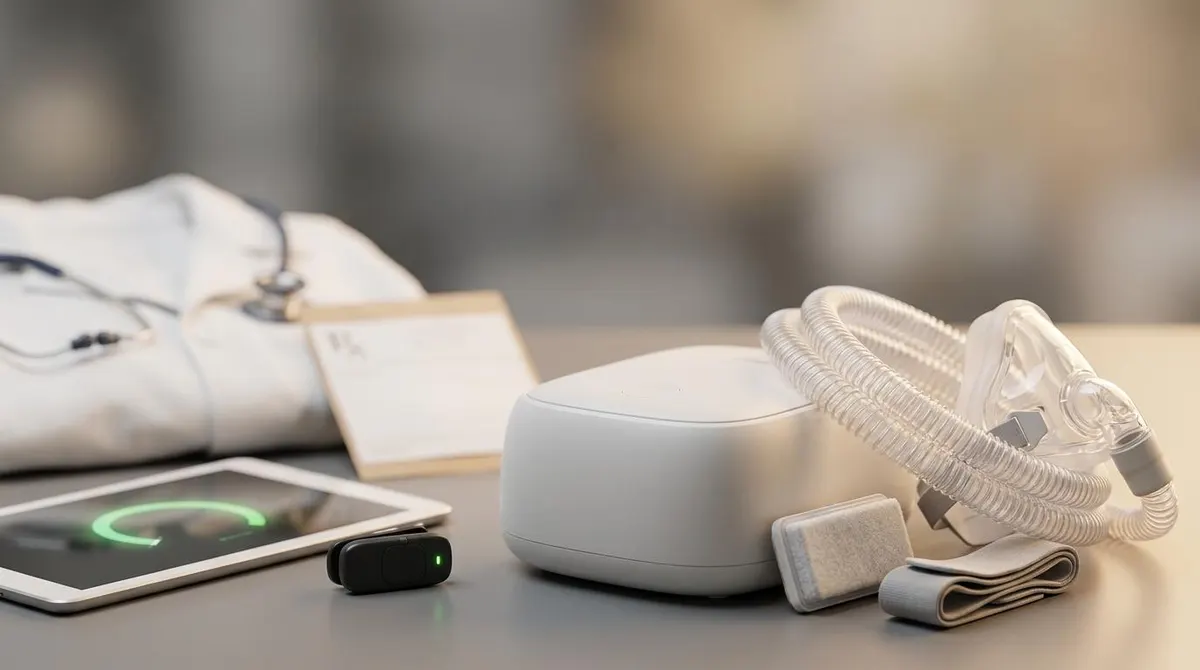
A home sleep apnea test is appropriate for adults with a high pretest probability of moderate to severe obstructive sleep apnea and no significant comorbid sleep disorders. Polysomnography in a sleep center remains the standard when the clinical picture is more complex.
The distinction between home sleep testing and in-lab polysomnography directly affects which CPT codes and HCPCS codes are billed, so understanding the clinical criteria is a coding issue as much as a clinical one.
When a Home Sleep Test Is Appropriate
The American Academy of Sleep Medicine clinical practice guidelines recommend a home sleep apnea test for patients who meet all of the following criteria:
- Age 18 or older
- High pretest probability of moderate to severe obstructive sleep apnea based on clinical evaluation
- No significant comorbid sleep disorders such as narcolepsy, REM sleep behavior disorder, restless leg syndrome, or severe insomnia
- No severe cardiopulmonary disease, neuromuscular disease, or chronic respiratory failure
- Able to follow instructions for self-applying the device
When In-Lab Polysomnography Is Required
In-lab polysomnography, billed under CPT 95810 or 95811, is required when the patient has suspected comorbid sleep disorders, when the home sleep test result is negative despite high clinical suspicion, or when a CPAP titration study is needed. Polysomnography records additional channels including electroencephalogram for sleep staging and sleep architecture analysis, electromyography, and electrooculography, which a standard Type III home sleep test device does not capture.
Structured Comparison: Home Sleep Test vs In-Lab Polysomnography
Setting
- Home Sleep Test: Patient's own bed at home
- In-Lab Polysomnography: Sleep center or hospital with technologist attendance
Channels Recorded
- Home Sleep Test: 4 to 7 channels (airflow, respiratory effort, oxygen saturation, heart rate)
- In-Lab Polysomnography: 12 or more channels (adds EEG, EMG, EOG, leg movement, sleep staging)
CPT Code
- Home Sleep Test: 95800, 95801, or 95806
- In-Lab Polysomnography: 95810 or 95811
HCPCS Code (Medicare DME)
- Home Sleep Test: G0398, G0399, or G0400
- In-Lab Polysomnography: Not billed through DME MAC
Cost Without Insurance
- Home Sleep Test: Typically $149 to $500
- In-Lab Polysomnography: Often $1,000 to $3,000 or more
Convenience
- Home Sleep Test: High, no travel or overnight facility stay required
- In-Lab Polysomnography: Lower, requires scheduling and an overnight stay
Best For
- Home Sleep Test: Adults with high suspicion of obstructive sleep apnea and no major comorbidities
- In-Lab Polysomnography: Patients with suspected comorbid sleep disorders, negative home test results, or need for CPAP titration studies
For most adults suspected of having obstructive sleep apnea, a home sleep test is the recommended first step. dumbo.health's home sleep apnea test uses a Type III portable monitor that records airflow, respiratory effort, oxygen saturation, and heart rate, meeting the channel requirements for CPT 95806 and HCPCS G0399. At $149 with no insurance required, it removes the cost and access barriers that delay diagnosis for many patients.
KEY TAKEAWAY: A home sleep apnea test is clinically appropriate for adults with high pretest probability of obstructive sleep apnea and no comorbid sleep disorders, while in-lab polysomnography is reserved for more complex cases requiring sleep staging and additional diagnostic channels.
Once a patient completes their home sleep test, the results need to be interpreted and scored, which connects directly to how results translate into an Apnea-Hypopnea Index and subsequent treatment decisions.
How Home Sleep Test Results Are Scored and Interpreted
Home sleep apnea test results are scored using the Apnea-Hypopnea Index, which counts the average number of apnea and hypopnea events per hour of recorded time. An AHI of 5 or higher combined with symptoms suggests obstructive sleep apnea.
The Apnea-Hypopnea Index is the primary metric derived from a home sleep test. According to the American Academy of Sleep Medicine, AHI severity classifications are:
- Normal: fewer than 5 events per hour
- Mild obstructive sleep apnea: 5 to 14 events per hour
- Moderate obstructive sleep apnea: 15 to 29 events per hour
- Severe obstructive sleep apnea: 30 or more events per hour
A board-certified sleep medicine physician reviews the raw data from the home sleep test device, including respiratory airflow waveforms, oxygen saturation trends showing any hypoxemia patterns, heart rate variability, and respiratory effort signals. The physician generates a diagnostic report that includes the AHI, oxygen desaturation index, and a clinical impression.
Home sleep apnea tests tend to underestimate AHI compared to in-lab polysomnography because total recording time rather than total sleep time is used as the denominator. This means some patients with mild obstructive sleep apnea on a home test may actually have moderate disease. Clinicians frequently observe this underestimation, which is why a negative or low-AHI result in a patient with strong clinical symptoms may warrant follow-up with in-lab polysomnography.
With dumbo.health's Essentials Plan at $59 per month, the physician interpretation and diagnostic report are included alongside CPAP therapy and equipment if treatment is indicated. The Premium Plan at $89 per month adds a dedicated sleep coach and advanced adherence monitoring, which supports patients through the transition from diagnosis to treatment.
KEY TAKEAWAY: The Apnea-Hypopnea Index is the primary scoring metric for home sleep apnea tests, but results may underestimate severity compared to polysomnography, so a negative home test in a symptomatic patient may require follow-up in-lab testing.
Scoring and interpretation lead directly to treatment, and understanding the CPT codes for follow-up CPAP therapy is the natural next step for anyone managing the full billing cycle.
CPT Codes for CPAP Therapy and Follow-Up After Home Sleep Testing
CPAP therapy following a positive home sleep apnea test is billed using separate CPT and HCPCS codes for the device, supplies, and follow-up management. The diagnostic test coding covered earlier applies only to the home sleep test itself, not to ongoing treatment.
CPAP Equipment and Supply Codes
CPAP devices and supplies are billed through HCPCS Level II codes when submitted to Medicare or insurance. Common HCPCS codes include:
- E0601: Continuous positive airway pressure ventilation device (CPAP)
- E0470: BiPAP device without backup rate
- A7027: CPAP combination oral and nasal interface
- A7030: CPAP full-face mask
- A7035: CPAP headgear
- A7038: CPAP filter, disposable
Follow-Up and Adherence Monitoring
Medicare requires documented CPAP adherence for continued coverage. According to CMS guidelines, CPAP adherence is defined as using the device for at least 4 hours per night on at least 70% of nights during a consecutive 30-day period within the first 90 days. Failure to meet this threshold can result in loss of Medicare coverage for the device and supplies.
Follow-up sleep medicine visits for CPAP management are billed using standard Evaluation and Management CPT codes (99211 through 99215) based on the complexity of the visit. Some practices also bill for remote monitoring of CPAP adherence data under applicable CPT codes for remote physiologic monitoring.
People who undergo this exam and receive a positive diagnosis often find the transition to CPAP therapy smoother when they have dedicated support. dumbo.health's sleep apnea care plans bundle physician oversight, CPAP equipment, and adherence monitoring into a single monthly cost. The Premium Plan at $89 per month includes a licensed sleep coach and advanced adherence monitoring, directly addressing the compliance challenge that causes many patients to lose their insurance coverage.
KEY TAKEAWAY: CPAP therapy after a positive home sleep test is billed separately using HCPCS codes for the device and supplies, and Medicare requires documented CPAP adherence of at least 4 hours per night on 70% of nights to maintain coverage.
The billing pathway is clear, but the process of actually completing a home sleep test and getting results has practical steps that patients and providers need to follow.
Step-by-Step Process: Completing a Home Sleep Apnea Test
Completing a home sleep apnea test involves ordering the device, self-applying it at home, and returning it for physician interpretation. The process typically takes less than two weeks from order to results.
How to Complete a Home Sleep Apnea Test
1. Get a clinical evaluation from your physician or complete the free sleep assessment at dumbo.health to determine if a home sleep test is appropriate for your symptoms.
2. Order your home sleep test device. Through dumbo.health, the home sleep test costs $149 with no insurance or preauthorization needed.
3. Receive the device and review the instructions. Most Type III portable monitors require attaching a nasal cannula for airflow measurement, a finger pulse oximeter for oxygen saturation and heart rate, and chest and abdominal belts for respiratory effort.
4. Apply the device before bed and sleep as normally as possible for one full night. Avoid alcohol and sedatives, which can affect respiratory airflow patterns.
5. Remove the device in the morning and return it according to the provided instructions, or upload the data electronically if the device supports wireless transmission.
6. A board-certified sleep medicine physician reviews and interprets the raw data, scoring the Apnea-Hypopnea Index and generating a diagnostic report.
7. Receive your results and discuss next steps with your provider. If obstructive sleep apnea is diagnosed, treatment options including CPAP therapy, an oral device, or positional therapy will be recommended based on severity.
Most patients receive their interpreted results within 5 to 10 business days. dumbo.health's Premium Plan offers priority results turnaround for patients who need faster answers, which is especially valuable for commercial drivers facing DOT physical deadlines.
KEY TAKEAWAY: A home sleep apnea test can be completed in seven straightforward steps from initial evaluation to receiving interpreted results, with most patients getting their diagnosis within two weeks of ordering the device.
The process is simple, but there are real situations where a home sleep test may not work or may not be the right choice.
Limitations and Risks of Home Sleep Apnea Testing
A home sleep apnea test is not appropriate for every patient and has technical and clinical limitations that can affect diagnostic accuracy. Understanding these limitations prevents misdiagnosis and ensures the right patients receive the right test.
When a Home Sleep Test May Not Work
- Suspected comorbid sleep disorders. Patients with symptoms suggesting narcolepsy, REM sleep behavior disorder, restless legs syndrome, or periodic limb movement disorder require in-lab polysomnography with full sleep staging and electroencephalogram monitoring. A home sleep test does not record sleep architecture or leg movements.
- Central or complex sleep apnea. Home sleep tests are validated primarily for detecting obstructive sleep apnea. Patients with suspected central sleep apnea, treatment-emergent central apnea, or Cheyne-Stokes respiration need in-lab evaluation. The National Heart, Lung, and Blood Institute distinguishes between obstructive and central sleep apnea as conditions with different pathophysiology requiring different diagnostic approaches.
- Significant cardiopulmonary disease. Patients with severe congestive heart failure, chronic obstructive pulmonary disease, or neuromuscular disorders affecting respiration may produce unreliable home sleep test data.
- Failed or unreliable data. Approximately 10% to 20% of home sleep tests produce unusable data due to sensor displacement, device malfunction, or insufficient recording time. When this happens, the test must be repeated or the patient must be referred for in-lab polysomnography.
- Low pretest probability. Using a home sleep test as a screening tool in patients with a low clinical suspicion of obstructive sleep apnea produces a higher rate of false negatives. The American Academy of Sleep Medicine recommends home sleep testing only for patients with a high pretest probability.
Mitigating Limitations
For patients who experience a failed home sleep test, dumbo.health provides physician oversight and follow-up guidance as part of all monthly care plans. The dedicated sleep coach available through the Premium Plan at $89 per month can help troubleshoot device application issues and coordinate next steps if a retest or in-lab referral is needed. When a home test is not the right fit, dumbo.health clinicians can guide patients toward alternative care pathways.
IMPORTANT: A negative home sleep apnea test does not rule out obstructive sleep apnea. The American Academy of Sleep Medicine recommends that patients with a negative home test result but persistent symptoms such as excessive daytime sleepiness, witnessed apneas, or habitual loud snoring should be referred for in-lab polysomnography.
KEY TAKEAWAY: Home sleep apnea tests have specific limitations including inability to detect comorbid sleep disorders, potential AHI underestimation, and a 10% to 20% rate of unusable data, so negative results in symptomatic patients should prompt follow-up with in-lab polysomnography.
These clinical limitations have real-world impact, which becomes clearer when looking at specific patient scenarios.
Real-World Scenarios: Home Sleep Test Coding in Practice
Seeing how CPT and HCPCS codes apply in actual clinical situations makes abstract billing rules concrete. The following scenarios reflect common cases encountered by sleep medicine providers and billing staff.
Common Scenarios
Scenario 1: Long-Haul Truck Driver Referred During DOT Physical
A 48-year-old male long-haul truck driver with a BMI of 37 and a neck circumference of 18 inches is flagged during his DOT physical for suspected obstructive sleep apnea. The medical examiner refers him for a sleep apnea test. He has no insurance and needs results quickly to maintain his CDL certification.
This driver orders a home sleep apnea test through dumbo.healthfor $149. The test uses a Type III portable monitor recording airflow, respiratory effort, oxygen saturation, and heart rate. The applicable CPT code is 95806. His AHI result is 28, indicating moderate obstructive sleep apnea. He enrolls in dumbo.health's Premium Plan at $89 per month for CPAP therapy, physician oversight, and adherence monitoring to satisfy FMCSA requirements for his DOT physical.
Scenario 2: Medicare Patient With Daytime Sleepiness and Snoring
A 64-year-old female Medicare beneficiary presents with a two-year history of loud snoring, witnessed apneas reported by her spouse, and an Epworth Sleepiness Scale score of 14. Her physician documents a face-to-face evaluation and orders a home sleep test.
The practice bills HCPCS code G0399 to the DME MAC with a primary ICD-10-CM diagnosis code of G47.33 (obstructive sleep apnea) and a secondary code of R06.83 (snoring). The test records four channels on a Type III device. The claim is approved because the face-to-face evaluation is documented, the diagnosis code matches the LCD requirements, and the device meets minimum channel specifications for G0399.
Scenario 3: Negative Home Test in Symptomatic Patient
A 52-year-old male owner-operator reports severe daytime sleepiness, morning headaches, and disrupted sleep quality. His BMI is 31. He completes a home sleep test coded as CPT 95806. The AHI result is 3.8 events per hour, which is below the diagnostic threshold for obstructive sleep apnea.
Despite the negative result, his symptoms persist. Following American Academy of Sleep Medicine recommendations, his provider refers him for in-lab polysomnography coded as CPT 95810. The in-lab study reveals an AHI of 18 with significant sleep fragmentation visible on the electroencephalogram, confirming moderate obstructive sleep apnea that the home test underestimated because total recording time rather than total sleep time was used as the denominator. This case illustrates why home sleep test limitations must inform clinical decision-making and billing strategy.
KEY TAKEAWAY: Real-world coding scenarios show that correct code selection depends on the device type, payer (Medicare DME MAC versus commercial insurance), documented clinical evaluation, and awareness that negative home test results in symptomatic patients may require follow-up with in-lab polysomnography.
These practical examples demonstrate how coding rules play out in clinical practice, but persistent myths about home sleep testing still cause confusion for both patients and providers.
Common Myths About Home Sleep Apnea Test Coding Debunked
MYTH: A single CPT code covers all home sleep apnea tests regardless of the device used.
FACT: Three distinct CPT codes (95800, 95801, 95806) exist for home sleep apnea tests, and the correct code depends on the number and type of channels recorded by the specific device. Billing the wrong code based on the actual device capabilities is a common cause of claim denials. The American Medical Association defines each code by the specific physiological parameters measured.
MYTH: Medicare uses the same CPT codes as commercial insurance for home sleep tests.
FACT: Medicare routes home sleep apnea test claims through DME MACs using HCPCS codes G0398, G0399, and G0400, not CPT codes. Submitting CPT 95806 directly to a DME MAC instead of G0399 will result in an automatic denial. Providers must check whether the payer requires CPT coding or HCPCS coding before claim submission.
MYTH: A home sleep test can diagnose any sleep disorder, so the same codes and diagnosis pairings work for all conditions.
FACT: Home sleep tests are validated primarily for obstructive sleep apnea. They cannot diagnose narcolepsy, REM sleep behavior disorder, restless legs syndrome, or disorders requiring sleep staging through an electroencephalogram. The ICD-10-CM diagnosis code paired with the home sleep test must reflect suspected obstructive sleep apnea (G47.33) or a related supported diagnosis per the applicable Local Coverage Determination.
MYTH: If the home sleep test is negative, the claim will be denied.
FACT: A negative test result does not automatically trigger a claim denial. The test was still performed and the claim is valid as long as medical necessity was documented before the test was ordered. The face-to-face evaluation, documented symptoms, and clinical reasoning supporting the test order are what establish medical necessity, not the outcome.
MYTH: Cash-pay patients do not need to worry about CPT codes.
FACT: CPT codes still apply to cash-pay home sleep tests for clinical documentation, physician interpretation records, and any future insurance or legal use of the results. Even when a patient pays $149 out of pocket through dumbo.health, the test is coded and documented using the appropriate CPT code for the device type used, ensuring the results are clinically valid and portable across providers.
KEY TAKEAWAY: Correct CPT and HCPCS code selection depends on the specific device, the payer type, and the documented clinical indication, and none of these requirements change based on the test result or the payment method.
Pre-Submission Checklist for Home Sleep Apnea Test Claims
Preventing claim denials starts with systematic verification before the claim is submitted. Use this checklist to confirm every required element is in place.
Home Sleep Test Billing Checklist
- Confirm the home sleep test device type (Type II, Type III, or Type IV) and the exact number of channels recorded
- Match the device type to the correct CPT code (95800, 95801, or 95806) or HCPCS code (G0398, G0399, or G0400)
- Verify whether the payer requires CPT coding or HCPCS coding (Medicare DME MAC requires G-codes)
- Confirm the face-to-face clinical evaluation was completed, signed, and dated before the test was ordered
- Select the most specific ICD-10-CM diagnosis code supported by the clinical documentation (G47.33 for obstructive sleep apnea is the most common)
- Check the applicable Local Coverage Determination for diagnosis code coverage and documentation requirements
- Verify the interpreting physician's board certification or documented sleep study interpretation competency
- Confirm the signed interpretation report includes the Apnea-Hypopnea Index, oxygen desaturation data, and clinical impression
- Ensure the claim includes the correct provider and facility identifiers per the payer's claims processing requirements
- For cash-pay patients, document the CPT code in the clinical record even though no insurance claim is submitted
This checklist covers the most common denial triggers identified by medical billing specialists and coding guidelines from sources including Codify by AAPC and CMS Billing and Coding Articles.
KEY TAKEAWAY: A pre-submission checklist that verifies device type, code match, documentation, and payer-specific requirements prevents the majority of home sleep apnea test claim denials.
Conclusion
The CPT home sleep apnea test coding framework spans CPT codes 95800, 95801, and 95806 for commercial payers and HCPCS codes G0398 through G0400 for Medicare DME MAC billing. Correct code selection depends on the device type, channel count, payer requirements, and properly documented medical necessity. Matching the right procedure code with the right ICD-10-CM diagnosis code and complete face-to-face evaluation documentation prevents the claim denials that delay diagnosis and treatment. For patients and providers who want to bypass insurance complexity entirely, dumbo.health provides a complete home sleep apnea test for $149 with no insurance, no preauthorization, and no surprise bills, followed by monthly care plans starting at $59 per month with no contracts and the ability to cancel anytime.
Frequently Asked Questions About CPT Home Sleep Apnea Test
What is a home sleep apnea test (HST) and how does it work?
A home sleep apnea test (HST) is a diagnostic study that monitors breathing patterns, oxygen saturation, heart rate, airflow, and respiratory effort while a patient sleeps in their own home. Unlike in-lab polysomnography, an HST uses a portable monitor and does not require a technologist to be present during the test. The American Academy of Sleep Medicine recognises home sleep testing as a clinically appropriate tool for evaluating suspected obstructive sleep apnea in adults who meet clinical criteria. Results are interpreted by a qualified sleep physician and used to guide treatment decisions. A healthcare professional can help determine whether home sleep testing is appropriate for your situation.
What CPT codes are used for home sleep apnea testing?
Several CPT codes are used to bill for home sleep apnea tests depending on the type of portable monitor used. The main codes include CPT 95806, which covers a home sleep study measuring airflow, respiratory effort, oxygen saturation, and heart rate without sleep staging. CPT 95800 covers unattended sleep studies that also include actigraphy. These are distinct from in-lab polysomnography codes such as CPT 95810 and 95811, which require technologist attendance and full sleep staging. The American Medical Association maintains the CPT code set, and the correct code depends on the specific channels monitored and the clinical setting. A qualified medical biller or sleep medicine provider can confirm the appropriate code.
What are the HCPCS codes used for home sleep testing?
HCPCS Level II codes G0398, G0399, and G0400 are used specifically for Medicare billing of home sleep tests. The HCPCS Code range G0398-G0400 covers different portable monitor types. G0398 applies to a Type II portable monitor, which records at least seven channels including electroencephalogram, airflow, oxygen saturation, respiratory effort, heart rate, and body position. G0399 applies to a Type III portable monitor, which records at least four channels including airflow, oxygen saturation, respiratory effort, and heart rate. G0400 applies to a Type IV portable monitor, which records fewer channels, typically one to three. The correct HCPCS code depends on the device used and the number of channels recorded.
What is the difference between a Type II, Type III, and Type IV portable monitor?
The portable monitor type defines how many physiological channels are recorded during a home sleep test. A Type II portable monitor records at least seven channels and approximates a full polysomnography without technologist attendance, including sleep staging. A Type III portable monitor records at least four channels including airflow, oxygen saturation, respiratory effort, and heart rate, and is the most commonly used device for diagnosing obstructive sleep apnea at home. A Type IV portable monitor records fewer than four channels, often only one or two, such as peripheral arterial tone or oxygen saturation alone. The monitor type affects both clinical interpretation and the HCPCS or CPT code used for billing.
What does a home sleep apnea test measure?
A home sleep apnea test typically measures airflow, respiratory effort, oxygen saturation, heart rate, and body position depending on the device used. Some devices also record snoring, peripheral arterial tone, or respiratory movement. These signals allow a sleep physician to calculate the apnea-hypopnea index, which quantifies the number of apnea and hypopnea events per hour of sleep. This index is central to diagnosing obstructive sleep apnea and determining severity. Home sleep tests do not measure sleep staging or brain activity the way full polysomnography does, which is a clinically important limitation to be aware of. Learn more about what to expect from an at-home sleep apnea test.
Is a home sleep test covered by Medicare?
Medicare may cover home sleep testing when specific criteria are met under applicable Local Coverage Determinations. The Centers for Medicare and Medicaid Services has published a Billing and Coding Article for polysomnography and other sleep studies, which outlines covered CPT and HCPCS codes, medical necessity requirements, and documentation expectations. Medicare typically requires a physician to order the test and document clinical symptoms consistent with obstructive sleep apnea before authorisation. Coverage may also depend on the Medicare Administrative Contractor responsible for your region. Patients who have received a Medicare coverage denial should review the relevant Local Coverage Determination and the specific reason for denial before appealing.
What is a Local Coverage Determination and how does it affect home sleep test billing?
A Local Coverage Determination is a policy document issued by a Medicare Administrative Contractor that defines the clinical criteria under which a service such as a home sleep apnea test is considered medically necessary and eligible for reimbursement. Local Coverage Determinations vary by region and can affect which CPT codes are covered, what ICD-10-CM diagnosis codes must be present on the claim, and whether prior authorisation is required. The FMCSA and CMS maintain separate frameworks, so coverage rules for commercial contexts may differ from standard Medicare guidelines. Providers and patients can search the Medicare Coverage Database for the relevant Document ID and Billing and Coding Article for sleep studies.
What ICD-10 codes are used alongside home sleep apnea test CPT codes?
ICD-10-CM diagnosis codes must be included on claims for home sleep apnea tests to establish medical necessity. Commonly used codes include G47.33 for obstructive sleep apnea, G47.30 for sleep apnea unspecified, G47.10 for hypersomnia unspecified, G47.419 for narcolepsy without cataplexy, and G47.61 for restless legs syndrome. REM sleep behavior disorder may be coded using G47.52. The specific ICD-10-CM diagnosis code required depends on the payor's policy and the clinical indication for testing. Providers should consult the relevant Local Coverage Determination and coding guidelines to confirm which diagnosis codes support coverage. CDC's National Center for Health Statistics and the World Health Organization maintain the International Classification of Disease code set.
Does home sleep testing require prior authorisation?
Whether home sleep testing requires prior authorisation depends on the specific health insurance provider and the patient's plan. Some payors require preauthorisation before a home sleep test is performed, while others do not. Medicare policies vary by region and are governed by the applicable Local Coverage Determination. Commercial insurance plans may have separate preauthorisation requirements. Patients should contact their health insurance provider directly to confirm whether authorisation is required before testing. For patients who find the insurance process difficult to navigate, cash-pay options such as dumbo.health offer home sleep testing for $149 with no insurance required, no prior authorisations, and no surprise bills.
Are there coverage restrictions based on patient co-morbidities?
Some payors restrict access to home sleep testing for patients with certain co-morbidities. Conditions such as moderate to severe chronic obstructive pulmonary disease, congestive heart failure, neuromuscular disease, and suspected central sleep apnea may require in-lab polysomnography rather than an HST because these conditions can affect the accuracy of home-based testing. Insurance policies and Local Coverage Determinations often specify which clinical conditions limit eligibility for HST reimbursement. The American Academy of Sleep Medicine provides clinical guidance on appropriate use of home sleep testing. A healthcare professional can help determine whether home sleep testing is appropriate given a patient's full medical history and co-morbidities.
Are there restrictions on which providers can bill for home sleep testing?
Some payors impose restrictions on which providers are eligible to bill for home sleep testing. Board certification in sleep medicine or pulmonology may be required by certain payors to qualify for reimbursement. Sleep centres and providers should review the specific payor's policy to confirm credentialing and provider type requirements before billing. Medicare guidelines reference clinical qualification requirements for the interpreting physician. Providers who are unsure whether they meet payor criteria should consult the relevant Billing and Coding Article or contact the Medicare Administrative Contractor for their region to clarify requirements before submitting claims.
What place of service code should be used when billing for a home sleep test?
Home sleep tests performed in the patient's home are typically billed using Place of Service code 12, which designates the patient's home as the location of service. This is distinct from facility-based sleep studies, which use Place of Service code 11 or 22 depending on the setting. The appropriate code affects reimbursement calculations, particularly for the technical component and professional component when billed separately. Providers should confirm the correct place of service code with the relevant payor or Medicare Administrative Contractor before submitting claims to avoid denials related to administrative coding errors.
What is the difference between the technical component and professional component in HST billing?
The technical component of a home sleep test covers the cost of the device, the data collection process, and the supply of the portable monitor to the patient. The professional component covers the clinical work of the interpreting physician, including reviewing the recorded data, calculating the apnea-hypopnea index, and preparing a clinical report. Some billing scenarios split these components using modifier 26 for the professional component and modifier TC for the technical component when billed by different entities. Others bill a global service code that includes both components. The allowable amount for each component varies by payor, region, and whether the service is billed under Medicare or commercial insurance.
What should I do if my home sleep test claim is denied?
If a home sleep test claim is denied, the first step is to review the denial reason provided by the payor. Common reasons for denial include missing or incorrect ICD-10-CM diagnosis codes, the absence of required prior authorisation, use of the wrong CPT or HCPCS code, failure to document medical necessity, or the patient not meeting clinical eligibility criteria under the applicable Local Coverage Determination. Providers should check the relevant Billing and Coding Article and confirm that all documentation supports the clinical indication. A formal appeal can be filed if the denial is believed to be incorrect. Patients who received a Medicare denial can access the Medicare Coverage Database for relevant articles and guidance.
Is a home sleep test accurate enough to diagnose obstructive sleep apnea?
A home sleep test can be an accurate diagnostic tool for uncomplicated obstructive sleep apnea in adults when used appropriately. The American Academy of Sleep Medicine supports the use of home sleep testing for patients with a high pre-test probability of moderate to severe obstructive sleep apnea and no significant co-morbidities. However, home sleep tests do not capture sleep staging, which means the apnea-hypopnea index may be calculated based on recording time rather than actual sleep time, potentially underestimating severity. In-lab polysomnography remains the reference standard for complex presentations, suspected central sleep apnea, narcolepsy, REM sleep behavior disorder, and cases where home testing returns a negative result despite ongoing symptoms.
When is in-lab polysomnography required instead of a home sleep test?
In-lab polysomnography is typically required when a home sleep test is clinically insufficient or likely to produce an inaccurate result. Clinical situations that may require polysomnography include suspected central sleep apnea, significant cardiorespiratory disease, neuromuscular disorders, hypersomnia, narcolepsy, REM sleep behavior disorder, restless legs syndrome requiring detailed sleep staging, or prior negative home sleep test results despite strong clinical suspicion of sleep apnea. CPAP titration studies are also conducted in-lab for patients who require close monitoring. A healthcare professional should determine whether in-lab testing is clinically appropriate based on the patient's full symptom profile and medical history.
How does a home sleep test support CPAP therapy decisions?
A home sleep test provides the diagnostic foundation for initiating CPAP therapy in patients with confirmed obstructive sleep apnea. The apnea-hypopnea index result from the test helps the interpreting physician determine whether CPAP is indicated and what pressure settings may be appropriate. CPAP adherence monitoring is typically required by insurance payors before CPAP equipment is covered on an ongoing basis. Some payors require data showing that the patient uses CPAP for a minimum number of hours per night over a defined period before confirming continued coverage. Ongoing care after testing should include physician review and adherence follow-up to ensure therapy is effective. CPAP therapy and equipment are included in dumbo.health monthly plans.
What is the apnea-hypopnea index and why does it matter?
The apnea-hypopnea index (AHI) is the number of apnea and hypopnea events per hour of sleep or recording time. An apnea is a complete cessation of airflow lasting at least ten seconds, while a hypopnea is a partial reduction in airflow accompanied by oxygen desaturation or arousal. The AHI is used to classify obstructive sleep apnea severity. An AHI of fewer than five events per hour is typically considered normal, five to fourteen is mild, fifteen to twenty-nine is moderate, and thirty or above is severe. This classification guides treatment decisions including CPAP therapy, BiPAP, or oral device use. A sleep physician interprets AHI results alongside other clinical information to determine the appropriate care pathway.
Can a home sleep test detect conditions other than sleep apnea?
Home sleep tests are designed primarily to detect obstructive sleep apnea by measuring airflow, oxygen saturation, heart rate, and respiratory effort. They are not designed to diagnose insomnia, narcolepsy, hypersomnia, REM sleep behavior disorder, restless legs syndrome, or other sleep disorders that require full sleep staging via polysomnography. If a patient has symptoms such as excessive daytime sleepiness, cataplexy, sleep paralysis, or abnormal nocturnal behaviours, a healthcare professional may recommend in-lab polysomnography or a more comprehensive evaluation rather than a home sleep test. Home sleep testing has a specific and valuable clinical role, but it does not replace a full sleep medicine assessment for complex presentations.
How much does a home sleep apnea test cost without insurance?
The out-of-pocket cost of a home sleep apnea test without insurance varies depending on the provider and what is included. At dumbo.health, the at-home sleep test costs $149 as a one-time fee. This covers the home sleep test device and one night of testing. Physician interpretation, clinical reporting, and ongoing care are covered separately through monthly plans, which start at $59 per month with no contracts and the ability to cancel anytime. This transparent cash-pay model means no prior authorisations, no surprise bills, and no insurance required. For patients navigating insurance barriers, a cash-pay option can provide a faster and more predictable path to testing. Explore sleep apnea care options to find a plan that fits your needs.
What is included in a physician interpretation report after a home sleep test?
A physician interpretation report for a home sleep test documents the findings from the overnight recording, including the apnea-hypopnea index, oxygen saturation levels, heart rate patterns, airflow data, respiratory effort, and any clinically significant events observed. The report identifies whether obstructive sleep apnea is present and at what severity. It may include treatment recommendations such as CPAP therapy, BiPAP, or further in-lab evaluation. For commercial drivers or patients who need documentation for a referring provider, the report can be forwarded directly. At dumbo.health, physician interpretation and a clinical report are included in all monthly plans, with provider updates sent to referring physicians when applicable.
Do commercial drivers need a home sleep apnea test for DOT medical certification?
Commercial drivers are not automatically required to complete a home sleep apnea test for DOT medical certification, but a certified medical examiner may refer a driver for sleep apnea evaluation based on clinical risk factors such as obesity, snoring, high blood pressure, large neck circumference, or reported daytime sleepiness. The Federal Motor Carrier Safety Administration does not currently have a formal mandated sleep apnea testing protocol, but many medical examiners apply clinical judgment when deciding whether to refer a driver for evaluation. If a driver is referred for testing and diagnosed with obstructive sleep apnea, the medical examiner may require documented treatment and adherence before issuing or renewing a medical certificate. dumbo.health can support testing and documentation, but a certified medical examiner makes all certification decisions. Learn more at the CDL driver sleep apnea test guide.
How does CPAP adherence affect ongoing sleep apnea care and documentation?
CPAP adherence refers to consistent nightly use of continuous positive airway pressure therapy as prescribed. Many insurance payors, including Medicare, require documented adherence data showing the patient uses CPAP for at least four hours per night on at least seventy percent of nights over a consecutive thirty-day period before confirming ongoing equipment coverage. For commercial drivers, demonstrated CPAP adherence may also be relevant to DOT medical certification decisions, as a certified medical examiner may consider whether obstructive sleep apnea is being adequately treated. Regular adherence monitoring helps identify patients who are struggling with therapy so that clinical adjustments can be made. dumbo.health Premium and Elite plans include advanced adherence monitoring and dedicated sleep coach support.
Where can I find a home sleep apnea test near me?
Home sleep apnea tests are delivered directly to your home, so geographic proximity to a sleep centre is not required. A portable monitor is shipped to your address, you complete the test overnight in your own home, and you return the device for data analysis. This makes home sleep testing accessible regardless of where you live. If you need in-lab polysomnography or a face-to-face sleep medicine consultation, your primary care provider can refer you to a sleep centre or specialist in your area. For cash-pay at-home testing with transparent pricing, you can get an at-home sleep test through dumbo.health without needing a referral or insurance approval.
What is the first step if I think I might have sleep apnea?
If you think you might have sleep apnea, the first step is to note your symptoms and speak with a healthcare professional. Common signs include loud snoring, witnessed breathing pauses during sleep, waking with a dry mouth or headache, excessive daytime sleepiness, and difficulty concentrating. A healthcare professional can assess your symptoms, review risk factors such as body mass index, neck circumference, and blood pressure, and determine whether a home sleep test or in-lab polysomnography is appropriate. If you are looking for a convenient starting point, the free dumbo.health sleep assessment can help you understand whether at-home sleep testing may be a reasonable next step. Start with a free sleep assessment today.
Related Home Sleep Apnea Test Topics
- Home Sleep Apnea Test CPT Code Complete Coding and Billing Guide for Sleep Studies
- CPT for Home Sleep Apnea Test Complete Coding and Billing Guide for Sleep Study Providers
- CPT Code for Home Sleep Apnea Test The Complete Coding and Billing Guide
- Home Sleep Apnea Test ICD-10 Codes The Complete Coding and Diagnostic Guide for Sleep Apnea Testing
- Home Sleep Apnea Test CPT Codes A Complete Guide to Billing, Coding, and Reimbursement
- Sleep Apnea Test at Home The Complete Guide to Home Sleep Testing for Adults
- Can You Test for Sleep Apnea at Home A Complete Guide to Home Sleep Testing
- Home Sleep Apnea Test The Complete Guide to At-Home Sleep Apnea Testing
- Sleep Apnea Testing at Home The Complete Guide to Home Sleep Tests, Devices, and Results
- Home Sleep Apnea Testing The Complete Guide to Diagnosing Sleep Apnea at Home
- How Do You Get a Home Sleep Apnea Test The Complete Guide to At-Home Sleep Testing
- Sleep Study Test for Sleep Apnea The Complete Guide to Diagnosis, Testing Types, and Next Steps
- At Home Sleep Apnea Test with Ring How Ring-Based Sleep Testing Works and Whether It Can Diagnose Sleep Apnea
- How to Get a Sleep Apnea Test at Home The Complete Guide to Home Sleep Testing
- Home Sleep Apnea Test Ring How Ring-Based Sleep Testing Works for Sleep Apnea Detection
- How Is a Home Sleep Apnea Test Done A Complete Guide to At-Home Sleep Testing
- At Home Sleep Apnea Test for VA Disability The Complete Guide for Veterans
- At-Home Sleep Apnea Test for VA The Complete Guide for Veterans
- How Does a Home Sleep Apnea Test Work A Complete Guide to At-Home Sleep Testing
- Pediatric Home Sleep Apnea Test A Complete Guide for Parents and Providers
- CPAP Test at Home The Complete Guide to Home Sleep Apnea Testing and Treatment
- Home Sleep Test The Complete Guide to At-Home Sleep Apnea Testing
- Sleep Test at Home The Complete Guide to Home Sleep Apnea Testing
- Sleep Apnea Diagnosis at Home The Complete Guide to Home Sleep Testing
- Best Home Sleep Apnea Test A Clinical Guide to Choosing the Right At-Home Sleep Study
- At-Home Sleep Apnea Test The Complete Guide to Testing, Results, and Treatment
- At Home Sleep Study for Sleep Apnea The Complete Guide to Testing in Your Own Bed
- At-Home Sleep Apnea Test DOT Approved The Complete Guide for Commercial Drivers
- Apnea Monitor The Complete Guide to Breathing Monitors for Sleep Apnea and Infant Care
- What Is a Home Sleep Apnea Test How At-Home Sleep Testing Works, What It Measures, and Who Needs One
- Sleep Apnea Test The Complete Guide to Diagnosis, Home Testing, and What Your Results Mean
- How to Get Tested for Sleep Apnea The Complete Guide to Diagnosis, Sleep Studies, and Treatment
- How Much Does a Home Sleep Apnea Test Cost Complete Pricing Breakdown for Self-Pay and Insured Patients
- Home Sleep Testing Companies A Complete Guide to At-Home Sleep Apnea Diagnosis
- Sleep Apnea Sleep Study The Complete Guide to Testing, Diagnosis, and Treatment
- Obstructive Sleep Apnea Sleep Study The Complete Guide to Diagnosis, Testing, and Treatment
- Sleep Study for Sleep Apnea What the Test Measures, How It Works, and What Your Results Mean
- Home Sleep Apnea Test FSA Eligible How to Use Your Flexible Spending Account for Sleep Testing
- At-Home Sleep Apnea Test FSA How to Use Your Flexible Spending Account for Sleep Testing
- At Home Sleep Apnea Test HSA How to Use Your Health Savings Account for Sleep Testing
- Home Sleep Apnea Test for Children What Parents Need to Know About Pediatric Sleep Testing
- Home Sleep Apnea Test for Kids What Parents Need to Know About Pediatric Sleep Testing
- At-Home Sleep Apnea Test for Toddlers What Parents Need to Know About Pediatric Sleep Testing
- Home Sleep Apnea Test Indications Who Qualifies and When At-Home Testing Is Clinically Appropriate
- Home Sleep Testing The Complete Guide to Diagnosing Sleep Apnea From Your Own Bed
- Sleep Apnea Testing The Complete Guide to Diagnosis, Home Tests, and What Your Results Mean
- Sleep Apnea Checker How to Screen for Sleep Apnea and What Your Results Mean
- Home Sleep Apnea Test Cost What You Actually Pay With and Without Insurance
- Sleep Study for Sleep Apnea What Happens, What It Measures, and What Your Results Mean
- Can a Sleep Study Diagnose Sleep Apnea and Other Sleep Disorders
- What Happens After a Home Sleep Apnea Test Results, Diagnosis, and Next Steps
- Do I Need a Prescription for a Home Sleep Apnea Test Device
- Sleep Apnea Test at Home with Insurance What Your Plan Actually Covers and How to Get Tested
- Home Sleep Apnea Test FDA Approved What Devices Are Cleared and How They Work
- Sleep Apnea Test at Home DOT Approved Options for Commercial Drivers
- Sleep Apnea Test Near Me How to Find Local and At-Home Testing Options
- Do You Need a Prescription for a Home Sleep Apnea Test
- What Does a Home Sleep Apnea Test Consist Of Sensors, Equipment, and What to Expect
- Kids at Home Sleep Apnea Test What Parents Need to Know About Pediatric Sleep Testing
- Home Sleep Apnea Test Near Me How to Get Tested Without a Sleep Lab Visit
- Home Sleep Apnea Test Guidelines Clinical Standards, Eligibility, and What Every Patient Should Know
- HSAT The Complete Guide to Home Sleep Apnea Testing
- Home Sleep Apnea Test Parameters What Every Measurement Means and Why It Matters
- Sleep Apnea Diagnosis How Sleep Apnea Is Detected, Tested, and Confirmed
- Can a Home Sleep Apnea Test Be Wrong Accuracy, False Negatives, and What to Do Next
- Home Sleep Apnea Test Questionnaire Screening Tools, Risk Scores, and What Happens Next
- Home Sleep Apnea Test False Negative Why It Happens and What to Do Next
- FDA Approved Home Sleep Apnea Test What Devices Are Cleared, How They Work, and How to Get Tested
- How Long Does a Home Sleep Apnea Test Take What to Expect Before, During, and After Testing
- What Is the Best At-Home Sleep Apnea Test A Clinical Comparison of Devices, Accuracy, and Cost
- Can I Get a CPAP Machine After a Home Sleep Apnea Test
- Sleep Test to CPAP How Sleep Apnea Testing Leads to Treatment
- What to Expect During a Sleep Study for Sleep Apnea
- Top-Rated Home Sleep Apnea Test Kits Available in the US
- Does Insurance Cover a Home Sleep Apnea Test What You Actually Pay
- Where Can I Buy a Home Sleep Apnea Test Without a Prescription
- Does Medicare Cover a Home Sleep Apnea Test What Beneficiaries Need to Know
- How Do Home Sleep Apnea Tests Compare to In-Lab Sleep Studies
- Can Dentists Prescribe a Home Sleep Apnea Test What You Need to Know
- What Is the Cost of a Sleep Apnea Test at Home
- Average Cost of a Home Sleep Apnea Test Kit Shipped in the US
- Home Sleep Test Cost What You Actually Pay With and Without Insurance
- Polysomnography at Home How Home Sleep Testing Compares to In-Lab Sleep Studies
- At-Home Sleep Apnea Test Covered by Medicaid What You Need to Know Before Getting Tested
- Home Sleep Apnea Test Medicaid Coverage What Patients Need to Know
- Can My Doctor Prescribe a Home Sleep Apnea Test What You Need to Know
- Are Home Sleep Apnea Tests Reliable Clinical Evidence, Accuracy, and What the Data Actually Shows
- Does a Home Sleep Apnea Test Measure Apneas What the Device Actually Records
- Home Sleep Apnea Test Contraindications When an HSAT Is Not the Right Choice
- Sleep Apnea Testing Near Me How to Find the Right Test, Provider, and Path to Diagnosis
- Do At-Home Sleep Apnea Tests Work Clinical Accuracy, Limitations, and What the Evidence Shows
- Are Sleep Studies Covered by Insurance What You Actually Pay for Sleep Apnea Testing
- Best At Home Sleep Apnea Test A Clinical Comparison
- Does Anyone Ever Pass a Sleep Apnea Test What Normal Results Actually Look Like
- How Does a Sleep Study Diagnose Sleep Apnea
- Can Sleep Apnea Be Diagnosed Without a Sleep Study
- Sleep Study Apnea Hypopnea Index What Your AHI Score Means and Why It Matters
- Which Companies Offer Home Sleep Apnea Testing Services with Fast Results
- Sleep Test What It Measures, How It Works, and What Your Results Mean
- Are Home Sleep Apnea Tests Accurate What the Evidence Actually Shows
AI summary
A home sleep apnea test (HSAT) is an unattended sleep study performed outside a sleep lab and billed using procedure codes based on the physiologic channels recorded. The primary CPT codes are 95800, 95801, and 95806. CPT 95800 includes sleep staging (Type II monitor with EEG). CPT 95801 covers devices measuring heart rate, oxygen saturation, and respiratory analysis via airflow or peripheral arterial tone (for example, WatchPat). CPT 95806 is commonly used for Type III monitors recording airflow, respiratory effort, oxygen saturation, and heart rate. For Medicare claims billed through a Durable Medical Equipment Medicare Administrative Contractor, HCPCS codes G0398 (1–3 channels), G0399 (4–7 channels), and G0400 (8+ channels) are used; billing CPT 95806 to a DME MAC can be denied. Common ICD-10-CM diagnoses include G47.33 (obstructive sleep apnea), with related codes such as G47.30, G47.39, R06.83, G47.10, and G47.00. Medicare coverage typically requires a face-to-face evaluation, documented symptoms, appropriate device specs, and physician interpretation. HSAT results are interpreted using the Apnea-Hypopnea Index; HSAT may underestimate AHI, and negative tests with persistent symptoms may require in-lab polysomnography (CPT 95810/95811).

Nicolas Nemeth
Co-Founder
Nico is the co-founder of Dumbo Health, a digital sleep clinic that brings the entire obstructive sleep apnea journey home. Patients skip the sleep lab and the long wait to see a specialist. Dumbo Health ships an at home test, connects patients with licensed sleep clinicians by video, and delivers CPAP or a custom oral appliance with ongoing coaching and automatic resupply in one clear subscription.
Keep reading

VA At Home Sleep Apnea Test: The Complete Guide for Veterans

Home Sleep Apnea Test App: What Works, What Doesn't, and How to Get a Real Diagnosis


