Kids at Home Sleep Apnea Test: What Parents Need to Know About Pediatric Sleep Testing
This guide explains how at-home sleep apnea tests work for children and what they can and cannot diagnose. It compares home sleep apnea testing (HSAT) with in-lab polysomnography, including differences in sensors, recorded channels, and how results are scored. Key pediatric details include the lower abnormal AHI threshold in kids and common causes such as enlarged tonsils and adenoids. It outlines who may be a reasonable candidate for home screening and who should go straight to a sleep lab, including children under 2 and those with central sleep apnea, neuromuscular disease, or nocturnal hypoventilation risk. You will also find practical preparation tips to reduce sensor loss and improve data quality. Finally, it reviews typical treatment pathways such as adenotonsillectomy and CPAP, and what to do if a home test is negative but symptoms persist.
Struggling with sleep?
Find out if sleep apnea is the reason.
FDA-cleared. $149 flat. Physician-reviewed results in 48 hours.

Kids at Home Sleep Apnea Test: What Parents Need to Know About Pediatric Sleep Testing
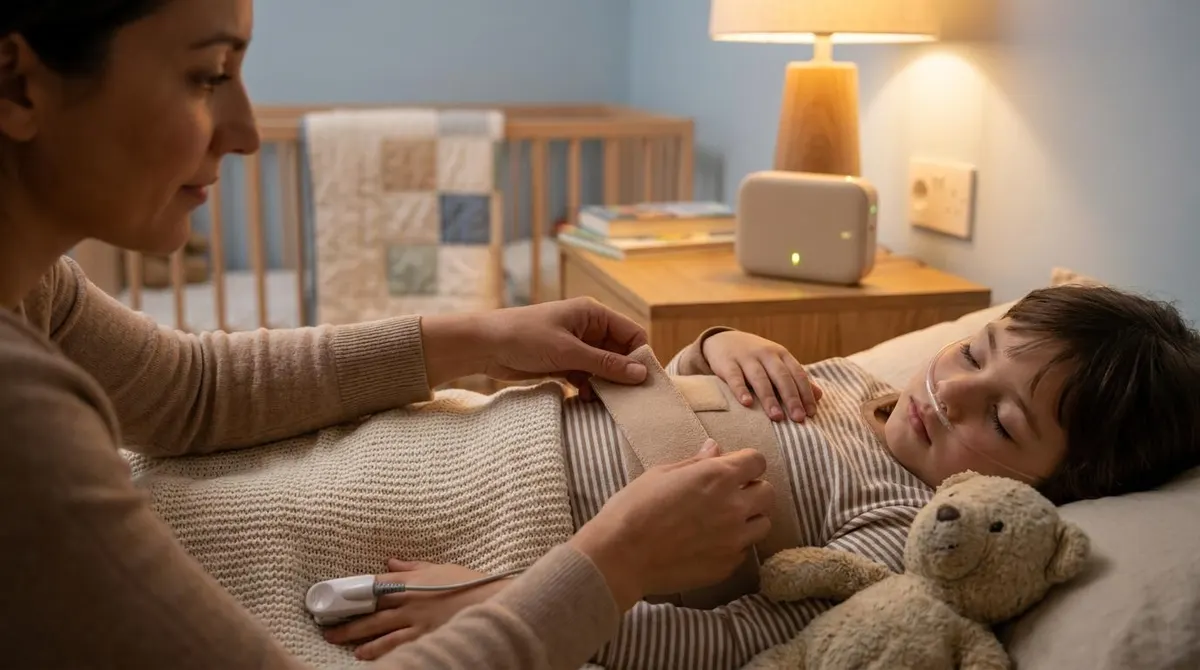
kids at home sleep apnea test options are growing, but most children still require in-lab polysomnography for an accurate diagnosis. The American Academy of Sleep Medicine recommends in-laboratory sleep studies as the standard for diagnosing pediatric obstructive sleep apnea, which affects an estimated 1 to 5 percent of children according to the American Academy of Sleep Medicine. This article is for parents, caregivers, and families who suspect their child may have sleep-disordered breathing and want to understand every available testing pathway. You will learn how home sleep apnea testing works, where it falls short for children, which devices exist, how results compare to lab studies, what treatment looks like after diagnosis, and when a provider near you may recommend one approach over another. Understanding the differences now can save your family time, money, and unnecessary worry.
Quick Answer
A kids at home sleep apnea test uses portable sensors to measure breathing, oxygen levels, and airflow while a child sleeps in their own bed. However, the American Academy of Sleep Medicine currently recommends in-lab polysomnography as the gold standard for diagnosing pediatric obstructive sleep apnea because home sleep apnea tests lack the sensitivity to detect the full range of sleep-disordered breathing in children. Home testing may play a supporting role in specific clinical scenarios. dumbo.health provides home sleep apnea testing for patients who meet eligibility criteria, with a $149 one-time test and physician-reviewed results.
Key Takeaways
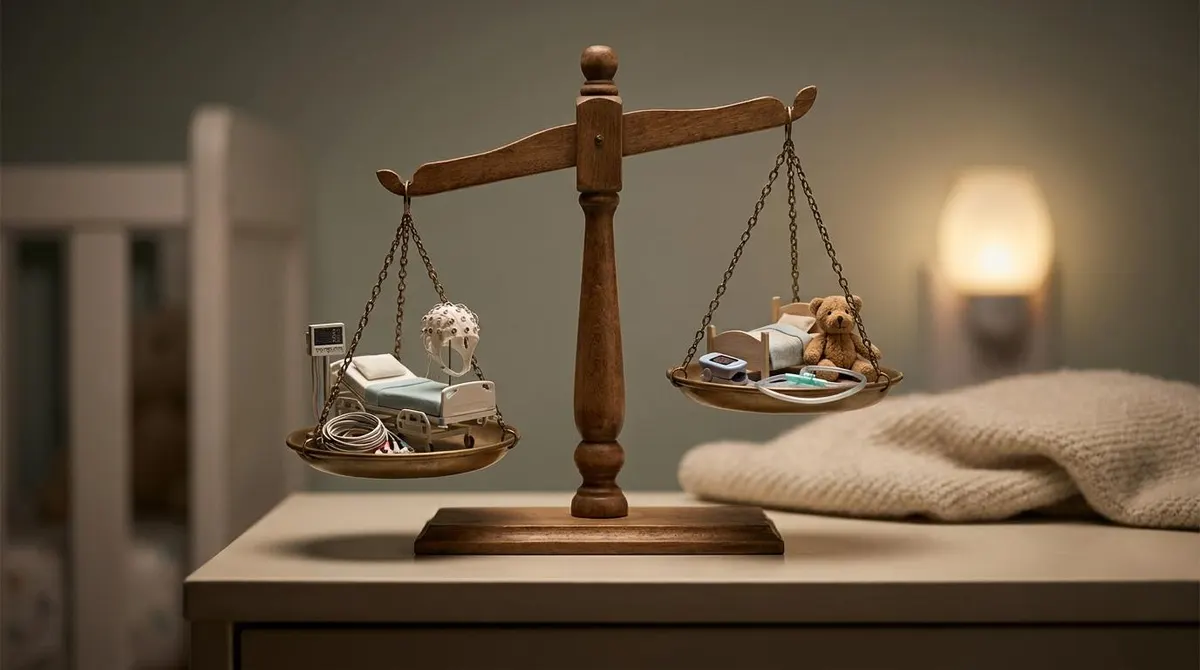
- The American Academy of Sleep Medicine considers in-lab polysomnography the gold-standard diagnostic tool for pediatric obstructive sleep apnea, not home sleep tests.
- Home sleep apnea tests (HSATs) measure airflow, oxygen saturation, heart rate, and respiratory effort but do not record brain wave patterns, sleep stages, or leg movements.
- Pediatric OSA affects approximately 1 to 5 percent of children, with peak prevalence between ages 2 and 8, often linked to enlarged tonsils and adenoids.
- An apnea-hypopnea index of 1 or more events per hour is considered abnormal in children, compared to 5 or more in adults.
- dumbo.health offers a home sleep test for $149 with no insurance required, plus ongoing care plans starting at $59 per month for patients who qualify.
- Children with neuromuscular disease, central sleep apnea, or nocturnal hypoventilation should not use home testing and require in-lab evaluation.
What Is a Kids at Home Sleep Apnea Test?
A kids at home sleep apnea test is a portable diagnostic tool that records respiratory data while a child sleeps in their own bed rather than in a sleep center. These devices typically measure airflow through a nasal cannula, oxygen saturation via an oximetry sensor, heart rate through photoplethysmography, and respiratory effort using a respiratory band.
Home sleep apnea testing (often abbreviated as HSATs) was originally developed for adult patients with a high pretest probability of moderate to severe obstructive sleep apnea. The devices used fall into the category of Type 2 and 3 portable monitoring devices, with type 3 devices being the most common for home use. Type 3 devices record a minimum of four channels including airflow, respiratory effort, oxygen saturation, and heart rate, but they do not include electroencephalography to track brain activity patterns or sleep stages.
For children, the distinction matters. Pediatric OSA presents differently than adult obstructive sleep apnea. Children may experience subtle apneas, partial airway obstruction, or respiratory disturbance patterns that only show up when brain wave patterns and body position are also being monitored. This is why in-lab polysomnography remains the diagnostic reference standard for pediatric sleep medicine.
Home sleep apnea testing uses simplified equipment compared to a full polysomnogram. A polysomnography study in a sleep lab records an electroencephalogram, eye movements, muscle activity, snoring sounds, body movements, leg movements, breathing rate, heart rate changes, SpO2, and body position simultaneously. A home test captures a fraction of that data.
KEY TAKEAWAY: A kids at home sleep apnea test records breathing and oxygen data at home using portable sensors, but it does not capture the brain activity, sleep stages, or movement data that a full in-lab polysomnography provides, which limits its diagnostic accuracy for children.
Understanding what these tests measure helps clarify who benefits from home testing and who needs a full sleep lab evaluation.
Why Sleep Apnea Testing Matters for Children
Untreated pediatric obstructive sleep apnea can affect a child's cognitive development, behavior, cardiovascular health, and growth. According to the National Heart, Lung, and Blood Institute, sleep-disordered breathing in children has been associated with attention problems, learning difficulties, and behavioral issues that may be misdiagnosed as ADHD.
Sleep apnea in children is not simply a scaled-down version of the adult condition. The apnea-hypopnea index threshold for diagnosis is lower in children. An apnea-hypopnea index of 1 or more events per hour is considered abnormal in pediatric patients, whereas adult diagnosis typically begins at 5 events per hour. This lower threshold means that even mild breathing disruptions during sleep can be clinically significant for a child.
The most common cause of obstructive sleep apnea in children is enlarged tonsils and adenoids, which physically narrow the airway during sleep. The American Academy of Sleep Medicine notes that adenotonsillectomy is the first-line treatment for most children with OSA. Other contributing factors include obesity, craniofacial differences, and neuromuscular disease.
Snoring is the most recognizable symptom, but not all children who snore have sleep apnea. The Sleep Foundation estimates that approximately 10 percent of children snore regularly, while only 1 to 5 percent have obstructive sleep apnea. Other signs caregivers should watch for include mouth breathing during sleep, restless sleep, bedwetting, morning headaches, daytime sleepiness, and difficulty concentrating at school.
DID YOU KNOW: According to the NIH, children with untreated obstructive sleep apnea may experience elevated blood pressure, which can persist into adulthood if the underlying sleep-disordered breathing is not addressed.
Early testing and diagnosis give families the opportunity to intervene before sleep apnea affects a child's development, school performance, or long-term cardiovascular health. A pediatric sleep specialist or the child's physician can determine whether testing is warranted based on symptoms, a physical exam of the airway, and family history.
KEY TAKEAWAY: Pediatric sleep apnea testing matters because even mild obstructive sleep apnea in children can impair development, behavior, and cardiovascular health, and the diagnostic threshold is significantly lower than in adults.
Knowing why testing matters is the first step, but understanding which type of test applies to your child is equally important.
Home Sleep Test vs. In-Lab Polysomnography for Children
In-lab polysomnography is the gold-standard diagnostic method for children suspected of having obstructive sleep apnea. Home sleep apnea tests offer convenience but come with significant diagnostic trade-offs in pediatric populations.
A full polysomnography records over a dozen data channels simultaneously, including an electroencephalogram for brain wave patterns, electromyography for muscle tone, electrooculography for eye movements, and detailed respiratory monitoring. This comprehensive dataset allows a sleep medicine physician to identify not only obstructive apneas but also central sleep apnea, nocturnal hypoventilation, parasomnias, and movement disorders.
Home sleep tests, by contrast, focus primarily on respiration. Type 3 devices typically record four to seven channels, covering nasal airflow (via a nasal pressure transducer or nasal cannula), respiratory effort (via a respiratory band), oxygen saturation (SpO2), and heart rate. They do not record sleep stages, so they cannot calculate a true apnea-hypopnea index. Instead, they generate a respiratory disturbance index or respiratory event index based on recording time rather than actual sleep time.
This distinction is clinically important for children. A child who lies awake anxiously for two hours while wearing unfamiliar sensors at home will have their respiratory events divided across total recording time, potentially underestimating the severity of their condition. In a lab setting with electroencephalography, the sleep medicine team can calculate events per hour of confirmed sleep, producing a more accurate apnea-hypopnea index.
Setting
- In-Lab Polysomnography: Supervised sleep center or hospital sleep lab with a technician present throughout the night
- Home Sleep Apnea Test: Child's own bedroom with caregiver-applied sensors and no technician supervision
Channels Recorded
- In-Lab Polysomnography: 12 or more channels including electroencephalogram, respiration, oxygen saturation, heart rate, body position, leg movements, snoring sounds, and eye movements
- Home Sleep Apnea Test: 4 to 7 channels typically covering airflow, respiratory effort, SpO2, and heart rate
Ability to Detect Central Sleep Apnea
- In-Lab Polysomnography: Yes, with full neurological and respiratory monitoring
- Home Sleep Apnea Test: Limited or not possible with most type 3 devices
Pediatric Diagnostic Accuracy
- In-Lab Polysomnography: High sensitivity and specificity, validated across pediatric populations
- Home Sleep Apnea Test: Variable sensitivity and specificity in children, with studies showing higher rates of false negatives
Caregiver Involvement
- In-Lab Polysomnography: Caregiver present in room; technician handles all equipment
- Home Sleep Apnea Test: Caregiver must apply and manage all sensors
Cost
- In-Lab Polysomnography: Often $1,000 to $3,000 or more depending on location and insurance
- Home Sleep Apnea Test: Typically $149 to $500 for the device and interpretation
For most children, in-lab polysomnography remains the recommended first-line diagnostic test. However, for families facing long wait times for sleep center appointments, geographic barriers, or situations where a screening-level test can guide next steps, home sleep testing may play a role when ordered and interpreted by a qualified physician. dumbo.health offers a home sleep apnea test for $149 with physician interpretation included in care plans, which can serve as an accessible starting point for families exploring testing options.
KEY TAKEAWAY: In-lab polysomnography remains the gold standard for diagnosing sleep apnea in children because it captures brain activity, sleep stages, and a broader range of sleep-disordered breathing patterns that home sleep tests cannot reliably detect in pediatric patients.
With the diagnostic landscape clarified, the next question most parents ask is what specific devices are available for home testing.
Home Sleep Apnea Testing Devices Used for Pediatric Patients
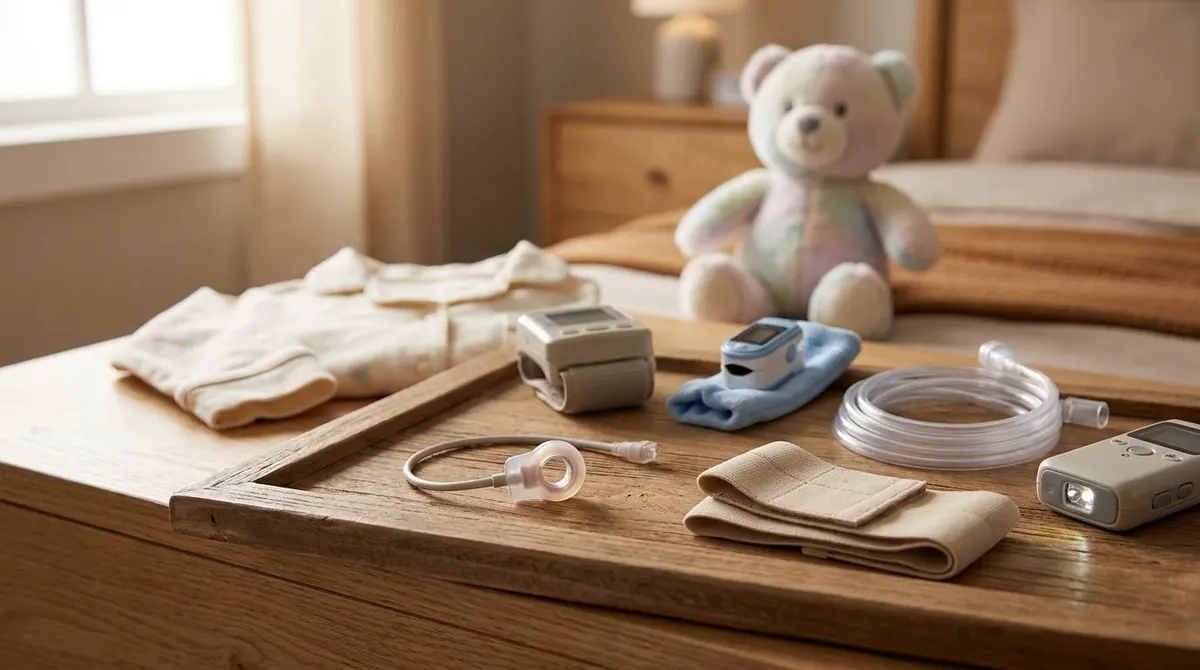
Home sleep apnea testing devices range from simple oximetry sensors to multi-channel respiratory polygraphy units, and not all are validated for use in children. The most commonly referenced devices in pediatric research include the WatchPAT, SleepImage System, and various type 3 portable monitoring devices.
WatchPAT and WatchPAT ONE
The WatchPAT, developed by Itamar Medical, is a wrist-worn device that uses peripheral arterial tonometry, oximetry, and accelerometry to estimate sleep stages and detect respiratory events. The WatchPAT ONE is a single-use disposable version designed for convenience. While the WatchPAT has FDA clearance for adult use and some studies have explored its application in adolescents, it is not widely validated for young children. Its reliance on peripheral arterial tone signal may produce different results in pediatric populations due to differences in vascular physiology.
SleepImage System and SleepImage Ring
The SleepImage System uses cardiopulmonary coupling analysis derived from a single-channel sensor. The SleepImage Ring is a simplified version worn on the finger. These devices analyze heart rate variability and respiratory patterns to estimate sleep quality and detect sleep-disordered breathing. Some research institutions have explored the SleepImage System in pediatric settings, but it remains a screening tool rather than a diagnostic replacement for polysomnography in children.
Type 3 Portable Monitoring Devices
Standard type 3 devices used in adult home sleep apnea testing include a nasal pressure transducer or nasal cannula for airflow measurement, a respiratory band for effort detection, an oximetry sensor for SpO2, and a sensor for heart rate via photoplethysmography. Some devices also record body position and snoring sounds. These devices are the backbone of adult HSATs and are used by services like dumbo.health for eligible patients. For children, the challenge is sensor fit, cooperation during the night, and the absence of electroencephalography data.
Sensor Considerations for Children
Children present unique challenges for home testing equipment. A sensor adaptor may be needed for smaller fingers when using an oximetry sensor. Nasal cannula sizing must account for smaller nasal passages. Respiratory band fit can be problematic for children who move frequently during sleep. Signal loss and signal artifact rates tend to be higher in pediatric home studies because children are more likely to dislodge sensors during body movements overnight. Caregivers play a critical role in ensuring equipment stays in place.
IMPORTANT: No home sleep apnea testing device currently has broad clinical validation specifically for pediatric obstructive sleep apnea diagnosis. Any home test used for a child should be ordered and interpreted by a physician with experience in pediatric sleep medicine.
KEY TAKEAWAY: Devices like the WatchPAT, SleepImage System, and type 3 portable monitors are used in home sleep testing, but none are broadly validated as diagnostic tools for pediatric obstructive sleep apnea, making physician oversight essential.
Knowing which devices exist is useful, but understanding what actually happens during a home sleep test helps caregivers prepare their child for the experience.
How a Home Sleep Test Works for a Child: Step by Step
A home sleep test for a child follows a similar process to adult home testing, but with additional caregiver involvement and unique preparation needs. The child sleeps at home wearing portable sensors, and the recorded data is later reviewed by a sleep medicine physician.
Step-by-Step Process for a Pediatric Home Sleep Test
1. A physician or pediatric sleep specialist evaluates the child's symptoms, conducts a physical exam of the airway including tonsils and adenoids, and determines whether a home sleep test or in-lab polysomnography is appropriate.
2. The family receives the home sleep test equipment, which typically includes a nasal cannula or nasal pressure transducer, an oximetry sensor, a respiratory band, and a recording unit. dumbo.health ships its home sleep test kit directly to patients for $149 with clear setup instructions.
3. The caregiver applies the sensors to the child at bedtime, ensuring the nasal cannula fits comfortably, the oximetry sensor is secure on the finger, and the respiratory band sits snugly around the chest or abdomen.
4. The child sleeps in their own bed for one full night while the device records airflow, respiratory effort, oxygen levels, and heart rate.
5. In the morning, the caregiver removes the sensors and either ships the device back or uploads the data electronically, depending on the specific equipment.
6. A sleep medicine physician reviews the tracings, scores respiratory events, calculates a respiratory disturbance index or obstructive apnea-hypopnea index, and generates a clinical report.
7. The physician discusses results with the family, explains the findings, and recommends next steps, which may include treatment, an in-lab polysomnography for confirmation, or ongoing monitoring.
After completing these steps, families typically receive results within a few days. With dumbo.health care plans, physician interpretation is included, and the Premium Plan offers priority results turnaround for $89 per month. If the home test suggests obstructive sleep apnea, the physician may recommend further evaluation or proceed directly to treatment depending on the severity and clinical context.
KEY TAKEAWAY: A pediatric home sleep test requires caregiver involvement at every stage, from sensor application to data return, and should always be ordered and interpreted by a physician experienced in pediatric sleep-disordered breathing.
Preparing your child properly can also reduce the chance of unusable data, which brings us to practical preparation tips.
How to Prepare Your Child for a Home Sleep Apnea Test
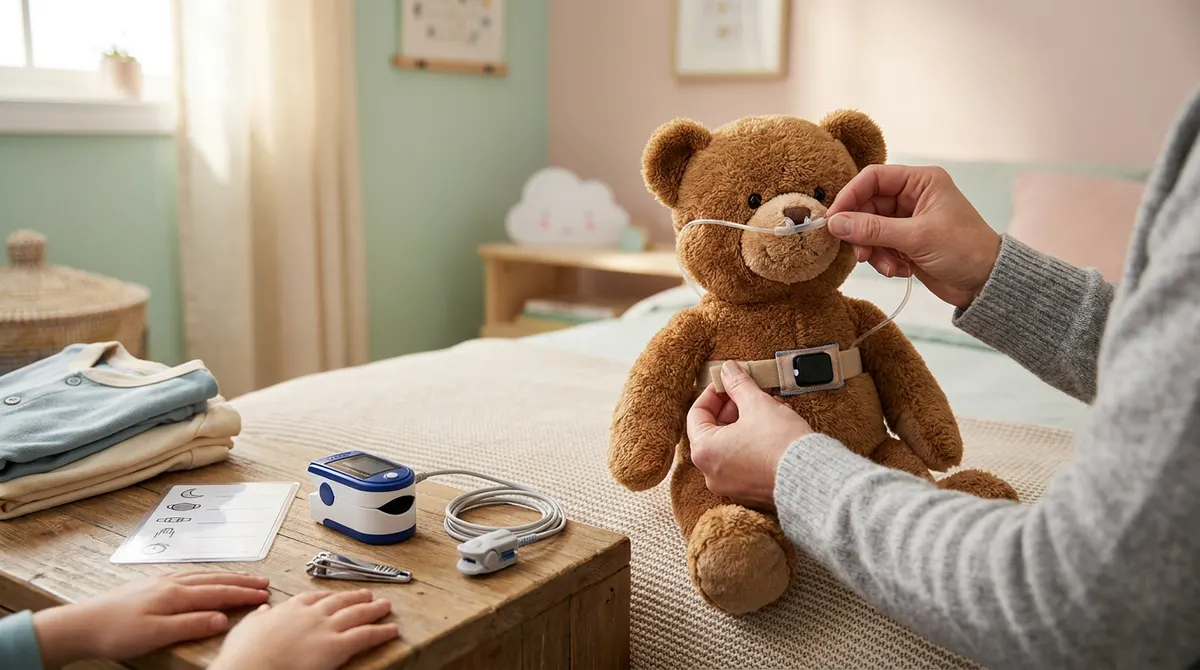
Preparing a child for home sleep apnea testing requires both practical equipment preparation and emotional preparation to reduce anxiety and maximize the chance of collecting a full night of usable data. Sensor loss, signal artifact, and child non-cooperation are the leading causes of failed home studies in pediatric patients.
Preparation Checklist for Parents and Caregivers
- Schedule the test for a night when your child's routine is normal, avoiding holidays, sleepovers, or nights after unusual physical activity
- Review all equipment instructions provided by the testing service before the test night
- Practice placing the sensors on your child during the day so they become familiar with the feel of the nasal cannula, oximetry sensor, and respiratory band
- Ensure your child's fingernails are trimmed and clean for proper oximetry sensor contact
- Remove nail polish from the finger where the oximetry sensor will be placed, as it can interfere with SpO2 readings
- Dress your child in comfortable, loose-fitting pajamas that allow the respiratory band to sit flat against the skin
- Keep the bedroom at a comfortable temperature and minimize disruptions from pets, siblings, or screen time before bed
- Charge the recording device fully if it requires charging, and confirm data transmission settings if the device uploads wirelessly via internet connection
- Place a backup plan note near the bed in case a sensor comes off during the night, so you know how to reattach it
- Complete any required questionnaires or intake forms from your provider before the test night
TIP: Let your child see and touch the sensors during the day. Children who have explored the equipment beforehand are less likely to remove sensors during the night, which reduces signal loss and improves data quality.
If your child is particularly anxious, some pediatric sleep specialists recommend a brief "rehearsal night" where the child wears the sensors for 30 minutes before actual test night. This rehearsal reduces novelty and helps the child associate the equipment with their normal sleep environment rather than something unfamiliar or medical.
Caregivers should also be prepared to check on the child once during the night without fully waking them. A brief visual check to confirm the nasal cannula is in place and the oximetry sensor light is active can catch equipment issues early and salvage the study.
KEY TAKEAWAY: Successful pediatric home sleep testing depends on thorough caregiver preparation, daytime familiarization with sensors, and a calm bedtime routine that minimizes the chance of sensor displacement during sleep.
Even with careful preparation, home tests have real limitations for children that every parent should understand.
Limitations and Risks of Home Sleep Testing in Children
Home sleep apnea tests are not appropriate for every child, and understanding the limitations protects families from false reassurance and delayed diagnosis. The American Academy of Sleep Medicine does not currently endorse HSATs as a standalone diagnostic tool for pediatric obstructive sleep apnea.
Diagnostic Accuracy Concerns
The sensitivity and specificity of home sleep tests in pediatric populations remain lower than in adults. Studies published in peer-reviewed sleep medicine journals have shown that HSATs can underestimate the severity of obstructive sleep apnea in children, particularly in mild cases. Because home devices do not record sleep stages via electroencephalography, they cannot distinguish between wakefulness and sleep. A child who lies awake for an extended period will have a lower calculated respiratory disturbance index than their true apnea-hypopnea index, potentially leading to a false-negative result.
Conditions That Require In-Lab Testing
Several pediatric conditions make home testing unsuitable or unsafe:
- Children with neuromuscular disease require in-lab polysomnography because their breathing patterns may include central sleep apnea and nocturnal hypoventilation, which home devices cannot reliably detect.
- Children suspected of having central sleep apnea need electroencephalography and detailed respiratory monitoring available only in a sleep lab.
- Children under the age of 2 should be evaluated in a supervised sleep center due to the complexity of infant sleep architecture and the risk of sensor-related complications.
- Children with significant comorbidities such as craniofacial anomalies, Down syndrome, or severe obesity may have complex sleep-disordered breathing patterns that exceed the diagnostic capabilities of home testing.
Technical Failure Rates
Signal loss and signal artifact are more common in pediatric home studies than in adult studies. Children frequently change body position, dislodge nasal cannulas, and pull off oximetry sensors during sleep. When sensor loss exceeds a certain threshold of recording time, the study becomes uninterpretable and must be repeated, adding cost and delay. The absence of a sleep technician who can reattach sensors in real time is a fundamental limitation of all home testing.
Risk of False Reassurance
A negative home sleep test does not definitively rule out obstructive sleep apnea in a child. If a home test returns normal results but the child continues to exhibit snoring, witnessed apneas, restless sleep, or daytime symptoms, an in-lab overnight sleep study should be pursued. Relying solely on a home test can lead to delayed treatment of a condition that affects growth, cognition, and cardiovascular health.
For families who use home testing as a first step, dumbo.health care plans include physician interpretation and follow-up guidance, ensuring that results are never reviewed in isolation. If the physician determines that in-lab testing is needed, they can refer the patient to a sleep center in your area for a full polysomnography.
KEY TAKEAWAY: Home sleep tests in children carry a meaningful risk of underestimating sleep apnea severity, cannot detect central sleep apnea or nocturnal hypoventilation, and should never be treated as a definitive negative result when clinical symptoms persist.
These limitations are important context, but many families still wonder what the research actually shows about home testing accuracy in children.
What the Research Says About Pediatric Home Sleep Apnea Testing
Published research on home sleep apnea testing in children shows promising but inconsistent results, and no major sleep medicine organization currently recommends home testing as a replacement for in-lab polysomnography in pediatric patients. The evidence base is growing, but gaps remain.
Several studies have evaluated home respiratory polygraphy (home RPs) against in-lab polysomnography in children with suspected obstructive sleep apnea. A common finding is that home RPs can identify moderate to severe pediatric OSA with reasonable sensitivity when the obstructive apnea-hypopnea index is elevated, but they perform less reliably for mild cases. The challenge is that mild pediatric OSA, defined as an apnea-hypopnea index between 1 and 5 events per hour, is the most common severity level and arguably the most important to catch before it progresses.
Research from institutions including the CHOP Main Hospital Sleep Lab and affiliated Research Institute teams has explored whether home polysomnography (home PSG), which includes more channels than standard home RPs, could improve diagnostic accuracy. Home PSG adds electroencephalography to the home setup, theoretically capturing sleep stages and allowing true apnea-hypopnea index calculation. Early results have been encouraging, but the added complexity of a multi-channel home setup raises questions about practicality and data quality in a pediatric setting where participation from the child cannot be guaranteed.
The Oxygen Desaturation Index, which counts the number of times per hour that oxygen saturation drops by 3 percent or more, has been studied as a simplified screening metric for pediatric OSA. While a high Oxygen Desaturation Index correlates with more severe obstructive sleep apnea, it does not capture apneas and hypopneas that occur without significant oxygen desaturation, which are common in children.
Pediatric sleep apnea home testing remains an active area of research. The American Academy of Sleep Medicine's clinical practice guidelines acknowledge the potential of home testing technology but have not yet changed the recommendation that in-lab polysomnography should be the primary diagnostic tool for children. As devices improve and validation studies in pediatric populations expand, clinical guidelines may evolve.
Home sleep apnea testing for children uses portable sensors to measure airflow, respiratory effort, oxygen saturation, and heart rate while the child sleeps at home. Home sleep apnea testing does not include electroencephalography in most standard configurations, which means home sleep apnea testing cannot identify sleep stages or calculate a true apnea-hypopnea index based on confirmed sleep time. Home sleep apnea testing is most useful as a screening tool when in-lab polysomnography is not immediately accessible.
KEY TAKEAWAY: Current research supports the potential of home sleep apnea testing as a screening tool for moderate to severe pediatric OSA, but the evidence does not yet support replacing in-lab polysomnography for definitive diagnosis in children.
Research findings set the stage for practical decision-making, so the next step is understanding exactly when a home test might be the right choice for your child.
When a Home Sleep Test May Be Appropriate for Your Child
A home sleep test may be appropriate for a child when access to in-lab polysomnography is limited and the clinical picture strongly suggests obstructive sleep apnea. It is not a universal screening tool for all children with snoring or restless sleep.
Pediatric sleep specialists may consider home sleep testing in the following situations:
- The child has a high clinical probability of moderate to severe obstructive sleep apnea based on symptoms, physical exam findings (such as visibly enlarged tonsils and adenoids), and a Sleep Clinical Score or validated screening questionnaire.
- The family lives in a geographic area without a nearby sleep center or pediatric sleep lab, and wait times for in-lab polysomnography exceed several months.
- The child has severe anxiety about sleeping in an unfamiliar environment and has previously failed an in-lab study due to inability to sleep.
- A physician wants a preliminary screening result to support an expedited referral for adenotonsillectomy in a child whose clinical presentation is strongly suggestive of severe OSA.
Real-World Examples
A 6-year-old with loud nightly snoring, witnessed breathing pauses, and grade 3+ tonsillar hypertrophy on physical exam lives in a rural community more than 100 miles from the nearest pediatric sleep center. The child's physician orders a home sleep test using a type 3 device. The results show a respiratory disturbance index of 14 events per hour with an Oxygen Desaturation Index of 8, supporting a referral for adenotonsillectomy without waiting several months for an in-lab study.
A 10-year-old with a BMI in the 95th percentile, daytime sleepiness, and morning headaches is referred for sleep testing. The family has insurance but the closest sleep lab has a three-month wait. The physician orders a home respiratory polygraphy study as a screening step. The results are inconclusive, with a respiratory disturbance index of 2 and no significant oxygen desaturation. The physician proceeds with an in-lab polysomnography referral and counsels the family that the home test alone cannot rule out pediatric OSA at this mild level.
A 14-year-old adolescent with a BMI of 32 and classic symptoms of obstructive sleep apnea, including loud snoring, excessive daytime sleepiness, and poor concentration at school, is evaluated by a physician who determines the clinical picture closely resembles adult OSA. The physician orders a home sleep apnea test through dumbo.health for $149. The test reveals an obstructive apnea-hypopnea index estimate of 22, and the adolescent is started on CPAP therapy through a dumbo.health Essentials Plan at $59 per month with no contract and no insurance required.
These examples illustrate that clinical context determines whether home testing is reasonable. A home sleep test should always be interpreted within the broader clinical picture, not used in isolation to make treatment decisions for a child.
KEY TAKEAWAY: Home sleep testing may be appropriate for children with a high clinical probability of moderate to severe OSA, limited access to in-lab testing, or as a screening step when combined with physician oversight and willingness to pursue in-lab confirmation if needed.
With the right scenarios in mind, parents also benefit from understanding what happens after a sleep apnea diagnosis.
Treatment Pathways After a Pediatric Sleep Apnea Diagnosis
The most common treatment for obstructive sleep apnea in children is adenotonsillectomy, which the American Academy of Sleep Medicine recommends as the first-line intervention when enlarged tonsils and adenoids are the primary cause. For children whose OSA persists after surgery or who are not surgical candidates, additional treatments including CPAP therapy may be necessary.
Adenotonsillectomy
Surgical removal of tonsils and adenoids resolves obstructive sleep apnea in approximately 75 percent of children without obesity, according to research cited by the American Academy of Sleep Medicine. For children with obesity, the resolution rate is lower, and residual OSA may require further treatment. A follow-up sleep study is recommended after surgery to confirm resolution, especially for children with severe OSA or persistent symptoms.
CPAP Therapy for Children
Continuous positive airway pressure (CPAP) delivers a steady stream of pressurized air through a mask to keep the airway open during sleep. CPAP is the gold-standard therapy for obstructive sleep apnea in adults and is used for children who do not respond to surgery or who have OSA caused by factors other than adenotonsillar hypertrophy. A CPAP prescription must be issued by a physician based on a titration study that determines the optimal pressure setting.
Adherence to CPAP therapy can be challenging in children. Many pediatric sleep specialists work with families over multiple visits to find a comfortable mask, adjust pressure settings, and build the child's tolerance gradually. Advanced adherence monitoring through telemonitoring allows the medical team to track nightly CPAP usage remotely and intervene early when usage drops.
For adolescents and older children who qualify, dumbo.health offers CPAP therapy bundled into monthly care plans. The Essentials Plan at $59 per month includes CPAP equipment, physician oversight, and standard follow-up care with no contracts. The Premium Plan at $89 per month adds a dedicated sleep coach and advanced adherence monitoring, which can be particularly valuable for adolescents adjusting to therapy for the first time.
Other Treatment Options
Weight management is recommended for children with obesity-related OSA. Even modest weight reduction can decrease the severity of obstructive sleep apnea. Some providers may discuss oral appliances or orthodontic interventions for children with specific craniofacial contributions to airway obstruction. In rare cases, additional surgical interventions beyond adenotonsillectomy may be considered.
DID YOU KNOW: According to the Sleep Foundation, up to 25 percent of children diagnosed with ADHD may actually have sleep-disordered breathing contributing to their symptoms, making accurate diagnosis and treatment of pediatric OSA a critical step in comprehensive care.
KEY TAKEAWAY: Adenotonsillectomy is the most common and effective treatment for pediatric obstructive sleep apnea caused by enlarged tonsils and adenoids, while CPAP therapy serves as the primary ongoing treatment for children whose OSA persists after surgery or is caused by other factors.
Beyond treatment, parents often encounter confusing or misleading information about pediatric sleep testing that can delay appropriate care.
Common Myths About Kids and Sleep Apnea Testing Debunked
MYTH: If my child snores, they definitely have sleep apnea.
FACT: Snoring is common in children, affecting roughly 10 percent according to the Sleep Foundation, but only 1 to 5 percent of children have obstructive sleep apnea. Primary snoring without apneas, oxygen desaturation, or sleep disruption does not require the same treatment as OSA. A sleep study is the only way to differentiate benign snoring from sleep apnea in children.
MYTH: A home sleep test is just as accurate as a lab sleep study for kids.
FACT: Home sleep apnea tests have lower sensitivity and specificity in children compared to in-lab polysomnography. The American Academy of Sleep Medicine does not currently recommend HSATs as the standard diagnostic tool for pediatric OSA. Home tests may miss mild cases and cannot detect central sleep apnea or nocturnal hypoventilation, both of which require electroencephalography and detailed respiratory monitoring.
MYTH: Only overweight children get sleep apnea.
FACT: While obesity increases the risk of obstructive sleep apnea in children, the most common cause in pediatric patients is enlarged tonsils and adenoids. Children with a normal BMI can have significant OSA. The NIH notes that craniofacial differences, neuromuscular disease, and genetic conditions also contribute to pediatric sleep-disordered breathing regardless of weight.
MYTH: Children will outgrow sleep apnea without treatment.
FACT: Some children with mild OSA may improve as they grow and their airway anatomy changes, but moderate to severe obstructive sleep apnea rarely resolves spontaneously. Untreated pediatric OSA is associated with cognitive delays, behavioral problems, cardiovascular changes including elevated blood pressure, and impaired growth. The American Academy of Sleep Medicine recommends treatment rather than watchful waiting for children with confirmed OSA.
MYTH: CPAP is only for adults and does not work for children.
FACT: CPAP therapy is used effectively in children whose obstructive sleep apnea does not resolve with surgery or when surgery is not an option. Pediatric CPAP masks are available in sizes designed for children, and adherence can be improved with behavioral strategies, gradual desensitization, and telemonitoring support. dumbo.health care plans include CPAP equipment and adherence monitoring starting at $59 per month for patients who qualify.
KEY TAKEAWAY: Many common beliefs about pediatric sleep apnea are inaccurate, and relying on myths rather than clinical guidance can delay diagnosis and treatment for children who need it.
Separating myth from fact empowers parents to make informed decisions about the next step in their child's care.
How to Choose Between Home Testing and a Sleep Lab for Your Child
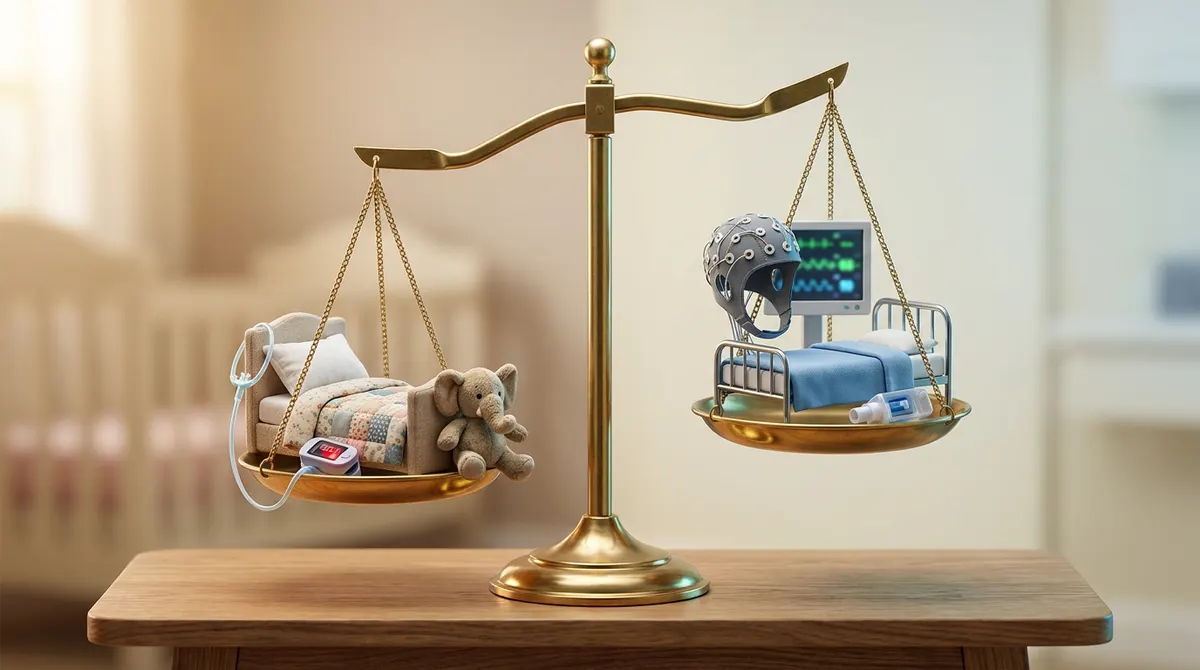
Choosing between a home sleep test and an in-lab polysomnography study depends on clinical factors, access, and the specific needs of your child. Neither option is universally better; the right choice varies by situation.
Start with your child's physician. A provider experienced in pediatric sleep medicine can evaluate your child's symptoms, review the physical exam findings, and recommend the most appropriate testing pathway. If the clinical picture strongly suggests moderate to severe obstructive sleep apnea and access to a sleep lab is limited, home testing may serve as a reasonable screening step. If the presentation is unclear, if central sleep apnea or neuromuscular disease is a concern, or if a definitive diagnosis is needed for surgical planning, in-lab polysomnography is the right choice.
Consider access and wait times. In many communities, pediatric sleep labs have wait times of two to six months. For families in rural areas or those without a pediatric sleep center nearby, home testing through a service like dumbo.health can provide initial data faster. The dumbo.health home sleep test ships directly to your home for $149, and results are reviewed by a physician within the care plan timeline.
Consider cost. In-lab polysomnograms can cost between $1,000 and $3,000 or more, and insurance coverage varies. Medicare and private insurers may cover lab studies but often require prior authorizations and referrals. dumbo.health operates on a cash-pay model with no insurance required, no prior authorizations, and no surprise bills. For families paying out of pocket, the $149 home sleep test plus a monthly care plan starting at $59 per month represents a significantly lower entry point.
Consider your child's temperament. Some children sleep well in unfamiliar environments; others do not. A child who cannot fall asleep or stay asleep in a sleep lab will produce a study with limited usable data. In those cases, a home test in a familiar bed may actually yield better respiratory data, even though the test records fewer channels overall.
Polysomnography performed in a sleep lab provides the most comprehensive data for diagnosing pediatric sleep apnea. Polysomnography records brain wave patterns, sleep stages, respiratory events, oxygen saturation, heart rate, body position, leg movements, and snoring sounds simultaneously. Polysomnography is the only test that can calculate a true apnea-hypopnea index based on confirmed sleep time and detect the full range of sleep-disordered breathing conditions in children.
KEY TAKEAWAY: The decision between home testing and in-lab polysomnography for a child should be guided by clinical suspicion, access to sleep labs, cost, and the child's ability to tolerate testing in each setting, with physician input driving the final recommendation.
Parents who have selected a testing pathway often want to know what questions to ask their child's doctor before moving forward.
Questions Caregivers Should Ask Their Child's Sleep Provider
Caregivers who are informed and prepared get better outcomes for their children. Asking the right questions ensures that the testing and treatment pathway is appropriate and that no steps are skipped.
Before your child undergoes sleep testing, consider asking the following:
- Is an in-lab polysomnography or a home sleep test more appropriate for my child's specific symptoms and medical history?
- Does my child have any conditions, such as neuromuscular disease or suspected central sleep apnea, that would make home testing inappropriate?
- What will the test measure, and what are its limitations for a child of this age?
- How should I prepare my child for the test, and what happens if a sensor comes off during the night?
- How long will it take to receive results, and who will interpret the data?
- If the home test is negative but symptoms persist, will a follow-up in-lab study be recommended?
- What are the treatment options if my child is diagnosed with obstructive sleep apnea?
- Is adenotonsillectomy the likely first step, and will a post-surgical sleep study be needed?
- If CPAP is recommended, what support is available for helping my child adjust to therapy?
Your provider should be willing to discuss each of these points in detail. If you are exploring testing options on your own, dumbo.health's free sleep assessment can help determine whether home testing may be a suitable starting point for your family.
KEY TAKEAWAY: Caregivers should ask their child's provider about the specific type of test recommended, its limitations, the interpretation process, and the full range of treatment options before proceeding with any sleep apnea evaluation.
Armed with the right questions, parents can move forward with confidence knowing they are making an informed decision.
Conclusion
Testing a child for sleep apnea is one of the most important steps a parent can take when snoring, restless sleep, or daytime symptoms point to sleep-disordered breathing. Home sleep apnea tests offer a convenient and lower-cost screening option, but they do not replace in-lab polysomnography as the gold standard for diagnosing pediatric obstructive sleep apnea. The right testing choice depends on clinical context, access to sleep labs, and physician guidance. For families ready to take the first step, dumbo.health provides a home sleep test for $149 with no insurance required, physician-reviewed results, and ongoing care plans starting at $59 per month with no contracts and the freedom to cancel anytime. Starting with an informed screening decision is the fastest path to helping your child sleep and breathe better.
Frequently Asked Questions About Kids At-Home Sleep Apnea Tests
What is a kids at-home sleep apnea test?
A kids at-home sleep apnea test is a portable sleep monitoring device used to assess signs of obstructive sleep apnea in children while they sleep in their own bed. The device typically measures oxygen saturation, airflow, breathing effort, heart rate, and body position using sensors attached to the child's body. Unlike an in-lab polysomnogram, a home sleep apnea test does not record brain wave activity or sleep stages. Results are reviewed by a physician or pediatric sleep specialist who interprets the data and provides a clinical report.
How does an at-home sleep test work for children?
An at-home sleep test for children uses a portable monitoring device worn overnight at home. Sensors measure airflow through a nasal cannula or nasal pressure transducer, breathing effort through a respiratory band, oxygen saturation through an oximetry sensor, and heart rate through photoplethysmography or similar technology. Some devices also track body position and body movements using accelerometry. The recorded data is transmitted or returned for physician interpretation. The apnea-hypopnea index, oxygen desaturation index, and other respiratory measures are used to assess the presence and severity of sleep-disordered breathing.
Are at-home sleep apnea tests accurate for children?
At-home sleep apnea tests can detect signs of obstructive sleep apnea in children, but their accuracy is more limited than in-lab polysomnography. Home sleep tests do not record brain wave patterns, electroencephalography, or sleep stages, which means they may underestimate the apnea-hypopnea index because breathing events are calculated against total recording time rather than confirmed sleep time. Signal loss, sensor artifact, and poor quality tracings are more common in younger children. A healthcare professional should review any results in the context of the child's full clinical picture, including symptoms, physical exam, and history.
What does a home sleep apnea test measure in children?
A home sleep apnea test for children typically measures airflow, respiratory effort, oxygen saturation, heart rate, breathing rate, body position, and body movements. Some advanced devices also capture snoring sounds and use photoplethysmography to assess heart rate changes. The test generates metrics including the apnea-hypopnea index, oxygen desaturation index, and respiratory disturbance index. What home sleep tests cannot measure includes sleep stages, brain activity patterns, electroencephalogram signals, and leg movements, all of which are captured during a full in-lab polysomnogram. A physician interprets the data to assess for obstructive or central sleep apnea.
What are the current guidelines on using home sleep apnea tests in children?
The American Academy of Sleep Medicine has not formally recommended home sleep apnea tests for routine use in children. Current guidelines still support in-lab polysomnography as the standard diagnostic method for pediatric obstructive sleep apnea. According to the American Academy of Sleep Medicine, home sleep apnea testing in children remains an area of ongoing research, and clinical judgment from a pediatric sleep specialist is essential when deciding whether a home test is appropriate for a specific child. A healthcare professional familiar with the child's medical history should make this determination.
Are there FDA-approved home sleep apnea test devices for children?
A small number of home sleep apnea test devices have received FDA clearance for use in pediatric patients, including the WatchPAT ONE from Itamar Medical and the SleepImage System using the SleepImage Ring. However, the American Academy of Sleep Medicine has not issued a formal recommendation for any of these devices in children. The availability of FDA-cleared pediatric home sleep apnea test devices is still limited compared to adult options. A pediatric sleep specialist can help determine whether a specific device is appropriate for a child based on age, clinical presentation, and available resources.
When should a child have an in-lab sleep study instead of a home test?
An in-lab polysomnography is generally preferred for children who are very young, who have complex medical conditions such as neuromuscular disease, central sleep apnea, or cardiac conditions, or when a home sleep test produces unclear or technically poor results. In-lab studies capture brain wave patterns, sleep stages via electroencephalography, leg movements, and full respiratory data that home tests cannot measure. The American Academy of Sleep Medicine currently supports in-lab polysomnography as the standard for pediatric sleep apnea diagnosis. A pediatric sleep specialist can assess which test is most appropriate for your child's individual circumstances.
What are the signs that a child might have obstructive sleep apnea?
Common signs of obstructive sleep apnea in children include loud or habitual snoring, witnessed pauses in breathing during sleep, restless sleep, frequent nighttime waking, mouth breathing, bedwetting, and difficulty waking in the morning. During the day, a child may show trouble paying attention, difficulty with learning, behavioral problems, or unusual tiredness. Children with enlarged tonsils or adenoids, a family history of obstructive sleep apnea, or a high body mass index may carry greater risk. If you notice these signs in your child, a healthcare professional can help determine whether further evaluation or sleep testing is appropriate.
Should I be concerned if my child snores regularly?
Regular snoring in a child warrants medical attention, particularly if it is loud, occurs most nights, or is accompanied by other signs of disturbed sleep such as witnessed breathing pauses, restlessness, mouth breathing, or daytime behavioral changes. According to the American Academy of Sleep Medicine, habitual snoring is one of the most common presenting symptoms of pediatric obstructive sleep apnea. Not all children who snore have sleep apnea, but snoring combined with other symptoms is a strong reason to speak with a pediatrician or pediatric sleep specialist about whether a sleep study is needed.
What are the limitations of at-home sleep apnea testing in children?
At-home sleep apnea tests in children have several limitations compared to in-lab polysomnography. They do not capture sleep stages, brain activity patterns via electroencephalography, or leg movements. Signal loss, sensor displacement, and artifact-free signal requirements are harder to maintain in young or active children. The youngest children tend to have the poorest quality home sleep study results. Home tests may also miss nocturnal hypoventilation, which is particularly important in children with neuromuscular disease. A failed or technically inadequate study may need to be repeated or followed by in-lab testing. A pediatric sleep specialist should review all results carefully.
What happens if my child's at-home sleep test results are unclear or technically inadequate?
If a home sleep apnea test produces unclear results, significant signal loss, or technically poor data, the next step is typically a clinical discussion with a pediatric sleep specialist. In some cases, the test may be repeated. In other cases, an in-lab polysomnography may be recommended to obtain a complete and reliable assessment. As pediatric sleep specialist Dr. Bhattacharjee has noted in published discussions, a key concern with home testing failures is knowing how many times to repeat a study before moving on, and what the clinical pathway should be if reliable data cannot be obtained. A healthcare professional should guide this decision.
How should I prepare my child for an at-home sleep apnea test?
Preparing a child for an at-home sleep apnea test involves explaining the process in age-appropriate terms so they feel calm and cooperative on test night. Follow all instructions provided by the ordering provider or testing service regarding sensor placement, the nasal cannula, the oximetry sensor, and the respiratory band. Ensure the child sleeps in their usual environment and maintains their normal bedtime routine. Avoid letting the child sleep in an unusual position or remove sensors during the night. Younger children may need a caregiver present to assist with sensor application and maintenance throughout the night to minimise signal loss.
How accurate are home sleep apnea tests compared to in-lab polysomnography?
Home sleep apnea tests measure core respiratory parameters well but are less comprehensive than in-lab polysomnography. Because home tests calculate the apnea-hypopnea index against total recording time rather than confirmed sleep time, they may underestimate the true severity of sleep-disordered breathing. Sensitivity and specificity for detecting obstructive sleep apnea in adults are reasonably well established, but in children the evidence base is more limited and variable. The American Academy of Sleep Medicine recognises in-lab polysomnography as the diagnostic standard. Results from a home sleep test should always be interpreted by a qualified clinician alongside the child's full clinical history.
Can a home sleep apnea test detect central sleep apnea in children?
Most home sleep apnea tests are optimised to detect obstructive sleep apnea and do not reliably identify central sleep apnea. Central sleep apnea involves a failure of respiratory effort rather than a physical airway obstruction, and distinguishing between the two accurately requires full respiratory effort monitoring and, ideally, electroencephalography to confirm sleep state. Children suspected of having central sleep apnea, or those with conditions such as neuromuscular disease that increase the risk of central breathing abnormalities or nocturnal hypoventilation, should typically be evaluated with in-lab polysomnography rather than a home test. A healthcare professional can assess which study is most appropriate.
Can at-home sleep tests measure carbon dioxide levels in children?
Standard portable home sleep apnea test devices do not measure carbon dioxide levels. Nocturnal carbon dioxide monitoring, which assesses for nocturnal hypoventilation, typically requires capnography equipment available in a sleep lab setting. This is one of the important limitations of home sleep apnea testing in children, particularly for those with neuromuscular disease or other conditions where carbon dioxide retention during sleep is a clinical concern. If nocturnal hypoventilation is suspected, an in-lab polysomnography or a specialised home study with capnography capability may be needed. A pediatric sleep specialist can advise on which testing approach addresses the specific clinical question.
Why might an older child or adolescent be a better candidate for an at-home sleep test?
Older children and adolescents are generally more cooperative with sensor placement, less likely to displace equipment during sleep, and more likely to produce technically adequate home sleep apnea test results compared to younger children. Research has found that the youngest participants in home sleep studies tend to have the poorest data quality. An older adolescent with a clinical presentation consistent with obstructive sleep apnea, without complex medical comorbidities, may be a reasonable candidate for home sleep apnea testing when in-lab resources are limited or delayed. A pediatric sleep specialist should still review results and consider individual clinical circumstances before and after testing.
Do tonsils and adenoids affect pediatric sleep apnea testing?
Enlarged tonsils and adenoids are among the most common contributing factors to obstructive sleep apnea in children. A child with significantly enlarged tonsils, witnessed apnea, and strong clinical signs of obstructive sleep apnea may be considered for home sleep apnea testing in some circumstances, particularly when a surgical team requires objective documentation before proceeding with tonsillectomy. However, even in this clinical scenario, the specific circumstances of each child must be carefully considered, including what would happen if the home test failed to produce usable data or returned a negative result. A healthcare professional and pediatric sleep specialist should guide all decisions.
How much does a sleep apnea test cost for a child?
The cost of a sleep apnea test for a child depends on the type of study, the clinical setting, and whether insurance covers the procedure. In-lab polysomnography at a hospital or sleep center typically costs more than a home sleep test and may involve insurance prior authorizations. For adults, transparent cash-pay home sleep testing options such as dumbo.health offer an at-home sleep test for $149, with no insurance required and no surprise bills. Pediatric at-home testing pathways should be discussed with a pediatrician or pediatric sleep specialist, as not all home sleep test services are currently designed for pediatric use. Always confirm costs and clinical appropriateness with your provider.
What are the benefits of at-home sleep apnea testing compared to an in-lab study?
At-home sleep apnea testing offers several practical benefits, including the ability to sleep in a familiar environment, lower cost compared to in-lab polysomnography, shorter wait times for testing, and greater convenience for families. For some children who would struggle to sleep in an unfamiliar sleep lab setting, such as those who are neurodivergent or anxious in clinical environments, home testing may also reduce distress and improve natural sleep behavior during the study. The tradeoff is reduced data completeness, no measurement of sleep stages or brain activity, and a higher risk of technically poor results in younger children. A physician should weigh these factors for each child individually.
Why is early detection of sleep apnea in children important?
Untreated obstructive sleep apnea in children can affect attention, learning, behavior, growth, and cardiovascular health. The NIH and the American Academy of Sleep Medicine both recognise sleep-disordered breathing in children as a condition that warrants prompt clinical attention when symptoms are present. Early identification allows for timely treatment, which may include tonsillectomy, adenoid removal, CPAP therapy, or other interventions depending on the child's specific diagnosis. Delayed diagnosis can allow symptoms to persist during critical developmental periods. If you have concerns about your child's sleep, speaking with a pediatrician or pediatric sleep specialist is a reasonable first step.
Should my child see a pediatric sleep specialist for sleep apnea evaluation?
If your child shows signs of obstructive sleep apnea such as habitual snoring, witnessed breathing pauses, restless sleep, or daytime behavioral and learning difficulties, a referral to a pediatric sleep specialist is often appropriate. Pediatric sleep specialists have specific training in diagnosing and managing sleep-disordered breathing in children across different ages and clinical presentations. They can determine whether home sleep apnea testing or in-lab polysomnography is the right diagnostic approach, interpret results accurately, and recommend appropriate treatment options. Your child's pediatrician can provide a referral, and in some areas pediatric sleep specialists are available at children's hospitals and academic sleep centers.
What sleep disorders can a home sleep apnea test detect in children?
Home sleep apnea tests are designed primarily to detect obstructive sleep apnea by measuring airflow, respiratory effort, oxygen saturation, and related parameters. They are not designed to diagnose a full range of sleep disorders. Conditions such as central sleep apnea, periodic limb movement disorder, parasomnias, narcolepsy, or other sleep disorders that require electroencephalography or electromyography cannot be diagnosed with a standard home sleep test. For children where a broader sleep disorder diagnosis is suspected, in-lab polysomnography remains the appropriate diagnostic tool. A pediatric sleep specialist can help determine which assessment is most clinically useful.
Does insurance cover at-home sleep apnea testing for children?
Insurance coverage for at-home sleep apnea testing in children varies by plan, insurer, and the specific clinical situation. Many insurers, including Medicare for adult patients, cover home sleep apnea tests under defined criteria. Coverage for pediatric home sleep testing may be more restricted given that the American Academy of Sleep Medicine has not formally recommended it and FDA-approved pediatric devices remain limited. Families should contact their insurance provider to confirm coverage before scheduling testing. For adult patients seeking transparent, no-insurance sleep apnea testing, home sleep apnea testing options with cash-pay pricing are available, though pediatric pathways should always be discussed with a clinician.
Who should not take a home sleep apnea test?
Home sleep apnea testing is not appropriate for all patients. Children with complex medical conditions such as neuromuscular disease, known or suspected central sleep apnea, congenital heart conditions, severe obesity, or significant developmental challenges may require in-lab polysomnography instead. Very young children are also generally poor candidates for home testing due to difficulty maintaining sensor placement and the higher likelihood of technically poor results. Adults with significant comorbidities or suspected non-obstructive sleep disorders may also be better evaluated in a lab setting. A healthcare professional should assess individual suitability before ordering any sleep test.
How many times can a child repeat an at-home sleep apnea test if the first one fails?
There is no universal rule about how many times a home sleep apnea test should be repeated if the initial study is technically inadequate. The decision depends on why the test failed, whether the child is likely to cooperate better on a second attempt, and what the clinical implications are of continued delay. Pediatric sleep specialists have noted that repeated failed home studies raise important questions about when to escalate to in-lab polysomnography rather than attempting the home test again. A clinician should review the failed study data, consider the child's age and clinical presentation, and determine the most appropriate next step, which may include an in-lab study.
Where can adults get a transparent, cash-pay at-home sleep apnea test?
Adults who want an at-home sleep apnea test without insurance, prior authorizations, or surprise bills can access cash-pay at-home sleep testing through dumbo.health for $149 as a one-time cost. The test includes the at-home device and one night of testing, with physician interpretation available through monthly ongoing care plans starting at $59 per month. Plans include CPAP therapy, equipment, physician review, and adherence follow-up. While dumbo.health's at-home sleep testing is designed for adults, families concerned about pediatric sleep apnea should speak with a pediatrician or pediatric sleep specialist to determine the right diagnostic pathway for their child.
Related Home Sleep Apnea Test Topics
- Home Sleep Apnea Test for Kids What Parents Need to Know About Pediatric Sleep Testing
- Home Sleep Apnea Test for Children What Parents Need to Know About Pediatric Sleep Testing
- At-Home Sleep Apnea Test for Toddlers What Parents Need to Know About Pediatric Sleep Testing
- What Is a Home Sleep Apnea Test How At-Home Sleep Testing Works, What It Measures, and Who Needs One
- At Home Sleep Apnea Test with Ring How Ring-Based Sleep Testing Works and Whether It Can Diagnose Sleep Apnea
- Home Sleep Apnea Test Ring How Ring-Based Sleep Testing Works for Sleep Apnea Detection
- How Do You Get a Home Sleep Apnea Test The Complete Guide to At-Home Sleep Testing
- How to Get a Sleep Apnea Test at Home The Complete Guide to Home Sleep Testing
- How Is a Home Sleep Apnea Test Done A Complete Guide to At-Home Sleep Testing
- Sleep Apnea Test at Home The Complete Guide to Home Sleep Testing for Adults
- How Does a Home Sleep Apnea Test Work A Complete Guide to At-Home Sleep Testing
- Home Sleep Test The Complete Guide to At-Home Sleep Apnea Testing
- Can You Test for Sleep Apnea at Home A Complete Guide to Home Sleep Testing
- Sleep Test at Home The Complete Guide to Home Sleep Apnea Testing
- Sleep Apnea Testing at Home The Complete Guide to Home Sleep Tests, Devices, and Results
- Sleep Apnea Diagnosis at Home The Complete Guide to Home Sleep Testing
- Best Home Sleep Apnea Test A Clinical Guide to Choosing the Right At-Home Sleep Study
- Sleep Study for Sleep Apnea What Happens, What It Measures, and What Your Results Mean
- Sleep Study for Sleep Apnea What the Test Measures, How It Works, and What Your Results Mean
- Home Sleep Apnea Test FSA Eligible How to Use Your Flexible Spending Account for Sleep Testing
- At-Home Sleep Apnea Test FSA How to Use Your Flexible Spending Account for Sleep Testing
- At Home Sleep Apnea Test HSA How to Use Your Health Savings Account for Sleep Testing
- Pediatric Home Sleep Apnea Test A Complete Guide for Parents and Providers
- Disadvantages of Home Sleep Testing What Patients and Providers Need to Know
- Sleep Apnea Test The Complete Guide to Diagnosis, Home Testing, and What Your Results Mean
- Home Sleep Testing Companies A Complete Guide to At-Home Sleep Apnea Diagnosis
- Home Sleep Apnea Test The Complete Guide to At-Home Sleep Apnea Testing
- Sleep Test to CPAP How Sleep Apnea Testing Leads to Treatment
- At Home Sleep Study for Sleep Apnea The Complete Guide to Testing in Your Own Bed
- Sleep Study Test for Sleep Apnea The Complete Guide to Diagnosis, Testing Types, and Next Steps
- What Happens After a Home Sleep Apnea Test Results, Diagnosis, and Next Steps
- Polysomnography at Home How Home Sleep Testing Compares to In-Lab Sleep Studies
- Home Sleep Testing The Complete Guide to Diagnosing Sleep Apnea From Your Own Bed
- Sleep Apnea Testing The Complete Guide to Diagnosis, Home Tests, and What Your Results Mean
- CPT for Home Sleep Apnea Test Complete Coding and Billing Guide for Sleep Study Providers
- Home Sleep Apnea Testing The Complete Guide to Diagnosing Sleep Apnea at Home
- Does Medicare Cover a Home Sleep Apnea Test What Beneficiaries Need to Know
- Can Dentists Prescribe a Home Sleep Apnea Test What You Need to Know
- At-Home Sleep Apnea Test Covered by Medicaid What You Need to Know Before Getting Tested
- Home Sleep Apnea Test Medicaid Coverage What Patients Need to Know
- Home Sleep Apnea Test ICD-10 Codes The Complete Coding and Diagnostic Guide for Sleep Apnea Testing
- Can My Doctor Prescribe a Home Sleep Apnea Test What You Need to Know
- Sleep Apnea Sleep Study The Complete Guide to Testing, Diagnosis, and Treatment
- Can a Sleep Study Diagnose Sleep Apnea and Other Sleep Disorders
- Obstructive Sleep Apnea Sleep Study The Complete Guide to Diagnosis, Testing, and Treatment
- What to Expect During a Sleep Study for Sleep Apnea
- Sleep Test What It Measures, How It Works, and What Your Results Mean
- Home Sleep Test Cost What You Actually Pay With and Without Insurance
- Sleep Apnea Diagnosis How Sleep Apnea Is Detected, Tested, and Confirmed
- Sleep Apnea Testing Near Me How to Find the Right Test, Provider, and Path to Diagnosis
- What Does a Home Sleep Apnea Test Consist Of Sensors, Equipment, and What to Expect
- CPAP Test at Home The Complete Guide to Home Sleep Apnea Testing and Treatment
- Home Sleep Apnea Test Indications Who Qualifies and When At-Home Testing Is Clinically Appropriate
- Home Sleep Apnea Test Guidelines Clinical Standards, Eligibility, and What Every Patient Should Know
- How Long Does a Home Sleep Apnea Test Take What to Expect Before, During, and After Testing
- How Does a Sleep Study Diagnose Sleep Apnea
- Can Sleep Apnea Be Diagnosed Without a Sleep Study
- Sleep Study Apnea Hypopnea Index What Your AHI Score Means and Why It Matters
- How to Get Tested for Sleep Apnea The Complete Guide to Diagnosis, Sleep Studies, and Treatment
- Home Sleep Apnea Test Cost What You Actually Pay With and Without Insurance
- At-Home Sleep Apnea Test The Complete Guide to Testing, Results, and Treatment
- Does Insurance Cover a Home Sleep Apnea Test What You Actually Pay
- What Is the Cost of a Sleep Apnea Test at Home
- Do I Need a Prescription for a Home Sleep Apnea Test Device
- Sleep Apnea Test at Home with Insurance What Your Plan Actually Covers and How to Get Tested
- Home Sleep Apnea Test FDA Approved What Devices Are Cleared and How They Work
- Sleep Apnea Test Near Me How to Find Local and At-Home Testing Options
- Home Sleep Apnea Test CPT Code Complete Coding and Billing Guide for Sleep Studies
- Do You Need a Prescription for a Home Sleep Apnea Test
- Does a Home Sleep Apnea Test Measure Apneas What the Device Actually Records
- Home Sleep Apnea Test Near Me How to Get Tested Without a Sleep Lab Visit
- Home Sleep Apnea Test Parameters What Every Measurement Means and Why It Matters
- Can a Home Sleep Apnea Test Be Wrong Accuracy, False Negatives, and What to Do Next
- Home Sleep Apnea Test Questionnaire Screening Tools, Risk Scores, and What Happens Next
- Home Sleep Apnea Test False Negative Why It Happens and What to Do Next
- FDA Approved Home Sleep Apnea Test What Devices Are Cleared, How They Work, and How to Get Tested
- Are Sleep Studies Covered by Insurance What You Actually Pay for Sleep Apnea Testing
- Sleep Apnea Checker How to Screen for Sleep Apnea and What Your Results Mean
- What Is the Best At-Home Sleep Apnea Test A Clinical Comparison of Devices, Accuracy, and Cost
- Where Can I Get a Take-Home Sleep Study Kit
- Does Anyone Ever Pass a Sleep Apnea Test What Normal Results Actually Look Like
- Can I Get a CPAP Machine After a Home Sleep Apnea Test
- Top-Rated Home Sleep Apnea Test Kits Available in the US
- Where Can I Buy a Home Sleep Apnea Test Without a Prescription
- How Do Home Sleep Apnea Tests Compare to In-Lab Sleep Studies
- Which Companies Offer Home Sleep Apnea Testing Services with Fast Results
- Average Cost of a Home Sleep Apnea Test Kit Shipped in the US
- Sleep Apnea Test at Home DOT Approved Options for Commercial Drivers
- Cost of Sleep Apnea Testing What You Will Actually Pay
- CPT Code for Home Sleep Apnea Test The Complete Coding and Billing Guide
- At Home Sleep Apnea Test for VA Disability The Complete Guide for Veterans
- Are Home Sleep Apnea Tests Accurate What the Evidence Actually Shows
- At-Home Sleep Apnea Test for VA The Complete Guide for Veterans
- Are Home Sleep Apnea Tests Reliable Clinical Evidence, Accuracy, and What the Data Actually Shows
- Home Sleep Apnea Test Contraindications When an HSAT Is Not the Right Choice
- HSAT The Complete Guide to Home Sleep Apnea Testing
- Do At-Home Sleep Apnea Tests Work Clinical Accuracy, Limitations, and What the Evidence Shows
- At-Home Sleep Apnea Test DOT Approved The Complete Guide for Commercial Drivers
- Home Sleep Apnea Test CPT Codes A Complete Guide to Billing, Coding, and Reimbursement
- How Much Does a Home Sleep Apnea Test Cost Complete Pricing Breakdown for Self-Pay and Insured Patients
AI summary
A kids at-home sleep apnea test is a portable home sleep apnea testing (HSAT) study that records respiratory signals while a child sleeps at home. Typical sensors measure nasal airflow (nasal cannula or pressure transducer), oxygen saturation (SpO2) via oximetry, heart rate via photoplethysmography, and respiratory effort using a band. In children, the American Academy of Sleep Medicine recommends in-lab polysomnography as the diagnostic standard for pediatric obstructive sleep apnea (OSA). Lab polysomnography records many additional channels, including electroencephalography for sleep stages, which improves calculation of a true apnea-hypopnea index (AHI) based on sleep time. HSATs often report a respiratory event index or respiratory disturbance index based on recording time, which can underestimate severity if the child is awake. Pediatric OSA affects about 1 to 5 percent of children; AHI of 1 or more events/hour is abnormal. Home testing is not appropriate for children with suspected central sleep apnea, neuromuscular disease, or nocturnal hypoventilation, and is generally avoided in children under age 2. After diagnosis, common treatments include adenotonsillectomy and CPAP when needed.

Nicolas Nemeth
Co-Founder
Nico is the co-founder of Dumbo Health, a digital sleep clinic that brings the entire obstructive sleep apnea journey home. Patients skip the sleep lab and the long wait to see a specialist. Dumbo Health ships an at home test, connects patients with licensed sleep clinicians by video, and delivers CPAP or a custom oral appliance with ongoing coaching and automatic resupply in one clear subscription.
Keep reading

VA At Home Sleep Apnea Test: The Complete Guide for Veterans

Home Sleep Apnea Test App: What Works, What Doesn't, and How to Get a Real Diagnosis


