






Home Sleep Apnea Test in Jupiter, Florida: The Complete Guide to At-Home Diagnosis and Treatment
A home sleep apnea test in Jupiter, Florida is a portable diagnostic study you complete in your own bed to detect obstructive sleep apnea and other forms of sleep-disordered breathing. According to the American Academy of Sleep Medicine, an estimated 80 percent of moderate to severe obstructive sleep apnea cases remain undiagnosed, leaving millions at elevated risk for heart attack, stroke, and chronic fatigue. This guide is for Jupiter and Palm Beach Gardens residents, commercial drivers, and anyone in Florida who suspects a sleep problem but wants a faster, more affordable path to diagnosis than a traditional sleep lab. You will learn how at-home sleep testing works, what the results mean, which treatment options follow a positive diagnosis, and how to access transparent, cash-pay testing without insurance hassles. Every section is built to help you move from symptoms to answers with confidence.
Quick Answer
A home sleep apnea test in Jupiter, Florida uses a small, FDA-cleared device worn for one night to record airflow, blood oxygen levels, and respiratory effort while you sleep. Results are reviewed by a board-certified sleep medicine physician who provides a diagnostic report, typically within days. The test is ideal for adults with symptoms such as chronic snoring, witnessed breathing pauses, or daytime fatigue. dumbo.health offers a home sleep test for $149 with no insurance required and ships directly to patients in the Jupiter area.
Key Takeaways
- A home sleep apnea test records airflow, oxygen saturation, and respiratory effort using a portable sensor device you wear at home for one night.
- Obstructive sleep apnea is the most common form of sleep-disordered breathing, affecting an estimated 25 to 30 percent of adult men and 9 to 17 percent of adult women according to the Sleep Foundation.
- Testing at home costs significantly less than an in-clinic polysomnography study, which can exceed $1,000 without insurance.
- dumbo.health provides an at-home sleep test for a one-time cost of $149, with monthly care plans starting at $59 per month for physician review, CPAP therapy, and follow-up.
- A board-certified sleep medicine physician must interpret test results and assign an AHI (Apnea-Hypopnea Index) score to confirm or rule out a diagnosis.
- Untreated sleep apnea increases the risk of stroke, heart attack, and motor vehicle accidents, making timely diagnosis a health and safety priority.
What Is a Home Sleep Apnea Test and How Does It Work
A home sleep apnea test is a portable sleep study that measures breathing patterns, oxygen levels, and airflow disruptions while you sleep in your own bed. Unlike a full polysomnography performed in a sleep lab, an at-home sleep test focuses on the respiratory and oxygenation channels most relevant to diagnosing obstructive sleep apnea.
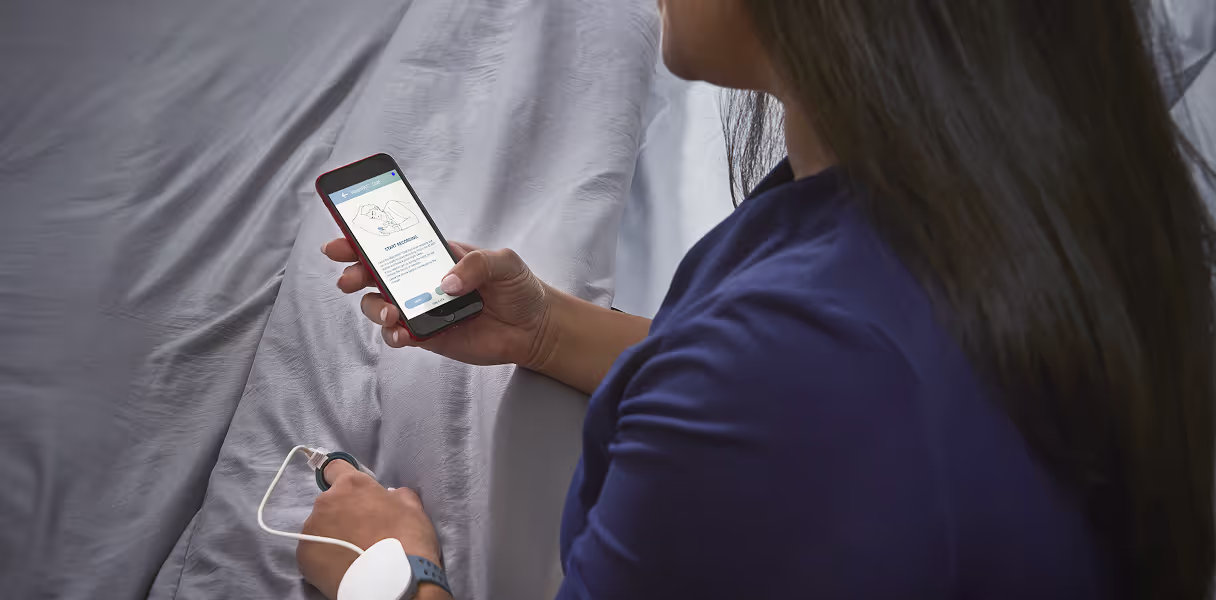
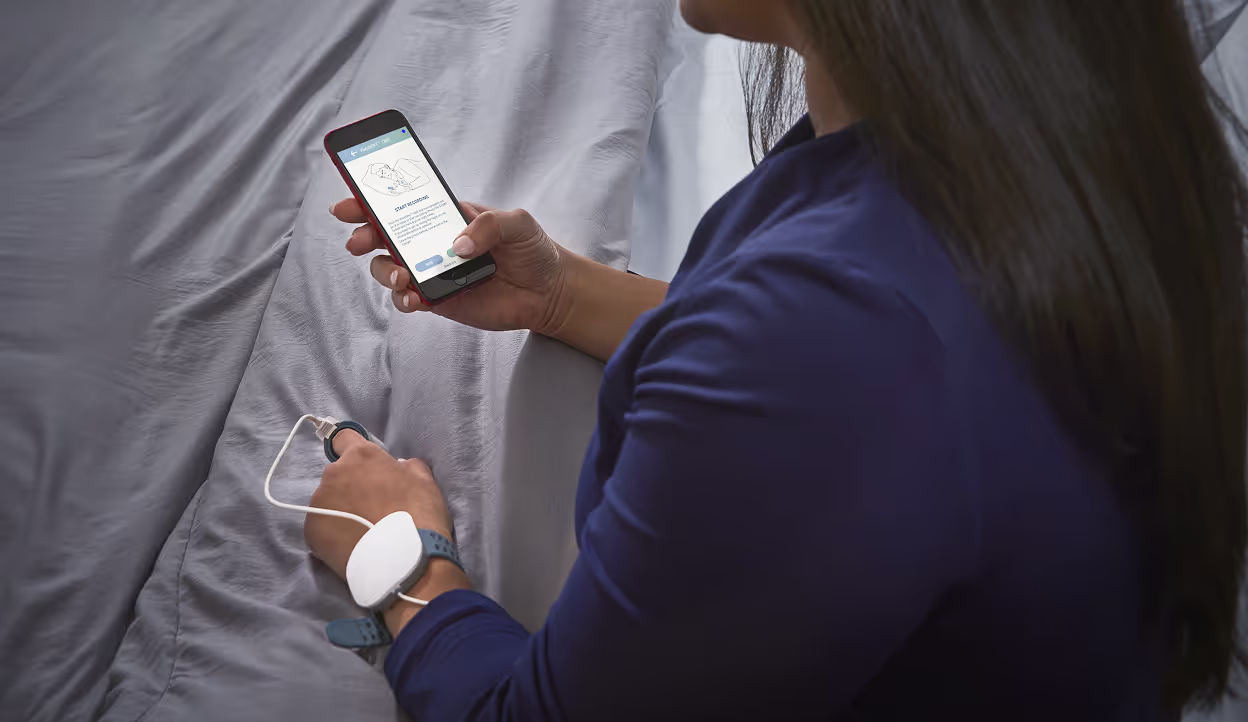
The device is small and FDA-cleared. Most models include a nasal airflow sensor, a finger pulse oximeter that tracks oxygen saturation, and a chest or abdominal belt that measures respiratory effort. Some devices also detect body position and snoring intensity. You wear the device for a single night, and the recorded data is then uploaded for physician review.
The key measurement produced by a home sleep apnea test is the AHI (Apnea-Hypopnea Index). The AHI counts the average number of apnea events (complete airflow blockage) and hypopnea events (partial airflow reduction) per hour of sleep. The American Academy of Sleep Medicine classifies an AHI of 5 to 14 as mild obstructive sleep apnea, 15 to 29 as moderate, and 30 or above as severe.
Home sleep apnea testing is a diagnostic screening tool for obstructive sleep apnea. Home sleep apnea testing does not replace polysomnography for all conditions. Home sleep apnea testing is most accurate when the patient has a moderate to high pre-test probability of obstructive sleep apnea based on symptoms and risk factors.
What the Device Measures
The sensors in a home sleep testing device capture four core data streams that a board-certified sleep medicine physician uses to build your diagnostic report.
- Airflow: a nasal cannula or thermistor tracks the volume and pattern of air moving through your nose and mouth, identifying apnea and hypopnea events.
- Oxygen saturation: a finger sensor monitors blood oxygen levels throughout the night, flagging desaturation events linked to airway obstruction.
- Respiratory effort: a chest or abdominal belt detects the rise and fall of your diaphragm, distinguishing obstructive events (where effort continues but airflow stops) from central sleep apnea events (where both effort and airflow stop).
- Heart rate: the pulse oximeter simultaneously records heart rate changes, which can correlate with arousal from apnea events.
Some advanced portable sleep test devices also capture body position data, which matters because many patients experience worse apnea when sleeping on their back.
DID YOU KNOW: According to the National Heart, Lung, and Blood Institute, obstructive sleep apnea occurs when throat muscles and soft palate tissue repeatedly relax and collapse during sleep, blocking normal airflow despite continued effort from the diaphragm.
KEY TAKEAWAY: A home sleep apnea test uses portable sensors to measure airflow, oxygen saturation, respiratory effort, and heart rate for one night, producing an AHI score that a physician uses to diagnose obstructive sleep apnea.
Understanding what a home sleep test measures sets the foundation for recognizing the symptoms that should prompt you to get tested.
Recognizing Sleep Apnea Symptoms That Call for Testing
Chronic snoring combined with witnessed breathing pauses during sleep is the most recognizable symptom pattern of obstructive sleep apnea. However, snoring alone does not confirm a diagnosis, and many patients with significant apnea report symptoms they never connect to a sleep problem.
The Mayo Clinic identifies the following as primary symptoms of obstructive sleep apnea: loud or chronic snoring, episodes of stopped breathing observed by a bed partner, gasping or choking during sleep, morning headaches, excessive daytime sleepiness, difficulty concentrating, and irritability. These symptoms overlap with other sleep disorders such as insomnia, narcolepsy, restless leg syndrome, and circadian rhythm disorders, which is why diagnostic sleep testing is necessary rather than self-diagnosis.
Symptoms You Should Not Ignore
- Loud snoring that disrupts your bed partner or can be heard from another room
- Waking with a dry mouth or sore throat repeatedly
- Morning headaches that resolve within a few hours of waking
- Falling asleep unintentionally during the day, especially while driving or working
- Difficulty staying asleep or frequent nighttime awakenings
- Brain fog, memory issues, or reduced concentration during waking hours
Central sleep apnea, a less common form, involves the brain failing to send proper signals to the muscles controlling breathing. This form involves the phrenic nerve and brainstem respiratory centers rather than physical airway obstruction. Symptoms can overlap with obstructive sleep apnea, but central sleep apnea often requires polysomnography for accurate diagnosis because home sleep tests may not capture the electroencephalogram data needed to differentiate the two.
Risk factors that increase the likelihood of obstructive sleep apnea include obesity (a BMI over 30), a neck circumference greater than 17 inches in men or 16 inches in women, alcohol use before bed, use of muscle relaxants or sedatives, smoking, and anatomical features such as a long soft palate, large uvula, bulky throat tissue, or obstructed nasal passages. Smokers are approximately three times more likely to have obstructive sleep apnea compared to non-smokers, according to research indexed on PubMed.
IMPORTANT: If you experience excessive daytime sleepiness, chronic snoring, or observed breathing pauses, schedule a sleep test rather than relying on self-assessment. Undiagnosed sleep apnea significantly raises the risk of stroke, heart attack, and motor vehicle accidents.
KEY TAKEAWAY: Recognizing symptoms such as chronic snoring, daytime fatigue, morning headaches, and witnessed breathing pauses is the first step toward getting a home sleep apnea test and receiving a proper diagnosis.
Once you recognize the symptoms, the next question most Jupiter residents ask is how at-home testing compares to spending a night in a sleep lab.
Home Sleep Test vs. Sleep Lab Polysomnography: Which Is Right for You
A home sleep apnea test is the preferred first-line diagnostic tool for adults with a moderate to high probability of obstructive sleep apnea, while in-clinic polysomnography remains the gold standard for complex or atypical cases. Both tests serve valid diagnostic purposes, but they differ in cost, convenience, scope, and the conditions they can detect.
Polysomnography is a comprehensive overnight sleep study performed in a sleep lab or sleep center. It records airflow, oxygen saturation, respiratory effort, heart rate, brain activity via electroencephalogram, eye movements, chin and leg muscle activity, and body position. A sleep technician monitors the patient throughout the night. This level of monitoring makes polysomnography necessary for diagnosing central sleep apnea, parasomnias, narcolepsy, hypersomnia, restless leg syndrome, and other complex sleep-related disorders.
A portable sleep test, by contrast, focuses on the respiratory and oxygenation channels most relevant to obstructive sleep apnea. It does not monitor brain activity, which means it cannot stage sleep or detect non-respiratory sleep disorders. However, for the specific question of whether obstructive sleep apnea is present, a home sleep test provides clinically reliable data at a fraction of the cost and inconvenience.
Comparing Home Sleep Test and Polysomnography
Setting
- Home Sleep Apnea Test: your own bed at home in Jupiter or anywhere in Florida
- Polysomnography: a sleep lab, sleep clinic, or hospital sleep center
Cost
- Home Sleep Apnea Test: typically $149 to $500, with dumbo.health offering testing at $149
- Polysomnography: often $1,000 to $3,000 or more without insurance
Convenience
- Home Sleep Apnea Test: high, no travel or overnight facility stay required
- Polysomnography: lower, requires scheduling, travel to a sleep center, and an overnight stay
Channels Monitored
- Home Sleep Apnea Test: airflow, oxygen saturation, respiratory effort, heart rate, and sometimes body position
- Polysomnography: all of the above plus electroencephalogram, eye movements, and muscle activity
Best For
- Home Sleep Apnea Test: adults with suspected obstructive sleep apnea based on symptoms and risk factors
- Polysomnography: patients with suspected central sleep apnea, narcolepsy, parasomnias, or when a home test is inconclusive
Turnaround Time
- Home Sleep Apnea Test: results typically within days, with dumbo.health Premium plan offering priority turnaround
- Polysomnography: results may take 1 to 3 weeks depending on the sleep center
For most adults in Jupiter and Palm Beach Gardens who present with snoring, daytime sleepiness, and risk factors like obesity, a home sleep apnea test is the most practical and cost-effective starting point. If the home test results are inconclusive or suggest a non-obstructive sleep disorder, your physician may then recommend polysomnography.
KEY TAKEAWAY: A home sleep apnea test is the most practical and affordable option for diagnosing obstructive sleep apnea in adults with clear symptoms, while polysomnography is reserved for complex cases, central sleep apnea, or inconclusive home test results.
Knowing which test fits your situation naturally leads to the question of what happens before, during, and after you take the test.
How to Complete a Home Sleep Apnea Test in Jupiter, Florida
Completing a home sleep apnea test involves a straightforward process that most patients finish in less than a week from order to results. You do not need a referral from a sleep center, and you do not need to visit a sleep lab in person.
Step-by-Step Process for At-Home Sleep Testing
1. Complete a sleep assessment to determine your risk level and confirm that a home sleep test is appropriate for your symptoms and sleep history. You can start with the free sleep assessment at dumbo.health.
2. Order your home sleep test device. Through dumbo.health, the at-home sleep test costs $149, requires no insurance, and ships directly to your home in Jupiter or anywhere in Florida.
3. Receive the FDA-cleared portable sleep test device and review the included instructions. The device typically arrives with a nasal airflow sensor, finger pulse oximeter, and chest belt.
4. Prepare for your test night by avoiding alcohol and sedatives for at least 24 hours before testing, as these substances relax throat muscles and can distort results. Follow your normal bedtime routine otherwise.
5. Attach the sensors according to the instructions and go to sleep. The device records airflow, oxygen saturation, respiratory effort, and heart rate automatically throughout the night.
6. Remove the device in the morning and return it or upload the data as instructed. dumbo.health handles data transfer and device logistics as part of the process.
7. A board-certified sleep medicine physician reviews your recorded data and generates a diagnostic report that includes your AHI score, oxygen desaturation index, and clinical interpretation.
After completing these steps, you receive your sleep test results with a clear diagnosis or recommendation for further evaluation. dumbo.health's Essentials plan at $59 per month covers physician interpretation and, if diagnosed, CPAP therapy and equipment with no contracts.
Pre-Test Preparation Checklist
- Confirm you have symptoms consistent with obstructive sleep apnea, such as chronic snoring, witnessed apneas, or excessive daytime sleepiness
- Avoid alcohol, muscle relaxants, and sedative medications for at least 24 hours before the test
- Do not nap excessively on the day of the test so you can fall asleep at your normal time
- Trim or clean your fingernail on the index finger where the pulse oximeter will attach
- Charge the device if required, or verify battery level before bedtime
- Sleep in your normal position and environment to get the most accurate results
- Set a backup alarm in case the device does not wake you
- Keep a sleep journal entry for the test night noting your bedtime, wake time, and any disruptions
- Have the return shipping materials ready so you can send the device back promptly
- Complete the free sleep assessment at dumbo.health if you have not already confirmed your eligibility
TIP: Sleep on your back for at least part of the night if possible, since supine position often reveals the most significant apnea events and gives your physician a clearer diagnostic picture.
KEY TAKEAWAY: Completing a home sleep apnea test in Jupiter requires ordering a device, wearing it for one night, and having a board-certified physician review the results, with the entire process typically taking less than a week.
With the process clear, the next critical step is understanding what your results actually mean and what happens after diagnosis.
Understanding Your Sleep Test Results and What Happens Next
Sleep test results center on the AHI (Apnea-Hypopnea Index), which quantifies the severity of your sleep-disordered breathing. A board-certified sleep medicine physician interprets this score alongside oxygen desaturation data and respiratory effort patterns to produce your diagnostic report.
The AHI counts the total number of apnea events (complete cessation of airflow for 10 seconds or more) and hypopnea events (partial reduction in airflow with associated oxygen desaturation or arousal) per hour of recorded sleep. The American Academy of Sleep Medicine uses these thresholds:
- Normal: fewer than 5 events per hour
- Mild obstructive sleep apnea: 5 to 14 events per hour
- Moderate obstructive sleep apnea: 15 to 29 events per hour
- Severe obstructive sleep apnea: 30 or more events per hour
Your diagnostic report also includes the oxygen desaturation index, which tracks how often your blood oxygen levels drop below 90 percent or by 3 to 4 percentage points from baseline. Frequent desaturations indicate significant airway obstruction and carry higher cardiovascular risk. According to the NIH, repeated oxygen desaturation during sleep contributes to systemic inflammation, endothelial dysfunction, and increased risk of heart attack and stroke.
What Your AHI Score Means for Treatment
An AHI of 5 or above generally confirms an obstructive sleep apnea diagnosis. The severity level directly influences which treatment options your physician recommends.
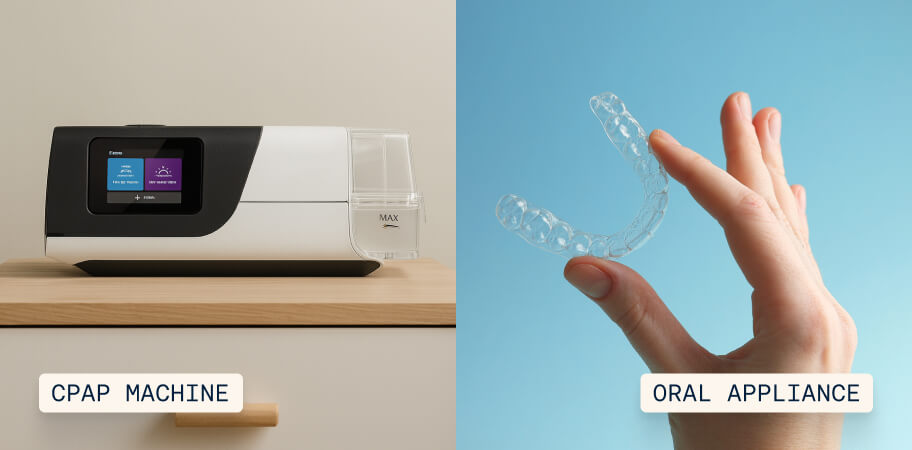
For mild cases (AHI 5 to 14), treatment may begin with lifestyle modifications such as weight management, positional therapy, or oral appliance therapy. For moderate to severe cases (AHI 15 and above), Continuous Positive Airway Pressure (CPAP) therapy is the first-line treatment recommended by the American Academy of Sleep Medicine. CPAP therapy uses a CPAP machine to deliver a steady stream of pressurized air through a mask, keeping the airway open throughout the night.
dumbo.health's monthly care plans include physician interpretation of your results plus CPAP therapy and equipment if prescribed. The Essentials plan at $59 per month covers standard follow-up care, while the Premium plan at $89 per month adds a dedicated sleep coach and advanced adherence monitoring.
If your home sleep test results are inconclusive or suggest a condition other than obstructive sleep apnea, your physician may recommend a full polysomnography at a sleep lab for further evaluation. Conditions such as central sleep apnea, narcolepsy, and parasomnias require the additional data channels that only in-clinic polysomnography provides.
KEY TAKEAWAY: Your AHI score determines the severity of obstructive sleep apnea, directly shaping whether your physician recommends lifestyle changes, oral appliance therapy, or CPAP treatment.
Understanding results leads naturally to exploring the full range of treatment options available after a positive diagnosis.
Treatment Options After a Sleep Apnea Diagnosis
CPAP therapy is the gold-standard treatment for moderate to severe obstructive sleep apnea, but it is not the only option. Treatment selection depends on your AHI severity, anatomy, personal preferences, and whether you can tolerate positive airway pressure.
CPAP and BiPAP Therapy
A CPAP machine delivers continuous positive airway pressure through a fitted mask, preventing the soft palate, tongue, and throat muscles from collapsing and blocking the airway during sleep. CPAP therapy reduces the AHI to normal or near-normal levels in the majority of compliant patients. The American Academy of Sleep Medicine reports that CPAP adherence of at least 4 hours per night for 70 percent of nights is associated with significant reductions in daytime sleepiness, blood pressure, and cardiovascular risk.
BiPAP (bilevel positive airway pressure) is an alternative for patients who need different pressure levels for inhalation and exhalation. BiPAP is sometimes prescribed for patients who cannot tolerate standard CPAP or who have complex sleep-disordered breathing patterns.
dumbo.health provides CPAP therapy and equipment through all monthly plans, with no contracts and no insurance required. The Essentials plan covers the CPAP machine, standard follow-up, and updates sent to your referring provider. The Premium plan adds a dedicated sleep coach and advanced adherence monitoring to help you stay on track.
Oral Appliance Therapy
Oral appliance therapy uses a custom-fabricated oral appliance, also called an oral device, that repositions the lower jaw forward during sleep to keep the airway open. Oral appliances are FDA-cleared for mild to moderate obstructive sleep apnea and are often prescribed when a patient cannot tolerate CPAP.
A sleep dentist or dentist trained in dental sleep medicine fabricates the device using digital imaging or an Itero Digital Scanner and works with dental laboratory technicians to create a precise fit. Dr. Kenneth Mogell and practices such as Attune Dentistry in the Jupiter and Palm Beach Gardens area specialize in oral appliance therapy for sleep apnea.
Oral appliances are not as effective as CPAP for severe obstructive sleep apnea. However, because patients tend to wear oral appliances more consistently than CPAP, the real-world effectiveness can be comparable for mild to moderate cases. The American Academy of Sleep Medicine recommends oral appliance therapy as a first-line alternative when CPAP is refused or not tolerated.
Surgical and Advanced Options
For patients with anatomical contributors to airway obstruction who do not respond adequately to CPAP or oral appliances, surgical options exist. Uvulopalatopharyngoplasty removes excess tissue from the soft palate and throat to widen the airway. Nasal surgeries address obstructed nasal passages that contribute to mouth breathing and CPAP intolerance. An ENT team evaluates surgical candidacy based on the specific location and cause of obstruction.
The remede System is an FDA-approved implantable device that stimulates the phrenic nerve to restore normal breathing patterns during sleep. It is specifically indicated for central sleep apnea, not obstructive sleep apnea, and requires evaluation at a specialized sleep center or bi-level clinic.
Lifestyle Modifications and Self-Help Measures
Lifestyle modifications play a supporting role in sleep apnea therapy regardless of the primary treatment. Weight loss is the single most impactful lifestyle change for patients with obesity-related obstructive sleep apnea. A reduction of 10 percent in body weight can decrease AHI by approximately 26 percent, according to research published in the American Journal of Respiratory and Critical Care Medicine.
Additional self-help measures include:
- Following an exercise plan that includes both aerobic and resistance training
- Practicing throat exercises that strengthen the muscles of the upper airway (research has even shown that playing the didgeridoo can reduce AHI in mild to moderate cases)
- Avoiding alcohol within 3 hours of bedtime, as alcohol relaxes throat muscles and worsens airway obstruction
- Avoiding muscle relaxants and sedatives before sleep
- Sleeping on your side rather than your back to reduce gravitational collapse of fatty tissue and the soft palate
- Maintaining a sleep journal to track symptoms, adherence, and improvements
Lifestyle modifications alone rarely resolve moderate to severe obstructive sleep apnea, but they significantly improve outcomes when combined with CPAP or oral appliance therapy.
KEY TAKEAWAY: Treatment options for sleep apnea range from CPAP and oral appliances to surgery and lifestyle changes, with the right choice depending on your AHI severity, anatomy, and ability to tolerate positive airway pressure.
Cost and access remain the biggest barriers that prevent Jupiter residents from pursuing testing and treatment, so understanding your options matters.
Cost of Sleep Apnea Testing and Treatment in Jupiter, Florida
The cost of sleep apnea testing in Jupiter varies significantly depending on whether you go through a sleep lab, a sleep clinic, or a direct-to-patient provider like dumbo.health. Insurance coverage, prior authorization requirements, and facility fees all influence the final price.
An in-clinic polysomnography at a sleep center near you typically costs between $1,000 and $3,000 without insurance. Even with health insurance, copays, deductibles, and prior authorization delays can create unexpected costs. Many insurance plans require a primary care provider referral before approving a sleep study, adding weeks to the process.
A home sleep apnea test through dumbo.health costs $149 as a one-time, cash-pay charge. No insurance is required. No prior authorizations. No surprise bills. The test ships directly to your home in Jupiter, FL or anywhere in Florida, and results are reviewed by a board-certified sleep medicine physician.
For ongoing care after diagnosis, dumbo.health offers three monthly plans:
- Essentials Plan at $59 per month (approximately $2 per day): includes physician interpretation and report, CPAP therapy and equipment, standard follow-up care, and updates sent to your referring provider
- Premium Plan at $89 per month (approximately $3 per day): everything in Essentials plus a dedicated sleep coach, advanced adherence monitoring, and priority results turnaround
- Elite Plan at $129 per month (approximately $4 per day): everything in Premium plus concierge clinical support, direct physician messaging, and custom reporting for your practice
All plans operate with no contracts and cancel-anytime flexibility. This pricing model eliminates the cost uncertainty that prevents many patients from pursuing diagnosis and treatment.
DID YOU KNOW: According to the American Academy of Sleep Medicine, the economic burden of undiagnosed sleep apnea in the United States exceeds $149 billion annually when accounting for lost productivity, motor vehicle accidents, and increased healthcare utilization.
For patients who need a comprehensive sleep apnea care solution, dumbo.health provides end-to-end service from testing through treatment with transparent pricing that patients can plan around.
KEY TAKEAWAY: A home sleep apnea test through dumbo.health costs $149 with no insurance required, compared to $1,000 or more for in-clinic polysomnography, making at-home testing the most accessible and affordable option for Jupiter residents.
Affordable testing removes one barrier, but some situations require a different approach, which is important to understand before ordering a test.
Limitations and When a Home Sleep Test May Not Be the Right Choice
A home sleep apnea test is clinically validated for diagnosing obstructive sleep apnea in adults with a moderate to high pre-test probability, but it is not appropriate for every patient or every sleep disorder. Understanding these limitations ensures you pursue the right diagnostic path.
Conditions a Home Test Cannot Diagnose
Home sleep apnea tests do not record brain activity (electroencephalogram), which means they cannot stage sleep or detect non-respiratory sleep disorders. If your physician suspects central sleep apnea, narcolepsy, parasomnias, hypersomnia, restless leg syndrome, or circadian rhythm disorders, an in-clinic polysomnogram is necessary. These conditions require the full polysomnography channel set to differentiate them from obstructive sleep apnea.
Populations Where Home Testing May Be Less Accurate
- Patients with significant cardiopulmonary disease, such as congestive heart failure or chronic obstructive pulmonary disease, may have oxygen desaturation patterns that complicate home test interpretation.
- Patients with suspected central sleep apnea need monitoring of respiratory effort alongside brain activity to distinguish central events from obstructive events. The absence of diaphragm movement during an apnea event is the hallmark of central sleep apnea, but confirming the brain's role requires an electroencephalogram.
- Children and adolescents are generally not candidates for home sleep apnea testing. Pediatric sleep-disordered breathing requires in-lab evaluation with age-appropriate protocols.
When Results Are Inconclusive
Home sleep tests can underestimate the AHI because the device cannot distinguish sleep from wakefulness. If you spend significant time awake during the test night, the total recording time may dilute the event count per hour. An inconclusive result does not mean you do not have sleep apnea. It means further evaluation, typically polysomnography, is needed.
If a home test returns an inconclusive or negative result but your symptoms strongly suggest a sleep problem, your primary care provider or sleep specialist should refer you for in-clinic diagnostic sleep testing.
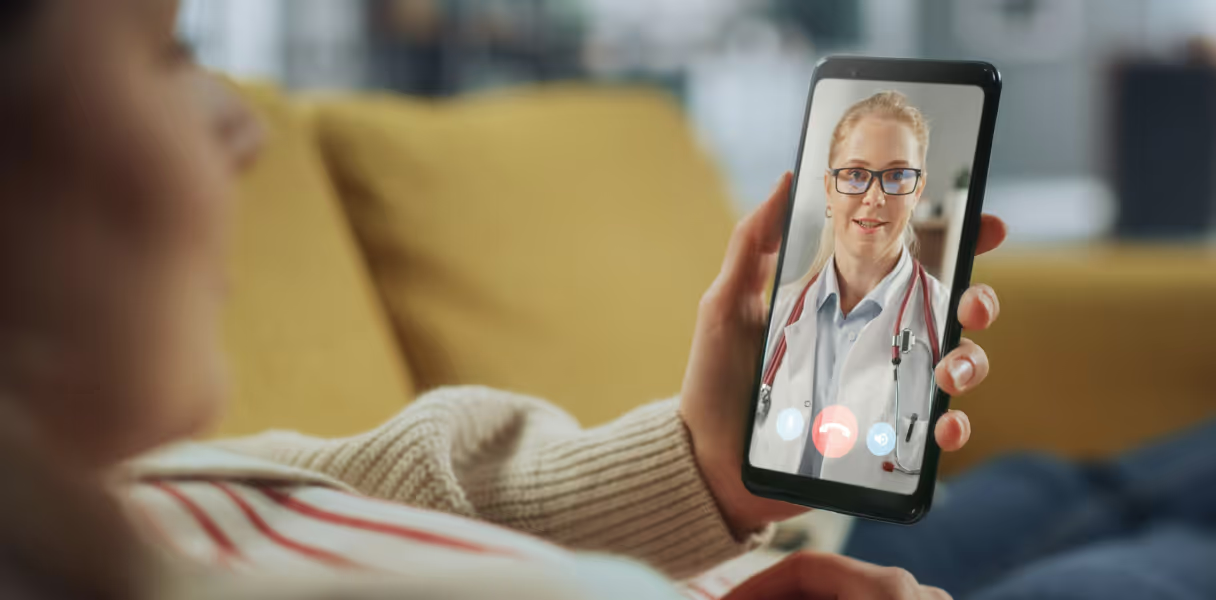
dumbo.health addresses several common limitations by including physician interpretation in every care plan. If your home sleep test results suggest a condition beyond obstructive sleep apnea or are inconclusive, the reviewing physician provides guidance on next steps, including referral for polysomnography or telehealth consultation to discuss alternative diagnostic pathways.
IMPORTANT: A home sleep apnea test is a screening tool for obstructive sleep apnea specifically. It is not a comprehensive evaluation for all sleep disorders, central sleep apnea, or complex medical conditions that affect breathing during sleep.
KEY TAKEAWAY: Home sleep apnea tests are accurate for obstructive sleep apnea in appropriate candidates but cannot diagnose central sleep apnea, narcolepsy, parasomnias, or other non-respiratory sleep disorders, which require polysomnography.
Knowing the limitations helps you set realistic expectations, and seeing how real patients navigate the process makes the decision even clearer.
Real-World Scenarios: How Jupiter Residents Use Home Sleep Testing
Home sleep apnea testing fits a wide range of real-world situations. These scenarios illustrate how different types of patients in the Jupiter area benefit from at-home diagnosis and treatment.
Common Scenarios
A 48-year-old owner-operator based in Jupiter, FL who holds a commercial driver's license was flagged during a DOT physical for a BMI of 36 and a neck circumference of 18 inches. The examiner required a sleep apnea evaluation before extending certification. Rather than waiting weeks for a sleep lab appointment and paying over $1,500 out of pocket, the driver ordered a home sleep test through dumbo.health for $149. Results came back within days showing an AHI of 22, confirming moderate obstructive sleep apnea. The driver enrolled in the Premium plan at $89 per month, received a CPAP machine, and was able to present adherence documentation at the follow-up DOT exam. The entire process took less than two weeks.
A 55-year-old retired teacher living in Palm Beach Gardens had been dealing with morning headaches, daytime fatigue, and loud snoring for years. Her primary care provider recommended a sleep evaluation, but her health insurance required prior authorization that was taking weeks to process. She chose to bypass insurance entirely by ordering an at-home sleep test through dumbo.health. Her test revealed an AHI of 38, indicating severe obstructive sleep apnea with significant oxygen desaturation events. She started CPAP therapy through dumbo.health's Essentials plan at $59 per month and reported improved energy and resolution of morning headaches within two weeks of consistent use.
A 34-year-old software engineer in Jupiter noticed excessive daytime sleepiness and difficulty concentrating, despite sleeping 8 hours per night. His bed partner reported occasional snoring but no witnessed breathing pauses. He was unsure whether his symptoms were related to sleep deprivation, insomnia, or something else. After completing the free sleep assessment at dumbo.health, he ordered a home sleep test. His AHI came back at 7, indicating mild obstructive sleep apnea. His physician recommended starting with oral appliance therapy and lifestyle modifications, including a structured exercise plan and avoiding alcohol before bed. He was also advised to keep a sleep journal to monitor improvement.
These scenarios reflect the range of patients who benefit from home sleep apnea testing, from commercial drivers needing fast documentation to retirees tired of insurance delays to younger adults who never expected a sleep apnea diagnosis.
KEY TAKEAWAY: Home sleep apnea testing serves a wide range of patients in Jupiter, from CDL holders needing rapid results to residents who want affordable, insurance-free access to diagnosis and treatment.
Real-world outcomes also help dispel the misconceptions that keep many people from getting tested in the first place.
Common Myths About Sleep Apnea and Home Testing Debunked
MYTH: Only overweight people get sleep apnea.
FACT: While obesity is a major risk factor, obstructive sleep apnea also affects people with normal BMI who have anatomical features such as a long soft palate, large uvula, bulky throat tissue, or obstructed nasal passages. According to the Sleep Foundation, approximately 20 to 40 percent of adults diagnosed with obstructive sleep apnea are not classified as obese. Risk factors also include jaw structure, neck circumference, age, and family history.
MYTH: Snoring always means you have sleep apnea.
FACT: Chronic snoring is a common symptom of obstructive sleep apnea, but not all snoring indicates apnea. Snoring can result from nasal congestion, alcohol consumption, sleep position, or relaxed and poorly toned throat and tongue muscles without any airway obstruction events. Only a diagnostic sleep test with AHI measurement can confirm whether snoring is associated with actual apnea or hypopnea events.
MYTH: A home sleep test is not as accurate as a sleep lab study.
FACT: For diagnosing obstructive sleep apnea in adults with a moderate to high pre-test probability, home sleep apnea tests have demonstrated sensitivity and specificity rates that support their use as a first-line diagnostic tool. The American Academy of Sleep Medicine endorses home sleep apnea testing for uncomplicated adult obstructive sleep apnea. Home tests may underestimate AHI slightly because they cannot distinguish sleep from wakefulness, but a qualified physician accounts for this during interpretation.
MYTH: CPAP is the only treatment for sleep apnea.
FACT: CPAP is the gold-standard treatment for moderate to severe cases, but oral appliance therapy is an FDA-cleared alternative for mild to moderate obstructive sleep apnea. Surgical options like uvulopalatopharyngoplasty and nasal surgeries exist for anatomically driven obstruction. Lifestyle modifications including weight loss, positional therapy, throat exercises, and avoiding alcohol before bed also play meaningful roles. The remede System addresses central sleep apnea specifically through phrenic nerve stimulation.
MYTH: You need insurance to get a sleep apnea test.
FACT: Insurance is not required for a home sleep apnea test. dumbo.health offers cash-pay testing at $149 with no prior authorizations, no referrals, and no surprise bills. Many patients in Jupiter and across Florida choose cash-pay testing specifically to avoid insurance delays and access faster results. Monthly care plans through dumbo.health start at $59 per month with no contracts.
KEY TAKEAWAY: Common myths about sleep apnea prevent timely diagnosis, but the facts show that home testing is clinically validated, treatment extends beyond CPAP, and insurance is not required to access affordable testing.
With myths cleared up, knowing exactly why timely testing matters for your long-term health reinforces the urgency of taking action.
Why Timely Diagnosis Matters: Health Risks of Undiagnosed Sleep Apnea
Undiagnosed obstructive sleep apnea significantly increases the risk of cardiovascular disease, metabolic dysfunction, and impaired daily functioning. The longer sleep apnea remains untreated, the greater the cumulative health burden.
According to the NIH, untreated obstructive sleep apnea is independently associated with a two- to three-fold increase in the risk of stroke and a significant elevation in the risk of heart attack. The repeated cycles of airway obstruction, oxygen desaturation, and arousal trigger systemic inflammation, oxidative stress, and sympathetic nervous system activation that damage blood vessels over time.
Beyond cardiovascular risk, untreated sleep apnea contributes to insulin resistance and is associated with higher rates of type 2 diabetes. The CDC identifies sleep-disordered breathing as a contributing factor to metabolic syndrome, which includes elevated blood pressure, high blood sugar, excess body fat around the waist, and abnormal cholesterol levels.
Cognitive effects of undiagnosed sleep apnea include impaired memory consolidation, reduced attention span, and slower reaction times. The National Highway Traffic Safety Administration estimates that drowsy driving causes thousands of crashes annually, and undiagnosed sleep apnea is a leading medical contributor to drowsy driving risk. For commercial drivers in Jupiter and across Florida, this makes timely testing a career and public safety priority, not just a personal health decision.
Sleep deprivation from untreated apnea also affects mood regulation. Studies indexed on PubMed show a strong association between obstructive sleep apnea and depression, anxiety, and irritability. Many patients attribute these symptoms to stress or aging rather than a treatable sleep disorder.
The takeaway is straightforward: early diagnosis through a home sleep apnea test followed by appropriate treatment reduces cardiovascular risk, improves cognitive function, and restores quality of life. Providers in your area, including dumbo.health's telehealth-accessible services, make it possible to start the diagnostic process without delay.
KEY TAKEAWAY: Undiagnosed sleep apnea increases the risk of stroke, heart attack, metabolic disease, and motor vehicle accidents, making early testing through a home sleep apnea test a critical health decision.
Understanding the stakes reinforces why choosing the right testing and care provider is one of the most important decisions you can make.
How to Choose a Sleep Apnea Testing Provider in Jupiter
Choosing a sleep apnea testing provider in Jupiter, Florida should be based on diagnostic accuracy, physician oversight, cost transparency, and continuity of care. Not all providers offer the same level of service or follow-through.
When evaluating providers in your area, prioritize the following:
- Board-certified sleep medicine physician review: your test results should be interpreted by a physician with specialized training in sleep medicine, not auto-scored by software alone.
- FDA-cleared testing devices: the portable sleep test device should be FDA-cleared for home use and capable of measuring airflow, oxygen saturation, respiratory effort, and heart rate at minimum.
- Transparent pricing: look for a provider that quotes a clear, all-inclusive price before you commit. Hidden fees for interpretation, shipping, or follow-up consultations undermine trust and affordability.
- Continuity of care: a test is only useful if it connects to treatment. The best providers offer a complete pathway from testing through diagnosis, treatment initiation, and ongoing adherence monitoring.
- HIPAA regulations compliance: confirm that your provider handles personal health information in compliance with federal HIPAA regulations.
Sleep specialists and sleep clinics in Jupiter and Palm Beach Gardens offer in-person polysomnography for complex cases. For straightforward obstructive sleep apnea screening, telehealth-enabled providers like dumbo.health combine the convenience of at-home testing with physician-led care and transparent cash-pay pricing.
dumbo.health meets all of these criteria: FDA-cleared devices, board-certified physician interpretation, $149 one-time test cost, monthly plans with no contracts, and resupply and maintenance support for CPAP equipment through ongoing care plans. The platform's telehealth model means Jupiter residents can access care without driving to a sleep center or waiting for facility availability.
KEY TAKEAWAY: The best sleep apnea testing provider offers board-certified physician review, FDA-cleared devices, transparent pricing, and a clear pathway from diagnosis to treatment with ongoing support.
Conclusion
A home sleep apnea test gives Jupiter, Florida residents a fast, affordable, and clinically reliable path from symptoms to diagnosis. Obstructive sleep apnea affects millions of Americans, and the majority remain undiagnosed because traditional sleep lab testing is expensive, inconvenient, and slow. At-home testing eliminates those barriers. Whether you are a commercial driver who needs results before a DOT certification deadline or a resident who has lived with chronic snoring and fatigue for too long, the process starts with one night of testing and leads to a clear diagnosis and treatment plan. dumbo.health offers the complete sleep apnea care pathway starting with a $149 home sleep test, no insurance required, and monthly care plans from $59 per month with no contracts and cancel-anytime flexibility. Take the first step today.
Frequently Asked Questions About Home Sleep Apnea Test in Jupiter, Florida
What is a home sleep apnea test?
A home sleep apnea test (HSAT) is a portable diagnostic device you use in your own bed to screen for obstructive sleep apnea. The device typically records breathing patterns, oxygen saturation, airflow, respiratory effort, and heart rate overnight. A board-certified sleep medicine physician then reviews the data and generates a diagnostic report. Home sleep testing is widely used as a convenient, cost-effective alternative to an in-lab polysomnography study for patients with a moderate to high likelihood of obstructive sleep apnea. A healthcare professional can help determine whether a home sleep test is appropriate for your situation.
What is sleep apnea?
Sleep apnea is a sleep-related breathing disorder in which breathing repeatedly stops and starts during sleep. The most common form is obstructive sleep apnea (OSA), which occurs when the throat muscles and soft palate relax excessively, causing the airway to partially or fully collapse. According to the American Academy of Sleep Medicine, obstructive sleep apnea is highly prevalent and significantly underdiagnosed. Central sleep apnea, a less common form, occurs when the brain fails to send proper signals to the muscles that control breathing. Both forms can disrupt sleep quality and affect long-term health if left untreated.
What are the most common symptoms of obstructive sleep apnea?
The most common symptoms of obstructive sleep apnea include loud or chronic snoring, gasping or choking during sleep, witnessed breathing pauses, excessive daytime sleepiness, morning headaches, difficulty concentrating, and waking unrefreshed. Some people experience irritability, fatigue, or a persistent need to nap during the day. These symptoms often go unnoticed by the person affected and are first reported by a bed partner. If you regularly feel exhausted despite a full night of sleep, or if you have been told you snore heavily, a healthcare professional can help determine whether sleep-disordered breathing may be a contributing factor.
What are the health consequences of untreated obstructive sleep apnea?
Untreated obstructive sleep apnea is associated with a range of serious health risks, including high blood pressure, heart attack, stroke, type 2 diabetes, and excessive daytime sleepiness that can impair driving and daily function. The repeated drops in blood oxygen levels caused by airway obstruction place significant strain on the cardiovascular system over time. Research published in the American Journal of Respiratory and Critical Care Medicine has linked untreated OSA to increased cardiovascular and metabolic risk. These risks make early diagnosis and treatment important. A healthcare professional can help assess your symptoms and recommend appropriate evaluation.
How is sleep apnea diagnosed?
Sleep apnea is typically diagnosed through a sleep study, either a home sleep apnea test or an in-lab polysomnography. A home sleep apnea test records key data including airflow, oxygen saturation, respiratory effort, and breathing patterns overnight. A physician reviews the results and calculates the apnea-hypopnea index (AHI), which measures the number of apnea and hypopnea events per hour of sleep. An AHI result guides the severity classification and informs treatment decisions. In some cases, particularly where central sleep apnea, parasomnias, or complex sleep disorders are suspected, an in-lab polysomnogram may be recommended by a clinician.
Is a home sleep apnea test as accurate as an in-lab sleep study?
A home sleep apnea test is a validated and widely used diagnostic tool for identifying obstructive sleep apnea in patients with a moderate to high pretest probability. It records airflow, oxygen saturation, respiratory effort, and breathing patterns. However, it typically captures fewer data channels than a full polysomnography, which additionally records brain activity via electroencephalogram, muscle movement, and leg movements. According to the American Academy of Sleep Medicine, home sleep testing is appropriate for many patients but may not be suitable for those with complex sleep disorders, insomnia, restless leg syndrome, narcolepsy, or suspected central sleep apnea. A clinician can advise on which test is appropriate.
What measurements does the home sleep test record?
A home sleep apnea test device typically records airflow through the nose and mouth, blood oxygen levels (oxygen saturation), respiratory effort from chest and diaphragm movement, pulse rate, and body position. Some FDA-cleared devices also monitor snoring sounds. These measurements allow a reviewing physician to identify apnea and hypopnea events, calculate the apnea-hypopnea index, and assess the severity of sleep-disordered breathing. The dumbo.health at-home sleep test uses an FDA-cleared device and includes physician interpretation and a diagnostic report.
What does the $149 home sleep test include?
The dumbo.health home sleep test costs $149 as a one-time purchase. It includes an at-home sleep test device shipped directly to you, one night of testing, and physician interpretation of your results with a diagnostic report. The $149 test is billed separately from any ongoing monthly care plan. No insurance is required, there are no prior authorizations, and there are no surprise bills. If treatment such as CPAP therapy is recommended following your results, ongoing care plans start from $59 per month and can be explored at dumbo.health/solutions.
How fast can I get a home sleep test delivered in the Jupiter and Palm Beach Gardens area?
Orders placed before 2:00 pm EST are eligible for same-day shipping to Palm Beach Gardens, Florida, meaning many patients in Jupiter and the surrounding area can receive their test device the same day they order. Once the device arrives, you complete one night of testing at home, return the device, and wait for physician review and your results. This process is significantly faster and more convenient than scheduling an in-lab sleep study, which can involve waiting weeks for an available appointment at a sleep center or sleep clinic.
Who reviews my home sleep test results?
Your home sleep test results are reviewed by a board-certified sleep medicine physician. The physician analyzes the overnight data, calculates your apnea-hypopnea index, and produces a diagnostic report. This is not an automated algorithm review. At dumbo.health, physician interpretation is included in every plan, and results can include updates sent to your referring provider or primary care provider. A qualified clinician reviews your sleep history alongside the recorded data to ensure the report is clinically meaningful. Your healthcare provider can then discuss treatment options with you based on the findings.
Can I use home sleep test results for a CPAP prescription?
Yes, in many cases a diagnostic report from a physician-reviewed home sleep apnea test can support a CPAP prescription when obstructive sleep apnea is confirmed. A board-certified sleep medicine physician interprets the results and, if OSA is diagnosed at an appropriate severity level, may issue the documentation needed to support CPAP therapy. If you are already a CPAP user and need a new prescription to update or replace your equipment, a home sleep test can also help confirm your current diagnosis and support that process. A healthcare professional will determine whether CPAP therapy is appropriate based on your specific test results. Learn more about CPAP therapy and equipment.
What treatment options are available for obstructive sleep apnea?
The most common and evidence-based treatment for obstructive sleep apnea is Continuous Positive Airway Pressure (CPAP) therapy, which delivers a steady stream of air pressure to keep the airway open during sleep. BiPAP therapy uses two pressure settings and may be recommended in specific clinical situations. Oral appliance therapy uses a custom-fabricated oral appliance to reposition the jaw and tongue and reduce airway obstruction. This approach is often explored with a sleep dentist. In some cases, surgical interventions such as uvulopalatopharyngoplasty or nasal surgeries are considered. Lifestyle modifications including weight management and limiting alcohol and muscle relaxants may also help. A healthcare professional will recommend the most appropriate treatment based on your diagnosis.
What is oral appliance therapy for sleep apnea?
Oral appliance therapy involves wearing a custom-fabricated oral device during sleep to keep the lower jaw slightly forward, which helps prevent the soft palate, tongue, and throat muscles from collapsing and obstructing the airway. Oral appliances are generally recommended by a sleep dentist or dental sleep medicine specialist for patients with mild to moderate obstructive sleep apnea, or for those who cannot tolerate CPAP therapy. The device is made from dental materials using digital imaging or an Itero Digital Scanner in many practices. Oral appliance therapy is recognised as an effective treatment option by the American Academy of Sleep Medicine for appropriate candidates.
Why should I consider a home sleep test instead of an in-lab sleep study?
A home sleep test offers several practical advantages over an in-lab sleep study. Testing at home means you sleep in your own environment rather than a clinical sleep lab setting, which can produce more representative results for many patients. Home sleep testing is also significantly less expensive, faster to access, and does not require an overnight stay at a sleep center. For patients with a moderate to high likelihood of obstructive sleep apnea who do not have complex sleep disorder histories, a home sleep apnea test is widely considered an appropriate first diagnostic step. A clinician can help determine whether a home sleep test or an in-lab polysomnogram is more suitable for your specific situation.
Do I need insurance to get a home sleep apnea test in Jupiter, Florida?
No. dumbo.health offers a cash-pay home sleep apnea test at a flat $149 with no insurance required, no prior authorizations, and no surprise bills. This makes testing accessible for patients in Jupiter, Florida and the surrounding Palm Beach Gardens area who are uninsured, underinsured, or prefer to avoid navigating insurance plans. Transparent pricing means you know exactly what you are paying before you order. If you decide to continue with ongoing care such as CPAP therapy or physician follow-up, monthly plans are available from $59 per month with no long-term contracts.
What are the benefits of home sleep testing compared to a clinic-based sleep study?
Home sleep testing allows you to be tested in familiar surroundings, which may produce more natural sleep patterns than a clinical sleep lab environment. Key benefits include convenience, lower cost, faster access to testing, no overnight clinic stay, and no need to take time off work for an in-facility appointment. FDA-cleared portable sleep test devices record the essential measurements needed for obstructive sleep apnea diagnosis. For many patients with suspected OSA and no complicating factors, a home sleep apnea test provides sufficient diagnostic information to support a treatment decision. A healthcare professional can advise whether home testing is appropriate for you.
What sleep disorders can a home sleep apnea test detect?
A home sleep apnea test is designed primarily to screen for and diagnose obstructive sleep apnea. It records breathing events, oxygen saturation, airflow, and respiratory effort, but it does not capture the full range of data measured in a polysomnogram. Conditions such as insomnia, narcolepsy, restless leg syndrome, parasomnias, circadian rhythm disorders, hypersomnia, and central sleep apnea typically require further clinical evaluation or an in-lab sleep study for accurate diagnosis. According to the American Academy of Sleep Medicine, home sleep testing is most reliable when used for patients with a high clinical suspicion of obstructive sleep apnea and no significant complicating sleep history.
What risk factors increase the likelihood of obstructive sleep apnea?
Several factors increase the risk of obstructive sleep apnea. These include obesity and excess fatty tissue around the airway, a large neck circumference, bulky throat tissue, a long soft palate, a large uvula, obstructed nasal passages, and relaxed or poorly toned throat and tongue muscles during sleep. Additional risk factors include being male, being over 40, smoking, using alcohol or muscle relaxants, and having a family history of sleep apnea. The Mayo Clinic notes that excess weight is one of the most significant modifiable risk factors for OSA. A healthcare professional can assess your individual risk and recommend appropriate testing.
What is the apnea-hypopnea index and why does it matter?
The apnea-hypopnea index (AHI) is the primary measure used to diagnose and classify the severity of obstructive sleep apnea. It represents the average number of apnea and hypopnea events per hour of sleep recorded during your sleep test. An AHI of fewer than 5 events per hour is generally considered within a normal range for adults. An AHI of 5 to 14 indicates mild OSA, 15 to 29 indicates moderate OSA, and 30 or more indicates severe OSA. The AHI result from your home sleep apnea test guides your physician's treatment recommendations and supports any prescription or documentation required for CPAP therapy.
What happens after I receive my home sleep test results?
After your physician reviews your home sleep apnea test results and produces a diagnostic report, your next step depends on the findings. If obstructive sleep apnea is confirmed, your clinician may recommend CPAP therapy, oral appliance therapy, lifestyle modifications, or further evaluation. At dumbo.health, monthly care plans include CPAP therapy and equipment, physician follow-up, and adherence monitoring. Results can also be shared with your primary care provider or referring provider. If you have questions about what your results mean or which treatment may be right for you, a healthcare professional should be consulted before starting or changing any treatment. Explore sleep apnea care solutions at dumbo.health.
Is my health information protected when I use an at-home sleep testing service?
Yes. Reputable at-home sleep testing providers are required to handle your health information in compliance with HIPAA regulations, which govern the privacy and security of protected health information in the United States. This means your sleep test data, diagnostic report, and personal health details must be stored, transmitted, and shared securely. Always confirm that any sleep testing or telehealth service you use operates under HIPAA-compliant practices before sharing personal health data. dumbo.health operates as a healthcare platform and handles patient information in accordance with applicable health privacy standards.
How do I start the process of getting an at-home sleep apnea test?
Getting started is straightforward. You can take a free sleep assessment to help determine whether at-home sleep testing may be a reasonable next step based on your symptoms and risk factors. If testing is appropriate, you order the $149 home sleep test, receive the device, complete one night of testing at home, and return the device for physician review. Your diagnostic report is then prepared by a board-certified sleep medicine physician. If treatment is recommended, ongoing care plans are available from $59 per month with no contracts. Start with a free sleep assessment at dumbo.health to begin.