


Home Sleep Apnea Test in St. Cloud, Florida: The Complete Guide for Local Residents
A home sleep apnea test in St. Cloud, Florida gives you a clinically validated way to screen for obstructive sleep apnea from your own bed, without traveling to a sleep lab or scheduling an overnight facility stay. According to the American Academy of Sleep Medicine, home sleep apnea testing is an accepted diagnostic method for adults with a moderate to high pretest probability of obstructive sleep apnea. This guide is written for St. Cloud residents, commercial drivers in the Osceola County area, and anyone in Central Florida who suspects their snoring, daytime fatigue, or breathing disruptions during sleep could signal a treatable sleep disorder. You will learn how home sleep testing works, what devices measure, how results compare to in-lab polysomnography, what treatment options follow a diagnosis, and how to access affordable self-pay testing through dumbo.health. Each section covers a specific decision point so you can move from suspicion to action with confidence.
Quick Answer
A home sleep apnea test in St. Cloud, Florida is a portable diagnostic device you wear for one night at home to measure airflow, oxygen saturation, and breathing effort while you sleep. The test screens for obstructive sleep apnea without requiring an overnight stay at a sleep center. Most adults with symptoms like loud snoring, witnessed breathing pauses, or excessive daytime sleepiness are candidates. dumbo.health offers a home sleep test for $149 with no insurance required, shipped directly to residents in the St. Cloud area.
Key Takeaways
- Home sleep apnea tests measure airflow, oxygen levels, pulse rate, and respiratory effort during one night of sleep to screen for obstructive sleep apnea.
- The test is FDA-cleared for adults with a moderate to high clinical suspicion of obstructive sleep apnea, not for central sleep apnea, narcolepsy, or parasomnias.
- In-lab polysomnography monitors more channels and remains the standard for complex sleep disorders, but home testing is accurate enough for straightforward obstructive sleep apnea diagnosis in most adults.
- dumbo.health provides a complete home sleep test for $149 with no insurance, no prior authorization, and no surprise bills, with monthly care plans starting at $59 per month.
- An estimated 80 percent of people with moderate to severe obstructive sleep apnea remain undiagnosed, according to the American Academy of Sleep Medicine.
- St. Cloud residents can order a home sleep test online through dumbo.health without needing a referral from a local sleep specialist or primary care physician first.
Why St. Cloud, Florida Residents Should Consider Home Sleep Apnea Testing
Obstructive sleep apnea affects an estimated 30 million adults in the United States, according to the American Academy of Sleep Medicine. St. Cloud and the broader Osceola County region have limited dedicated sleep lab facilities compared to Orlando or Melbourne, Florida, which means residents often face longer wait times for in-lab sleep studies and appointments with a sleep specialist.
A home sleep apnea test removes the travel and scheduling barriers that delay diagnosis. You complete the test in your own bed, on your own schedule, for a single night. The device records the same core respiratory functions that a physician needs to assess whether obstructive sleep apnea is present: airflow through a nasal pressure sensor, blood oxygen saturation via pulse oximetry, respiratory effort through an effort belt, and pulse rate.
Many patients report that sleeping in their own bed produces more representative sleep data than spending a night in an unfamiliar sleep center. Clinicians frequently observe that home testing captures a typical night of sleep rather than a disrupted one caused by an unfamiliar clinical environment.
For St. Cloud residents who lack a sleep center in their area, or who work shifts that make daytime appointments and overnight lab stays impractical, home testing offers a direct path from symptoms to answers. dumbo.health ships FDA-cleared home sleep testing kits to St. Cloud addresses, with results interpreted by a physician and returned within days.
DID YOU KNOW: The American Academy of Sleep Medicine estimates that undiagnosed sleep apnea costs the U.S. economy nearly $150 billion annually in lost productivity, healthcare expenses, and workplace accidents.
KEY TAKEAWAY: St. Cloud residents can bypass long wait times and limited local sleep lab availability by using a home sleep apnea test shipped directly to their door through dumbo.health for $149.
Understanding what sleep apnea actually is helps explain why testing matters and what happens if it goes undiagnosed.
What Is Sleep Apnea and Why Does It Matter
Sleep apnea is a sleep disorder characterized by repeated interruptions in breathing during sleep. The most common form, obstructive sleep apnea, occurs when the soft tissue at the back of the airway collapses and blocks normal airflow. This partial or complete obstruction causes drops in oxygen saturation, brief awakenings, and fragmented sleep.
Obstructive Sleep Apnea
Obstructive sleep apnea accounts for roughly 84 percent of all sleep apnea diagnoses, according to the Sleep Foundation. It happens when the muscles in the throat relax excessively during sleep, narrowing or closing the airway. Risk factors include a body mass index above 30, neck circumference greater than 17 inches in men or 16 inches in women, age over 40, and male sex, though women are increasingly diagnosed after menopause.
Symptoms include loud snoring, gasping or choking during sleep, excessive daytime sleepiness, morning headaches, irritability, difficulty concentrating, and mood changes. Many people dismiss snoring as a minor annoyance, but persistent loud snoring combined with witnessed breathing pauses is a strong clinical indicator for obstructive sleep apnea.
Central Sleep Apnea and Complex Sleep Apnea Syndrome
Central sleep apnea is less common and results from the brain failing to send proper signals to the muscles that control breathing, rather than a physical airway obstruction. Complex sleep apnea syndrome, sometimes called treatment-emergent central sleep apnea, involves features of both obstructive and central sleep apnea. Home sleep tests are not validated for diagnosing central sleep apnea or complex sleep apnea syndrome; these conditions require in-lab polysomnography with full neurological and respiratory monitoring.
Health Consequences of Untreated Sleep Apnea
The National Heart, Lung, and Blood Institute states that untreated obstructive sleep apnea is associated with increased risk of high blood pressure, heart disease, stroke, type 2 diabetes, and depression. Chronic drops in oxygen levels during sleep place strain on the cardiovascular system. Disrupted sleep also affects hormone levels, including those that regulate appetite, which may contribute to weight gain.
Untreated sleep apnea increases the risk of drowsy driving accidents. The National Highway Traffic Safety Administration reports that drowsy driving causes an estimated 100,000 police-reported crashes each year. For commercial drivers in St. Cloud and across Florida, undiagnosed obstructive sleep apnea is both a safety and a career risk.
KEY TAKEAWAY: Obstructive sleep apnea is the most common form of sleep apnea, and untreated cases carry measurable risks for cardiovascular health, metabolic function, and driving safety.
Knowing what the condition involves leads to the next question: how does a home sleep test actually detect it?
How a Home Sleep Apnea Test Works
A home sleep apnea test uses a portable sleep device with sensors that record respiratory functions and oxygen levels during one night of sleep. The device is smaller and simpler than in-lab polysomnography equipment, but it captures the core data needed to diagnose obstructive sleep apnea.
What the Device Measures
Most FDA-cleared home sleep testing kits record four to seven channels of sleep data. The primary measurements include:
- Airflow through a nasal pressure sensor or nasal cannula that detects breathing patterns
- Blood oxygen saturation via pulse oximetry, typically measured with a finger sensor
- Respiratory effort through an effort belt worn around the chest or abdomen
- Pulse rate, recorded continuously through the pulse oximetry sensor
- Body position, detected by an accelerometer within the device
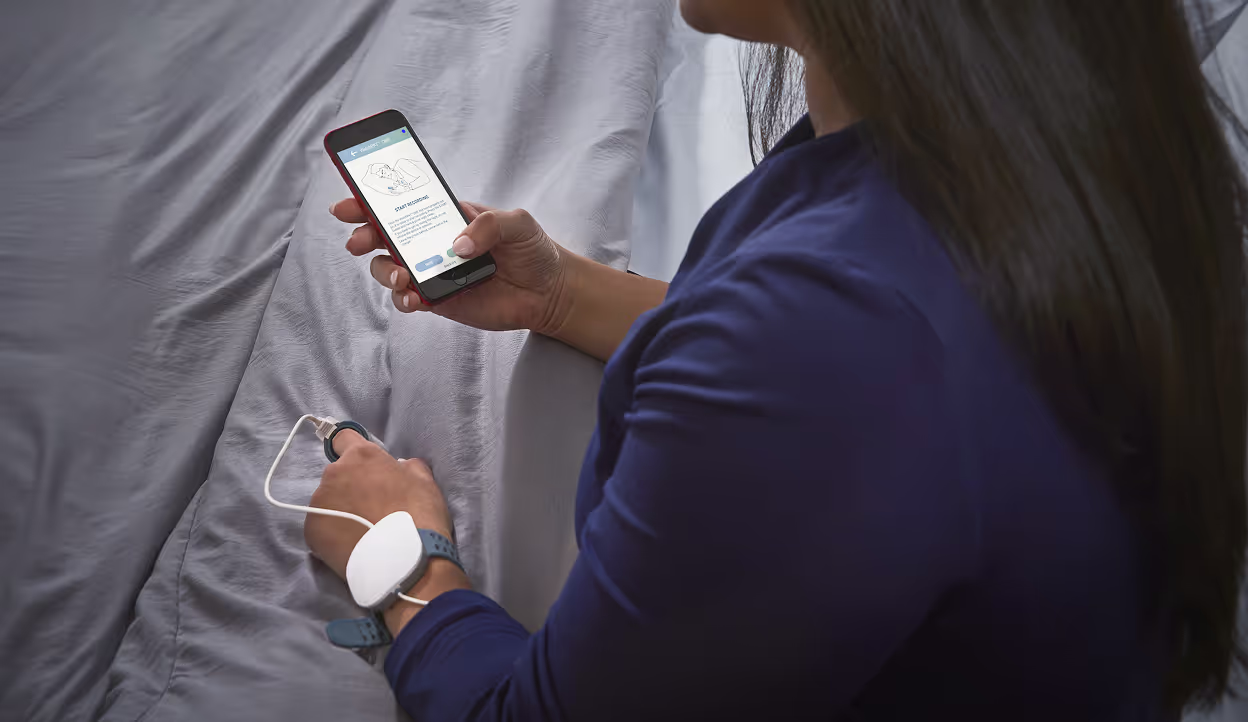
Some newer devices, such as the NightOwl Home Sleep Test, use photoplethysmography from a single fingertip sensor to estimate respiratory events, oxygen levels, and pulse rate without a nasal cannula or effort belt. These compact devices trade channel count for convenience and may be appropriate for straightforward screening.
The Testing Process
The test itself is designed for simplicity. You receive the device, follow setup instructions, wear it during a normal night of sleep, and return or upload the recorded sleep data the next day.
Home sleep apnea testing works best when you follow your usual bedtime routine. Avoid alcohol and sedating medications on the test night unless your physician instructs otherwise, as these substances can alter your breathing patterns and affect accuracy.
How Results Are Generated
After the test night, the recorded sleep data is analyzed by scoring software and reviewed by a physician. The physician evaluates the apnea-hypopnea index, which counts the number of partial and complete breathing interruptions per hour of recording time. An apnea-hypopnea index of 5 or higher, combined with symptoms, is generally consistent with an obstructive sleep apnea diagnosis according to the American Academy of Sleep Medicine.
With dumbo.health, a board-certified physician interprets your test results and provides a detailed report. The Essentials Plan at $59 per month includes physician interpretation, CPAP therapy and equipment, and standard follow-up care.
IMPORTANT: A home sleep apnea test does not measure brain activity or sleep stages. It cannot diagnose insomnia, narcolepsy, periodic limb movements, restless leg syndrome, or parasomnias.
KEY TAKEAWAY: A home sleep apnea test records airflow, oxygen saturation, respiratory effort, and pulse rate during one night to calculate the apnea-hypopnea index, which is the primary metric used to diagnose obstructive sleep apnea.
Understanding the process raises a practical question: how does home testing compare to spending a night in a sleep lab?
Home Sleep Test vs. In-Lab Polysomnography: Which One Do You Need
A home sleep test is accurate and appropriate for most adults with suspected obstructive sleep apnea, while in-lab polysomnography remains the gold standard for complex or atypical sleep disorders. The right choice depends on your symptoms, medical history, and what your physician suspects.
Polysomnography is a comprehensive overnight sleep study conducted in a sleep lab or sleep center. A Registered Polysomnographic Technologist monitors you throughout the night while the system records brain waves, eye movements, muscle activity, heart rate, respiratory functions, airflow, oxygen levels, and body position across 15 or more channels.
A home sleep test records fewer channels, typically four to seven, and does not require a technologist or clinical facility. The tradeoff is reduced complexity for reduced cost and dramatically improved convenience.
How They Compare
Here is how the two testing methods compare across decision-relevant factors:
Setting
- Home Sleep Apnea Test: Your own bed at home in St. Cloud or anywhere in Florida
- Polysomnography: Sleep lab or sleep center, often requiring travel to Orlando or Melbourne, Florida
Number of Channels Monitored
- Home Sleep Apnea Test: 4 to 7 channels including airflow, oxygen saturation, effort, and pulse rate
- Polysomnography: 15 or more channels including EEG, EOG, EMG, ECG, respiratory, and limb movement sensors
Cost
- Home Sleep Apnea Test: Typically $149 to $500 for self-pay; dumbo.health offers home testing for $149
- Polysomnography: Often $1,000 to $3,000 or more depending on the facility and insurance
Convenience
- Home Sleep Apnea Test: High; no travel, no overnight facility stay, completed on your schedule
- Polysomnography: Lower; requires scheduling, overnight stay at a clinical facility, and possible travel
Conditions Diagnosed
- Home Sleep Apnea Test: Obstructive sleep apnea
- Polysomnography: Obstructive sleep apnea, central sleep apnea, complex sleep apnea syndrome, narcolepsy, periodic limb movements, restless leg syndrome, parasomnias, and other sleep breathing disorders
Turnaround Time for Results
- Home Sleep Apnea Test: Typically 3 to 7 business days; dumbo.health Premium Plan offers priority results turnaround
- Polysomnography: Varies by facility; often 1 to 3 weeks
Who It Is Best For
- Home Sleep Apnea Test: Adults with moderate to high clinical suspicion of obstructive sleep apnea and no significant comorbidities
- Polysomnography: Patients with suspected central sleep apnea, complex sleep disorders, or inconclusive home test results
For most St. Cloud residents with classic obstructive sleep apnea symptoms such as snoring, witnessed apneas, and daytime sleepiness, a home sleep test provides sufficient diagnostic accuracy at a fraction of the cost and time. If your home test results are inconclusive or suggest a non-obstructive pattern, your physician may recommend in-lab polysomnography as a follow-up.
KEY TAKEAWAY: A home sleep test is the most practical first step for adults with straightforward obstructive sleep apnea symptoms, while in-lab polysomnography is reserved for complex cases, atypical presentations, or inconclusive home test results.
Once you decide that home testing is the right fit, here is how to prepare and complete it step by step.
How to Complete a Home Sleep Apnea Test in St. Cloud, Florida
Getting tested for sleep apnea from home in St. Cloud follows a straightforward process that takes just a few days from order to results. You do not need to visit a local sleep center or schedule an in-person appointment to get started.
Step-by-Step Process
1. Complete the free sleep assessment at dumbo.health to determine if a home sleep test is appropriate based on your symptoms and sleep history.
2. Order your home sleep test through dumbo.health for $149. The FDA-cleared device ships directly to your St. Cloud address. No insurance, no prior authorization, and no referral required.
3. When the device arrives, follow the included instructions to attach the nasal pressure sensor, finger pulse oximetry sensor, and effort belt before your normal bedtime.
4. Sleep in your own bed for one full night with the device on. Follow your usual routine but avoid alcohol or sedating medications unless directed by your physician.
5. In the morning, remove the device and follow the return or upload instructions to submit your recorded sleep data.
6. A board-certified physician reviews your sleep data, scores the study, and generates a clinical report with your apnea-hypopnea index and diagnostic findings.
7. Receive your test results and diagnosis. If obstructive sleep apnea is confirmed, your physician discusses treatment options including CPAP therapy, which is included in all dumbo.health monthly plans starting at $59 per month.
After completing these steps, you have a clinical diagnosis and a clear treatment pathway without leaving St. Cloud.
Preparation Checklist
Before your test night, verify the following:
- Confirm the device is fully charged or has fresh batteries as specified in the instructions
- Review the sensor attachment guide and practice placing the nasal pressure sensor and finger clip
- Set aside a night when you can sleep for at least 5 to 6 hours uninterrupted
- Avoid alcohol for at least 4 hours before bedtime on the test night
- Avoid caffeine after noon on the test day
- Avoid sleep aids or sedating medications unless your physician instructs you to continue them
- Sleep in your usual position in your own bed
- Keep pets and distractions out of the bedroom if possible
- Ensure the effort belt is snug but comfortable around your chest
- Confirm your shipping address and contact details with dumbo.health before ordering
TIP: If you work night shifts or have irregular sleep hours, let your physician know. Home sleep tests can be completed during your normal sleep window regardless of clock time.
KEY TAKEAWAY: The entire home sleep testing process from order to results takes a few days and can be completed entirely from home in St. Cloud with no clinic visits, no insurance paperwork, and no surprise costs.
Cost is one of the biggest concerns for anyone considering sleep apnea testing, especially without insurance.
How Much Does a Home Sleep Apnea Test Cost in St. Cloud, Florida
A home sleep apnea test in St. Cloud, Florida typically costs between $149 and $500 for self-pay patients. The wide range depends on the provider, whether a physician consultation is bundled, and whether you go through a local sleep clinic or an online telehealth provider. In-lab polysomnography in Central Florida runs $1,000 to $3,000 or more, making home testing the significantly more affordable option.
Self-Pay vs. Insurance
Health insurance plans may cover home sleep apnea testing, but coverage varies widely. Many patients face prior authorization requirements, copays, deductibles, and the frustration of navigating insurance plans that change coverage terms annually. Self-pay eliminates these barriers entirely.
When you pay out of pocket, you know the exact cost upfront. Under federal rules, healthcare providers must offer a Good Faith Estimate to uninsured or self-pay patients so there are no surprise bills. dumbo.health operates as a cash-pay service with transparent pricing: the home sleep test costs $149, billed once before the test night, with no hidden fees.
What dumbo.health Pricing Includes
dumbo.health separates the one-time test cost from ongoing care, so you only pay for what you need:
The home sleep test is $149 and includes the at-home sleep test device and one night of testing. This cost is separate from the monthly care plans.
If diagnosed with obstructive sleep apnea, ongoing treatment is covered under monthly plans:
- Essentials Plan at $59 per month includes physician interpretation and report, CPAP therapy and equipment, standard follow-up care, and updates sent to your referring provider
- Premium Plan at $89 per month adds a dedicated sleep coach, advanced adherence monitoring, and priority results turnaround
- Elite Plan at $129 per month adds concierge clinical support, direct physician messaging, and custom reporting
All plans are month to month with no contracts. You can cancel anytime.
Cost Comparison: Local vs. Online Testing
Test Cost
- Local Sleep Clinic in Orlando or Melbourne, Florida: $300 to $500 for home sleep test; $1,000 to $3,000 for in-lab polysomnography
- dumbo.health: $149 for home sleep test
Insurance Required
- Local Sleep Clinic: Often yes, or higher self-pay rates
- dumbo.health: No insurance required
Prior Authorization
- Local Sleep Clinic: Usually required for insurance coverage
- dumbo.health: None
Physician Interpretation
- Local Sleep Clinic: Included but may involve separate billing
- dumbo.health: Included in monthly plan at $59 per month and up
CPAP Equipment
- Local Sleep Clinic: Separate purchase or insurance-based rental, often $500 to $2,000
- dumbo.health: Included in all monthly plans
For St. Cloud residents paying out of pocket, dumbo.health provides the most predictable and affordable pathway from testing to treatment.
KEY TAKEAWAY: A home sleep apnea test through dumbo.health costs $149 with no insurance, no prior authorization, and no surprise bills, and treatment plans start at $59 per month with CPAP equipment included.
After receiving test results, the next step is understanding what they mean and what treatment looks like.
Understanding Your Sleep Test Results
Sleep test results tell you whether you have obstructive sleep apnea and, if so, how severe it is. The primary metric your physician uses is the apnea-hypopnea index, a number that reflects how many times per hour your breathing was partially or completely interrupted during the test night.
Apnea-Hypopnea Index Ranges
The American Academy of Sleep Medicine classifies obstructive sleep apnea severity based on the apnea-hypopnea index:
- Normal: fewer than 5 events per hour
- Mild obstructive sleep apnea: 5 to 14 events per hour
- Moderate obstructive sleep apnea: 15 to 29 events per hour
- Severe obstructive sleep apnea: 30 or more events per hour
Your physician also evaluates oxygen desaturation levels, minimum oxygen saturation recorded during the night, and the pattern of respiratory events to determine the clinical significance of your results.
What Happens After Diagnosis
If your results confirm obstructive sleep apnea, your physician will recommend a treatment plan based on severity, symptoms, and your overall health profile. CPAP therapy is the first-line treatment for moderate to severe obstructive sleep apnea. For mild cases, positional therapy, weight management, or an oral appliance may be considered.
With dumbo.health, results and a treatment plan are delivered together. Your physician interpretation is included in every monthly plan, and if CPAP therapy is recommended, the equipment is included at no additional cost beyond the monthly plan fee. The Premium Plan at $89 per month includes a dedicated sleep coach who helps you adjust to therapy, track adherence, and troubleshoot common CPAP challenges like mask fit and pressure comfort.
If Results Are Inconclusive
Occasionally, a home sleep test may produce inconclusive results. This can happen if the device was not worn correctly, if total recording time was too short, or if the breathing pattern suggests something other than straightforward obstructive sleep apnea. In these situations, your physician may recommend repeating the home test or proceeding to in-lab polysomnography with a Registered Polysomnographic Technologist for a more comprehensive evaluation.
Home sleep tests do not measure brain activity, so they cannot determine sleep stages, total sleep time, or sleep efficiency. This means the apnea-hypopnea index from a home test is calculated based on recording time rather than actual sleep time, which can slightly underestimate severity in some patients.
KEY TAKEAWAY: The apnea-hypopnea index is the primary number in your sleep test results, and a score of 5 or higher combined with symptoms supports an obstructive sleep apnea diagnosis, with treatment severity guiding whether CPAP, an oral appliance, or another approach is recommended.
A diagnosis naturally leads to questions about what treatment involves and which option fits your life.
Treatment Options After a Sleep Apnea Diagnosis
CPAP therapy is the most effective treatment for moderate to severe obstructive sleep apnea, reducing breathing interruptions and improving oxygen levels throughout the night. Treatment choice depends on the severity of your diagnosis, your symptoms, your anatomy, and your lifestyle.
CPAP Therapy
A CPAP machine delivers continuous positive airway pressure through a mask worn during sleep. This steady stream of pressurized air keeps the airway open and prevents the collapse that causes apnea events. According to the National Heart, Lung, and Blood Institute, CPAP is the standard treatment for obstructive sleep apnea and has been shown to reduce daytime sleepiness, lower blood pressure, and decrease cardiovascular risk when used consistently.
The American Academy of Sleep Medicine recommends using CPAP for at least 4 hours per night on at least 70 percent of nights to achieve clinical benefit. Adherence is the single biggest factor in whether CPAP therapy works. Many patients struggle with mask discomfort, nasal dryness, or claustrophobia during the first few weeks.
dumbo.health addresses this directly. The Essentials Plan at $59 per month includes CPAP therapy and equipment. The Premium Plan at $89 per month adds a dedicated sleep coach from a licensed care team who provides personalized guidance on mask fit, pressure settings, and daily adherence tracking. In real-world use, patients who receive ongoing coaching and monitoring are more likely to maintain consistent CPAP use compared to those who receive equipment alone.
Oral Appliances
An oral appliance, sometimes called an oral device, is a custom-fitted mouthpiece that repositions the lower jaw forward to keep the airway open during sleep. Oral appliances are typically recommended for mild to moderate obstructive sleep apnea or for patients who cannot tolerate CPAP therapy.
The American Academy of Sleep Medicine supports oral appliance therapy as an alternative when CPAP is not tolerated, but notes that CPAP remains more effective at reducing apnea events in moderate to severe cases. An oral appliance must be fitted by a dentist or specialist trained in dental sleep medicine.
Other Treatment Approaches
Additional treatment options exist depending on individual anatomy and severity:
- Positional therapy: Training yourself to sleep on your side rather than your back, which can reduce airway collapse in patients with position-dependent obstructive sleep apnea.
- Weight management: Losing 10 percent or more of body weight can significantly reduce the severity of obstructive sleep apnea in overweight patients, according to the NIH.
- Nasal breathing techniques and nasal passage treatments: Addressing nasal congestion or structural issues such as a deviated septum can improve airflow and CPAP tolerance. ENT specialists and providers like St. Cloud Ear, Nose and Throat can evaluate nasal anatomy.
- Rhinologic surgery: In select cases, surgical intervention on the soft tissue of the airway, nasal passage, or jaw may be recommended. Procedures range from uvulopalatopharyngoplasty to maxillomandibular advancement.
- Laser therapy: Some providers, including Florida Sinus and Snoring Specialists, offer laser-based snoring treatments, though evidence for laser therapy as a standalone treatment for obstructive sleep apnea is limited.
- Airway orthodontic devices: In pediatric cases involving dentofacial deficient development, airway orthodontic devices may be used to promote proper jaw and airway growth.
For most adults diagnosed with moderate to severe obstructive sleep apnea, CPAP therapy remains the treatment with the strongest evidence base. dumbo.health provides CPAP therapy as part of every monthly plan, removing the barrier of high upfront equipment costs.
KEY TAKEAWAY: CPAP therapy is the first-line treatment for moderate to severe obstructive sleep apnea, and dumbo.health includes CPAP equipment and ongoing care in monthly plans starting at $59 per month, making consistent treatment more accessible for St. Cloud residents.
Not every situation is straightforward, and there are cases where home testing has real limitations.
Limitations and Risks of Home Sleep Apnea Testing
A home sleep apnea test is a reliable screening tool for obstructive sleep apnea in the right patient, but it has specific limitations that every patient should understand before ordering.
When a Home Sleep Test May Not Be Appropriate
Home sleep apnea testing is not suitable for all suspected sleep disorders. The test is validated for obstructive sleep apnea in adults without significant comorbidities. The following situations typically require in-lab polysomnography instead:
- Suspected central sleep apnea or complex sleep apnea syndrome, where breathing interruptions stem from neurological rather than mechanical causes. Home devices do not measure brain signals and cannot distinguish central from obstructive events.
- Significant cardiac or pulmonary disease, where overnight monitoring of heart rhythm and detailed respiratory functions by a polysomnographic technologist is clinically necessary.
- Suspected sleep disorders other than obstructive sleep apnea, including narcolepsy, periodic limb movements, restless leg syndrome, and parasomnias. These conditions require EEG, EMG, and EOG channels that home devices do not include.
- Pediatric patients, for whom home sleep testing has not been adequately validated.
Accuracy Considerations
Home sleep tests tend to underestimate the apnea-hypopnea index compared to in-lab polysomnography. Because the device cannot confirm whether you are actually asleep, recording time is used as a proxy for total sleep time. If you spend significant time awake during the test night, the calculated index may be lower than your true severity.
Sensor displacement during the night, such as the nasal pressure sensor shifting or the finger clip coming loose, can cause data loss and reduce the reliability of the results. Following the device setup instructions carefully reduces this risk.
Data Limitations
A home sleep test does not evaluate sleep quality, sleep architecture, or total sleep time. It cannot diagnose insomnia as a standalone condition, identify sleep problem patterns related to mood or irritability, or measure the impact of sleep breathing disorders on REM versus non-REM sleep. For patients whose primary concern is sleep quality rather than breathing interruptions, a more comprehensive evaluation may be needed.
How dumbo.health Addresses These Limitations
dumbo.health mitigates several of these limitations through physician oversight. Every home sleep test result is reviewed by a board-certified physician who can identify patterns that suggest the need for further evaluation. If your results are inconclusive or suggest a non-obstructive pattern, your physician can recommend an in-lab study or a telehealth consultation to discuss next steps. The Elite Plan at $129 per month includes direct physician messaging for patients who need more detailed clinical support.
IMPORTANT: A home sleep apnea test is a screening and diagnostic tool for obstructive sleep apnea only. It does not replace a comprehensive sleep evaluation for complex or atypical sleep disorders.
KEY TAKEAWAY: Home sleep testing is accurate for most adults with suspected obstructive sleep apnea, but it cannot diagnose central sleep apnea, narcolepsy, parasomnias, or other complex sleep disorders, and inconclusive results may require in-lab polysomnography.
Seeing how real scenarios play out helps make these concepts concrete and actionable.
Real-World Scenarios: Who Benefits From Home Sleep Apnea Testing
Home sleep apnea testing fits a wide range of people, but some profiles illustrate especially well how the process works in practice.
Scenario 1: A 48-Year-Old Owner-Operator in St. Cloud
A 48-year-old commercial truck driver based in St. Cloud, Florida has a BMI of 33 and a neck circumference of 18 inches. His wife reports loud snoring and occasional choking sounds during sleep. He experiences excessive daytime sleepiness and has struggled to stay alert during long hauls. His primary care physician recommends sleep apnea testing, but the nearest sleep lab in Melbourne, Florida has a 6-week wait for an in-lab polysomnogram.
He orders a home sleep test through dumbo.health for $149. The device arrives in 3 days. He completes the test on a night off, submits his data, and receives results within a week showing an apnea-hypopnea index of 22, consistent with moderate obstructive sleep apnea. He enrolls in the Premium Plan at $89 per month, which includes CPAP therapy, equipment, a dedicated sleep coach, and advanced adherence monitoring. His sleep coach helps him find a comfortable mask and adjust to therapy within two weeks. His physician receives updated documentation for his DOT physical.
Scenario 2: A 55-Year-Old Retired Nurse in Kissimmee
A 55-year-old woman in Kissimmee, just north of St. Cloud, has been experiencing fragmented sleep, morning headaches, and worsening irritability for over a year. She assumed her symptoms were related to menopause but mentioned them during a routine appointment with her healthcare practitioner. Her doctor noted her sleep history, elevated blood pressure, and family history of heart disease, and recommended screening for obstructive sleep apnea.
She is uninsured after retiring early and concerned about cost. She discovers that dumbo.health offers a self-pay home sleep test for $149 with no insurance required and no prior authorization. She completes the test at home and receives results showing mild obstructive sleep apnea with an apnea-hypopnea index of 9. Her physician recommends positional therapy and weight management as first-line treatment, with CPAP as a backup if symptoms persist. She enrolls in the Essentials Plan at $59 per month for physician follow-up and monitoring.
Scenario 3: A 34-Year-Old Software Developer Working Remotely
A 34-year-old man working remotely from St. Cloud reports poor sleep quality, brain fog, and difficulty concentrating during the day. His roommate has mentioned loud snoring. He does not have a primary care physician in the area and is unsure where to find a sleep specialist near him.
He completes the free sleep assessment on dumbo.health, which flags his symptoms as consistent with a moderate risk for obstructive sleep apnea. He orders the home sleep test, completes it that week, and receives a negative result with an apnea-hypopnea index of 3. His physician recommends he discuss his sleep problem and symptoms with a local doctor to explore other possible causes including insomnia, lifestyle factors, or hormone levels. The home test ruled out obstructive sleep apnea quickly and affordably, saving him the time and expense of an in-lab study.
These scenarios reflect common patterns that clinicians see regularly. The common thread is that accessible, affordable home testing shortens the path from symptoms to answers.
KEY TAKEAWAY: Home sleep apnea testing benefits a wide range of patients, from commercial drivers needing documentation for DOT physicals to retirees managing cardiovascular risk, and the process works regardless of insurance status or proximity to a local sleep center.
Misinformation about sleep apnea testing and treatment creates unnecessary fear and delays diagnosis.
Common Myths About Home Sleep Apnea Tests Debunked
MYTH: A home sleep test is not accurate enough to diagnose sleep apnea.
FACT: The American Academy of Sleep Medicine endorses home sleep apnea testing as an appropriate diagnostic method for adults with a moderate to high pretest probability of obstructive sleep apnea. Multiple clinical studies demonstrate that home sleep tests have high sensitivity and specificity for identifying obstructive sleep apnea when used in the right patient population. Home testing may slightly underestimate severity compared to polysomnography, but this difference rarely changes the clinical management plan.
MYTH: You need a referral from a sleep specialist before you can get a home sleep test.
FACT: Many home sleep testing services, including dumbo.health, do not require a referral from a sleep specialist or primary care physician to order a test. You can complete a health assessment online, and if testing is appropriate, a physician authorizes the order. This eliminates the appointment delays and scheduling barriers that keep people undiagnosed.
MYTH: CPAP is the only treatment for sleep apnea.
FACT: CPAP therapy is the most effective treatment for moderate to severe obstructive sleep apnea, but it is not the only option. Oral appliances are supported by the American Academy of Sleep Medicine for mild to moderate cases. Positional therapy, weight management, nasal breathing techniques, and in some cases rhinologic surgery or laser therapy offer additional pathways depending on severity and anatomy. The appropriate treatment plan depends on the individual diagnosis and should be guided by a physician.
MYTH: Home sleep tests are only for people with severe symptoms.
FACT: Home sleep testing is designed to screen adults who have symptoms suggestive of obstructive sleep apnea, regardless of perceived severity. Mild symptoms such as occasional snoring, restless sleep, or subtle daytime fatigue can indicate clinically significant sleep apnea. According to the American Academy of Sleep Medicine, an estimated 80 percent of moderate to severe cases remain undiagnosed, often because patients assume their symptoms are not serious enough to warrant testing.
MYTH: Sleep apnea only affects overweight older men.
FACT: While obesity and male sex are established risk factors, obstructive sleep apnea affects women, younger adults, and individuals at a healthy weight. The Sleep Foundation notes that women are increasingly diagnosed, particularly after menopause. Structural factors like a narrow airway, enlarged tonsils, or a recessed jaw can contribute to obstructive sleep apnea independent of weight or age. Anyone with persistent snoring, choking during sleep, or unexplained daytime sleepiness should consider testing.
KEY TAKEAWAY: Misinformation about home sleep testing accuracy, referral requirements, and who is at risk delays diagnosis and treatment for millions of people who could benefit from accessible screening.
With myths addressed, here is a summary of everything covered and how to take the next step.
Conclusion
Home sleep apnea testing gives St. Cloud, Florida residents a fast, affordable, and clinically valid way to screen for obstructive sleep apnea without leaving home. The test measures the core respiratory data your physician needs, results come back within days, and treatment can begin immediately if a diagnosis is confirmed. For most adults with symptoms like snoring, witnessed breathing pauses, or daytime sleepiness, home testing is the right first step.
dumbo.health makes the process simple for self-pay patients. The home sleep test costs $149 with no insurance required and no surprise bills. If treatment is needed, CPAP therapy and equipment are included in monthly plans starting at $59 per month with no contracts. Take the free sleep assessment to find out if home sleep apnea testing is right for you.
Frequently Asked Questions About Home Sleep Apnea Test in St. Cloud, Florida
What is a home sleep apnea test?
A home sleep apnea test (HSAT) is a portable diagnostic tool used to evaluate whether a person has obstructive sleep apnea while sleeping in their own bed. The device typically records airflow, oxygen saturation, pulse rate, respiratory effort, and heart rate throughout the night. A board-certified sleep physician then reviews the collected sleep data and generates a report. According to the American Academy of Sleep Medicine, home sleep testing is a clinically validated option for diagnosing moderate to severe obstructive sleep apnea in adults without significant comorbidities.
What is obstructive sleep apnea?
Obstructive sleep apnea (OSA) is a common sleep breathing disorder in which the upper airway becomes repeatedly blocked during sleep. The soft tissue in the throat, including the tongue and soft palate, relaxes as you fall asleep. The muscles supporting this tissue lose tone, causing it to collapse inward and restrict or fully block the airway. These repeated interruptions reduce oxygen levels and disrupt sleep architecture. The NHLBI explains that untreated OSA is associated with increased risk of cardiovascular disease, high blood pressure, and daytime impairment.
What are the signs that I may have sleep apnea?
Common signs of sleep apnea include loud or frequent snoring, gasping or choking during sleep, waking up unrefreshed, excessive daytime sleepiness, morning headaches, difficulty concentrating, irritability, and mood changes. A bed partner may notice that you stop breathing briefly during the night. These symptoms alone are not a diagnosis. A qualified healthcare professional can review your sleep history, symptoms, and risk factors to determine whether a home sleep test or further evaluation is appropriate. You can also take a free sleep assessment to help identify whether testing may be a reasonable next step.
Can sleep apnea affect my overall health if left untreated?
Yes, untreated sleep apnea can have serious health consequences. The CDC notes that sleep disorders including obstructive sleep apnea are linked to increased risk of high blood pressure, heart disease, stroke, type 2 diabetes, and impaired immune function. Repeated nighttime oxygen drops and sleep fragmentation can also affect hormone levels, mood, and daytime cognitive function. Untreated OSA increases accident risk due to chronic fatigue and impaired alertness. If you are experiencing symptoms, speak with a healthcare professional about whether sleep apnea testing is appropriate for your situation.
What does a home sleep test typically measure?
A home sleep test device typically records airflow through a nasal pressure sensor, blood oxygen saturation and pulse rate through pulse oximetry or photoplethysmography, respiratory effort through a belt placed around the chest or abdomen, and heart rate. Some devices also capture body position and snoring sounds. These measurements allow a reviewing physician to calculate metrics such as the apnea-hypopnea index (AHI), which reflects how many breathing interruptions occur per hour of sleep. The at-home sleep test offered by dumbo.health uses an FDA-cleared device and includes physician interpretation of your results.
Is a home sleep test as accurate as an in-lab sleep study?
A home sleep test is clinically appropriate and accurate for diagnosing moderate to severe obstructive sleep apnea in otherwise healthy adults. It records the core respiratory and oxygen variables that physicians use to assess OSA severity. However, an in-lab sleep study (polysomnography) records a broader range of signals including brain wave activity, eye movements, and limb movements, making it better suited for diagnosing complex sleep apnea syndrome, periodic limb movements, narcolepsy, parasomnias, or other sleep disorders beyond OSA. A healthcare professional can advise whether a home test is sufficient for your specific symptoms or whether a full polysomnogram is recommended.
When would an in-lab sleep study be needed instead of a home test?
An in-lab polysomnography is typically recommended when a patient has symptoms suggesting conditions beyond obstructive sleep apnea, such as narcolepsy, restless leg syndrome, periodic limb movement disorder, or parasomnias. It may also be preferred for patients with significant cardiac or respiratory comorbidities, or when a home sleep test result is inconclusive. A board-certified sleep physician or sleep specialist can review your symptoms and medical history to determine the most appropriate type of testing. Home sleep testing is a validated first option for many adults with straightforward OSA risk factors.
What does the $149 home sleep test from dumbo.health include?
The dumbo.health home sleep test is $149 as a one-time cost. It includes the at-home sleep test device shipped to your address and one night of testing. The $149 test fee is separate from monthly care plans. Physician interpretation and your results report are covered through a monthly plan, which starts at $59 per month with no contracts and the ability to cancel at any time. This transparent cash-pay model means no insurance is required, no prior authorization is needed, and there are no surprise bills. Visit the at-home sleep test page for full details.
Who reviews my home sleep test results?
Your sleep test data is reviewed by a board-certified sleep physician. The physician analyzes the recorded sleep data, calculates relevant metrics including the apnea-hypopnea index, and generates a clinical interpretation report. This physician report documents your results and supports treatment planning. Depending on your plan, results may also include updates sent to your referring provider or primary care physician. dumbo.health monthly plans include physician interpretation as a core component, so you receive a reviewed clinical report rather than raw device data alone.
Can I use home sleep test results for a CPAP prescription?
Yes, in most cases. When a board-certified sleep physician reviews your home sleep test results and diagnoses obstructive sleep apnea, that physician-documented report can support a CPAP prescription. If you are already a CPAP user and need a new prescription, a home sleep test with physician interpretation can provide the updated documentation you need. A healthcare professional will confirm whether your results meet the clinical threshold for CPAP therapy. dumbo.health monthly plans include physician review and can support CPAP therapy and equipment as part of ongoing care.
What is the treatment for sleep apnea?
The most common and well-supported treatment for obstructive sleep apnea is CPAP therapy. A CPAP machine delivers continuous positive airway pressure through a mask, keeping the airway open during sleep. Other treatment options include oral appliances designed to reposition the jaw and tongue, positional therapy for positional OSA, and in some cases surgical interventions such as rhinologic surgery or soft tissue procedures. Weight management may reduce OSA severity in some patients. The appropriate treatment plan depends on OSA severity, anatomy, comorbidities, and patient preference, and should be determined with input from a qualified healthcare professional or sleep specialist.
Are there sleep apnea treatment options beyond CPAP?
Yes. While CPAP therapy is the most widely recommended first-line treatment for moderate to severe OSA, oral appliances are an alternative for mild to moderate cases or for patients who cannot tolerate CPAP. Oral appliances reposition the lower jaw and tongue to maintain airway patency during sleep. Other approaches include nasal breathing techniques, weight reduction, positional sleep strategies, and in some cases surgical options such as procedures targeting the nasal passage, soft tissue, or airway anatomy. A sleep medicine physician or ENT specialist can evaluate which treatment options are appropriate based on your specific airway anatomy and sleep data.
What role does weight play in sleep apnea?
Excess body weight, particularly around the neck and upper airway, is one of the strongest risk factors for obstructive sleep apnea. Fatty tissue around the throat can narrow the airway and increase the likelihood of collapse during sleep. The Sleep Foundation explains that weight loss can meaningfully reduce OSA severity in overweight individuals, and in some cases may reduce reliance on CPAP. However, weight loss does not guarantee resolution of sleep apnea, and many people with a healthy body mass index also have OSA due to anatomical factors. A healthcare professional can assess whether weight management should be part of your overall treatment plan.
Is it safe to use an oral appliance for sleep apnea during pregnancy?
Questions about oral appliance use during pregnancy should be directed to a qualified healthcare professional or sleep medicine specialist. Sleep apnea during pregnancy carries documented risks, including effects on blood pressure, oxygen saturation, and fetal wellbeing, and treatment decisions should be made with direct clinician oversight. FDA-cleared oral appliances are generally considered for adults with mild to moderate OSA, but suitability during pregnancy requires individual medical evaluation. If you are pregnant and experiencing symptoms of sleep apnea, speak with your obstetrician or a board-certified sleep physician as soon as possible.
Can children have sleep apnea?
Yes, children can develop sleep apnea, although the causes and treatment approaches differ from those in adults. Pediatric OSA is often associated with enlarged tonsils and adenoids, craniofacial anatomy, or conditions affecting airway development. According to the American Academy of Sleep Medicine, symptoms in children may include loud snoring, restless sleep, mouth breathing, behavioral problems, and difficulty concentrating. Diagnosis in children typically requires an in-lab sleep study rather than a home test. Treatment may involve adenotonsillectomy, orthodontic airway devices, or other interventions. A pediatric ENT specialist or sleep physician should evaluate any child with suspected sleep breathing difficulties.
How can I improve sleep hygiene alongside sleep apnea treatment?
Good sleep hygiene supports the effectiveness of sleep apnea treatment but does not replace it. Helpful practices include maintaining a consistent sleep and wake schedule, avoiding alcohol close to bedtime because alcohol relaxes throat muscles and can worsen OSA, sleeping on your side rather than your back, limiting caffeine in the afternoon and evening, keeping the sleep environment cool and dark, and addressing nasal congestion that may affect breathing. These practices complement CPAP therapy or oral appliance use. A sleep coach or healthcare professional can help you build habits that support restful sleep alongside your prescribed treatment plan.
How soon can I expect results after starting sleep apnea treatment?
Many people notice improved sleep quality, reduced daytime sleepiness, and better mood within the first few weeks of consistent CPAP use. However, full adjustment to CPAP therapy and measurable improvement in health outcomes can take longer depending on OSA severity, how consistently the device is used, and individual factors. The American Academy of Sleep Medicine defines adequate CPAP adherence as using the device for at least four hours per night on at least 70 percent of nights. Adherence monitoring and follow-up with a care team help identify and resolve common barriers to consistent use. Outcomes vary between individuals, and a clinician can help set realistic expectations.
What is the difference between obstructive sleep apnea, central sleep apnea, and complex sleep apnea syndrome?
Obstructive sleep apnea occurs when the physical airway is repeatedly blocked by relaxed soft tissue during sleep. Central sleep apnea occurs when the brain fails to send proper signals to the muscles that control breathing, so no physical obstruction is present. Complex sleep apnea syndrome, sometimes called treatment-emergent central sleep apnea, involves a combination of both types, often identified when central apnea events emerge after starting CPAP therapy. Home sleep tests are designed to detect obstructive sleep apnea. Central and complex sleep apnea typically require in-lab polysomnography and specialist evaluation. A sleep physician can determine which type is present based on your test results and clinical history.
Is a doctor's referral or prescription required before taking a home sleep test?
In many cases, a doctor's referral is not required to order a home sleep test. dumbo.health operates on a cash-pay model without requiring prior authorization, insurance approval, or a physician script to begin. After your home sleep test is completed, a board-certified physician reviews the results and provides a clinical report, which forms the basis for any subsequent treatment recommendations. If you already have a primary care physician or sleep specialist, your results and report can be sent to them as a provider update. A healthcare professional should still be involved in reviewing your results and determining the appropriate treatment plan.
Is my personal health information protected during at-home sleep testing?
Health information collected during sleep testing is subject to HIPAA regulations, which establish federal standards for the privacy and security of protected health information. Any reputable at-home sleep testing provider should handle your data in compliance with HIPAA. You have the right to know how your sleep data, test results, and personal health information are stored, used, and shared. Before ordering any sleep test or enrolling in an ongoing care plan, review the provider's privacy policy and confirm that your information is handled in accordance with applicable healthcare privacy law. If you have specific privacy concerns, contact the provider directly before proceeding.
How do I find home sleep apnea testing near me in St. Cloud, Florida?
Residents of St. Cloud, Florida and the broader Central Florida area can access home sleep apnea testing without visiting a sleep lab or clinic. dumbo.health ships an at-home sleep test device directly to your address, so you can complete testing in your own home rather than traveling to a sleep center or testing facility near you. The $149 one-time test includes the device and one test night. Physician interpretation and ongoing care, including CPAP therapy, are available through monthly plans with no contracts. You can explore sleep apnea care solutions to compare what is included at each level of care.
What is the difference between a home sleep test and a polysomnogram?
A home sleep test records key respiratory variables including airflow, oxygen saturation, heart rate, and respiratory effort using a portable device worn at home. A polysomnogram is a comprehensive in-lab sleep study conducted at a sleep center, supervised by a registered polysomnographic technologist, and records a much wider range of signals including electroencephalogram brain wave activity, eye movement, muscle activity, and full respiratory data. The polysomnogram is the gold standard for diagnosing a broad range of sleep disorders, while the home sleep test is a validated, cost-effective option for diagnosing obstructive sleep apnea specifically. A sleep physician can advise which test is appropriate based on your symptoms.
How does CPAP therapy work for sleep apnea?
CPAP, or continuous positive airway pressure, therapy works by delivering a steady stream of pressurized air through a mask worn during sleep. The air pressure acts as a pneumatic splint, keeping the upper airway open and preventing the collapse of soft tissue that causes obstructive sleep apnea. The appropriate pressure setting is determined based on sleep test results and physician evaluation. CPAP machines vary in design, and masks come in multiple styles including full-face, nasal, and nasal pillow options. Consistent nightly use is essential for therapeutic benefit. dumbo.health monthly plans include CPAP therapy and equipment along with adherence follow-up as part of ongoing care.
What is CPAP adherence and why does it matter?
CPAP adherence refers to how consistently and for how long a patient uses their CPAP machine each night. The American Academy of Sleep Medicine defines adequate adherence as using CPAP for at least four hours per night on at least 70 percent of nights. Poor adherence significantly reduces the health and quality-of-life benefits of CPAP therapy and may result in ongoing oxygen desaturation events during sleep. Common barriers include mask discomfort, pressure intolerance, and nasal congestion. Regular follow-up with a sleep coach or care team helps identify and address adherence challenges. dumbo.health Premium and Elite plans include dedicated adherence monitoring and sleep coaching support.
What are the ongoing care options after a home sleep test diagnosis?
After a physician reviews your home sleep test and confirms a diagnosis, the next steps typically involve starting treatment, most commonly CPAP therapy, and establishing regular follow-up to monitor adherence and outcomes. dumbo.health monthly plans cover physician interpretation, CPAP therapy and equipment, and ongoing follow-up care. The Essentials plan starts at $59 per month, the Premium plan at $89 per month includes a dedicated sleep coach and advanced adherence monitoring, and the Elite plan at $129 per month adds direct physician messaging and custom reporting. All plans have no contracts and can be cancelled at any time. Visit the solutions page to compare plan details.
Can allergies cause symptoms that resemble sleep apnea?
Yes, allergic rhinitis and nasal congestion can contribute to sleep-disordered breathing and may worsen existing sleep apnea. When nasal passages are obstructed due to allergies, mouth breathing increases, which can reduce airway stability during sleep and intensify snoring. In some cases, allergy-driven nasal obstruction creates symptoms that overlap with sleep apnea, including poor sleep quality, daytime fatigue, and difficulty breathing during the night. However, allergies and obstructive sleep apnea are distinct conditions that can coexist. A healthcare professional or ENT specialist can help determine whether your symptoms reflect allergies, sleep apnea, or both, and whether a home sleep test is an appropriate next step.
What is the next step after completing my home sleep test?
After completing your home sleep test, the device data is submitted for review by a board-certified sleep physician. The physician interprets your sleep data, calculates your apnea-hypopnea index, and generates a clinical report documenting your results. If obstructive sleep apnea is identified, the physician report supports a treatment recommendation, typically CPAP therapy. Your report can also be sent to your referring provider or primary care physician as a provider update. dumbo.health monthly plans cover the physician interpretation, treatment equipment, and follow-up care needed after testing. If you are ready to begin, you can get started with a sleep assessment today.