



Home Sleep Apnea Test in Wesley Chapel, Florida: The Complete Guide to At-Home Diagnosis and Treatment
A home sleep apnea test in Wesley Chapel, Florida lets you complete a clinically validated sleep study from your own bed, without visiting a sleep lab or scheduling an overnight facility stay. According to the American Academy of Sleep Medicine, home sleep testing is an accepted diagnostic method for obstructive sleep apnea in adults with a moderate to high pretest probability. This guide is written for Wesley Chapel residents, commercial drivers in central Florida, and anyone in the Tampa area experiencing symptoms like chronic snoring, daytime fatigue, or witnessed breathing pauses. You will learn how home sleep apnea testing works, what devices measure, how results lead to a treatment plan, and how to compare at-home and in-lab options. Whether you need a diagnosis for health reasons or Department of Transportation clearance, this page covers every step from screening to CPAP therapy.
Quick Answer
A home sleep apnea test in Wesley Chapel, Florida is a portable diagnostic study you wear for one night at home. The device records airflow, oxygen saturation, heart rate, and breathing effort to detect obstructive sleep apnea. Most results are available within days, and a board certified sleep specialist reviews the data to confirm a diagnosis. No sleep lab visit is required. Home sleep testing is typically faster, more affordable, and more convenient than in-lab polysomnography. dumbo.health offers a home sleep test for $149 with no insurance required, shipping directly to Wesley Chapel and the greater Tampa area.
Key Takeaways
- A home sleep apnea test uses portable sensors to measure airflow, oxygen levels, heart rate, and respiratory effort during one night of sleep at home.
- The American Academy of Sleep Medicine recognizes home sleep testing as a valid diagnostic tool for obstructive sleep apnea in appropriately screened adults.
- Results from a home sleep study are typically available within 3 to 7 business days after the test night, compared to weeks for some in-lab sleep studies.
- dumbo.health ships a home sleep test to Wesley Chapel for $149, with no insurance, no prior authorization, and no surprise bills.
- Untreated obstructive sleep apnea increases the risk of hypertension, stroke, atrial fibrillation, and cardiovascular disease, according to the National Heart, Lung, and Blood Institute.
- Monthly CPAP treatment plans through dumbo.health start at $59 per month with no contracts and cancel anytime flexibility.
What Is a Home Sleep Apnea Test and How Does It Work
A home sleep apnea test is a portable diagnostic device you wear during a single night of sleep to detect obstructive sleep apnea. The test records key physiological data while you sleep in your own bed, eliminating the need for an overnight stay at a sleep lab.
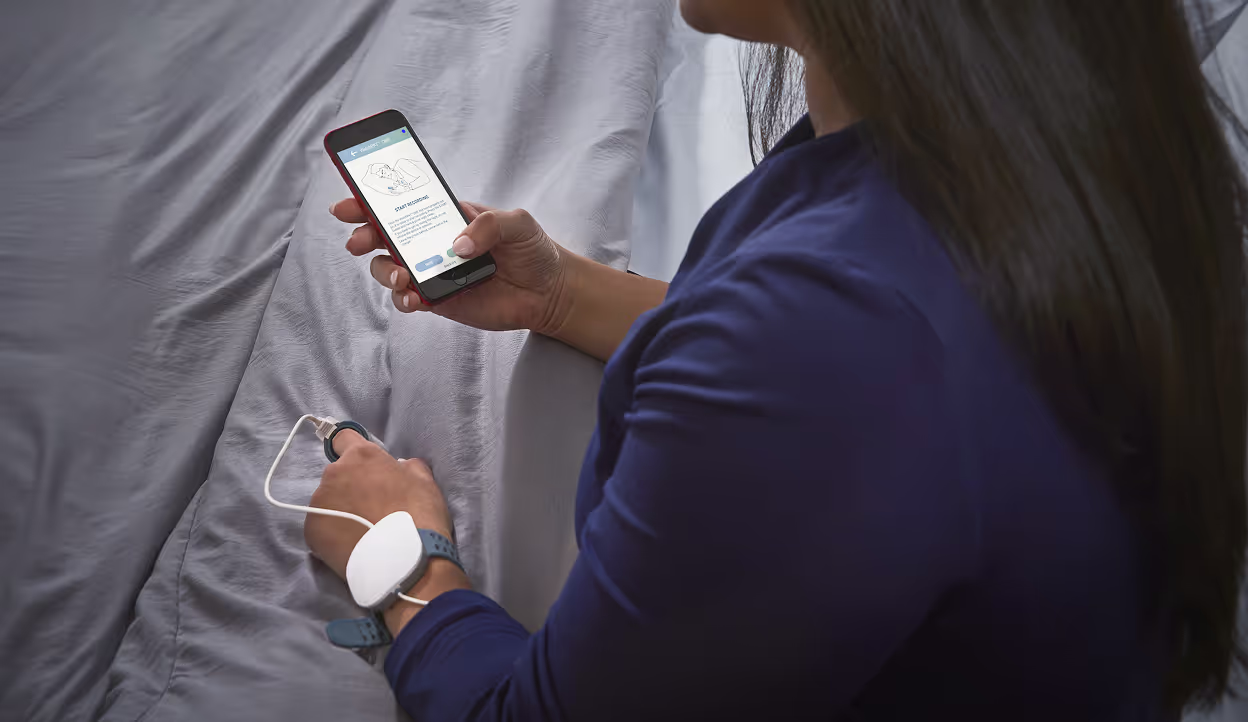
Home sleep testing works by collecting data through a small set of sensors that you apply before going to bed. Most devices use a combination of a nasal pressure sensor or nasal cannula to measure airflow, a pulse oximetry sensor on your finger to track oxygen saturation and heart rate, and an effort belt around your chest or abdomen to detect respiratory effort. Some newer devices, like the NightOwl Home Sleep Test, use photoplethysmography and peripheral arterial tonometry to capture sleep data from a single fingertip sensor.
The sensors record how many times your airway partially or fully collapses during sleep, how long each event lasts, and how far your oxygen levels drop with each interruption. These measurements produce an apnea-hypopnea index, which is the primary metric used to diagnose obstructive sleep apnea and determine its severity.
After the test night, the sleep data is uploaded and reviewed by a physician, typically a board certified sleep specialist. The physician interprets the results, confirms or rules out obstructive sleep apnea, and develops a treatment plan if a diagnosis is made.
Home sleep apnea testing is not the same as polysomnography, which is a comprehensive in-lab sleep study that also measures brain activity, eye movements, and leg movements. Home sleep tests are designed specifically to diagnose obstructive sleep apnea, not other sleep disorders such as narcolepsy or restless leg syndrome.
DID YOU KNOW: The American Academy of Sleep Medicine estimates that approximately 80 percent of moderate to severe obstructive sleep apnea cases in the United States remain undiagnosed.
KEY TAKEAWAY: A home sleep apnea test records airflow, oxygen saturation, heart rate, and breathing effort during one night at home, and a physician uses this data to diagnose obstructive sleep apnea without requiring a sleep lab visit.
Understanding what a home sleep test measures is the foundation, but knowing who qualifies for one in Wesley Chapel is equally important.
Who Should Get a Home Sleep Apnea Test in Wesley Chapel
Adults in Wesley Chapel who have symptoms consistent with obstructive sleep apnea and no major comorbidities that require in-lab monitoring are strong candidates for a home sleep test. Your healthcare provider may recommend home sleep testing if you report chronic snoring, excessive daytime sleepiness, or witnessed pauses in breathing during sleep.
Common Symptoms That Indicate Testing
The following symptoms frequently prompt a referral for sleep apnea testing:
- Loud, persistent snoring that disrupts your sleep partner
- Waking up gasping or choking during the night
- Excessive daytime fatigue despite adequate sleep duration
- Morning headaches that resolve within a few hours
- Difficulty concentrating or memory problems during the day
- Observed breathing pauses reported by a bed partner
Risk Factors That Increase the Likelihood of Sleep Apnea
Certain physical and medical risk factors increase the probability of obstructive sleep apnea. According to the National Heart, Lung, and Blood Institute, these include a body mass index above 30, a neck size greater than 17 inches in men or 16 inches in women, male gender (though sleep apnea affects women as well, particularly after menopause), a family history of sleep apnea, and existing conditions such as hypertension, diabetes, atrial fibrillation, or congestive heart failure.
Screening Tools Used Before Testing
Many providers in Wesley Chapel and the greater Tampa area use the Epworth Sleep assessment or similar validated screening questionnaires before ordering a sleep study. These tools assign a numerical score based on your likelihood of falling asleep during routine activities. A score of 10 or higher on the Epworth Sleepiness Scale typically warrants further evaluation. dumbo.health offers a free sleep assessment online that helps determine whether a home sleep test is appropriate for your situation.
Real-World Examples
A 48-year-old Wesley Chapel resident with a body mass index of 33, chronic snoring, and a history of hypertension completes a screening questionnaire and scores 14 on the Epworth assessment. Her primary care physician recommends a home sleep apnea test rather than an in-lab study because her symptoms are consistent with obstructive sleep apnea and she has no history of other sleep disorders, congestive heart failure, or pulmonary fibrosis that would require polysomnography.
A 55-year-old commercial truck driver based near Tampa needs sleep apnea testing for Department of Transportation medical certification. His body mass index is 36 and his neck size is 18 inches. He orders a home sleep test through dumbo.health for $149, completes the test at home, and receives his results within days, avoiding the weeks-long wait for a sleep lab appointment in central Florida.
A 39-year-old woman in Wesley Chapel reports waking up multiple times per night with a dry mouth and feeling exhausted by mid-afternoon. Her partner has noticed brief pauses in her breathing. She uses the dumbo.health free sleep assessment to screen her symptoms, then orders a home sleep test. Her results confirm mild obstructive sleep apnea with an AHI of 9, and her reviewing physician recommends positional therapy and follow-up monitoring.
IMPORTANT: Home sleep testing is not recommended for patients with suspected central sleep apnea, narcolepsy, restless leg syndrome, or severe cardiopulmonary conditions such as pulmonary hypertension or congestive heart failure. These patients typically require in-lab polysomnography.
KEY TAKEAWAY: Adults in Wesley Chapel with symptoms like chronic snoring, daytime fatigue, witnessed breathing pauses, and risk factors such as elevated body mass or hypertension are strong candidates for a home sleep apnea test, but those with complex sleep disorders or severe heart or lung conditions should pursue in-lab testing.
Knowing whether you qualify is the first step, but understanding how a home sleep test compares to an in-lab sleep study helps you make the best decision.
Home Sleep Test vs. In-Lab Sleep Study: Which Is Right for You
A home sleep test is the right choice for most Wesley Chapel adults with suspected obstructive sleep apnea and no complicating conditions. An in-lab sleep study is necessary when a physician needs comprehensive data on brain activity, limb movements, or complex breathing patterns that portable devices cannot capture.
Both tests serve the same fundamental purpose: detecting whether your breathing is disrupted during sleep. However, they differ significantly in what they measure, where they happen, how much they cost, and how quickly you receive results.
What Each Test Measures
- Home Sleep Test: Airflow via nasal pressure sensor or nasal cannula, oxygen saturation via pulse oximetry, heart rate, and respiratory effort via effort belt or body position sensor.
- In-Lab Sleep Study (Polysomnography): Everything a home test measures, plus brain activity via EEG, eye movements, muscle activity, leg movements, and detailed sleep staging recorded by a polysomnographic technologist or registered polysomnographic technologist.
Setting
- Home Sleep Test: Your own bed at home in Wesley Chapel, Tampa, or anywhere in Florida.
- In-Lab Sleep Study: A sleep lab or hospital facility, such as those affiliated with Tampa General Hospital or local pulmonology and sleep medicine practices.
Cost
- Home Sleep Test: Typically $149 to $500 when paying out of pocket. dumbo.health charges $149 with no insurance required.
- In-Lab Sleep Study: Often $1,000 to $3,000 or more, depending on the facility and medical insurance coverage. Prior authorization is frequently required.
Turnaround Time for Results
- Home Sleep Test: Results are usually available within 3 to 7 business days. dumbo.health Premium Plan members receive priority results turnaround.
- In-Lab Sleep Study: Results may take 2 to 4 weeks depending on the sleep lab's schedule and physician review process.
Convenience
- Home Sleep Test: High. No travel, no overnight stay, no time off work. Ideal for patient comfort and scheduling flexibility.
- In-Lab Sleep Study: Lower. Requires scheduling weeks in advance, traveling to a facility, sleeping in an unfamiliar environment with sensors and sleep technicians present.
Who It Is Best For
- Home Sleep Test: Adults with a moderate to high probability of obstructive sleep apnea based on symptoms and screening. Commercial drivers needing Department of Transportation sleep apnea testing. Patients in Wesley Chapel and central Florida who prefer a faster, more affordable path to diagnosis.
- In-Lab Sleep Study: Patients with suspected narcolepsy, restless leg syndrome, central sleep apnea, or complex cardiopulmonary conditions. Patients whose home sleep test results are inconclusive. Patients who need a multiple sleep latency test (MSLT) for narcolepsy evaluation.
For most adults in the Wesley Chapel area who snore loudly, feel tired during the day, and have risk factors for obstructive sleep apnea, a home sleep test provides sufficient diagnostic accuracy at a fraction of the cost and wait time. dumbo.health ships directly to Florida addresses, making it easy to get tested without searching for a sleep lab near you.
KEY TAKEAWAY: A home sleep apnea test is the best option for most Wesley Chapel adults with suspected obstructive sleep apnea because it is more affordable, faster, and more convenient than in-lab polysomnography, though in-lab studies remain necessary for complex sleep disorders.
With the testing comparison clear, the next question is how to actually complete a home sleep test from start to finish.
How to Complete a Home Sleep Apnea Test in Wesley Chapel: Step by Step
Completing a home sleep apnea test in Wesley Chapel takes three main phases: ordering the test, wearing the device overnight, and receiving your results with a physician interpretation.
Step-by-Step Process
1. Complete a sleep screening assessment. Start by answering a short questionnaire about your symptoms, medical history, and risk factors. dumbo.health provides a free online sleep assessment that takes about 5 minutes and helps determine whether a home sleep test is appropriate.
2. Order your home sleep test device. If screening indicates you are a candidate, order the test. dumbo.health ships the home sleep test device to your Wesley Chapel address for $149, with no insurance required and no prior authorization needed.
3. Receive and unbox the device. The package includes the sleep monitor, sensor attachments (typically a finger sensor for pulse oximetry and a nasal cannula or nasal pressure sensor for airflow), an effort belt if applicable, and step-by-step instructions. Some devices, like the NightOwl Home Sleep Test, use a single fingertip sensor with photoplethysmography and peripheral arterial tonometry technology.
4. Apply the sensors and go to sleep. On your chosen test night, apply the sensors as instructed, press the start button on the device, and go to sleep in your own bed. Try to follow your normal bedtime routine. The device records data automatically throughout the night.
5. Return or upload the data. Depending on the device model, you either ship the device back in a prepaid return envelope or upload the recorded sleep data electronically. Many modern devices transmit data wirelessly.
6. Receive physician-reviewed results. A board certified sleep specialist reviews your sleep data, including your apnea-hypopnea index, oxygen desaturation events, heart rate patterns, and respiratory effort. Results are typically available within 3 to 7 business days. dumbo.health Premium Plan members receive priority turnaround.
7. Discuss your diagnosis and treatment plan. If the results confirm obstructive sleep apnea, your reviewing physician provides a diagnosis and recommended treatment plan. This may include CPAP therapy, oral appliance therapy, weight management strategies, sleep positioning techniques, or a combination approach. dumbo.health sends updates to your referring provider and can coordinate follow-up care through telehealth appointments.
After completing these steps, you have a confirmed diagnosis and a clear treatment pathway without ever visiting a sleep lab. The entire process, from ordering to results, typically takes less than two weeks.
TIP: Schedule your test night for a day when you expect to follow your normal sleep routine. Avoid alcohol, caffeine after noon, and sleeping pills on the test night unless your physician instructs otherwise, as these can affect sleep data accuracy.
KEY TAKEAWAY: Completing a home sleep apnea test in Wesley Chapel involves seven straightforward steps, from online screening through physician-reviewed results, and the entire process can be finished in under two weeks without leaving home.
Once your results are in, understanding what they mean and what happens next is critical.
Understanding Your Home Sleep Test Results
Your home sleep test results center on the apnea-hypopnea index, a number that indicates how many times per hour your breathing was partially or fully interrupted during sleep. A physician uses this number, along with oxygen saturation data and symptom history, to determine your diagnosis and severity level.
What the Apnea-Hypopnea Index Means
The apnea-hypopnea index (AHI) is the standard metric for diagnosing obstructive sleep apnea. According to the American Academy of Sleep Medicine, AHI severity categories are:
- Normal: fewer than 5 events per hour
- Mild obstructive sleep apnea: 5 to 14 events per hour
- Moderate obstructive sleep apnea: 15 to 29 events per hour
- Severe obstructive sleep apnea: 30 or more events per hour
Each "event" is either an apnea (complete airway blockage lasting at least 10 seconds) or a hypopnea (partial airway obstruction with a 30 percent or greater reduction in airflow accompanied by a 3 to 4 percent drop in oxygen saturation).
Other Data Points in Your Results
Beyond AHI, your results include oxygen desaturation index (how often your oxygen levels drop below 90 percent), minimum oxygen saturation during the night, average and peak heart rate, total recording time, and body position data if the device tracks it. These data points help your physician understand the full clinical picture and design an appropriate treatment plan.
What Happens After a Positive Diagnosis
If your results confirm obstructive sleep apnea, your physician will recommend a treatment approach based on severity. For moderate to severe cases, CPAP therapy is the first-line treatment recommended by the American Academy of Sleep Medicine. For mild cases, treatment options may include oral appliance therapy, weight management strategies, or sleep positioning techniques.
dumbo.health provides a streamlined path from diagnosis to treatment. After results are finalized, patients can enroll in a CPAP therapy plan starting at $59 per month, which includes the CPAP machine, equipment, physician oversight, and follow-up care with no contracts and no insurance needed.
What If Results Are Inconclusive
In some cases, a home sleep test produces inconclusive results. This can happen if the device sensors shift during the night, the total recording time is too short, or the data quality is insufficient for a confident interpretation. When this occurs, the physician may recommend repeating the home test or proceeding to an in-lab polysomnography for a more comprehensive evaluation that includes brain activity monitoring and sleep staging.
KEY TAKEAWAY: Your home sleep test results are primarily defined by your apnea-hypopnea index, and a board certified sleep specialist interprets this number alongside oxygen and heart rate data to confirm your diagnosis and recommend a treatment plan.
With a clear understanding of results, the next important decision is choosing the right treatment.
Treatment Options After a Sleep Apnea Diagnosis in Wesley Chapel
CPAP therapy is the most effective and widely recommended treatment for moderate to severe obstructive sleep apnea. However, the best treatment plan depends on your severity level, anatomy, lifestyle, and adherence ability.
CPAP Therapy
CPAP stands for continuous positive airway pressure. A CPAP machine delivers a steady stream of pressurized air through a mask, keeping your airway open throughout the night and preventing the breathing interruptions that define obstructive sleep apnea.
According to the National Heart, Lung, and Blood Institute, CPAP therapy reduces AHI to normal or near-normal levels in the majority of patients when used consistently. The American Academy of Sleep Medicine recommends a minimum of 4 hours of CPAP use per night on at least 70 percent of nights to achieve clinical benefit, though more consistent use produces better outcomes.
Many patients report significant improvement in daytime energy, mood, and cognitive function within the first few weeks of consistent CPAP use. dumbo.health's CPAP therapy program includes the CPAP machine, all necessary equipment, physician oversight, and ongoing adherence monitoring. The Essentials Plan costs $59 per month, while the Premium Plan at $89 per month adds a dedicated sleep coach and advanced adherence monitoring. No contracts are required, and patients can cancel anytime.
Oral Appliance Therapy
Oral appliance therapy uses a custom-fitted dental device that repositions the lower jaw forward during sleep to keep the airway open. This approach is typically recommended for mild to moderate obstructive sleep apnea or for patients who cannot tolerate CPAP. Oral appliances must be fitted by a qualified dental provider trained in sleep medicine. Providers such as those specializing in dental sleep medicine can evaluate whether an oral device is appropriate for your anatomy and apnea severity.
Weight Management and Lifestyle Modifications
For patients with a body mass index above 30, weight management strategies can reduce obstructive sleep apnea severity. According to the NIH, a 10 percent reduction in body weight can lead to a significant decrease in AHI. Weight management is not a standalone treatment for moderate to severe cases but serves as an important complementary strategy.
Sleep positioning techniques, such as sleeping on your side instead of your back, may reduce apnea events in patients with positional obstructive sleep apnea. These techniques are most effective in mild cases.
Combination Approaches
Some patients benefit from a combination of treatments. A patient with moderate obstructive sleep apnea might use CPAP therapy as primary treatment while simultaneously working on weight management goals. Another might use an oral appliance combined with positional therapy. Your treating physician determines the best combination based on your diagnosis, treatment plan goals, and follow-up data.
dumbo.health supports combination approaches by providing ongoing adherence monitoring and follow-up care through telehealth appointments. The Elite Plan at $129 per month includes direct physician messaging and concierge clinical support for patients who want closer treatment management.
KEY TAKEAWAY: CPAP therapy is the gold standard treatment for moderate to severe obstructive sleep apnea, while oral appliance therapy, weight management, and positional strategies may be appropriate for milder cases or as complementary treatments.
Choosing the right treatment matters, but so does understanding the costs involved and how to pay for testing and treatment in Wesley Chapel.
Cost of Sleep Apnea Testing and Treatment in Wesley Chapel
A home sleep apnea test in Wesley Chapel typically costs between $149 and $500 when paid out of pocket, significantly less than in-lab polysomnography. Treatment costs vary widely depending on the type of therapy, whether you use medical insurance, and which provider you choose.
Home Sleep Test Costs
In-lab sleep studies in the Tampa and Wesley Chapel area often cost $1,000 to $3,000 before insurance. Many facilities require prior authorization, and patients frequently face surprise bills or copays. Home sleep tests eliminate most of these cost barriers.
dumbo.health charges $149 for a home sleep test, with no insurance required, no prior authorizations, and no surprise bills. This single payment covers the test device and one night of testing. The device ships directly to your Wesley Chapel address.
CPAP Therapy Costs
CPAP machines purchased outright typically cost $500 to $2,000 depending on the model and features. When purchased through insurance, patients may face deductibles, copays, and rental agreements that add complexity and unpredictable costs.
dumbo.health offers a cash-pay alternative with transparent monthly pricing. The Essentials Plan at $59 per month includes the CPAP machine, all equipment, physician interpretation, standard follow-up care, and updates to your referring provider. The Premium Plan at $89 per month adds a dedicated sleep coach, advanced adherence monitoring, and priority results turnaround. The Elite Plan at $129 per month includes concierge clinical support and direct physician messaging. All plans operate on a no-contract, cancel-anytime basis.
Oral Appliance Costs
Custom oral appliances from dental sleep medicine providers typically cost $1,500 to $3,000 out of pocket. Some medical insurance plans cover a portion of the cost when a diagnosis of obstructive sleep apnea is confirmed and the appliance is deemed medically necessary.
Insurance vs. Cash Pay
Many Wesley Chapel residents find that navigating medical insurance for sleep apnea testing and treatment is time-consuming and unpredictable. Prior authorizations, in-network restrictions, coverage limitations, and surprise bills create barriers that delay diagnosis and treatment. Cash-pay options through providers like dumbo.health remove these barriers entirely with transparent pricing that patients can plan around.
IMPORTANT: Untreated obstructive sleep apnea carries long-term health costs that extend far beyond the price of testing. According to the American Academy of Sleep Medicine, untreated sleep apnea is associated with higher rates of emergency department visits, hospitalizations, and healthcare spending compared to treated patients.
KEY TAKEAWAY: A home sleep test through dumbo.health costs $149 with no insurance or authorization required, and CPAP treatment plans start at $59 per month, making testing and treatment in Wesley Chapel affordable and predictable.
Understanding costs helps you plan, but it is equally important to know the limitations of home sleep testing before proceeding.
Limitations and Risks of Home Sleep Apnea Testing
A home sleep apnea test is highly effective for diagnosing obstructive sleep apnea, but it is not the right test for every patient or every sleep disorder. Understanding these limitations helps you and your healthcare provider make the most appropriate testing decision.
Limitation 1: Home Tests Do Not Diagnose All Sleep Disorders
Home sleep tests are designed specifically for obstructive sleep apnea. They do not measure brain activity, which means they cannot diagnose narcolepsy, restless leg syndrome, parasomnias, or central sleep apnea. If your physician suspects one of these conditions, an in-lab polysomnography with full EEG monitoring is required. The MSLT (multiple sleep latency test), used for narcolepsy diagnosis, can only be performed in a sleep lab.
Limitation 2: Data Quality Can Be Affected by User Error
Because you apply the sensors yourself at home without a polysomnographic technologist present, there is a risk that a sensor may come loose, a nasal cannula may shift, or the effort belt may be positioned incorrectly. These issues can reduce data quality and potentially lead to an underestimation of apnea severity or an inconclusive result. Clinicians frequently observe that clear, step-by-step instructions and well-designed devices significantly reduce this risk, but it cannot be eliminated entirely.
Limitation 3: Not Recommended for Certain Medical Conditions
Patients with severe congestive heart failure, pulmonary hypertension, pulmonary fibrosis, chronic opioid use, or other complex cardiopulmonary conditions should typically undergo in-lab polysomnography. These conditions can produce breathing patterns that overlap with or mimic obstructive sleep apnea, and accurate diagnosis requires the comprehensive monitoring only available in a facility study.
Limitation 4: Home Tests May Underestimate Severity
Because home sleep tests measure total recording time rather than actual sleep time (they cannot distinguish between wakefulness and sleep without EEG), the calculated AHI may be lower than what an in-lab study would produce. This means some patients with true moderate or severe obstructive sleep apnea may receive a mild reading from a home test. Physicians account for this limitation by considering clinical symptoms alongside test data.
How dumbo.health Addresses These Limitations
dumbo.health mitigates several of these limitations through physician oversight built into every plan. Every home sleep test result is reviewed by a board certified sleep specialist, not an algorithm alone. If results are inconclusive, the physician can recommend a repeat test or refer for in-lab evaluation. Ongoing telehealth appointments allow patients to discuss symptoms, treatment response, and any concerns that arise after initial testing. The Premium and Elite plans provide additional layers of support through dedicated sleep coaches and direct physician messaging.
KEY TAKEAWAY: Home sleep apnea tests are accurate for obstructive sleep apnea but cannot diagnose narcolepsy, restless leg syndrome, or central sleep apnea, and patients with severe cardiopulmonary conditions should pursue in-lab testing instead.
Recognizing these limitations is essential, but separating myths from facts can prevent unnecessary hesitation about getting tested.
Common Myths About Home Sleep Apnea Testing Debunked
MYTH: Home sleep tests are not as accurate as in-lab sleep studies for diagnosing sleep apnea.
FACT: For obstructive sleep apnea, home sleep tests demonstrate strong diagnostic accuracy in appropriately screened patients. A systematic review published in the Journal of Clinical Sleep Medicine found that home sleep testing accurately identifies moderate to severe obstructive sleep apnea with sensitivity comparable to polysomnography. The American Academy of Sleep Medicine endorses home sleep testing as a valid diagnostic method when the pretest probability of obstructive sleep apnea is moderate to high. Home tests are less comprehensive than polysomnography, but for obstructive sleep apnea specifically, they are clinically reliable.
MYTH: You need a doctor's referral and insurance approval before you can take a home sleep test.
FACT: While many traditional sleep medicine pathways require a physician referral and insurance prior authorization, cash-pay services like dumbo.health allow you to order a home sleep test directly for $149 with no referral, no insurance, and no prior authorization required. A physician still reviews your results and provides a clinical interpretation, but the administrative barriers are eliminated.
MYTH: If you snore, you definitely have sleep apnea.
FACT: Snoring is a common symptom of obstructive sleep apnea, but not all snoring indicates sleep apnea. According to the Sleep Foundation, approximately 40 percent of adult men and 24 percent of adult women are habitual snorers, while obstructive sleep apnea affects an estimated 10 to 30 percent of adults. Snoring caused by airway vibration can exist independently of the repetitive airway collapse that defines apnea. A home sleep test is the best way to determine whether snoring is associated with obstructive sleep apnea.
MYTH: CPAP machines are too loud and uncomfortable for anyone to use long-term.
FACT: Modern CPAP machines are significantly quieter and more comfortable than earlier models. Most current devices operate at noise levels below 30 decibels, quieter than a whisper. Mask options have expanded to include minimal-contact nasal pillow designs and custom-fitting masks that improve patient comfort. The American Academy of Sleep Medicine reports that consistent CPAP adherence improves over time, especially when supported by coaching, adherence monitoring, and regular follow-up. dumbo.health's Premium Plan includes a dedicated sleep coach and advanced adherence monitoring specifically designed to help patients succeed with long-term CPAP therapy.
MYTH: Sleep apnea only affects overweight older men.
FACT: While elevated body mass index, male gender, and older age are established risk factors, obstructive sleep apnea affects women, younger adults, and people with normal body weight. Post-menopausal women, individuals with anatomically narrow airways, and people with large tonsils or a recessed jaw are all at increased risk regardless of weight. The NIH states that obstructive sleep apnea can occur across a wide demographic range, making symptom-based screening important for all adults.
KEY TAKEAWAY: Home sleep tests are clinically validated for diagnosing obstructive sleep apnea, CPAP machines have become quieter and more comfortable, and sleep apnea affects a wider range of people than most assume.
With myths cleared up, it helps to understand the specific considerations for Wesley Chapel residents and commercial drivers in the Tampa area.
Sleep Apnea Testing for Commercial Drivers in Wesley Chapel and Tampa
Commercial drivers in Wesley Chapel and the greater Tampa area face specific sleep apnea screening requirements tied to their Department of Transportation medical certification. A home sleep test provides a faster, more affordable way to meet these requirements compared to scheduling an in-lab study at a facility.
Why Commercial Drivers Need Sleep Apnea Testing
The FMCSA (Federal Motor Carrier Safety Administration) does not mandate universal sleep apnea testing for all commercial drivers, but certified medical examiners conducting DOT physicals frequently refer drivers for sleep apnea evaluation based on risk factors. Common triggers for referral include a body mass index of 35 or higher, a neck size of 17 inches or more, reported snoring, observed breathing pauses during sleep, and existing conditions like hypertension or diabetes.
Drowsy driving caused by untreated obstructive sleep apnea is a significant safety concern. According to the National Highway Traffic Safety Administration, drowsy driving contributes to an estimated 100,000 police-reported crashes annually in the United States. For commercial drivers operating vehicles weighing 26,001 pounds or more, undiagnosed and untreated sleep apnea poses risks to both the driver and the public.
How a Home Sleep Test Fits the DOT Process
A commercial driver referred for sleep apnea testing during a DOT physical can order a home sleep test through dumbo.health for $149, complete the test in one night, and receive physician-reviewed results within days. This is significantly faster than waiting for a sleep lab appointment, which can take weeks in the Tampa area. Results and the physician's report can be sent directly to the referring medical examiner or healthcare provider.
If a diagnosis of obstructive sleep apnea is confirmed, the driver needs documented treatment compliance, typically CPAP adherence data showing at least 4 hours of use per night on at least 70 percent of nights over a 30-day period, before the medical examiner can issue or renew certification. dumbo.health's treatment plans include adherence monitoring and reporting that satisfies this requirement.
Drivers can explore the full DOT sleep apnea testing processand learn about at-home sleep testing for truck drivers on the dumbo.health blog.
Checklist: What Commercial Drivers Need for Sleep Apnea Testing
- Confirm whether your DOT medical examiner has referred you for sleep apnea evaluation
- Review your risk factors including body mass index, neck size, blood pressure, and medical history
- Complete the free sleep assessment at dumbo.health to determine home test eligibility
- Order a home sleep test for $149 with no insurance or authorization required
- Complete the test on a night that represents your normal sleep pattern
- Return or upload test data following the device instructions
- Receive physician-reviewed results and diagnosis
- If diagnosed, enroll in a CPAP treatment plan to build compliance data
- Provide adherence reports to your DOT medical examiner for certification review
- Maintain follow-up care to ensure ongoing treatment effectiveness
IMPORTANT: Department of Transportation medical certification periods can vary. Some drivers receive certification for up to 24 months, but when sleep apnea or another condition requires monitoring, shorter certification periods of 3, 6, or 12 months may apply. Your medical examiner determines the appropriate period based on your treatment compliance and overall health.
KEY TAKEAWAY: Commercial drivers in Wesley Chapel and Tampa can use a home sleep test to meet DOT sleep apnea screening requirements faster and more affordably than in-lab testing, and dumbo.health provides the adherence monitoring and physician reporting needed for certification.
DOT requirements address one population, but Wesley Chapel residents looking for sleep apnea care providers in their area should also understand what local and telehealth options are available.
Finding Sleep Apnea Testing and Treatment Providers in Wesley Chapel
Wesley Chapel residents have several options for sleep apnea testing, including local sleep medicine practices, hospital-based sleep labs, dental sleep medicine providers, and telehealth-based services. Choosing the right provider depends on your testing needs, budget, and whether you prefer in-person or remote care.
Local Sleep Medicine and Pulmonology Practices
Wesley Chapel and the surrounding Tampa area are home to sleep medicine specialists and pulmonology practices that offer both in-lab sleep studies and home sleep testing. Hospital systems like Tampa General Hospital have sleep disorder centers with sleep specialists, registered polysomnographic technologists, and pulmonary medicine departments that provide comprehensive sleep disorder evaluation. Smaller practices in central Florida may also offer sleep apnea testing, though availability, wait times, and cost can vary significantly.
When evaluating local providers, check whether the practice includes a board certified sleep specialist, what their turnaround time is for results, whether they require prior authorization or referral, and what the out-of-pocket cost is for both testing and treatment.
Dental Sleep Medicine Providers
For patients who need or prefer oral appliance therapy, dental practices specializing in sleep medicine can evaluate, fit, and manage custom oral devices. These providers work in coordination with your sleep physician to ensure the oral appliance adequately treats your obstructive sleep apnea. Patient care in dental sleep medicine involves initial fitting, adjustment visits, and follow-up sleep testing to verify treatment effectiveness.
Telehealth and Direct-to-Patient Services
Telehealth has expanded access to sleep apnea testing for Wesley Chapel residents who do not want to wait for in-person appointments or who prefer the convenience of managing their care remotely. dumbo.health operates as a direct-to-patient sleep apnea care platform that ships home sleep tests to your address, provides physician interpretation of results, delivers CPAP equipment directly, and offers ongoing care through telehealth appointments.
This model eliminates the need to schedule facility visits, sit in waiting rooms, or navigate medical insurance authorizations. For patients in your area who value patient comfort, convenience, and transparent pricing, a telehealth-based approach can reduce the time from suspicion to diagnosis to treatment from months to weeks.
Home sleep apnea testing through dumbo.health works identically regardless of whether you live in Wesley Chapel, Tampa, or elsewhere in Florida. The test device ships to your home, and all physician consultations, results reviews, and follow-up appointments happen remotely.
KEY TAKEAWAY: Wesley Chapel residents can choose between local sleep medicine practices, dental sleep medicine providers, and telehealth services like dumbo.health, with telehealth offering the fastest, most affordable, and most convenient path to diagnosis and treatment.
With provider options clear, there is one more critical topic: the health consequences of leaving sleep apnea untreated.
Health Risks of Untreated Sleep Apnea
Untreated obstructive sleep apnea significantly increases the risk of serious cardiovascular, metabolic, and neurological conditions. The damage accumulates over time, making early diagnosis and treatment critically important.
According to the National Heart, Lung, and Blood Institute, untreated obstructive sleep apnea is associated with hypertension, stroke, atrial fibrillation, congestive heart failure, and cardiovascular disease. The repeated drops in oxygen levels during sleep trigger systemic inflammation and place chronic stress on the heart and blood vessels.
Cardiovascular Risks
Obstructive sleep apnea causes intermittent hypoxia, where oxygen saturation drops repeatedly during the night as the airway collapses. This cycle of oxygen deprivation and recovery activates the sympathetic nervous system and increases blood pressure. The NIH reports that patients with untreated moderate to severe obstructive sleep apnea have a substantially higher risk of developing resistant hypertension, a type of high blood pressure that does not respond well to standard medications.
The link between untreated sleep apnea and atrial fibrillation is well established. Studies referenced by the American Academy of Sleep Medicine show that patients with untreated obstructive sleep apnea are significantly more likely to develop atrial fibrillation and to experience recurrence after treatment for atrial fibrillation.
Metabolic Risks
Obstructive sleep apnea disrupts glucose metabolism and insulin sensitivity. According to the CDC, there is a bidirectional relationship between obstructive sleep apnea and type 2 diabetes, with each condition worsening the other. Untreated sleep apnea makes blood sugar control more difficult for patients already managing diabetes.
Cognitive and Safety Risks
Fragmented sleep caused by repeated airway obstruction impairs concentration, reaction time, and decision-making. For Wesley Chapel residents who drive daily, whether personally or commercially, untreated sleep apnea increases the risk of motor vehicle accidents. The National Highway Traffic Safety Administration has linked drowsy driving to thousands of crashes annually, and obstructive sleep apnea is one of the most common medical causes of excessive daytime sleepiness.
Untreated sleep apnea also affects mood, with higher rates of depression and anxiety observed in patients with undiagnosed obstructive sleep apnea compared to the general population.
Obstructive sleep apnea left untreated leads to progressive cardiovascular damage, metabolic dysfunction, and impaired cognitive performance. Early testing through an accessible, affordable home sleep test followed by appropriate treatment such as CPAP therapy can interrupt this progression. dumbo.health provides the complete pathway from a $149 home sleep test to ongoing CPAP treatment plans that start at $59 per month, making it possible for Wesley Chapel residents to address sleep apnea before complications develop.
KEY TAKEAWAY: Untreated obstructive sleep apnea raises the risk of hypertension, stroke, atrial fibrillation, diabetes complications, and drowsy driving accidents, making timely diagnosis and treatment essential.
Understanding the stakes of untreated sleep apnea reinforces why accessible testing matters and leads directly to the decision point.
Conclusion
A home sleep apnea test gives Wesley Chapel residents a fast, affordable, and clinically validated path to diagnosing obstructive sleep apnea without the delays and costs of traditional in-lab testing. Whether you are experiencing chronic snoring and daytime fatigue, managing risk factors like hypertension or elevated body mass, or meeting Department of Transportation requirements as a commercial driver, home sleep testing provides the answers you need.
dumbo.health makes the entire process simple. Order a home sleep test for $149with no insurance required, complete the test in one night, and receive physician-reviewed results within days. If diagnosed with obstructive sleep apnea, CPAP treatment plans start at $59 per month with no contracts and the flexibility to cancel anytime. Take the free sleep assessment today and take the first step toward restful sleep and better health.
Frequently Asked Questions About Home Sleep Apnea Test in Wesley Chapel, Florida
What is a home sleep apnea test?
A home sleep apnea test (HSAT) is a simplified sleep study you complete in your own home using a small, portable monitoring device. The device typically measures airflow, breathing effort, oxygen saturation, and heart rate while you sleep. A physician or board-certified sleep specialist then reviews the recorded data to assess whether obstructive sleep apnea or another breathing-related sleep disorder may be present. Home sleep testing is widely accepted as an appropriate first-line diagnostic tool for adults with a moderate to high likelihood of obstructive sleep apnea, according to the American Academy of Sleep Medicine.
What happens during home sleep testing?
During a home sleep test, you wear a compact monitoring device overnight that records key physiological signals while you sleep in your own bed. Most devices measure airflow through a nasal pressure sensor or nasal cannula, breathing effort through a chest or effort belt, oxygen saturation through pulse oximetry or photoplethysmography, and heart rate. You do not need to visit a sleep lab or sleep center. The test typically lasts one night. After the test, you return or upload the device data, and a physician reviews the results to generate a clinical report.
What does a home sleep apnea test measure?
A home sleep apnea test measures the signals most relevant to diagnosing obstructive sleep apnea. These typically include airflow through the upper airway, oxygen saturation levels in the blood, breathing effort, and heart rate. Some devices also measure body position and snoring sounds. The recorded data allows a physician to calculate your apnea-hypopnea index, which reflects the number of breathing interruptions per hour of sleep. This index is the primary metric used to determine whether obstructive sleep apnea is present and to what degree. A healthcare professional can explain what your specific results mean.
How is a home sleep study different from an in-lab sleep study?
A home sleep study is a simplified, portable version of an in-lab sleep study, also called polysomnography. An in-lab study, conducted at a sleep lab or hospital sleep center, records a broader range of signals including brain activity, eye movements, muscle activity, and detailed respiratory data monitored by a registered polysomnographic technologist throughout the night. A home sleep test measures core respiratory signals and is appropriate for many adults with suspected obstructive sleep apnea. In-lab polysomnography is recommended when a more complex sleep disorder such as narcolepsy, restless leg syndrome, or a central sleep disorder is suspected. A sleep specialist can help determine which option is appropriate for you.
Who is a good candidate for at-home sleep apnea testing?
Home sleep testing is generally appropriate for adults who have symptoms consistent with obstructive sleep apnea, such as loud snoring, witnessed pauses in breathing during sleep, excessive daytime sleepiness, and waking with a dry mouth or headache. It is commonly recommended for patients with a moderate to high clinical likelihood of obstructive sleep apnea without significant complicating conditions. People with complex medical histories, suspected non-obstructive sleep disorders such as narcolepsy or restless leg syndrome, or significant cardiac or pulmonary conditions such as congestive heart failure, pulmonary fibrosis, or pulmonary hypertension may need an in-lab sleep study instead. A qualified healthcare provider can assess whether home testing is suitable for your situation.
What are the common signs that I might have sleep apnea?
Common signs of obstructive sleep apnea include loud or frequent snoring, observed pauses in breathing during sleep, waking from sleep with chest pain or shortness of breath, excessive daytime sleepiness, difficulty concentrating, and waking with a dry mouth or headache. Risk factors include high body mass index, large neck size, male gender, hypertension, diabetes, atrial fibrillation, and a history of stroke or cardiovascular disease. If someone has told you that you seem to stop breathing while sleeping, this is a clinically significant symptom that warrants evaluation. A healthcare provider can assess your symptoms and determine whether sleep apnea testing is appropriate. You can also take a free sleep assessment as a starting point.
Does snoring mean I have sleep apnea?
Snoring alone does not confirm a diagnosis of sleep apnea, but it is one of the most common presenting symptoms. Snoring occurs when airflow through the upper airway is partially obstructed during sleep, causing soft tissue vibration. In obstructive sleep apnea, this obstruction can become severe enough to repeatedly reduce or stop airflow entirely. Not everyone who snores has sleep apnea, and not everyone with sleep apnea snores loudly. However, snoring combined with daytime sleepiness, observed breathing pauses, high blood pressure, or other risk factors significantly increases the clinical likelihood of obstructive sleep apnea. A physician can help determine whether testing is appropriate.
Can waking up with chest pain or shortness of breath be related to sleep apnea?
Waking from sleep with chest pain or shortness of breath can be associated with sleep apnea, though these symptoms may also indicate other serious cardiac or pulmonary conditions. In obstructive sleep apnea, repeated breathing interruptions during sleep can cause drops in oxygen saturation and increases in heart rate that some people experience as chest discomfort or breathlessness upon waking. If you experience chest pain, significant shortness of breath, or any symptoms suggesting a cardiac or respiratory emergency, seek medical care promptly rather than waiting for a sleep study. A healthcare provider can assess whether these symptoms are related to a sleep disorder or another underlying condition.
What is the apnea-hypopnea index and why does it matter?
The apnea-hypopnea index, or AHI, is the number of apneas and hypopneas per hour of sleep recorded during a sleep test. An apnea is a complete pause in breathing lasting at least ten seconds, while a hypopnea is a partial reduction in airflow accompanied by a drop in oxygen saturation or an arousal from sleep. The AHI is the primary measure used to determine whether obstructive sleep apnea is present and to classify its severity. According to the American Academy of Sleep Medicine, an AHI of 5 to 14 is generally classified as mild, 15 to 29 as moderate, and 30 or more as severe. A physician interprets AHI results alongside your symptoms and medical history.
What risk factors increase the likelihood of obstructive sleep apnea?
Several medical and physical risk factors increase the likelihood of obstructive sleep apnea. These include obesity or elevated body mass index, large neck circumference, male sex, older age, hypertension, type 2 diabetes, atrial fibrillation, congestive heart failure, history of stroke, pulmonary hypertension, and anatomical features of the upper airway such as a narrow airway or enlarged tonsils. A family history of sleep apnea and use of certain medications, including pain medications that suppress respiratory drive, may also increase risk. The Sleep Foundation explains that untreated obstructive sleep apnea is associated with increased cardiovascular risk and daytime impairment.
Does diabetes increase my risk of sleep apnea?
Yes, diabetes and obstructive sleep apnea are closely associated conditions. People with type 2 diabetes have a higher prevalence of obstructive sleep apnea compared to the general population, and the relationship is bidirectional. Sleep apnea contributes to insulin resistance and disrupts glucose regulation, while obesity, a major risk factor for both conditions, increases the likelihood of both developing together. The NIH notes that obstructive sleep apnea and metabolic syndrome share common pathways involving inflammation, sympathetic nervous system activation, and intermittent hypoxia. If you have diabetes and experience sleep apnea symptoms, evaluation by a healthcare provider is recommended.
Does high blood pressure increase my risk of sleep apnea?
High blood pressure, or hypertension, is strongly associated with obstructive sleep apnea. Repeated breathing interruptions during sleep cause surges in sympathetic nervous system activity and blood pressure, which can contribute to sustained daytime hypertension over time. The relationship is also bidirectional: hypertension increases the likelihood of developing sleep apnea, while sleep apnea can worsen blood pressure control. According to the American Academy of Sleep Medicine, patients with resistant hypertension, meaning blood pressure that does not respond adequately to medication, have a particularly high prevalence of obstructive sleep apnea. A healthcare provider can advise whether sleep apnea evaluation is appropriate for your situation.
Can atrial fibrillation or irregular heart rhythms be connected to sleep apnea?
Yes, obstructive sleep apnea is associated with atrial fibrillation and other cardiac arrhythmias. During apnea events, repeated drops in oxygen saturation and spikes in intrathoracic pressure can stress the cardiac conduction system and contribute to arrhythmia development. Research published through the American Academy of Sleep Medicine suggests that patients with atrial fibrillation have a significantly higher prevalence of obstructive sleep apnea than the general population. Treating sleep apnea may support better cardiac rhythm management, though this should be discussed with a qualified cardiologist or sleep physician. If you have atrial fibrillation and sleep apnea symptoms, evaluation by a healthcare professional is recommended.
Can a stroke history be related to sleep apnea?
Yes, there is a well-established association between stroke and obstructive sleep apnea. Sleep apnea can increase stroke risk through mechanisms including hypertension, cardiac arrhythmia, systemic inflammation, and impaired cerebral blood flow regulation. Conversely, stroke itself can affect the central nervous system pathways that control breathing during sleep, sometimes worsening or causing sleep-disordered breathing. According to the NHLBI, sleep apnea is common among stroke survivors and is associated with worse functional recovery outcomes. If you have a history of stroke and experience sleep apnea symptoms, speaking with a sleep specialist or neurologist about evaluation is advisable.
What can I expect after a home sleep study?
After completing a home sleep study, the recorded sleep data is reviewed by a sleep physician or board-certified sleep specialist who generates a clinical interpretation report. The report typically includes your apnea-hypopnea index, oxygen saturation levels, and a clinical assessment. Depending on the findings, the physician may recommend a treatment plan that could include CPAP therapy, an oral appliance, sleep positioning techniques, weight management strategies, or further in-lab testing. Results and next steps are typically communicated through a follow-up consultation. A healthcare provider can explain your results and discuss appropriate treatment options based on your specific findings and medical history.
What is CPAP therapy and how does it treat sleep apnea?
CPAP, or continuous positive airway pressure, is the most commonly recommended treatment for moderate to severe obstructive sleep apnea. A CPAP machine delivers a continuous stream of pressurised air through a mask worn during sleep, which keeps the upper airway open and prevents apnea and hypopnea events. CPAP therapy is considered the gold standard treatment for obstructive sleep apnea by the American Academy of Sleep Medicine. Consistent nightly use, typically defined as at least four hours per night, is important for effective symptom management and measurable treatment adherence. A healthcare provider prescribes CPAP therapy based on your sleep test results, symptoms, and medical history. Explore CPAP therapy and equipment options available through dumbo.health.
What is CPAP adherence and why does it matter?
CPAP adherence refers to how consistently and for how long a person uses their CPAP machine each night. Most clinical guidelines and insurance programmes define adequate adherence as using CPAP for at least four hours per night on at least 70 percent of nights. Adherence matters because CPAP therapy is only effective when used regularly. Poor adherence is associated with persistent daytime sleepiness, continued cardiovascular risk, and, for commercial drivers, potential concerns around DOT medical certification. Regular follow-up with a sleep physician or sleep coach can help identify and address common barriers to CPAP use such as mask discomfort, pressure tolerance, or equipment fit.
What is an oral appliance and when is it used for sleep apnea?
An oral appliance, also called a mandibular advancement device, is a dental device worn during sleep that repositions the lower jaw and tongue to reduce upper airway obstruction. Oral appliance therapy is typically recommended for patients with mild to moderate obstructive sleep apnea who cannot tolerate CPAP, or as an alternative treatment option when appropriate. The American Academy of Sleep Medicine recognises oral appliance therapy as an evidence-based treatment for obstructive sleep apnea. Oral appliances are fitted and managed by dentists who specialise in sleep medicine. A sleep physician or dentist with training in sleep disorders can advise whether oral appliance therapy is appropriate based on your test results and anatomy.
Is a home sleep test accurate enough to diagnose sleep apnea?
Home sleep apnea tests are clinically validated and widely used for diagnosing obstructive sleep apnea in appropriate adult patients. However, they have limitations compared to full in-lab polysomnography. Because home devices record fewer channels of data, they may underestimate the severity of sleep apnea in some cases, particularly in patients with low sleep efficiency or complex sleep disorders. The American Academy of Sleep Medicine supports the use of home sleep testing as a clinically appropriate diagnostic pathway for adults with a high probability of moderate to severe obstructive sleep apnea without significant complicating conditions. A physician can assess whether a home test or an in-lab study is more appropriate for your clinical situation.
When is an in-lab sleep study recommended instead of a home sleep test?
An in-lab sleep study, or polysomnography, is recommended when a home sleep test is insufficient to reach a diagnosis or when a more complex sleep disorder is suspected. Situations where in-lab testing is typically preferred include suspected central sleep apnea, narcolepsy requiring a multiple sleep latency test, restless leg syndrome with periodic limb movement disorder, significant cardiopulmonary conditions such as congestive heart failure or pulmonary fibrosis, or prior inconclusive home sleep test results. In-lab polysomnography is conducted by registered polysomnographic technologists and allows monitoring of brain activity, eye movements, muscle tone, and detailed respiratory data that home devices cannot capture. A sleep specialist can determine which testing pathway is appropriate.
How much does a home sleep apnea test cost?
The cost of a home sleep apnea test varies depending on the provider and whether insurance is involved. At dumbo.health, the home sleep test is $149 as a one-time purchase, which covers the at-home sleep test device and one night of testing. This is a transparent cash-pay price with no insurance required, no prior authorizations, and no surprise bills. Monthly care plans, which cover physician interpretation, CPAP therapy, equipment, and follow-up, are priced separately starting at $59 per month. There are no contracts, and you can cancel at any time. For patients in Wesley Chapel and across Florida, this provides a predictable, affordable pathway to sleep apnea testing and ongoing care.
Do I need insurance to get a home sleep apnea test?
No, insurance is not required to get a home sleep apnea test through dumbo.health. dumbo.health operates on a transparent cash-pay model with no insurance requirements, no prior authorizations, and no surprise bills. The at-home sleep test is available for $149 as a one-time cost, and ongoing care plans start at $59 per month. This can be a practical option for patients in Wesley Chapel and across Florida who do not have insurance coverage for sleep testing, who have high-deductible plans, or who prefer to avoid insurance delays. Learn about at-home sleep testing and transparent pricing options.
What ongoing care is available after a home sleep apnea test?
After completing a home sleep apnea test, ongoing care may include physician interpretation and report generation, CPAP therapy and equipment, adherence monitoring, follow-up consultations, and provider reporting. dumbo.health monthly plans support this full care pathway. The Essentials Plan at $59 per month includes physician interpretation, CPAP therapy and equipment, standard follow-up, and updates to your referring provider. The Premium Plan at $89 per month adds a dedicated sleep coach from a licensed care team, advanced adherence monitoring, and priority results turnaround. The Elite Plan at $129 per month includes concierge clinical support, direct physician messaging, and custom reporting. All plans have no contracts and can be cancelled at any time. Explore sleep apnea care solutions at dumbo.health.
Can I get a new CPAP prescription if I am already a CPAP user?
Yes, existing CPAP users who need a new prescription, whether for a new machine, equipment upgrade, or supply purposes, may be able to obtain one through a physician review. A current home sleep test result or review of existing sleep data is typically needed for a physician to issue or renew a CPAP prescription. dumbo.health supports this pathway as part of its ongoing care plans, which include physician interpretation and report generation. If you are an existing CPAP user in Wesley Chapel or anywhere in Florida and need prescription support, a sleep apnea care plan through dumbo.health may be a practical option. A healthcare provider can confirm what documentation is required.
Do commercial drivers in Wesley Chapel need a sleep apnea test for their DOT physical?
The Federal Motor Carrier Safety Administration does not have a universal rule mandating sleep apnea testing for all commercial drivers, but certified medical examiners may refer drivers for sleep apnea evaluation based on clinical risk factors identified during a DOT physical. Risk factors that commonly prompt referral include high body mass index, large neck circumference, hypertension, diabetes, snoring, and witnessed apneas. A certified medical examiner makes all DOT certification decisions independently. dumbo.health can support sleep apnea testing and care documentation for commercial drivers in Wesley Chapel and across Florida, but it does not guarantee DOT certification or medical clearance. Learn more about at-home sleep testing for commercial drivers.
How does sleep apnea affect CDL drivers and their DOT medical certificate?
Untreated obstructive sleep apnea can affect a commercial driver's ability to maintain a valid DOT medical certificate. According to the FMCSA, commercial drivers must meet medical standards that include being free from conditions likely to cause sudden incapacitation, of which untreated severe sleep apnea is a recognised concern. A certified medical examiner may require a driver with suspected sleep apnea to undergo testing and demonstrate treatment adherence before issuing or renewing a medical certificate. Consistent CPAP use and documented adherence are important for drivers managing sleep apnea. dumbo.health supports home sleep testing for commercial drivers and can assist with documentation for ongoing care. Final certification decisions rest with the certified medical examiner.
Can I use a home sleep test for DOT sleep apnea evaluation?
A home sleep apnea test can be used to evaluate a commercial driver for obstructive sleep apnea in many clinical situations. The test generates a physician-reviewed report with your apnea-hypopnea index and oxygen saturation data, which can be provided to a certified medical examiner as part of a DOT evaluation. However, the certified medical examiner determines whether the test results and documentation meet the requirements for DOT certification. dumbo.health supports DOT-related sleep apnea testing workflows and provides physician-interpreted reports, but it does not guarantee medical clearance or DOT certification. Learn more about DOT sleep apnea testing at home and what the process involves.
What sleep disorders other than sleep apnea might require evaluation?
Several sleep disorders beyond obstructive sleep apnea may require clinical evaluation and testing. These include narcolepsy, a neurological condition causing excessive daytime sleepiness and sudden muscle weakness; restless leg syndrome, characterised by uncomfortable sensations and an urge to move the legs at rest; periodic limb movement disorder; central sleep apnea; and insomnia. Narcolepsy diagnosis typically requires a multiple sleep latency test conducted in a sleep lab. Restless leg syndrome is primarily diagnosed through clinical assessment. A home sleep apnea test is not designed to diagnose these conditions. If your symptoms suggest a sleep disorder beyond obstructive sleep apnea, a referral to a sleep specialist or sleep medicine physician is recommended.
How does daytime sleepiness relate to sleep apnea?
Excessive daytime sleepiness is one of the most common and clinically significant symptoms of obstructive sleep apnea. Repeated breathing interruptions during sleep prevent the restorative sleep stages needed for full recovery, resulting in fragmented, non-restorative sleep. The Epworth Sleepiness Scale is a widely used clinical tool that asks patients to rate their likelihood of dozing off in various everyday situations, such as sitting quietly, watching television, or riding in a car. A score of 10 or higher on the Epworth Sleepiness Scale typically warrants clinical evaluation for a sleep disorder. Persistent daytime sleepiness can impair concentration, workplace performance, and driving safety. A healthcare provider can assess whether your symptoms warrant sleep apnea testing.
Is telehealth available for sleep apnea diagnosis and follow-up care?
Telehealth is increasingly used to support sleep apnea consultations, test ordering, results review, and follow-up care. At-home sleep apnea testing combined with telehealth physician review allows patients across Florida, including those in Wesley Chapel and the greater Tampa area, to access sleep medicine care without attending an in-person sleep lab or clinic. dumbo.health supports this model through physician interpretation, digital report delivery, and ongoing virtual care coordination through its monthly plans. Telehealth appointments can be a practical option for patients who find it difficult to access local sleep centres or prefer a more flexible care pathway. A qualified healthcare provider conducts all clinical reviews.
Where can I find home sleep apnea testing near me in Wesley Chapel, Florida?
Residents of Wesley Chapel, Florida can access at-home sleep apnea testing without leaving home through platforms such as dumbo.health. Rather than attending a local sleep lab, a testing device is provided for overnight home use, and a physician reviews the results remotely. This approach is available across Florida, including Wesley Chapel, Tampa, and surrounding areas of central Florida, making it a convenient option for patients who prefer not to travel to an in-person facility. If you need in-person evaluation for a complex sleep disorder, your primary care provider or a local sleep specialist can refer you to a sleep centre in the Tampa area. To get started, take a free sleep assessment online.
How do I get started with a home sleep apnea test?
Getting started with a home sleep apnea test through dumbo.health is straightforward. You begin by completing a free online sleep assessment to help determine whether at-home testing is a reasonable option for your situation. If appropriate, the at-home sleep test is $149 as a one-time cost. The device is used at home for one night, and the recorded data is then reviewed by a physician who generates a clinical interpretation report. Ongoing care, including CPAP therapy, equipment, adherence monitoring, and follow-up, is available through monthly plans starting at $59 per month with no contracts and no insurance required. Get started with a sleep assessment to take the first step toward understanding your sleep health.