




Home Sleep Apnea Test in Port Orange, Florida: Your Complete Guide to At-Home Diagnosis and Treatment
A home sleep apnea test in Port Orange, Florida lets you complete a medically validated sleep study from your own bed, measuring airflow, oxygen levels, and respiratory effort overnight to determine whether you have obstructive sleep apnea. According to the American Academy of Sleep Medicine, home sleep testing is an accepted diagnostic tool for adult patients with a moderate to high probability of obstructive sleep apnea. This guide is written for residents of Port Orange, Daytona Beach, New Smyrna Beach, and surrounding Volusia County communities who suspect they have a sleep disorder but want a convenient, affordable path to diagnosis. You will learn how home sleep tests work, what they measure, who qualifies, how results lead to a treatment plan, and how the process compares to an in-lab sleep study. By the end, you will know exactly how to move from symptoms to diagnosis to treatment without unnecessary delays.
Quick Answer
A home sleep apnea test in Port Orange, Florida is a portable diagnostic tool that records oxygen saturation, airflow, pulse rate, and respiratory effort while you sleep at home. The device is worn for one night and the sleep data is reviewed by a physician to confirm or rule out obstructive sleep apnea. Most adult patients with symptoms like snoring, gasping for air, or daytime sleepiness qualify. dumbo.health offers a home sleep test for $149 with no insurance required, shipping directly to Port Orange residents.
Key Takeaways
- A home sleep apnea test uses sensors to measure oxygen levels, airflow, pulse oximetry, and respiratory effort during one night of sleep.
- Port Orange residents can complete home sleep testing without visiting a sleep lab, sleep specialist, or sleep center in person.
- The AASM considers home sleep testing an appropriate diagnostic tool for uncomplicated obstructive sleep apnea in adult patients.
- Untreated obstructive sleep apnea raises the risk of hypertension, cardiac disease, and motor vehicle accidents, according to the NIH.
- dumbo.health ships a home sleep test to Port Orange for $149 with no insurance, no prior authorization, and no surprise bills.
- Monthly CPAP therapy plans through dumbo.health start at $59 per month with no contracts and cancel-anytime flexibility.
What Is a Home Sleep Apnea Test and How Does It Work
A home sleep apnea test is a portable sleep study that records key respiratory functions while you sleep in your own bed. Unlike a full polysomnography conducted in a sleep lab, a home sleep test focuses specifically on detecting obstructive sleep apnea by tracking a targeted set of measurements.
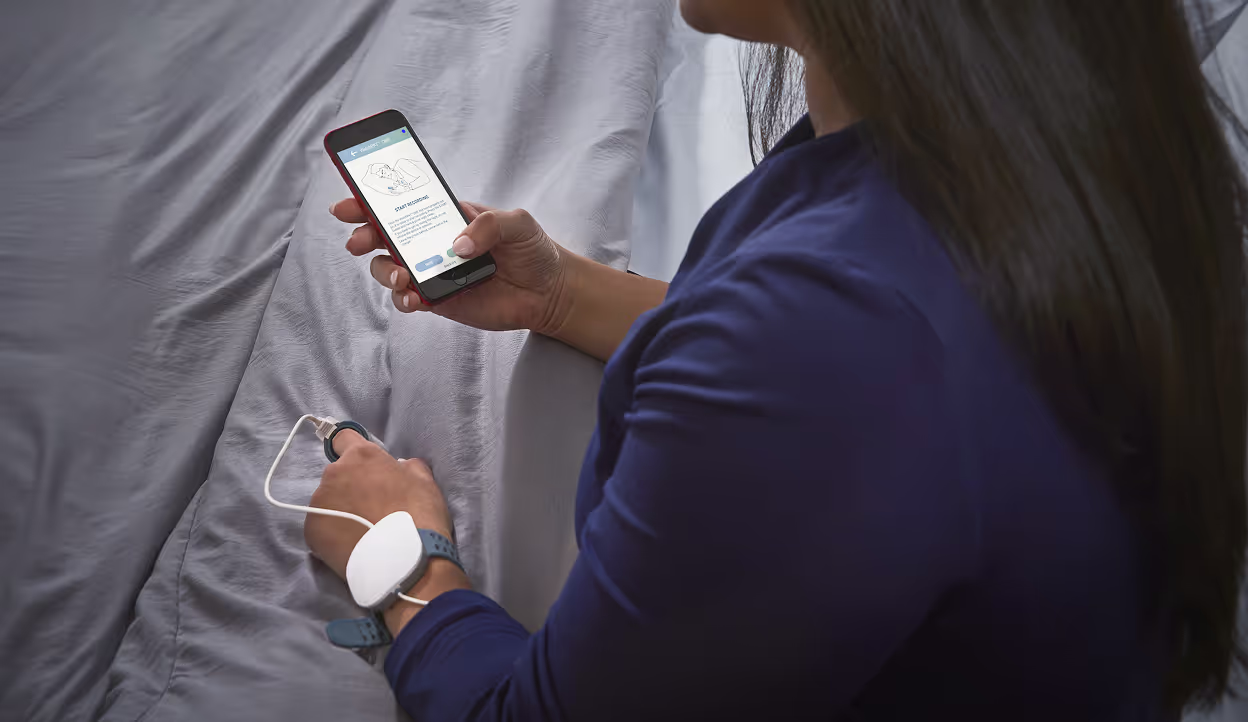
Home sleep testing uses a compact device equipped with a nasal pressure sensor or cannula to measure airflow, a pulse oximetry sensor to track oxygen saturation and pulse rate, and an effort belt to detect respiratory effort across the chest or abdomen. Some devices also use photoplethysmography or peripheral arterial tonometry to gather additional sleep data.
The device is typically worn for a single night. You attach the sensors before bed, sleep as normally as possible, and return or ship the device back the next day for download and analysis. A physician then interprets the results and determines whether the data indicates obstructive sleep apnea, how severe it is, and what treatment plan is appropriate.
Home sleep apnea testing does not measure brain waves, heart rhythm, or leg movements the way a full sleep polysomnogram does. This means it is best suited for diagnosing obstructive sleep apnea rather than conditions like central sleep apnea, narcolepsy, restless leg syndrome, sleep walking, or night terrors.
DID YOU KNOW: According to the American Academy of Sleep Medicine, home sleep testing devices have demonstrated sensitivity rates above 80% for detecting moderate to severe obstructive sleep apnea when used in appropriate patient populations.
KEY TAKEAWAY: A home sleep apnea test is a simplified, portable version of a sleep study that measures airflow, oxygen saturation, respiratory effort, and pulse rate to diagnose obstructive sleep apnea at home.
If you live in Port Orange or the surrounding area, the next step is understanding exactly what the device measures and why each sensor matters.
What a Home Sleep Test Device Measures
A home sleep test device records four to six channels of sleep data that a physician uses to calculate whether breathing interruptions meet the diagnostic threshold for obstructive sleep apnea. Each sensor serves a specific purpose.
Airflow
A nasal pressure sensor or cannula placed near the nostrils detects airflow changes during breathing. This sensor identifies apneas, which are complete pauses in airflow lasting at least 10 seconds, and hypopneas, which are partial reductions in airflow. Accurate airflow measurement is the foundation of an apnea diagnosis.
Oxygen Saturation and Pulse Rate
A pulse oximetry sensor, typically clipped to the fingertip, continuously measures blood oxygen levels and pulse rate throughout the night. Drops in oxygen saturation that correspond with breathing interruptions confirm the physiological impact of apnea events. The NIH notes that repeated oxygen desaturation during sleep is associated with increased cardiovascular risk, including hypertension and cardiac disease.
Respiratory Effort
An effort belt worn around the chest or abdomen detects the physical movement of breathing. This sensor helps distinguish between obstructive sleep apnea, where the airway collapses but respiratory effort continues, and central sleep apnea, where the brain temporarily stops sending signals to breathe and no respiratory effort occurs.
Additional Data Points
Some advanced home sleep testing kits also record body position and snoring intensity. The NightOwl Home Sleep Test, for example, uses a compact photoplethysmography sensor that captures peripheral arterial tonometry data, reducing the number of attachments the patient wears.
After the test night, the device stores the recorded sleep data for download and analysis. A board-certified physician or sleep specialist reviews the data and generates a diagnostic report.
IMPORTANT: Home sleep tests do not measure brain waves, electrodes-based sleep staging, or limb movements. If your physician suspects a sleep disorder beyond obstructive sleep apnea, they may recommend an in-center polysomnography instead.
KEY TAKEAWAY: A home sleep test device uses a nasal pressure sensor, pulse oximetry sensor, and effort belt to measure airflow, oxygen saturation, pulse rate, and respiratory effort during one night of sleep.
Understanding what the test measures helps you prepare properly, which is what we cover next.
Who Qualifies for a Home Sleep Test in Port Orange
Home sleep testing is appropriate for adult patients who have a moderate to high pretest probability of obstructive sleep apnea and no significant complicating conditions. Not every patient with sleep complaints qualifies.
Ideal Candidates
You are likely a strong candidate for a home sleep test if you have two or more of the following symptoms or risk factors:
- Loud, chronic snoring reported by a bed partner
- Witnessed episodes of gasping for air or choking during sleep
- Excessive daytime sleepiness despite adequate sleep duration
- A BMI of 30 or higher
- A neck circumference greater than 17 inches for men or 16 inches for women
- A history of hypertension, especially resistant hypertension
- A score of 10 or higher on the Epworth Sleepiness Scale
The AASM recommends home sleep testing for patients with a high clinical suspicion of obstructive sleep apnea who do not have major comorbid sleep disorders or significant cardiopulmonary disease.
Who Should Have an In-Lab Study Instead
Some patients need a full polysomnography in a sleep lab rather than a home sleep test. This includes patients with suspected central sleep apnea, complex sleep apnea syndrome, narcolepsy, restless leg syndrome, or neuromuscular disease that affects respiratory functions. Patients with significant cardiac disease or chronic respiratory conditions may also need the more comprehensive monitoring available with in-center testing.
If you are unsure whether you qualify, dumbo.health offers a free sleep assessment that helps determine whether a home sleep test is the right starting point for your situation.
TIP: If your symptoms include snoring, daytime sleepiness, and at least one risk factor like a high BMI or hypertension, a home sleep test is usually the most efficient first step toward diagnosis.
KEY TAKEAWAY: Adult patients with symptoms of obstructive sleep apnea and no suspected complicating conditions such as central sleep apnea, narcolepsy, or neuromuscular disease are the best candidates for home sleep testing.
Once you know you qualify, the next step is understanding exactly how to prepare for and complete the test.
How to Complete a Home Sleep Test in Port Orange: Step by Step
Completing a home sleep apnea test from Port Orange is a straightforward process that takes less than a week from order to results for most patients.
Step-by-Step Process
1. Start with a screening to confirm you are a good candidate for home sleep testing. You can complete the free sleep assessment at dumbo.health online in about five minutes.
2. Order your home sleep test. dumbo.health ships the at-home sleep test device directly to your Port Orange address for $149, with no insurance required and no prior authorization needed.
3. Receive the device and review the instructions. Most home sleep testing kits include a nasal cannula or nasal pressure sensor, a pulse oximetry finger clip, an effort belt, and a compact recording unit. Some devices pair with a mobile app that guides you through setup.
4. Attach the sensors before bed on your test night. Follow the included instructions to place the cannula, finger sensor, and effort belt. Sleep in your normal bed, in your normal sleeping position, for at least six hours.
5. Remove the sensors in the morning and prepare the device for return or data upload. Some devices require shipping back; others allow direct download and analysis through a mobile app.
6. A board-certified physician reviews your sleep data, interprets the results, and generates a diagnostic report. With dumbo.health, physician interpretation is included in the monthly care plans starting at $59 per month.
7. Review your results and discuss your treatment plan. If your results confirm obstructive sleep apnea, your physician will recommend a treatment path, which may include CPAP therapy, oral appliances, or lifestyle modifications.
After completing these steps, most patients have a confirmed diagnosis and a clear treatment plan within days rather than weeks. The entire process avoids the scheduling delays, travel, and overnight stays associated with traditional sleep lab appointments in the Port Orange area.
KEY TAKEAWAY: Completing a home sleep test from Port Orange involves ordering a device, wearing sensors for one night, and receiving physician-reviewed results, all without visiting a sleep lab or waiting for an in-person appointment.
With results in hand, the question becomes what happens next, especially regarding treatment options available locally and through telehealth.
Home Sleep Test vs. In-Lab Sleep Study: Which Is Right for You
Choosing between a home sleep test and an in-lab polysomnography depends on your symptoms, medical history, and what your physician is trying to diagnose. Both are legitimate diagnostic tools, but they serve different clinical purposes.
A home sleep test is a focused study designed to detect obstructive sleep apnea. A polysomnography, conducted by a registered polysomnographic technologist or sleep technologist in a sleep lab, monitors a broader range of functions including brain waves, heart rhythm, electrodes-based sleep staging, eye movements, and leg movements in addition to airflow and oxygen levels.
Setting
- Home Sleep Apnea Test: Your own bed in Port Orange or anywhere in Florida
- Polysomnography: A sleep lab or sleep center, such as those in Daytona Beach, Jacksonville, or Deland
Cost
- Home Sleep Apnea Test: Typically $149 to $500 out of pocket; dumbo.health charges $149 with no insurance required
- Polysomnography: Often $1,000 to $3,000 or more depending on facility and insurance coverage
What It Measures
- Home Sleep Apnea Test: Airflow, oxygen saturation, pulse rate, respiratory effort, and sometimes body position and snoring
- Polysomnography: All of the above plus brain waves, heart rhythm, eye movements, limb movements, and sleep staging
Convenience
- Home Sleep Apnea Test: High; no travel, no overnight clinic stay, no appointment scheduling delays
- Polysomnography: Lower; requires an overnight stay, may involve a wait of several weeks for an appointment
Best For
- Home Sleep Apnea Test: Adult patients with suspected uncomplicated obstructive sleep apnea
- Polysomnography: Patients with suspected central sleep apnea, complex sleep apnea syndrome, narcolepsy, restless leg syndrome, sleep walking, night terrors, or mixed sleep disorders
For most adult patients in Port Orange who suspect obstructive sleep apnea based on symptoms like snoring, gasping for air, and daytime sleepiness, a home sleep test is the most practical and cost-effective starting point. If the home test is inconclusive or a more complex sleep disorder is suspected, a physician can then refer for a full polysomnography.
KEY TAKEAWAY: A home sleep test is the best first-line diagnostic tool for uncomplicated obstructive sleep apnea, while an in-lab polysomnography is necessary for diagnosing central sleep apnea, narcolepsy, and other complex sleep disorders.
Understanding the testing options is important, but knowing what happens after diagnosis is equally critical.
Treatment Options After a Home Sleep Apnea Test Diagnosis
A confirmed diagnosis of obstructive sleep apnea from a home sleep test leads to a treatment plan tailored to the severity of your condition and your specific health profile. The most common treatments include CPAP therapy, oral appliance therapy, lifestyle modifications, and in some cases, surgical interventions.
CPAP Therapy
CPAP therapy is the first-line treatment for moderate to severe obstructive sleep apnea. A CPAP machine delivers continuous positive airway pressure through a mask, keeping the airway open during sleep. According to the American Academy of Sleep Medicine, CPAP therapy reduces apnea events, improves oxygen saturation, lowers blood pressure in patients with hypertension, and significantly reduces daytime sleepiness.
CPAP adherence is one of the biggest challenges in sleep apnea treatment. Many patients struggle with mask comfort, pressure settings, or simply remembering to use the device consistently. This is where ongoing support makes a measurable difference. dumbo.health includes CPAP therapy and equipment in all monthly care plans starting at $59 per month, with the Premium plan at $89 per month adding a dedicated sleep coach and advanced adherence monitoring to help patients stay on track.
Oral Appliance Therapy
Oral appliance therapy uses a custom sleep mouthguard fitted by a dental sleep medicine provider to reposition the lower jaw and tongue, keeping the airway open during sleep. The AASM considers oral appliances an appropriate alternative for patients with mild to moderate obstructive sleep apnea who cannot tolerate CPAP machines or prefer a less intrusive option. A bite assessment and sometimes digital imaging or 3D imaging are used to create a properly fitted device.
Lifestyle Modifications
For patients with mild obstructive sleep apnea, lifestyle changes can reduce symptom severity. Weight loss is one of the most effective interventions. The Sleep Foundation reports that losing even 10% of body weight can lead to measurable improvement in apnea severity. Other modifications include sleeping on your side rather than your back, avoiding alcohol before bed, and treating nasal passage congestion that restricts airflow.
Surgical Options
When CPAP therapy, oral appliances, and lifestyle changes are not sufficient, surgical options may be considered. Rhinologic surgery to correct nasal passage obstructions, soft tissue reduction procedures to widen the airway, and hypoglossal nerve stimulation are among the surgical interventions a sleep specialist may recommend. These are typically reserved for patients who have not responded to conservative treatment.
IMPORTANT: CPAP therapy remains the gold standard for moderate to severe obstructive sleep apnea. According to the NIH, consistent CPAP use for at least 4 hours per night is associated with significant improvement in daytime function, blood pressure control, and cardiovascular risk reduction.
KEY TAKEAWAY: Treatment options after a home sleep test diagnosis include CPAP therapy, oral appliance therapy, lifestyle modifications, and surgical procedures, with CPAP therapy being the first-line recommendation for moderate to severe obstructive sleep apnea.
Choosing the right treatment depends on your diagnosis, but cost and access barriers often determine whether patients follow through.
Cost of Sleep Apnea Testing and Treatment in Port Orange
The cost of sleep apnea testing and treatment varies significantly depending on whether you go through insurance, a local sleep center, or a cash-pay service. For many patients in Port Orange and throughout Florida, cost uncertainty is one of the biggest barriers to getting tested.
Traditional in-center testing at a sleep lab near Daytona Beach or Jacksonville can range from $1,000 to $3,000 or more for a single polysomnography. Even with insurance, patients often face copays, deductibles, and the frustration of prior authorization requirements. CPAP machines purchased through insurance typically cost $500 to $1,500 out of pocket after coverage, and CPAP supplies require ongoing purchases.
dumbo.health eliminates these cost barriers with transparent, cash-pay pricing that patients can plan around:
- Home sleep test: $149 (one-time, separate from monthly plans)
- Essentials Plan: $59 per month, which covers physician interpretation, CPAP therapy and equipment, standard follow-up care, and updates to your referring provider
- Premium Plan: $89 per month, adding a dedicated sleep coach, advanced adherence monitoring, and priority results turnaround
- Elite Plan: $129 per month, adding concierge clinical support, direct physician messaging, and custom reporting
All dumbo.health plans operate with no contracts and cancel-anytime flexibility. There is no insurance required, no prior authorizations, and no surprise bills. For a Port Orange resident paying out of pocket, the total cost of diagnosis plus one year of CPAP therapy through the Essentials Plan comes to approximately $857, compared to potentially several thousand dollars through traditional insurance-based pathways.
KEY TAKEAWAY: dumbo.health offers a home sleep test for $149 and monthly CPAP therapy plans starting at $59 per month with no insurance, no contracts, and no surprise bills, making sleep apnea diagnosis and treatment accessible for Port Orange residents.
Cost is one barrier, but understanding common misconceptions about sleep apnea testing can prevent other delays.
Real-World Scenarios: How Port Orange Residents Use Home Sleep Testing
Seeing how home sleep testing fits into actual situations helps clarify whether it is the right choice for your circumstances. The following scenarios reflect common experiences among patients in the Port Orange and Volusia County area.
Scenario 1: A 48-Year-Old Commercial Driver Facing a DOT Physical
A 48-year-old truck driver living in Port Orange is approaching his DOT physical renewal. His BMI is 34, his neck circumference is 18 inches, and his wife reports loud snoring and episodes of gasping for air during the night. His examining physician flags him for sleep apnea testing.
Rather than scheduling an appointment at a sleep lab in Daytona Beach and waiting several weeks, he orders a home sleep test through dumbo.health for $149. The device arrives at his Port Orange home within days. After one night of testing, a board-certified physician reviews his sleep data and confirms moderate obstructive sleep apnea with an AHI of 22. He enrolls in the Premium Plan at $89 per month, which includes CPAP therapy, equipment, a dedicated sleep coach, and advanced adherence monitoring. His physician receives the results and clears him for his medical certification.
Scenario 2: A 55-Year-Old Retiree With Undiagnosed Daytime Sleepiness
A 55-year-old retired teacher in Port Orange has experienced worsening daytime sleepiness, poor concentration, and insomnia-like symptoms for over a year. She does not snore loudly but wakes up frequently feeling unrested. Her primary care physician suspects obstructive sleep apnea but notes that her symptoms could also relate to sleep patterns disrupted by anxiety.
She completes the free sleep assessment on the dumbo.health website, which confirms she is a good candidate for a home sleep test. The test reveals mild obstructive sleep apnea with an AHI of 8. Her physician recommends positional therapy, weight management, and a trial of oral appliance therapy before considering CPAP.
Scenario 3: A 62-Year-Old With Hypertension and Suspected Sleep Apnea
A 62-year-old man in Daytona Beach with a 10-year history of resistant hypertension is referred by his cardiologist for sleep apnea testing. His sleeping patterns include restless sleep, waking with a dry mouth, and an Epworth Sleepiness Scale score of 14. His cardiologist suspects that undiagnosed obstructive sleep apnea is contributing to his blood pressure control difficulties.
He orders a home sleep test and receives a diagnosis of severe obstructive sleep apnea with an AHI of 38. He begins CPAP therapy through dumbo.health's Essentials Plan at $59 per month. After three months of consistent CPAP use, his cardiologist notes improved blood pressure readings at his next follow-up. The NIH has documented the association between untreated obstructive sleep apnea and resistant hypertension, making early testing particularly important for patients with cardiovascular risk factors.
KEY TAKEAWAY: Home sleep testing gives Port Orange residents a fast, affordable path from symptoms to diagnosis, whether the concern is a DOT physical, unexplained daytime sleepiness, or a cardiovascular condition linked to undiagnosed sleep apnea.
These real-world situations also highlight the importance of understanding what home sleep tests cannot do.
Limitations and Risks of Home Sleep Apnea Testing
Home sleep testing is a highly effective diagnostic tool for obstructive sleep apnea, but it has specific limitations that every patient should understand before relying solely on the results.
It Does Not Diagnose All Sleep Disorders
A home sleep test is designed to detect obstructive sleep apnea. It does not measure brain waves, sleep cycles, or limb movements, which means it cannot diagnose central sleep apnea, complex sleep apnea syndrome, narcolepsy, restless leg syndrome, sleep walking, night terrors, or other sleep disorders that require a full polysomnography. If your symptoms suggest a condition beyond obstructive sleep apnea, your physician may recommend in-center testing at a sleep lab.
False Negatives Can Occur
Because home sleep tests rely on the patient to correctly attach sensors and sleep for a sufficient duration, data quality can be affected by user error. A sensor that shifts during the night, a night of unusually poor sleep, or fewer than four hours of recorded data can produce inconclusive or falsely negative results. The AASM notes that a negative or inconclusive home sleep test in a patient with high clinical suspicion of obstructive sleep apnea should be followed by an in-lab polysomnography rather than being accepted as a definitive ruling out of the condition.
Not Suitable for Certain Patient Populations
Patients with significant cardiac disease, neuromuscular disease, chronic hypoventilation syndromes, or suspected central or mixed sleep apnea are not ideal candidates for home sleep testing. These conditions require the broader monitoring capabilities of a full polysomnography, including electrodes for tracking brain waves and heart rhythm, which are only available in a sleep lab.
No Real-Time Technologist Monitoring
During an in-lab polysomnography, a registered polysomnographic technologist or sleep technologist monitors the study in real time and can adjust sensors or troubleshoot issues. With a home sleep test, you manage the equipment yourself. While most modern home sleep testing kits are designed to be intuitive, the lack of technologist oversight means that technical problems during the test night may not be caught until after the data is reviewed.
dumbo.health addresses several of these limitations by including physician interpretation in every care plan, offering telehealth consultations to discuss results and next steps, and providing clear guidance on when an in-lab study may be necessary. If your home sleep test through dumbo.health is inconclusive, the care team can help coordinate the appropriate follow-up.
KEY TAKEAWAY: Home sleep tests are highly effective for diagnosing obstructive sleep apnea but cannot detect central sleep apnea, narcolepsy, or other complex sleep disorders, and inconclusive results should always be followed by further evaluation.
These limitations are real, but they should not prevent patients from getting tested. What often does prevent testing is misinformation.
Common Myths About Home Sleep Apnea Tests Debunked
MYTH: Home sleep tests are not as accurate as in-lab sleep studies.
FACT: For diagnosing obstructive sleep apnea in appropriate candidates, home sleep tests have demonstrated high diagnostic accuracy. The American Academy of Sleep Medicine endorses home sleep testing as a valid diagnostic tool for adult patients with a high pretest probability of uncomplicated obstructive sleep apnea. While polysomnography provides more data channels, the accuracy of home testing for its intended purpose is well established.
MYTH: You need insurance to get a home sleep test.
FACT: Insurance is not required for home sleep apnea testing. dumbo.health offers a home sleep test for $149 as a cash-pay service with no prior authorization, no insurance paperwork, and no surprise bills. Many patients in Port Orange and across Florida find that paying out of pocket is faster and more affordable than navigating insurance-based sleep testing pathways.
MYTH: If you do not snore, you cannot have sleep apnea.
FACT: While snoring is a common symptom of obstructive sleep apnea, the Sleep Foundation notes that not all people with sleep apnea snore, and not all people who snore have sleep apnea. Other symptoms include gasping for air during sleep, excessive daytime sleepiness, morning headaches, and waking with a dry mouth. A home sleep test measures airflow and oxygen levels rather than relying on symptom reports alone.
MYTH: Mild sleep apnea does not need treatment.
FACT: According to the NIH, even mild obstructive sleep apnea is associated with increased risk of hypertension, impaired cognitive function, and reduced quality of life. A treatment plan for mild sleep apnea may include positional therapy, weight management, or oral appliance therapy rather than CPAP, but leaving it undiagnosed and untreated carries measurable health consequences.
MYTH: CPAP machines are too expensive without insurance.
FACT: CPAP therapy through insurance can involve high deductibles, copays, equipment rental programs, and complex reauthorization processes. dumbo.health provides CPAP therapy and equipment through monthly plans starting at $59 per month with no contracts and cancel-anytime flexibility, making it a predictable and often more affordable alternative for patients paying out of pocket.
KEY TAKEAWAY: Misinformation about accuracy, insurance requirements, symptoms, severity, and cost prevents many patients from pursuing home sleep apnea testing, but none of these myths hold up under clinical evidence.
With myths cleared up, preparing for your test night properly helps ensure the best possible results.
How to Prepare for Your Home Sleep Test Night
Proper preparation for your home sleep test night improves data quality and reduces the risk of an inconclusive result. Small adjustments to your routine can make a significant difference.
Preparation Checklist
- Avoid alcohol for at least 4 hours before your test night, as alcohol relaxes airway soft tissue and can artificially increase apnea severity
- Avoid caffeine after noon on your test day, as it can alter your sleeping patterns and reduce total sleep time
- Do not take sleep medications unless specifically instructed by your physician
- Remove nail polish from the finger where the pulse oximetry sensor will be placed, as nail polish can interfere with oxygen saturation readings
- Charge or check the battery of the home sleep test device if required
- Review the sensor attachment instructions included with your home sleep testing kit before bed
- Set a consistent bedtime that allows at least 6 to 7 hours of sleep with the device attached
- Sleep in your normal bed using your normal pillow and sleeping position
- Keep the device instruction card or mobile app accessible in case you need to troubleshoot during the night
- Complete the free sleep assessment at dumbo.health before ordering your test to confirm you are an appropriate candidate
- If you use a nasal decongestant or have nasal passage congestion, discuss with your physician whether to treat it before the test night
Following these steps helps ensure the nasal pressure sensor, pulse oximetry sensor, and effort belt all collect clean, usable data throughout the night. The goal is to replicate your normal sleep patterns as closely as possible so the results accurately reflect your typical breathing during sleep.
KEY TAKEAWAY: Preparing for a home sleep test involves avoiding alcohol and caffeine, checking equipment, following sensor instructions carefully, and sleeping normally for at least six hours to produce reliable diagnostic data.
Preparation is important, but understanding what your results actually mean is what drives your next clinical decision.
Understanding Your Home Sleep Test Results
Home sleep test results are reported using the Apnea-Hypopnea Index, commonly called AHI, which measures the average number of apnea and hypopnea events per hour of recorded sleep. Your physician uses this number, along with oxygen desaturation data and symptom history, to make a diagnosis and recommend a treatment plan.
How AHI Scores Are Classified
An AHI below 5 is generally considered normal. An AHI between 5 and 14 indicates mild obstructive sleep apnea. An AHI between 15 and 29 indicates moderate obstructive sleep apnea. An AHI of 30 or above indicates severe obstructive sleep apnea. The AASM uses these thresholds as the standard classification framework for obstructive sleep apnea severity.
What Oxygen Desaturation Data Tells You
Beyond AHI, your physician also reviews how low your oxygen levels dropped during apnea events and how frequently desaturation occurred. Sustained or frequent drops below 88% to 90% oxygen saturation are clinically significant and may indicate a higher cardiovascular risk. The National Heart, Lung, and Blood Institute notes that repeated oxygen desaturation during sleep is linked to increased risk of hypertension, cardiac disease, and stroke.
What Happens After Results
If your results confirm obstructive sleep apnea, your physician will recommend a treatment plan based on severity. Mild cases may begin with lifestyle changes or oral appliance therapy. Moderate to severe cases typically warrant CPAP therapy. With dumbo.health, physician interpretation of your sleep data is included in all monthly plans, and the care team provides guidance on next steps whether your AHI is 6 or 46.
If results are inconclusive or suggest a condition other than obstructive sleep apnea, your physician may recommend a follow-up polysomnography at a sleep lab. This is appropriate when central sleep apnea, complex sleep apnea syndrome, or other sleep disorders cannot be ruled out with home testing alone.
Home sleep apnea test results provide the clinical foundation for every treatment decision. Without accurate results, patients risk either unnecessary treatment or continued harm from undiagnosed obstructive sleep apnea. This is why choosing a testing pathway that includes physician oversight and clear follow-up guidance matters.
KEY TAKEAWAY: Home sleep test results are reported using the AHI score, with values of 5 or above indicating obstructive sleep apnea, and treatment recommendations scale with severity from lifestyle changes to CPAP therapy.
Results are only valuable if they lead to consistent, supervised treatment, which brings us to the role of ongoing care.
Why Ongoing Care Matters After Diagnosis
Getting diagnosed with obstructive sleep apnea is the first step, but long-term outcomes depend on treatment adherence and ongoing clinical support. Many patients in Port Orange and across Florida receive a diagnosis and CPAP equipment but struggle to maintain consistent use without follow-up care.
According to the American Academy of Sleep Medicine, CPAP adherence rates hover around 50% to 70% depending on the study and the definition of adherence used. The most commonly cited benchmark is using the device for at least 4 hours per night on at least 70% of nights. Patients who receive structured follow-up, coaching, and troubleshooting support show significantly better adherence than those who are simply handed equipment and sent home.
dumbo.health builds ongoing care into every plan. The Essentials Plan at $59 per month includes physician interpretation, CPAP therapy and equipment, and standard follow-up care. The Premium Plan at $89 per month adds a dedicated sleep coach from a licensed care team and advanced adherence monitoring, which clinicians frequently observe leads to better outcomes. The Elite Plan at $129 per month includes concierge clinical support, direct physician messaging, and custom reporting for patients who want the highest level of access. All plans operate with no contracts and can be cancelled anytime.
For healthcare practitioners and physicians in the Port Orange area, dumbo.health also offers the ability to receive updates and custom reporting on referred patients, supporting coordinated care without adding administrative burden.
Restful sleep is not just about diagnosing the problem. It requires a sustained treatment plan, regular monitoring, and access to a care team that can adjust therapy as needed. Many patients report that having a dedicated sleep coach makes the difference between using their CPAP consistently and abandoning it within the first few months.
KEY TAKEAWAY: Long-term CPAP adherence improves significantly with structured follow-up care, sleep coaching, and adherence monitoring, all of which are included in dumbo.health's monthly care plans.
Before wrapping up, it helps to understand how telehealth and remote care are changing access to sleep medicine in Florida.
Telehealth and Remote Sleep Apnea Care in Port Orange
Telehealth has expanded access to sleep apnea diagnosis and treatment for patients in Port Orange who previously had to travel to sleep centers in Daytona Beach, Jacksonville, or other Florida cities for specialist care.
Telehealth sleep apnea care allows patients to consult with board-certified physicians and sleep specialists remotely, receive physician interpretation of home sleep test results without an in-person visit, and manage CPAP therapy with virtual follow-up appointments. For patients in areas without a nearby sleep specialist, telehealth eliminates the geographic barrier entirely.
dumbo.health operates as a telehealth-first sleep apnea care platform that ships home sleep testing devices directly to patients, provides physician review and interpretation remotely, and delivers CPAP therapy and equipment to your door. The entire process, from initial screening to ongoing treatment, can be completed without a single in-person appointment for most patients with uncomplicated obstructive sleep apnea.
This model is particularly valuable for adult patients who work irregular hours, such as commercial drivers on the road, retirees who prefer to avoid clinic visits, or anyone in the Port Orange area who values convenience without sacrificing clinical quality. The experience of managing sleep apnea through telehealth mirrors what patients receive in a traditional setting but with faster turnaround, transparent pricing, and greater flexibility.
DID YOU KNOW: The AASM issued updated guidelines supporting the use of telehealth for the diagnosis and management of obstructive sleep apnea, recognizing that remote care can maintain clinical standards while improving access for patients in underserved or rural areas.
KEY TAKEAWAY: Telehealth sleep apnea care through dumbo.health gives Port Orange residents access to physician-supervised diagnosis, CPAP therapy, and ongoing treatment without requiring in-person visits to a sleep lab or specialist office.
Conclusion
A home sleep apnea test gives Port Orange residents a clinically validated, convenient, and affordable path from symptoms to diagnosis to treatment. Whether you are dealing with snoring, daytime sleepiness, gasping for air, or a referral from your physician, home sleep testing removes the barriers of cost, scheduling, and travel that keep too many people from getting the care they need.
dumbo.health makes the process straightforward with a $149 at-home sleep test, no insurance required, and monthly care plans starting at $59 per month that include CPAP therapy, physician oversight, and ongoing support with no contracts and cancel-anytime flexibility. If you suspect sleep apnea is affecting your health, your safety, or your quality of life, the most productive step you can take today is getting tested.
Frequently Asked Questions About Home Sleep Apnea Test in Port Orange, Florida
What is a home sleep apnea test?
A home sleep apnea test (HSAT) is a simplified diagnostic tool that measures breathing, oxygen saturation, airflow, and respiratory effort while you sleep in your own bed. The device typically includes a nasal pressure sensor, an effort belt, and a pulse oximetry sensor to monitor oxygen levels and pulse rate overnight. A physician reviews the recorded sleep data and generates a report based on the results. Home sleep testing is a widely accepted first-line evaluation for suspected obstructive sleep apnea in adults. A healthcare professional can help determine whether a home sleep test is appropriate for your situation.
What is obstructive sleep apnea?
Obstructive sleep apnea (OSA) is a common sleep disorder in which the soft tissue in the throat, including the tongue and soft palate, relaxes during sleep, causing the airway to partially or fully collapse. This blocks airflow, reduces oxygen saturation, and forces the body to briefly wake to reopen the airway. These interruptions can happen dozens or even hundreds of times per night. According to the American Academy of Sleep Medicine, OSA is one of the most prevalent and underdiagnosed sleep disorders in adults. Untreated obstructive sleep apnea is associated with hypertension, cardiac disease, and excessive daytime sleepiness.
What is central sleep apnea, and how is it different from obstructive sleep apnea?
Central sleep apnea (CSA) occurs when the brain fails to send proper signals to the muscles that control breathing, rather than being caused by a physical airway obstruction. Obstructive sleep apnea is caused by the collapse of soft tissue in the throat. Some patients experience both types simultaneously, which is referred to as complex sleep apnea syndrome or mixed sleep apnea. Home sleep testing is generally designed to evaluate obstructive sleep apnea. A sleep specialist can determine which type of sleep apnea is present and recommend the appropriate diagnostic approach, which may include polysomnography in a sleep lab for more complex cases.
What are the symptoms of sleep apnea?
Common symptoms of sleep apnea include loud snoring, gasping for air during sleep, waking frequently throughout the night, unrefreshing sleep, morning headaches, difficulty concentrating, and excessive daytime sleepiness. A bed partner may observe episodes where breathing appears to stop entirely. Not everyone with sleep apnea snores loudly, and some people have no obvious nighttime symptoms. The Epworth Sleepiness Scale is one tool clinicians use to assess daytime sleepiness in patients with suspected sleep disorders. If you recognise several of these symptoms, speaking with a healthcare professional about sleep apnea testing is a reasonable next step.
Is sleep apnea dangerous if left untreated?
Yes, untreated sleep apnea can carry serious health risks. The repeated drops in oxygen saturation that occur during apnea events place sustained stress on the cardiovascular system. The NIH and other health authorities link untreated obstructive sleep apnea to increased risk of hypertension, cardiac disease, type 2 diabetes, stroke, and impaired cognitive function. Excessive daytime sleepiness caused by disrupted sleep patterns also raises the risk of accidents while driving or operating machinery. Seeking evaluation from a healthcare professional is important if you have symptoms that suggest a sleep disorder.
How does home sleep testing work?
Home sleep testing works by having you wear a small monitoring device during a normal night of sleep at home. The device typically records airflow using a nasal pressure sensor and cannula, measures respiratory effort using an effort belt, and tracks oxygen saturation and pulse rate using pulse oximetry. Some devices also use photoplethysmography or peripheral arterial tonometry to capture additional sleep data. After the test night, the recorded data is downloaded and analysed by a physician or sleep specialist, who interprets the results and prepares a diagnostic report. At-home sleep testing through dumbo.health follows this same process, with a $149 one-time cost for the device and test night.
Who should consider getting a home sleep apnea test?
Adults who snore regularly, wake feeling unrefreshed, experience gasping for air during sleep, or have excessive daytime sleepiness may benefit from sleep apnea testing. Home sleep testing is generally appropriate for adult patients with a moderate to high risk of obstructive sleep apnea who do not have significant comorbidities such as severe heart failure, neuromuscular disease, or other conditions that may require a more comprehensive in-lab sleep study. A healthcare professional or sleep specialist can help determine whether a home sleep test or an in-center polysomnography study is the right diagnostic tool for your situation.
What is the difference between a home sleep test and an in-lab sleep study?
A home sleep test is a portable, simplified device that measures breathing, oxygen levels, airflow, and respiratory effort during a single night at home. It is primarily used to evaluate obstructive sleep apnea in otherwise healthy adults. An in-lab sleep study, also called a polysomnogram or polysomnography, is conducted in a sleep center and records additional data including brain waves via electrodes, heart rhythm, leg movements, and more detailed respiratory functions. Polysomnography is required when a more complex sleep disorder such as narcolepsy, restless leg syndrome, sleep walking, night terrors, or central sleep apnea is suspected, or when a home test result is inconclusive.
How accurate is a home sleep apnea test?
Home sleep tests are considered a validated and clinically accepted method for diagnosing obstructive sleep apnea in appropriate adult candidates. The American Academy of Sleep Medicine recognises home sleep testing as a reliable tool for evaluating OSA when used for the right patient population. However, home sleep tests may underestimate the severity of sleep apnea compared to full polysomnography because they record fewer physiological channels and do not monitor brain waves or sleep stages directly. If a home sleep test returns a negative result but symptoms persist, a sleep specialist may recommend an in-lab sleep study for a more complete evaluation.
What happens after I complete a home sleep apnea test?
After your test night, the recorded sleep data is returned and reviewed by a physician or sleep specialist. The physician analyses the data to calculate metrics such as the apnea-hypopnea index, oxygen saturation levels, and respiratory effort patterns. A written interpretation and diagnostic report is then prepared. Based on the results, a treatment plan may be recommended, which could include CPAP therapy, oral appliance therapy, positional adjustments, or referral for further evaluation. With dumbo.health, physician interpretation and a report are included in the monthly plan, and results can be sent to your referring provider. You can explore sleep apnea care solutions to understand what ongoing care may involve.
How much does a home sleep apnea test cost in Port Orange, Florida?
The cost of a home sleep apnea test can vary depending on the provider and whether insurance is involved. dumbo.health offers a home sleep test for $149 as a one-time, cash-pay purchase with no insurance required, no prior authorizations, and no surprise bills. This covers the at-home test device and one night of testing. Physician interpretation and ongoing care are available through separate monthly plans starting at $59 per month. For patients in Port Orange and the broader Volusia County area who want transparent pricing without insurance complications, cash-pay options like dumbo.health can offer predictable costs.
Do I need insurance to get a home sleep apnea test?
No, insurance is not required to access a home sleep apnea test through all providers. dumbo.health operates on a cash-pay model with no insurance required, no prior authorizations, and no surprise bills. Patients in Port Orange, Florida, and across the state can access testing and ongoing sleep apnea care with transparent pricing. If you have insurance, your plan may cover some or all of the cost of a sleep study depending on your policy and the provider you use. A healthcare professional can help clarify your coverage options.
What does CPAP therapy involve, and is it effective for sleep apnea?
CPAP, or continuous positive airway pressure, is the most widely used and evidence-supported treatment for moderate to severe obstructive sleep apnea. A CPAP machine delivers a continuous stream of pressurised air through a mask worn during sleep, which keeps the upper airway open and prevents apnea events. According to the Mayo Clinic, CPAP therapy can significantly reduce symptoms of sleep apnea including snoring, gasping for air, and daytime sleepiness when used consistently. CPAP adherence, meaning regular nightly use, is important for achieving the full benefits of treatment. A healthcare professional should guide CPAP therapy initiation and follow-up.
What is CPAP adherence, and why does it matter?
CPAP adherence refers to how consistently and for how long a patient uses their CPAP machine each night. Adequate adherence is generally defined by clinical guidelines as using CPAP for at least four hours per night on at least seventy percent of nights. Poor adherence limits the therapeutic benefit of CPAP and can affect outcomes related to blood pressure, daytime alertness, and cardiovascular health. For commercial drivers, CPAP adherence data may also be reviewed by a certified medical examiner as part of DOT certification considerations. Ongoing adherence monitoring is included in dumbo.health monthly plans to help patients stay on track with CPAP therapy.
Can oral appliances treat sleep apnea instead of CPAP?
Oral appliances are a recognised alternative treatment for mild to moderate obstructive sleep apnea, and for some patients who cannot tolerate CPAP therapy. An oral appliance, sometimes called a custom sleep mouthguard or mandibular advancement device, works by repositioning the lower jaw and tongue to help keep the airway open during sleep. According to the American Academy of Sleep Medicine, oral appliance therapy can be effective for selected patients, particularly those with positional or mild to moderate OSA. A dental sleep medicine professional or sleep specialist should assess whether oral appliance therapy is appropriate and fit the device properly to ensure effectiveness.
How is sleep apnea diagnosed?
Sleep apnea is diagnosed through a sleep study, which may be conducted at home using a home sleep apnea test or in a sleep lab using full polysomnography. The test measures key metrics including the apnea-hypopnea index, oxygen saturation, airflow, and respiratory effort. A physician or sleep specialist interprets the results and makes a diagnostic determination. Home sleep testing is a standard first-line diagnostic tool for suspected obstructive sleep apnea in appropriate adult patients. A diagnosis cannot be made based on symptoms alone. If you are experiencing symptoms such as snoring, gasping for air, or excessive daytime sleepiness, a healthcare professional can advise whether sleep apnea testing is indicated.
What are the benefits of home sleep testing compared to a sleep lab?
Home sleep testing offers several practical advantages over in-lab sleep studies. Patients sleep in their own environment, which can produce more representative sleep patterns than an unfamiliar clinic setting. Home testing is typically faster to access, more affordable, and requires no overnight clinic stay. Results can often be returned quickly, and the process from testing to treatment can be streamlined. For patients with suspected uncomplicated obstructive sleep apnea, home sleep testing is clinically appropriate and widely accepted. In-lab polysomnography remains the standard for more complex or unclear cases. A healthcare professional can advise which option is right for your clinical picture.
Do commercial drivers in Port Orange need a sleep apnea test for DOT certification?
Commercial drivers with a CDL may be evaluated for sleep apnea as part of the DOT physical examination process. The FMCSA does not have a single universal sleep apnea rule, but certified medical examiners are required to assess whether a driver has a condition that could interfere with safe driving, and obstructive sleep apnea is one such condition. A certified medical examiner, not dumbo.health, makes all DOT certification decisions. If a driver is referred for sleep apnea evaluation, a home sleep test may be an acceptable first-line assessment in some cases. For more detail on this process, the DOT sleep apnea test at home guide covers what commercial drivers should know.
Can truck drivers and CDL holders use an at-home sleep test?
Yes, at-home sleep testing can be an option for truck drivers and CDL holders who are referred for sleep apnea evaluation by a certified medical examiner or healthcare professional. Home sleep tests measure the key respiratory metrics needed to evaluate obstructive sleep apnea, including oxygen saturation, airflow, and apnea events. The convenience of home testing means drivers do not need to spend a night in a sleep lab. dumbo.health supports at-home sleep testing for commercial drivers and can provide physician interpretation and documentation support, though DOT certification decisions remain with the certified medical examiner.
What should I do if my home sleep test results show sleep apnea?
If your home sleep test results indicate sleep apnea, the next step is to review the findings with a qualified healthcare professional or sleep specialist who can explain the severity of your results and discuss appropriate treatment options. Treatment may include CPAP therapy, oral appliance therapy, lifestyle changes, or further evaluation with polysomnography depending on the type and severity of the apnea. You should not begin, change, or stop treatment without clinician guidance. If you are using dumbo.health, your monthly plan includes physician interpretation, a written report, and ongoing care support to help you move from diagnosis to treatment with clear next steps.
What happens if sleep apnea is left untreated?
Untreated sleep apnea can have significant consequences for long-term health and daily functioning. Repeated episodes of low oxygen saturation and disrupted sleep stress the cardiovascular system and are associated with increased risk of hypertension, cardiac disease, stroke, metabolic disorders, and impaired cognitive function. Daytime sleepiness caused by poor sleep quality can also impair driving ability and workplace safety. For commercial drivers, untreated sleep apnea may affect DOT certification. If you have symptoms that suggest a sleep disorder, seeking evaluation from a healthcare professional is important. Early diagnosis and treatment can support better sleep quality and overall health outcomes.
Can I find a sleep apnea specialist or home sleep test provider near me in Port Orange, Florida?
Yes, patients in Port Orange and the surrounding Volusia County area, including New Smyrna Beach and Daytona Beach, can access sleep apnea evaluation and home sleep testing through local providers and telehealth-supported services. dumbo.health offers a fully at-home sleep test that can be completed anywhere in Florida, including Port Orange, without requiring a clinic visit. The $149 home sleep test includes the device and one test night, and monthly care plans cover physician interpretation, CPAP therapy, and adherence support. If you are unsure whether home testing is appropriate, starting with a free sleep assessment can help clarify your next step.
Is a doctor's referral required to get a home sleep apnea test?
Requirements vary by provider. Some home sleep testing services require a physician referral or script before a test device can be ordered. Others, including telehealth-supported platforms, can facilitate a clinician review as part of the intake process. A healthcare practitioner should always be involved in evaluating whether home sleep testing is appropriate for a given patient, interpreting the results, and guiding treatment decisions. dumbo.health uses board-certified physicians to support the testing and care workflow. If you are unsure whether you need a referral, the free sleep assessment can help you understand what the process involves before committing to a test.
What other sleep disorders can affect sleep quality beyond sleep apnea?
Sleep apnea is one of several sleep disorders that can disrupt sleep quality and overall health. Other conditions that affect sleeping patterns include insomnia, restless leg syndrome, narcolepsy, night terrors, sleep walking, and hypersomnia. Some patients also experience mixed or complex sleep apnea syndrome, which involves both obstructive and central components. Conditions like restless leg syndrome or narcolepsy typically require in-lab evaluation such as Multiple Sleep Latency Testing or Maintenance of Wakefulness Testing rather than a standard home sleep test. A sleep specialist can help determine the most appropriate diagnostic path based on your specific symptoms and sleep history.
How long does sleep apnea treatment take to show results?
The timeline for seeing improvement from sleep apnea treatment varies depending on the treatment type, severity of the condition, and patient adherence. Many patients using CPAP therapy report noticing improvements in daytime alertness and sleep quality within the first few weeks of consistent use. Long-term benefits for blood pressure and cardiovascular health typically develop over months of sustained treatment. Oral appliance therapy may take several weeks of adjustment to achieve optimal results. A healthcare professional can help set realistic expectations for your treatment plan and monitor progress through adherence follow-up and clinical review.
How do I get started with a home sleep apnea test through dumbo.health?
Getting started with a home sleep apnea test through dumbo.health begins with a free sleep assessment to help determine whether at-home testing may be appropriate for your situation. The home sleep test is available for a one-time cost of $149 and includes the test device and one night of testing. Ongoing care, including physician interpretation, a written report, CPAP therapy and equipment, and adherence follow-up, is available through monthly plans starting at $59 per month with no contracts and the ability to cancel at any time. There is no insurance required, no prior authorizations, and no surprise bills. You can start your sleep apnea care with transparent pricing from the first step.