




Home Sleep Apnea Test in Palm Coast, Florida: The Complete Guide to At-Home Sleep Testing
A home sleep apnea test in Palm Coast, Florida gives you a clinically validated way to screen for obstructive sleep apnea from your own bed, without visiting a sleep laboratory or spending a night in a clinic. According to the American Academy of Sleep Medicine, home sleep apnea testing is an accepted diagnostic method for adult patients with a moderate to high probability of obstructive sleep apnea. This guide is for Palm Coast residents, Flagler County drivers, and anyone in the surrounding Florida communities searching for affordable, convenient sleep testing near you. You will learn how home sleep testing works, what it measures, how it compares to in-clinic polysomnography, what results mean, and how to move from diagnosis to treatment. If you suspect a sleep problem but keep putting off testing, the information ahead will show you exactly how to take the next step.
Quick Answer
A home sleep apnea test is a portable sleep test you wear for one night at home. It records airflow, oxygen saturation, respiratory effort, and heart rate to determine whether you have obstructive sleep apnea. In Palm Coast, Florida, you can access home sleep testing without visiting a sleep laboratory or needing health insurance. dumbo.health offers an FDA-cleared home sleep test for $149 with physician interpretation and no insurance required.
Key Takeaways
- A home sleep apnea test measures airflow, oxygen levels, respiratory effort, and heart rate while you sleep in your own bed.
- The test is designed specifically for diagnosing obstructive sleep apnea in adult patients with suspected moderate to high risk.
- Palm Coast residents can order a home sleep test through dumbo.health for $149 with no insurance, no referral, and no office visit required.
- Results are reviewed by a board-certified physician, typically within days of completing the test.
- If diagnosed, CPAP therapy through dumbo.health starts at $59 per month with no contracts and the ability to cancel anytime.
- Home sleep testing is not appropriate for diagnosing insomnia, neuromuscular disease, or complex sleep related disorders that require full polysomnography.
What Is a Home Sleep Apnea Test and How Does It Work
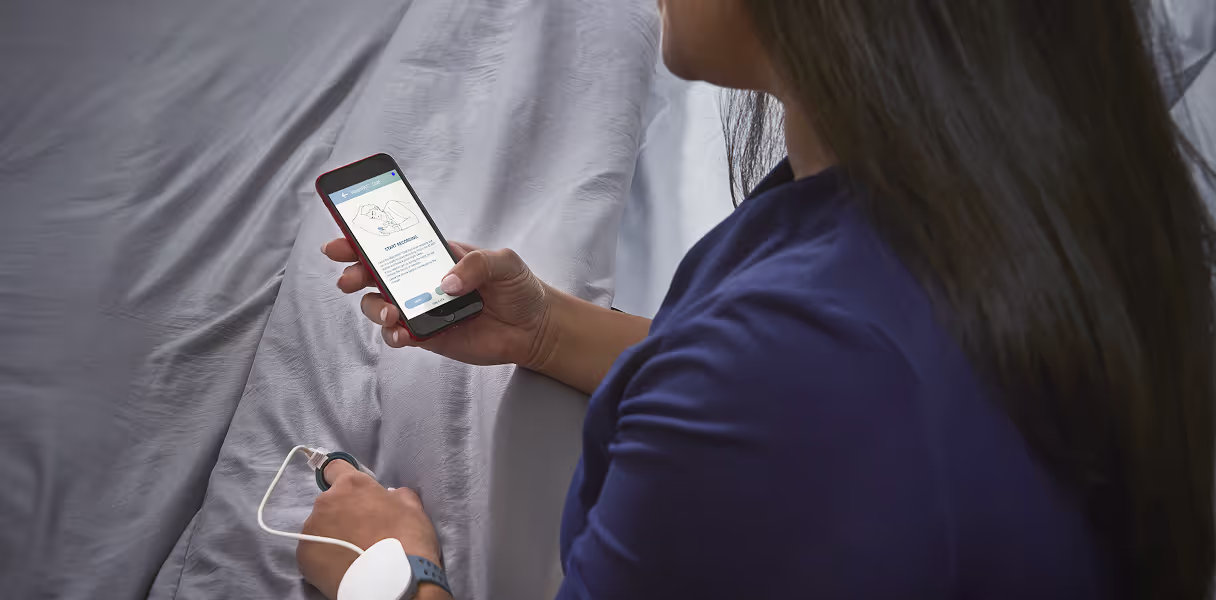
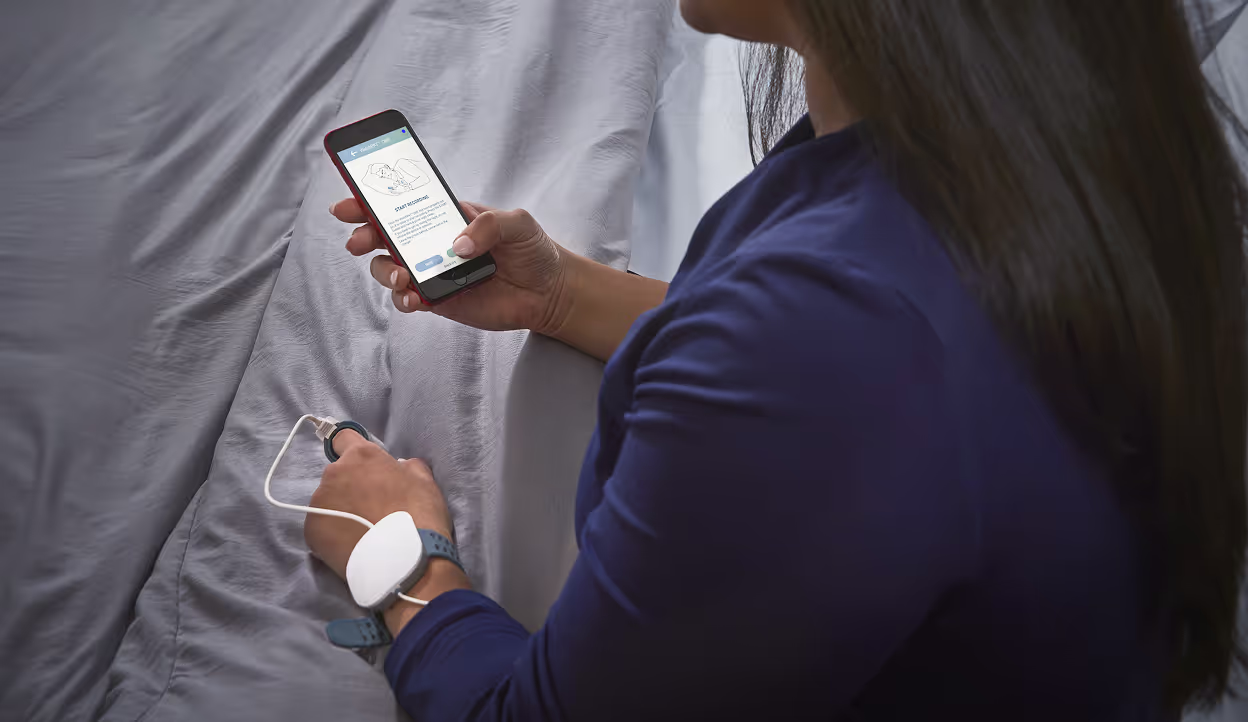
A home sleep apnea test is a portable diagnostic device you wear overnight to detect obstructive sleep apnea without leaving your home. The device uses sensors to track several key physiological signals while you sleep in your normal environment.
What the Device Measures
The home sleep testing device records four core data streams throughout the night:
- Airflow through a nasal cannula sensor that detects breathing pauses and reductions
- Oxygen saturation via a fingertip pulse oximetry sensor that monitors blood oxygen levels
- Respiratory effort through a chest or abdominal belt that measures breathing movement
- Heart rate captured by the oximetry sensor, tracking heart rhythm changes associated with apnea events
Some devices also record snoring intensity and body position. Together, these measurements allow a sleep physician to calculate the AHI (Apnea-Hypopnea Index), which quantifies how many times per hour your breathing stops or becomes significantly shallow.
How AHI Determines Your Diagnosis
The AHI (Apnea-Hypopnea Index) is the primary metric used for diagnosis. According to the American Academy of Sleep Medicine, an AHI of 5 to 14 events per hour indicates mild obstructive sleep apnea, 15 to 29 indicates moderate, and 30 or higher indicates severe. An AHI below 5 is generally considered normal. This number directly determines whether treatment is recommended and what type of treatment options are appropriate.
The home sleep apnea test does not measure brain waves, which means it cannot track sleep stages or detect conditions such as insomnia or periodic limb movement disorder. It is purpose-built for identifying obstructive sleep apnea syndrome in adult patients.
DID YOU KNOW: According to the Sleep Foundation, roughly 80 percent of moderate to severe obstructive sleep apnea cases remain undiagnosed, making accessible testing options critical for identifying people who need treatment.
KEY TAKEAWAY: A home sleep apnea test measures airflow, oxygen saturation, respiratory effort, and heart rate to calculate your AHI score, which determines whether you have obstructive sleep apnea and how severe it is.
Understanding what the test measures is one thing, but knowing who actually qualifies for home testing in Palm Coast is the next critical step.
Who Should Get a Home Sleep Test in Palm Coast, Florida
Home sleep testing is appropriate for adult patients who have symptoms consistent with obstructive sleep apnea and no significant complicating medical conditions. If you live in Palm Coast or the broader Flagler County area and experience chronic snoring, daytime fatigue, or witnessed breathing pauses during sleep, you are likely a candidate for a home sleep apnea test.
Common Symptoms That Indicate Testing
The following symptoms are the most clinically relevant indicators that a sleep health evaluation is warranted:
- Loud, persistent snoring reported by a bed partner or family member
- Gasping, choking, or snorting during sleep
- Excessive daytime sleepiness despite adequate time in bed
- Morning headaches that resolve within a few hours of waking
- Difficulty concentrating or memory problems during the day
- Waking frequently during the night to urinate
- A dry mouth or sore throat upon waking
The CDC notes that adults generally need at least 7 hours of sleep per night, but even people who spend enough time in bed may not get restful sleep if breathing interruptions fragment their sleep cycles.
Risk Factors That Increase Your Likelihood
Certain physical and medical characteristics raise the probability of obstructive sleep apnea. A BMI of 30 or higher significantly increases risk. Neck circumference greater than 17 inches in men or 16 inches in women is another strong predictor. Age over 50, male sex, and a family history of sleep apnea all contribute. Structural features such as a deviated septum, enlarged tonsils, enlarged adenoids, a large uvula, or excess tissue in the muscles in the back of the mouth and soft palate can narrow the airway and increase the chance of obstruction during sleep.
Medical conditions including hypertension, cardiac disease, and type 2 diabetes are frequently associated with obstructive sleep apnea. If you have any combination of symptoms and risk factors, testing is a practical next step rather than something to delay.
Who May Not Be a Good Candidate
Home sleep testing is designed for uncomplicated obstructive sleep apnea screening. It may not be appropriate if you have suspected central sleep apnea, neuromuscular disease, COPD, severe cardiac disease, or other complex sleep related breathing problems. In those cases, a full in-center polysomnography study is usually recommended to capture brain waves, electrodes measuring muscle activity, and more detailed physiological data. Children also typically require in-clinic polysomnography rather than home testing.
KEY TAKEAWAY: If you snore, feel tired during the day, or have risk factors such as a high BMI or hypertension, a home sleep apnea test in Palm Coast is a straightforward first step toward diagnosis.
Knowing you qualify is the starting point, but the real question most Palm Coast residents ask is how the process actually works from start to finish.
How to Get a Home Sleep Apnea Test in Palm Coast, Florida
Getting a home sleep test in Palm Coast does not require an office visit, a referral from a sleep clinic, or health insurance coverage. The process is straightforward and can be completed entirely from home.
Step-by-Step Process for Ordering and Completing Your Test
1. Complete the free sleep assessment at dumbo.health to confirm you are a candidate for home sleep testing based on your symptoms and sleep history.
2. Order your home sleep test through dumbo.health for $149. The device ships directly to your Palm Coast address with clear instructions.
3. Attach the sensors before bed. The device typically includes a nasal cannula for airflow, a fingertip oximetry sensor for oxygen saturation and heart rate, and a chest belt for respiratory effort.
4. Sleep in your own bed for one night while the device records your data automatically.
5. Return the device using the prepaid shipping materials included in your kit.
6. Receive your results after a board-certified physician completes download and analysis of your sleep data and generates your report.
After completing these steps, you will have a clinical diagnosis and a clear path to treatment options if obstructive sleep apnea is confirmed. Most patients receive test results within a few business days of returning the device.
IMPORTANT: The home sleep test device must be worn for a minimum of one full night to capture enough data for accurate interpretation. If the device detaches during the night, the test may need to be repeated.
KEY TAKEAWAY: Palm Coast residents can order, complete, and receive results from a home sleep apnea test through dumbo.health without leaving home, visiting an office, or dealing with health insurance paperwork.
Once you understand the ordering process, the next natural question is how home testing stacks up against the alternative: a full in-clinic sleep study.
Home Sleep Test vs In-Clinic Sleep Study: Which Is Right for You
A home sleep apnea test is a focused screening tool for obstructive sleep apnea, while an in-clinic sleep study, known as polysomnography, is a comprehensive overnight evaluation that monitors a wider range of physiological data. Choosing between them depends on your symptoms, medical history, and what your physician is trying to diagnose.
How the Two Tests Compare
Here is a structured comparison of the key differences between a portable sleep test at home and a full polysomnogram at a sleep laboratory:
Setting
- Home Sleep Apnea Test: Your own bed at home in Palm Coast or anywhere in Florida
- Polysomnography: A sleep laboratory or sleep center, such as those at AdventHealth or BayCare locations
What It Measures
- Home Sleep Apnea Test: Airflow, oxygen saturation, respiratory effort, heart rate, and sometimes snoring and body position
- Polysomnography: All of the above plus brain waves via electrodes, eye movements, muscle activity, heart rhythm via electrocardiogram, and leg movements
Number of Sensors
- Home Sleep Apnea Test: Typically 3 to 4 sensors that you attach yourself
- Polysomnography: Up to 20 or more sensors applied by a sleep technologist
Conditions Diagnosed
- Home Sleep Apnea Test: Obstructive sleep apnea in adult patients
- Polysomnography: Obstructive sleep apnea, central sleep apnea, insomnia, periodic limb movement disorder, narcolepsy, REM behavior disorder, and other complex sleep disorders
Cost
- Home Sleep Apnea Test: Typically $149 to $500 depending on provider; dumbo.health charges $149 with no insurance required
- Polysomnography: Often $1,000 to $3,000 or more at a sleep laboratory; may require prior authorization from health insurance
Convenience
- Home Sleep Apnea Test: High convenience, no travel, no overnight stay away from home
- Polysomnography: Requires scheduling an appointment, traveling to a sleep center, and spending one or more nights in a clinical setting
Wait Time
- Home Sleep Apnea Test: Device ships directly to your address; no waitlist at a sleep clinic
- Polysomnography: Wait times at Florida sleep centers can range from weeks to months depending on location and demand
Accuracy for Obstructive Sleep Apnea
- Home Sleep Apnea Test: Clinically validated for moderate to severe obstructive sleep apnea in adults without significant comorbidities
- Polysomnography: Gold standard for all sleep disorders; required when home testing is inconclusive or when complex conditions are suspected
For most adult patients in Palm Coast who present with symptoms of obstructive sleep apnea and do not have complex comorbidities such as COPD, neuromuscular disease, or severe cardiac disease, a home sleep apnea test provides sufficient diagnostic accuracy. Polysomnography is recommended when the home sleep test results are inconclusive, when central sleep apnea is suspected, or when additional sleep disorders need to be evaluated.
KEY TAKEAWAY: A home sleep apnea test is the most practical and cost-effective first step for diagnosing obstructive sleep apnea in most adult patients, while polysomnography is reserved for complex cases that require more comprehensive monitoring.
With a clear understanding of testing options, the next important consideration is what happens after you receive your results.
Understanding Your Sleep Test Results and What They Mean
Sleep test results provide a quantified assessment of your breathing during sleep, primarily expressed as your AHI (Apnea-Hypopnea Index) score. A board-certified physician reviews the raw data from your home sleep testing device, interprets the findings, and generates a clinical report that determines whether you have obstructive sleep apnea and, if so, how severe it is.
How to Read Your AHI Score
Your AHI score counts the average number of apnea and hypopnea events per hour of recorded sleep time. An apnea is a complete pause in airflow lasting at least 10 seconds. A hypopnea is a partial reduction in airflow that causes a drop in oxygen saturation or an arousal from sleep.
- AHI below 5: No significant sleep apnea detected
- AHI 5 to 14: Mild obstructive sleep apnea
- AHI 15 to 29: Moderate obstructive sleep apnea
- AHI 30 or higher: Severe obstructive sleep apnea
According to the National Heart, Lung, and Blood Institute, untreated moderate to severe obstructive sleep apnea is associated with increased risk of hypertension, cardiac disease, stroke, and daytime impairment.
Additional Data in Your Report
Beyond AHI, your report will typically include oxygen saturation data showing your lowest and average oxygen levels throughout the night. Oxygen desaturation events, where blood oxygen drops below 90 percent, are clinically significant. The report may also include heart rate data, time spent in different body positions, and total recording time.
When you complete your at-home sleep test through dumbo.health, a board-certified physician reviews all recorded channels and prepares a detailed report. On the Essentials plan at $59 per month, this physician interpretation is included along with CPAP therapy and equipment if treatment is needed. Updates are also sent to your referring provider if applicable, so your existing physicians stay informed.
What Happens If Results Are Inconclusive
In some cases, home sleep test results may be inconclusive. This can happen if the device was not worn properly, if it detached during the night, or if total recording time was insufficient. An inconclusive result does not mean you do not have sleep apnea. It means the data was not adequate for a confident diagnosis. In these situations, you may need to repeat the home test or proceed to an in-center polysomnogram at a sleep laboratory for more comprehensive testing.
KEY TAKEAWAY: Your AHI score is the single most important number in your sleep test results because it determines your diagnosis and directly guides which treatment options are recommended.
Once you have a diagnosis, the critical next step is understanding your treatment options and choosing the right path forward.
Treatment Options After a Sleep Apnea Diagnosis in Palm Coast
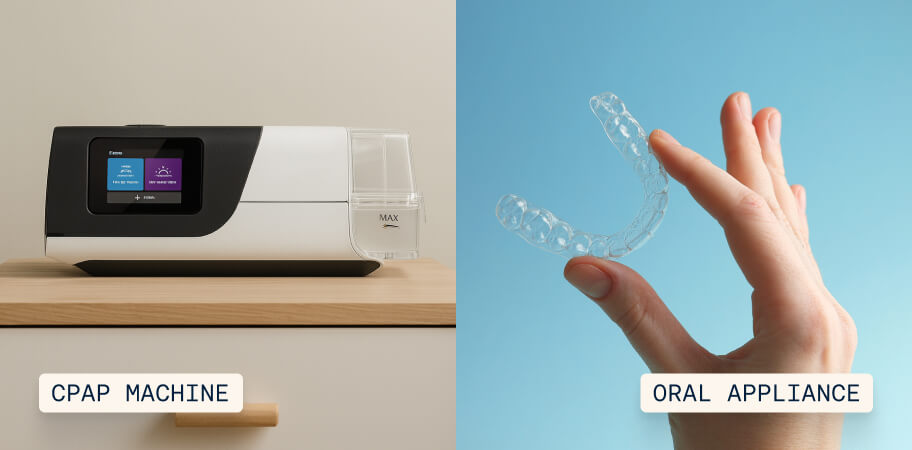
CPAP therapy is the first-line treatment for moderate to severe obstructive sleep apnea in adult patients. Other treatment options exist and may be appropriate depending on the severity of your condition, your anatomy, and your personal preferences.
CPAP Therapy
CPAP stands for continuous positive airway pressure. A CPAP machine delivers a steady stream of air through a mask worn over the nose or nose and mouth during sleep. This pressurized air keeps the airway open, preventing the soft palate, uvula, and muscles in the back of the mouth from collapsing and blocking airflow.
The American Academy of Sleep Medicine recommends CPAP as the gold standard treatment for obstructive sleep apnea. Research published on PubMed consistently shows that CPAP therapy reduces AHI to normal levels in most patients, improves oxygen saturation, lowers blood pressure in patients with hypertension, and reduces daytime sleepiness.
CPAP adherence is the biggest challenge. According to the Sleep Foundation, studies estimate that 30 to 50 percent of patients struggle with consistent CPAP use. This is where ongoing support becomes critical. dumbo.health addresses adherence directly through its CPAP treatment plans. The Essentials plan at $59 per month includes a CPAP machine, mask, and standard follow-up care. The Premium plan at $89 per month adds a dedicated sleep coach from a licensed care team plus advanced adherence monitoring, which clinicians frequently observe makes a measurable difference in long-term compliance.
Oral Appliance Therapy
An oral appliance, sometimes called an oral device or oral mouth device, is a custom-fitted dental device worn during sleep. It works by repositioning the lower jaw forward, which opens the airway and reduces obstruction. Oral appliances are typically prescribed for mild to moderate obstructive sleep apnea or for patients who cannot tolerate CPAP.
Dental sleep medicine specialists fit and adjust oral appliances. Not every patient is a good candidate. Oral appliances tend to be less effective than CPAP for severe cases, and they require regular dental follow-up to monitor fit and jaw alignment.
Surgical Options
Surgery is generally reserved for patients who have identifiable anatomical obstructions and have not responded to CPAP or oral appliance therapy. Procedures include:
- Tonsillectomy and adenoidectomy, which remove enlarged tonsils and adenoids that block the airway
- Uvulopalatopharyngoplasty, which removes excess tissue from the soft palate and uvula
- Correction of a deviated septum to improve nasal airflow
- Maxillomandibular advancement, which repositions the jaw to enlarge the airway
Mayo Clinic notes that surgical outcomes vary and surgery is not a guaranteed cure. It is most effective when a clear anatomical cause is identified.
Lifestyle Modifications
Weight loss, positional therapy, and avoiding sedatives or alcohol before bed can reduce the severity of obstructive sleep apnea. These modifications are typically recommended alongside primary treatment, not as standalone therapy for moderate to severe cases.
TIP: If you have been diagnosed with obstructive sleep apnea through a home sleep test, starting CPAP therapy quickly matters. Delays in treatment allow symptoms to worsen and increase health risks associated with untreated apnea.
KEY TAKEAWAY: CPAP therapy remains the most effective treatment for moderate to severe obstructive sleep apnea, and plans like the dumbo.health Essentials plan at $59 per month make it accessible without insurance or contracts.
Treatment effectiveness depends heavily on consistent use and clinical support, which leads to an important discussion about what can go wrong and when home testing may not be the right approach.
Limitations and Risks of Home Sleep Apnea Testing
Home sleep apnea testing is an effective screening tool, but it has specific limitations that every patient should understand before relying on the results alone.
When Home Testing May Not Be the Right Choice
Not every sleep problem can be diagnosed with a home sleep test. The following situations typically require full in-center polysomnography rather than a portable sleep test:
- You have symptoms of central sleep apnea, where the brain temporarily stops sending signals to the breathing muscles. Home devices measure airflow and respiratory effort but cannot distinguish central from obstructive events as accurately as a sleep polysomnogram with electrodes monitoring brain waves.
- You have significant comorbidities such as COPD, neuromuscular disease, or severe cardiac disease. These conditions can complicate breathing patterns during sleep and require the comprehensive monitoring available at a sleep laboratory.
- You are being evaluated for sleep disorders other than obstructive sleep apnea, including insomnia, narcolepsy, or periodic limb movement disorder. A home sleep test does not measure brain waves, eye movements, or leg muscle activity.
- You are a child. Home sleep testing is validated for adult patients. Children generally require in-clinic polysomnography with a sleep technologist present.
- Your previous home sleep test was inconclusive or produced insufficient data due to device issues.
Accuracy Considerations
Home sleep apnea tests may underestimate AHI compared to polysomnography. This happens because home devices measure total recording time rather than actual sleep time. If you lie awake for part of the night, the denominator increases while the number of events stays the same, potentially producing a lower AHI than your true score. This means a mild result on a home test could actually be moderate when measured in a controlled sleep laboratory setting.
Despite this limitation, clinical guidelines from the American Academy of Sleep Medicine support home sleep testing as an adequate diagnostic method for obstructive sleep apnea when pre-test probability is high and significant comorbidities are absent.
Device-Related Risks
The physical risks of wearing a home sleep testing device are minimal. The sensors are non-invasive. The most common issues are skin irritation from adhesive sensors, discomfort from the nasal cannula, or disrupted sleep from the awareness of wearing the equipment. These issues rarely affect test accuracy in a meaningful way.
dumbo.health mitigates some of these limitations by including physician oversight in every plan. If your at-home sleep test results are unclear, the interpreting physician can recommend additional testing or an alternative care pathway rather than leaving you without a clear next step.
KEY TAKEAWAY: Home sleep apnea testing is highly effective for uncomplicated obstructive sleep apnea but should not be used as the sole diagnostic tool for complex sleep disorders, central sleep apnea, or pediatric patients.
Understanding limitations honestly helps you make a better decision. To make this even more concrete, consider how different people in Palm Coast actually use home sleep testing.
Real-World Scenarios: How Palm Coast Residents Use Home Sleep Testing
Home sleep testing fits into many different life situations. The following scenarios illustrate how people in and around Palm Coast, Florida use at-home testing to address sleep problems and get the care they need.
Scenario 1: A 48-Year-Old Commercial Driver in Flagler County
A 48-year-old CDL holder based near Palm Coast has a BMI of 34 and a neck circumference of 18 inches. During his DOT physical, the examining physician flags him for sleep apnea screening due to his risk profile and reports of loud snoring. Rather than wait weeks for an appointment at a local sleep clinic, he orders a home sleep test through dumbo.health for $149. He completes the test on a Sunday night, ships the device back Monday morning, and receives his results showing an AHI of 22 within days. He starts the Premium plan at $89 per month, which includes a CPAP machine, mask, a dedicated sleep coach, and advanced adherence monitoring. His compliance data is shared with his referring provider, helping him maintain his CDL certification without interruption.
Scenario 2: A 55-Year-Old Retiree in Palm Coast with Hypertension
A 55-year-old woman living in Palm Coast has been managing hypertension for several years. Her physician has mentioned that undiagnosed obstructive sleep apnea could be contributing to her elevated blood pressure. She does not have a sleep history that includes a prior sleep study. She also does not want to spend a night at a sleep center in Daytona Beach or drive to AdventHealth facilities further away. She completes the free sleep assessment at dumbo.health, orders the test, and completes it at home. Her AHI comes back at 18, confirming moderate obstructive sleep apnea. She starts CPAP therapy on the Essentials plan at $59 per month. After 90 days of consistent use, her blood pressure readings improve, which her primary care physician documents in her records.
Scenario 3: A 35-Year-Old Shift Worker Whose Partner Reports Gasping Episodes
A 35-year-old man working rotating shifts at a Palm Coast manufacturing facility has been told by his partner that he stops breathing during sleep and gasps loudly. He does not feel rested despite getting 7 to 8 hours of sleep on his days off. His BMI is 28, which is below the typical threshold that prompts screening. However, his symptoms are classic. He orders a home sleep apnea test and records his sleep on a day off when he can sleep a full night. His AHI of 12 confirms mild obstructive sleep apnea. He and his physician discuss treatment options including an oral appliance as an alternative to CPAP, given the mild severity.
These scenarios show that home sleep testing serves a wide range of adult patients in Palm Coast, from commercial drivers needing rapid results to retirees managing chronic conditions to younger adults with early-stage symptoms.
KEY TAKEAWAY: Home sleep apnea testing fits into diverse real-world situations, from DOT compliance for commercial drivers to chronic disease management for retirees, making it one of the most practical diagnostic tools available in Palm Coast.
With real examples in mind, it helps to address some of the most common misconceptions that prevent people from getting tested.
Common Myths About Sleep Apnea Testing Debunked
MYTH: You have to sleep in a hospital or sleep laboratory to get an accurate sleep apnea diagnosis.
FACT: Home sleep apnea testing is clinically validated for diagnosing obstructive sleep apnea in adult patients with moderate to high pre-test probability. The American Academy of Sleep Medicine supports home testing as a diagnostic pathway when significant comorbidities are absent. A portable sleep test measures the same core signals, including airflow, oxygen saturation, respiratory effort, and heart rate, in the comfort of your own bed.
MYTH: Only overweight people get sleep apnea, so testing is unnecessary if your weight is normal.
FACT: While obesity is the strongest risk factor for obstructive sleep apnea, the condition occurs across all body types. Structural features such as a deviated septum, enlarged tonsils, a large uvula, or a narrow airway can cause airway obstruction regardless of BMI. According to the NIH, approximately 20 to 30 percent of obstructive sleep apnea patients are not classified as overweight. Snoring, witnessed breathing pauses, and excessive daytime sleepiness should trigger evaluation regardless of body weight.
MYTH: Snoring is harmless and does not mean you have a sleep problem.
FACT: Chronic loud snoring is one of the most common symptoms of obstructive sleep apnea. While not every person who snores has sleep apnea, habitual snoring combined with daytime sleepiness or gasping episodes warrants a sleep health evaluation. The Sleep Foundation states that snoring is caused by partial airway obstruction and can signal an underlying breathing disorder that, left untreated, increases the risk of hypertension and cardiac disease.
MYTH: Home sleep tests are not accurate enough for a real diagnosis.
FACT: FDA-cleared home sleep testing devices have been validated in clinical studies comparing their results to in-laboratory polysomnography. For uncomplicated obstructive sleep apnea, sensitivity and specificity are high enough for clinical decision-making. The primary limitation is that home tests may slightly underestimate AHI because they measure recording time rather than actual sleep time. Despite this, clinical guidelines endorse home testing as a valid diagnostic method.
MYTH: You need a doctor's referral and health insurance to get a home sleep test.
FACT: Many home sleep testing services, including dumbo.health, operate on a cash-pay model with no insurance required, no referral needed, and no prior authorization process. You can complete the free sleep assessment and order your test directly for $149 without visiting a physician's office first.
KEY TAKEAWAY: Misconceptions about sleep apnea testing prevent many people from getting diagnosed, but the clinical evidence supports home testing as an accurate, accessible, and affordable path to diagnosis for most adult patients.
Beyond myths, one of the biggest practical barriers for Palm Coast residents is understanding the cost of testing and treatment.
How Much Does a Home Sleep Apnea Test Cost in Palm Coast
A home sleep apnea test through dumbo.health costs $149 as a one-time payment with no insurance required. This is significantly lower than the cost of in-center polysomnography, which can range from $1,000 to $3,000 or more at Florida sleep centers and sleep laboratories.
Cost Breakdown for Testing and Treatment
Understanding the full financial picture helps you plan around a sleep apnea diagnosis. Here is what to expect:
Home Sleep Test
- dumbo.health: $149 one-time, no insurance needed, no prior authorization
- Sleep clinic or hospital facility: Typically $300 to $800 for a home test ordered through a physician's office, often requiring insurance pre-approval
- In-center polysomnography: $1,000 to $3,000 or more, depending on location and facility
Ongoing CPAP Treatment
- dumbo.health Essentials Plan: $59 per month, includes physician interpretation, CPAP machine, mask, equipment, and standard follow-up care
- dumbo.health Premium Plan: $89 per month, adds a dedicated sleep coach, advanced adherence monitoring, and priority results turnaround
- dumbo.health Elite Plan: $129 per month, adds concierge clinical support, direct physician messaging, and custom reporting
- Traditional insurance-based CPAP: Varies widely; may require copays, deductibles, prior authorization, and equipment rental agreements with potential surprise bills
Insurance vs Cash-Pay Considerations
Many people in Palm Coast assume they need health insurance to access sleep apnea testing and treatment. While Medicare and private insurance plans may cover sleep studies and CPAP equipment, the process often involves prior authorizations, multiple office visits, referrals to sleep specialists, and significant out-of-pocket costs through deductibles and copays. For patients without insurance or those who prefer transparent pricing without administrative delays, cash-pay options eliminate these barriers.
dumbo.health operates entirely on a cash-pay basis with no contracts across all plans. There are no surprise bills, no insurance paperwork, and no waiting for authorization. The pricing is upfront and predictable. Patients can cancel anytime.
DID YOU KNOW: According to the American Sleep Apnea Association, cost and access barriers are among the most commonly cited reasons people delay or avoid sleep apnea testing, even when symptoms are present.
KEY TAKEAWAY: At $149 for the home sleep test and monthly treatment plans starting at $59, dumbo.health provides the most predictable and affordable cost structure for sleep apnea diagnosis and treatment available to Palm Coast residents.
With cost demystified, it is worth addressing the full scope of sleep testing and care available in the Palm Coast and broader Florida area.
Sleep Testing and Sleep Apnea Care Options Across Florida
Palm Coast residents have multiple pathways for sleep testing, but availability, wait times, and cost vary significantly depending on the provider type. Understanding your local options helps you choose the fastest and most cost-effective route to diagnosis and treatment.
Sleep Centers and Clinics in the Region
Florida has a network of sleep centers, hospital-based sleep laboratories, and independent clinics that offer both in-center polysomnography and, in some cases, home sleep testing. Facilities such as AdventHealth locations, BayCare sleep programs, and independent providers like the Sleep Clinic of America or Sunrise Sleep Center offer in-person sleep studies for patients who require comprehensive monitoring.
Regional options in the broader area include facilities in Daytona Beach, the Winter Park Office, the Ocoee/Winter Garden Office, and locations along Lakeland Hills Blvd. Further away, Tallahassee, Pine Cone Dr locations, and the North Port area at the Bobcat Village Center or 2975 Bobcat Village Center Rd also operate sleep programs. However, for Palm Coast residents, many of these locations require significant travel and advance scheduling.
How dumbo.health Fits into the Florida Sleep Testing Landscape
Unlike brick-and-mortar sleep centers that require you to visit an office, request an appointment, and wait for availability, dumbo.health delivers FDA-cleared home sleep testing directly to your door. There is no geographic limitation within Florida. Whether you live in Palm Coast, Daytona, Tallahassee, or any other part of the state, the process is the same: order online, receive the device, complete the test at home, and return it.
This model is especially valuable in areas where sleep specialists have limited availability. Many patients report that wait times at local sleep clinics can stretch several weeks or longer. With dumbo.health, the testing timeline is measured in days rather than weeks, which is particularly important for commercial drivers who need rapid results for DOT compliance.
Preparing for Your Home Sleep Test
Before you test, a short preparation checklist ensures your data is as accurate as possible.
Pre-Test Preparation Checklist
- Confirm you have completed the free sleep assessment at dumbo.health
- Review the instruction guide included with your testing device
- Avoid alcohol and sedatives on the night of your test, as these can alter breathing patterns
- Avoid caffeine after noon on the day of your test
- Sleep in your normal bed and follow your usual bedtime routine
- Ensure the nasal cannula is properly positioned before falling asleep
- Confirm the fingertip oximetry sensor is secure and the indicator light is active
- Charge or verify battery status on the sleep testing machine if applicable
- Plan to sleep for at least 6 hours to capture sufficient data
- Set the returned device in prepaid packaging the next morning for prompt shipment
Following this checklist helps ensure your test captures a complete and accurate picture of your breathing during sleep. Incomplete data may require a retest, which delays your diagnosis and treatment.
KEY TAKEAWAY: Palm Coast residents can choose between local sleep centers that require office visits and wait times, or dumbo.health's direct-to-home model that eliminates geographic barriers and delivers faster results.
With testing and treatment options mapped out, it helps to understand how ongoing care and adherence monitoring work after you start treatment.
Long-Term Sleep Apnea Management and Adherence Monitoring
Effective sleep apnea treatment is not a one-time event but an ongoing care process. Consistent CPAP use is what delivers the health benefits. A CPAP machine sitting unused on your nightstand does nothing to reduce your AHI, lower your blood pressure, or improve your daytime function.
Why Adherence Matters
The Centers for Medicare and Medicaid Services defines CPAP adherence as using the device for at least 4 hours per night on at least 70 percent of nights during a consecutive 30-day period. Meeting this threshold is necessary for continued Medicare coverage and, in many cases, for maintaining DOT medical certification for commercial drivers.
According to the American Academy of Sleep Medicine, consistent CPAP use has been shown to reduce daytime sleepiness, lower blood pressure in patients with hypertension, decrease the risk of cardiovascular events, and improve cognitive function. The benefits are dose-dependent, meaning more hours of nightly use generally produce better outcomes.
How dumbo.health Supports Long-Term Compliance
Many patients who start CPAP therapy struggle in the first few weeks. Common complaints include mask discomfort, dry mouth, nasal congestion, and difficulty falling asleep with the device. Without structured support, many people abandon therapy within the first 90 days.
dumbo.health addresses this directly through its tiered sleep apnea care solutions. The Premium plan at $89 per month includes a dedicated sleep coach from a licensed care team who provides ongoing guidance during the adjustment period. Advanced adherence monitoring tracks nightly usage data and flags issues before they lead to therapy abandonment. The Elite plan at $129 per month adds concierge clinical support with direct physician messaging, giving patients priority access to clinical guidance whenever they need it.
All plans operate without contracts. You can cancel anytime. This removes the financial risk that keeps some patients from committing to treatment.
A home sleep apnea test through dumbo.health identifies obstructive sleep apnea. CPAP therapy treats it. Adherence monitoring and clinical support ensure the treatment actually works over time. This complete care cycle, from diagnosis through long-term management, is what separates effective sleep medicine from a one-time test result that leads nowhere.
KEY TAKEAWAY: CPAP adherence is the determining factor in whether treatment actually improves your health, and structured support through plans like the dumbo.health Premium plan significantly increases the likelihood of long-term success.
Conclusion
A home sleep apnea test gives Palm Coast, Florida residents a direct, affordable path from symptoms to diagnosis to treatment without the barriers of sleep clinic wait times, insurance hassles, or expensive in-center testing. Obstructive sleep apnea is a treatable condition, but only when it is identified and managed consistently. If you recognize symptoms like chronic snoring, daytime fatigue, or witnessed breathing pauses, testing is the logical first step. dumbo.health offers a home sleep test for $149 with no insurance required, physician-reviewed results, and CPAP treatment plans starting at $59 per month with no contracts and the ability to cancel anytime. The sooner you test, the sooner you can start sleeping and feeling better.
Frequently Asked Questions About Home Sleep Apnea Test in Palm Coast, Florida
How fast can I get a home sleep apnea test in Palm Coast, Florida?
Orders placed before 2pm EST qualify for same-day shipping to Palm Coast, Florida, so most patients receive their home sleep test device within one to two business days. Once the device arrives, you complete a single night of testing at home and return the device. Results are typically processed after the physician reviews your recorded data. If you have questions about shipping or delivery timelines, dumbo.health customer support can help before you place your order.
What does the $149 home sleep apnea test include?
The $149 home sleep apnea test from dumbo.health includes the at-home sleep test device and one night of testing. The device is shipped directly to you, used during a single night of sleep, and then returned. Physician interpretation and your results report are covered under a separate monthly plan, starting at $59 per month. There are no insurance requirements, no prior authorizations, and no surprise bills. Learn more about what is included at the at-home sleep test page.
What measurements does a home sleep apnea test record?
A home sleep apnea test typically records oxygen saturation, heart rate, airflow, snoring, and respiratory effort. These measurements allow a sleep physician to calculate your Apnea-Hypopnea Index, or AHI, which reflects how many breathing interruptions occur per hour of sleep. Some devices also record body position. According to the American Academy of Sleep Medicine, home sleep apnea tests are designed to detect obstructive sleep apnea in adults who are likely to have moderate to severe disease. A healthcare professional reviews all recorded data before any interpretation is made.
Is a home sleep apnea test as accurate as an in-lab sleep study?
A home sleep apnea test is a validated and widely used method for detecting obstructive sleep apnea, but it has limitations compared to polysomnography conducted in a sleep laboratory. An in-lab sleep study, also called a polysomnogram, records additional signals including brain waves, muscle activity, and eye movement using electrodes, which allows clinicians to assess a broader range of sleep-related disorders. Home sleep testing is generally considered appropriate for adults with a high likelihood of moderate to severe obstructive sleep apnea without significant comorbidities such as COPD, neuromuscular disease, or complex cardiac disease. A healthcare professional can advise whether a home test or an in-clinic test is more appropriate for your situation.
Who reviews my home sleep test results?
Your home sleep test results are reviewed and interpreted by a board-certified sleep physician. After the device is returned and the recorded data is downloaded and analysed, the physician generates a clinical report that includes your AHI, oxygen saturation findings, and other relevant measurements. Under dumbo.health monthly plans, this physician interpretation and report is included, and updates can be sent to your referring provider. A qualified healthcare professional, not a software algorithm alone, is responsible for interpreting your results.
Can I use home sleep test results to get a CPAP prescription?
Yes, in many cases physician-interpreted home sleep test results can support a CPAP prescription if the findings confirm obstructive sleep apnea. The physician who reviews your results determines whether CPAP therapy is clinically appropriate based on your AHI, symptoms, and overall sleep health evaluation. dumbo.health monthly plans include physician interpretation, and CPAP therapy and equipment are available starting at $59 per month with no insurance required. A healthcare professional makes all treatment decisions based on your individual test results and clinical picture. Explore CPAP therapy options to understand what ongoing treatment may include.
What is obstructive sleep apnea, and what are the common symptoms?
Obstructive sleep apnea is a sleep-related breathing disorder in which the muscles in the back of the mouth, the soft palate, the uvula, and surrounding airway tissues relax during sleep and partially or fully block the upper airway, causing repeated breathing interruptions. According to the National Heart, Lung, and Blood Institute (NHLBI), common symptoms include loud snoring, gasping or choking during sleep, excessive daytime sleepiness, morning headaches, difficulty concentrating, and waking unrefreshed. Risk factors include high body mass index, a deviated septum, enlarged tonsils or adenoids, hypertension, and a family history of sleep apnea. A healthcare professional should evaluate persistent symptoms.
What health risks are associated with untreated sleep apnea?
Untreated obstructive sleep apnea has been associated with an increased risk of hypertension, cardiac disease, type 2 diabetes, stroke, and impaired daytime functioning. Repeated drops in oxygen saturation during sleep place stress on the cardiovascular system over time. The Sleep Foundation explains that untreated sleep apnea can worsen existing conditions and reduce quality of life. Excessive daytime sleepiness caused by untreated sleep apnea also raises safety risks, particularly for people who drive or operate machinery. If you have symptoms of sleep apnea, a healthcare professional can help determine whether testing is appropriate.
Why might someone choose a home sleep test over an in-clinic sleep study?
Many people choose a home sleep apnea test because it is more convenient, less disruptive, and typically more affordable than an in-clinic sleep study. An in-lab polysomnogram requires an overnight stay in a sleep laboratory, the attachment of multiple electrodes, and supervision by a sleep technologist, which some patients find uncomfortable or difficult to schedule. A home sleep test allows you to sleep in your own bed with a portable sleep testing device. In Palm Coast and throughout Florida, home sleep testing is a practical option for adults who prefer testing on their own schedule without clinic visits or long wait times.
What are the benefits of home sleep testing for patients in Florida?
Home sleep testing offers Florida residents, including those in Palm Coast, Daytona Beach, and surrounding areas, a convenient and accessible path to sleep apnea diagnosis without requiring travel to a sleep laboratory. Benefits include testing in a familiar environment, flexible scheduling, faster access to results in many cases, and lower upfront cost compared to in-center testing. For patients without health insurance or those who prefer cash-pay healthcare with transparent pricing, home sleep testing removes barriers such as prior authorizations and insurance delays. A board-certified physician still reviews all results to ensure clinical accuracy.
How does a home sleep apnea test work?
A home sleep apnea test is a portable, FDA-cleared sleep testing device that you wear during a single night of sleep at home. The device typically uses sensors to record airflow, oxygen saturation via oximetry, heart rate, snoring, respiratory effort, and body position throughout the night. After testing, the device is returned and the recorded data is downloaded and analysed by a sleep physician. The physician calculates your Apnea-Hypopnea Index and provides an interpretation and report. No electrodes or overnight clinic stays are required. The home sleep apnea test process at dumbo.health follows this standard clinical workflow.
Is a doctor's referral or prescription required to order a home sleep apnea test?
In many cases, a prior doctor's referral is not required to start the process of home sleep apnea testing. dumbo.health allows patients to order a home sleep test directly and begin their sleep health evaluation without needing a referral or prior appointment. A board-certified physician reviews your test results as part of the clinical process and determines appropriate next steps. Treatment decisions, including any CPAP prescription, are made by a qualified healthcare professional based on your results. A healthcare professional can help determine whether testing is appropriate if you have complex medical conditions or comorbidities.
What is the treatment for sleep apnea?
The most common treatment for obstructive sleep apnea is continuous positive airway pressure therapy, known as CPAP. A CPAP machine delivers pressurised air through a mask worn during sleep to keep the airway open and prevent breathing interruptions. Other treatment options may include oral appliance therapy using a custom dental device, positional therapy, weight management, surgery involving the tonsils, adenoids, uvula, or soft palate in selected cases, and management of contributing factors such as a deviated septum. A healthcare professional determines the most appropriate treatment based on your AHI, symptoms, medical history, and personal preferences. Explore sleep apnea care solutions to understand ongoing treatment options.
What happens after I receive my home sleep test results?
After a physician reviews your home sleep test data, you receive an interpretation and clinical report. If the results indicate obstructive sleep apnea, your care team will discuss treatment options, which typically include CPAP therapy. Under dumbo.health monthly plans, ongoing care includes CPAP equipment, adherence monitoring, and follow-up support. The Premium Plan includes a dedicated sleep coach and advanced adherence monitoring, while the Elite Plan includes direct physician messaging and custom reporting. Your referring provider can also receive updates about your results and treatment progress. A healthcare professional guides all clinical decisions based on your individual findings.
Do I need health insurance to get a home sleep apnea test in Palm Coast, Florida?
No. dumbo.health operates on a cash-pay model, so health insurance is not required to access a home sleep apnea test or ongoing sleep apnea care. The home sleep test is $149 as a one-time purchase, and monthly care plans start at $59 per month with no contracts and the option to cancel anytime. There are no prior authorizations, no insurance denials, and no surprise bills. This makes home sleep testing accessible for patients in Palm Coast and across Florida who are uninsured, underinsured, or who simply prefer transparent pricing they can plan around.
How much does a home sleep apnea test cost in Palm Coast, Florida?
A home sleep apnea test through dumbo.health costs $149 as a one-time purchase, which includes the testing device and one night of testing. This is a separate upfront cost from the monthly care plans, which start at $59 per month for the Essentials Plan and include physician interpretation, CPAP therapy and equipment, and standard follow-up care. The Premium Plan is $89 per month and adds a dedicated sleep coach and advanced adherence monitoring. There are no contracts and no insurance required. For cash-pay patients in Palm Coast, this structure provides predictable costs without hidden fees.
Do commercial drivers in Palm Coast, Florida need a sleep apnea test for their DOT physical?
Commercial drivers are not automatically required to take a sleep apnea test as part of every DOT physical, but a certified medical examiner may refer a driver for sleep apnea evaluation if symptoms, risk factors such as high body mass index, large neck circumference, or hypertension, or a clinical assessment suggest a sleep-related breathing disorder. Untreated obstructive sleep apnea can affect a driver's ability to maintain a valid medical certificate. The FMCSA states that medical examiners must evaluate whether a driver has a condition that could impair safe driving. A certified medical examiner, not dumbo.health, makes all DOT certification decisions. Learn more in the guide to home sleep testing for CDL drivers.
Can CPAP therapy help with sleep apnea treatment, and how is adherence monitored?
CPAP therapy is the most widely recommended treatment for moderate to severe obstructive sleep apnea. The CPAP machine delivers continuous pressurised air through a mask to keep the airway open during sleep, reducing or eliminating apnea and hypopnea events and improving oxygen saturation. Adherence, meaning consistent nightly use of the CPAP machine, is important for clinical benefit. Most modern CPAP devices record usage data that a care team can review. dumbo.health monthly plans include adherence monitoring as part of ongoing care, with advanced monitoring available under the Premium and Elite Plans. A healthcare professional can help assess whether CPAP is working effectively based on your usage data and symptoms.
Is my personal health information protected when I use at-home sleep testing services?
Yes. Reputable at-home sleep testing providers, including dumbo.health, are required to comply with HIPAA regulations, which establish standards for the protection of individually identifiable health information. Your sleep test data, clinical results, and personal information are handled according to applicable privacy laws. If you have specific questions about how your data is stored, shared, or protected, you should review the provider's privacy policy before ordering. A healthcare professional who reviews your results is also bound by professional confidentiality obligations. Never share sensitive health information through unsecured channels.
Where can I find home sleep apnea testing near me in Palm Coast, Florida?
Palm Coast residents can access home sleep apnea testing without visiting a clinic by ordering a test online and completing it at home. dumbo.health ships testing devices directly to Palm Coast and throughout Florida, with orders placed before 2pm EST qualifying for same-day shipping. This removes the need to travel to a sleep centre in Daytona Beach, Daytona, or other nearby locations. If you prefer an in-person evaluation or have a complex medical history, sleep physicians and sleep specialists in your area can also provide in-center testing and clinical consultation. Start with a free sleep assessment to explore whether at-home testing may be appropriate for you.
What should I do if I have symptoms of sleep apnea right now?
If you are experiencing symptoms such as loud snoring, gasping during sleep, excessive daytime sleepiness, morning headaches, or difficulty concentrating, speaking with a healthcare professional is a reasonable first step. These symptoms can be associated with obstructive sleep apnea and other sleep disorders, and a clinical evaluation can help clarify the cause. If you have severe symptoms, chest pain, difficulty breathing, or urgent health concerns, seek medical care promptly. For non-urgent symptom screening, the free sleep assessment at dumbo.health can help you determine whether at-home sleep apnea testing may be a useful next step.