




Home Sleep Apnea Test in Clearwater, Florida: The Complete Guide to At-Home Sleep Testing
A home sleep apnea test in Clearwater, Florida allows you to screen for obstructive sleep apnea from your own bed using a portable, FDA-cleared device that measures breathing patterns, oxygen saturation, and airflow overnight. According to the American Academy of Sleep Medicine, home sleep apnea testing is a validated diagnostic pathway for adults with a moderate to high pretest probability of obstructive sleep apnea. This guide is for Clearwater residents, commercial drivers, and anyone in nearby Florida communities such as Largo, Safety Harbor, Tarpon Springs, and Tampa who suspects a sleep disorder but wants a convenient, affordable testing option. You will learn how home sleep tests work, what they measure, how results are interpreted, what treatment options follow a diagnosis, and how to compare at-home testing with in-lab polysomnography. By the end, you will know exactly how to get tested and start a treatment plan without insurance complications or long wait times.
Quick Answer
A home sleep apnea test in Clearwater, Florida is a portable overnight screening that records oxygen levels, heart rate, respiratory effort, and airflow to detect obstructive sleep apnea. The test uses an FDA-cleared device you wear at home for one night. Results are reviewed by a physician who determines your AHI score and recommends a treatment plan. dumbo.health offers a home sleep test for $149 with no insurance required, shipped directly to patients in Clearwater and surrounding Florida communities.
Key Takeaways
- A home sleep apnea test measures oxygen saturation, airflow, respiratory effort, and pulse rate to calculate your AHI score, which determines sleep apnea severity.
- The American Academy of Sleep Medicine recommends home sleep testing as a valid alternative to in-lab polysomnography for adults with suspected moderate to severe obstructive sleep apnea.
- An estimated 80% of moderate to severe obstructive sleep apnea cases in the United States remain undiagnosed, according to the American Sleep Apnea Association.
- dumbo.health provides a home sleep test for $149 with no insurance, no prior authorization, and no surprise bills, available to patients in Clearwater, Florida and across the state.
- CPAP therapy remains the most widely prescribed treatment for obstructive sleep apnea, with adherence rates improving significantly when paired with ongoing coaching and follow-up care.
- Home sleep apnea tests are not appropriate for diagnosing narcolepsy, parasomnias, restless leg syndrome, or other complex sleep disorders that require in-lab polysomnography.
What Is a Home Sleep Apnea Test and How Does It Work
A home sleep apnea test is a portable diagnostic screening that records key physiological signals while you sleep in your own bed. The test detects obstructive sleep apnea by measuring how often your airway becomes partially or fully blocked during the night.
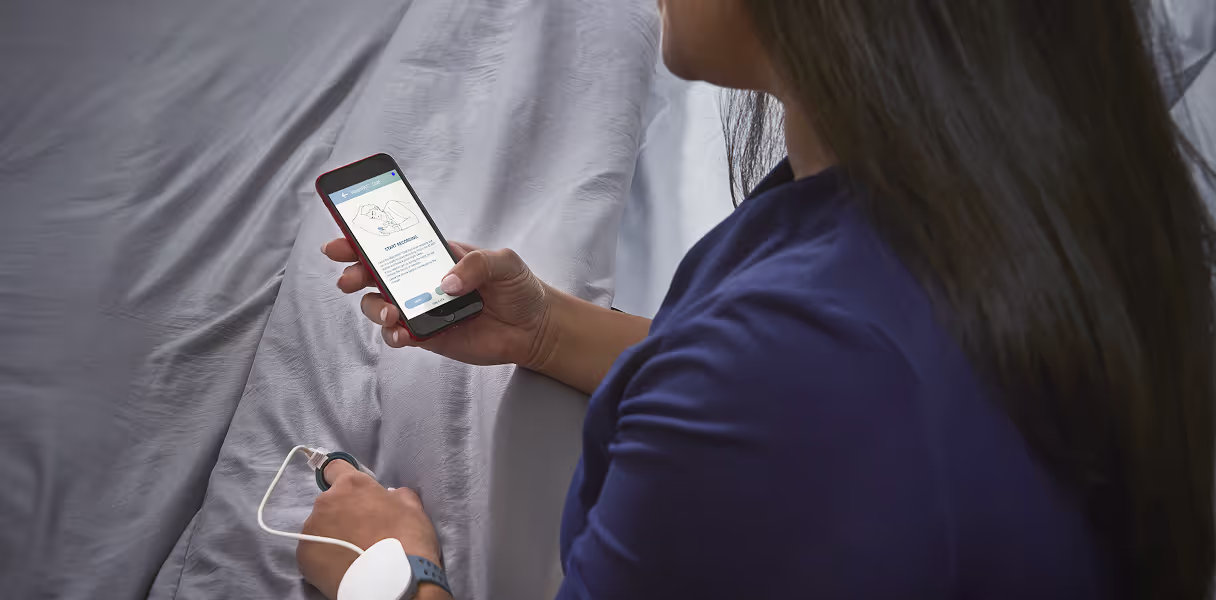
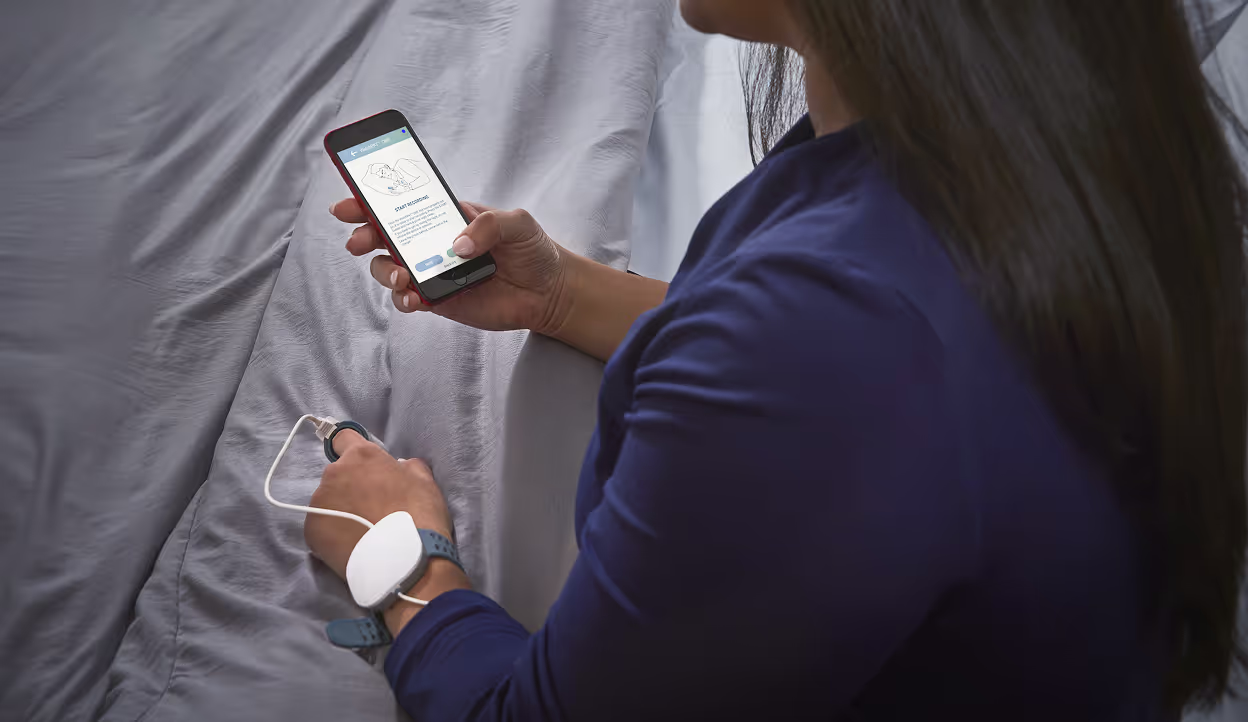
Home sleep apnea testing uses a small, FDA-cleared device equipped with sensors that monitor several data channels simultaneously. The device typically includes a nasal airflow sensor, a finger pulse oximeter that tracks oxygen saturation and pulse rate, and a chest or abdominal belt that measures respiratory effort. Some newer devices, such as the NightOwl Home Sleep Test, use photoplethysmography or peripheral arterial tonometry technology to capture sleep data from a compact wrist or finger sensor.
The data collected overnight generates your AHI score. AHI stands for Apnea-Hypopnea Index, which counts the average number of apnea and hypopnea events per hour of recorded sleep. The American Academy of Sleep Medicine defines mild obstructive sleep apnea as an AHI of 5 to 14, moderate as 15 to 29, and severe as 30 or higher.
What the Device Measures
- Airflow through the nose and mouth
- Oxygen saturation levels in the blood
- Heart rate and pulse rate variability
- Respiratory effort from chest and abdominal movement
- Body position during sleep
- Snoring intensity
After you complete the one-night test, the sleep data is uploaded and reviewed by a board-certified sleep medicine physician who interprets the results and determines whether you meet diagnostic criteria for obstructive sleep apnea. This physician review is the step that separates a clinical home sleep test from consumer sleep trackers, which cannot diagnose sleep disorders.
dumbo.health provides a complete home sleep apnea test for $149 that includes the FDA-cleared device and one night of testing. The physician interpretation and treatment plan are covered under a separate monthly care plan, with the Essentials Plan starting at $59 per month.
KEY TAKEAWAY: A home sleep apnea test is a portable, FDA-cleared overnight screening that records airflow, oxygen saturation, respiratory effort, and heart rate to calculate your AHI score and determine whether you have obstructive sleep apnea.
Understanding what the test measures is important, but knowing who should take one is equally critical to getting the right diagnosis.
Who Should Get a Home Sleep Apnea Test in Clearwater, Florida
Adults in Clearwater, Florida who experience chronic snoring, witnessed breathing pauses during sleep, or excessive daytime sleepiness are strong candidates for a home sleep apnea test. The test is designed for people with a moderate to high clinical suspicion of obstructive sleep apnea.
According to the National Heart, Lung, and Blood Institute, risk factors for obstructive sleep apnea include a BMI of 30 or higher, a neck circumference greater than 17 inches in men or 16 inches in women, age over 40, and a family history of sleep apnea. Male sex is a significant risk factor, though the condition is commonly underdiagnosed in women, particularly after menopause.
Common Symptoms That Suggest Testing
- Loud, persistent snoring that disrupts a bed partner
- Observed episodes of stopped breathing during sleep
- Waking up gasping or choking
- Morning headaches that resolve within a few hours
- Excessive daytime sleepiness despite adequate time in bed
- Difficulty concentrating or memory problems
- Irritability or mood changes without a clear cause
Clearwater residents with these symptoms often delay testing because they assume they need a referral to a sleep center or an overnight stay at a sleep lab. A home sleep test eliminates both barriers. There is no need to schedule an overnight sleep study at a facility, no need to navigate insurance pre-authorizations, and no requirement for a prior visit to a sleep specialist in your area.
Commercial drivers in and around Clearwater who need DOT medical certification face additional urgency. The FMCSA flags drivers with a BMI of 35 or higher or symptoms of untreated sleep apnea for further evaluation, and failing to complete testing can jeopardize CDL certification. dumbo.health serves CDL holders with a streamlined at-home sleep test that ships directly and produces physician-reviewed results without clinic visits.
DID YOU KNOW: The American Sleep Apnea Association estimates that approximately 22 million Americans have sleep apnea, and the vast majority of moderate to severe cases remain undiagnosed.
KEY TAKEAWAY: Anyone in Clearwater, Florida who has chronic snoring, witnessed apneas, daytime sleepiness, a BMI over 30, or DOT-related screening requirements should consider a home sleep apnea test as the fastest path to a diagnosis.
Once you know whether testing is appropriate, the next step is understanding how the process works from start to finish.
How to Complete a Home Sleep Apnea Test in Clearwater, Florida
Completing a home sleep apnea test in Clearwater takes one night and does not require a visit to a sleep lab, clinic, or hospital. The entire process can be managed remotely through a telehealth platform.
Step-by-Step Process for Home Sleep Testing
1. Complete a brief online sleep assessment to determine whether you are a candidate for home sleep testing. You can start your free sleep assessment through dumbo.health.
2. Order your home sleep test device. Through dumbo.health, the FDA-cleared device costs $149 as a one-time purchase with no insurance required.
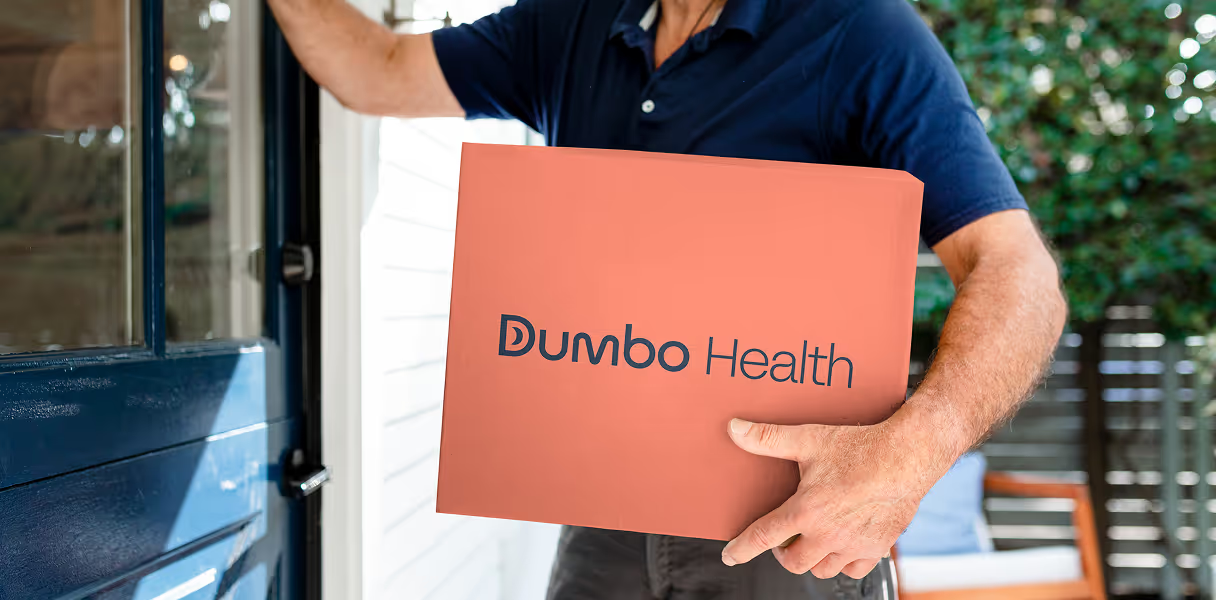
3. Receive the device by mail at your Clearwater address. The kit includes the sensor, instructions, and everything needed for one night of testing.
4. Attach the sensors before bed following the included instructions. Most devices require a finger sensor for oxygen saturation and pulse rate, a nasal cannula for airflow, and a chest belt for respiratory effort.
5. Sleep in your own bed for one full night while the device records your sleep data automatically.
6. Return the device the next morning using the prepaid shipping materials included in the kit.
7. A board-certified sleep medicine physician reviews your sleep data and generates a detailed report that includes your AHI score, oxygen desaturation patterns, and a clinical interpretation.
After the physician completes the review, you receive your results along with a recommended treatment plan. If your AHI score indicates obstructive sleep apnea, the next step is typically CPAP therapy or, in milder cases, discussion of alternative treatment options such as oral appliance therapy or lifestyle changes. dumbo.health's Essentials Plan covers the physician interpretation, CPAP equipment, and follow-up care for $59 per month with no contract.
KEY TAKEAWAY: The home sleep test process involves ordering a device, sleeping one night with sensors attached, returning the device, and receiving physician-reviewed results with a treatment plan, all without visiting a Clearwater sleep lab or clinic.
Understanding results is just as important as completing the test, so the next section breaks down what your AHI score means.
Understanding Your Home Sleep Test Results and AHI Score
Your home sleep test results center on the AHI score, which is the single most important metric for diagnosing and classifying obstructive sleep apnea severity. The AHI tells your physician how many times per hour your breathing was disrupted during the recorded sleep period.
The American Academy of Sleep Medicine uses these AHI thresholds to classify obstructive sleep apnea:
- Normal: fewer than 5 events per hour
- Mild obstructive sleep apnea: 5 to 14 events per hour
- Moderate obstructive sleep apnea: 15 to 29 events per hour
- Severe obstructive sleep apnea: 30 or more events per hour
Beyond the AHI, your report includes oxygen saturation data showing the lowest oxygen level reached during sleep and how long oxygen levels stayed below 90%. The report also records heart rate patterns, respiratory effort, and snoring intensity. These additional data points help the reviewing physician understand the full clinical picture and recommend a personalized treatment plan.
What Your AHI Score Means for Treatment
An AHI of 5 to 14 with minimal symptoms may lead to a recommendation for lifestyle changes, positional therapy, or oral appliance therapy. An AHI of 15 or higher typically triggers a CPAP therapy recommendation, particularly if you experience daytime sleepiness or oxygen desaturation events. An AHI of 30 or higher represents severe obstructive sleep apnea that almost always requires CPAP treatment and close follow-up.
Clinicians frequently observe that patients with moderate to severe obstructive sleep apnea often underestimate the severity of their condition because they have adapted to poor sleep quality over months or years. Receiving a quantified AHI score provides the objective evidence needed to drive treatment decisions.
IMPORTANT: An AHI score alone does not constitute a diagnosis. A board-certified sleep medicine physician must interpret the full dataset in context of your symptoms, medical history, and sleep history before making a clinical determination.
KEY TAKEAWAY: The AHI score from your home sleep test classifies obstructive sleep apnea as mild, moderate, or severe and directly determines which treatment pathway your physician recommends.
With results in hand, the next question most patients ask is how home testing compares to an overnight sleep study at a Clearwater sleep lab.
Home Sleep Test vs. In-Lab Polysomnography: Which Is Right for You
A home sleep apnea test is the appropriate first-line screening for most adults with suspected obstructive sleep apnea, while in-lab polysomnography is reserved for complex cases or when additional sleep disorders need to be ruled out. Both are valid diagnostic tools, but they differ significantly in cost, convenience, and what they measure.
In-lab polysomnography, also called an overnight sleep study, takes place at a sleep center or sleep lab where a technician attaches multiple sensors that monitor brain waves, heartbeats, eye movements, leg movements, airflow, respiratory effort, oxygen levels, and body position. This level of monitoring allows the sleep physician to diagnose conditions beyond obstructive sleep apnea, including narcolepsy, parasomnias, and restless leg syndrome.
A home sleep test focuses specifically on detecting obstructive sleep apnea by recording airflow, oxygen saturation, respiratory effort, heart rate, and body position. It does not monitor brain waves or sleep stages, which means it cannot diagnose narcolepsy, parasomnias, or central sleep apnea.
Comparison: Home Sleep Apnea Test vs. In-Lab Polysomnography
Setting
- Home Sleep Apnea Test: Your own bed at home
- In-Lab Polysomnography: Sleep lab or sleep center in Clearwater or Tampa
Cost
- Home Sleep Apnea Test: Typically $149 to $500; dumbo.health offers it for $149
- In-Lab Polysomnography: Often $1,000 to $3,000 or more without insurance
Sensors Used
- Home Sleep Apnea Test: Nasal airflow, finger oximeter, chest belt
- In-Lab Polysomnography: EEG for brain waves, EOG, EMG, ECG, airflow, oximetry, chest and abdominal belts, leg sensors
Conditions Diagnosed
- Home Sleep Apnea Test: Obstructive sleep apnea
- In-Lab Polysomnography: Obstructive sleep apnea, central sleep apnea, narcolepsy, parasomnias, restless leg syndrome, periodic limb movement disorder
Insurance Requirement
- Home Sleep Apnea Test: Not required for cash-pay options like dumbo.health
- In-Lab Polysomnography: Usually requires insurance authorization or high out-of-pocket payment
Convenience
- Home Sleep Apnea Test: High; no travel, no overnight clinic stay
- In-Lab Polysomnography: Lower; requires scheduling, travel to a facility, and sleeping in an unfamiliar environment
Turnaround Time for Results
- Home Sleep Apnea Test: Typically days to one week
- In-Lab Polysomnography: Often one to several weeks depending on the sleep center
For most adults near Clearwater with symptoms of obstructive sleep apnea and no suspected coexisting sleep disorders, a home sleep test is the faster, more affordable, and more convenient option. If the home test results are inconclusive or if your sleep physician suspects a condition like narcolepsy or parasomnias, an in-lab polysomnography study at a local Clearwater or Tampa sleep center may be recommended as a follow-up.
KEY TAKEAWAY: A home sleep apnea test is the recommended first step for most adults with suspected obstructive sleep apnea, while in-lab polysomnography is necessary when complex sleep disorders such as narcolepsy or parasomnias must be evaluated.
Knowing which test to choose leads naturally into understanding the treatment options available once you have a confirmed diagnosis.
Treatment Options After a Sleep Apnea Diagnosis in Clearwater
CPAP therapy is the most effective and widely prescribed treatment for moderate to severe obstructive sleep apnea. After your home sleep test confirms a diagnosis, your physician will recommend a treatment plan based on your AHI score, symptom severity, and individual health profile.
CPAP Therapy
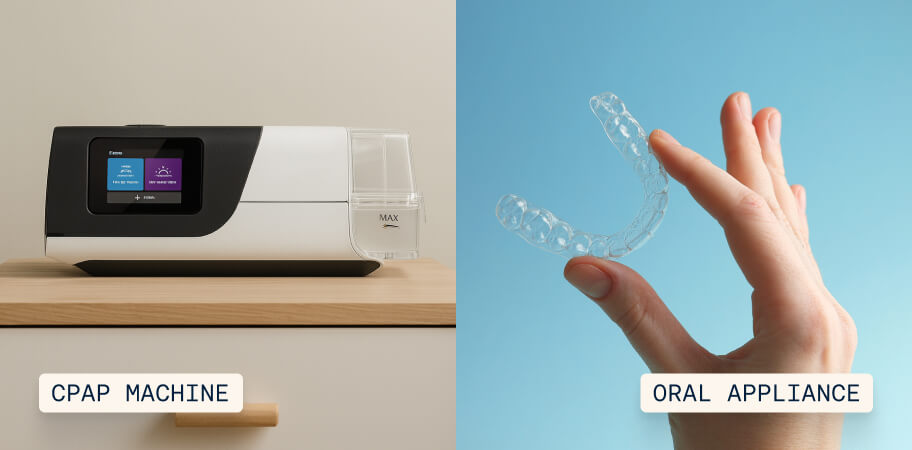
CPAP stands for continuous positive airway pressure. A CPAP machine delivers steady air pressure through a nasal mask or full-face mask to keep your airway open during sleep. According to the National Heart, Lung, and Blood Institute, CPAP therapy reduces apnea events, improves oxygen saturation, and significantly improves sleep quality when used consistently.
The recommended minimum for CPAP adherence is 4 hours per night for at least 70% of nights over a 30-day period. This threshold is particularly important for commercial drivers because the FMCSA requires documented CPAP compliance for CDL holders diagnosed with obstructive sleep apnea.
dumbo.health includes CPAP equipment, physician oversight, and standard follow-up care in the Essentials Plan at $59 per month. The Premium Plan at $89 per month adds a dedicated sleep coach and advanced adherence monitoring, which many patients find helpful during the first 90 days of CPAP therapy when adherence challenges are most common. You can explore CPAP therapy options through dumbo.health to find the plan that fits your needs.
Oral Appliance Therapy
For patients with mild to moderate obstructive sleep apnea who cannot tolerate CPAP or prefer an alternative, oral appliance therapy may be appropriate. An oral appliance, sometimes called a snore guard or oral device, is a custom-fitted device worn in the mouth during sleep. It works by advancing the jaw position and preventing the tongue from collapsing backward into the airway.
Oral appliance therapy is typically prescribed and fitted by a dentist with training in dental sleep medicine. The American Academy of Sleep Medicine recommends oral appliances as a first-line alternative for patients with mild to moderate obstructive sleep apnea who prefer them over CPAP.
Lifestyle Changes
Lifestyle modifications can support primary treatment and, in mild cases, may reduce AHI scores meaningfully. Evidence-based changes include:
- Weight loss of 10% or more in overweight or obese patients, which the Sleep Foundation notes can reduce AHI scores by up to 50% in some individuals
- Avoiding alcohol and sedatives within 3 to 4 hours of bedtime
- Sleeping on your side rather than your back (positional therapy)
- Establishing a consistent sleep environment with regular sleep and wake times
- Quitting smoking, as chronic airway inflammation worsens obstructive sleep apnea
Surgical Sleep Disorder Treatments
Surgical options are generally reserved for patients who do not respond to CPAP therapy, oral appliance therapy, or lifestyle changes. Surgical interventions aim to remove or reduce tissue blocking the airway or to reposition anatomical structures. These procedures are evaluated on a case-by-case basis by a sleep physician or ENT specialist.
TIP: The most successful sleep apnea treatment plans combine a primary therapy like CPAP or oral appliances with lifestyle changes and regular follow-up to monitor adherence and adjust settings.
KEY TAKEAWAY: CPAP therapy is the first-line treatment for moderate to severe obstructive sleep apnea, while oral appliance therapy and lifestyle changes serve as effective alternatives or complements depending on severity and patient preference.
Treatment effectiveness depends on consistent use, but many patients wonder about the real cost of testing and care, especially without insurance.
Cost of Sleep Apnea Testing and Treatment in Clearwater, Florida
The total cost of sleep apnea testing and treatment in Clearwater depends on whether you go through insurance, use a cash-pay service, or visit a local sleep center for in-lab testing. Cash-pay options have become increasingly popular because they eliminate the uncertainty of prior authorizations, deductibles, and surprise bills.
An in-lab polysomnography study at a Clearwater or Tampa sleep center typically costs between $1,000 and $3,000 without insurance. With insurance, the out-of-pocket cost varies widely depending on your deductible and plan type. Many patients report that even with insurance, the out-of-pocket expense for in-lab studies, CPAP equipment, and ongoing supplies adds up quickly.
A home sleep apnea test through dumbo.health costs $149 as a one-time payment. This covers the FDA-cleared device and one night of testing. There is no insurance requirement, no prior authorization, and no surprise bills. The test ships directly to your home in Clearwater or anywhere in Florida.
After testing, treatment costs through dumbo.health are covered by monthly plans:
- Essentials Plan at $59 per month includes physician interpretation, a detailed report, CPAP therapy with equipment, standard follow-up care, and updates sent to your referring provider
- Premium Plan at $89 per month includes everything in Essentials plus a dedicated sleep coach, advanced adherence monitoring, and priority results turnaround
- Elite Plan at $129 per month includes everything in Premium plus concierge clinical support, direct physician messaging, and custom reporting
All dumbo.health plans operate with no contracts and allow you to cancel anytime. This structure makes budgeting predictable, which is especially valuable for self-employed individuals, owner-operators, and anyone in the Clearwater area paying out of pocket.
By comparison, purchasing a CPAP machine outright through a durable medical equipment provider can cost $500 to $1,500 or more, and ongoing supply costs for masks, filters, and tubing add $200 to $400 per year. dumbo.health bundles equipment, supplies, resupply and maintenance, and physician oversight into one monthly fee.
KEY TAKEAWAY: A home sleep apnea test through dumbo.health costs $149 with no insurance required, and ongoing CPAP treatment starts at $59 per month with equipment included, making it one of the most transparent and affordable sleep apnea care pathways available in Clearwater, Florida.
Affordable testing is important, but patients also need to understand when a home sleep test may not be the right choice.
Limitations and Risks of Home Sleep Apnea Testing
A home sleep apnea test is not the right diagnostic tool for every patient or every sleep disorder. Understanding these limitations helps you make an informed decision about which testing pathway is appropriate.
Home sleep tests are designed specifically to detect obstructive sleep apnea. They do not diagnose central sleep apnea, narcolepsy, parasomnias, restless legs syndrome, or insomnia. If your sleep physician suspects one of these conditions based on your symptoms and sleep history, an in-lab polysomnography study is necessary because it monitors brain waves, eye movements, and muscle activity that home devices do not capture.
Patients with significant comorbidities may also require in-lab testing. Conditions such as chronic obstructive pulmonary disorder, congestive heart failure, emphysema, or other lung diseases can complicate the interpretation of home sleep data. In these cases, the additional monitoring channels available during polysomnography provide critical diagnostic information.
Specific Limitations to Be Aware Of
- Data loss: if a sensor detaches during the night, the test may produce insufficient data. Approximately 10% to 15% of home sleep tests require a repeat night due to technical issues or data quality problems.
- Underestimation of severity: home sleep tests calculate AHI based on total recording time rather than actual sleep time (since they do not measure brain waves to confirm sleep stages). This can lead to a lower AHI score than an in-lab study would produce, potentially underestimating severity in some patients.
- Not appropriate for children: home sleep apnea testing has not been validated for pediatric use. Children suspected of having sleep disordered breathing should be evaluated at a sleep center.
- Single-night snapshot: the test captures one night of data, which may not represent your typical sleep patterns. Factors like alcohol consumption, medications, travel fatigue, or an unusual sleep environment can affect results.
- No CPAP titration: a home sleep test diagnoses obstructive sleep apnea but does not determine the optimal CPAP air pressure setting. Some patients may need a follow-up PAP titration study or auto-titrating CPAP device to establish the correct pressure.
If your home sleep test results are inconclusive or negative despite strong clinical suspicion, your physician may recommend an in-lab study. dumbo.health's care team can help determine the appropriate next step through telehealth consultation, ensuring you are not left without answers if the home test does not provide a clear diagnosis.
IMPORTANT: A negative home sleep test does not definitively rule out all sleep disorders. If symptoms persist, follow up with a sleep physician who can recommend additional testing.
KEY TAKEAWAY: Home sleep apnea tests have specific limitations including the inability to diagnose complex sleep disorders, potential for data loss, and the possibility of underestimating AHI severity, making physician oversight of results essential.
Knowing the limitations matters, but real-world examples often clarify how testing and treatment decisions play out in practice.
Real-World Scenarios: How Home Sleep Testing Works for Clearwater Patients
Home sleep apnea testing serves a wide range of patients in the Clearwater area. These scenarios illustrate how different people move through the testing and treatment process.
Common Scenarios
A 48-year-old office manager in Clearwater has been waking up with headaches and excessive daytime sleepiness for the past year. Her husband reports loud snoring and occasional pauses in her breathing. She has a BMI of 33 and no other known sleep disorders. She orders a home sleep test through dumbo.health for $149, completes the test at home, and receives results showing an AHI of 22, which falls in the moderate obstructive sleep apnea range. Her physician recommends CPAP therapy, and she enrolls in the Premium Plan at $89 per month to get a dedicated sleep coach during the adjustment period. Within 6 weeks of consistent CPAP use, she reports improved sleep quality and resolution of morning headaches.
A 55-year-old long-haul truck driver based in Largo, just south of Clearwater, is flagged during his DOT physical for a BMI of 38 and reported snoring. He needs sleep apnea testing to maintain his CDL certification but does not have health insurance. He completes the free sleep assessment on dumbo.health, orders the home sleep test, and receives a physician-reviewed report showing an AHI of 34, indicating severe obstructive sleep apnea. He starts CPAP therapy through the Essentials Plan at $59 per month, which includes equipment and standard follow-up care. His adherence data is documented monthly and sent to his DOT examiner, allowing him to maintain his commercial certification without interruption.
A 62-year-old retiree in Safety Harbor has been told by his primary care physician to get a sleep study after reporting insomnia, restless legs at night, and occasional snoring. Because his symptoms suggest possible restless leg syndrome in addition to sleep apnea, his physician recommends starting with a home sleep test to rule in or rule out obstructive sleep apnea first. The home test shows a normal AHI of 3. Based on this result, his physician refers him to a local sleep center in Clearwater for an in-lab polysomnography study that can evaluate restless legs syndrome and sleep architecture. This staged approach saves him the higher cost of an unnecessary in-lab study while ensuring the right diagnosis is ultimately reached.
These scenarios highlight a consistent pattern: a home sleep test provides a fast, affordable first step that either confirms obstructive sleep apnea and initiates treatment or identifies the need for further evaluation through in-lab testing.
KEY TAKEAWAY: Home sleep apnea testing fits a wide range of patients in the Clearwater area, from working professionals to CDL holders to retirees, and often serves as the most efficient first step in diagnosing obstructive sleep apnea.
Real-world outcomes depend on accurate information, so it is worth addressing the most common misconceptions about sleep apnea testing.
Common Myths About Sleep Apnea Testing Debunked
MYTH: You have to spend the night in a sleep lab to get diagnosed with sleep apnea.
FACT: The American Academy of Sleep Medicine recognizes home sleep apnea testing as a valid diagnostic method for adults with suspected moderate to severe obstructive sleep apnea. In-lab polysomnography is reserved for complex cases involving suspected narcolepsy, parasomnias, or other non-respiratory sleep disorders. Most adults can be accurately screened at home with an FDA-cleared device.
MYTH: Home sleep tests are not as accurate as in-lab studies.
FACT: Home sleep tests have been validated for detecting obstructive sleep apnea, though they may slightly underestimate AHI because they measure total recording time rather than confirmed sleep time. A 2017 review published in the Journal of Clinical Sleep Medicine found that home sleep apnea tests demonstrate strong diagnostic agreement with polysomnography for moderate to severe obstructive sleep apnea. When results are reviewed by a board-certified sleep medicine physician, the clinical accuracy is sufficient for diagnosis and treatment initiation in the majority of patients.
MYTH: Only overweight men get sleep apnea.
FACT: While obesity and male sex are significant risk factors, obstructive sleep apnea affects women, people of normal weight, and younger adults as well. The National Heart, Lung, and Blood Institute notes that anatomical factors such as a narrow airway, enlarged tonsils, or specific jaw position can contribute to obstructive sleep apnea regardless of body weight. Post-menopausal women face increased risk due to hormonal changes that affect airway muscle tone.
MYTH: Sleep apnea is just snoring and is not a serious health condition.
FACT: Snoring is one symptom of obstructive sleep apnea, but the condition involves repeated partial or complete airway collapse that disrupts breathing and reduces oxygen levels during sleep. According to the CDC, untreated obstructive sleep apnea is associated with increased risk of high blood pressure, heart disease, type 2 diabetes, stroke, and motor vehicle accidents due to excessive daytime sleepiness.
MYTH: You need a doctor's referral and insurance approval before you can get a home sleep test.
FACT: Cash-pay services like dumbo.health allow you to order a home sleep test for $149 without a referral, insurance, or prior authorization. A physician reviews all results and provides clinical guidance regardless of the payment method. This eliminates delays that can extend weeks or months through traditional insurance channels.
KEY TAKEAWAY: Most common fears about home sleep testing are based on outdated information; home sleep apnea tests are clinically validated, widely accessible without insurance, and appropriate as the first screening step for the majority of adults with suspected obstructive sleep apnea.
With myths cleared up, a practical checklist helps ensure you are fully prepared before your test night.
How to Prepare for Your Home Sleep Test
Preparation for a home sleep apnea test is straightforward, but following a few guidelines ensures the best possible data quality and the most accurate results.
Pre-Test Preparation Checklist
- Confirm that your symptoms align with obstructive sleep apnea by completing a sleep assessment such as the free assessment at dumbo.health
- Avoid alcohol for at least 4 hours before the test, as it can alter respiratory patterns and affect AHI accuracy
- Avoid caffeine after noon on the day of the test to support a normal sleep onset
- Skip naps on the test day so you are tired enough to fall asleep at your usual bedtime
- Remove nail polish from the finger you will use for the pulse oximeter sensor, as polish can interfere with oxygen saturation readings
- Shower before bed and avoid applying lotions or oils to the areas where sensors will be placed
- Set up your sleep environment as you normally would, with comfortable bedding, appropriate temperature, and minimal light
- Read the device instructions completely before attaching the sensors
- Charge the device if required, or verify battery status before beginning the test
- Set a backup alarm to ensure you do not sleep past your planned wake time with the device still attached
- Keep the device return packaging accessible so you can ship it back the next morning
Many patients report that sleeping with the sensors feels slightly unusual the first time. The sensors are lightweight and most people adjust within 15 to 20 minutes. If a sensor becomes dislodged during the night, reattach it if you wake up, but do not worry excessively about perfect placement throughout the entire sleep period.
KEY TAKEAWAY: Simple preparation steps like avoiding alcohol, removing nail polish, and following device instructions closely help ensure your home sleep test produces high-quality data for an accurate diagnosis.
Preparation covers the test night, but knowing what happens next in the care pathway matters just as much.
What Happens After Your Home Sleep Test Results
Your treatment pathway after receiving home sleep test results depends on your AHI score, symptom severity, and overall health profile. The goal is to move from diagnosis to effective treatment as quickly as possible.
If your AHI indicates moderate to severe obstructive sleep apnea (15 or higher), your physician will typically recommend CPAP therapy. An auto-titrating CPAP machine adjusts air pressure automatically throughout the night, which eliminates the need for a separate in-lab CPAP titration study in most cases. dumbo.health's CPAP therapy plans include the auto-titrating machine, supplies, and physician oversight starting at $59 per month.
If your AHI falls in the mild range (5 to 14) and your symptoms are manageable, your physician may recommend oral appliance therapy, positional therapy, or lifestyle changes before initiating CPAP. Mild cases with significant daytime sleepiness or oxygen desaturation may still warrant CPAP.
If your results are normal (AHI below 5) but you continue to experience poor sleep quality, excessive daytime sleepiness, or other sleep issues, your physician may recommend further evaluation. Conditions such as insomnia, restless legs syndrome, narcolepsy, or upper airway resistance syndrome can produce similar symptoms and require different diagnostic testing.
For CDL holders and commercial drivers, the post-test pathway includes documentation of treatment compliance. CPAP adherence data must be tracked and reported to maintain DOT certification. dumbo.health's Premium and Elite plans include advanced adherence monitoring and reporting that can be sent directly to your referring provider or DOT examiner.
Ongoing care is a critical part of the post-diagnosis process. Sleep apnea is a chronic condition, and many patients who discontinue CPAP therapy see a return of symptoms and health risks. Regular follow-up with a sleep physician, mask fitting and adjustment checks, and resupply and maintenance of CPAP supplies ensure long-term treatment success.
Home sleep apnea testing is the starting point of a complete sleep apnea care pathway that includes diagnosis, treatment initiation, adherence monitoring, and ongoing physician oversight.
KEY TAKEAWAY: After receiving home sleep test results, most patients with moderate to severe obstructive sleep apnea begin CPAP therapy, while mild cases may start with alternatives, and negative results may lead to further evaluation for other sleep disorders.
With the full testing and treatment pathway covered, here is how to find the right provider close to you.
Finding Sleep Apnea Testing and Treatment Near You in Clearwater
Clearwater, Florida residents have several pathways to access sleep apnea testing and treatment, ranging from local sleep centers to telehealth-based services that deliver testing and care directly to your home.
Local options in the Clearwater area include facilities such as Mease Countryside Sleep Disorders Center and sleep medicine practices affiliated with AdventHealth North Pinellas. These facilities offer in-lab polysomnography and, in some cases, home sleep testing through traditional referral pathways. Nearby cities like Largo, Tarpon Springs, New Port Richey, Safety Harbor, and Tampa also have sleep centers and board-certified sleep specialists who provide sleep apnea testing and treatment.
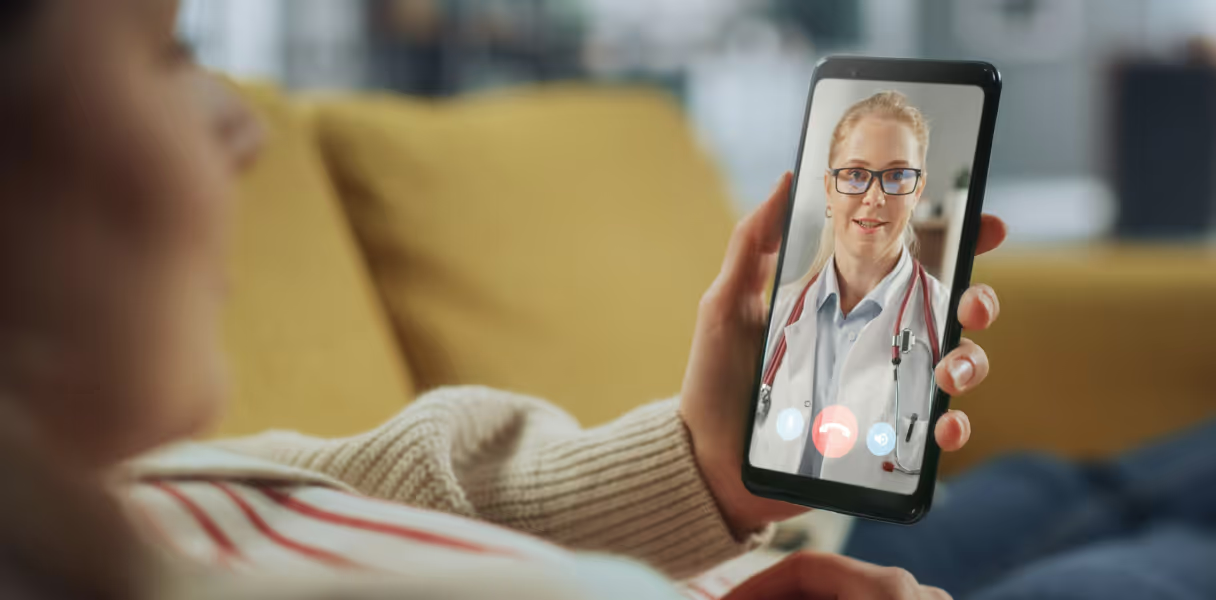
For patients in Clearwater and surrounding Florida communities who want to skip the clinic visit, dumbo.health provides a fully remote pathway. The home sleep test ships to your address, and physician-reviewed results are delivered without an in-person appointment. Treatment, including CPAP equipment and ongoing care, is managed through telehealth with no insurance paperwork. This approach is particularly useful for patients who live farther from specialized sleep centers or prefer the convenience of managing care from home.
When choosing a provider near you, consider these factors:
- Whether the provider uses FDA-cleared testing devices
- Whether a board-certified sleep medicine physician reviews and interprets results
- Whether CPAP equipment, supplies, and follow-up care are included or billed separately
- Whether the provider supports telehealth follow-up for ongoing treatment
- Whether pricing is transparent and predictable
dumbo.health's cash-pay model with transparent pricing, no contracts, and no insurance requirement offers a clear alternative to the traditional referral-based model. Patients in Clearwater who want a simple, predictable path from testing to treatment can find a provider through dumbo.health without the delays and uncertainty of insurance-based care.
KEY TAKEAWAY: Clearwater residents can access sleep apnea testing through local sleep centers or remote services like dumbo.health, and the best choice depends on individual preferences for convenience, cost transparency, and the type of testing needed.
Conclusion
A home sleep apnea test gives Clearwater, Florida residents a fast, affordable, and clinically validated path to diagnosing obstructive sleep apnea without an overnight sleep lab visit. The test captures the data your physician needs to determine your AHI score and build a treatment plan tailored to your situation. Whether you are dealing with chronic snoring, daytime sleepiness, or a DOT-related screening requirement, at-home testing eliminates common barriers like insurance hassles, scheduling delays, and high out-of-pocket costs. dumbo.health offers the complete pathway from a $149 home sleep test to ongoing CPAP therapy starting at $59 per month with no insurance, no contracts, and no surprise bills. Take the first step by completing your free sleep assessment today.
Frequently Asked Questions About Home Sleep Apnea Test Clearwater, Florida
How fast can I get a home sleep apnea test in Clearwater, Florida?
Most patients in Clearwater, Florida can receive an at-home sleep apnea test device within one to two business days when orders are placed before 2pm EST, which may qualify for same-day shipping. Once the device arrives, you complete one night of testing at home and return the device so your results can be reviewed by a physician. dumbo.health offers a $149 home sleep apnea test with transparent cash-pay pricing and no insurance required, making it a practical option for Clearwater residents who want fast access to sleep apnea testing.
What is a home sleep apnea test?
A home sleep apnea test, also called an HSAT or at-home sleep study, is a simplified sleep test you complete in your own bed rather than a hospital or sleep lab. The test uses a small wearable device to record key measurements while you sleep, including oxygen saturation, pulse rate, and breathing patterns. A physician or board-certified sleep medicine physician then reviews the data to assess whether obstructive sleep apnea or other sleep-disordered breathing may be present. The American Academy of Sleep Medicine supports home sleep apnea testing as an appropriate diagnostic option for many adults with suspected obstructive sleep apnea.
What does the $149 home sleep test include?
The $149 home sleep test from dumbo.health includes the at-home sleep test device and one night of testing. This is a one-time cost that is separate from monthly care plans and covers the physical test itself. Physician interpretation, your results report, CPAP therapy, equipment, and ongoing follow-up care are covered under monthly plans starting at $59 per month. There are no contracts, no insurance requirements, no prior authorizations, and no surprise bills. You can learn more about the at-home sleep test and what is included before ordering.
What measurements does a home sleep apnea test record?
A home sleep apnea test typically records oxygen saturation, pulse rate, respiratory effort, snoring intensity, airflow, and body position during sleep. Some devices also use photoplethysmography or peripheral arterial tonometry to detect changes in blood flow associated with breathing interruptions. These measurements allow a sleep physician to calculate your apnea-hypopnea index, or AHI score, which reflects how many apnea and hypopnea events occur per hour of sleep. This data helps a board-certified sleep medicine physician determine whether obstructive sleep apnea is likely and how severe it may be.
Is a home sleep apnea test as accurate as an in-lab sleep study?
A home sleep apnea test is clinically validated for diagnosing moderate to severe obstructive sleep apnea in adults who do not have significant comorbidities. According to the American Academy of Sleep Medicine, HSAT is an appropriate alternative to in-lab polysomnography for many patients with a high likelihood of obstructive sleep apnea. However, in-lab polysomnography records additional measurements including brain waves, heartbeats, and limb movements, making it better suited for evaluating conditions such as narcolepsy, restless leg syndrome, parasomnias, or complex sleep disorders. A healthcare professional can help determine whether a home sleep test or an overnight sleep study is more appropriate for your situation.
When might an in-lab sleep study be needed instead of a home test?
An in-lab overnight sleep study, also called polysomnography, is typically recommended when a patient has complex sleep disorders beyond obstructive sleep apnea, such as narcolepsy, restless legs syndrome, parasomnias, or suspected insomnia with a significant clinical component. In-lab studies are also used for CPAP titration, split-night sleep studies, and cases involving lung diseases, chronic obstructive pulmonary disorder, or other cardiorespiratory conditions that require closer monitoring. If your healthcare provider suspects a condition that a home sleep apnea test cannot adequately evaluate, they may recommend in-lab polysomnography instead.
What are the symptoms that suggest I may need a sleep apnea test?
Common symptoms that may indicate obstructive sleep apnea include loud snoring, waking up repeatedly during the night, gasping or choking during sleep, excessive daytime sleepiness, morning headaches, and difficulty concentrating. Bed partners often notice pauses in breathing or significant snoring before the person sleeping is even aware of a problem. These symptoms do not confirm a diagnosis, and a formal sleep study is needed to assess whether sleep apnea is present and how severe it may be. If you recognise several of these symptoms, a free sleep assessment can help you decide whether home sleep apnea testing is a reasonable next step.
Who reviews my home sleep test results?
Your home sleep test results are reviewed by a board-certified sleep medicine physician who interprets the recorded sleep data, calculates your AHI score, and prepares a clinical report. This report documents whether obstructive sleep apnea is present and, if so, at what severity level. The physician review is a critical step because raw data from a home sleep test device requires clinical interpretation to be medically meaningful. Under dumbo.health monthly plans, physician interpretation and a results report are included as part of ongoing care, starting at $59 per month with no contracts and no surprise bills.
Can I use my home sleep apnea test results to get a CPAP prescription?
Yes, in many cases a physician-interpreted home sleep apnea test report can support a CPAP prescription if the results indicate obstructive sleep apnea. A licensed clinician must review the data and issue the prescription based on your AHI score, symptoms, and clinical history. dumbo.health monthly plans include physician interpretation, a results report, and CPAP therapy with equipment, which means the care pathway from testing to treatment is supported in one place. If you are already a CPAP user who needs a new prescription or equipment, a current sleep study report reviewed by a physician may also meet that need. Explore CPAP therapy and equipment options to understand what is covered.
What is the apnea-hypopnea index, and why does it matter?
The apnea-hypopnea index, or AHI, is the number of apnea and hypopnea events recorded per hour of sleep. An apnea is a complete pause in breathing, while a hypopnea is a partial reduction in airflow accompanied by a drop in oxygen saturation or an arousal from sleep. The AHI score is the primary metric used to classify obstructive sleep apnea severity: mild is typically defined as 5 to 14 events per hour, moderate as 15 to 29, and severe as 30 or more. According to the National Heart, Lung, and Blood Institute, untreated sleep apnea is associated with increased risk of cardiovascular disease, high blood pressure, and daytime impairment.
What is obstructive sleep apnea, and what causes it?
Obstructive sleep apnea is a condition in which the muscles at the back of the throat relax during sleep, causing the airway to narrow or collapse repeatedly. This reduces or stops airflow, lowers oxygen saturation, and fragments sleep as the brain partially wakes the body to restore normal breathing. Risk factors include excess body weight, a large neck circumference, jaw position, tongue anatomy, age, and family history. The Mayo Clinic explains that obstructive sleep apnea is one of the most common sleep disorders and is frequently undiagnosed because many people are unaware their breathing is interrupted during sleep.
What treatment options are available for obstructive sleep apnea?
The most common treatment for obstructive sleep apnea is continuous positive airway pressure, or CPAP therapy, which delivers a steady flow of air pressure through a nasal mask or full-face mask to keep the airway open during sleep. Other options include oral appliance therapy, which uses a custom-fitted device to reposition the jaw and tongue to maintain airway patency, lifestyle changes such as weight management and smoking cessation, and in some cases surgical sleep disorder treatments. The right treatment plan depends on AHI severity, symptoms, anatomy, and patient preferences. A healthcare professional can help determine which treatment option is most appropriate for your individual situation.
Is oral appliance therapy as effective as CPAP for sleep apnea?
Oral appliance therapy can be effective for mild to moderate obstructive sleep apnea and is sometimes preferred by patients who find CPAP uncomfortable or difficult to use consistently. Custom-fitted oral devices reposition the jaw and tongue during sleep to reduce airway obstruction. Evidence from the American Academy of Sleep Medicine suggests that oral appliances are a clinically accepted alternative for eligible patients, though CPAP remains the first-line treatment for moderate to severe obstructive sleep apnea. A board-certified sleep medicine physician or dental sleep specialist can assess whether oral appliance therapy is appropriate based on your AHI score, anatomy, and bite structure.
Do I need a sleep study before starting CPAP therapy?
Yes, in most cases a sleep study is required before a clinician can prescribe CPAP therapy. The sleep study, whether conducted at home or in a sleep lab, provides the AHI score and sleep data that a physician uses to confirm an obstructive sleep apnea diagnosis and justify a prescription. Starting CPAP without a confirmed diagnosis and prescription is not clinically appropriate, and CPAP air pressure settings should be determined by a qualified healthcare professional based on your results. If you need a sleep study and want a convenient, affordable option, dumbo.health offers a $149 at-home sleep test with physician review included in monthly care plans.
What happens after I complete my home sleep apnea test?
After you return the home sleep test device, the recorded data is processed and reviewed by a board-certified sleep medicine physician. You receive a clinical report that includes your AHI score, oxygen saturation levels, and other relevant measurements. Based on the results, your physician can outline a recommended treatment plan, which may include CPAP therapy, a referral for further evaluation, or a recommendation for follow-up testing. If you are using dumbo.health, your referring provider can also receive a copy of your results report as part of ongoing care coordination. Explore sleep apnea care solutions to understand what ongoing support is available.
What is CPAP therapy, and how does it work?
CPAP, or continuous positive airway pressure, is a therapy that uses a small machine to deliver a continuous stream of pressurised air through a nasal or full-face mask while you sleep. The air pressure acts as a pneumatic splint that keeps the upper airway open, preventing the collapses that cause apnea and hypopnea events. CPAP therapy is widely considered the most effective treatment for moderate to severe obstructive sleep apnea. Consistent nightly use is important for achieving the full clinical benefit, which is why CPAP adherence monitoring and follow-up care are essential components of an effective sleep apnea treatment plan.
Why does CPAP adherence monitoring matter?
CPAP adherence refers to how consistently and for how long a patient uses their CPAP machine each night. Most clinical guidelines consider adequate adherence to be at least four hours of use per night on at least 70 percent of nights, though individual treatment goals may vary. Poor adherence reduces the effectiveness of therapy and may leave obstructive sleep apnea inadequately treated. For commercial drivers, adherence data may be reviewed as part of DOT medical certification follow-up. dumbo.health Premium and Elite plans include advanced adherence monitoring and dedicated support from a licensed care team to help patients stay on track with their treatment. Learn more about CPAP therapy and adherence support.
Can commercial drivers in Clearwater, Florida use a home sleep apnea test for DOT purposes?
Commercial drivers who hold a CDL and are required to undergo sleep apnea evaluation may be able to use a home sleep apnea test as part of that process, depending on how their certified medical examiner approaches the evaluation. A home sleep test can produce a physician-interpreted report documenting AHI score, oxygen saturation, and treatment status, which may be relevant to a DOT medical examination. However, the certified medical examiner makes all DOT certification decisions based on FMCSA guidelines, not dumbo.health. dumbo.health can support testing, documentation, and CPAP adherence reporting, but it does not guarantee DOT certification or medical clearance. Commercial drivers can learn more at the DOT sleep apnea test at home guide.
Does insurance cover a home sleep apnea test in Florida?
dumbo.health operates as a cash-pay platform, which means no insurance is required, no prior authorizations are needed, and there are no surprise bills. The home sleep test is $149 as a one-time cost, and monthly care plans start at $59 per month with no contracts. Patients who have health insurance may be able to seek reimbursement through their insurer independently, but dumbo.health does not process insurance claims. For patients who have faced insurance barriers, prior authorization delays, or unexpected costs with traditional healthcare, the transparent pricing model offers a predictable alternative for accessing sleep apnea testing and ongoing care in Clearwater and across Florida.
Can snoring be treated without a formal sleep apnea diagnosis?
Snoring without confirmed obstructive sleep apnea can sometimes be managed through lifestyle changes, positional therapy, or snore guard devices, but it is important to evaluate whether snoring reflects an underlying sleep-disordered breathing condition. Loud or frequent snoring can be a significant symptom of undiagnosed obstructive sleep apnea, and treating snoring alone without investigating whether apnea is present may leave a more serious condition unaddressed. According to the Sleep Foundation, snoring is one of the most common signs of obstructive sleep apnea, particularly when accompanied by gasping, choking, or excessive daytime sleepiness. A healthcare professional can help determine whether a sleep study is appropriate.
How do I get started with a home sleep apnea test near me in Clearwater or the surrounding Florida area?
Residents of Clearwater, Largo, Safety Harbor, Tarpon Springs, New Port Richey, and other nearby Florida communities can access an at-home sleep apnea test through dumbo.health without needing to visit a sleep lab or hospital in person. The process begins with a free sleep assessment to help determine whether at-home testing is appropriate, followed by ordering the $149 home sleep test device with same-day shipping available for orders placed before 2pm EST. Once testing is complete, physician interpretation and ongoing care are available through monthly plans starting at $59. There are no contracts and no insurance required. Start with a free sleep assessment to see whether home sleep apnea testing is a suitable next step for you.