



Home Sleep Apnea Test in Weston, Florida: The Complete Guide to At-Home Diagnosis
Home sleep apnea test in Weston, Florida provides residents a clinically validated way to screen for obstructive sleep apnea from the comfort of their own bed, without an overnight stay at a sleep center. According to the American Academy of Sleep Medicine, home sleep testing accurately identifies obstructive sleep apnea in most adults when properly administered under physician oversight. This guide is for Weston residents, South Florida patients, and anyone in the surrounding areas of Broward County exploring convenient, affordable sleep apnea testing options. You will learn how home sleep tests work, what devices measure, how results compare to in-lab polysomnography, which treatment options follow a diagnosis, and where the process fits within local and telehealth care pathways. Understanding your options now can protect both your sleep quality and long-term health.
Quick Answer
A home sleep apnea test in Weston, Florida lets you complete a diagnostic sleep study at home using an FDA-cleared portable device that tracks airflow, oxygen levels, heart rate, and breathing patterns overnight. Results are reviewed by a physician, typically within days, and used to guide a treatment plan. Home sleep testing is widely available through local sleep centers and telehealth providers. dumbo.health offers a home sleep test for $149 with no insurance required, delivering the device directly to patients in Weston and throughout Florida.
Key Takeaways
- Home sleep apnea tests use FDA-cleared portable devices to measure airflow, oxygen saturation, heart rate, and respiratory effort during one night of sleep at home.
- The American Academy of Sleep Medicine supports home sleep testing as an accurate diagnostic tool for moderate to severe obstructive sleep apnea in adults without major comorbidities.
- Results from a home sleep study are interpreted by a board-certified sleep physician, and a diagnosis can lead to CPAP therapy, oral appliance therapy, or other treatment options.
- In-lab polysomnography remains necessary for patients suspected of having central sleep apnea, narcolepsy, parasomnias, or complex sleep apnea syndrome.
- dumbo.health provides a $149 one-time home sleep test with physician interpretation included in monthly care plans starting at $59 per month, with no contracts and no insurance required.
- Untreated sleep apnea increases the risk of heart attacks, strokes, diabetes, and motor vehicle accidents, making early diagnosis a medical priority.
What Is a Home Sleep Apnea Test?
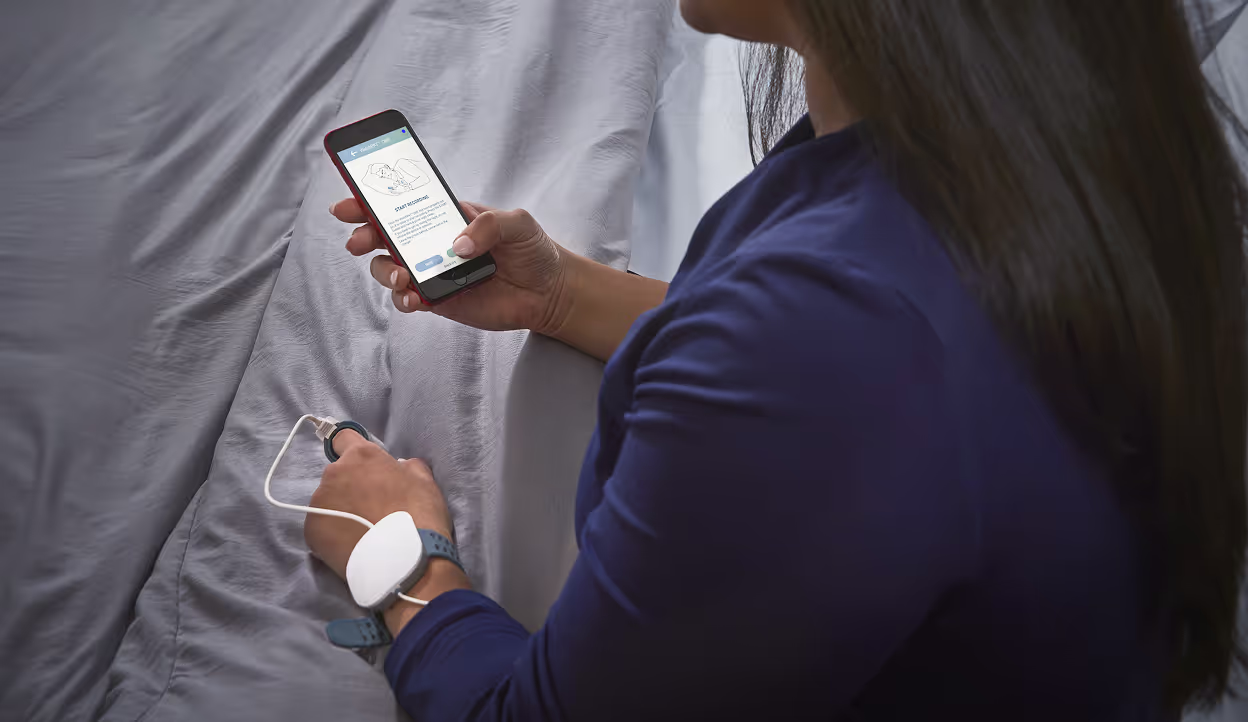
A home sleep apnea test is a simplified, portable version of a sleep study that you complete in your own bed rather than at a sleep lab. The device records key physiological data overnight, and a physician reviews the results to determine whether obstructive sleep apnea is present.
Home sleep testing uses a small, FDA-cleared portable monitoring device equipped with sensors that track airflow through the nasal passage, oxygen saturation via photoplethysmography, heart rate, pulse rate, and respiratory effort. Some advanced devices, such as the Zmachine Synergy, use FDA-cleared EEG-based algorithms to measure brain activity and sleep stages, providing data closer to what a full polysomnography captures.
Unlike a traditional in-clinic test at a sleep center, home sleep testing does not require technicians, an overnight visit, or sensors measuring brain waves and leg movements. This makes it a practical first step for the majority of adults presenting with symptoms such as loud snoring, witnessed breathing pauses, or excessive daytime sleepiness.
The American Academy of Sleep Medicine recommends home sleep apnea testing for patients with a high pretest probability of moderate to severe obstructive sleep apnea and no significant comorbid sleep disorders. When these criteria are met, home sleep testing has demonstrated diagnostic accuracy comparable to in-lab studies for identifying obstructive sleep apnea.
Home sleep apnea testing is a screening and diagnostic tool, not a comprehensive polysomnography replacement. It works best when paired with physician evaluation and a thorough sleep history. dumbo.health ships FDA-cleared home sleep testing kits directly to patients in Weston, FL, and across Florida, with results interpreted by a physician as part of their care plans.
KEY TAKEAWAY: A home sleep apnea test is a portable, FDA-cleared diagnostic study completed at home that measures airflow, oxygen levels, and heart rate to detect obstructive sleep apnea, with results reviewed by a physician.
Understanding what the test measures is only part of the picture. Knowing why sleep apnea screening matters in Weston specifically adds important context.
Why Sleep Apnea Testing Matters for Weston, Florida Residents
Undiagnosed sleep apnea poses serious health risks, and residents in Weston and surrounding South Florida communities are not immune. According to the National Heart, Lung, and Blood Institute, an estimated 25 million adults in the United States have obstructive sleep apnea, and a significant portion remain undiagnosed.
Obstructive sleep apnea occurs when the airway collapses or becomes blocked during sleep, reducing airflow and causing drops in oxygen saturation. The body responds with repeated micro-awakenings that fragment sleep and place strain on the cardiovascular system. Left untreated, obstructive sleep apnea is associated with higher rates of heart attacks, strokes, diabetes, and hypertension. The National Highway Traffic Safety Administration has also linked drowsy driving to thousands of crashes annually, making undiagnosed sleep apnea a public safety concern.
Weston residents who experience persistent snoring, morning headaches, daytime fatigue, or difficulty concentrating may be dealing with an undiagnosed sleep problem. A home sleep test provides a low-barrier entry point for evaluation without requiring time off work or an overnight stay at a sleep lab.
DID YOU KNOW: According to the American Sleep Apnea Association, approximately 80 percent of moderate to severe obstructive sleep apnea cases remain undiagnosed in the United States.
Florida's warm climate and active lifestyle can mask fatigue-related symptoms, leading many residents to attribute poor sleep quality to stress, aging, or seasonal allergies. Completing a home sleep study removes guesswork and provides objective sleep data that a physician can use for diagnosing sleep apnea accurately.
For patients in Weston, FL, options include visiting a local sleep center in Broward County, scheduling through providers in Boca Raton, or using a telehealth-based service such as dumbo.health that delivers the test device to your door without referrals or insurance hurdles.
KEY TAKEAWAY: Undiagnosed sleep apnea affects millions of Americans and increases the risk of serious conditions such as heart attacks, strokes, and diabetes, making accessible testing in Weston and across Florida a health priority.
Once you understand why testing matters, the next step is knowing exactly how the process works from start to finish.
How a Home Sleep Test Works: Step-by-Step Process
A home sleep apnea test follows a straightforward process that most patients complete in a single night with no clinical visit required.
Steps to Complete a Home Sleep Test
1. Begin with a sleep evaluation. Complete an initial consultation or a free sleep assessment, such as the one available through the dumbo.health sleep assessment, to determine whether home sleep testing is appropriate based on your symptoms and sleep history.
2. Receive your home sleep testing device. The FDA-cleared portable device is shipped directly to your address in Weston or anywhere in Florida. dumbo.health delivers the home sleep test device for a one-time cost of $149 with no insurance required.
3. Follow the setup instructions. Before going to bed, attach the sensors as directed. Most devices involve a nasal airflow sensor, a finger sensor for oxygen saturation and pulse rate, and a chest belt for respiratory effort. Setup typically takes under 10 minutes.
4. Sleep in your own bed. Wear the device for one full night of sleep. The device records data continuously, measuring airflow, oxygen levels, heart rate, and breathing patterns.
5. Return or upload the device data. Depending on the provider, you either mail the device back or the sleep data uploads automatically via a cell phone or connected app.
6. Receive physician-reviewed results. A board-certified sleep physician interprets the sleep data and generates a diagnostic report. Through dumbo.health, physician interpretation is included in monthly care plans starting at $59 per month.
7. Discuss your results and treatment plan. Based on test results, your physician recommends next steps, which may include CPAP therapy, oral appliance therapy, or additional evaluation.
Completing all seven steps typically takes less than two weeks from initial order to receiving your results. Many patients complete the testing portion in just one night, with physician-reviewed results returned within days.
KEY TAKEAWAY: A home sleep test involves receiving a portable device, wearing it for one night, and having the results reviewed by a sleep physician, with the entire process often completed within two weeks.
With the process clear, it helps to understand exactly what the device measures and why each data point matters for your diagnosis.
What Home Sleep Test Devices Measure
Home sleep test devices are FDA-cleared portable monitors designed to capture the specific physiological signals needed to diagnose obstructive sleep apnea. Each sensor serves a distinct purpose in building a complete picture of your breathing during sleep.
Airflow
A nasal cannula or thermistor detects airflow through the nasal passage and mouth. Reductions or complete cessation of airflow identify apneas (full breathing stops) and hypopneas (partial reductions). These events form the basis of the Apnea-Hypopnea Index, which is the primary metric used for diagnosing sleep apnea severity.
Oxygen Saturation and Heart Rate
A finger sensor uses photoplethysmography to continuously measure blood oxygen saturation and pulse rate. Drops in oxygen levels that correspond to breathing events confirm the physiological impact of airway obstruction. Normal oxygen saturation during sleep is typically 95 to 100 percent. Repeated desaturations below 90 percent signal clinically significant sleep apnea.
Respiratory Effort
A chest or abdominal belt measures the physical effort your body makes to breathe. This sensor differentiates between obstructive sleep apnea, where effort is present but the airway is blocked, and central sleep apnea, where the brain temporarily stops sending signals to breathe.
Advanced Measurements
Some devices go further. The NightOwl Home Sleep Test uses a compact finger-mounted sensor that records peripheral arterial tone alongside oxygen data. The Zmachine Synergy uses FDA-cleared EEG-based algorithms to track brain activity, brain waves, and sleep stages, providing data on sleep architecture that standard portable monitors cannot capture. These advanced home sleep testing kits bridge some of the gap between home testing and full polysomnography.
The equipment used in home sleep testing is different from a sleep monitor or consumer wearable. Clinical-grade portable monitoring devices must meet FDA standards for diagnostic accuracy, whereas consumer devices are designed for general wellness tracking and are not valid for diagnosing sleep disorders.
KEY TAKEAWAY: FDA-cleared home sleep test devices measure airflow, oxygen saturation, heart rate, and respiratory effort using clinical-grade sensors, with some advanced models also tracking brain activity and sleep stages.
Knowing what devices measure leads naturally to the question of how home testing compares to spending a night at a sleep lab.
Home Sleep Test vs. In-Lab Polysomnography
Both home sleep testing and in-lab polysomnography diagnose sleep apnea, but they differ significantly in scope, convenience, cost, and clinical application.
Polysomnography is the gold standard sleep study performed overnight at a sleep lab or sleep center. It uses an extensive array of sensors to measure brain waves, eye movements, muscle activity, airflow, oxygen levels, heart rate, and leg movements. Technicians monitor patients in real time and can intervene if equipment shifts during the night.
A home sleep test measures fewer variables but captures sufficient data to accurately diagnose obstructive sleep apnea in most adult patients. The trade-off is reduced diagnostic scope in exchange for greater convenience, lower cost, and the ability to sleep in a natural environment.
Structured Comparison: Home Sleep Test vs. Polysomnography
Setting
- Home Sleep Test: Your own bed at home in Weston or anywhere you sleep
- Polysomnography: Sleep lab or sleep center with technicians present
Cost
- Home Sleep Test: Lower, typically $149 to $500 depending on provider (dumbo.health offers it for $149)
- Polysomnography: Higher, often $1,000 to $3,000 or more, depending on insurance and facility
Convenience
- Home Sleep Test: High, no travel or overnight facility stay required
- Polysomnography: Lower, requires scheduling an overnight visit to a sleep lab
Sensors and Data
- Home Sleep Test: Airflow, oxygen saturation, heart rate, respiratory effort (some devices add EEG)
- Polysomnography: Full monitoring including brain waves, eye movements, leg movements, sleep stages, airflow, oxygen, and heart rate
Who It Is Best For
- Home Sleep Test: Adults with suspected moderate to severe obstructive sleep apnea and no major comorbid sleep disorders
- Polysomnography: Patients with suspected central sleep apnea, complex sleep apnea syndrome, narcolepsy, parasomnias, insomnia with co-occurring conditions, or inconclusive home test results
Turnaround Time
- Home Sleep Test: Results typically within days of physician review
- Polysomnography: Results may take one to two weeks depending on the sleep center
For the majority of adults in Weston and across Florida presenting with snoring, witnessed apneas, and daytime sleepiness, a home sleep test is the recommended starting point. The American Academy of Sleep Medicine endorses home sleep testing as an appropriate first-line diagnostic tool when clinical suspicion for obstructive sleep apnea is high. In-lab polysomnography is reserved for cases where home test results are inconclusive or when other sleep disorders need to be ruled out.
KEY TAKEAWAY: Home sleep testing is a cost-effective, convenient alternative to polysomnography for diagnosing obstructive sleep apnea, while in-lab studies remain necessary for complex or inconclusive cases.
After understanding how the two testing options compare, the next question most patients in Weston have is what happens after the diagnosis is confirmed.
Treatment Options After a Sleep Apnea Diagnosis
A positive sleep apnea diagnosis leads to a treatment plan tailored to the severity of the condition, the type of sleep apnea identified, and the individual patient's anatomy and lifestyle.
CPAP Therapy
Continuous positive airway pressure therapy is the most widely prescribed treatment for moderate to severe obstructive sleep apnea. A CPAP machine delivers a steady stream of pressurized air through a mask worn during sleep, keeping the airway open and preventing apnea events. According to the American Academy of Sleep Medicine, CPAP therapy reduces the Apnea-Hypopnea Index, improves oxygen saturation, and decreases daytime sleepiness when used consistently.
CPAP therapy requires a prescription from a physician. Patients who complete their home sleep test through dumbo.health can access CPAP therapy and equipment as part of monthly care plans. The Essentials Plan at $59 per month includes a CPAP machine, masks, physician oversight, and standard follow-up care, with no contracts and no insurance required.
Many patients report that the first week of CPAP use involves an adjustment period. Selecting the right mask fit and pressure settings significantly affects adherence. dumbo.health's Premium Plan at $89 per month adds a dedicated sleep coach and advanced adherence monitoring to help patients through this transition.
Oral Appliance Therapy
For mild to moderate obstructive sleep apnea or for patients who cannot tolerate CPAP, oral appliance therapy offers an alternative. A custom-fitted dental device repositions the lower jaw and tongue to maintain airway openness during sleep. The American Academy of Sleep Medicine recognizes oral appliances as a viable treatment option, particularly when CPAP adherence is a challenge.
Positional Therapy and Lifestyle Modifications
Some patients experience apnea events primarily while sleeping on their back. Positional therapy involves training the body to sleep on its side. Lifestyle changes such as weight management, reducing alcohol intake, and establishing consistent sleep schedules can also reduce symptom severity. These approaches are most effective for mild obstructive sleep apnea or as complements to primary treatment.
Surgical and Advanced Interventions
When CPAP and oral appliances are not effective or tolerated, surgical options exist. Rhinologic surgery can address nasal passage obstructions that contribute to restricted airflow. MARPE expansion widens the upper jaw to improve nasal and airway dimensions. Tongue tie release and procedures targeting soft tissue or orofacial muscles may be recommended in specific cases.
Inspire therapy is an FDA-approved implantable device that stimulates the hypoglossal nerve to keep the airway open during sleep. It is typically considered for patients with moderate to severe obstructive sleep apnea who have failed CPAP therapy.
Myofunctional therapy involves exercises that strengthen the orofacial muscles and tongue to improve airway tone. While research is emerging, some clinicians use it as a complementary approach alongside primary treatment.
Nasal and Allergy Management
Nasal congestion can worsen obstructive sleep apnea symptoms. Nasal decongestants and allergy medications may improve nasal airflow and make CPAP use more comfortable. These are adjunctive treatments, not standalone solutions for sleep apnea.
IMPORTANT: CPAP therapy requires ongoing use to remain effective. Skipping nights or using the device for fewer than 4 hours per night reduces treatment benefit significantly.
Regardless of which treatment path is recommended, physician follow-up and adherence monitoring are essential components of long-term care. dumbo.health's sleep apnea care solutions include ongoing physician oversight, equipment management, and adherence tracking as part of every monthly plan.
KEY TAKEAWAY: Treatment for sleep apnea ranges from CPAP therapy and oral appliances to surgical interventions and lifestyle changes, with the most appropriate option determined by the type and severity of sleep apnea diagnosed.
Understanding treatment options naturally raises questions about cost, insurance, and how to access testing affordably in Weston.
Cost of a Home Sleep Test in Weston, Florida
The cost of a home sleep test in Weston varies depending on whether you use insurance, visit a local sleep center, or choose a self-pay telehealth provider. Understanding the pricing landscape helps you make an informed decision without unexpected bills.
At a traditional sleep center or sleep lab in the Weston or Broward County area, a home sleep test typically costs between $200 and $600 before insurance. If your medical insurance covers the test, you may pay a copay or meet a deductible first. However, obtaining insurance approval often requires referrals, prior authorizations, and multiple office visits, which add time and indirect costs.
In-lab polysomnography at a facility near you costs substantially more, ranging from $1,000 to $3,000 or higher. Insurance may cover a portion, but out-of-pocket costs still frequently exceed what patients expect.
For self-pay patients who want a transparent, predictable cost, dumbo.health offers a home sleep test for a one-time payment of $149. This cash-pay price requires no insurance, no prior authorizations, no referrals, and no surprise bills. The device is shipped directly to your home in Weston, FL, or anywhere in Florida.
Monthly care plans through dumbo.health cover everything after the test. The Essentials Plan at $59 per month includes physician interpretation and report, CPAP therapy and equipment, standard follow-up care, and updates sent to your referring provider. The Premium Plan at $89 per month adds a dedicated sleep coach, advanced adherence monitoring, and priority results turnaround. The Elite Plan at $129 per month includes concierge clinical support, direct physician messaging, and custom reporting.
All plans operate on a no-contract, cancel-anytime basis. There are no hidden fees and no subscription traps.
TIP: If you are comparing pricing between local Weston sleep centers and telehealth options, request a complete cost breakdown that includes the initial consultation, the test itself, physician interpretation, and any follow-up visits. Many local providers bill each component separately, which can quickly exceed the all-inclusive pricing of a service like dumbo.health.
KEY TAKEAWAY: A home sleep test in Weston, Florida typically costs $200 to $600 through local providers or as little as $149 through dumbo.health with no insurance, referrals, or hidden fees required.
With cost covered, patients often want to know whether they are good candidates for home testing or if certain conditions require an alternative approach.
Limitations and Risks of Home Sleep Apnea Testing
Home sleep testing is an effective diagnostic tool for obstructive sleep apnea, but it is not appropriate for every patient or every sleep disorder. Recognizing these limitations ensures you pursue the right type of evaluation.
Not Designed for All Sleep Disorders
Home sleep tests are validated for diagnosing obstructive sleep apnea. They do not diagnose central sleep apnea, complex sleep apnea syndrome, narcolepsy, insomnia, or parasomnias. These conditions require in-lab polysomnography, which measures brain waves, eye movements, and muscle activity. If your physician suspects a sleep disorder beyond obstructive apnea, a sleep lab study is the appropriate next step.
Risk of False Negatives
Home sleep tests can underestimate sleep apnea severity. Because most portable devices do not measure actual sleep time, they calculate the Apnea-Hypopnea Index using total recording time rather than total sleep time. If you spend significant time awake during the recording, your AHI may appear lower than it truly is. The American Academy of Sleep Medicine notes this as a known limitation and recommends that negative or borderline home test results in a high-suspicion patient be followed by in-lab polysomnography.
Equipment Displacement During Sleep
Sensors can shift or become detached during sleep, especially the nasal airflow cannula or the finger oxygen sensor. This can result in incomplete or unusable sleep data. Unlike an in-clinic test where technicians can reattach sensors in real time, there is no overnight monitoring during a home study. Following the device setup instructions carefully and securing sensors before sleep reduces this risk.
Not Appropriate for Certain Patient Populations
Patients with significant cardiac disease, respiratory conditions such as COPD, neuromuscular disorders, or suspected hypoventilation syndromes typically require the more comprehensive data that polysomnography provides. Clinicians frequently observe that patients with multiple comorbidities benefit from the controlled environment and expanded monitoring of a sleep lab.
Physician Oversight Is Essential
A home sleep test produces raw data that must be interpreted by a qualified sleep physician. Devices marketed directly to consumers without physician review can lead to misinterpretation and delayed treatment. dumbo.health addresses this by including physician interpretation in all monthly care plans, ensuring that every test result is reviewed by a board-certified physician before any diagnosis or treatment recommendation is made.
DID YOU KNOW: According to the American Academy of Sleep Medicine, home sleep tests should always be administered under the supervision of a physician who can evaluate the patient's clinical history and determine whether home testing is appropriate.
Despite these limitations, home sleep testing remains the recommended first-line diagnostic approach for the majority of adults with suspected obstructive sleep apnea. When results are inconclusive, escalation to in-lab polysomnography provides the additional data needed for a definitive diagnosis.
KEY TAKEAWAY: Home sleep testing has limitations including inability to diagnose non-obstructive sleep disorders, risk of false negatives from sensor displacement, and unsuitability for patients with complex comorbidities, making physician oversight essential.
Understanding limitations helps you approach testing with realistic expectations. Next, a practical preparation checklist ensures you get the most accurate results from your home sleep study.
How to Prepare for Your Home Sleep Test
Proper preparation increases the accuracy of your home sleep test results and reduces the chance of needing a repeat study.
Pre-Test Preparation Checklist
- Confirm your test device is fully charged or has fresh batteries as directed in the instructions
- Review the sensor setup guide provided with your home sleep testing kit before the night of testing
- Avoid alcohol for at least 4 to 6 hours before your scheduled sleep time, as alcohol can alter breathing patterns
- Avoid caffeine after noon on the day of testing to help you fall asleep at your normal time
- Skip naps during the day so you are naturally tired at bedtime
- Remove nail polish from the finger where the oxygen sensor will be placed, as polish can interfere with photoplethysmography readings
- Sleep in your usual bed with your regular pillow and bedding to replicate normal sleep conditions
- Turn off or silence your cell phone and minimize potential disruptions in your bedroom
- Wear comfortable, loose-fitting sleepwear that does not interfere with sensor placement
- Complete the free sleep assessment at dumbo.health before testing night to ensure home testing is appropriate for your symptoms and sleep history
- Keep the device instructions within reach in case you need to troubleshoot sensor placement during the night
Following this checklist closely reduces the likelihood of data errors or incomplete recordings. Many patients report feeling nervous about their first home sleep study, but the process is straightforward once the sensors are in place.
If your test results come back inconclusive due to sensor displacement or insufficient recording time, most providers allow a repeat study. dumbo.health includes guidance and support throughout the testing process to help patients complete the study successfully on the first attempt.
KEY TAKEAWAY: Preparing for a home sleep test involves avoiding alcohol and caffeine, following device setup instructions, and sleeping in your normal environment to maximize diagnostic accuracy.
With preparation covered, real-world patient scenarios illustrate how home sleep testing fits into different clinical situations.
Who Should Consider a Home Sleep Test in Weston: Real-World Scenarios
Home sleep testing works for a wide range of patients, but individual circumstances determine the best approach.
Common Scenarios
A 48-year-old office professional living in Weston, FL who snores loudly, experiences daytime fatigue, and has a BMI of 32. Her partner reports witnessed breathing pauses during sleep. She has no prior sleep history or diagnosed sleep disorders. She does not want to spend a night at a sleep center and is looking for a convenient option near her. A home sleep test is the appropriate first step. She orders through dumbo.health for $149, completes the test at home, and receives physician-reviewed results within days. Based on a confirmed diagnosis of moderate obstructive sleep apnea, she starts CPAP therapy through the Essentials Plan at $59 per month.
A 55-year-old business owner in Broward County with a history of high blood pressure and a neck circumference over 17 inches. His primary care physician has recommended sleep apnea testing for years, but scheduling conflicts and insurance referral delays have prevented follow-through. He has no suspected neurological sleep disorders. Home sleep testing through a telehealth provider eliminates the scheduling and insurance barriers. He avoids the need for visits to a local sleep lab and completes the entire process through virtual consultations and shipped equipment.
A 37-year-old woman in Tampa, Florida with mild snoring, frequent insomnia, and occasional episodes of acting out dreams during sleep. Her symptoms suggest possible parasomnias alongside mild obstructive sleep apnea. For this patient, an in-lab polysomnography at a sleep center is more appropriate because the study needs to capture brain waves, sleep stages, and muscle activity to evaluate for parasomnias. A home sleep test would not provide sufficient data for a complete evaluation.
A 62-year-old retired commercial driver living near Boca Raton with a prior diagnosis of mild sleep apnea who was previously treated with a CPAP machine but stopped using it three years ago. He is now experiencing worsened snoring and morning headaches. A repeat home sleep study can reassess his current severity and guide updated treatment options. He may benefit from resuming CPAP therapy or exploring oral appliance therapy depending on his new results.
These scenarios demonstrate that home sleep testing is appropriate for most adults with suspected obstructive sleep apnea but not for patients with suspected complex or non-obstructive sleep disorders.
KEY TAKEAWAY: Home sleep testing is the right starting point for most adults with typical obstructive sleep apnea symptoms, while patients with suspected neurological or complex sleep conditions need in-lab polysomnography.
Patient scenarios highlight the practical side of sleep testing. Understanding what local and telehealth options are available in Weston adds the final layer of decision-making information.
Where to Get a Home Sleep Test in Weston, Florida
Patients in Weston have multiple pathways to access home sleep apnea testing, including local sleep centers, ENT specialists, and telehealth providers.
Local Providers in the Weston and South Florida Area
Several established practices serve the Weston and Broward County region. South Florida ENT Associates, led by providers such as Lara Wittine, offers sleep evaluations and testing referrals. SFENTA provides both diagnostic and surgical pathways for sleep disorders. Florida Sinus and Snoring Specialists focuses on the relationship between nasal obstruction and sleep-disordered breathing, offering rhinologic surgery and nasal passage evaluation alongside sleep apnea diagnosis.
The Sleep Medicine Institute and the South Florida Snoring and Sleep Center are dedicated sleep medicine facilities with board-certified sleep physicians and sleep specialists on staff. These centers offer both in-lab polysomnography and home sleep testing, along with treatment services including CPAP therapy, oral appliance therapy, and advanced interventions such as Inspire therapy.
Visiting a local sleep center typically involves an initial consultation, a physician evaluation, possible insurance authorization, and a scheduled test date. Office hours, referral requirements, and insurance compatibility vary by practice.
Telehealth and Direct-to-Patient Options
For patients who prefer to skip in-office visits, telehealth providers offer home sleep testing with remote physician oversight. Virtual consultations replace in-person visits, and devices ship directly to your home in Weston.
dumbo.health operates as a cash-pay telehealth provider specializing in sleep apnea care solutions. The service is available to patients throughout Florida, including Weston, Boca Raton, Tampa, and beyond. Out-of-state patients can also access the platform. No medical insurance is needed, and no referrals are required to get started.
The MHSleepTestingTM platform and similar services have also entered the home sleep testing market, offering various subscription and self-pay models. When evaluating any provider, confirm that the device is FDA-cleared, that a board-certified sleep physician interprets the results, and that the service includes a clear pathway to treatment.
TIP: Whether you choose a local provider near you or a telehealth option, always verify that physician interpretation is included in the service and not billed as a separate surprise charge.
KEY TAKEAWAY: Weston residents can access home sleep testing through local sleep centers such as SFENTA, The Sleep Medicine Institute, and South Florida Snoring and Sleep Center, or through telehealth providers such as dumbo.health that offer direct-to-patient testing with no insurance required.
After exploring where to get tested, addressing common misconceptions helps patients approach the process with accurate expectations.
Common Myths About Home Sleep Apnea Tests Debunked
MYTH: Home sleep tests are not accurate enough to diagnose sleep apnea.
FACT: The American Academy of Sleep Medicine validates home sleep testing as an accurate diagnostic tool for obstructive sleep apnea in appropriate candidates. Studies published in peer-reviewed journals and indexed on PubMed demonstrate that Type III and Type IV portable monitors reliably identify moderate to severe obstructive sleep apnea when used under physician supervision. Home tests may underestimate severity in some cases, but they are clinically accepted as a first-line diagnostic tool.
MYTH: You need insurance or a referral to get a home sleep test.
FACT: Many telehealth providers, including dumbo.health, offer home sleep tests on a self-pay basis with no insurance, no referrals, and no prior authorizations required. The $149 one-time cost through dumbo.health covers the device and one night of testing. Self-pay patients often complete the process faster than patients navigating insurance approval pathways.
MYTH: If you snore, you definitely have sleep apnea.
FACT: Snoring is a common symptom of obstructive sleep apnea, but not everyone who snores has the condition. According to the Sleep Foundation, snoring can result from nasal congestion, alcohol use, sleep position, or anatomical features of the soft tissue in the airway. A home sleep test provides objective data that distinguishes between simple snoring and clinically significant sleep apnea by measuring actual breathing disruptions and oxygen desaturations.
MYTH: CPAP is the only treatment for sleep apnea.
FACT: While CPAP therapy is the most common and well-studied treatment for moderate to severe obstructive sleep apnea, it is not the only option. Oral appliance therapy, positional therapy, lifestyle modifications, myofunctional therapy, rhinologic surgery, MARPE expansion, tongue tie release, and Inspire therapy are all recognized treatment options depending on the type and severity of sleep apnea. A comprehensive treatment plan considers the individual patient's anatomy, preferences, and adherence capacity.
MYTH: You can diagnose sleep apnea with a consumer sleep tracker or phone app.
FACT: Consumer wearables and cell phone sleep tracking apps measure general sleep patterns and estimated sleep quality, but they are not FDA-cleared for diagnosing sleep apnea. Diagnostic accuracy requires clinical-grade sensors measuring airflow, oxygen saturation, and respiratory effort. A consumer sleep monitor can flag potential concerns, but only an FDA-cleared home sleep test or polysomnography can produce results that support a medical diagnosis and treatment prescription.
KEY TAKEAWAY: Home sleep tests are clinically validated, available without insurance, and capable of distinguishing between simple snoring and obstructive sleep apnea, but consumer devices and phone apps cannot replace FDA-cleared diagnostic testing.
With myths clarified, the final consideration is understanding the full care pathway from testing through long-term treatment management.
The Complete Care Pathway: From Testing to Restful Sleep
Getting a diagnosis is only the beginning. Achieving restful sleep requires a structured care pathway that includes testing, interpretation, treatment initiation, and ongoing follow-up.
The most effective outcomes come from programs that integrate every stage. Fragmented care, where a patient gets tested at one facility, interpreted at another, and receives equipment from a third, introduces delays, miscommunication, and gaps in adherence monitoring.
dumbo.health was designed to address this fragmentation. The platform handles the entire pathway from the initial home sleep testthrough diagnosis, CPAP treatment and equipment delivery, physician oversight, and ongoing adherence monitoring, all in one integrated system.
Patients who choose the Premium Plan at $89 per month receive a dedicated sleep coach from a licensed care team. Clinicians frequently observe that patients with regular coaching and adherence monitoring achieve higher nightly CPAP usage and better long-term health outcomes compared to patients who receive equipment without follow-up support.
Long-term CPAP adherence is one of the biggest challenges in sleep medicine. According to the American Academy of Sleep Medicine, adherence requires using the device for at least 4 hours per night on at least 70 percent of nights. Without structured support, many patients discontinue therapy within the first year. Advanced adherence monitoring, available through dumbo.health's Premium and Elite plans, tracks usage patterns and enables early intervention when adherence drops.
Follow-up consultations allow the sleep physician to adjust CPAP pressure settings, recommend a different mask type, or explore alternative treatment options if CPAP is not tolerable. The Elite Plan at $129 per month adds direct physician messaging and concierge clinical support for patients who need the most responsive care.
KEY TAKEAWAY: The most effective sleep apnea care integrates testing, physician interpretation, treatment, and long-term adherence monitoring into a single coordinated pathway rather than fragmented visits to multiple providers.
Conclusion
Sleep apnea is a treatable condition, and a home sleep test in Weston, Florida is the most accessible starting point for diagnosis. Whether you visit a local sleep center in Broward County or use a telehealth provider, the priority is moving from symptoms to an objective diagnosis and a structured treatment plan.
For patients who value transparent pricing, convenience, and integrated care, dumbo.health offers a complete sleep apnea care solutionstarting with a $149 home sleep test and monthly care plans from $59 per month. No insurance is required, no contracts apply, and you can cancel anytime. Start with the free sleep assessment to find out whether a home sleep test is the right next step for your sleep health.
Frequently Asked Questions About Home Sleep Apnea Testing in Weston, Florida
What is a home sleep apnea test?
A home sleep apnea test (HSAT) is a simplified diagnostic tool that allows patients to test for sleep apnea in the comfort of their own home rather than spending a night in a sleep lab. The portable monitoring device typically records oxygen saturation, airflow, breathing effort, heart rate, and body position during sleep. A board-certified sleep physician then reviews the collected sleep data to assess whether obstructive sleep apnea or related breathing disruptions are present. For patients in Weston, Florida, at-home sleep testing offers a convenient alternative to in-clinic sleep studies.
What symptoms suggest I might need a home sleep apnea test?
Common symptoms that may indicate sleep apnea include loud snoring, waking frequently during the night, pauses in breathing during sleep reported by a partner, waking up with headaches, feeling exhausted despite sleeping for eight or more hours, and difficulty staying awake during the day. Difficulty staying awake while driving is a particularly important warning sign. If any of these symptoms apply to you, a healthcare professional can help determine whether sleep apnea testing is appropriate. Taking a free sleep assessment can be a useful first step.
What is the difference between a home sleep test and an in-lab sleep study?
A home sleep test records key respiratory data including airflow, oxygen saturation, and heart rate using a portable device worn during sleep at home. An in-lab sleep study, also called polysomnography, records additional signals including brain waves, sleep stages, eye movements, and muscle activity under direct technician supervision. According to the American Academy of Sleep Medicine, home sleep testing is appropriate for patients with a high likelihood of moderate to severe obstructive sleep apnea. Patients with suspected central sleep apnea, complex sleep apnea syndrome, or other sleep disorders such as narcolepsy or parasomnias may require a full in-lab polysomnography study.
Is a home sleep apnea test accurate?
Home sleep apnea tests are FDA-cleared diagnostic tools that are considered accurate for detecting obstructive sleep apnea in appropriate patients. They record respiratory functions including airflow, oxygen saturation, and pulse rate, which are the core measurements needed to calculate the apnea-hypopnea index. However, home sleep tests may underestimate the severity of sleep apnea compared to polysomnography because they record fewer signals and cannot monitor sleep stages or brain activity. A sleep physician interprets the results and will recommend further evaluation if the home study is inconclusive or if a more complex sleep disorder is suspected.
What does the dumbo.health $149 home sleep test include?
The dumbo.health home sleep test costs $149 as a one-time purchase, billed separately from any monthly care plan. It includes the at-home sleep test device and one night of testing. After the test night, a board-certified sleep physician reviews your sleep data and prepares a clinical interpretation and report. There are no insurance requirements, no prior authorizations, and no surprise bills. Patients in Weston, Florida and across the state can access this service through transparent cash-pay pricing without needing a referral.
What measurements does a home sleep apnea test record?
A home sleep apnea test typically records oxygen saturation, airflow, breathing effort, heart rate, and body position throughout the night. Some advanced portable monitoring devices also capture photoplethysmography data to assess pulse rate changes and respiratory events. These measurements allow a sleep physician to identify apnea and hypopnea events and calculate the apnea-hypopnea index, which is the primary metric used to diagnose and grade the severity of obstructive sleep apnea. The specific sensors and data captured may vary depending on the device used.
Who reviews my home sleep test results?
Your home sleep test results are reviewed by a board-certified sleep physician who evaluates the recorded sleep data, identifies breathing events, and prepares a clinical interpretation report. This physician review is an essential step in the diagnostic process and is included in the dumbo.health testing and care pathway. A physician interpretation is required to diagnose sleep apnea and to support any treatment recommendations, including a CPAP prescription. dumbo.health monthly plans include physician interpretation and reporting as part of ongoing sleep apnea care.
Can I use home sleep test results for a CPAP prescription?
Yes. A physician-interpreted home sleep test result can support a CPAP prescription when the results confirm obstructive sleep apnea of sufficient severity. A sleep physician reviews the test data and, if sleep apnea is confirmed, can issue a prescription as part of the treatment plan. dumbo.health monthly plans include physician review, CPAP therapy, and equipment so patients can move from diagnosis to treatment without managing multiple providers. If you are an existing CPAP user who needs an updated prescription, a sleep assessment can help clarify your next step.
What is CPAP therapy and how does it treat sleep apnea?
Continuous positive airway pressure therapy, commonly called CPAP, is the most widely used treatment for obstructive sleep apnea. A CPAP machine delivers a steady stream of pressurised air through a mask worn during sleep, which keeps the airway open and prevents the breathing interruptions that characterise sleep apnea. The NHLBI states that CPAP therapy can significantly reduce daytime sleepiness, lower blood pressure, and improve overall sleep quality in patients with obstructive sleep apnea. CPAP adherence, meaning consistent nightly use, is essential for the treatment to be effective. CPAP therapy and equipment are available through dumbo.health as part of ongoing monthly care plans.
What is obstructive sleep apnea and what causes it?
Obstructive sleep apnea is a common sleep disorder in which the upper airway becomes partially or completely blocked during sleep, causing repeated breathing pauses throughout the night. The obstruction typically occurs because the soft tissue in the throat, including the tongue, soft palate, and surrounding muscles, relaxes during sleep and collapses inward, narrowing or blocking the airway. These breathing interruptions, called apneas, can occur dozens or hundreds of times per night and prevent restorative sleep. According to the Sleep Foundation, obstructive sleep apnea affects an estimated 1 billion people worldwide and remains significantly underdiagnosed.
What health risks are associated with untreated sleep apnea?
Untreated obstructive sleep apnea is associated with a range of serious health consequences. The NHLBI links untreated sleep apnea to increased risk of high blood pressure, heart attacks, strokes, type 2 diabetes, and irregular heart rhythms. Chronic sleep deprivation caused by untreated apnea also contributes to impaired concentration, mood disturbances, and a significantly elevated risk of drowsy driving accidents. Patients who suspect they may have sleep apnea should speak with a healthcare professional about evaluation and testing. Early diagnosis and treatment can meaningfully reduce these risks.
What sleep disorders can home sleep testing help diagnose?
Home sleep testing is primarily designed to diagnose obstructive sleep apnea, which is the most common sleep-related breathing disorder. It is not suitable for diagnosing conditions that require more comprehensive monitoring, such as central sleep apnea, complex sleep apnea syndrome, narcolepsy, parasomnias, insomnia, restless legs syndrome, or circadian rhythm disorders. Patients whose home sleep test results are negative but who continue to have significant symptoms may need a full in-lab polysomnography study to evaluate for conditions that home testing cannot capture. A sleep physician can guide appropriate follow-up based on your sleep history and test results.
Is a home sleep apnea test comfortable to wear?
Most patients find home sleep apnea test devices straightforward and tolerable to wear for a single night. Typical devices use a small nasal sensor to measure airflow, a fingertip probe or wrist sensor to measure oxygen saturation and pulse rate, and a chest belt or similar sensor to record breathing effort. Unlike an in-lab sleep study, there are no adhesive electrodes on the scalp, no supervised sleep environment, and no overnight stay in a facility. Sleeping in your own bed, in your normal environment, generally makes the process more comfortable and produces sleep patterns that are more representative of your typical night.
How does the home sleep testing process work from start to finish?
The process typically begins with a sleep assessment or consultation to confirm that home sleep testing is appropriate for your symptoms and health history. The test device is then shipped to you or made available for pickup. On your test night, you wear the device according to the instructions provided, sleep as normally as possible, and return or upload the device and data the following day. A board-certified sleep physician then reviews your sleep data and prepares a clinical report. If sleep apnea is confirmed, a treatment plan including CPAP therapy can be initiated. Get started with a sleep assessment to begin the process.
How quickly can I get a home sleep test in Weston, Florida?
Patients in Weston and surrounding South Florida areas can typically receive a home sleep test device within one to two business days depending on shipping speed and availability. Some providers offer same-day or next-day shipping to Florida zip codes. Once the device is returned and sleep data is uploaded, physician interpretation and results are typically available within a few business days. Choosing a cash-pay provider like dumbo.health removes insurance approval delays, prior authorization requirements, and scheduling backlogs that often add weeks to the process through traditional sleep centers.
Do I need a referral or insurance to get a home sleep apnea test?
No referral or insurance is required to access a home sleep apnea test through dumbo.health. The service is cash-pay only, which means patients in Weston, Florida and across the state can order a test directly without going through an insurance plan, obtaining a prior authorization, or waiting for a referring physician to submit paperwork. This approach is particularly helpful for self-pay patients, uninsured patients, and patients who want transparent pricing without surprise bills. A healthcare professional can still be consulted if you have questions about whether testing is appropriate for your specific symptoms.
What ongoing care is available after a home sleep apnea test?
After a home sleep test confirms obstructive sleep apnea, ongoing care typically involves initiating CPAP therapy, monitoring adherence, adjusting treatment settings, and scheduling follow-up consultations. dumbo.health monthly plans cover physician interpretation and reporting, CPAP therapy and equipment, follow-up care, and updates sent to your referring provider. The Premium plan adds dedicated sleep coaching from a licensed care team and advanced adherence monitoring for $89 per month. The Elite plan at $129 per month includes concierge clinical support, direct physician messaging, and custom reporting. All plans are no-contract and can be cancelled at any time. Explore ongoing sleep apnea care options to compare plans.
What is CPAP adherence and why does it matter?
CPAP adherence refers to how consistently and for how long a patient uses their CPAP machine each night. Adherence is clinically significant because CPAP therapy only reduces sleep apnea symptoms and associated health risks when it is used regularly and for a sufficient duration each night. Insurance providers and, in the case of commercial drivers, medical examiners may review adherence data as part of ongoing treatment monitoring. Patients who struggle with adherence due to mask discomfort, pressure intolerance, or other issues should discuss these concerns with a sleep physician or sleep coach rather than stopping therapy without clinical guidance.
Can children receive a home sleep apnea test?
Home sleep apnea testing is generally designed and validated for adult patients. Children suspected of having sleep apnea or other sleep disorders are typically evaluated through an in-lab polysomnography study rather than a home sleep test, as children have different sleep architecture and may require closer monitoring. If you are concerned about sleep apnea or other sleep problems in a child, a pediatric sleep specialist or your child's primary care physician can advise on the most appropriate evaluation pathway. Home sleep testing through dumbo.health is intended for adult patients.
How does sleep apnea relate to snoring?
Snoring is one of the most common symptoms of obstructive sleep apnea, but not everyone who snores has sleep apnea. Snoring occurs when airflow causes the relaxed tissues of the throat to vibrate during sleep. In obstructive sleep apnea, the airway becomes partially or fully blocked, causing breathing to pause entirely rather than simply vibrate. These pauses are often followed by loud snoring, gasping, or choking sounds as breathing resumes. If snoring is accompanied by daytime sleepiness, morning headaches, or witnessed pauses in breathing, a home sleep apnea test or clinical evaluation is worth discussing with a healthcare professional.
What other treatment options exist for sleep apnea beyond CPAP?
CPAP therapy is the most widely used and evidence-based treatment for moderate to severe obstructive sleep apnea, but other options exist depending on the severity of the condition and individual patient factors. These may include oral appliance therapy, which repositions the jaw during sleep; myofunctional therapy, which involves exercises to strengthen the orofacial muscles and improve airway tone; surgical options such as rhinologic surgery or nasal passage procedures; and in select cases, therapies such as Inspire therapy, which stimulates the airway muscles during sleep. Lifestyle changes including weight management, positional therapy, and addressing nasal congestion may also help. A sleep physician can recommend the most appropriate treatment plan based on your diagnosis and sleep history.
Does sleep apnea affect overall health beyond sleep quality?
Yes. Obstructive sleep apnea affects health in ways that extend well beyond poor sleep quality. Repeated nighttime oxygen desaturation and sleep fragmentation place sustained stress on the cardiovascular system. The CDC notes that sleep disorders are associated with a higher risk of chronic conditions including hypertension, heart disease, stroke, and metabolic problems such as type 2 diabetes. Cognitive effects including memory difficulties, reduced concentration, and increased accident risk are also well documented. Treating sleep apnea effectively with CPAP or an appropriate alternative can help reduce these risks, though individual outcomes vary and should be discussed with a healthcare professional.
How do I know if I need a sleep study rather than a home sleep apnea test?
A full in-lab sleep study, or polysomnography, is generally recommended when a home sleep test is not sufficient to explain a patient's symptoms. This may include situations where a home sleep test returns negative results despite significant symptoms, where a more complex sleep disorder such as narcolepsy, central sleep apnea, or a parasomnia is suspected, or where a patient has significant medical comorbidities that require closer monitoring during sleep. A sleep physician or healthcare professional can review your symptoms, sleep history, and risk factors to determine whether a home sleep test is an appropriate starting point or whether a full in-lab evaluation is needed.