




Home Sleep Apnea Test in Baytown, Texas: The Complete Guide to At-Home Sleep Testing
A home sleep apnea test in Baytown, Texas lets you screen for obstructive sleep apnea from your own bed, without spending a night in a sleep lab. According to the American Academy of Sleep Medicine, home sleep apnea testing is a validated diagnostic method for adults with a moderate to high probability of obstructive sleep apnea. This guide is for Baytown residents, Houston area commuters, commercial drivers, and anyone in Southeast Texas who suspects their snoring, fatigue, or breathing pauses during sleep may signal a sleep disorder. You will learn how at-home sleep testing works, what the equipment measures, how results lead to diagnosis and treatment, and where to find affordable testing options near you. Understanding each step helps you move from symptoms to answers faster.
Quick Answer
A home sleep apnea test in Baytown, Texas is a portable diagnostic study you complete in your own bed. The test records airflow, respiratory effort, oxygen saturation, and body position overnight to determine whether you have obstructive sleep apnea. Most results are reviewed by a sleep physician within days. Baytown residents can access at-home sleep testing without a clinic visit or insurance authorization. dumbo.health offers a home sleep test for $149 with physician interpretation available through monthly care plans starting at $59 per month.
Key Takeaways
- A home sleep apnea test measures airflow, oxygen levels, respiratory effort, and body position while you sleep in your own bed
- The American Academy of Sleep Medicine supports home sleep testing as a valid diagnostic method for obstructive sleep apnea in adults without significant comorbidities
- Baytown, Texas residents can complete at-home sleep testing without traveling to a sleep lab or needing prior insurance authorization
- dumbo.health provides a home sleep test for $149 with no insurance required and monthly care plans starting at $59 per month
- Untreated obstructive sleep apnea increases the risk of high blood pressure, heart disease, and daytime fatigue that can impair driving and work performance
- Home sleep tests are not appropriate for diagnosing central sleep apnea, narcolepsy, restless legs syndrome, or other complex sleep disorders
What Is a Home Sleep Apnea Test and How Does It Work
A home sleep apnea test is a portable diagnostic study that records your breathing patterns while you sleep at home. The test is designed to detect obstructive sleep apnea, a medical condition where the airway repeatedly collapses during sleep, causing breathing pauses and drops in oxygen saturation.
Unlike an in-lab sleep study at a sleep disorders center, a home sleep test uses fewer sensors and lets you sleep in your own bed. This approach eliminates the discomfort many patients report about having to sleep in an unfamiliar bed at a sleep lab.
What a Home Sleep Test Measures
The portable monitoring device records several key data points overnight. These measurements give a sleep physician enough information to determine whether obstructive sleep apnea is present and how severe it may be.
- Airflow through a nasal cannula that detects breathing volume and pauses
- Oxygen saturation using a finger sensor that tracks blood oxygen levels throughout the night
- Respiratory effort measured by a chest belt or sensor that records breathing movement
- Body position to identify whether apnea events occur more frequently on your back
- Heart rate to detect changes that correlate with breathing disruptions
The data collection happens automatically while you sleep. In the morning, you remove the equipment and return or ship it for analysis. A sleep physician then reviews the recorded data and generates a diagnostic report.
Home sleep apnea testing records airflow, oxygen saturation, respiratory effort, body position, and heart rate during one night of sleep. These five measurements allow a board-certified sleep physician to determine whether obstructive sleep apnea is present and assign a severity level based on the apnea-hypopnea index.
DID YOU KNOW: According to the American Academy of Sleep Medicine, home sleep apnea testing has been shown to have a sensitivity of approximately 79 to 97 percent for detecting moderate to severe obstructive sleep apnea when compared to in-lab polysomnography.
KEY TAKEAWAY: A home sleep apnea test records five key measurements overnight from your own bed, giving a sleep physician the data needed to diagnose or rule out obstructive sleep apnea without requiring a lab visit.
Understanding the equipment involved helps you know exactly what to expect on test night.
Home Sleep Test Equipment: What You Wear and How It Works
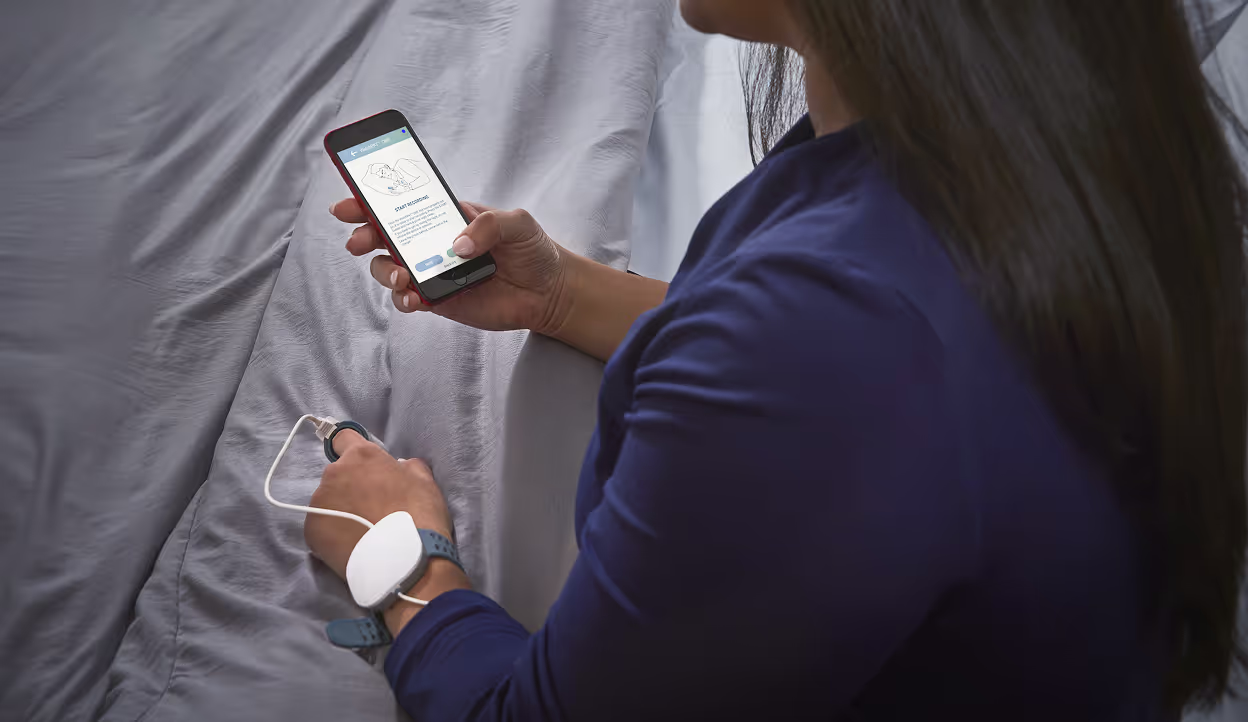
The equipment for a home sleep apnea test is a small, wearable device that attaches with a few simple sensors. Most patients set it up in under 10 minutes without any medical training.
Types of Home Sleep Test Devices
Home sleep testing devices fall into two general categories based on how they are used and returned.
A reusable device is a portable monitoring device that gets shipped to you, worn for one night, and shipped back for data analysis. These devices tend to have higher accuracy because they use clinical-grade sensors.
A disposable device is a single-use wearable that records data for one night and is discarded after use. Some disposable devices connect to home Wi-Fi to transmit results automatically, while others store data internally for later download.
Both types typically include a nasal cannula for airflow measurement, a finger clip for oxygen saturation, and a chest sensor for respiratory effort. Neither type requires electrodes attached to your scalp, which is one reason home sleep tests are more comfortable than in-lab studies.
Setting Up the Equipment
Setting up a home sleep test device involves these straightforward steps:
1. Attach the chest belt or adhesive sensor across your torso to measure respiratory effort
2. Place the nasal cannula under your nose with the tubing looped over each ear
3. Clip the pulse oximeter onto your finger to track oxygen saturation and heart rate
4. Press the start button on the device before you fall asleep
5. Sleep for a minimum of four to six hours to collect enough data for analysis
6. Remove all sensors in the morning and follow the return or upload instructions
After completing these steps, your recorded data is sent to a sleep physician for interpretation. Most providers deliver results within three to seven business days.
IMPORTANT: Do not consume alcohol or take sedative medications on the night of your test unless your physician specifically instructs you to continue them. These substances can alter your breathing patterns and affect the accuracy of results.
dumbo.health ships an at-home sleep test device directly to patients in Baytown, Texas for $149. The test includes a one-night study with all necessary equipment. No prescription pickup or clinic visit is required before receiving the device.
KEY TAKEAWAY: Home sleep test equipment is simple to set up, requires no medical training, and uses a nasal cannula, finger clip, and chest sensor to record overnight data in about 10 minutes of preparation.
Knowing the difference between at-home testing and in-lab testing helps you determine which option fits your situation.
Home Sleep Test vs. In-Lab Sleep Study: Choosing the Right Option in Baytown
A home sleep test is the right choice for most adults who have a moderate to high likelihood of obstructive sleep apnea and no complex medical conditions. An in-lab sleep study, known as polysomnography, is more comprehensive and measures additional parameters including brain waves using electrodes.
Several facilities in the Baytown and Houston area offer in-lab sleep studies, including HCA Houston Healthcare Medical Center, Memorial Hermann, and UTHealth Houston Neurosciences sleep disorders centers. However, in-lab studies typically require a referral, insurance pre-authorization, and an overnight stay at a sleep laboratory.
Here is how the two testing options compare across the factors that matter most to patients:
Setting
- Home Sleep Apnea Test: Your own bed at home in Baytown or anywhere in Texas
- In-Lab Polysomnography: A sleep lab at a medical center such as HCA Houston Healthcare Medical Center or a Sleep Disorders Center in the Houston area
Cost Without Insurance
- Home Sleep Apnea Test: Typically $149 to $500, with dumbo.health offering testing at $149
- In-Lab Polysomnography: Often $1,000 to $3,000 or more depending on the facility
Sensors Used
- Home Sleep Apnea Test: Nasal cannula, pulse oximeter, chest belt for respiratory effort
- In-Lab Polysomnography: All of the above plus electrodes on the scalp, face, and legs to measure brain waves, eye movement, and leg movement
Comfort and Privacy
- Home Sleep Apnea Test: High comfort and full privacy in your own bed
- In-Lab Polysomnography: Lower comfort due to unfamiliar bed and monitoring by a sleep lab technician
Conditions Diagnosed
- Home Sleep Apnea Test: Obstructive sleep apnea
- In-Lab Polysomnography: Obstructive sleep apnea, central sleep apnea, narcolepsy, restless legs syndrome, and other complex sleep disorders
Turnaround Time for Results
- Home Sleep Apnea Test: Typically 3 to 7 business days
- In-Lab Polysomnography: 1 to 3 weeks depending on the provider and facility
For most Baytown residents who suspect obstructive sleep apnea based on symptoms like loud snoring, observed choking or gasping during sleep, and daytime tiredness, a home sleep apnea test is the most practical first step. An in-lab study becomes necessary when a physician suspects central sleep apnea, mixed sleep apnea, or another sleep disorder that requires brain wave monitoring.
KEY TAKEAWAY: A home sleep test costs significantly less than an in-lab study, offers greater comfort, and provides accurate results for obstructive sleep apnea, making it the right first-line option for most adults in Baytown.
Understanding who qualifies for at-home testing is the next step toward getting tested.
Who Should Get a Home Sleep Apnea Test in Baytown, Texas
Adults in Baytown and the broader Houston area who have symptoms of obstructive sleep apnea are the best candidates for at-home sleep testing. The STOP-BANG assessment is a widely used OSA screening tool that helps identify people with a higher probability of having obstructive sleep apnea.
STOP-BANG Screening Criteria
The STOP-BANG assessment evaluates eight risk factors. Each factor scored as "yes" adds one point. A score of 3 or higher indicates a moderate to high risk of obstructive sleep apnea.
- Snoring: Do you snore loudly, loud enough to be heard through closed doors?
- Tiredness: Do you feel excessively tired or fatigued during the day?
- Observation: Has anyone observed you stop breathing or gasp during sleep (choking/gasping)?
- Pressure: Have you been treated for high blood pressure?
- Body Mass Index: Is your BMI greater than 35?
- Age: Are you older than 50?
- Neck Size: Is your neck circumference greater than 40 centimeters (approximately 16 inches)?
- Gender: Are you male?
According to research published on PubMed, the STOP-BANG assessment has a sensitivity above 90 percent for detecting moderate to severe obstructive sleep apnea when the score is 5 or higher. Additional physical factors such as tongue thickness, shirt collar size, and visible airway narrowing can also raise clinical suspicion.
Common Scenarios
A 48-year-old refinery worker in Baytown, TX who scores 4 on the STOP-BANG assessment due to loud snoring, daytime tiredness, a BMI of 33, and observed choking/gasping episodes is an ideal candidate for a home sleep apnea test. Rather than scheduling an in-lab sleep study and navigating insurance provider requirements, this patient could order a home sleep test from dumbo.health for $149, complete the test at home, and receive physician-reviewed results without taking time off work.
A 55-year-old owner-operator truck driver based near Katy who needs to maintain DOT medical certification and has been flagged for a large neck circumference and high blood pressure during a DOT physical would benefit from rapid at-home sleep testing. dumbo.health can deliver the test kit to the driver's home in Texas and provide results within days, keeping the driver's certification timeline on track.
A 62-year-old retired Houston area resident with a history of heart disease and loud snoring may initially consider a home sleep test, but if the physician suspects central sleep apnea or mixed sleep apnea based on the clinical history, an in-lab polysomnography at a sleep disorders center such as UTHealth Houston Neurosciences or Memorial Hermann would be more appropriate.
TIP: If you are unsure whether you qualify for a home sleep test, take the free sleep assessment at dumbo.health. It walks you through key risk factors and helps determine whether at-home testing is right for your situation.
KEY TAKEAWAY: The STOP-BANG assessment is the standard OSA screening tool, and adults who score 3 or higher with symptoms like loud snoring, daytime fatigue, and observed breathing pauses are strong candidates for a home sleep apnea test.
Once you decide to move forward with testing, knowing the step-by-step process makes the experience straightforward.
How to Get a Home Sleep Apnea Test in Baytown, Texas: Step by Step
Getting a home sleep apnea test in Baytown follows a simple process that does not require multiple in person consultations or insurance pre-authorization when you use a cash-pay provider like dumbo.health.
Step-by-Step Process for At-Home Sleep Testing
1. Complete a sleep assessment or screening questionnaire online. dumbo.health provides a free sleep assessment that evaluates your risk factors including snoring severity, daytime fatigue, neck size, BMI, and observed breathing pauses.
2. Order your home sleep test. Through dumbo.health, you can order a home sleep test for $149 with no insurance required and no prior authorization. The test device ships directly to your Baytown address.
3. Receive the device and review the instructions. The package includes the portable monitoring device, nasal cannula, finger pulse oximeter, and a chest sensor. Setup instructions are included with the equipment.
4. Complete the test at home overnight. Attach the sensors as directed, press start, and sleep for at least four to six hours. The device records airflow, respiratory effort, oxygen saturation, heart rate, and body position automatically.
5. Return or upload the device data. Follow the return shipping instructions or upload the data per the device instructions. dumbo.health covers return shipping.
6. Receive physician interpretation and results. A board-certified sleep physician reviews your data and generates a diagnostic report. With the dumbo.health Premium Plan, results receive priority turnaround.
7. Begin treatment if diagnosed with obstructive sleep apnea. If your results confirm sleep apnea, your physician will recommend a treatment program. dumbo.health's CPAP therapy plans include equipment, adherence monitoring, and follow-up care starting at $59 per month.
After completing these steps, you have a clear diagnosis and a treatment pathway without visiting a sleep lab, waiting weeks for an appointment, or navigating insurance approvals.
KEY TAKEAWAY: The at-home sleep testing process takes seven straightforward steps from initial screening through diagnosis and treatment, and can be completed entirely from your home in Baytown without an in-lab sleep study.
After testing, understanding your results is critical for making informed treatment decisions.
Understanding Your Home Sleep Test Results
Your home sleep apnea test results center on the apnea-hypopnea index, which measures how many times per hour your breathing is disrupted during sleep. A sleep physician uses this number along with oxygen saturation data and respiratory effort patterns to determine your diagnosis.
The Apnea-Hypopnea Index Explained
The apnea-hypopnea index (AHI) counts the average number of apnea events (complete breathing pauses) and hypopnea events (partial breathing reductions) per hour of recorded sleep.
According to the American Academy of Sleep Medicine, the AHI severity scale for obstructive sleep apnea is:
- Normal: fewer than 5 events per hour
- Mild obstructive sleep apnea: 5 to 14 events per hour
- Moderate obstructive sleep apnea: 15 to 29 events per hour
- Severe obstructive sleep apnea: 30 or more events per hour
What Your Results Include
A comprehensive results report from a qualified sleep physician typically includes:
- Total recording time and estimated sleep time
- AHI score with severity classification
- Oxygen desaturation index showing how often oxygen levels drop below 90 percent
- Lowest oxygen saturation recorded during the study
- Average and minimum heart rate
- Body position analysis showing whether apnea events are position-dependent
- Clinical recommendation for treatment based on findings
With dumbo.health care plans, physician interpretation is included in all monthly plans. The Essentials Plan at $59 per month covers physician interpretation and report generation. The Premium Plan at $89 per month adds priority results turnaround and a dedicated sleep coach who can walk you through your findings.
Results from a home sleep apnea test provide a clear severity classification based on the apnea-hypopnea index. A score of 5 or higher confirms the presence of obstructive sleep apnea and indicates the need for treatment. The oxygen desaturation index adds clinical context by showing how significantly oxygen levels drop during apnea events, which correlates with cardiovascular risk.
DID YOU KNOW: According to the National Heart, Lung, and Blood Institute, untreated moderate to severe obstructive sleep apnea significantly increases the risk of high blood pressure, heart failure, stroke, and irregular heartbeat. Early diagnosis through testing directly influences long-term cardiovascular outcomes.
KEY TAKEAWAY: The AHI score from your home sleep test is the primary diagnostic number, and understanding whether your result falls in the mild, moderate, or severe range directly determines the urgency and type of treatment you need.
Once you have a diagnosis, understanding your treatment options lets you take the next step.
Treatment Options After a Sleep Apnea Diagnosis in Baytown
CPAP therapy is the most common and effective treatment for moderate to severe obstructive sleep apnea. After your home sleep test confirms a diagnosis, your sleep physician will recommend a treatment program tailored to your AHI score, symptom severity, and personal health history.
CPAP Therapy
CPAP stands for continuous positive airway pressure. A CPAP machine delivers a steady stream of pressurized air through a mask, keeping your airway open throughout the night. According to the Sleep Foundation, CPAP therapy reduces apnea events, improves oxygen saturation, lowers blood pressure, and decreases daytime fatigue in most patients with obstructive sleep apnea.
The American Academy of Sleep Medicine recommends CPAP as the first-line treatment option for adults diagnosed with obstructive sleep apnea with an AHI of 15 or higher, or an AHI of 5 to 14 when accompanied by symptoms such as excessive daytime sleepiness, impaired cognition, or cardiovascular disease.
dumbo.health provides CPAP therapy as part of its monthly care plans. The Essentials Plan at $59 per month includes the CPAP device, equipment, and standard follow-up care. The Premium Plan at $89 per month adds a dedicated sleep coach and advanced adherence monitoring. All plans are cancel-anytime with no contracts.
Oral Appliance Therapy
For patients with mild to moderate obstructive sleep apnea who cannot tolerate CPAP, oral appliance therapy is an alternative treatment option. Custom-fit oral appliances reposition the lower jaw and tongue to maintain an open airway during sleep.
A sleep dentist in the Baytown or Houston area can fabricate a dental appliance after a diagnosis is confirmed. Baytown Gentle Dental and other practices with experience in sleep disordered breathing can provide FDA-cleared oral appliances designed for obstructive sleep apnea.
Oral appliance therapy is typically not recommended as a first-line treatment for severe obstructive sleep apnea. It works best for patients with mild to moderate disease who have specific jaw anatomy favorable for repositioning.
Other Treatment Approaches
Additional treatment options that may complement CPAP or oral appliance therapy include:
- Positional therapy for patients whose apnea events occur primarily when sleeping on their back
- Weight management programs, since a Body Mass Index above 30 is a significant risk factor for worsening airway collapse
- Surgical evaluation for structural issues such as airway stenosis, enlarged tonsils, or significant anatomical obstruction
- Specialists in otolaryngology-head and neck surgery at facilities like the Texas Medical Center or Baylor College of Medicine may evaluate patients with complex airway anatomy
TIP: If you have been diagnosed with sleep apnea and need CPAP therapy but are concerned about cost, dumbo.health's plans start at approximately $2 per day with no insurance needed and no contracts. Visit the sleep apnea care solutions page to compare plan options.
KEY TAKEAWAY: CPAP therapy is the gold-standard treatment for moderate to severe obstructive sleep apnea, and beginning treatment quickly after diagnosis reduces cardiovascular risk and improves daily function.
Not every patient is a candidate for home sleep testing, and understanding limitations prevents misdiagnosis.
Limitations and Risks of Home Sleep Apnea Testing
A home sleep apnea test is a validated tool for diagnosing obstructive sleep apnea, but it is not the right test for every patient or every suspected sleep disorder. Understanding these limitations protects you from incomplete diagnosis and ensures you receive the appropriate level of testing.
When a Home Sleep Test May Not Be Appropriate
There are specific clinical situations where a home sleep test may produce inaccurate or insufficient results:
Central sleep apnea cannot be diagnosed by a home sleep test. Central sleep apnea occurs when the brain fails to send proper signals to the breathing muscles, and detecting this condition requires the brain wave monitoring (EEG) available only in an in-lab polysomnography. Patients with heart failure, stroke history, or opioid use may be at higher risk for central sleep apnea and should be evaluated in a sleep laboratory.
Complex sleep disorders such as narcolepsy, restless legs syndrome, and mixed sleep apnea require additional measurements including leg movement sensors and EEG that home devices do not include. If your physician suspects one of these conditions based on your symptoms, an in-lab study at a facility such as UTHealth Houston Neurosciences or Houston Methodist is more appropriate.
Patients with significant pulmonary disease, severe cardiac conditions, or neuromuscular disorders may produce home test results that underestimate or misrepresent the severity of their sleep disordered breathing. These patients often need continuous monitoring by a sleep lab technician during an overnight study.
Data Quality Risks
A home sleep test relies on sensors staying properly attached throughout the night. If the nasal cannula shifts, the finger sensor falls off, or the device malfunctions, the data collected may be insufficient for diagnosis. In approximately 10 to 15 percent of home sleep tests, data quality issues require a repeat study, according to published sleep medicine research.
Patients who sleep very few hours, have severe insomnia, or move excessively during sleep may not generate enough usable data in a single night. dumbo.health provides clear setup instructions and patient support to minimize the risk of unusable data.
False Negatives
Home sleep tests can underestimate the severity of sleep apnea compared to in-lab polysomnography. This happens because home devices estimate sleep time rather than measuring it directly with brain wave sensors. A patient who lies awake for part of the night will have their AHI diluted, potentially resulting in a lower severity classification than an in-lab study would produce.
If a home sleep test returns a normal result but symptoms such as loud snoring, choking/gasping, and severe daytime fatigue persist, your sleep physician should recommend a follow-up in-lab polysomnography. dumbo.health care plans include physician oversight that helps identify cases where additional testing may be needed.
IMPORTANT: A home sleep apnea test is a screening and diagnostic tool for obstructive sleep apnea only. It does not replace evaluation for other medical conditions that cause fatigue, such as thyroid cancer, vocal fold atrophy, recurrent respiratory papillomatosis, or other conditions evaluated by specialists in laryngology or otolaryngology-head and neck surgery.
KEY TAKEAWAY: Home sleep testing is accurate for obstructive sleep apnea but cannot diagnose central sleep apnea, narcolepsy, or restless legs syndrome, and patients with persistent symptoms after a normal result should pursue in-lab polysomnography.
Cost is one of the most important factors for Baytown residents deciding how and where to get tested.
Cost of Home Sleep Apnea Testing in Baytown, Texas
A home sleep apnea test in Baytown typically costs between $149 and $500 when paid out of pocket, compared to $1,000 to $3,000 or more for an in-lab sleep study at a medical center. Cash-pay testing eliminates the need for insurance provider pre-authorization, which can delay testing by weeks.
Insurance vs. Cash Pay
Many insurance plans cover sleep apnea testing, but the process often involves a referral from your primary care physician, pre-authorization from your insurance provider, scheduling delays, and potential out-of-pocket costs depending on your plan's deductible and copay structure. Some patients in Baytown report waiting four to six weeks between their initial appointment and the actual test night when going through insurance.
Cash-pay options bypass all of these delays. dumbo.health offers a home sleep test for $149 with no insurance required, no prior authorizations, no surprise bills, and no referral needed. The test device ships directly to your Baytown address after you order it.
What Happens After Testing: Ongoing Care Costs
The one-time cost of the test is separate from ongoing treatment costs. If your results confirm obstructive sleep apnea, you will need a treatment program that typically includes CPAP equipment, physician follow-up, and adherence monitoring.
dumbo.health monthly care plans cover the full treatment pathway:
Essentials Plan at $59 per month includes physician interpretation and report, CPAP therapy and equipment, standard follow-up care, and updates sent to your referring provider. No contracts. Cancel anytime.
Premium Plan at $89 per month includes everything in the Essentials Plan plus a dedicated sleep coach from a licensed care team, advanced adherence monitoring, and priority results turnaround. No contracts. Cancel anytime.
Elite Plan at $129 per month includes everything in the Premium Plan plus concierge clinical support with priority care team access, direct physician messaging, and custom reporting. No contracts. Cancel anytime.
These plan costs break down to approximately $2 to $4 per day for complete sleep apnea care including equipment, which is significantly less than the combined costs of purchasing CPAP equipment independently, paying for separate physician visits, and managing insurance copays.
KEY TAKEAWAY: At $149 for the test and $59 to $129 per month for ongoing care with no contracts, dumbo.health provides one of the most transparent and affordable paths to sleep apnea diagnosis and treatment available to Baytown residents.
Knowing what to prepare before test night helps ensure accurate results on the first attempt.
Preparing for Your Home Sleep Test: Pre-Test Checklist
Proper preparation for your home sleep test increases the chance of collecting enough high-quality data on your first night, avoiding the need for a repeat study.
Pre-Test Night Checklist
- Confirm your test device has arrived and all components are present: portable monitoring device, nasal cannula, finger pulse oximeter, and chest sensor or belt
- Read the setup instructions completely before your planned test night
- Avoid alcohol for at least 4 hours before going to bed on test night
- Avoid caffeine after 2 PM on the day of your test
- Do not take sleep aids or sedatives unless your physician specifically instructs you to continue them
- Complete any required consent forms such as the Home Sleep Test Consent Form
- Charge the device fully if it requires charging before use
- Set up the device on your nightstand before getting into bed so you do not need to search for components in the dark
- Plan to sleep for at least 6 hours to ensure adequate data collection
- Remove nail polish from your index finger if using a clip-on pulse oximeter, as polish can interfere with oxygen saturation readings
- If your device connects via home Wi-Fi, confirm your network is working before test night
- Have the return shipping label or upload instructions ready for the morning after your test
Following this checklist minimizes the risk of sensor errors, insufficient data, and the inconvenience of needing to repeat the study.
KEY TAKEAWAY: Completing the pre-test checklist before bed ensures your home sleep test captures accurate data on the first attempt, saving time and avoiding a repeat night.
Beyond obstructive sleep apnea, some Baytown residents may be dealing with other conditions that require specialized evaluation.
Sleep Disorders Beyond Obstructive Sleep Apnea: When to Seek Specialized Care
Obstructive sleep apnea is the most common sleep disorder diagnosed through home testing, but it is not the only condition that disrupts sleep. Baytown and Houston area residents with symptoms that do not match typical obstructive sleep apnea may need evaluation at a comprehensive sleep disorders center.
Conditions That Require In-Lab Evaluation
Central sleep apnea is a condition where the brain intermittently fails to signal the muscles that control breathing. Unlike obstructive sleep apnea, where the airway is physically blocked, central sleep apnea involves a neurological control problem. Diagnosis requires an in-lab polysomnography with EEG monitoring. Patients with heart failure, history of stroke, or opioid use should discuss central sleep apnea screening with their physician.
Narcolepsy is a neurological sleep disorder that causes excessive daytime sleepiness and sudden sleep attacks. The Narcolepsy Network reports that narcolepsy affects roughly 1 in 2,000 people and requires a multiple sleep latency test conducted in a sleep laboratory for diagnosis.
Restless legs syndrome causes uncomfortable sensations in the legs and an uncontrollable urge to move them, particularly at night. While it frequently co-occurs with sleep apnea, restless legs syndrome requires leg movement sensors that home sleep tests do not include.
Mixed sleep apnea combines features of both obstructive and central sleep apnea. This condition may initially appear as obstructive sleep apnea on a home test but requires in-lab monitoring to fully characterize and treat appropriately.
Specialized Facilities Near Baytown
Several medical centers in the Houston area offer comprehensive sleep disorder testing and neurological care:
- UTHealth Houston Neurosciences provides multidisciplinary sleep medicine evaluation
- Memorial Hermann sleep disorders centers offer both in-lab and home testing programs
- Houston Methodist has sleep medicine specialists who evaluate complex cases
- Baylor College of Medicine offers academic sleep medicine programs with access to advanced diagnostic tools
- The Texas Medical Center houses multiple institutions with sleep lab facilities, including the Texas Heart Institute for patients whose sleep disorders intersect with cardiac conditions
For conditions beyond obstructive sleep apnea, seeking care from sleep specialists at these facilities ensures accurate diagnosis through the right testing method.
KEY TAKEAWAY: Obstructive sleep apnea is diagnosed through home testing, but central sleep apnea, narcolepsy, restless legs syndrome, and mixed sleep apnea require in-lab polysomnography at a specialized sleep disorders center.
With so much information available, several persistent myths continue to create confusion about home sleep testing.
Common Myths About Home Sleep Apnea Testing Debunked
MYTH: Home sleep tests are not as accurate as in-lab sleep studies.
FACT: Home sleep apnea tests have demonstrated sensitivity rates of 79 to 97 percent for detecting moderate to severe obstructive sleep apnea, according to the American Academy of Sleep Medicine. For the specific purpose of diagnosing obstructive sleep apnea in adults without significant comorbidities, home testing provides clinically reliable results. In-lab studies are more comprehensive but are not necessarily more accurate for straightforward obstructive sleep apnea.
MYTH: You need a doctor's referral before you can get a home sleep test.
FACT: While traditional pathways through insurance often require a referral and pre-authorization, cash-pay services do not. dumbo.health allows patients to order a home sleep apnea test for $149 without a referral, without insurance, and without prior authorization. A board-certified sleep physician still reviews every test result, maintaining clinical standards without the administrative barriers.
MYTH: If you snore, you definitely have sleep apnea.
FACT: Loud snoring is one of the most common symptoms of obstructive sleep apnea, but not all snoring indicates sleep apnea. According to the Sleep Foundation, approximately 40 percent of adult men and 24 percent of adult women are habitual snorers, yet only a portion of those individuals have obstructive sleep apnea. Testing is the only way to confirm whether snoring is associated with breathing pauses and oxygen drops.
MYTH: Home sleep tests are uncomfortable and hard to use.
FACT: Home sleep test devices use a small number of lightweight sensors. Most patients report that the equipment is significantly more comfortable than sleeping in a sleep lab with electrodes attached to their scalp, face, and legs. Setup takes under 10 minutes, and the devices are designed for patients with no medical training.
MYTH: Sleep apnea is not a serious medical condition.
FACT: The CDCand NIH classify obstructive sleep apnea as a serious medical condition linked to high blood pressure, heart disease, type 2 diabetes, stroke, and motor vehicle accidents caused by fatigue. The National Highway Traffic Safety Administration estimates that drowsy driving causes thousands of crashes annually, and untreated sleep apnea is a significant contributor to driver fatigue.
KEY TAKEAWAY: Home sleep tests are clinically validated, easy to use, and accessible without a referral when using a cash-pay provider, and untreated sleep apnea is a serious health risk that warrants prompt testing.
Addressing these myths clears the path toward making an informed decision about testing.
Real-World Examples: How Baytown Residents Use Home Sleep Testing
Real-world scenarios show how home sleep apnea testing fits into the lives of people in Baytown and the surrounding Houston area.
Scenario 1: A Baytown Refinery Worker With Chronic Fatigue
A 45-year-old process operator at a Baytown, TX refinery has been experiencing worsening daytime fatigue despite sleeping 7 to 8 hours per night. His wife has observed loud snoring and choking/gasping episodes several times per week. He scores 5 on the STOP-BANG assessment due to snoring, tiredness, observed apnea, high blood pressure, and a neck circumference of 17 inches.
He does not want to take time off work for an in-lab sleep study and does not want to navigate insurance pre-authorization. He orders a home sleep test through dumbo.health for $149, completes the test on a Sunday night, and receives results showing an AHI of 28, indicating moderate obstructive sleep apnea. He enrolls in the Premium Plan at $89 per month to begin CPAP therapy with a dedicated sleep coach and advanced adherence monitoring.
Scenario 2: A Commercial Driver Near Katy Needing DOT Clearance
A 52-year-old long-haul truck driver living between Baytown and Katy is flagged during a DOT physical for a BMI of 38, a neck circumference of 18 inches, and self-reported fatigue. The examining physician requires a sleep apnea evaluation before issuing a full medical certificate.
The driver needs results quickly to avoid losing certification time. Instead of waiting weeks for an in-lab appointment, the driver orders a home sleep test through dumbo.health, completes it within days of receiving the device, and gets physician-reviewed results. The results confirm severe obstructive sleep apnea with an AHI of 42. The driver starts CPAP therapy through dumbo.health's Essentials Plan at $59 per month and provides medical documentation to the DOT examiner showing diagnosis and active treatment.
Scenario 3: A Retired Houston Area Resident With Heart Concerns
A 67-year-old retired teacher living in the Houston area has a history of high blood pressure and was recently told by her cardiologist that untreated sleep apnea may be worsening her cardiac condition. She has mild symptoms including occasional snoring and morning headaches.
She completes the free sleep assessment at dumbo.health and is identified as a moderate-risk candidate. She orders the $149 home sleep test and completes it comfortably in her own bed. Her results show mild obstructive sleep apnea with an AHI of 8. Her physician recommends positional therapy and lifestyle modifications as a first step, with CPAP therapy available through dumbo.health if her condition progresses.
KEY TAKEAWAY: Home sleep testing fits a wide range of real-world situations in Baytown and the Houston area, from shift workers avoiding time off to commercial drivers meeting DOT requirements to retirees managing cardiac risk factors.
These examples show how flexible and accessible home testing has become for different types of patients in your area.
Conclusion
A home sleep apnea test gives Baytown, Texas residents a direct path from suspicious symptoms to a clear diagnosis without the delays, discomfort, and cost of an in-lab sleep study. Whether you are dealing with loud snoring, chronic fatigue, observed breathing pauses, or a DOT requirement, at-home sleep testing delivers clinically validated results from the comfort of your own bed.
Early testing matters. Untreated obstructive sleep apnea increases your risk of high blood pressure, heart disease, and dangerous daytime drowsiness. Getting tested now is the most important step you can take.
dumbo.health offers a home sleep test for $149 with no insurance required and no prior authorization. Monthly care plans start at $59 per month with no contracts and cancel anytime, covering everything from physician interpretation to CPAP therapy and ongoing support.
Frequently Asked Questions About Home Sleep Apnea Testing in Baytown, Texas
What is a home sleep apnea test?
A home sleep apnea test (HSAT) is a simplified, portable sleep study you complete in your own bed rather than a clinical sleep laboratory. The test device monitors key signals during sleep, including oxygen saturation, airflow through a nasal cannula, respiratory effort, and breathing patterns. A physician or sleep specialist then interprets the recorded data to assess for obstructive sleep apnea and related sleep-disordered breathing. The American Academy of Sleep Medicine recognises home sleep apnea testing as a clinically appropriate diagnostic option for adults with a high likelihood of moderate-to-severe obstructive sleep apnea.
How does at-home sleep apnea testing work?
You receive a portable monitoring device, attach it before bed following the provided instructions, and sleep normally in your own home. The wearable device collects data on oxygen saturation, airflow, nasal cannula readings, and respiratory effort throughout the night. In the morning, you return or upload the device data so a sleep physician can review it. Results are then interpreted and a report is generated, which may include a recommended course of treatment such as CPAP therapy. If you are considering at-home sleep testing, dumbo.health offers a $149 one-time home sleep test with transparent cash-pay pricing.
Who qualifies for a home sleep study?
Home sleep studies are generally appropriate for adults who have clear symptoms of obstructive sleep apnea, such as loud snoring, observed breathing pauses during sleep, daytime fatigue, and high blood pressure. A healthcare professional can help determine whether at-home testing is suitable for your specific situation. In-lab polysomnography may be recommended instead if there is a clinical suspicion of central sleep apnea, mixed sleep apnea, restless legs syndrome, narcolepsy, or another complex sleep disorder that requires more detailed monitoring with additional electrodes and clinical oversight.
What is the STOP-BANG questionnaire?
The STOP-BANG questionnaire is a validated eight-question screening tool used to assess a person's risk of obstructive sleep apnea before formal testing. Each letter in the acronym represents a key risk factor. A higher score indicates a greater likelihood that sleep apnea may be present and that a home sleep apnea test or further evaluation may be appropriate. The STOP-BANG assessment is widely used by sleep physicians, primary care providers, and sleep medicine teams to help prioritise who should proceed to diagnostic sleep testing.
What does each letter in STOP-BANG stand for?
The STOP-BANG acronym covers the eight most clinically relevant risk factors for obstructive sleep apnea:
- S: Snoring loudly, loud enough to be heard through closed doors or that prompts a bed partner to elbow you at night
- T: Tiredness, feeling fatigued or sleepy during the daytime, such as struggling to stay awake while driving or during conversations
- O: Observation, meaning someone has observed you stop breathing, choking, or gasping during sleep
- P: Pressure, meaning you have or are being treated for high blood pressure
- B: Body Mass Index greater than 35 kg per square metre
- A: Age older than 50
- N: Neck circumference that is large, meaning a shirt collar of 17 inches or more for men, or 16 inches or more for women, measured around the level of the Adam's apple
- G: Gender, specifically being male
Does loud snoring always mean I have sleep apnea?
Loud snoring is one of the most recognised warning signs of obstructive sleep apnea, but not everyone who snores has the condition. Snoring occurs when airflow through a partially obstructed airway causes soft tissue vibration during sleep. Sleep apnea involves repeated complete or partial collapse of the airway, causing breathing pauses and oxygen drops. A home sleep apnea test or in-lab sleep study is the only way to confirm whether snoring is associated with sleep-disordered breathing. A healthcare professional can help you determine whether testing is appropriate based on your symptoms and risk factors.
What are the warning signs of sleep apnea?
Common warning signs of obstructive sleep apnea include loud snoring, observed breathing pauses or choking and gasping during sleep, waking with a dry mouth or headache, daytime fatigue or sleepiness, difficulty concentrating, and irritability. High blood pressure that is difficult to control can also be associated with untreated sleep apnea, according to the National Sleep Foundation. Because many people are unaware of their overnight symptoms, a bed partner's observation is often the first indication that something is wrong. If you recognise several of these signs, a healthcare professional can advise whether a home sleep apnea test is a reasonable next step.
How serious is untreated sleep apnea?
Untreated obstructive sleep apnea is a significant medical condition. The repeated drops in oxygen saturation that occur during breathing pauses place strain on the cardiovascular system and are associated with increased risks of high blood pressure, heart disease, stroke, and type 2 diabetes, as noted by the National Institutes of Health. Daytime sleepiness caused by poor sleep quality also raises accident risk, particularly when driving or operating machinery. For commercial drivers, untreated sleep apnea carries additional occupational and safety implications. Anyone experiencing symptoms should consult a healthcare professional rather than wait for the condition to resolve on its own.
Can sleep apnea resolve on its own without treatment?
Sleep apnea rarely resolves without meaningful intervention. In some cases, weight loss, changes in sleep position, or reduced alcohol use may reduce the severity of sleep-disordered breathing, but these changes do not reliably eliminate the condition. A healthcare professional should evaluate whether any improvement is clinically significant and whether treatment is still needed. It is not safe to assume sleep apnea has resolved without follow-up testing or clinical review. Stopping or avoiding treatment without medical guidance is not recommended.
What causes obstructive sleep apnea?
Obstructive sleep apnea occurs when the muscles supporting the soft tissue in the upper airway relax during sleep, causing the airway to narrow or collapse and repeatedly interrupt breathing. Risk factors include excess body weight, a larger neck circumference, tongue thickness, structural airway differences, older age, male sex, family history, and high blood pressure. Mayo Clinic notes that obesity is one of the most significant modifiable risk factors for obstructive sleep apnea. Central sleep apnea, by contrast, occurs when the brain fails to send appropriate signals to the breathing muscles and is a distinct condition requiring different evaluation.
What is the difference between obstructive sleep apnea and central sleep apnea?
Obstructive sleep apnea is caused by a physical collapse or narrowing of the upper airway during sleep. Central sleep apnea is a neurological condition in which the brain temporarily stops sending signals to the muscles that control breathing. Mixed sleep apnea involves features of both types. Home sleep apnea tests are designed primarily to detect obstructive sleep apnea. If a clinician suspects central or mixed sleep apnea, a full in-lab sleep study with additional monitoring may be recommended. A sleep physician can help determine which type of evaluation is most appropriate based on your symptoms and medical history.
What are the benefits of at-home sleep apnea testing compared to an in-lab sleep study?
Home sleep apnea testing offers several practical advantages over an in-lab study. You sleep in your own bed rather than an unfamiliar clinical environment, which many people find more comfortable and representative of their normal sleep. Testing is typically more affordable and accessible, with no need to spend a night in a sleep laboratory. The portable monitoring device is either disposable or reusable depending on the service, and results are still interpreted by a qualified sleep physician. For straightforward cases of suspected obstructive sleep apnea, the American Academy of Sleep Medicine supports home testing as a clinically appropriate alternative to in-lab polysomnography.
What can a home sleep apnea test not detect?
A home sleep apnea test is designed to assess for obstructive sleep apnea and does not provide the full range of data collected in a polysomnography sleep study. It cannot reliably detect central sleep apnea, narcolepsy, restless legs syndrome, or more complex sleep disorders that require monitoring of brain activity, eye movements, and limb movements through electrodes. If your symptoms suggest a condition beyond obstructive sleep apnea, a sleep physician may recommend an in-lab evaluation. Understanding the limitations of home testing is important so you and your clinician can choose the most appropriate diagnostic pathway.
How much does a home sleep apnea test cost in Baytown, Texas?
The cost of a home sleep apnea test in the Baytown, Texas area varies by provider and insurance coverage. For patients who prefer transparent, cash-pay pricing with no insurance required and no prior authorisations, dumbo.health offers a $149 one-time home sleep test. This covers the at-home testing device and one night of data collection. Ongoing care, including physician interpretation, CPAP therapy, equipment, and adherence follow-up, is available through monthly plans starting at $59 per month with no long-term contracts and the option to cancel at any time. Compare sleep apnea care options to find the plan that fits your situation.
Is insurance required to get a home sleep apnea test?
Insurance is not required to access a home sleep apnea test. Some patients in Baytown and the broader Houston area may have coverage through their insurance provider, but insurance plans vary in what they cover and may require prior authorisation. For those who prefer to avoid insurance complexity, cash-pay options like dumbo.health allow you to access at-home sleep testing and ongoing care with transparent pricing and no surprise bills. A healthcare professional can help you determine whether a home sleep test is clinically appropriate regardless of how you choose to pay.
How do I find a home sleep apnea test provider near me in Baytown, Texas?
Patients in Baytown, Texas looking for home sleep apnea testing can explore local sleep medicine clinics, hospital-affiliated sleep disorders centres, and telehealth-enabled providers that serve the Houston area. If you prefer at-home testing with transparent pricing and no insurance barriers, dumbo.health offers cash-pay at-home sleep testing that can be accessed from Baytown and surrounding Texas communities without visiting a sleep laboratory. A healthcare professional or your primary care physician can help you determine whether home testing is appropriate and refer you to providers in your area. You can also start with a free sleep assessment to explore your options.
What happens after a home sleep apnea test?
After your home sleep apnea test, the recorded data is reviewed and interpreted by a sleep physician, who produces a clinical report. If obstructive sleep apnea is confirmed, your care team will typically discuss treatment options, which most commonly include CPAP therapy. The report may also be shared with your referring provider or primary care physician. With dumbo.health, physician interpretation, a clinical report, and CPAP therapy and equipment are included in monthly care plans, along with adherence follow-up and, in higher-tier plans, a dedicated sleep coach and priority results turnaround.
What is CPAP therapy and how does it treat sleep apnea?
CPAP, which stands for continuous positive airway pressure, is the most widely recommended treatment for moderate-to-severe obstructive sleep apnea. The CPAP machine delivers a steady stream of air through a mask worn during sleep, keeping the airway open and preventing the breathing pauses that characterise obstructive sleep apnea. According to the American Academy of Sleep Medicine, consistent CPAP use is associated with reduced daytime sleepiness, improved oxygen saturation, and lower cardiovascular risk over time. A sleep physician determines the appropriate CPAP settings based on test results. Learn more about CPAP therapy and equipment options if treatment has been recommended for you.
Why does CPAP adherence matter?
CPAP therapy is only effective when used consistently throughout the night. Poor adherence, meaning using CPAP for fewer hours than recommended or skipping nights, reduces the clinical benefit and may mean sleep apnea symptoms continue. For commercial drivers, CPAP adherence data is often reviewed by a certified medical examiner as part of ongoing DOT fitness-for-duty evaluation. Adherence monitoring through a connected device allows a care team to identify problems early and make adjustments. dumbo.health Premium and Elite plans include advanced adherence monitoring and dedicated sleep coaching support to help patients stay on track with their treatment.
Can commercial drivers in Baytown, Texas use a home sleep test for DOT purposes?
Commercial drivers who are flagged for sleep apnea evaluation by a certified medical examiner may be able to complete a home sleep apnea test as part of that process, depending on clinical appropriateness and the examiner's requirements. A home sleep test can provide the documented results and physician interpretation a driver may need to support ongoing DOT fitness-for-duty review. However, it is important to understand that a certified medical examiner, not dumbo.health or any testing provider, makes DOT medical certification decisions. For more information on at-home sleep apnea testing for commercial drivers, visit the home sleep test for truck drivers guide.
Does losing weight make sleep apnea go away?
Weight loss can reduce the severity of obstructive sleep apnea in some patients, particularly when excess body weight is a significant contributing factor. However, weight loss does not reliably eliminate sleep apnea entirely, and clinical results vary considerably between individuals. A healthcare professional should evaluate whether sleep apnea has improved following significant weight change, and follow-up testing may be recommended to confirm any change in severity. It is not safe to stop CPAP therapy or other treatment without medical guidance, even after meaningful weight loss.
How many hours of sleep should I aim for each night?
The Centers for Disease Control and Prevention recommends that adults get at least seven hours of sleep per night for optimal health. However, total sleep time alone does not indicate sleep quality. People with untreated obstructive sleep apnea may spend eight or nine hours in bed but still wake feeling unrefreshed because repeated breathing interruptions fragment their sleep and prevent restorative rest. If you are consistently sleeping what seems like enough hours but still feel fatigued or excessively sleepy during the day, it is worth discussing this with a healthcare professional, as it may indicate an underlying sleep disorder.
Is a home sleep apnea test accurate?
Home sleep apnea tests are validated for detecting moderate-to-severe obstructive sleep apnea in adults without significant comorbidities. The American Academy of Sleep Medicine states that home testing, when clinically appropriate, produces reliable results for diagnosing obstructive sleep apnea. However, home tests may underestimate apnea severity in some cases because they record actual sleep time differently than a monitored laboratory study. If a home test produces a negative or inconclusive result but symptoms remain strong, a sleep physician may recommend proceeding to a full in-lab polysomnography study for a more comprehensive evaluation.
What should I do if I have severe symptoms or a medical emergency?
If you experience severe breathing difficulty, chest pain, sudden confusion, or any other urgent symptoms during the night or at any time, seek emergency medical care immediately by calling 911 or visiting your nearest emergency room. A home sleep apnea test is a diagnostic tool for evaluating sleep-disordered breathing in stable, non-urgent situations. It is not appropriate for medical emergencies. dumbo.health supports testing and ongoing care workflows but is not a substitute for emergency medical services or in-person clinical evaluation when urgent symptoms are present.