




Home Sleep Apnea Test in Longview, Texas: The Complete Guide to At-Home Sleep Testing in East Texas
A home sleep apnea test in Longview, Texas allows you to screen for obstructive sleep apnea from the comfort of your own bed, without visiting a sleep lab or scheduling an overnight facility stay. According to the American Academy of Sleep Medicine, home sleep apnea testing is an accepted diagnostic method for adults with a moderate to high likelihood of obstructive sleep apnea. This guide is written for Longview and East Texas residents who suspect they may have sleep apnea, as well as commercial drivers, patients referred by a physician, and anyone exploring sleep testing options in their area. You will learn how home sleep testing works, what the devices measure, how results are interpreted, what treatment options follow a positive diagnosis, and how to access affordable testing without insurance. Understanding your options now can save months of waiting and potentially protect your health and livelihood.
Quick Answer
A home sleep apnea test in Longview, Texas is a portable diagnostic study you complete in your own bed to detect obstructive sleep apnea. The test measures airflow, oxygen saturation, respiratory effort, and heart rate during one night of sleep. Results are reviewed by a sleep medicine physician who determines whether you have apneas or hypopneas requiring treatment. dumbo.health offers a home sleep test for $149 with no insurance required, shipping directly to patients in Longview and across Texas.
Key Takeaways
- A home sleep apnea test records airflow, oxygen levels, heart rate, and respiratory effort while you sleep at home.
- Obstructive sleep apnea affects an estimated 30 million Americans, and the American Sleep Apnea Association reports that 80 percent of moderate to severe cases remain undiagnosed.
- Home sleep testing is recommended for adults with a high pretest probability of obstructive sleep apnea and no significant comorbid sleep disorders.
- Results are typically interpreted using the Apnea-Hypopnea Index, where 5 or more events per hour indicates sleep apnea.
- dumbo.health ships an FDA-cleared home sleep test to Longview, Texas for $149 with physician interpretation available through care plans starting at $59 per month.
- In-lab polysomnography may still be required for patients with suspected central sleep apnea, narcolepsy, or other complex sleep disorders.
What Is a Home Sleep Apnea Test and How Does It Work
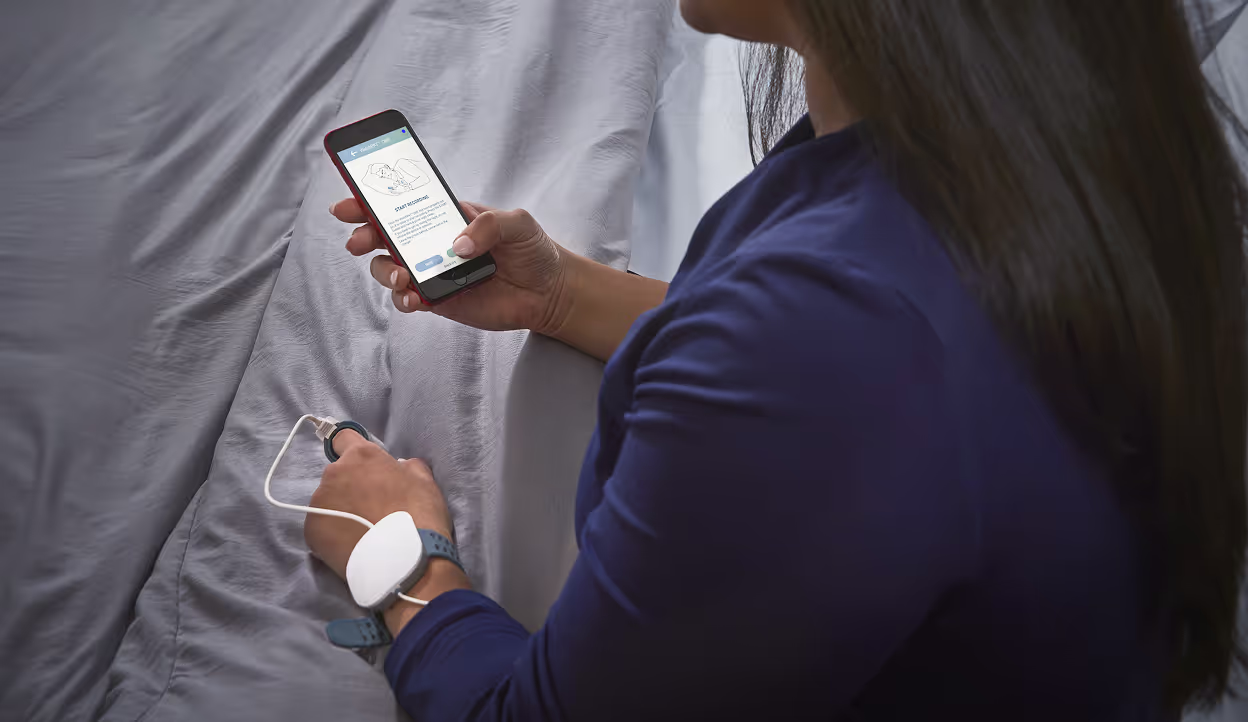
A home sleep apnea test is a portable, FDA-cleared device that records your breathing patterns and vital signs during a single night of sleep. Unlike an in-lab sleep study, home sleep testing lets you collect diagnostic data in your own bed without technologists, cameras, or unfamiliar surroundings.
What the Device Measures
Home sleep test equipment typically includes a nasal cannula to measure airflow, a pulse oximeter to track oxygen saturation and heart rate, and a chest strap or sensor to detect respiratory effort. Some devices, such as SleepView sleep study equipment, combine these sensors into a compact unit. The data collection focuses on identifying apneas, which are complete pauses in airflow lasting at least 10 seconds, and hypopneas, which are partial reductions in airflow accompanied by drops in oxygen levels.
The raw data captured overnight includes airflow through the nasal cannula, oxygen saturation via the pulse oximeter, heart rate variability, and chest or abdominal movement indicating respiratory effort. These markers allow a sleep medicine physician to calculate your Apnea-Hypopnea Index and determine whether you have sleep disordered breathing.
How Home Sleep Testing Differs from In-Lab Studies
A full in-lab polysomnography monitors additional parameters including brain activity, sleep cycle staging, leg movements, and cardiopulmonary functions. This makes polysomnography necessary for diagnosing conditions like narcolepsy, restless legs syndrome, or central sleep apnea, where brainstem lesions or neurological factors play a role. Home sleep studies focus specifically on respiratory events and oxygen desaturation, which makes them highly effective for screening obstructive sleep apnea but less suited for complex or mixed sleep disorders.
The American Academy of Sleep Medicine guidelines state that home sleep apnea testing is appropriate when a sleep medicine physician or qualified provider has determined a high clinical suspicion for obstructive sleep apnea in an adult without significant comorbid conditions such as chronic insomnia, central sleep apnea, or severe cardiopulmonary disease.
DID YOU KNOW: The National Heart, Lung, and Blood Institute estimates that sleep apnea increases the risk of stroke, high blood pressure, and heart failure when left untreated, making early diagnosis through accessible testing methods a meaningful health decision.
KEY TAKEAWAY: A home sleep apnea test records airflow, oxygen levels, heart rate, and respiratory effort during one night of sleep at home, providing enough data for a physician to diagnose obstructive sleep apnea without requiring an overnight lab visit.
Knowing what the test measures helps you understand whether home testing is the right option for your situation.
Why Longview and East Texas Residents Choose Home Sleep Testing
Residents across Longview and East Texas often face limited access to sleep centers, long appointment wait times, and geographic barriers to specialized care. Home sleep testing removes many of these obstacles by delivering the diagnostic device directly to your door.
Access Challenges in East Texas
East Texas communities may have fewer board certified sleep medicine specialists compared to larger metro areas like the Houston area. Scheduling an in-lab sleep study at a sleep center near you can involve weeks or months of waiting, plus the inconvenience of traveling to the facility and spending a night away from home. For patients with shift work schedules, caregiving responsibilities, or transportation limitations, these barriers can delay diagnosis indefinitely.
Home sleep apnea testing eliminates the need for an appointment at a sleep lab. You receive the equipment, complete the test on your own schedule, and return the device. The data is then transmitted for physician interpretation. dumbo.health ships home sleep test kits directly to patients in Longview and throughout Texas, making it possible to begin the diagnostic process without leaving home. The $149 one-time cost covers the FDA-cleared device and one night of testing, with no insurance required and no prior authorization needed.
Common Scenarios in East Texas
Many patients in Longview first consider sleep testing after a bed partner reports loud snoring, or after a physician raises concerns about symptoms like excessive daytime sleepiness, morning headaches, or observed breathing pauses during sleep. Commercial drivers in East Texas may be referred for testing during a DOT physical when a medical examiner identifies risk factors such as elevated BMI or a neck circumference above 17 inches.
KEY TAKEAWAY: Home sleep testing solves access problems common in Longview and East Texas by delivering a portable test device directly to your home, eliminating long wait times for sleep center appointments.
Understanding why home testing is especially practical in this region sets the stage for knowing exactly who qualifies.
Who Should Get a Home Sleep Apnea Test
Home sleep apnea testing is designed for adults with symptoms and risk factors that suggest a moderate to high probability of obstructive sleep apnea. Not every patient with sleep complaints is a candidate for home testing, and understanding the eligibility criteria helps you avoid unnecessary costs or incomplete results.
Symptoms That Indicate Testing Is Needed
The most common symptoms of obstructive sleep apnea include loud, chronic snoring, witnessed apneas during sleep, excessive daytime sleepiness, waking with a dry mouth or sore throat, morning headaches, and difficulty concentrating. The Sleep Foundation notes that risk factors include a BMI of 30 or higher, a neck circumference greater than 17 inches in men or 16 inches in women, being male, being over age 40, and having a family history of sleep apnea.
Airway obstruction during sleep can also result from anatomical factors such as a large tongue, enlarged tonsils, or a recessed jaw. These physical characteristics increase the chance that soft tissue collapses and blocks the airway during sleep, producing the repeated apneas and hypopneas that define obstructive sleep apnea.
Who Should Not Use a Home Sleep Test
Home sleep testing is not appropriate for all patients. According to the American Academy of Sleep Medicine, a home sleep apnea test should not be used as the sole diagnostic tool for patients suspected of having central sleep apnea, mixed sleep apnea, narcolepsy, restless leg syndrome, or chronic insomnia without suspected obstructive sleep apnea. Patients with significant cardiopulmonary disease, neuromuscular conditions, or a history of stroke may require in-lab polysomnography to capture brain activity, sleep cycle data, and additional cardiopulmonary functions that home devices do not monitor.
If you are unsure whether a home sleep test is right for your situation, completing the free sleep assessment at dumbo.health can help you determine the appropriate next step before ordering a test.
IMPORTANT: A negative result on a home sleep apnea test does not always rule out sleep apnea. If clinical suspicion remains high after a negative home study, the American Academy of Sleep Medicine recommends follow-up with in-lab polysomnography.
KEY TAKEAWAY: Home sleep apnea testing is appropriate for adults with a high clinical suspicion for obstructive sleep apnea but is not suitable for diagnosing central sleep apnea, narcolepsy, restless legs syndrome, or complex sleep disorders.
Once you confirm eligibility, the next step is understanding the testing process itself.
How to Complete a Home Sleep Apnea Test in Longview, Texas
The home sleep testing process involves a straightforward sequence from ordering through results. Completing each step correctly ensures the device captures reliable data for your physician to interpret.
Step-by-Step Process for Home Sleep Testing
1. Start by completing the free sleep assessment at dumbo.health to evaluate your symptoms and determine whether home testing is appropriate for your situation.
2. Order your home sleep test through dumbo.health for $149. The test ships directly to your address in Longview or anywhere in Texas with no insurance or prior authorization required.
3. When the kit arrives, review the included instructions and familiarize yourself with the device sensors, including the nasal cannula, pulse oximeter, and chest strap or sensor unit.
4. On your test night, attach the sensors as directed, activate the device, and go to sleep at your normal time. Sleep in your usual position and avoid alcohol or caffeine for at least four hours before bed.
5. In the morning, remove the sensors and return the device using the prepaid shipping materials included in the kit.
6. Once the raw data is received, a sleep medicine physician interprets the results and generates your diagnostic report.
7. Review your results with your care team. If you enroll in a dumbo.health care plan starting at $59 per month, physician interpretation, treatment recommendations, and follow-up are all included.
After completing these steps, you will have a clinical diagnosis that determines whether you need treatment for obstructive sleep apnea and, if so, what level of care is recommended.
Preparing for Your Test Night
Preparation makes a significant difference in data quality. Avoid sleeping pills unless prescribed, as sedatives can alter your respiratory patterns and affect the accuracy of the study. Remove nail polish from the finger where the pulse oximeter will be placed, since polish can interfere with oxygen saturation readings. Try to follow your normal bedtime routine so the test captures a representative night of sleep.
TIP: If you sleep less than four hours during the test night, the data may be insufficient for a reliable diagnosis. Choose a night when you are likely to sleep at least five to six hours for the most accurate results.
KEY TAKEAWAY: Completing a home sleep apnea test involves ordering the device, wearing sensors during one night of sleep, and returning the equipment for physician interpretation, all without visiting a sleep center or scheduling an in-person appointment.
After the test is complete, understanding how results are interpreted gives you the context to make informed treatment decisions.
How Home Sleep Apnea Test Results Are Interpreted
Results from a home sleep apnea test are analyzed by a sleep medicine physician who reviews the raw data to determine the severity of any sleep disordered breathing. The primary metric used is the Apnea-Hypopnea Index, which counts the average number of apneas and hypopneas per hour of sleep.
Understanding the Apnea-Hypopnea Index
The Apnea-Hypopnea Index is the standard measure for diagnosing and classifying obstructive sleep apnea. The American Academy of Sleep Medicine defines severity thresholds as follows:
- An AHI below 5 is considered normal.
- An AHI of 5 to 14 indicates mild obstructive sleep apnea.
- An AHI of 15 to 29 indicates moderate obstructive sleep apnea.
- An AHI of 30 or higher indicates severe obstructive sleep apnea.
Each apnea is a complete pause in airflow lasting at least 10 seconds. Each hypopnea is a partial reduction in airflow of at least 30 percent, lasting at least 10 seconds, accompanied by a 3 percent or greater drop in oxygen saturation or an arousal from sleep.
What Your Physician Looks For
Beyond the AHI, the interpreting physician examines oxygen saturation trends, the lowest recorded oxygen level during the study, the total time spent below 90 percent oxygen saturation, heart rate patterns, and respiratory event duration. These markers help distinguish between mild cases that may respond to positional therapy or oral appliance therapy and severe cases that typically require CPAP therapy.
When you enroll in a dumbo.health care plan, your physician interpretation is included as part of the monthly subscription. The Essentials Plan at $59 per month covers physician review and a full diagnostic report. The Premium Plan at $89 per month adds a dedicated sleep coach and priority results turnaround, which is particularly valuable for patients who need results quickly for employment or DOT certification purposes.
Obstructive sleep apnea diagnosis through a home sleep apnea test relies on the Apnea-Hypopnea Index, oxygen saturation data, and respiratory event analysis. A sleep medicine physician uses these data points together to determine severity and recommend appropriate treatment. dumbo.health care plans include physician interpretation as part of ongoing monthly care, ensuring results are reviewed by a qualified provider.
KEY TAKEAWAY: The Apnea-Hypopnea Index is the primary metric for diagnosing obstructive sleep apnea from home sleep test results, with 5 or more events per hour indicating a positive diagnosis and severity increasing with higher scores.
A positive diagnosis leads directly to the question of what treatment options are available and how to begin therapy.
Treatment Options After a Positive Home Sleep Test Diagnosis
CPAP therapy is the most widely prescribed and effective treatment for moderate to severe obstructive sleep apnea. Other treatment options exist depending on severity, anatomy, and patient preference.
CPAP Therapy
A CPAP machine delivers continuous positive airway pressure through a mask worn during sleep, keeping the airway open and preventing apneas and hypopneas. According to the National Heart, Lung, and Blood Institute, CPAP therapy is the first-line treatment for obstructive sleep apnea and has been shown to reduce daytime sleepiness, lower blood pressure, and decrease cardiovascular risk when used consistently.
Effective CPAP therapy requires regular use. The Centers for Medicare and Medicaid Services define adherence as using the device for at least 4 hours per night on 70 percent of nights over a 30-day period. Many patients struggle with CPAP compliance without structured support, which is why ongoing monitoring matters.
dumbo.health includes CPAP therapy and equipment in all monthly care plans. The Essentials Plan at $59 per month covers the CPAP machine, standard follow-up care, and physician oversight. The Premium Plan at $89 per month adds a dedicated sleep coach and advanced adherence monitoring to help patients maintain consistent use and troubleshoot mask fit, pressure adjustments, and comfort issues. The Elite Plan at $129 per month provides concierge clinical support, direct physician messaging, and custom reporting.
Oral Appliance Therapy
For patients with mild to moderate obstructive sleep apnea who cannot tolerate CPAP, oral appliance therapy offers an alternative. A custom-fitted dental device repositions the lower jaw and tongue forward to keep the airway open during sleep. The American Academy of Sleep Medicine recommends oral appliance therapy as a first-line treatment for mild obstructive sleep apnea and as an alternative for moderate to severe cases when CPAP is not tolerated.
Surgical Options
Surgical interventions such as maxillomandibular advancement, uvulopalatopharyngoplasty, or tongue base reduction may be considered for patients with specific anatomical causes of airway obstruction who do not respond to CPAP or oral appliances. These procedures are typically evaluated by an ear, nose, and throat specialist or a sleep medicine physician and are not first-line treatments for most patients.
Lifestyle Modifications
Weight loss, positional therapy, avoiding alcohol and caffeine before bed, and establishing consistent sleep habits can reduce the severity of obstructive sleep apnea in some patients. However, lifestyle changes alone are rarely sufficient for moderate to severe cases and should be combined with device-based therapy.
KEY TAKEAWAY: CPAP therapy remains the most effective treatment for moderate to severe obstructive sleep apnea, and dumbo.health care plans include CPAP equipment, physician oversight, and adherence support starting at $59 per month with no contracts.
Understanding the full spectrum of treatment options helps, but it is equally important to know the limitations of home sleep testing itself.
Limitations and Risks of Home Sleep Apnea Testing
Home sleep apnea testing is a reliable screening tool for obstructive sleep apnea, but it has specific limitations that patients and providers should understand before relying solely on the results.
Conditions Home Testing Cannot Diagnose
A home sleep test does not monitor brain activity or sleep cycle stages. This means it cannot diagnose central sleep apnea, where the brain intermittently fails to send signals to the respiratory muscles, or mixed sleep apnea, which combines features of both central and obstructive types. Narcolepsy, restless legs syndrome, and chronic insomnia require in-lab polysomnography with full electroencephalography, electromyography, and electrooculography to evaluate sleep architecture and neurological patterns.
Patients with significant cardiopulmonary disease, neuromuscular disorders, or a history of stroke or brainstem lesions should be evaluated with in-lab testing, as home devices do not capture the additional cardiopulmonary and neurological data needed for accurate diagnosis in these populations.
Risk of False Negatives
Home sleep tests can underestimate the severity of obstructive sleep apnea. Because the AHI calculation in home testing typically divides events by total recording time rather than actual sleep time, the result may appear lower than it would in a lab setting where actual sleep is verified through brain activity monitoring. The American Academy of Sleep Medicine acknowledges this limitation and recommends that if a home sleep test result is negative but clinical suspicion for sleep apnea remains high, the patient should be referred for in-lab polysomnography.
Equipment and User Error
Data quality depends on proper sensor placement. A loose nasal cannula, a displaced pulse oximeter, or a shifted chest strap can produce incomplete or unreliable raw data. In some cases, the interpreting physician may request a repeat test night. dumbo.health mitigates this limitation by including detailed setup instructions with every kit and offering care team support through the Premium and Elite plans, where a dedicated sleep coach can help troubleshoot device issues before and after the test night.
When Home Testing May Not Be the Right Choice
Home sleep testing may not be appropriate when:
- Symptoms suggest a sleep disorder other than obstructive sleep apnea
- The patient has been previously treated for sleep apnea and is being re-evaluated for a different condition
- Complex medical history requires comprehensive overnight monitoring
- The patient is a child or adolescent, as pediatric sleep apnea testing typically requires in-lab evaluation
In these situations, an in-lab sleep study provides the comprehensive data needed for accurate diagnosis and appropriate treatment planning.
KEY TAKEAWAY: Home sleep apnea testing is highly effective for diagnosing obstructive sleep apnea but cannot detect central sleep apnea, narcolepsy, or restless legs syndrome, and false negatives are possible, making follow-up with polysomnography necessary when clinical suspicion remains high.
Knowing these limitations helps set realistic expectations, but cost and insurance considerations also play a major role in how patients access testing.
Cost of Home Sleep Apnea Testing in Longview, Texas
The cost of a home sleep apnea test varies significantly depending on whether you go through insurance, a sleep center, or a direct-to-patient provider. Understanding these cost differences helps you avoid surprise bills and plan your budget.
Comparing Cost Options
Here is how the major options compare for patients in Longview and East Texas:
Cost
- Sleep Center or In-Lab Study: Typically $1,000 to $3,000 or more, depending on facility and insurance coverage
- Insurance-Covered Home Test: Copays vary widely, often $50 to $300 after deductible, plus potential prior authorization delays
- dumbo.health Home Sleep Test: $149 one-time, no insurance required
Insurance Requirements
- Sleep Center or In-Lab Study: Usually requires referral, prior authorization, and insurance
- Insurance-Covered Home Test: Requires qualifying insurance plan and prior authorization from insurance companies
- dumbo.health Home Sleep Test: No insurance needed, no prior authorization, no surprise bills
Turnaround Time
- Sleep Center or In-Lab Study: Weeks to months for scheduling, plus additional time for results
- Insurance-Covered Home Test: Variable, dependent on authorization timelines
- dumbo.health Home Sleep Test: Ships directly to your home, results available after physician interpretation
Ongoing Treatment Cost
- Sleep Center or In-Lab Study: Separate CPAP purchase or rental through durable medical equipment provider
- Insurance-Covered Home Test: CPAP covered at varying copay levels depending on plan
- dumbo.health Care Plans: $59 to $129 per month, includes CPAP therapy, equipment, physician oversight, and follow-up with no contracts
For most patients in Longview, Texas who suspect obstructive sleep apnea and want a straightforward, affordable path to diagnosis, dumbo.health offers the most transparent pricing. The $149 test is a one-time payment with no hidden fees, and monthly care plans bundle everything needed for ongoing treatment.
DID YOU KNOW: According to the American Sleep Apnea Association, the majority of people with sleep apnea remain undiagnosed, and cost and access barriers are among the most commonly cited reasons for delayed testing.
KEY TAKEAWAY: A home sleep apnea test through dumbo.health costs $149 with no insurance, no prior authorization, and no surprise bills, making it one of the most affordable and accessible options for patients in Longview and East Texas.
Affordable testing solves the cost barrier, but many patients still have questions about what the experience is actually like.
Real-World Scenarios: Home Sleep Testing in Longview
Understanding how home sleep testing fits into different situations helps illustrate the practical value of at-home diagnosis. The following scenarios reflect common patient profiles in Longview and East Texas.
Scenario 1: A 48-Year-Old Office Worker with Chronic Snoring
A 48-year-old woman in Longview has been told by her partner that she snores loudly every night and occasionally stops breathing during sleep. She wakes most mornings with a headache and feels drowsy by mid-afternoon despite sleeping seven to eight hours. Her primary care physician suspects obstructive sleep apnea and recommends a sleep study.
Rather than waiting six weeks for an appointment at a sleep center in the area, she orders a home sleep test through dumbo.health for $149. She completes the test on a Tuesday night, returns the device, and receives her results showing an AHI of 22, indicating moderate obstructive sleep apnea. She enrolls in the Premium Plan at $89 per month, receives her CPAP machine, and begins working with a dedicated sleep coach to optimize her therapy.
Scenario 2: A 55-Year-Old Long-Haul Truck Driver Facing DOT Certification
A 55-year-old commercial driver based in East Texas is flagged during his DOT physical for a BMI of 38 and a neck circumference of 18.5 inches. The medical examiner issues a conditional certification and requires a sleep apnea evaluation before full certification can be granted.
The driver needs results fast. He orders a home sleep test through dumbo.health, completes it at home on a rest day, and receives physician-interpreted results within the turnaround window offered by the Premium Plan. His AHI is 34, confirming severe obstructive sleep apnea. He starts CPAP therapy through the same plan, and dumbo.health sends treatment compliance updates to his referring provider for his DOT follow-up. This scenario is common among commercial drivers in East Texas who need a sleep apnea test for CDL drivers completed efficiently.
Scenario 3: A 62-Year-Old Retiree with Uncontrolled Hypertension
A 62-year-old man in Longview has high blood pressure that has not responded well to multiple medications. His cardiologist suspects that untreated obstructive sleep apnea may be contributing to his resistant hypertension. The NIH notes that obstructive sleep apnea is independently associated with hypertension and that treating sleep apnea with CPAP can contribute to modest blood pressure reductions in some patients.
He completes a home sleep test and is diagnosed with severe obstructive sleep apnea with an AHI of 41 and oxygen desaturation to 78 percent at the lowest point during the night. He begins CPAP therapy and works with his physician and the dumbo.health care team to monitor his adherence and oxygen levels over time.
KEY TAKEAWAY: Home sleep testing through dumbo.health serves a wide range of patients in Longview, from working professionals with snoring concerns to commercial drivers needing DOT clearance and retirees managing complex health conditions.
These scenarios show how the process works in practice, but persistent myths about home sleep testing still prevent some patients from taking action.
Common Myths About Home Sleep Apnea Testing Debunked
Misconceptions about home sleep testing cause some patients to delay diagnosis or choose more expensive, less convenient options unnecessarily.
MYTH: Home sleep tests are not accurate enough to diagnose sleep apnea.
FACT: The American Academy of Sleep Medicine endorses home sleep apnea testing as a validated diagnostic method for obstructive sleep apnea in appropriate candidates. Studies published in peer-reviewed journals show that home sleep testing devices have high sensitivity and specificity for detecting moderate to severe obstructive sleep apnea when used according to guidelines. The key requirement is that a qualified sleep medicine physician interprets the results.
MYTH: You need insurance to get a sleep apnea test.
FACT: Insurance is not required for home sleep testing. dumbo.health provides a home sleep test for $149 as a one-time cash payment with no insurance, no prior authorization, and no surprise bills. Many patients find this simpler and faster than navigating insurance approvals, especially when insurance companies require referrals and prior authorization that can delay testing by weeks.
MYTH: If you snore, you definitely have sleep apnea.
FACT: Snoring is the most common symptom of obstructive sleep apnea, but snoring alone does not confirm the diagnosis. The Sleep Foundation explains that many people snore without having sleep apnea, while some people with sleep apnea may not snore at all. A diagnostic test measuring apneas, hypopneas, and oxygen desaturation is the only way to confirm or rule out the condition.
MYTH: CPAP machines are too uncomfortable to use every night.
FACT: Modern CPAP machines are quieter, smaller, and offer more mask options than earlier models. The American Sleep Apnea Association reports that comfort and adherence improve significantly with proper mask fitting, pressure adjustments, and ongoing support. dumbo.health addresses this directly through its Premium and Elite plans, which include a dedicated sleep coach and advanced adherence monitoring to help patients adapt to therapy successfully.
MYTH: Only overweight people get sleep apnea.
FACT: While a BMI of 30 or higher is a significant risk factor, obstructive sleep apnea occurs in people of all body types. Anatomical features such as a narrow airway, large tonsils, a recessed jaw, or a large tongue can cause airway obstruction during sleep regardless of body weight. The American Academy of Sleep Medicine notes that sleep apnea should be considered in any patient with characteristic symptoms, regardless of BMI.
KEY TAKEAWAY: Many common myths about home sleep testing and sleep apnea discourage patients from pursuing diagnosis, but current clinical evidence and accessible testing options like dumbo.health make home testing a valid, accurate, and affordable path to diagnosis and treatment.
These myths are worth correcting because they directly affect whether patients take the first step toward testing and treatment.
Checklist: What to Verify Before Ordering a Home Sleep Test
Before you order a home sleep apnea test, confirm that you meet the basic criteria and are prepared for the testing process. This checklist helps ensure you get reliable results and avoid unnecessary delays.
Pre-Test Checklist
- Confirm you have symptoms suggestive of obstructive sleep apnea such as loud snoring, witnessed breathing pauses, excessive daytime sleepiness, or morning headaches
- Verify that you do not have a known diagnosis of central sleep apnea, narcolepsy, or restless legs syndrome that would require in-lab polysomnography instead
- Check that you can sleep at least five hours on the test night for adequate data collection
- Remove nail polish or artificial nails from the finger designated for the pulse oximeter sensor
- Avoid alcohol for at least four hours before your test night
- Avoid caffeine after mid-afternoon on the test day
- Review the device setup instructions included with your kit before bedtime
- Ensure a quiet sleep environment to support uninterrupted data recording
- Complete the free sleep assessment at dumbo.health to confirm home testing is appropriate for your symptoms
- Have your shipping address confirmed so the test kit arrives without delays
- Set aside time the following morning to remove sensors and package the device for return
KEY TAKEAWAY: Confirming your eligibility and preparing properly before your test night ensures the home sleep test captures reliable data that your physician can use for an accurate diagnosis.
With preparation handled, the final step is choosing the right care pathway for your results and treatment.
Choosing the Right Sleep Apnea Care Plan After Diagnosis
Once you receive a positive diagnosis for obstructive sleep apnea, selecting the right care plan determines how effectively you can start and sustain treatment. The right plan depends on your severity level, your need for ongoing support, and whether you require documentation for employment or DOT certification.
Comparing dumbo.health Care Plans
All dumbo.health plans are cash-pay only with no contracts and cancel-anytime flexibility. Here is how they compare:
Monthly Cost
- Essentials Plan: $59 per month, approximately $2 per day
- Premium Plan: $89 per month, approximately $3 per day
- Elite Plan: $129 per month, approximately $4 per day
What Is Included
- Essentials Plan: Physician interpretation and report, CPAP therapy and equipment, standard follow-up care, updates sent to referring provider
- Premium Plan: Everything in Essentials plus a dedicated sleep coach, advanced adherence monitoring, and priority results turnaround
- Elite Plan: Everything in Premium plus concierge clinical support, direct physician messaging, and custom reporting for your practice
Best For
- Essentials Plan: Patients with a straightforward diagnosis who need CPAP equipment and basic physician oversight
- Premium Plan: Patients who want hands-on support, faster results, or help maintaining CPAP adherence over time
- Elite Plan: Patients with complex cases, healthcare providers needing custom reports, or commercial drivers requiring detailed compliance documentation
For most patients in Longview diagnosed with moderate to severe obstructive sleep apnea, the Premium Plan offers the strongest balance of support and value. The dedicated sleep coach addresses the adherence challenges that cause many patients to abandon CPAP therapy within the first year.
The home sleep test itself is $149 as a one-time payment, billed separately before the test night. Monthly plans begin after your diagnosis and cover all ongoing sleep apnea care.
KEY TAKEAWAY: dumbo.health offers three care plans ranging from $59 to $129 per month with no contracts, covering CPAP therapy, physician oversight, and varying levels of coaching and clinical support to fit different patient needs.
Conclusion
A home sleep apnea test gives Longview and East Texas residents a practical, affordable way to screen for obstructive sleep apnea without the barriers of sleep center scheduling, insurance authorization, or overnight facility stays. The test measures airflow, oxygen saturation, heart rate, and respiratory effort during one night in your own bed, and a sleep medicine physician interprets the results to determine whether treatment is needed. dumbo.health provides the complete pathway from testing through treatment, starting with a $149 at-home sleep test and continuing with care plans from $59 per month that include CPAP therapy, equipment, and physician oversight with no insurance required and no contracts. If you suspect sleep apnea is affecting your health, energy, or safety, taking the first step toward diagnosis is the most important decision you can make.
Frequently Asked Questions About Home Sleep Apnea Testing in Longview, Texas
What is a home sleep apnea test?
A home sleep apnea test (HSAT) is a simplified sleep study you complete in your own bedroom using a small, portable device. Instead of spending a night in a sleep lab, you wear a device that monitors key physiological signals while you sleep, including airflow, oxygen saturation, heart rate, and respiratory effort. The recorded data is then reviewed by a physician to assess whether obstructive sleep apnea or other sleep-disordered breathing is present. A qualified healthcare professional reviews your results and determines whether further evaluation or treatment is appropriate.
How does home sleep testing work?
A home sleep test device is shipped to you, and you wear it for one night in your own bed. The device typically includes a nasal cannula to measure airflow, a pulse oximeter to track oxygen saturation, and a chest strap to monitor respiratory effort and heart rate. These sensors record your breathing patterns and oxygen levels throughout the night. The raw data is then collected and reviewed by a sleep medicine physician, who generates a clinical interpretation report. A healthcare professional can help you understand the results and discuss appropriate next steps.
Who should consider home sleep testing?
Home sleep testing is generally considered appropriate for adults who have symptoms that may suggest obstructive sleep apnea, such as loud snoring, witnessed breathing pauses during sleep, waking up gasping, or significant daytime sleepiness. According to the American Academy of Sleep Medicine, home sleep apnea testing is suitable for patients with a high likelihood of moderate to severe obstructive sleep apnea who do not have significant comorbidities that would require a full in-lab study. A healthcare professional can help determine whether at-home testing is appropriate for your specific symptoms and medical history.
Is a home sleep test as accurate as an in-lab sleep study?
A home sleep test is accurate for diagnosing obstructive sleep apnea in adults who are good candidates for the test, but it has limitations compared to a full in-lab polysomnography. Home devices measure airflow, oxygen saturation, heart rate, and respiratory effort, but they do not record brain activity, full sleep cycles, or leg movements. This means home testing may not detect conditions such as narcolepsy, restless legs syndrome, central sleep apnea, or complex sleep disorders that require polysomnography for accurate diagnosis. If your home sleep test result is negative but symptoms persist, a sleep medicine physician may recommend a more comprehensive in-lab sleep study.
What does the $149 home sleep test include?
The dumbo.health at-home sleep test costs $149 as a one-time purchase, separate from any monthly care plan. It includes the home sleep test device shipped to you, one night of testing, and the data collection needed for physician review. Physician interpretation and a clinical report are covered under a monthly care plan, which starts at $59 per month. There are no insurance requirements, no prior authorizations, and no surprise bills. This transparent cash-pay pricing allows patients in Longview and across East Texas to plan their care without uncertainty about costs.
What measurements does a home sleep test record?
A home sleep test device typically records airflow through a nasal cannula, blood oxygen saturation using a pulse oximeter, heart rate, respiratory effort via a chest strap, and body position. These measurements allow a reviewing physician to identify apneas, hypopneas, oxygen desaturation events, and patterns of sleep-disordered breathing. The apnea-hypopnea index, which reflects the average number of breathing interruptions per hour, is a key marker used in diagnosis. The device does not record brain activity or detailed sleep staging, which is why it is specifically designed for obstructive sleep apnea evaluation rather than broader sleep disorder diagnosis.
Who reviews my home sleep test results?
Your home sleep test data is reviewed by a licensed sleep medicine physician who generates a clinical interpretation report. This physician reviews the recorded airflow, oxygen saturation, heart rate, respiratory effort, and other relevant markers to assess the presence and severity of sleep-disordered breathing. With dumbo.health monthly plans, physician interpretation and a formal report are included in the plan. Patients on eligible plans can also receive provider updates sent to a referring clinician. All treatment and diagnostic decisions are made by a qualified healthcare professional, not by the testing platform.
Can I use my home sleep test results to get a CPAP prescription?
Yes, in many cases a physician-reviewed home sleep test result can support a CPAP prescription if the findings indicate obstructive sleep apnea. A licensed sleep medicine physician reviews your results and, if clinically appropriate, can issue a prescription for CPAP therapy as part of ongoing care. dumbo.health monthly plans include physician interpretation, and the Premium and Elite plans include additional adherence monitoring and clinical support. A healthcare professional makes the final determination about whether CPAP therapy is appropriate based on your test results, symptoms, and overall medical history. Learn more about CPAP therapy and equipment available through dumbo.health.
How fast can I get a home sleep test shipped to Longview, Texas?
Shipping timelines depend on when you place your order and your location within East Texas. Orders placed before a specified daily cutoff may qualify for same-day or next-day shipping. Longview, Texas, is served by standard national shipping carriers, and delivery times to East Texas are typically one to three business days depending on the carrier and order timing. Once you receive the device, testing happens on your own schedule in your own home. Contact dumbo.health directly or visit the get started page to confirm current shipping timelines to Longview and surrounding areas.
What sleep disorders can a sleep study diagnose?
A comprehensive in-lab sleep study, known as polysomnography, can diagnose a range of sleep disorders including obstructive sleep apnea, central sleep apnea, mixed sleep apnea, narcolepsy, restless legs syndrome, and certain parasomnias. A home sleep apnea test is specifically designed to evaluate obstructive sleep apnea and sleep-disordered breathing and does not diagnose the full spectrum of sleep disorders. Conditions such as narcolepsy, restless legs syndrome, and disorders related to brain activity or neurological function typically require polysomnography with brain activity monitoring. A sleep medicine physician can help determine which type of study is appropriate for your symptoms.
What are the signs and symptoms of sleep apnea?
Common signs of obstructive sleep apnea include loud or frequent snoring, witnessed pauses in breathing during sleep, waking up choking or gasping, excessive daytime sleepiness, morning headaches, difficulty concentrating, and non-restorative sleep. According to the National Institutes of Health, sleep apnea is also associated with high blood pressure, cardiovascular risk, and metabolic conditions. Not everyone with sleep apnea snores, and not everyone who snores has sleep apnea. If you experience several of these symptoms regularly, a healthcare professional can help determine whether sleep apnea testing is a reasonable next step. You can also take a free sleep assessment at dumbo.health to help identify your risk level.
Is there a connection between sleep apnea and other health conditions?
Yes. Obstructive sleep apnea is associated with a number of serious health conditions. According to the CDC, untreated sleep apnea is linked to increased risk of high blood pressure, stroke, heart disease, type 2 diabetes, and daytime fatigue-related accidents. Sleep apnea can also affect lung function, and there is an established relationship between respiratory conditions such as chronic obstructive pulmonary disease and sleep-disordered breathing. Neurological factors, including brainstem lesions, can contribute to central sleep apnea. Because sleep apnea affects multiple body systems, early evaluation and appropriate treatment are important. A healthcare professional can advise on the relationship between your symptoms and any underlying medical conditions.
How is sleep apnea treated?
The most common and evidence-supported treatment for obstructive sleep apnea is continuous positive airway pressure therapy, commonly known as CPAP. A CPAP machine delivers a steady stream of air through a mask to keep the airway open during sleep, preventing breathing interruptions. Other treatment options may include oral appliance therapy, which repositions the jaw to keep the airway open, and in some cases surgical approaches such as maxillomandibular advancement. Lifestyle changes, including weight management and reducing caffeine and alcohol intake, may also support treatment. A sleep medicine physician determines which treatment is appropriate based on the severity of sleep apnea and the patient's individual circumstances. Compare sleep apnea care options available through dumbo.health.
Does dumbo.health require insurance to get a home sleep test?
No. dumbo.health is a cash-pay platform and does not require insurance, prior authorizations, or referrals to access a home sleep test or ongoing care. The home sleep test is $149 as a one-time purchase. Monthly care plans start at $59 per month and include physician interpretation, CPAP therapy, equipment, and follow-up care. There are no contracts and you can cancel anytime. This model is designed to remove the barriers that often delay sleep apnea diagnosis, including insurance denials and prior authorization delays. Patients in Longview, Texas, and across East Texas can access transparent, predictable pricing without navigating insurance networks.
What ongoing care is available after a home sleep test?
After your home sleep test is reviewed, a sleep medicine physician provides a clinical interpretation and, if appropriate, a diagnosis and treatment recommendation. dumbo.health monthly plans cover ongoing care including CPAP therapy and equipment, standard or advanced adherence monitoring, and provider reporting. The Essentials plan at $59 per month covers physician interpretation, CPAP equipment, and standard follow-up. The Premium plan at $89 per month adds a dedicated sleep coach, advanced adherence monitoring, and priority results turnaround. The Elite plan at $129 per month includes concierge clinical support, direct physician messaging, and custom reporting. No contracts apply to any plan, and patients can cancel anytime.
Can a home sleep test support a DOT physical or CDL driver sleep apnea evaluation?
A home sleep apnea test can be part of the evaluation process for commercial drivers who are referred for sleep apnea testing as part of a DOT physical. However, the certified medical examiner makes all DOT certification decisions based on symptoms, risk factors, test results, treatment adherence, and applicable FMCSA guidelines. dumbo.health can support testing and care documentation for commercial drivers, but it does not guarantee DOT medical certification or clearance. Drivers who need sleep apnea evaluation as part of a CDL renewal or DOT physical should discuss their specific situation with their certified medical examiner. Learn more about at-home sleep testing for truck drivers and how it fits into the DOT process.
When is an in-lab sleep study needed instead of a home test?
An in-lab sleep study, or polysomnography, is typically recommended when a home sleep test is not sufficient to capture the complexity of a patient's symptoms. Situations where in-lab testing is often preferred include suspected central sleep apnea, narcolepsy, restless legs syndrome, parasomnias, significant cardiac or respiratory comorbidities, or a negative home test result in a patient with strong symptoms. The American Academy of Sleep Medicine provides clinical guidance on when polysomnography is appropriate. A sleep medicine physician can evaluate your symptoms and medical history to determine whether a home sleep test or an in-lab study is the right starting point for your care.
How do I find sleep apnea testing in Longview, Texas or nearby in East Texas?
Patients in Longview, Texas, and the surrounding East Texas region can access sleep apnea testing through local sleep centers, hospital-based sleep labs, or at-home testing options that ship directly to your address. If you prefer to avoid the inconvenience of an overnight sleep lab stay, dumbo.health offers a $149 home sleep test that can be shipped to providers in your area and throughout Texas. A healthcare professional or your primary care provider can help identify which testing option is most appropriate for your symptoms. You can also start with a free sleep assessment to help determine whether at-home sleep testing may be a reasonable next step.
How many hours of sleep should adults get each night?
The CDC recommends that adults aged 18 to 60 get at least seven hours of sleep per night for optimal health. Consistently sleeping fewer than seven hours is associated with increased risk of obesity, diabetes, high blood pressure, heart disease, stroke, and poor mental health. Sleep apnea can significantly disrupt sleep quality even when a person spends adequate time in bed, because repeated breathing interruptions fragment sleep and reduce restorative deep sleep. If you are sleeping enough hours but still feel unrested, excessively tired during the day, or experience snoring and gasping, a sleep medicine physician can help evaluate whether an underlying sleep disorder may be contributing to your symptoms.
Is home sleep apnea testing private and secure?
Home sleep testing platforms collect health data, and patients should review the privacy policy and consent terms of any provider before proceeding. Reputable platforms are required to handle health data in compliance with applicable privacy regulations. dumbo.health uses secure payment systems and requires patient consent before testing begins. Physician interpretation of your results is conducted by a licensed clinician, and provider reports are only shared with referring providers when you authorise this. If you have questions about how your data is handled, reviewing the platform's privacy policy before ordering is recommended. A healthcare professional can also address any concerns about data use in your care.