



Home Sleep Apnea Test in Cedar Park, Texas: The Complete Guide to At-Home Sleep Testing
A home sleep apnea test in Cedar Park, Texas, measures your breathing patterns, oxygen levels, and heart rate overnight to determine whether you have obstructive sleep apnea. According to the American Academy of Sleep Medicine, an estimated 30 million adults in the United States have obstructive sleep apnea, yet roughly 80% of moderate to severe cases remain undiagnosed. This guide is written for Cedar Park and Austin-area residents who suspect they may have sleep apnea, experience chronic snoring, or have been told by a physician to complete sleep testing. You will learn how home sleep apnea testing works, what it measures, how it compares to an in-lab sleep study, what results mean, and how to access affordable testing without insurance hassles. Whether you are a commercial driver, a shift worker, or simply struggling with daytime fatigue, every section delivers practical details you can act on today.
Quick Answer
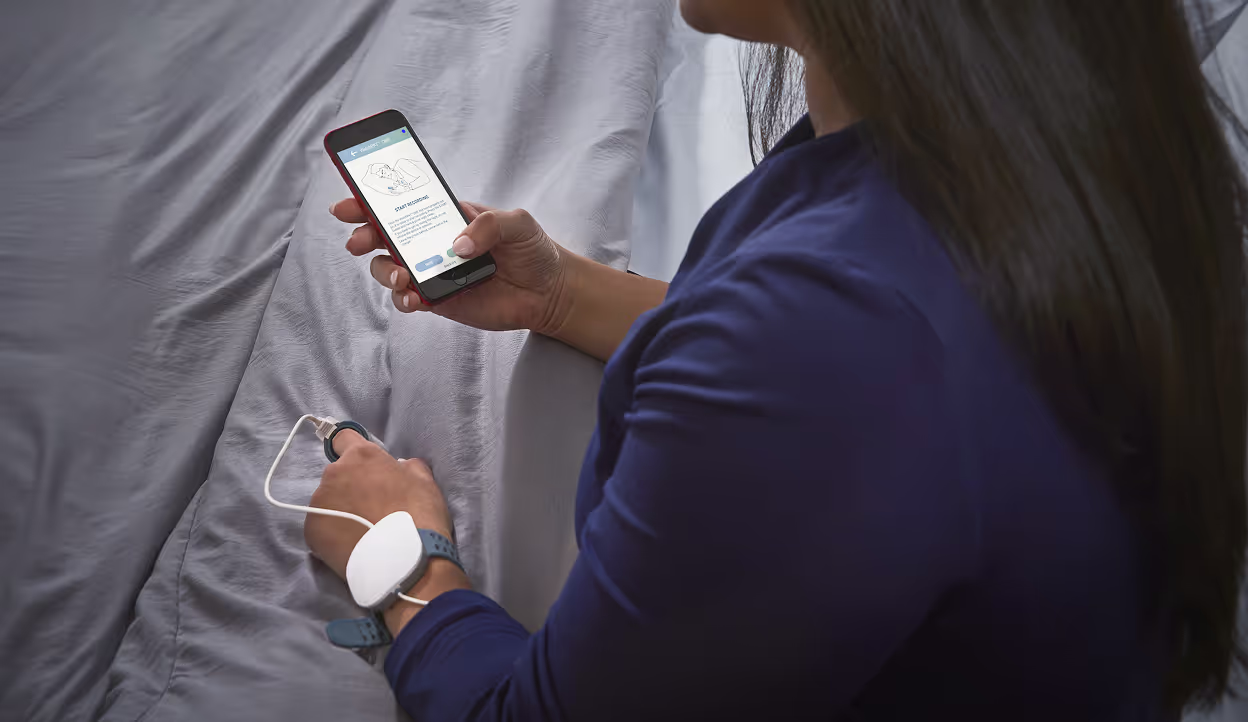
A home sleep apnea test in Cedar Park, Texas, is a portable diagnostic device you wear for one night in your own bed. It records airflow, blood oxygen level, respiratory effort, and heart rate to screen for obstructive sleep apnea. Most patients receive results within days of completing the test. Cedar Park residents do not need to visit a sleep lab or stay overnight at a clinic. dumbo.health offers an at-home sleep test for $149 with no insurance required and physician-reviewed results through monthly care plans starting at $59 per month.
Key Takeaways
- A home sleep apnea test records oxygen saturation, airflow, respiratory effort, and heart rate while you sleep in your own bed.
- The American Academy of Sleep Medicine endorses home sleep testing as an appropriate diagnostic method for adults with a moderate to high pretest probability of obstructive sleep apnea.
- Cedar Park residents can complete the entire testing process at home without visiting a sleep lab, sleep centers, or hospital facility.
- Results are typically measured using the Apnea/Hypopnea Index, which counts the number of breathing interruptions per hour of sleep.
- dumbo.health provides a home sleep test for $149 with no insurance required, plus physician interpretation and CPAP therapy through plans starting at $59 per month.
- Untreated obstructive sleep apnea increases the risk of high blood pressure, heart disease, stroke, and motor vehicle accidents, according to the National Heart, Lung, and Blood Institute.
What Is a Home Sleep Apnea Test and How Does It Work
A home sleep apnea test is a portable diagnostic device that records key physiological signals while you sleep in your own bed. Unlike a full polysomnography performed in a sleep laboratory, a home sleep test uses a simplified set of sensors to screen specifically for obstructive sleep apnea.
Home sleep apnea testing is a method of diagnosing obstructive sleep apnea outside of a clinical setting, using a compact device worn overnight. It matters because it removes the barrier of scheduling an overnight stay at a sleep lab, which many Cedar Park and Austin-area patients find inconvenient or cost-prohibitive.
What a Home Sleep Test Measures
The device typically records four to seven channels of sleep data. Core measurements include:
- Airflow through a nasal cannula or thermistor sensor
- Blood oxygen level via a fingertip pulse oximeter
- Respiratory effort through chest and abdominal belts or sensors
- Heart rate captured continuously through the pulse oximeter
- Body position in some devices, tracked by an accelerometer
Some advanced devices, such as the WatchPat, also measure peripheral arterial tone and can estimate sleep staging without traditional EEG electrodes. The data collected during a single night provides enough information for a physician to calculate the Apnea/Hypopnea Index and determine whether obstructive sleep apnea is present.
How the Device Gets to You
With dumbo.health, the process is straightforward. After completing the free sleep assessment, you receive a home sleep test device shipped directly to your address in Cedar Park or anywhere in Texas. There is no need to drive to a sleep center, schedule an appointment at a clinic, or coordinate with your insurance company. The $149 one-time cost covers the device and one night of testing.
DID YOU KNOW: The American Academy of Sleep Medicine reports that home sleep apnea tests have a sensitivity of approximately 87% to 97% for detecting moderate to severe obstructive sleep apnea when used in appropriate patient populations.
KEY TAKEAWAY: A home sleep apnea test records airflow, oxygen saturation, respiratory effort, and heart rate overnight, giving your physician the data needed to diagnose obstructive sleep apnea without requiring a visit to a sleep lab.
Understanding what the test measures is important, but knowing who qualifies for home sleep testing is equally critical.
Who Should Get a Home Sleep Apnea Test in Cedar Park
Adults with symptoms of obstructive sleep apnea and no significant comorbid sleep disorders are the strongest candidates for home sleep testing. The American Academy of Sleep Medicine recommends home sleep apnea testing for patients who have a high pretest probability of moderate to severe obstructive sleep apnea based on clinical evaluation.
Symptoms That Indicate You May Need Testing
If you experience any combination of these symptoms, a home sleep test may be appropriate:
- Loud, chronic snoring reported by a bed partner or family member
- Waking up gasping for breath or choking during the night
- Excessive daytime fatigue or sleepiness despite getting enough hours in bed
- Morning headaches that resolve within a few hours of waking
- Difficulty concentrating, memory problems, or irritability
- Observed pauses in breathing during sleep
The National Sleep Foundation notes that snoring alone does not confirm sleep apnea, but when combined with daytime fatigue and witnessed breathing pauses, the likelihood of obstructive sleep apnea increases significantly.
Risk Factors Common in Cedar Park and the Austin Area
Certain factors raise your risk of obstructive sleep apnea:
- A body mass index of 30 or higher
- Neck circumference greater than 17 inches in men or 16 inches in women
- Age over 40, though sleep apnea can occur at any age
- Male sex, though postmenopausal women have risk levels closer to men
- Family history of sleep apnea
- Nasal congestion or structural issues affecting airflow
Cedar Park residents who work long shifts, drive commercially, or have sedentary jobs may be at higher risk due to the combination of obesity prevalence and irregular sleep patterns. According to the CDC, more than 42% of U.S. adults are classified as obese, a key driver of obstructive sleep apnea prevalence.
Common Scenarios
A 45-year-old project manager living near Medical Pkwy in Cedar Park notices that her husband has started sleeping in a separate room because of her loud snoring. She wakes up exhausted every morning despite sleeping eight hours. Her primary care provider suspects obstructive sleep apnea but the closest sleep lab has a six-week wait. She orders a home sleep test through dumbo.health, completes it that week, and has physician-reviewed results within days.
A 38-year-old software engineer in the Austin area has been struggling with insomnia-like symptoms and chronic fatigue. He assumed poor sleep quality was caused by stress, but his physician flags his BMI of 33 and neck circumference as risk factors. Rather than committing to an overnight stay at a sleep laboratory, he completes home sleep testing from his apartment.
A 55-year-old owner-operator based near Reagan Blvd needs sleep apnea testing for his DOT medical exam. He cannot afford to take a full day off to visit a sleep center. He uses dumbo.health to complete an at-home sleep test for $149 without insurance, then enrolls in the Essentials Plan at $59 per month for CPAP therapy and physician oversight.
KEY TAKEAWAY: If you snore loudly, wake up gasping for breath, or experience chronic daytime fatigue, you are likely a candidate for a home sleep apnea test, especially if your BMI, neck circumference, or age place you in a higher-risk category.
Knowing whether you qualify is the first step, but understanding how to prepare for and complete the test ensures accurate results.
How to Complete a Home Sleep Apnea Test: Step by Step
Completing a home sleep apnea test takes one night and requires no medical training. The process from ordering to receiving results typically takes less than two weeks when using a streamlined provider like dumbo.health.
Step-by-Step Process for Home Sleep Testing
1. Complete the free sleep assessment at dumbo.health to determine whether home sleep testing is appropriate for your symptoms and medical history.
2. Order your home sleep test through dumbo.health for $149, which covers the device and one night of testing with no insurance required.
3. Receive the device at your Cedar Park or Austin-area address, typically within a few business days. Review the included instructions and practice placing the sensors before your test night.
4. On your test night, attach the sensors as directed. This usually involves placing a nasal cannula, a fingertip pulse oximeter, and a chest sensor. Go to sleep in your own bed at your normal time.
5. Sleep for a minimum of four hours with the device on. Most devices record data automatically and require no interaction once activated.
6. In the morning, remove the sensors and return the device according to the instructions provided.
7. A board-certified physician reviews your sleep data, calculates your Apnea/Hypopnea Index, and prepares a detailed report of your results.
After completing these steps, you receive a diagnosis and, if needed, a treatment plan. Patients on the dumbo.health Essentials Plan ($59 per month) or Premium Plan ($89 per month) receive physician interpretation, CPAP therapy, equipment, and follow-up care included in their monthly cost.
TIP: Avoid alcohol and sedative medications on your test night. These substances can alter your breathing patterns and affect the accuracy of your results.
KEY TAKEAWAY: The entire home sleep apnea testing process can be completed from your home in Cedar Park, from ordering the device to receiving physician-reviewed results, without scheduling an appointment at a clinic or sleep lab.
Once you understand the testing process, you need to know what your results actually mean and how they guide treatment.
Understanding Your Home Sleep Apnea Test Results
Your results are summarized by the Apnea/Hypopnea Index, a number that represents the average count of apneas (complete breathing stops) and hypopneas (partial breathing reductions) per hour of recorded sleep time. This single metric is the primary diagnostic criterion for obstructive sleep apnea severity.
Apnea/Hypopnea Index is the number of apnea and hypopnea events per hour of sleep, used to classify the severity of obstructive sleep apnea. Your treatment options and urgency depend directly on where your score falls.
How Severity Is Classified
The American Academy of Sleep Medicine classifies obstructive sleep apnea severity using the following Apnea/Hypopnea Index thresholds:
- Normal: fewer than 5 events per hour
- Mild obstructive sleep apnea: 5 to 14 events per hour
- Moderate obstructive sleep apnea: 15 to 29 events per hour
- Severe obstructive sleep apnea: 30 or more events per hour
What Else Your Results Show
Beyond the Apnea/Hypopnea Index, your physician reviews additional sleep data from the test:
- Oxygen saturation levels, including how low your blood oxygen level drops during apnea events. Drops below 90% are clinically significant according to the National Heart, Lung, and Blood Institute.
- Heart rate patterns, including whether your heart rate shows the characteristic surges that accompany breathing resumption after an apnea event.
- Total recording time and estimated sleep time, which affect the reliability of your results.
- Respiratory effort data, which helps distinguish obstructive sleep apnea from central sleep apnea. Obstructive events show continued effort to breathe against a blocked airway, while central events show no respiratory effort at all.
What Happens After Your Diagnosis
If your Apnea/Hypopnea Index confirms obstructive sleep apnea, your physician will recommend a treatment plan. For moderate to severe cases, continuous positive airway pressure therapy is the first-line treatment recommended by the American Academy of Sleep Medicine. CPAP therapy uses a CPAP machine that delivers steady air pressure through a mask to keep your airway open during sleep.
dumbo.health provides CPAP therapy and equipment through monthly plans that include the machine, supplies, physician oversight, and adherence monitoring. There are no insurance forms, no prior authorizations, and no surprise bills.
IMPORTANT: A home sleep apnea test may underestimate the severity of your condition compared to a full in-lab polysomnography, because it estimates sleep time rather than measuring it directly with EEG electrodes. If your results are inconclusive or your symptoms persist despite a normal result, your physician may recommend an in-lab sleep study.
KEY TAKEAWAY: Your Apnea/Hypopnea Index score determines whether you have mild, moderate, or severe obstructive sleep apnea, and your physician uses the full set of sleep data from your test to guide treatment decisions.
Results are only useful if they lead to effective treatment, so understanding your options is the next essential step.
Treatment Options After a Sleep Apnea Diagnosis
CPAP therapy is the most effective and widely recommended treatment for moderate to severe obstructive sleep apnea. The American Academy of Sleep Medicine identifies continuous positive airway pressure as the gold standard treatment because it directly addresses airway obstruction during sleep.
CPAP Therapy
A CPAP machine delivers pressurized air through a mask worn during sleep. This air pressure acts as a pneumatic splint, keeping the upper airway open and preventing the collapses that cause apnea events. According to the National Heart, Lung, and Blood Institute, consistent CPAP use reduces daytime sleepiness, lowers blood pressure, and decreases cardiovascular risk.
Adherence is the biggest challenge with CPAP therapy. Research published through the National Institutes of Health indicates that approximately 30% to 50% of patients prescribed CPAP do not use it consistently. This is where ongoing support becomes critical. dumbo.health addresses adherence through its Premium Plan ($89 per month), which includes a dedicated sleep coach, advanced adherence monitoring, and priority results turnaround, all designed to help you stick with treatment.
Oral Appliance Therapy
For patients with mild to moderate obstructive sleep apnea who cannot tolerate CPAP, oral appliances represent an alternative treatment option. These custom-fitted dental devices, sometimes prescribed through dental sleep medicine providers, reposition the lower jaw to keep the airway open. They are less effective than CPAP for severe cases but may improve sleep quality for patients with milder disease.
Positional Therapy and Lifestyle Changes
Some patients experience obstructive sleep apnea primarily when sleeping on their back. Positional therapy involves using devices or techniques to maintain side sleeping. Weight loss is another evidence-based treatment option. The Sleep Foundation notes that losing 10% of body weight can reduce the Apnea/Hypopnea Index significantly in overweight patients.
Surgical Options
Surgery is generally reserved for patients who cannot tolerate CPAP or oral appliances and have identifiable anatomical obstructions. Procedures range from uvulopalatopharyngoplasty to maxillomandibular advancement. ENT physicians and head and neck surgery specialists in the Cedar Park and Austin area perform these procedures, but they carry higher risk and variable success rates compared to CPAP.
Choosing the Right Treatment
Your physician considers several criteria when recommending treatment: your Apnea/Hypopnea Index severity, your symptoms, your medical history, your sleep patterns, and your ability to adhere to the chosen therapy. For most patients diagnosed through home sleep testing, CPAP is the starting point.
dumbo.health simplifies the path from diagnosis to treatment. After your at-home sleep test, physician interpretation and CPAP therapy are bundled into one monthly plan with no contracts and cancel-anytime flexibility. The Essentials Plan at $59 per month includes the CPAP machine, supplies, standard follow-up care, and updates sent to your referring provider.
KEY TAKEAWAY: CPAP therapy remains the most effective treatment for moderate to severe obstructive sleep apnea, and consistent use supported by coaching and monitoring improves long-term outcomes.
Knowing your treatment options matters, but understanding the cost landscape in Cedar Park helps you make a financially informed decision.
Cost of Home Sleep Apnea Testing in Cedar Park, Texas
A home sleep apnea test in Cedar Park typically costs between $150 and $500 when paid out of pocket, depending on the provider and what is included. In-lab polysomnography at a sleep laboratory or hospital facility near Austin can cost $1,000 to $3,000 or more without insurance.
What Drives Cost Differences
Several factors influence how much you pay for sleep apnea testing in the Cedar Park and Austin area:
- Whether you use insurance or pay cash
- Whether the testing is performed at home or in a sleep lab
- Whether physician interpretation is included or billed separately
- Whether follow-up consultations and treatment are bundled or priced individually
Insurance-based testing often involves prior authorizations, copays, deductibles, and surprise bills. Many patients find that the total out-of-pocket cost through insurance is comparable to or higher than a transparent cash-pay option, especially when factoring in the time spent coordinating approvals.
Comparing Home Sleep Test Costs
Here is how common testing pathways compare for Cedar Park residents:
Cost
- dumbo.health Home Sleep Test: $149 one-time for the test device and one night of testing
- Local Sleep Lab In-Lab Study: typically $1,000 to $3,000 without insurance
- Insurance-Based Home Sleep Test: varies widely based on deductible and copay, often $100 to $500 out of pocket after authorization
What Is Included
- dumbo.health Home Sleep Test: device, one night of testing, and shipping. Physician interpretation and CPAP therapy available through monthly plans starting at $59 per month.
- Local Sleep Lab In-Lab Study: overnight monitored polysomnography with technician, typically billed separately from physician interpretation
- Insurance-Based Home Sleep Test: device and test night, but interpretation, follow-up, and treatment often billed as separate claims
Prior Authorization Required
- dumbo.health Home Sleep Test: no
- Local Sleep Lab In-Lab Study: often yes
- Insurance-Based Home Sleep Test: usually yes
Wait Time
- dumbo.health Home Sleep Test: device shipped within days
- Local Sleep Lab In-Lab Study: weeks to months for scheduling
- Insurance-Based Home Sleep Test: days to weeks depending on authorization timeline
For Cedar Park residents looking for a predictable, transparent cost, dumbo.health eliminates insurance complexity entirely. The $149 test cost is a one-time payment, and monthly care plans cover everything from physician review to CPAP equipment and follow-up with no contracts.
KEY TAKEAWAY: Home sleep apnea testing through dumbo.health costs $149 with no insurance required, no prior authorization, and no surprise bills, making it one of the most transparent and affordable options available to Cedar Park residents.
Cost clarity is important, but understanding how home testing compares to in-lab studies helps you choose the right approach for your situation.
Home Sleep Apnea Test vs. In-Lab Sleep Study: Which Is Right for You
A home sleep apnea test is designed to diagnose obstructive sleep apnea using a simplified portable device, while an in-lab polysomnography monitors a wider range of physiological signals in a controlled sleep laboratory setting. For most adults with suspected obstructive sleep apnea and no major comorbidities, home testing is clinically appropriate and significantly more convenient.
Polysomnography is the gold standard sleep study performed overnight in a sleep lab, using EEG, EOG, EMG, and respiratory sensors to diagnose a broad range of sleep disorders. It matters because it can detect conditions that home tests cannot, including narcolepsy, restless leg syndrome, and parasomnias.
Accuracy
- Home Sleep Apnea Test: high sensitivity (87% to 97%) for moderate to severe obstructive sleep apnea according to the American Academy of Sleep Medicine. May underestimate mild cases.
- In-Lab Polysomnography: considered the diagnostic gold standard with comprehensive data capture across 16 or more channels.
Conditions Detected
- Home Sleep Apnea Test: obstructive sleep apnea primarily. Cannot diagnose central sleep apnea, narcolepsy, restless legs syndrome, or other complex sleep disorders.
- In-Lab Polysomnography: obstructive sleep apnea, central sleep apnea, narcolepsy, periodic limb movement disorder, parasomnias, and other sleep disorders.
Patient Comfort
- Home Sleep Apnea Test: high. You sleep in your own bed with minimal sensors. Many patients report better sleep quality during home testing compared to an unfamiliar lab environment.
- In-Lab Polysomnography: lower. Requires sleeping in a clinical setting with extensive wiring, which can alter normal sleep patterns.
Convenience
- Home Sleep Apnea Test: very high. No travel to a sleep center, no overnight stay, and no scheduling delays. Cedar Park and Austin-area residents can complete the test on any night that works for them.
- In-Lab Polysomnography: lower. Requires an appointment at a sleep lab, overnight stay, and coordination with work or family schedules.
Cost
- Home Sleep Apnea Test: typically $149 to $500 out of pocket
- In-Lab Polysomnography: typically $1,000 to $3,000 or more
When an In-Lab Study Is Necessary
Your physician may recommend polysomnography instead of home testing if you have:
- Suspected central sleep apnea
- Significant cardiopulmonary disease
- Suspected narcolepsy, insomnia with comorbid conditions, or restless legs syndrome
- An inconclusive home sleep test result
- A medical condition that makes home monitoring unreliable, such as severe COPD or congestive heart failure
For most Cedar Park residents without these complicating factors, a home sleep apnea test provides accurate, actionable diagnostic data at a fraction of the cost and inconvenience of an in-lab study.
KEY TAKEAWAY: Home sleep apnea testing is appropriate for most adults with suspected obstructive sleep apnea, while in-lab polysomnography is reserved for complex cases involving comorbid sleep disorders or inconclusive home test results.
Even though home testing is effective for most patients, there are specific situations where it may not be the right choice.
Limitations and Risks of Home Sleep Apnea Testing
Home sleep apnea testing is not appropriate for every patient or every suspected sleep disorder. Understanding these limitations helps you and your physician choose the right diagnostic approach.
It Cannot Diagnose All Sleep Disorders
A home sleep test is designed to detect obstructive sleep apnea specifically. It does not measure brainwave activity (EEG), which means it cannot diagnose central sleep apnea, narcolepsy, periodic limb movement disorder, parasomnias, or complex insomnia. If your physician suspects a condition beyond obstructive sleep apnea, an in-lab polysomnography at a sleep laboratory is the appropriate test.
It May Underestimate Severity
Because home sleep tests estimate total sleep time rather than measuring it directly with EEG electrodes, they may calculate a lower Apnea/Hypopnea Index than what a lab study would produce. This means a patient with borderline results might be classified as normal or mild when in-lab testing would show moderate severity. The American Academy of Sleep Medicine acknowledges this limitation and recommends that patients with a high clinical suspicion of sleep apnea but a negative home test should proceed to in-lab polysomnography.
Sensor Displacement Can Affect Data Quality
Home testing relies on the patient to correctly apply sensors without a technician present. If the nasal cannula shifts, the pulse oximeter falls off, or the chest sensor loosens during the night, data quality degrades. Most modern devices have signal quality indicators that alert the patient, but significant data loss can require a repeat test night.
Not Suitable for Certain Medical Conditions
Patients with severe congestive heart failure, significant chronic obstructive pulmonary disease, or neuromuscular diseases may not get reliable results from home sleep testing. These medical conditions can produce complex breathing patterns that require the full monitoring capabilities of polysomnography.
How dumbo.health Addresses These Limitations
dumbo.health provides physician oversight at every step. If your home sleep test results are inconclusive or suggest a condition beyond obstructive sleep apnea, your reviewing physician can recommend next steps, including referral for an in-lab study. The Premium Plan includes a dedicated sleep coach who monitors your test quality and follow-up care, reducing the risk of an inadequate test going unaddressed. dumbo.health also offers comprehensive sleep apnea care solutions that adapt to your diagnostic and treatment needs.
KEY TAKEAWAY: Home sleep apnea testing has real limitations, including an inability to diagnose non-obstructive sleep disorders and potential underestimation of severity, so physician review and appropriate follow-up are essential for accurate diagnosis.
Understanding limitations is important, but many barriers to testing are driven by myths rather than clinical facts.
Common Myths About Home Sleep Apnea Testing Debunked
MYTH: You need to visit a sleep lab to get an accurate sleep apnea diagnosis.
FACT: The American Academy of Sleep Medicine endorses home sleep apnea testing as an accurate diagnostic method for adults with a moderate to high pretest probability of obstructive sleep apnea. Studies show home tests detect moderate to severe cases with sensitivity ranging from 87% to 97%. An in-lab polysomnography is only necessary when complex sleep disorders are suspected or home test results are inconclusive.
MYTH: Home sleep tests are not real medical tests.
FACT: Home sleep apnea tests are FDA-cleared medical devices that measure airflow, oxygen saturation, respiratory effort, and heart rate. Results are interpreted by a physician using the same Apnea/Hypopnea Index criteria used in sleep laboratories. dumbo.health ensures that a board-certified physician reviews every test as part of its care plans.
MYTH: Sleep apnea only affects overweight older men.
FACT: While obesity and male sex are risk factors, obstructive sleep apnea occurs in women, younger adults, and people of normal weight. The National Institutes of Health notes that anatomical factors, family history, and hormonal changes all contribute to risk. Postmenopausal women have risk levels approaching those of men, and children can also develop obstructive sleep apnea due to enlarged tonsils or adenoids.
MYTH: If you snore, you definitely have sleep apnea.
FACT: Snoring is a common symptom of obstructive sleep apnea but is not a definitive diagnostic sign on its own. According to the Sleep Foundation, many people who snore do not have sleep apnea, and some people with sleep apnea do not snore at all. A home sleep apnea test measures objective data to confirm or rule out the diagnosis.
MYTH: CPAP machines are too loud and uncomfortable to sleep with.
FACT: Modern CPAP machines operate at noise levels as low as 26 to 30 decibels, which is quieter than a whisper. Mask technology has improved significantly, with options including nasal pillows, nasal masks, and full-face masks to accommodate different comfort preferences. Many patients report improved sleep quality within the first week of consistent use. dumbo.health includes CPAP equipment and supplies in every monthly plan, with no separate equipment purchase required.
KEY TAKEAWAY: Most concerns about home sleep apnea testing are based on outdated information. Modern home tests are clinically validated, physician-reviewed, and appropriate for the majority of adults with suspected obstructive sleep apnea.
With myths cleared up, knowing exactly what to prepare before your test night ensures the best possible results.
How to Prepare for Your Home Sleep Apnea Test
Proper preparation for your home sleep apnea test night improves data quality and reduces the chance of needing a repeat test. Follow these steps to ensure your test captures accurate sleep data.
Pre-Test Checklist
- Confirm your test night is a typical sleep night. Avoid testing on a night when your schedule is unusual.
- Avoid alcohol for at least 24 hours before your test night. Alcohol relaxes upper airway muscles and can artificially worsen apnea events.
- Avoid sedative or sleep aid medications unless your physician specifically instructs you to take them during the test.
- Avoid caffeine after noon on your test day to reduce the chance of difficulty falling asleep.
- Shower or bathe before applying sensors. Clean, dry skin helps the pulse oximeter and chest sensor maintain contact throughout the night.
- Remove nail polish or artificial nails from the finger you will use for the pulse oximeter. These can interfere with oxygen saturation readings.
- Read the device instructions thoroughly before bedtime. Practice placing the nasal cannula, pulse oximeter, and any chest or abdominal sensors.
- Charge the device if it uses a rechargeable battery. Most devices arrive fully charged, but verifying this prevents data loss.
- Set your bedroom to a comfortable temperature and minimize disruptions. Turn off your phone notifications if possible.
- Complete the dumbo.health sleep assessment before your test night to ensure your clinical information is on file for the reviewing physician.
What to Expect During the Night
Most patients fall asleep within their normal timeframe while wearing the device. The sensors are lightweight and minimally intrusive compared to the extensive wiring used in lab-based polysomnography. You need a minimum of four hours of recorded data for a valid test, though six or more hours improves the accuracy of your results.
If a sensor detaches during the night, reattach it if you wake up and notice. Most modern home sleep test devices store data locally and do not require an internet connection during the test.
KEY TAKEAWAY: Avoiding alcohol, caffeine, and sedatives before your test night, along with properly applying sensors on clean skin, gives you the best chance of capturing accurate sleep data in a single night.
Preparation sets you up for a successful test, but knowing the full range of sleep disorders beyond obstructive sleep apnea provides important clinical context.
Other Sleep Disorders That May Affect Cedar Park Residents
Obstructive sleep apnea is the most common sleep disorder diagnosed through home testing, but it is not the only condition that disrupts sleep quality. Understanding related sleep disorders helps you and your physician determine whether additional evaluation is needed.
Central Sleep Apnea
Central sleep apnea differs from obstructive sleep apnea in that breathing stops not because of a physical airway blockage but because the brain temporarily fails to send the signal to breathe. According to the National Institutes of Health, central sleep apnea is less common than obstructive sleep apnea and is more frequently associated with heart failure, stroke, or opioid use. A home sleep apnea test cannot reliably distinguish central from obstructive events, so patients with suspected central sleep apnea typically require in-lab polysomnography.
Insomnia
Insomnia involves persistent difficulty falling asleep, staying asleep, or waking too early. It can coexist with obstructive sleep apnea. The National Sleep Foundation reports that insomnia affects approximately 10% to 30% of the adult population. When insomnia and obstructive sleep apnea occur together, treating the apnea with CPAP often improves insomnia symptoms as well. Cognitive behavior therapy for insomnia is the first-line non-medication treatment recommended by the American Academy of Sleep Medicine.
Narcolepsy
Narcolepsy is a neurological condition that causes excessive daytime sleepiness and, in some cases, sudden loss of muscle tone. It requires specialized testing, including multiple sleep latency tests, that cannot be performed with a home device. Cedar Park residents with suspected narcolepsy would typically be referred to a neurologist or sleep medicine specialist for evaluation.
Restless Legs Syndrome
Restless legs syndrome causes an uncomfortable urge to move the legs, especially during periods of rest or at bedtime. It is classified as both a neurological condition and a sleep disorder. The Sleep Foundation estimates that restless legs syndrome affects 5% to 15% of adults. It does not cause apnea but can significantly disrupt sleep patterns and worsen fatigue.
When to Seek Evaluation for Multiple Conditions
If your home sleep test results are normal but you continue to experience significant fatigue, insomnia, or unusual sleep behaviors, your physician may recommend further evaluation. Sleep disorders frequently overlap, and a comprehensive assessment by a sleep medicine specialist can identify coexisting conditions that a single home test cannot detect.
KEY TAKEAWAY: A home sleep apnea test screens specifically for obstructive sleep apnea, but other conditions like central sleep apnea, insomnia, narcolepsy, and restless legs syndrome may require additional evaluation and different diagnostic approaches.
Understanding the broader sleep disorder landscape is helpful, but most Cedar Park residents searching for testing want to know exactly how to get started.
Getting Started with Home Sleep Apnea Testing in Cedar Park
Cedar Park residents can access home sleep apnea testing without visiting a local sleep center, waiting weeks for an appointment, or navigating insurance approvals. The most efficient path starts with an online assessment that determines whether home testing is appropriate for your symptoms.
Finding a Provider Near You
Several pathways exist for accessing sleep testing in the Cedar Park and Austin area:
- Your primary care provider can order a home sleep test or refer you to a sleep medicine specialist or sleep centers in your area.
- Sleep specialists and pulmonology specialists near Cedar Park can evaluate your symptoms and order testing.
- dumbo.health offers a direct-to-patient pathway that eliminates the need for a referral or in-person consultation. You complete the free sleep assessment online, order your test, and receive your device at home.
For patients who prefer the convenience of completing everything from home without scheduling an appointment, dumbo.health provides a streamlined alternative to traditional clinical pathways. The entire process, from assessment to results to treatment, is managed through one platform with transparent pricing.
What Dumbo.health Plans Include
After completing your $149 home sleep test, you can enroll in a monthly care plan:
Physician Interpretation and Report
- Essentials Plan ($59/month): included
- Premium Plan ($89/month): included, with priority turnaround
- Elite Plan ($129/month): included, with custom reporting for your practice
CPAP Therapy and Equipment
- Essentials Plan ($59/month): included
- Premium Plan ($89/month): included
- Elite Plan ($129/month): included
Sleep Coach Access
- Essentials Plan ($59/month): not included
- Premium Plan ($89/month): dedicated sleep coach from a licensed care team
- Elite Plan ($129/month): concierge clinical support with priority care team access
Direct Physician Messaging
- Essentials Plan ($59/month): not included
- Premium Plan ($89/month): not included
- Elite Plan ($129/month): included
All plans operate on a no-contract, cancel-anytime basis. There are no insurance requirements, no prior authorizations, and no surprise bills.
KEY TAKEAWAY: dumbo.health provides Cedar Park residents with a complete home sleep apnea testing and treatment pathway starting at $149 for the test and $59 per month for ongoing care, with no insurance required and no contracts.
With the testing and treatment pathway clear, examining what makes dumbo.health different from local alternatives helps you make a confident decision.
Why Cedar Park Residents Choose Home Sleep Testing Over Sleep Lab Visits
Home sleep apnea testing eliminates the most common barriers that prevent Cedar Park residents from getting diagnosed: cost, scheduling, and comfort. Instead of waiting weeks for a sleep lab appointment and spending an uncomfortable night in an unfamiliar clinical setting, you complete the test in your own bed on your own schedule.
Access and Scheduling
Sleep labs in the Cedar Park and Austin area, including facilities near Medical Pkwy and those associated with regional medical centers, frequently have wait times of three to six weeks or longer. For patients experiencing significant daytime fatigue, snoring that disrupts household sleep, or safety concerns related to drowsy driving, these delays can have real consequences. Home sleep testing eliminates the wait by shipping the device directly to your home.
Cost Transparency
Many patients who use insurance for sleep testing encounter prior authorization requirements, unexpected copays, and separate bills for the test, the interpretation, and follow-up consultations. dumbo.health offers a single $149 price for the test and monthly plans that bundle everything into one predictable cost. There are no hidden fees, no insurance negotiations, and no billing surprises.
Comfort and Natural Sleep Data
People who undergo sleep testing at a lab often find that the unfamiliar environment, extensive sensor wiring, and presence of a technician disrupt their normal sleep. This can produce data that does not reflect typical sleep patterns. Home testing captures data during your natural sleep environment, which many clinicians consider more representative of your actual sleep quality and breathing patterns.
Home sleep apnea testing through dumbo.health provides Cedar Park residents with an accessible, affordable, and clinically valid pathway to diagnose obstructive sleep apnea. The test device records the same core measurements used in clinical diagnosis, and every test is reviewed by a physician. For patients who need CPAP therapy, the transition from diagnosis to treatment happens within the same platform with no gaps in care.
KEY TAKEAWAY: Home sleep testing removes the scheduling delays, insurance complexity, and environmental discomfort that make sleep lab visits a barrier for many Cedar Park residents.
Conclusion
A home sleep apnea test gives Cedar Park, Texas, residents a practical, affordable, and clinically validated way to find out whether obstructive sleep apnea is behind their snoring, fatigue, or disrupted sleep. Testing at home avoids the scheduling delays and high costs of in-lab studies while still providing physician-reviewed results that guide real treatment decisions. If you or your bed partner have noticed signs of sleep apnea, waiting only allows the condition to affect your heart health, energy, and daily function. Start with the free sleep assessment at dumbo.health to find out whether home testing is right for you. The home sleep test costs $149 with no insurance required, and monthly care plans starting at $59 per month include CPAP therapy, equipment, and physician oversight with no contracts and cancel-anytime flexibility.
Frequently Asked Questions About Home Sleep Apnea Test Cedar Park, Texas
What is a home sleep apnea test?
A home sleep apnea test (HSAT) is a simplified sleep study you complete in your own home instead of an overnight sleep lab. The test uses a small wearable device that records key data while you sleep, typically including oxygen saturation, heart rate, breathing effort, airflow, snoring, chest motion, body position, and movement. A physician then reviews the recorded data to assess whether obstructive sleep apnea or another breathing disorder may be present. Results help guide diagnosis and treatment decisions. A healthcare professional can help determine whether a home sleep test is appropriate for your situation.
What is obstructive sleep apnea?
Obstructive sleep apnea (OSA) is a medical condition in which the upper airway repeatedly collapses or becomes blocked during sleep, causing breathing to stop and restart throughout the night. Each interruption is called an apnea. The American Academy of Sleep Medicine explains that OSA is one of the most common sleep disorders, often linked to snoring, gasping for breath during sleep, fragmented sleep, and daytime fatigue. OSA is associated with cardiovascular risk, high blood pressure, and impaired daytime functioning. A physician can assess symptoms and recommend appropriate testing if obstructive sleep apnea is suspected.
How is central sleep apnea different from obstructive sleep apnea?
Obstructive sleep apnea occurs when the airway is physically blocked during sleep, usually by relaxed throat muscles. Central sleep apnea is a different condition in which the brain fails to send the correct signals to the muscles that control breathing, so the airway may be open but breathing still stops. Central sleep apnea is less common than obstructive sleep apnea and often requires more complex evaluation, sometimes including an in-lab polysomnogram rather than a home sleep test. A sleep physician can assess which type of sleep-disordered breathing may be present based on your symptoms and test results.
What are the symptoms of sleep apnea?
Common symptoms of sleep apnea include loud snoring, waking up gasping for breath, frequent nighttime awakenings, morning headaches, dry mouth upon waking, excessive daytime sleepiness, difficulty concentrating, and irritability. Not everyone with sleep apnea snores loudly, and some people have no obvious nighttime symptoms but experience significant fatigue during the day. If you regularly feel unrefreshed after sleep or notice any of these signs, speaking with a healthcare professional about a sleep evaluation is a reasonable next step. You can also take a free sleep assessment to help identify whether at-home sleep testing may be appropriate.
Is sleep apnea dangerous if left untreated?
Untreated sleep apnea can contribute to serious health risks over time. The National Sleep Foundation notes that sleep apnea is associated with increased risk of high blood pressure, heart disease, stroke, type 2 diabetes, and motor vehicle accidents related to daytime sleepiness. Repeated drops in blood oxygen levels during apnea events place strain on the cardiovascular system. Chronic sleep apnea also affects sleep quality in ways that impair cognitive function and daily performance. If you have symptoms consistent with sleep apnea, a physician can evaluate whether testing and treatment are appropriate for your circumstances.
Does sleep apnea always cause loud snoring?
No. Snoring is a common symptom of obstructive sleep apnea, but not everyone who snores has sleep apnea, and not everyone with sleep apnea snores noticeably. Some people experience silent apnea events, gasping, or choking that goes unnoticed by a bed partner. Other symptoms such as unrefreshing sleep, morning fatigue, and daytime sleepiness can be present without significant snoring. Because symptoms vary, a home sleep apnea test or clinical evaluation is a more reliable way to assess sleep-disordered breathing than observing snoring alone.
Why should I consider a home sleep study instead of a lab test?
A home sleep study allows you to sleep in your own environment, which can better reflect your normal sleep patterns than spending a night in a clinical sleep lab. Home sleep tests are generally less expensive than in-lab polysomnography, easier to schedule, and more convenient for people with busy schedules. The American Academy of Sleep Medicine recognises home sleep apnea testing as an appropriate diagnostic tool for adults with a high likelihood of moderate to severe obstructive sleep apnea who do not have significant other sleep disorders or complex medical conditions. A healthcare professional can advise whether a home test is suitable for your situation.
What data does a home sleep test typically measure?
A typical home sleep apnea test records multiple channels of physiological data during sleep. Commonly measured parameters include oxygen saturation, heart rate, airflow, breathing effort, snoring, chest motion, body position, and actigraphy to detect movement. Some devices such as the WatchPAT record additional data including peripheral arterial tone. This data is used by a reviewing physician to calculate the apnea-hypopnea index (AHI), which reflects the average number of apnea and hypopnea events per hour of sleep. The AHI is one of the key values used when assessing the presence and severity of obstructive sleep apnea.
How many appointments are needed to complete a home sleep test?
The number of appointments depends on your provider and testing pathway. In many cases, a home sleep test can be arranged with minimal appointments, often just an initial consultation to confirm eligibility, followed by the test night at home, and then a follow-up to review results and discuss treatment options. With dumbo.health's at-home sleep test, the process is designed to be straightforward with transparent cash-pay pricing, reducing the need for multiple in-person visits. A healthcare professional will still review your results and discuss next steps based on your data.
What happens after the home sleep test?
After completing the test, the device is returned or the data is transmitted for physician review. A sleep physician interprets the recorded data and generates a report that includes findings such as your apnea-hypopnea index, oxygen saturation levels, and any identified breathing irregularities. Based on the results, your physician may recommend CPAP therapy, further evaluation such as an in-lab polysomnogram, lifestyle changes, or referral to a specialist. If you are tested through dumbo.health, physician interpretation and a care report are included, with results shared with your referring provider if applicable. Explore sleep apnea care solutions to understand what ongoing care may look like.
How much does an at-home sleep apnea test cost in Cedar Park, Texas?
At-home sleep apnea testing is typically less expensive than an in-lab sleep study. dumbo.health offers a home sleep test for $149 as a one-time cash-pay cost, with no insurance required, no prior authorization, and no surprise bills. This covers the at-home test device and one night of testing. Ongoing care, including physician interpretation, CPAP therapy and equipment, and adherence follow-up, is available through monthly plans starting at $59 per month with no long-term contracts. For Cedar Park and Austin, Texas residents who want transparent pricing without insurance complexity, this can be a practical option worth considering.
Is insurance required to get a home sleep apnea test?
No. Insurance is not required to access a home sleep apnea test through dumbo.health. The service is cash-pay only, which means there are no prior authorization requirements, no insurance claim delays, and no unexpected bills after testing. The home sleep test is $149 as a one-time cost, and monthly plans for ongoing care are available from $59 per month. This transparent pricing model can be helpful for Cedar Park and Austin, Texas residents who are uninsured, underinsured, or prefer to manage healthcare costs directly without involving their insurance plan.
How is sleep apnea diagnosed?
Sleep apnea is diagnosed through a sleep study, either an in-home sleep apnea test or an in-lab polysomnogram, combined with physician review of the recorded data. The key diagnostic measure is the apnea-hypopnea index, which counts the average number of breathing interruptions per hour of sleep. A physician or sleep specialist reviews this data alongside symptoms, medical history, and physical assessment to confirm a diagnosis. Home sleep testing is an accepted diagnostic pathway for many adults with suspected obstructive sleep apnea, according to the American Academy of Sleep Medicine. A healthcare professional determines whether a home test or a more detailed in-lab study is appropriate.
What is the difference between a home sleep test and a polysomnogram?
A polysomnogram (PSG) is a comprehensive in-lab sleep study that records a wide range of physiological signals including brain activity, eye movements, muscle tone, heart rhythm, oxygen levels, and breathing effort, all monitored by a technician overnight. A home sleep apnea test records a smaller set of channels, typically focused on breathing, oxygen saturation, heart rate, and body position, without brain wave monitoring. Polysomnography provides more detailed data and is recommended when complex sleep disorders such as central sleep apnea, narcolepsy, restless leg syndrome, or parasomnias are suspected. A sleep physician can advise which type of study is appropriate based on your symptoms.
Can a home sleep test detect conditions other than obstructive sleep apnea?
Home sleep apnea tests are specifically designed to evaluate obstructive sleep apnea and sleep-disordered breathing. They are not designed to diagnose conditions such as narcolepsy, restless leg syndrome, insomnia, parasomnias, or central sleep apnea, which typically require an in-lab polysomnogram with full brain wave monitoring. If your symptoms suggest a more complex sleep disorder, a sleep physician may recommend in-lab testing rather than a home test. A healthcare professional can review your symptoms and medical history to determine the most appropriate diagnostic pathway for your situation.
When would an in-lab sleep study be needed instead of a home test?
An in-lab polysomnogram may be recommended when a home sleep test is not sufficient to evaluate your symptoms. Common reasons include suspected central sleep apnea, significant heart or lung disease that may affect breathing during sleep, suspected narcolepsy or parasomnia, complex neurological conditions, inconclusive home test results, or a need for more detailed physiological monitoring. The American Academy of Sleep Medicine provides clinical guidance on when in-lab studies are preferred over home testing. If you are unsure whether a home test is right for you, a sleep physician or primary care provider can help assess your specific situation before ordering a study.
What is narcolepsy and how is it diagnosed?
Narcolepsy is a neurological sleep disorder characterised by excessive daytime sleepiness, sudden loss of muscle tone triggered by emotions (cataplexy), sleep paralysis, and vivid hallucinations at the onset of sleep. It is caused by a deficiency of a brain chemical called hypocretin (orexin) that regulates wakefulness. Narcolepsy is diagnosed through clinical evaluation combined with specific sleep tests, including an in-lab overnight polysomnogram followed by a multiple sleep latency test (MSLT) the next day, which measures how quickly you fall asleep in a quiet environment. Diagnosis and treatment of narcolepsy require evaluation by a sleep specialist or neurologist.
How is narcolepsy treated?
Narcolepsy is managed rather than cured, and treatment typically combines medication and behavioural strategies. Medications may include stimulants to reduce daytime sleepiness, sodium oxybate to improve nighttime sleep and reduce cataplexy, or selective serotonin reuptake inhibitors to manage cataplexy and related symptoms. Scheduled daytime naps and consistent sleep routines can also help manage symptoms. Treatment plans are individualised and should be overseen by a qualified healthcare professional, typically a sleep specialist or neurologist. If you are experiencing significant daytime sleepiness that is affecting your daily functioning, speaking with a healthcare provider is an important first step.
What is insomnia and how is it treated?
Insomnia is a sleep disorder characterised by difficulty falling asleep, staying asleep, or waking too early and being unable to return to sleep, resulting in poor sleep quality and daytime impairment. It can be short-term, often linked to stress or illness, or chronic, lasting three months or more. According to the CDC, insomnia is one of the most common sleep complaints. First-line treatment for chronic insomnia is cognitive behavioural therapy for insomnia (CBT-I), which addresses the thoughts and behaviours that disrupt sleep. Medications may also be used short-term in some cases. A healthcare professional can assess whether CBT-I, medication, or a combination is appropriate for your situation.
What are restless leg syndrome and how does it affect sleep?
Restless leg syndrome (RLS) is a neurological condition that causes uncomfortable sensations in the legs, often described as crawling, tingling, or aching, along with an irresistible urge to move them. Symptoms typically worsen in the evening or at night and when sitting or lying still, making it difficult to fall asleep or stay asleep. RLS can significantly disrupt sleep quality and contribute to daytime fatigue. It is distinct from obstructive sleep apnea and requires different evaluation and treatment. If you experience these symptoms regularly, a healthcare provider or sleep specialist can evaluate whether RLS or another sleep disorder may be contributing to your sleep problems.
What are the signs of sleep problems in children?
Sleep problems in children can look different from those in adults. Signs may include difficulty falling or staying asleep, loud or frequent snoring, observed pauses in breathing during sleep, restless or disruptive sleep, frequent nighttime awakenings, bedwetting, sleepwalking, night terrors, and difficulty waking in the morning. Daytime symptoms can include irritability, difficulty concentrating, hyperactivity, and poor school performance, which can sometimes be mistaken for behavioural or attention disorders. If you are concerned about your child's sleep patterns or breathing during sleep, a paediatrician or sleep specialist can evaluate whether further assessment is needed.
What can I do to support healthy sleep in my child?
Healthy sleep habits in children are supported by consistent bedtimes and wake times, a calming pre-sleep routine, a quiet and dark sleep environment, limiting screen time in the hour before bed, and ensuring an appropriate total sleep duration for the child's age. The National Sleep Foundation provides age-specific sleep recommendations for children and adolescents. Avoiding caffeine, encouraging regular physical activity during the day, and addressing anxiety or stress that may interfere with settling to sleep can also help. If sleep problems persist despite good sleep hygiene, a healthcare professional can assess whether an underlying sleep disorder is present.
What are parasomnias?
Parasomnias are a group of sleep disorders involving unusual or disruptive behaviours, experiences, or movements during sleep or at the transition between sleep and wakefulness. Common examples include sleepwalking, sleep talking, night terrors, sleep paralysis, REM sleep behaviour disorder (in which people physically act out dreams), and confusional arousals. Parasomnias can occur in both children and adults and range from mild and occasional to frequent and disruptive. Diagnosis typically requires in-lab polysomnography with video monitoring. A sleep specialist can evaluate whether a parasomnia is present and advise on appropriate management strategies.
What is CPAP therapy and how does it treat sleep apnea?
Continuous positive airway pressure (CPAP) therapy is the most widely recommended treatment for moderate to severe obstructive sleep apnea. A CPAP machine delivers a steady stream of pressurised air through a mask worn during sleep, which keeps the airway open and prevents the collapse that causes apnea events. This reduces breathing interruptions, improves oxygen saturation, and allows for more restorative sleep. Mayo Clinic notes that consistent CPAP use is associated with reduced daytime sleepiness, lower blood pressure, and improved cardiovascular health over time. Treatment outcomes vary by individual, and a healthcare professional should oversee CPAP prescription and ongoing therapy.
How important is CPAP adherence and what counts as compliant use?
CPAP adherence refers to how consistently and regularly a patient uses their CPAP machine. Insurance providers and clinical guidelines often define compliance as using the CPAP for at least four hours per night on at least 70 percent of nights over a 30-day period, though clinical goals may be higher. Poor adherence reduces the therapeutic benefit of CPAP and may affect treatment outcomes. For commercial drivers, CPAP adherence data may also be reviewed as part of DOT medical certification processes. dumbo.health monthly plans include adherence monitoring and follow-up support to help patients stay on track with CPAP therapy over time.
Are there non-CPAP treatment options for sleep apnea?
Yes. While CPAP is the most effective and widely used treatment for moderate to severe obstructive sleep apnea, other options exist. Mandibular advancement devices (oral appliances) are custom-fitted dental devices that reposition the jaw to keep the airway open, and they may be suitable for patients with mild to moderate OSA or those who cannot tolerate CPAP. Positional therapy can help patients who predominantly experience apnea events when sleeping on their back. Surgical options, including procedures such as Inspire neurostimulation therapy, tonsillectomy, or upper airway reconstruction, may be considered in specific cases. A sleep physician can advise which treatment options are appropriate based on OSA severity and individual health factors.
What is the apnea-hypopnea index and what do the numbers mean?
The apnea-hypopnea index (AHI) is the primary metric used to assess the severity of sleep apnea. It represents the average number of apnea events, complete breathing stops, plus hypopnea events, partial breathing reductions, per hour of sleep. An AHI below 5 events per hour is generally considered within the normal range for adults. An AHI of 5 to 14 is classified as mild sleep apnea, 15 to 29 as moderate, and 30 or above as severe. AHI alone does not determine treatment; a physician also considers oxygen saturation levels, symptoms, cardiovascular risk, and the patient's overall health when recommending a treatment approach.
Do commercial drivers in Cedar Park, Texas need a sleep apnea test for their DOT physical?
Commercial drivers are not automatically required to complete a sleep apnea test as part of every DOT physical, but a certified medical examiner may refer a driver for sleep apnea evaluation based on symptoms, risk factors such as obesity, large neck circumference, or reported daytime sleepiness, or observed signs of sleep-disordered breathing. The FMCSA does not currently have a published mandatory sleep apnea testing rule, but certified medical examiners use clinical judgment to assess fitness for duty. Drivers who are referred for evaluation and found to have untreated sleep apnea may face restrictions until treatment is initiated and adherence is demonstrated. Learn more at the DOT sleep apnea home test guide.
How can an at-home sleep test support a commercial driver's DOT certification process?
For commercial drivers in the Cedar Park and Austin, Texas area who are referred by a certified medical examiner for sleep apnea evaluation, an at-home sleep test can be a convenient and cost-effective first step. A home sleep apnea test can identify whether obstructive sleep apnea is present and, if so, support the initiation of treatment such as CPAP therapy. Documented treatment and adherence data can then be shared with the certifying medical examiner as part of the DOT medical certification review. It is important to note that a certified medical examiner, not dumbo.health, makes all DOT certification decisions. See the CDL driver sleep apnea test guide for more detail.
How do I find sleep apnea testing providers near me in Cedar Park or Austin, Texas?
Cedar Park and the broader Austin, Texas area have several sleep medicine resources, including sleep labs, sleep specialists, primary care providers, neurology practices, and pulmonology clinics. For residents who prefer a more convenient option, an at-home sleep test can be ordered without needing to travel to a sleep lab. dumbo.health supports at-home sleep apnea testing with transparent cash-pay pricing, physician interpretation, and ongoing care options for patients in Cedar Park, Austin, and across Texas. Starting with a free sleep assessment online can help you determine whether at-home testing may be a suitable first step, without needing to locate a specialist in your area first.
How does dumbo.health support ongoing sleep apnea care after testing?
After a home sleep test, ongoing care typically includes physician review and interpretation of results, a written report, CPAP therapy and equipment if needed, and regular adherence follow-up. dumbo.health offers monthly plans that cover these components, starting at $59 per month for the Essentials plan, which includes physician interpretation, CPAP therapy and equipment, standard follow-up, and provider updates. The Premium plan at $89 per month adds a dedicated sleep coach, advanced adherence monitoring, and priority results turnaround. The Elite plan at $129 per month includes concierge clinical support, direct physician messaging, and custom reporting. All plans are month-to-month with no contracts. Explore the full range of sleep apnea care solutions.