






Home Sleep Apnea Test in Garland, Texas: The Complete Guide to At-Home Sleep Testing
A home sleep apnea test in Garland, Texas gives you a clinical-grade sleep apnea diagnosis from your own bed, without spending a night in a sleep lab. According to the American Academy of Sleep Medicine, home sleep apnea testing is a validated diagnostic method for adults with a moderate to high probability of obstructive sleep apnea. This guide is for Garland residents, Dallas-area workers, and anyone in North Texas who suspects they may have sleep apnea and wants a faster, more affordable path to answers. You will learn how at-home testing works, what devices measure, how results compare to in-lab polysomnography, which treatment options follow a positive diagnosis, and how to access testing without insurance barriers. Whether you have been referred by a physician or are exploring testing on your own, this page covers every step from screening to CPAP therapy and beyond.
Quick Answer
A home sleep apnea test in Garland, Texas is a portable diagnostic study you complete in your own bed. The device records oxygen saturation, airflow, breathing effort, and heart rate overnight. Results are reviewed by a board-certified sleep physician who determines whether you have obstructive sleep apnea and what severity level applies. Most people receive results within a few business days. dumbo.health offers a home sleep test for $149 with no insurance required, making it one of the most accessible options for Garland and Dallas-area residents.
Key Takeaways
- A home sleep apnea test measures oxygen levels, airflow, heart rate, and respiratory effort while you sleep in your own home.
- Garland, Texas residents can access at-home sleep testing without visiting a Dallas sleep lab or hospital.
- The American Academy of Sleep Medicine recognizes home sleep testing as appropriate for diagnosing obstructive sleep apnea in adults without major comorbid conditions.
- dumbo.health provides a home sleep test for $149 as a one-time cost, with no insurance, prior authorization, or surprise bills required.
- CPAP therapy, the most common treatment after a positive diagnosis, can begin through dumbo.health plans starting at $59 per month with no contracts.
- In-lab polysomnography may still be needed if results are inconclusive or if central sleep apnea, parasomnias, or other complex sleep disorders are suspected.
What Is a Home Sleep Apnea Test and How Does It Work
A home sleep apnea test is a portable diagnostic study that records your breathing, oxygen saturation, heart rate, and airflow while you sleep at home. Unlike a full polysomnography conducted in a sleep laboratory, a home sleep test focuses on the key cardiopulmonary functions needed to diagnose obstructive sleep apnea.
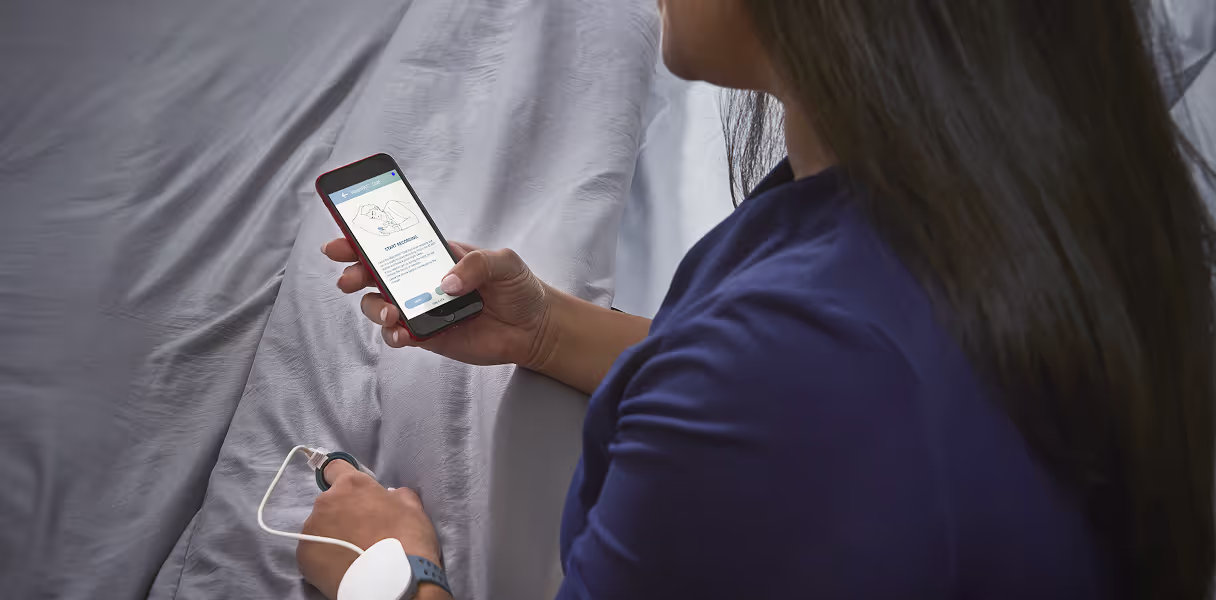
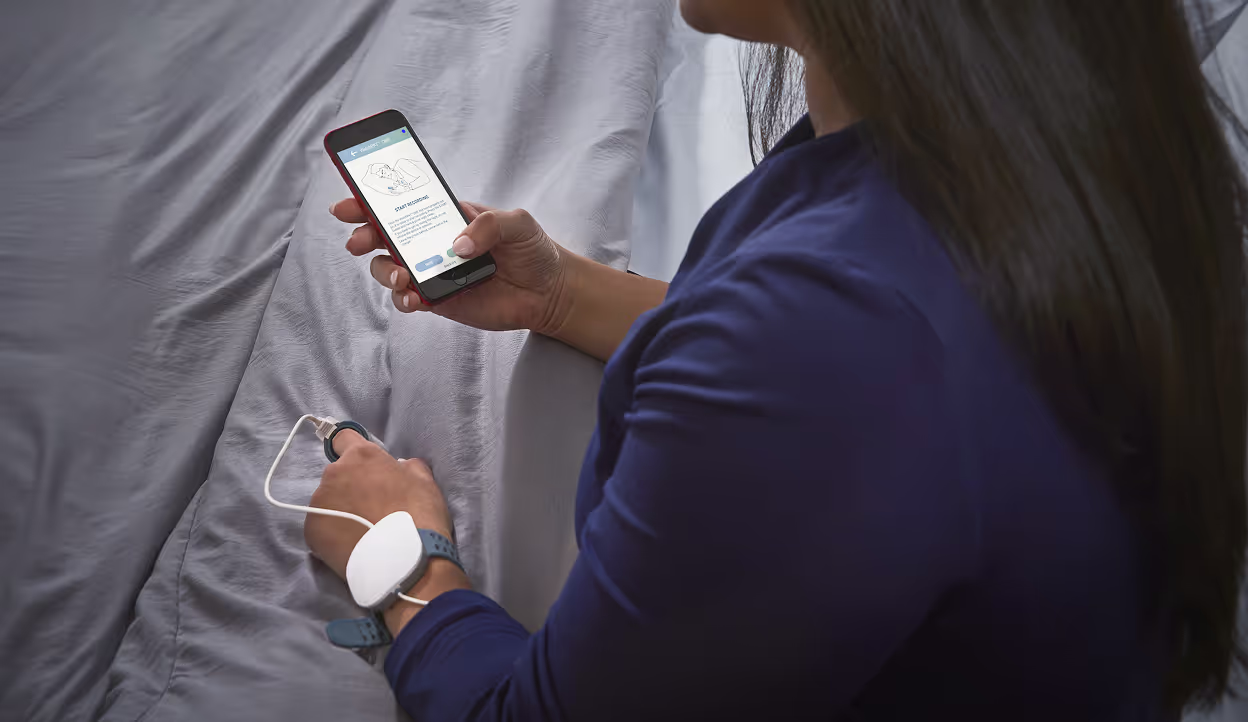
The device typically includes a nasal airflow sensor, a finger pulse oximeter that measures oxygen saturation and pulse rate, and a chest or abdominal belt that tracks respiratory effort. Some newer devices, such as the NightOwl Home Sleep Test, use photoplethysmography and peripheral arterial tonometry with a biocompatible adhesive tape sensor worn on the fingertip rather than multiple wires and belts.
You wear the device for one night. During sleep, the sensors collect continuous data on your breathing patterns, oxygen levels, heart rate, and body position. The device is FDA-cleared for out of center testing, which means it meets regulatory standards for diagnosing sleep-disordered breathing outside a traditional sleep center.
After the test night, the recorded sleep data is uploaded and reviewed by a board-certified sleep physician. The physician interprets the results, generates a diagnostic report, and determines whether obstructive sleep apnea is present and at what severity. dumbo.health includes physician interpretation in all monthly care plans, starting at $59 per month.
What a Home Sleep Test Measures
The core measurements include:
- Airflow through the nose and mouth
- Oxygen saturation levels throughout the night
- Heart rate and pulse rate trends
- Respiratory effort from chest or abdominal movement
- Body position during sleep
- Snoring intensity and frequency
These markers allow a sleep physician to calculate the Apnea-Hypopnea Index, which is the primary metric used to diagnose and classify the severity of obstructive sleep apnea. An AHI of 5 to 14 events per hour indicates mild sleep apnea, 15 to 29 indicates moderate, and 30 or more indicates severe, according to the American Academy of Sleep Medicine.
DID YOU KNOW: According to the Sleep Foundation, an estimated 80 percent of moderate to severe obstructive sleep apnea cases remain undiagnosed, which means most people who need testing have never been evaluated.
KEY TAKEAWAY: A home sleep apnea test records airflow, oxygen saturation, heart rate, and breathing effort overnight to determine whether obstructive sleep apnea is present and how severe it is.
Understanding what a home sleep test measures helps explain why it works well for most adults, but not every situation calls for at-home testing alone.
Why Garland, Texas Residents Choose Home Sleep Testing
Garland residents choose home sleep testing because it removes the most common barriers to getting a sleep apnea diagnosis: time, cost, and access to a sleep lab. Getting to a sleep center in the Dallas area often involves driving to locations on Glen Lakes Dr, Heritage Pkwy, or near Medical City Dallas Hospital, booking weeks in advance, and spending an entire night away from home.
A home sleep apnea test lets you complete the study in your own bed on your own schedule. There is no overnight appointment at a sleep laboratory, no sleep technologists attaching electrodes, and no unfamiliar environment disrupting your normal sleep patterns. For many patients, this translates into a more representative night of sleep and more accurate results.
The comfort factor matters clinically. When you sleep in a lab, unfamiliar surroundings can alter your sleep cycle, reduce total sleep time, and potentially underestimate the severity of your apnea. Testing at home captures your actual sleep quality in the environment where you normally rest.
Cost is another major factor. In-lab polysomnography can cost $1,000 or more, especially without insurance. Many insurance plans require prior authorization, referrals, and copays that add complexity and delay. dumbo.health offers a home sleep test for $149 with no insurance required, no prior authorization, and no surprise bills, making it accessible for Garland and broader Dallas-area residents who want answers without navigating insurance companies.
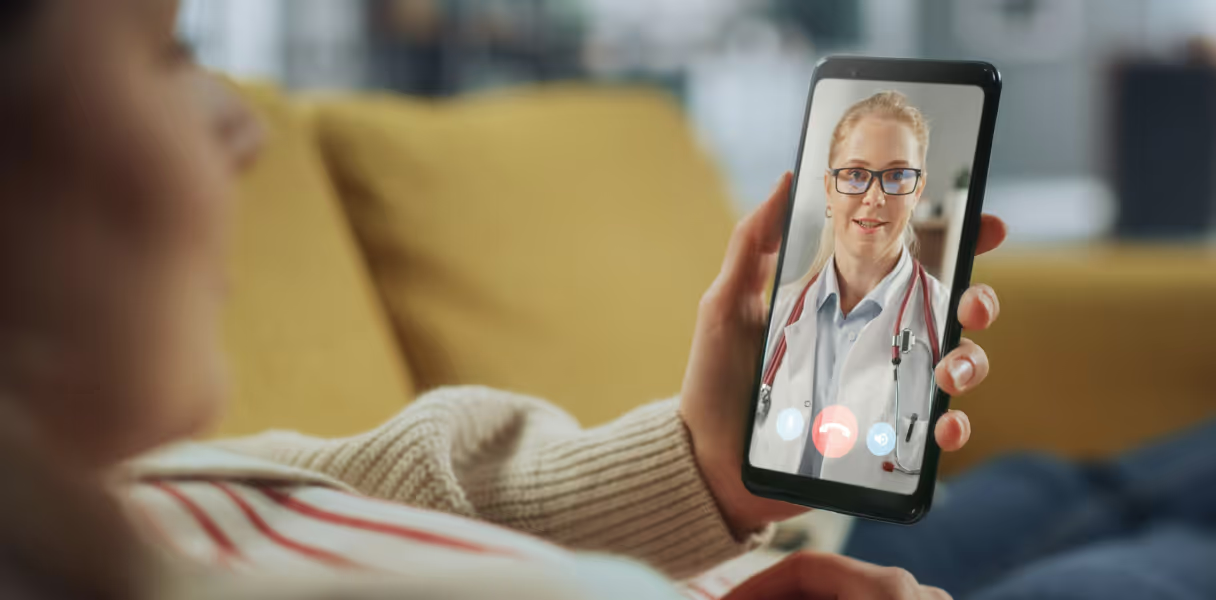
Telehealth has also expanded access. Rather than scheduling an in-person consultation with a sleep physician in Dallas, you can connect with board-certified clinicians remotely. This is especially useful for patients in Garland who may not have a certified sleep doctor close to home but still need expert-level evaluation and follow-up care.
KEY TAKEAWAY: Home sleep testing eliminates the scheduling, travel, and cost barriers that prevent many Garland residents from getting a timely sleep apnea diagnosis.
Knowing why home testing makes sense is the first step, but understanding who qualifies and who does not is equally important.
Who Should Get a Home Sleep Apnea Test in Garland
Adults who have symptoms of obstructive sleep apnea and no major complicating conditions are the best candidates for a home sleep apnea test. The American Academy of Sleep Medicine recommends home sleep testing for patients with a moderate to high pretest probability of obstructive sleep apnea, which means the clinical profile strongly suggests apnea rather than another sleep disorder.
Signs You May Need Testing
Common symptoms that indicate a home sleep test is appropriate include:
- Loud, chronic snoring reported by a bed partner or household member
- Witnessed pauses in breathing during sleep
- Gasping or choking episodes during the night
- Excessive daytime sleepiness despite getting 7 or more hours of sleep
- Morning headaches that resolve within a few hours of waking
- Difficulty concentrating or memory problems during the day
- Waking frequently to urinate at night
According to the National Heart, Lung, and Blood Institute, obstructive sleep apnea is more common in adults who are overweight, male, over 40, or have a family history of the condition. High blood pressure, a neck circumference greater than 17 inches in men or 16 inches in women, and nasal obstruction also increase risk.
Who Is Not a Good Candidate
Home sleep testing is not appropriate for everyone. A home sleep test is designed to detect obstructive sleep apnea specifically. It does not diagnose central sleep apnea, complex sleep apnea, narcolepsy, restless legs syndrome, periodic limb movements, sleepwalking, parasomnias, or circadian rhythm disorders.
Patients with significant comorbid illnesses may need in-lab polysomnography instead. This includes people with:
- Chronic heart failure or neurovascular diseases
- Severe respiratory and thoracic conditions such as obstructive lung disease or interstitial lung disease
- Suspected central sleep apnea or complex sleep apnea
- Neurological diseases affecting breathing control
- Musculoskeletal disorders that may affect respiratory function
If you are unsure whether you qualify, a physician consultation or a free sleep assessment through dumbo.health can help clarify whether at-home testing or a referral to a sleep lab is the right next step.
IMPORTANT: A home sleep apnea test is validated for diagnosing obstructive sleep apnea in adults. It is not a screening tool for all sleep disorders, and inconclusive results should prompt further evaluation with a sleep physician.
KEY TAKEAWAY: Home sleep testing works best for adults with classic obstructive sleep apnea symptoms and no major cardiopulmonary or neurological comorbidities.
Once you know whether home testing fits your situation, the next step is understanding how the process works from start to finish.
How to Complete a Home Sleep Apnea Test in Garland: Step by Step
Completing a home sleep apnea test is straightforward when you follow the right steps. Most patients finish the entire process, from ordering to receiving results, within one to two weeks.
Step-by-Step Process
1. Complete a screening assessment to determine whether you are a candidate for at-home testing. You can do this through a physician referral or by taking the free sleep assessment at dumbo.health.
2. Order your home sleep test device. Through dumbo.health, the home sleep test costs $149 as a one-time payment with no insurance required.
3. Receive the device by mail or pick it up from a designated location near you. The package includes the sensor, instructions, and any accessories needed for one night of testing.
4. Follow the setup instructions before bed on your test night. This typically involves placing a nasal cannula, attaching a finger sensor, and securing a chest belt. Some devices like the NightOwl use a single finger sensor with biocompatible adhesive tape for simpler setup.
5. Go to sleep in your own bed at your normal bedtime. Avoid caffeine and alcohol for at least 4 to 6 hours before the test, as both can alter your sleep patterns and affect accuracy.
6. Remove the device in the morning and follow the return or upload instructions. Some devices transmit data automatically, while others require you to return the unit.
7. A board-certified sleep physician reviews your sleep data, interprets the results, and generates a diagnostic report. With dumbo.health, physician interpretation is included in all care plans starting at $59 per month.
After the physician review, you receive your results along with a treatment recommendation if obstructive sleep apnea is diagnosed. The entire process avoids the need for an in-person appointment at a sleep center or Dallas hospital.
Preparation Checklist
Before your test night, verify the following:
- You have read all device instructions and understand sensor placement
- Your bedroom is set up for a normal night of sleep
- You have avoided caffeine for at least 6 hours before bed
- You have avoided alcohol for at least 4 hours before bed
- You have removed nail polish from the test finger if using a pulse oximeter
- The device battery is charged or fresh batteries are installed
- Your phone is nearby if the device requires a companion app
- You have set aside 10 to 15 minutes before bed for setup
- You plan to sleep for at least 5 to 6 hours to capture sufficient data
KEY TAKEAWAY: A home sleep apnea test in Garland takes one night of testing, requires minimal setup, and delivers physician-reviewed results within days.
With the process clear, the next question most patients ask is how home testing compares to the traditional sleep lab experience.
Home Sleep Test vs. In-Lab Polysomnography: Which Is Right for You
The key difference between a home sleep apnea test and in-lab polysomnography is what each test measures and where it takes place. Both are valid diagnostic tools, but they serve different clinical purposes.
Polysomnography is a comprehensive sleep study conducted in a sleep laboratory or sleep center. A sleep technologist monitors you throughout the night while sensors record brain activity, eye movements, muscle tone, heart rate, oxygen saturation, airflow, respiratory effort, and leg movements. This makes polysomnography the gold standard for diagnosing complex sleep disorders including central sleep apnea, narcolepsy, parasomnias, periodic limb movements, and sleep-disordered breathing that may involve multiple conditions.
A home sleep apnea test focuses on the respiratory and cardiopulmonary channels needed to diagnose obstructive sleep apnea. It does not measure brain activity or sleep stages, which means it cannot determine exactly when you are asleep or distinguish between sleep stages. However, for the specific question of whether obstructive sleep apnea is present, it provides clinically reliable data.
Setting
- Home Sleep Apnea Test: Your own bed at home in Garland or anywhere you sleep
- Polysomnography: Sleep lab or sleep center, often at Dallas hospitals or dedicated facilities
Cost
- Home Sleep Apnea Test: Typically $149 to $500. dumbo.health charges $149 with no insurance required.
- Polysomnography: Often $1,000 to $3,000 or more, depending on insurance coverage and facility
Convenience
- Home Sleep Apnea Test: High. No travel, no overnight stay, no appointment scheduling weeks out
- Polysomnography: Lower. Requires traveling to a sleep laboratory and staying overnight
What It Measures
- Home Sleep Apnea Test: Airflow, oxygen saturation, heart rate, respiratory effort, body position, snoring
- Polysomnography: All of the above plus brain activity, eye movements, muscle tone, leg movements, sleep stages
Best For
- Home Sleep Apnea Test: Adults with suspected obstructive sleep apnea and no major comorbid conditions
- Polysomnography: Patients with suspected central sleep apnea, complex sleep disorders, narcolepsy, parasomnias, or inconclusive home test results
Turnaround Time
- Home Sleep Apnea Test: Results typically within 2 to 5 business days
- Polysomnography: Results may take 1 to 3 weeks depending on the sleep center
For most adults in Garland who primarily need to determine whether obstructive sleep apnea explains their snoring, daytime sleepiness, or high blood pressure, a home sleep test provides sufficient diagnostic accuracy at a fraction of the cost and time.
KEY TAKEAWAY: A home sleep apnea test is the right choice for most adults with suspected obstructive sleep apnea, while in-lab polysomnography is reserved for complex or inconclusive cases.
After testing, understanding what your results mean determines the next phase of your care.
Understanding Your Home Sleep Test Results
Home sleep test results center on one primary metric: the Apnea-Hypopnea Index. The AHI counts how many times per hour your airway partially or fully collapses during sleep, causing a drop in oxygen levels or a brief arousal.
According to the American Academy of Sleep Medicine, the AHI is classified as follows:
- Normal: fewer than 5 events per hour
- Mild obstructive sleep apnea: 5 to 14 events per hour
- Moderate obstructive sleep apnea: 15 to 29 events per hour
- Severe obstructive sleep apnea: 30 or more events per hour
Your results will also include oxygen saturation data showing the lowest levels recorded overnight and the percentage of time spent below 90 percent saturation. Drops below 88 percent are clinically significant and often correlate with cardiovascular risk. Heart rate variability and pulse rate trends provide additional markers of how your body responds to apnea events.
The sleep physician reviewing your data considers your full clinical profile, not just the AHI number alone. Factors such as symptom severity, blood pressure history, body mass index, comorbid illnesses, and your risk for stroke or heart disease all influence treatment recommendations.
Home sleep apnea tests can sometimes underestimate the AHI because the device records total recording time rather than actual sleep time. Since you are at home without brain activity monitoring, the device cannot confirm exactly how long you were asleep. This means some events may be spread across a longer denominator, producing a slightly lower AHI than an in-lab study would show.
If your home sleep test results are negative but your symptoms strongly suggest sleep apnea, your sleep physician may recommend a full polysomnography to rule out a false negative. This is one reason physician interpretation matters. A board-certified sleep physician weighs the data alongside your symptoms, whereas a raw AHI number alone can be misleading.
dumbo.health includes physician interpretation and a full diagnostic report in all care plans. The Essentials Plan at $59 per month covers physician review, CPAP therapy and equipment, standard follow-up care, and updates sent to your referring provider.
KEY TAKEAWAY: Your AHI score determines the severity of obstructive sleep apnea, but a board-certified sleep physician must interpret the full picture including oxygen trends, symptoms, and clinical history.
Once you have a diagnosis, choosing the right treatment plan is the most consequential decision you will make.
Treatment Options After a Sleep Apnea Diagnosis
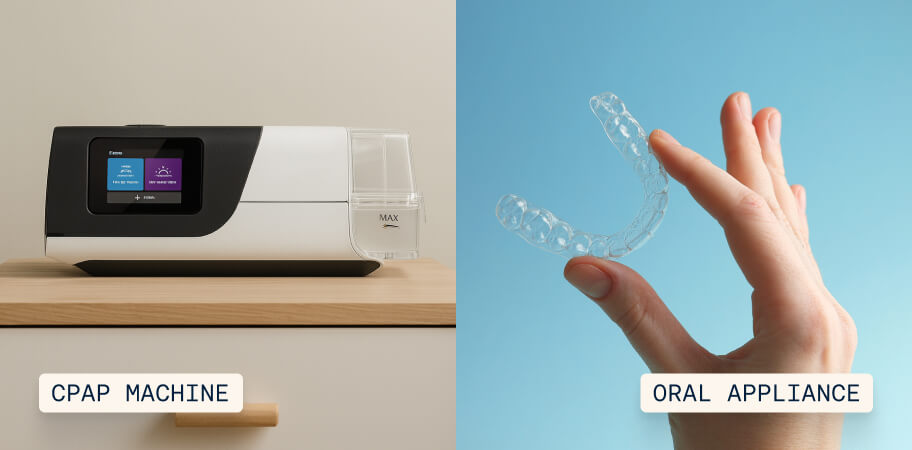
CPAP therapy is the first-line treatment for moderate to severe obstructive sleep apnea. A CPAP device delivers a continuous stream of pressurized air through a mask, keeping your airway open throughout the night and preventing the breathing interruptions that define sleep apnea.
According to Mayo Clinic, CPAP therapy reduces daytime sleepiness, lowers blood pressure, decreases the risk of heart disease and stroke, and improves overall sleep quality when used consistently. The key challenge is adherence. Studies cited by the American Academy of Sleep Medicine indicate that roughly 50 percent of patients prescribed CPAP struggle with consistent use during the first year without structured follow-up care.
CPAP Therapy
CPAP remains the most effective and widely studied treatment for obstructive sleep apnea. Newer devices are quieter, lighter, and more comfortable than earlier generations. Auto-adjusting CPAP machines can vary pressure throughout the night based on real-time airflow data.
dumbo.health provides CPAP therapy and equipment as part of all monthly care plans. The Essentials Plan at $59 per month includes the CPAP device, physician oversight, and standard follow-up care. The Premium Plan at $89 per month adds a dedicated sleep coach and advanced adherence monitoring, which directly addresses the dropout problem many patients experience.
Oral Appliance Therapy
Oral appliance therapy is an alternative for patients with mild to moderate obstructive sleep apnea who cannot tolerate CPAP. A custom-fitted oral device repositions the lower jaw forward during sleep, which helps keep the airway open. Oral appliance therapy is typically prescribed through a dentist trained in sleep medicine and requires follow-up sleep testing to confirm effectiveness.
Lifestyle Changes
Lifestyle changes can reduce apnea severity but rarely eliminate moderate or severe obstructive sleep apnea on their own. Evidence-based lifestyle modifications include:
- Weight loss, which can reduce AHI in overweight patients
- Avoiding alcohol within 4 hours of bedtime, as alcohol relaxes airway muscles
- Reducing caffeine intake in the afternoon and evening
- Sleeping on your side rather than your back
- Maintaining a consistent sleep schedule
Other Treatment Options
Additional treatment options include positional therapy for patients whose apnea occurs primarily when sleeping on their back, surgical interventions for anatomical obstructions, and hypoglossal nerve stimulation for selected patients who fail CPAP. These options are typically explored only after CPAP and oral appliance therapy have been tried.
TIP: Starting CPAP therapy with professional follow-up care significantly improves long-term adherence. dumbo.health's Premium Plan includes a dedicated sleep coach to help you adjust during the critical first weeks.
KEY TAKEAWAY: CPAP therapy is the most effective treatment for obstructive sleep apnea, and structured follow-up care is the single biggest predictor of long-term success.
Understanding treatment options raises another important question: what does all of this cost, especially without insurance.
What a Home Sleep Test and Treatment Cost in Garland
A home sleep apnea test in the Dallas-Garland area typically costs between $150 and $500 when paid out of pocket. In-lab polysomnography at Dallas hospitals or dedicated sleep centers can range from $1,000 to $3,000 or more before insurance.
Insurance coverage varies widely. Some insurance plans cover home sleep testing with a referral and prior authorization. Others require copays, deductibles, or only cover in-lab studies. Insurance companies in Texas may also impose waiting periods or require documentation from a primary care physician before approving a sleep study. For many patients, navigating insurance providers adds weeks of delay and uncertainty about final costs.
dumbo.health eliminates these variables entirely. The home sleep test is $149 as a one-time cost. No insurance is required. No prior authorization. No surprise bills. This single price covers the at-home sleep test device and one night of testing.
Monthly treatment plans cover everything after the test:
Essentials Plan
- $59 per month
- Physician interpretation and diagnostic report
- CPAP therapy and equipment
- Standard follow-up care
- Updates sent to your referring provider
- No contracts, cancel anytime
Premium Plan
- $89 per month
- Everything in Essentials
- Dedicated sleep coach from a licensed care team
- Advanced adherence monitoring
- Priority results turnaround
Elite Plan
- $129 per month
- Everything in Premium
- Concierge clinical support with priority care team access
- Direct physician messaging
- Custom reporting for your practice
All plans operate on a cash-pay basis with no contracts. You can cancel anytime. This transparent pricing model means you know exactly what you will pay before you begin, which is a significant advantage over the unpredictable billing that comes with insurance-based sleep testing and treatment.
KEY TAKEAWAY: A complete home sleep apnea test and ongoing CPAP treatment can cost as little as $149 for the test plus $59 per month through dumbo.health, with no insurance required and no surprise bills.
Cost clarity matters, but so does understanding the real limitations of at-home testing.
Limitations and Risks of Home Sleep Apnea Testing
Home sleep testing is an effective diagnostic tool, but it has limitations that every patient should understand before ordering a test. Honest assessment of these boundaries helps you avoid misdiagnosis and ensures you get the right evaluation.
It Only Diagnoses Obstructive Sleep Apnea
A home sleep apnea test is designed to detect obstructive sleep apnea. It does not diagnose central sleep apnea, complex sleep apnea, narcolepsy, insomnia, restless legs syndrome, periodic limb movements, sleepwalking, circadian rhythm disorders, or other sleep disorders. If you have symptoms that suggest something beyond obstructive airway collapse, such as unusual movements during sleep, vivid dream enactment, or irregular sleep-wake cycles, a full polysomnography in a sleep laboratory is the appropriate test.
Results Can Underestimate Severity
Because home sleep tests do not measure brain activity, they cannot confirm exactly when you fall asleep or wake up. The AHI is calculated based on total recording time rather than actual sleep time. If you spend time lying awake or experience disrupted sleep on the test night, the AHI may appear lower than it actually is. The CDC notes that undiagnosed or underdiagnosed sleep apnea remains a public health concern, and false-negative home tests contribute to this gap.
A sleep physician who reviews your results alongside your symptoms can identify when a result seems inconsistent with the clinical picture and recommend follow-up testing.
Sensor Displacement Can Affect Data Quality
If a nasal sensor, finger probe, or chest belt shifts during the night, portions of the data may be unusable. Unlike an in-lab study where a sleep technologist can reattach sensors in real time, a home test relies on the patient maintaining proper sensor placement throughout the night. Following setup instructions carefully and practicing placement before your test night reduces this risk.
Not Suitable for All Patients
Patients with significant comorbid illnesses including severe heart failure, chronic respiratory and thoracic conditions, neurovascular diseases, or neurological diseases may require monitored in-lab testing. The presence of multiple overlapping conditions makes interpretation more complex and may require the additional data channels that only polysomnography provides.
How dumbo.health Addresses These Limitations
dumbo.health mitigates several of these risks through physician-led oversight. Every test result is reviewed by a board-certified sleep physician, not an automated algorithm. If results are inconclusive or inconsistent with your reported symptoms, the physician can recommend additional evaluation. The Premium and Elite plans include advanced adherence monitoring and direct physician messaging, providing a clinical safety net that standalone test kits do not offer.
IMPORTANT: A negative home sleep test does not rule out sleep apnea if your symptoms are significant. Always discuss inconclusive or negative results with a qualified sleep physician.
KEY TAKEAWAY: Home sleep testing is reliable for obstructive sleep apnea diagnosis in appropriate candidates, but it cannot replace polysomnography for complex sleep disorders, and results should always be interpreted by a qualified physician.
Real-world examples help illustrate how these limitations and benefits play out for actual patients in the Garland area.
Real-World Scenarios: How Garland Residents Use Home Sleep Testing
Common Scenarios
A 48-year-old warehouse supervisor in Garland has been told by his wife that he snores loudly and sometimes stops breathing during the night. He wakes up tired every morning despite sleeping 7 to 8 hours. His blood pressure has been elevated at his last two checkups, and his Family Medicine physician mentioned that sleep apnea could be a contributing factor. He does not want to take time off work for an overnight study at a Dallas sleep center. He orders a home sleep test through dumbo.health for $149, completes the study on a Sunday night, and receives his results within 4 business days showing moderate obstructive sleep apnea with an AHI of 22. He starts the Premium Plan at $89 per month, which includes CPAP therapy, equipment, a dedicated sleep coach, and adherence monitoring.
A 55-year-old school administrator living near Heritage Pkwy in Garland has been experiencing insomnia symptoms alongside snoring. Her physician recommends a sleep study but her insurance plan requires a referral, prior authorization, and a copay at an in-network sleep lab that has a 6-week wait. She decides to use the home sleep test from dumbo.health instead. Her results show mild obstructive sleep apnea with an AHI of 9. Her sleep physician recommends starting with positional therapy and lifestyle changes before considering CPAP. She enrolls in the Essentials Plan at $59 per month for ongoing monitoring and physician follow-up.
A 38-year-old long-haul truck driver based in the Dallas area needs a DOT physical and is flagged for sleep apnea risk based on his BMI of 37 and neck circumference. Rather than waiting weeks for an in-lab study at a sleep center, he uses an at-home sleep test to get rapid results. His AHI comes back at 34, indicating severe obstructive sleep apnea. He begins CPAP therapy immediately through dumbo.health and receives compliance documentation needed for his DOT medical certification.
These scenarios reflect the most common paths Garland-area patients take. The pattern is consistent: patients who face barriers of time, cost, or insurance access find that home sleep testing provides a faster and more affordable route to diagnosis and treatment.
KEY TAKEAWAY: Home sleep apnea testing fits a wide range of real-life situations, from managing blood pressure to meeting DOT requirements, and removes the most common delays that keep people from getting tested.
With realistic expectations set, addressing persistent myths helps clarify remaining doubts.
Common Myths About Home Sleep Apnea Tests Debunked
MYTH: Home sleep tests are less accurate than in-lab studies and cannot be trusted for a real diagnosis.
FACT: The American Academy of Sleep Medicine recognizes home sleep apnea testing as a validated diagnostic method for obstructive sleep apnea in adults with a moderate to high pretest probability. While home tests measure fewer data channels than polysomnography, they are clinically reliable for diagnosing obstructive sleep apnea specifically. Multiple peer-reviewed studies published in journals indexed on PubMed confirm that home sleep tests demonstrate strong agreement with in-lab results for detecting obstructive apnea events.
MYTH: You need a doctor's referral and insurance approval before you can take a home sleep test.
FACT: While many insurance-based pathways require a referral and prior authorization, cash-pay options allow you to order a home sleep test directly. dumbo.health provides a home sleep test for $149 with no referral, no insurance, and no prior authorization required. Board-certified sleep physicians review every result regardless of how the test was ordered.
MYTH: Only overweight men get sleep apnea, so most people do not need testing.
FACT: Although obesity and male sex are risk factors, the NIH reports that sleep apnea affects people of all body types, ages, and sexes. Post-menopausal women, people with structural airway differences, and individuals with a family history of sleep apnea are also at elevated risk. According to the Sleep Foundation, up to 80 percent of moderate to severe cases remain undiagnosed, partly because of this misconception.
MYTH: If you snore, you definitely have sleep apnea, and if you do not snore, you definitely do not.
FACT: Snoring is common in people with obstructive sleep apnea, but not all snorers have apnea, and not all apnea patients snore. A home sleep apnea test measures objective physiological markers like oxygen saturation, airflow interruption, and respiratory effort, which provide a definitive answer that symptom observation alone cannot.
MYTH: CPAP machines are loud, uncomfortable, and impossible to sleep with.
FACT: Modern CPAP devices are significantly quieter and more compact than earlier models. Many operate below 30 decibels, which is roughly equivalent to a whisper. Mask options have expanded to include nasal pillows, nasal masks, and full-face masks to suit different preferences. With proper fitting and a structured adjustment period supported by a sleep coach, most patients adapt within 2 to 4 weeks. dumbo.health's Premium Plan includes a dedicated sleep coach and advanced adherence monitoring to support this transition.
KEY TAKEAWAY: Most objections to home sleep testing and CPAP therapy are based on outdated information, and evidence-based facts consistently support the reliability, accessibility, and effectiveness of both.
Dispelling myths prepares you to take action with confidence, which brings us to the practical takeaway.
Conclusion
A home sleep apnea test gives Garland, Texas residents a clear, affordable, and clinically valid path to diagnosing obstructive sleep apnea without the delays and costs of in-lab testing. Whether your symptoms include chronic snoring, daytime sleepiness, or elevated blood pressure, testing at home captures the data a board-certified sleep physician needs to make an accurate diagnosis and recommend treatment. The most important step is taking the first one.
dumbo.health makes that first step simple. The home sleep test is $149 with no insurance required,and ongoing care including CPAP therapy starts at $59 per month with no contracts and the ability to cancel anytime. If you are in the Garland or Dallas area and suspect sleep apnea may be affecting your health, take the free sleep assessment to find out whether home testing is right for you.
Frequently Asked Questions About Home Sleep Apnea Testing in Garland, Texas
What is a home sleep apnea test and how does it work?
A home sleep apnea test (HSAT) is a simplified diagnostic tool that allows you to test for obstructive sleep apnea in the comfort of your own home instead of spending a night in a sleep lab. The device typically monitors breathing patterns, oxygen saturation, heart rate, and respiratory effort while you sleep. After the test night, your recorded sleep data is reviewed by a board-certified sleep physician who interprets the results and prepares a diagnostic report. A healthcare professional can help determine whether a home sleep test is appropriate for your specific symptoms and clinical profile.
What is obstructive sleep apnea?
Obstructive sleep apnea (OSA) is a common sleep disorder in which the upper airway repeatedly collapses during sleep, causing breathing interruptions that can last from a few seconds to over a minute. According to the American Academy of Sleep Medicine, OSA is one of the most prevalent sleep-disordered breathing conditions, affecting millions of adults. These breathing interruptions reduce oxygen saturation, disrupt the sleep cycle, and place stress on the cardiovascular system. Symptoms often include loud snoring, gasping, morning headaches, daytime sleepiness, and difficulty concentrating. A qualified healthcare professional can evaluate whether testing is appropriate based on your symptoms and risk factors.
What are the signs that I might have sleep apnea?
Common signs of obstructive sleep apnea include loud or frequent snoring, waking up gasping or choking, unrefreshing sleep even after a full night, persistent daytime fatigue, difficulty concentrating, mood changes, and morning headaches. Elevated blood pressure and a high body mass index are also recognised risk factors. If you are regularly waking up feeling groggy, irritable, or exhausted despite sleeping for seven to eight hours, that pattern may be worth discussing with a healthcare professional. The free dumbo.health sleep assessment can help you evaluate whether at-home sleep testing is a reasonable next step.
Why am I so tired even when I sleep eight hours?
Feeling tired, foggy, or irritable after what should be a full night of sleep is one of the most reported experiences among people later diagnosed with obstructive sleep apnea. When breathing is repeatedly interrupted during the night, your body is pulled out of deeper, restorative sleep stages even if you remain technically asleep. This fragmented sleep cycle prevents normal recovery and can leave you feeling exhausted despite adequate hours in bed. Poor sleep quality, rather than insufficient sleep quantity, is often the underlying issue. A home sleep apnea test can help determine whether disordered breathing is contributing to your symptoms.
Why do I feel tired all day, struggle to concentrate, or feel moody?
Daytime fatigue, difficulty concentrating, forgetfulness, and persistent irritability are common symptoms associated with untreated sleep disorders including obstructive sleep apnea and insomnia. When sleep is repeatedly disrupted by breathing interruptions or difficulty staying asleep, the brain does not complete the full sleep cycle needed for cognitive recovery. The result is reduced alertness, impaired memory consolidation, and mood instability throughout the day. These symptoms are not simply caused by stress or lifestyle and may have an identifiable and treatable cause. A healthcare professional can assess whether a sleep disorder evaluation, including home sleep testing, is appropriate.
How does a home sleep study work step by step?
On the day of your home sleep study, you typically avoid caffeine and alcohol, follow your normal routine, and prepare the testing device as instructed. That night, you apply the sensors or wearable device before bed. Depending on the technology, the device may use photoplethysmography, peripheral arterial tonometry, or traditional respiratory sensors to record oxygen saturation, heart rate, breathing effort, and airflow while you sleep. If you wake up during the night, simply try to return to sleep as normal. The device continues recording throughout the night. After the test, you return or upload the data, and a sleep physician reviews the recorded sleep data to produce a diagnostic report.
How do I use WatchPAT or a wearable device for my home sleep study?
Devices such as the WatchPAT use peripheral arterial tonometry to measure sleep and breathing data from the wrist and finger. Setup typically involves placing a wrist unit, a finger probe, and in some configurations a small chest sensor before you go to sleep. The device records autonomic nervous system signals that reflect breathing events, oxygen saturation, heart rate, and sleep stages. Other FDA-cleared home sleep apnea test devices use biocompatible adhesive tape sensors placed on the chest or finger to measure cardiopulmonary functions and vital signs. Detailed setup instructions are always provided with your specific device. Your testing provider should be available to answer questions before your test night.
Is a home sleep apnea test uncomfortable or painful?
A home sleep apnea test is generally not uncomfortable or painful. Most devices are lightweight and use small sensors, a finger probe, or a wrist-worn unit rather than the extensive electrode setup used in an in-lab polysomnography study. The goal is to allow you to sleep as naturally as possible in your own bed. Some people find sensors mildly noticeable at first but adjust quickly. The device does not deliver any electrical signals or medication. If you have concerns about comfort or have a condition that may interfere with wearing a wrist or finger sensor, a healthcare professional can help determine whether a home test or in-lab study is more appropriate for your situation.
What if I wake up during the night while taking the home sleep test?
Waking up during the night while using a home sleep apnea test device is common and does not ruin the study. The device continues recording data whenever it is in contact with your body, so simply try to return to sleep as you normally would. Most home sleep test devices require only a minimum number of valid recording hours to produce interpretable sleep data. If the recording is too short or the data quality is insufficient, your sleep physician may recommend a repeat test. You do not need to stay perfectly still or avoid movement during the night.
How long does it take to get results from a home sleep apnea test?
Results from a home sleep apnea test are typically available within a few business days of the device data being received by the interpreting sleep physician. Turnaround time can vary depending on the provider and the plan selected. At dumbo.health, the Premium plan includes priority results turnaround alongside advanced adherence monitoring and a dedicated sleep coach. Regardless of the provider you choose, a board-certified sleep physician should review and interpret the recorded sleep data before a diagnosis or treatment plan is discussed with you. A healthcare professional will explain what the results mean and outline appropriate next steps.
How accurate are home sleep apnea tests?
Home sleep apnea tests are well-validated for diagnosing moderate to severe obstructive sleep apnea in adults who are likely to have the condition based on symptoms and risk factors. The American Academy of Sleep Medicine recognises home sleep testing as an appropriate diagnostic tool in suitable candidates. However, home sleep tests measure fewer parameters than in-lab polysomnography, which also records brain activity, limb movements, and detailed body position data. Home sleep tests may underestimate the severity of OSA in some cases and are generally not recommended for patients with suspected central sleep apnea, complex sleep apnea, restless legs syndrome, periodic limb movements, parasomnias, or significant comorbid illnesses. A clinician should assess which test is right for you.
When might an in-lab sleep study be needed instead of a home test?
An in-lab polysomnography study may be recommended when a home sleep apnea test is likely to produce insufficient or inconclusive results. This can apply to patients with suspected central sleep apnea, complex sleep apnea, significant heart failure, neurological diseases, neurovascular diseases, severe chronic obstructive lung disease, interstitial lung disease, or other serious respiratory and thoracic conditions. In-lab studies are also typically preferred when parasomnias such as sleepwalking, periodic limb movements, or narcolepsy are suspected, because these require monitoring of brain activity and limb movement sensors not available in standard home tests. Your healthcare professional can help determine which test is appropriate based on your full clinical profile and comorbid illnesses.
What happens if the home sleep test results are unclear or inconclusive?
If the sleep data from a home sleep apnea test is inconclusive, of insufficient quality, or does not explain your symptoms adequately, your sleep physician may recommend repeating the home test or proceeding with an in-lab polysomnography study. This is a normal part of the diagnostic process and does not necessarily indicate a problem. Some patients have low apnea event rates on home testing despite significant symptoms, which can happen in positional OSA or when symptoms are driven by a condition not well captured by home monitoring. A qualified sleep physician will review your full clinical profile and sleep data together before making a diagnostic or treatment recommendation.
Will insurance cover a home sleep apnea test in Garland, Texas?
Coverage for home sleep apnea testing varies significantly between insurance plans and insurance providers. Many insurance companies cover home sleep testing when a physician referral is provided and specific medical necessity criteria are met. However, prior authorizations, deductibles, and out-of-pocket costs can make the actual cost unpredictable. If navigating insurance is a barrier, dumbo.health offers a $149 at-home sleep test on a transparent cash-pay basis with no insurance required, no prior authorizations, and no surprise bills. For ongoing care, monthly plans start at $59 per month and cover physician interpretation, CPAP therapy and equipment, and follow-up care. You can explore sleep apnea care options to compare what is included.
How much does a home sleep apnea test cost without insurance?
Without insurance, home sleep apnea testing can range from under $200 to several hundred dollars depending on the provider, device, and whether physician interpretation is included. dumbo.health offers a $149 one-time home sleep test that includes the at-home device and one test night. Physician interpretation and a diagnostic report are available through monthly plans, which start at $59 per month with no contracts and no long-term commitment. This transparent cash-pay model is designed for patients who want clear pricing they can plan around, without the uncertainty of prior authorizations or unexpected bills.
What is CPAP therapy and how is obstructive sleep apnea treated?
CPAP, or continuous positive airway pressure, is the most commonly recommended treatment for moderate to severe obstructive sleep apnea. According to the Mayo Clinic, CPAP therapy works by delivering a steady stream of pressurised air through a mask, keeping the upper airway open during sleep and preventing breathing interruptions. This typically improves oxygen saturation, reduces snoring, and supports more restorative sleep. Treatment selection depends on the severity of OSA, a patient's anatomy, tolerance for different therapies, and clinician judgment. A sleep physician will review your results and discuss treatment options appropriate for your situation.
What is oral appliance therapy for sleep apnea?
Oral appliance therapy is a non-CPAP treatment option for obstructive sleep apnea that uses a custom-fitted dental device worn during sleep. The appliance repositions the lower jaw or tongue to keep the upper airway open and reduce breathing interruptions. The American Academy of Sleep Medicine recognises oral appliance therapy as an effective treatment option for mild to moderate OSA and for patients who cannot tolerate CPAP. A dentist with training in sleep medicine or a sleep specialist typically fits and adjusts the device. Dentists may ask about sleep apnea symptoms during routine exams because OSA has well-documented connections to oral health, jaw position, bruxism, and systemic conditions including high blood pressure.
What if I have already tried CPAP and it did not work for me?
CPAP intolerance is common and does not mean sleep apnea treatment cannot be effective. Factors such as mask fit, pressure settings, humidity levels, and the specific CPAP device all affect comfort and adherence. Many patients who initially struggle with CPAP benefit from switching mask styles, adjusting pressure through an auto-titrating device, or trying an alternative treatment such as oral appliance therapy. A sleep physician can review your previous CPAP experience and adherence data and help identify whether a different therapy, pressure adjustment, or equipment change may improve your outcomes. Ongoing support from a sleep coach or care team can also make a significant difference in long-term adherence.
I already use CPAP. Can I get a new prescription for a replacement device?
If you are already a CPAP user and need a new prescription, whether for a replacement device or updated equipment, a sleep physician can review your current therapy, adherence data, and clinical profile to determine whether an updated prescription is appropriate. Some patients also benefit from a repeat home sleep test if their weight, symptoms, or health status has changed since their original diagnosis. dumbo.health monthly plans include physician review and CPAP therapy support, which may be a practical cash-pay option if you need updated documentation without going through a full insurance-prior-authorisation process. A healthcare professional should be involved in any change to your prescribed CPAP settings or equipment.
Why is sleep important for overall health?
Sleep is essential for physical recovery, immune function, cognitive performance, emotional regulation, and metabolic health. According to the CDC, adults need at least seven hours of sleep per night for optimal health. Chronic sleep deprivation and untreated sleep disorders are associated with increased risk of cardiovascular disease, high blood pressure, stroke, type 2 diabetes, obesity, and impaired mental health. Untreated obstructive sleep apnea in particular places repeated physiological stress on the heart and vascular system due to drops in oxygen saturation and fragmented sleep. Prioritising sleep quality, not just sleep duration, is an important part of managing long-term health.
What is the connection between sleep apnea and blood pressure or heart health?
Obstructive sleep apnea is closely linked to high blood pressure, heart disease, and stroke risk. Each breathing interruption during sleep triggers a stress response that temporarily raises blood pressure and heart rate. Over time, this repeated physiological stress can contribute to sustained hypertension, irregular heart rhythms, and increased cardiovascular risk. The NHLBI notes that OSA is one of the most common secondary causes of high blood pressure. Treating OSA with CPAP therapy may help reduce blood pressure in some patients, although outcomes vary and are not guaranteed. A healthcare professional should assess and monitor cardiovascular risk in patients with suspected or confirmed sleep apnea.
What sleep disorders other than sleep apnea might affect my sleep?
Several sleep disorders beyond obstructive sleep apnea can disrupt sleep quality and daytime function. These include insomnia, narcolepsy, restless legs syndrome, periodic limb movements, parasomnias such as sleepwalking, circadian rhythm disorders, and central sleep apnea. Each condition has distinct characteristics, diagnostic criteria, and treatment approaches. For example, insomnia may be addressed through cognitive behavioural therapy for insomnia, known as CBT-I, rather than a sleep device. Narcolepsy requires specific neurological assessment. If your symptoms suggest a complex or mixed sleep disorder, a sleep specialist or sleep medicine physician can conduct a thorough evaluation to identify the correct diagnosis and appropriate treatment options.
How do I find a home sleep apnea test near me in Garland or the Dallas area?
Patients in Garland, Texas, and the broader Dallas area have access to a range of sleep testing options including local sleep labs, sleep centres, and at-home testing providers. If you are looking for testing providers in your area, telehealth-enabled home sleep testing through platforms like dumbo.health allows you to complete testing at home without travelling to a sleep lab or waiting for an in-person consultation appointment. The at-home sleep test is $149 on a transparent cash-pay basis, and monthly care plans are available with no contracts. A healthcare professional should always be involved in reviewing your results, regardless of which provider you choose.
What happens after my home sleep test results are ready?
After your home sleep apnea test data has been reviewed by a board-certified sleep physician, you will receive a diagnostic report that summarises the findings including any breathing events, oxygen saturation levels, and the apnea-hypopnea index. If OSA is confirmed, the physician will typically recommend a treatment plan, which may include CPAP therapy, oral appliance therapy, or lifestyle changes depending on the severity and your clinical profile. If no significant sleep-disordered breathing is found, your physician can help identify other possible causes of your symptoms. At dumbo.health, results are followed up with physician consultation and, where relevant, a referral to your primary care or specialist provider.
What lifestyle changes can support better sleep alongside treatment?
Alongside formal treatment for sleep apnea or insomnia, certain lifestyle changes can support better sleep quality. Reducing or eliminating alcohol before bed can reduce upper airway muscle relaxation, which worsens OSA. Limiting caffeine in the afternoon and evening supports natural circadian rhythm alignment. Weight loss, where relevant, can reduce OSA severity in some patients. Establishing consistent sleep and wake times reinforces healthy sleep patterns. Sleeping on your side rather than your back can reduce airway collapse in positional OSA. These measures can complement medical treatment but are generally not a substitute for prescribed therapy in moderate to severe OSA. A healthcare professional can advise on which changes are most relevant to your situation.
How do I get started with a home sleep apnea test through dumbo.health?
Getting started is straightforward. You can begin with the free sleep assessment quiz on dumbo.health to help determine whether at-home sleep testing may be appropriate for your symptoms. If testing is suitable, you can order the $149 home sleep test, complete the test in your own bed, and have your data reviewed by a board-certified sleep physician. Ongoing care, including CPAP therapy, equipment, physician follow-up, and adherence monitoring, is available through monthly plans starting at $59 per month with no contracts and no insurance required. dumbo.health is a cash-pay platform designed for patients who want transparent pricing and convenient access to sleep apnea testing and care.