






Home Sleep Apnea Test in Lubbock, Texas: The Complete Guide to At-Home Sleep Testing
A home sleep apnea test in Lubbock, Texas lets you screen for obstructive sleep apnea from your own bed using a portable device that tracks breathing, oxygen levels, and airflow overnight. According to the American Academy of Sleep Medicine, home sleep apnea testing is a validated diagnostic method for adults with a moderate to high probability of obstructive sleep apnea. This guide is for Lubbock residents, West Texas patients, commercial drivers, and anyone who suspects a sleep disorder but wants to avoid an overnight stay in a sleep lab. You will learn how home sleep testing works, what it measures, how it compares to in-lab studies, what results mean, and how to move from diagnosis to a treatment plan. Whether your physician referred you or you are exploring testing on your own, this page covers every step.
Quick Answer
A home sleep apnea test in Lubbock, Texas is a single-night screening performed at home using a portable device that records breathing effort, airflow, oxygen saturation, and heart rate while you sleep. A physician reviews the sleep data and provides a diagnosis, typically within days. Home sleep testing is less expensive and more convenient than an in-lab sleep study. dumbo.health offers an at-home sleep test for $149 with no insurance required and physician-reviewed results through monthly care plans starting at $59 per month.
Key Takeaways
- Home sleep apnea tests use a portable device worn overnight to measure breathing patterns, oxygen levels, airflow, and heart rate.
- The test is designed primarily to diagnose obstructive sleep apnea, the most common sleep disorder, which affects an estimated 30 million adults in the United States according to the American Academy of Sleep Medicine.
- Lubbock patients can access home sleep testing without visiting a sleep lab, sleep center, or hospital overnight.
- Results are typically reviewed by a physician within days, not weeks, allowing faster access to CPAP therapy or alternative treatments.
- dumbo.health provides a home sleep test for $149 as a one-time cost with no insurance required, and monthly care plans starting at $59 per month that include physician interpretation, CPAP equipment, and follow-up.
- A home sleep test may not be appropriate for patients with suspected central sleep apnea, narcolepsy, or other complex sleep disorders that require full polysomnography.
What a Home Sleep Apnea Test Actually Measures
A home sleep apnea test records several physiological signals during a single night of sleep. The portable device typically measures breathing effort, nasal and oral airflow, oxygen saturation, and heart rate. Some devices also track body position and snoring intensity.
Unlike a full in-lab sleep study, a home test does not monitor brain waves, leg movements, or muscle movements. This makes the device simpler and easier to use but limits its ability to detect certain sleep disorders beyond obstructive sleep apnea.
The primary metric a physician evaluates from a home sleep test is the Apnea-Hypopnea Index, commonly called AHI. The AHI counts the average number of apnea episodes and partial breathing reductions per hour of recorded time. An AHI of 5 or more, combined with symptoms such as snoring, daytime fatigue, or witnessed breathing pauses, generally supports a diagnosis of obstructive sleep apnea.
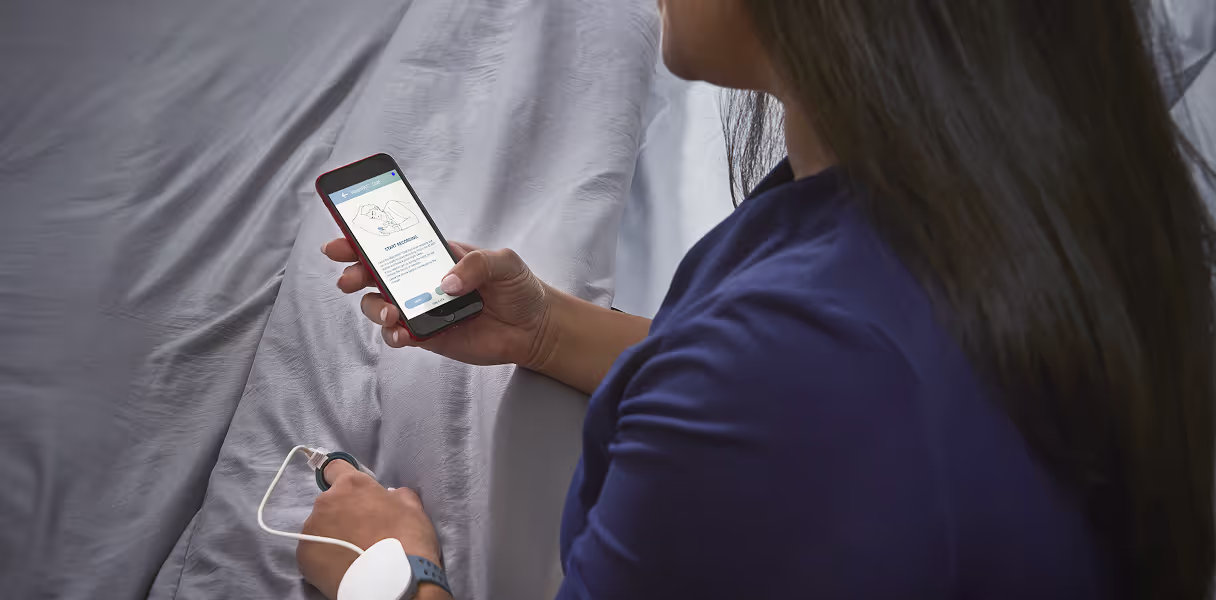
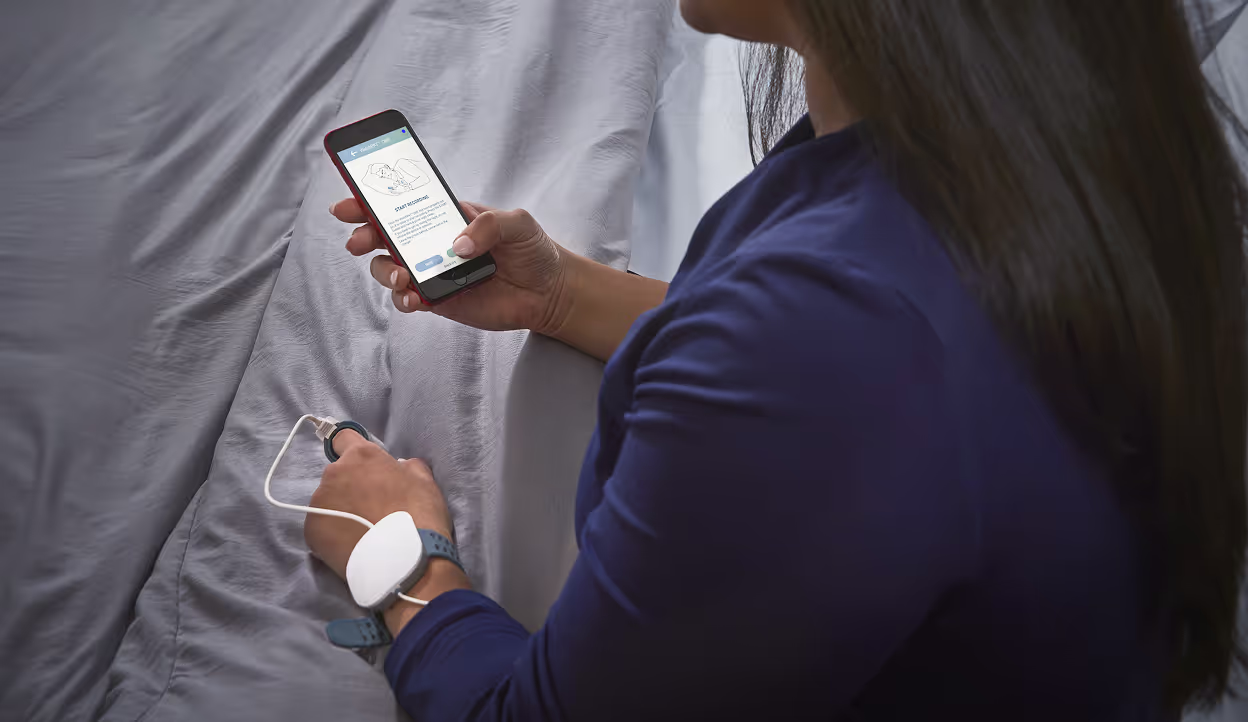
Home sleep apnea testing uses a portable device with a nasal cannula, a finger sensor for oxygen saturation, and a belt or chest strap for breathing effort. The device is FDA-cleared, painless, and designed for non-invasive monitoring. Patients wear the device for a single night in their own bed. The sensors collect sleep data continuously, and the recorded information is then sent to a physician for interpretation.
DID YOU KNOW: According to the National Heart, Lung, and Blood Institute, obstructive sleep apnea causes repeated airway blockage during sleep, which can lower oxygen levels and increase heart rate, contributing to long-term risks including heart disease, high blood pressure, and stroke.
KEY TAKEAWAY: A home sleep apnea test measures breathing effort, airflow, oxygen saturation, and heart rate overnight using a portable device, giving a physician the data needed to diagnose obstructive sleep apnea.
Understanding what the test measures helps you prepare for the night itself, which is covered next.
How Home Sleep Testing Works in Lubbock
Home sleep testing in Lubbock follows a straightforward process. You receive a portable device, wear it overnight, and return it for data analysis. No overnight sleep lab visit is required.
Step-by-Step Process for Completing a Home Sleep Test
1. Speak with your physician or complete a free online sleep assessment through a provider such as dumbo.health to determine whether a home sleep test is appropriate for your symptoms.
2. Order or receive your home sleep test device. dumbo.health ships the device directly to your address in Lubbock or anywhere in Texas for $149 with no insurance required.
3. Follow the included instructions to attach the nasal cannula, finger sensor, and chest belt before going to sleep at your normal bedtime.
4. Sleep in your own bed for one full night while the device records breathing, airflow, oxygen levels, and heart rate.
5. Remove the device in the morning and return it according to the provider's instructions, or ship it back using the prepaid label included.
6. A physician reviews the recorded sleep data and generates a diagnostic report, typically within several business days.
7. Receive your results and discuss next steps, including treatment options such as CPAP therapy, oral appliance therapy, or lifestyle modifications.
After completing these steps, you will have a physician-reviewed diagnosis and a clear path toward a treatment plan without ever visiting a sleep lab in person.
Lubbock patients who choose dumbo.health receive results reviewed under a monthly care plan. The Essentials Plan at $59 per month includes physician interpretation, CPAP therapy and equipment, standard follow-up care, and updates sent to your referring provider. There are no contracts and you can cancel anytime.
IMPORTANT: Follow device instructions carefully. If the sensor becomes dislodged during the night, the test may need to be repeated. Most patients find the equipment comfortable enough to sleep normally.
KEY TAKEAWAY: Home sleep testing in Lubbock involves wearing a small portable device overnight at home, with physician-reviewed results typically available within days.
Knowing how the process works leads to a practical question: who qualifies for a home sleep test in the first place?
Who Should Get a Home Sleep Apnea Test in Lubbock
Adults who experience persistent snoring, daytime fatigue, witnessed breathing pauses during sleep, or morning headaches are strong candidates for home sleep apnea testing. The American Academy of Sleep Medicine recommends home sleep testing for patients with a moderate to high pretest probability of obstructive sleep apnea and no significant comorbid conditions that would require in-lab monitoring.
Common Symptoms That Warrant Testing
- Loud, chronic snoring reported by a sleep partner
- Gasping or choking during sleep
- Excessive daytime fatigue or sleepiness despite adequate sleep time
- Morning dry mouth or sore throat upon waking
- Difficulty concentrating or persistent brain fog
- Frequent nighttime awakenings to urinate
- Observed pauses in breathing during sleep
The CDC notes that adults need at least 7 hours of sleep per night. If you consistently sleep 7 or more hours and still feel unrested, a sleep disorder such as obstructive sleep apnea may be the cause. Untreated obstructive sleep apnea reduces sleep quality by fragmenting sleep architecture through repeated apnea episodes that lower oxygen saturation and trigger brief arousals.
Who May Not Qualify for a Home Test
Patients with suspected central sleep apnea, narcolepsy, significant insomnia, chronic lung disease, or congestive heart failure may need a full in-lab sleep study called polysomnography. This is because home sleep tests do not measure brain waves, leg movements, or the full range of physiological signals required to diagnose complex sleep disorders.
If you are unsure whether a home sleep test is appropriate for your situation, dumbo.health offers a free sleep assessment that helps determine the best testing pathway based on your symptoms and medical history.
KEY TAKEAWAY: Home sleep apnea testing is appropriate for adults with symptoms of obstructive sleep apnea, but patients with complex sleep disorders or significant comorbidities may require an in-lab sleep study instead.
Once you know whether you qualify, the next consideration is often cost and how testing options in Lubbock compare.
Cost of Home Sleep Apnea Testing in Lubbock, Texas
Home sleep testing typically costs between $150 and $500 when paid out of pocket, depending on the provider and whether physician interpretation is included. In-lab polysomnography at a sleep center in Lubbock or West Texas can range from $1,000 to $3,000 or more, making home testing the more affordable option for most patients.
Insurance coverage for home sleep tests varies. Some plans from carriers such as Blue Cross Blue Shield, UnitedHealthcare, Aetna, and Medicare cover home sleep apnea testing when ordered by a physician with documented medical necessity. However, prior authorizations, copays, and deductibles can add complexity and delay testing.
For patients who prefer a transparent cash-pay model, dumbo.health offers an at-home sleep test for $149 as a one-time cost. No insurance is required, no prior authorizations are needed, and there are no surprise bills. The test is purchased separately from the monthly care plans, which cover physician review and ongoing treatment.
Comparing Testing Costs
Here is how the main testing options compare for Lubbock patients:
Setting
- Home Sleep Apnea Test (dumbo.health): Your own bed at home in Lubbock or anywhere in Texas
- In-Lab Polysomnography (Sleep Center): Overnight stay at a sleep lab or hospital
Typical Cost
- Home Sleep Apnea Test (dumbo.health): $149 one-time, no insurance required
- In-Lab Polysomnography (Sleep Center): $1,000 to $3,000 or more, varies by facility and insurance
Insurance Required
- Home Sleep Apnea Test (dumbo.health): No
- In-Lab Polysomnography (Sleep Center): Typically yes, with prior authorization often required
Convenience
- Home Sleep Apnea Test (dumbo.health): High, no travel or overnight facility stay needed
- In-Lab Polysomnography (Sleep Center): Lower, requires scheduling, travel, and overnight stay
Turnaround for Results
- Home Sleep Apnea Test (dumbo.health): Days, physician review included in monthly plan
- In-Lab Polysomnography (Sleep Center): Varies, often 1 to 3 weeks
What It Diagnoses
- Home Sleep Apnea Test (dumbo.health): Obstructive sleep apnea
- In-Lab Polysomnography (Sleep Center): Obstructive sleep apnea, central sleep apnea, narcolepsy, insomnia, leg movement disorders, and other complex sleep disorders
For most adults in Lubbock with suspected obstructive sleep apnea and no complex comorbidities, a home sleep test provides the most cost-effective and convenient path to diagnosis. Patients who need comprehensive sleep disorder evaluation or who have conditions such as heart failure should discuss in-lab testing with their physician.
KEY TAKEAWAY: Home sleep testing costs significantly less than in-lab polysomnography and offers faster, more convenient results for patients with suspected obstructive sleep apnea.
With cost clarified, the next question most patients ask is what happens after testing: how to understand results.
Understanding Your Home Sleep Test Results
Home sleep test results center on the Apnea-Hypopnea Index, which quantifies the severity of obstructive sleep apnea based on the number of breathing disruptions per hour of recorded time.
AHI Severity Ranges
- Normal: AHI below 5 events per hour
- Mild obstructive sleep apnea: AHI of 5 to 14 events per hour
- Moderate obstructive sleep apnea: AHI of 15 to 29 events per hour
- Severe obstructive sleep apnea: AHI of 30 or more events per hour
The physician reviewing your sleep data also examines oxygen saturation levels throughout the night. Repeated drops in oxygen saturation below 90 percent suggest significant apnea episodes and correlate with increased cardiovascular risk. Heart rate variability during sleep is another data point that helps determine the physiological impact of airway obstruction.
A physician interpreting home sleep test results looks at the overall pattern of breathing disturbances, not just a single number. The context of your symptoms, medical history, and physical characteristics all factor into the final diagnosis and recommended treatment plan.
Patients enrolled in a dumbo.health care plan receive physician interpretation as part of their monthly subscription. The Essentials Plan at $59 per month includes the physician report, CPAP therapy and equipment, and standard follow-up care. The Premium Plan at $89 per month adds a dedicated sleep coach, advanced adherence monitoring, and priority results turnaround. These plans ensure you move from results to treatment without delays or insurance hurdles.
According to the Sleep Foundation, approximately 80 percent of moderate to severe obstructive sleep apnea cases remain undiagnosed, often because patients delay testing or face barriers to accessing a sleep study. A home sleep test removes many of those barriers.
TIP: If your home sleep test shows a normal AHI but you still experience significant symptoms such as fatigue, insomnia, or disturbed sleep patterns, ask your physician whether an in-lab sleep study is warranted to evaluate for conditions such as upper airway resistance syndrome, periodic limb movements, or central sleep apnea.
KEY TAKEAWAY: The AHI score from your home sleep test determines the severity of obstructive sleep apnea, with scores of 5 or higher typically warranting a treatment plan under physician guidance.
Once you have your results, the next decision involves choosing the right treatment pathway.
Treatment Options After a Sleep Apnea Diagnosis
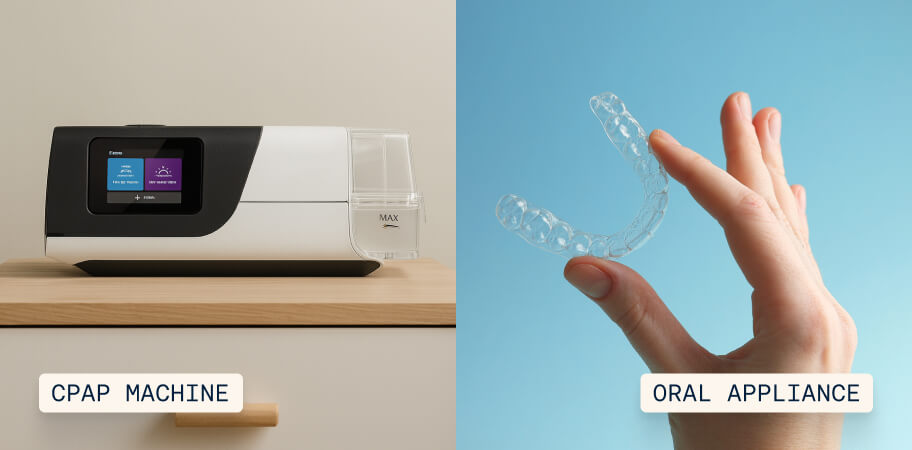
CPAP therapy is the first-line treatment for moderate to severe obstructive sleep apnea. Continuous positive airway pressure therapy works by delivering a steady stream of pressurized air through a mask, keeping the airway open during sleep and preventing apnea episodes.
CPAP Therapy
CPAP therapy remains the most effective treatment for obstructive sleep apnea according to the American Academy of Sleep Medicine. A CPAP device delivers pressurized air through a nasal or full-face mask, which prevents airway collapse during sleep. CPAP adherence is a critical factor in treatment success. Research cited by the NIH shows that patients who use CPAP for at least 4 hours per night on 70 percent of nights experience meaningful reductions in daytime fatigue, blood pressure, and cardiovascular risk.
dumbo.health includes CPAP therapy and equipment in all monthly care plans. The Essentials Plan at $59 per month covers the CPAP device, supplies, physician oversight, and follow-up. There are no contracts and you can cancel anytime. This model eliminates the common barriers of high upfront equipment costs and insurance authorization delays.
Oral Appliance Therapy
Oral appliance therapy uses a custom-fitted dental device to reposition the lower jaw and tongue, keeping the airway open during sleep. The American Academy of Sleep Medicine recommends oral appliance therapy for patients with mild to moderate obstructive sleep apnea who cannot tolerate CPAP. Some patients in Lubbock may access oral appliance therapy through providers specializing in dental sleep medicine, including those offering options such as sleep-focused clear aligners.
Lifestyle Modifications
Weight loss, sleep posture adjustments, and changes to daily habits can reduce the severity of obstructive sleep apnea for some patients. According to the NIH, a 10 percent reduction in body weight can lead to a significant decrease in AHI for overweight patients with obstructive sleep apnea. Other lifestyle modifications include avoiding alcohol before bed, maintaining a consistent sleep routine, and sleeping on your side rather than your back to reduce airway blockage.
Other Treatments
Additional treatment options that may be part of a broader treatment plan include positional therapy devices, hypoglossal nerve stimulation surgery for patients who fail CPAP, and cognitive behavioral therapy for insomnia (CBT-I) when insomnia co-occurs with sleep apnea. Some providers in the Lubbock area also offer hormone optimization, vitamin supplementation including B vitamins, and metabolic support programs, though these are typically adjunctive and not primary treatments for sleep apnea.
CPAP Alternatives at a Glance
Primary Use
- CPAP Therapy: First-line for moderate to severe obstructive sleep apnea
- Oral Appliance Therapy: Alternative for mild to moderate cases or CPAP intolerance
- Lifestyle Modifications: Adjunctive, supports all severity levels
Effectiveness
- CPAP Therapy: Highest when used consistently, resolves most apnea episodes
- Oral Appliance Therapy: Moderate, varies by patient anatomy
- Lifestyle Modifications: Variable, most effective alongside primary treatment
Convenience
- CPAP Therapy: Requires nightly mask wear, machine maintenance
- Oral Appliance Therapy: Small mouthpiece, easy to travel with
- Lifestyle Modifications: No device required, requires sustained behavior change
Access Through dumbo.health
- CPAP Therapy: Included in all monthly plans starting at $59 per month
- Oral Appliance Therapy: Not currently included, available through dental providers
- Lifestyle Modifications: Guidance available through sleep coach on Premium and Elite plans
For most Lubbock patients diagnosed with moderate to severe obstructive sleep apnea, CPAP therapy delivered through a comprehensive care plan like those offered by dumbo.health provides the most reliable path to symptom relief and long-term health improvement.
KEY TAKEAWAY: CPAP therapy is the most effective treatment for obstructive sleep apnea, and dumbo.health includes CPAP equipment, physician oversight, and follow-up in monthly plans starting at $59 per month with no contracts.
After understanding treatment options, many patients in Lubbock want to know how home testing compares to local sleep centers and clinics.
Home Sleep Testing vs. Sleep Centers in Lubbock
Home sleep testing and in-lab sleep studies at Lubbock sleep centers serve different diagnostic purposes. Home sleep apnea testing is best suited for straightforward obstructive sleep apnea evaluation, while in-lab polysomnography provides comprehensive sleep disorder evaluation for complex cases.
Lubbock has several sleep centers and facilities, including hospital-affiliated sleep labs and independent clinics. Facilities like Covenant Sleep Center and providers such as those specializing in pulmonary disease, internal medicine, and critical care medicine offer in-lab sleep studies. These studies are conducted overnight in a controlled environment where a technician monitors brain waves, leg movements, heart activity, muscle movements, breathing effort, and oxygen saturation simultaneously.
The tradeoff is clear: in-lab studies provide more data but require an overnight stay, have limited appointment availability, and cost significantly more. Home sleep testing provides targeted data sufficient to diagnose obstructive sleep apnea with less disruption to your schedule and at a fraction of the cost.
Many patients report sleeping more naturally at home than in a clinical sleep lab environment. Clinicians frequently observe that sleep data collected in a familiar environment can reflect a patient's typical sleep patterns more accurately than data collected in an unfamiliar setting with monitoring equipment and clinical surroundings.
For Lubbock residents looking for convenience and affordability, dumbo.health offers a home sleep apnea test shipped directly to your door. The test costs $149 with no insurance hassle, and monthly care plans provide ongoing sleep apnea treatment including CPAP therapy, physician review, and follow-up support.
IMPORTANT: If your physician suspects a complex sleep disorder such as narcolepsy, central sleep apnea, or significant periodic limb movement disorder, an in-lab sleep study at a local sleep center is the appropriate diagnostic path. Home sleep tests are not designed to detect these conditions.
KEY TAKEAWAY: Home sleep testing is the most convenient and cost-effective option for diagnosing obstructive sleep apnea in Lubbock, while in-lab sleep studies remain necessary for complex or multi-condition sleep disorder evaluations.
Understanding the differences between testing options raises an important question about what home testing cannot do.
Limitations and Risks of Home Sleep Apnea Testing
Home sleep apnea testing is a validated and effective screening tool, but it has specific limitations that patients should understand before choosing this option.
Home sleep tests do not monitor brain waves. Without electroencephalography data, the test cannot measure sleep stages, identify REM sleep abnormalities, or detect conditions such as narcolepsy. This means the test cannot determine total sleep time precisely, which may result in an underestimation of AHI in some cases. The American Academy of Sleep Medicine acknowledges this limitation and recommends in-lab polysomnography when clinical suspicion for complex sleep disorders is high.
The test relies on proper sensor placement by the patient. If the nasal cannula shifts, the finger sensor falls off, or the chest belt loosens during the night, the recorded data may be insufficient for diagnosis. In real-world use, a small percentage of home sleep tests require a repeat night due to data quality issues. Most patients who follow the instructions carefully complete the test successfully on the first attempt.
Home sleep apnea testing is not appropriate for evaluating central sleep apnea, which involves the brain failing to send proper signals to breathing muscles rather than a physical airway blockage. Patients with heart failure, chronic opioid use, or neurological conditions that increase central apnea risk should undergo in-lab testing.
The test does not evaluate for insomnia, circadian rhythm disorders, sleepwalking, sleep-related jaw pain, TMJ discomfort, tooth grinding, or gastroesophageal reflux disease. These conditions require different diagnostic approaches.
Despite these limitations, home sleep apnea testing remains the recommended first-line diagnostic tool for the majority of adults with suspected obstructive sleep apnea. dumbo.health helps mitigate the limitation of sensor placement issues by providing clear instructions with each device and offering physician oversight through care plans that include follow-up support if a retest is needed.
A fourth limitation worth noting is that home sleep tests are designed for adults. Pediatric sleep apnea evaluation requires in-lab polysomnography with specialized monitoring.
KEY TAKEAWAY: Home sleep apnea tests cannot detect central sleep apnea, narcolepsy, or other complex sleep disorders, and they depend on correct sensor placement, but they remain the most practical first-line diagnostic option for obstructive sleep apnea.
Knowing the limitations helps set realistic expectations. Next, consider how real Lubbock patients navigate the testing process.
Real-World Scenarios: Home Sleep Testing in Lubbock
Seeing how different patients approach home sleep testing helps illustrate when and how the test works best.
Common Scenarios
A 48-year-old Lubbock office manager has been told by her spouse that she snores loudly every night. She wakes with a dry mouth and feels fatigued by midafternoon despite sleeping 7 to 8 hours. Her primary care physician suspects obstructive sleep apnea and recommends a home sleep test. She orders the test through dumbo.health for $149, completes the single-night test at home, and receives her results within days showing an AHI of 22, indicating moderate obstructive sleep apnea. She enrolls in the Premium Plan at $89 per month, which includes CPAP therapy, a dedicated sleep coach, and advanced adherence monitoring. Within weeks, her daytime fatigue improves significantly.
A 55-year-old long-haul truck driver based in West Texas needs to maintain his commercial driving certification. During his DOT physical, the examining physician flags his BMI of 38 and history of snoring and refers him for sleep apnea testing. Rather than scheduling an in-lab study at a Lubbock sleep center with limited appointment availability, he completes a home sleep apnea test through dumbo.health. His results show severe obstructive sleep apnea with an AHI of 41. He starts CPAP therapy through the Essentials Plan at $59 per month and provides his treating physician's compliance report to satisfy DOT requirements. His oxygen saturation during sleep improves from consistently dipping below 85 percent to staying above 92 percent.
A 34-year-old Lubbock resident with a BMI of 26 experiences insomnia, difficulty falling asleep, and frequent nighttime awakenings but does not snore. Her physician recommends a home sleep test to rule out obstructive sleep apnea. The results show an AHI of 3, which is within the normal range. Her physician then refers her for a behavioral sleep medicine evaluation to explore cognitive behavioral therapy for insomnia (CBT-I) and circadian rhythm management rather than CPAP therapy. This scenario illustrates how a home sleep test can help rule out obstructive sleep apnea and redirect the diagnostic pathway toward the correct condition.
These scenarios show that home sleep testing serves multiple purposes: confirming a diagnosis, guiding treatment selection, and ruling out obstructive sleep apnea when another sleep disorder is more likely.
KEY TAKEAWAY: Home sleep testing provides actionable diagnostic data for a wide range of Lubbock patients, from office workers with chronic snoring to commercial drivers needing certification compliance.
Real-world examples highlight common situations, but myths about sleep apnea and testing persist. The next section addresses the most frequent misconceptions.
Common Myths About Home Sleep Apnea Testing Debunked
MYTH: Home sleep tests are not accurate enough to diagnose sleep apnea.
FACT: The American Academy of Sleep Medicine validates home sleep apnea testing as an appropriate diagnostic method for obstructive sleep apnea in adults with a moderate to high pretest probability. Studies published in peer-reviewed journals and cited by the NIH show that home sleep tests have strong sensitivity and specificity for detecting moderate to severe obstructive sleep apnea. While the test may slightly underestimate AHI compared to in-lab polysomnography, the clinical difference rarely changes the treatment decision.
MYTH: You need insurance to get a home sleep test.
FACT: Insurance is not required for home sleep apnea testing. While some insurance plans from carriers such as Medicare, Blue Cross Blue Shield, UnitedHealthcare, and Aetna may cover the test, cash-pay options exist. dumbo.health offers an at-home sleep test for $149 with no insurance, no prior authorizations, and no surprise bills. This removes one of the most common barriers to testing.
MYTH: If you do not snore, you do not have sleep apnea.
FACT: Snoring is one of the most common symptoms of obstructive sleep apnea, but not all patients with sleep apnea snore. According to the Sleep Foundation, other indicators include witnessed breathing pauses, excessive daytime sleepiness, morning headaches, and waking with a dry mouth. Some patients present primarily with fatigue, insomnia, or cardiovascular symptoms without audible snoring. Relying solely on the presence or absence of snoring to determine whether testing is needed can delay diagnosis.
MYTH: A home sleep test can diagnose any sleep disorder.
FACT: Home sleep apnea tests are designed specifically to detect obstructive sleep apnea. They do not diagnose narcolepsy, central sleep apnea, restless leg syndrome, periodic limb movement disorder, or other conditions that require monitoring of brain waves, leg movements, and muscle activity. Patients with suspected complex sleep disorders need an in-lab sleep study for accurate diagnosis.
MYTH: CPAP is the only treatment for sleep apnea.
FACT: CPAP therapy is the first-line treatment for moderate to severe obstructive sleep apnea, but it is not the only option. The American Academy of Sleep Medicine also recognizes oral appliance therapy for mild to moderate cases, surgical interventions for specific anatomical causes, and lifestyle modifications including weight loss and positional therapy. The right treatment plan depends on the severity of the condition, patient preferences, and physician recommendations.
KEY TAKEAWAY: Home sleep apnea tests are clinically validated, do not require insurance, and are effective for diagnosing obstructive sleep apnea, though they are not designed for complex or non-obstructive sleep disorders.
With myths addressed, here is a practical checklist to prepare for your test.
How to Prepare for Your Home Sleep Apnea Test
Proper preparation increases the likelihood of collecting usable sleep data on the first night and avoids the need for a retest.
Pre-Test Preparation Checklist
- Confirm your symptoms with a physician or complete the free sleep assessment at dumbo.health to determine whether a home sleep test is appropriate
- Order your home sleep test device and confirm it has arrived with all components: nasal cannula, finger sensor, chest belt, and instruction guide
- Avoid alcohol for at least 24 hours before your test night, as alcohol relaxes airway muscles and can distort results
- Avoid caffeine after noon on the day of your test to support normal sleep patterns
- Skip napping on the day of the test so you are sufficiently tired at bedtime
- Wash your face and hands before applying sensors to ensure good contact and accurate readings
- Remove nail polish or artificial nails from the finger where the oxygen sensor will be placed, as these can interfere with oxygen saturation readings
- Set up your sleeping area as you normally would with your usual pillow, blanket, and room temperature
- Review the device instructions before bedtime so you feel confident attaching each sensor
- Charge or confirm the battery level of the device if applicable
- Go to bed at your normal time and aim for at least 6 hours of recorded sleep time
Following this checklist helps ensure your single test night produces high-quality data that your physician can interpret accurately.
TIP: Many patients find it helpful to do a practice run of attaching the sensors earlier in the evening before their actual test night. This reduces fumbling at bedtime and increases comfort with the equipment.
KEY TAKEAWAY: Preparing properly for your home sleep test by avoiding alcohol, removing nail polish, and following device instructions carefully maximizes data quality and reduces the chance of needing a retest.
With preparation covered, here is what to expect when choosing a provider for your test in the Lubbock area.
Choosing a Sleep Apnea Testing Provider in Lubbock
Selecting the right provider for your home sleep apnea test affects cost, convenience, turnaround time, and the quality of your treatment plan. Lubbock residents have several options, including local sleep centers, hospital-affiliated sleep labs, independent sleep medicine physicians, and telehealth-based providers.
What to Look For in a Provider
When evaluating providers near you, consider these factors:
- Whether the provider offers home sleep testing or only in-lab sleep studies
- The total cost, including physician interpretation, and whether insurance is required
- How quickly results are returned
- Whether the provider offers a complete treatment plan including CPAP therapy, not just a diagnosis
- Whether the provider supports telehealth or telemedicine appointments for consultations and follow-up
- Whether the physician reviewing your results is board-certified in sleep medicine
Some Lubbock providers, including those affiliated with hospital systems, may require insurance authorization, referrals from a primary care physician, and in-person consultations before ordering a test. Appointment availability at local sleep centers can also vary, with wait times of several weeks in some cases.
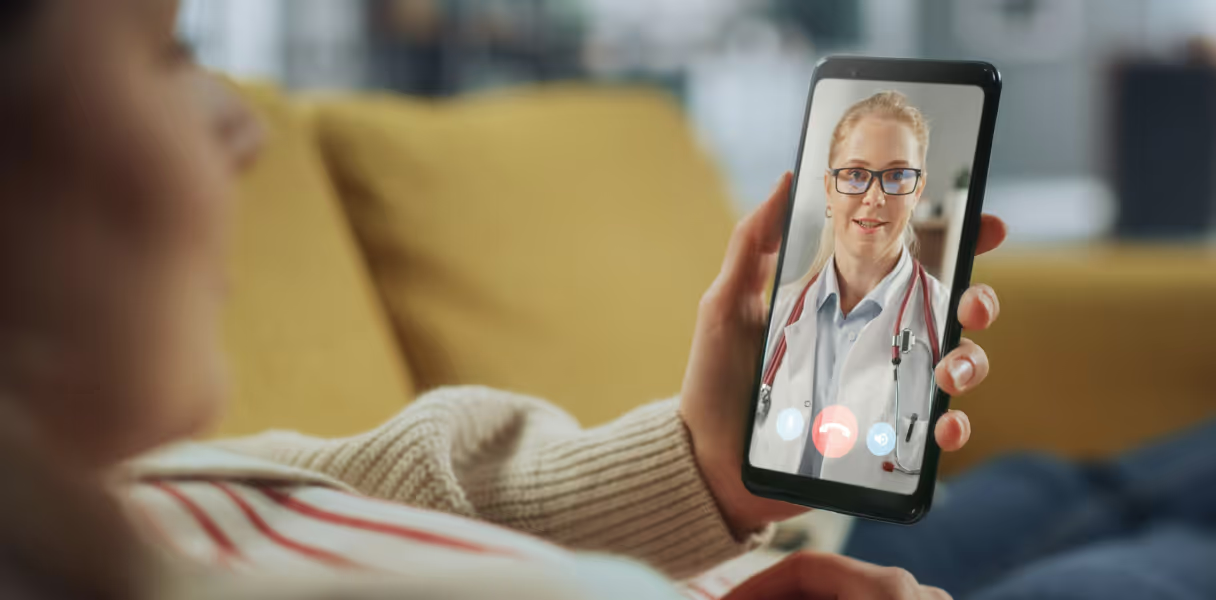
dumbo.health operates as a telehealth-based provider that delivers sleep apnea testing and treatment to patients across Texas, including Lubbock and the broader West Texas region. The model is cash-pay only, which means no insurance paperwork, no prior authorizations, and no unexpected bills. Patients can order their at-home sleep test directly, receive the device by mail, and access physician-reviewed results and CPAP therapy through monthly plans with no contracts.
For patients who prefer in-person care, Lubbock has providers specializing in pulmonary disease, ear, nose, and throat, internal medicine, and oral and maxillofacial surgery who may offer sleep apnea evaluation. Facilities such as Covenant Sleep Center provide in-lab polysomnography for complex cases. Checking provider ratings, appointment availability, and hospital quality scores can help narrow your options.
The best provider for your situation depends on whether you need a straightforward obstructive sleep apnea evaluation or a comprehensive sleep disorder evaluation involving multiple conditions.
KEY TAKEAWAY: Choose a provider based on cost transparency, turnaround time, treatment plan completeness, and whether they support home testing, and consider telehealth options like dumbo.health for convenience and cash-pay simplicity.
Provider choice is an important decision. Next, explore the connection between sleep apnea and broader health risks that make testing worthwhile.
Why Sleep Apnea Testing Matters for Your Long-Term Health
Untreated obstructive sleep apnea significantly increases the risk of serious health conditions. Testing is not just about resolving snoring or daytime fatigue. It is about identifying a condition that, left unaddressed, can contribute to cardiovascular disease, metabolic dysfunction, and reduced quality of life.
According to the National Heart, Lung, and Blood Institute, untreated obstructive sleep apnea is associated with an increased risk of heart disease, high blood pressure, stroke, type 2 diabetes, and irregular heart rhythms. Repeated drops in oxygen saturation during apnea episodes place chronic stress on the cardiovascular system, elevating heart rate and blood pressure during sleep.
The NIH also notes that sleep deprivation caused by untreated sleep apnea impairs cognitive function, increases the risk of motor vehicle accidents, and worsens mental health conditions including depression and anxiety. The National Highway Traffic Safety Administration estimates that drowsy driving causes thousands of crashes annually in the United States, and obstructive sleep apnea is one of the leading medical causes of excessive daytime sleepiness behind the wheel.
For commercial drivers in Lubbock and West Texas, untreated sleep apnea is both a personal health risk and a professional liability. The FMCSA requires that commercial drivers with conditions that could affect their ability to safely operate a vehicle undergo appropriate evaluation and treatment. A DOT sleep apnea test at home through dumbo.health can satisfy this requirement conveniently.
Beyond cardiovascular and cognitive effects, untreated obstructive sleep apnea can worsen gastroesophageal reflux disease, contribute to airway health deterioration, and exacerbate conditions like migraine and metabolic syndrome. Disturbances in breathing during sleep disrupt the body's ability to complete restorative sleep cycles, affecting hormone regulation, immune function, and tissue repair.
Obstructive sleep apnea testing and treatment represent one of the highest-value health interventions available because the condition is common, underdiagnosed, treatable, and linked to multiple serious health outcomes. The Sleep Foundation estimates that approximately 80 percent of moderate to severe obstructive sleep apnea cases remain undiagnosed in the United States in 2026.
KEY TAKEAWAY: Testing for sleep apnea is a critical health decision because untreated obstructive sleep apnea increases the risk of heart disease, stroke, motor vehicle accidents, and metabolic disorders.
With the health stakes clear, the final section brings everything together.
Conclusion
A home sleep apnea test gives Lubbock residents a practical, affordable, and clinically validated way to screen for obstructive sleep apnea without an overnight sleep lab visit. The test measures breathing, oxygen saturation, and heart rate during a single night at home, providing a physician with the data needed to diagnose obstructive sleep apnea and recommend a treatment plan.
Whether you are experiencing chronic snoring, daytime fatigue, or need testing for a DOT physical, home sleep testing removes the barriers of cost, scheduling, and insurance complexity. dumbo.health offers the test for $149 with no insurance required and monthly care plans starting at $59 per month that include CPAP therapy, physician review, and follow-up with no contracts and the ability to cancel anytime.
Take the first step by completing the free sleep assessment at dumbo.health to find out whether a home sleep apnea test is right for you.
Frequently Asked Questions About Home Sleep Apnea Test in Lubbock, Texas
What is a home sleep apnea test?
A home sleep apnea test (HSAT) is a portable, non-invasive diagnostic tool used to evaluate whether a person has obstructive sleep apnea. Instead of spending a night in a sleep lab, you wear a compact device at home that records key physiological data while you sleep. The test is designed to detect breathing interruptions, measure oxygen saturation, and monitor other sleep-related signals. Results are then reviewed by a physician who interprets the data and produces a clinical report. A healthcare professional can help determine whether a home sleep apnea test is appropriate for your situation.
What does a home sleep apnea test measure?
A home sleep apnea test typically measures oxygen saturation, breathing effort, airflow, heart rate, and body position during sleep. Some devices also record chest and abdominal movement to detect breathing effort. These measurements help a reviewing physician calculate the apnea-hypopnea index (AHI), which reflects how frequently breathing is interrupted per hour of sleep. The AHI is a primary indicator used to assess the presence and severity of obstructive sleep apnea. According to the American Academy of Sleep Medicine, an AHI of five or more events per hour may indicate sleep apnea in adults.
How frequently is breathing interrupted during sleep in someone with sleep apnea?
In obstructive sleep apnea, the airway becomes partially or fully blocked during sleep, causing repeated breathing interruptions. The severity is measured using the apnea-hypopnea index. Mild sleep apnea is generally defined as five to fourteen events per hour, moderate as fifteen to twenty-nine, and severe as thirty or more. Each interruption briefly reduces oxygen levels in the blood, which can fragment sleep quality and place stress on the cardiovascular system over time. A home sleep apnea test records these events so a physician can assess the pattern and recommend an appropriate treatment plan.
Why would I need home sleep apnea testing?
Home sleep apnea testing may be appropriate if you experience symptoms such as loud snoring, waking up gasping or choking, excessive daytime fatigue, morning headaches, or if a partner has noticed you stop breathing during sleep. Risk factors including high body mass index, high blood pressure, or a narrowed airway also increase the likelihood of obstructive sleep apnea. The National Heart, Lung, and Blood Institute notes that untreated sleep apnea is associated with increased risk of heart disease, stroke, and type 2 diabetes. A healthcare professional can help determine whether testing is appropriate for your circumstances.
Is a home sleep apnea test as accurate as an in-lab sleep study?
A home sleep apnea test is a well-validated tool for diagnosing obstructive sleep apnea in adults who are likely to have moderate to severe disease and have no significant complicating conditions. In-lab polysomnography records a broader range of signals including brain waves, leg movements, and muscle activity, making it more suitable for complex cases such as suspected narcolepsy, restless leg syndrome, or upper airway resistance syndrome. The American Academy of Sleep Medicine supports the use of home sleep testing for uncomplicated cases. A sleep physician can advise whether a home test is sufficient or whether an in-lab study is more appropriate for your situation.
What should I expect during home sleep testing?
On your test night, you will apply the portable monitoring device at home following the instructions provided. Depending on the device, this typically involves placing a sensor on your finger to measure oxygen saturation, attaching a nasal cannula or airflow sensor, and securing a belt or sensor around your chest to measure breathing effort and heart activity. You then sleep normally. The device records data throughout the night, and you return or mail back the equipment the following day. Most people find the process straightforward and minimally disruptive. A physician reviews the recorded sleep data and prepares a clinical interpretation.
What does the $149 home sleep test from dumbo.health include?
The at-home sleep test from dumbo.health is a one-time $149 purchase that includes the home sleep test device and one night of testing. It is billed separately from any monthly care plan. The test uses FDA-cleared portable monitoring equipment to record oxygen saturation, breathing patterns, heart rate, and related sleep data. This is a cash-pay option with no insurance required, no prior authorization, and no surprise bills. Monthly plans covering physician interpretation, a clinical report, CPAP therapy, equipment, and adherence follow-up are available separately starting at $59 per month.
What measurements does the home sleep test device record?
The home sleep test device records oxygen saturation, airflow, breathing effort, heart rate, and body position. These signals allow a reviewing physician to identify apnea episodes, hypopneas, and oxygen desaturation events throughout the night. Some devices also capture snoring intensity and pulse waveform data. Together, these measurements give the interpreting physician the information needed to calculate the apnea-hypopnea index and assess sleep quality. The data is then used to produce a clinical report that can inform a treatment plan, including whether CPAP therapy or an alternative intervention may be appropriate.
Who reviews my home sleep test results?
A qualified sleep physician reviews the data recorded by your home sleep test and produces a clinical interpretation report. This physician assesses the apnea-hypopnea index, oxygen saturation patterns, and other recorded signals to evaluate whether obstructive sleep apnea is present and, if so, its severity. At dumbo.health, physician interpretation and a clinical report are included in the monthly care plans. The Premium Plan also includes a dedicated sleep coach from a licensed care team and priority results turnaround. A healthcare professional determines the appropriate treatment plan based on the interpreted results.
What happens if my home sleep test shows abnormal results?
If your home sleep test shows abnormal results, such as a high apnea-hypopnea index or significant oxygen desaturation, a reviewing physician will discuss findings and recommended next steps with you. This typically includes discussion of treatment options such as CPAP therapy, oral appliance therapy, or positional interventions, depending on the severity and pattern of the results. In some cases, a physician may recommend a follow-up in-lab sleep study if the home test results are inconclusive or if a more complex sleep disorder is suspected. You should always discuss abnormal results with a qualified healthcare professional before making treatment decisions.
Can I use home sleep test results for a CPAP prescription?
Yes, physician-interpreted home sleep test results can be used to support a CPAP prescription when obstructive sleep apnea is confirmed. A licensed physician must review the test data and formally document the diagnosis before CPAP therapy can be prescribed. dumbo.health monthly plans include physician interpretation, a clinical report, and CPAP therapy and equipment, making it a pathway from testing through to active treatment. If you are already a CPAP user and need an updated prescription or equipment, a CPAP therapy and care plan through dumbo.health may support that process as well.
Does snoring always mean I have sleep apnea?
Snoring does not always indicate sleep apnea, but it is one of the most common reported symptoms of obstructive sleep apnea. Snoring occurs when airflow through the upper airway is partially obstructed during sleep, causing tissue vibration. Not everyone who snores has sleep apnea, and not everyone with sleep apnea snores loudly. However, snoring combined with witnessed breathing pauses, daytime fatigue, morning headaches, or waking gasping or choking increases the clinical suspicion for obstructive sleep apnea. If you or your partner have noticed these patterns, speaking with a healthcare professional about sleep apnea testing is a reasonable next step.
What if I stop breathing during sleep?
Witnessed breathing pauses during sleep are a significant warning sign for obstructive sleep apnea and should be evaluated by a healthcare professional. These pauses, known as apneas, occur when the upper airway becomes fully blocked, stopping airflow temporarily. The brain responds by briefly rousing the sleeper to restore breathing, which disrupts sleep architecture even if the person does not consciously wake up. Over time, repeated apneas can affect cardiovascular health, cognitive function, and metabolic regulation. If your partner has observed you stopping breathing during sleep, a home sleep apnea test can help determine whether further clinical evaluation and treatment are warranted.
Why does untreated sleep apnea matter for heart health?
Untreated obstructive sleep apnea places repeated physiological stress on the cardiovascular system. Each apnea event causes a temporary drop in blood oxygen levels, which triggers a stress response involving elevated blood pressure and heart rate. According to the American Heart Association, obstructive sleep apnea is associated with an increased risk of hypertension, atrial fibrillation, coronary artery disease, and heart failure. These risks tend to increase with the severity of untreated sleep apnea. Effective treatment with CPAP therapy or an appropriate alternative can help reduce this burden, though treatment decisions should be guided by a qualified healthcare professional.
What is CPAP therapy and how does it help?
Continuous positive airway pressure (CPAP) therapy is the most widely recommended treatment for moderate to severe obstructive sleep apnea. A CPAP machine delivers a continuous stream of pressurised air through a mask worn during sleep, which keeps the upper airway open and prevents apnea events. This reduces oxygen desaturation, restores normal sleep architecture, and decreases the cardiovascular stress associated with repeated breathing interruptions. CPAP adherence, meaning consistent nightly use, is important for achieving the full benefit of therapy. dumbo.health monthly plans include CPAP equipment, physician oversight, and adherence monitoring to support ongoing treatment. Learn more about CPAP therapy and equipment.
What are the alternatives to CPAP for sleep apnea treatment?
For patients who are unable to tolerate CPAP therapy, several alternatives may be considered depending on the type and severity of sleep apnea. Oral appliance therapy uses a custom dental device to reposition the jaw and tongue to keep the airway open during sleep. Positional therapy can help patients whose apnea primarily occurs when sleeping on their back. Surgical options exist for specific anatomical contributors to airway obstruction. Cognitive behavioural therapy for insomnia (CBT-I) addresses related sleep disorders but is not a direct treatment for obstructive sleep apnea. A sleep physician should guide any decision to pursue an alternative to CPAP based on your test results and clinical history.
How does sleep apnea relate to fatigue and daytime sleepiness?
Obstructive sleep apnea causes repeated micro-arousals throughout the night as the brain responds to breathing disruptions. Even if you do not consciously wake up, these interruptions prevent deep, restorative sleep stages. The result is excessive daytime sleepiness, persistent fatigue, difficulty concentrating, and reduced cognitive performance, even after what feels like a full night of sleep. The Sleep Foundation notes that sleepiness caused by sleep apnea can impair driving ability, workplace performance, and overall quality of life. If you regularly feel unrefreshed after sleeping, a home sleep apnea test and clinical review may help identify the underlying cause.
What sleep disorders other than sleep apnea might affect sleep quality?
Several sleep disorders can affect sleep quality beyond obstructive sleep apnea. These include insomnia, narcolepsy, restless leg syndrome, upper airway resistance syndrome, and circadian rhythm disorders. Insomnia involves difficulty falling or staying asleep and may be addressed through cognitive behavioural therapy for insomnia (CBT-I), which is considered a first-line treatment by sleep medicine specialists. Narcolepsy involves excessive daytime sleepiness and sudden muscle weakness and requires in-lab polysomnography for accurate diagnosis. If you have complex or unclear symptoms, a sleep disorder evaluation by a qualified sleep medicine physician can help determine whether a home sleep test is sufficient or whether a broader assessment is needed.
Does insurance cover home sleep apnea testing?
Many insurance plans, including Medicare, Aetna, Blue Cross Blue Shield, and UnitedHealthcare, offer coverage for home sleep apnea testing when ordered by a physician and meeting clinical criteria. However, coverage rules, prior authorization requirements, and patient cost-sharing vary significantly between plans and individual policies. Some patients find that navigating insurance adds delays and administrative complexity to testing. dumbo.health offers a straightforward cash-pay alternative at $149 for the home sleep test, with no insurance required, no prior authorization, and no surprise bills. This can be a practical option for patients who prefer transparent pricing or whose insurance does not cover home sleep testing.
How do I find home sleep apnea testing near me in Lubbock, Texas?
Patients in Lubbock, Texas looking for home sleep apnea testing have several options, including local sleep clinics, pulmonary medicine practices, and telehealth-enabled providers that can ship testing equipment directly to your home. Telehealth-based options allow patients in West Texas and surrounding areas to access physician-ordered sleep testing without needing to travel to a sleep lab. dumbo.health supports at-home sleep apnea testing with transparent cash-pay pricing and can ship equipment to patients in Texas. Explore sleep apnea care solutions to understand what testing and ongoing care might look like for your situation.
When should I consider an in-lab sleep study instead of a home test?
A home sleep apnea test is appropriate for many adults with a straightforward clinical presentation and suspected obstructive sleep apnea. However, an in-lab sleep study, known as polysomnography, may be recommended when a home test produces inconclusive results, when complex sleep disorders such as narcolepsy, upper airway resistance syndrome, or significant leg movement disorders are suspected, or when a patient has significant comorbidities such as severe heart or lung disease. A sleep physician will review your symptoms, medical history, and any prior test results to determine the most appropriate diagnostic pathway for your individual circumstances.
How long does it take to get home sleep test results?
Results timelines vary depending on the provider and plan selected. After completing your test night and returning the device, a sleep physician reviews the recorded data and prepares a clinical interpretation report. With dumbo.health, the Premium Plan includes priority results turnaround as part of its dedicated sleep coach and advanced adherence monitoring service. Standard timelines under the Essentials Plan are also designed to be efficient. If you need results quickly for a treatment decision or for a referring provider, discussing turnaround expectations before starting is advisable. You can start with a sleep assessment to understand next steps.
Can a home sleep apnea test support my ongoing CPAP care?
Yes, home sleep apnea testing can be part of an ongoing CPAP care workflow. An initial test establishes a diagnosis and informs the starting CPAP prescription. Follow-up testing or CPAP data review may be used to assess treatment effectiveness, adjust pressure settings, or confirm adherence. dumbo.health monthly plans are designed to support the full care cycle, including physician interpretation, CPAP therapy and equipment, adherence monitoring, and provider reporting. The Premium and Elite plans include a dedicated sleep coach and advanced adherence monitoring to help ensure CPAP therapy is delivering the expected benefit over time.
What is the difference between a home sleep test and polysomnography?
A home sleep apnea test uses a portable device to record a limited set of physiological signals, primarily airflow, oxygen saturation, breathing effort, and heart rate, while you sleep at home. Polysomnography is a comprehensive in-lab sleep study that records a broader range of signals including brain waves (EEG), eye movements (EOG), muscle activity (EMG), leg movements, heart activity (ECG), and detailed respiratory monitoring, conducted by a trained sleep technician. Polysomnography is the gold-standard diagnostic test for complex sleep disorders but is more resource-intensive and expensive. For straightforward obstructive sleep apnea in otherwise healthy adults, a home sleep apnea test is widely accepted as a clinically appropriate first-line diagnostic tool.
Is home sleep apnea testing safe and non-invasive?
Yes, home sleep apnea testing is a safe, non-invasive process. The portable monitoring device uses external sensors placed on the skin surface, typically including a finger pulse oximeter, nasal airflow sensor, and chest belt or sensor. No needles, medications, or invasive procedures are involved. The equipment is FDA-cleared for sleep diagnostic use and is designed to be applied independently at home. Most people experience minimal discomfort and are able to sleep in their usual environment. If you have underlying health conditions that make you concerned about the process, a healthcare professional can advise whether home testing is appropriate for you.
What should I do if I have urgent symptoms like chest pain or difficulty breathing at night?
If you experience chest pain, severe shortness of breath, sudden difficulty breathing, or other urgent symptoms during sleep or on waking, seek emergency medical care promptly. These symptoms may indicate a medical emergency unrelated to, or in addition to, sleep apnea. Home sleep apnea testing is appropriate for stable, non-urgent evaluation of suspected sleep-disordered breathing. It is not designed for emergency assessment. If you are unsure whether your symptoms require urgent attention, contact a healthcare professional or call emergency services. dumbo.health is a testing and care access platform and is not a substitute for emergency or urgent medical care.