



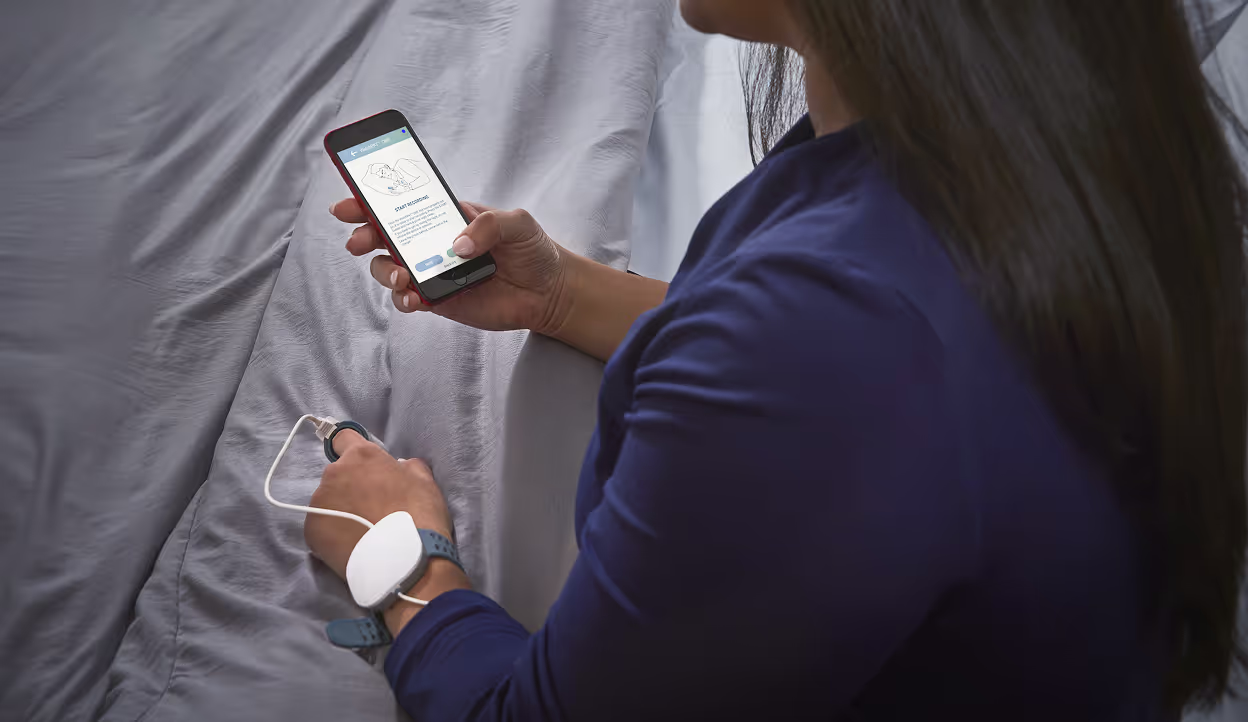



Home Sleep Apnea Test in Round Rock, Texas: The Complete Guide to At-Home Sleep Testing
A home sleep apnea test in Round Rock, Texas lets you screen for obstructive sleep apnea from your own bed, without spending a night in a sleep lab. According to the American Academy of Sleep Medicine, home sleep testing has become the preferred first-line diagnostic tool for adults with a moderate to high suspicion of obstructive sleep apnea. This guide is for Round Rock residents, commercial drivers, and anyone in the greater Austin area who suspects they may have sleep apnea but wants a convenient, affordable path to diagnosis and treatment. You will learn how at-home sleep tests work, what they measure, how results are interpreted by a physician, what treatment options follow a positive diagnosis, and how to access testing near you without insurance barriers. Every section is designed to help you make a confident, informed decision about your sleep health.
Quick Answer
A home sleep apnea test in Round Rock, Texas is a portable diagnostic device you wear for one night in your own bed. It records oxygen saturation, heart rate, airflow, and respiratory effort to determine whether you have obstructive sleep apnea. Results are reviewed by a physician who then recommends treatment such as CPAP therapy or an oral appliance. dumbo.health offers a home sleep test for $149 with no insurance required, shipped directly to patients in Round Rock and throughout Texas.
Key Takeaways
- A home sleep apnea test measures oxygen levels, heart rate, airflow, and breathing patterns during one night of sleep at home.
- The Apnea/Hypopnea Index (AHI) is the primary metric physicians use to diagnose obstructive sleep apnea severity.
- Home sleep testing is clinically validated for adults with suspected obstructive sleep apnea but is not appropriate for diagnosing central sleep apnea, narcolepsy, or parasomnias.
- dumbo.health provides a home sleep test for a one-time cost of $149 with physician interpretation starting at $59 per month through the Essentials Plan.
- Round Rock residents can complete testing without visiting a sleep lab, hospital, or specialist office.
- Untreated sleep apnea increases cardiovascular risk, and the National Heart, Lung, and Blood Institute links it to high blood pressure, heart disease, and stroke.
What Is a Home Sleep Apnea Test and How Does It Work
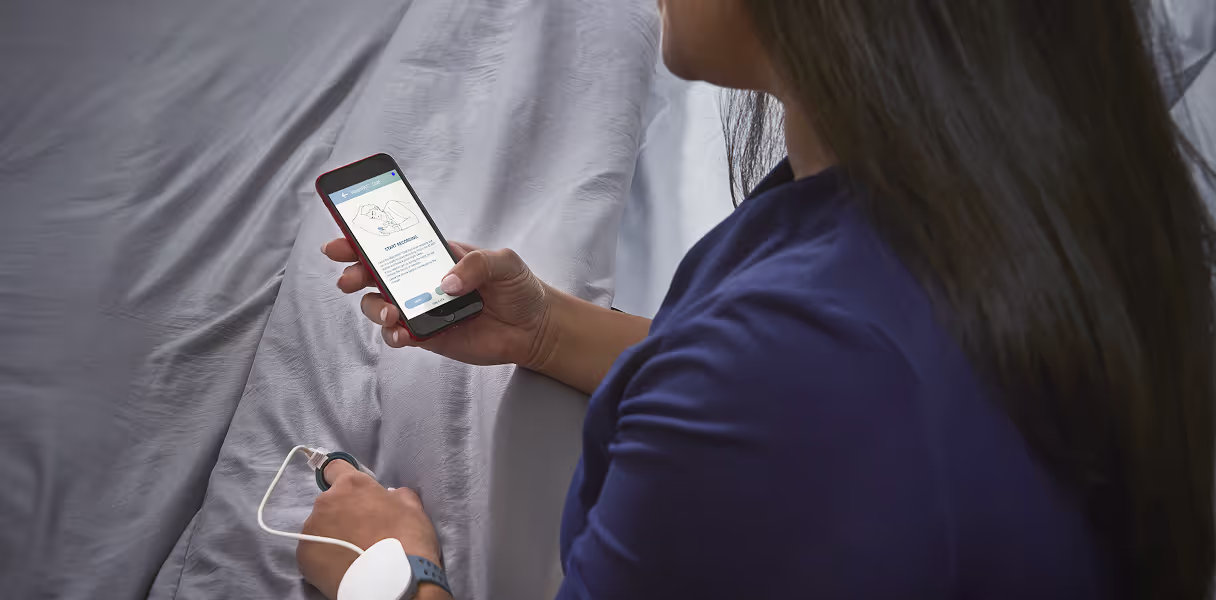
A home sleep apnea test is a portable medical device that records your breathing, oxygen saturation, and heart rate while you sleep in your own bed. It provides the data a physician needs to diagnose or rule out obstructive sleep apnea without requiring an overnight stay in a sleep lab.
What the Device Measures
Home sleep testing devices use several sensors to capture critical sleep data during a single night. The specific markers recorded include:
- Oxygen saturation, measured through photoplethysmography via a finger sensor
- Heart rate and pulse rate variations throughout the night
- Airflow through a nasal cannula or pressure transducer
- Respiratory effort, tracked by a chest belt or abdominal sensor
- Body position and movement, detected by an actigraph or built-in accelerometer
Some advanced devices like the WatchPat use peripheral arterial tonometry to measure arterial tone changes at the fingertip. The NightOwl Home Sleep Test uses a compact finger sensor based on photoplethysmography to capture oxygen levels, heart rate, and actigraph data in a single device.
Unlike a full polysomnography study conducted in a sleep laboratory, home sleep tests do not measure brain waves, brain activity, or leg movements. This means they cannot detect conditions such as narcolepsy, restless legs syndrome, parasomnias, or central sleep apnea. However, for the specific purpose of diagnosing obstructive sleep apnea in adults, home sleep tests are clinically validated and widely accepted.
How Results Are Generated
After you wear the device for one night, the recorded sleep data is uploaded and analyzed. A physician reviews the data and calculates your Apnea/Hypopnea Index, which counts the average number of apneas (complete airway blockages) and hypopneas (partial airway reductions) per hour of recorded sleep.
The American Academy of Sleep Medicine classifies obstructive sleep apnea severity based on the AHI:
- Normal: fewer than 5 events per hour
- Mild: 5 to 14 events per hour
- Moderate: 15 to 29 events per hour
- Severe: 30 or more events per hour
A physician interpretation report includes your AHI score, oxygen desaturation data, heart rate patterns, and a clinical recommendation. This report becomes the basis for any treatment plan, whether that involves CPAP therapy, an oral appliance, or further evaluation.
DID YOU KNOW: According to the American Sleep Apnea Association, an estimated 80 percent of moderate and severe obstructive sleep apnea cases remain undiagnosed. Home sleep testing removes one of the biggest barriers to diagnosis by eliminating the need for an overnight sleep lab visit.
KEY TAKEAWAY: A home sleep apnea test records oxygen saturation, airflow, heart rate, and respiratory effort during one night of sleep, and a physician uses this data to calculate your AHI score and determine whether you have obstructive sleep apnea.
Understanding what a home sleep test measures helps you evaluate whether it fits your situation, which leads to the question of who should consider testing.
Who Should Get a Home Sleep Apnea Test in Round Rock
Adults in Round Rock, Texas who have symptoms of obstructive sleep apnea are the primary candidates for home sleep testing. The test is most appropriate when a physician or healthcare practitioner suspects obstructive sleep apnea based on symptoms, physical characteristics, or screening questionnaires.
Common Symptoms That Warrant Testing
If you experience several of the following symptoms regularly, a home sleep apnea test may be the right next step:
- Loud, chronic snoring that disrupts your sleep or your partner's sleep
- Waking up gasping for breath or choking during the night
- Excessive daytime fatigue despite sleeping 7 or more hours
- Morning headaches that resolve within a few hours of waking
- Difficulty concentrating or experiencing memory problems
- Observed pauses in breathing during sleep, reported by a bed partner
- Sleep anxiety or restless sleep behavior through the night
The Sleep Foundation notes that risk factors for obstructive sleep apnea include a BMI of 30 or higher, a neck circumference greater than 17 inches in men or 16 inches in women, age over 40, and a family history of the condition. Anatomical features such as a large uvula, enlarged soft palette, or narrow airway also increase risk.
Who Should Not Use a Home Sleep Test
Home sleep testing is not appropriate for every sleep disorder. If your doctor suspects central sleep apnea, narcolepsy, restless leg syndrome, or parasomnias, a full in-lab polysomnography study is needed because those conditions require measurement of brain waves, brain activity, and leg movements that home devices do not capture.
Patients with significant heart failure, chronic obstructive pulmonary disease, or neuromuscular conditions may also need in-lab testing. A primary care provider or sleep doctor can help determine which type of study is right for you based on your medical condition and clinical history.
IMPORTANT: A home sleep apnea test is designed specifically for diagnosing obstructive sleep apnea. It does not screen for central sleep apnea, narcolepsy, insomnia, restless legs syndrome, or other sleep disorders that require polysomnography.
KEY TAKEAWAY: Home sleep apnea testing is appropriate for adults with symptoms of obstructive sleep apnea such as snoring, daytime fatigue, and witnessed breathing pauses, but it is not suitable for diagnosing central sleep apnea, narcolepsy, or parasomnias.
Knowing whether you qualify for home sleep testing leads to the practical question of how to actually get tested in Round Rock.
How to Get a Home Sleep Apnea Test in Round Rock, Texas
Getting a home sleep apnea test in Round Rock starts with either a physician referral or a direct-access testing service, and the entire process can be completed without visiting a sleep lab or hospital. Round Rock residents have multiple pathways to access testing, ranging from local sleep specialists and primary care providers to telehealth platforms.
Ordering Through dumbo.health
One of the most direct paths for Round Rock residents is ordering through dumbo.health. The process eliminates insurance paperwork, prior authorizations, and scheduling delays.
Step-by-Step Process for Getting Tested
1. Complete the free sleep assessment at dumbo.health to evaluate your symptoms and risk factors.
2. Order your home sleep test for a one-time cost of $149 with no insurance required.
3. Receive the FDA-cleared device at your Round Rock address, with clear instructions for a single night of testing.
4. Wear the device to bed, following the included setup guide to attach the finger sensor, nasal cannula, and chest belt (depending on the device model).
5. Return the device using the prepaid shipping label after your test night.
6. A physician reviews your sleep data and generates your results, including your AHI score and oxygen saturation findings.
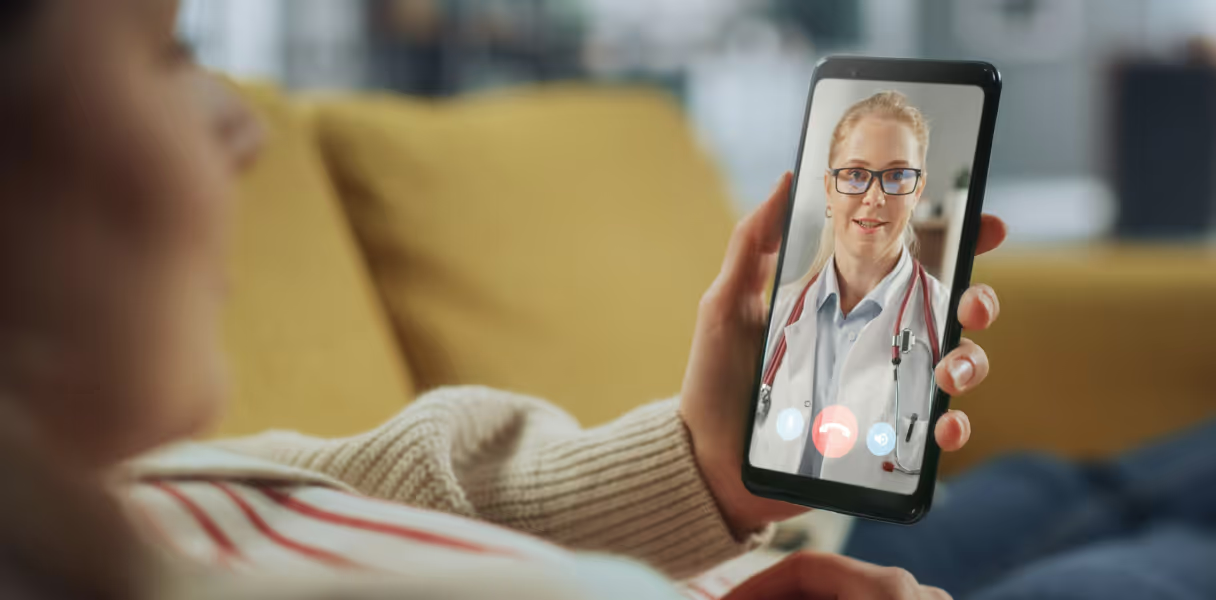
7. Schedule a telehealth consultation to discuss your diagnosis and treatment options through your chosen dumbo.health plan.
After completing these steps, you will have a physician-reviewed diagnosis and a clear path to treatment. Most patients receive results within days of returning their device, and treatment can begin immediately through a monthly plan starting at $59 per month.
Other Local Options in Round Rock and Austin
Round Rock is part of the greater Austin, TX metropolitan area, giving residents access to several medical facilities. St. David's Round Rock Medical Center is a nearby hospital that offers sleep medicine services. Local pulmonology and sleep center practices in the Round Rock and Austin area may also provide referrals for home sleep testing or in-lab polysomnography.
However, in-lab testing typically involves longer wait times for an appointment, higher costs, and the requirement to spend a night in a sleep laboratory. For patients specifically seeking convenience and transparent pricing, direct-access home sleep testing through platforms like dumbo.health removes those barriers.
If you are looking for sleep apnea testing near you and want to avoid the typical delays of scheduling through a hospital or sleep center, a telehealth-supported home sleep test may be the fastest option available in your area.
KEY TAKEAWAY: Round Rock residents can order a home sleep apnea test through dumbo.health for $149 without insurance, receive the device at home, complete testing in one night, and get physician-reviewed results without visiting a sleep lab or hospital.
Once you understand how to access testing, preparing properly for your test night makes a significant difference in result accuracy.
How to Prepare for Your Home Sleep Test Night
Proper preparation improves the accuracy of your home sleep test results. Small choices about your evening routine and device setup directly affect the quality of data recorded.
Preparation Checklist
- Avoid alcohol for at least 4 hours before bedtime, as it relaxes airway muscles and can artificially worsen results
- Avoid caffeine after noon on your test day to help you fall asleep at your normal time
- Skip naps during the day so you are naturally tired at bedtime
- Remove nail polish or artificial nails from the finger where the oxygen sensor will be placed, since photoplethysmography requires clear light transmission through the nail bed
- Follow your normal sleep routine, including your usual bedtime, pillow arrangement, and sleep position
- Charge the device fully (if required) before attaching sensors
- Read all instructions provided with the device before beginning setup
- Set up the device in a well-lit area first, then move to your bedroom once sensors are properly positioned
- Sleep alone if possible, to reduce movement disruptions that could affect data quality
- Keep your phone on silent to avoid interruptions during the recording period
- Complete the Home Sleep Test Consent Form if one was provided with your order
The goal is to capture a typical night of sleep. If the test night is unusual due to illness, travel fatigue, or significant stress, it may be worth discussing a retest with your physician.
TIP: If you find the nasal cannula uncomfortable, try adjusting the tubing behind your ears rather than under your chin. Comfort during sleep increases the likelihood of a full recording period, which gives your physician better data to work with.
KEY TAKEAWAY: Removing nail polish, avoiding alcohol and caffeine, and following your normal sleep routine are the most important preparation steps to ensure accurate home sleep test results.
After your test night, the next question is what happens with your results and what they actually mean.
Understanding Your Home Sleep Apnea Test Results
Your home sleep apnea test results center on the Apnea/Hypopnea Index, which is the single most important number in your report. A physician interprets your AHI alongside oxygen saturation patterns, heart rate data, and respiratory effort measurements to reach a diagnosis.
What Your AHI Score Means
The AHI measures how many times per hour your breathing was partially or completely disrupted during sleep. Each event must last at least 10 seconds to be counted. A higher AHI indicates more frequent airway obstruction.
AHI Score Classification
Severity Level
- Normal: fewer than 5 events per hour
- Mild obstructive sleep apnea: 5 to 14 events per hour
- Moderate obstructive sleep apnea: 15 to 29 events per hour
- Severe obstructive sleep apnea: 30 or more events per hour
Treatment Recommendation
- Normal: no treatment needed unless symptoms persist
- Mild: lifestyle changes, positional therapy, or oral appliance therapy may be recommended
- Moderate: CPAP therapy is typically recommended
- Severe: CPAP therapy is the standard first-line treatment
Oxygen Desaturation and Blood Oxygen Levels
Your report will also show your blood oxygen level patterns throughout the night. Normal oxygen saturation during sleep stays above 90 percent. Repeated drops below 88 percent are clinically significant and correlate with increased cardiovascular risk.
The National Heart, Lung, and Blood Institute states that chronic oxygen desaturation during sleep contributes to high blood pressure, irregular heart rhythms, and increased risk of heart attack and stroke. This is why oxygen saturation data is a critical part of your results beyond the AHI score alone.
Physician Interpretation and Next Steps
A raw data report alone is not a diagnosis. A physician must review the sleep data, consider your symptoms and medical history, and provide a clinical interpretation. With dumbo.health, physician interpretation is included in all monthly plans, starting at $59 per month through the Essentials Plan. The Premium Plan at $89 per month adds dedicated sleep coach support and priority results turnaround, which many patients in Round Rock find valuable when they want faster answers and ongoing guidance.
Home sleep apnea test results provide the clinical basis for treatment decisions. The AHI score determines the severity of obstructive sleep apnea. Oxygen saturation data reveals the cardiovascular impact of breathing disruptions during sleep. Together, these metrics give a physician the information needed to recommend the most appropriate treatment pathway.
KEY TAKEAWAY: Your AHI score and oxygen saturation data are the two most critical components of your home sleep test results, and a physician must interpret them together to provide an accurate diagnosis and treatment recommendation.
With a diagnosis in hand, understanding your treatment options becomes the immediate next step.
Treatment Options After a Positive Sleep Apnea Diagnosis
CPAP therapy is the gold standard treatment for moderate to severe obstructive sleep apnea. After a positive home sleep test result, your physician will recommend a treatment plan based on your AHI score, oxygen levels, and overall medical condition.
CPAP Therapy
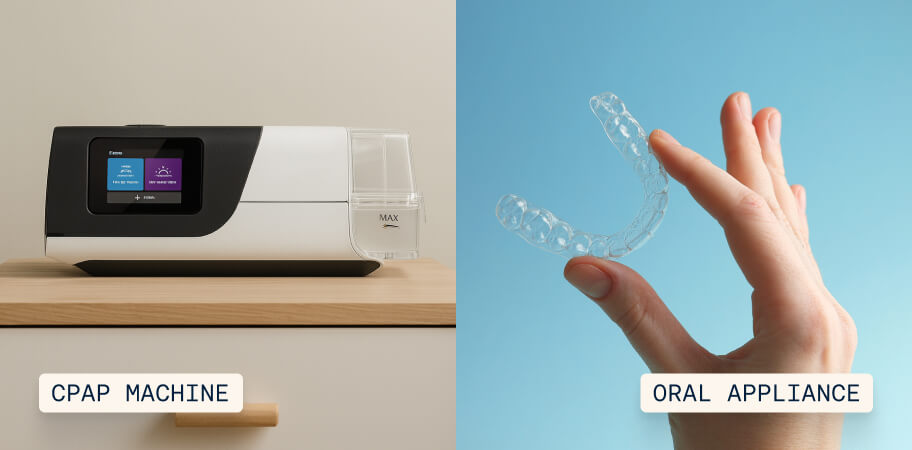
CPAP stands for continuous positive airway pressure. A CPAP machine delivers a steady stream of pressurized air through a mask worn during sleep. This air pressure keeps your airway open, preventing the collapses that cause apnea and hypopnea events.
According to the American Academy of Sleep Medicine, CPAP therapy reduces AHI to normal levels in most patients when used consistently. The standard recommendation is to use the CPAP machine for at least 4 hours per night on at least 70 percent of nights. Adherence to this threshold is also required for commercial drivers who need to maintain DOT medical certification.
dumbo.health includes CPAP therapy and equipment in all monthly care plans. The Essentials Plan at $59 per month covers CPAP machines, standard follow-up care, and physician oversight. The Premium Plan at $89 per month adds a dedicated sleep coach from a licensed care team who helps you adjust to therapy, troubleshoot mask comfort issues, and maintain adherence. For patients who want concierge-level support, the Elite Plan at $129 per month includes direct physician messaging and custom reporting.
Oral Appliance Therapy
For mild to moderate obstructive sleep apnea, or for patients who cannot tolerate CPAP machines, oral appliance therapy is an alternative. An oral appliance is a custom-fitted mouthguard worn during sleep that repositions the lower jaw and tongue to keep the airway open.
Oral appliance therapy is typically prescribed through dental sleep medicine providers. A dental office specializing in this area can create a custom device. While oral appliances are effective for many patients with mild sleep apnea, they are generally less effective than CPAP for moderate to severe cases.
Lifestyle and Positional Changes
Weight loss, positional therapy (avoiding sleeping on your back), and reducing alcohol intake can improve mild obstructive sleep apnea symptoms. However, these approaches are rarely sufficient as standalone treatments for moderate or severe cases. They work best as supplements to CPAP therapy or oral appliance therapy.
Surgical Options
Surgical treatment options exist for patients with specific anatomical obstructions, such as an enlarged uvula or soft palette tissue. Surgery is typically considered only after CPAP therapy and oral appliance therapy have been tried and either failed or proven intolerable. Surgical consultation usually involves a referral to a pulmonology or ENT specialist.
KEY TAKEAWAY: CPAP therapy is the most effective treatment for moderate to severe obstructive sleep apnea, and dumbo.health includes CPAP equipment and physician-supervised care in monthly plans starting at $59 per month with no contracts.
Choosing the right treatment leads naturally to the question of cost, which is one of the biggest concerns for patients in Round Rock.
Cost of Home Sleep Testing and Treatment in Round Rock
A home sleep apnea test through dumbo.health costs $149 as a one-time payment with no insurance required. This is significantly lower than the cost of in-lab polysomnography, which often exceeds $1,000 even with insurance coverage.
Home Sleep Test vs. In-Lab Sleep Study: Cost Comparison
Cost
- Home Sleep Apnea Test (dumbo.health): $149 one-time
- In-Lab Polysomnography: $1,000 to $3,000 or more depending on facility and insurance
Insurance Required
- Home Sleep Apnea Test (dumbo.health): No
- In-Lab Polysomnography: Usually yes, often with prior authorization
Out-of-Pocket Surprise Bills
- Home Sleep Apnea Test (dumbo.health): None, transparent pricing
- In-Lab Polysomnography: Common, especially with high-deductible plans
Setting
- Home Sleep Apnea Test (dumbo.health): Your own bed at home
- In-Lab Polysomnography: Sleep laboratory or hospital
Wait Time for Appointment
- Home Sleep Apnea Test (dumbo.health): No appointment needed, order online
- In-Lab Polysomnography: Often weeks to months for scheduling
Turnaround for Results
- Home Sleep Apnea Test (dumbo.health): Days after device return
- In-Lab Polysomnography: 1 to 3 weeks typical
Ongoing Treatment Costs
Monthly treatment plans through dumbo.health cover physician oversight, CPAP equipment, and follow-up care. The pricing structure is straightforward:
- Essentials Plan: $59 per month (approximately $2 per day)
- Premium Plan: $89 per month (approximately $3 per day), includes a dedicated sleep coach and advanced adherence monitoring
- Elite Plan: $129 per month (approximately $4 per day), includes concierge clinical support and direct physician messaging
All plans are contract-free. You can cancel anytime. There are no prior authorizations, no surprise bills, and no insurance paperwork.
Why Cash-Pay Testing Makes Sense in Round Rock
Many Round Rock residents have high-deductible health plans that effectively make sleep testing an out-of-pocket expense regardless. When your deductible is $2,000 or more, the $149 cost of a home sleep test through dumbo.health is often less than what you would pay toward your deductible for an in-lab study. And you avoid the scheduling delays, facility fees, and billing surprises that come with insurance-based testing.
KEY TAKEAWAY: A home sleep apnea test through dumbo.health costs $149 with no insurance needed, compared to $1,000 or more for in-lab polysomnography, and monthly treatment plans start at $59 with no contracts and no surprise bills.
Cost clarity is essential, but so is understanding when home sleep testing may not be the right choice.
Limitations and Risks of Home Sleep Apnea Testing
Home sleep apnea testing is highly effective for diagnosing obstructive sleep apnea, but it is not a universal diagnostic tool. Understanding its limitations helps you make an informed decision and ensures you receive the right type of study for your situation.
Conditions Home Sleep Tests Cannot Diagnose
Home sleep tests do not measure brain waves or brain activity. This means they cannot diagnose:
- Central sleep apnea, which involves the brain failing to send proper signals to breathing muscles rather than a physical airway obstruction
- Narcolepsy, a neurological condition that requires measurement of REM sleep latency
- Parasomnias such as sleepwalking or REM sleep behavior disorder
- Restless legs syndrome and periodic limb movement disorder, which require leg movement sensors (electromyography) only available in a sleep laboratory
- Insomnia-related sleep architecture disruptions
If your physician suspects any of these conditions, a full polysomnography study in a sleep lab is the appropriate diagnostic test.
Data Quality Risks
A home sleep test relies on you correctly applying the sensors and sleeping in a reasonably normal manner. Potential data quality issues include:
- Sensor displacement during sleep, especially the nasal cannula or finger sensor
- Insufficient sleep duration (less than 4 hours of recorded data may produce unreliable results)
- Mouth breathing that is not captured by a nasal-only airflow sensor
- An unusually restless night due to illness, anxiety, or environmental disruption
If data quality is poor, a retest may be needed. dumbo.health's care plans include physician review of data quality, and the Premium Plan provides sleep coach support to help troubleshoot any issues with device setup or data collection.
False Negatives
Home sleep tests can underestimate AHI in some cases because they measure recording time rather than actual sleep time. A patient who lies awake for 2 hours with the device on will have a lower calculated AHI because those waking hours dilute the event count. This is why the American Academy of Sleep Medicine recommends that borderline results be followed up with in-lab polysomnography when clinical suspicion remains high.
When to Choose an In-Lab Study Instead
You may need a full in-lab polysomnography study if:
- Your physician suspects central sleep apnea or a non-respiratory sleep disorder
- You have significant comorbidities such as congestive heart failure, severe COPD, or neuromuscular disease
- Your home sleep test results are negative but your symptoms are severe
- You need a split-night study where diagnosis and CPAP titration happen in the same night
IMPORTANT: A negative home sleep test result does not definitively rule out sleep apnea if you have significant symptoms. Discuss borderline or negative results with your physician, especially if you continue to experience daytime fatigue, snoring, or waking up gasping for breath.
KEY TAKEAWAY: Home sleep testing is clinically validated for obstructive sleep apnea but cannot diagnose central sleep apnea, narcolepsy, or parasomnias, and results should be reviewed by a physician who can determine if further testing is needed.
Understanding these limitations puts you in a stronger position to evaluate what a home sleep test can and cannot do, which brings us to how real patients in Round Rock navigate this process.
Real-World Scenarios: Home Sleep Testing in Round Rock
Seeing how other people in similar situations have navigated home sleep testing makes the process more concrete. The following scenarios reflect common patient profiles that physicians and sleep specialists encounter regularly.
Scenario 1: A 48-Year-Old Office Worker With Chronic Snoring
A 48-year-old office worker living near the Round Rock Outlet Mall area has been told by his partner for years that his snoring is disruptive. He experiences daytime fatigue, drinks 4 cups of coffee before noon, and has a BMI of 32. His primary care provider recommends sleep apnea testing but the nearest sleep center has a 6-week wait for an appointment.
He orders a home sleep test through dumbo.health for $149, receives the device within days, and completes the test on a Tuesday night. His results show an AHI of 22, indicating moderate obstructive sleep apnea with oxygen saturation drops to 84 percent. His physician recommends CPAP therapy. He enrolls in the Premium Plan at $89 per month, which includes a CPAP machine, a dedicated sleep coach, and priority results turnaround. Within two weeks of his test night, he is sleeping with CPAP and reporting improved energy by the end of his first month.
Scenario 2: A 55-Year-Old Commercial Driver Needing DOT Clearance
A 55-year-old owner-operator based in Austin, TX drives through Round Rock regularly. During his DOT physical, the examining physician flags his neck circumference of 18 inches and BMI of 38, recommending a sleep apnea test for CDL drivers. He needs results quickly to maintain his medical certification and cannot afford extended downtime.
He completes the dumbo.health free sleep assessment and orders his home sleep test. His AHI comes back at 34, indicating severe obstructive sleep apnea. He starts CPAP therapy through the Essentials Plan at $59 per month. His provider receives an update confirming his diagnosis and treatment compliance, and his DOT certification process moves forward without the delays that an in-lab sleep study would have caused.
Scenario 3: A 37-Year-Old Woman With Sleep Anxiety and Fatigue
A 37-year-old woman in Round Rock has struggled with sleep anxiety and persistent fatigue for over a year. She assumed her symptoms were related to stress and insomnia. Her doctor suspects she may have mild obstructive sleep apnea contributing to poor sleep quality and refers her for testing.
She prefers to avoid a hospital or sleep lab environment, which she feels would worsen her sleep anxiety. She orders a home sleep test and completes it in the comfort of her own bed. Her AHI is 8, confirming mild obstructive sleep apnea. Her physician discusses both oral appliance therapy and CPAP as treatment options. She opts for a consultation to explore which approach best fits her sleep patterns and comfort preferences.
KEY TAKEAWAY: Home sleep testing fits a wide range of patient profiles, from commercial drivers who need fast DOT clearance to office workers with chronic snoring and adults whose fatigue has gone undiagnosed for years.
These real-world scenarios show the range of people who benefit from home testing, but persistent myths still prevent many people from getting tested.
Common Myths About Home Sleep Apnea Tests Debunked
MYTH: Home sleep tests are not as accurate as in-lab sleep studies.
FACT: For diagnosing obstructive sleep apnea, home sleep tests are clinically validated and recommended by the American Academy of Sleep Medicine as a first-line diagnostic tool for adults with moderate to high pretest probability. The accuracy for detecting moderate to severe obstructive sleep apnea is well-established, though home tests do not replace polysomnography for conditions involving brain activity or central sleep apnea.
MYTH: You need a doctor's referral to get a home sleep apnea test.
FACT: While many insurance-based pathways require a referral, cash-pay services like dumbo.health allow you to order a home sleep test directly for $149 without a referral or prior authorization. A physician still reviews and interprets your results as part of the care pathway.
MYTH: Sleep apnea only affects overweight men.
FACT: According to the National Heart, Lung, and Blood Institute, sleep apnea affects people of all body types, genders, and ages. Women are frequently underdiagnosed because their symptoms often present as insomnia, fatigue, or mood disturbance rather than classic snoring. Post-menopausal women have a significantly higher risk than pre-menopausal women.
MYTH: If you snore, you definitely have sleep apnea.
FACT: Snoring is a common symptom of obstructive sleep apnea, but not everyone who snores has sleep apnea. Snoring can result from nasal congestion, alcohol use, sleep position, or anatomical factors without any apneic events. A home sleep test measures actual breathing disruptions and oxygen desaturation, which is the only way to confirm or rule out a diagnosis.
MYTH: CPAP therapy is uncomfortable and most people quit within a month.
FACT: While initial adjustment to a CPAP machine takes time, adherence rates improve significantly with proper support. The American Academy of Sleep Medicine reports that patients who receive coaching and follow-up care are more likely to maintain consistent use. dumbo.health's Premium Plan includes a dedicated sleep coach specifically to help patients adjust to CPAP therapy and stay on track.
KEY TAKEAWAY: Home sleep tests are clinically validated for obstructive sleep apnea, do not always require a referral, and sleep apnea affects people of all body types and genders, making testing important for anyone with persistent symptoms.
Now that these myths are cleared up, here is what to take away from this entire guide.
Conclusion
Home sleep apnea testing gives Round Rock, Texas residents a fast, affordable, and clinically validated path to diagnosing obstructive sleep apnea. Whether your symptoms include chronic snoring, daytime fatigue, or waking up gasping for breath, a single night of testing at home can provide the answers you need. The test measures oxygen saturation, airflow, heart rate, and respiratory effort, and a physician reviews the data to determine your AHI score and recommend treatment.
If you are ready to take the next step, dumbo.health offers a home sleep test for $149 with no insurance required and no surprise bills. Monthly care plans that include CPAP therapy and physician oversight start at $59 per month with no contracts. You can cancel anytime.
Frequently Asked Questions About Home Sleep Apnea Test in Round Rock, Texas
What is a home sleep apnea test?
A home sleep apnea test (HSAT) is an FDA-cleared diagnostic tool that allows patients to test for obstructive sleep apnea in their own home rather than spending a night in a sleep lab. The device typically records key measurements such as oxygen saturation, heart rate, breathing patterns, and respiratory effort while you sleep. A physician then reviews the recorded sleep data and interprets the results. Home sleep testing is widely recommended by the American Academy of Sleep Medicine as an appropriate first step for patients with a moderate to high likelihood of obstructive sleep apnea. Learn more at at-home sleep apnea testing.
What is obstructive sleep apnea?
Obstructive sleep apnea (OSA) is a medical condition in which the upper airway repeatedly collapses or becomes blocked during sleep, causing breathing to pause temporarily. These interruptions reduce blood oxygen levels and fragment sleep, often leading to loud snoring, waking up gasping for breath, and significant daytime fatigue. According to the American Academy of Sleep Medicine, OSA is one of the most common sleep disorders, yet a large proportion of cases remain undiagnosed. If you experience symptoms such as persistent snoring, fatigue, or disrupted sleep, a healthcare professional can help determine whether sleep apnea testing is appropriate.
How is central sleep apnea different from obstructive sleep apnea?
Obstructive sleep apnea occurs when the airway physically collapses or becomes blocked during sleep. Central sleep apnea is different because the airway itself is not obstructed. Instead, the brain temporarily fails to send the correct signals to the muscles that control breathing. Central sleep apnea is less common and is often linked to other medical conditions such as heart failure or neurological disorders. Because the two conditions have different causes and treatment approaches, a physician review of sleep test results is important for distinguishing between them and guiding appropriate care.
How is insomnia diagnosed and treated?
Insomnia is diagnosed when a person has persistent difficulty falling asleep, staying asleep, or waking too early, and this disruption affects daytime functioning. It can be short-term, often triggered by stress or illness, or chronic, lasting three months or longer. According to the National Institutes of Health, cognitive behavioural therapy for insomnia (CBT-I) is considered the first-line treatment. Medications may also be used in some cases, including prescription sleep aids or over-the-counter options, but these carry risks and should only be used under clinician guidance. A healthcare professional can evaluate whether insomnia is the primary issue or whether another sleep disorder such as sleep apnea may be contributing.
What is narcolepsy and how is it diagnosed?
Narcolepsy is a chronic neurological sleep disorder characterised by excessive daytime sleepiness, sudden muscle weakness triggered by emotions, sleep paralysis, and hallucinations when falling asleep or waking. The Mayo Clinic explains that narcolepsy results from the brain's inability to regulate sleep-wake cycles normally. Diagnosis typically requires a formal evaluation by a sleep specialist, including an overnight polysomnography sleep study followed by a multiple sleep latency test the next day. Because narcolepsy shares symptoms with other sleep disorders including sleep apnea, a thorough clinical assessment is essential before any treatment decisions are made.
How is narcolepsy treated?
Narcolepsy cannot be cured, but symptoms can be managed with a combination of medication and lifestyle adjustments. Treatment may include stimulant medications to reduce excessive daytime sleepiness, sodium oxybate to improve nighttime sleep quality and reduce cataplexy, or antidepressants to address certain narcolepsy symptoms. Scheduled naps during the day can also help manage sleepiness. Because narcolepsy is a complex chronic condition, treatment decisions should always be guided by a sleep specialist or qualified healthcare professional. If you are experiencing significant daytime fatigue or uncontrolled sleepiness, speak with a clinician to determine whether a formal sleep evaluation is appropriate.
Why would I need home sleep testing?
Home sleep testing may be appropriate if you have symptoms consistent with obstructive sleep apnea, such as loud snoring, waking up gasping for breath, frequent nighttime waking, or persistent daytime fatigue. A healthcare professional can help assess whether home sleep testing is suitable based on your symptoms, medical history, and risk factors. Home sleep tests are generally not appropriate for patients suspected of having central sleep apnea, significant heart or lung conditions, or other complex sleep disorders that require a full in-lab polysomnography. If you are unsure whether a home sleep test is right for you, starting with a free sleep assessment can help clarify your next steps.
What should I expect during home sleep testing?
During a home sleep test, you wear a small device while sleeping in your own bed. The device typically uses sensors to record oxygen saturation, heart rate, airflow, respiratory effort, and sometimes blood oxygen level throughout the night. Depending on the device, some use photoplethysmography or peripheral arterial tonometry technology to capture sleep data. Setup is generally straightforward and guided by instructions provided with the device. You return or upload the device data after your test night, and a physician reviews the results. The experience is designed to be comfortable and minimally disruptive to your normal sleep environment.
What does the $149 home sleep test from dumbo.health include?
The dumbo.health home sleep test is a one-time $149 purchase that includes the at-home sleep test device and one test night of monitoring. This is a cash-pay option with no insurance required, no prior authorizations, and no surprise bills. The $149 home sleep test is purchased separately from monthly care plans. After testing, ongoing care including physician interpretation and report, CPAP therapy and equipment, and adherence follow-up is available through monthly plans starting at $59 per month. No contracts are required and plans can be cancelled at any time. Learn more about the home sleep test.
What measurements does the home sleep test record?
A home sleep test typically records several key physiological markers during sleep, including oxygen saturation, blood oxygen level, heart rate, pulse rate, airflow, and respiratory effort. Some devices also monitor body position and movement. These measurements allow a reviewing physician to calculate the Apnea/Hypopnea Index, which reflects the number of breathing interruptions per hour of sleep and is used to assess the presence and severity of obstructive sleep apnea. The specific sensors and data captured may vary by device. Home sleep tests do not record brain waves or brain activity, which is why they are different from a full polysomnography sleep study conducted in a sleep laboratory.
Is a home sleep test as accurate as an in-lab sleep study?
A home sleep test is a validated and FDA-cleared tool for diagnosing obstructive sleep apnea in appropriate patients, but it does have limitations compared to a full polysomnography sleep study. An in-lab sleep study records brain activity, leg movements, and a broader range of vital signs, making it better suited for diagnosing complex sleep disorders such as central sleep apnea, restless legs syndrome, parasomnias, and narcolepsy. The American Academy of Sleep Medicine supports home sleep testing as an appropriate diagnostic approach for patients with a high likelihood of moderate to severe obstructive sleep apnea and no significant complicating conditions. A physician can advise whether a home test or an in-lab study is more appropriate for your situation.
What happens if my home sleep test shows abnormal results?
If your home sleep test results show abnormal findings, such as a significantly elevated Apnea/Hypopnea Index or reduced oxygen saturation, a reviewing physician will typically recommend a treatment pathway. This may include CPAP therapy, oral appliance therapy, or in some cases a referral for further evaluation. An abnormal result does not automatically determine your final diagnosis or treatment plan. A qualified healthcare professional will review your results in the context of your symptoms, medical history, and overall sleep health before making recommendations. If symptoms are severe or you are experiencing urgent health concerns, seek medical care promptly rather than waiting for test results.
Who reviews my home sleep test results?
A licensed physician reviews and interprets your home sleep test data. At dumbo.health, physician interpretation and a formal report are included as part of the monthly care plans that follow the one-time sleep test. The physician assesses the recorded sleep data, calculates key diagnostic markers such as the Apnea/Hypopnea Index, and produces a report that can be shared with your primary care provider or referring healthcare practitioner. This physician-reviewed report supports accurate diagnosis and helps guide treatment decisions including whether CPAP therapy or other interventions are appropriate.
Can I use home sleep test results for a CPAP prescription?
Yes, in many cases physician-reviewed home sleep test results can support a CPAP prescription if obstructive sleep apnea is confirmed. A physician must interpret the sleep data and determine that CPAP therapy is clinically appropriate before a prescription can be issued. At dumbo.health, the ongoing care plans include physician interpretation, reporting, and CPAP therapy and equipment as part of a connected workflow. If you are already a CPAP user and need a new prescription, a healthcare professional should review your current sleep apnea status and treatment needs. Explore CPAP therapy and equipment options to learn more.
When would an in-lab sleep study be needed instead of a home test?
An in-lab polysomnography sleep study is typically recommended when a patient has complex symptoms that cannot be fully assessed by a home sleep test. This includes suspected central sleep apnea, significant heart or lung conditions, neuromuscular disorders, suspected parasomnias, restless legs syndrome, or when a home sleep test has produced inconclusive results. An in-lab study records brain waves, leg movements, and a broader range of physiological data that home devices do not capture. A sleep specialist or sleep physician can advise whether an in-lab study is necessary based on your medical history and symptom profile.
What are parasomnias and what are common examples?
Parasomnias are a category of sleep disorders characterised by abnormal behaviours, movements, emotions, or experiences that occur during sleep or transitions between sleep and wakefulness. Common examples include sleepwalking, night terrors, sleep paralysis, REM sleep behaviour disorder, and confusional arousals. Parasomnias can affect both adults and children and may disrupt sleep quality for the individual and their household. Because parasomnias often require observation of brain activity and movement during sleep, diagnosis typically involves a clinical evaluation and may require a full polysomnography sleep study rather than a home sleep test. A sleep specialist can help assess which diagnostic approach is appropriate.
What are the signs of sleep problems in children?
Sleep problems in children can present differently than in adults. Signs may include difficulty falling asleep at bedtime, frequent night waking, loud snoring, mouth breathing, bed-wetting beyond expected developmental age, unusual movements during sleep, excessive daytime sleepiness, difficulty concentrating at school, and behavioural changes such as hyperactivity or irritability. Conditions such as obstructive sleep apnea, parasomnias, and restless legs syndrome can all affect children. If you notice persistent sleep disruption in your child, a healthcare professional or paediatric sleep specialist can help assess whether a formal evaluation is needed. Healthy sleep habits and a consistent bedtime routine also support better sleep quality in children.
What can parents do to promote healthy sleep in children?
Healthy sleep in children can be supported through consistent routines and a sleep-friendly environment. Practical steps include setting a regular bedtime and wake time, limiting screen time in the hour before bed, keeping the bedroom cool, dark, and quiet, and avoiding stimulating activities close to bedtime. The National Sleep Foundation provides age-specific sleep duration guidelines for children. If a child continues to experience poor sleep quality, excessive daytime fatigue, or symptoms such as snoring despite good sleep hygiene, a healthcare professional should evaluate whether an underlying sleep disorder may be present.
What is oral appliance therapy for sleep apnea?
Oral appliance therapy involves wearing a custom-fitted mouthguard-style device during sleep to reposition the jaw and tongue, which helps keep the airway open and reduces breathing interruptions. It is often considered as an alternative to CPAP therapy for patients with mild to moderate obstructive sleep apnea, or for those who are unable to tolerate continuous positive airway pressure. Oral devices are typically fitted and managed by a dentist with training in dental sleep medicine. The American Academy of Sleep Medicine recognises oral appliance therapy as a valid treatment option. A physician or sleep specialist can help determine whether oral appliance therapy is appropriate for your specific diagnosis and symptom severity.
How fast can I get a home sleep test shipped to Round Rock, Texas?
Orders placed before 2pm CST can qualify for same-day shipping to Round Rock, Texas. dumbo.health ships the home sleep test device directly to your address, allowing you to complete the test in your own home without a clinic visit. The $149 home sleep test includes the device and one test night of monitoring. For patients in the Round Rock and Austin, TX area who want to avoid a sleep lab appointment, at-home testing offers a convenient and time-efficient option. You can order your at-home sleep test directly through the dumbo.health platform.
Do I need insurance to get a home sleep test in Round Rock, Texas?
No, insurance is not required to access home sleep testing through dumbo.health. dumbo.health operates as a cash-pay platform with transparent pricing, no prior authorizations, and no surprise bills. The home sleep test is $149 as a one-time purchase, and ongoing care plans start at $59 per month. This can be a practical option for patients in Round Rock and the broader Austin, TX area who want to avoid insurance delays or need testing outside of a traditional sleep center or hospital system. A healthcare professional can still help you determine whether home sleep testing is clinically appropriate for your situation.
What is the Apnea/Hypopnea Index and why does it matter?
The Apnea/Hypopnea Index (AHI) is the primary metric used to assess the severity of obstructive sleep apnea. It represents the average number of apnea and hypopnea events, meaning breathing pauses and partial obstructions, per hour of sleep. According to the American Academy of Sleep Medicine, an AHI of fewer than 5 events per hour is generally considered normal, 5 to 14 is mild, 15 to 29 is moderate, and 30 or more is severe. The AHI is calculated from the sleep data recorded during a home sleep test or polysomnography study and is reviewed by a physician to inform diagnosis and treatment decisions including whether CPAP therapy is recommended.
What is CPAP therapy and how does it work?
Continuous positive airway pressure (CPAP) therapy is the most widely recommended treatment for moderate to severe obstructive sleep apnea. A CPAP machine delivers a steady stream of pressurised air through a mask worn during sleep, which keeps the airway open and prevents the breathing interruptions that characterise sleep apnea. According to the National Heart, Lung, and Blood Institute (NHLBI), CPAP therapy can reduce daytime fatigue, improve sleep quality, and lower associated health risks when used consistently. CPAP adherence, meaning regular nightly use, is important for achieving meaningful benefit. A physician or sleep specialist should guide CPAP setup, pressure settings, and ongoing monitoring.
What is included in the dumbo.health monthly care plans?
The dumbo.health monthly care plans are designed to support ongoing sleep apnea care after the initial home sleep test. The Essentials plan at $59 per month includes physician interpretation and report, CPAP therapy and equipment, standard follow-up care, and updates sent to your referring provider. The Premium plan at $89 per month adds a dedicated sleep coach from a licensed care team, advanced adherence monitoring, and priority results turnaround. The Elite plan at $129 per month includes concierge clinical support, direct physician messaging, and custom reporting. All plans are no-contract and can be cancelled at any time. Explore sleep apnea care solutions to compare options.
Why does CPAP adherence matter for sleep apnea treatment?
CPAP adherence refers to how consistently and correctly a patient uses their CPAP machine each night. Research consistently shows that the clinical benefits of CPAP therapy, including reduced daytime fatigue, improved oxygen saturation, and lower cardiovascular risk, depend heavily on regular use. Many insurers and clinical guidelines use adherence data to assess whether CPAP therapy is effective for a given patient. Poor adherence is one of the most common challenges in sleep apnea treatment. Ongoing support through adherence monitoring, sleep coaching, and follow-up care can help patients identify and address comfort, equipment, or behavioural barriers to consistent CPAP use.
How does home sleep apnea testing differ from polysomnography?
A home sleep apnea test records a targeted set of measurements including oxygen saturation, heart rate, airflow, and respiratory effort while the patient sleeps at home. Polysomnography is a comprehensive in-lab sleep study that additionally records brain waves, eye movements, leg movements, and a wider range of physiological signals. Polysomnography is considered the gold standard for diagnosing complex sleep disorders, while home sleep testing is validated for diagnosing obstructive sleep apnea in patients who are appropriate candidates. The American Academy of Sleep Medicine supports both approaches for appropriate clinical indications. A physician can advise which test is suitable based on your symptoms and medical history. Learn more about home sleep study options.
Where can I find sleep apnea testing and care near Round Rock, Texas?
Patients in Round Rock and the broader Austin, TX area can access at-home sleep apnea testing without visiting a sleep lab or hospital. dumbo.health ships the home sleep test device directly to your address in Round Rock, with same-day shipping available for orders placed before 2pm CST. This means patients in the area can complete testing at home, receive a physician-reviewed report, and begin ongoing care including CPAP therapy through a connected platform. If your situation requires an in-lab evaluation or specialist referral, a primary care provider or sleep specialist in your area can guide that process. Get started with a sleep assessment to explore whether at-home testing is appropriate for you.