




Home Sleep Apnea Test in Pharr, Texas: Where to Get Tested and What to Expect
A home sleep apnea test in Pharr, Texas measures your breathing patterns, oxygen levels, and heart rate overnight to determine whether you have obstructive sleep apnea. According to the American Academy of Sleep Medicine, home sleep apnea testing is a validated diagnostic method for adults with a moderate to high pretest probability of obstructive sleep apnea. This guide is written for residents of Pharr and the surrounding Rio Grande Valley who suspect they may have sleep apnea, have been referred for sleep disorder testing, or want to understand their testing options without navigating insurance barriers. You will learn how the test works, what the equipment measures, how results are interpreted by a physician, how costs compare across providers in your area, and what treatment options follow a positive diagnosis. Every section is designed to help you make a confident, informed decision about your sleep health.
Quick Answer
A home sleep apnea test in Pharr, Texas is a portable diagnostic study you complete in your own bed using a small device that tracks oxygen saturation, airflow, respiratory effort, and heart rate while you sleep. A sleep medicine physician reviews the raw data and provides a diagnosis, typically within days. Most adults with symptoms such as loud snoring, witnessed breathing pauses, or chronic fatigue are candidates. dumbo.health offers a home sleep test for $149 with no insurance required, shipped directly to patients across Texas.
Key Takeaways
- A home sleep apnea test records oxygen levels, airflow, breathing patterns, and heart rate using a portable sensor worn overnight at home.
- The American Academy of Sleep Medicine supports home sleep testing for adults with a high clinical suspicion of obstructive sleep apnea without significant comorbid illnesses.
- Results are interpreted by a physician who calculates the Apnea-Hypopnea Index to determine whether sleep apnea is present and how severe it is.
- In Pharr, Texas, patients can access home sleep testing through local sleep centers, primary care providers, or direct-to-patient services like dumbo.health.
- dumbo.health charges $149 for the home sleep test with no insurance, no prior authorization, and no surprise bills, followed by monthly treatment plans starting at $59 per month.
- Untreated obstructive sleep apnea raises the risk of high blood pressure, heart disease, stroke, and motor vehicle accidents, making timely testing a health priority.
What Is a Home Sleep Apnea Test and How Does It Work
A home sleep apnea test is a portable sleep study that records key breathing and physiological data while you sleep in your own bed. Unlike an in-lab sleep study conducted in a hospital or sleep lab, home sleep testing uses a compact, FDA-cleared device that a patient sets up independently following simple instructions.
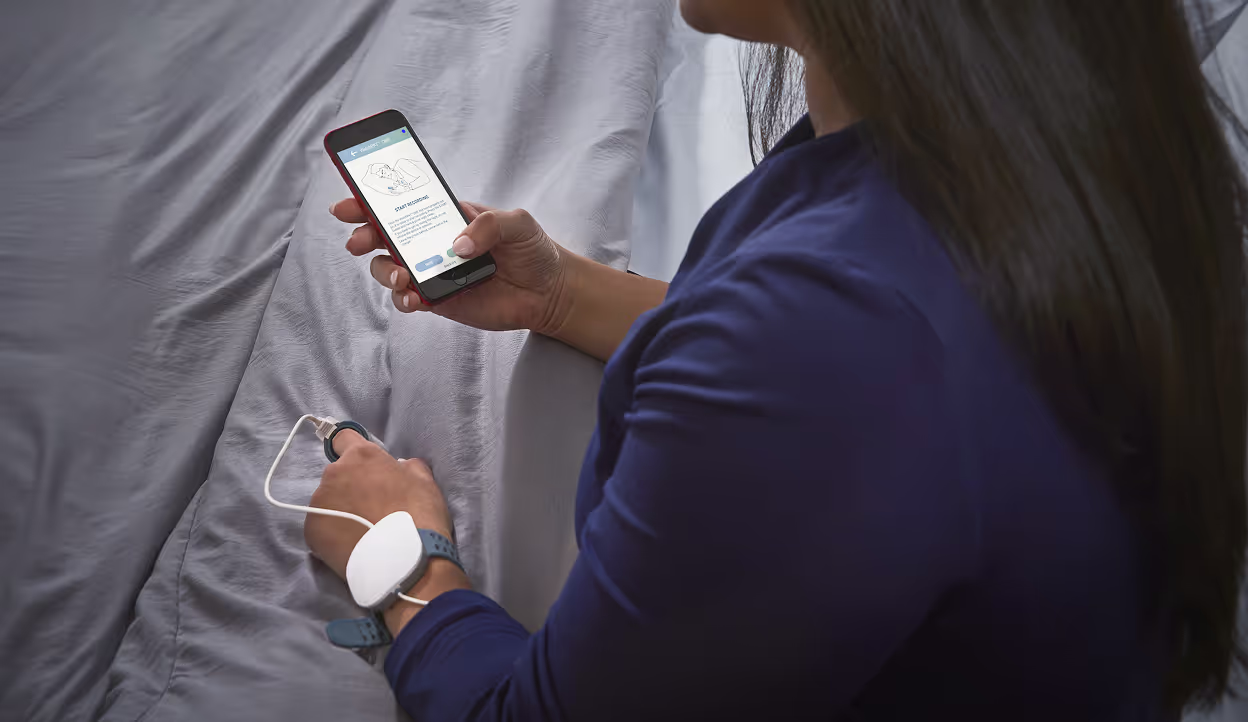
The device typically includes a nasal cannula to measure airflow, a pulse oximeter clipped to your finger to monitor oxygen saturation and heart rate, and a belt or chest sensor that tracks respiratory effort. Some home sleep study kits also record body position and snoring intensity. Together, these channels collect the data a physician needs to identify obstructive sleep apnea.
Home sleep apnea testing is classified as Out of Center testing by the American Academy of Sleep Medicine. This means the study takes place outside a traditional sleep lab, but the data collection and physician interpretation follow the same clinical standards. The equipment monitors cardiopulmonary functions throughout the night, generating raw data that captures apneas, which are complete pauses in breathing, and hypopneas, which are partial reductions in airflow.
After you return the device or upload the data, a sleep medicine physician reviews the results, calculates your Apnea-Hypopnea Index, and issues a clinical report. The Apnea-Hypopnea Index measures how many times per hour your breathing is disrupted during sleep. An index of 5 to 14 indicates mild sleep apnea, 15 to 29 indicates moderate, and 30 or higher indicates severe obstructive sleep apnea.
DID YOU KNOW: According to the National Heart, Lung, and Blood Institute, an estimated 25 million adults in the United States have obstructive sleep apnea, but many remain undiagnosed because symptoms like snoring and fatigue are often dismissed.
KEY TAKEAWAY: A home sleep apnea test uses portable sensors to record airflow, oxygen saturation, respiratory effort, and heart rate overnight, and a physician interprets the data to diagnose obstructive sleep apnea.
Understanding what the test measures is the first step, but knowing who qualifies for home testing matters just as much.
Who Should Get a Home Sleep Test in Pharr, Texas
Adults in Pharr, Texas who have symptoms of obstructive sleep apnea are the primary candidates for a home sleep test. The most common symptoms include loud, chronic snoring, witnessed pauses in breathing during sleep, excessive daytime fatigue, waking with a dry mouth or morning headaches, and difficulty concentrating.
The American Academy of Sleep Medicine recommends home sleep apnea testing for patients who have a high pretest probability of moderate to severe obstructive sleep apnea and no significant comorbid illnesses such as severe heart failure, chronic obstructive pulmonary disease, or neuromuscular disease. Patients with these complex conditions may need an in-lab polysomnography study instead, because the additional channels recorded in a sleep lab, including electroencephalography for brain waves and electromyography for leg movements, provide a more complete clinical profile.
Your provider may recommend home sleep testing if you meet certain criteria during a physical exam or consultation. A body mass index of 30 or higher, a neck circumference above 17 inches for men or 16 inches for women, and a history of high blood pressure are common clinical markers that increase the likelihood of obstructive sleep apnea.
Who May Not Be a Good Candidate
Home sleep testing is not appropriate for every patient. People suspected of having central sleep apnea, narcolepsy, restless legs syndrome, periodic limb movements, parasomnias such as sleepwalking, or insomnia as the primary complaint typically need in-lab studies. The home sleep test does not monitor brain activity, sleep cycle staging, or leg movements, which means sleep disorders beyond obstructive sleep apnea require different diagnostic tools such as a multiple sleep latency test or full polysomnography with electroencephalography.
If you are unsure whether you are a candidate, dumbo.health offers a free sleep assessment that helps determine whether home sleep testing is the right next step based on your symptoms and medical history.
KEY TAKEAWAY: Home sleep testing is best suited for adults with a high suspicion of obstructive sleep apnea and no complex comorbid illnesses, while conditions like narcolepsy, parasomnias, or central sleep apnea require in-lab evaluation.
Once you know you are a candidate, the next question is how the testing process actually works from start to finish.
How to Complete a Home Sleep Apnea Test: Step by Step
Completing a home sleep apnea test in Pharr, Texas is straightforward. The entire process, from ordering to receiving results, typically takes less than two weeks.
Step-by-Step Process
1. Schedule a consultation with a sleep specialist, primary care provider, or complete the online intake process through a service like dumbo.health. A physician reviews your symptoms and determines whether a home sleep test is appropriate. Some providers in your area require an in-person appointment, while dumbo.health allows you to get started online without visiting a clinic.
2. Receive your home sleep test device. If you order through a local sleep center near you, you may pick up the equipment in person. If you order through dumbo.health, the FDA-cleared device ships directly to your home in Pharr for $149 with no insurance or prior authorization required.
3. Follow the setup instructions on the evening of your test. Attach the nasal cannula to measure airflow, clip the pulse oximeter onto your finger, and secure the chest belt or sensor around your torso. Most patients find the equipment comfortable enough to sleep normally.
4. Sleep in your own bed for one full night. The device automatically records oxygen levels, heart rate, respiratory effort, airflow, and snoring throughout the night. Avoid caffeine and alcohol for at least four hours before your test, as both can alter your breathing patterns and sleep quality.
5. Return the device or upload your data the following morning. Local providers may require you to drop off the equipment. With dumbo.health, you return the device using a prepaid shipping label.
6. A physician interprets the results. A board-certified sleep medicine physician reviews your raw data, calculates the Apnea-Hypopnea Index, and generates a clinical report. dumbo.health's Essentials Plan at $59 per month includes physician interpretation, CPAP therapy and equipment, and standard follow-up care.
7. Receive your results and discuss next steps. Your physician or provider explains your diagnosis and recommends a treatment option, which typically includes CPAP therapy for moderate to severe obstructive sleep apnea.
After completing these steps, most patients have a clear diagnosis and a treatment path within 7 to 10 days. Prompt testing and interpretation reduce the time you spend untreated, which matters because untreated obstructive sleep apnea contributes to elevated blood pressure, cardiovascular risk, and impaired daytime function.
KEY TAKEAWAY: The home sleep test process involves a clinical consultation, one night of testing with a portable device, physician interpretation of the data, and a treatment recommendation, all of which can be completed without visiting a hospital or sleep lab.
Knowing the process is helpful, but understanding what the test results actually mean gives you the context you need to take action.
Understanding Your Home Sleep Test Results
Home sleep test results center on the Apnea-Hypopnea Index, which quantifies how many breathing disruptions you experience per hour of recorded sleep. A physician uses this index along with oxygen desaturation patterns and other physiological markers to make a diagnosis.
How the Apnea-Hypopnea Index Is Scored
The Apnea-Hypopnea Index counts each apnea, a complete cessation of airflow lasting at least 10 seconds, and each hypopnea, a partial reduction in airflow accompanied by a drop in oxygen saturation of at least 3 to 4 percent. The total number of events divided by the hours of recording time produces the index score.
Severity Levels
- Normal: fewer than 5 events per hour
- Mild obstructive sleep apnea: 5 to 14 events per hour
- Moderate obstructive sleep apnea: 15 to 29 events per hour
- Severe obstructive sleep apnea: 30 or more events per hour
According to the American Academy of Sleep Medicine, patients with an Apnea-Hypopnea Index of 15 or higher, or an index of 5 to 14 with documented symptoms such as excessive daytime fatigue or witnessed apneas, meet the diagnostic criteria for obstructive sleep apnea requiring treatment.
What Oxygen Saturation Data Reveals
Your results also include oxygen saturation trends recorded by the pulse oximeter. Normal oxygen saturation during sleep stays above 90 percent. Repeated drops below 90 percent, especially below 85 percent, indicate significant oxygen desaturation events that increase cardiovascular risk. The Sleep Foundation notes that frequent oxygen desaturation during sleep is linked to higher rates of hypertension, arrhythmias, and stroke.
A home sleep test does not record brain waves, sleep cycle staging, or limb movements. This means the test cannot diagnose narcolepsy, periodic limb movements, parasomnias, or other sleep disorders that require electroencephalography and electromyography. If your home sleep test is negative but your symptoms persist, your physician may recommend a full in-lab polysomnography.
IMPORTANT: A negative home sleep test does not rule out all sleep disorders. If symptoms like severe insomnia, restless legs, sleepwalking, or excessive daytime sleepiness continue, follow up with a sleep specialist for further evaluation.
KEY TAKEAWAY: Home sleep test results are based on the Apnea-Hypopnea Index and oxygen saturation patterns, and a physician uses these markers to determine whether you have obstructive sleep apnea and how severe it is.
With a diagnosis in hand, the most common question patients ask is what treatment looks like and how soon it starts.
Sleep Apnea Treatment Options After Diagnosis
CPAP therapy is the first-line treatment for moderate to severe obstructive sleep apnea. CPAP stands for continuous positive airway pressure, and it works by delivering a steady stream of pressurized air through a mask to keep your airway open during sleep.
A CPAP machine connects to a mask worn over your nose, mouth, or both. The device prevents the soft tissue in your throat from collapsing, which is the mechanical cause of obstructive sleep apnea. According to Mayo Clinic, CPAP therapy reduces apnea events, improves oxygen saturation overnight, lowers blood pressure, and decreases daytime fatigue when used consistently.
CPAP Adherence and Why It Matters
The Centers for Disease Control and Prevention and the American Academy of Sleep Medicine define CPAP adherence as using the device for at least 4 hours per night on at least 70 percent of nights over a 30-day period. Meeting this threshold is essential for patients who hold a commercial driver's license, as the FMCSA may require documented CPAP compliance for medical certification.
Many patients report that the first few weeks of CPAP therapy require an adjustment period. Comfort issues such as mask fit, air pressure levels, and nasal dryness are common early barriers. This is where ongoing clinical support makes a significant difference.
dumbo.health's CPAP treatment plans include the CPAP machine, equipment, and physician-supervised follow-up starting at $59 per month with no contracts and no insurance required. The Premium Plan at $89 per month adds a dedicated sleep coach and advanced adherence monitoring, which clinicians frequently observe helps patients reach the compliance threshold faster and maintain long-term use.
Alternative Treatment Options
Not every patient uses CPAP. For mild obstructive sleep apnea, treatment options may include positional therapy, oral appliance therapy prescribed by a dentist or Ear, Nose, and Throat specialist, weight management, or lifestyle modifications such as reducing caffeine intake before bed and maintaining consistent sleep hygiene.
BiPAP, or bilevel positive airway pressure, is an alternative for patients who cannot tolerate standard CPAP. BiPAP delivers two pressure levels, a higher pressure during inhalation and a lower pressure during exhalation, which some patients find more comfortable.
In rare cases, surgical intervention by an Ear, Nose, and Throat specialist or a referral for neurostimulation therapies such as hypoglossal nerve stimulation may be considered when other treatments fail.
KEY TAKEAWAY: CPAP therapy is the standard treatment for moderate to severe obstructive sleep apnea, and consistent use reduces apnea events, improves oxygen levels, and lowers cardiovascular risk, with dumbo.health providing CPAP equipment and physician-supervised care starting at $59 per month.
Treatment access depends heavily on cost, and understanding what you will pay in Pharr helps you plan ahead.
Cost of Home Sleep Testing in Pharr, Texas
The cost of a home sleep apnea test in Pharr, Texas varies depending on where you go, whether you use insurance, and what is included in the price. Understanding the full cost picture before you order helps you avoid unexpected bills.
Cost Comparison: Local Providers vs. dumbo.health
Here is how costs typically break down for patients in the Pharr and Rio Grande Valley area.
Home Sleep Test Device Cost
- Local sleep centers or hospital-based programs: $200 to $600 depending on the facility and whether insurance is billed
- dumbo.health: $149, one-time, no insurance required
Physician Interpretation and Report
- Local providers: Often billed separately, ranging from $100 to $300 out of pocket without insurance
- dumbo.health: Included in monthly plans starting at $59 per month
CPAP Equipment and Ongoing Treatment
- Through insurance: Subject to deductibles, copays, prior authorizations, and rental agreements that may span 10 to 13 months before you own the device
- dumbo.health: CPAP machine plus equipment included in all monthly plans, starting at $59 per month with no contracts
Insurance vs. Cash Pay
- Insurance: Requires a prescription, prior authorization from insurance companies, and often a referral from a primary care provider or sleep specialist before testing is approved. Processing can add weeks to the timeline.
- Cash pay through dumbo.health: No insurance needed, no prior authorizations, no referral required, and no surprise bills. You pay $149 for the test and choose a monthly plan for ongoing care.
For patients in Pharr who are uninsured, underinsured, or who prefer transparent pricing they can plan around, dumbo.health removes the administrative barriers that delay diagnosis and treatment. The at-home sleep test ships directly to your door anywhere in Texas.
DID YOU KNOW: According to the American Sleep Apnea Association, approximately 80 percent of moderate to severe obstructive sleep apnea cases remain undiagnosed, with cost and access barriers cited as major contributing factors.
KEY TAKEAWAY: Home sleep test costs in Pharr, Texas range from $200 to $600 through local providers, while dumbo.health offers the test for $149 with no insurance, no prior authorization, and no hidden fees.
Cost is one barrier, but convenience and access also play a role in whether patients actually complete testing.
Sleep Apnea Testing Options Near Pharr, Texas
Patients in Pharr have several pathways to get tested for sleep apnea, including local sleep centers, hospital-based sleep labs, and direct-to-patient home testing services.
Local Sleep Centers and Providers
The Rio Grande Valley has sleep centers and pulmonary disease specialists who offer both in-lab polysomnography and home sleep testing. Some patients are referred to facilities in nearby cities such as McAllen, Edinburg, or Harlingen. Providers in your area may include pulmonologists, sleep medicine physicians, and certified sleep doctors affiliated with regional hospitals.
When choosing a local provider, verify whether they offer home sleep testing or only in-lab studies. In-lab polysomnography requires an overnight appointment at a sleep lab or hospital, where a sleep technologist monitors you throughout the night using electroencephalography, electromyography, electrocardiography, and additional sensors. While this provides a comprehensive clinical profile including brain activity, sleep cycle staging, and leg movements, it is more expensive and less convenient than home testing.
Some patients in the Pharr area also access testing through multi-specialty groups or Ear, Nose, and Throat practices that coordinate with sleep specialists. If you prefer to find a provider near you who offers home sleep testing, ask whether they use FDA-cleared portable devices and whether a board-certified sleep medicine physician interprets the results.
Direct-to-Patient Home Testing Through dumbo.health
For patients who want to skip the referral process, avoid insurance delays, or simply prefer the convenience of testing at home, dumbo.health provides a complete sleep apnea care solution that covers testing, diagnosis, and treatment. The service is available to patients throughout Texas, including Pharr, without requiring an in-person appointment.
dumbo.health ships the FDA-cleared home sleep test device directly to your home. After your test night, a physician reviews your data and provides a diagnosis. If you need treatment, monthly plans cover CPAP therapy, equipment, and ongoing clinical support with no contracts and the ability to cancel anytime.
KEY TAKEAWAY: Pharr residents can access sleep apnea testing through local sleep centers, hospital sleep labs, or direct-to-patient services like dumbo.health, which removes referral and insurance barriers for patients across Texas.
Choosing between home testing and in-lab testing is one of the most common decisions patients face.
Home Sleep Test vs. In-Lab Sleep Study: Which Is Right for You
The key difference between a home sleep test and an in-lab sleep study is the scope of data collected and the setting where the test takes place. Both are valid diagnostic tools, but they serve different clinical needs.
A home sleep apnea test records 4 to 7 channels of data: airflow through a nasal cannula, oxygen saturation via a pulse oximeter, respiratory effort through a chest belt, and heart rate. Some devices also record body position and snoring. The test takes place in your own bed with no technologist present.
An in-lab polysomnography study records 16 or more channels, including electroencephalography for brain waves, electromyography for muscle activity and leg movements, electrooculography for eye movements, and electrocardiography for heart rhythm. A sleep technologist monitors you throughout the night in a sleep lab, adjusting sensors and observing for abnormal breathing patterns, parasomnias, and other sleep disorders.
Setting
- Home Sleep Test: Your own bed at home in Pharr or anywhere in Texas
- In-Lab Polysomnography: A sleep lab, sleep center, or hospital
Cost
- Home Sleep Test: $149 through dumbo.health, $200 to $600 through local providers
- In-Lab Polysomnography: $1,000 to $3,000 or more without insurance
Channels Recorded
- Home Sleep Test: 4 to 7 channels (airflow, oxygen saturation, respiratory effort, heart rate, body position, snoring)
- In-Lab Polysomnography: 16 or more channels (adds brain activity, eye movements, leg movements, sleep staging)
Convenience
- Home Sleep Test: High, no travel, no overnight facility stay, self-administered
- In-Lab Polysomnography: Low, requires overnight appointment at a sleep center or hospital
Best For
- Home Sleep Test: Adults with suspected moderate to severe obstructive sleep apnea and no significant comorbid illnesses
- In-Lab Polysomnography: Patients with suspected central sleep apnea, narcolepsy, periodic limb movements, parasomnias, or complex medical conditions
Turnaround Time for Results
- Home Sleep Test: Typically 3 to 7 days after data submission
- In-Lab Polysomnography: 1 to 3 weeks depending on the facility and sleep medicine physician availability
For most adults in Pharr with classic obstructive sleep apnea symptoms such as snoring, breathing pauses, and daytime fatigue, a home sleep test provides the data needed for an accurate diagnosis at a fraction of the cost and time. The American Academy of Sleep Medicine supports home sleep testing as an appropriate alternative to polysomnography for this population. Patients who need the additional diagnostic channels, such as brain wave monitoring for narcolepsy or leg movement tracking for restless legs syndrome, should pursue in-lab studies.
KEY TAKEAWAY: A home sleep test is the right choice for most adults suspected of having obstructive sleep apnea, while in-lab polysomnography is necessary for diagnosing complex sleep disorders that require brain wave, eye movement, and limb movement monitoring.
Even with the right test selected, there are limitations every patient should understand before making a decision.
Limitations and Risks of Home Sleep Apnea Testing
Home sleep apnea testing is a reliable diagnostic tool for obstructive sleep apnea, but it has specific limitations that affect certain patient populations and clinical scenarios.
Limitation 1: Cannot Diagnose All Sleep Disorders
A home sleep test does not record brain activity, eye movements, or leg movements. This means it cannot diagnose narcolepsy, restless legs syndrome, periodic limb movements during sleep, parasomnias such as sleepwalking, or insomnia disorders. Patients with symptoms beyond snoring and breathing pauses, such as unusual nighttime behaviors, severe daytime sleepiness out of proportion to apnea severity, or suspected central sleep apnea, need an in-lab polysomnography study that includes electroencephalography and electromyography.
Limitation 2: Risk of False Negatives
Home sleep tests can underestimate the severity of sleep apnea. Because the device records total recording time rather than actual sleep time, the Apnea-Hypopnea Index may appear lower than it truly is if you spent time awake during the recording period. The American Academy of Sleep Medicine acknowledges this limitation and recommends that patients with a negative or inconclusive home sleep test but persistent symptoms undergo follow-up testing, either with a repeat home test or an in-lab study.
Limitation 3: Requires Self-Setup
Unlike an in-lab study where a sleep technologist attaches and adjusts all sensors, home sleep testing relies on the patient to set up the equipment correctly. If the nasal cannula shifts, the pulse oximeter loses contact with your finger, or the chest belt moves, the data quality may be compromised. Most FDA-cleared devices include clear instructions, and many patients report finding the setup manageable, but user error remains a potential issue.
Limitation 4: Not Suitable for Complex Medical Profiles
Patients with significant comorbid illnesses such as congestive heart failure, chronic obstructive pulmonary disease, or neuromuscular disease may have breathing patterns that are difficult to interpret from home test data alone. These patients benefit from the comprehensive monitoring available in a sleep lab, where a respiratory therapist or sleep technologist can observe cardiopulmonary functions in real time.
How dumbo.health Addresses These Limitations
dumbo.health mitigates several of these risks by including physician oversight in every care plan. A board-certified sleep medicine physician reviews all raw data and clinical results. If your home sleep test results are inconclusive or suggest a condition that requires further evaluation, your physician can recommend next steps, including referral for in-lab testing. The Premium Plan at $89 per month includes a dedicated sleep coach who monitors your care and ensures follow-up happens promptly.
KEY TAKEAWAY: Home sleep testing cannot diagnose every sleep disorder, may underestimate apnea severity in some cases, and requires proper self-setup, but physician oversight and clinical follow-up, such as the support included in dumbo.health care plans, help address these limitations.
Understanding limitations is important, but seeing how the testing process plays out for real people brings the topic to life.
Real-World Scenarios: Home Sleep Testing in the Rio Grande Valley
Real-world examples illustrate how different patients in the Pharr, Texas area benefit from home sleep apnea testing and what the process looks like in practice.
Scenario 1: A 48-Year-Old Teacher With Chronic Fatigue
A 48-year-old teacher in Pharr notices she wakes up every morning feeling exhausted despite sleeping 7 to 8 hours. Her partner reports loud snoring and occasional gasping during the night. Her primary care physician suspects obstructive sleep apnea based on her symptoms, a BMI of 33, and elevated blood pressure readings during her physical exam.
Rather than waiting several weeks for an in-lab sleep study appointment at a hospital in McAllen, she orders a home sleep test through dumbo.health for $149. The device arrives within days. After one night of testing, her results show an Apnea-Hypopnea Index of 22, indicating moderate obstructive sleep apnea. Her physician recommends CPAP therapy, and she enrolls in the Essentials Plan at $59 per month, which includes the CPAP machine, equipment, physician follow-up, and updates sent to her primary care provider.
Scenario 2: A 55-Year-Old Owner-Operator CDL Driver
A 55-year-old commercial truck driver based in Pharr is flagged during his DOT physical for a BMI of 38 and a neck circumference of 18 inches. His examiner requires a sleep apnea evaluation before issuing medical certification. The driver does not have health insurance and cannot afford to miss work for an overnight sleep lab appointment.
He finds dumbo.health online and completes the free sleep assessment. After ordering the $149 home sleep test, he completes the study on a rest night at home. His results reveal severe obstructive sleep apnea with an Apnea-Hypopnea Index of 41 and oxygen saturation dips below 82 percent. He starts the Premium Plan at $89 per month, which provides a dedicated sleep coach for adherence monitoring, helping him document the CPAP compliance his DOT examiner requires.
Scenario 3: A 62-Year-Old Retiree With Mild Symptoms
A 62-year-old retiree in Pharr mentions occasional snoring and mild daytime drowsiness at his annual physical exam. His physician considers obstructive sleep apnea but also wants to rule out other conditions. The patient completes a home sleep test, which shows an Apnea-Hypopnea Index of 7, indicating mild obstructive sleep apnea.
His physician discusses treatment options including positional therapy and weight management before recommending CPAP. Because the patient also reports occasional leg jerking during sleep, which could indicate periodic limb movements, the physician recommends a follow-up in-lab polysomnography to evaluate whether an additional sleep disorder is contributing to his symptoms. This scenario demonstrates how a home sleep test can serve as an effective first screening step even when further evaluation may be needed.
KEY TAKEAWAY: Home sleep testing fits a wide range of patient scenarios in the Pharr area, from insured patients seeking convenience to uninsured drivers who need rapid, affordable testing and documented CPAP compliance.
With real examples in mind, it helps to separate common misconceptions from the clinical facts.
Common Myths About Home Sleep Apnea Testing Debunked
MYTH: Home sleep tests are not as accurate as in-lab sleep studies.
FACT: For diagnosing obstructive sleep apnea in adults with a high pretest probability, home sleep tests demonstrate strong diagnostic agreement with in-lab polysomnography. The American Academy of Sleep Medicine endorses home sleep apnea testing as a valid diagnostic method for this population. While home tests record fewer channels than polysomnography, the data they collect, including airflow, oxygen saturation, and respiratory effort, is sufficient for identifying obstructive sleep apnea in most adults.
MYTH: You need a doctor's referral and insurance approval before you can get a home sleep test.
FACT: While some local providers in Pharr and the Rio Grande Valley require a referral and insurance authorization, cash-pay services like dumbo.health allow you to order a home sleep test directly for $149 without insurance, without a referral, and without prior authorization. A physician still reviews your data and provides a clinical diagnosis.
MYTH: If your home sleep test comes back normal, you definitely do not have sleep apnea.
FACT: A negative home sleep test does not always rule out obstructive sleep apnea. Because home devices record total recording time rather than actual sleep time, the Apnea-Hypopnea Index can be artificially lowered if you had a poor night of sleep or the sensors shifted during the night. The American Academy of Sleep Medicine recommends follow-up testing if symptoms persist after a negative home study.
MYTH: CPAP machines are loud, uncomfortable, and impossible to sleep with.
FACT: Modern CPAP machines are significantly quieter and more comfortable than earlier models. According to Mayo Clinic, most current devices operate at noise levels below 30 decibels, which is quieter than a whisper. Mask fit, humidity settings, and pressure adjustments can be optimized by a provider or sleep coach. dumbo.health's Premium Plan includes a dedicated sleep coach who helps patients troubleshoot comfort issues and build consistent usage habits.
MYTH: Only older, overweight men get sleep apnea.
FACT: While obesity and male sex are risk factors, obstructive sleep apnea affects people of all ages, body types, and genders. The National Heart, Lung, and Blood Institute notes that postmenopausal women, individuals with anatomical differences in the airway, and people with a family history of sleep apnea are also at elevated risk. Anyone with persistent snoring, breathing pauses, or unexplained fatigue should be evaluated regardless of demographics.
KEY TAKEAWAY: Common myths about home sleep testing and CPAP treatment create unnecessary fear and delay, but the clinical evidence supports home testing as accurate, accessible, and effective for diagnosing obstructive sleep apnea.
Before you schedule your test, a simple checklist ensures you are fully prepared.
Preparing for Your Home Sleep Test: What to Do Before Test Night
Proper preparation improves the accuracy of your home sleep test data and reduces the chance of needing a repeat study.
Pre-Test Checklist
- Confirm your test date and set aside a night when you can follow your normal sleep routine.
- Avoid caffeine for at least 6 hours before bedtime on test night, as caffeine can alter breathing patterns and delay sleep onset.
- Avoid alcohol for at least 4 hours before bedtime, as alcohol relaxes the upper airway muscles and can artificially increase or mask apnea events.
- Take a shower before applying the sensors, and avoid using lotions on your finger or chest where the pulse oximeter and belt will sit.
- Read the device instructions thoroughly before the evening of the test so you are familiar with sensor placement.
- Charge the device if required, or confirm the battery is ready for a full night of recording.
- Remove nail polish from the finger where the pulse oximeter will clip, as polish can interfere with oxygen saturation readings.
- Sleep in your usual bed with your usual pillow and blankets to replicate your normal sleep environment.
- Set a backup alarm in case you need to return or ship the device the next morning.
- If you ordered through dumbo.health, confirm you have the prepaid return shipping label ready for the morning after the test.
TIP: Many patients report that testing on a night that closely matches their regular sleep schedule produces the most accurate results. Avoid scheduling your test on a night when you know your routine will be disrupted.
KEY TAKEAWAY: Following a simple preparation checklist, including avoiding caffeine and alcohol, applying sensors correctly, and replicating your normal sleep environment, helps ensure your home sleep test produces reliable, accurate data.
With preparation covered, here is a summary of everything you need to know to move forward with testing.
Conclusion
A home sleep apnea test gives Pharr, Texas residents a practical, affordable path to diagnosing obstructive sleep apnea without visiting a hospital or sleep lab. The portable device records the critical data, including oxygen levels, airflow, respiratory effort, and heart rate, that a physician needs to determine whether you have sleep apnea and how severe it is. Early testing leads to earlier treatment, which means better sleep quality, lower cardiovascular risk, and improved daily function.
If you are ready to take the next step, dumbo.health offers a home sleep test for $149 with no insurance required, no prior authorization, and no surprise bills. Monthly treatment plans start at $59 per month with no contracts and the ability to cancel anytime. Getting tested is the first step toward better sleep health.
Frequently Asked Questions About Home Sleep Apnea Test in Pharr, Texas
What is a home sleep apnea test?
A home sleep apnea test (HSAT) is a simplified diagnostic tool used to detect obstructive sleep apnea in adults. Unlike an in-lab sleep study, a home sleep test allows you to sleep in your own bed while a small wearable device monitors your breathing patterns, oxygen saturation, heart rate, and respiratory effort overnight. A sleep medicine physician or sleep physician then interprets the recorded data to assess whether clinically significant sleep apnea is present. A healthcare professional can help determine whether home sleep testing is appropriate for your situation.
Why would someone need home sleep testing?
Home sleep testing is typically recommended when a healthcare provider suspects obstructive sleep apnea based on symptoms such as loud snoring, gasping during sleep, morning headaches, daytime fatigue, or witnessed breathing pauses. According to the American Academy of Sleep Medicine, home sleep apnea testing is a clinically appropriate option for adults with a high likelihood of moderate to severe obstructive sleep apnea and no significant comorbid conditions. If you are experiencing these symptoms regularly, speaking with a healthcare professional about whether a home sleep test is the right next step is advisable.
What should I expect during a home sleep test?
During a home sleep test, you will wear a small monitoring device to bed in your own home. Depending on the device, sensors may be placed on your finger, wrist, or chest to measure oxygen saturation, heart rate, breathing patterns, and respiratory effort. Some devices also use a nasal cannula to monitor airflow. The test typically records data over one night. Most patients find the experience far more comfortable than an overnight stay in a sleep lab, and the setup process usually takes only a few minutes before bed.
Is a home sleep test uncomfortable or painful?
Home sleep testing is not painful and most patients find it manageable. The sensors and wearable components are designed for comfort during sleep. Common components include a pulse oximeter worn on the finger, a small chest belt to measure respiratory effort, and a nasal cannula to track airflow. There are no needles, no electrodes attached to the scalp, and no requirement to sleep in an unfamiliar environment. Comfort varies by individual, but the compact design of modern home sleep study kits is intended to minimise disruption to your normal sleep cycle.
What happens if I wake up during the night while taking the test?
Waking up during a home sleep test is common and generally does not invalidate the study. Home sleep apnea testing devices are designed to record data continuously throughout the night, and physicians interpret the results based on the total hours of usable data collected. If the device captures a sufficient number of hours of sleep data, your sleep physician can typically produce a reliable interpretation. If the recording is incomplete or the data quality is poor, your provider may ask you to repeat the test. Follow the instructions provided with your device carefully to maximise data quality.
How does a home sleep apnea test work?
A home sleep apnea test works by recording key physiological signals while you sleep at home. The device monitors oxygen saturation, breathing patterns, respiratory effort, heart rate, and in some cases airflow through a nasal cannula. This data is used to calculate the apnea-hypopnea index, which measures the number of apneas and hypopneas per hour of sleep. A sleep medicine physician reviews the raw data and produces a clinical interpretation. The process avoids the need for an overnight sleep lab visit while still capturing the core measurements needed to identify obstructive sleep apnea.
What measurements does a home sleep test record?
A home sleep test typically records oxygen saturation, oxygen levels over time, heart rate, airflow through a nasal cannula, respiratory effort using a chest belt, and breathing patterns. Some devices also record body position and pulse oximetry waveforms. These measurements allow a sleep physician to identify apneas, hypopneas, and oxygen desaturation events associated with obstructive sleep apnea. Home sleep testing does not record brain waves, leg movements, or full sleep staging the way an in-lab polysomnography study does, which is why in-lab studies may be recommended in certain clinical situations.
How does the WatchPAT device work for home sleep testing?
WatchPAT is an FDA-cleared home sleep apnea testing device that measures sleep apnea using peripheral arterial tone, oxygen saturation, heart rate, actigraphy, and snoring signals recorded from the wrist and finger. Unlike traditional home sleep study equipment that relies primarily on nasal airflow and chest belts, WatchPAT uses a peripheral arterial tone signal to detect breathing disturbances and estimate sleep staging. According to published clinical research, WatchPAT has demonstrated strong diagnostic accuracy for identifying obstructive sleep apnea compared with in-lab polysomnography. A sleep medicine physician reviews the recorded data to produce a clinical interpretation and diagnosis.
Is a home sleep test as accurate as an in-lab sleep study?
Home sleep apnea tests are considered clinically valid for diagnosing obstructive sleep apnea in adults without significant comorbid conditions. The American Academy of Sleep Medicine supports the use of home sleep apnea testing for appropriate patients. However, home sleep tests record fewer data channels than in-lab polysomnography. In-lab studies capture brain waves via electroencephalography, leg movements via electromyography, full sleep staging, and additional respiratory measures that home devices do not. This means home sleep tests may underestimate the severity of sleep apnea in some patients, and an in-lab study may be recommended when results are inconclusive or when other sleep disorders such as narcolepsy, periodic limb movements, or parasomnias are suspected.
When is an in-lab sleep study recommended instead of a home sleep test?
An in-lab sleep study, also called polysomnography, is typically recommended when a home sleep test produces inconclusive results, when a healthcare provider suspects a sleep disorder beyond obstructive sleep apnea, or when significant comorbid conditions are present. Conditions that may require in-lab evaluation include narcolepsy, restless legs syndrome, periodic limb movements, parasomnias such as sleepwalking, central sleep apnea, or complex cardiopulmonary conditions. A sleep specialist can help determine which type of study is most appropriate based on your symptoms, clinical profile, and health history. In-lab studies allow monitoring of brain activity, muscle activity, and additional vital signs not captured by home sleep study kits.
How is obstructive sleep apnea different from central sleep apnea?
Obstructive sleep apnea occurs when the upper airway repeatedly collapses or becomes blocked during sleep, causing breathing interruptions despite ongoing respiratory effort. Central sleep apnea occurs when the brain temporarily fails to send the correct signals to the muscles that control breathing, resulting in pauses without any physical airway obstruction. Obstructive sleep apnea is far more common and is the type most reliably detected by home sleep apnea testing. Central sleep apnea typically requires in-lab polysomnography for accurate diagnosis and may require different treatment approaches, which a sleep medicine physician can discuss based on your individual test results and symptoms.
What happens after a home sleep test shows abnormal results?
If your home sleep test shows abnormal results consistent with obstructive sleep apnea, a sleep medicine physician will typically review the findings and discuss treatment options with you. The most common treatment for obstructive sleep apnea is continuous positive airway pressure therapy, known as CPAP. A physician interpretation and clinical report based on your home sleep test results can be used to support a CPAP prescription and ongoing care. Additional evaluation may be recommended depending on your results and clinical history. A healthcare professional should guide all treatment decisions based on your specific test findings and overall health status.
Can home sleep test results be used to get a CPAP prescription?
Yes, in many cases a home sleep test that confirms obstructive sleep apnea can support a CPAP prescription. A licensed physician must interpret the home sleep apnea test results and determine whether CPAP therapy is clinically appropriate for you. The physician interpretation forms the clinical basis for any CPAP prescription. dumbo.health monthly plans include physician interpretation, a clinical report, and access to CPAP therapy and equipment as part of an ongoing care pathway, with no insurance required and no prior authorizations needed.
Who reviews the results of a home sleep apnea test?
A sleep medicine physician or qualified sleep physician reviews the recorded data from your home sleep apnea test and produces a written clinical interpretation. The physician evaluates metrics such as the apnea-hypopnea index, oxygen saturation levels, breathing patterns, and respiratory effort to assess the presence and severity of obstructive sleep apnea. The interpretation is typically provided in a written report that can be shared with your referring provider or used to guide CPAP therapy decisions. A qualified clinician, not an automated algorithm alone, should review your results to ensure clinical accuracy and appropriate follow-up.
How long does it take to get results from a home sleep apnea test?
Turnaround time for home sleep apnea test results depends on the provider and care pathway you choose. Many patients receive results within a few business days of returning or uploading their device data. dumbo.health's Premium Plan includes priority results turnaround as part of its ongoing care offering, which also covers physician interpretation, CPAP therapy, and dedicated sleep coach support. If you need results quickly, choosing a service with a clear, stated turnaround time can help you plan around your care. A healthcare professional should always review results before any treatment decisions are made.
What does the $149 dumbo.health home sleep test include?
The dumbo.health at-home sleep test is a one-time $149 purchase that includes the home sleep test device and one night of testing. This cost is separate from monthly care plans and covers the physical test itself. Physician interpretation, a clinical report, CPAP therapy, equipment, and ongoing care are included in the monthly plans, which start at $59 per month. There are no contracts and plans can be cancelled at any time. This transparent cash-pay pricing means no insurance is required, no prior authorizations, and no surprise bills.
How much does a home sleep apnea test cost in Pharr, Texas?
The cost of a home sleep apnea test in Pharr, Texas varies depending on the provider and whether you are using insurance or paying out of pocket. In traditional clinic settings, costs can range from a few hundred dollars to over a thousand dollars depending on insurance coverage and facility fees. dumbo.health offers a cash-pay home sleep test for $149 as a one-time cost, with ongoing care plans starting at $59 per month. Because dumbo.health operates on transparent cash-pay pricing with no insurance required, patients in the Pharr, Texas area and across the state can access sleep apnea testing without prior authorizations or unexpected bills.
Does insurance cover a home sleep apnea test?
Many insurance plans do cover home sleep apnea testing, but coverage depends on your specific plan, your insurer's criteria, and whether you have a referral or prior authorization. Patients who prefer to avoid the complexity of insurance claims, prior authorizations, and surprise bills may choose to pay out of pocket instead. dumbo.health is a cash-pay option that does not require insurance and provides transparent, upfront pricing. The home sleep test is $149 one-time, with no hidden fees. Patients who prefer to use their insurance should contact their insurer directly to verify coverage terms before scheduling a test.
What should I do on the day of my home sleep study?
On the day of your home sleep study, avoid napping if possible, and limit caffeine consumption in the hours before bed, as it can affect your sleep quality and the accuracy of your results. Follow any specific instructions provided with your home sleep test device. Take your usual medications unless your healthcare provider has advised otherwise. Set up the device according to the instructions before bedtime, and aim to sleep for a full night to ensure sufficient data is collected. If you have questions about medication management or specific pre-test preparation, speak with your healthcare provider before the test night.
How do I know if I might have sleep apnea?
Common signs that may suggest sleep apnea include loud or frequent snoring, gasping or choking sounds during sleep, waking with morning headaches, persistent daytime fatigue, poor concentration, and waking with a dry mouth or sore throat. According to the Mayo Clinic, obstructive sleep apnea is particularly common in people with higher body mass index, larger neck circumference, high blood pressure, or a family history of sleep apnea. These symptoms do not confirm a diagnosis on their own. A healthcare professional can help determine whether a home sleep apnea test or other evaluation is appropriate based on your symptoms and health history. You can also take a free sleep assessment to help identify whether testing may be a reasonable next step.
What are the benefits of at-home sleep apnea testing compared to a sleep lab?
At-home sleep apnea testing offers several practical advantages over an in-lab sleep study. Patients sleep in their own bed rather than an unfamiliar sleep lab environment, which many find more natural and less disruptive to their normal sleep cycle. Home sleep tests are generally less expensive than in-lab polysomnography and do not require an overnight clinical appointment. Results are often available quickly, and the process can be completed without taking time off work. The tradeoff is that home tests record fewer data channels than lab-based studies, so they may not be suitable for all patients. A healthcare provider can help assess which option fits your clinical needs.
How is sleep apnea diagnosed?
Sleep apnea is diagnosed through a clinical evaluation that typically includes a review of symptoms, a physical exam, and either a home sleep apnea test or an in-lab sleep study. The key diagnostic metric is the apnea-hypopnea index, which counts the number of apneas and hypopneas per hour of sleep. According to the American Academy of Sleep Medicine, an apnea-hypopnea index of five or more events per hour in combination with relevant symptoms can support a diagnosis of obstructive sleep apnea. The severity is classified as mild, moderate, or severe based on the index score. A qualified sleep physician must review and interpret the results to confirm a diagnosis.
Can a home sleep test diagnose conditions other than sleep apnea?
Home sleep apnea tests are designed specifically to detect obstructive sleep apnea. They are not able to diagnose narcolepsy, restless legs syndrome, periodic limb movements, parasomnias, insomnia, or other complex sleep disorders. These conditions require more comprehensive in-lab evaluation, including electroencephalography to monitor brain waves, electromyography to record leg movements, and full sleep staging under clinical supervision. If your symptoms suggest conditions beyond obstructive sleep apnea, such as excessive daytime sleepiness consistent with narcolepsy or abnormal behaviours during sleep, a sleep specialist may recommend a multiple sleep latency test or full polysomnography rather than a home sleep study.
How is narcolepsy diagnosed?
Narcolepsy cannot be diagnosed using a home sleep apnea test. It is typically diagnosed through a combination of clinical history, in-lab polysomnography, and a multiple sleep latency test conducted the following morning. The multiple sleep latency test measures how quickly a person falls asleep in a quiet environment during the day and whether rapid eye movement sleep occurs abnormally early, which is a key marker of narcolepsy. Diagnosis and treatment of narcolepsy require evaluation by a sleep specialist or neurologist with experience in sleep medicine. If you suspect narcolepsy based on symptoms such as sudden muscle weakness, excessive daytime sleepiness, or sleep paralysis, speak with a healthcare professional about appropriate testing.
What sleep problems in children might need medical evaluation?
Children can experience a range of sleep problems that may warrant evaluation by a healthcare professional, including loud snoring, observed breathing pauses during sleep, frequent night awakenings, sleepwalking, night terrors, bedwetting beyond typical developmental age, and excessive daytime sleepiness. The NHLBI notes that sleep-disordered breathing, including obstructive sleep apnea, can affect children and may be associated with behavioural changes, poor school performance, and growth concerns. Home sleep apnea testing is not routinely used for children, and in-lab polysomnography is typically the preferred diagnostic approach when a sleep disorder is suspected in a paediatric patient. A paediatrician or paediatric sleep specialist should guide evaluation and treatment.
What are the treatment options for obstructive sleep apnea?
The most widely used and evidence-supported treatment for obstructive sleep apnea is continuous positive airway pressure therapy, known as CPAP. A CPAP machine delivers a continuous flow of air through a mask to keep the upper airway open during sleep, preventing apneas and hypopneas. Other treatment options may include positional therapy, oral appliances, upper airway surgery, or weight management, depending on the severity of apnea and individual clinical factors. The appropriate treatment is determined by a sleep medicine physician or sleep specialist based on your apnea-hypopnea index, symptom burden, comorbid conditions, and personal preferences. A healthcare professional should guide all treatment decisions.
What is involved in CPAP therapy and how does adherence monitoring work?
CPAP therapy involves wearing a mask connected to a CPAP machine each night during sleep. The machine delivers pressurised air to prevent the airway from collapsing, reducing or eliminating apneas and hypopneas. Consistent nightly use is important for clinical benefit, and most physicians look for usage of at least four hours per night on seventy percent of nights as a general adherence benchmark. Modern CPAP machines record usage data that can be reviewed by a sleep physician or sleep coach to monitor adherence and adjust therapy settings if needed. dumbo.health's ongoing care solutions include CPAP equipment, physician review, and advanced adherence monitoring as part of monthly care plans.
Do commercial drivers in Texas need a sleep apnea test for their DOT physical?
Commercial drivers in Texas, including CDL holders, may be required to undergo sleep apnea testing if a certified medical examiner identifies risk factors during their DOT physical examination. Risk factors that a medical examiner may consider include body mass index, neck circumference, high blood pressure, snoring history, and daytime fatigue symptoms. The FMCSA does not currently have a universal mandatory sleep apnea testing requirement for all commercial drivers, but individual certified medical examiners may refer drivers for evaluation based on clinical judgment. A home sleep apnea test may support this evaluation process. For more detail, see the complete guide to DOT sleep apnea testing at home.
How does sleep apnea testing work for CDL drivers and truck drivers in Texas?
CDL drivers and truck drivers in Texas who are referred for sleep apnea evaluation may be able to use a home sleep apnea test as part of the diagnostic process. A sleep physician reviews the recorded data and provides a clinical interpretation. If obstructive sleep apnea is confirmed, treatment such as CPAP therapy is typically required before a driver can return to a certified medical examiner for DOT certification review. CPAP adherence documentation may be requested as part of that process. dumbo.health can support testing, physician interpretation, CPAP access, and adherence reporting for commercial drivers, but it does not make DOT certification decisions. Those decisions are made by a certified medical examiner. Learn more at the home sleep apnea test guide for commercial drivers.
How do I find a home sleep apnea test provider near me in Pharr, Texas?
Patients in the Pharr, Texas area looking for home sleep apnea testing can access providers through local sleep clinics, hospital-based sleep centres, or at-home testing services that ship directly to patients across Texas. dumbo.health ships home sleep test kits directly to patients in Texas, making it possible to complete testing without travelling to a clinic or sleep lab. The test is $149 one-time, requires no insurance, and includes physician interpretation as part of the ongoing care plan. If you prefer an in-person consultation, a referral from your primary care provider to a local sleep specialist or sleep disorder centre may also be an appropriate starting point depending on your symptoms.
What is the difference between insomnia and sleep apnea?
Insomnia is a sleep disorder characterised by difficulty falling asleep, staying asleep, or waking too early, resulting in inadequate or poor-quality sleep despite adequate opportunity to sleep. Obstructive sleep apnea is a breathing disorder in which the upper airway repeatedly collapses during sleep, causing breathing interruptions, oxygen desaturation, and fragmented sleep. Both conditions can cause daytime fatigue and poor sleep quality, but they have different causes and require different treatments. A home sleep apnea test can help identify obstructive sleep apnea but cannot diagnose insomnia. A healthcare professional can evaluate your symptoms and determine whether one or both conditions may be present.
When should I speak with a doctor about possible sleep problems?
You should speak with a healthcare professional if you regularly experience loud snoring, gasping or choking during sleep, persistent morning headaches, unrefreshing sleep, significant daytime sleepiness, or if a bed partner has observed breathing pauses while you sleep. High blood pressure, obesity, diabetes, and a history of cardiovascular conditions are also factors that may increase the clinical importance of a sleep evaluation. If you have sudden or severe breathing difficulties, chest pain, or other urgent symptoms, seek medical care promptly. For a non-urgent first step, a sleep assessment can help clarify whether a home sleep apnea test or a referral to a sleep specialist may be appropriate for your situation.