




Home Sleep Apnea Test in Harlingen, Texas: The Complete Guide to At-Home Sleep Testing
A home sleep apnea test in Harlingen, Texas allows you to screen for obstructive sleep apnea from your own bed using a portable, FDA-cleared device that measures breathing, oxygen saturation, and heart rate overnight. According to the American Academy of Sleep Medicine, home sleep testing is an accepted diagnostic pathway for adults with a moderate to high probability of obstructive sleep apnea. This guide is written for residents of Harlingen, the Rio Grande Valley, and surrounding areas of South Texas who suspect they may have sleep apnea and want a clear, affordable path to diagnosis. You will learn how home sleep testing works, what devices measure, how results are scored and interpreted by a physician, how costs compare to in-lab studies, and when a home test may not be the right fit. Whether you are considering a test through a local sleep clinic or exploring telehealth options like dumbo.health, the information ahead will help you make a confident, informed decision.
Quick Answer
A home sleep apnea test in Harlingen, Texas is a portable overnight study that records airflow, blood oxygen saturation, respiratory effort, and heart rate while you sleep at home. A physician reviews the sleep data and uses the apnea-hypopnea index to determine whether you have obstructive sleep apnea. Most patients receive results within a few days. dumbo.health offers a home sleep test for $149 with physician interpretation available through monthly care plans starting at $59 per month.
Key Takeaways
- A home sleep apnea test is a clinically validated way to diagnose obstructive sleep apnea in adults without requiring an overnight stay in a sleep lab.
- FDA-cleared home sleep testing devices measure nasal airflow, blood oxygen saturation, respiratory effort, and heart rate using sensors you apply yourself.
- The apnea-hypopnea index is the primary scoring metric physicians use to classify sleep apnea severity as mild, moderate, or severe.
- Home sleep testing typically costs between $149 and $500 out of pocket, compared to $1,000 or more for in-lab polysomnography.
- dumbo.health provides a home sleep test for $149 with no insurance required, and ongoing CPAP treatment plans start at $59 per month with no contracts.
- Home sleep tests are not recommended for patients suspected of having central sleep apnea, narcolepsy, Restless Legs Syndrome, or other complex sleep disorders that require full polysomnography.
What Is a Home Sleep Apnea Test and How Does It Work
A home sleep apnea test is a simplified overnight sleep study you complete in your own bed using a portable device that records key breathing and physiological signals while you sleep. Unlike in-lab polysomnography, which monitors brain waves, eye movement, and muscle activity across dozens of channels, a home sleep test focuses on the core data needed to identify obstructive sleep apnea.
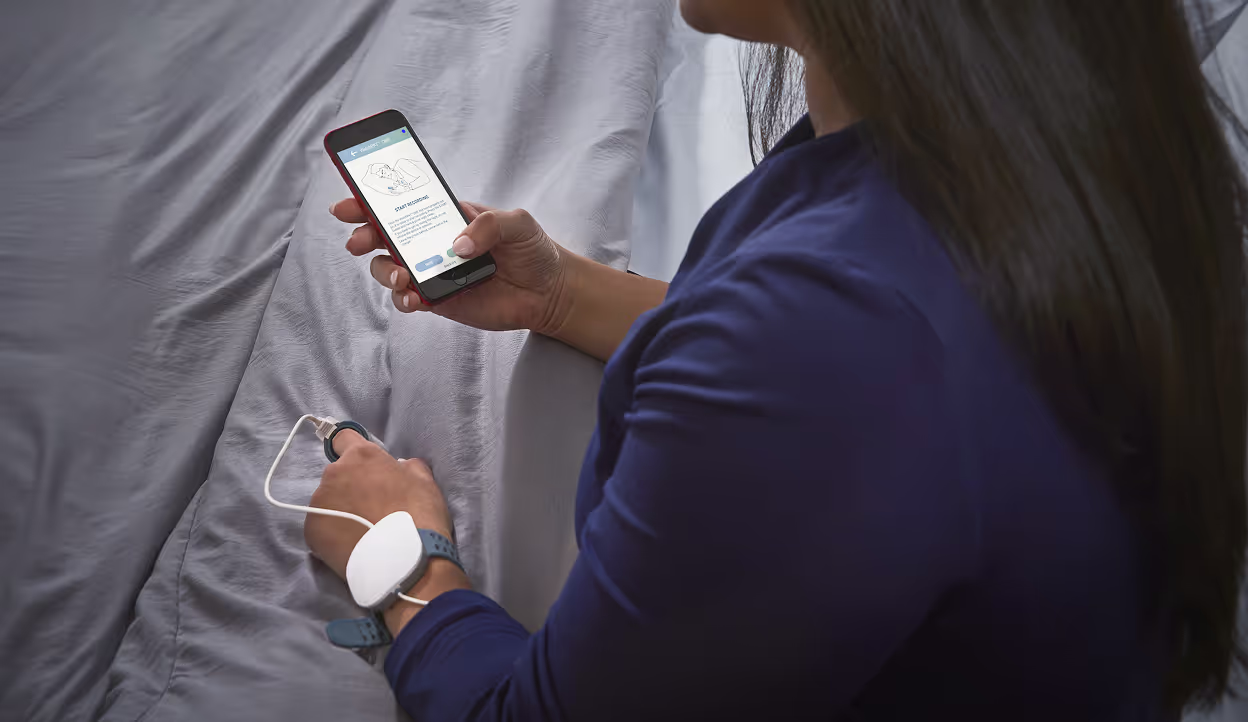
Home sleep apnea testing works by using a small device with several sensors. You typically wear a nasal cannula to measure nasal airflow, a finger-based pulse oximeter or photoplethysmography sensor to track blood oxygen saturation and heart rate, and a belt or respiratory inductance plethysmography band around your chest or abdomen to detect respiratory effort. Some devices, such as the WatchPAT ONE, use a wrist-worn design with a finger sensor that captures peripheral arterial tone, oxygen levels, and body position without a nasal cannula or chest belt.
The device records data for one full night of sleep. In the morning, the sleep data is either uploaded automatically or returned to the provider for processing. A physician or board-certified sleep specialist reviews the recording, scores the results, and generates a diagnostic interpretation.
According to the American Academy of Sleep Medicine, home sleep apnea testing is appropriate for adults with a high pretest probability of moderate to severe obstructive sleep apnea and no significant comorbid sleep disorders. The test is not designed to diagnose insomnia, narcolepsy, Restless Legs Syndrome, or central sleep apnea.
Home sleep apnea testing through dumbo.health costs $149 as a one-time payment, with no insurance required and no prior authorization needed. The test device is shipped directly to your home, making it accessible for patients in Harlingen, McAllen, and throughout the Rio Grande Valley who may not have a local sleep disorders center nearby.
KEY TAKEAWAY: A home sleep apnea test records airflow, oxygen saturation, respiratory effort, and heart rate overnight using portable sensors, and a physician uses the data to determine whether obstructive sleep apnea is present.
Understanding what these devices actually measure helps explain how physicians score and interpret your results.
What a Home Sleep Test Measures: Sensors, Signals, and Data Collection
Home sleep testing devices collect specific physiological data through a small number of sensors, each designed to capture a distinct signal related to breathing and cardiovascular function during sleep.
Nasal Airflow
A nasal cannula or airflow sensor positioned near your nostrils detects airflow during breathing. Reductions or complete pauses in airflow correspond to hypopneas and apneas, the two events that define sleep disordered breathing. Nasal airflow measurement is one of the most critical channels in any home sleep study.
Blood Oxygen Saturation
A pulse oximeter clipped to your fingertip measures blood oxygen saturation, also called SpO2. The National Heart, Lung, and Blood Institute explains that drops in oxygen levels during sleep often accompany apnea events, as airway obstruction prevents normal gas exchange. Repeated desaturations below 90 percent are clinically significant and contribute to the severity classification.
Heart Rate
The same pulse oximeter or photoplethysmography sensor that tracks oxygen also records heart rate throughout the night. Changes in heart rate often correlate with breathing disruptions. Clinicians frequently observe patterns of heart rate variability that correspond to apnea and recovery cycles during sleep.
Respiratory Effort
A belt or respiratory inductance plethysmography band around the chest or abdomen detects the physical effort of breathing. This channel distinguishes between obstructive events, where the body tries to breathe against a blocked airway, and central events, where the brain temporarily stops sending the signal to breathe. Most home sleep test devices are optimized to detect obstructive patterns.
Body Position and Movement
Some devices include an accelerometer that records body position and movement. Since obstructive sleep apnea is often worse when sleeping on the back, positional data helps the physician understand how body position influences the severity of apnea events.
DID YOU KNOW: According to the Sleep Foundation, the WatchPAT ONE device uses peripheral arterial tone measured through a finger sensor to detect breathing disruptions without a nasal cannula, making it one of the most streamlined FDA-cleared home sleep testing options available.
The data collection process is fully automated. You apply the sensors before bed, sleep normally, and the device records continuously until morning. No sleep technologist supervision is needed.
KEY TAKEAWAY: Home sleep test devices use a combination of nasal airflow sensors, pulse oximeters, respiratory effort belts, and sometimes positional monitors to collect the physiological data a physician needs to diagnose obstructive sleep apnea.
Once the data is collected, the next step is understanding how a physician interprets the results and what your scores mean.
How Home Sleep Test Results Are Scored and Interpreted
A physician interprets home sleep test results by reviewing the recorded sleep data and calculating the apnea-hypopnea index, which is the primary metric used to classify the presence and severity of obstructive sleep apnea.
Understanding the Apnea-Hypopnea Index
The apnea-hypopnea index, or AHI, represents the average number of apnea and hypopnea events per hour of recorded time. An apnea is a complete cessation of airflow lasting at least 10 seconds. A hypopnea is a partial reduction in airflow, typically 30 percent or more, accompanied by a drop in oxygen saturation or an arousal.
The American Academy of Sleep Medicine classifies AHI scores as follows:
- Normal: fewer than 5 events per hour
- Mild sleep apnea: 5 to 14 events per hour
- Moderate sleep apnea: 15 to 29 events per hour
- Severe sleep apnea: 30 or more events per hour
What Else the Physician Reviews
Beyond the AHI, the physician examines oxygen desaturation patterns, minimum oxygen saturation levels, heart rate trends, total recording time, and respiratory effort data. These details help determine whether the breathing events are obstructive in nature and how significantly they affect oxygen levels and cardiovascular function.
The scoring process also accounts for time spent in different body positions, which can reveal positional obstructive sleep apnea. Some patients show a dramatically higher AHI when sleeping supine compared to sleeping on their side.
Turnaround Time for Results
Many patients in Harlingen and South Texas wonder how long it takes to receive sleep study results. With traditional sleep centers, turnaround can vary from one to three weeks depending on scheduling and staffing. dumbo.health provides physician interpretation as part of its monthly care plans, with the Premium Plan offering priority results turnaround for $89 per month.
After the physician completes the interpretation, you receive a detailed report that includes your AHI, oxygen saturation data, and a diagnosis. If obstructive sleep apnea is confirmed, the report typically includes a recommendation for a treatment plan, which often begins with CPAP therapy.
KEY TAKEAWAY: The apnea-hypopnea index is the standard scoring metric for sleep apnea severity, and a physician reviews your complete sleep data including oxygen saturation, heart rate, and respiratory effort patterns to make an accurate diagnosis.
Knowing what your results mean naturally leads to the question of what comes next, especially regarding treatment.
CPAP Therapy and Treatment After Diagnosis
CPAP therapy is the most widely recommended treatment for moderate to severe obstructive sleep apnea. Continuous Positive Airway Pressure works by delivering a steady stream of pressurized air through a mask to keep the upper airway open during sleep, preventing the airway collapses that cause apneas and hypopneas.
How CPAP Works
A CPAP machine draws in room air, pressurizes it to a prescribed level set by your physician, and delivers it through a hose to a mask that fits over your nose, mouth, or both. Some patients use an auto-adjusting CPAP, which automatically varies the pressure throughout the night based on real-time detection of breathing events. BiPAP machines provide two different pressure levels for inhalation and exhalation, and are typically prescribed for patients who need higher pressures or have difficulty exhaling against a fixed pressure.
According to Mayo Clinic, consistent CPAP use reduces daytime sleepiness, lowers blood pressure, and decreases the risk of cardiovascular events associated with untreated sleep apnea.
Choosing the Right Mask
Mask fit is one of the most important factors in CPAP adherence. Masks come in several styles: nasal masks that cover only the nose, nasal pillow masks that sit at the nostrils, and full-face masks that cover both the nose and mouth. Many patients report that finding the right mask takes some trial and error. Issues with air leaks, discomfort, or claustrophobia are common reasons people initially struggle with CPAP treatment.
Features like humidification help reduce dryness and nasal irritation, improving comfort for patients who breathe through their mouth or live in dry climates.
Where dumbo.health Fits Into Treatment
For patients in Harlingen, Texas who are diagnosed with obstructive sleep apnea through a home sleep test, the next barrier is often accessing affordable CPAP equipment and ongoing care. dumbo.health addresses this by bundling CPAP therapy and equipment into monthly plans that start at $59 per month with no contracts and no insurance required.
The Essentials Plan at $59 per month includes physician interpretation, CPAP therapy and equipment, standard follow-up care, and updates sent to your referring provider. The Premium Plan at $89 per month adds a dedicated sleep coach from a licensed care team, advanced adherence monitoring, and priority results turnaround. The Elite Plan at $129 per month includes concierge clinical support, direct physician messaging, and custom reporting for your practice.
All plans operate on a cancel-anytime basis with no long-term commitment.
IMPORTANT: CPAP therapy requires a prescription from a physician. A confirmed diagnosis of obstructive sleep apnea through a home sleep test or polysomnography is necessary before a CPAP machine can be dispensed.
KEY TAKEAWAY: CPAP therapy is the standard treatment for moderate to severe obstructive sleep apnea, and dumbo.health provides CPAP equipment and physician-guided care through monthly plans starting at $59 per month with no insurance or contracts required.
Understanding CPAP treatment is essential, but many patients first want to know how the home sleep testing experience compares to spending a night in a sleep lab.
Home Sleep Test vs In-Lab Polysomnography: Which Is Right for You
Home sleep testing and in-lab polysomnography both diagnose obstructive sleep apnea, but they differ significantly in cost, convenience, data depth, and clinical suitability. Choosing the right option depends on your symptoms, medical history, and suspected diagnosis.
Setting
- Home Sleep Apnea Test: Your own bed at home
- Polysomnography: Supervised overnight stay in a sleep lab or sleep disorders center
Number of Channels Monitored
- Home Sleep Apnea Test: Typically 4 to 7 channels including airflow, oxygen saturation, heart rate, and respiratory effort
- Polysomnography: 16 or more channels including EEG brain waves, eye movements, muscle activity, leg movements, and all home test channels
Cost
- Home Sleep Apnea Test: Typically $149 to $500 out of pocket
- Polysomnography: Often $1,000 to $3,000 or more, depending on location and insurance
Convenience
- Home Sleep Apnea Test: High, no travel or overnight facility stay required
- Polysomnography: Lower, requires scheduling an appointment at a sleep center and sleeping away from home
Turnaround Time
- Home Sleep Apnea Test: Results typically within days
- Polysomnography: Results may take one to three weeks depending on the facility
Best For
- Home Sleep Apnea Test: Adults with suspected moderate to severe obstructive sleep apnea and no complex comorbid conditions
- Polysomnography: Patients with suspected central sleep apnea, narcolepsy, Restless Legs Syndrome, insomnia, or other complex sleep disorders
For most adults in the Harlingen and McAllen area who snore heavily, experience daytime sleepiness, and have risk factors like a BMI above 30, a home sleep apnea test is the clinically appropriate and more affordable first step. dumbo.health offers this at-home sleep test for $149 with free shipping, no insurance verification, and no need for a telemedicine visit before ordering.
In-lab polysomnography remains the gold standard for diagnosing complex sleep disorders because it captures brain activity, sleep staging, and limb movement data that home devices cannot record. If a home sleep test produces inconclusive results or your physician suspects a condition other than obstructive sleep apnea, a referral for in-lab studies is the appropriate next step.
KEY TAKEAWAY: A home sleep apnea test is the recommended first-line diagnostic tool for adults with a high likelihood of obstructive sleep apnea, while in-lab polysomnography is reserved for complex cases involving multiple suspected sleep disorders.
Cost is one of the biggest factors driving patients toward home testing, so understanding the full financial picture is important.
Cost of Sleep Apnea Testing in Harlingen, Texas
The cost of sleep apnea testing in Harlingen, Texas varies widely depending on whether you use a home sleep test, visit a local sleep center for polysomnography, and whether you have insurance coverage.
Typical Cost Ranges
In-lab polysomnography at a sleep center or hospital in the Houston area or Rio Grande Valley typically ranges from $1,000 to $3,000 before insurance. Patients with high-deductible plans or no insurance often face the full cost out of pocket. Insurance verification, prior authorizations, and claim denials add administrative delays that can push back your diagnosis by weeks.
Home sleep apnea testing costs significantly less. Through dumbo.health, a home sleep test costs $149 as a one-time payment with no insurance required, no prior authorizations, and no surprise bills. This makes home sleep testing accessible for patients who are uninsured, underinsured, or who simply prefer transparent cash-pay pricing they can plan around.
Insurance vs Cash Pay
Many patients in Harlingen and across Texas wonder whether insurance covers home sleep testing. Coverage varies by plan and provider. Medicare does cover home sleep apnea tests under certain conditions, but the process often requires a qualifying consultation, a prescription, and documentation that the test is medically necessary. Private insurance coverage is inconsistent and frequently requires prior authorization.
Cash-pay options like dumbo.health eliminate these barriers entirely. You pay a clear, upfront price for the test and choose a monthly plan for ongoing care only if you need treatment. There are no hidden fees, no claim forms, and no payment surprises.
What Monthly Treatment Costs Look Like
If your home sleep test confirms obstructive sleep apnea and CPAP therapy is recommended, ongoing treatment costs through dumbo.health break down as follows:
- Essentials Plan: $59 per month, includes CPAP equipment, physician review, and standard follow-up
- Premium Plan: $89 per month, adds a dedicated sleep coach and advanced adherence monitoring
- Elite Plan: $129 per month, includes concierge clinical support and direct physician messaging
All plans are month-to-month with no contracts and a cancel-anytime policy.
KEY TAKEAWAY: Home sleep testing through dumbo.health costs $149 with no insurance required, compared to $1,000 or more for in-lab polysomnography, making it the most affordable diagnostic pathway for patients paying out of pocket in Harlingen, Texas.
Before ordering a test, knowing how to prepare and what to expect helps you get the most accurate results.
How to Prepare for and Complete a Home Sleep Apnea Test
Preparing for a home sleep apnea test is straightforward, but following a few guidelines helps ensure your sleep data is clean and your results are accurate.
Preparation Checklist
- Confirm your home sleep test device has arrived with all components including the nasal cannula, pulse oximeter, chest belt or sensor, and instruction guide
- Review the written or video instructions provided with your device before the test night
- Avoid alcohol for at least 24 hours before the test, as alcohol can alter breathing patterns and affect scoring
- Avoid caffeine after noon on the test day to support a more natural sleep pattern
- Do not take sleep medications unless your physician specifically advises you to continue them
- Follow your usual sleep habits and bedtime routine as closely as possible
- Choose a night when you expect to get at least 4 to 6 hours of uninterrupted sleep
- Make sure your fingernail is clean and free of nail polish, as dark polish can interfere with the pulse oximeter reading
- Keep the instruction guide on your nightstand for quick reference
- Complete the free sleep assessment at dumbo.health if you have not already done so to confirm home testing is appropriate for your symptoms
Step-by-Step Process for Test Night
1. Wash and dry your hands before handling the sensors. Clean skin improves sensor contact.
2. Attach the nasal cannula to your nostrils and secure it gently behind your ears. If your device uses a different airflow sensor, follow the specific instructions provided.
3. Place the pulse oximeter on your index or middle finger as directed. Ensure the sensor window sits flat against the nail bed.
4. Position the chest belt or respiratory effort sensor around your torso at the level instructed, typically just below the chest.
5. Turn on the device and confirm the indicator light shows it is recording. Some devices begin recording automatically once sensors detect contact.
6. Go to sleep in your normal position and sleep as naturally as possible.
7. In the morning, remove all sensors and turn off the device. Follow the return or upload instructions provided with your kit.
After completing these steps, the sleep data is sent to a physician for scoring and interpretation. If you ordered your test through dumbo.health, the physician review process is included as part of your monthly care plan.
TIP: If the device falls off during the night or you feel the sensors shifted significantly, most home sleep tests still produce usable data as long as you recorded at least 4 hours of sleep.
KEY TAKEAWAY: Following the preparation checklist and step-by-step process closely helps ensure your home sleep test captures a full night of accurate data that your physician can use for a reliable diagnosis.
Even with proper preparation, home sleep tests are not the right option for every patient.
Limitations and Risks of Home Sleep Apnea Testing
Home sleep apnea testing is clinically effective for detecting obstructive sleep apnea in adults, but it has real limitations that every patient should understand before choosing this diagnostic pathway.
It Cannot Diagnose All Sleep Disorders
Home sleep tests are designed to detect obstructive sleep apnea. They do not measure brain wave activity, which means they cannot diagnose central sleep apnea, narcolepsy, insomnia, Restless Legs Syndrome, or other conditions that require a full polysomnography with EEG monitoring. According to the American Academy of Sleep Medicine, home sleep testing should not be used as a screening tool in patients with suspected non-respiratory sleep disorders.
False Negatives Can Occur
Because home sleep tests estimate sleep time rather than directly measuring it through brain wave data, the AHI can be underestimated. A patient who lies awake for long portions of the night may have more breathing events per hour of actual sleep than the device calculates. If your results come back normal but symptoms like heavy snoring, witnessed apneas, or severe daytime sleepiness persist, your physician may recommend repeating the test or ordering in-lab polysomnography.
Sensor Displacement Affects Data Quality
Unlike an in-lab study where a sleep technologist monitors sensor placement in real time, a home test relies on you to apply and maintain the sensors correctly throughout the night. If the nasal cannula shifts, the pulse oximeter comes loose, or the chest belt moves out of position, the quality of the sleep data may be compromised. Most devices have built-in quality indicators that flag unusable recordings, but this can mean needing to repeat the test.
Not Appropriate for Certain Patient Populations
Home sleep testing may not be suitable for patients with significant cardiopulmonary disease, neuromuscular conditions affecting breathing, or chronic opioid use, all of which can cause or complicate sleep disordered breathing patterns that require more detailed monitoring.
How dumbo.health Addresses These Limitations
dumbo.health uses FDA-cleared devices and provides physician-guided interpretation for every test. If your home sleep test data is inconclusive, your care team can advise on whether a repeat test or a referral for polysomnography is the appropriate next step. The Premium and Elite plans include access to a dedicated sleep coach or concierge clinical support, ensuring you are not left to interpret ambiguous results on your own.
KEY TAKEAWAY: Home sleep tests are highly effective for diagnosing obstructive sleep apnea but cannot detect central sleep apnea, narcolepsy, or other complex sleep disorders, and sensor displacement or insufficient sleep time can affect data accuracy.
To make the process more tangible, it helps to look at how home sleep testing plays out for real patients.
Real-World Scenarios: Who Benefits from Home Sleep Testing in Harlingen
Home sleep apnea testing serves a wide range of patients, but the experience and outcomes differ depending on individual circumstances. The following scenarios illustrate common situations for patients in the Harlingen and Rio Grande Valley area.
Scenario 1: A 48-Year-Old Warehouse Supervisor with Loud Snoring
A 48-year-old warehouse supervisor in Harlingen, TX has been told by his wife for years that he snores loudly and occasionally stops breathing during sleep. He has a BMI of 34, wakes up with headaches, and struggles with daytime fatigue. He does not have health insurance and cannot afford a $2,000 in-lab sleep study. He completes a sleep questionnaire through dumbo.health, orders a home sleep test for $149, and sleeps with the device for one night. His AHI comes back at 28, indicating moderate obstructive sleep apnea. His physician prescribes auto-adjusting CPAP, and he enrolls in the Essentials Plan at $59 per month for equipment and follow-up care.
Scenario 2: A 55-Year-Old Retired Teacher with a History of High Blood Pressure
A 55-year-old retired teacher in McAllen has been on blood pressure medication for a decade. Her primary care physician suspects that undiagnosed sleep apnea may be contributing to her resistant hypertension. She has Medicare but wants to avoid the complexity of scheduling through a sleep disorders center. She orders a home sleep test, and her results show an AHI of 18 with significant oxygen desaturations below 88 percent. Her physician recommends CPAP therapy, and she begins treatment through the Premium Plan, which includes a dedicated sleep coach to help with mask fit and adherence.
Scenario 3: A 32-Year-Old CDL Holder Preparing for a DOT Physical
A 32-year-old commercial driver based near Harlingen is told during a DOT physical that his neck circumference and BMI suggest he should be evaluated for sleep apnea. He needs a quick turnaround so his medical certification is not delayed. He orders a home sleep apnea test through dumbo.health, completes it over a weekend, and receives his results within days. His AHI is 12, confirming mild obstructive sleep apnea. He discusses treatment options with his provider and starts CPAP treatment to maintain his CDL certification.
These scenarios reflect the reality that people who need sleep apnea testing come from varied backgrounds. What they share is a need for accessible, affordable, and clinically sound testing that does not require navigating insurance barriers or waiting weeks for a sleep lab appointment.
KEY TAKEAWAY: Home sleep testing through dumbo.health provides a practical, affordable pathway for patients across different ages, occupations, and health situations in the Harlingen and Rio Grande Valley area.
Despite the growing accessibility of home testing, misconceptions about sleep apnea and home sleep studies still prevent many people from getting tested.
Common Myths About Home Sleep Apnea Testing Debunked
MYTH: Home sleep tests are less accurate than in-lab sleep studies for diagnosing sleep apnea.
FACT: For obstructive sleep apnea in adults without complex comorbid sleep disorders, home sleep testing has been shown to be a clinically reliable diagnostic tool. The American Academy of Sleep Medicine recognizes home sleep apnea testing as an appropriate alternative to polysomnography when the pretest probability of moderate to severe obstructive sleep apnea is high. While home tests measure fewer channels, they capture the core data needed for an accurate AHI score.
MYTH: You need a referral from a sleep specialist and a consultation appointment before you can take a home sleep test.
FACT: Many home sleep testing pathways, including dumbo.health, allow you to complete a sleep questionnaire and order a test directly without a prior in-person consultation or specialist referral. A physician reviews your clinical information and test results as part of the care process. This removes a significant barrier for patients in areas like Harlingen, Texas where access to board-certified sleep specialists may be limited.
MYTH: CPAP machines are loud, uncomfortable, and impossible to sleep with.
FACT: Modern CPAP machines are significantly quieter than older models, with many producing less than 30 decibels of sound. Auto-adjusting CPAP devices adapt pressure in real time to deliver only the pressure needed at any given moment, improving comfort. Features like heated humidification and a wide variety of mask styles, from nasal pillows to full-face masks, mean most patients can find a comfortable setup. Many patients report significant improvement in sleep quality within the first few weeks of consistent use.
MYTH: If you snore, you definitely have sleep apnea.
FACT: Snoring is one of the most common symptoms of obstructive sleep apnea, but not everyone who snores has the condition. According to the National Sleep Foundation, snoring can occur independently due to nasal congestion, sleep position, or anatomy. The only way to confirm whether snoring is accompanied by apnea events is through a diagnostic sleep test that measures airflow, oxygen levels, and breathing patterns.
MYTH: Home sleep tests are only for people with severe symptoms.
FACT: Home sleep testing is appropriate for adults with a range of symptoms, including mild to moderate snoring, witnessed breathing pauses, and unexplained daytime sleepiness. You do not need to have severe symptoms to qualify. Early testing can catch mild or moderate obstructive sleep apnea before it progresses or contributes to cardiovascular risk. The CDC notes that untreated sleep apnea is associated with increased risk of heart disease, stroke, and type 2 diabetes.
KEY TAKEAWAY: Most fears about home sleep testing accuracy, CPAP comfort, and qualification requirements are based on outdated information, and modern testing and treatment options are more accessible and comfortable than many patients expect.
With myths addressed, the next step is understanding how to access sleep apnea care in your area.
Finding Sleep Apnea Testing and Care Near You in Harlingen, Texas
Residents of Harlingen, McAllen, and the surrounding Rio Grande Valley have several pathways to access sleep apnea testing and treatment, ranging from local sleep centers to telehealth-based services.
Local Options
Harlingen and nearby cities in South Texas have sleep clinics and hospital-based sleep labs, including facilities affiliated with Texas Multi-Specialty Group and other regional health systems. These providers offer in-lab polysomnography and, in some cases, home sleep testing. However, availability can vary, wait times for an appointment can stretch weeks or longer, and costs for uninsured patients may be significantly higher than telehealth alternatives.
MacPherson's Medical Supply and similar local providers in the area may carry CPAP machines, masks, and accessories, though patients typically need a prescription and a confirmed diagnosis before purchasing equipment.
Telehealth and Direct-to-Patient Options
For patients who prefer convenience or face barriers to accessing a local sleep disorders center, telehealth-based sleep apnea care solutions like dumbo.health offer a complete pathway from screening through testing, diagnosis, and treatment. You can complete a digital visit, order a home sleep test shipped to your door, and receive physician-guided care entirely through a remote platform.
This model is especially valuable for patients in areas of South Texas where sleep medicine specialists are limited, or for anyone who wants to avoid the administrative friction of insurance verification, prior authorizations, and in-person scheduling.
How to Get Started
If you suspect you have obstructive sleep apnea based on symptoms like chronic snoring, witnessed breathing pauses, daytime sleepiness, or morning headaches, the most efficient first step is completing a screening questionnaire. dumbo.health offers a free sleep assessment that helps determine whether home sleep testing is appropriate for your situation.
From there, you can order your test, complete it at home, and begin treatment if needed, all without leaving Harlingen.
KEY TAKEAWAY: Patients in Harlingen and the Rio Grande Valley can access sleep apnea testing through local sleep clinics or through telehealth services like dumbo.health, which ships home sleep tests directly and provides ongoing CPAP care without insurance requirements.
Regardless of which pathway you choose, taking the first step toward testing is the most important decision.
Conclusion
Getting tested for sleep apnea does not need to be complicated, expensive, or delayed by insurance paperwork. A home sleep apnea test gives you a clinically reliable way to find out whether obstructive sleep apnea is affecting your breathing, oxygen levels, and overall health. For residents of Harlingen, Texas and the surrounding Rio Grande Valley, affordable access to testing and treatment is available without visiting a sleep lab or navigating prior authorizations. dumbo.health offers a home sleep test for $149 with no insurance required, and if you need CPAP therapy, monthly care plans start at $59 per month with no contracts and the ability to cancel anytime. Take the first step by completing the free sleep assessment and find out where you stand.
Frequently Asked Questions About Home Sleep Apnea Testing in Harlingen, Texas
What is a home sleep apnea test?
A home sleep apnea test (HSAT) is a simplified, portable sleep study you complete in your own bed. Instead of spending a night in a clinic, you wear a small device that records key measurements such as oxygen saturation, airflow, breathing effort, and heart rate while you sleep. A qualified physician then reviews the recorded data to assess whether obstructive sleep apnea may be present. The American Academy of Sleep Medicine recognizes home sleep apnea testing as a clinically appropriate diagnostic option for many adults with a moderate to high likelihood of obstructive sleep apnea.
How does a home sleep apnea test work?
A home sleep apnea test records your breathing patterns while you sleep using a compact device worn on your body. Depending on the device, sensors may measure nasal airflow via a cannula, blood oxygen saturation via a pulse oximeter, respiratory effort via a belt or respiratory inductance plethysmography sensor, and heart rate via a photoplethysmography sensor. You wear the device for one night, return or upload the data, and a physician interprets the results. Some devices, such as the WatchPAT ONE, use a finger-worn sensor with photoplethysmography technology to capture sleep data without traditional belts or nasal sensors.
Is a home sleep apnea test as accurate as an in-lab sleep study?
A home sleep apnea test is clinically validated for diagnosing obstructive sleep apnea in adults who have a moderate to high probability of the condition and no significant comorbidities. However, it is not equivalent to a full in-lab polysomnography. In-lab studies record more data channels, including brain activity, muscle movement, and leg movement, making them better suited for diagnosing complex sleep disorders such as narcolepsy, Restless Legs Syndrome, or central sleep apnea. If your home sleep test returns normal results but your symptoms persist, a sleep specialist may recommend a more detailed in-lab study.
What does a home sleep test actually measure?
A home sleep apnea test typically records nasal airflow, blood oxygen saturation, respiratory effort, and heart rate. More advanced devices may also capture snoring intensity, body position, and sleep stage estimates. These measurements allow a physician to calculate your apnea-hypopnea index, which reflects the average number of apneas and hypopneas per hour of sleep. The apnea-hypopnea index is the primary metric used to assess obstructive sleep apnea severity. A healthcare professional reviews the sleep data in full before any diagnosis or treatment recommendation is made.
Can a finger-worn device really measure sleep-disordered breathing accurately?
Yes, certain finger-worn devices are clinically validated and FDA-cleared for home sleep apnea testing. Devices such as the WatchPAT ONE use photoplethysmography sensor technology to measure peripheral arterial tone, oxygen saturation, heart rate, and movement from the fingertip, eliminating the need for chest belts or nasal cannulas. The American Academy of Sleep Medicine has acknowledged that validated finger-based devices can produce clinically meaningful data for diagnosing obstructive sleep apnea in appropriate patients. A board-certified sleep specialist or physician should review results regardless of which device is used.
Who reviews my home sleep test results?
A qualified physician, typically a board-certified sleep specialist, reviews and interprets your home sleep test data. This process is called physician interpretation. The physician examines the recorded sleep data, calculates your apnea-hypopnea index, and prepares a clinical report. At dumbo.health, physician interpretation and a written report are included in the monthly plan that follows your $149 at-home sleep test. Your referring provider can also receive a copy of the report to support coordinated care.
How much does a home sleep apnea test cost in Harlingen, Texas?
Home sleep apnea test costs vary. Clinic-based testing or insurance-billed studies may involve copays, deductibles, and additional facility fees. dumbo.health offers a $149 one-time at-home sleep test with transparent cash-pay pricing, no insurance required, no prior authorizations, and no surprise bills. The $149 covers the home sleep test device and one night of testing. Physician interpretation, CPAP therapy, equipment, and ongoing care are available through monthly plans starting at $59 per month. This approach allows patients in the Harlingen, Texas area to plan around a clear, predictable cost.
Does insurance cover home sleep apnea testing?
Many insurance plans, including Medicare, may cover home sleep apnea testing when ordered by a qualifying physician and when specific criteria are met. However, insurance coverage often involves prior authorizations, documentation requirements, and variable out-of-pocket costs that can be difficult to predict. dumbo.health operates as a cash-pay platform with no insurance required, making it a practical option for patients who want predictable pricing without insurance complexity. A healthcare professional can help you determine whether insurance-covered or cash-pay testing is more appropriate for your situation.
What symptoms suggest I might have obstructive sleep apnea?
Common symptoms that may indicate obstructive sleep apnea include loud snoring, gasping or choking during sleep, witnessed breathing pauses, waking with morning headaches, excessive daytime sleepiness, difficulty concentrating, and feeling unrefreshed after a full night of sleep. According to the National Sleep Foundation, obstructive sleep apnea is a sleep disorder in which the airway repeatedly collapses during sleep, disrupting breathing and reducing blood oxygen levels. These symptoms do not confirm a diagnosis. A physician review and formal sleep testing are required to diagnose obstructive sleep apnea. You can take a free sleep assessment to help evaluate whether testing may be a useful next step.
How dangerous is untreated sleep apnea?
Untreated obstructive sleep apnea is associated with significant health risks. The CDC links sleep apnea to increased risk of high blood pressure, heart disease, stroke, type 2 diabetes, and motor vehicle accidents caused by daytime sleepiness. Repeated episodes of low blood oxygen during sleep place stress on the cardiovascular system over time. The severity of these risks depends on the frequency and depth of breathing interruptions and individual health factors. If you experience symptoms consistent with obstructive sleep apnea, a healthcare professional can help determine whether evaluation and treatment are appropriate.
How is sleep apnea diagnosed?
Sleep apnea is diagnosed through a sleep study, either a home sleep apnea test or an in-lab polysomnography. A physician refers the patient for testing based on reported symptoms, risk factors, and a clinical assessment, which may include a sleep questionnaire. The sleep study records breathing patterns, oxygen saturation, airflow, and other physiological data. A board-certified sleep specialist or physician then interprets the data and calculates the apnea-hypopnea index. A formal diagnosis of obstructive sleep apnea is made by a licensed healthcare professional, not by the testing device itself. Learn more about home sleep apnea testing and how the process works.
What is the difference between a home sleep test and an in-lab sleep study?
A home sleep test is a portable study completed in your own bed that records a limited set of channels, typically airflow, oxygen saturation, respiratory effort, and heart rate. An in-lab polysomnography is a comprehensive study conducted in a sleep center with continuous monitoring of brain waves, eye movements, muscle activity, leg movements, oxygen levels, and breathing. In-lab studies provide more detailed data and are better suited for complex or atypical cases. Home sleep testing is appropriate for many patients with a straightforward clinical picture of obstructive sleep apnea and may offer a faster, more convenient path to diagnosis.
Do I need to visit a sleep clinic or sleep center in Harlingen, Texas?
Not necessarily. Many adults with suspected obstructive sleep apnea are good candidates for home sleep apnea testing, which allows them to complete the study in their own bed. A sleep clinic or sleep center may be recommended when symptoms are complex, when a home test returns inconclusive results, or when a more detailed study is clinically needed. If you are looking for sleep apnea testing options near you in the Harlingen, Texas area, a healthcare professional can help determine whether home testing or in-lab evaluation is appropriate for your situation.
How many nights do I need to complete the home sleep test?
A home sleep apnea test typically requires one night of data collection. Most devices are designed to capture sufficient sleep data during a single night for physician interpretation. In some cases, a second night of testing may be requested if the recorded data is incomplete or inconclusive due to a poor night of sleep or device placement issues. Your clinical provider will advise whether one night of testing is sufficient based on the data quality and your individual circumstances.
Can I view my home sleep test results?
Yes, in most cases patients can access their home sleep test results. At dumbo.health, your physician interpretation and written report are provided as part of your ongoing care plan. Your referring provider can also receive a copy. The results typically include your apnea-hypopnea index, oxygen saturation levels, and relevant clinical observations. A physician will review the results with you and discuss what the findings may mean for your care. Results alone do not constitute a diagnosis or treatment plan without clinician review.
Can home sleep test results be used to get a CPAP prescription?
Yes. If a physician reviews your home sleep test results and determines that obstructive sleep apnea is present, they can provide a CPAP prescription as part of a treatment plan. A prescription is required to obtain a CPAP machine. dumbo.health monthly plans include physician interpretation, and if CPAP therapy is clinically indicated, CPAP equipment is covered as part of the plan. A healthcare professional makes the determination about whether CPAP therapy is appropriate based on your sleep study results, symptoms, and overall health. Explore CPAP therapy and equipment options if you have already been diagnosed.
What is CPAP therapy and how does it treat sleep apnea?
Continuous Positive Airway Pressure therapy, commonly called CPAP, is the most widely used treatment for obstructive sleep apnea. A CPAP machine delivers a continuous stream of pressurised air through a mask worn over the nose or nose and mouth during sleep. This airflow keeps the upper airway open, preventing the collapses that cause apneas and hypopneas. Mayo Clinic explains that CPAP therapy is considered the gold-standard treatment for obstructive sleep apnea and can significantly reduce daytime sleepiness, improve oxygen levels, and lower cardiovascular risk when used consistently. A physician determines whether CPAP is appropriate based on your sleep study results.
How long does it take to adjust to CPAP therapy?
Adjustment to CPAP therapy varies between individuals. Some patients adapt within a few days, while others may take several weeks to feel comfortable sleeping with the mask and airflow. Common early challenges include mask discomfort, mouth breathing, and pressure sensitivity. Many of these issues can be addressed by adjusting mask fit, using a humidification feature, or trialling an auto-adjusting CPAP machine. Consistent nightly use is important for both symptom relief and adherence data. A sleep coach or respiratory therapist can provide practical guidance during the adjustment period. dumbo.health Premium and Elite plans include dedicated sleep coaching to support this process.
What happens if I stop using my CPAP machine?
If CPAP therapy is stopped, obstructive sleep apnea symptoms typically return. Breathing interruptions, oxygen desaturation, and sleep fragmentation resume as soon as CPAP is discontinued. The health benefits of CPAP, including improved oxygen levels, reduced blood pressure, and decreased daytime sleepiness, are generally not maintained without consistent use. For commercial drivers, CPAP non-compliance may affect DOT certification if a certified medical examiner requires documented adherence as a condition of continued medical clearance. A healthcare professional should be consulted before making any changes to an established CPAP treatment plan.
How often should I replace my CPAP supplies?
CPAP supplies wear out over time and should be replaced on a regular schedule to maintain therapy effectiveness and hygiene. General guidance suggests replacing CPAP masks every three to six months, cushions and pillows monthly, filters monthly or as directed, and tubing every three months. Worn or degraded supplies can reduce the seal and pressure delivery of CPAP therapy, affecting treatment quality. A respiratory therapist or sleep specialist can provide specific replacement guidance based on your equipment and usage patterns. Check with your care provider or equipment supplier for a recommended replacement schedule.
Can I travel with my CPAP machine on airplanes?
Yes. CPAP machines are permitted as carry-on medical devices on commercial flights and are not counted toward standard carry-on luggage allowances in most cases. The Transportation Security Administration allows CPAP machines through security checkpoints, though the device may need to be removed from its bag for screening. Most modern CPAP machines are compatible with international voltage standards, making them suitable for travel abroad. Distilled water for humidification may be harder to source during travel, and some travellers use their CPAP without the humidification feature when travelling. Check with your airline and equipment supplier for specific travel guidance.
What happens if my home sleep test shows abnormal results?
If your home sleep test returns abnormal results, your interpreting physician will review the findings and discuss appropriate next steps with you. Depending on the severity of the apnea-hypopnea index and your clinical picture, recommendations may include CPAP therapy, a referral for in-lab polysomnography, a consultation with a sleep specialist, or other interventions. Abnormal results alone do not automatically trigger a specific treatment; a healthcare professional guides the decision based on your full clinical picture. If you have severe symptoms, chest pain, difficulty breathing, or other urgent health concerns, seek medical care promptly rather than waiting for test results.
Why does sleep apnea matter for my heart health?
Obstructive sleep apnea causes repeated drops in blood oxygen saturation throughout the night, which places stress on the cardiovascular system. The NHLBI explains that untreated sleep apnea is associated with an increased risk of high blood pressure, irregular heart rhythms, heart attack, and stroke. The physiological strain from repeated oxygen desaturation events and fragmented sleep can contribute to inflammation and changes in heart rate and blood pressure regulation over time. Treating obstructive sleep apnea with CPAP therapy may support cardiovascular health, but outcomes vary by individual. A healthcare professional can assess your personal risk and recommend appropriate care.
Do commercial drivers in the Harlingen, Texas area need a sleep apnea evaluation for their DOT physical?
Commercial drivers in Texas and across the United States may be referred for sleep apnea evaluation by a certified medical examiner during a DOT physical if they present with risk factors such as obesity, a large neck circumference, high blood pressure, excessive daytime sleepiness, or reported snoring. The FMCSA does not have a single mandatory sleep apnea rule, but certified medical examiners have discretion to require testing when clinical risk factors are present. A certified medical examiner makes DOT certification decisions, not dumbo.health. For drivers in the Harlingen area seeking at-home sleep apnea testing support, home sleep apnea testing for commercial drivers is available through dumbo.health with transparent cash-pay pricing.
How quickly can I get a home sleep apnea test shipped and completed?
Shipping timelines depend on your location and the testing provider. dumbo.health offers same-day shipping for orders placed before 2 PM CST to many areas in Texas, including McAllen and surrounding South Texas communities near Harlingen. Once the device arrives, you complete the test at home on your chosen night and return the device or upload your data as instructed. Physician interpretation is then completed and results are provided through your care plan. If you need testing quickly, ordering early in the day is the most reliable way to minimise delays.
What ongoing care and treatment options are available after a home sleep test?
After a home sleep apnea test and physician interpretation, ongoing care may include CPAP therapy and equipment, adherence monitoring, follow-up consultations, and provider reporting. dumbo.health offers monthly care plans to support this pathway. The Essentials plan starts at $59 per month and includes physician interpretation, CPAP therapy and equipment, standard follow-up, and provider updates. The Premium plan at $89 per month adds a dedicated sleep coach, advanced adherence monitoring, and priority results turnaround. The Elite plan at $129 per month adds concierge clinical support, direct physician messaging, and custom reporting. All plans are no-contract and can be cancelled anytime. Explore sleep apnea care solutions to compare what each plan includes.
Is home sleep apnea testing safe?
Home sleep apnea testing using FDA-cleared devices is generally safe for most adults. The devices record physiological data passively and do not deliver any treatment during the test night. They are designed for single-night use in a home environment. Home sleep testing is not appropriate for all patients, particularly those with complex medical conditions, suspected non-obstructive sleep disorders, or significant cardiorespiratory conditions that may require more detailed in-lab monitoring. A healthcare professional should assess your suitability for home testing before you proceed. If you experience chest pain, severe breathing difficulty, or other urgent symptoms, seek medical care promptly.
What is the apnea-hypopnea index and why does it matter?
The apnea-hypopnea index, commonly abbreviated as AHI, is the average number of apneas and hypopneas recorded per hour of sleep during a sleep study. An apnea is a complete pause in breathing lasting at least ten seconds, while a hypopnea is a partial reduction in airflow accompanied by a drop in oxygen saturation or an arousal. According to the American Academy of Sleep Medicine, an AHI of fewer than five events per hour is generally considered normal in adults, five to fourteen is mild obstructive sleep apnea, fifteen to twenty-nine is moderate, and thirty or more is severe. Your interpreting physician uses the AHI alongside other clinical data to determine whether a diagnosis and treatment are appropriate.
Can I use dumbo.health if I already have a CPAP machine and need a new prescription?
Yes. If you are already a CPAP user and need an updated prescription or physician review to continue therapy or obtain new equipment, dumbo.health can support that process through its monthly care plans. A home sleep test may be needed to generate current sleep data if your previous study is outdated. A physician on the dumbo.health platform can review your data and provide the documentation you need. A healthcare professional will determine what testing or documentation is clinically appropriate for your situation. Get started with a sleep assessment to find out what steps apply to you.