


Home Sleep Apnea Test in Rowlett, Texas: The Complete Guide for Local Residents
A home sleep apnea test in Rowlett, Texas allows you to complete a clinical sleep study from your own bed, measuring breathing patterns, oxygen levels, and airflow overnight. According to the American Academy of Sleep Medicine, home sleep apnea testing is a validated diagnostic method for obstructive sleep apnea in adults with a high pretest probability. This guide is written for Rowlett residents, North Texas families, and anyone near Dallas who suspects a sleep disorder but wants to avoid an overnight stay at a sleep lab. You will learn how home sleep testing works, what the equipment measures, how results are interpreted by a physician, what treatment options follow a diagnosis, and where limitations apply. If you have been putting off a sleep study because of cost, convenience, or confusion about the process, this article covers every step from screening to treatment.
Quick Answer
A home sleep apnea test in Rowlett, Texas is an overnight diagnostic study you complete at home using a portable device that tracks airflow, oxygen saturation, heart rate, and respiratory effort. The test is designed to diagnose obstructive sleep apnea without requiring an in-lab sleep study. Results are reviewed by a physician who determines whether treatment such as CPAP therapy is needed. dumbo.health offers a home sleep test for $149 with no insurance required, making it accessible for Rowlett and North Texas residents.
Key Takeaways
- Home sleep apnea testing is a clinically validated method for diagnosing obstructive sleep apnea in adults, according to the American Academy of Sleep Medicine.
- The portable device worn overnight measures airflow, oxygen levels, heart rate, and respiratory effort while you sleep in your own bed.
- Untreated obstructive sleep apnea increases the risk of high blood pressure, heart disease, stroke, and diabetes, as noted by the National Heart, Lung, and Blood Institute.
- dumbo.health provides a home sleep test for $149 as a one-time cost, with monthly care plans starting at $59 per month for physician interpretation, CPAP therapy, and follow-up.
- Home sleep testing does not diagnose all sleep disorders, and some patients may still need in-lab polysomnography for conditions such as central sleep apnea, narcolepsy, or restless legs syndrome.
- Rowlett residents can order a home sleep test online through dumbo.health without a prior authorization, insurance approval, or clinic visit.
What Is a Home Sleep Apnea Test
A home sleep apnea test is a portable diagnostic study that records your breathing, oxygen saturation, heart rate, and airflow while you sleep at home. The test is specifically designed to detect obstructive sleep apnea, the most common form of sleep-disordered breathing.
Home sleep apnea test is the clinical term for a Type III or Type IV sleep study performed outside a sleep lab. Unlike in-lab polysomnography, which monitors brain waves, eye movements, muscle tone, and sleep stages in a controlled environment, a home sleep test focuses on respiratory markers. The device is small enough to wear comfortably in your own bed and typically includes a nasal cannula, a chest strap or belt, and a finger sensor.
The American Academy of Sleep Medicine recognizes home sleep apnea testing as an appropriate diagnostic tool for adults suspected of having moderate to severe obstructive sleep apnea without significant comorbidities. For Rowlett residents who prefer to avoid overnight stays at a sleep center in Dallas or North Texas, home testing provides a practical alternative.
Home sleep apnea testing records several critical body functions overnight. The nasal cannula detects airflow and breathing interruptions. The chest strap measures respiratory effort. The finger sensor tracks oxygen saturation and heart rate. Together, these data points allow a physician to calculate the apnea-hypopnea index, which quantifies the number of breathing interruptions per hour of sleep.
DID YOU KNOW: According to the American Sleep Apnea Association, an estimated 80 percent of moderate and severe obstructive sleep apnea cases remain undiagnosed in the United States.
KEY TAKEAWAY: A home sleep apnea test is a portable overnight study that measures airflow, oxygen levels, heart rate, and respiratory effort to diagnose obstructive sleep apnea without requiring a visit to a sleep lab.
Understanding what the test measures is the first step, but knowing whether you are a candidate for home testing matters just as much.
Who Should Consider a Home Sleep Test in Rowlett, Texas
Rowlett residents experiencing chronic snoring, daytime fatigue, or witnessed breathing pauses during sleep are strong candidates for a home sleep apnea test. The test is most appropriate for adults with a moderate to high likelihood of obstructive sleep apnea based on symptoms and risk factors.
You may benefit from home sleep testing if you regularly experience one or more of the following: loud or persistent snoring, waking up gasping for breath or choking, excessive daytime sleepiness despite adequate hours in bed, morning headaches, difficulty concentrating, or a partner who reports pauses in your breathing. The Epworth Sleepiness Scale, a validated questionnaire used by sleep specialists, can help quantify daytime fatigue and determine whether further testing is warranted.
Risk factors that increase the likelihood of obstructive sleep apnea include a body mass index above 30, a neck circumference greater than 17 inches in men or 16 inches in women, age over 40, male sex, and a family history of sleep apnea. According to the National Heart, Lung, and Blood Institute, obstructive sleep apnea is more common in people with high blood pressure, diabetes, or heart disease.
Common Scenarios for Rowlett Residents
A 48-year-old Rowlett resident with a BMI of 33 notices loud snoring and wakes up multiple times each night. His wife reports that he stops breathing for several seconds before gasping. His primary care provider suspects obstructive sleep apnea and recommends a sleep study. Rather than scheduling an overnight stay at a sleep center near Dallas, he orders a home sleep test through dumbo.health for $149, completes the study in one night, and receives physician-reviewed results.
A 55-year-old woman in Rowlett has been experiencing persistent daytime fatigue, morning headaches, and insomnia despite spending eight hours in bed. She scores 14 on the Epworth Sleepiness Scale, which the Sleep Foundation describes as indicating significant excessive daytime sleepiness. Her physician recommends home sleep testing to rule out obstructive sleep apnea as the underlying cause.
A 38-year-old commercial driver living in North Texas needs a sleep apnea evaluation after a DOT physical flagged a BMI over 35. He does not have insurance and needs an affordable option close to home. dumbo.health provides an at-home sleep test for $149 with no insurance required and no prior authorization, which fits his schedule and budget.
KEY TAKEAWAY: Adults in Rowlett, Texas with chronic snoring, daytime fatigue, witnessed breathing pauses, or risk factors such as obesity and high blood pressure are strong candidates for a home sleep apnea test.
Knowing whether you qualify is important, but understanding how the test actually works helps you prepare and get accurate results.
How a Home Sleep Apnea Test Works
A home sleep apnea test works by recording airflow, oxygen saturation, heart rate, and respiratory effort through portable sensors you wear during a single night of sleep. The process requires no clinic visit and no technician present.
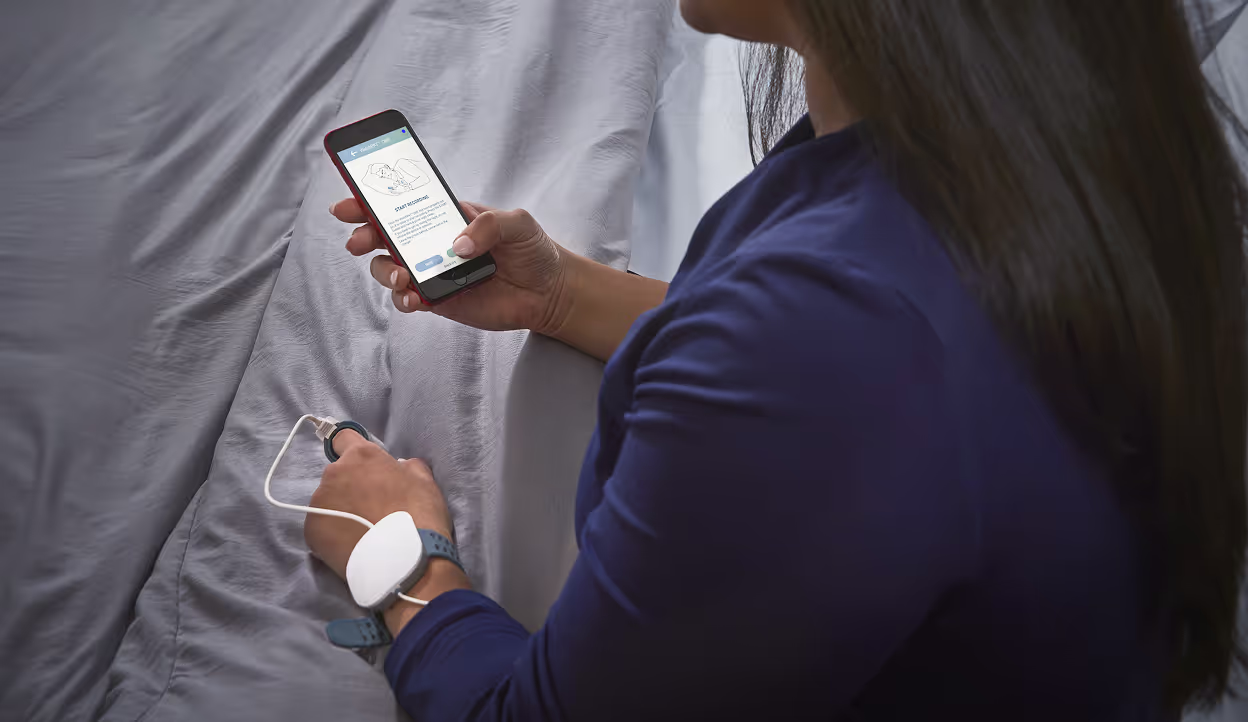
Home sleep testing uses a compact device that you apply yourself before going to bed. The equipment typically includes three components: a nasal cannula that sits just below your nostrils to measure airflow and detect breathing interruptions, a chest strap or belt that wraps around your torso to measure respiratory effort, and a pulse oximeter sensor that clips onto your finger to monitor oxygen levels and heart rate throughout the night.
The device records data continuously from the moment you turn it on until you wake up. It captures airflow reductions (hypopneas), complete breathing cessations (apneas), drops in oxygen saturation, changes in heart rate, and patterns of respiratory effort. These markers collectively reveal whether your airway collapses repeatedly during sleep, which is the hallmark of obstructive sleep apnea.
Step-by-Step Process for Completing a Home Sleep Test
1. Complete the free sleep assessment at dumbo.health to determine whether a home sleep test is appropriate for your symptoms and risk profile.
2. Order your home sleep test device through dumbo.health for $149, which ships directly to your home in Rowlett or anywhere in Texas with no prescription hassle.
3. On your test night, attach the nasal cannula, secure the chest strap or belt around your torso, and clip the finger sensor onto your index finger following the included instructions.
4. Turn on the device and sleep in your normal position in your own bed, aiming for at least six hours of recording time for accurate results.
5. In the morning, remove the sensors, power off the device, and ship it back using the prepaid return label included in the kit.
6. A board-certified physician interprets the recorded data and generates a detailed report, which is included with any dumbo.health monthly plan starting at $59 per month.
7. Review your results and discuss treatment recommendations through a telehealth consultation with your care team.
After completing these steps, your physician will have the data needed to confirm or rule out obstructive sleep apnea and recommend a treatment plan tailored to your severity level.
Unlike in-lab polysomnography, home sleep testing does not monitor brain waves, eye movements, muscle tone, or sleep stages. This means the test does not calculate total sleep time directly. Instead, it uses total recording time as a proxy. According to the American Academy of Sleep Medicine, this approach is sufficient for diagnosing obstructive sleep apnea in most adult patients without complex comorbidities.
IMPORTANT: Follow the device instructions carefully. A poorly attached nasal cannula or loose chest strap can produce incomplete data and may require a repeat test night.
KEY TAKEAWAY: A home sleep apnea test uses a nasal cannula, chest strap, and finger sensor to record airflow, respiratory effort, oxygen saturation, and heart rate during one night of sleep at home, with results interpreted by a physician.
Once you understand the mechanics of the test, the next question most people ask is what happens with the results and what the numbers actually mean.
Understanding Your Home Sleep Test Results
Home sleep test results center on the apnea-hypopnea index, which is the number of breathing interruptions per hour of recording time. A physician reviews the raw data and provides a diagnosis based on established severity thresholds.
The apnea-hypopnea index is the primary diagnostic marker used to determine whether you have obstructive sleep apnea and, if so, how severe it is. An apnea is a complete cessation of airflow lasting at least 10 seconds. A hypopnea is a partial reduction in airflow, typically 30 percent or more, accompanied by a drop in oxygen saturation of at least 3 percent or an arousal.
According to the American Academy of Sleep Medicine, obstructive sleep apnea severity is classified as follows:
Apnea-Hypopnea Index Score
- Normal: fewer than 5 events per hour
- Mild obstructive sleep apnea: 5 to 14 events per hour
- Moderate obstructive sleep apnea: 15 to 29 events per hour
- Severe obstructive sleep apnea: 30 or more events per hour
What Else the Report Includes
- Oxygen saturation: The report shows your lowest recorded oxygen level and the percentage of time spent below 90 percent saturation. The National Heart, Lung, and Blood Institute notes that repeated oxygen desaturation contributes to cardiovascular strain, including elevated blood pressure and increased stroke risk.
- Heart rate variability: Changes in heart rate that correlate with breathing events can indicate autonomic stress, which is linked to heart disease over time.
- Respiratory effort: The chest strap data confirms whether apneas are obstructive (airway blockage with continued effort) or central (no effort detected). This distinction matters because central sleep apnea and complex sleep apnea syndrome require different treatment approaches.
- Airflow patterns: The nasal cannula data reveals the shape and duration of each breathing event, helping the physician distinguish between apneas, hypopneas, and respiratory effort-related arousals.
Your physician uses these markers together, not just the apnea-hypopnea index alone, to form a complete clinical picture. With dumbo.health, physician interpretation and a detailed report are included with all monthly care plans. The Essentials plan at $59 per month covers interpretation, CPAP therapy, equipment, and follow-up care with no contracts and the ability to cancel anytime.
A home sleep test report provides clinical data, but it does not explain how you feel. Clinicians frequently observe that patients with an apnea-hypopnea index of 15 or higher report significant improvements in daytime fatigue, headaches, and sleep quality once treatment begins.
KEY TAKEAWAY: Home sleep test results are primarily measured by the apnea-hypopnea index, with scores of 5 or above indicating obstructive sleep apnea; a physician interprets oxygen saturation, heart rate, respiratory effort, and airflow patterns to determine severity and guide treatment.
Results are only useful if they lead to the right treatment, so understanding what comes next is critical.
Treatment Options After a Sleep Apnea Diagnosis
CPAP therapy is the first-line treatment for moderate to severe obstructive sleep apnea, and it remains the most effective option for reducing breathing interruptions and improving oxygen levels during sleep. Other treatment options exist for patients who cannot tolerate CPAP.
CPAP Therapy
Continuous positive airway pressure, commonly called CPAP, delivers a steady stream of air through a mask to keep your airway open while you sleep. According to the National Heart, Lung, and Blood Institute, CPAP therapy reduces the apnea-hypopnea index to near-normal levels in most patients when used consistently. The AASM recommends a minimum of 4 hours per night on at least 70 percent of nights for treatment to be considered effective.
Many patients report that the first few weeks of CPAP therapy involve an adjustment period. Mask fit, pressure settings, and humidity levels may need fine-tuning. dumbo.health addresses this directly through its care plans. The Premium plan at $89 per month includes a dedicated sleep coach from a licensed care team, advanced adherence monitoring, and priority results turnaround, all designed to help patients adjust faster and stay on track. The CPAP therapy program through dumbo.health includes equipment with every monthly plan, so there is no separate cost for the machine.
Oral Appliance Therapy
Oral appliances are custom-fitted dental devices that reposition the lower jaw forward to keep the airway open during sleep. Oral appliance therapy is typically recommended for mild to moderate obstructive sleep apnea or for patients who cannot tolerate CPAP. A bite assessment by a dentist trained in sleep medicine is usually required to ensure proper fit. The American Academy of Sleep Medicine notes that oral appliances are less effective than CPAP for severe cases but can be a viable alternative when adherence to CPAP is a barrier.
Lifestyle Changes
Lifestyle changes can reduce the severity of obstructive sleep apnea, particularly for patients with mild disease. Weight loss of 10 percent or more has been shown to meaningfully reduce the apnea-hypopnea index in overweight patients. Positional therapy, which involves sleeping on your side rather than your back, can also reduce airway collapse. Avoiding alcohol and sedatives before bed helps maintain airway muscle tone during sleep.
Advanced Treatment Options
For patients who do not respond to CPAP, oral appliances, or lifestyle changes, hypoglossal nerve stimulation is a surgically implanted device that stimulates the nerve controlling tongue movement to keep the airway open during sleep. The FDA approved this therapy for patients with moderate to severe obstructive sleep apnea who have failed CPAP. It is not a first-line treatment and requires evaluation by a sleep medicine specialist.
Treatment plans should be individualized based on severity, comorbidities, patient preference, and adherence patterns. dumbo.health builds treatment plans around ongoing physician oversight and adherence monitoring, which research consistently links to better long-term outcomes.
TIP: If you have been diagnosed with obstructive sleep apnea and are unsure which treatment fits your situation, start with the free sleep assessment at dumbo.health to discuss your options with a care team.
KEY TAKEAWAY: CPAP therapy is the most effective treatment for moderate to severe obstructive sleep apnea, with oral appliances and lifestyle changes serving as alternatives for specific patients; dumbo.health care plans include CPAP equipment, physician oversight, and adherence support starting at $59 per month.
Choosing the right treatment depends partly on the type of test you completed, so understanding how home testing compares to in-lab studies helps frame the full picture.
Home Sleep Test vs In-Lab Polysomnography
A home sleep test is more convenient and less expensive than in-lab polysomnography, but an in-lab study captures a broader range of physiological data. The right choice depends on the suspected disorder and the patient's clinical profile.
In-lab polysomnography, also called a polysomnogram, is the gold standard sleep study. It is conducted overnight at a sleep center or sleep lab under the supervision of a technician. Polysomnography records brain waves, eye movements, muscle tone, sleep stages, sleep architecture, heart rate, respiratory effort, airflow, oxygen saturation, leg movements, carbon dioxide levels, body functions, and snoring sound. This comprehensive data set allows physicians to diagnose not just obstructive sleep apnea but also central sleep apnea, complex sleep apnea syndrome, narcolepsy, restless legs syndrome, and other sleep disorders.
A home sleep test records a narrower set of channels, focusing on respiratory effort, airflow, oxygen levels, and heart rate. It does not measure brain activity, sleep stages, or muscle tone. This makes it less suitable for patients with suspected non-respiratory sleep disorders.
Setting
- Home Sleep Apnea Test: Your own bed in Rowlett or anywhere in Texas
- In-Lab Polysomnography: Sleep center, sleep lab, or hospital, often near Dallas or in North Texas
Cost
- Home Sleep Apnea Test: Typically $149 to $500; dumbo.health charges $149 with no insurance required
- In-Lab Polysomnography: Often $1,000 to $3,000 or more, depending on insurance and facility
Channels Monitored
- Home Sleep Apnea Test: Airflow (nasal cannula), respiratory effort (chest strap or belt), oxygen saturation (finger sensor), heart rate
- In-Lab Polysomnography: All of the above plus brain waves, eye movements, muscle tone, leg movements, sleep stages, carbon dioxide levels, snoring sound, and sleep architecture
Convenience
- Home Sleep Apnea Test: High; no travel, no overnight stay, no technician
- In-Lab Polysomnography: Lower; requires scheduling, travel to a sleep center, and an overnight stay in an unfamiliar environment
Best For
- Home Sleep Apnea Test: Adults with suspected moderate to severe obstructive sleep apnea and no significant comorbidities
- In-Lab Polysomnography: Patients with suspected central sleep apnea, narcolepsy, restless legs syndrome, complex sleep apnea syndrome, or other non-respiratory sleep disorders
For most Rowlett adults whose primary symptoms are snoring, daytime fatigue, and witnessed apneas, a home sleep test provides the diagnostic accuracy needed to confirm obstructive sleep apnea and begin treatment. The American Academy of Sleep Medicine recommends home sleep testing as a first step for uncomplicated cases, with in-lab polysomnography reserved for patients who need more detailed evaluation or whose home test results are inconclusive.
KEY TAKEAWAY: Home sleep testing is appropriate and clinically validated for diagnosing obstructive sleep apnea in most adults, while in-lab polysomnography is necessary for suspected central sleep apnea, narcolepsy, restless legs syndrome, or when home test results are inconclusive.
Understanding the differences between testing methods is essential, but knowing the limitations of home sleep testing helps you make a fully informed decision.
Limitations and Risks of Home Sleep Testing
Home sleep testing is effective for obstructive sleep apnea but has limitations that may require additional testing or a different diagnostic approach. Recognizing these boundaries protects you from incomplete diagnosis or delayed treatment.
It Does Not Diagnose All Sleep Disorders
A home sleep test is designed to detect obstructive sleep apnea. It does not capture the data needed to diagnose central sleep apnea, complex sleep apnea syndrome, narcolepsy, restless legs syndrome, insomnia, or other disorders that require monitoring of brain activity, eye movements, muscle tone, and sleep stages. Patients with suspected non-respiratory sleep disorders need in-lab polysomnography, which monitors a full range of vital signs and body functions.
Data Quality Can Be Affected by User Error
Because you apply the sensors yourself, there is a risk of incorrect placement. A loose nasal cannula may underreport airflow changes. A poorly positioned chest strap may record inaccurate respiratory effort. A finger sensor that slips off during the night may produce gaps in oxygen saturation data. Clinicians frequently observe that roughly 10 to 15 percent of home sleep tests require a repeat night due to insufficient data quality. Following device instructions precisely reduces this risk.
It May Underestimate Severity
Because home sleep tests do not measure brain activity or sleep stages, they calculate the apnea-hypopnea index using total recording time rather than total sleep time. If you are awake for a significant portion of the recording period, the denominator increases and the index may appear lower than it would during a polysomnogram. This means some patients with borderline results may actually have more severe disease than the home test suggests.
Not Suitable for All Patients
The American Academy of Sleep Medicine advises that home sleep testing is not appropriate for patients with significant cardiopulmonary disease, such as chronic obstructive pulmonary disease or pulmonary hypertension, or for patients who use supplemental oxygen. These conditions can affect oxygen saturation readings and respiratory effort patterns in ways that require the controlled environment and comprehensive monitoring of a sleep lab. Patients with these conditions should discuss their testing options with a sleep medicine physician or pulmonologist.
How dumbo.health Addresses These Limitations
dumbo.health mitigates several of these risks through its care model. Every test result is reviewed by a board-certified physician, not an algorithm, ensuring clinical judgment is applied to borderline or complex cases. If a home sleep test produces inconclusive results, your dumbo.health care team can recommend next steps, including referral for in-lab polysomnography when appropriate. The Elite plan at $129 per month includes direct physician messaging and concierge clinical support for patients who need closer oversight.
KEY TAKEAWAY: Home sleep testing is not suitable for all sleep disorders, may underestimate severity in some cases, and requires correct sensor placement for reliable results; physician review of every test helps catch borderline or complex cases.
With limitations clearly understood, the next practical question is what the testing process costs and how payment works.
Cost of a Home Sleep Apnea Test in Rowlett, Texas
A home sleep apnea test through dumbo.health costs $149 as a one-time payment, with no insurance required, no prior authorizations, and no surprise bills. This cash-pay model removes the barriers that delay testing for many Rowlett and North Texas residents.
Traditional sleep testing costs vary widely depending on insurance, facility, and location. In-lab polysomnography at sleep centers near Dallas or in North Texas can cost $1,000 to $3,000 or more, with additional costs for physician interpretation, follow-up consultations, and equipment. Even with insurance, co-pays, deductibles, and prior authorization requirements can add weeks of delay and hundreds of dollars in out-of-pocket expenses.
dumbo.health uses a transparent pricing model designed for patients who want to skip the insurance process entirely:
Home Sleep Test
- One-time cost: $149
- Purchased before the test night
- Billed separately from monthly plans
- Includes the at-home sleep test device and one night of testing
Monthly Care Plans
Monthly plans cover physician interpretation, CPAP therapy, equipment, and ongoing adherence follow-up. All plans operate with no contracts and the ability to cancel anytime.
Essentials Plan
- $59 per month (approximately $2 per day)
- Physician interpretation and report
- CPAP therapy and equipment
- Standard follow-up care
- Updates sent to referring provider
Premium Plan (Most Popular)
- $89 per month (approximately $3 per day)
- Everything in Essentials
- Dedicated sleep coach from a licensed care team
- Advanced adherence monitoring
- Priority results turnaround
Elite Plan
- $129 per month (approximately $4 per day)
- Everything in Premium
- Concierge clinical support with priority care team access
- Direct physician messaging
- Custom reporting for your practice
For a Rowlett resident without insurance, the total cost for a home sleep test plus the first month of CPAP therapy through the Essentials plan is $208. Compare that to the potential cost of an in-lab study, separate CPAP equipment purchase (often $500 to $1,500 for a machine alone), and follow-up appointments billed individually. The dumbo.health sleep apnea care model bundles everything into predictable monthly pricing.
KEY TAKEAWAY: A home sleep apnea test through dumbo.health costs $149 with no insurance, no authorization delays, and no hidden fees, with monthly treatment plans starting at $59 that include CPAP therapy, equipment, and physician oversight.
Knowing the cost removes one barrier, but many people also wonder whether they can complete the entire process remotely.
Telehealth Sleep Study and Remote Care for Rowlett Residents
A telehealth sleep study allows Rowlett residents to complete their sleep apnea evaluation, receive results, and begin treatment without visiting a clinic in person. This approach combines home sleep testing with virtual physician consultations.
Telehealth sleep care has expanded significantly since 2020, and the American Academy of Sleep Medicine now supports telehealth as a clinically appropriate option for sleep apnea diagnosis and management in eligible patients. For people in Rowlett or the broader North Texas region, this means you can access a sleep specialist without driving to a sleep clinic or sleep center in Dallas.
dumbo.health delivers the entire care pathway remotely. You order the at-home sleep test online, receive the device at your home, complete the test overnight, and return it for physician interpretation. Results and treatment recommendations are delivered through secure digital communication. If CPAP therapy is prescribed, equipment is shipped directly to you and your care team monitors your adherence remotely.
The convenience of this model is significant for patients who work irregular hours, lack reliable transportation, or simply prefer to manage their healthcare from home. In real-world use, many patients report that remote care reduces the time from initial screening to treatment start by weeks compared to the traditional path of primary care referral, sleep lab scheduling, and separate equipment fitting.
DID YOU KNOW: According to the American Academy of Sleep Medicine, telehealth consultations for sleep medicine produce patient satisfaction rates comparable to in-person visits when combined with home sleep testing.
KEY TAKEAWAY: Telehealth sleep studies allow Rowlett residents to complete sleep apnea testing, receive physician-reviewed results, and start CPAP therapy entirely from home, with dumbo.health managing the full process remotely.
Remote care covers the logistics, but preparing properly for your test night is what ensures accurate, usable results.
How to Prepare for Your Home Sleep Test
Proper preparation on the night of your home sleep test improves data quality and reduces the chance of needing a repeat study. Follow these guidelines to ensure your test produces reliable results.
Sleep testing equipment is sensitive to positioning, skin contact, and environmental factors. Small preparation steps can make the difference between a clean, diagnostic recording and an inconclusive one.
Pre-Test Night Checklist
- Avoid alcohol for at least 24 hours before your test night, as alcohol relaxes airway muscles and can distort results.
- Avoid caffeine after noon on the day of your test to ensure you can fall asleep at a normal time.
- Do not take sleep medications unless specifically instructed by your physician, as they can alter sleep patterns and breathing.
- Shower before bed but do not apply lotion to your face or hands, which can interfere with sensor adhesion and the finger sensor reading.
- Remove nail polish from the finger where the pulse oximeter will be placed, as polish can block the sensor light and reduce accuracy of oxygen saturation readings.
- Charge any device components if required, and review the instruction materials included with your test kit.
- Set up your sleeping area so it is comfortable and free from disruptions, and plan to sleep in your normal position.
- Keep the device instruction card next to your bed for quick reference when attaching sensors.
- Complete the Home Sleep Test Consent Form if required by your provider before your test night.
- Confirm that your home sleep test device from dumbo.health has arrived and all components are present, including the nasal cannula, chest strap, finger sensor, and return shipping label.
Aim for at least six hours of recording time. The more data captured, the more confident your physician can be in the interpretation. If you wake up and a sensor has come loose, reattach it and continue sleeping.
KEY TAKEAWAY: Avoiding alcohol, caffeine, lotions, and sleep medications before your test night, combined with careful sensor attachment, produces the most accurate home sleep test results.
With preparation covered, one of the most important topics to address is why leaving sleep apnea untreated carries real health risks.
Health Risks of Untreated Sleep Apnea
Untreated obstructive sleep apnea significantly increases the risk of cardiovascular disease, metabolic disorders, and dangerous daytime impairment. These risks worsen over time and affect nearly every major organ system.
Obstructive sleep apnea causes repeated drops in oxygen saturation throughout the night. Each time the airway collapses and breathing stops, blood oxygen levels fall. The body responds with a surge of stress hormones, elevated heart rate, and spikes in blood pressure. Over months and years, this cycle damages blood vessels, strains the heart, and disrupts metabolic function.
According to the National Heart, Lung, and Blood Institute, untreated sleep apnea is associated with:
- High blood pressure: The repeated oxygen drops and autonomic arousals raise blood pressure during sleep and carry over into waking hours. The NHLBI reports that sleep apnea is present in roughly 30 to 40 percent of adults with hypertension.
- Heart disease: Chronic intermittent hypoxia and sympathetic nervous system activation increase the risk of coronary artery disease, heart failure, and atrial fibrillation.
- Stroke: The CDC notes that sleep apnea is an independent risk factor for stroke, separate from other cardiovascular risk factors.
- Diabetes: Insulin resistance is more common in patients with untreated obstructive sleep apnea. The NIH reports that treating sleep apnea with CPAP therapy may improve glucose metabolism in some patients.
- Daytime fatigue and accidents: Excessive daytime sleepiness impairs concentration, reaction time, and decision-making. The National Highway Traffic Safety Administration estimates that drowsy driving causes thousands of motor vehicle crashes annually in the United States.
Beyond cardiovascular and metabolic risks, untreated sleep apnea affects sleep quality, mood, and cognitive function. Patients frequently report headaches, irritability, memory problems, and difficulty maintaining focus at work or while driving.
Respiratory issues compound over time as well. In patients with coexisting chronic obstructive pulmonary disease, untreated sleep apnea worsens overnight hypoxemia and increases the risk of pulmonary hypertension. This overlap, sometimes called overlap syndrome, requires careful monitoring by a pulmonologist or sleep medicine specialist.
The risks of leaving sleep apnea undiagnosed highlight why accessible, affordable testing matters. For Rowlett residents who have been experiencing symptoms but have not been tested, dumbo.health makes the diagnostic step simple. A $149 home sleep test can be the starting point that prevents years of compounding health damage.
IMPORTANT: If you experience persistent snoring, witnessed apneas, or excessive daytime fatigue, these symptoms warrant clinical evaluation. Untreated sleep apnea does not improve on its own and typically worsens with age and weight gain.
KEY TAKEAWAY: Untreated obstructive sleep apnea increases the risk of high blood pressure, heart disease, stroke, diabetes, and dangerous daytime impairment, making early diagnosis and treatment essential for long-term health.
Understanding the stakes makes it easier to separate fact from fiction when it comes to common beliefs about sleep apnea testing.
Common Myths About Home Sleep Apnea Testing Debunked
MYTH: Home sleep tests are not accurate enough to diagnose sleep apnea.
FACT: The American Academy of Sleep Medicine validates home sleep testing as a clinically appropriate method for diagnosing obstructive sleep apnea in adults with a high pretest probability. Studies published in peer-reviewed journals consistently show that Type III home sleep devices have sensitivity above 85 percent for moderate to severe obstructive sleep apnea when compared to in-lab polysomnography. Home testing may underestimate severity in some borderline cases, which is why physician interpretation of results is critical.
MYTH: You need a doctor's referral and insurance approval before you can take a home sleep test.
FACT: You do not need a referral or insurance approval to order a home sleep test through dumbo.health. The $149 test is available as a direct cash-pay option with no prior authorization and no insurance paperwork. While some traditional sleep centers and labs in the Dallas and North Texas area require a prescription and insurance pre-approval, dumbo.health eliminates these barriers entirely.
MYTH: If you snore, you definitely have sleep apnea.
FACT: Snoring is a common symptom of obstructive sleep apnea, but not everyone who snores has sleep apnea. The Sleep Foundation notes that snoring can result from nasal congestion, alcohol use, sleep position, or anatomical variations without any underlying sleep disorder. A home sleep test measures airflow interruptions and oxygen desaturation, which distinguish simple snoring from clinically significant obstructive sleep apnea.
MYTH: CPAP therapy is unbearable and most people stop using it.
FACT: CPAP adherence rates improve significantly with proper mask fitting, pressure adjustments, and ongoing support. According to the American Academy of Sleep Medicine, structured follow-up and patient education programs increase CPAP adherence. dumbo.health addresses this directly through its Premium and Elite plans, which include dedicated sleep coaching, advanced adherence monitoring, and direct physician messaging to help patients stay on therapy.
MYTH: Sleep apnea only affects older, overweight men.
FACT: While obesity, male sex, and older age are risk factors, obstructive sleep apnea occurs in women, younger adults, and people with normal body weight. The National Heart, Lung, and Blood Institute notes that postmenopausal women have higher rates of sleep apnea than premenopausal women, and anatomical features such as a narrow airway or enlarged tonsils can cause sleep apnea regardless of weight.
KEY TAKEAWAY: Home sleep testing is clinically validated, does not require insurance or a referral through dumbo.health, and snoring alone does not confirm sleep apnea; physician-reviewed testing is the only way to diagnose obstructive sleep apnea accurately.
With myths addressed, the final step is pulling everything together and taking action.
Conclusion
Getting tested for sleep apnea does not have to mean a night in a clinic or weeks of insurance paperwork. For Rowlett, Texas residents, a home sleep apnea test provides a clinically validated path to diagnosis from the comfort of your own bed. The test measures the respiratory markers that matter most for identifying obstructive sleep apnea, and physician-reviewed results guide the right treatment.
dumbo.health offers the entire process with transparent, predictable pricing. The home sleep test costs $149 with no insurance required, and monthly care plans starting at $59 include CPAP therapy, equipment, and physician follow-up with no contracts and the ability to cancel anytime. If you have been putting off testing because of cost, access, or uncertainty, take the first step today.
Frequently Asked Questions About Home Sleep Apnea Test Rowlett, Texas
What is a home sleep apnea test?
A home sleep apnea test (HSAT) is a simplified, portable sleep study you complete in your own bed rather than an overnight sleep lab. The device records key signals during sleep, including airflow, oxygen saturation, breathing effort, and heart rate. A sleep physician then interprets the data to assess whether obstructive sleep apnea or another breathing-related sleep disorder may be present. Home sleep testing is widely accepted for diagnosing moderate to severe obstructive sleep apnea in adults who are otherwise healthy and do not have complex medical conditions. A healthcare professional can help determine whether home testing is appropriate for your situation.
What is the difference between a home sleep test and an in-lab sleep study?
A home sleep test records a focused set of breathing and oxygen signals overnight in your own bed, while an in-lab sleep study, also called polysomnography, monitors a broader range of body functions including brain waves, eye movements, muscle tone, leg movements, and sleep architecture in a supervised clinical setting. According to the American Academy of Sleep Medicine, home sleep apnea tests are appropriate for many adults with a high likelihood of obstructive sleep apnea, but an in-lab study may be recommended when central sleep apnea, narcolepsy, restless legs syndrome, or complex sleep disorders are suspected. A physician can advise which test is right for you.
Why would I need home sleep testing?
Home sleep testing may be recommended when a physician suspects obstructive sleep apnea based on symptoms such as loud snoring, waking up gasping for breath, choking episodes during sleep, daytime fatigue, morning headaches, difficulty concentrating, or moodiness. Risk factors including high blood pressure, heart disease, diabetes, obesity, and a larger neck circumference can also prompt a referral. If you have been asking yourself why you feel tired all day, why you cannot concentrate, or why you wake up with headaches, discussing these symptoms with a healthcare provider is a reasonable first step. A clinician can help determine whether a home sleep apnea test is an appropriate next step for your situation.
What should I expect during a home sleep apnea test?
On the night of your home sleep study, you will attach a small wearable device before bed according to the instructions provided. Depending on the device, this may include a nasal cannula to measure airflow, a chest strap or belt to monitor respiratory effort, a finger sensor to track oxygen saturation and heart rate, and a body position sensor. You sleep in your own bed as normally as possible. The device records data throughout the night, which you return or upload the following day. A sleep physician then interprets the results. The process is designed to be as comfortable as possible, and most people find it far less disruptive than an overnight stay at a sleep lab.
Is a home sleep apnea test uncomfortable or painful?
A home sleep apnea test is not painful. The sensors and equipment used are non-invasive and designed for comfort. Most people find the wearable device manageable, though some individuals need a night or two to get used to wearing a nasal cannula or chest belt during sleep. If you wake up during the night and a sensor has shifted, you can reposition it and continue the test. The test does not involve needles, sedation, or any clinical procedures. The goal is to capture a natural night of sleep so the data reflects your typical breathing patterns as accurately as possible.
What if I wake up during the night while taking the home sleep test?
Waking up briefly during a home sleep test is common and does not automatically invalidate the results. The device continues recording as long as it remains properly positioned. If a sensor has become dislodged, simply reattach it and return to sleep. Most home sleep apnea test devices require a minimum number of hours of valid recording to produce a reliable result. If the recording is insufficient, your physician may ask you to repeat the test. A healthcare professional reviewing your results can clarify whether the data collected provides enough information to support a clinical interpretation.
How does a home sleep apnea test work step by step?
A home sleep apnea test typically involves four steps. First, a physician reviews your symptoms and medical history and determines whether home testing is appropriate. Second, the testing device is sent to you or picked up, along with setup instructions. Third, you wear the device at home on the test night, recording signals such as airflow, oxygen saturation, respiratory effort, and heart rate. Fourth, the recorded data is returned or uploaded, a sleep physician interprets the results, and you receive a report. At-home sleep testing through dumbo.health follows this process at a transparent cash-pay price of $149 for the test night, with no insurance or prior authorization required.
How is sleep apnea diagnosed?
Sleep apnea is diagnosed through a clinical evaluation combined with a sleep study. A physician reviews your symptoms, medical history, and risk factors, and may use a screening tool such as the Epworth Sleepiness Scale to assess daytime sleepiness. A home sleep apnea test or in-lab polysomnography is then used to measure breathing events during sleep. The apnea-hypopnea index, which measures the average number of breathing interruptions per hour of sleep, is used to classify sleep apnea severity. According to the American Academy of Sleep Medicine, a diagnosis of obstructive sleep apnea requires a clinical evaluation alongside objective sleep testing. Diagnosis and interpretation must be performed by a qualified healthcare professional.
What are the symptoms of sleep apnea?
Common symptoms of sleep apnea include loud or disruptive snoring, waking up gasping for breath or choking, witnessed pauses in breathing during sleep, morning headaches, excessive daytime fatigue, difficulty concentrating, forgetfulness, and mood changes. Not everyone with sleep apnea snores, and not everyone who snores has sleep apnea. Some people have no awareness of nighttime symptoms and only notice daytime effects such as persistent tiredness or poor concentration. The Mayo Clinic notes that obstructive sleep apnea symptoms can vary in severity and may be attributed to other causes, which is why clinical evaluation and objective sleep testing are important for an accurate diagnosis.
What is the difference between obstructive sleep apnea and central sleep apnea?
Obstructive sleep apnea occurs when the muscles in the throat relax during sleep, causing the upper airway to partially or fully collapse and blocking normal airflow. It is the most common form of sleep apnea. Central sleep apnea occurs when the brain fails to send the correct signals to the muscles that control breathing, resulting in pauses in breathing that are not caused by a physical airway blockage. Complex sleep apnea syndrome, sometimes called treatment-emergent central sleep apnea, involves features of both types. Home sleep apnea tests are generally validated for detecting obstructive sleep apnea. Central sleep apnea typically requires an in-lab sleep study for accurate diagnosis and is managed differently from obstructive sleep apnea.
Is sleep apnea dangerous if left untreated?
Untreated sleep apnea is associated with serious health risks. The National Institutes of Health links untreated obstructive sleep apnea to increased risk of high blood pressure, heart disease, stroke, diabetes, and pulmonary hypertension. Repeated episodes of low oxygen saturation during sleep place sustained stress on the cardiovascular system. Daytime sleepiness caused by untreated sleep apnea also increases the risk of motor vehicle accidents and occupational errors. These risks are particularly relevant for commercial drivers. If you have symptoms of sleep apnea, speaking with a healthcare provider about evaluation is important. Early diagnosis and treatment can support better health outcomes, though individual results vary.
Can sleep apnea be cured or only managed?
Sleep apnea can sometimes be improved significantly through lifestyle changes such as weight loss, positional therapy, or treating underlying conditions, but for most people it is a chronic condition that requires ongoing management rather than a permanent cure. The most effective and widely used treatment for moderate to severe obstructive sleep apnea is continuous positive airway pressure therapy, commonly known as CPAP. Other options include oral appliance therapy, hypoglossal nerve stimulation, or in some cases surgical intervention. A sleep physician can review your test results and help identify the most appropriate treatment plan. Treatment decisions should always be made in consultation with a qualified healthcare professional.
What is CPAP therapy and how does it help with sleep apnea?
Continuous positive airway pressure therapy, or CPAP, is the most commonly prescribed treatment for moderate to severe obstructive sleep apnea. A CPAP machine delivers a continuous stream of pressurised air through a mask worn during sleep, keeping the upper airway open and preventing the breathing interruptions that characterise sleep apnea. When used consistently, CPAP therapy can reduce daytime fatigue, improve oxygen saturation, and lower cardiovascular risk associated with untreated sleep apnea. Consistent nightly use is important for achieving full benefit. CPAP therapy and equipment through dumbo.health is available as part of ongoing monthly care plans, with physician interpretation, adherence monitoring, and equipment included.
What does CPAP adherence mean and why does it matter?
CPAP adherence refers to how consistently and for how long a patient uses their CPAP machine each night. Healthcare providers and insurers typically define adequate adherence as using CPAP for at least four hours per night on at least 70 percent of nights over a 30-day period. Adherence matters because the health benefits of CPAP, including improved sleep quality, reduced daytime fatigue, and lower cardiovascular risk, depend on consistent use. Poor adherence is one of the most common challenges in sleep apnea care. Ongoing follow-up with a sleep physician or care team can help identify and address barriers to consistent CPAP use, such as mask fit, pressure settings, or comfort.
Are there alternatives to CPAP for treating sleep apnea?
Yes. While CPAP therapy is the most widely used and evidence-supported treatment for moderate to severe obstructive sleep apnea, alternatives exist for patients who cannot tolerate CPAP. Oral appliance therapy involves a custom-fitted mouthguard that repositions the jaw and tongue to keep the airway open during sleep. Hypoglossal nerve stimulation is an implantable device option for selected patients. Positional therapy can help patients whose sleep apnea is significantly worse when sleeping on their back. Lifestyle changes such as weight loss may reduce severity. A dentist or physician who specialises in sleep medicine can assess which option is most appropriate based on the severity of sleep apnea and individual anatomy.
Are home sleep apnea tests accurate?
Home sleep apnea tests are clinically validated for detecting moderate to severe obstructive sleep apnea in adults without significant comorbidities. The American Academy of Sleep Medicine recognises home sleep apnea testing as an appropriate diagnostic tool in this context. However, home tests may underestimate the severity of sleep apnea compared to in-lab polysomnography because they measure sleep time less precisely and cannot monitor all sleep stages. Home sleep tests are generally not recommended as the primary diagnostic tool when central sleep apnea, complex sleep apnea syndrome, narcolepsy, restless legs syndrome, or significant heart, lung, or neuromuscular conditions are suspected. A physician can advise whether home testing is appropriate or whether a full in-lab study is warranted.
Is there a link between sleep apnea and lung conditions such as COPD?
Yes. Sleep apnea and chronic obstructive pulmonary disease, or COPD, can occur together in a condition sometimes referred to as overlap syndrome. Both conditions affect breathing during sleep and can lower overnight oxygen saturation. The combination can place greater strain on the heart and respiratory system than either condition alone. Pulmonary hypertension is also associated with both untreated sleep apnea and chronic lung disease. If you have been diagnosed with COPD or another lung condition and also have symptoms of sleep apnea, informing your pulmonologist or primary care provider is important. In these cases, an in-lab sleep study rather than a home sleep test may provide more complete diagnostic information.
What do sleep studies diagnose beyond sleep apnea?
Sleep studies can assist in the diagnosis of a range of sleep disorders beyond obstructive and central sleep apnea. In-lab polysomnography can identify restless legs syndrome and periodic limb movement disorder through leg movement monitoring, narcolepsy through measurement of sleep latency and REM sleep patterns, parasomnias such as sleepwalking or REM sleep behaviour disorder through muscle tone and movement data, and insomnia through analysis of sleep architecture and sleep stages. Home sleep apnea tests record a more limited set of signals and are specifically designed to detect breathing-related sleep disorders. If a broader sleep disorder evaluation is needed, a full in-lab study is typically required.
How is narcolepsy diagnosed and treated?
Narcolepsy is a neurological sleep disorder characterised by excessive daytime sleepiness, sudden muscle weakness triggered by emotions, sleep paralysis, and vivid hallucinations when falling asleep or waking. It is diagnosed through a combination of clinical evaluation, an overnight in-lab polysomnogram to rule out other sleep disorders, and a multiple sleep latency test conducted the following day to measure how quickly a person falls asleep and enters REM sleep. Home sleep apnea tests cannot diagnose narcolepsy. Treatment typically involves a combination of lifestyle adjustments, scheduled naps, and medications prescribed by a sleep specialist or neurologist. Anyone with suspected narcolepsy should seek evaluation from a qualified sleep medicine physician.
How is insomnia treated?
Insomnia, the difficulty falling asleep, staying asleep, or waking too early despite adequate opportunity to sleep, is typically categorised as short-term or chronic. Cognitive behavioural therapy for insomnia, known as CBT-I, is the first-line recommended treatment for chronic insomnia according to the American Academy of Sleep Medicine. CBT-I addresses thought patterns and behaviours that interfere with sleep without relying on medication. Sleep medications may be prescribed for short-term use in appropriate patients, but long-term pharmacological management carries risks and should be supervised by a physician. Lifestyle changes including consistent sleep schedules, limiting caffeine and alcohol, and managing stress also support improved sleep quality. A healthcare provider can help determine the most appropriate approach for your situation.
What are the signs of sleep problems in children?
Sleep problems in children can present differently from adults. Signs may include loud or frequent snoring, mouth breathing during sleep, observed pauses in breathing, bedwetting, night terrors, sleepwalking, difficulty waking in the morning, excessive daytime sleepiness, hyperactivity, difficulty concentrating, or declining school performance. Children with sleep apnea may not show the same daytime sleepiness as adults and may instead appear restless or inattentive. If you notice any of these signs in your child, speaking with a paediatrician or a sleep specialist is important. Sleep disorders in children are often treatable, and early intervention can support better health, behaviour, and development.
What can I do to promote healthy sleep in my child?
Healthy sleep habits in children are supported by a consistent bedtime routine, a regular sleep and wake schedule seven days a week, a quiet and dark sleep environment, limiting screen time in the hour before bed, avoiding caffeine, and ensuring the sleep space is comfortable and safe. The amount of sleep children need varies by age. School-age children generally need nine to twelve hours per night, while teenagers typically need eight to ten hours, according to the American Academy of Sleep Medicine. If consistent sleep hygiene practices are in place and your child still shows signs of poor sleep quality, excessive daytime fatigue, or snoring, a paediatric sleep evaluation may be appropriate.
How much does a home sleep apnea test cost in Rowlett, Texas?
The cost of a home sleep apnea test varies depending on the provider and whether insurance is used. With insurance, out-of-pocket costs can be unpredictable due to deductibles, copays, and prior authorization requirements. Cash-pay options offer more pricing transparency. dumbo.health offers a home sleep test for $149 as a one-time cash-pay cost, with no insurance required, no prior authorizations, and no surprise bills. This covers the at-home sleep test device and one night of testing. Physician interpretation and ongoing care are available through separate monthly plans starting at $59 per month. Residents of Rowlett, Texas and the surrounding North Texas area can access this service without needing to visit a sleep lab.
Do I need a referral or insurance to get a home sleep apnea test?
You do not always need a referral or insurance to access a home sleep apnea test. Requirements vary by provider. Many traditional sleep centres require a physician referral and insurance authorisation before scheduling a home test, which can create delays. Cash-pay options such as dumbo.health do not require insurance, prior authorization, or a referral to get started. A free sleep assessment is available through dumbo.health to help determine whether at-home sleep testing may be an appropriate next step for your situation. A healthcare professional reviews your information before testing proceeds. You can take the sleep assessment to begin the process.
What happens after my home sleep apnea test results are ready?
After your home sleep apnea test data is reviewed, a sleep physician interprets the recordings and produces a clinical report. The report typically includes your apnea-hypopnea index, overnight oxygen saturation levels, respiratory event data, and a clinical summary with findings and recommendations. If obstructive sleep apnea is confirmed, your physician will discuss treatment options such as CPAP therapy, oral appliance therapy, or lifestyle changes. The report can also be shared with your referring provider or primary care physician. Abnormal results do not automatically mean a worst-case outcome, but they do require clinical review and appropriate follow-up. A healthcare professional can guide next steps based on your individual results.
What ongoing care is available after a sleep apnea diagnosis?
After a sleep apnea diagnosis, ongoing care typically involves starting an appropriate treatment such as CPAP therapy, monitoring adherence and treatment response, follow-up physician reviews, and adjustments to therapy as needed. Ongoing sleep apnea care can also include sleep coaching, advanced adherence monitoring, and coordination with a referring provider. dumbo.health offers ongoing sleep apnea care solutions through monthly plans with no contracts and no long-term commitments. The Essentials plan starts at $59 per month and includes physician interpretation, CPAP therapy and equipment, and standard follow-up. The Premium plan at $89 per month adds a dedicated sleep coach, advanced adherence monitoring, and priority results. The Elite plan at $129 per month adds concierge clinical support and direct physician messaging.
How do commercial drivers in North Texas access home sleep apnea testing?
Commercial drivers in North Texas, including those near Rowlett and the Dallas area, can access home sleep apnea testing without visiting a sleep lab or taking extended time away from work. A home sleep apnea test allows drivers to complete testing at home on a schedule that works around driving hours. Certified medical examiners may consider untreated sleep apnea as a disqualifying factor during a DOT physical, depending on clinical findings. Drivers who need sleep apnea evaluation and documentation can use at-home sleep testing for commercial drivers to begin the process. dumbo.health supports testing and care documentation, but DOT certification decisions are made by a certified medical examiner, not by dumbo.health.
How does sleep apnea affect commercial driver safety and DOT certification?
The Federal Motor Carrier Safety Administration requires commercial drivers to meet medical fitness standards to hold a valid CDL medical certificate. Untreated obstructive sleep apnea can impair alertness, reaction time, and judgement, creating safety risks relevant to commercial driving. A certified medical examiner conducting a DOT physical may consider sleep apnea symptoms, risk factors, and test results when making a certification decision. Drivers who are diagnosed and demonstrate treatment adherence, typically through consistent CPAP use, may be eligible for certification. According to the FMCSA, medical examiners have discretion in evaluating sleep apnea and its impact on a driver's ability to operate safely. dumbo.health can support testing and adherence documentation, but cannot guarantee DOT certification or medical clearance.
Where can I find home sleep apnea testing near Rowlett, Texas?
Residents of Rowlett, Texas and surrounding communities in North Texas, including the greater Dallas area, can access home sleep apnea testing through local sleep centres or cash-pay telehealth-supported services that ship the test device directly to your home. Rather than searching for providers in your area who may require insurance and long wait times, patients in Rowlett can use dumbo.health to complete a sleep assessment online, receive a home sleep test device, and access physician interpretation without visiting a clinic. This approach is particularly useful for patients without insurance or those who prefer a more convenient and transparent process. Start with a free sleep assessment to see whether at-home sleep testing is an appropriate next step.