



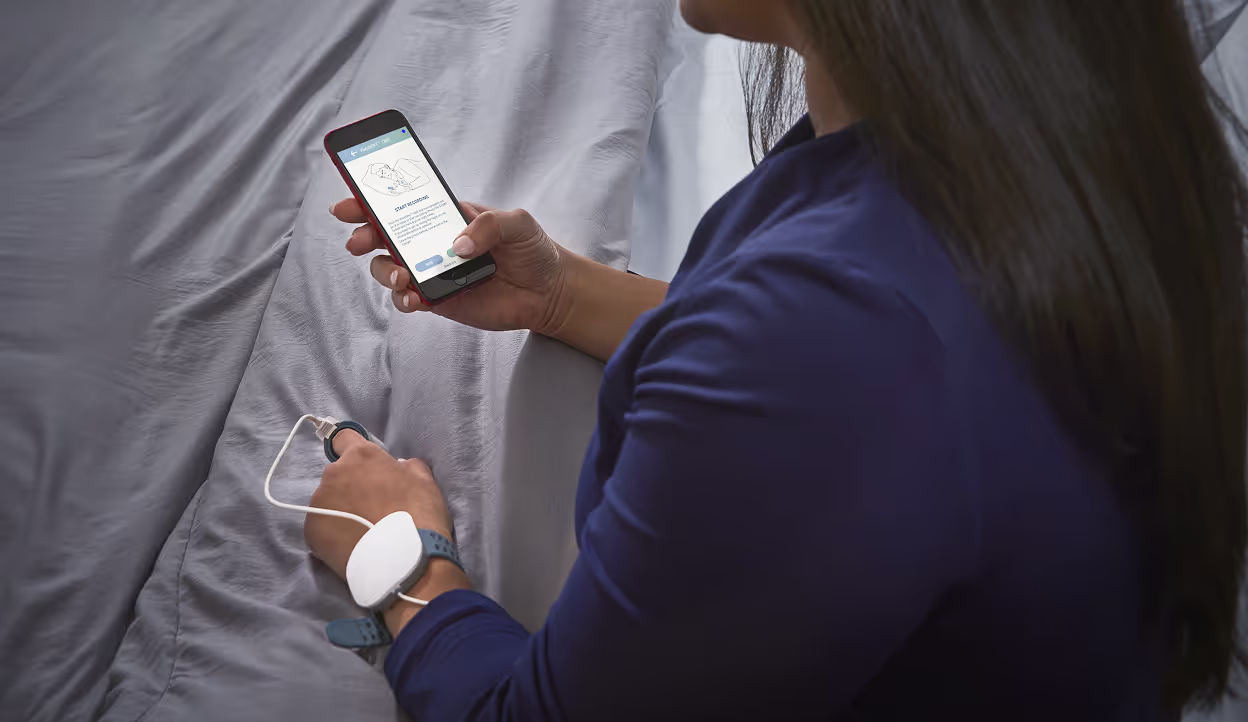



Home Sleep Apnea Test in DeSoto, Texas: The Complete Guide for Local Residents
A home sleep apnea test in DeSoto, Texas lets you screen for obstructive sleep apnea from your own bed without traveling to a sleep disorders center or spending a night in a clinic. According to the American Academy of Sleep Medicine, home sleep testing is an accepted method for diagnosing obstructive sleep apnea in adults with a moderate to high pretest probability. This guide is for DeSoto residents, Dallas-Fort Worth Metroplex commuters, and anyone in the North Texas area who suspects their snoring, fatigue, or breathing disruptions during sleep may signal a treatable medical condition. You will learn how home sleep tests work, what results mean, how they compare to in-lab sleep studies, what treatment options follow a diagnosis, and how to access affordable testing without insurance barriers. Every section is built to help you take a clear next step.
Quick Answer
A home sleep apnea test in DeSoto, Texas is a portable diagnostic device you wear overnight at home to measure breathing patterns, oxygen levels, heart rate, and airflow. The test detects apneas and hypopneas that indicate obstructive sleep apnea. Results are reviewed by a physician who determines whether treatment such as CPAP therapy is needed. Most people receive results within a few business days. dumbo.health offers a home sleep test for $149 with no insurance required, making it accessible for DeSoto residents who want fast, affordable testing.
Key Takeaways
- Home sleep apnea tests measure oxygen saturation, airflow, respiratory effort, and heart rate while you sleep in your own bed
- The American Academy of Sleep Medicine supports home sleep testing as a valid diagnostic tool for obstructive sleep apnea in appropriate candidates
- DeSoto, Texas residents can access home sleep testing without visiting a Dallas sleep disorders center or scheduling an overnight in-lab study
- dumbo.health provides a home sleep test for $149 with physician interpretation included in monthly plans starting at $59 per month
- Untreated obstructive sleep apnea increases the risk of stroke, heart attack, and high blood pressure according to the National Heart, Lung, and Blood Institute
- A home sleep test does not diagnose all sleep disorders, so some patients may still need a full polysomnography for conditions like narcolepsy, parasomnias, or periodic limb movements
What Is a Home Sleep Apnea Test and How Does It Work
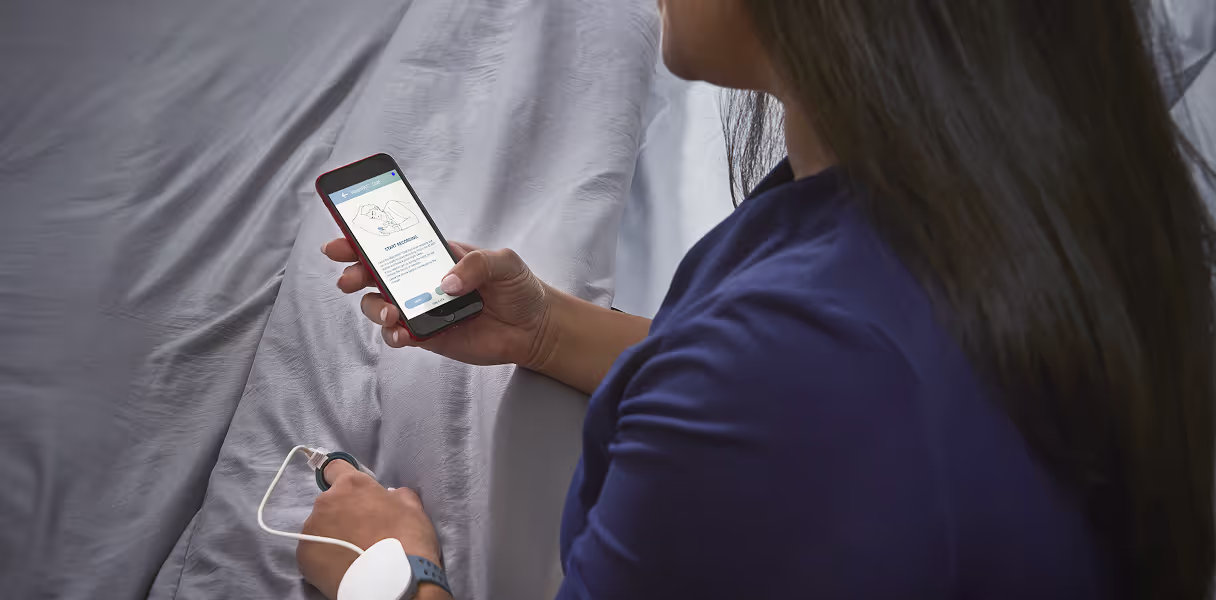
A home sleep apnea test is a portable diagnostic device that records breathing, oxygen levels, and airflow while you sleep at home. It is designed to detect obstructive sleep apnea without requiring an overnight stay at a sleep center.
Home sleep testing is classified as Out Of Center testing by the American Academy of Sleep Medicine. The device typically uses fewer channels than a full in-lab polysomnography but captures the key data points a sleep physician needs to identify obstructive sleep apnea.
What the Device Measures
Most home sleep test devices record four to seven channels of data. The core measurements include:
- Airflow through a nasal cannula that detects breathing interruptions
- Blood oxygen saturation using a pulse oximeter clipped to your finger
- Respiratory effort through a chest or abdominal belt using respiratory inductance plethysmography
- Heart rate tracked continuously throughout the night
Some devices, such as the SleepImage Ring, use fewer sensors while still providing a clinical profile sufficient for diagnosing obstructive sleep apnea. The scoring of results focuses on counting apneas and hypopneas per hour of sleep to generate an Apnea-Hypopnea Index, which is the standard metric for diagnosing severity.
The Difference Between Home Testing and In-Lab Studies
An in-lab sleep study, or polysomnography, monitors additional channels including brain waves, eye movements, and leg movements. This makes it necessary for diagnosing conditions like narcolepsy, restless legs syndrome, parasomnias such as sleepwalking, and periodic limb movements. A home sleep test focuses specifically on breathing and oxygen data, which makes it highly effective for obstructive sleep apnea but limited for other sleep disorders.
Home sleep apnea testing works well for most adults who have symptoms of obstructive sleep apnea, such as loud snoring, witnessed apneas, and daytime fatigue. The National Heart, Lung, and Blood Institute notes that obstructive sleep apnea affects an estimated 25 percent of men and nearly 10 percent of women, making it one of the most common sleep disorders in the United States.
DID YOU KNOW: The American Academy of Sleep Medicine estimates that up to 80 percent of moderate to severe obstructive sleep apnea cases remain undiagnosed in the general population.
KEY TAKEAWAY: A home sleep apnea test records airflow, oxygen saturation, respiratory effort, and heart rate to diagnose obstructive sleep apnea without requiring a visit to a sleep disorders center.
Understanding how the test works sets the foundation for knowing whether you are a good candidate for home sleep testing in the DeSoto area.
Why DeSoto, Texas Residents Should Consider Home Sleep Testing
DeSoto residents benefit from home sleep testing because it eliminates the need to travel to a Dallas sleep center, take time off work for an overnight appointment, or navigate insurance pre-authorizations. Home testing puts the evaluation in your own bed, where your natural sleep patterns are preserved.
DeSoto is located in the southern portion of the Dallas-Fort Worth Metroplex, and while sleep centers exist throughout the region, including locations along W Wheatland Rd and in nearby McKinney, many residents find that scheduling, commuting, and overnight stays create barriers to getting tested. For people working long hours, managing families, or dealing with the fatigue that often accompanies untreated sleep apnea, a home sleep test removes those obstacles.
The comfort of sleeping at home also improves data quality for many patients. Clinicians frequently observe that patients sleep more naturally in their own environment compared to an unfamiliar sleep lab. This matters because the test needs to capture a representative night of sleep to produce accurate results.
dumbo.health ships home sleep test devices directly to DeSoto residents for $149 with no insurance required and no prior authorization. This makes testing accessible regardless of whether you have Medical Insurance coverage or not.
Common Symptoms That Prompt Testing
Residents in DeSoto and the broader North Texas area should consider a home sleep test if they experience:
- Loud, chronic snoring that disrupts a bed partner
- Witnessed pauses in breathing during sleep
- Waking up gasping or choking
- Excessive daytime fatigue despite getting enough hours of sleep
- Morning headaches that resolve within a few hours of waking
- Difficulty concentrating or memory problems linked to sleep deprivation
- High blood pressure that is difficult to control
According to the Mayo Clinic, these symptoms align with the clinical profile of obstructive sleep apnea and warrant a formal evaluation. A home sleep test provides that evaluation without requiring a referral chain that can delay diagnosis by weeks or months.
KEY TAKEAWAY: DeSoto residents can bypass travel, scheduling delays, and insurance hurdles by using a home sleep test that ships directly to their door.
Knowing the symptoms that warrant testing is the first step, but understanding who qualifies for a home test versus an in-lab study is equally important.
Who Is a Good Candidate for a Home Sleep Test
Adults with a moderate to high probability of obstructive sleep apnea are the best candidates for home sleep testing. The American Academy of Sleep Medicine recommends home sleep apnea testing for patients who do not have significant comorbid illnesses or other suspected sleep disorders.
A sleep physician or primary care provider typically evaluates your clinical profile to determine whether a home test is appropriate. The evaluation often includes a physical exam, a review of symptoms, and an assessment of risk factors such as BMI, neck circumference, age, and family history.
Ideal Candidates
You are likely a good candidate for a home sleep test if you:
- Are an adult over 18 years old
- Have symptoms consistent with obstructive sleep apnea such as snoring, witnessed apneas, or excessive fatigue
- Do not have a known diagnosis of congestive heart failure, chronic obstructive pulmonary disease, or neurovascular diseases
- Do not suspect a condition like narcolepsy, restless legs syndrome, or parasomnias
- Can follow simple instructions for applying the sensor, belt, and cannula at home
Who May Need an In-Lab Sleep Study Instead
Some patients require a full polysomnography at a sleep disorders center. This includes people with:
- Suspected central sleep apnea rather than obstructive sleep apnea
- Significant cardiopulmonary functions concerns
- Neurological diseases that may affect breathing during sleep
- Suspected narcolepsy requiring measurement of sleep cycle stages and rapid eye movement patterns
- Periodic limb movements or restless legs that need to be monitored alongside breathing data
If your home sleep test results are inconclusive or negative despite strong clinical suspicion, a sleep specialist may recommend an in-lab study as a follow-up. This does not mean the home test failed. It means additional channels of data are needed to reach a diagnosis.
dumbo.health includes physician interpretation as part of its monthly care plans, so if your results suggest the need for further evaluation, your physician can guide next steps, including referral to a sleep center near you if an in-lab study is warranted.
KEY TAKEAWAY: Home sleep testing is recommended for adults with a clinical profile consistent with obstructive sleep apnea who do not have complex comorbid conditions requiring full polysomnography.
Once you know you are a candidate, the next step is understanding exactly how to prepare for and complete the test at home.
How to Complete a Home Sleep Apnea Test in DeSoto, Texas
Completing a home sleep test involves a simple, step-by-step process that most people finish in a single night. The goal is to capture at least one full night of sleep data using the portable device.
Step-by-Step Process for Your Test Night
1. Order your home sleep test through dumbo.health for $149 and receive the device at your DeSoto address within a few business days.
2. Review the instructions included with the device, including any Home Sleep Test Consent Form or privacy documentation.
3. Attach the nasal cannula to measure airflow, place the pulse oximeter sensor on your finger, and secure the chest belt to monitor respiratory effort.
4. Go to bed at your normal time and sleep as you usually would, prioritizing comfort so the test captures your natural sleep patterns.
5. Remove the device in the morning and follow the return instructions, which typically involve shipping the device back in a prepaid package.
6. A board-certified physician reviews the recorded data, including apneas, hypopneas, oxygen saturation levels, and heart rate patterns.
7. Receive your results within a few business days, including a diagnosis if obstructive sleep apnea is detected and a recommended treatment plan.
After completing these steps, you will have a clear understanding of whether you have obstructive sleep apnea and what the recommended next steps are. If treatment is indicated, dumbo.health offers CPAP therapy through monthly plans starting at $59 per month with no contracts.
Checklist: What to Do Before Your Test Night
- Confirm the device is fully charged and all components are included in the package
- Read the instruction guide and practice attaching the sensor, belt, and cannula before bedtime
- Avoid alcohol for at least four hours before the test, as alcohol relaxes the airway and can distort results
- Limit caffeine intake after noon to support natural sleep onset
- Sleep in your usual position and environment for the most representative data
- Set your phone alarm as a backup to remind you to remove the device in the morning
- Complete the free sleep assessment at dumbo.health if you have not yet confirmed your eligibility for home testing
TIP: Sleeping in your own bed during the test helps capture your natural breathing patterns, which improves the accuracy of the diagnosis compared to testing in an unfamiliar environment.
KEY TAKEAWAY: A home sleep test in DeSoto takes one night, requires no appointment at a sleep center, and produces physician-reviewed results within days.
With the test complete, the next critical step is understanding what your results actually mean.
Understanding Your Home Sleep Test Results
Home sleep test results are reported as an Apnea-Hypopnea Index, which measures the number of apneas and hypopneas per hour of recorded sleep. This single number determines whether you have obstructive sleep apnea and how severe it is.
An apnea is a complete pause in airflow lasting at least 10 seconds. A hypopnea is a partial reduction in airflow accompanied by a drop in oxygen saturation or an arousal from sleep. The scoring of these events follows criteria established by the American Academy of Sleep Medicine.
Severity Levels Based on AHI
- Normal: fewer than 5 events per hour
- Mild obstructive sleep apnea: 5 to 14 events per hour
- Moderate obstructive sleep apnea: 15 to 29 events per hour
- Severe obstructive sleep apnea: 30 or more events per hour
Your results will also include data on your lowest oxygen saturation levels during the night, average oxygen saturation, and heart rate patterns. Significant drops in blood oxygen saturation below 90 percent are clinically meaningful and may indicate that your airway is collapsing repeatedly during sleep.
What Happens After You Get Results
If your results confirm obstructive sleep apnea, a physician will recommend a treatment plan based on severity. For moderate to severe cases, CPAP therapy is the most widely recommended first-line treatment according to the American Academy of Sleep Medicine. For mild cases, oral appliance therapy or lifestyle changes such as weight management, positional therapy, or reducing alcohol intake before bed may be appropriate.
With dumbo.health, physician interpretation is included in monthly care plans. The Essentials Plan at $59 per month covers physician review, a CPAP device, and standard follow-up care. The Premium Plan at $89 per month adds a dedicated sleep coach and advanced adherence monitoring.
If results are negative but symptoms persist, your sleep physician may recommend a full in-lab sleep study to evaluate for other conditions like narcolepsy, periodic limb movements, or parasomnias. A negative home test does not rule out all sleep disorders. It rules out obstructive sleep apnea as detected by the channels recorded during that specific night.
IMPORTANT: A single night of testing may occasionally underestimate severity if you slept significantly less than usual or if the sensor shifted during the night. Your physician will consider your clinical profile alongside the raw data.
KEY TAKEAWAY: Your AHI score determines the severity of obstructive sleep apnea and directly shapes your treatment plan, from CPAP therapy for moderate to severe cases to oral appliances or lifestyle changes for milder presentations.
Once you understand your diagnosis, the next question most patients ask is what treatment looks like and how to access it.
Treatment Options After a Sleep Apnea Diagnosis
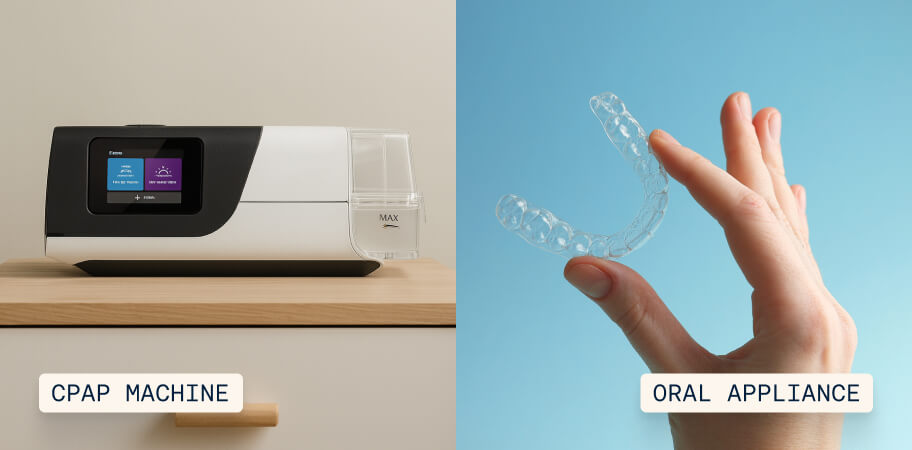
CPAP therapy is the gold-standard treatment for moderate to severe obstructive sleep apnea, delivering continuous positive airway pressure to keep the airway open during sleep. Treatment selection depends on your AHI score, symptom severity, and personal preferences.
CPAP Therapy
A CPAP machine delivers pressurized air through a mask worn during sleep. The air pressure prevents the airway from collapsing, which eliminates apneas and restores normal oxygen levels throughout the night. According to the National Heart, Lung, and Blood Institute, consistent CPAP use reduces daytime fatigue, lowers blood pressure, and decreases the risk of stroke and heart attack associated with untreated obstructive sleep apnea.
CPAP adherence is critical. The Centers for Medicare and Medicaid Services define adequate adherence as using the CPAP device for at least 4 hours per night on at least 70 percent of nights. Many patients struggle with adherence initially due to mask discomfort or pressure adjustment issues. This is where ongoing support matters.
dumbo.health includes CPAP therapy and equipment in all monthly plans. The Premium Plan at $89 per month pairs CPAP therapy with a dedicated sleep coach who helps with mask fitting, pressure adjustments, and adherence strategies. This level of support is often the difference between patients who abandon treatment and those who experience lasting improvement in sleep quality.
Oral Appliance Therapy
For mild to moderate obstructive sleep apnea, or for patients who cannot tolerate CPAP, oral appliance therapy is an alternative. An oral appliance is a custom-fitted mouthpiece that repositions the jaw to keep the airway open. The American Academy of Sleep Medicine recognizes oral appliances as an effective treatment for patients with mild to moderate disease.
Oral appliances require fitting by a dentist or provider trained in sleep medicine. They are less effective than CPAP for severe obstructive sleep apnea but offer better compliance for some patients due to their simplicity and comfort.
Lifestyle Changes
Lifestyle modifications can reduce the severity of obstructive sleep apnea, especially in mild cases. Evidence-based changes include:
- Losing weight if BMI is elevated, as excess tissue around the airway contributes to obstruction
- Avoiding alcohol within four hours of bedtime, since alcohol relaxes airway muscles
- Reducing caffeine intake in the afternoon and evening to improve sleep onset
- Sleeping on your side instead of your back to reduce gravitational airway collapse
- Treating nasal congestion or allergies that contribute to mouth breathing
These changes may be sufficient for mild cases but are typically combined with CPAP or oral appliances for moderate to severe disease.
Surgical and Emerging Options
For patients who fail or cannot tolerate CPAP and oral appliances, surgical options exist. Inspire Sleep Apnea Innovation is one example of a newer approach that uses a surgically implanted generator to deliver hypoglossal nerve stimulation. During sleep, the device monitors breathing and increases stimulation strength to keep the airway open. This option is FDA-approved for patients with moderate to severe obstructive sleep apnea who meet specific criteria, including a BMI under 40 and failure of CPAP therapy.
Surgery is not a first-line treatment. It is reserved for patients who have exhausted other options under the guidance of a sleep specialist.
KEY TAKEAWAY: CPAP therapy remains the most effective treatment for moderate to severe obstructive sleep apnea, and ongoing support from a care team significantly improves long-term adherence and outcomes.
With treatment options clear, it helps to see how these pathways play out for real people in situations similar to yours.
Real-World Scenarios: Home Sleep Testing in the DeSoto Area
Concrete examples help illustrate how home sleep testing fits into different people's lives. The following scenarios reflect common situations that clinicians and sleep physicians encounter regularly.
Scenario 1: A 48-Year-Old DeSoto Resident with Chronic Snoring
A 48-year-old man living in DeSoto has been told by his wife for years that he snores loudly and occasionally stops breathing during sleep. He experiences morning headaches that clear up by mid-morning and struggles with fatigue during his afternoon commute through the Dallas-Fort Worth Metroplex. His primary care provider suspects obstructive sleep apnea but the nearest sleep center with availability is three weeks out and requires an overnight stay.
He orders a home sleep test through dumbo.health for $149, completes the test in his own bed, and receives results showing an AHI of 22, indicating moderate obstructive sleep apnea. He enrolls in the Essentials Plan at $59 per month, receives a CPAP device, and notices reduced snoring and improved energy within the first two weeks of treatment.
Scenario 2: A 35-Year-Old Woman Without Insurance
A 35-year-old woman in the North Texas area works as an independent contractor and does not have Medical Insurance. She has gained weight over the past two years and has developed daytime fatigue, sleep deprivation, and difficulty concentrating. Her doctor recommends a sleep evaluation but she is concerned about the cost.
She discovers that dumbo.health offers a home sleep test for a flat $149 with no insurance required and no prior authorization. Her test results show mild obstructive sleep apnea with an AHI of 8. Her physician recommends positional therapy and weight management as a first step, with a follow-up evaluation in three months if symptoms persist.
Scenario 3: A 60-Year-Old with High Blood Pressure and a Recent Cardiac Scare
A 60-year-old man in the Dallas area was recently evaluated for uncontrolled high blood pressure and told by his cardiologist that untreated sleep apnea could be contributing to his cardiovascular risk. According to the CDC, adults with untreated obstructive sleep apnea are at significantly higher risk for stroke, heart attack, and other cardiovascular events.
His cardiologist refers him for a home sleep test. The results reveal severe obstructive sleep apnea with an AHI of 42 and oxygen saturation dipping to 78 percent during the worst episodes. He enrolls in the dumbo.health Premium Plan at $89 per month, which includes advanced adherence monitoring and a dedicated sleep coach. Within six weeks of consistent CPAP use, his blood pressure readings improve and his cardiologist adjusts his medication accordingly.
KEY TAKEAWAY: Home sleep testing fits a wide range of patients, from young adults without insurance to older individuals managing serious cardiovascular conditions, and provides a clear diagnostic pathway regardless of starting point.
These examples show what happens when testing goes well, but it is equally important to understand the limitations of home sleep testing.
Limitations and Risks of Home Sleep Apnea Testing
Home sleep testing is effective for diagnosing obstructive sleep apnea, but it has specific limitations that every patient should understand before choosing this option over an in-lab sleep study.
Limitation 1: It Does Not Diagnose All Sleep Disorders
A home sleep test monitors breathing, oxygen levels, and heart rate. It does not record brain waves, eye movements, or leg movements. This means it cannot diagnose conditions like narcolepsy, restless legs syndrome, periodic limb movements, sleepwalking, or other parasomnias. If your symptoms include unusual movements during sleep, vivid dreams, or sudden episodes of muscle weakness, a full polysomnography at a sleep disorders center is the appropriate evaluation.
Limitation 2: It May Underestimate Severity
Because home sleep tests calculate AHI based on total recording time rather than total sleep time, the index can be lower than it would be in a lab where a sleep technologist confirms actual sleep stages. If you spent significant time awake during the test night due to anxiety, discomfort, or environmental noise, your AHI may not reflect the true severity of your condition. The American Academy of Sleep Medicine acknowledges this limitation and recommends that clinicians interpret home test results in the context of the full clinical profile.
Limitation 3: Equipment Errors Can Occur
If the nasal cannula shifts during the night, the pulse oximeter sensor comes loose, or the chest belt moves out of position, the recorded data may be incomplete. Unlike an in-lab study where a technologist monitors equipment throughout the night, home testing relies on the patient to apply and maintain the sensors correctly. Most devices flag data quality issues during scoring, and your physician can recommend a repeat test if the data is insufficient.
Limitation 4: Not Appropriate for Complex Medical Histories
Patients with significant comorbid illnesses such as congestive heart failure, chronic lung disease, neurovascular diseases, or suspected central sleep apnea should generally undergo in-lab testing. The interaction between these conditions and breathing during sleep requires more detailed monitoring than a home test provides.
dumbo.health addresses several of these limitations through physician oversight. Every home sleep test result is reviewed by a physician who assesses data quality and clinical context. If results are inconclusive, the physician can recommend a repeat home test or refer you to a sleep center in your area for a full polysomnography.
KEY TAKEAWAY: Home sleep testing is highly effective for obstructive sleep apnea but does not detect all sleep disorders and may underestimate severity in certain situations, making physician review of results essential.
Understanding these limitations helps you make an informed decision, especially when comparing home testing to the in-lab alternative.
Home Sleep Test vs. In-Lab Sleep Study: How to Choose
The right test depends on your symptoms, risk factors, and whether other sleep disorders are suspected. Both options are clinically valid when used for the right patient.
Here is a structured comparison of the two approaches across key decision factors:
Setting
- Home Sleep Apnea Test: Your own bed at home in DeSoto or anywhere you sleep
- In-Lab Polysomnography: A sleep disorders center or hospital, often requiring travel to Dallas or McKinney
Cost
- Home Sleep Apnea Test: Typically $149 to $500 out of pocket. dumbo.health offers it for $149 with no insurance required.
- In-Lab Polysomnography: Often $1,000 to $3,000 or more, depending on the facility, insurance coverage, and geographic location
Channels Monitored
- Home Sleep Apnea Test: 4 to 7 channels including airflow, oxygen saturation, respiratory effort, and heart rate
- In-Lab Polysomnography: 12 or more channels including brain waves, eye movements, muscle activity, leg movements, and breathing data
Convenience
- Home Sleep Apnea Test: High. No travel, no overnight facility stay, no scheduling delays
- In-Lab Polysomnography: Lower. Requires an appointment, overnight stay, and potentially weeks of wait time
Best For
- Home Sleep Apnea Test: Adults with suspected obstructive sleep apnea and no complex comorbid conditions
- In-Lab Polysomnography: Patients with suspected narcolepsy, parasomnias, periodic limb movements, central sleep apnea, or complex medical histories
Turnaround Time for Results
- Home Sleep Apnea Test: Typically 3 to 7 business days for physician-reviewed results
- In-Lab Polysomnography: Varies by facility. Can range from 1 to 3 weeks depending on scoring backlog and sleep physician availability
For most adults in DeSoto and the Dallas-Fort Worth Metroplex who suspect obstructive sleep apnea based on symptoms like snoring, witnessed apneas, and daytime fatigue, a home sleep test is the fastest, most affordable, and most convenient path to a diagnosis. If your physician suspects a more complex sleep disorder, an in-lab study is the better choice.
KEY TAKEAWAY: A home sleep test is the right choice for most adults with suspected obstructive sleep apnea, while an in-lab sleep study is necessary when other sleep disorders or complex medical conditions are involved.
Cost is one of the biggest factors in the testing decision, so a closer look at pricing and payment options is worth your time.
Cost of Home Sleep Testing in DeSoto and the Dallas-Fort Worth Area
A home sleep apnea test through dumbo.health costs $149 as a one-time payment with no insurance required, no prior authorization, and no surprise bills. This is significantly lower than the cost of an in-lab polysomnography, which can exceed $2,000 depending on the facility and insurance status.
What the $149 Covers
The $149 home sleep test fee includes:
- The at-home sleep test device shipped to your DeSoto address
- One night of diagnostic testing
- All sensor components including the nasal cannula, pulse oximeter, and chest belt
Physician interpretation and ongoing treatment are covered separately through dumbo.health's monthly care plans.
Monthly Plan Pricing for Ongoing Care
If your home sleep test confirms obstructive sleep apnea and treatment is recommended, dumbo.health offers three plan tiers:
Essentials Plan
- $59 per month, approximately $2 per day
- Physician interpretation and report
- CPAP therapy and equipment
- Standard follow-up care
- Updates sent to referring provider
- No contracts, cancel anytime
Premium Plan
- $89 per month, approximately $3 per day
- Everything in Essentials
- Dedicated sleep coach from a licensed care team
- Advanced adherence monitoring
- Priority results turnaround
- No contracts, cancel anytime
Elite Plan
- $129 per month, approximately $4 per day
- Everything in Premium
- Concierge clinical support with priority care team access
- Direct physician messaging
- Custom reporting for your practice
- No contracts, cancel anytime
Insurance vs. Cash Pay
Many insurance companies cover home sleep testing and CPAP therapy, but the process often involves prior authorizations, copays, deductibles, and delayed approvals. Some insurance providers require a referral from a sleep specialist before approving a home sleep test, which adds another appointment and more waiting time.
dumbo.health operates as a cash-pay service, which means there are no insurance forms, no prior authorizations, and no surprise bills. For DeSoto residents who want to skip the insurance process, or who do not have Medical Insurance, this approach provides a clear and predictable cost from day one. You can reach the team by phone or through the secure payment link on their website.
KEY TAKEAWAY: Home sleep testing through dumbo.health costs $149 with no insurance needed, and ongoing CPAP care starts at $59 per month with no contracts, making it one of the most affordable and transparent paths to diagnosis and treatment in the DeSoto area.
Beyond cost, many people wonder about the broader health consequences of leaving sleep apnea untreated, which deserves direct attention.
Health Risks of Untreated Obstructive Sleep Apnea
Untreated obstructive sleep apnea increases the risk of cardiovascular disease, stroke, heart attack, and metabolic disorders. The health consequences extend well beyond poor sleep quality.
According to the National Heart, Lung, and Blood Institute, obstructive sleep apnea causes repeated drops in blood oxygen saturation during sleep. These oxygen desaturations trigger stress responses that raise blood pressure, increase heart rate variability, and promote inflammation in blood vessels over time.
Cardiovascular Risks
The link between untreated sleep apnea and heart disease is well established. The CDC reports that adults with untreated obstructive sleep apnea are significantly more likely to develop hypertension, atrial fibrillation, heart attack, and stroke compared to those without the condition. Even mild obstructive sleep apnea can contribute to elevated blood pressure if left untreated over years.
Metabolic and Cognitive Effects
Sleep apnea disrupts the sleep cycle repeatedly throughout the night, reducing time spent in restorative deep sleep. This chronic sleep deprivation contributes to:
- Insulin resistance and increased risk of type 2 diabetes, a concern particularly relevant for providers in Endocrinology, Diabetes and Metabolism
- Weight gain and difficulty losing weight due to hormonal disruption
- Impaired memory, concentration, and decision-making linked to chronic fatigue
- Increased risk of motor vehicle accidents from excessive daytime sleepiness
The National Highway Traffic Safety Administration estimates that drowsy driving causes thousands of crashes annually in the United States, making untreated sleep apnea a public safety concern as well as a personal health risk.
Why Early Diagnosis Matters
The longer obstructive sleep apnea goes untreated, the greater the cumulative cardiovascular and metabolic damage. Early diagnosis through a home sleep test followed by consistent treatment can reverse many of these risks. Research published through the National Institutes of Health suggests that CPAP therapy, when used consistently, reduces blood pressure, improves oxygen levels during sleep, and decreases the long-term risk of cardiovascular events.
Obstructive sleep apnea is a treatable medical condition. The testing process, especially through accessible options like dumbo.health's $149 home sleep test, removes one of the biggest barriers to getting diagnosed. Delaying evaluation does not reduce the risk. It compounds it.
KEY TAKEAWAY: Untreated obstructive sleep apnea is linked to stroke, heart attack, high blood pressure, and metabolic disease, making early diagnosis and treatment through home sleep testing a meaningful step toward reducing long-term health risks.
With the medical stakes clear, it helps to address the most common misconceptions that still prevent people from getting tested.
Common Myths About Home Sleep Apnea Tests Debunked
MYTH: Home sleep tests are not accurate enough to diagnose sleep apnea.
FACT: The American Academy of Sleep Medicine endorses home sleep apnea testing as a valid diagnostic tool for obstructive sleep apnea in adults with a moderate to high pretest probability. Studies published through the National Institutes of Health have shown that home sleep tests demonstrate strong agreement with in-lab polysomnography for detecting obstructive sleep apnea when used in appropriate patients. The key is proper patient selection and physician review of results.
MYTH: You need a referral from a sleep specialist to get a home sleep test.
FACT: While some insurance companies and sleep centers require a specialist referral, cash-pay services like dumbo.health allow you to order a home sleep test directly without a referral, prior authorization, or specialist consultation. A physician still reviews your results and provides a diagnosis, but the referral barrier is removed.
MYTH: If you snore, you definitely have sleep apnea.
FACT: Snoring is a common symptom of obstructive sleep apnea, but not everyone who snores has the condition. The Sleep Foundation explains that snoring can result from nasal congestion, alcohol consumption, sleep position, or anatomical features without any underlying apneas or hypopneas. A home sleep test provides objective data to determine whether snoring is accompanied by clinically significant breathing disruptions.
MYTH: CPAP therapy is uncomfortable and most people stop using it.
FACT: While CPAP adherence is a recognized challenge, the American Academy of Sleep Medicine reports that adherence rates improve significantly with proper mask fitting, pressure adjustments, and ongoing support. dumbo.health's Premium Plan includes a dedicated sleep coach specifically to help patients overcome comfort issues and maintain consistent CPAP use.
MYTH: Home sleep tests only work for severe sleep apnea.
FACT: Home sleep tests detect the full range of obstructive sleep apnea severity, from mild (5 to 14 events per hour) to moderate (15 to 29 events per hour) to severe (30 or more events per hour). The test is not limited to detecting only the most extreme cases. Even mild sleep apnea identified through home testing can lead to meaningful treatment decisions that improve sleep quality and reduce long-term health risks.
KEY TAKEAWAY: Home sleep apnea tests are clinically validated, do not require specialist referrals through cash-pay services, and detect all severity levels of obstructive sleep apnea, making them a practical and reliable diagnostic option.
With myths cleared up, here is a summary of everything you need to remember.
Conclusion
A home sleep apnea test in DeSoto, Texas gives you a fast, affordable, and clinically validated path to diagnosing obstructive sleep apnea without leaving your home. The test measures the breathing, oxygen, and heart rate data your physician needs to determine severity and recommend treatment. For most adults with symptoms like snoring, fatigue, and witnessed breathing pauses, home testing is the most practical first step.
dumbo.health makes this process straightforward for DeSoto residents with a $149 home sleep testand monthly care plans starting at $59 per month with no insurance required and no contracts. If you are ready to find out whether sleep apnea is behind your symptoms, the free sleep assessment is the fastest way to get started.
Frequently Asked Questions About Home Sleep Apnea Test in DeSoto, Texas
What is a home sleep apnea test?
A home sleep apnea test (HSAT) is a simplified diagnostic tool that allows you to test for obstructive sleep apnea in the comfort of your own home, without spending a night in a sleep lab. The device typically monitors breathing patterns, oxygen saturation, heart rate, and airflow while you sleep. A physician then interprets the recorded data to assess whether sleep apnea is present and how severe it may be. A healthcare professional can help determine whether a home sleep test is appropriate for your specific clinical profile.
Why do I feel tired all day even after a full night of sleep?
Feeling exhausted after what should be adequate sleep is one of the most common signs that something may be disrupting your sleep quality. Obstructive sleep apnea causes repeated breathing interruptions during the night, which fragment your sleep cycle and prevent restorative rest. Other sleep disorders, including restless legs syndrome, periodic limb movements, and narcolepsy, can produce similar daytime fatigue. If you are regularly waking up unrefreshed, experiencing morning headaches, or struggling to concentrate, speaking with a healthcare professional about sleep disorder testing is a reasonable next step.
What are the common symptoms of obstructive sleep apnea?
Common symptoms of obstructive sleep apnea include loud snoring, gasping or choking during sleep, waking with a dry mouth or headaches, difficulty concentrating, mood changes, and excessive daytime fatigue. Some people also notice high blood pressure that is difficult to control. According to the American Academy of Sleep Medicine, obstructive sleep apnea is a serious medical condition linked to cardiovascular risk, including heart attack and stroke. Not everyone with sleep apnea snores loudly, so a formal evaluation is important if you experience multiple symptoms. A clinician can review your symptoms and recommend appropriate sleep testing.
What is obstructive sleep apnea?
Obstructive sleep apnea is a sleep disorder in which the muscles at the back of the throat relax repeatedly during sleep, causing a partial or complete blockage of the airway. These breathing interruptions, called apneas and hypopneas, can occur dozens or even hundreds of times per night. Each interruption reduces oxygen saturation and briefly wakes the brain, fragmenting sleep without the person necessarily remembering it. The American Academy of Sleep Medicine recognises obstructive sleep apnea as one of the most common sleep disorders in adults, affecting people across a wide range of body types, ages, and backgrounds.
What causes obstructive sleep apnea?
Obstructive sleep apnea occurs when the soft tissues of the upper airway collapse during sleep, blocking normal airflow. Risk factors include excess body weight, a large neck circumference, nasal congestion, alcohol use before bed, and anatomical features such as a narrow airway or enlarged tonsils. Age and male sex are also associated with higher risk, though the condition affects people of all demographics. Comorbid illnesses such as high blood pressure, heart disease, diabetes, and neurological diseases can coexist with sleep apnea and may worsen outcomes if sleep apnea goes untreated. A physician can assess your individual risk factors.
How does a home sleep apnea test work?
A home sleep apnea test works by having you wear a small monitoring device while you sleep in your own bed. Depending on the device, it may use sensors to track oxygen saturation via a pulse oximeter, airflow through a cannula or sensor, breathing effort through a belt using respiratory inductance plethysmography, and heart rate. Some newer devices, such as the WatchPAT and SleepImage Ring, use peripheral arterial tone and finger-based sensors to capture sleep data. The device records data overnight, which is then returned or transmitted for physician interpretation. Results are typically used to calculate an apnea-hypopnea index and support a diagnosis. Learn more about the at-home sleep apnea testing process.
What is WatchPAT and how effective is it for diagnosing sleep apnea?
WatchPAT is a wrist-worn home sleep apnea testing device that measures peripheral arterial tone, oxygen saturation, heart rate, body position, and actigraphy. It is cleared by the FDA and validated against in-lab polysomnography for the diagnosis of obstructive sleep apnea. Studies have shown that WatchPAT performs well in detecting moderate to severe obstructive sleep apnea in patients with a high clinical suspicion of the condition. Like all home sleep tests, WatchPAT is generally most reliable for straightforward obstructive sleep apnea cases and may not capture all sleep disorders. A sleep physician reviews the data to make a clinical interpretation.
Is a home sleep apnea test uncomfortable or painful?
A home sleep apnea test is generally not painful. Most devices are lightweight and designed for overnight home use. Depending on the device, you may wear a small wristband, a finger sensor, a nasal cannula, or a chest belt. Some people find the equipment mildly uncomfortable at first, but most adjust within a few minutes of lying down. If you wake up during the night, the test can typically continue recording as long as the device remains in place. A healthcare professional can advise you on the specific device being used and how to position it correctly for a reliable night of recording.
What should I do on the day of my home sleep study?
On the day of your home sleep study, avoid caffeine in the afternoon and evening, do not consume alcohol, and follow your normal routine as closely as possible. Alcohol can alter sleep architecture and airway muscle tone, which may affect test accuracy. Do not take sleep aids unless specifically directed by your physician. Shower before bed if you can, as clean skin helps sensors adhere properly. Try to go to bed at your usual time. Most home sleep test devices come with simple instructions, and some providers include a home sleep test consent form and setup guide to help you prepare.
How long does it take to get results from a home sleep apnea test?
Results from a home sleep apnea test are typically available within a few days of the device being returned and the data being processed. The recorded channels are scored by a trained sleep technologist or automated scoring system and then reviewed by a sleep physician before a report is issued. Turnaround times vary depending on the provider. dumbo.health monthly plans include physician interpretation and reporting, with the Premium Plan offering priority results turnaround. If you need documentation for a referring provider or employer, reports can be sent as part of your care plan. Explore sleep apnea care solutions that include physician reporting.
What happens after a home sleep apnea test?
After a home sleep apnea test, a physician reviews the overnight data and interprets the apnea-hypopnea index, oxygen saturation patterns, heart rate, and breathing events. If obstructive sleep apnea is confirmed, your provider will discuss treatment options, which may include CPAP therapy, oral appliance therapy, lifestyle changes such as weight management and alcohol reduction, or in some cases a referral for further evaluation. If results are negative or inconclusive, your physician may recommend an in-lab sleep study for a more comprehensive assessment. A clinician should guide your treatment plan based on your full clinical picture.
What are the treatment options for obstructive sleep apnea?
Treatment options for obstructive sleep apnea depend on the severity of the condition and your individual health profile. CPAP therapy, which delivers continuous positive airway pressure through a mask to keep the airway open, is the most widely used and evidence-supported treatment. Oral appliances that reposition the jaw and tongue are an option for mild to moderate cases. Lifestyle changes, including weight management, avoiding alcohol before bed, and sleeping on your side, can reduce severity. In selected patients, surgical options or implantable devices such as Inspire may be considered. A sleep physician can help determine which treatment plan is appropriate. Learn more about CPAP therapy and equipment.
Why might a home sleep test be preferred over an in-lab sleep study?
A home sleep apnea test is often preferred because it allows patients to sleep in their own environment rather than an unfamiliar lab setting. It is typically more accessible, more affordable, and easier to schedule than polysomnography. The American Academy of Sleep Medicine supports the use of home sleep apnea testing for adults with a high pre-test probability of obstructive sleep apnea and no significant comorbid conditions. However, home tests have limitations. They do not capture all sleep stages, do not diagnose all sleep disorders, and may underestimate apnea severity in some patients. An in-lab polysomnography may still be recommended for complex cases.
When should I consider talking to a doctor about sleep apnea?
You should consider speaking with a healthcare professional about sleep apnea if you regularly snore loudly, wake up gasping or choking, feel unrefreshed after a full night of sleep, experience persistent daytime fatigue, have difficulty concentrating, or have been told you stop breathing during sleep. High blood pressure that is difficult to control, morning headaches, and mood changes are also associated with untreated sleep apnea. According to the Mayo Clinic, untreated sleep apnea increases the risk of cardiovascular problems, including heart attack and stroke. If you are experiencing any of these symptoms, a clinician can evaluate whether sleep testing is appropriate. You can also start with a free sleep assessment to help guide your next step.
What if my home sleep test shows I do not have sleep apnea?
If your home sleep test results do not indicate obstructive sleep apnea, your physician can help identify other possible causes of your symptoms. Sleep disorders such as restless legs syndrome, periodic limb movements, narcolepsy, parasomnias, or insomnia may explain ongoing sleep problems and are not captured by standard home sleep apnea tests. In some cases, a negative home test result combined with persistent symptoms may prompt a referral for in-lab polysomnography, which records more sleep channels and can diagnose a broader range of sleep disorders. Your clinical profile, physical exam findings, and symptom history all inform the next step.
How much does a home sleep apnea test cost?
The cost of a home sleep apnea test varies depending on the provider and whether insurance is involved. With dumbo.health, the at-home sleep test is $149 as a one-time cost, purchased before the test night. This covers the device and one night of testing. Monthly care plans, which include physician interpretation, a report, CPAP therapy and equipment, and adherence follow-up, start at $59 per month for the Essentials Plan. The Premium Plan is $89 per month and includes a dedicated sleep coach and priority results turnaround. The Elite Plan is $129 per month and adds concierge clinical support and direct physician messaging. No insurance is required, and there are no long-term contracts.
Does insurance cover a home sleep apnea test?
Insurance coverage for home sleep apnea tests varies by plan, provider, and whether prior authorization is required. Many insurance plans do cover home sleep testing, but the process can involve eligibility checks, referrals, and out-of-pocket costs that are not always predictable in advance. Some patients find that navigating insurance adds time and complexity to getting tested. dumbo.health operates on a transparent cash-pay model with no insurance required, no prior authorizations, and no surprise bills, which some patients find easier to plan around. A healthcare professional can advise whether your insurance may cover testing through a specific provider in the DeSoto, Texas area.
Are sleep apnea tests available near DeSoto, Texas?
Yes, patients in DeSoto, Texas have access to sleep apnea testing through local sleep centers, pulmonary and critical care medicine practices, ENT providers, and at-home testing services. The Dallas-Fort Worth Metroplex has a range of sleep disorder resources, including sleep physicians, sleep technologists, and facilities offering both home sleep testing and in-lab polysomnography. If you are looking for providers in your area who specialize in sleep disorders, a referral from your primary care physician or a search through the American Academy of Sleep Medicine provider directory can help. For at-home testing with transparent pricing and no insurance requirement, dumbo.health offers a convenient alternative. Explore the home sleep apnea test for commercial drivers and general patients for more detail.
Who reads and interprets a home sleep apnea test?
A home sleep apnea test is typically interpreted by a board-certified sleep physician or a physician with training in sleep medicine. The recorded data is first processed and scored, often by a credentialed sleep technologist, before the physician reviews it and generates a formal report. The report typically includes the apnea-hypopnea index, oxygen saturation findings, breathing event frequency, and clinical interpretation. dumbo.health monthly plans include physician interpretation and a written report as part of the care workflow. If you have a referring provider, the report can be sent to them as part of your care coordination.
Do commercial drivers in the Dallas-Fort Worth area need a sleep apnea evaluation?
Commercial drivers who hold a CDL may be asked to undergo a sleep apnea evaluation as part of their DOT physical if a certified medical examiner identifies risk factors such as obesity, a large neck circumference, hypertension, or reported symptoms of daytime sleepiness or snoring. The FMCSA does not currently have a single mandatory sleep apnea rule for all commercial drivers, but individual certified medical examiners have discretion to require evaluation based on clinical findings. Drivers in the Dallas-Fort Worth Metroplex and North Texas region can access at-home sleep apnea testing as a convenient option for evaluation. dumbo.health can support testing and care documentation, though a certified medical examiner makes DOT certification decisions. Learn more at the home sleep apnea test guide for commercial drivers.
What is the apnea-hypopnea index and why does it matter?
The apnea-hypopnea index, commonly called the AHI, is a measure of the average number of apneas and hypopneas recorded per hour of sleep or recording time during a sleep study. An AHI below 5 is generally considered normal in adults. An AHI of 5 to 14 indicates mild sleep apnea, 15 to 29 indicates moderate sleep apnea, and 30 or above indicates severe sleep apnea. The AHI is one of the primary metrics a sleep physician uses when interpreting home sleep test results and making treatment recommendations. It is important to note that AHI alone does not capture the full clinical picture, and a physician interprets results in context.
What is CPAP therapy and how does it treat sleep apnea?
CPAP, which stands for continuous positive airway pressure, is the most commonly prescribed treatment for moderate to severe obstructive sleep apnea. A CPAP machine delivers a steady stream of pressurised air through a mask worn over the nose or nose and mouth during sleep. This air pressure acts as a pneumatic splint, keeping the airway open and preventing the breathing interruptions that characterise obstructive sleep apnea. Regular CPAP use can reduce daytime fatigue, improve oxygen saturation, lower blood pressure in some patients, and reduce cardiovascular risk over time. A clinician determines the appropriate pressure settings based on test results and clinical evaluation. Explore CPAP therapy options available through dumbo.health.
Why does CPAP adherence matter and how is it monitored?
CPAP adherence refers to how consistently and for how long a patient uses their CPAP device each night. Adherence matters because inconsistent use limits the clinical benefits of therapy, including improvements in daytime alertness, blood pressure, oxygen saturation, and overall sleep quality. For commercial drivers, CPAP adherence data may also be reviewed by a certified medical examiner as part of ongoing DOT certification. Modern CPAP machines record nightly usage data that can be reviewed remotely by a care team. dumbo.health Premium and Elite plans include advanced adherence monitoring and dedicated sleep coaching to support consistent therapy use and follow-up.
What is Inspire sleep apnea therapy?
Inspire is an implantable medical device designed for adults with moderate to severe obstructive sleep apnea who cannot tolerate or do not benefit sufficiently from CPAP therapy. The system works by delivering mild electrical stimulation to the hypoglossal nerve, which controls tongue movement, to keep the airway open during sleep. It is activated with a small handheld remote before bed. Inspire requires a surgical implantation procedure performed by a trained ENT or surgical specialist. The device is not appropriate for everyone, and candidacy is determined through a thorough clinical evaluation. Inspire is not offered through dumbo.health, and patients interested in this option should speak with an ENT specialist or sleep physician.
Who is a candidate for Inspire sleep apnea therapy?
Inspire is generally considered for adults with moderate to severe obstructive sleep apnea who have tried CPAP therapy and found it ineffective or intolerable. Ideal candidates typically have a specific pattern of airway collapse identified through a drug-induced sleep endoscopy, a body mass index within a certain range, and no significant anatomical findings that would make stimulation less effective. Candidacy is determined through a detailed consultation with a qualified ENT or sleep medicine specialist. A certified surgeon or ENT physician makes the clinical decision about suitability. Patients in the Dallas-Fort Worth and North Texas area should speak with an ENT and allergy specialist or sleep physician for a formal evaluation.
How long does the Inspire device battery last?
The Inspire system's implanted generator battery is designed to last approximately 11 years, though actual battery life may vary depending on how the device is used and the stimulation settings required. When the battery reaches the end of its life, a replacement procedure is performed to exchange the generator. The sensing lead and stimulation lead components implanted at the initial procedure typically do not need to be replaced at the same time. Your ENT or managing physician will monitor the device during routine follow-up appointments and advise you when a generator replacement is needed. Regular clinical check-ins are an important part of ongoing Inspire device management.
Is the Inspire system painful to use?
Most Inspire users describe the stimulation provided by the device as a mild tingling or gentle pushing sensation rather than pain. The stimulation strength is adjusted during follow-up appointments to find a level that keeps the airway open during sleep while remaining comfortable. Some patients report noticing the stimulation when they first begin using the device, but most adjust over time. The implantation procedure itself is performed under general anaesthesia, so there is no discomfort during the surgery. Post-operative soreness at the incision sites is expected and typically resolves within a few weeks. A managing physician adjusts settings over time to optimise comfort and effectiveness.
What are the risks associated with the Inspire sleep apnea system?
As with any surgical implant, the Inspire system carries potential risks including infection at the implant site, temporary tongue weakness or altered sensation, discomfort during stimulation, lead displacement, and in rare cases device malfunction. The implantation procedure carries standard surgical risks associated with general anaesthesia. Some patients may experience dry mouth, tongue discomfort, or difficulty swallowing in the period following activation. Long-term risks are generally considered low in appropriately selected candidates. Your ENT surgeon and sleep physician will review all potential risks with you in detail during your consultation and obtain formal consent before proceeding. Patients should ask their clinician about the full risk profile before making a decision.
Will there be visible scarring from the Inspire implant procedure?
Small incision sites are made during the Inspire implantation procedure, typically on the neck and chest. Most patients find that scarring from these incisions fades significantly over time and is not prominently visible. The implanted components are placed beneath the skin and are generally not visible externally, though some patients may feel the generator as a small bump under the skin of the upper chest. Individual healing varies depending on skin type, age, and surgical technique. Your surgeon can advise you on what to expect for your specific case and provide guidance on wound care during the recovery period.
How successful is Inspire therapy for treating sleep apnea?
Clinical studies have shown that Inspire therapy significantly reduces the apnea-hypopnea index and improves symptoms in appropriately selected patients. According to published research, a substantial proportion of patients who complete the STAR trial and subsequent studies have achieved meaningful reductions in sleep apnea severity and reported improvements in daytime function and quality of life. However, outcomes vary by individual, and Inspire is not effective for all patterns of airway collapse. Success depends on careful patient selection, appropriate device programming, and consistent use. A sleep physician and ENT specialist should review your full clinical history to determine whether Inspire is likely to be effective for your specific condition.
What is the difference between a home sleep apnea test and a polysomnography in a sleep lab?
A home sleep apnea test typically records a limited number of channels, including airflow, respiratory effort, oxygen saturation, and heart rate, and is designed primarily to identify obstructive sleep apnea. A full polysomnography conducted in a sleep lab records a much broader range of data, including brain wave activity via electroencephalogram, eye movements, muscle tone, full cardiopulmonary functions, and leg movement, which allows for the diagnosis of a wider range of sleep disorders including narcolepsy, parasomnias, restless legs syndrome, and periodic limb movement disorder. Home tests are appropriate for many patients but are not a complete substitute for in-lab testing when complex or multiple sleep disorders are suspected.
How many hours of sleep do adults need each night?
Most adults need between seven and nine hours of sleep per night for optimal health and function, according to the National Sleep Foundation. Consistently sleeping fewer than seven hours is associated with increased risk of obesity, cardiovascular disease, diabetes, impaired concentration, and mood disturbance. Sleep deprivation also worsens the effects of obstructive sleep apnea and other sleep disorders. If you are getting what appears to be adequate hours of sleep but still feel fatigued, poor sleep quality caused by disrupted breathing, reduced oxygen saturation, or fragmented sleep cycles may be a factor worth discussing with a healthcare professional.
Can sleep apnea affect heart health and blood pressure?
Yes, untreated obstructive sleep apnea is associated with elevated cardiovascular risk. According to the American Heart Association, sleep apnea is independently associated with high blood pressure, irregular heart rhythms, heart attack, stroke, and heart failure. Repeated drops in oxygen saturation during breathing interruptions activate the sympathetic nervous system and raise blood pressure over time. Treating sleep apnea with CPAP therapy has been shown to reduce blood pressure in some patients, particularly those with resistant hypertension. If you have cardiovascular conditions or high blood pressure, a clinician can help determine whether sleep apnea evaluation is appropriate as part of your broader care.
How do I know if I need an at-home sleep test or an in-lab sleep study?
Whether a home sleep apnea test or an in-lab polysomnography is more appropriate depends on your symptoms, clinical history, and the sleep disorders being considered. A home sleep test is typically suitable if you have symptoms strongly suggestive of obstructive sleep apnea without significant comorbid conditions such as severe heart failure, chronic obstructive pulmonary disease, or neurological diseases. If your symptoms suggest a broader range of sleep disorders, if a home test is inconclusive, or if your clinical profile is complex, an in-lab study may be recommended. A sleep physician or your primary care provider can help determine the right evaluation approach for your situation.
How do I get started with an at-home sleep apnea test?
Getting started with an at-home sleep apnea test typically involves a brief clinical screening to confirm that home testing is appropriate for you. With dumbo.health, you can take a free sleep assessment to help determine whether at-home sleep testing may be a reasonable next step. The at-home sleep test is $149 as a one-time cost, separate from monthly care plans. Once the test is complete and results are interpreted by a physician, you can choose a monthly plan for ongoing care, including CPAP therapy, equipment, adherence follow-up, and provider reporting. No insurance is required, and there are no long-term contracts.