






Home Sleep Apnea Test in Euless, Texas: The Complete Guide to At-Home Sleep Testing
A home sleep apnea test in Euless, Texas allows you to complete a diagnostic sleep study from your own bed, measuring breathing patterns, oxygen levels, and airflow overnight. According to the American Academy of Sleep Medicine, home sleep apnea testing is a validated method for diagnosing obstructive sleep apnea in adults with a moderate to high pre-test probability of the condition. This guide is for Euless-area residents, commercial drivers, and anyone in the Dallas-Fort Worth metroplex experiencing symptoms like snoring, daytime fatigue, or waking up gasping for breath. You will learn how at-home sleep testing works, what the results mean, how it compares to an in-lab polysomnography, what treatment options follow a diagnosis, and how to access affordable testing without insurance barriers. Whether your physician referred you or you are exploring testing on your own, this page covers every step from ordering to results.
Quick Answer
A home sleep apnea test in Euless, Texas is an FDA-cleared overnight monitoring device you wear at home to detect obstructive sleep apnea. The test records airflow, respiratory effort, oxygen saturation, and heart rate while you sleep. Results are interpreted by a board-certified sleep medicine physician, and most patients receive a diagnosis within days. Home sleep testing is more affordable and convenient than in-lab polysomnography, with no appointment at a sleep lab required. dumbo.health offers a home sleep test for $149 with physician interpretation and CPAP therapy plans starting at $59 per month.
Key Takeaways
- A home sleep apnea test in Euless, Texas measures airflow, oxygen levels, respiratory effort, and heart rate during one night of sleep
- The test is FDA-cleared and recommended by the American Academy of Sleep Medicine for adults suspected of having obstructive sleep apnea
- Home sleep testing costs significantly less than in-lab polysomnography, which often exceeds $1,000 without insurance
- dumbo.health provides a home sleep test for $149 with no insurance required, no prior authorization, and no surprise bills
- Results are interpreted by a physician and typically returned within days, not weeks
- An Apnea-Hypopnea Index of 5 or higher generally indicates sleep apnea, with severity classified as mild, moderate, or severe
What Is a Home Sleep Apnea Test and How Does It Work
A home sleep apnea test is a portable overnight monitoring device that records your breathing, oxygen saturation, airflow, and respiratory effort while you sleep in your own bed. Unlike in-lab polysomnography, which requires an overnight stay at a sleep center with a technologist monitoring brain waves, leg movements, and sleep cycle stages, a home sleep test focuses on the cardiopulmonary functions most relevant to diagnosing obstructive sleep apnea.
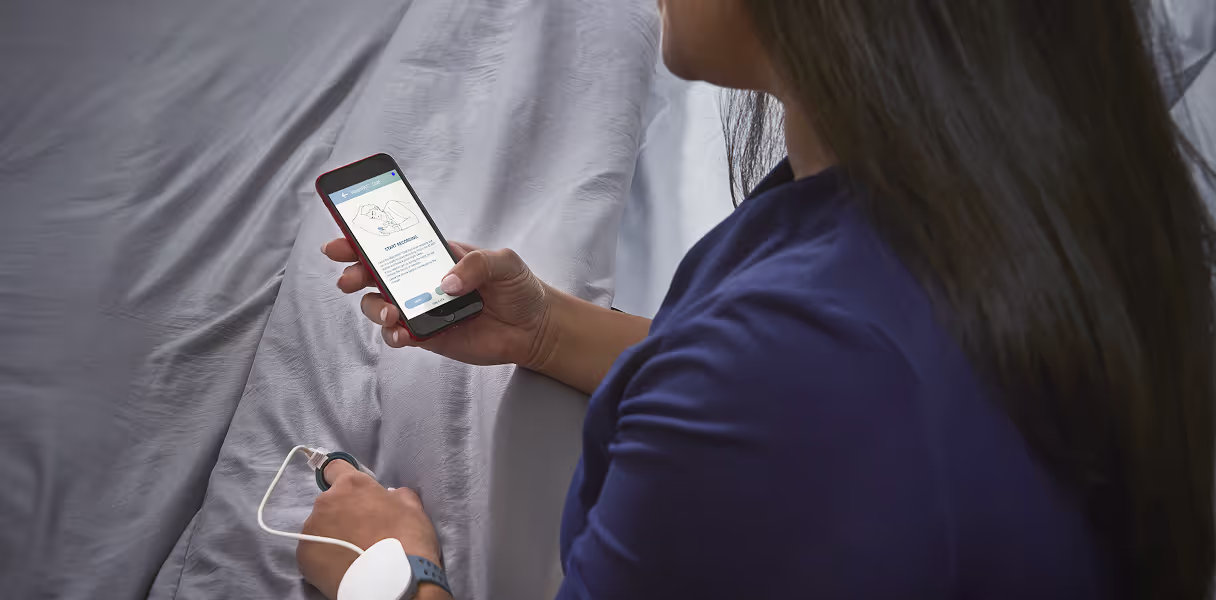
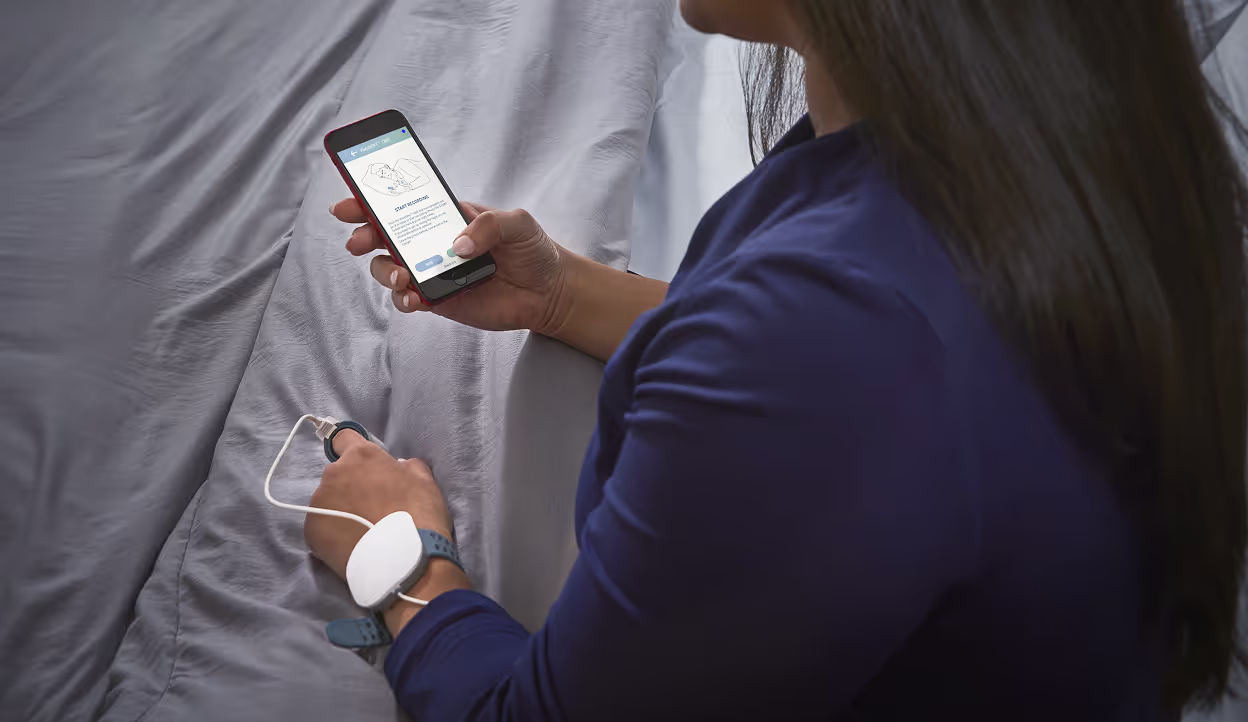
The test typically uses a small sensor worn on the finger or wrist, a nasal airflow cannula, and sometimes a belt around the chest to measure respiratory patterns. Devices like the WatchPAT ONE, a commonly used FDA-cleared home sleep apnea testing device, can measure peripheral arterial tone, oxygen levels, heart rate, respiration rate, and body position using a single wrist-mounted unit. This eliminates the need for multiple sensors, making the testing experience far more comfortable than a sleep lab study.
Home sleep apnea testing works by collecting data across a full night of sleep. Once the test night is complete, the recorded data is uploaded and sent to a board-certified sleep medicine physician for interpretation. The physician reviews the respiratory patterns, counts apnea and hypopnea events, calculates the Apnea-Hypopnea Index, and generates a clinical report with a diagnosis.
The Apnea-Hypopnea Index is the primary metric used to diagnose obstructive sleep apnea. An AHI of fewer than 5 events per hour is considered normal. An AHI of 5 to 14 indicates mild sleep apnea. An AHI of 15 to 29 indicates moderate sleep apnea. An AHI of 30 or more indicates severe sleep apnea. According to the National Heart, Lung, and Blood Institute, obstructive sleep apnea affects an estimated 25 million adults in the United States, with many cases remaining undiagnosed.
DID YOU KNOW: The American Academy of Sleep Medicine estimates that approximately 80 percent of moderate to severe obstructive sleep apnea cases remain undiagnosed, meaning millions of people are living with untreated symptoms that increase their risk of heart disease, stroke, and high blood pressure.
For Euless residents, accessing home sleep testing no longer requires a visit to a sleep center on Harwood Rd, Colleyville Blvd, or Highway 121. dumbo.health delivers an at-home sleep test directly to you for $149, with no insurance companies or prior authorizations involved. You complete the test in your own bed, and results are reviewed by a physician without the need for a separate appointment.
KEY TAKEAWAY: A home sleep apnea test is a portable, FDA-cleared device that records airflow, oxygen saturation, respiratory effort, and heart rate overnight, with results interpreted by a sleep medicine physician to diagnose obstructive sleep apnea.
Understanding what the test measures is the first step, but knowing why sleep apnea matters for your health makes the case for getting tested even stronger.
Why Sleep Apnea Testing Matters for Euless, Texas Residents
Untreated obstructive sleep apnea increases the risk of heart disease, stroke, high blood pressure, and type 2 diabetes. For residents of Euless and the surrounding Bedford, Colleyville, and mid-cities area, recognizing symptoms early and completing a sleep apnea test can prevent serious long-term health consequences.
Sleep apnea causes repeated pauses in breathing during sleep. Each pause, called an apnea event, can last 10 seconds or longer and may occur dozens or even hundreds of times per night. These breathing interruptions reduce oxygen levels in the blood, forcing the heart to work harder. Over time, this places chronic stress on the cardiovascular system. According to the CDC, people with untreated sleep apnea are two to three times more likely to experience a stroke compared to people without the condition.
Beyond cardiovascular risk, sleep apnea fragments the sleep cycle. Even if you spend eight hours in bed, repeated arousals prevent you from reaching restorative deep sleep. This leads to daytime fatigue, difficulty concentrating, headaches, irritability, and impaired performance at work or behind the wheel. For commercial drivers near Euless who hold a CDL, undiagnosed sleep apnea can threaten both career certification and road safety.
The connection between sleep apnea and blood pressure is particularly well established. The Mayo Clinic notes that obstructive sleep apnea is one of the most common identifiable causes of secondary hypertension. Treating sleep apnea with CPAP therapy has been shown to reduce both systolic and diastolic blood pressure in many patients.
Snoring is the most recognized symptom of obstructive sleep apnea, but not the only one. Waking up gasping for breath, experiencing choking episodes during sleep, morning headaches, dry mouth, insomnia, and excessive daytime sleepiness are all signals that warrant testing. If a bed partner has observed you stop breathing during sleep, that observation alone is a strong clinical indicator.
Many patients in the Euless area put off testing because they assume it requires an overnight stay at a sleep lab or a referral from a sleep specialist. In reality, home sleep apnea testing removes those barriers entirely. You can order a test through dumbo.health without a traditional appointment, complete it at home, and receive physician-reviewed results without visiting a sleep center or clinic.
IMPORTANT: If you experience loud snoring combined with witnessed breathing pauses, excessive daytime fatigue, or morning headaches, the American Academy of Sleep Medicine recommends evaluation for obstructive sleep apnea.
KEY TAKEAWAY: Sleep apnea testing matters because untreated obstructive sleep apnea significantly raises the risk of heart disease, stroke, and high blood pressure, and home testing makes diagnosis accessible without an in-lab appointment.
Once you understand the health stakes, the next question is how to prepare for and complete the test at home.
How to Complete a Home Sleep Apnea Test in Euless, Texas
Completing a home sleep apnea test requires minimal preparation and takes one night. The process is straightforward, and most patients find it far more comfortable than an in-lab sleep study.
Step-by-Step Process for Home Sleep Testing
1. Order your home sleep test through dumbo.health for $149, with no insurance or prior authorization required.
2. Receive the FDA-cleared testing device at your home in Euless, Texas, with clear instructions for use.
3. On the night of your test, avoid caffeine and alcohol for at least four hours before bedtime, as both substances can affect respiratory patterns and sleep quality.
4. Attach the sensor according to the device instructions. Most home sleep testing devices use a finger or wrist sensor to measure oxygen saturation and heart rate, a nasal cannula to measure airflow, and in some cases a chest belt to track respiratory effort.
5. Go to sleep in your own bed and allow the device to record data throughout the night. Aim for at least six hours of recording time.
6. Remove the device in the morning and follow the return or data upload instructions provided with your test kit.
7. A board-certified sleep medicine physician reviews the recorded data, calculates your Apnea-Hypopnea Index, and generates a diagnostic report.
8. Receive your results, typically within days, along with a recommended treatment plan if sleep apnea is diagnosed.
After completing these steps, you will have a physician-interpreted diagnosis and a clear path to treatment without ever visiting a sleep lab, scheduling a separate consultation, or navigating insurance companies.
Preparation Checklist Before Your Test Night
- Confirm your test device is fully charged or has fresh batteries
- Read all instructions included with the device before bedtime
- Avoid caffeine for at least four hours before sleep
- Avoid alcohol on the test night, as it can worsen apnea events and skew results
- Remove nail polish from the finger used for the pulse oximeter sensor, as polish can interfere with oxygen saturation readings
- Sleep in your normal position and environment for accurate results
- Set an alarm if needed to ensure at least six hours of recording time
- Keep the device packaging and return materials accessible for the morning
- Complete the free sleep assessment at dumbo.health before ordering if you are unsure whether testing is appropriate for your symptoms
TIP: Sleeping in your own bed during a home sleep test produces more representative results than a sleep lab, because the test captures your actual sleep environment, position, and habits.
The comfort and convenience of home sleep testing is one of the primary reasons sleep medicine providers increasingly recommend it over in-lab polysomnography for uncomplicated suspected obstructive sleep apnea. Patients who test at home report less disruption to their normal sleep routine, fewer wires and monitors, and faster turnaround on results.
KEY TAKEAWAY: Completing a home sleep apnea test requires one night, minimal equipment, and no in-lab appointment, making it the most accessible way for Euless residents to get a sleep apnea diagnosis.
With the test complete, understanding how home testing compares to in-lab studies helps you evaluate which approach fits your situation.
Home Sleep Test vs. In-Lab Polysomnography: Which Is Right for You
A home sleep test is best for diagnosing obstructive sleep apnea in adults without complex sleep disorders, while in-lab polysomnography is required when the clinical picture is more complicated. Knowing the differences helps you and your provider choose the right study.
In-lab polysomnography is the gold standard sleep study. It records brain waves, eye movements, leg movements, heart rhythm, airflow, respiratory effort, oxygen saturation, and sleep cycle stages simultaneously. A sleep technologist monitors the patient throughout the night in a sleep lab. This level of detail is necessary for diagnosing conditions like narcolepsy, central sleep apnea, periodic limb movement disorder, and other complex sleep disorders that a home test cannot detect.
A home sleep apnea test measures the core cardiopulmonary functions needed to diagnose obstructive sleep apnea: airflow, respiratory effort, oxygen levels, and heart rate. It does not measure brain waves, sleep cycle staging, or leg movements. For the majority of adults with symptoms suggesting obstructive sleep apnea, this data is sufficient for a reliable diagnosis.
Comparison: Home Sleep Test vs. In-Lab Polysomnography
Setting
- Home Sleep Apnea Test: Your own bed in Euless, Texas
- In-Lab Polysomnography: Sleep lab or sleep center such as a facility near Medical City Arlington
Cost
- Home Sleep Apnea Test: Typically $149 to $500 without insurance. dumbo.health charges $149.
- In-Lab Polysomnography: Often $1,000 to $3,000 or more without insurance
Convenience
- Home Sleep Apnea Test: High. No travel, no overnight clinic stay, no appointment scheduling
- In-Lab Polysomnography: Lower. Requires overnight stay, sleep technologists, and scheduling well in advance
What It Measures
- Home Sleep Apnea Test: Airflow, respiratory effort, oxygen saturation, heart rate, body position
- In-Lab Polysomnography: All of the above plus brain waves, sleep cycle stages, eye movements, leg movements
Turnaround Time for Results
- Home Sleep Apnea Test: Typically days. dumbo.health Premium Plan offers priority results turnaround.
- In-Lab Polysomnography: Often one to three weeks depending on the sleep center
Who It Is Best For
- Home Sleep Apnea Test: Adults with suspected uncomplicated obstructive sleep apnea
- In-Lab Polysomnography: Patients with suspected central sleep apnea, narcolepsy, or other complex sleep disorders
Insurance Requirements
- Home Sleep Apnea Test: Not required when using dumbo.health. Cash-pay, no prior authorization.
- In-Lab Polysomnography: Typically required. Often needs prior authorization from insurance companies.
For the vast majority of patients in Euless and the surrounding area who suspect they have obstructive sleep apnea based on symptoms like snoring, daytime fatigue, and witnessed breathing pauses, a home sleep test provides accurate diagnostic data at a fraction of the cost and inconvenience of an in-lab study. In-lab polysomnography remains the better choice when a physician suspects a more complex sleep disorder or when a home test produces inconclusive results.
The American Academy of Sleep Medicine supports the use of home sleep apnea testing for adult patients with a high pre-test probability of moderate to severe obstructive sleep apnea, provided the test is interpreted by a qualified sleep medicine physician.
KEY TAKEAWAY: Home sleep testing is the right choice for most adults with suspected obstructive sleep apnea, offering accurate results at lower cost and greater convenience than in-lab polysomnography, while in-lab studies are necessary for complex sleep disorders.
Choosing the right test is one decision. Understanding your results once they arrive is equally important.
Understanding Your Home Sleep Test Results
Your home sleep test results are summarized by the Apnea-Hypopnea Index, a number that tells you how many times per hour your breathing was partially or completely interrupted during sleep. A board-certified sleep medicine physician interprets the full dataset and provides a clinical diagnosis.
The Apnea-Hypopnea Index classifies obstructive sleep apnea severity as follows:
- AHI below 5: Normal range. No significant sleep apnea detected.
- AHI 5 to 14: Mild obstructive sleep apnea.
- AHI 15 to 29: Moderate obstructive sleep apnea.
- AHI 30 or above: Severe obstructive sleep apnea.
Beyond the AHI, your results report will typically include oxygen saturation data. The physician reviews your lowest oxygen level recorded during the night, the percentage of time spent below 90 percent saturation, and the pattern of oxygen desaturations. Sustained drops in oxygen saturation below 88 percent are clinically significant and associated with increased cardiovascular risk, according to the National Heart, Lung, and Blood Institute.
The interpretation also considers respiratory effort, airflow patterns, and body position. Some patients experience positional sleep apnea, where events occur primarily when sleeping on their back. This detail can influence treatment recommendations.
When you complete a home sleep test through dumbo.health, your results are reviewed by a physician who generates a full report. If you are on the Essentials Plan at $59 per month, that report includes physician interpretation and is sent to your referring provider. The Premium Plan at $89 per month adds priority results turnaround and a dedicated sleep coach who can walk you through what each number means for your health.
Understanding your AHI matters because treatment decisions depend on severity. Mild sleep apnea may respond to lifestyle changes or oral appliances, while moderate to severe sleep apnea typically requires CPAP therapy. A physician will factor in your overall health, symptoms, and oxygen data when recommending the most appropriate treatment option.
Many patients report feeling relieved after receiving a clear diagnosis. Years of unexplained daytime fatigue, headaches, or insomnia suddenly make sense. The diagnosis itself is often the turning point that leads to effective treatment and measurably better sleep quality.
KEY TAKEAWAY: The Apnea-Hypopnea Index is the primary diagnostic metric from a home sleep test, with scores of 5 or higher indicating sleep apnea, and the severity classification directly guides treatment decisions.
Once you have a diagnosis, the next step is understanding the treatment options available to you.
Treatment Options After a Sleep Apnea Diagnosis
CPAP therapy is the most effective and widely recommended treatment for moderate to severe obstructive sleep apnea. Treatment should begin as soon as possible after diagnosis to reduce health risks and improve sleep quality.
CPAP Therapy
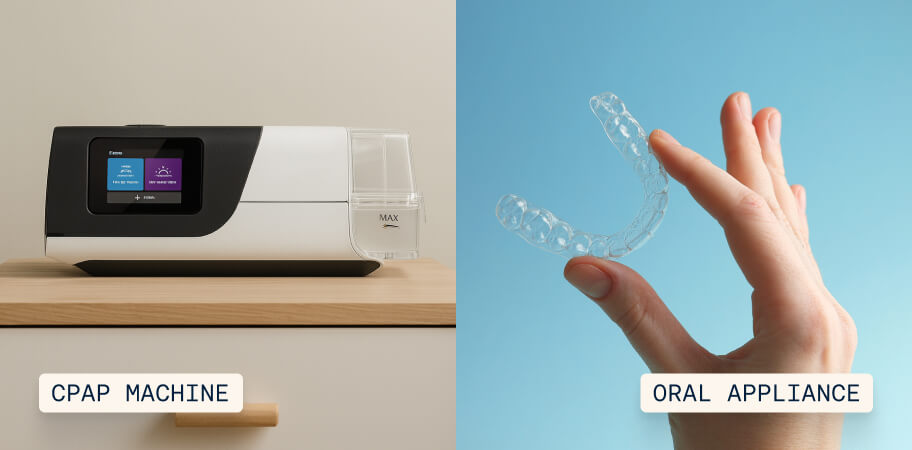
CPAP stands for continuous positive airway pressure. A CPAP machine delivers a steady stream of air through a mask worn during sleep, keeping the airway open and preventing apnea events. According to the Sleep Foundation, CPAP therapy reduces or eliminates sleep apnea events in the vast majority of patients when used consistently.
Effective CPAP use is typically defined as wearing the device for at least four hours per night on at least 70 percent of nights over a 30-day period. Meeting this threshold is especially important for commercial drivers who need to demonstrate treatment adherence for DOT medical certification.
dumbo.health includes CPAP therapy and equipment in all monthly care plans. The Essentials Plan at $59 per month covers a CPAP machine, physician oversight, and standard follow-up care. The Premium Plan at $89 per month adds a dedicated sleep coach and advanced adherence monitoring to help patients stay on track. The Elite Plan at $129 per month includes concierge clinical support and direct physician messaging for patients who want the highest level of ongoing care. All plans are cancel anytime with no contracts.
Oral Appliances
Oral appliances are custom-fitted dental devices that reposition the lower jaw forward during sleep, helping keep the airway open. The American Academy of Sleep Medicine recommends oral appliances for patients with mild to moderate obstructive sleep apnea who prefer an alternative to CPAP or who cannot tolerate CPAP therapy.
Oral appliances are typically fitted by a dentist trained in sleep medicine. They are less effective than CPAP for severe sleep apnea but can work well for selected patients.
Lifestyle Modifications
For mild obstructive sleep apnea, lifestyle changes can reduce symptom severity. Weight loss, avoiding alcohol before bedtime, sleeping on your side instead of your back, and reducing caffeine intake in the evening can all improve respiratory patterns during sleep. These modifications are often used alongside CPAP therapy or oral appliances rather than as standalone treatment.
Surgical Options
Surgery is generally reserved for cases where CPAP and oral appliances are not effective or tolerated. Surgical procedures may address structural issues in the airway, such as enlarged tonsils, a deviated septum, or excess tissue in the throat. A sleep specialist or ENT physician evaluates whether surgery is appropriate based on the patient's anatomy and the severity of their condition.
Choosing the Right Treatment
Treatment plans should be individualized based on AHI severity, oxygen desaturation patterns, symptom burden, patient preference, and any coexisting conditions. A physician interpretation of your home sleep test results guides this decision. Patients who complete testing through dumbo.health receive treatment recommendations as part of their care plan, with CPAP therapy included in monthly plans if prescribed.
KEY TAKEAWAY: CPAP therapy is the first-line treatment for moderate to severe obstructive sleep apnea, and dumbo.health includes CPAP equipment, physician oversight, and adherence support in monthly plans starting at $59 per month.
While CPAP is effective for most patients, it is important to understand when home testing or certain treatments may not be the right fit.
Limitations and Risks of Home Sleep Apnea Testing
A home sleep apnea test is highly effective for diagnosing obstructive sleep apnea in adults, but it has clinical limitations that patients and providers should understand before choosing this testing pathway.
It Does Not Diagnose All Sleep Disorders
Home sleep testing is designed to detect obstructive sleep apnea. It does not diagnose central sleep apnea, narcolepsy, chronic insomnia, periodic limb movement disorder, or other complex sleep disorders. These conditions require in-lab polysomnography, which records brain waves, sleep cycle staging, and leg movements that home devices do not capture. If your physician suspects a condition beyond obstructive sleep apnea, an in-lab study at a sleep center near Euless or at a facility like Medical City Arlington may be necessary.
It May Underestimate Severity
Because home sleep testing does not measure total sleep time using brain wave monitoring, the Apnea-Hypopnea Index may be calculated based on total recording time rather than actual sleep time. If a patient lies awake for a significant portion of the night, the AHI could appear lower than it truly is. The American Academy of Sleep Medicine acknowledges this limitation and recommends that physicians consider clinical context when interpreting home test results.
Sensor Displacement Can Affect Accuracy
During an at-home sleep test, there is no sleep technologist present to adjust sensors if they shift or detach during the night. If the nasal cannula comes loose, the finger sensor falls off, or the chest belt shifts, the data quality may be compromised. Following the device instructions carefully and ensuring sensors are properly secured before sleep minimizes this risk.
Not Appropriate for Certain Patient Populations
Home sleep apnea testing is not recommended for patients with significant cardiopulmonary disease, neuromuscular conditions, or those who use supplemental oxygen at night. These patients typically require the more comprehensive monitoring provided by in-lab polysomnography.
What to Do If Results Are Inconclusive
If your home sleep test results are inconclusive or do not match your symptom severity, your physician may recommend repeating the home test or ordering an in-lab polysomnography for more detailed evaluation. dumbo.health provides physician oversight and follow-up consultations through its care plans, ensuring that inconclusive results lead to appropriate next steps rather than diagnostic dead ends. Through the sleep apnea care solutions pathway, patients can discuss results and alternative testing options with their care team.
IMPORTANT: Home sleep testing is validated for obstructive sleep apnea in adults without significant comorbidities. If complex sleep disorders, central sleep apnea, or neuromuscular conditions are suspected, in-lab polysomnography is the appropriate diagnostic tool.
KEY TAKEAWAY: Home sleep apnea testing has clear limitations, including its inability to diagnose conditions beyond obstructive sleep apnea and the potential for underestimating severity, making physician interpretation and clinical context essential for accurate diagnosis.
Knowing the limitations helps set realistic expectations. Seeing how real patients navigate the testing process brings even more clarity.
Real-World Scenarios: Who Benefits From Home Sleep Testing in Euless
Home sleep apnea testing serves a wide range of patients. These scenarios illustrate how different people in the Euless, Texas area access and benefit from at-home testing.
Scenario 1: A 48-Year-Old Office Worker With Chronic Snoring
A 48-year-old Euless resident has snored loudly for years. Her partner has observed her stop breathing during sleep on multiple occasions. She experiences morning headaches and daytime fatigue that no amount of caffeine seems to fix. She mentioned these symptoms to her primary care provider, who recommended a sleep apnea test. Rather than waiting weeks for an appointment at a sleep center and navigating insurance authorizations, she ordered a home sleep test through dumbo.health for $149. She completed the test in one night, received results within days showing an AHI of 22, and started CPAP therapy through the Essentials Plan at $59 per month. Her morning headaches resolved within the first two weeks.
Scenario 2: A 55-Year-Old Commercial Truck Driver Preparing for a DOT Physical
A 55-year-old owner-operator based near Bedford drives long-haul routes across Texas and beyond. During his DOT physical, the examining physician flagged his BMI of 38, neck circumference, and self-reported snoring as risk factors for obstructive sleep apnea. He was told he needed a sleep study before his medical certificate could be renewed. Facing time pressure and the cost of an in-lab study, he used dumbo.health to complete a home sleep apnea test at home. His results showed severe sleep apnea with an AHI of 41. He enrolled in the Premium Plan at $89 per month, which included a dedicated sleep coach and advanced adherence monitoring. His CPAP compliance data was shared with his DOT examiner, allowing him to maintain his certification.
Scenario 3: A 35-Year-Old New Mother Experiencing Extreme Fatigue
A 35-year-old Euless woman attributed her extreme daytime fatigue to caring for a newborn. After her child started sleeping through the night but her exhaustion persisted, she completed the free sleep assessment at dumbo.health. Her risk profile suggested sleep apnea testing was appropriate. She ordered the $149 home sleep test and completed it without needing to arrange childcare for an overnight clinic visit. Her results revealed mild obstructive sleep apnea with an AHI of 9 and notable oxygen desaturations. Her physician recommended positional therapy and lifestyle modifications as a first-line treatment, with the option to start CPAP therapy if symptoms did not improve.
These scenarios demonstrate that sleep apnea does not have a single patient profile. It affects people of all ages, occupations, and health backgrounds. Home sleep testing removes the logistical barriers that prevent many patients from ever receiving a diagnosis.
KEY TAKEAWAY: Home sleep apnea testing benefits a wide range of patients, from commercial drivers facing DOT certification requirements to working parents who need a convenient, affordable diagnostic option close to home.
Real-world use cases make the value clear. Equally important is clearing up the myths that still prevent people from getting tested.
Common Myths About Sleep Apnea Testing Debunked
MYTH: You have to sleep in a lab to get an accurate sleep apnea diagnosis.
FACT: Home sleep apnea tests are FDA-cleared and validated by the American Academy of Sleep Medicine for diagnosing obstructive sleep apnea in adults. For uncomplicated suspected sleep apnea, home testing provides accurate diagnostic data using portable monitors that measure airflow, oxygen saturation, respiratory effort, and heart rate. In-lab polysomnography is only necessary when a more complex sleep disorder is suspected.
MYTH: Only overweight people get sleep apnea.
FACT: While a higher BMI increases the risk of obstructive sleep apnea, the condition affects people across all body types and ages. According to the Sleep Foundation, structural factors like a narrow airway, enlarged tonsils, a recessed jaw, and family history also contribute significantly. People with a normal BMI can and do have clinically significant sleep apnea that requires treatment.
MYTH: Snoring is harmless and does not need medical evaluation.
FACT: Snoring is the most common symptom of obstructive sleep apnea. While not all snoring indicates sleep apnea, loud habitual snoring combined with witnessed breathing pauses, gasps, or choking sounds during sleep is a strong indicator. The NIH identifies habitual snoring as a primary symptom that warrants clinical evaluation, particularly when accompanied by daytime fatigue or cardiovascular risk factors.
MYTH: Sleep apnea tests are too expensive without insurance.
FACT: Insurance companies and prior authorization requirements historically made sleep testing costly and time-consuming. Cash-pay options like dumbo.health have changed the landscape. A home sleep test through dumbo.health costs $149 with no insurance required, no surprise bills, and no authorization delays. Monthly treatment plans start at $59 per month with no contracts. Many patients find the cash-pay pathway faster and more affordable than navigating insurance plans.
MYTH: CPAP machines are loud, uncomfortable, and impossible to use consistently.
FACT: Modern CPAP machines are quieter, lighter, and more comfortable than earlier models. Many patients report adjusting to CPAP therapy within the first one to two weeks. Adherence support, such as the dedicated sleep coaching included in the dumbo.health Premium Plan, significantly improves long-term compliance. Clinicians frequently observe that patients who receive ongoing support and monitoring are far more likely to use their CPAP consistently and experience meaningful improvements in sleep quality and daytime function.
KEY TAKEAWAY: Most barriers to sleep apnea testing are based on outdated assumptions about cost, convenience, and accuracy, and modern home sleep testing eliminates the majority of these concerns.
With the myths addressed, here is a summary of how the Euless sleep testing landscape has changed and what you should do next.
Accessing Sleep Apnea Care in Euless, Texas: Providers and Options
Residents of Euless, Texas have multiple pathways to sleep apnea diagnosis and treatment, ranging from local sleep clinics to telehealth-based care platforms. The right choice depends on your symptoms, budget, and how quickly you need results.
Local options in the mid-cities area include sleep centers and physicians offering in-lab polysomnography and home sleep testing referrals. Facilities near Medical City Arlington, practices along Harwood Rd and Highway 121, and providers in Bedford serve patients in the broader Euless area. Some of these providers accept Medicare and private insurance plans, though appointment availability can vary and prior authorizations often delay the process.
Texas Direct Primary Care practices in the region offer another pathway. These membership-based clinics sometimes facilitate sleep disorder testing and referrals, though they typically do not provide the sleep testing equipment directly.
For patients who want to skip insurance complications, avoid waiting for appointment availability, and access testing immediately, dumbo.health provides a direct path. The $149 home sleep test ships to your home, and the entire process from ordering to physician-reviewed results happens without an in-person appointment, without insurance companies, and without prior authorizations. If you need CPAP therapy, treatment plans through dumbo.health start at $59 per month with no contracts and cancel-anytime flexibility.
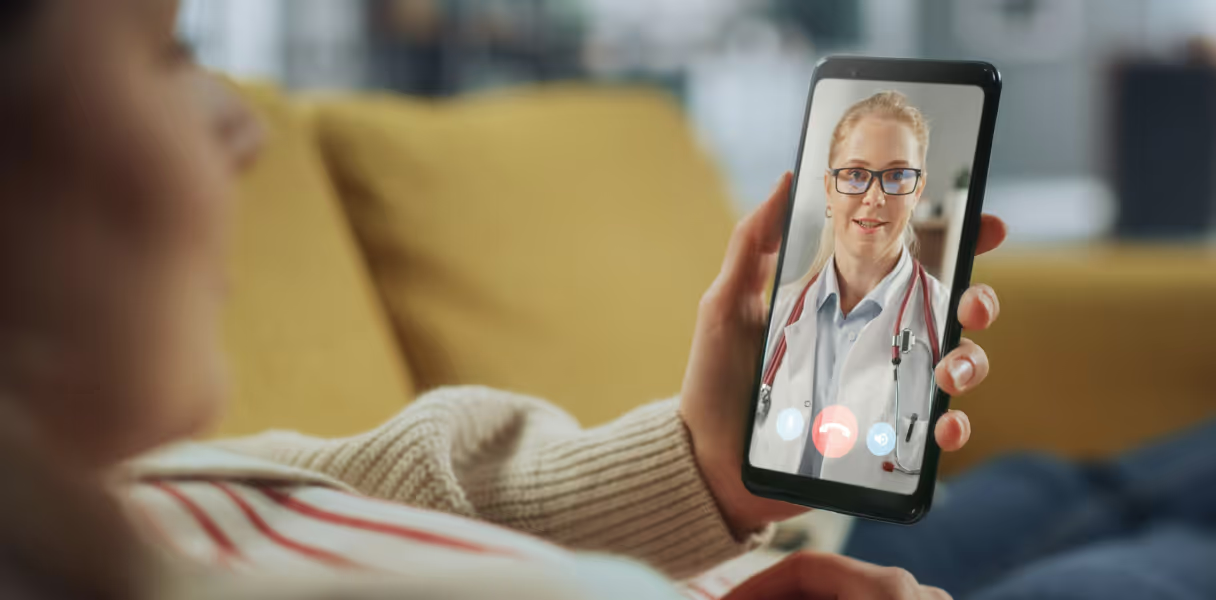
Telehealth has also expanded access. A telemedicine visit with a sleep specialist can replace the traditional in-person consultation for many patients. dumbo.health integrates physician consultations into its care plans, with the Elite Plan at $129 per month offering direct physician messaging for patients who want the most responsive communication with their clinical team.
Whether you prefer a local sleep center near you, a provider in your area who accepts your insurance, or a cash-pay telehealth platform, the most important step is getting tested. Every week of delayed diagnosis means continued exposure to the cardiovascular, cognitive, and quality-of-life risks associated with untreated obstructive sleep apnea.
DID YOU KNOW: According to the FMCSA, commercial motor vehicle drivers with untreated obstructive sleep apnea are at significantly higher risk of fatigue-related crashes, which is why sleep apnea screening has become a priority in DOT physical examinations.
KEY TAKEAWAY: Euless residents have several pathways to sleep apnea care, but cash-pay home testing through dumbo.health eliminates insurance delays, reduces cost, and delivers physician-reviewed results in days.
Understanding your local options is helpful. What matters most is knowing the cost and choosing the path that gets you diagnosed and treated.
How Much Does a Home Sleep Apnea Test Cost in Euless, Texas
A home sleep apnea test in Euless, Texas typically costs between $149 and $500 when paying out of pocket. Insurance-based testing often appears cheaper upfront but involves prior authorizations, copays, deductibles, and potential surprise bills that make the final cost unpredictable.
dumbo.health offers transparent pricing that patients can plan around:
Home Sleep Test
- $149, one-time purchase
- Purchased before the test night
- Includes the at-home sleep test device and one night of testing
- No insurance required
- No prior authorization
- No surprise bills
Ongoing Care Plans After Diagnosis
If your test results indicate sleep apnea and treatment is recommended, dumbo.health offers three monthly plans that cover physician interpretation, CPAP therapy, equipment, and follow-up care.
Essentials Plan
- $59 per month, approximately $2 per day
- Physician interpretation and report
- CPAP therapy and equipment
- Standard follow-up care
- Updates sent to referring provider
- No contracts, cancel anytime
Premium Plan (Most Popular)
- $89 per month, approximately $3 per day
- Everything in Essentials
- Dedicated sleep coach from a licensed care team
- Advanced adherence monitoring
- Priority results turnaround
- No contracts, cancel anytime
Elite Plan
- $129 per month, approximately $4 per day
- Everything in Premium
- Concierge clinical support with priority care team access
- Direct physician messaging
- Custom reporting for your practice
- No contracts, cancel anytime
By comparison, in-lab polysomnography without insurance at a sleep lab near Euless can cost $1,000 to $3,000 or more. Even with insurance, patients often face copays of $200 to $500, plus the cost and time of prior authorization. CPAP machines purchased through durable medical equipment suppliers can cost $500 to $2,000 out of pocket when not covered by insurance plans.
The dumbo.health model bundles testing, diagnosis, treatment, and ongoing care into a single transparent pricing structure. There are no hidden fees, no insurance companies to negotiate with, and no contracts locking you in.
For patients on Medicare, coverage for home sleep testing and CPAP equipment may be available, but navigating Medicare requirements involves documentation, compliance monitoring, and provider qualifications that many patients find burdensome. The cash-pay route through dumbo.health is often faster and simpler.
KEY TAKEAWAY: A home sleep apnea test through dumbo.health costs $149 with no insurance required, and ongoing CPAP therapy plans start at $59 per month, making it one of the most affordable and transparent sleep apnea care options available to Euless residents.
With cost covered, the final step is putting the information together and taking action.
Conclusion
A home sleep apnea test in Euless, Texas gives you a clear, physician-reviewed diagnosis from the comfort of your own bed. Obstructive sleep apnea affects cardiovascular health, cognitive function, sleep quality, and daily energy levels, and every week without a diagnosis extends those risks. Whether you are a long-haul driver needing DOT clearance, a working professional struggling with daytime fatigue, or someone whose partner has noticed snoring and gasps during the night, home sleep testing removes the barriers that keep people from getting answers.
dumbo.health delivers a complete sleep apnea care solutionfrom testing through treatment. The home sleep test costs $149 with no insurance required, and CPAP therapy plans start at $59 per month with no contracts and cancel-anytime flexibility. Take the free sleep assessment to find out if testing is right for you.
Frequently Asked Questions About Home Sleep Apnea Test in Euless, Texas
What is a home sleep apnea test?
A home sleep apnea test (HSAT) is a simplified, portable version of a sleep study that you complete in your own bed. The device records key measurements such as airflow, oxygen saturation, respiratory effort, and breathing patterns overnight. A physician then reviews the data to assess whether obstructive sleep apnea or another sleep-related breathing disorder may be present. Home sleep apnea testing is widely used because it is convenient, less expensive than an in-lab sleep study, and suitable for many adults with a moderate to high clinical suspicion of obstructive sleep apnea.
What is sleep apnea?
Sleep apnea is a sleep disorder in which breathing repeatedly stops and starts during sleep. The most common form is obstructive sleep apnea, which occurs when the muscles at the back of the throat relax and partially or fully block the airway during sleep. According to the American Academy of Sleep Medicine, obstructive sleep apnea is one of the most prevalent sleep disorders, affecting millions of adults. Central sleep apnea is a less common form where the brain fails to send the correct signals to the muscles that control breathing. A qualified healthcare professional can assess which type may be relevant for you.
What are the symptoms of sleep apnea?
Common symptoms of sleep apnea include loud snoring, waking up gasping for breath or choking, excessive daytime fatigue, morning headaches, difficulty concentrating, and poor sleep quality. Many people with obstructive sleep apnea are unaware they have it because the most disruptive symptoms occur during sleep. A bed partner may notice pauses in breathing or gasping episodes before the person themselves does. If you are experiencing several of these symptoms regularly, a healthcare professional can help determine whether sleep apnea testing is appropriate. You can also take the free sleep assessment at dumbo.health as a starting point.
Why would I need home sleep testing?
Home sleep testing may be recommended when a healthcare professional suspects obstructive sleep apnea based on symptoms such as snoring, daytime fatigue, morning headaches, or waking up gasping for breath. It is also used as a more affordable and accessible alternative to an in-lab polysomnography study for patients who are unlikely to have complex sleep disorders. People with high blood pressure, a high body mass index, or a family history of sleep apnea may also benefit from evaluation. A healthcare professional can help determine whether home sleep apnea testing or a full in-lab study is the more appropriate diagnostic path for your situation.
How is sleep apnea diagnosed?
Sleep apnea is typically diagnosed through a sleep study, either a home sleep apnea test or an in-lab polysomnography study. Both tests measure the apnea-hypopnea index, which counts the number of apnea and hypopnea events per hour of sleep. A physician or board-certified sleep medicine physician reviews the recorded data and interprets the results. A diagnosis is not made by the device itself but by the reviewing clinician. An in-lab study also records brain waves, leg movements, and additional cardiopulmonary functions that a home sleep test does not capture. A healthcare professional will advise which type of study suits your clinical picture.
What does a home sleep apnea test measure?
A home sleep apnea test measures the key physiological signals needed to evaluate sleep-related breathing disorders. Most devices record airflow, oxygen saturation via a pulse oximeter, respiratory effort, respiration rate, and respiratory patterns overnight. Some devices, such as WatchPAT ONE, also use autonomic nervous system testing and peripheral arterial tone to estimate sleep stages and detect apnea events. The recorded data is used to calculate the apnea-hypopnea index. Home sleep testing does not typically record brain waves, leg movements, or the full range of signals measured in a hospital-grade, in-lab polysomnography study.
What should I expect during a home sleep test?
On the night of your home sleep test, you will apply a small portable device according to the instructions provided. Most devices involve a sensor worn on the finger to measure oxygen saturation, a nasal cannula or oral sensor to measure airflow, and a small belt or chest sensor to measure respiratory effort. The device records data automatically while you sleep. There are no sleep technologists present in your home. The process is designed for comfort, and most patients find the experience manageable. After the test night, the device or data is returned for physician review and interpretation.
Is a home sleep test comfortable or painful?
A home sleep apnea test is not painful. The sensors and wearable components are designed to be as low-profile and comfortable as possible so that your sleep is not significantly disrupted. Most patients adapt to wearing the device within a short period of settling in. Some people find the nasal cannula or finger sensor mildly noticeable but not distressing. If you wake up during the night, you can reposition the sensors as needed and continue the test. The goal is to collect enough data from a typical night of sleep to allow accurate physician interpretation.
What if I wake up during the night while taking the test?
Waking up during a home sleep test is normal and does not typically invalidate the results. Most home sleep apnea testing devices record continuously and collect sufficient data as long as you sleep for a reasonable portion of the night. If a sensor becomes dislodged during the night, you should reposition it as best you can and continue trying to sleep. If the device records too little usable data, your physician may recommend repeating the test. A healthcare professional or the provider who supplied your test can advise you on what to do if you have concerns about data quality.
Is a home sleep apnea test as accurate as an in-lab sleep study?
A home sleep apnea test is considered a reliable tool for diagnosing moderate to severe obstructive sleep apnea in adults without significant comorbidities. The American Academy of Sleep Medicine supports the use of home sleep apnea testing as an appropriate diagnostic option for uncomplicated cases. However, home sleep tests do not measure brain waves, body position in the same detail, or leg movements, which means they may underestimate the severity of sleep apnea compared to in-lab polysomnography. For patients with suspected central sleep apnea, complex sleep disorders, significant cardiac conditions, or neuromuscular disease, an in-lab study is generally more appropriate.
When is an in-lab sleep study needed instead of a home sleep test?
An in-lab polysomnography study is recommended when a healthcare professional suspects a sleep disorder beyond obstructive sleep apnea, such as central sleep apnea, narcolepsy, parasomnia, or significant periodic limb movement disorder. In-lab studies are also preferred for patients with complex cardiac or respiratory conditions, children, or those whose home sleep test results are inconclusive. In-lab sleep studies are conducted at a sleep clinic or sleep lab and are supervised by trained sleep technologists. A physician or sleep specialist can advise whether your symptoms and medical history indicate that in-lab testing is the more appropriate diagnostic pathway.
How is central sleep apnea different from obstructive sleep apnea?
Obstructive sleep apnea occurs when the airway is physically blocked during sleep, usually by relaxed throat muscles. Central sleep apnea occurs when the brain fails to send proper signals to the muscles that control breathing, meaning the airway itself may not be obstructed. Central sleep apnea is less common and is often associated with heart failure, neurological conditions, or the use of certain medications. The treatment approach also differs, and CPAP therapy may not be sufficient for central sleep apnea. A board-certified sleep medicine physician can review your test results and determine which type of sleep apnea, if any, is present. Learn more about home sleep apnea testing options.
What happens if my home sleep test shows abnormal results?
If your home sleep apnea test results are abnormal, a reviewing physician will typically discuss the findings with you and outline appropriate next steps. Abnormal results often indicate the presence of obstructive sleep apnea, which may be classified as mild, moderate, or severe based on the apnea-hypopnea index. Treatment options may include CPAP therapy, positional therapy, or oral appliances, depending on the severity and clinical context. The results alone do not constitute a final diagnosis without physician interpretation. A qualified healthcare professional should guide your treatment decisions based on the full clinical picture, including your symptoms, medical history, and test findings.
How long does it take to get results from a home sleep apnea test?
The time to receive results depends on the provider and the service level selected. With dumbo.health, the Premium Plan includes priority results turnaround, while the Essentials Plan includes standard follow-up care and physician interpretation. Results typically require a physician to review the recorded data and produce a clinical report. Some services aim to deliver results within a few business days after the test night. Faster turnaround can be important for patients who need documentation for ongoing care, referring provider updates, or commercial driver sleep apnea compliance purposes.
Is a home sleep apnea test covered by insurance?
Home sleep apnea testing may be covered by some insurance plans, but coverage varies widely depending on the plan, the provider, and whether prior authorization is required. Many patients find that insurance requirements create delays, paperwork, and unpredictable out-of-pocket costs. dumbo.health offers a cash-pay at-home sleep test for $149, with no insurance required, no prior authorizations, and no surprise bills. This makes the total cost clear before you order. For patients who prefer to avoid insurance barriers or who are uninsured, a transparent cash-pay option can simplify the process significantly.
How much does a home sleep apnea test cost?
Home sleep apnea test costs vary depending on the provider and whether insurance is involved. dumbo.health offers a home sleep test for a one-time cost of $149, which includes the at-home testing device and one night of testing. This is a cash-pay price with no hidden fees, no insurance required, and no prior authorization needed. The $149 home sleep test is purchased separately from monthly care plans. Ongoing care, including physician interpretation, CPAP therapy, equipment, and adherence follow-up, is available through monthly plans starting at $59 per month. Explore sleep apnea care solutions to compare plan options.
What is included in the dumbo.health $149 home sleep test?
The dumbo.health $149 home sleep test includes the at-home sleep test device and one night of testing. It is a one-time, cash-pay cost purchased before the test night and billed separately from any monthly care plans. The test is designed to be completed in your own home. Ongoing care, including physician interpretation and a clinical report, CPAP therapy, equipment, and adherence follow-up, is available through monthly plans starting at $59 per month. The dumbo.health at-home sleep test page has full details on the testing process and what to expect.
Do I need a monthly plan after completing the home sleep test?
The home sleep test is a standalone purchase. However, if your results indicate that treatment may be appropriate, a monthly care plan can support the next steps. dumbo.health monthly plans include physician interpretation and report, CPAP therapy, equipment, standard follow-up care, and updates sent to your referring provider. The Essentials Plan starts at $59 per month, the Premium Plan at $89 per month, and the Elite Plan at $129 per month. There are no contracts across all plans, and you can cancel at any time. A healthcare professional will review your test results and help you decide whether ongoing treatment is appropriate.
Can I use home sleep test results for a CPAP prescription?
In many cases, yes. If a physician reviews your home sleep apnea test results and determines that obstructive sleep apnea is present, they may issue a CPAP prescription as part of the recommended treatment plan. CPAP therapy, also known as continuous positive airway pressure, is one of the most widely used and evidence-supported treatments for obstructive sleep apnea. With dumbo.health, the monthly plans include physician interpretation and CPAP therapy and equipment, making it possible to move from testing to treatment without requiring separate appointments or insurance authorisation. A healthcare professional makes all prescribing decisions based on your individual results and clinical needs.
What is CPAP therapy and how does it treat sleep apnea?
CPAP, which stands for continuous positive airway pressure, is a therapy that delivers a steady stream of pressurised air through a mask worn during sleep. This airflow keeps the upper airway open, preventing the apnea events that cause oxygen desaturation and disrupted sleep. According to the Mayo Clinic, CPAP therapy is the most effective treatment for obstructive sleep apnea for most adults. Consistent CPAP use, sometimes called CPAP adherence, is important for achieving clinical benefit. Patients who use their CPAP machine regularly tend to experience improvements in daytime fatigue, sleep quality, and in some cases, blood pressure. A physician should guide CPAP setup and pressure settings. Learn about CPAP therapy and equipment at dumbo.health.
Why does CPAP adherence matter?
CPAP adherence refers to how consistently a patient uses their CPAP machine each night. Many insurance companies and clinical guidelines define adequate adherence as using CPAP for at least four hours per night on at least 70 percent of nights over a 30-day period. Poor adherence reduces the clinical benefit of CPAP therapy and may affect eligibility for ongoing equipment support or insurance coverage. Regular adherence monitoring helps clinicians identify early if a patient is struggling and allows for timely adjustments to equipment, mask fit, or pressure settings. dumbo.health Premium and Elite plans include advanced adherence monitoring and dedicated support from a licensed care team.
Is sleep apnea dangerous if left untreated?
Yes, untreated sleep apnea carries significant health risks. The NHLBI states that untreated obstructive sleep apnea is associated with an increased risk of high blood pressure, heart disease, stroke, type 2 diabetes, and excessive daytime fatigue that can impair driving and daily functioning. Repeated overnight oxygen desaturation and sleep disruption place ongoing stress on the cardiovascular system. For commercial drivers, untreated sleep apnea also increases crash risk. Seeking evaluation and, where appropriate, treatment is an important step in reducing these health risks. If you have severe symptoms or urgent concerns, seek medical care promptly rather than waiting for a scheduled sleep test.
Can sleep apnea be cured?
Obstructive sleep apnea is a chronic condition for most people, but its severity can often be significantly reduced with appropriate treatment. CPAP therapy controls symptoms effectively for most patients when used consistently. Weight loss, positional therapy, and in some cases surgical interventions may reduce or eliminate sleep apnea in certain individuals. However, sleep apnea often returns if treatment is stopped. The goal of ongoing care is to manage the condition effectively and reduce associated health risks over time. A healthcare professional can discuss which treatment options and long-term management strategies are most appropriate based on your test results and overall health.
How long does sleep apnea treatment take?
There is no fixed treatment duration for sleep apnea because it is typically a long-term condition that requires ongoing management. CPAP therapy is generally continued as long as the patient has obstructive sleep apnea, which for most people means ongoing nightly use. Some patients experience significant improvement in symptoms such as daytime fatigue and sleep quality within weeks of starting CPAP therapy. Adherence follow-up, equipment checks, and periodic clinical reviews are part of good ongoing care. dumbo.health monthly plans are designed to support this ongoing care with no contracts and the flexibility to cancel at any time.
How is narcolepsy diagnosed?
Narcolepsy is a neurological sleep disorder characterised by excessive daytime sleepiness, sudden muscle weakness triggered by emotion, and disrupted night-time sleep. It is diagnosed through a combination of clinical history, an in-lab overnight polysomnography study, and a multiple sleep latency test conducted in a sleep clinic the following day. A home sleep apnea test cannot diagnose narcolepsy. If narcolepsy is suspected based on your symptoms, a referral to a sleep specialist or sleep medicine physician is appropriate. Narcolepsy requires specialist evaluation and is distinct from obstructive sleep apnea, although the two conditions can occasionally co-exist.
What are the signs of a sleep problem in children?
Sleep problems in children can present differently from adults. Signs may include loud or frequent snoring, restless sleep, bedwetting, difficulty waking in the morning, hyperactivity or attention difficulties during the day, and pauses in breathing observed by a parent. The American Academy of Sleep Medicine notes that obstructive sleep apnea in children is associated with behavioural, cognitive, and growth-related impacts. If you are concerned about your child's sleep, a paediatrician or sleep specialist should evaluate them. Home sleep apnea testing designed for adults is generally not appropriate for children, and a paediatric sleep clinic assessment is typically recommended.
Should I see a sleep doctor before ordering a home sleep test?
Whether you need a physician referral before ordering a home sleep test depends on the service you use. Some home sleep testing providers require a prior consultation, while others offer a streamlined pathway where a physician reviews your symptom assessment before the test is ordered. dumbo.health uses a sleep assessment process to help determine whether at-home sleep apnea testing is a reasonable next step for you. If you have complex medical conditions, suspected central sleep apnea, or significant cardiac or respiratory disease, speaking with your primary care provider or a sleep specialist before ordering a home test is advisable. Start with a free sleep assessment to see if testing is appropriate.
Do I need to visit a sleep clinic or sleep lab to get tested?
Not necessarily. For many adults with symptoms consistent with obstructive sleep apnea, a home sleep apnea test is a clinically appropriate alternative to an in-lab study. You complete the test in your own home, and the recorded data is reviewed by a physician remotely. An in-lab sleep study or sleep clinic visit may be recommended if your symptoms suggest a more complex sleep disorder, if your home sleep test results are inconclusive, or if your physician believes a more detailed assessment is required. Home sleep testing has made sleep disorder evaluation more accessible for patients who live far from a sleep clinic or who prefer a more convenient testing experience.
How do I find home sleep apnea testing near me in Euless, Texas?
Patients in Euless, Texas and the surrounding North Texas area have several options for home sleep apnea testing, including local sleep clinics, primary care providers, and telehealth-enabled services. If you are looking for a convenient at-home option with transparent cash-pay pricing and no insurance required, dumbo.health ships the home sleep test directly to patients in Texas. You complete the test at home, and a physician reviews your results remotely. For local clinical care or referrals to sleep specialists or certified medical examiners in your area, your primary care provider can help identify appropriate providers in your area. Explore the home sleep apnea test to learn how the process works.
How does home sleep testing support commercial drivers in Texas?
Commercial drivers in Texas may be referred for sleep apnea testing if a certified medical examiner identifies risk factors such as obesity, a large neck circumference, loud snoring, or excessive daytime fatigue during a DOT physical. An untreated sleep apnea diagnosis can affect a driver's ability to obtain or renew their medical certificate. A home sleep apnea test can be a convenient and accessible first step in evaluation. dumbo.health supports testing and care documentation for commercial drivers, but it does not guarantee DOT certification or medical clearance. A certified medical examiner makes all DOT certification decisions based on test results, treatment adherence, and overall clinical assessment. Learn more at the DOT sleep apnea test at home resource page.